 Hacker Cinema
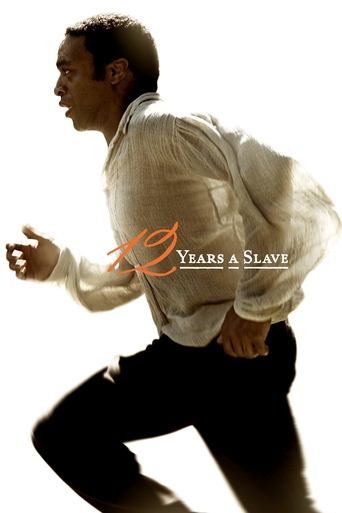
12 Years a Slave
2013 · Film · 134 min
Directed by Steve McQueen
In the pre-Civil War United States, Solomon Northup, a free black man from upstate New York, is abducted and sold into slavery. Facing cruelty as well as unexpected kindnesses Solomon struggles not only to stay alive, but to retain his dignity. In the twelfth year of his unforgettable odyssey, Solomon’s chance meeting with a Canadian abolitionist will forever alter his life.
3 positive1 negative16 neutralfrom 20 commenters
Where to watch
No streaming data for this title.
21 comments on Hacker News
I'll give a couple historical and current examples:
Star Trek was always woke, starting with its at the time quite "woke" black communications' officer and many plots with aliens as stand-ins for different races or nations. The initial show got cancelled (as is often the case with even successful sci-fi) but it gave birth to a giant franchise that continued to be at least somewhat "woke" by contemporary standards. Definitely not a flop.
The Apple TV series For All Mankind is going into season 4 and is relatively popular. I found it pretty good. It's full of "woke" stuff but is well written and is based on a really good premise. My favorite fan theory is that it's an unofficial prequel to The Expanse. Not sure I'd call The Expanse "woke" but it's also not not-woke and has a number of background elements like the popularity of polyamory and bisexual characters sure to trigger right-wingers.
Sci-fi in general has always been kind of on the woke side of things.
Films, lots of them. There's many films about civil rights and social justice struggles that are quite good and did not flop: Mississippi Burning, Schindler's List, 12 Years a Slave, Hidden Figures, etc. Disney has recently made a bunch of Pixar films that are pretty woke and didn't exactly flop.
IMHO the woke flops we're all familiar with are just bad writing. Boring plots, uninteresting characters, and shitty writing is gonna be crap regardless of whether it's "woke."
Racism certainly plays a big part in the frequency of such complaints, but it nonetheless raises some important questions.
Ultimately, nobody really, genuinely holds the opinion that an actor can be of any appearance for any role. There will always be exceptions that will break their immersion, because unlike with theatre there is the expectation that the movie is WYSIWYG.
To give an extreme example, would you be completely undisturbed if the main character in 12 years a Slave was portrayed by John Malkovich? Or if a Jewish camp inmate in Schindler's list was portrayed as a black person? I don't think either example would sit well with the vast majority of people, no matter how racist or not racist they might be.
That's why pointing out that black people did exist in Italy is correct but beaide the point. The real debate is around the acceptability of certain expectations, and what determines the criteria for this acceptability.
Examples off the top of my head:
https://en.wikipedia.org/wiki/Argo_(2012_film)#Historical_inaccuracies
https://en.wikipedia.org/wiki/12_Years_a_Slave_(film)#Historical_accuracy
https://en.wikipedia.org/wiki/Spotlight_(film)#Historical_accuracy
It was added to the Merriam-Webster dictionary in 2017:
chiefly US slang
: aware of and actively attentive to important facts and issues (especially issues of racial and social justice)
But we will only succeed if we reject the growing pressure to retreat into cynicism and hopelessness. … We have a moral obligation to "stay woke," take a stand and be active; challenging injustices and racism in our communities and fighting hatred and discrimination wherever it rises.
— Barbara Lee
… argued that … Brad Pitt is not only woke, but the wokest man in Hollywood … because he uses his status—and his production company Plan B—to create space for artists of color, with such films as 12 Years a Slave, Selma, and the upcoming film Moonlight.
— Giselle Defares
Plenty of recent movies do that. Sorting by release date: The Father, Joker, Parasite, Three Billboards Outside Ebbing, Missouri, Hacksaw Ridge, Room, Gone Girl, Whiplash, Prisoners, 12 Years a Slave, Django Unchained.
* https://www.imdb.com/chart/top/?sort=us,desc
And that's just going back ten years.
That word is increasingly believed to be inappropriate even in depictions of the slavery and Jim Crow eras that aim at historical accuracy. There was controversy over the film 12 Years a Slave using the word, for example.
> the liberation of social discourse and media from establishment institutions.
Liberation? Establishment institutions drive social discourse, there's no need to be "liberated" from them. From the New York Times 1619 project, to Hollywood movies like 12 Years a Slave or the Watchmen series, to the various grievance studies in schools and universities.
Please don't pretend you're the plucky rebels when giant corporations cloak themselves in BLM logos.
Mozilla trusts eight "government" CA roots, associated with 5 countries in this list, China (Hong Kong), Spain, Taiwan, The Netherlands, and Turkey.
The Turkish CA is constrained by Mozilla (and so in Firefox, but may not be constrained in your downstream software that wasn't written by Mozilla and just uses their trust lists wholesale) to just Turkish official sites, government, education, that sort of thing. The others are not subject to any notable constraints for a global CA.
If you don't run Firefox or a Free Unix you probably trust a lot more government CAs. For example Microsoft's list includes 35 root CAs from Australia to Uruguay. It's hard to do a cursory up-to-the-minute examination of Apple's status because they provide a summary of information from the certificate itself which will often have been written by some nerd twenty years ago, leading to descriptions like "Government Root Certification Authority" and "CA Root" (those are both real examples from Apple's actual list) which don't tell a reader anything of value.
I don't regard it as useful morally to try to count a company owned by the government as "the government". Consider the film production company Film 4. This is wholly owned by Channel 4, which is in turn wholly owned by the British government. So we could say the British government made "Four weddings and a funeral". OK, delightful English romantic comedy, sure, maybe drives tourism. "Trainspotting". Maybe it's a warning about how dangerous heroin is? "A Field In England" - Um, now we're struggling, I guess it is set in Britain at least. But wait, "The Motorcycle Diaries" is about the early life of Che Guevara, and "12 Years a Slave" is about a guy who was enslaved, in America. No, Film 4 is just a Film Prodution company, it happens to be owned by the British government, but that's even less relevant than which billionaire owns your favourite hockey team.
For political reasons the UK's TV license is collected by (a third party contractor on behalf of) the BBC, but the money doesn't actually go directly to the BBC, it goes to central government, they carve it up and send some to the BBC.
Lots of odd things are funded with this money, including for example local newspaper reporters at for-profit newspapers (!) but the name and forcing the BBC to actually collect it mean in the public consciousness it's all blamed on the BBC.
Now, Public Service Broadcasting is _distinct_ from having central government revenue funding a broadcaster as happens for the BBC. All UK terrestrial TV is "Public Service Broadcasting" and so are the old US TV networks. PSB means you're using up some finite public resource (radio bandwidth) and so you need to "give back" to the public. It's pretty common to require a daily news broadcast and to have other constraints "for the good of the public" e.g. a non-English country might require at least 10 hours per week of the local language even though viewers would really just prefer wall-to-wall imported soap operas in English or whatever.
As well as the internationally famous BBC, Britain also has "Channel 4" which owns the Film Production company Film4 that made or co-made films you've probably enjoyed (e.g. "Trainspotting", "12 Years a Slave"). Channel 4 is a PSB, but more importantly it's publicly owned. It operates more like a for-profit television company (e.g. advertising) except the money goes back into making TV and it has a publicly controlled mission to be er, challenging. So e.g. the BBC went "Hey, half the population are women, so it's crazy to have all these panel discussion shows with 6 men and no women. From now on, if your show has a panel discussion it needs either a woman or a sign-off explaining why there weren't any women" but C4 is the kind of place where they go "Hang on, there totally must be Muslim lesbians, right? Let's do a show about the Muslim lesbian dating scene, so there's this whole tolerance angle but also it has hot women kissing each other".
> If you want high contrast ratios in dark areas of an image, everything else will be blown out
Conversely could you say that in order to capture subjects with lighter skin, you need to increase lighting in the background or else the background will clip?
Here's an article about the cinematography and technology choices: https://www.washingtonpost.com/entertainment/movies/12-years-a-slave-mother-of-george-and-the-aesthetic-politics-of-filming-black-skin/2013/10/17/282af868-35cd-11e3-80c6-7e6dd8d22d8f_story.html
> he was able to photograph black actors of dramatically different skin tones in a nighttime interior scene using just everyday house lamps, thanks to a sophisticated digital camera. “I just changed the wattage of the bulb, used a dimmer, and I didn’t have to use any film lights. That kind of blew me away,” Patterson says. “The camera was able to hold both of them during the scene without any issues.”
It seems like there might have been tech limitations initially, but with today's technology you can light your backgrounds and expose for either dark or light subjects well. The big challenge is having a photo with 2 subjects in the same exposure who you want to both look good.
Edit: by the way I too have an old Nikon camera. I usually shoot in Aperture priority with some intentional underexposure, and then edit it up in post :)
> Oh, and movies where it's played for laughs. Blazing Saddles, Django Unchained.
You almost never see this happen in mainstream culture (in fact, the Chappelle show is one of the only notable examples of this and this is precisely one of the main reasons it was considered so edgy and controversial). The two examples you described are 1) from 40 years ago, when culture was a lot more comfortable with usage of the word, and 2) a period piece about American slavery. Usage in the latter movie has nothing to do with the fact that it's "played for laughs", since you could see the same thing in 12 Years A Slave (which came out less than a year later and was very much not a comedy).
50 Years ago, in 1964, My Fair Lady was #3 at the Box Office, and won the Oscar for Best Picture. In 1956, Around the World in 80 days won and was #2.
In 2014, 12 Years a Slave was #44 at the Box Office, and won the Oscar for Best Picture. In 2013, Argo won and was #22.
I think this represents that "what sells" is no longer the same "the best movies". The OP says good movies are finding it harder to get made. Good stories, good acting, good "art", are being pushed out in favor of "popular".
Not sure anything can or should be done about that. But it's definitely a trend.
The problem is not the portrayal of racism/sexism/murder in the game, the problem is that the game is racist/sexist in the way it was constructed.
Kind of like how minstrel shows are racist, in contrast to films like "12 Years A Slave".
You can rent 12 years a slave on HD for $6, or buy it for $15 on Google Play. https://play.google.com/store/movies/details/12_Years_a_Slave?id=vuOaTwuzlrY
> 1. You hijack the taxi and demand the driver take you to your destination for free. This creates an equivalent or better experience for the consumer at zero or near-zero cost.
For completeness, this is true only if the consumer prefers the taxi ride over walking and considers it to be a better experience.
> 2. Instead of clicking a button and watching 12 Years a Slave, you get a crudely animated version pieced together by drawings crowdsourced from 1st grade students around the nation, and voiced entirely by Gilbert Gottfried.
A counterpoint to this is Primer ($7,000 budget, 70% RT, 7.0 IMDb): https://en.wikipedia.org/wiki/Primer_(film)
> Since entertainment is fungible, the competition for for 12 Years a Slave isn't just Dallas Buyers Club, it's also 2048, reddit, Attack on Titan, the Olympics, and whatever piques my interest during a Steam Sale. That sounds like the increase in supply for entertainment is far outstripping the increase in demand.
That's only because the home video market allowed people the luxury to legally watch any existing movie anytime they want, once they have purchased it, without the possibility of the studio revoking permission.
Don't worry - studios are already trying to think of ways to "fix" that (stream-only content that is never released in DVD format is one example)
I guess you're unaware of independent films. 12 Years a Slave would absolutely be made, regardless of a non-blockbuster budget. There are always going to be people trying to make art or assist in doing so, without the intention of making an absurd amount of money. Why do these actors even need millions for a movie? Its an absurd amount that is more than necessary.
> Please, movie people, let me pay for this.
Amazon.com: http://www.amazon.com/gp/product/B00ICSVLPA/ref=as_li_ss_tl?ie=UTF8&camp=1789&creative=390957&creativeASIN=B00ICSVLPA&linkCode=as2&tag=foxhe312-20
iTunes: https://itunes.apple.com/us/movie/12-years-a-slave/id740366955?ign-mpt=uo%3D4
And many others: http://www.foxdigitalhd.com/12-years-a-slave
Sony could not have made it any easier to get this film into your living room.
(Regardless, I don't think media companies have an obligation to make their content available to anyone, anywhere.)
I'm a left of center guy, but this kind of thinking is a very ugly slippery slope. Its not that anyone should always expect to pay for things that are beneficial, its the fact that people who very recently WORKED to create the very thing you are benefiting from should be PAID for their work. If everyone followed your logic, we wouldn't have 12 Years A Slave. The props cost money. The costumes cost money. The cameras cost money. The cameramen's families eat fucking food, which costs money. Please, go out and find for me a quality movie that was made by unpaid volunteers. I haven't found one yet.
I clicked "12 years a slave", a movie I have not yet had an opportunity to watch and it started streaming in less than a minute in high quality.
I immediately quit the application as it should not be so easy to benefit from someone else's hard work without compensating them.
Please, movie people, let me pay for this.
You might kill the cinemas, but you'll still get paid.
This app is fantastic. It really is a huge win for usability. I downloaded the app and was watching "12 Years a Slave" in less than 30 seconds.
I hope they add TV shows with a nice interface for browsing seasons.