 Hacker Cinema
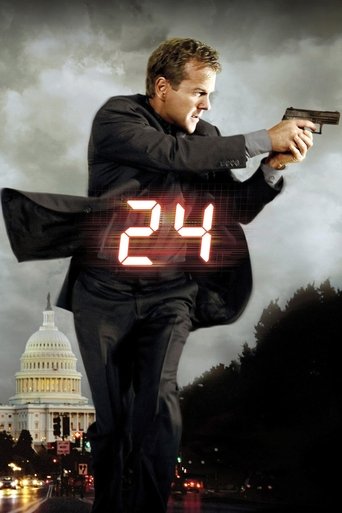
24
2001 · TV series · 45 min episodes · 9 seasons
Created by Robert Cochran, Joel Surnow
Counterterrorism agent Jack Bauer fights the bad guys of the world, a day at a time. With each week's episode unfolding in real-time, "24" covers a single day in the life of Bauer each season.
9 positive53 negative4 mixed85 neutralfrom 151 commenters
Where to watch
No streaming data for this title.
160 comments on Hacker News
TV shows on the other hand, have suffered extreme shrinkflation.
From 20+ episode seasons every year to maybe 8-10 episodes every 2-3 years.
Yeah, budgets/production values are higher. But characters and storytelling were often better in those old shows (Star Trek TNG/DS9, Lost, 24, Breaking Bad) where they could make those longer seasons every year for 5 or more years in a row. Simply far more screen time for character development.
Sayings like those are aspirational rather than being realist or simulationist, and they're supposed to be aspirational.
They're stories, just like all morality. It seems when cultures get to a certain point in dissolution you have a growing population that have difficulty drawing lines between stories and reality, what stories are *for* in the first place.
Having aspirational moral systems is critical for a hyperdeveloped mostly-democratic society. It creates a gap between the Best Of Us and the Worst Of Us, and thus suggests a vector. When that aspirational system fails - whether to cynicism or brutality or both matters little - you have a societal collapse incoming or under way.
One depressing example was the progression of the United States' moral judgement on torture during the 21st century. During the worst of the Cold War years I have very few illusions that torture was occurring - extremely imaginative variants in fact. But if in 1963 someone self-identified as a torturer, or recommended we just do it in the open, the same persion would be roundly (and justly) castigated.
After 9/11, the idea surfaced that yes, we're going to torture, and yes, it's ok to do it. We accept the "realism".
To see the impact of this, well, I could point to a police officer in 1992 and then to a police officer in 2022. I could also point to an Action/Adventure TV program of the 1980s - say, MacGuyver - and then point to an Action/Adventure TV Program of the 2000s - like, say, 24. Imperial Boomerang is a real thing, turns out, and now we all get to be Fallujah.
In reality, though? The answer to Scalia's "Shouldn't Jack Bauer torture a guy to save Los Angeles?" was always rhetorical[1], but if you took the bait, the correct answer was always, "No", because it destroys the aspirational vector that defines our society. Or, more practically, if for no better reason than the fact a SC justice is legally reasoning from a television show.
[1] The "ticking time bomb" hypothetical which is almost always presented as a stack of epistemic certainty but which is actually unfalsifiable.
Better example then: I assume the TV series 24 will be banned for glorified depictions of torture and violence. Real actors portraying torture as an effective investigation method for high-stakes anti-terror investigations, despite being illegal both in the setting and in real life
A Conservative Supreme Court Justice once pointed to the television show 24 as justification for why torture is okay.
The cast of 24 was brought to run a panel for the Heritage Foundation in one of their gatherings.
My initial comment was a reference to the TV series "24" which came out in the early 2000s and was pretty transparently .gov propaganda to get people on board with or at least more open to the fact that the CIA was denying people their rights and torturing them and this was officially sanctioned.
By "good guys got the bad guys" what I am referring to is that the arctic frost stuff resulted in federal prosecutions. First off, you can't really use conviction as a bellwether for whether serious wrong was actually done. Federal prosecution is intentionally ruinous for anyone without huge, huge resources and even if you beat the flagship charge the laws are such that if they want you they'll still get you and they're only really constrained by political optics. Martha is probably the best example of this. And second, even if the prosecution is being done in pursuit of people who have legitimately done wrong (note I did not say "violated the law" because the laws are so broad), I'm not sure that prosecuting sitting politicians is a door that ought to be opened because due to the ruinous nature of of having the feds after you it basically hands a ton of power to the executive to harass politicians to get what they want.
This ties us back to 24 and the CIA because they were theoretically torturing people to "save american lives" and "prevent terrorism" which, while noble goals, are still not justification for going from "torture is never acceptable" to "torture is acceptable sometimes".
I find it interesting that 24 format, total chronological order, allowed them to react to that 9/11 if it was required. Kinda like South Park episodes are at most 2-week old when aired. South Park it's easy since episodes aren't connected and due to how it's made, but the idea is the same.
I was watching one of America’s greatest war propaganda films recently. Casablanca. It is remarkable how far we’ve come from making the hard decision to do what’s best for Victor Laszlo. Our modern US propaganda is all 24: the righteous man is on his own fighting a shady terrorist conspiracy, where nobody is above suspicion. We’ve successfully convinced ourselves and probably the world that the US federal government and its employees could not possibly have benevolent motivations for anything they do.
Propaganda is always coercive, always designed to make people act against their inclinations. It serves the interests of the powerful. But what I don’t get is why we’re making this propaganda instead of that propaganda.
24 was Fox, if I'm not mistaken, and its format is very much the same as all broadcast shows.
Breaking Bad isn't the same format. No obvious commercial breaks, no saccharine Hays-Code-like bullshit.
Others mentioned The Shield, which is FX, and I tend to think of FX shows as not being of the broadcast mold. Monk was USA, I think, which as a network was borderline, but seems like a few of their original programming shows were not-horrible. Then someone said Deadliest Catch, but that's just cheap reality tv sludge and I feel dirty having typed out its title. Even the worst 1980s NBC sitcom was better than reality tv shows.
It's come to my attention that you're all, every last one of you, watching tv wrong.
> The more modern equivalent would be 24h (the tv series), which basically shoved to the public the notion that torturing and going extra-legal ways was something heroes had to do.
24 was developed before 9/11. The pilot was filmed in March 2001 and production started July. It was just a freak coincidence that it was released around the same time as 9/11.
Moreover, heroes going outside the rules is a longstanding trope in American film. Most American law enforcement movies in the 1970s-early 2000s portrayed “the system” as holding back the good guys with bureaucracy and rules. Dirty Harry was 1971. It’s just because we’re Americans, not Europeans.
In particular, the TV Series "24" was a blatant piece of "War Against Terrorism" propaganda.
One example that's missing from the list is the TV series 24. A recurring plot point was that, yes, of course torture is bad and it's against the rules and we don't do it, etc etc, but it just so happens that here is such an exceptional, unprecedented, deeply urgent emergency situation where we need to have the information now or horrible things will happen, we need the hero who breaks the rules and goes on torturing anyway. [1]
Fast-forward a few years and you find there were in fact many such "heroes" in reality - in Abu Ghraib and in the Black Sites - and the situation weren't exceptional at all.
So accountability sinks can also be used as calculated ways to undermine your own ostensible ethical guardrails.
[1] https://www.theguardian.com/tv-and-radio/2017/jan/30/24-jack-bauer-torture-donald-trump
When watching 24 season 9, I saw Catelyn Stark sick a horde of dragons (drones) on King's Landing (London) to avenge the murder of her husband Eddard.
My fanciful mind makes me mix series, movies and games with each other and reality in my head, just as a point of entertainment. I do miss the Monster Truck from GTA San Andreas when stuck in traffic but so far I've managed to behave in a civilized manner.
I would recommend the Assimil language courses, very good if you consistently do it every day, they're also not too expensive. Like 75 bucks last i checked, and that'll keep you busy for 90+ days.
Assimil says it can get you to a b1/b2-ish level, which i think is about where it takes you. I did their German course a long time ago, and was able to read paragraphs and understand them just fine by the end of it(didn't keep up with German, so that skill has atrophied.
After finishing Assimil, i would watch a tv show you've already watched but now in french. Ie: go to Netflix or Prime(which in my experience have the most language options) and watch Friends, 24, The Blacklist, Seinfeld etc etc whatever you can think of, in French, it'll help a lot, and make acquiring vocab easier. Native language content can sometimes be a bit harder to grasp because of cultural events/history you may not be familiar with yet.
But French language content I have enjoyed in the past are the podcasts "Podcast Marketing Digital"(also a youtube channel), deux mille ans d'histoire(history podcast)
What was nuts in the bush era was the bloodthirstiness both generally and in the media.
There's were so few voices that were against invading Iraq. It was just this vagueness that terrorists were everywhere and somehow Iraq was involved in 9/11. (And getting ready to nuke everything).
I mean, ffs, there was a popular TV show that spent each season detailing how the brave heros would stop the Muslim terrorists using torture (24).
Where I lived, it wasn't uncommon to hear people advocate leveling the middle east with nuclear weapons.
So far as I can tell his "gaming the algorithm" is having a few short clips near the start to hook people in (ie. an summary/abstract), and periodic bursts of excitement to keep people engaged. The first is so banal that it's hardly worth discussing. Articles in scientific journals have abstracts/summaries. It's not anything nefarious. The rest seems like standard narrative/storytelling advice, eg. hero's journey[1], or how broadcast TV shows have cliffhangers/plot developments to get people to watch the next episode or ad break. Do you think 24[2] is "gaming the algorithm" by presenting 24 action packed episodes where there's always some new/unresolved plot point at the end of each episode?
[1] https://en.wikipedia.org/wiki/Hero's_journey
[2] https://en.wikipedia.org/wiki/24_(TV_series)
This would just be people sitting in front of screens screaming techno-babble for the entire episode...so basically 24?
Or, we watch a movie like 24 where the protagonist is asking his agency buddies to hack random computers while straight up torturing people to get information - and we cheer for him.
I tried using ChatGPT to write theoretical future episodes of the show 24. The output was extremely drab and focused on re-used concepts. I tried to aid it with specifics like Jack is the president and his first lady is actually the infiltrator. It used that, but it didn't come up with the compelling stuff. So I guess if you want drab content, buy one of these books. If the author on the other hand uses it to take a compelling story line into the paragraphs... maybe.
I had a conversation with ChatGPT yesterday where I came up with the first few episodes for a new season of 24. I provided a set of events that happen in episode 1, 2, 3 and 4 and it "rewrote" it to sound better. Which it basically did. Then I let it "provide a compelling episode 5". here is is:
In episode 5 of the new season of 24, Jack Bauer's mission to infiltrate and take down the terrorist group leads him to a critical moment of decision. With the help of his team and his contact in Moscow, Jack manages to uncover the group's plans for a major attack on the city and learns that the group has a mole in the White House. Jack must now decide whether to reveal this information to his team and risk blowing his cover, or keep it to himself and try to take down the group alone.
Meanwhile, the White House and CTU are in a state of high alert as they race to track down the mole and stop the terrorist attack. The Vice President and acting President is under pressure to handle the crisis and maintain the illusion of Jack's kidnapping while trying to find a way to bring him home safely.
As the clock ticks down, Jack must make a difficult decision that will have serious consequences. He has to choose between his loyalty to his country or his loyalty to his team. The episode is filled with intense action and nail-biting suspense as Jack and his team race against the clock to stop the terrorist attack and clear his name before it's too late. The episode also features a dramatic twist that keeps the audience guessing until the very end.
OK, but but actually it quickly devolved into generic description of many episodes of 24. The human creative element can't be captured by GPT yet.
By the way this totally should happen: Jack is president, has to fake his kidnapping because of a plot coming out of russia, meanwhile apparently the mole is the first lady.
B5 was one of the first non soaps to have a continuous narrative. Stargate followed, and later seasons of ds9 copied it too. Was a great time
Later shows went for a single narrative spread over a season — 24 pioneered that, but before that Buffy had championed the “big bad” each season, although with Buffy you didn’t have to watch every episode in order for it to make sense.
Even in the 2010s the new Star Trek series (Picard, Discovery), and especially the CW arrowverse are prime examples of how poor that structure is.
> Following that logic, drone striking you in your house is an active situation. No constitution needed. No, I obviously meant that you're allowed to kill as LEO _in response_ to an active situation.
My point was that you haven't defined what an "active situation" is. I could say "we should only kill people when we have to" and that'd be accurate, but that'd be useless for the point of this conversation, which at this point seems to be defining "have to".
> The real world is not the TV show 24. The purpose of the constitution is to constrain such actions even if extrajudicially drone striking every person with a modicum of 'credible evidence' against them would be easier or might lead to less tragedies.
Indeed, however, such things happen and people are forced to act during them. I also highly doubt the playbook the military uses is "do we have at least a modicum of evidence? then kill them."
>Additionally, you're ignoring that there was no active situation Al-Waki was accused of participating in. Just political speech the government didn't approve of.
I am ignoring no such thing as I made no comment on his situation other than to say I do not have enough information to make a judgement.
But that's not unique to Netflix - I can remember thinking how much better '24' would have been w/o all the filler crap - but then they wouldn't have been able to make a "real time" TV show (well, they could have, but they didn't). Also I tried watching the reboot of "Kung Fu" a few weeks ago - wow, there's more Asian family drama filler than there is actual "Kung Fu". It seems like the filler stuff is everywhere now.
But then again, back in the day of network tv shows when they did ~26 episodes per season, there were entire episodes that felt like fillers.
Yes. Though stepping back a little further, I'd add (with some qualification):
24 (which perhaps opened my eyes to TV overtaking film in new ways) Lost Buffy
And then further still:
The X Files This Life (UK only?)
No and I’m not saying it’s a conspiracy. They were opportunistic. I remember back then hearing an interview with the writers who were describing writing each episode of 24 on a weekly basis between episodes. And the article I linked to describes how they tried to use Homeland to reflect more seriously on the ideas around torture that first appeared in 24.
Ultimately they created a show that fed into the publics desire for revenge, post 9/11, and made a big success out of it.
What it leads to is the point I already made - the goal torture is oppression; to create fear and thereby obedience, not gathering information.
I remember that soon after 9/11 the tv show 24 started exploring "justified torture" scenarios, in retrospect I'm pretty sure it was not a coincidence.
From the TV show 24:
https://www.imdb.com/title/tt0502186/
It depends on what aspect of it you're looking for.
If you're looking for Scifi that maybe resembles it I'd say possibly Battlestar Galactica. It's a bit higher production level, although does have slow stretches during some seasons (I think middle third of S2 was one of them), and falls apart a bit when trying to put together it's ending. Writing is about the same, maybe a bit better - and has a similarish feel although not grounded on earth. Covers some interesting topics of society.
If you're looking more of the in depth discussion of the state of society (specifically American). The Wire is really spectacular. But it's not "junkfood" watching, it takes paying attention and a lot of points are subtle. It also takes about 6-7 episodes of very slow ramp up to get good, but one of the best shows of the past two decades - and plenty have said one of the most complete TV shows ever made.
If you're looking for just the easy to consume action and political intrigue, the first half of Game of Thrones fits that bill, but is now notorious for how poorly it ended. High production, lots of characters / back story.
Maybe 24 or Homeland would match if you're looking for more of a straightforward "stop the terrorists" themed show.
It all depends on what aspect of Colony you're looking for / enjoyed.
I remember the TV show 24 where you could identify which of the counter-terrorism team members was betraying Kiefer Sutherland this hour by noticing which one was suddenly using a Dell instead of their usual Mac.
You're getting downvoted but the producer of the show "24" has stated that it was a "patriotic" show and it's at least in part responsible for the acceptance in the American public opinion of the torture inflicted upon terrorism suspects post-9/11. TV/movies are not mere entertainment, they often carry a message.
Believe me I've tried. It's good for sports, meh for TV shows, and horrible for films or anything filmed (which includes a lot of scripted TV.) I don't think anything but 24 (or 23.976) fps will ever look correct to me for movies.
As a reader (LOL) I find it to be a strong negative signal when someone identifies prominently as a reader, puts that in their Twitter bio, wears T-shirts or caries tote bags with reading-related slogans, et c. For some reason it usually turns out that they almost exclusively read young adult, trashy genre fiction, thrillers, romance novels, that kind of thing. Which is fine! I read garbage sometimes too! It's fun! But people who watch reality TV, 24-hour news, and Lifetime movies, don't wear shirts with... hold on, let me find some of these reader t-shirts with an image search:
"Obsessive TV-Watching Disorder" or "TV watchers gonna TV watch" or "Eat Sleep TV-Watch" or "Never underestimate the power of a girl with a TV"
Not sure why things are that way, but I'd go out of my way not to broadcast a "reader" identity, for this reason.
There was a case a few years ago where a US federal judge refused to outlaw torture in case there was a “24 type situation”. (24 was a popular tv show a few years ago in which the main character regularly tortures people for information, to protect America.)
So season 2 of TV Series 24 aired between October 29, 2002 May 20, 2003. Its main theme was US govt using fabricated evidence to attack middle eastern countries. The Office of Special Plans (OSP) existed from September 2002 to June 2003.
This is why I prefer mini-series to full on series. It's a complete self-contained story.
There weren't that many multi-season shows that I loved and had a decent ending - usually it gets milked to death that main actors quit and then either show cancelled (Castle) or get a new actor and suck (x-files).
Some shows have awful resurrection - 24, I loved the entire thing except for "reboot" and last season.
Some shows have honest writers, BSG reboot was clearly getting too convoluted and had to be ended before it cancelled.
Some shows try to pivot to tumbler fanfics for content - Supernatural. Which was dumb because people were interested in such stories were already watching it.
> If you have a new series, all potential viewers are potential viewers. If you have a season 3, the only potential viewers are season 2 watchers.
That doesn't always top factor. Some shows can generate money outside of screen - merch. That's how supernatural stayed so long.
From my point of view the problem manifests in this way: I simply don't bother to invest the time to watch new shows until it's clear that they're going to get a proper run that allows them to finish well (Breaking Bad, Justified; even Sons of Anarchy, which was a real slog for the last 3 seasons, ended well).
I'm tired of investing time in shows that Netflix simply drops: The Expanse (though now thankfully picked up by Amazon), Designated Survivor, and Shooter (although that was total crap, especially after season 1) spring immediately to mind, but there have been plenty of others.
I also won't bother starting to watch shows that I know Netflix have cancelled before they've concluded (e.g., Glow), because what's the point? And this is starting to severely erode the value of Netflix's library to me.
Things that have worked incredibly well on Netflix are shows that tell self-contained stories within a single season, like Narcos or Fargo, or shows that tell have a self contained but are able to tell it in a longer form than feature film would allow. The canonical example of the latter for me is Godless, which is one of the best shows on TV, I think. Genuinely fantastic.
And this last point leads on to another, which others have made: US TV series are too long, typically 18 - 24 episodes per season, multiple seasons, often too bloated with filler episodes, and often suffer from ridiculous over-plotting after the first few seasons, which comes off as aimless thrashing around: Prison Break (season 3 onwards: just utter nonsense), 24 (SPOILER ALERT: I mean, seriously, WTF was that Tony Almeida betrayal storyline all about in, I think, the final season - multiple sharks were jumped and I'm still pissed off about it).
On the flipside UK TV series are often too short: 6 half-hour episodes is still quite typical, so you're only really getting into a show and then suddenly the season ends. With that said, for some shows this has been made to work really well: Line of Duty, or the earlier seasons of Luther.
I do feel like, for many shows, a happy medium would be 10 - 12 hour long episodes. You could then afford to make a much more polished product, whilst still probably investing quite a bit less.
I can imagine these too, but some imaginary scenarios come too close to "24" TV series scenarios, i.e. completely unrealistic.
But I will give you that, even if you subscribe to the idea it came sometimes make some sense with extrajudicial killing, what we currently have is drone killings on a factory scale. It's disgusting.
I think it was the television show 24 where the villains weren't allowed to drive Ford cars.
Since we are talking about 24, in season 6 Morris O'Brian gives the bad guys a working detonator for the nuclear bomb that goes off after getting tortured.
Just search for the Movie Overgames on YouTube. It shows how the psychology was used in gameshows of the 50ies to reeducate Germans. TV was thought of as means to heal.
I think series like 24 were no accident. They pushed the limit farther. Today even kid movies like Pets is more than slapstick comedy. Even there you see torture as valid means.
24 was notorious for this, it practically celebrated it. It's so celebrated in film and TV that it even has tropes, like with the classic 'opening the bag of surgical instruments' kind of scene, if not the pure brutality of punching an answer out of someone strapped to a chair. Never mind the pure torture porn films like Saw and Hostel.
Torture should be depicted for the pure atrocity that it is, not as an entertaining plot piece to imagine doing nasty things to a Russian/Middle eastern person.
You obviously don’t watch Tv shows like 24. Wires is something you stick into the explosive.
Yes, American Sniper, White House Down, 24 (TV Series), just to name a few. The 3 you list are barely even patriotic.
Check out the podcast "Primetime" by Vox. It looks at the relationship between tv and government. There's an episode on 24.
I am convinced Obama was elected partially because the TV show "24" made having a black president seem viable and normal.
I want a "24" style realtime movie of this event. Call it "Outage" and follow engineers across the globe struggling to bring back critical infrastructure.
Season 2 of 24 I think.
They used to do that in the TV series 24.
I read the transcripts of Haspel's torture sessions. They read like an episode of "24". These are dumb, violent people with an exaggerated sense of their own heroic virtue. Par for the course.
https://nsarchive.gwu.edu/briefing-book/intelligence-torture-archive/2018-04-26/gina-haspels-cia-torture-file
The article isn't very deep, only pointing out a phenomenon by way of examples and without too much analysis.
I'd argue that villains need power to have teeth and believability. Our definition of power changes over time- that's why we don't see too many communist rebel Che Guevara knock-offs, for example, as movie villains anymore unlike in Predator or Escape from LA. But if it wasn't tech CEOs then tinpot dictators and rogue generals always work, because they're always in power somewhere in the world. There's also the archetype of the sinister senior intelligence apparatchik or bureaucrat as highlighted in Mission: Impossible, 24, the Bourne movies, and a ton of others even before the Snowden revelations or the Iraq War, because that's another example of American conception of power.
I'd argue that tech CEOs also make for an easy target because their public personas are often defined by their idiosyncrasies (Jobs' turtleneck, Bezos' shaved head) and perceived social awkwardness. Sometimes, in the case of Upgraded, it just feels cruel to stereotypically awkward or neuroatypical nerds. But there's at least one major counter-example: Ex Machina was a great Hollywood exploration of A.I. and the Turing Test, and its genius CEO villain was played by Oscar Issac as a charismatic, or at least chummy, non-stereotypical nerd.
The version used on the NSFW subreddit(s) is not capable of that. The jump is not far though, as it is 'just' a more perspective-considering application of mostly the same technology. IIRC the issue is mostly with the regular deepfake showing poor quality if the face is shown from the side, which makes the artifacts rather blunt. You still have to worry about this. There was a season of the TV series 24 (second half of season 2), which dealt with an audio recording almost causing WW3. The season ran winter 2002/3. Google already has the technology to synthesize voice at a quality that easily passes examination, provided the minimal artifacts can be hidden in (non-white) noise. Considering this is full synthesis, and that we already had real-time face morphing [0] in 2016 (with hardware capable of reaching NTSC quality available for under $1k in a laptop at that time), the point of faking multi-angle video using motion capture technology and similar, as well as humans for guiding the software/eliminating artifacts, is likely not far.
[0]: http://gvv.mpi-inf.mpg.de/projects/MZ/Papers/DemoF2F/page.html
Torture doesn't provide any valuable intelligence results for those doing the torturing, we're not living in "24", the TV series. I know for sure that if I were to be tortured I'd be ready to recognize even the killing of the biblical character Abel if those doing the torturing would ask that from me, and I guess I'm not the only person so predisposed.
We're not fighting an army on the battlefield (the bombings is a particularly bad example because it's a frequent example of atrocities committed on the allied side), we're talking about arresting loosely organized criminals who are deprived of the right to a trial and detained indefinitely. This isn't an episode of 24 where there's a bomb that will go off and rough a guy up for the passcode. This is waterboarding people for 16 hours a day for months on end in secret prisons unaccountable to the rule of law. And no, even if it helped save lives, the moral repugnance of what we've been doing does not absolve us of moral responsibility for our actions and policies.
You mean like State sponsored hacking? Sure... I don't know I would say that it's something else entirely.
The core mindset still comes from the same place. Understanding everything. Understanding the implications of bugs and features of known systems, using that for grand exploitation to achieve things they weren't designed for.
What inspired them to start hacking in the first place may or may not have come from a place of not having everything. Perhaps their trigger of interest were movies or TV shows: War Games, Hackers... or James Bond or the nerdy guy from NCIS, 24, Bourne Identity, MI5 or countless other TV shows and movies where hacking is glamorized.
The start of that career path is the same, regardless of what brought you there - a need to understand your tools, deeply.
Because indie US hackers don't target other nations? Doesn't sound strange at all that indie Russian hackers might also target the US.
Besides, what exactly does Russia stand to win from hacking into the US? To influence the elections to get Trump elected? Because that can happen without repercussions? And because the US doesn't have 10 times the resources and counter-measures?
It's only a constantly BS-fed public that watches a show like 24 or Homeland like it's some kind of documentary that will buy into that.
Russia is not USSR, and there's not much antagonism (since Russia is not exactly a world player), except one sided (the US treating Eastern Europe like it's the 60s and using Eastern European allies to suffocate the non-existant communist threat).
If Putin was actually full blown autocratic and despotic but friendly lackey, they'll be singing his praises like they did for Yeltsin back in the day. But as it stands, the problem is more than he's not selling Russia wholesale to foreign companies, than any BS "autocracy" (because the much beloved Saudi royalty are not?).
It's just that there are guns to be sold, proxy wars to be fought, and sanctions to be imposed, etc., until that country (Russia) is finally allowed to be plundered like everybody else. How dare they have their own interests in mind?
That really is the crux of the issue here. When a movie gets something so essential to the plot wrong, you rightfully dislike the makers for being so damn lazy and not bothering to do their homework.
When it's only tangentially related, we're far more forgiving.
It can even get downright dangerous when policymakers start getting their ideas from them. For example, shows like "24" that have suspects giving up accurate and truthful information under torture, when any expert in the field of interrogation knows it doesn't work that way.
This technology reminded me of 24 (TV series).
The plot of season 2 has Jack Bauer prove a Cyprus recording between a terrorist and high-ranking Middle East officials was forged so the US president would start a war.
Movies are different. That could be a continuity problem. Actors are clean or dirty for a reason. 24, for example put a lot of effort into costume continuity. Shot over months, 10 copies of the same clothes, looking slightly worse as the day wears on.
Exactly. We canceled Hulu ages ago. Look! I can pay for Hulu, and get the exact same service as people that get it for free---but on something other than a browser!
Canceling "cable" was a bit jarring at first, but I don't miss it anymore. It was kind of like trying to stop watching the show "24". The show had its hold until I missed the subsequent episode, then it was gone; I didn't care anymore.
I don't own a TV. :) I do watch some movies now and again though, especially when flying long haul but I never had one that mentioned those. Off the top of my head I can only think of 24 as a candidate but I never watched that.
That's only slightly funny. In the dark days of GWB (2002-2007) I saw many interviews where interrogators, from boarder guards to military people, said they took guidance from popular TV shows. The breakdown in mid-level management, a lack of clear standards and procedures, meant that otherwise rational people felt it appropriate to take ideas from TV. The writers of 24 were visibly upset when confronted with evidence that intel people took "interrogation" ideas from their show.
I can give him a data point from outside the US, from one of the other progressive, English speaking countries in the world, New Zealand:
I don't know if it has fully sunk in yet to the US populace how completely they have humiliated themselves, on the world stage.
We don't get exposed to Fox, or Breitbart, or even CNN. I get most of my international news from the BBC, for example. From our perspective, the election was between a normal, typical US politician, and a madman. And when the dust settled, you lot put a clown in charge of your country.
I remember first thinking, oddly, that the biggest loss was your media. How can anyone watch 24, or Olympus Has Fallen or any of the other films and TV shows where you glorify your president? The stern, respectable, dignified leader that the hero must protect or save? How could such a plot exist now, or in future, and be watched with a straight face?
Google "24" and the first hits are all about the TV show.
/offtopic
"Go" is such a poor name, both for a language and game, because they collide with the English word, it's impossible to perform targeted search or sometimes even to know what an article is about.
Some TV shows like "24" suffered from the same fate. On reddit the game of Go is represented by the Korean "baduk", probably to escape the confusion cone.
I get the vague impression that there was some sort of unspoken deal not to prosecute the people who ordered torture and the people who followed those unlawful orders for the sake of reconciliation between sides of culture wars.
How could we have prosecuted the torturers but not the people giving the orders? Or, how could we prosecute the former vice president, but not the former commander in chief? Even though we are part of treaties that promise we will not torture, practical politics seems to be more powerful than the rule of law, and there would have had to be a much more overwhelming mandate.
Instead, it seems like we have forgiven people for commandeering the power we gave them for unlawful uses from one perspective[1], but the other perspective is that they did not do something wrong. Based on the rhetoric of this campaign it seems like timidity, instead of leading to some sort of reconciliation, has lead to the normalization of torture. Now even low caliber network television shows such as 24 and Madame Secretary have protagonists casually carrying out or ordering torture without the implicit condemnation that would have been written into the plot 20 years ago.
[1] Forgiving the breach of trust for misusing power you gave someone is of course different than the type of forgiveness actual victims could grant.
I see intuition as something which integrates over hundreds of experiences, weighted by emotion. Arguably, our intuition adapts to our experience to improve our prediction of outcomes, so that, given some situation, we can quickly understand what's going on, and situate ourselves. For the sake of example, if you binge watch TV series about terrorist situations (e.g. 24), you may be calibrating your intuition in terms of survival, bombs, torture etc. As a result, you may be less inclined to reflect thoughtfully, e.g. on whether to buy food which is organic or not, rather buy bas ed on whether it's produced in a country associated with terrorism or whatever. That could be a totes bulls hit example, but my point and theory is that our intuitions are built from millions of tiny moments where we observe cause-effect, hypothesis-experiment-result etc.
The conséquence is that we can strive to improve or cultivate our intuition, by avoiding passive consumption of prepackaged reality like TV and actively interact with real world (however you determine what that is).
I suspect there are a number of ways to support this view, from psychological, behavioral and neuroscience literature, but then I'd be guilty of exactly the thought process the posted article seeks to deride. Nevertheless my degree was in these subjects, so I doubt these ideas are original or unfounded.
Not strictly a cop show, but I've said before that I considered "24" to be one of the greatest examples of propaganda ever made.
I remember my liberal friends unwilling to miss an episode, and talking more and more about the need to "protect ourselves from the terorists".
It was somewhat surreal. And frightening.
P.S. Seriously, I'm not sure Bush, Cheney, et al. could have gotten so far down the slippery slope (with many of that bunch sliding willingly) or brought the country with them, without "24". Whether or not the producers of "24" directly intended this.
That level of concern is a bit ridiculous for a 10 year old. I was riding my bike all over by myself at that point. Crossing the street with indirect supervision is something I'd trust a 6 year old with.
Now maybe I had a charmed childhood, but I'm in my mid twenties, so it's not like I'm talking about growing up in the 50's here. My parents are older though, they did grow up in the 50s, and I I know they view independence as an important individual trait. I'm sure overprotective parents are not a recent phenomenon. One of my (younger) brother's friends was accompanied to and from school by his mother well in to High School. Walk, drive, riding a bike, you name it, she was there.
My mom asked her about this once, and she was like "Oh, [Declanomous's Mother], you have [Declanomous] and [Son #2]. I just have [her son]. I don't know what I'd do if anything happened to him." My mom thought this point was kind of ridiculous, because it's not as if one child is a backup for another child. She just let my brother and I run around because she wanted us to learn to do things on our own.
Personally I think the current environment vis-a-vis child rearing reflects a larger trend towards fear in overall society. Part of this is a result of a larger focus on danger in childhood development, but I feel like a whole culture around existential fear really developed after 9/11. It seems like we started viewing the entire world as dangerous, rather than being ripe for exploration. I feel like this is really noticeable when watching media from different eras. Popular TV shows before 9/11 were Seinfeld, Friends, and Fraiser. After 9/11 shows like CSI, 24, etc. became very popular.
I could be completely wrong. I know shows like Law and Order and ER were very popular before 9/11. I recall them being less existentially terrifying though. This could just be because I was very young at the time though.
Sounds like an episode of 24. Where's Jack Bauer when you need him?
I think the attempted underwear bomber was after Reid. Here's the thing though: if you're trying to set something on fire or storm the cockpit or some other actually undesired behavior, it's not going to be some routine in an airline manual that stops you. It's going to be all your seat neighbors who are going to physically stop you because you're obviously a threat.
The real problem is these wildly unqualified citizen-Paul(ine)-Blarts who saw on an episode of Criminal Minds that looking up and left while writing non-ASCII characters is an indicator of terrorist intent. She essentially pulled the fire alarm on a bunch of people because she's an idiot. What she did is functionally no different than calling in a false report about some random passenger on a plane that's about to take off. She should have to pay a fine for all the time and resources she wasted with her little ruse (I'm sure she felt very clever when she conceived it).
Imagine a Richard Reid scenario where some guy beats the piss out of his seat neighbor because he thinks he's trying to bomb the flight. If he's right, he's a hero (and he should be applauded for stopping a bombing). If he's wrong and the guy was just tying his shoes, he gets charged with assault. This is a good thing, because we don't want people seeing physical violence as a cost free option.
Being too dumb to tell the difference between an episode of 24 and your boring ass day is not a tolerated excuse to physically assault people. It shouldn't be tolerated as a reason to call in false alarms either. I'm sick of stupid people being able to inflict massive amounts of inconvenience and even degrees of suffering with no consequences for being wrong.
* I realize that stupid is perhaps an imprecise and mean choice of words, but I can't come up with a better explanation for adults who cannot appropriately assess the threat posed by a nerdy Italian guy writing in a notebook who doesn't want to talk to them. I get that calling people stupid isn't a way to make them smarter, and that it can have a negative developmental impact for younger kids to view things in a smart/stupid fixed-talent paradigm, but we need to somehow bring back some of the cultural rejection for acting like a goddamn idiot. I don't really care if she gets smarter (though that would be nice), I have lower aims. I want her to be afraid to be wrong because actions should have consequences. If there's no cost incurred to this person (actually, she'll probably be praised for her "vigilance" by people she respects) where do we draw the line?
As GP said, that's not true in general. Immunity is offered when the prosecution believes your testimony will result in further arrests or in prevention of future crimes. That circumstance is exceedingly rare outside of episodes of "24".
We like to think that propaganda was something the Soviets and Fascists did decades ago and doesn't happen in the modern world. But 24/Jack Bauer and films like Zero Dark Thirty are straight propaganda. The first step in fighting it is identifying it.
I completely agree. In fact there is already a mechanism for doing what they want done, generally. They get a search warrant, they get a judge to compel a suspect to unlock his phone, refusal results in jail time for contempt of court. There is prior law for all of that. Nobody seems to care that we are talking about doing the search without the judiciary. This is all purely for fishing. Either fishing or they believe that there are all these real life episodes of 24 being played out, which isn't true.
>I understand that is is very inconvenient to use the channels provided to transmit confidential information, but that goes with the job. It is also probably inconvenient to have a massive physical security detail follow you everywhere as well but that is also necessary as a high profile government official. ... I am sure Mrs. Clinton wouldn't hop into her car to visit a friend without gathering a full security detail. Yes this curtails her life, and yes it is inconvenient, but it is necessary just like securing her communications is!
Semi-OT, the president does exactly that in 24 season 3: there was an episode where he just decides, on a moments notice, to duck out (nearly) by himself to go visit a friend in a rich neighborhood and come back, and it's all over in 30 minutes. Really broke immersion.
> I am a terrorist, and am apprehended at JFK with my iPhone. On my iPhone, there is the contact details of my co-conspirators, already in the US and already with AK-47s ready to shoot up a primary school.
Maybe you watched too much 24, but that's just not how these scenarios have played out. You're making the same mistake people make when they imagine hacking being like they show it in the movies: if the good guy can just type fast enough, he can get around the bad guy's defenses, blah, blah, blah. But that's not how it's done, is it? Which makes this a strawman argument.
Homeland seems pretty critical of US policy in Season One, perhaps too much so. After Season One (which should have been the only season) it becomes laughably transparent pro-Israel/anti-Iran propaganda rather than pro-CIA.
It's even more brainless and nonsensical than 24, but unlike that show, Homeland actually seems to take itself seriously.
From that article:
>"People [in Guantanamo] had already seen the first series, it was hugely popular." Others who were at Guantánamo at the time confirmed her account. Some described to me how the series contributed directly to an environment encouraging those in the interrogation facility to see themselves as being on the front line, and to go further than they otherwise might have
So torturers at Guantanamo had to get lessons on torture from a TV series which, prior to Season 4, was basically torture-free and pro-Muslim?
From Season 4, 24 was fascistic, pro-torture garbage, but it was taking its cue from real life US policy, not directing it.
I haven't seen the movie and I don't know what's depicted in it, but I'm pretty sure torture can be morally justified in some cases.
It can be, as long as the perpetrator of the torture is willing to be held accountable for it. In the stereotypical '24' scenario, what happens if you torture somebody and don't find out where the bomb that's about to destroy the city is hidden?
In a just world, if you save the city, the governor or the President will likely pardon your crime, so it's all good. If you don't, you should go to prison for a very long time. But it never seems to work out that way, does it? It's all upside for the torturer, no downside. That's about as close to the definition of "evil" as you can get in my book.
We see it in action every time we read about police who step over the line (as in your anecdote) or a berserk prosecutor who seems bent on setting an example or furthering his own career rather than seeking justice. When it comes to violating peoples' rights in the name of Truth, Justice, and the American Way, there are almost never any consequences for failure.
I can't stand 24, the script is so transparently cheap. It's just one little plot device looped over and over and over each episode. I couldn't stomach more than two seasons.
Many if not most of the TV shows or movies where you see heavy army gear and equipment that wouldn't be there without the government's cooperation, will be heavily influenced by the government and in what light it shows the US government.
It's why I stopped watching shows like 24, Homeland, Person of Interest, and so on, after the first season or two. I couldn't stomach the propaganda anymore.
Have you seen the movie "13th Warrior" with Antonio Banderas?. In the movie he keeps trying to understand what the other warriors are saying and concentrating until one Day he started talking just like them.
To be fair this method doesn't work for everyone. Just like learning a programming language, some people find it easier to follow a course while others just start coding for a small project.
You do need to have at least the basics of the language and grammar. But no more than that. I remember when I learned English 7 years ago, I started by watching the TV show "24". In the first season I couldn't understand anything Jack Bauer was saying. I remember saying to myself: "what the hell does he mean by saying "copy that". I only understood what the show was about. Then in the second season I started subconsciously memorizing sentences and understanding their meaning. Just like a baby would learn a language without using a dictionary. Similarly I started not only understanding English but also talking and writing in it.
I used this technique for French, German and English. Not sure how complicated Japanese is though.
Edit: Just to add, that with this method you need to watch a lot and I mean a lot of TV shows/Movies/Radio/Youtube to get the full benefit.
The TV show 24 was essentiality US military propaganda.
I'm not normally one to jump on the "it's the media" bandwagon, but it's unusually true in this case, although not in the way you present it. I think that shows and movies have show "the good guys" using torture more and more frequently, and this has actually changed our perception of right and wrong.
(For example: 24, Almost Human, Batman...almost too many to list. It's funny to watch the second Rambo movie and ask yourself if there's any difference at all between the russians in afghanistan in the 80's and the US there in the 00's.)
Seeing that photo did remind me of an episode of "24"
Am with you. I remember watching the first season of 24 in 2002 or whenever it was. It was on BBC, so no adverts. Everything had to be ready before, tea made, special cigarettes prepared, no drinking an hour before to avoid toilet breaks.
6 months of talking about the show on Monday, guessing what would happen.
Then a twist comes in and memories coming back of what happened 2-3 months ago and ahhhhhhh yes yes yes amazing, totally forgot about that
Had a friend watch it for the first time, a year or so later when we shared a house. He watched it in 2-3 days. Less twists, less "oh yes I forgot moments" because for him those twists were only a few hours ago.
I think it is a case of "the more you point in, the more you get out"
Saying that, I binge watch now :-(
I can watch a recorded episode 24 in ca 35 min. Poor Americans, watching series like these on broadcast TV makes you sit through 25 minutes of advertising (and watching US advertising makes me angry, though Americans probably think it's normal). No wonder subscription services have taken off there first.
I live in France where I wonder whether there's a law against abusive ad sequences, because they're much less intrusive:
Movies/programs start at 9pm. The ad breaks are at 9.45pm and 10.30pm. It means most movies (1.30) have only 1 ad break, series such as X-Files and 24 hours are displayed with uninterrupted episodes. Football games match this format.
At high school, those who went to Spain or UK discovered the poor state of TV in the rest of the world. We're lucky.
I typed 'earl grey language' and the first three results refer to this, the HN article is in fifth position.
The same as typing '24 tv series' will mostly return relevant results.
I love the name but it will get mixed up a lot on Google searches. Just like it was with the TV series "24" that matched every 24 that was to be found online.
I don't think anyone believes that the "Zero Dark Thirty" research briefings from the CIA were not planned and authorized at the highest levels.
Its well known that famous US novelists and Hollywood writers get access to CIA, NSA, DoD officials as part of their research. "Worked for" a spy agency, and researched with a spy agency are two different things. If the CIA/NSA/DoD wanted to sense reaction to a new weapon system or covert campaign, put it in a movie first. There were references in movies of stealth aircraft when the B-2 and F-117 were still classified. Even more fictitious shows like 24 probably received technical assistance from the CIA.
The world doesn't work like the television show 24.
Maybe, but I don't think it was done actively. I remember when I was still at a certain military institution and the Dean was periodically pulling in all of the cadets in small groups during "Dean's hour", a period immediately following lunch, to remind us that torture is something that flies in the face of everything we were about to stand for, especially as we were about to graduate and head off to Iraq/Afghanistan. He even tried to get the folks running 24 to quit showing it so prominently [1]. I think it was really just about making money - torture has shock value just like anything else that pushes the established boundaries of violence for television. So I don't think there's some broader conspiracy, I think the people running Fox are really just assholes and capitalized on people's fears.
There's something to be said for the post-9/11 zeitgeist that it gonna take us a really, really long time to get over. We see it in super hero movies (if I have to watch Manhattan get pulverized one more time...) and in a more evolved and complex form with Homeland. I think it'll be years before we come to terms with how we've responded as a society and with what we've done.
[1] http://www.npr.org/templates/story/story.php?storyId=9876686
As far as 24 goes, it didn't air until after the Sept 11 attacks, but it went into production 6 months before, and was first conceived of sometime in 2000. While a few 9-11 truther types would have it that this was part of a long-planned propaganda campaign, I don't believe that - 'two-fisted cop who doesn't go by the book' is a decades-old trope. I do think that the experience of terrorism helped to build the audience for the show and make it a huge hit, though, when it might have seemed absurdly overblown if it had screened a year earlier.
I was thinking more about how there were a whole stack of movies exploring different aspects of torture in great detail, typically with unpleasant dilemmas, eg the Saw franchise, Hostel etc. etc.. Now I don't think these are exclusively a response to American policy either - the opst-2000 cultural context also included things like Al-Qaeda terrorists decapitating Daniel Pearl and uploading the videos to Youtube and so forth.
I have a family member who was hooked on the TV show "24" which featured torture.
I think that it is quite possible that there is some purposeful desensitization going on.
The popular show "24" in its most recent season made the express decision to demonize hackers and glorify the use of drones in combat. I implore you to watch the first episode of the last season, where a masculine Jack Bauer is depicted breaking a pale, radical-looking emo hacker out of an underground torture facility in Britain.
Minutes later, Bauer expresses disappointment with the hacker for aiding WikiLeaks. I'd love to pretend they really are losing their creative edge, but the average person tacitly accepts the messaging without question. It's product placement, pure and simple. The psychological seed is being sown.
Who better for the NSA to depict in the "Tor Stinks" slides as the enemy than a 20 or 30-something Tor user: http://media.bestofmicro.com/L/8/403820/original/nsa-tor-doc-grab-131004.jpg
This is why you need to start telling everyone you know to use Tor. If you're capable of getting people to use your shitty consumer applications then you can use your skills to get them to do the right thing.
>That's a rather odd thing to believe. As an American, I certainly never felt like I was immune to foreign governments spying on me.
That's mostly due to cold war propaganda, and the tons of movies and shitty shows like 24 that legitimize the notion that small nations (e.g Yugoslavia of yore, or some insignificant arab country) have spies everywhere and perform high-tech James-Bond like operations...
Foreign governments never cared/dared to spy on Americans like that. Most don't have the means, and even if they did, they have no power to do anything about what they find. And of course it they were caught they'd have to face the consequences from the 100000-pound global military, diplomatic and economic gorilla. Plus, most world governments are in cushy terms with the US.
The worst offender was USSR -- and then again it was insignificant to the level that is going on today, and USSR was a paper-tiger in lots of ways itself. Smaller countries, at worst, try to spy a little on delevelopments involving their country, e.g to spy on some diplomats, large businesses with interest in their area, etc. And that's talking about countries like France, Germany etc, not Belize or Albania or whatever.
Believing this is like believing the school bully is equally bullied himself from the other children.
This hasn't been the case for a long time, although for some reason it remains a common misperception. I think it's mainly a marketing problem because people are always reading comments like this online, or hearing about such-and-such series that "is on Netflix" but disappointingly isn't currently available in the UK, while simultaneously being unaware of all the content that is available in the UK but not in the US.
For example, Netflix UK has the first 2 Hobbit movies, Pixar's Up, the original Danish versions of The Killing and The Bridge, all of Stargate SG-1/Atlantis, 24 and The Shield - none of which are currently available in the US. There's a load more I can't remember off the top of my head. The UK also got Breaking Bad a few hours after it was aired in the US, whereas US customers had to wait several months, presumably due to an exclusivity deal with AMC.
Obviously the UK also gets all the Netflix original content. Occasionally a new season will launch a few months ahead in the US, but that's not really a big deal. I can only assume this is done for same marketing reasons that blockbuster movie launches are typically staggered worldwide.
There are a small number of US shows like 30 Rock and Better Off Ted that I wish were on the UK service, and Star Trek DS9 is conspicuously absent, but that list is much smaller than it was 2 years ago.
> a certain degree of internal propaganda going on in US media
The movie industry is one of the very powerful tools for shaping the public opinion in the US. This obviously includes TV series ("24" is an example for not-so-subtle manipulative material).
This is a lovely idea, but it seems less "AI" and more a kind of natural-language SQL for diverse data sources.
Not that that's not pretty cool too. It's a surprise to me that even today, for many of the best shopping websites, I can't search for furniture that fits certain dimensions, chairs and settees that could be delivered through the size of my door, etc. There's no app that can show me the closest retail store to me which sells Widget X and has it in stock NOW.
Even the smartest property search websites can't show me houses for sale within a minute's walk of a bus stop and three of a train station, in a certain geographic area, where cable TV or fibre broadband is available and is within walking distance of a nice fish and chip shop. All these data points exist, but nobody yet seems to have identified the market opportunity in linking them all together.
It's not as if the general public don't see TV shows like 24 and Criminal Minds doing the whole "Chloe, show me all convicted felons within a 5 mile radius released from jail in the last six weeks with a history of ordering Chinese food on Tuesdays", after all. They must realise what happens when you put data together, and how useful a technique it could be for answering even everyday questions.
just occurred to me I wrote an article a while back that touches on some of this stuff, if you're interested in the history around 24, film & tv, etc:
http://techcrunch.com/2011/04/08/frame-wars/
I was recently in Romania and was blown away at how casually people spoke English! A slightly American accent, with pacing and rhythm similar to a native speaker.
Contrasting that to German English speakers whom likely had high quality English classes throughout education speak with a specific accent and rhythm closer to that of the German language.
I don't know if their are technical reasons for this, but anecdotally Romanians had said they learned a lot of their English from watching dubbed TV and movies.
Someone else in this thread mentioned the show 24. It's fascinating that, indirectly, watching pirated copies of a typically Hollywood entertainment television show (which academic and intellectual communities may find "crude") can open up a wealth of knowledge and culture (English language only resources) for people whom, potentially, wouldn't have had the educational opportunities otherwise.
It makes my spine tingle when stories like this flip your understanding and perspective of things like the Hollywood Entertainment Machine. Things have value in unexpected and fascinating ways.
My native language is not English, had to learn it myself on written material. I could read and write just fine, but no way understand spoken English. I'd sometimes start watching some tech video, or listen to a talk, try to catch a few words here and there. Captioning would be a blessing back then.
Actually it was. I discovered American TV shows on the internet (well.. had no legal way to access them) Started watching first season 24 with subtitles, they were like training wheels for ~20 eposiodes. Then I managed to ditch them and started listening (with a finger on a shortcut to jump 10 seconds back).
So, please have text transcripts if possible. They make a huge difference for non English speakers.
I absolutely agree with you, and I didn't try to start a discussion about which side is good or evil in the Israeli/Palestinian conflict.
It's just the use of language in this article that is insulting to me. Not because I want to judge Danny, but because such wording more generally creates acceptance in the public for assassinations. Just like the TV show 24 that glorified torture.
I don't want that one day our societies accept assassinations, kidnappings and torture as something that is positive or good.
I am well aware that every powerful government is assassinating enemies and always did. No matter if its the Chinese, Russians or the US.
The problem is, once you start glorifying assassinations you create acceptance in the public, which in turn allows governments to create acceptance for even worse crimes.
I think that's exactly what we are seeing since 9/11. TV series like 24 glorifying torture, torture in Guantanamo, drone assassinations by the US government, what's next? I'm just afraid we are entering into a new dark age.
The satellites need to be repositioned to provide eyes on coverage. Source: every episode of 24 ever.
> I'm sure this is too much of a generalisation but Anericans don't like to know of the atrocities done in their name as long as their "catching the bad guys"
I think it is worse than that. I think that they either don't care, or perhaps even support it as long as it isn't too close to home for them. See the treatment of torture on American television shows like 24 or Fringe (related discussion: https://news.ycombinator.com/item?id=7017222).
Interesting point.
In fiction, it's often easy to identify what people want to read / watch / consume - a Joss Whedon fan wants "stuff like Buffy", a 24 fan wants "more 24". You're in the Naruto niche.
This is niche identification, just like in non-fiction - where as I mention in a comment above, you can target down to tiny niches.
The difference in fiction is that it's illegal to target those niches because of copyright-created monopolies. I can't say "OK, ZenoArrow wants more Naruto" and make some without getting extremely sued.
I'm not sure what to do about that, but it's an interesting identification of the problem.
This also explains why new fiction is so hard to launch - you're creating a new niche, something that's traditionally randomly successful and very difficult.
(The traditional solution, of course, is either to license popular IP - not really doable for indies - or to base your fiction on a niche that's not copyright-protected. Hence the number of Sherlock Holmes-based films, TV shows, and books, for example - the Sherlock Holmes niche is actually available.)
I don't know whether Season 2 or Season 4 had more torture scenes, but there were enough in Season 2 (see: http://24.wikia.com/wiki/Interrogation) to make it unlikely that the show's general use of torture was not caused by any sort of information leaked by the "establishment." It simply predates the Bush torture program.
I'm not sure what point you're trying to make. Are you saying that the producers were rewarded after the fact, for the pro-torture message? And that encouraged them to make Season 4 even more torture filled? What sort of "insider information" did they get?
> Yes. During season one, torture was a rare occurrence and was depicted in a rather morally ambiguous fashion.
Portraying torture as merely "morally ambiguous" is arguably fairly strong pro-torture propaganda by the standards of anything but later editions of 24.
>I'm stunned by how torture has became common in TV shows, at least since "24". But is it propaganda? to me, it was more a way to please the audience.
Violence in its ultimate form. A viewer who associates him/herself with the protagonist gets the feeling of being a righteous God exerting the punishment. An irresistible catnip for "good people with values".
I'm the author... I pretty much figured that 24 was generally acknowledged to be torture full. I wrote that piece after spending the holidays binge watching X-Files and Fringe. Such similar subject matter but such hugely different treatments.
I think every episode of "24" has at least one instance of torture.
"24" is one of the most brilliant (in its use, if not its composition) and effective pieces of modern/contemporary propaganda that I've seen.
I think it played a significant role in U.S. society's development over during the first decade of this century. Hell, I observed this, first hand, in my friends. When your erstwhile quite liberal and at least mildly "flower child" longtime friend -- who "can't" miss an episode of "24" -- starts telling you that maybe torture is necessary...
I hope Kiefer Sutherland has sleepless nights...
Season 2 of "24", which was full of torture scenes, aired a month after the famous "Torture Memos" were distributed, and long before the program was actually implemented. Of course it was written and filmed months before it aired. Your narrative is totally implausible.
I believe I made it through the first three seasons, and I also don't remember any traditional torture. The article makes it sound like it happened every episode. 24 would have been a much better example.
I don't know what happened in later seasons, I only watched the first few. There was torture in the show from Season 1. Jack violently interrogates two people in the first season, later executing one of them at the end of the season. Season 2 opens with a torture scene: http://24.wikia.com/wiki/Interrogation, one of many such scenes in that season.
I don't know how many people here really remember the mood back then. I was just starting college at Georgia Tech when Season 2 of "24" came on. It was hugely popular in my dorm. And the overall sentiment was pretty violent. In the run-up to the Iraq war the next year, it was less controversial to say that we should turn the middle east into a "glass parking lot" than to argue against going to war. And this is of course among people who were relatively liberal compared to the region as a whole.
Didn't pressure make Keifer do little PSA's during the commercials of the last season or two of 24, saying that 'this is just a TV show torture shouldn't really ever be used'?
That's not even the most unbelievable thing in the show. I mean, an entire season is supposed to take place over a 24 hour period, making each episode a running hour of time. You expect us to believe that Jack Bauer can drive across LA 3 times an hour!? BULLSHIT!
By season 6 of 24 they nuked a city in USA just to get Bauer to go back to work.
"Any television series in a modern setting in which characters that are portrayed as "good guys" use torture to achieve their goals is despicable propaganda."
I'm stunned by how torture has became common in TV shows, at least since "24". But is it propaganda? to me, it was more a way to please the audience.
When I was at Microsoft, I actually remember Bill talking about how he's a hard person to buy gifts for. I think he said (I could be misremembering this) that he doesn't watch certain TV shows he really enjoys because he wants to be gifted the DVDs. He specifically mentioned 24.
I know he also really enjoys DVDs from the Teaching Company and has a pretty extensive collection.
The apologist is strong in you.
> If they bend the rules, they are severely punished.
No they aren't, they get paid vacation days until another cop lies and says they're innocent under a so called investigation. They should be fired when found to break the law; they should be investigated by outside agencies rather than internal investigations. You can't enforce the law justly if you can't even follow the law.
> If they don't bend the rules, and the rules don't always apply the way liberal suburban white folks might imagine they do on the street, then they get castigated for not "doing their job" i.e. catching the bad guys. At the end of the day, not catching the bad guys is the biggest sin in law enforcement, because it's the mission.
The mission is enforcing the law, not catching the bad guys. More importantly it's not up to police to determine who the bad guys are nor should it be. The rules do always apply and there's no justification whatsoever for breaking them. Better criminals go free than innocent people be harassed by police who think they're on an episode of 24.
> If you fail the mission, you're facing demotion, punishment, deprivation of public support and sufficient budget, and the public will view you with contempt and disgust.
False conclusion from a faulty idea of what the mission should be.
And I have walked a mile in their shoes because I'm an ex-cop. Just my more informed 2 cents.
It's a little hard to take someone seriously when they come up with a grand theory on some particular topic and then use a TV show as their supporting example. I had the same problem back in the Bush years when people would support torture by saying it worked on '24'.
I understand that nobody is REALLY saying that something is valid just because it was in a TV show. But the fact that they couldn't think of a real life example of their position suggests to me that maybe they aren't informed enough to be having such strong opinions in the first place. For the Hacker News audience, it would be like opening an article on computer security with an example of "hacking" from the show NCIS (anyone who's ever watched it knows what I'm talking about).
We do not live in an episode of 24, and a world where Jack Bauer exists. We live in reality. A reality where governments abuse mass surveillance to squash political movements all the time. If the NSA had the power they do today, back in the '60s, there would be no MLK Jr. or civil rights movement. It would be interesting to see what role the NSA played in the fizzle-out of the Occupy movement. My bet is, they had a prominent role in not letting it truly matter.
Well, I think this is nightmarish, from a purely context-switching type of thinking. I don't mind using letter opcodes, strings then are pretty clear to distinguish. But come on, number opcodes? Add 5 to B and store in AX (or whatever) turns into a nightmare of numbers. Of course, after a while you probably "get" that 3001 is a conditional. But I wonder how this affects the way you feel numbers from now on: what do BANCStar programmers think about the 2000 effect, 3001 Final Odissey (heh) or the TV show 24?
Great article. I would like to add some more...
1. I used to watch that American TV series "24" and I tried to repeat everything Jack Bauer said in the same way he said it... I even tried to mimic his facial expressions. People say my accent improved and nobody complained that I speak like a CTU agent. You can pick your favourite character.
2. There are great services like http://livemocha.com/ - you can do exercises and you can record yourself and upload it and native speakers let you know what mistakes you made - you do the same thing for people trying to learn your language. And even listening to yourself from the recording helps.
3. I got rid of the fear. At the beginning I was afraid to talk, I don't even know why, nobody is ever going to laugh at you. But I learned that foreign accent can even be good for you... it makes you interesting and it's a conversation starter - oh, how many of my friends I met after "that's an interesting accent, where are you from?"
We need to work [...] while [..] working with the distributed ground crew for processing, exploitation and distribution of mission products
I'm a bit confused about the terminology.
Are mission products just information? If so, does the text above mean "we need to make sure that the other guys in the loop get the images they need". Or instead of images it could be people's and vehicle's positions? Or the identities of people involve in a scene? Or, is it most of the time about mundane things such as just traffic status?
It also uses the term "neutralize" when it seems to mean "kill", which is rather odd. I don't see how, from a drone, there could be an intermediate action between watch and kill (barring the finale of the tv series 24). Or could it mean anything else?
The journalist does not seem interested in the missions, only about the pilot, which is a pity but fair enough as it is what the title says.
To some extent, everyone is "woolly headed" as you put it (did you mean holly headed?). While it's not a good reason to limit artistic endeavours to one-dimensional characters, it is a good reason to pay a little attention to it. I mean, a story full of weak cute girls whose sole purpose is to be saved by strong, muscular, male heroes does kinda sends the wrong message. I mean, girls often can and should defend themselves. Let's not teach them otherwise.
On the other hand, the fact that we tend to see correlations everywhere also mean we should be more forgiving when one happen to irk us. For instance, I once noticed in a season of 24 that "proprietary" was mentioned twice as an excuse for being harder to crack. The Stalman in me translated that by "proprietary -> better", and wondered if there was some kind of agenda behind that. Then, in season 8, I noticed that "proprietary" was used as an excuse for being harder to get used to. Which gives "proprietary -> worse". So much for the agenda. (By the way, 24 features much stronger and much more objectionable correlations. Noticed how human rights stop where Jack Bauer begins? —though again, season 8 doesn't seem to endorse torture any more.)
I don't know its backstory, but from my relatively superficial perspective, I view the TV show "24" as one of the most successful instances of propaganda ever created.
I don't care what its individual participants may have to say about its role. "Everyone" seemed to be watching it, and it seems to at least correlate with an increasing public attitude in the U.S. that "the [t-word] could be / are everywhere". And with the attitude that "anything is justified" if it "stops them".
Seriously, if non-U.S. participants here want some insight into the recent U.S. psyche -- on a general level -- one good starting point would be to watch "24".
The plot of the TV show 24 is a bit more plausible.
I love how their hypothetical reads like an episode of 24.
Brilliant, you get comfort from a murdering, torturing, loose cannon nut job, who takes no notice of his superiors. Not to mention making mistakes that kill others. Amazing. Its a live cartoon. Might as well have faith in Batman.
Yeah, I loved 24, but thank god its a wonderful fantasy and not real.
Oh, forgive me, but what was the episode where Jack and co got the bad guys by looking at facebook?
This is what bureaucracies do, they grow, more complex, more political, more expensive, and exponentially harder to dismantle. Everyone knew that once Homeland Security was created it would become a sprawling, pervasive, and never-ending drain on the country. Eliminating it now is probably out of the question because it would be substantially more costly (politically and economically) than keeping it running.
Basically they've taken the script of the TV series "24" and used it to turn the entire government into a giant anti-terrorism organization that cannot locate or defend the country against any terrorists. But year after year the programs are always "underfunded" and so the bureaucracy grows and gets worse at doing its job... It's a perfect storm of stupidity and ignorance that has no benefits other than keeping the system going for no reason whatsoever.
From outside the US:
The fuss caused by the wardrobe malfunction during a sports event was baffling.
Some TV programs (not aimed at children, an example is "The Good Wife") have to avoid all swears. That's okay, but sometimes characters need to swear. In one episode they jokingly used traffic noise from a window to mask the swears.
I don't understand the torture porn of shows like 24 and the refusal to allow swearing.
Facebook made a decision to not allow any nipples. That's okay, their servers their rules. But they extended that to disallow any images of women breast-feeding children. That is baffling. Especially when FB also has some hate pages.
> I'd be curious about the underlying reasons.
I'd guess diverse population, with a vocal group who cares about it and a clear issue to campaign against. It's harder to say "More swearing on TV!".
Each "hour long" episode of "24" was only 45 minutes when it was broadcast on the BBC.
Cloudflare supports hacking group by providing them services -> gets hacked by them. Reminds me very much of what happens in every episode of 24, the terrorists kill their accomplices after they're finished with them, it never works out for anyone involved.
How do you promote events in your non-bubble view of the world? An event can be in person (imagine TechCrunch Disrupt for instance), or a new TV series launching...
I can imagine very well how I would target people who like the series 24 if I'm launching a new thriller. Or readers of Hacker News for a tech conference. Etc...
I do this too.
It's quite lonely living alone in a single bedroom apartment. The little extra background keeps me from going nuts at times.
I find it easy to code while having the TV on or if I'm just toying around a small window on my display in the bottom corner. The secret I have found is to put on one of two types of shows: 1. Something you have already seen, I really enjoy 24 for example, having it the background when I'm familiar with it, but still enjoy it, helps. 2. Documentaries or something similar such as Top Gear or PBS shows are good choices.
New shows that require my attention or movies I have never seen, but want to just don't work for me.
That's not really new, here in the Netherlands the gap between US and local broadcasts has now often been reduced to less than a week for certain series.
A 3 day window however is still too long for shows with real fans that want to participate in the global conversation. It may work for procedurals and sitcoms, but not for shows with big stories and cliffhangers like Lost, 24 and such.
Never mind the fact that you still get all the disadvantages of a commercial broadcast: fixed time, annoying station logo's, subtitles (or dubbing depending on the country) and most of all: incessant commercial breaks.
No thanks.
to me it's simpler - big budget, well-made TV series are flat out better than movies.
id rather spend the same money as two theater tickets a month for HBO / Showtime and watch Homeland, Game of Thrones, 24/7 etc.
Example: Girl with a Dragon tattoo would be an unreal premium TV series. A 2hr 40min movie seems rushed and messy whereas a 12-18 episode TV season could do this and other amazing books justice.
I, for one, am glad they're not using money to get out of this. Pragmatism has replaced idealism in this day and age. I'm not even sure that its the ideals that are keeping tech mammoths from bribing US congress. But I do think that its a very dangerous precedent to set, buying your way out of a problem. Irrespective of what comes of SOPA, there will always be things that you need to fix and taking such shortcuts is not the solution.
I know I'm quoting a TV series (24, Jack Bauer), but I hope HN will evaluate the following dispassionately (irrespective of what they think of the source of the quote): "When you cross that line, it always starts off with a small step. Before you know it, you're running as fast as you can in the wrong direction just to justify why you started in the first place. These laws were written by much smarter men than me. And in the end, I know that these laws have to be more important than....... "
I'm sure many of you will think my post reeks of naivete but I'd rather be "naive" than lose hope and give in to the shady tactics.
Once we start taking the easy way out, we lose the sense of urgency and the passion to actually solve the problem. When next such bill comes, everyone will lay back and watch someone with big pockets come in and save the day. Things wil never change that way.
In my experience 24 was pretty fun (we LOVED the main character) until they nuked the fridge in the later episodes.
Same thing with Warehouse 13.
But that wasn't boredom-related. Perhaps you just don't match with this series and should have stopped earlier.
I really hated the politics and rhetoric of 24, but was somehow compelled beyond my will to watch every single episode. I knew it was unhealthy as I'd stay up way too late and ended up getting weird & anxious (head full of of right-wing fantasy combined with prolonged sleep depravation).
Unlike you I didn't kick the addiction & i've now seen every season.
Damn you and your insidious cliff-hangers Jack Bauer! :P
I felt this way a decade ago when my wife and I rented Season 1 of the show 24. I never enjoyed it, but felt strangely compelled to find out what happened in the next episode, and would stay up too late watching. After one season I decided that was enough of that addiction.
I'm not arguing against you, I'm from the UK and there are some great shows. Skins has been technically excellent since its onset, I even got my wife (Canadian) watching it. Shameless is another example. Even shows like Hollyoaks (if it's still on) are technically great, I actually thought their quality of shooting (the clearness of camera positioning, etc.) was better than shows like 24 were managing and it's a rolling-production with 1 week to film an episode and 3 episodes airing a week.
I'm talking, look at the first episode of Primeval. It was atrocious across the board from acting to directing and 3D graphics; especially for reaching an audience of ~6.8 million. Compare that to the outstanding production qualities of Stargate Universe that only got ~2.3 million in a 5x bigger market.
My example are shows like the Canadian Flashpoint, which despite a decent budget and getting 1 million viewers can just be awful. The stories often have little reasoning behind them (shit literally just happens), the direction can often be gaudy by trying to make grand shots and just utterly failing. It often feels cold, like they're not using close-ups right. I often find this in many British shows too, comedies and traditional dramas not so much, but especially a lot of the police shows can be awful.
If I were paranoid and/or involved in intelligence work I might wonder whether these ancient facilities were retained to divert attention from newer intelligence-gathering facilities.
Disclaimer: I'm currently working my way through the TV series "24" :-)
It looks like everyone missed the point of this post. I'm advocating for transparency in the companies with which we contract regarding their day-to-day operations, their budgets, etc. For-profit corporations have an economic incentive to remain frugal, which comes, in part, from external government pressure. My point is that the government does not have the equivalent financial oversight that corporations have.
Any questions of classified operations is completely irrelevant; of course you won't be able to load profiles of all spies à la tv shows like '24'.
It's not a movie but the show 24 was always the worst...in less then 1 hour, real time mind you, they would decrypt insanely complicated stuff...but alas I still loved the action on that show
So this was back in 2008, but I read this from Bruce Schneider:
http://www.schneier.com/blog/archives/2008/10/data_mining_for_1.html
<quote>But the authors conclude the type of data mining that government bureaucrats would like to do--perhaps inspired by watching too many episodes of the Fox series 24--can't work. "If it were possible to automatically find the digital tracks of terrorists and automatically monitor only the communications of terrorists, public policy choices in this domain would be much simpler. But it is not possible to do so."</quote>
So did something change in the last two years? I mean Palantir is making a crap ton for presumably something similar.
Was this ever a problem, or was it overcome?
I didn't know about this. So much for my remark on integrity. Do you know if they still do this throttling?
I personally never ran into this -- I've never been more than a light-to-medium user, except in spikes. Like when I when I discovered 24 six years ago.
edit: Here's something straight from the horse's mouth:
http://money.cnn.com/magazines/fortune/fortune_archive/2007/05/28/100034248/index.htm
"I stopped my subscription to your service because of your well-documented "throttling" of frequent renters. How can you say you are focused on customer service when you alienate your customers in this way? Bill Greenstein, Seattle
When we are short on new releases, which we try not to be, we believe it's fairest to allocate those new movies to subscribers who have not rented much recently. This upsets heavy users because they are not in the front of the line for new releases. We are straightforward about how it works, but not everyone likes that policy."
Eh, okay, assuming it begins and ends there, I can see the argument for doing things this way.
Ah yes, I think you might be right. That was the plot of the 24 episode anyway.
Still, what about the president and everyone except the vice president?
That may be a foreign film, but the most-hyped tv shows these days are all the same.... Jack Bauer and 24, anyone?
I think he missed the point to having a tv in this.
Why would you settle to watch your episodes of 24 on a laptop when you have a 42" tv? Your settling for less.
I will agree though I do not like cable tv at all I have not watched it in a couple of months (ever since I signed up for netflix). I however do love my 42" tv. I play games and watch movies ect.
Just because you have a tv does not mean you have to watch cable.
It always intrigues me to read someone's account of how they have given up TV. More often than not, they are just watching some TV show (in this case 24) via some other distribution channel. They are still watching TV just not on TV. Also more often than not, they will degrade some other show as evidence of the disaster that TV is all the time missing the point that what TV programs you watch are a matter of taste and choice.
Ridiculing So You Think You Can Dance for being shallow and pointless while lauding 24 which is filled with completely fake scenes and violence is odd. While the "reality" part of SYTYCD is a little silly, the people on the show are actually doing something amazingly hard in front of quite a few people with no props or fake explosions to manipulate your emotions. And I say this with no real affinity to either show.
In the end, fine, say you've given up TV. But really you've only given up the distribution channel and you have chosen to watch things you like when you like them. But calling one show rubbish and using it as an example of why TV in toto is bad starts to sound like a matter of taste to me. Just because you don't like something does not mean it sucks.
I haven't had a TV for three years. The hardest part was giving up Lost in Season Two. I feel lost when friends talk about "The Wire", "Weeds", "24" but I'd rather live vicariously through my own life. I don't even Hulu. I almost feel like TV is a treadmill - just keeping up with show plot trajectories.
Getting rid of a TV isn't a magic solution for life's problems. It doesn't make you more social. It doesn't make you focus on your big projects though. You can easily whittle away free time surfing on your iPhone on your couch (as I do).
I recently saw a two-year old boy whose parents had been raising without TV. They've succumbed. Thomas the Train. Previously, without TV, he would literally cry on the floor for 20 min. straight - because what the heck do small kids do if the parents can't distract them with the real opiate of the masses, in Karl Marx parlance.
One season of the 24 tv show can bring in over 200 million dollars in ad revenue.
Television and other ad funded entertainment are certainly not small business.
Good answer. I like your interpretations of the advice. I also like the brain/mind analogy.
Unfortunately I'm not a 24 watcher so can't relate to Jack Bauer (yet); maybe I'll watch an episode or two now :)
Yes, it's wrong.
But in a way it's also right.
Take a random episode of "24" for example. There's a big ole crisis going on, and some nasty terrorist is withholding important information which could save millions of Ameerrrriican lives :p
Most of us watching are lead to feel like it's "morally correct" to torture the terrorist to extract the information that will save lots of innocent peoples' lives.
It could be the same kind of "morally correct" that downloading a song is, when the party _potentially_ losing money is a multi-gazillion-dollar corporation that's suing children and grandmas left and right for a little pocket change.
Actually I happen to like buying good music on CDs, so that I can enjoy it at maximum sound quality and all. DRM and lossy compression make iTunes totally irrelevant to me.
And the other classic pro-piracy defense, that it works as a "try before you buy" has come true many times in my case. If I download a song that I really really like, I'll want to buy it too. If I don't like something, I won't listen to it either.
So let's not forget that when someone downloads a song, the record companies are not only potentially losing money, but also potentially gaining some.
On the other hand, the re-use value of even a good movie is pitifully low compared to good music.
A movie is simply not worth buying at 22 euros (Finland).
In Finland, all empty recording media such as CD- and DVD-Rs are sold with a sort of "piracy tax" included in the price.
Basically we're paying some kind of "royalties" to at least the Finnish equivalent of the RIAA, but I doubt that money ever goes anywhere else.
This tax was ushered in accompanied by a lot of moaning about how piracy is hurting the artists. "Every time you download a song, a baby seal is forced to listen to Smells Like Teen Spirit for five hours", and so on..
What it all means is that every single person in Finland who buys a CD-R is considered a criminal in advance, and pays a little tax for it.
So if we're already paying for being dirty criminals, why shouldn't we download things too?
Well, I've ended up rambling quite a bit about random thoughts, but the idea is to offer a different point of view.
The point is that piracy can be both right and wrong. There is middle ground.
People want entertainment, and many of us are willing to pay for it.
Yes. Once a week we sit down and watch the latest two episodes of 24 on Canal+.
They're measuring the wrong thing. These kids would totally kick previous generations' collective asses at GTA and completing raid instances.
Ever watch your parents try to use MS Word or even a web browser? It's painful. Kids today may not know how to use a ruler but they can use 3DS Max. Let's see the Greatest Generation do that. Nonlinear video editing--? What's that?!? Kids today do it all the time and post to YouTube.
This month's Scientific American Mind says: "A generation ago TV programs such as I Love Lucy, Dragnet and Starsky and Hutch required virtually no concentration to follow. Beginning in 1981 with Hill Street Blues, single-episode dramas began to weave together as many as 10 threads into their plotlines. The hit drama 24 connects the lives of 20 or more characters, each with a distinct story."
The subject of the article is massive IQ gains during the 20th century. "If asked what dogs and rabbits have in common, a boy in 1900 would have said, "You use dogs to hunt rabbits." A boy in 2007 would say, "They are both mammals." It would never have occurred to someone a century ago to offer something so trivial. Who cares that dogs and rabbits are both mammals? What is important is what things are useful and under one's control." The context is working on abstractions with no concrete referents. (Although the article badly botches the proffered explanation of what a mammal is.)
I think a lot of the marketing has to do with the prodct and the interface. I think this is something that you build first and then take it to sources - ie - Paramount Movie Studio. Whenever a movie or TV DVD is released they let your website know.
The marketing: On their 24 page "Want us to remind you as soon as 24 season 3 is on DVD? Get a free reminder with ____.com. As you grow build it out so that any organization can customize for any product or event and then put it on their site.