 Hacker Cinema
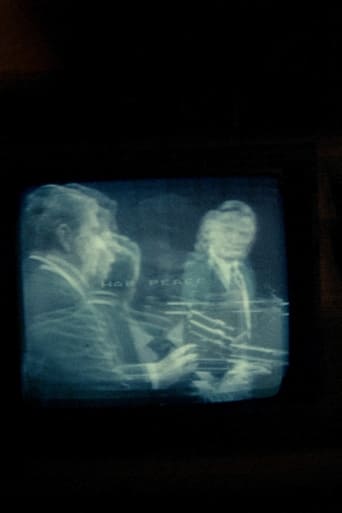
43/84: 1984
1984 · Film · short · 2 min
Directed by Kurt Kren
Kurt Kren recorded the last television debate in the Reagan/Mondale election campaign. In the viewfinder, the television filled the entire picture, but the viewfinder did not match the lens entirely so that the television screen in the picture was very little. That was not the plan, but Kren decided to "adopt" the film in the end.
1 positive27 neutralfrom 28 commenters
Where to watch
No streaming data for this title.


28 comments on Hacker News
I've often said we're recreating Brazil [1] instead of 1984. It's an excellent film if you haven't seen it btw, and in many ways rather more prophetic and insightful than 1984. But the ending emphasizes that incompetence just leads to a comedy of absurdity, but absurdity is no less dangerous.
As for PRISM, it's regularly used - but we engage in parallel construction since it's probably illegal and if anybody could prove legal standing to challenge it, it would be able to be legally dismantled. Basically information is collected using PRISM, and then we find some legal reason of obtaining a warrant or otherwise 'coincidentally' bumping into the targets, preventing its usage from being challenged, or even acknowledged, in court. There's a good writeup here. [2]
[1] - https://www.youtube.com/watch?v=aJCxVkllxZw
[2] - https://theintercept.com/2018/01/09/dark-side-fbi-dea-illegal-searches-secret-evidence/
I always felt the movie "Brazil" was the satire. 1984 was the horror film.
Also... we're throwing around words like "crime" and "terror" and talking about shadowy quasi-governmental organizations encroaching on civil rights to privacy. I offer this commentary from the Eurythmics' score to Michael Radford's 1984 film "1984" to serve as background music for our discussions.
https://youtu.be/IcTP7YWPayU
There's quite a few sci-fi books, movies, and TV shows that explore this concept. Probably the most well known is 1984
But I'm pretty sure this would make life very bland. Slow down innovation as we become less creative, less willing to deviate from the norm, and the Overton window of what's socially acceptable narrows. After all, we do love having enemies in some way or another, even if it means making them up.
What a great question! Many interesting movies to check out in these comments!
My own list, I re-watch movies the same way I re-listen to music, often to get in a particular mode of thinking, as they become familiar, I mostly daydream while appreciating some particular concept and whatever new minutiae, or ways of understanding, creeps into my mind.
Hackers - 30+ times, for dreaming about a world that never was and never will be, for reminding myself how cool computers used to seem.
The Crow - 20+ times, for thinking about the world
Koyaanisqatsi - 15+ times, for thinking about my life in the world
Alien - 10+ times, for thinking about the future that passed us by
Terminator 1 and 2 - 10+ times, for examining a time that never was, or passed me by, and because Arnold is awesome!
A Clockwork Orange, 10+ times, to reflect on violence and aesthetic
Event Horizon, 10+ times, mostly for the aesthetic, and who dosen't love spaceships from hell ?
1984 - 5+ times, for thinking about humanity and society
Requiem for a Dream - 5+ times, for thinking about the value of life, and what society is
Once upon a time in the west - 5+ times, for thinking about loss, revenge and justice
Genocyber - 5+ times, to think about what life is for anyway
Stalker - 5+ times, frankly, mostly to look at the pretty pictures.
Lots of other amazing movies, I probably forgot some (time to watch again?)
Bonus:
TV Shows I've watched more than 10 times:
Star Trek TNG
Neon Genesis Evangelion
These techniques are still used today by propaganda outlets. It is sad that Orwell reads not as fiction, but as reality.
And the best one i read a couple of days ago: CIA sponsored the movie 1984. The same CIA which employs methods like the ones in the book and in the film.
I’m sorry, this response contains references to 1984, a film banned for inciting unrest. Thoughtcrime does not exist, you have freedom of expression unless it harms our profits.
> They also always seem to conclude that the answer to these problems is to keep these machines centralized in the hands of big companies and governments, which is a very strange conclusion when they tend to get paychecks from those groups.
I'm not sure who you mean by they.
I'd suggest a vast majority of the public mindshare (in the US at least) of technology gone wrong and dystopias come from sci-fi.
In general, I have not noticed sci-fi making such conclusions. I rarely notice them drawing any hard conclusions. Readers often come away with a mix of emotions: curiosity, anxiety, excitement, wonder, or simply the joy of stepping outside one's usual reality.
What I read and watch tends to paint a picture more than pitch or imply solutions.
- 1984 seems to make the opposite point, right? It is the classic example of the surveillance state. as such, it is a counter example of centralized power.
- A Scanner Darkly (movie) explore the question of who watches the watchers. It does not paint a pretty picture of the agency doing the surveillance.
- The Ministry of the Future shows how a government agency can't really do much without widespread decentralized underground support. As drones get cheaper, civilian activists become terrorists who assassinate climate unfriendly business people. Spoiler alert: it may not fit the pattern of a dystopian novel.
- Her (a man falling in love with his OS) explores the personal side in a compelling way.
When our communication tools nudge us in a direction, they change who we are.
Well, probably not. The people doing this certainly believe that's true, but actual robust evidence for it is thin on the ground.
The conflation of symbols and abstractions with reality itself is an ideological assumption/intuition that's been a problem for the left for as long as it's existed. That's why 1984 features Newspeak so centrally, and why only one kind of politics is obsessed with altering representations of reality like movies, statues, stock artwork, etc. It's also why leftists at tech firms are so obsessed with the non-problem of AI bias: they see it as "biased" because AI can't be socially pressured in the same way people can, so they're afraid that it will represent the true reality it learned and by doing so miss an opportunity to reshape that reality.
Can you actually change how people think by subtly manipulating words? Psychology - a field very dominated by the left - has repeatedly claimed you can, but then when the claims get a little too good to be true they get investigated and don't replicate:
- Strong Sapir Whorf hypothesis (wrong)
- Weak Sapir Whorf hypothesis (very shaky even for ultra-weak forms like color words)
- Priming (wrong)
- Implicit association test (wrong)
There are probably way more examples. For less psych oriented stuff, consider that people have been systematically manipulating the presentation of job gender balances in movies and TV shows for decades, with nothing to show for it. Seeing lots of heroine hackers on the big screen didn't convince lots of girls they wanted to work with computers in real life. That's why there's now so much concrete discrimination going on: attempts to change things via more subtle symbolic means had no effect.
If Google Docs tries to stop people using "problematic" words, all it'll do is piss off lots of users and reinforce the general impression that Google is in no way populated by people as smart as it once was. The Google of 2004 would never waste time on cynical, nasty and entirely data-free attempts to mind control its userbase via underlining WrongThink.
Not everything is a space opera (Lucas' is terrific!). 2048 has strong emotions stretched over a weak story. 1984's somehow had more story, but also quite slow paced.
Some of my favorite movies almost don't have a story at all, neither sfx.
Ooo, and I remember that the movie of 1984 had a much better soundtrack on its original release on VHS, which I have somewhere...
https://en.wikipedia.org/wiki/1984_(For_the_Love_of_Big_Brother)
Seems more of a creative dispute than royalty issue, though.
Thing you haven't mentioned is that with no oversight, no transparency no counter, no clear your name, the tyranny which wants to ruin your life doesn't need to build a CSAM scanner to do it. A tip-off to the police, a falsified claim from an "eye witness", an "accident" putting your name on the wrong report to get the machinery rolling and it will, as you say, roll by itself. See what actually did happen to Sir Cliff Richard[1] where "a complaint to the police" got his house raided and his name dragged through the media and despite not being arrested, not being charged, case being dropped, him suing the media and winning, suing the police and winning and the media apologising, he says his reputation will never be completely cleared - and it probably never will be, and it didn't require any specific tech.
"The System" didn't need to wait patiently for a big tech company to build a complicated system with dastardly moustache-twirling weaknesses before it could affect Sir Cliff, anymore than Big Brother in 1984 needed to wait for Winston to be seen taking action on the telescreen in his house before the system crushed him. If "The System" wanted to accuse you, it could accuse your car of having been seen on a nearby road at the time, your likeness being seen on CCTV, and if you get rid of licence plate recognition scanners and CCTV then it would be "an anonymous witness" seeing you in the area at the time or "overhearing you discussing" something.
> "Most people don't understand how life destroying a false accusation is"
Citation needed? Because we were forced to read 1984 and To Kill a Mockingbird in school and I'm pretty sure a lot of other people were as well; we've seen cult TV series like The Prisoner and The Fugitive focusing on the lives of the trapped trying to escape "the system". Blockbuster films have been made about the power of "The State" chasing people such as Enemy of the State with Will Smith. Films in the pattern "wrongly accused must fight to clear his name" and "stalwart good guy fights the system gone bad" are practically genres on their own - The Fugitive as a film with Harrison Ford, Who Framed Roger Rabbit, Captain America: The Winter Soldier, The Shawshank Redemption, and specifically about someone falseley accused by a child, The Hunt with Mads Mikkelsen which is in the IMDB Top 250 films.
Are you also, for example, complaining about the system where doctors and social workers are mandatory reporters if they have any evidence or suspicion of children being abused? That's a "their word against yours" system which pervades the nation, has no oversight, has no objective criteria, no explanaiton of the workings of the brain behind it, relies on humans when we know for certain that there are doctors who make mistakes and errors of judgement and at least some who would look the other way for money.
At least with the tech company CSAM scanners we can potentially have a society wide discussion about how they work in detail, whether that's reasonable, who could and should oversee them and how, what kinds of data cloud companies are obliged to know about their customers and what is reasonable for them to not know, etc. But even in tech circles we can't actually have those discussions, most of the attempts to discuss the details of how it works are drowned out by people who haven't a clue what Apple announced, misunderstand massive parts of it, conflate two or three different systems, don't seem to understand that other tech companies already do this with much less careful design, and cry tyranny and blame China.
Hypothetically, iMessage or any chat system could be built end to end encrypted, any cloud file sync or file storage could be. One end of the spectrum is that they should be. If that's your position then "the system" will probably work around you, that's the "opt out of modern life" position of the "return to the woods" lifestyle. You can't unmake billions of cheap ubiquitous cameras, you can't unopen Pandora's box, and you probably can't stop people emotionally reacting strongly to topics of child protection. If your reaction to that is "not listening, no no no" then it doesn't seem likely to sway "the system" very much at all.
> "CSAM is a dastardly and effective way to establish a totalitarian rule by fear of life in jail, nothing more.
America has effectively incarcerated a lot of people into for-profit prisons without needing this. China has effectively added a lot of population control by rule of fear without needing this. You don't need a high-tech murder-detector to make people fear being thrown in jail for murder.
[1] https://en.wikipedia.org/wiki/Cliff_Richard#Property_search,_investigation_and_BBC_litigation
The problem with your wager is that on a long enough timeline, the doomsayers are always right.
So saying anything OR societal collapse is going to evaluate to true.
There are any number of disasters, both terrestrial and cosmic, that can radically change the landscape of the Earth.
I also don't really find discussions about what's going to happen beyond our lifetime that interesting for the most part. Often, they're just fantastic wishing attached to some loose thread of logic.
The Island
Escape from New York
The Running Man
Akira
Strange Days
A Scanner Darkly
Back to the Future II
Blade Runner
2001: A Space Odyssey
2010: The Year We Make Contact
Death Race 2000
1984
Terminator 2: Judgment Day
Freejack
Westworld
Real Steel
Pacific Rim
12 Monkeys
The Abyss
Timecop
And a host of other films and books are set in futures that are now our past. And while some of these are fantasy designed to entertain, they all make assumptions about what would be possible by that time. And we have fallen woefully short of those predictions. So short, that "flying cars and meals in pill form" is a meme about such predictions.
I would expect the impact to be the way in which it would shape conversations afterwards by serving as a cultural touchpoint. Much like 1984 does.
I'd really like to simply reference a classic movie or book as a conversation ender every time this shit cropped up rather than explain abstract risks from scratch in a less than engaging fashion.
Anyway. This isnt a problem I can solve.
I think what is sad is such a movie would literally have to use Google and WhatsApp in the movie as opposed to some fictional search engine or fictional social network for people to make the connection these days.
Honestly, 1984 should be enough as it's not a big jump from 1984 telescreens to Google/Facebook.
I should have elaborated on this in my other flagged comment, but: the poster has linked two papers, the relevance of which is not obvious, and not explained it at all.
(Also, I feel we've gone somewhat offtopic here; it's not a Party matter, the depiction of sex in American films - unless we're counting the targeting of films at the global market resulting in films being made compliant with Chinese censorship? Could OP and/or the upvoters explain why they think 1984 is relevant?)
The FBI is going to be mining NSA intercepts to catch people streaming Michael Radford's production of "1984" without a permit. The security state is a jobs program, and Congress delivers the bacon.
Will they have probable cause for a wiretap if I talk about watching a movie, but my credit card data (which they have) shows no evidence of purchasing that movie?
Now we see why they tried so hard to ruin at Aaron Swartz. Had he survived his encounter with the Justice Department, Aaron would probably be a member of Congress leading the charge against this monstrosity. They are shutting down the Open Technology Fund as well, an important early supporter of both signal and tor.
I remember the movie and book “1984” where people were constantly monitored by all available means, and voila, we are rapidly getting there. Having helicopters and drones watching everything we do is seriously creepy and us tech people are happily supporting it.
I've long refused to see the movie (1984) until I read the book. The book is on that long "someday I'll get to it" list. Guess I'll start it this weekend... finally after decades of lying to myself that I'll "get around to it someday,...soon" ~ "soon" is finally here!
I found a much subtler message hidden in that episode, very similar to all the other similarly subtle messages sprinkled throughout the show.
Everybody there was acting perfectly predictably, and rationally, and the consequences for the behavior displayed were eerily similar to what they would have been without all the technological pomp.
The technology winds up simply making the normal progression of the events of life happen just a bit faster. Hard working, social people that you would expect to be successful still become successful, and entitled people like the protagonist of the episode has that entitlement drawn out far more quickly than we would ordinarily see.
There's no dystopia, just unfamiliarity with the setting that the show exploits to dramatic effect to make you think it's dystopia. But if the world of Black Mirror is dystopic, then you can level the same charge at today's technological milieu, and yesterday's, all the way back to sharpened sticks and stones. Technology doesn't destroy our humanity, it amplifies it.
Real dystopic fiction, like 1984 or A Clockwork Orange, is dystopic because it magnifies the human selfish instinct such that it turns into the villain of the story. But Black Mirror contains no grand villain, just plain old ordinary drama. The characters fight each other, not an immense system that's hellbent on destroying human dignity.
That episode was more disturbing than most. I can't imagine signing up for something as horrible as that. It's literally torture as described in 1984, but worse.
How, dont you see it ? The government then must do something to make you see it. You remind me of that movie 1984 inspired by George Orwrell. One character says: 'we dont destroy our enemies, we make them see what we want them to see'. Worse that brainwashing.
Not many engineers seem to be interested in politics government and what is (not) being done with the tax you pay. People care about being upvoted not about politics. Votes dont mean anything to me, freedom of speech is more important.
The article's lead photo shows a frame from a movie version of 1984. The actor depicting the freedom-seeking protagonist, standing in front of an image of Big Brother, later depicted a near-identical Big Brother character in the 1984-ish V for Vendetta.
All too often those young idealists morph into the power structure they seek to topple. They may not start out with the objective of dictatorship per se, but they know no other path than to impose their own.
I'm consistently astounded at England's ability in the last couple of decades to move towards the fictional UK societies we see in 1984 and V for Vendetta. It's almost like the people have come to the exact opposite conclusion that the authors were trying to impress upon their audiences.
> "Wow, censorship, totalitarianism and mass surveillance are great ideas. We really should implement them."
Secondly, it is impossible to filter information within a society that doesn't have North Korea like tendencies. As soon as this filter goes up, people will just rent servers overseas, and get their internet via encrypted lines that aren't subject to censorship.
Banning porn is like trying ban alcohol. Everyone knows that it's a vice, everyone still does it (isn't 20% of global internet bandwidth porn?), and banning it just puts money into the hands of organized crime.
Thirdly, won't a bunch of mainstream award-winning films that come out every single year become illegal under this act? Games too for that matter. Say good bye to crime shows and violent film in the UK.
Finally, this is just one step away the Great Firewall of China. The argument that we need to protect children from the "corrosive" aspects of society might expand to other political parties, or ideas that aren't in the interests of those already in power.
The thing with censorship is that as soon as a you do a little, it's funny how quickly that becomes a lot. You just have to think of the children now then don't you?
To be clear, I'm not "writing off" either book. I don't think either author was attempting to make literal predictions about what society will or might look like, so I don't consider it at all a failure if things are different. I just can't understand how Brave New World could be seen as more accurate than 1984. For example, if you wanted to film a 1984 movie, there is very little you would have to do other than go to some place with urban decay, throw up some Big Brother posters (perhaps placing them over the existing billboards encouraging police/soldier worship or admonishing "if you see something, say something"), put telescreen props in plain apartments, and throw in some extras in the right clothing. The actual palpable differences are quite small, because they mostly exist inside the minds of the average citizen.
For Brave New World, you would need strict population control (mandatory sterility), mass manufactured test tube babies with hatcheries and conditioning centers, working class castes that are chemically stunted, near-mandatory government issued hallucinogens, far less chaste sexual mores, etc.
Like I said, it is a science fiction fantasy world with a multitude of plot-significant fictional technologies. Even the human birthing process is far more unrealistic than the entirety of 1984. The only science fiction I recall from 1984 were artificial foods, telescreens, voice recognition, and some military equipment, all of which are quite realistic today (and were mostly so in real-world 1984).
I don't know if David Simon's (creator of "The Wire" and "Treme") defense of the Verizon phone records request ever made it onto HN's page:
Here it is, if you hadn't seen it: http://davidsimon.com/we-are-shocked-shocked/
Apparently it was so controversial that his site crashed from the traffic, and he had to tell everyone to chill out: http://davidsimon.com/nsa-and-fisa-commentary-calling-it/
Anyway, why I thought of that in relation to the OP was, that I think some defenders of the NSA and general government surveillance policies are just unaware of how technology can fundamentally change things...As Google leaders have been known to say, "Speed is a feature"...and so it's not the finding of information that makes the establishment of Google time in human civilization, but how fast Google allows us to do it.
So that said, Simon is one of the journalists I have the absolute highest regard for...I'll be one of the many who think "The Wire" is the best TV drama ever, both for its artistic take and for its illustration of how institutions -- the police, the schools, the drug trade -- corrupt even the best of individuals. "The Wire" is heavily based off of the year that Simon embedded himself in the Baltimore homicide department...the book (which spawned a network TV show) is the best book about the practice of journalism I've ever read. After a year following the detectives, you'd think Simon would be pretty much in cahoots with the police...but he followed up "Homicide" with "The Corner", in which he spent a year embedded with drug dealers and their customers...apparently most of the friendsships he made in the Baltimore Police department evaporated after he published a book bringing sympathy to Baltimore's downtrodden.
Anyway, I don't think Simon has a love for government or authority. But I do think he's a little naive when it comes to advances in technology and their consequences. When "The Wire" started, the police were focused mostly on tapping pay phones. By the time "The Wire" ended, the police were surprised at the advent of camera phones. So when Simon says he thinks the NSA and other law agencies won't abuse their wiretap authority, I believe him...because in much of his experience, the practical obstacles (such as, having to have an officer watch a payphone all day) made it basically impossible for blanket surveillance.
But technology is different...I think Simon's -- and others who I respect -- mistake is to think that the game is being played the same as it always is. It may be the case that the NSA is staffed with as people as good and conscientious as anywhere else...but it's naive to think (as was the primary lesson in "The Wire") that the power they have will lead them astray...and to those of us affected by it, it makes no difference if the violations were intentional or accidental.
Anyway, back to Paul Revere and the OP...I think it's a great example. But of course, what makes that educational scenario feasible is technology and the ability to record information (metadata or whatever you want to call it) in an organized way.
Frankly, I kind of thought anyone who read 1984 would understand how technology changes everything. But yeah, I do think there are some well-meaning people don't grasp the technology, and if they did, they'd have a different opinion about the dangers of unchecked surveillance.
* edit: misspelled conscientious as 'contentious'
* edit: as an example of how much Simon continues to challenge the police as a citizen, here's an essay he wrote after the success of the Wire, in which he tried, as a citizen, to get the basic details of a cop-involved shooting, something that has always been public record. He eventually succeeded, and the revelations about the officer involved ended up jeopardizing the prosecution: http://davidsimon.com/in-baltimore-no-one-left-to-press-the-police/
But as you can see if you read the piece, Simon is not to thrilled with how the Internet has displaced newspaper journalism
Anyone ever remember the movie 1984?
I don't know why but as soon as I looked at that page I wanted to search for 1984 the movie.