 Hacker Cinema
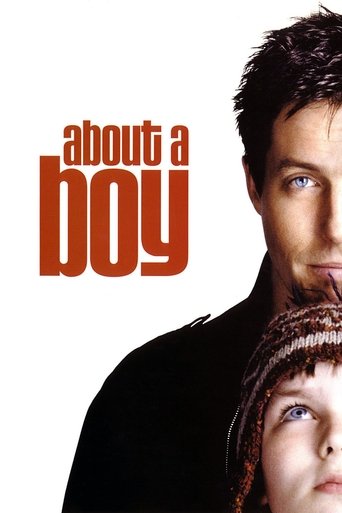
About a Boy
2002 · Film · 101 min
Directed by Paul Weitz, Chris Weitz
Will Freeman is a good-looking, smooth-talking bachelor whose primary goal in life is avoiding any kind of responsibility. But when he invents an imaginary son in order to meet attractive single moms, Will gets a hilarious lesson about life from a bright, but hopelessly geeky 12-year-old named Marcus. Now, as Will struggles to teach Marcus the art of being cool, Marcus teaches Will that you're never too old to grow up.
1 neutralfrom 1 commenter
Where to watch
No streaming data for this title.


2 comments on Hacker News
One common factor in your description of what you've done already is lots of big-picture thinking and big-picture change focus.
I'm an outlier-coach here in that I see this as an opportunity for more little-picture thinking, where that applies. In results I've seen, it's a very useful model worth testing.
So even if it sounds crazy, for the time being you'd start by:
- Lowering your time scales to minutes, hours. Kind of like the beginning of the film About a Boy, where the main character describes his life.
- Lowering your product/experience focus to individual product-/experience- level differentiations
- Lowering your stimulant focus level to common sensory inputs rather than big-picture stimulant undertakings
Result examples:
- What sounds good for lunch today? I had a ham sandwich from the store yesterday, boring af. What sounds really good today is some fresh lemonade and a monte cristo made with bakery bread. Followed by maybe a new type of chocolate I haven't tried yet.
- What sounds good pre- and post-nap today? To eat, to read, to watch?
- What would be a really funny thing to do with my career today, that only takes 10 minutes?
Big-picture result: The little picture factors eventually start to re-calibrate your big-picture values over time, making you more aware of your comfort levels, and eventually they make their way into your big-picture interests.
Once this propagation cycle is more complete, you get a more tightly-calibrated feel for what you want your future to look like in the big picture. So this is not ignoring the big picture at all.
But this is really really difficult for a lot of big-picture folks to start on, since our culture is currently mainly focused on / obsessed with career-change starting with big-picture first, and we are taught that the little picture is kind of naughty, and that we already know way too much about the little picture and what that's like.
Just another crazy idea though. Lots of methods to try from here & good luck with whatever path you take.
I admit that after reading, the "useless vs useful" framing comes off a bit like a false or maybe just unnecessary dichotomy. Maybe there's more to the idea than what was presented though.
It reminded me of the film _About A Boy_ which tackles a really similar set of themes and also avoids this "be useful" trap by getting at something more like the "subjective value of heroism" or in other words the perceived value of helpful interpersonal connection--to the subject. In any case the theme is IMO naturally attractive to humans and is a key part of cultural narratives. The Uncle Ben story from Spider-Man--it's great to be a hero but what are the real dilemmas there, _and_ what do we make of them. Etc.
Heading in this direction naturally confounds the idea of social boundaries a bit, which IMO is a really good conversation to be having these days, since boundary-setting, having shown so much therapeutic value, is a crucial concept to reconcile with a more boundary-opening approach.
Not to criticize too harshly, but if the only tool we are considering is this useful/useless filter, the outcomes might be unnecessarily not-so-great, for both others and ourselves.