 Hacker Cinema
Alone
2015 · TV series · 42 min episodes · 13 seasons
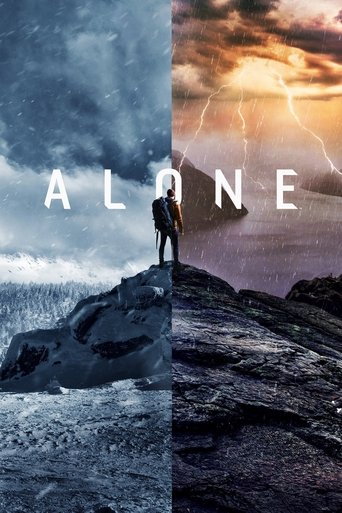
Hardcore survivalists are put by themselves in the Vancouver Island wilderness, without camera crews, teams, or producers – on a single mission to stay alive for as long as possible.
11 positive4 negative1 mixed19 neutralfrom 35 commenters
Where to watch
No streaming data for this title.
44 comments on Hacker News
Maybe watch the TV series "Alone" and see if you want to do that. But even they have excellent clothing, high tech knives, saws, and axes, and so on.
> while the poor stay poor
America's poor are the wealthiest poor people in history.
Yeah, lotus and ginkgo are both fairly common, I'm sure a lot of us have had them.
Lichen and moss being the most ancient foods makes sense to me based on watching episodes of Alone. You can get calories from that stuff if you're desperate, but it sure doesn't seem a pleasant way to sustain yourself.
It would obviously be more work to bring home a mammoth than something smaller like a deer, but I don't think that that suggests anything much different about the complexity of society. At the end of the day it's just a bunch of hunters bringing home the bacon, perhaps fetching the women to help if there was a lot to bring back.
I'm reminded of the "Alone" TV series where one contestant shot an 800lb Ox with a bow and arrow and single-handedly butchered it and carried it back 2 miles to his camp (requiring about a dozen trips).
Have you ever watched the TV show Alone? It’s an outdoor survival competition reality show. In it people regularly end up medically evacuated due to starvation or malnutrition.
Sometimes you can tell by looking at someone’s face they’re starving - but usually you can’t. Usually it’s when they strip down for the periodic medical exam when you can actually tell how starved they are.
Do you want a recent photo of this man, or do you want him to strip naked for you to judge his weight loss?
Why is one man stripping naked for you something you need before you’ll believe the hundreds of different people saying that people are starving?
Like, seriously. What if he’s lying? He could be, of course - but would you then believe everyone is lying? Or what if he’s telling the truth about weight loss, and you see proof - will you then turn around and say well yeah but he’s probably just starving himself for attention?
You need proof one man is starving to believe hundreds?
I wonder if there is a way to gamify weight loss or calorie restriction. I mean besides participating on the "Alone" television show (where people go for weeks with very minimal calorie intake). And I wouldn't be surprised if there weren't self-reinforcing cliques of anorexics essentially doing this already in an unhealthy way.
Which season was that?
Asking because "my bow guy" from Youtube, that I learned bow making from was the winner of Alone season 8 and he's one of the guys that can't put on weight. He tried i.e. put on as much as he could but he knew he had a disadvantage against everyone else because he'd not just go in fat like most others.
-----
stop reading here if you did not watch season 8 and want to not get spoiled
------
S
P
O
I
L
E
R
-------
Clay Hayes if you want to google his channel. Does survival stuff, bow making and bow hunting / trad bow.
He won, because he knows his stuff, so while the guys that had just put on weight had a weight advantage, he had a knowledge and "actually knows how to survive off the land and has nothing to prove" attitude. While some others had their bow strings chewed up by mice, he immediately hung his bow up. Unlike others that built elaborate shelters and used up all their calories, he built a very simple a-frame hut that he knew how to build. Even though he had no proper clay he built a proper tiny oven to keep himself warm and smoke free inside. He had absolutely super bad luck with fishing. Essentially got nothing for lots of effort.
He was super lucky in that he actually found a deer and was able to shoot is with his trad bow, which is because he goes deer/elk hunting for real every single year with exactly that setup (see his youtube channel). He knew how to preserve said meat by smoking it and he knew how to protect it from the bear(s) in the area, which they weren't allowed to kill because this was filmed in BC Canada. He even had a super close encounter towards the end IIRC with a cougar but might have been the bear, not sure any more (not around his meat but out and about).
He almost gave up. Basically he wanted to give up at the next med-checkin because he essentially had no food but the smoked deer and they told him he won!
On a ~80 year scale you'd be correct for some of the world. But if you live in the "wrong" part of the world even in the last 80 years, just one "build muscle and heal injuries recklessly" may have resulted in more damage than good, coz the "grocery store" doesn't exist.
The problem is also that if you "adapt fast" to "recklessness", then many people die fast before they would not be able to adapt back if necessary.
Got wounded in a conflict zone cut off from supplies for months? Too bad, coz your body adapted to grocery store being close and unfortunately your body decided to just never put on weight in the first place, so now you have zero reserves to use up and ... you die.
Watch "Alone". Some of the guys are adapted to never put on much weight and that's a real problem for them. They have a TV show safety net. If it was real, they'd be dead.
Humans are highly dependent creatures. Just watch "Alone" (tv show) if you think otherwise.
I figured it was obvious that creating something meant creating something of value.
If someone else is willing to trade for it, then something of value has been created.
P.S. Most people don't know how to make a fire from scratch, and will die of hypothermia in even modest environments. I know how to do it, but have never actually tried it. Doing it without even a knife will be really hard. The TV series "Alone" is instructive about how hard it is to survive, even if you're well-equipped with modern gear.
Garbage can be found just about anywhere now. There is a TV show called Alone where people try to survive off the land in remote locations. There’s a limit to how much stuff a person can bring with them but they are allowed to use any items they find. In almost every season someone finds something that was dumped. The whole world is becoming a garbage dump. There are giant garbage patches in the oceans now. It’s disconcerting that we have done so much damage to the planet.
He should watch the TV series "Alone"
Just watch the tv show Alone. It is so difficult. Only a couple of contestants in its history seemed to thrive.
Igor Limansky, from Alone Season 9, didn't do well living off of just seaweed. He grew very weak and developed heart palpitations from malnutrition.
Including seaweed in one's diet may have worked for people but living exclusively on seaweed seems to have problems.
She has a novel shelter structure too.
(Have watched 12+ seasons of Alone. If you want to dip your toes in, seasons 6 and 7 are great, 3 and 8 half decent too. The Australian season is a bit miserly, while the UK version just finished was fairly budget/amateur.)
The way they handle bears is very limited, for instance. Humanity's main defenses against bears have been 1) being in groups of more than one person and 2) sometimes you gotta kill a bear. In Alone you've got your airhorn and bear mace and that's it.
I will say I enjoyed the early episode of one of the seasons on Vancouver Island where a cop tapped out within a day or two because there were bears. He even said (I'm paraphrasing) that he's not used to not being able to shoot them or call for help on a radio.
Agreed it would be way easier to survive as part of a small tribe rather than fully alone, but I wouldn't use the TV show Alone as proof. They purposely pick some of the least hospitable places for life, drop people off at the end of fall with no summer to stock up/prepare, contestants have to follow all the local regulations around how/what game they hunt, and (most importantly) nobody is allowed a gun. Plenty of small-time trappers and other pioneers survived on their own during the westward expansion!
There's a survival show called Alone that recorded several seasons on Vancouver Island. One thing I learned from that show is not to underestimate this island: The rain, the wildlife, the wild!
Most of the seasons can be watched for free, now: https://play.history.com/shows/alone#episodes
Season 4 "Alone: Lost & Found"
I really liked it. It was intense and unique - one person from the pair had to hike to location using compass. So they didn’t start together.
In Patagonia season one of the women built top-class camp as well and she wasn’t starving too!
I disagree about that it’s setup for starvation - quite often there is single or maybe two participants that get enough food. It is surprising though that quite often they obviously don’t pay enough attention to food and just starve. Ie they would try to fish in the same spot and not get fish over and over and so on.
I don’t have enough training to do that, but strategy-wise I would tap out if me trajectory was negative. Ie if I’m obviously not getting enough food or fail to have warm shelter as cold arrives, I would just tap out.
There is a show called Alone [1] in which 10 participants compete for 500.000 dollars by trying to survive the northern canadian arctic winter as long as possible, up to three or four months. Virtually all footage is filmed by the participants themselves. It's quite engrossing.
[1] https://www.imdb.com/title/tt4803766/
> I have a feeling there's a lot of suppositions or beliefs one must have prior to making statements like these that I don't share.
Do you agree that you can choose to not follow the law? Would you also agree that if enough people chose to not follow the law, government would cease to exist?
> Is it? I've watched a few episodes of "Alone" on Netflix and it sure doesn't look easy to me. Some seasons seem to devolve into "fattest man wins" because he starves last.
Natural law doesn't really preclude you from cooperating, unlike reality shows. Also, in the natural world you generally migrate to places where resources are not scarce.
> Why is that true? Could I not ask others to help me protect these resources? I don't need a government to do that.
Why would they protect these resources rather than take them? Perhaps if you knew them personally and rewarded them generously, they'd do it, but then I'd say you're personally involved in protecting them. That doesn't scale to the extremes we have right now. There are no billionaire equivalents without government violence.
> No, you forget that a governed society has no right to exist.
I don't know that that is true or really what it's supposed to mean, so I'm going to challenge it.
> It only gains its legitimacy when it’s preferable to an ungoverned society and other achievable alternatives.
I have a feeling there's a lot of suppositions or beliefs one must have prior to making statements like these that I don't share.
> it’s rather trivial to build yourself a decent shelter and gather food (if you’re able-bodied).
Is it? I've watched a few episodes of "Alone" on Netflix and it sure doesn't look easy to me. Some seasons seem to devolve into "fattest man wins" because he starves last.
> What’s not possible in ungoverned society is gathering more resources than you can personally protect.
Why is that true? Could I not ask others to help me protect these resources? I don't need a government to do that.
On the TV show ‘Alone’, a diet high in pine xylem probably hurt one contestants digestion. Commercial trees might have pesticides mostly on the easy-to-eat parts.
Theres a rate of fasting thats harmful though. On the TV show Alone, people are out in the woods for a few weeks to months and they end up just sloughing off weight. One contestant lost 86 pounds in 67 days, you'd practically see it fall off you each day. They do have to get medical checkups because losing all this weight too fast can put a lot of strain on your organs. A few people have been forced to leave the show because of starvation.
Great comment.
This reminds me of the survival reality TV show 'Alone', which is an interesting, if not contrived, experiment into how "being alone" can affect you psychologically, or not, depending on the person.
https://www.history.com/shows/alone
I've had this weird obsession with that Alone show, but there was an episode where one of the contestants decides her nutrition is messed up and she's going to eat the stomach contents of some wild hares she's trapped.
She describes it as one of the tastiest meals she had the entire show. Literally half digested arctic vegetation.
Your body rewards you for eating those things which satisfy your needs. McDonalds will do that, but so will a salad.
One of the fad diets for a while was the "one thing" diet. You could have anything you wanted.. but you could only eat that single item that entire day. Cheesecake? You're having cheesecake for breakfast, lunch and dinner. Very quickly participants discover it is very easy to burn out on sweets and junk.
If you eat nutritious food that will actually give you that reward craving.
Also, nothing wrong with steak. Nothing really wrong with cheesecake either - but you only need a tiny bit of those things. There's a reason most people want tiny steaks and not big honking ones, especially people who eat steak with regularity.
Change can suck. It can also be great. I think our tendency towards loss aversion makes us focus on how much it can suck. Even if my future might be better, it will be different, and I can want to not lose the thing to which I currently feel attached.
> That's exceptionally difficult when the competing values, like climate, are more abstract than the ones currently held. I worry that humans are not psychologically equipped to manage problems of this scale.
I think we may be equipped, as we've handled problems on much larger scales than I think our ancestors would have expected, and yet I hear you, wondering what (if anything) could change to make us more equipped.
I wonder if reframing our identity could help. Instead of me only being a coal miner or Michigander, I'm also more connected with my human identity. Maybe more backwoods experiences, watching and living TV shows like Alone or Naked and Afraid...I dunno. I wonder if we don't actually have to try to connect to the planet but just more deeply to our local wildlife and to ourselves.
I like your comment because it's useful to consider but amusing at how dire survival amongst humans might be.
If you haven't watched Last Man On Earth (TV show), it's a good combo of the same thoughts (humorous, but easily provokes more serious thought). And for less-light fare, Alone is a good insight into survival in the wild, though without worrying about humans as a threat. Humans, of course, completely changes the game.
I enjoy watching that Alone TV series. I was intrigued that some of the contestants would just build an open fire inside their shelter. Those had a lot of problems with smoke inhalation, and would often burn down their shelter, causing them to exit the game. Putting a vent hole in the roof didn't help much.
Some would build a fireplace on the side, those did better.
One contestant built a fireplace on the side, and put a chimney on it made of stone and clay. No tools needed to build it. It worked as you'd expect - famously.
Chimneys are very simple technology, but took a very long time to invent - not until medieval times.
If you're into data and metrics and what not, I can't recommend "Burn the fat, feed the muscle" enough:
https://www.amazon.com/Burn-Fat-Feed-Muscle-Turbo-Charged/dp/0091954924
Basically this:
0.) Weight loss isn't binary. Doing something good is always better than doing nothing. Little things add up.
1.) You can't lose weight by netting fewer calories than you use; you can't gain muscle by using more calories than you net
2.) A good macrobiotic (carbs|protein|fat) calorie ratio to go by is 50%|30%|20%. (if you're calculating percentages by grams instead of calories its 56%|33%|10%)
3.) It takes more energy to eat some foods than others (thermic effect of food). You see this in TV shows like "ALONE" where the contestants starve despite a surplus of lean protein since protein is hard to digest. Ditto salads.
4.) Do cardio
5.) Do resistance training
6.) Bonus: So your body doesn't adapt, go 3 days of lower calories, 1 day of higher calories
7.) Bonus: To lose weight faster, go 3 days of lower carbs, 1 day of higher carbs
8.) Bonus: Eat smaller meals as the day goes on
The first 5 are critical; the last 3 are if you want to dork out over it.
If you're into data and metrics and what not, I can't recommend "Burn the fat, feed the muscle" enough:
https://www.amazon.com/Burn-Fat-Feed-Muscle-Turbo-Charged/dp/0091954924
Basically this:
1.) You can't lose weight by netting fewer calories than you use; you can't gain muscle by using more calories than you net
2.) A good macrobiotic (carbs|protein|fat) calorie ratio to go by is 50%|30%|20%. (if you're calculating percentages by grams instead of calories its 56%|33%|10%)
3.) It takes more energy to eat some foods than others (thermic effect of food). You see this in TV shows like "ALONE" where the contestants starve despite a surplus of lean protein since protein is hard to digest. Ditto salads.
4.) Do cardio
5.) Do resistance training
6.) Bonus: So your body doesn't adapt, go 3 days of lower calories, 1 day of higher calories
7.) Bonus: To lose weight faster, go 3 days of lower carbs, 1 day of higher carbs
8.) Bonus: Eat smaller meals as the day goes on
The first 5 are critical; the last 3 are if you want to dork out over it.
Buying organic: yes. Eating organic: no.
At least in the US and Canada this should work. Of course not everyone can do it and it's not for everyone.
You gotta live in the right place and know the right stuff. You want some acreage. That's where you'll grow your organic veggie garden. This doesn't need too much of the acreage but you also want woodlands that you can get your fire wood from sustainably. You also want to be close enough to somewhere you can legally hunt and know how to hunt. Then you home school the kids. Et voila!
If you want an example of someone that is at least close enough to this (AFAIK they live 50% of the year w/ their parents in Florida and 50% is what I described above) look into the guy that won season 8 of Alone.
I know we're not supposed to question why a link was posted here, but... why? ;)
I mean I thought about a lot of bad scenarios and how to prepare for them, but a nuclear war is probably not survivable, you're just going to prolong the pain a few more days / months.
To have any chance you probably would have to stay at least 5 years in an underground bunker. The guys on the TV shows Alone (I'm watching the first season now) are getting crazy just after a couple weeks of isolation.
The Germans have an excellent saying for these kind of situations: better an horrible end than an horror without end (sorry if my translation isn't accurate).
I subscribed to watch season 8 of alone. Each show had about eight thirty second commercials that you couldn't skip. Last time I'll try that way to watch something.
Yeah I just watched some videos that is extremely related by this modern homesteader (and YouTuber! -- apparently he was on the TV show "Alone").
He says "one of the best pieces of advice I've ever gotten is: Don't trade a gun for a snow machine". This is exactly what you're saying, and it's backed up by a lot of experience living without power and water!
https://www.youtube.com/watch?v=BH15Kua5P1Y&t=918s
He also says "everyone one of us has to decide when to jump ship on a technology"
He says canoes peaked in the 1960's, and you can buy a used one for like $125 that's the same as what you'd buy today for thousands. Same with hand saws. He maintains old saws and chainsaws and uses them:
https://www.youtube.com/watch?v=BH15Kua5P1Y&t=746s
when you look at any kind of manufactured goods a lot of things have reached their peak and are either poorer quality than they used to be or they're just the same quality as their peak
----
I found this channel via a video about building an off grid cabin from scratch for a couple thousand dollars: https://www.youtube.com/watch?v=bOOXmfkXpkM
It's good -- a lot of it is built by hand with a hammer and nails. He even says load bearing screws are too expensive, and nails are better!
All of the advice reminds me of Taleb, because it's not necessarily trying to be "right", but rather distilling rules of thumb from practice.
As I said, I have no problem sharing it. The controversy I see is between the message of "off grid, good old fashioned solitude in the forest" vs the "instagrammy, watch me how I do, big brotherish" (as in the TV show) attitude. Not the fact that he conveyed information of what it's like to build a cabine.
In other words if you want to show and document the process of building such a thing, that's ok. But it's not that. If you want to document your 'journey' of solitude, that's OK too, but you can't do that in my opinion by constantly minding about how you look on camera. Because that kind of defeats any purpose I can think of for solitude. (I.e. am I really alone if I keep thinking about the society that I wanted to leave behind and continue acting as if I was still there and they were still all watching.)
You can look at it as an art project. I.e. "this is how I imagine what it feels like to build a cabine in the woods on your own".
I just finished watching season 6 of Alone and at first found it to be an interesting watch, but as I saw more episodes (and the contestants had been out there longer), I saw more and more of what you're talking about here. And after I finished the show and looked it up online, I was surprised to see just how much of the narrative I had just watched was completely fabricated and morally repugnant. For those who aren't familiar, the premise is 10 people are shipped to a remote destination with the basics (sleeping bag, axe, cord, etc...) and whoever lasts the longest gets $500K ($0 if you lose, I presume). They are also given camera equipment and are responsible for filming themselves. They don't see anyone else while they're out there except a medical team for occasional check-ups. Season 6 took place in northern Canada in near arctic conditions, starting in late fall and continuing through winter.
(Spoilers)
* The skill gap between best/worst contestants is portrayed as minimal. In reality, some contestants came in with years of lived experience thriving in the exact environment of the show (like the victor, who had spent years living in Siberia with people native to the region), or are literally paid professionals (like the army survival instructor, who tapped out because he was so successfully surviving he was bored, and didn't need the money), while others come from difficult backgrounds and have picked up wilderness skills only as a hobby or by necessity. When you find out just how large the skill gap was, and how some of these contestants basically never had a chance, it feels completely exploitive and effectively rigged.
* Contestants give "camera confessions" in classic reality TV style, but these take a very dark turn as the show progresses. Going from "Excited to overcome the mental challenge of isolation", to starving, choking through tears "If I can hang on just a few more days I might be able to win the prize money for my family and give them the life I never had" in just a few episodes. If people are out there doing this for pride or because they enjoy the experience, so be it, but it's another thing entirely to dangle a large monetary prize in front of them. It just feels really sick to be watching people who are incredibly vulnerable and literally dying open up about their traumas and making it very clear they are only sticking it out for the cash. Begging to be allowed to stay when they are clearly underweight and at risk for cardiac issues.
* The final episode makes it seem like the 2 remaining contestants are both just hanging by a thread, a literal starvation contest, which would be sad enough. But if you do some research afterward, you find out that while the 2nd place contestant had lost a dangerous amount of weight and was eating rabbit entrails, the winner had 100s of lbs of food stored (including moose and plenty of fish) and had not lost any weight. Hell, the last (gigantic) fish he caught they apparently brought back and used to feed the production camp.
* All this said, the winner of Season 6, Jordan Jonas, is a very interesting (and apparently humble, good natured) guy, and I have enjoyed reading his commentary on the show on reddit and his blog. The show portrays him as lucky in some respects, probably to make him seem more like the other contestants, but he was in fact using a great deal of very specific techniques and knowledge, like how to build an structurally sound/ideal shelter, track/bait/hunt large game, ice fish, or build structures to keep stored food away from other predators. He himself admits the show obviously created a false narrative around his chances to win.
I would also add, "build a fire", "set an effective snare" and "catch a fish". The TV series _Alone_ is a great insight into what are the absolute minimum requirements for survival.
> I find that in modern times, people have no idea how much nature is out to kill them.
To get an idea with not much chance of dying, check out the reality TV show "Alone" on Netflix or Amazon Prime or the History channel. On season one episode one there's a rough tough cop contestant that SPOILER
taps out after one night of too much reality in the woods ... and I had a lot of sympathy for him.
> Watch a survival documentary. 10 contestants, many battle-hardened. The conclusion after watching 5 seasons of "Alone"
That's a reality TV show, not a documentary.
That aside, the conditions for basic survival in harsh, solitary, conditions are vastly different that those for economic success in first-world society.
Watch a survival documentary. 10 contestants, many battle-hardened. The conclusion after watching 5 seasons of "Alone" is -- its all luck. The fittest didn't win, it was the person who happened to be dropped off in a relatively safe area, with access to resources, and had some good luck day to day. The people who randomly dropped into areas filled with predators or hazards, they were forced out (despite many being hardened survivalists). People with random equipment failures, or where the fishing suddenly dries up, they have to quit too. No matter how hard your will, if the resources disappear you aren't going to win (one contestant stumbles on a moose and literally has hundreds of pounds of food fall in his lap, only to have the fat stolen by a wolverine).
There's a TV series "Alone" where they drop people off in the remote woods (far from each other) and the person that can survive the longest by themselves wins $500k.
As the season goes on, you can see a clear decline in the mental health of many of the contestants. Many drop out just out of sheer boredom or loneliness, even though they have decent shelter and can find food. The winners usually last about 2-3 months alone.
https://en.wikipedia.org/wiki/Alone_(TV_series)
They would probably enjoy "Alone", if they haven't seen it yet. (A dozen people get dropped off on separate parts of Vancouver island, and have to survive the longest to win prize money. No help, total isolation, and they have to film everything themselves.) One of the better done "reality survival shows" I've seen; sort of like a batch of Les Strouds (Survivorman).
You should try "Alone".
The premise is that about a dozen people get dropped off on Vancouver Island in British Columbia, completely alone and separated from the others by miles, so it's implausible (and presumably against the rules, anyway) to meet up.
They have to film themselves, _a la_ Survivorman. They have to survive. They can tap out at any time via radio, and someone will come and collect them, but they give up their chance for the prize money.
It's _very_ compelling, and if it's faked, it's faked well.
The second season wasn't as good for some reason, but I will probably go back and rewatch the first one.
Please don't stop looking for a cofounder. It's true that all it additionally takes to be a solo-founder is self-discipline, but as a human being you are psychologically and emotionally unequipped to deal with this. Let me explain...
On History, there's a self-filmed TV show about 10 survivalist dropped off separately on Vancouver Island competing for $0.5M to be the last standing. The show is fantastic, not for the impressive survival skills, but for the human psychology. The show is called "Alone," and I'm fairly certain they (re)named the show after filming. What you witness over the course of just weeks, is nearly every wilderness expert abruptly losing their will to go on because there is nobody to share it with. They openly acknowledge that they have what it takes to continue, and were originally okay with being away from their family indefinitely, but they all just completely lose their desire and interest in winning or continuing because they are so alone.
In short, isolation doesn't just make it more difficult for you to achieve your goals, it rips the desire to achieve them from your psyche altogether! This is empirically shown and self evident in numerous aspects of society: solitary confinement being classified as torture, team dynamics, mentors, pair bonding, tribalism, etc... It's also why YC (mostly) doesn't accept solo-founders, as well as many other respected VCs.
[1] http://www.history.com/shows/alone/about