 Hacker Cinema
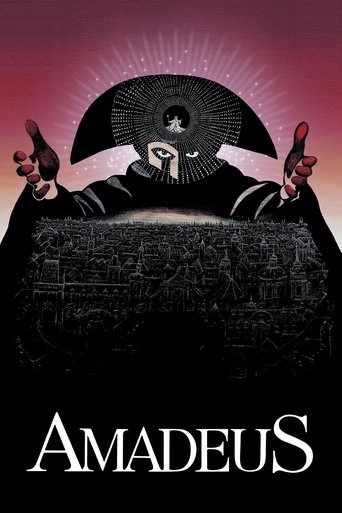
Amadeus
1984 · Film · 160 min
Directed by Miloš Forman
Disciplined Italian composer Antonio Salieri becomes consumed by jealousy and resentment towards the hedonistic and remarkably talented young Salzburger composer Wolfgang Amadeus Mozart.
21 positive5 negative2 mixed25 neutralfrom 53 commenters
Where to watch
No streaming data for this title.
62 comments on Hacker News
>Mozart doesn’t feel right. The code isn’t beautiful and elegant. It’s not built to last (at least for ffmpeg) or be some kind of masterpiece.
Pedantic much? It's not about him writing elegant code like someone would write elegant music. It's a comparison about the skill level achieved, Mozart-level vs Salieri-level (and in the sense of their Amadeus movie rivalry, not real world).
His code tackles very complex subjects, succesfully, with huge technical skill, and has been reliable and relied upon by millions...
Many of these EWD notes are hand written with a lot of mathematical notation, and no corrections. For example:
https://www.cs.utexas.edu/~EWD/ewd10xx/EWD1063.PDF
I am reminded of Salieri's reaction to Mozart's manuscripts in the movie Amadeus.
It upsets me that the only widely available versions of Amadeus now is the "extended edition," which fundamentally alters the film’s core message.
In the original theatrical cut, Salieri is a deeply flawed but fascinating character—a man consumed by jealousy, yet also in awe of Mozart’s genius. His sabotage of Mozart is tragic, not just because of what it does to Mozart, but because Salieri himself recognizes the beauty he is trying to destroy. There’s a complexity there: Salieri hates Mozart, but he also admires him. He wishes, more than anything, that he could be his friend, but he cannot overcome his own bitterness.
The extended edition, however, adds a crucial change: Salieri doesn’t just work against Mozart—he actively humiliates Mozart’s wife, Constanze. This transforms Salieri from a tormented, conflicted figure into something much simpler: a villain. Instead of a man waging a war against God through Mozart, he’s just a petty, lecherous schemer.
The real Antonio Salieri was not some scheming villain—he was a respected composer, teacher, and conductor who mentored some of the greatest musicians of the next generation, including Beethoven, Schubert, and Liszt.
Even modern film is often not great, particularly theatre prints that aren't explicitly made for archival purposes. There was a fascinating YouTube video recently where the author pushes back on the purported superiority of fan-scanned 4Ks now competing with official, studio-supervised restorations:
https://www.youtube.com/watch?v=uQwQRFLFDd8
Obviously DNR and bad HDR jobs are kind of their own issue, but he focuses specifically on coloring and the notion that theatre prints are themselves often wildly inconsistent and change over time, so it can be extremely difficult to even establish a baseline for what a film was meant to look like or even what it actually looked like upon release.
As a modest 4K collector myself, it frustrates me when certain films seem to sit in indefinite limbo, but Amadeus (released this week) looks fabulous and was absolutely worth the wait, so I have hopes that the people taking their time to do right by films like Ben Hur and The Sound of Music are doing so for the right reasons.
It's actually well executed how they managed to say exactly once "Amadeus" or "Patton" in their biographical films.
I had a similar experience when I popped in an old DVD of Star Wars (i.e. A New Hope) recently. If I recall correctly, there are some short clips and audio that play as part of the intro before you even get to the main menu, and it includes the famous John Williams theme. I hadn't seen the movie in ages, so I wanted to go in fresh, and this totally ruined the experience.
I had the opposite experience when I popped in another old DVD, this time Amadeus. I hadn't seen the movie before, but I was shocked and pleasantly surprised when it literally started playing from the very beginning of the movie. No DVD menu or previews at all. It just felt so good to go straight to the story.
When I was a kid, VHS home recording was a thing... so my sisters and I watched a few movies wayyyyy too many times.
The Blues Brothers Stripes Ferris Bueller's Day Off Footloose Dirty Dancing Amadeus These days, everything comes and goes from streaming. I'll watch these when they pop up again
The Expanse Monty Python and the Holy Grail The Ministry of Time Groundhog Day Dirty Harry Apocalypse Now About Time Time Bandits
- The Sting - The quintessential con movie.
- Amadeus - "Too many notes, Mozart!" A heavily romanticized retelling of the somewhat apocryphal rivalry between Antonio Salieri and Wolfgang Amadeus Mozart.
- Disney's Robin Hood - Get the dope on your horoscope~
- The NeverEnding Story - Because who didn't want to soar through the air on a luck dragon?
- Iron Monkey (少年黃飛鴻之鐵馬騮) - A retelling of the Chinese folk hero Wong Fei-hung, with classic wire-fu and excellent fight choreography.
I can vividly recall visiting Prague in the Communist era and was amazed to see no billboards, it was like stepping back in time.
What amplified the effect for me was that the Communists had done very little development since they'd come to power which meant that not only the old centre of the city but also some of its suburburban parts had remained essentially unaltered since the 18th Century.
No doubt, those who lived there would have noticed changes but to my jaded eyes the city was a time capsule.
It seems I wasn't alone thinking that, the producers of the 1984 movie version of Peter Shaffer's play Amadeus used Prague as a backdrop because it was historically 'pristine' in that it had not been spoiled by ads.
When I returned some years later after the fall of Communism things were very different, there were ads and billboards everywhere. I was both shocked and saddened at what had happened, the billboards had visually polluted the city.
I'd love to see billboards removed but I can't see it happening in the major centers of capitalism anytime soon.
"...Miloš Forman – being Czech played a role too."
It's almost certain he played a key role.
As background, I'll preface my comment by saying that I was once employed on the engineering side of the television industry, and the place where I worked was closely connected to film production, the complex included film labs that processed Eastman color stock for theater release and allied to it were film studios, so it's inevitable that I picked up some knowhow about what goes on during a film production.
Other than having seen Amadeus, (which I rather enjoyed but still hold several strong criticisms about despite its many Oscars), and the few snippets I've read about the film, I've no direct knowledge of its production per se, but I'd say that as its director Miloš Forman almost certainly would have had full oversight and a controlling say in all aspects of its production (as do most directors of any film).
Despite my background, I'm not really a strong film buff so I've no deep interest in the production minutiae of films but I took somewhat more interest in Amadeus than with most because of its story. I'm a long time enjoyer of classical music and I'm familiar with much of Mozart's and some of Salieri's music. I accept the modern view that their relationship was often more collaborative and there was little animosity or rivalry between them. In the relationship Mozart, if anyone, was likely the bigger problem, as he had a penchant thinking people were against him. There's some evidence that Salieri kept a watchful eye on Mozart, and as a fellow composer why wouldn't he do so as did Hayden and others? There's essentially no solid evidence that Salieri poisoned Mozart—only ill-founded rumors. In fact, evidence suggests he died of a combination one of the winter illnesses doing the rounds of Vienna at the time and a concoction of dangerous medicines (if Mozart was poisoned then the most likely culprit was his local apothecary).
Even before the idea of the film was born, it's almost certain that as a Czech Forman would have had a priori understandings about Prague that would have come to the fore when he learned he'd be directing the film. It's reasonable to assume he'd have immediately recognized that Prague would make an ideal readymade backdrop for the film. Its historical center was ideal from a production standpoint, it was of historical significance for the film and its old unaltered architecture could easily substitute for scenes in Vienna and Salzburg.
Moreover, I'd reckon it's highly likely (probably almost certain) that Forman was well aware of Mozart's close connection with Prague long before he'd read Peter Shaffer' stage play. It'd be difficult for him not to know, as Prague takes considerable pride that Don Giovanni, which is widely accepted as one of the greatest operas ever written and still a very popular† and still widely performed, had its premiere in the city in 1787 in the Bohemian National Theater (now the Estates Theatre). (I couldn't miss that fact when I first visited Prague as there was mention of it everywhere.)
"If you visit the cellar of an old house in Old Town / Lesser Town, chances are you'll find bricks much older than Maria Theresa."
Right. I've spent many an hour in such 'establishments' getting somewhat lightheaded (to put it politely) and I've made a practice of looking at their construction and becoming acquainted with their history and age. Where I come from (Australia) indigenous stuff is ancient but nothing of European influence is more than a bit over 200 years old so by comparison just about everywhere in Europe seems very old; in many places I've visited there's a surfeit of ancient buildings, they seem to be everywhere, we have nothing like that here. No doubt, to native inhabitants it's just the norm and they take it in their stride. However, for me the age and historical nature of these old buildings remains a novelty and they always pique my interest even though I've been to Europe many times and lived and worked there for periods.
"Whether or not they let you take a brick home is a different matter :)"
Ha, I doubt it. As an arch conservationist, it was never my thought to remove anything that was fixed in place, I recall once sitting on 2000-year-old bricks in the Colosseum and the thought never crossed my mind, what did however was that I was actually sitting on them and that no one else except me was the least bit interested in the matter.
Why would I remember that? Well, down here, we have social phenomenon—or at least we used to called the cultural cringe: https://en.m.wikipedia.org/wiki/Cultural_cringe. It's not as common these days as large sections of the community have come from Europe and elsewhere, and nowadays travel to Europe is commonplace, but it was alive and well when I was a kid and it rubbed off onto many of my generation (but it affected our parents and earlier generations to a much greater degree because few had the opportunity and means to travel). Like many of us, when I first went to Europe decades ago I thought I'd finally made it, my education was on its way to competition. Incidentally, sometimes it's still a sore point with older people who've never traveled.
The phenomenon is understandable in that before WWII the local culture here was profoundly British and the population was acutely aware that it was living in an outpost 12,000 miles from its cultural home of Mother England even though the vast majority had never been there. After the War that changed somewhat after several waves of European migration and later migration from Asia but native born Australians still knew they were missing out on experiencing the real thing—that of gaining actual hands-on knowledge of their cultural heritage and that it was important for them to make the pilgrimage.
Re: 'Maria Theresa' bricks, they had a particular resonance for me as I've long had an interest in the Enlightenment era and that I was living in one of the cultural capitals of the world. Also they weren't rare, there were many loose ones just lying about at various building and construction sites around Vienna. Moreover, I wasn't alone, a colleague, one of my fellow countrymen, would also hunt them down with gusto.
Clearly familiarity breeds indifference, such mundane historical artifacts like bricks seem to hold little interest for the locals but for us renegades from the cultural cringe they're considered prised finds. ;-)
On a similar theme I recall an occasion where I saw a nice old 18th Century single storey brick building in Kleine Neugasse near Wiedner Hauptstraße not far from where I was living at the time being torn down to make way for a modern structure. I was rather horrified at what I considered vandalism, which, to me, was all the more poignant due to the fact that nearby significant numbers of old buildings had been bomb-damaged during the War and out of necessity they'd been rapidly replaced with new ones of little architectural merit. I remember whingeing about it to my landlady over lunch at a nearby café. She wasn't the least concerned and couldn't understand why I was upset about it.
__
† Don Giovanni is also a favorite of mine, why wouldn't it be? It has appeal even for those who aren't opera buffs; it's salacious in parts and righteous in others, it's full of sex, promiscuity, seduction, rape, murder, revenge, arrogance, hubris, rejection of salvation and damnation—even a ghostly appearance from the murdered Commendatore! What else is there? The opera captures much of the human condition to a tee!
No wonder the conservative Viennese establishment banished it to Prague! Also, Don Giovanni tells us a lot about the liberal-minded rebellious attitudes of both Mozart and his librettist, Da Ponte. (BTW, Whenever we discuss Mozart's operas we usually leave Da Ponte out of the discussion. We shouldn't however, for without the Mozart-Da Ponte collaboration Don Giovanni would never have been the true and continuing success that it's been over the past few centuries).
> …why the 1984 movie Amadeus, which was about Mozart and his rival Salieri, was filmed in Prague…
Surely the director of Amedeus – Miloš Forman – being Czech played a role too.
It is much easier to cooperate with the local crew in their native language, relative to Hungarian / German (IIRC Budapest / Vienna were the other two options on the table for that film).
> It was commonplace to see bricks made, say, in the time of Archduchess Maria Theresa
If you visit the cellar of an old house in Old Town / Lesser Town, chances are you'll find bricks much older than Maria Theresa. These cellars routinely date back to the original construction, 11-14th century (unlike the house on top, which has typically been rebuilt several times to match the latest fashion – gothic, baroque, rococo, etc).
Whether or not they let you take a brick home is a different matter :)
"I wish I could get my hands on one of these brands..."
Ha, right. That brings back memories from when I was living and working in Vienna. When walking by building or construction sites around the city one would often come across bricks that were several centuries old and one could tell this because the molds from which the bricks were made had the coat of arms of whomever Hapsburg/Archduchy ruler of Austria was in power at the time embossed into them, thus bricks produced from them are time capsules time-stamped with the era from which they came.
It was commonplace to see bricks made, say, in the time of Archduchess Maria Theresa who—as we're talking about Czechoslovakia—was also Queen of Bohemia around the time of the Silesian Wars/Battle for Prague. (It seems to me the many wars in and around Bohemia over the centuries only adds to the point about why the Czechs are the way they are; essentially wars and politics likely framed Hašek's worldview and thus Švejk.)
Anyway, it had been my intension to souvenir one of these bricks in pristine condition and bring it back home to display on my mantelpiece but unfortunately I never quite got around to it. :-)
For me, one thing that truly stood out in Czechoslovakia under Communism which was in stark contrast with noncommunist countries was the lack advertising and billboards on streets and roadways and that was especially evident in big cities such as Prague.
Moreover, when I first went to Prague it seemed to me that I was stepping back in time as communist Prague had been preserved as a beautiful 18th Century city because the communists had done very little modernization during their time in power; that was also the situation for much of the country, witness my comment about the woefull state of the Emperor Franz Joseph Railway.
I recall reading somewhere the reason for why the 1984 movie Amadeus, which was about Mozart and his rival Salieri, was filmed in Prague, and it was because its center remained so much like it was in the 1780s as that was the period in which the film was set. The film's producers specifically made the point that the lack of visible advertising and billboards was one† of the primary reasons for choosing the city. That's not the situation now, not long after Communism fell Prague began to look like other Western cities, which to me seems like a shame.
That lack of modernization and not keeping up with best practice under Communism wasn't all positive. The crawling, almost walking speed of train trips on the Franz Joseph Railway line and various trips by car allowed me to spend much time looking out of windows at the countryside. On the train at some short distance south of Prague I recall seeing pollution from what seemed to be a cement factory. For miles around tree leaves were covered with a dirty cement-colored dust which gave the nearby countryside a horrible yellow-grayish appearance.
I may be wrong but after viewing both cities and countryside and talking with those who lived there I formed the opinion that back then this sort 'malaise' was reasonably widespread over much of the country. Nowadays, that's changed much for the better.
_
† Others were that Prague holds relevance for the story in that its present architecture is similar to Vienna of the 18th C. which made for an authentic backdrop, and that in the 1780s Mozart's Don Giovanni was deemed too salacious and sleazy for conservative Viennese society and had to have its premiere performance in more liberal Prague.
Let's use a less contentious topic: FOSS vs proprietary software. There is a common sentiment I've seen on HN that FOSS is superior to proprietary software, and all else being equal, I agree with that sentiment. However, in reality, not all else is equal. Some proprietary software is just better at solving certain problems than FOSS equivalents – maybe the proprietary software is more reliable or has a better UX or is more regularly maintained or has more features a user wants or differs along a host of other dimensions. Thus, if someone makes a categorical claim that all FOSS software is superior to similar proprietary software, we would regard that comment as propaganda. This doesn't mean that FOSS software is bad or that good FOSS software can't be created or that no one should try to create excellent FOSS software.
This is an analogy or what I mean by "political correctness" (or related concepts like "wokeness" and "social justice warrior"). Great art communicates truth about the human condition in a beautiful way. This is, of course, open to interpretation, yet somehow many people agree that, for example, The Godfather is a great film. Why? I believe the film shows us some truth about the human condition (particularly our ability to descend into evil) through a gripping story with excellent characters, visuals, dialogue, plotting, etc.
When we substitute an arbitrary checklist of criteria a film must meet that have nothing to do with communicating truth about the human condition in a beautiful way, we are engaging in "political correctness," and we have ceased to value art but instead propaganda. For instance, if we were to use the new Academy standards for Oscar-nominated movies, the Godfather would fail – the cast is almost all white, has no LGBT and IIRC includes the n-word. Amadeus, another excellent film (one of the most praised in Oscar history) would certainly fail, since the cast is all white and almost entirely male, as we would expect from a film set in 18th century Vienna. This does not mean great art cannot have diverse casts, LGBT characters or a lack of "problematic" content. For a recent example, the excellent show Andor ticks almost all of the DEI checkboxes – LGBT character(s), diverse cast –, but it also has smart writing, interesting characters, sensible plots, beautiful visuals and a compelling story. As long as the former are subordinated to the latter, a work remains art and not "politically correct" propaganda. At the same time, Oppenheimer ticks almost none of the DEI checkboxes and yet is arguably one of the best films of this century.
> So instead of using a meaningless euphemism, OP should articulate what exact themes, stories, or characters they think lead to a good critic score?
I think this comment betrays exactly what I'm critiquing. Great art can't be shoved in a box like this. Mediocre art has identifiable flaws - maybe it's visually bland or maybe the dialogue is poor or the characters act in inexplicable ways. These all detract from the beauty and truth of the work.
That's on the Universal Studios backlot in Universal City, next to Hollywood.
It's on the tour when they aren't filming other movies there.
Amadeus filmed there too.
I don't really know. Amadeus is my absolute favorite movie of all time, but it has been set around the music. Tous les Matins du Monde is another fond memory, but it's a biopic of Marin Marais, a composer. In Diva, the excerpt from La Wally works well. The Ride of the Valkyries (sp?) is of course famous, but not so impressive. Let's not forget 2001, a Space Oddyssey.
My favorite moment is literary. In one of Douglas Adams' books (Dirk Gently), someone hears fantastic music from some alien space station that he has to "destroy" in the past or something, altering the timeline of the universe, and thus losing the music. But then when he comes back, his girlfriend plays that same music on the cello. I copied this from the book:
His face was so amazed that she stopped playing the instant she saw him.
"What's wrong?" she said, alarmed.
"Where did you get that music?" said Richard in a whisper.
She shrugged. "Well, from the music shop," she said, puzzled. She wasn't being facetious, she simply didn't understand the question.
"What is it?"
"It's from this cantata I'm playing in in a couple of week," she said, "Bach, number six."
"Who wrote it?"
"Well, Bach I expect. If you think about it."
"Who?"
"Watch my lips. Bach. B-A-C-H. Johannes Sebastian. Remember?"
"No, never heard of him. Who is he? Did he write anything else?"
Susan put down her bow, propped up her cello, stood up and came over to him.
"Are you allright?" she said.
... [bit later, Richard calls his friend] ...
"Reg, the music -"
"Ah yes, I thought you'd be pleased. Took a bit of work, I can tell you. I saved only the tiniest scrap, of course, but even so I cheated. It was rather more than one man could actually do in a lifetime, but I don't suppose anybody will look at that too seriously."
Great, I've not been to Sao Paulo but can understand what it's like without ads.
I went to Prague before Communism fell and I was truly amazed at how beautiful the city looked without an ad to be seen anywhere. It was like being in a time warp back to the 18th Century.
I believe I wasn't alone in having this view because I'm told the movie Amadeus (about Mozart) was made there, as Vienna, where the movie was set, had too many ads.
Tragically, when I went back a few years after Communism fell ads were rampant everywhere.
Damn shame really.
Curious what you think of Mozart vs. Salieri, e.g., https://en.m.wikipedia.org/wiki/Amadeus_(film)
Or a four star Michelin restaurant vs. a Mall food court, or all art/entertainment reviews?
Seems like it's really common to compare things in ways that aren't objectively measurable?
For Mozart presumably his years of musical experience (and training) as a child prodigy helped him become an excellent composer early in life.
Symphony #25, composed by Mozart at 17 (and used as the opening music in the movie Amadeus) is pretty great.
Sadly Mozart died at 37 (unlike his friends the Haydns who had successful careers into their 60s.)
Have you watched Amadeus (the film). I like that movie for its exploration of the psychology of dedication being confronted by genius.
As outsiders of the sports, it is great to celebrate the GOATs like Feds Nadal and Djoko but a cursory google reveals that to reliably break even in the sport, you need to be inside the top 250 in the world.
To be 250th in the world at something like tennis takes a lifetime of graft and a tonne of talent, and yet the rift between 1st and 250th is still huge - you can often see #1 go extended periods without dropping a set and getting 6-0s which is a cruel reflection of the nature of the power law: you might be 1 in 100million but 1 in a billion talent completely wrecks you
EDIT reread your comment - totally agree with you regarding software vs individual competition.
I'm going to complain about the 1984 selection. Here are the top 10 grossing films from 1984 (from Box Office Mojo):
1 Beverly Hills Cop $234,760,478 $234,760,478 100% - - 2 Ghostbusters $229,242,989 $229,242,989 100% - - 3 Indiana Jones and the Temple of Doom $179,870,271 $179,870,271 100% - - 4 Gremlins $148,168,459 $148,168,459 100% - - 5 The Karate Kid $90,815,558 $90,815,558 100% - - 6 Police Academy $81,198,894 $81,198,894 100% - - 7 Footloose $80,035,402 $80,035,402 100% - - 8 Romancing the Stone $76,572,238 $76,572,238 100% - - 9 Star Trek III: The Search for Spock $76,471,046 $76,471,046 100% - - 10 Splash
Their picks are Amadeus and Indiana Jones and the Temple of Doom. Amadeus is probably the "critics pick" but I can't come up with any formula that picks the #3 box office as "most popular" from that year. I don't remember it being particularly well received when it came out, and it certainly is panned in hindsight. Hardly anybody would pick it as their favorite from that list of 10 movies...
There's this joke in the movie "Amadeus" where the emperor (Joseph II?) remarks that Mozart's music has "too many notes". He explains that the human ear can only hear so many notes. That might have a element of truth. Our perception is (obviously) limited, and beyond a certain point, complexity becomes overbearing.
But on the other hand, minimal music is a much more recent development, and it is certainly part of the "classical" tradition. There might be a bit of room left before we find the end.
Fact checkers have been proven wrong over and over again throughout the past few years. You need VERY intelligent people to check facts but there are too many corruptible, educated idiots posing as intelligent people... Also, there aren't enough truly smart people in positions of power to be able to select smart people to do fact-checking. The elites are just not smart enough. You can see how society is falling apart because of it.
Our problem is that reality is more like in Planet of the Apes than Idiocracy; the big angry monkey lord cannot surround himself with smart individuals because he himself is not smart enough to identify and select them (cannot separate idiots from geniuses). He will surround himself with idiots because he can't tell the difference; the idiots are more similar to himself so he will choose them because of his ego. It's also like in the film Amadeus; the king is not very talented in music so he is unable to understand that Mozart is a musical genius, instead, he repeatedly promotes Salieri who is closer to his own skill level.
In Idiocracy, the president is an idiot but he knows how to identify smart people by relying on an IQ test. It doesn't work like that in reality. IQ is not reliable for identifying critical thinking, also, almost nobody uses it for recruitment purposes anyway.
tarare is also the name of an opera by antonio salieri (of the amadeus movie fame) that takes place, of all places, in the hormoz island of the persian gulf…
Yes, but there are many great film makers, whose work isn't generally considered 'boring', like much of David Lean, or Milos Forman's Amadeus.
It seems that Robert Spaethling's book 'Mozart's Letters, Mozart's Life: Selected Letters' says most of it: https://www.theguardian.com/books/2000/sep/24/biography.music. I've been meaning to read it for ages and ages, reckon this story has spurred me on to add it to my next book order.
Amadeus was certainly entertaining albeit annoying for its inaccuracies. It's saving grace was F. Murray Abraham's wonderful Oscar-winning performance of Salieri.
Another aspect of the film worth noting was the fact that it was filmed in Prague before Communism finally fell, this really added to the visual character of the film. The reasons for filming there were mainly that there were no advertising billboards or hoardings anywhere to be seen across the city and the fact that under Communism there had been very little modern development in the old city which meant that its architecture was still authentically of the Enlightenment period—it'd been preserved par excellence (which was amazing given the ravages of war and the onslaught of the 20th Century).
I can attest to that, my first visit to Prague was before Communism fell and it really did look like like that. Some years later when I visited again after Communism's demise there were billboards and hoardings everywhere. The visual change came as damn horrible shock. If you want a lesson in how to make a city ugly in one easy lesson then Prague's the quintessential example.
Even though its historical accuracy isn't great, the movie Amadeus captures that aspect of Mozart's personality quite well.
Highly recommend the 1984 Oscar-winning movie about him ("Amadeus").
Entertaining, well acted, and gives a bit of background into his life.
I like to use the movie Amadeus as an example of this. The movie portrayed Salieri as a man who could barely play. When that was just not true at all. The problem is they were comparing someone who is top of their field to someone who was extraordinary. In fact if you look at the movie semi closely you would see Mozart could not even keep the rest of his life together.
Amadeus, definitely changed my world view of what movies could be!
Kubrick’s Barry Lyndon, Forman’s Amadeus, again Kubrick’s Clockwork Orange, Antonioni’s Blowup, De Sica’s Miracle in Milan are some of the first films that come to mind and wish more people came to enjoy them
One of my favorite Morricone creations is main theme for one of the greatest horror films of all time, John Carpenter's 1982 remake of The Thing.[1]
I can't find it now, but in an interview Carpenter said something like that when he first worked with Morricone on this film, the latter came up with a very flowery, melodic theme, and Carpenter went to visit him but had trouble getting his ideas across to Morricone because of the language barrier, so he just said (through a translator): "Less notes"[2], and this is what Morricone came up with.
[1] - https://www.youtube.com/watch?v=pfcc9U35hPY
[2] - Which reminds me of the "too many notes" scene from Amadeus (https://www.youtube.com/watch?v=H6_eqxh-Qok), but unlike Mozart, who took offense, Morricone seems to have taken the suggestion in stride and come up with a classic.
Five hand-written pages and no scratch-outs or corrections. And maybe I'm wrong but I'm pretty sure this wasn't the Nth draft. I don't doubt that he just sat down and wrote it out in one go.
(It's so impressive it's almost galling. He makes me feel just a little like Salieri, of Mozart.) https://en.wikipedia.org/wiki/Amadeus_(film)
I'd encourage you to read Brian Eno's "Composers as Gardeners"[1], which talks about a different way of looking at composition, which is pretty different from the usual way people think about it.
Many non-musicians are under the impression that composers think up music in their head and then write it down, and while some do work that way to some extent (with they myth of Mozart working like that in the movie Amadeus being probably the most well known and most extreme case of composition being completely like that), for most composers (including Mozart) this is much more of an iterative, experimental process.
In recent decades, and especially with the advent of electronic music and computers, a lot more randomness and elements not fully or directly under the composer's control have entered in (though, again, this goes back at least back to the age of Mozart, with his dice game[2]).
There's a whole field of algorithmic composition[3] where music-generation becomes either semi-automated or even completely automated, and the composer's role is one of writing or choosing the algorithms, and of choosing various other aspects of the music (such as which instruments or sounds get used) but without pre-determining the final work in totality or in advance.
Brian Eno talks about this much more eloquently and deeply than I can, so I again encourage you to read his talk.
[1] - https://www.edge.org/conversation/composers-as-gardeners
[2] - https://en.wikipedia.org/wiki/Musikalisches_W%C3%BCrfelspiel
[3] - https://en.wikipedia.org/wiki/Algorithmic_composition
Amadeus is a movie that really resonated for the reasons you mention. However, another movie that really resonated, and offers a counterpoint to you’re-either-born-with-it-or-not fatalism is Gattaca.
(Of course, one could argue that Amadeus is a “true story”, whereas Gattaca is science fiction.)
(This is a side point to your excellent comment)
The movie really distorted what we know about Salieri and Mozart. That doesn’t matter in that Amadeus is just a fun story and doesn’t claim to be any sort of documentary, and such a story made a good case study for your comment.
But Salieri was a very good composer and I personally like more of his work than Mozart’s (though Mozart at his best blew away most of his contemporaries, including Salieri). Mozart appears to have lived a more conventional middle class life and Salieri a more contemporaneously successful one which is kind of henopposite if he film.
On the flip side. Sometimes you're just not that good at stuff despite your best efforts.
In college I really struggled with math. Which was a challenge because computer science has you take a lot of math classes. In my calculus class I studied so hard for the final. Did every problem in the book. And I still just got a B in the class.
At the same time my programming classes were really easy. I didn't study at all and the homework was trivial.
Based on my interviewing history I'm not in the 95th percentile of programmers - I'm routinely outright rejected and don't even land the on-site interview. And this is basically my best skill for which I've invested an enormous amount of time and energy.
The movie Amadeus really nails this idea. Salieri has one goal in life: to create beautiful music. And he achieved some success, but then he meets Mozart - " a boastful, lustful, smutty infantile boy..." - yet he creates the most amazing music he's ever heard.
> All I wanted was to sing to God. He gave me that longing... and then made me mute. Why? Tell me that. If He didn't want me to praise him with music, why implant the desire? Like a lust in my body! And then deny me the talent?
I've experienced that frustration many times in my life.
Salieri is a tragic figure though - his response is one of contempt and hostility to the injustice of his life. But he's missed the point. All success and talent in life is a gift.
Maybe your frustrations in life are an opportunity to teach you humility and to be gracious to others.
Yes, Hollywood isn’t very good at presenting the unvarnished truth.
I felt that the movie and particularly Salier’s (fictional?) role as a competitive observer of Mozart in the movie reifys the absolute genius of Mozart in a particularly effective way.
I notice that my daughter and her friends now really like Queen’s music because of Bohemian Rhapsody. In addition to Amadeus I’ve suggested The Buddy Holly Story, Ray, Coal Miner’s Daughter, and Le Bamba to her—all movies that I really enjoyed that might widen her appreciation of music outside of what she hears most today.
I've tried to introduce my kids (who are college age) to the pleasures of classical music, mostly to no avail. I just recently rewatched the movie Amadeus (a 1984 masterpiece on Mozart) with my daughter, and she liked it.
I highly recommend it. It was nominated for 11 Academy Awards and won 8.
I don't really disagree with you about the criticism towards Hollywood for being profit-seeking, clichéd, fad-chasing, derivative etc. This is often fair. I'm just pushing back against the idea this this is somehow a recent development. I believe this is ingrained in the nature of Hollywood since its inception, and due to the nature of creative endeavors: 95% of everything is crap, and movies are so expensive they need (at least on average) to catch the tastes of the audience in order to be made.
For example, regarding Chernobyl, this is a dramatized retelling of historical events. Characters have been invented, dialog made up, and event changed or rearranged in order to sharpen and intensify the drama. Every "based on a true story" movie ever have done that. This is not something which can be blamed on comic books or recent trends. And compared to typical Hollywood history like "Amadeus" or "Braveheart", Chernobyl is practically a documentary.
Here is something about the Amadeus play and movie that this author, like so many others, does not seem to get: the entire plot is based on the illusions of a madman. Did the author missed the part at the beginning where the character Salieri slashes his own throat and is then put in a madhouse? Every account about Mozart and everyone else in the movie/play is the version of some nut who is clearly out of his mind. "Amadeus" was never meant to be a historical biography.
Amadeus worked not (just) because of Forman, but also the fact he had F. Murray Abraham, who elevated the fictionalization of Salieri from merely a sniveling has-been to a sardonic, somewhat unstable, social commenter on the most uncouth musical genius that world had ever seen.
"Oh, that's lovely! I didn't know you wrote that!" "I didn't."
It's fun to read about the real historical Salieri. The movie probably did far more to rehabilitate him as a composer despite being (intentionally) inaccurate.
One of the all time greats. The scene in Amadeus where Mozart is on his deathbed composing and Salieri is acting as anamnesis is just an absolutely genius use of sound design.
I got to see Forman introduce some of his early films at a retrospective at Lincoln Center. Loves of a Blond and Firemans Ball and some experimental avant garde animated shorts. Very funny stuff if you can find it!
There is also a "making of" documentary about the filming of Amadeus in Prague that I think should be on youtube somewhere.
>I think that there is a lot of revisionism in the concept of "genius". Just look at the movie "Amadeus". It looks like Mozart genius is the envy of the mediocre Salieri. In fact, Salieri was an incredible composer himself.
That's not a "revisionism in the concept of "genius"" -- just a misrepresentation of Salieri (at best). A revisionism in the concept of genius would involve redefining what genius itself means. And in any case, nobody really thinks of Salieri as a big a genius as Mozart, movie or not.
>Then you have people like John Carmack. He is a figure in the game industry. But one of the best Doom ever has been developed without him.
So? John Carmac being a gaming genius or not doesn't preclude other geniuses, or other people being able to do equally good work (even less so since he already laid much of the groundwork for them for 2+ decades).
>The solitary genius creates an interesting narrative, but it is just a simplification of the reality. Too much get attributed to individuals once they achieve fame.
That's true.
I think that there is a lot of revisionism in the concept of "genius".
Just look at the movie "Amadeus". It looks like Mozart genius is the envy of the mediocre Salieri. In fact, Salieri was an incredible composer himself.
Then you have people like John Carmack. He is a figure in the game industry. But one of the best Doom ever has been developed without him.
The solitary genius creates an interesting narrative, but it is just a simplification of the reality. Too much get attributed to individuals once they achieve fame. This is similar to the "survivor bias", where we also attribute more to the individual and his ideas and abilities than it really is worth.
> Hailed for his “otherworldly ingenuity,” Tao won the prestigious Fields Medal in 2006 at the age of 31. Yet he rejects lofty notions of genius. What really matters, he writes, is “hard work, directed by intuition, literature, and a bit of luck.”
This is for me, a more down to earth, realistic explanation.
"I don't think we are equipped to deal with the fact that there is somebody younger than us better at anything we can think of than we could ever be"
This is the plot to Amadeus:
http://www.imdb.com/title/tt0086879/
And of these 31 remaining almost half are missing in the Swedish Netflix:
5. Back to the Future 6. Gladiator 7. Sunset Boulevard 8. Cinema Paradiso 9. Django Unchained 12. Reservoir Dogs 13. Braveheart 17. Amadeus 21. Trainspotting 24. There Will Be Blood 25. Spotlight 26. The Princess Bride 27. Zootopia 29. Jaws 31. Pirates of the Caribbean: The Curse of the Black Pearl
And yet Netflix want the same monthly cost for less of a service. Why?
Hollywood didn't do that to Amadeus; Peter Shaffer did. It was a very successful play (and even further from a historical document) before it became a period movie.
JFK is another odd example; the movie was notorious as a departure from the historical record, and cemented Stone's reputation as a conspiracy enthusiast. Very shortly after the film was released, that reputation became part of the marketing for the movie!
> When Hollywood mythologizes a real story that has captured the public imagination and is emblematic of our era, it's Hollywood at it's finest. It's Hollywood doing exactly what it ought to be doing but rarely does.
The problem is that Hollywood sometimes "mythologizes" a real story in the vernacular, non-academic sense of the quoted term: It adopts a false narrative, often in the form of a conspiracy theory, which then gets embedded in our collective cultural memory for a long time. (Examples: Amadeus; Zero Dark Thirty; Oliver Stone's JFK [0].)
Another version is when Hollywood creates a false narrative, or sub-narratives, in the name of "making a catchier story line" and with the excuse of "artistic license," which unjustly damage the reputations of real people. (Examples: Spotlight and All the President's Men. [1] [2].)
[0] http://www.livescience.com/27364-oscars-innacurate-historical-films.html
[1] http://news.wgbh.org/post/how-hollywood-distorts-reality-spotlight-example
[2] http://www.mhsmantra.com/2014/04/06/history-vs-hollywood-miracle/
Almost every movie depicting famous artists have the problem that they rarely show the artist actually working - because this is really boring to look at. Performing artists like musicians, dancers etc. are more entertaining to look at, but writers, painters, mathematicians, scientists etc. are not cinematic. Composing is not very cinematic either, unless you use narrative tricks like intercutting with performance of the finished piece.
So in order to be watchable, the movies instead focus on the artists personality and private life, and the actual work part is reduced to the cliche of a flash-of-inspiration followed by a short montage of frenzied all-night work, resulting in finished masterpiece. This is of course an unrealistic depiction of the artistic process.
The movie Amadeus makes a point out of how effortless Mozart creates as opposed to Salieri who has to struggle and only gets mediocre results. This is really the romantic myth of the inspired genius, and by playing up the silliness of Mozart, the movie shows genius as a divine gift wholly separate from the persons daily life. Showing Mozart practicing, struggle, making false starts, iteratively improving, having to scrap work etc. would undermine the message of the movie. This is the absolute opposite of the modern 10K hours myth which states that anyone can be a genius through hard work and dedication.
The character of Mozart in Amadeus is more frivolous, more alcoholic and more undisciplined than the real Mozart could have been, given his extraordinary compositional output over such a short lifespan. But the film also shows Mozart taking his art incredibly seriously and with a sense of great dignity. He's determined to make time for working very hard (even as he lays dying in bed), and fights movingly and eloquently for the commission of works he passionately wants to create. And that passion is shown to be driven by a need to express vital things about the human condition, with all its weaknesses and sense of fun and as well as its sublimity. He's not just a buffoon, the character has real depth.
The real Mozart on the other hand, as we know him from his letters, did have a penchant for the vulgar, for the irreverent, for scatalogical humor, for good booze, for pretty ladies, and all the rest of it. Of course that's just one side of him.
Young musicians aren't so incredibly stupid as to be "harmed" by Amadeus – it's clearly entertainment. One of its messages is that you can dedicate yourself absolutely to the development of your art while retaining a sense of playfulness. Another message is simply that this music is incredibly rich and exciting and profound, music you can explore for a lifetime.
The movie Amadeus is about god-given genius versus mere human skill, and Mozart and Saliere are used in the movie as archtypes representing each. It is not intended to be historical, and the relationship between the two composers were totally different in real life.
It's a great movie, but it is not very historical correct, and does not intend to be.
I'm reminded of a story the director Milos Forman told about his film Amadeus, which was made before the fall of the Berlin Wall. In deciding where to shoot the film, he chose Czechoslovakia because there was simply too much signage and too many visible advertisements plastered around Austria, which otherwise would have been the more historically appropriate filming location. It kind of illustrates how pervasive advertising is in our daily lives. I'm just glad we have the ability to do something about it on the Internet.
There is something really perverse about the assumptions behind this post. Is success only a metric? It reminded me of the line in the Movie Amadeus, "My dear young man, don't take it too hard. Your work is ingenious. It's quality work. And there are simply too many notes, that's all. Just cut a few and it will be perfect."
This won't be first or last movie that wrongly depicts history :)
Braveheart is one example: the section "Historical inaccuracy" takes good 1/3 of the whole Wikipedia article. Amadeus by Miloš Forman is another example. The Social Network...
Alternatively, watch the film Amadeus.
Yes. Some Dogme95 films. Pedro Costa's Colossal Youth. Amadeus. I'm sure I'm missing many others...
Don't tell US HTF to WRITE and WE won't tell YOU HTF to CODE. Deal?
Reminds me of the movie Amadeus: "Too many notes."
Your comment is spot on.
For those who don't get the reference to Salieri and Mozart, I can recommend this highly entertaining film:
http://en.wikipedia.org/wiki/Amadeus_(film)
Don't overlook the obvious: The Matrix
Also: Primer, Amadeus, Ratatouille
Older movies: The General and other Buster Keaton movies, Trouble in Paradise and other Lubitsch movies.
Just as good, right?
Probably not:
Mozart's drinking runs as a sub-theme throughout the plot in Amadeus. But in reality, it seems that he rarely drank to excess, though in his last year or two his drinking did appear to have increased. During the summer of 1791 when Constanze was in Baden, "he used to drink champagne with Schikaneder all morning, and punch all night." But this report stems from Ignaz Ernst Ferdinand Karl Arnold, who was without firsthand knowledge. While alcoholic writers are legion, the condition seems rare among composers; it is possible that great music was composed under the influence, but not with such consistency or productivity.
http://www.mozartproject.org/essays/brown.html
Not trying to bust you. Just trying to discern the truth and a quick google turns up no real agreement with the movie version. As for other remarks here about Mozart being poor, that may not be accurate either:
Mozart never went out of style, he never was broke, fallen out of favor, etc., and the bit about being buried in a Pauper's grave? Well, everyone who was not royalty at that time was buried in mass graves. If you were notable, but not royalty, you got a plaque on the wall of the cemetery, which he did.
The fact is, Mozart was pretty well off for most of his adult life, compared to the average Venetian. He had a billiards table, an apartment with several rooms, and even his own carriage, which was very unusual for even the middle class. When he died, an audit was performed for death taxes, and it was done by a fellow Mason, who listed the value of his stuff at WAAAAYYYY lower than it actually was worth - as a favor to his widow.
http://answers.yahoo.com/question/index?qid=20080512155619AA41hbH
Upon searching Wikipedia and not finding it, I realized the actual source is the movie Amadeus...
Just as good, right?
mkdir projectdir; cd projectdir; git init; copy in my Ramaze app skeleton; git add .; git commit. For larger projects, I'd very early on enter tasks and milestones into Pivotal Tracker. Next steps: I crack open my editor and begin typing out the DB schema. Move on to ORM Models, and begin to get bare bones, undecorated views + controller methods. Not long after that will be page layout(s) and CSS. By then, the project should be well on its way, with some functionality that actually works as planned.
Usually with these things, once you have your idea, it's just a matter of filling in the blanks. To quote from the movie Amadeus: "The rest is just scribbling."