> Games are doomed by femininity. Across media, genres marketed toward women are deemed lesser than their masculine counterparts: romance novels are trashy, chick flicks are shallow, and pop idols are embarrassing
This idea is trotted out but is really blatantly false when you think of it. Jayne Eyre, Wuthering Heights, Little Women, Pride and Prejudice, Sense and Sensibility. These books have all withstood the test of time and are considered fine literature but are absolutely feminine. Romance novels are considered less than because they are not good books, just in the sense that Conan the Barbarian is also considered not fine literature despite being dripping in masculinity.
Manhattan, Annie Hall, When Harry Met Sally. There are tons of "chick flicks" that are considered great films. Some directors like Catherine Breillat are extremely feminist in their works and well regarded directors with well regarded films in cinephile circles.
It's a shame, because in an era when One Flew Over the Cuckoos Nest and Annie Hall were winning Best Picture the blockbuster film and "indie" film were harder to differentiate.
There are so many arguments that I could have won, if I had just had an evening to mull it over.
I'm reminded of the movie Annie Hall where Woody Allen is waiting in line...
Alvy: [Hearing a man behind him rambling about Marshall McLuhan]
What I wouldn't give for a large sock with horse manure in it.
[Turns to the camera] What do you do when you get stuck in a
movie line with a guy like this behind you? It's just...maddening-
Man in Theatre Line: [Notices Alvy and walks up to him] Wait a minute,
why can't I give my opinion? It's a free country!
Alvy: Did-did he, he can give you- Do you have give it so loud? I
mean, aren't you ashamed to pontificate like that? And the
funny part of it is, Marshall McLuhan; you don't know anything
about Marshall McLuhan!
Man in Theatre Line: Oh really, really? I happen to teach a class at
Columbia called "TV, Media, and Culture." So I think that my
insights into Mr. McLuhan, well, have a great deal of validity!
Alvy: Oh, do ya? Well, that's funny, because I happen to have Mr. McLuhan
right here, so, so, yeah, just lemme lemme lemme — [pulls McLuhan
from behind a nearby poster stand] — Come over here for a second.
Tell him!
Marshall McLuhan: I heard what you were saying. You know nothing of my
work. You mean my whole fallacy is wrong. How you ever got to
teach a course in anything is totally amazing.
Alvy: [To the camera] Boy, if life were only like this!
"director" is probably a reference to Woody Allen quoting Groucho Marx in Annie Hall [1]. It's a great movie btw. Comes highly recommended from Roger Ebert [2].
To claim that Annie Hall has just “some comedy” but does not have the point of being comedic, is bizarre. The film is structured as a series of jokes, both wordplay and sight gags. Woody Allen’s initial career was in comedy and in the 1970s he was still regarded mainly as a comedian. Singing in the Rain is categorized as a comedy, and what is Tati if not comedic?
Seems to be that just because these lists lack the comedy that you personally enjoy, you do a no-true-scotsman to simply deny the presence of comedy on them.
Aside from Buster Keaton's stunts lot of that is just early filming of vaudeville. Little of it was new and viewer would have been familiar with most of it from the stage. The later stuff dips it's toes in to comedy but barely gets wet. Take your examples of Singing in the Rain and Annie Hall, sure there is some comedy in both films but that is not the point of the film.
No Brooks, no Python, it's hard to take those lists seriously...
"The scene encapsulates McLuhan's theory rather neatly. McLuhan is famous for the claim that the medium is the message. What he meant by this is that the way in which radios, TVs, or phones address us is more important than what they say when they do. In this case, Allen is alluding to the fact that film is an interactive medium: we are being addressed not as a remote community, as in a radio broadcast, but instead as direct visual witnesses. Before turning to McLuhan, Allen's character has already made his case, that the guy behind him is a nuisance, across the fourth wall to us filmgoers.
The scene in Annie Hall epitomizes how readily available McLuhan's ideas were in the 1960s and 70s. Unless you were an Oscar-winning filmmaker, you couldn't pluck the literal McLuhan out of thin air, of course. But you could certainly invoke his ideas with about as much (apparent) ease. Its safe to say laypeople are less familiar with McLuhan's ideas today than they were then, and its also safe to say that many who regurgitated his theories, like the gentleman in Annie Hall, didnt actually understand them all that well. And given the line the actual McLuhan speaks in the scene, we, the viewers, will likely fear we're misunderstanding him as well.
Did that mean his whole fallacy was wrong? In a way, no, since knowing to invoke McLuhan was perhaps a better proof of his theories than actually understanding those theories. Maybe that is also why Allen left McLuhan's odd line in the final version of the script and the final cut of the film. After all, the point of the scene is that Allen is able to pull the actual McLuhan from behind the standee and have him settle a dispute directly -- not what McLuhan actually says, which in no way resolves the dispute. And this was true in the sixties already: invoking McLuhan was a way to show you were switched on, tuned in, vibing, or whatever other media metaphor you want to use to show you've grasped what's happening. You got it, and if you couldn't quite say what it was, that mattered less than that you got it."
>here are really only five possible movie plot lines. Boy meets girl. And then... There are at most five ongoing narratives in U.S. political history. Outsiders take power, to redress grievances. And then … There may not be even five master narratives in world religions. People suffer. But then …
7 plots, there are 7 media stories.
Jaws, overcoming the boogyman/shark.
Cinderella, good personality poor becomes rich and deserves it.
LOTR, you need to bring widget somewhere wierd to save the world.
Hobbit, you adventure to strange lands and come back.
Annie Hall, comedic character has to overcome adversity to get happy ending
Sweeny Todd, flawed main character who fails, then ultimately learns to overcome their flaw and become good and happy.
Groundhog day, time travel forces bad main character to become better.
All these are aligned in the news as discovered by the author. Realistically just following 'hate inc' by matt taibi. Which really the article/author and matt just comes from Hunter Thompson. https://en.wikipedia.org/wiki/Gonzo_journalism
You can imagine, over and over in the election system the characters of democracy play out exactly this way. Once you realize this, it forces you to personally answer the obvious question. Are they doing it intentionally or is this all fake like these fictional movies?
Blockbuster carried the latest movies from all the studios. Everything newest and most desirable. They had a smattering of classics and art house and older genre films, but mostly it was about everything latest and greatest.
Netflix streaming seemed like that at first, but better! Now, they have a tiny slice of content. And as a content-producer, they seem willing to throw money at anything B-list.
Meanwhile, the studios became more risk averse as people started preferring to watch at home. Then theaters shut down and studios became more risk averse. And Netflix and Amazon arose and started playing studio games and studios became even more risk averse.
That trajectory of fear is mirrored in the content. The 1970s were known for directorial freedom and risk-taking. The 70s gave us Apocalypse Now, Taxi Driver, The Godfather, Star Wars, Animal House, Annie Hall, Rocky, Halloween, Smokey and the Bandit, Deliverance, MASH, and more - not all high art but all complete gems. Every decade since, we've seen a gradual progression toward samey-ness.
Love the 'fantasy' scene [0] in Annie Hall where Woody Allen's character 'pulls out' Marshall McLuhan to put an intellectual blowhard back into place. McLuhan says, "I heard what you were saying. You know nothing of my work - you mean my whole fallacy is wrong. How you ever got to teach a course in anything is totally amazing."
Maybe a cameo in a movie meant that McLuhan didn't take himself too seriously. I find his ideas relatively 'approachable', although I'm fairly skeptical whenever reading any philosophical work. Just recently, I had to deal with phenomenological and heuristic approaches to qualitative studies. I see some value, but (as a scientist) the lack of rigor and consistency makes my head spin.
ALVY: Well, that's funny, because I happen to have Mr. McLuhan right here. So ... so, here, just let me-I mean, all right. Come over here ... a second.
(Alvy gestures to the camera which follows him and the man in line to the back
of the crowded lobby. He moves over to a large stand-up movie poster and
pulls Marshall McLuban from behind the poster.)
MAN IN LINE: Oh.
ALVY: (To McLuhan) Tell him.
MCLUHAN: (To the man in line)
I heard what you were saying. You-you know nothing of my work. You mean my whole fallacy is wrong. How you ever got to teach a course in anything is totally amazing.
There are strong opinions on several sides of this (I'm not particular for or against).
They can be an overused trope. They can be a critical (and often comic) element of films (Woodie Alan, Annie Hall, etc.). And there are times where a character can speak volumes without words, with the right acting, direction, cinematography, and editing.
In text (absent illustrations / comics / graphic novels), words are very nearly all you've got.
(Again: a few exceptions, largely notable for proving the rule.)
1977: Annie Hall
1979: Manhattan
1986: Hannah and Her Sisters
1989: Crimes and Misdemeanours
1992: Husbands and Wives
1993: Manhattan Murder Mystery
2005: Match Point
2008: Vicky Cristina Barcelona
2009: Whatever Works
2011: Midnight in Paris
2013: Blue Jasmin
Annie Hall has the same sort of stand-up-routine-turned-into-a-feature-film vibe that a lot of Woody Allen's films have. It's funny and well done, but really facile, almost throwaway, all the same.
I know these anti-ad posts are a dime a dozen here, but this is one of the more self-entitled pieces of dreck in the genre. She spends the first part of her essay slagging on WIRED ("Wired has dabbled in and eventually succumbed to the technology it once skewered and analyzed. Its latest efforts inevitably include pandering to the Instagram crowd."), implying that she's too good for their lowbrow content, and then the rest of it is about how dare they have the temerity to make her resort to using cURL to read their content. Or is this post supposed to be a sly retelling of the joke in Annie Hall? [1]
What's so difficult about just opening an incognito window and suffering the couple of seconds it takes for a computer halfway across the world to deliver you content while you sit at your desk? The WIRED thing annoys me too but when they've got a good story, I'm willing to give them the adnetwork revenue. Forbes, on the other hand...that whole thing with their infected ad network, I've just stopped going to Forbes articles, period, even when they're posted here. It's been a long time since I can remember Forbes exclusively breaking a story...most of the time, it seems their articles are from their "contributor" network just blogspamming someone else's story.
Every time someone here responds when their name is mentioned, I think of this scene from "Annie Hall":
Alvy Singer: [the man behind him in line is talking loudly] What I wouldn't give for a large sock with horse manure in it!
Alvy Singer: [to audience] Whaddya do when you get stuck in a movie line with a guy like this behind you?
Man in Theatre Line: Wait a minute, why can't I give my opinion? It's a free country!
Alvy Singer: He can give it... do you have to give it so loud? I mean, aren't you ashamed to pontificate like that? And the funny part of it is, Marshall
McLuhan, you don't know anything about Marshall McLuhan!
Man in Theatre Line: Oh, really? Well, it just so happens I teach a class at Columbia called "TV, Media and Culture." So I think my insights into Mr. McLuhan, well, have a great deal of validity!
Alvy Singer: Oh, do ya? Well, that's funny, because I happen to have Mr. McLuhan right here, so, so, yeah, just let me...
[pulls McLuhan out from behind a nearby poster]
Alvy Singer: come over here for a second... tell him!
Marshall McLuhan: I heard what you were saying! You know nothing of my work! You mean my whole fallacy is wrong. How you got to teach a course in anything is totally amazing!
Torrents don't consist 90% of those things either. The largest audio torrent on http://thepiratebay.se/browse/100/0/5 is a sample library for use in creating your own songs. The largest video torrent on http://thepiratebay.se/browse/200/0/5 is a collection of the X-Files TV show; #2 is a collection of 50 classic movies (A Clockwork Orange, American Beauty, Annie Hall, Apocalypse Now, and so on) --- the movie equivalent of Nineteen Eighty-Four. The largest software torrents on http://thepiratebay.se/browse/300/0/5 are chess tablebases --- used for research into the game of chess --- Microsoft Windows 7, and auto repair software called Alldata. The top "other" torrent on http://thepiratebay.se/browse/600/0/5 is a preservation copy of GeoCities, which contained the full weirdness of the late-90s web in miniature, and after a duplicate of the same torrent, #2 is an archive of chemical journals.
I think what you're probably thinking of is not library shelves but library checkouts. And I think that you'll find that library checkouts did consist 90% of trashy paperbacks, the text equivalent of pop movies, back when people got that kind of stuff from libraries instead of online.
There is often a huge chasm between what people SAY and what they MEAN.
From a pragmatic viewpoint, I think it is best to not get hung up on word-choice and instead gain an appreciation of what motivates the managers/co-workers you're interacting with.
Geeks have a really hard time with this. I like to think of the scene in film "Annie Hall" where the Woody Allen and Mia Farrow characters have a mundane discussion while on the screen subtitles appear indicating what they're REALLY saying. That's what it is like when you're in the early stages of developing a work relationship with someone.
This reminds me of one of my favorite movie scenes, from "Annie Hall" when Woody Allen's character has a disagreement with a man in the line for a movie:
MAN IN LINE: It's the influence of television. Yeah, now Marshall McLuhan deals with it in terms of it being a-a high, uh, high intensity, you understand? A hot medium ... as opposed to a ...
ALVY (More and more aggravated): What I wouldn't give for a large sock o' horse manure.
MAN IN LINE: ... as opposed to a print ...
Alvy steps forward, waving his hands in frustration, and stands facing the camera.
ALVY (Sighing and addressing the audience): What do you do when you get stuck in a movie line with a guy like this behind you? I mean, it's just maddening!
MAN IN LINE: Wait a minute! Really? Really? I happen to teach a class at Columbia called "TV Media and Culture"! So I think that my insights into Mr. McLuhan-well, have a great deal of validity.
ALVY: Oh, do yuh?
MAN IN LINE: Yes.
ALVY: Well, that's funny, because I happen to have Mr. McLuhan right here. So ... so, here, just let me-I mean, all right. Come over here ... a second.
Alvy gestures to the camera which follows him and the man in line to the back of the crowded lobby. He moves over to a large stand-up movie poster and pulls Marshall McLuhan from behind the poster.
MAN IN LINE: Oh.
ALVY (To McLuhan): Tell him.
MCLUHAN (To the man in line): I hear-I heard what you were saying. You-you know nothing of my work. You mean my whole fallacy is wrong. How you ever got to teach a course in anything is totally amazing.
ALVY (To the camera): Boy, if life were only like this!
[Alvy, fast forward to 2010 and Hacker News. It is now.]
(I don't mean for this comment to judge either person's opinion, just that I find it so interesting that you never know who's going to drop by Hacker News and join the discussion.)
The important question is: how likely is this to change the results? In recent decades there's been a trend for the Best Picture Oscar to wind up going to films which may not be all that good but which are seen as "Oscar-worthy" due to weighty subject matter or otherwise "seeming smart". Historical dramas have made up something like twenty out of the last thirty years' winners, including such so-so films as Braveheart. No comedy has won since Shakespeare in Love (which was acceptably smart-seeming because it had Shakespeare in it) and before that it was Annie Hall (which, incidentally, beat Star Wars).
I wonder if preferential ranking will improve the quality of winners by better reflecting the true preferences of the voters rather than the preferences the voters seem to think they ought to have.
[Edit for obscure reference: In film Annie Hall, someone criticises Marshall McLuhan in a line at the cinema, and he pops out from nowhere and says 'You know nothing of my work'. It's quite a famous scene.]
Woody Allen is a hacker. Look at his innovations in cinema - Annie Hall was dated by the time I finally saw it but still pulled some awesome quirks. In Without Feathers, from which this story is taken, one of the plays is incredibly recursive and meta. I still want to perform it.
That's not defending this story, though. Just expressing a little love for Woody.
I think that the biggest difference between the two companies is that Dreamworks doesn't attempt to make lovable characters. Shrek in the original movie is an exception. They make identifiable characters, but rarely are their characters deep and human. Froo and I argued Kung Fu Panda versus Wall-E on IRC, if I recall correctly, and while I'm not nearly as knowledgeable about the animation world as he is, it's pretty hard to say that Jack Black in KFP is a more relatable character than Wall-E. Pixar makes people that you really feel like you know. Dreamworks is willing to make caricatures and as a result, their movies feel shallower from a story point of view. Even if Pixar follows a formula, it's a complex formula with deep permutations so that Mr. Incredible and Woody and Nemo's father and Wall-E are all very different people, even if the one recurring thread is that they all feel real to us.
This is actually the one problem I had with Annie Hall, which I saw recently for the first time: Woody Allen has a brilliant style, but the characters he made all seemed like caricatures, and so despite being a genius movie, I didn't love it. (I thought of this because back when I was a kid and there were two camps of children, the Ants kids and the Bug's Life kids, I was an Ants kid, thought Woody Allen in that was terrific, and thought the movie was stylistically and conceptually beyond Bug's Life, but going back to them I realize that Bug's Life, for all that, still has the more realistic characters, the ones that feel real, and so Ants's clever and detailed world falls apart at that one big seam.)
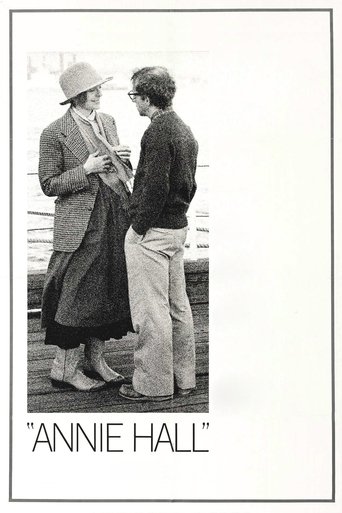
 Hacker Cinema
26 comments on Hacker News
> Games are doomed by femininity. Across media, genres marketed toward women are deemed lesser than their masculine counterparts: romance novels are trashy, chick flicks are shallow, and pop idols are embarrassing
This idea is trotted out but is really blatantly false when you think of it. Jayne Eyre, Wuthering Heights, Little Women, Pride and Prejudice, Sense and Sensibility. These books have all withstood the test of time and are considered fine literature but are absolutely feminine. Romance novels are considered less than because they are not good books, just in the sense that Conan the Barbarian is also considered not fine literature despite being dripping in masculinity.
Manhattan, Annie Hall, When Harry Met Sally. There are tons of "chick flicks" that are considered great films. Some directors like Catherine Breillat are extremely feminist in their works and well regarded directors with well regarded films in cinephile circles.
It's a shame, because in an era when One Flew Over the Cuckoos Nest and Annie Hall were winning Best Picture the blockbuster film and "indie" film were harder to differentiate.
lol, we all want those things in the moment.
There are so many arguments that I could have won, if I had just had an evening to mull it over.
I'm reminded of the movie Annie Hall where Woody Allen is waiting in line...
Alvy: [Hearing a man behind him rambling about Marshall McLuhan] What I wouldn't give for a large sock with horse manure in it. [Turns to the camera] What do you do when you get stuck in a movie line with a guy like this behind you? It's just...maddening- Man in Theatre Line: [Notices Alvy and walks up to him] Wait a minute, why can't I give my opinion? It's a free country! Alvy: Did-did he, he can give you- Do you have give it so loud? I mean, aren't you ashamed to pontificate like that? And the funny part of it is, Marshall McLuhan; you don't know anything about Marshall McLuhan! Man in Theatre Line: Oh really, really? I happen to teach a class at Columbia called "TV, Media, and Culture." So I think that my insights into Mr. McLuhan, well, have a great deal of validity! Alvy: Oh, do ya? Well, that's funny, because I happen to have Mr. McLuhan right here, so, so, yeah, just lemme lemme lemme — [pulls McLuhan from behind a nearby poster stand] — Come over here for a second. Tell him! Marshall McLuhan: I heard what you were saying. You know nothing of my work. You mean my whole fallacy is wrong. How you ever got to teach a course in anything is totally amazing. Alvy: [To the camera] Boy, if life were only like this!
"director" is probably a reference to Woody Allen quoting Groucho Marx in Annie Hall [1]. It's a great movie btw. Comes highly recommended from Roger Ebert [2].
[1] https://www.youtube.com/watch?v=ejnp589JuL0
[2] https://www.rogerebert.com/reviews/great-movie-annie-hall-1977
To claim that Annie Hall has just “some comedy” but does not have the point of being comedic, is bizarre. The film is structured as a series of jokes, both wordplay and sight gags. Woody Allen’s initial career was in comedy and in the 1970s he was still regarded mainly as a comedian. Singing in the Rain is categorized as a comedy, and what is Tati if not comedic?
Seems to be that just because these lists lack the comedy that you personally enjoy, you do a no-true-scotsman to simply deny the presence of comedy on them.
Aside from Buster Keaton's stunts lot of that is just early filming of vaudeville. Little of it was new and viewer would have been familiar with most of it from the stage. The later stuff dips it's toes in to comedy but barely gets wet. Take your examples of Singing in the Rain and Annie Hall, sure there is some comedy in both films but that is not the point of the film.
No Brooks, no Python, it's hard to take those lists seriously...
Really? A Clockwork Orange, Annie Hall, Taxi Driver, and Star Wars all feel the same to you?
I think Stanley Kubrick's films alone are more different to one another than half the Hollywood films made today.
McLuhan cameo in Annie Hall (1977)
https://www.youtube.com/watch?v=ROIrLRQi-m0
"The scene encapsulates McLuhan's theory rather neatly. McLuhan is famous for the claim that the medium is the message. What he meant by this is that the way in which radios, TVs, or phones address us is more important than what they say when they do. In this case, Allen is alluding to the fact that film is an interactive medium: we are being addressed not as a remote community, as in a radio broadcast, but instead as direct visual witnesses. Before turning to McLuhan, Allen's character has already made his case, that the guy behind him is a nuisance, across the fourth wall to us filmgoers.
The scene in Annie Hall epitomizes how readily available McLuhan's ideas were in the 1960s and 70s. Unless you were an Oscar-winning filmmaker, you couldn't pluck the literal McLuhan out of thin air, of course. But you could certainly invoke his ideas with about as much (apparent) ease. Its safe to say laypeople are less familiar with McLuhan's ideas today than they were then, and its also safe to say that many who regurgitated his theories, like the gentleman in Annie Hall, didnt actually understand them all that well. And given the line the actual McLuhan speaks in the scene, we, the viewers, will likely fear we're misunderstanding him as well.
Did that mean his whole fallacy was wrong? In a way, no, since knowing to invoke McLuhan was perhaps a better proof of his theories than actually understanding those theories. Maybe that is also why Allen left McLuhan's odd line in the final version of the script and the final cut of the film. After all, the point of the scene is that Allen is able to pull the actual McLuhan from behind the standee and have him settle a dispute directly -- not what McLuhan actually says, which in no way resolves the dispute. And this was true in the sixties already: invoking McLuhan was a way to show you were switched on, tuned in, vibing, or whatever other media metaphor you want to use to show you've grasped what's happening. You got it, and if you couldn't quite say what it was, that mattered less than that you got it."
- Daub, What Tech Calls Thinking (2020)
>here are really only five possible movie plot lines. Boy meets girl. And then... There are at most five ongoing narratives in U.S. political history. Outsiders take power, to redress grievances. And then … There may not be even five master narratives in world religions. People suffer. But then …
7 plots, there are 7 media stories.
Jaws, overcoming the boogyman/shark.
Cinderella, good personality poor becomes rich and deserves it.
LOTR, you need to bring widget somewhere wierd to save the world.
Hobbit, you adventure to strange lands and come back.
Annie Hall, comedic character has to overcome adversity to get happy ending
Sweeny Todd, flawed main character who fails, then ultimately learns to overcome their flaw and become good and happy.
Groundhog day, time travel forces bad main character to become better.
All these are aligned in the news as discovered by the author. Realistically just following 'hate inc' by matt taibi. Which really the article/author and matt just comes from Hunter Thompson. https://en.wikipedia.org/wiki/Gonzo_journalism
You can imagine, over and over in the election system the characters of democracy play out exactly this way. Once you realize this, it forces you to personally answer the obvious question. Are they doing it intentionally or is this all fake like these fictional movies?
Blockbuster carried the latest movies from all the studios. Everything newest and most desirable. They had a smattering of classics and art house and older genre films, but mostly it was about everything latest and greatest.
Netflix streaming seemed like that at first, but better! Now, they have a tiny slice of content. And as a content-producer, they seem willing to throw money at anything B-list.
Meanwhile, the studios became more risk averse as people started preferring to watch at home. Then theaters shut down and studios became more risk averse. And Netflix and Amazon arose and started playing studio games and studios became even more risk averse.
That trajectory of fear is mirrored in the content. The 1970s were known for directorial freedom and risk-taking. The 70s gave us Apocalypse Now, Taxi Driver, The Godfather, Star Wars, Animal House, Annie Hall, Rocky, Halloween, Smokey and the Bandit, Deliverance, MASH, and more - not all high art but all complete gems. Every decade since, we've seen a gradual progression toward samey-ness.
Love the 'fantasy' scene [0] in Annie Hall where Woody Allen's character 'pulls out' Marshall McLuhan to put an intellectual blowhard back into place. McLuhan says, "I heard what you were saying. You know nothing of my work - you mean my whole fallacy is wrong. How you ever got to teach a course in anything is totally amazing."
Maybe a cameo in a movie meant that McLuhan didn't take himself too seriously. I find his ideas relatively 'approachable', although I'm fairly skeptical whenever reading any philosophical work. Just recently, I had to deal with phenomenological and heuristic approaches to qualitative studies. I see some value, but (as a scientist) the lack of rigor and consistency makes my head spin.
[0] https://www.youtube.com/watch?v=jRcMsqCbzWk
I'm reminded of that scene from Annie Hall...
ALVY: Well, that's funny, because I happen to have Mr. McLuhan right here. So ... so, here, just let me-I mean, all right. Come over here ... a second.
(Alvy gestures to the camera which follows him and the man in line to the back of the crowded lobby. He moves over to a large stand-up movie poster and pulls Marshall McLuban from behind the poster.)
MAN IN LINE: Oh.
ALVY: (To McLuhan) Tell him.
MCLUHAN: (To the man in line) I heard what you were saying. You-you know nothing of my work. You mean my whole fallacy is wrong. How you ever got to teach a course in anything is totally amazing.
There are strong opinions on several sides of this (I'm not particular for or against).
They can be an overused trope. They can be a critical (and often comic) element of films (Woodie Alan, Annie Hall, etc.). And there are times where a character can speak volumes without words, with the right acting, direction, cinematography, and editing.
In text (absent illustrations / comics / graphic novels), words are very nearly all you've got.
(Again: a few exceptions, largely notable for proving the rule.)
What are the most important Woody Allen movies?
I'm thinking:
1977: Annie Hall 1979: Manhattan 1986: Hannah and Her Sisters 1989: Crimes and Misdemeanours 1992: Husbands and Wives 1993: Manhattan Murder Mystery 2005: Match Point 2008: Vicky Cristina Barcelona 2009: Whatever Works 2011: Midnight in Paris 2013: Blue Jasmin
Have I missed anything?
Annie Hall has the same sort of stand-up-routine-turned-into-a-feature-film vibe that a lot of Woody Allen's films have. It's funny and well done, but really facile, almost throwaway, all the same.
In retrospect, sure, but Annie Hall is a really really important movie as well.
I know these anti-ad posts are a dime a dozen here, but this is one of the more self-entitled pieces of dreck in the genre. She spends the first part of her essay slagging on WIRED ("Wired has dabbled in and eventually succumbed to the technology it once skewered and analyzed. Its latest efforts inevitably include pandering to the Instagram crowd."), implying that she's too good for their lowbrow content, and then the rest of it is about how dare they have the temerity to make her resort to using cURL to read their content. Or is this post supposed to be a sly retelling of the joke in Annie Hall? [1]
What's so difficult about just opening an incognito window and suffering the couple of seconds it takes for a computer halfway across the world to deliver you content while you sit at your desk? The WIRED thing annoys me too but when they've got a good story, I'm willing to give them the adnetwork revenue. Forbes, on the other hand...that whole thing with their infected ad network, I've just stopped going to Forbes articles, period, even when they're posted here. It's been a long time since I can remember Forbes exclusively breaking a story...most of the time, it seems their articles are from their "contributor" network just blogspamming someone else's story.
[1] http://www.imdb.com/title/tt0075686/quotes?item=qt0373261
You ever seen Annie Hall though? That's a great movie.
Slight aside...
Every time someone here responds when their name is mentioned, I think of this scene from "Annie Hall":
Alvy Singer: [the man behind him in line is talking loudly] What I wouldn't give for a large sock with horse manure in it!
Alvy Singer: [to audience] Whaddya do when you get stuck in a movie line with a guy like this behind you?
Man in Theatre Line: Wait a minute, why can't I give my opinion? It's a free country!
Alvy Singer: He can give it... do you have to give it so loud? I mean, aren't you ashamed to pontificate like that? And the funny part of it is, Marshall McLuhan, you don't know anything about Marshall McLuhan!
Man in Theatre Line: Oh, really? Well, it just so happens I teach a class at Columbia called "TV, Media and Culture." So I think my insights into Mr. McLuhan, well, have a great deal of validity!
Alvy Singer: Oh, do ya? Well, that's funny, because I happen to have Mr. McLuhan right here, so, so, yeah, just let me...
[pulls McLuhan out from behind a nearby poster]
Alvy Singer: come over here for a second... tell him!
Marshall McLuhan: I heard what you were saying! You know nothing of my work! You mean my whole fallacy is wrong. How you got to teach a course in anything is totally amazing!
Alvy Singer: Boy, if life were only like this!
(Sometimes it is here at Hacker News.)
Torrents don't consist 90% of those things either. The largest audio torrent on http://thepiratebay.se/browse/100/0/5 is a sample library for use in creating your own songs. The largest video torrent on http://thepiratebay.se/browse/200/0/5 is a collection of the X-Files TV show; #2 is a collection of 50 classic movies (A Clockwork Orange, American Beauty, Annie Hall, Apocalypse Now, and so on) --- the movie equivalent of Nineteen Eighty-Four. The largest software torrents on http://thepiratebay.se/browse/300/0/5 are chess tablebases --- used for research into the game of chess --- Microsoft Windows 7, and auto repair software called Alldata. The top "other" torrent on http://thepiratebay.se/browse/600/0/5 is a preservation copy of GeoCities, which contained the full weirdness of the late-90s web in miniature, and after a duplicate of the same torrent, #2 is an archive of chemical journals.
I think what you're probably thinking of is not library shelves but library checkouts. And I think that you'll find that library checkouts did consist 90% of trashy paperbacks, the text equivalent of pop movies, back when people got that kind of stuff from libraries instead of online.
There is often a huge chasm between what people SAY and what they MEAN.
From a pragmatic viewpoint, I think it is best to not get hung up on word-choice and instead gain an appreciation of what motivates the managers/co-workers you're interacting with.
Geeks have a really hard time with this. I like to think of the scene in film "Annie Hall" where the Woody Allen and Mia Farrow characters have a mundane discussion while on the screen subtitles appear indicating what they're REALLY saying. That's what it is like when you're in the early stages of developing a work relationship with someone.
This reminds me of one of my favorite movie scenes, from "Annie Hall" when Woody Allen's character has a disagreement with a man in the line for a movie:
MAN IN LINE: It's the influence of television. Yeah, now Marshall McLuhan deals with it in terms of it being a-a high, uh, high intensity, you understand? A hot medium ... as opposed to a ...
ALVY (More and more aggravated): What I wouldn't give for a large sock o' horse manure.
MAN IN LINE: ... as opposed to a print ...
Alvy steps forward, waving his hands in frustration, and stands facing the camera.
ALVY (Sighing and addressing the audience): What do you do when you get stuck in a movie line with a guy like this behind you? I mean, it's just maddening!
MAN IN LINE: Wait a minute! Really? Really? I happen to teach a class at Columbia called "TV Media and Culture"! So I think that my insights into Mr. McLuhan-well, have a great deal of validity.
ALVY: Oh, do yuh?
MAN IN LINE: Yes.
ALVY: Well, that's funny, because I happen to have Mr. McLuhan right here. So ... so, here, just let me-I mean, all right. Come over here ... a second.
Alvy gestures to the camera which follows him and the man in line to the back of the crowded lobby. He moves over to a large stand-up movie poster and pulls Marshall McLuhan from behind the poster.
MAN IN LINE: Oh.
ALVY (To McLuhan): Tell him.
MCLUHAN (To the man in line): I hear-I heard what you were saying. You-you know nothing of my work. You mean my whole fallacy is wrong. How you ever got to teach a course in anything is totally amazing.
ALVY (To the camera): Boy, if life were only like this!
[Alvy, fast forward to 2010 and Hacker News. It is now.]
(I don't mean for this comment to judge either person's opinion, just that I find it so interesting that you never know who's going to drop by Hacker News and join the discussion.)
The important question is: how likely is this to change the results? In recent decades there's been a trend for the Best Picture Oscar to wind up going to films which may not be all that good but which are seen as "Oscar-worthy" due to weighty subject matter or otherwise "seeming smart". Historical dramas have made up something like twenty out of the last thirty years' winners, including such so-so films as Braveheart. No comedy has won since Shakespeare in Love (which was acceptably smart-seeming because it had Shakespeare in it) and before that it was Annie Hall (which, incidentally, beat Star Wars).
I wonder if preferential ranking will improve the quality of winners by better reflecting the true preferences of the voters rather than the preferences the voters seem to think they ought to have.
You've been Annie Hall / Marshall McLuhan'd!
[Edit for obscure reference: In film Annie Hall, someone criticises Marshall McLuhan in a line at the cinema, and he pops out from nowhere and says 'You know nothing of my work'. It's quite a famous scene.]
Woody Allen is a hacker. Look at his innovations in cinema - Annie Hall was dated by the time I finally saw it but still pulled some awesome quirks. In Without Feathers, from which this story is taken, one of the plays is incredibly recursive and meta. I still want to perform it.
That's not defending this story, though. Just expressing a little love for Woody.
I think that the biggest difference between the two companies is that Dreamworks doesn't attempt to make lovable characters. Shrek in the original movie is an exception. They make identifiable characters, but rarely are their characters deep and human. Froo and I argued Kung Fu Panda versus Wall-E on IRC, if I recall correctly, and while I'm not nearly as knowledgeable about the animation world as he is, it's pretty hard to say that Jack Black in KFP is a more relatable character than Wall-E. Pixar makes people that you really feel like you know. Dreamworks is willing to make caricatures and as a result, their movies feel shallower from a story point of view. Even if Pixar follows a formula, it's a complex formula with deep permutations so that Mr. Incredible and Woody and Nemo's father and Wall-E are all very different people, even if the one recurring thread is that they all feel real to us.
This is actually the one problem I had with Annie Hall, which I saw recently for the first time: Woody Allen has a brilliant style, but the characters he made all seemed like caricatures, and so despite being a genius movie, I didn't love it. (I thought of this because back when I was a kid and there were two camps of children, the Ants kids and the Bug's Life kids, I was an Ants kid, thought Woody Allen in that was terrific, and thought the movie was stylistically and conceptually beyond Bug's Life, but going back to them I realize that Bug's Life, for all that, still has the more realistic characters, the ones that feel real, and so Ants's clever and detailed world falls apart at that one big seam.)