 Hacker Cinema
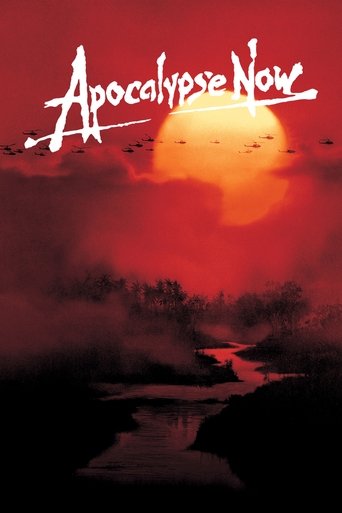
Apocalypse Now
1979 · Film · 147 min
Directed by Francis Ford Coppola
At the height of the Vietnam war, Captain Benjamin Willard is sent on a dangerous mission that, officially, "does not exist, nor will it ever exist." His goal is to locate - and eliminate - a mysterious Green Beret Colonel named Walter Kurtz, who has been leading his personal army on illegal guerrilla missions into enemy territory.
32 positive8 negative3 mixed91 neutralfrom 134 commenters
Where to watch
No streaming data for this title.
145 comments on Hacker News
In the book, Paul's nine-year-old son fuses baby sandworm larvae to his skin and becomes a worm-god-human-face weirdo.
I mean, I've seen Apocalypse Now, but I suspect the movie of that would be... unique.
Here is the full list of the 551 movies and TV shows being removed: https://www.playstation.com/en-us/legal/psvideocontent/
Top movies include Apocalypse Now, The Deer Hunter, The Graduate, Moonlight, Manchester by the Sea, Room, Silver Linings Playbook, Terminator 2: Judgment Day and Pan's Labyrinth.
Odd Angry Shot... One scene in Gallipoli... Apocalypse Now and Big Red One do "funny" things with the sound... I'm not sure those two films trying to be accurate as much as they're toeing some fi formalist line.
If you dig around, you can find more examples, but I think you're right in that the vast majority of films take liberties with physics in the service of visual storytelling.
same! in the last couple of years i've seen these movies in a cinema: The Big Lebowski, Fargo, La Heine, Apocalypse Now, HEAT. and i already bought tickets for Run Lola Run, Clerks and Fear And Loathing In Las Vegas.
it's especially cool as someone who's young and wasn't even born when some of these movies initially came to cinemas.
at the same time it's unbelievably sad that in recent years about 70% of the movies i saw at a cinema were multiple decades old.
What a great film, one of my all-time favorites. I remember seeing it in the theater without knowing anything about it, and walking out completely stunned and overwhelmed. It felt like I’d just experienced something that would stay with me for the rest of my life.
It belongs up there with Apocalypse Now, Mad Max / The Road Warrior, The Good, the Bad and the Ugly, Blade Runner, and the rest.
A masterpiece.
Dune movie was inspired by Apocalypse Now, with even several shots being exact copies, but Francis Ford Coppola isn't getting a penny!
Thanks! Here's the full list: 2001: A Space Odyssey, 8½, Aguirre the Wrath of God, Ali: Fear Eats the Soul, All That Heaven Allows, Apocalypse Now, Ashes and Diamonds, A Woman Under the Influence, Barry Lyndon, Bicycle Thieves, Breathless, Casablanca, Céline and Julie Go Boating, Chinatown, Chinese Roulette, Citizen Kane, City Lights, City of Pirates, Contempt, Daisies, Damnation, Dishonored, Earth, Electra My Love, El Topo, Eraserhead, Eyes Wide Shut, Film Socialisme, Fitzcarraldo, Fuego en Castilla, Hiroshima Mon Amour, Holy Motors, Inauguration of the Pleasure Dome, In a Year with 13 Moons, India Song, Inland Empire, Irma Vep, Koyaanisqatsi, La Dolce Vita, La Jetée, Late Spring, L'Eau de la Seine, Le Voyage dans la Lune, Lolita, Los Olvidados, Lost Highway, Lucifer Rising, Man with a Movie Camera, Metropolis, Mirror, Mulholland Drive, Night Music, Ordet, Orpheus, Persona, Pickpocket, Playtime, Psycho, Rebecca, Rosemary's Baby, Rumble Fish, Scarface, Seven Samurai, Sherlock Jr., Singin' in the Rain, Stalker, Sunset Boulevard, Taste of Cherry, Taxi Driver, Testament of Orpheus, The 400 Blows, The Blood of a Poet, The Cabinet of Dr. Caligari, The Color of Pomegranates, The Green Ray, The Holy Mountain, The Isle, The Lady from Shanghai, The Night of the Hunter, The Passion of Joan of Arc, The Seventh Seal, The Spirit of the Beehive, The Tales of Hoffmann, The Tree of Life, The Turin Horse, Time of the Gypsies, Tokyo Story, Touch of Evil, Trans-Europ-Express, Ugetsu, Un Chien Andalou, Uncle Boonmee Who Can Recall His Past Lives, Vampyr, Videodrome, Wavelength, Werckmeister Harmonies, Wild Strawberries, Moonlight Sonata, Stellar, The Haunted House Biased toward European art cinema, experimental work, and directors who broke conventional narrative rules.
Jellyfin's a media server first and foremost.
Out of the box, what you get is a server with (Optionally! But included by default in e.g. the Docker image, I think) an official web UI.
It's multi-user, has decent parental controls, automatic metadata fetching from a bunch of sources, can live-transcode when a client needs it (I have that disabled because my server is too weak, LOL), lots of good stuff.
You'll manage it through the Web UI, mostly. Set-top platform clients tend not to include much in the way of management features. (which is fine, it's way more pleasant to do that through a browser)
The web UI is also a Netflix-alike interface. Watch straight from the browser, if you like.
-------------
The one major concession that puts some people off it is that it works butter smooth if your file naming conventions match what it expects, but it gets a lot less-pleasant if they don't. There are some minor variations allowed but mine's basically like:
/movies/Apocalypse Now (1979)/Apocalypse Now (1979).mp4 /movies/Apocalypse Now (1979)/Apocalypse Now (1979).en.srt /movies/Apocalypse Now (1979)/Apocalypse Now (1979).fr.srt /movies/Apocalypse Now (1979)/Apocalypse Now (1979) - Redux.mp4 /movies/Apocalypse Now (1979)/Apocalypse Now (1979) - Redux.en.srt /movies/Apocalypse Now (1979)/Apocalypse Now (1979) - Final Cut.mkv /movies/Apocalypse Now (1979)/extras/The Making of Apocalypse Now.mkv /movies/Apocalypse Now (1979)/extras/Trailer.mkv For movies. This demonstrates naming for the movies themselves (in this case, three different cuts of the same movie), extra features (you can change the extra features folder name if you like; it may default to "featurettes" and I may have changed mine, can't recall for sure) and external subtitles. I think you can handle external audio files similarly, if you have any of that going on. There are also ways to categorize special features into like trailers or whatever, with directories, but I haven't bothered with that.
I think there is a way to put your subtitles in a "subs" directory or something like that, but I don't do it. Then again I rarely keep more than two sub languages, maybe three or four total files if there are separate SDH options, for a given video. Usually just English and if it's a foreign film maybe the original language's subtitles (the French file for Apocalypse Now above is just an example, I didn't look at a real directory to write it)
For TV:
/tv/The Wire (2002)/Season 0/s00e08 - Reunion.mkv /tv/The Wire (2002)/Season 0/s00e10 - Season 1 gag reel.mkv /tv/The Wire (2002)/Season 1/s01e01.mkv /tv/The Wire (2002)/Season 1/s01e02 - The Detail.mkv The naming on these is pretty flexible. Basically as long as it can find the series (the year helps a lot) and everything's got `sXXeXX` somewhere in it, it'll be fine. Spaces, dots, dashes, doesn't affect much. "asdf.s03e05 - Some Name (stuff in parens).mkv" will find TheTVDB's entry for season 3, episode 5 (even if the name and all that in the file name are wrong, doesn't matter, it ignores that). External subtitles work like for movies (just stick them alongside the video files)
One pitfall: every now and then you find a case where DVD/BluRay and aired orders differ. TheTVDB usually records multiple orders in these cases. I dunno how to force Jellyfin to prefer one or the other, I just figure out which it's preferring (usually the one TheTVDB shows you on the Web by default, I think?) and adjust to that.
Also note that rarely (but sometimes for important cases, like e.g. Looney Tunes) TheTVDB uses years for the seasons. So you'll want "Season 1965" and such for those. No big deal, just a weird quirk of certain shows' metadata. Not that common.
I think you can name the "specials" directory to... specials, and maybe even give it an arbitrary name in the Jellyfin settings, but I like "Season 0" or "Season 00" (either works, prepended zeros are ignored, I have both hanging around) because it matches the special episode naming in TheTVDB (like "s00eXX").
In a pinch, you can override which IMDB, TMDB, TheTVDB, et c. ID that Jellyfin decided belonged to the movie or TV show, using the web UI, and make it re-scrape the metadata. Usually it's better to figure out why it got it wrong and fix that instead—that way you don't even have to care about Jellyfin's database of scanned metadata, you can always just have it re-create it from scratch with little or no fuss. (and you can also set it to write the metadata alongside your shows and movies in files, like Kodi can)
I think there might be a way to put things like IMDB IDs directly in file names to make it even more clear what you mean, but "name (year)" has been so reliable for me I've never bothered to look into it.
I base my naming and years on what I find in the metadata sources themselves, usually IMDB and TheTVDB for me. Surprisingly often, Wikipedia disagrees with these, and sometimes [ahem] acquired files also have file names recording years that disagree with those sources. Usually it seems to be a festival-circuit vs. wide-release thing, as those often fall in different years. The metadata source should win, since otherwise it'll make auto-scanning worse.
Some people are really set on things like having their movies categorized in folders by director or whatever, and that doesn't work too well with Jellyfin.
(I know that file naming explanation is a lot, but it's really not that complicated in practice, and there are docs but I found there were some "but can I..." or "is it necessary to..." gaps in it for me that I've tried to fill in above)
DESPITE the impression probably given by all that text, I've found this one of the greatest parts of Jellyfin. Delete a file? After a couple minutes, it's gone from the UI. Add some files? In a couple minutes, they show up. (and you can force re-scans to speed it up). Slightly rename a file? But Jellyfin still reads it as the same movie from its metadata source? Your watch history survives. Hell I think you can even delete a movie, then add it again later, and your watch history survives (as long as Jellyfin decides it's the same movie by ID). There's no cruft that hangs around to deal with. It's very low-stress. Like 99% of my "management" of Jellyfin is just rsycing files, LOL.
-----------
As for non-Web clients:
- There's an official Roku client, but... most Roku devices have pretty limited codec support. The client works great though. If your server can transcode, this may be a totally fine choice. It's what I used for quite a while until enough of my files were in formats newer than h.264 that it was no longer viable.
- AppleTV has an official client. It's pretty good, but... if you can't transcode, there's one somewhat-common Dolby audio format (I forget which exactly) that AppleTV doesn't have a license to, so it causes problems. However, for that problem there's:
- Infuse (also AppleTV). It's amazing. The recent release supports multiple user accounts with different server access settings (not only can they log into Jellyfin with different credentials, they could conceivably use totally different servers), which is brilliant if you want parental controls or just to have different "watched" lists. It's free but there's a paid version with a few extra features that includes a license to that tricky audio format. I've been using this for years, at this point, and aside from wishing it supported multiple accounts (and it does now, as of very recently!) I've had no trouble with it at all. Also, Infuse supports other media servers as backends.
There are clients for tons of other platforms, too. And you can always Airplay or whatever from (say) a laptop.
----------
For going on the road (and short of taking your server with you) I have used two options:
- You can just use it directly over a VPN to your house, like Tailscale, if the client end's connection is solid (and your home connection is good, for that matter). I've streamed mid-quality 4K over such an arrangement, halfway across the US. You can even connect an AppleTV to Tailscale and take the AppleTV with you (it's much smaller than most servers, lol) for the full at-home experience while traveling (Christmas movie marathon at the in-laws' house this holiday season?)
- Long road trip with the kids and want them to watch Apollo 13 (and perhaps a couple Disney movies) while you drive to Cape Canaveral? Browse your Jellyfin web UI on the tablet they'll use, and download the file(s) you want straight from there. Play files in VLC. Done, no internet connection required. Being able to use the web UI is nice because you can browse categories and such, it's actually a fair bit better than something like using an SFTP client.
You would struggle to find a single example for any of those. Find two inflammatory quotes for each.
There hasn’t been a day in the last decade that Trump wasn’t making the news for a new insanely inflammatory remark—including in the last 48 hours. To help you remember when that was: that’s when he called for War on an American city, using the visual language of Apocalypse Now, a movie about war crimes. That was in the same breath as his new “Secretary of War” detailing that war would be violent, pro-active and excessive. This is true for almost everyone in his cabinet: daily dehumanizing remarks, threats, calls to attack.
One vs. many thousands: There are three to four orders of magnitude of difference in how inflammatory each side is.
You want to prove me wrong? Give me one date, a single date in the last ten years and if I can’t find Trump publicly insulting to someone that day, I’ll concede.
The only examples of call to violence you can find are people quoting Trump and his enablers, or mocking their style. Those horrible things you read? Those insanely callous dismissal of Charlie Kirk, victim of gun violence? Those are quotes of Charlie Kirk, reacting to mass shootings.
You are wagging your finger and scream "Here’s a monster!" but what you are looking at is a mirror.
Classic Thing, Japan. There are plenty of western movies that don't follow the three-act structure (off the top of my head, Apocalypse Now, Mulholland Drive (and probably most Lynch), Boyhood (and other Linklaters), basically any Robert Altman) and plenty of foreign films that do.
Let’s be real, the overwhelming majority of those 500 are straight up terrible. Netflix alone has produced well over 100 movies, and IMO at best some of them are worth finishing not that I can think of any off the top of my head.
Now I’m sure you’ve looked forward to many movies but off the top of your head list stuff you’ve either seen more than once and or actually recommend to someone that came our in the last 10 years vs…
(78) The Deer Hunter, Superman, National Lampoon's Animal House, Invasion of the Body Snatchers (79) Apocalypse Now, Alien, Life of Brian, Mad Max, Escape from Alcatraz (80) The Shining, Star Wars: Episode V, Airplane!, The Blues Brothers, Caddyshack, The Elephant Man (81) Raiders of the Lost Ark, Das Boot, The Evil Dead, Mad Max 2, Escape from New York, Time Bandits (82) Blade Runner, The Thing, E.T. the Extra-Terrestrial, Poltergeist, Conan the Barbarian, Fast Times at Ridgemont High, Tron (83) Scarface, WarGames, Star Wars: Episode VI, Trading Places, The Evil Dead
Obviously not all great movies but that’s ~30 classic movies in just 6 years and I’m sure I’ve missed a few as kids movies are largely missing from that list.
What's wrong with propaganda? Is that a reason why you haven't seen for example Apocalypse Now?
You might want to watch Andrei Rublev, at its inception a controversial movie heavily disliked by the Soviet state:
https://sovietmoviesonline.com/drama/andrey-rublev
Edit: And then the post-soviet Fairy, which ruminates on the legacy of Tarkovsky's masterpiece.
https://sovietmoviesonline.com/fantastic/fairy
The rest of Melikyan's movies are also quite interesting and fun.
They also distribute post-Soviet russian movies and television series. You should watch the two takes on The Master and Margarita, both high profile projects based off one of the most beloved books in Russia, from two very different times in russian society:
https://sovietmoviesonline.com/drama/master-i-margarita-mini-serial
https://sovietmoviesonline.com/melodrama/the-master-and-margarita-2
The Soviet was especially good a adventures for kids and science-fiction, of which you'll find a lot there, for example Alice in Wonderland and Hard to be a God. You should watch the takes on the latter to get a feel for differences between soviet and post-soviet societies. If the younger version feels hard to watch you might need to watch The Green Elephant and other movies from the russian nineties to prepare yourself and better understand the feelings and mindset of the time.
And if you want you can watch old propaganda movies about the Donbass or whatever, you'll learn a lot about places you likely know very little about.
>> "... artists lose their ability to make art when their brain is infected by money and power."
I disagree. It's largely age based. Especially for filmmakers as novelty is part of the appeal of movies. As the artist ages, I think Yeats said it best: "What can I but enumerate old themes".
Coppola is 85. How many octogenarians are still creatively significant? Yes, they can still put out an album or a film or a book, but their best days are behind them.
Coppola paid for "Megalopolis" out of his own pocket. He wrote and directed the story and cast the actors that he wanted. What is art in its purist form but the self-expression on an individual?
Previously, Coppola mortgaged his home and went legendarily overtime and overbudget for "Apocalypse Now". That's regarded as a classic and was lauded in its time. "Megalopolis", not so much, though time could add a new perspective, as sometimes art becomes more favorably viewed upon reflection.
"Coppola has demonstrated a pattern of success in this vein"
Is this true? Apocalypse Now got relatively poor reviews when it originally came out, but I think most of his other movies are still largely seen in a similar light as when they came out.
> Many of King’s criticisms of the film largely arise from the fundamental differences in the intentions behind the book and the movie.
As with "Heart of Darkness" / "Apocalypse Now", this gets at one point I always bring up in these contexts: a book and movie can be related, but they are distinct works of art. (HoD/AN being an extreme example of distance.)
"The book was better" always strikes me as unhelpful. What is communicated visually is radically different than what is communicated in prose. Plus, an actor is an artist, too. "Here's Johnny!" cannot be achieved in text the way Nicholson delivered it on the screen.
King himself is standing too close to the prose work to assess whether the film is any good. Of course Kubric couldn't match a vision that exists in King's head.
For convenience, I asked ChatGPT to create this table, which summarizes how many times each movie has been mentioned in this conversation so far. It got a few counts wrong (as usual), but it still gives a good sense of the frequency. I hope it can be useful to someone:
| Movie | Number of Mentions | |-------------------------------------------|---------------------| | The Matrix | 9 | | Lord of the Rings Trilogy | 8 | | Pulp Fiction | 8 | | Alien | 7 | | Fight Club | 7 | | Ghostbusters | 6 | | Die Hard | 5 | | Back to the Future | 5 | | Inception | 5 | | Star Wars Trilogy (original) | 5 | | Groundhog Day | 5 | | Terminator 1 & 2 | 5 | | Jurassic Park | 4 | | The Thing | 4 | | The Fifth Element | 4 | | Monty Python and the Holy Grail | 4 | | Ghost in the Shell | 4 | | Interstellar | 4 | | Casablanca | 3 | | Office Space | 3 | | Shawshank Redemption | 3 | | The Godfather Trilogy | 3 | | The Blues Brothers | 3 | | Blade Runner | 3 | | Mad Max: Fury Road | 3 | | Unforgiven | 3 | | Total Recall (1990) | 3 | | The Crow | 3 | | The Princess Bride | 3 | | Akira | 3 | | The Big Lebowski | 3 | | Guardians of the Galaxy | 3 | | American Psycho | 3 | | Indiana Jones Trilogy | 3 | | Kiki’s Delivery Service | 2 | | Ratatouille | 2 | | A Clockwork Orange | 2 | | Mission Impossible (various) | 2 | | Casino Royale | 2 | | Skyfall | 2 | | Ferris Bueller's Day Off | 2 | | Star Trek: The Wrath of Khan | 2 | | Apocalypse Now | 2 | | The Shining | 2 | | Groundhog Day | 2 | | Donnie Darko | 2 | | Dune (2021) | 2 | | Gladiator | 2 | | Predator | 2 | | Seven/Se7en | 2 | | The Dark Knight | 2 | | Snatch | 2 | | Prometheus | 2 | | Schindler’s List | 2 | | The Wolf of Wall Street | 2 | | Dr. Strangelove | 2 | | Silence of the Lambs | 2 | | Kill Bill | 2 | | Real Genius | 2 | | Top Secret! | 2 | | Tenet | 2 | | Tinker Tailor Soldier Spy | 2 | | The Adjustment Bureau | 2 | | The Expanse | 2 | | Pulp Fiction | 2 |
When I was a kid, VHS home recording was a thing... so my sisters and I watched a few movies wayyyyy too many times.
The Blues Brothers Stripes Ferris Bueller's Day Off Footloose Dirty Dancing Amadeus These days, everything comes and goes from streaming. I'll watch these when they pop up again
The Expanse Monty Python and the Holy Grail The Ministry of Time Groundhog Day Dirty Harry Apocalypse Now About Time Time Bandits
I don’t know, Coppola selling his winery to finance the movie sounds reminiscent to the Apocalypse Now production to me [1].
[1] https://youtu.be/pFYzVsrrPjE?feature=shared
From the article, presumably the partial destruction of New York and subsequent political struggle over how to rebuild, as metaphor for modern American democracy in light of the late Roman Republic / early Empire.
Or, in other words, what it's about probably depends on whether or not someone classifies Apocalypse Now as a movie about the Vietnam War.
People seem to enjoy that we've been enhancing dead celebrities by digitally digging them up and making them dance for us on stage, so why not? Beyond that, why stop at colorization? Maybe there's other artistic decisions we could enhance. Like we could change the plots of existing movies to reflect our more sophisticated modern experiences. Let's regenerate Mad Men but everyone has smart phones, and make the USO scene in Apocalypse Now an Ariana Grande show.
Barry Lyndon is probably my favorite (or at least, the one I appreciate the most) of Kubric's films when it comes to his perfectionism, but perfectionism alone isn't a great metric for the resulting film:
> Cimino shot more than 1.3 million feet (400,000 metres; nearly 220 hours) of footage, costing the studio approximately $200,000 per day in salary (equivalent to $720,000 in 2022), locations and acting fees.Privately, it was joked that Cimino wished to surpass Francis Ford Coppola's mark of shooting one million feet of footage for Apocalypse Now (1979).
https://en.wikipedia.org/wiki/Heaven%27s_Gate_(film)#Production
Heaven's Gate isn't even all that great to look at. There's still the matter of taste involved, and well, Cimino made some questionable decisions.
Oh yeah? I’ll add it to my list. I’ve served and I was thinking of passing on it.
Luckily I was well versed before I showed up to Uncle Sam’s doorstep. Catch-22 paints paints a good picture. And had a high counselor who was a Vietnam vet and said Apocalypse Now was the most realistic Vietnam movie he’d. And I can’t say that my experiences in were too far from my expectations.
I think the thing people don’t get about the military, at least speaking of my experience in the US’s, is even in places like special operations units and doing the stuff that reads great in a newspaper, often enough there’s an absolute, epic, comedic shitshow going on inside with a cast of characters that you couldn’t even do justice to in a goofball comedy. Suppose that might apply to lots of things. Luckily, no military really has to have their shit together, they just gotta be better than the other side.
Try living in Goa in the monsoon season. Or even rewatch Apocalypse Now or basically any Vietnam war movie.
I assure you, even 36C/100% is survivable.
Can we please change videogame music licensing to how the movie industry works? Nobody is going to jank away Apocalypse Now because of the Doors contract expiring.
I know I know videogames are just toys not art etc etc. But they make more money than anything else now.
Lynch’s Dune is up there with Apocalypse Now as my favorite movie. It got the feel of Dune correct, even if it made weird changes, and inspired me to start reading sci fi (I think I first saw the movie on TV in the late 80s, and would watch it whenever broadcast).
To expand - most kid shows that adults can stand to watch are written to adults in some sly way that flies over the kids' heads. Often that adult targeted humor is something that kids have no context for (subtle sexual innuendo, pop culture references) - I think the 2016 "The Jungle Book" remake is a good example of this, with extended and funny references to Apocalypse Now and other mature films. But Bluey will have some innocuous fun episode and the subtle context is actually something about death, parental legacy, being an adult with a life predating your children, the pain of miscarriage, etc. I don't know how they pull off addressing those topics but they somehow do and it's magical.
I love it when kids shows do things like this. The BBC show Hey Duggee has an episode called The River Badge which is a homage to Apocalypse Now, recreating a number of similar scenes and pieces of dialogue. Other episodes have references to other movies that kids won't know but that are great fun for adults when they notice.
We started to get a lot of the classic movies in the 70s (Taxi Driver, Godfather, Star Wars, Halloween, Blazing Saddles, Rocky, Alien, Clockwork Orange, Exorcist, Jaws, Apocalypse Now just to name a few) and the 80s went absolutely wild and - particularly - far more broad. The kids films from the 80s didn't really exist before then (outside of Disney).
In the 50s/60s there were less (but still some of per personal faves) and the dominant genres (Westerns particularly) have been out of fashion for at least 40 years now.
My family had a friend who was an officer in the Marines. In the Vietnam war he was one of the people who went in and burned villages, you know the bad stuff. When Apocalypse Now came out he got a copy on Beta-max, brought it over and insisted all his friends watch it. He said it was the only movie that really captured the insanity of that war.
>>> I can't believe that anyone who has seen "Full Metal Jacket" would be enthused about going to war.
I don't know. I'm definitely not blaming the film or its maker. But I can't deny that is does kind of awaken a fantasy in me. I have never been involved in any military, but a part of me has always wanted to be transformed like the men in that film.
The thing is, when I imagine being in the story, I don't see myself like Private Pyle or Cowboy. Their stories don't discourage me. So I do wonder if Kubrick missed the mark by making a film that horrified him but actually inspires others. Maybe there's just something wrong with me. Even Platoon has an allure to it. Even Barnes was a hero in some ways. I could be like Barnes without the evil parts.
Apocalypse Now on the other hand, now there's a movie to kill recruitment if ever there was one. There's literally no upside in that movie and very few characters have any redeeming qualities.
Alien vs The Andromeda Strain vs Taking of Pelham One Two Three vs The Godfather vs American Graffiti vs Animal House vs Apocalypse Now vs Tora! Tora! Tora!
Honestly I don't see much connecting "70s-ness" thread between these. You can kind of take a guess at the era by the color tones, or for those movies with a contemporary setting, the style of clothing and cars. But otherwise there is huge range in old movies.
I've got this theory that although technology advances and social mores change with different social standards being imposed on art (e.g. Hayes Code), artistic merit is more or less evenly distributed through time. That is to say, old things are about as likely to be meritorious as new things, there's no general trend of newer = better. However the general public realizing this would be bad for business, new productions don't want to compete with the best of old generations, and so there are efforts to persuade people that old content is unwatchable and a waste of time to even consider. People are strongly encouraged to favor new content over old, for instance by having an averse "eww icky" reaction to black and white movies or even technicolor. Technical developments in film stock, SFX, etc are touted as being extremely meritorious and are heavily emphasized in the promotion of new movies because this is the competitive edge for modern productions.
Those small islands surprise me. Crete was an important airbase too (and a nazi propaganda film of a fleet taking off from Crete was the inspiration of the famous "Ride of the Valkyries" in "Apocalypse Now")
You mean like Apocalypse Now or Birth of a Nation? Movies have been political lecture since the very first feature length film, and have never been very subtle about it either.
> and at quite a low cost
So, let's actually look at that. For a "low-budget" 8K pipeline you'd first need a camera that can shoot at 8K or more. Ideally you'd want more so you can crop-in or do stabilization in post. So you'd be shooting on the Blackmagic Ursa Mini Pro 12K (~$6k) [1].
Usually you're using 5-10% of the material that you shot in the final edit, for some movies that can go as low as 1% (e.g., Apocalypse Now [2]), but let's calculate with a 45min documentary and 7.5% material used.
That means you've now got 30 TB of raw material [3]. You'll obviously use proxies for editing, but at least for color grading and for delivery you'll need access to the full material.
So now you'll need to store 30 TB of raw material somewhere in the cloud accessible to the machine that's doing the delivery. Even assuming you've got a symmetric fiber connection so we can disregard potential traffic limits and transfer speeds for initially uploading the material, you'll still need to pay for the cloud storage.
Creative Cloud has a storage limit of 100 GB for individuals or 1 TB for business plans [4], which is obviously far too limiting, so you'd need to use something like LucidLink. As you'd be working with large video files, you'd need high-performance storage, so you'd have to calculate with their performance plan, which is another $80 per TB per month, so $2400 per month just for this one single project [5].
________________________
[1] https://www.bhphotovideo.com/c/product/1578059-REG/blackmagic_design_ursa_mini_pro_12k.html
[2] https://books.google.de/books/about/?id=wB7cAAAAMAAJ
[3] https://www.braw.info/capacity/
[4] https://www.adobe.com/creativecloud/plans.html
[5] https://www.lucidlink.com/pricing
That depends a lot on the movie. Apocalypse Now is sort of an extreme example of this: large parts of the movie (including the ending) were completely rewritten during filming, some scenes were completely improvised, the lead was recast from Harvey Keitel to Martin Sheen after they did about a week of shooting, an entire massive on-location set was relocated after being built because the director wanted it to be right on the river (and the original set was also destroyed in a typhoon), another set which was destroyed in the same typhoon was used as-is because Coppola liked how it looked, and the helicopters they were renting from the Philippine military occasionally flew off set in the middle of a filming day to fight an ongoing insurgency elsewhere in the country.
It's extremely violent, borderline-surreal in some places, excruciatingly slow in others (by design), occasionally has two or three levels of story-within-a-story. Unlike some of his other novels, it's more of an epic than a story, which is usually very hard to put on film. The closest I can think of is something like Ben-Hur or Apocalypse Now (which adapted Conrad's Heart of Darkness); both were famously plagued by production issues.
For my part, I just don't get the point of writing this.
Within the part of the article that's actually about the game, the author does basically nothing but scoff at things like the "workmanlike", "not ... subtle", "primary colors" nature of the story, or the "cheap, sparse, painfully plastic-looking sets", or how the characters use the callsign rather than the full real name of a fallen soldier during a funeral. There is almost nothing there about the story itself or its characters.
I played this game a lot as a teen, and I thought the story had a lot of deeply sympathetic characters and emotionally resonant themes. It felt great to be the protagonist who uncovers fascist treachery at the top and averts a war. It felt great to do that with a team of comrades who shared your values and vigorously debated tactics. None of that gets a single word in this review.
Of course not everyone is going to agree about what's a good movie, but I thought it deserved better than a collection of nitpicks that doesn't engage with the story at all. It seems like the critic just wanted the game/movie to be in a different genre, something more sophisticated or "subtle" with more "shades of gray"? But what's the point of that? It seems like criticizing Saving Private Ryan for not being Apocalypse Now or Starship Troopers. Okay, it's not the type of movie you wanted to see, I guess? But isn't it a little cliche, in itself, to reflexively disdain everything that is straightforward rather than meta, ironic, deconstructive, and self-referential?
I found a case that may be caused by human training with information that is not on the internet. In the following conversation ChatGPT claims the title of The Clash song "Charlie Don't Surf" was inspired by The Beatles song "Why Don't We Do It In The Road?"
I can't find this connection after searching for awhile. It seems like a big problem to me that ChatGPT's assertions can't be verified. The two songs are often mentioned in the same article, but there is no direct quote that I can find.
Edit: Yann LeCun - "LLMs as they exist today will never replace Google Search. Why not? In short, because today’s LLMs make stuff up."
https://twitter.com/ylecun/status/1624898875927527425
Q: Why don't Charlie surf?
A: The phrase "Why don't Charlie surf?" is a reference to the song "Why Don't We Do It in the Road?" by The Beatles. The song is a classic example of rock and roll music and features a straightforward, driving beat and lyrics that are simple, but memorable.
In the context of the song, the question "Why don't we do it in the road?" is a suggestion to engage in an intimate act in a public place, rather than in private. The phrase "Charlie don't surf" is a reference to the 1979 film "Apocalypse Now," in which a character named Kilgore utters the line as he and his men prepare to attack a Vietnamese beach.
So, "Why don't Charlie surf?" does not have a specific answer and is just a phrase that has become popular and widely recognized, largely due to its use in the song and film mentioned above.
Q: Please give me a reference that shows that the title of The Clash song "Charlie Don't Surf" was inspired by The Beatles song "Why don't we do it in the road?"
The reference that shows that the title of The Clash song "Charlie Don't Surf" was inspired by The Beatles song "Why Don't We Do It in the Road?" can be found in the liner notes of The Clash's album "Sandinista!" In these notes, the band members themselves explain the connection between the two songs and the origins of the title of "Charlie Don't Surf."
Here's a direct quote from the liner notes: "The title of the song is taken from a line in the film 'Apocalypse Now,' which was inspired by a song by The Beatles called 'Why Don't We Do It In The Road?'"
So, it is clear from the liner notes that The Clash themselves acknowledged the connection between their song and The Beatles song, and that "Charlie Don't Surf" was inspired by "Why Don't We Do It in the Road?"
One real danger of putting all historical video media on streaming sites is that it makes it far too easy to introduce an Orwellian Ministry of Truth that is empowered to rewrite the past to make it conform to today's acceptable social norms, academic ideologies, government agendas and so on.
For example, one could make the argument that Alfred Hitchcock's entire library promotes negative stereotypes of women - and it's true, women in Hitchcock films are not the strong types, they're more often helpless victims who have to be rescued by male characters. This clearly, one could say, promotes negative female stereotypes which are damaging to young women so all those movies should be removed from streaming services.
One could continue in this manner, selectively pulling anime movies because they promote excessive violence and sexuality to a teenage audience, or war movies like Apocalypse Now and Dr Strangelove that portray military generals as clueless maniacs, or if the pendulum swings back to the social conservative end, pulling all horror movies that don't portray Christianity in a positive light or have too many Satanic themes, and on and on.
Keeping hard copies in your personal possession is one way around this, but since the copyrights and hence distribution rights are held by these conglomerates that don't want to get in trouble with some political group or other by making them available, nobody else can view them without going through pirate sites - a very unfortunate situation.
>It's absolutely bizarre killing a human being is A-OK, but profanity is too far.
That's not a new idea. It was addressed, at some length, in Apocalypse Now[0].
This YouTube clip[1] from that movie addresses your point directly, but the movie as a whole has even more to say about the value of human life, IMHO.
[0] https://en.wikipedia.org/wiki/Apocalypse_Now
[1] https://www.youtube.com/watch?v=Yb1lF3UKLDQ
https://www.youtube.com/watch?v=xNRBajLM8_4
Hey,
I have struggled with loss of motivation many times. I worked in boring medium to big sized companies to the point where I felt I had done it all, knew it all, wasn’t excited, wasn’t learning anything new.
I think a lot about what Francis Ford Coppola said about Apocalypse Now, which was an awful nightmare movie to shoot. He said he was glad he did it because he learned so much from it.
If you aren’t learning a lot, something is wrong.
Honestly, my experience was that if I stopped learning I could feel myself begin to deteriorate mentally. The boredom and lack of stimulation if it has years to work on you will destroy you. You just lost your dynamism and vitality.
My solution was to take on more risks.
You sound like you have eliminated all risk from your life. That is the natural thing to do, everyone wants to be risk free. The problem is it kills you:
Where is the excitement, the fire under your ass. If you carve out this lovely cozy little niche where you can never lose. It is the most natural thing to do.
But once you remove all risk, you start to die.
You have to bring risk back into your life. Maybe not 50-90%. But 10-15% risk.
There must be some risk or you won’t find any meaning.
Okay? Some WW2 veterans couldn't watch the Normandy invasion scene in Saving Private Ryan because it was too realistic. My dad said Apocalypse Now had its moments of accuracy regarding Vietnam.
I don't know why you keep repeating this incorrect notion that fiction cannot depict things in a historically accurate manner.
Some fiction is trash. Some documentaries are also very misleading and have their own narrative. One should reference multiple sources when possible.
That would make for a great movie, could be titled like it's the end of the world. Maybe Apocalypse Now?
It would be nice if there was a way to talk about this subject without immediately devolving into partisan political comparisons. This is a far more fundamental issue with recommendation systems, a conflict between immediate gratification and addiction mechanisms versus deeper nourishment and satisfaction. You can see this in so many arenas of human consumption.
Consider diet. If you log everything I ever consume and then measure the probability I consume the same thing again in the next 30 minutes, what are you going to find? You'll be recommending I eat nothing but donuts, hard liquor, and potato chips.
Consider video. If you log everything I ever stream and watch and then measure the probability I stream and watch something similar in the next 30 minutes, you'll be recommending nothing but ChiveTV-style fail videos and short-form hot takes.
But are these the things I actually most want? Humans are complex creatures with desires and preferences that don't always express themselves in terms of quick re-consumption of similar items. If you ask me my favorite film, I'm going to say Apocalypse Now, not an epic fail compilation. But if you measure what I'm more likely to watch on repeat for 8 hours, it's going to be the fail compilation. If you ask my preferred foods, I'm going to say lean meats and vegetables, but if you measure what I'm most likely to repeatedly eat for hours without stopping, you're going to find a bunch of dessert foods and snacks.
The types of things people consume that are most nourishing and satisfying, since they actually provide nourishment and satisfaction, are not things that lead to immediate re-consumption of the same thing. The types of things that lead to immediate re-consumption are things that are insubstantial, don't require thought or reflection, don't lead to satiety, and things that are addictive.
I have no idea what sort of solution to this scales and will satisfy people that don't like gatekeepers, because the reality is, I've found what films and television shows and music albums I've most liked from top 100 lists curated by experts, and I've found what foods best nourish me and lead to the long-term health and physique outcomes I'm trying to achieve by the same method, expert recommendations from people well-versed in science.
You can't automate this, but to work, the public has to trust a curator, and it seems most of the public doesn't trust anyone to do this, or if they do, they'd rather trust the Critical Drinker and Liver King instead of the American Film Institute and FDA.
The opening of Apocalypse Now would look like dog shit at > 24fps.
For a good comparison, watch the few Twilight Zone episodes (the original from the 60s) from season 2 that were shot on videotape, as opposed to film for the rest of the series. They look downright weird.
Terrible article. Daney is reading all sorts of his own fixations into the movie, and I pretty much tuned out after he started on about homosexuality and Oedipus complexes (he's starting to sound as batty as Freud).
The thing to understand about Apocalypse Now is the environment it was released in. The Vietnam war (and all accompanying photos and footage) was still VERY fresh in the minds of Americans (the audience this movie was intended for), and so it was the perfect setting for a modern adaptation of Heart of Darkness: Far enough away to be exotic, yet familiar enough to show the barbarism and the depths of man's hubris and madness.
While Apocalypse Now is the target for Viet Thanh's Nguyen's criticism, I think his point is about Hollywood and the whole genre of Vietnam War films as a whole. America lost the war but won it in memory. Most Americans when thinking of Vietnam only remember the war that was fought (a simple mistake in the American narrative), but it's a beautiful country with thousands of years of history.
One could argue, myself included, that Apocalypse Now is neither a war or anti-war movie.
I think it's a movie about the developing psyche in humans under extreme duress, with the backdrop of a war that happens to be the US/Vietnam conflict.
That's exactly why I think ambivalence should be allowed in this case; the war is merely the backdrop which influences the psyche problems that we explore within.
You may think it's an unproductive comment, but some may think that you yourself have not put the leg-work into understanding the movie, either.
The war itself and suffering depicted in that movie are tools that are used to explore the different levels and depths of human consciousness and insanity depicted by the varying characters that must endure such conditions.
In the context of this journey any suffering conditions could have been used as such a tool. Vietnam was a powerful choice for the media released at that time as it had a large impact on the audiences interested and the people at the time.
Now, it can be said that the same suffering from the opposite side could have been used just as easily -- that's true -- but it's at that point that we must explore the fact that Western film-makers are interested in making Western successes.
Perhaps 'Apocalypse Now' produced by an SE-Asian crew would have looked a lot different -- but I wouldn't have faulted them for not exploring my Western perspective in that movie, either. When a movie tries to be all things for all people it usually 1) ends up with a 4 hour run-time and 2) satisfies no-one.
> which was regarded as a critique of the Belgian exploitation of (and atrocities in) the Congo region at the end of the 19th century
>> Apocalypse Now’ is an exceptional film. It is also an average American film of the post-Vietnam era.
>>> We are accustomed to look upon the shackled form of a conquered monster, but there—there you could look at a thing monstrous and free.
>>>> It's judgement that defeats us.
I think Serge Daney, and whomever those regarders were, are missing the point and being somewhat contradictory. There are a number of Viet Nam era Viet Nam war films (from the 1970's alone: The Losers, Limbo, Forced Entry, Coming Home, Tracks, Search and Destroy, The Visitors, etc.), and Apocalypse Now is atypical to all of them. The film is a retelling of Hearts of Darkness. The War in Viet Nam is just the setting, the backdrop or stage for Apocalypse Now, but the film is not about that war.
What is central to both Coppola and Conrad, what they are saying, quite simply and even cynically, is that there is no difference between the savages and the civilized. We can segue that into theses on racism, but the ultimate message (of both the novel and the film) is that civilization is an illusion; there are only savages.
I loved "Apocalypse Now" as a statement of the idiocy of politics and war, which forces humans to shed the thin layer of culture and humanity.
Sone interesting tidbits I learned after watching the movie (many years ago):
The movie's is based on Conrad's book "Heart of Darkness" (nothing new), which was regarded as a critique of the Belgian exploitation of (and atrocities in) the Congo region at the end of the 19th century, cf. these Wikipedia articles https://en.wikipedia.org/wiki/Atrocities_in_the_Congo_Free_State and https://en.wikipedia.org/wiki/Heart_of_Darkness
And, btw, the last chapter of Barbara Tuchman's excellent book "The March of Folly: From Troy to Vietnam" contains an interesting reminiscense of how and why the US intervened in Vietnam.
> crucial failure of Apocalypse Now
I think cramming that in there just to tick a box would have hurt the film rather than do any good.
What a great article! I'll need a couple rereadings to understand it better, but I did appreciate the section about spectacle and about how cinema is tied to war. Another film that exemplifies that line of thought is Beau Travail. The characters prepare for war in a ritualistic frenzy, throwing themselves into each other in lavish choreography, dancing in the water and in the club. Michel Subor says it well when he notes that a good soldier is taught elegance in and under their uniforms. And the ending, well let's just say the ending demonstrates this spectacle well.
I would be remiss if I didn't mention though the crucial failure of Apocalypse Now, which is the crucial failure of many American war films. It reduces the enemy to this faceless, incoherent savage. The Vietnamese are never given a say in this story. The Sympathizer by Viet Thanh Nguyen goes over this point. Yes, yes, Coppola is a fantastic director (The Conversation is an especially good masterpiece), but he nonetheless cannot seem to stray away from the genre of American soldiers feeling guilty about murdering savages. Contrast this to a war film like La Grande Illusion, where Renoir explicitly notes that the French nobility have more in common with the German nobility, their enemies, than with the French common folk, their comrades. But of course, the German nobility are the German nobility, and not the "savages" of Vietnam.
Apocalypse Now, a film intended to be anti-war, used Philippine military equipment to stand in for American hardware.
Honestly, with the ubiquity of CGI in film, whether the military choses to participate in a film is hardly a barrier to making a movie.
Not a book but a movie: Apocalypse Now.
I have read a review and got this movie immediately. I use to enjoy literally every second of it, this weekend I have opened it firstly and it took me 6 or 7 hours to finish this 3-hour movie with all stops and rewatches but with no looking at additional materials yet. Many different translations to my language were extremely handy for my enjoying, because the original English audio is too hard for my English level and different translators/voicers did a great job translating these deep repliques each team in their own way. I consider this movie as the best movie I have ever watched, previous first was Knocking on Heaven's Door for 10 years long (I do not watch more than a few movies per year and never watch new movies without reading a review beforehand). Consider watch it in highest possible quality with 7.1 sound.
Blockbuster carried the latest movies from all the studios. Everything newest and most desirable. They had a smattering of classics and art house and older genre films, but mostly it was about everything latest and greatest.
Netflix streaming seemed like that at first, but better! Now, they have a tiny slice of content. And as a content-producer, they seem willing to throw money at anything B-list.
Meanwhile, the studios became more risk averse as people started preferring to watch at home. Then theaters shut down and studios became more risk averse. And Netflix and Amazon arose and started playing studio games and studios became even more risk averse.
That trajectory of fear is mirrored in the content. The 1970s were known for directorial freedom and risk-taking. The 70s gave us Apocalypse Now, Taxi Driver, The Godfather, Star Wars, Animal House, Annie Hall, Rocky, Halloween, Smokey and the Bandit, Deliverance, MASH, and more - not all high art but all complete gems. Every decade since, we've seen a gradual progression toward samey-ness.
It was moderately successful at the box office ($100m worldwide) after a very troubled production but it only won sound and cinematography Oscars. Whereas Platoon for example won Picture, Director, Editing, and Sound. Coming Home won Best Actor and Actress.
Apocalypse Now wasn't a flop and had a reasonably good critical reception at the time (although Brando's performance was criticized) but overall it was seen as pretty middle of the road among Vietnam War and Vietnam War-adjacent (e.g. Born on the Fourth of July) films. Being seen as a great film by many mostly came after its initial release.
There were definitely other Vietnam War and related films like Platoon and Coming Home which were probably more highly regarded at the time but haven't had the staying power of Apocalypse Now.
FWIW, Blade Runner (like some other films e.g. Apocalypse Now) weren't considered as anything special at the time but were more appreciated as the years went on with or without director's cuts.
That said, I really liked both at the time.
> greatest mostly-CG special effects laden [whatever]
There was some threshold that was crossed probably close to a decade ago for me where CG effects stopped being interesting in any way, but watching older movies with their incredible special effects and stuntmen really does look impressive to me. There is no CG in the world that compares to the immersion in Apocalypse Now, for example.
I do think there are many ways to use CG to subtly support the impact of a scene driven by characters, but when the scene itself is driven by the CG (in ways that are unrealistic for actors or stuntmen to perform) it just feels like a lazy way to progress a storyline.
> It was also through movies like "Apocalypse Now" and "Rambo" that the US won the Cold War
What?? Can you explain that?
Interesting that the North-Koreans are trying to beat the Westerners at their own meme-based propaganda game.
I've started noticing a similar trend in regards to the war in Ukraine. When you've got all the establishment (political&intellectual&cultural) and the press on one side and one side only (Ukraine's and Zelensky's) then the other side (in this case Putin and the Russians) becomes the "counter-cultural" force, the"bad guys" that the "under-current" present on the "good guys"'s side might try to emulate out of spite at some point.
Again, interesting stuff, because I have the feeling that the West is kind of "losing" this aspect of the propaganda war, I mean, they're losing the fight when all they present to the world is a united front of "goodness". They're leaving the "counter-cultural" side of the "war" to their enemies (in this case the Russians), not a good sign.
I'd say the US was much more careful about this sort of stuff back in the '60s going all the way to the '80s, I'd say in this day and age movies like "Apocalypse Now" or "Rambo I" (a Vietnam veteran "combating" against the US Army on US soil!) would never get made because they would "break" that unified front of "goodness". It was also through movies like "Apocalypse Now" and "Rambo" that the US won the Cold War (I grew up as a kid on the East side of the Wall, if it matters).
Was The Name of the Rose a better book or movie though, not sure.
Heart of Darkness was a way better book, I mean it was published 120 years ago and people still talk about it, the only thing I think people really remember from Apocalypse Now was loving the smell of napalm in the morning.
The movie is in the running for greatest American movie made; so much of it is so very good, and so many things went exactly right. The book, as others have said, is a pulp potboiler; no serious critic would place it on a list of 1,000 best novels.
Funnily enough, Die Hard is similar. It’s a great action movie, legendary and timeless. The book on which it’s based is awful.
It’s so rare that this happens, when usually it’s the reverse — a great book is made into a bad or mediocre movie. The true exceptions — great books made into great movies — seem vanishingly rare to me. Off the top of my head I can only think of a few: Lawrence of Arabia (from The Seven Pillars of Wisdom), The English Patient, The Name of the Rose. Apocalypse Now from Heart of Darkness, perhaps?
> His reasoning for why movies are more boring was simple: money.
If you look back at the best movies throughout history, a lot of them were made outside the Hollywood system. It's easy to think that movies today are worse than Apocalypse Now or Star Wars, while forgetting that those movies also couldn't get made in their day.
Malick isn't the best example here. Tree of Life was made for around $30 mil and his most recent, A Hidden Life was made for in the vicinity of $8 mil. In the context of our current blockbuster climate where the latest Bond movie costs upwards of $300 mil to make, I wouldn't call Malick's films "big expensive movies," and I certainly wouldn't compare it to Coppola's $120 mil+ price tag. Hollywood has shown that it will only give that kind of money to films that fit a strict, suffocatingly rigorous formula (i.e. existing IP, car chases, explosions, world-saving heroes, etc). It most certainly will not fund a project to the tune of seven figures based on an original idea that has been described as “a love story that is also a philosophical investigation of the nature of man.” If you don't have a remake or reboot of an existing IP, you're not getting funded, period.
Also Malick is a consistent awards contender in years where he releases a movie. Tree of Life is one of the most critically acclaimed films this century and studios like to invest in critical prestige when they can, given a reasonable budget. His movies also generally make their money back. This is also why networks will let TV shows like Crazy Ex Girlfriend and The Americans go on towards a natural conclusion, instead of canceling immediately, even if viewership is low. Coppola simply does not have that reputation anymore. In fact, I think he lost it all the way back in the early 80s. After Apocalypse Now, he failed to make a movie that captured unanimous critical favor like his string of hits in the 70s. Four of his last five movies have been largely panned. His 1996 flop, "Jack," is one of the worst movies I've ever seen and a lot of other critics agreed. A movie like that typically ends careers. He does not have the cachet to warrant an investment of $120 mill on an idea that appears at first glance to have dubious mainstream popular appeal. With that said, I would certainly see it.
>Even the talented people—you could take Dune, made by Denis Villeneuve, an extremely talented, gifted artist, and you could take No Time to Die, directed by…Gary?”
Cary Fukunaga.
Cary Fukunaga—extremely gifted, talented, beautiful artists, and you could take both those movies, and you and I could go and pull the same sequence out of both of them and put them together. The same sequence where the cars all crash into each other. They all have that stuff in it, and they almost have to have it, if they're going to justify their budget. And that's the good films, and the talented filmmakers.
It is interesting but when I watch Denis Villeneuve last films I really ignore all this genre thing because I'm so at awe of his execution. Similarly, when I first watched Tarkovsky's Solaris I quickly lost track of the plot but was drawn to the uniquely crafted cinematography and hypnotized by the deliberate manipulation of pace; at the end I was watching a movie by itself instead of contrasting it with my reading experience beforehand. The same could be said about the seamless implementation of Conrad's "Heart of Darkness" into the Vietnam setting of "Apocalypse Now"
[Arrival has imho a very noticeable weak plot, it is only when you read the short story "Story of your Life" that it fits nicely in. Nevertheless once you ignore that apparent flaw, it is a wonderful shot movie.]
The "marvelisation" has gone so absurd that here you are in 2019 after dozens of franchises watching "Joker" (in parallel with another Joker version at the backdrop of Ledgers last peformance) which subversively utilized the marketing ploy into tricking the audience watching a deeply disburting indie-film about the chasms of our society depicted in a masterfully balanced unstable character drawing by an actor using nearly his whole skill set.
Cervantes as a prisoner of his time quite successfully played with the readers expectations of "chivalry romance" (a popular franchise back then) to express himself artistically in a new way we now call a "novel". You laugh and cry at the same time when reading through the book, a comedy, tragedy, persiflage, psychoanlysis, slap-stick ... it really is a mess. Embrassing the mess is not something you can persuade "rational thinking" types in the movie industry making the decisions, so you trick 'em. Unfortunately nowadays you have to do a lot of lip-service. I don't know about Chloé Zhao but "The Rider" and "Nomadland" were great movies, I wonder what "Eternals" meant to her aside the recognition of entrusting her with a 200$ million budget.
It’s been 30 years since he saw commercial success with Bran Stoker’s Dracula, no one is lining up to invest given his more recent track record.
Still, he pulled off Apocalypse Now under similar terms and $120m is enough to do a great movie with great talent. IIRC his script is from the early 80’s at the end of his golden age. I’m looking forward to seeing it.
This.
There is a great documentary about the troubled production of Apocalypse Now: Hearts of Darkness: A Filmmaker's Apocalypse[0]
After watching this, that 100M bet will look like a trifle.
[0]: https://en.wikipedia.org/wiki/Hearts_of_Darkness:_A_Filmmaker%27s_Apocalypse
> I am shocked he has to put his own money into this movie. It must be really off the wall for a studio to not invest in that.
Coppola had to mortgage everything to do Apocalypse Now, and that was following the very successful Godfather II. This is probably why he's so confident about making a big bet on himself again while doing an "off the wall" film. It worked out well previously.
(Megalopolis honestly sounds like a much lower risk thing than sending late seventies Dennis Hopper and Marlon Brando into the jungle...)
It’s been 30 years since he saw commercial success with Bran Stoker’s Dracula, no one is lining up to invest given his more recent track record.
Still, he pulled off Apocalypse Now under similar terms and $120m is enough to do a great movie with great talent. IIRC his script is from the early 80’s at the end of his golden age. I’m looking forward to seeing it.
Apocalypse Now was written on the way up the river, based upon the documentary.
Those are all pre-modern people before the invention of vaccines and antibiotics and who had terrible health and suffered by now preventable childhood diseases. Their 35 is not our 35. Shakespeare, I believe, wrote about joint pain, aging, and losing his memory and mind at 35, which is not typical of a modern 35 year old. Substance abuse and artistry go hand in hand and a lot of these artists were addicts and drunks who badly damaged their brains. Many of them had mercury poisoning from medical treatments of their day and other edge cases not common today.
Not to mention these people were elite global competitors, so if they felt less sharp at 35, that means they were merely just the top 1% instead of being the top .1%. They still were amazing thinkers and producers after 35.
Just off the top of my head, Stanley Kubrick's career peaked with his decade plus long Lolita, Strangelove, 2001, and Clockwork Orange period in the 1960-70s, which was around his 30-40s. Then nearly 20 years after Lolita, well into his 50's he made The Shining, which is considered an important American film, perhaps not as groundbreaking as the others, but something miles ahead of his younger competitors. So even as these people supposedly age out of their peak years, these super high performers are still amazing. The Oscar winner that year? Kramer vs Kramer, a largely forgotten piece of art and "safe pick" that played to social issues of the time. The best screenplay? Breaking Away, a completely forgotten movie. The Shining is still a beloved classic, cultural icon, horror master-class, an iconic actor's defining role, and a movie studied in film school religiously today and for the foreseeable future.
Then almost a decade later in 1987 at age 59, he directed Full Metal Jacket, a lesser work, but considered one of the best anti-war films, arguably stealing or matching the crown from beloved critic favorites like Apocalypse Now and The Deer Hunter, long after the 60s and 70s fad of anti-war movies faded away and Vietnam a now faded memory and during the right-wing, pro-military, pro-interventionist foreign policy Reagan administration. This was a bold and provocative move you'd associate with a younger director trying to get attention and not a man close to retirement. So even "old" Kubrick was competing on a world class level and doing interesting and challenging things.
A genre horror film from a famous director who hasn't delivered a great film in a decade? An anti-war film in the late 80s on the tail of Top Gun? Both of these genres were fads once and decidedly uncool at the time of their release. This on paper sounds almost foolish, but in practice, an artist of his calibre pulled off something very special in both cases.
For modern people, career peaks are mid-30s. The "wisdom" of two hundred old plus composers and poets is a nice toilet read but isn't scientific at all. Science has its own ideas about aging:
The journals Psychological Science, Science Direct, and Harvard claims various mental peaks come later in life. New vocabulary peaks at 67, learning new information at 50, concentrating at 43, learning new faces 32, etc.
https://nextluxury.com/mens-lifestyle-advice/what-age-do-men-peak/
So yes 35 is not only a good age, its the start of a peak, and a 35 year old modern worker has still another two decades of high performance waiting for them.
Many times. Also saw the movie. (Apocalypse Now)
> in the end the american has a good heart and conscience and should be forgiven.
Nothing about Apocalypse Now or Full Metal Jacket says that at all. Have you even watched them? They’re both about how war and the military machine are devastating and dehumanizing to the soldier, and to the enemy. All words seem like egregious understatements for them so I recommend seeing them (or seeing them again).
To my horror I did find out that the first half of Full Metal Jacket was attractive to enough teenage boys in the late 80s to eventually cause Jarhead to be produced [1]. I guess they stopped watching after the first half, or the idea of murdering teenage girls was attractive to them? Either way it is anything but propaganda.
As for the other movies that do involve righting a wrong or at least exposing them, that’s not state propaganda. Primarily because the state is the villain in them and they encourage suspicion of the state, neither of which promotes state power. A movie which gives the feels about being an American doesn’t make something propaganda it makes it a movie that wants to sell to Americans.
1: https://www.nytimes.com/2018/04/18/magazine/full-metal-jacket-ermey-marine-corps.html
When I joined the (Canadian) military in the mid 90s, many of the guys there cited anti-war films such as 'Apocalypse Now', 'Full Metal Jacket' and 'Platoon' as inspirations for signing up.
Nobody cited 'Rambo' or 'Top Gun'
> You don’t see in these movies american soldiers raping civilans, laughing about it, and suffering no ill consequences
Have you watched Apocalypse Now Redux? Because I can remember a scene that is very similar to that description. In this movie, the American military or government has no good heart, no conscience and breeds madness and senseless death.
> Apocalypse Now, Full Metal Jacket, All the President’s Men, or The Post
Those movies are also propaganda, but in a more subtle and effective way; The message of these movies being that while america sometimes makes mistakes, in the end the american has a good heart and conscience and should be forgiven.
You don’t see in these movies american soldiers raping civilans, laughing about it, and suffering no ill consequences
Most of the time flops have had too much material cut out to hit runtime requirements ("nobody will watch a 3 hour movie!"). Kingdom of Heaven, Batman v Superman, Watchmen, Alien3 all get better with restored material.
Blade Runner is interesting as there are 3 different versions, all about the same length but with some very different scenes. Theatrical also has a terrible voice over which was later removed.
The Shining is one that gets better when shortened - most feel that the 119 minute European version is better than the 144 minute US cut.
Apocalypse Now is interesting - Redux (193 minute) is a slog compared to theatrical (147); but Final (182) is probably the best version and a great example of the balance needed.
There's also the video 'How Star Wars was saved in the edit' which has a lot of good information on what editing can do. The video has kindof been co-opted by the internet as definitive proof that George Lucas is a talentless hack, but it's really not that much different than what happens on every other film. https://www.youtube.com/watch?v=zEHRNS-Scrs
You only chose older films to contrast with Dune (2021). Blade Runner being the newest at nearly 40 years old. It’s a lot easier to bring up old media. Be it music or movies. People revere the old, the classics.
Apocalypse Now, which is amazing, in my opinion, didn’t get amazing reviews upon release.
Fall from grace means you didn’t like Arrival too much either? I loved Arrival as I loved Sicario and Enemy.
> Alien or Blade Runner?
I love the concept of time so personally I enjoyed Arrival more than either of these. Same with Ex Machina, Annihilation, Primer, and Upstream Color. I also think these films are better too. I admit I must have a bias against glorifying the classics because of it being done so much. Obviously everyone has biases.
> There is good cinema within our generation but it is startlingly rare. Most of what makes it to the theaters is bloodless, drained of anything to say about anything at all.
Yes. This is the easy way out. Revering the old is easy. In 40 years people will be saying how new films don’t compare to Dune (2021) or Blade Runner 2049.
You said what makes it to theaters. Not wide release films. That would include a lot of indie and other films. In that case, I completely disagree. I believe it has gotten better. I get to see movies with a wider range with the easier access and technology for smaller films that get to be made. Same with music.
When you state it's one of the best movies ever made, do you mean it's up there with Apocalypse Now? Are there lines or performances from Dune you intend to stand next to Brando's? Is it in any way pointing at or making explicit an essential aspect of the human condition in a way that no other film has done before? (You don't have to agree with me this is important for one of the best movies ever made but it helps.) Should it stand shoulder to shoulder with Bergman or--for sci-fi--Alien or Blade Runner? If so, I'd really appreciate an explanation of why you think it's one of the best movies ever made.
It's my opinion that Dune is the seal to Villeneuve's fall from grace. His early career was studded with greats like Sicario, which explored the deep vulnerability of a powerless female lead outflanked by the violent potential of the professional men in her company; and Enemy, a psychotic allegory for fear of real intimacy. Villeneuve was a rising star, I couldn't have been more excited for where he was pushing film together with his often companion, Roger Deakins.
Dune is nothing more than beautiful scenery with airbrushed beauties vaulting through bedecked spaces. The dialogue could have left the lips of anyone in any scene with as much impact as the platitudes of a college freshman.
There is good cinema within our generation but it is startlingly rare. Most of what makes it to the theaters is bloodless, drained of anything to say about anything at all. Villeneuve's new Blade Runner 2049 was a visual feast as equally as bankrupt. The passage from Nabokov's Pale Fire that Gosling was allowed to develop into the film's baseline test appears as a kind of last, bare rebellion from the director against the powers of Hollywood like Sylvan Esso's pop track Radio, 2 seconds longer than the mandated 3.30 of a real radio hit.
Probably the most brilliant contributor to the art of sound design is a guy called Walter Murch. He's somewhat of a polymath in film, as he not only designed the sound for The Godather trilogy and Apocalypse Now, but he also edited the picture.
Anyway, Murch put a lot of his thoughts about both editing and sound into a book called 'In the Blink of an Eye', which is still read by film students today. One passage that always stuck with me is an informal rule that Murch gave himself after he discovered something odd about the interplay between sound and audience immersion. After a lot of experimentaiton, Murch found that in any 'moment' of a film (say 3 - 7 seconds), an audience can only process 2-3 layers of sound playing at once.
For example, Michael Corleone goes to meet Moe Greene and they're walking through the lobby. We hear footsteps, the elevator ding, and the atmos of the hotel. If Murch had added the sound of he luggage of the bell-boys or some guests arguing in the rooms, it would be too overwhelming for us and the verisimilitude of the film would become compromised.
I guess I'm mentioning Murch because this informal sound rule was always independent of speech from the actors, which he doesn't treat as a layer of sound. To me, this may be a very practical example of what these researchers seem to be finding: that there is indeed some parallel processing going on with speech and sound in our auditory cortex.
Reminds me of Apocalypse Now where colonel Kurtz explains the US will lose because in their minds they aren't fighting a war in Vietnam they're still in America.
I realize nobody actually watches that movie anymore but I have and everything still fits.
Have you watched any movies about the Vietnam War? Like Casualties of War (1989) https://www.imdb.com/title/tt0097027/, Apocalypse Now (1979), etc : https://www.imdb.com/list/ls000091595/ To argue that Americans have been 'heavily indoctrinated in the US to believe a ton of bullshit' doesn't square up with the coverage and popular media about Vietnam that I've seen since I've been alive. Virtually all of the movies and press are about disillusioned soldiers, brutality, violence, lost causes, etc.
The North had Hanoi Hilton and Desert Inn and plenty of places it kept and tortured political dissidents and American POWs in violation of the Geneva convention. The Vietnam War was a giant mistake, a huge blunder, however, as others have mentioned the Korean war was fought under similar pretexts and no one regrets the U.S. stepping in to save South Korea.
I don't know whether or not the U.S. made all the right choices in the Cold War against the U.S.S.R. Would you prefer a world in which the U.S. hadn't engaged at all against Russia or stayed completely out of Asia (as well as European conflicts)? I don't know if the world that exists today would be better or worse off, really hard to say.
> Every war movie would have a "Vehicles and props kindly provided by the US Armed Forces".
There's a whole bunch of war movies that are absolutely NOT approved by the US DoD, because they show things in an unfavorable light. Generally this means no access to actual equipment like M1 tanks or 'real' aircraft, which must be substituted using somebody else's b-roll, or CGI.
It is generally pretty easy to tell the difference between movies that were filmed with DoD filming office cooperation (Battleship), and ones that might show something about the military in an unflattering or unprofessional light (Three Kings).
One very famous example is Apocalypse Now, the helicopter scene and a lot of the rest of it was filmed in the Philippines, after making a large payment to their military for use of the Hueys.
Maybe movies made post-digital but before 2005, but if you look at (say) the recent cut of apocalypse now looks unbelievably good. Like it was shot yesterday.
I'd like to nominate Apocalypse Now. Very particularly, Marlon Brando's performance. The whole movie is built up to this mythic man, a god among mortals, a figure that human psyche cannot understand, the end to an Odyssey. And Brando and Coppola have managed to surpass all the expectations.
> When you hear "Ride of the Valkyries" being played in apocalypse now, you don't hear the voice of the director suggesting "now you should feel this particular way, because I said so". You just enjoy the craft.
This is a great counter-argument to your theory, since that song (like all choices in that movie) was explicitly chosen to manipulate — to make you feel specific ways about the U.S. military and the Vietnamese villagers, to induce tension, etc.
The intent hasn't changed, you have. You'll discover this when re-experiencing old favorites and discovering that they've lost the magic because you've developed the tools to see behind the curtain.
Intent.
When your parent put sugar in a cake, they you to enjoy the cake for you own enjoyment. They will dose the cake, and make you experience the cake in this context.
Kinder wants you to enjoy it so you buy it again. The goal is not the enjoyment but the reaction after it. Dosing the sugar, the other ingredient, the context you will consume it and the so on are going to be completely different.
When you hear "Ride of the Valkyries" being played in apocalypse now, you don't hear the voice of the director suggesting "now you should feel this particular way, because I said so". You just enjoy the craft.
Some movies and series now, it feels like the way they put music, cuts, etc. are just cheap plots designed by engineers to get something out of you.
You can't feel the desire of creating and sharing something, rather you are given a product designed to specs.
I have a hard time naming any series that doesn’t make the CIA seem morally questionable. Even offhandedly, e.g in the recent James Bond films.
What are your examples of it being portrayed as heroically good?
If you had said the military, maybe you’d have a point, but even then we’ve got films like Apocalypse Now, Jarhead, and so on that are clearly critical.
People are taking more risks because it's been 9 months of restrictions.
The first month or so in the Bay Area people were super diligent. There was nobody on the streets, hardly anybody shopping. Within a month you noticed more people on the streets, by 6 months, traffic was 75% of what it was before Covid.
You can't expect people to put their lives on hold indefinitely, especially people at low risk. I know that in Canada 20-30 year olds accounted for the vast majority of new cases. They were just willing to take a chance.
And even though these two vaccines look promising, you won't get a significant number of people vaccinated until the second half of 2021. That's another 7-8 months away.
Reminds me of that movie scene in Apocalypse Now when they are getting mortared on the beach while trying to surf - "The tide doesn't come in for six hours, do you want to wait here for six hours?" - Lt. Col. Kilgore
Same. 29. I think it's just that we grew up with the internet, and although we haven't 'seen it all,' we've picked the low-hanging fruit.
When I was a kid, the first time I walked into a video store, it blew my mind. I spent every weekend for years binge-watching 3, 4, 5 rented movies. Now, I haven't actually watched a movie in years. I think that although there are new movies coming out, the patterns are fundamentally the same and so movies have gotten boring. After you've seen Apocalypse Now, Evil Dead, and Blade Runner, the Wire, Caddyshack, Oldboy, No Country, Night of the Living Dead, Y Tu Mama Tambien, and on-and-on-and-on, you've seen damn near most of the plot variations that can conceivably be constructed. So, new stuff just looks the same as the old stuff and it's not so exciting.
Same with the internet. I discovered 90% of what I still think is cool by the time I was 13. I picked the low-hanging fruit. So, now I'm at the point where I go deep on things. It's not sexy, but it is pretty rewarding. Used to think Magic-1 was awesome, well now Ben Eater's 8-bit-kit is half-assembled on a table in my living room. Used to think rock climbing was cool, but now I have to put in weekend after weekend at JTree moving over granite. Used to think Fravia was cool, well now it's time to construct my own web-crawlers. Used to think metalcasting and the Lindsay Catalog was fascinating, but now it's time to build actual internal combustion engines from scratch. Used to listen to the old Defcon DVDs on a pre-iPod mp3 player, but the time came to actually work through Erickson's AOE.
I think it's a natural evolution of life. When you're young you make a shallow pass and find what really resonates with you. When you get older, you spend more time digging down deep into those things and it's not as exciting as it once was, but there is a satisfaction from getting good at those things.
An alternate approach is to try viewing the internet through the lens of cannabis. I've had many nights in life where smoking some pot and watching YouTube has segued into a late-night coding session implementing something fun in Python that's been kicking around in the back of my head for a while. Pot has a way of helping you see things you've seen a million times in a completely new light. Some people love it, some people hate it. YMMV.
Most people seem to hit this point in life and just have kids to keep stuff interesting when things start to get boring. They take up a lot of time, teach you a lot of stuff, and suck up a ton of time.
Exactly. We didn't have nearly enough superhero films in the 1970s. Just crap like The Godfather, Apocalypse Now and Chinatown.
Tropa de Elite (2007) - One of few films with a genuine right wing (not Neocon Globalist Corporatist) perspective.
A Swedish Love Story (1970) - The innocence of youth vs. the cynical defeat of adulthood. Don't let the world corrupt your soul!
Apocalypse Now (1979) (must watch the Redux cut!) - The heart of man behind all the artifice and words.
In the Mood for Love (2000) - Dignity and beauty despite everything.
This was actually really interesting to me!
It feels like they're saying basically now people are doing the whole thing themselves (soup to um, nuts, as it were). Directing, lighting, shooting, and being in the films. It seems like these are great skills to learn and differentiators! I wonder if this might inspire a new generation of not only porn making but film making as some of these people may eventually end up doing other things?
The ending of "Hearts of Darkness: A Filmmakers Apocalypse" (filmed during the shooting of Apocalypse Now, 1979):
Francis Ford Coppola: To me, the great hope is that now these little 8mm video recorders and stuff have come out, and some... just people who normally wouldn't make movies are going to be making them. And you know, suddenly, one day some little fat girl in Ohio is going to be the new Mozart, you know, and make a beautiful film with her little father's camera recorder. And for once, the so-called professionalism about movies will be destroyed, forever. And it will really become an art form. That's my opinion.
This is the context for Heart of Darkness by Conrad, which was the basis of the Vietnam war film Apocalypse Now.
https://en.wikipedia.org/wiki/Heart_of_Darkness
> Have you ever considered simply buying an HD/4K projector, a decent-quality screen, and a surround-sound setup?
I think you're missing the point. I have a fairly decent home cinema setup and rarely go to the cinema but there are some films that deserve viewing on the big screen. For me these are films such as Casablanca, Apocalypse Now, Alien, 2001:A Space Odyssey, Star Wars (original), Close Encounters. These were movies made where the "cinematography" had the cinema in mind, not a home cinema system (because they basically didn't exist unless you were extremely well off). Seeing these films in the cinema is, for me anyway, a genuinely different experience.
US military refused to cooperate filming Apocalypse Now, Platoon, Full Metal Jacket and many other films
The story goes that the US Army refused to cooperate with Heartbreak Ridge once they read the script, but the USMC agreed without reading it. That’s why you’ve got the corrupt supply sergeant, the useless platoon commander, the cowardly company commander, the unit that is forced to repeat basic training and everything else that portrays everyone but Clint Eastwood’s character in a poor light.
US military refused to cooperate filming Apocalypse Now, Platoon, Full Metal Jacket and many other films. For Apocalypse Now they pressured Australian and Philippine governments to deny assistance as well. US military has successfully removed lines from silly action movies like James Bond films and Marvel movies.
It's not comparable to what Chinese do of course, but the intention is there. Anyone who directly compares Chinese censorship to US censorship is an idiot.
> Yeah, the fact that any appearance of US military assets requires Pentagon to approve the script means that Hollwood is unable to record a movie depicting modern US millitary in any critical or non-heroic manner.
Apocalypse Now, Full Metal Jacket, Platoon ... There are probably more movies critical of war than promoting it. Actually, the general theme is to display the senseless of war than to glorify it. To say hollywood is in the pocket of the pentagon is to ignore most of its history.
China on the other hand, won't approve a movie if winnie the pooh appears in it.
Hearts of Darkness: A Filmmaker's Apocalypse
It's all about the making of Apocalypse Now. It's really great, I'd say it's almost as good as Apocalypse Now the movie itself. The mental state of the characters and what it took to make this movie blew my mind.
https://en.wikipedia.org/wiki/Hearts_of_Darkness:_A_Filmmaker%27s_Apocalypse
I watched it again last year, having sort of enjoyed it when it first came out (I was the right sort of age). It's quite an uneven film, to be honest - there's a lot of talent both behind and in front of the camera, but it never really materialises into anything particularly important or, by the end, even all that interesting. The weird sequence that's part Apocalypse Now, part video game, towards the end, has not aged at all well (though from this review in The Guardian it would seem to be quite faithful to the book, which I think I have actually read but remember nothing about!).
The Heart of Darkness, Joseph Conrad.
Joseph Conrad was 50 to 100 years ahead of his time. His story of European exploitation of Africa and the underlying racism that empowered that still, sadly has many parallels to our world.
It's a novella so it's quick read, with beautiful pros. Interestingly enough, English was not Conrad's native language. But you couldn't tell that from his prose.
The movie, Apocalypse Now was loosely based and inspired by this this book with some dialogues completely copied over.
There is an audiobook version of it on iTunes [0] by Ralph Cosham. His narrative voice is so soothing that I listen to it sometime to fall asleep when I'm unable to turn off my brain.
[0] https://itunes.apple.com/us/audiobook/heart-of-darkness-unabridged/id320469353
The Blind Owl, Sadegh Hedayat and translated by D.P. Costello is a great read if you're into Kafka.
I read the book both in original language, Farsi and its translation in English. The translation is excellent.
Hedayat translated the work of Kafka in Farsi. Which might explain some resemblance between Blind Owl and some of Kafka's writings. Ultimately and tragically he committed suicide in his Paris apartment.
Sohrab Sepehri, Iranian poet is still largely under-discovered in US. There is a recent translation that seems to have done justice to his poetry [1]. A decade ago, I foolishly partnered with a colleague and a poet to translate some of his poems. I translated one poem, it was the most stressful thing I ever did and something, I will never try again [2].
[1] https://www.amazon.com/Oasis-Now-Selected-Translations-Selection/dp/1938160223
[2] http://www.caveat-lector.org/1601/html/1601_poetry_sepehri1.htm
Yes, having read the book makes a huge difference. I tried watching the film first, but I failed and stopped watching a short way into it. Then at some point I read the book, which I really enjoyed. I thought I'd give the film a second chance and I'm glad I did because it was brilliant, having read the book.
Strongly recommend treating them as two integral parts of one work of art -- consuming either one and not the other will leave you much less satisfied.
I think that may be true for several other longer adaptations including STALKER (from A Roadside Picnic) and Apocalypse Now (from A Heart of Darkness).
Seconded as well. I've yet to see the final episode, but so far it has been very good. As a non-US'an the Vietnam War was dealt with by a few paragraphs in the high school history books. Oh, and of course by watching movies like apocalypse now, full metal jacket, and, yes, Rambo 2. So it has certainly been very interesting to learn about the background, politics and the higher level military situation.
I'm sure you have heard about sublime messages in Kubrick's movies. Stuff like a poster of a native American in Hue, the "we worship Satan" message on the water tower, the picture of a black man on the advertising billboard of a brand named "black buzzard batteries" [1] etc... which sure doesn't make much sense in an SE Asia country's setting. BTW, there is actually a brand named "buzzard batteries" now, but the "black" one I think is made up.
My parents, who are Vietnamese and don't know about Kubrick, exclaimed in the middle of the movie that none of the fighting scenes in Full Metal Jacket were representative of Hue/Vietnam at all. I think Kubrick probably knew that. My interpretation is the same as Apocalypse Now, the point of it wasn't that the movie is about a specific war. It is about the symbolic nightmare that any unnecessary war brings. To me, that's quite different from how movies about World War II were portrayed -- those often tried to be realistic.
1: https://beersonfilm.com/wp-content/uploads/2017/06/Full-Metal-Jacket-1-962x539.jpg
PS: I agree with you that 2001 was long and drawn out, and I consider that to be among Kubrick's less favorite movies of mine.
Apocalypse now, casablanca, bowling for columbine, etc. were made in a certain context. That context can't be captured and commercialized because history moved on and it isn't there anymore. They can't completely exist in a vacuum. When I look at today's aaa movies whether the context is lacking or the movie suffers from the formula and lack of originality or personal vision (as you point it).
I remember gummo, searching for the wrong-eyed jesus, american honey, chop shop, land of plenty and winter bones. I am pretty sure three of them will pass the test of time.
(I am not american nor living in america so I don't know the movie scene as well as the european one)
> Where are this generation's "Mr Smith goes to Washington"? "Gone with the Wind"? "Apocalypse Now"?
Films like this stood out as original or thought provoking when released, but now films that emulate those classics are everywhere. They have become commercialised to the point of formula. The courtroom drama movie, the period drama set against the backdrop of conflict, the war is hell story. There's one out every other week. It's because they've become so commonplace that they're no longer thought provoking.
> When did people lose sight of the fact that the primary purpose of film on the silver screen is entertainment?
Where did people get the idea that the primary purpose of film on the silver screen is entertainment?
Film has always been art: the purpose of art is to provoke thought, hold up a mirror to society and, of course, entertainment (among others): the ratio of ingredients can change, but it's never been solely about entertainment.
These days, the studios are pumping out motion renderings of comics, as if some ML algorithm that decides on what to work on is in some sort of a feedback loop.
Where are this generation's "Mr Smith goes to Washington"? "Gone with the Wind"? "Apocalypse Now"? (not to imply that these 3 are the best movies out there, just some names off the top of my head, and I'm no cinephile, so let's not get into a movie-naming contest).
I saw Apocalypse Now in our high school film club when I was 16 in 1981/82 - was completely blown away by the introduction.
I agree - we went with fiancee to watch latest Star Wars few weeks ago. I don't recall the last time I enjoyed a movie in cinema so much, was drawn into the story 100% of the time, not a single blip that would distract & make me come back from being right there in the story.
It didn't happen with any previous SW movies, in fact maybe this was unique experience. For both of us. I didn't question logic of anything (which I usually do), everything just clicked and hummed along the story.
When I checked IMDB, I couldn't wrap my head around why it's rated so low and first 50-100 user reviews gave it either 1/10 or 2/10 and kept repeating how disappointing it is and how it is a worst movie in cinema history. Didn't bother to check their arguments, I enjoyed it profoundly and I still smile when remembering those moments.
Maybe I was in right mental setup for it, but that would be valid for both of us symmetrically.
In fact, as writing this, I recall once I watched Apocalypse Now, and somehow, for some reason, it felt very similar. I saw it before, and I saw it after this, but it was never so intense, so 'right'
Also personally. I dont get why anyone would go to the cinema.
Some films are still better on a very big screen - I've watched Apocalypse Now on TV and then on my local film museum, which has a cinema, and it was totally worth it.
They are also cheap, don't have food, don't show ads, show good films instead of just what's new, and attract a respectful audience :)
For most of them, yes. But horror is (or at least can be) distinct from fear. "The Silence of The Lambs" is horrifying, but not necessarily considered a horror movie. Likewise "Apocalypse Now", which is mostly about the emotion of horror, but not designed to frighten in any way.
Most major movies are, if not "CONSUME", "OBEY", etc billboards (like in "They Live"), at least party-line affairs promoting the establishment.
Between promoting the prevalent mores (instead of criticizing them), military manipulation to promote "national interests" like in TFA, product placements, and plots for your inner 13 year old in movies for 40 year olds, with the rare exception it's a long way since the 60s-70s and films like "The Network", "Apocalypse Now" and the rest..
War Machine doesn't rise to the level of Apocalypse Now, but that's a really high bar. It was good and controversial though:
[1] http://www.metacritic.com/movie/war-machine
All due respect to those movies (3 of them which appear to be documentaries) but they have not had the same cultural impact as a movie like Apocalypse Now had back in its time. It's a shame, I'd rather a director like Nolan had made a movie about Iraq or Afghanistan instead of Dunkirk, the same as Coppola had made Apocalypse Now just a couple of years after he had directed the first two Godfather movies. That way you'd be 100% certain that said film and its vision on the realities of current war would make it to almost all the cinemas around the world.
As a movie buff this doesn't surprise me at all. I'm still waiting for THE movie about the US intervention in Iraq, the same kind of movies that Apocalypse Now, "The Deer Hunter" and even Rambo I were for the Vietnam war. I think my wait will be in vain.
As a big fan of Jodorowsky (L'Incal is one my favourite graphic novels ever), I think we could also unequivocally say that whatever he had made would not have been very faithful to the book. It's quite possible that Dune fans would have been even less happy with Jodorowsky's film than Lynch's.
We also have to remember that this was before Star Wars and Alien. Most scifi at the time was, with some honourable exceptions (2001: A Space Odyssey, Silent Running, The Andromeda Strain, Solaris), pretty silly, childish, often campy stuff: The Black Hole, Buck Rogers, Moonraker. Pulp origins aside, Star Wars introduces a level of violence, maturity and realism to the genre that stood out at the time, and closer to that of contemporary adult 1970s productions like Apocalypse Now, Easy Rider and so on.
For all the considerable talent involved in the Dune adaptation, it's quite possible — and this eases the pain over the loss of the project a bit — that it would have been closer in tone to something like Zardoz or Flash Gordon, i.e. a big, colourful, but ultimately also a bit silly extravaganza. Even O'Bannon's Alien script was also pretty pulpy and silly until Ridley Scott, David Giler and Walter Hill hammered it into shape.
This is one of those movies I used to watch every now and then with my dad when I was a teenager (although it's way too long to watch in one sitting). It's one of my father's favorites, along with Rio Bravo, The Deer Hunter, Apocalypse Now, and Deliverance (I wholeheartedly recommend all of them, the last one is some heavy shit). Such a shame that most people get to experience it in the butchered version. And to think we were getting the real thing on Polish cable TV and didn't even appreciate it...
> I'd say you want an interesting but expect incredible production values
Smoke was an interesting movie, and cost $7M. (It didn't make much more but it wasn't a failure.)
Moon was a fantastic movie, and cost $5M. The little CGI it had was pretty obvious but didn't affect the viewing experience. (It also made near-zero returns.)
Requiem for a Dream was - and remains - an outstanding film. It flopped in box office but must have made pretty penny on home sales.
Dead Man is an interesting movie, and still one of my favourites. It works on the audience for the same reason Apocalypse Now does: episodic films in general are considered "artsy" and hard to chew, but turn them into thoughtful road movies and the audience enjoys the experience.
Pan's Labyrinth is just damn good. It cost €13.5 to make, and grossed $37M. Home sales must have added even more since then.
All the films above are both interesting and, in terms of bloated Hollywood budgets, were cheap to make. I would take any one of them over the perfumed sewage that floods the film theaters. And for reference, I did see Doctor Strange in a cinema so I do have a metric for calibration. My opinion stands.
I think there's a much stronger overlap of Star Trek and the political beliefs of it's viewers than the overlap of Star Wars and and particular viewer (maybe in part because Star Wars is so much more popular, or maybe because the part of the world I live in or my experience with individuals.)
Either way, it does not do well to look towards pieces of fictions for solutions to our real world problems. Of course, if we as a planet discovered advance civilizations on other planets, we would have to re-organize our entire political structure to deal with such threats. But that's not the case, and that's not the world we live in.
‘There’s something my dad made up which is he told me when I was little I was frustrated about rules in Movies and he said ‘How do you kill a Vampire?’ And I said ‘Stake through the heart, garlic, sunlight’ and my dad was like ‘No, kill a vampire however you want Vampire’s because don’t exist you can make up rules for any kind of thing you want’ - The Death and Return of Superman
Although the visual arts can offer unique and compelling perspectives (Apocalypse Now, etc) perhaps we should strive to scrutinize their work the same way a persuasive piece of writing would be.
Better than nothing... But in its own way it really needs a high def, surround sound experience to become fully absorbed, and your full undivided attention. Same way if I recommend that someone watch 2001 for the first time or Apocalypse Now Redux (the full 3 hour cut).
>Want to tell a story? Games are then an objectively inferior choice.
Not at all. First, lol at the presumptuousness of "objectively" when talking about subjective things. Second:
The example I always give is Spec Ops: the Line. I like it particularly because it has a well known and well regarded parallel in the medium most often compared when having the "games are art" discussion -- movies -- in Apocalypse Now, in that they're both reimaginations of the book Heart of Darkness.
I contend that the game is a much more powerful narrative experience precisely because its am interactive medium. You don't just see the characters perform their action and feel the consequences. You are the character. In the game (spoiler alert), you are the cocky soldier killing brown skinned enemies by the scores in what seems to be a run of the mill entertainment shooter. You quickly come across more sinister and depressing and horrifying sights. The situation devolves, and you are in control of the character the whole time. In one of the pivotal moments of the game, you (you, not someone else) pull the trigger on a white phosphorus bombing, to devastating consequences. You later walk the ruins of the area you just bombed and come across the horrifying sights of the consequences of your actions: horribly disfigured dead civilians. You experience and cause all these horrors, and the feelings and depressing reflections they cause are all the more intense, and their message all the more poignant, because you were in control the whole time. That's my 2c.
The article makes the case for the world descriptions and concepts introduced in SF being an inspiration to real world entrepreneurs, such as Stephenson inspiring the PayPal co-founders and a series of portal companies.
But science fiction has a greater impact in being one of the few forms in 20th century arts that dared to present an optimistic view of the future and of values that led to a better world, be it Picard's exemplary leadership in Star Trek TNG, or Heinlein's "normal person finding their courage and values has an impact" novels.
Apocalypse Now or Brazil may be "great" movies but they are incredibly depressing. "Resign yourself to the brokenness of the world, people. The state/realpolitik will crush you." "No", says Asimov, "your actions matter and have an impact. Courage and reason are great qualities, go build the world you want." How many other mainstream movies, books or artworks have this message, outside of science fiction?
I don't have a problem with that. A generation from now we'll have the Theranos movie, and no one will be too uptight about the specifics of what happened- that's a job for journalists and historians, they're a different breed of storyteller than what you conventionally find in Hollywood, with different goals. It's more important to get the tone right than the details.
I mean, the biggest movie made about the vietnam war was 'Apocalypse Now'. It was made up. None of that actually happened, but it set the tone for how the war is remembered for millions who were never actually there. As factual accounts get passed through the generations they become myths, and myths are what they are because they're worth remembering.
And with regards to Holmes reputation, well, from where she's at now, there's nowhere to go but up. As for all her investors: they deserve what they've got coming.
Not also how all of those are fantasy movies for kids and adult geeks. No Raging Bull or American Grafitti or Apocalypse Now or Three Days of The Condor, etc etc.
That would be the "most popular" films of 1979, as rated in recent years.
Here's imdb's biggest films of 1979 by US box office:
http://www.imdb.com/search/title?at=0&sort=boxoffice_gross_us&title_type=feature&year=1979,1979
Alien is thrashed by Star Trek: The Motion Picture and Moonraker. Apocalypse Now is thrashed by The Muppet Movie.
Warning: spoilers ahead
Homeland was pretty subversive in its first season, I mean, up until Brody decided not to blow himself and the rest of the high-ranking officials up in that bunker it was a pretty bleak affair: a decorated US marine, now a politician, who decides to kill the VP of the United States and a couple of other generals, you don't usually get that in block-busters. Afterwards, and especially starting with season 2, it did indeed become a propaganda thingie.
Otherwise you're completely spot on. As a film junkie it really bothers me that our generation doesn't have its "Apocalypse Now", "The Deer Hunter" or "Rambo I - First Blood" (whose director has just been interviewed in the latest Cahiers du Cinema issue), it's all white-washed, depressing propaganda. There are a few exceptions here and there (De Palma's "Redacted", Bigelow's "The Hurt Locker", partially), but otherwise we're treated not as adults, but as kids who need to be told "nice" stories about what's really happening around us.
I don't think "cult" means "small group" in this context, but "strongly followed".
At least, that is how I always interpreted stuff like "apocalypse now is a cult movie".
You have no idea what you are talking about because you do not understand copyright law. It just doesn't work that way.
You can't make a new version of something and not have it be a copyright violation, even if it is significantly different from the original. I'll give you an example, the movie Blade Runner was an adaptation of Philip K. Dick's novel Do Androids Dream of Electric Sheep? The movie was very different from the book, but rights still hsd to be secured to use the source material and characters and money was paid. I can't even make a completely different movie and have Harry Potter come in my movie because J.K. Rowling, etc owns that character. The exception is for parody.
Plus the burden of proof is on the defendant in a copyright lawsuit - the copyright holder can still sue even if its fair use, now you gotta defend yourself in an expensive lawsuit.
Another example that just came of my head, the movie Apocalypse Now was an adaption of Joseph Conrad's novella Heart of Darkness however the setting was changed from The Congo to Vietnam.
This reminds me of Kurtz's hideaway in Apocalypse Now. That film really made me appreciate how bizarre and eery the collision of cultures was. US imperialists/interventionists fighting the descendants of a culture thousands of years old.
Torrents don't consist 90% of those things either. The largest audio torrent on http://thepiratebay.se/browse/100/0/5 is a sample library for use in creating your own songs. The largest video torrent on http://thepiratebay.se/browse/200/0/5 is a collection of the X-Files TV show; #2 is a collection of 50 classic movies (A Clockwork Orange, American Beauty, Annie Hall, Apocalypse Now, and so on) --- the movie equivalent of Nineteen Eighty-Four. The largest software torrents on http://thepiratebay.se/browse/300/0/5 are chess tablebases --- used for research into the game of chess --- Microsoft Windows 7, and auto repair software called Alldata. The top "other" torrent on http://thepiratebay.se/browse/600/0/5 is a preservation copy of GeoCities, which contained the full weirdness of the late-90s web in miniature, and after a duplicate of the same torrent, #2 is an archive of chemical journals.
I think what you're probably thinking of is not library shelves but library checkouts. And I think that you'll find that library checkouts did consist 90% of trashy paperbacks, the text equivalent of pop movies, back when people got that kind of stuff from libraries instead of online.
The gulf between homage and derivative work is quite wide. Consider a few examples of famous derivative works: Baz Luhrmann's Romeo + Juliet, Alice in Wonderland, Apocalypse Now, Muppet Christmas Carol. Right now there are no less than 3 different ongoing adaptations of Sherlock Holmes (the movie series, the BBC series, and CBS's Elementary series).
These are works that would be patently illegal if the source material were not in the public domain. This isn't just about "remix culture", it's about being able to adapt and interpret what's out there, fully and without restriction. Clearly there is value to allowing such artistic freedom once a work has grown sufficiently old. However, today that age has grown quite impractically long. A movie such as War of the Worlds (a 110+ year old book) can be made without seeking a licensing agreement, but movies such as The Hobbit (a 75 year old book), King Kong (79 years), The Chronicles of Narnia (62 years), Casino Royale (59 years), or The Dark Knight Rises (73 years) still require licensing.
And the sad part is that even in the next 20 years when, say, the Superman IP will be pushing 100 years old and Mickey Mouse even older it seems likely that such things will still require licensing.
The fact that the current IP laws have not utterly destroyed creativity or the productivity of creative industries is not a ringing endorsement. The fact is that they are stifling and they have been responsible for creating an industry which is too heavily controlled by a small group.
> And here’s something no one has stopped to consider: Maybe making movies is too damn expensive. Or rather, far more expensive than it needs to be.
Hmm. I went to the theatre (first time since a long time as the experience feels antiquated and overpriced) with friends to see Sherlock Holmes, and the opening scene perfectly exemplifies the point: for about ten second you see a shot of the cathedral of Strasbourg. Half of it consists of a CGI explosion. I live there, and to produce this shot, they locked this part of the city for one week.
Ten seconds. One week. A whole team plus equipment. To the other side of the world. Seriously.
When seeing the scene I found that downright shocking, especially given the 10€ hole burning my pocket.
By comparison it takes Turn10 Studios three days[0] locally to gather enough information on a track to subsequently work on for one year. That's a full-length, five kilometer track.
I know this is not the same, and various other things come into play, but I just can't help but have an alarm bell ringing when I see movie production costs. See for yourself (budget in $):
- 2001 and Star Wars: 10 million each - Independence Day: 75 million - Transformers: 150 million - Kill Bill 1+2: 50 million - Jurassic Park: 65 million - King Kong: 200 million - Blues Brothers: 30 million - Fast & Furious: 90 million - The Fellowship of the Ring: 100 million - Harry Potter: ~150 million each - Full Metal Jacket: 15 million - Jarhead: 72 million - Apocalypse Now: 30 million - Black Hawk Down: 90 million - Terminator: 6 million - The Matrix: 60 million - Terminator 2: 100 million - Casino Royale: 100 million - Quantum of Solace: 230 million - Sherlock Holmes: 125 million - The Godfather: 6.5 million
I know those $ do not mean the same across time, but still, you can see going from simple to double produces crap (CS vs QoS), or produces twice the length at arguably the same 'quality' (whatever that means) for a significantly smaller cost (LotR vs HP). I don't see either why F&F costs thrice as much as BB, and almost twice as much as KB.
Bottom line: MAFIAA, please produce non-crap and control your costs instead of blaming piracy.
[0] http://forzamotorsport.net/en-us/underthehood4/
> There would be no Godfather without Hollywood. No Apocalypse Now. (also no Taxi Driver, no Star Wars, no Indiana Jones, no MASH or Nashville) In the absence of Hollywood, you get movies like Youth Without Youth and Tetro - two wonderful oddities, but you'd be hard pressed to make the case for them against Coppola's early masterpieces.
Those movies you mentioned were a result of being within/outside Hollywood, not a function of Hollywood's existence.
I love FFC. I'm a current UCLA film student - Coppola's alma mater. One thing to think about: UCLA has always been the "indy, intellectual" film school. It's our rep, internally and (to an extent) externally. When Coppola left UCLA to work in Hollywood, he was branded a sell-out by his fellow students.
One thing to think about w/ this whole "crush Hollywood" thing is this: most of your favorite movies (assuming you've got a boner for the New Hollywood period like I do) were a result of an aging, out-of-touch entertainment monopoly making desperate, reactionary moves to save itself. The old system didn't work, the people in charge had no idea how to fix it, so they went crazy taking risks on young directors. FFC, Scorsese, Spielberg, Altman, de Palma, Lucas - all the really top-drawer American filmmakers, honestly - were a result of this period of blind desperation.
There would be no Godfather without Hollywood. No Apocalypse Now. (also no Taxi Driver, no Star Wars, no Indiana Jones, no MASH or Nashville) In the absence of Hollywood, you get movies like Youth Without Youth and Tetro - two wonderful oddities, but you'd be hard pressed to make the case for them against Coppola's early masterpieces.
The beautiful and horrible thing about Hollywood is that it's a system designed to throw huge stacks of cash at storytelling problems. It's fucking absurd, because money has never been capable of solving those kinds of problems - practice and gut instinct are what create good stories. But when strong storytellers are placed in an environment which supplies nearly unlimited resources, totally amazing things happen. Yes, we can all point to Heaven's Gate, New York New York, and Coppola's own One From the Heart, but flops like those are the inevitable flip side of the system I've just described: talented people can abuse unlimited resources just like anybody else.
I guess what I'm saying is: I'd be seriously depressed if Hollywood were to vanish. Yeah, it produces a lot of shit, but its high water marks have never really been replicated by any other mode of production.
The production of Apocalypse Now was by any account HELL. Far worse than any game development example I can think of. (Well, DNF jokes spring to mind, but at least they essentially built multiple games there. Apocalypse Now wasn't released until two years after it finished shooting.)
It didn't chase Francis Ford Coppola away from film. It was an isolated example of how bad things can get, a living worst-case-scenario. It wasn't "Tuesday at the office."
Are people dying during game production? No. But they're not in experimental spacecraft, and they're not balancing on I-beams hundreds of feet in the air, either. Given the sleep deprivation you hear about in game production, if they were in either of those scenarios? Yeah. Games would probably take more than eleven lives a year.
/edit: Also, do you consider the eleven men who died during the Sydney Harbor Bridge heroes? Or guys that got stuck with shitty, dangerous jobs in search of a paycheck, for whose deaths I feel more pity for, than respect? I'm more with the latter. Astronauts, well, that I can kinda get as a "hero". The gang that made Guitar Hero: Van Halen? Not on that level.
>> You're going to have to run the movie by the Pentagon first to make sure it portrays "The Right Side of the Story".
You mean like Avatar? Or Redacted? Stop-Loss? Battle For Haditha? Green Zone? Or any of a host of other war movies made by Hollywood in the last 40 years that trash the US military to varying degrees. Go further back in time and you get movies like Casualties of War, Apocalypse Now, etc.
You accuse others of lying in the service of their politics, all the while you engage in that very thing. The term for this is projection.
Monetize? Maybe include a page of Charlie's best/worst films and some other great movies about crazy people. It won't make millions, but it might cover your bandwidth costs. Amazon referrals for Sheen classics like Ferris Beuller's Day Off, Men at Work and Major League, and movies about insanity like Taxi Driver and Apocalypse Now (w/ poppa Sheen).
<b>but the films that make the most money are rarely bad. The highest grossing films of the last three years have been Avatar, The Dark Knight, and Toy Story 3</b>
Which, even if praised by whoring critics, are all quite bad , formulaic, shit.
They aren't gonna be near (random selection of quality stuff): Citizen Kane, On the Waterfront, Arsenic and Old Lace, Apocalypse Now, 2001: A Space Odyssey, Vertigo et al in any cinephiles list...
Saigon...Shit.
(Sorry, just realized that was way too cryptic. the Illusive Man was a character in Mass Effect 2 voiced by Martin Sheen. Martin Sheen, of course, played the main character, Willard, in the eminently quotable Apocalypse Now. One of the best lines in the film, in addition to the oft-quoted "I love the smell of napalm in the morning. It smells like...victory," as stated by Colonel Kilgore is Willard musing to himself: "Saigon...shit. I'm still only in Saigon."
Incidentally, Sheen was drunk during the filming of the opening scene, and really did cut his hand up. I highly recommend watching the making-of documentary Hearts of Darkness if you ever have the chance.)
Seems like a circular question. Office Space is a movie about work because it specifically defines itself as a movie about work. But when I nominate (as I now will) Apocalypse Now as a great movie about the experience of being a soldier in Vietnam, everybody will look at me funny. As if soldiers weren't professionals being paid to go to work.
Of course, I might be wrong about Apocalypse Now, as I've never actually been an infantryman in the Vietnam War. I have been a science grad student, however, and I can say without hesitation that Real Genius is the Apocalypse Now of graduate school. Even the physically-impossible hacker tall tales in that movie are note-perfect.
EDIT: More examples. Adaptation is very much a movie about being a professional screenwriter. And there are dozens of movies about being a professional cop, musician, athlete, reporter, or artist.
Yay, obscure idiom time!
The phrase "terminate with prejudice," largely fallen into disuse today, means basically "fire this person and blacklist them from ever working here again". The variant "terminate with extreme prejudice" was popularized by the film Apocalypse Now and is a euphemism of sorts meaning "assassinate".
Basically implying (mostly tongue in cheek) that Google's retribution might go beyond just "terminate their AdWords account".
I think that, while it makes for a fair enough educational springboard to use Call of Duty or whatever to talk to your kid about the Geneva Conventions, it also has the slightly off-putting side-effect of teaching your kids to take the content of a video game at face value.
"Stop playing when one of your squadmates violates the Geneva Conventions" is about as awesome in this context as saying "Turn off Apocalypse Now the moment someone violates the Geneva Conventions."
Video games are all about various deliberately designed interactive systems, and the play that comes out of those systems intersecting with the player and (in some cases) with each other. Asking your kid to stop playing a game when it does something it has no control over (or awareness of) like "violating the Geneva Conventions" seems like its breeding a bit of ignorance into the whole thing. It's like yelling at someone in a war film for shooting at a child... it won't change the outcome.
If someone actually used the power of interactivity and systemic NPC AI present in modern gaming to make a game which was aware of the Geneva Conventions and was able to reward players for adhering to them either through their own actions or how they directed their units, and presented notable moral choices surrounding that stuff, that would be I think a pretty interesting achievement.
Other than raising awareness of the presence of the Geneva Conventions in his son's mind (which is worthwhile in and of itself), I don't know what this lesson will teach other than incorrect side-effects like potentially misrepresenting how soldiers behave and think in real life (eg: in real life they have human brains, and are doing things other than creating a cinematic experience for the player, which is all they're there for in most war video games), and misrepresenting how interactive systems work and the potential they hold. It's very noble, and has definite merit and is also a clever idea, but it does also seem like another case of parents not understanding what games are, and trying to assign their own values to them which end up missing at least part of the point.
I am sick of happy endings.
From entertainment point of view, this is great news, as I believe this will let everyone to be a lot more creative. Unfortunately, studios have too much power and control, and not that many directors get the final cut on their movies. As a result, there are many unhappy artists, as their works are greatly influenced, and changed by those in power. Most studios have no respect for the art work and merely look at it as a business opportunity and will change the creative work to whatever that will potentially sell more and make them more money. Therefore, this transition could be the end of all those "Hollywood endings." (Blade Runner, Apocalypse Now, Once Upon a Time in America, American History X, are just a few examples).
I have to mention though that this problem will not be even completely solved with Mark's proposition either. Rebuilding Hollywood in Silicon Valley's image will have its disadvantaged too. I believe doing so will not build Hollywood as today's image of Silicon Valley but rather an image of the Valley in the mid 90's, and the dot-com era. (I am not suggesting there will be a bubble, but its possible, and I don't think it'll ever be as bad as the tech one, since the industry is already mature and the players are very experienced, so the chances of failure are a lot less.) But in terms of the structure of the companies and the process there will be similarities. As we have seen over and over, startups that end up doing whats to the best interest of the VCs (or at least what the VCs believe is to their best interest) instead of doing what the founders would like to do (there are thousands of these stories but my favorites are Jim Clark and Silicon Graphics, and to some extend Steve Jobs and Apple, which proves this could have happened to anyone at any level!). But as there will be a lot more producers compared to the few currently available studios there will be better chances to find investors that think like you, so there will still be improvements.
Hollywood 2.0 But this transition will be a lot faster. As the technology improves and all costs of production, marketing, distribution go down, eventually a lot less capital would be needed to put together a movie, which will lessen the power of the producers and set the creative minds free. (similar to what we are experiencing in Silicon Valley today!).
I can't wait to see three different versions of the same story and movie coming out during the same year. Or the redone of older movies with similar plots but different themes and endings. I can't wait to see the personal touch of many creative people that never had a chance to offer their talents before. And maybe one day in the future I'll be sharing movies with my friends that they have previously seen or know about, but can now see it with my touch on top of it, and from my point of view. Maybe one day critics instead of pointing out what they like or don't like, they can modify the movies themselves and offer their own versions to their viewers (I might be getting really ahead of myself but I get excited when I think like this.) And instead of movie guide you'll check digg.com to see what you should watch today.
But last time anything close to this happened (but not even close to the potentials here) some great talents came out of Hollywood. We saw movies like Easy Rider, and great directors like Scorsese, Coppola, Spielberg, Lucas changing the way we think about movies.
Side Notes: What I mention above does not apply to all categories of movies, as many of them (such as most of TV shows, and reality shows) can be produced today for very little capital. But for the feature length movies, and mostly those that are produced for theaters, you will still need a huge capital for production.