 Hacker Cinema
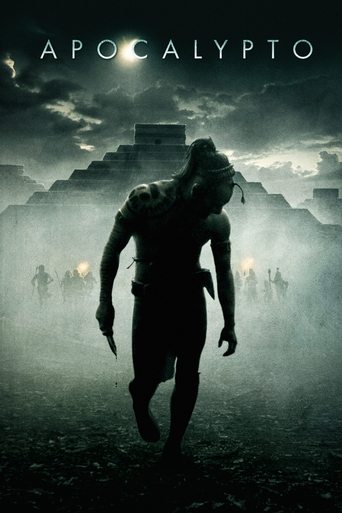
Apocalypto
2006 · Film · 138 min
Directed by Mel Gibson
Set in the Mayan civilization, when a man's idyllic presence is brutally disrupted by a violent invading force, he is taken on a perilous journey to a world ruled by fear and oppression where a harrowing end awaits him. Through a twist of fate and spurred by the power of his love for his woman and his family he will make a desperate break to return home and to ultimately save his way of life.
11 positive2 negative1 mixed6 neutralfrom 20 commenters
Where to watch
No streaming data for this title.
22 comments on Hacker News
Thank you, for your patience in my reply here it is:
https://banagale.com/cinematic-canvas-ai-film-animation.htm
I provide a "how I got to this" up front, but if you want to jump right to the Apocalypto stuff, use this:
https://banagale.com/cinematic-canvas-ai-film-animation.htm#cinematic-canvas-workbench
And if you want to play with interactive demos of the two animation sequences (the tuning tooling I described in my OP) you can go directly there:
https://banagale.com/cinematic-canvas-workbench-demos
If anyone wants to collaborate on building out the cinematic-canvas-workbench project please email me.
I worked with an LLM to build a ~3D animation of the Back to the Future delorean Time Machine as a way to spice up the hero on a docs page.
That took a fair amount of custom tuning and I had to create a tuning view to get some of the behaviors right.
But it was enough fun that I generalized it to take in ~any scene description from a film. It goes out and gets more detailed descriptions and film stills if available but also takes custom stills if you provide them.
My test scene was the Gauntlet scene from Apocalypto. It is low fidelity but does a pretty amazing sequence with somewhat believable physics of the javelins etc.
Here is the docs page with the vertical takeoff / 88 miles an hour time travel: https://contextify.sh/docs
I can share some of the Apocalypto bit if anyone is interested.
>three hour movie
>transporting us into the world of different values and beliefs
I regret to inform you that Mel Gibson has been a better director
https://en.wikipedia.org/wiki/Apocalypto
Might have been (more) loyal to the original had Nolan dubbed it into Greek or went with Victorian dialogue?
Note: Emily Wilson (TFA) wrote the "modern prose" cover that Nolan adapted. Maybe she's feeling responsible..
Apocalypto was all Mayan so Gibson's job was a bit easier
The old ones are great, Mel Gibson is a treasure. Watch Apocalypto as well, one of the best action movies ever made
Apocalypto by Mel Gibson did a great job of imprinting a visual image of pre-Columbian Aztecs. The tribe of villagers in the movie was depicted as peaceful, but I think it's only through limited observation time and in contrast with the brutal Aztecs. Otherwise I bet even those villagers were more like we observe the Papua New Guinea tribes of today, routinely mounting some expedition of murdering and pillaging the neighbouring village.
https://www.youtube.com/watch?v=i_rejhUV0A0
That was not meant as an insult or downvote, I literally do not understand your comment.
>Imagine yourself in the movie Apocalypto and I'm using a Hollywood film on purpose here - the entire Universe of being as you see it all the sudden explodes its Universe with new Gods/demons different and more powerful _everything_ coming to kill you. And then there's the boring discovery of "we're just one planet in one solar system in one Galaxy...
This is gibberish word salad.
I don't know, that's quite the romantic take. I can easily admit I don't know what's coming, but _homo sapiens have ever witnessed_... _cannot conceive of near future that we recognize as real_. Come on, lol
Imagine yourself in the movie Apocalypto and I'm using a Hollywood film on purpose here - the entire Universe of being as you see it all the sudden explodes its Universe with new Gods/demons different and more powerful _everything_ coming to kill you. And then there's the boring discovery of "we're just one planet in one solar system in one Galaxy...
LLMs gonna be orders of magnitude beyond that (in)comprehension? I mean maybe it will be more powerful and maybe it will come to kill us, but that's not an inconceivable new story line.
Funny that both of us can accuse one another of hubris.
I’m Hacker News’ resident chud, but this is an actual issue. Natives exist only in relation to colonization. Prey, Apocalypto, and other well-made movies about first peoples ALWAYS include a white guy. Prey was egregious, could have easily only been about natives.
Maybe Atanarjuat doesn’t?
Maybe you can refresh my memory? The ark in raiders was a macguffin. The only overtly religious character I remember was the imam. If you mean temple of doom with the Kali cult, that's closer except for one important detail. Other movies are careful to mentally distance depictions by having cults be underground or otherwise abnormal and isolated. Think midsommar, wicker man, etc.
The narrative of apocalypto is literally the mainstream Maya priests kidnapping and torturing people to sacrifice them before the protagonist is saved by the distraction of Spaniards arriving. I would consider the same thing with Christianity swapped a bit distasteful as well, but I can't think of any movies like that. Handmaid's tale would count, but that's a deliberate critique rather than unintentional stereotyping.
Apocalypto was a fun movie, I liked it.
They were not comically evil, not sure from which hollywood movie you take your persuasion (apocalypto?)
Mel Gibsons Apocalypto has some great fight scenes, and probably one of the best foot chase scene on film. The ending scene is a sort of target practice of skilled warriors with a weapon vs an unarmed prisoners given a head start to try and escape. It becomes pretty apparent what a huge advantage a weapon in skilled hands is.
https://youtu.be/rM8Fxd9svzA
Apocalypto, for me, has a similar feeling provoked by the end - it almost makes the whole film both profound and purposeless.
No, we're talking about historical (i.e. real) Cortez, which is evident from your very own reference to his 'rape' which has nothing to do with the film 'Apocalypto'.
The reference to 'rape' I interpreted metaphorically, and you indicated you meant it literally - which I don't think applies given the historical facts of Aztecs, Cortez et. al. in real history ... whereas one could arguably use the 'rape' in the metaphorical sense and it would in fact apply within reason, at least as a creative description.
Also, nobody has suggested Cortez was a great dude, rather, that he wasn't part of a 'death cult' that pulled the beating hearts out of hundreds of thousands of slaves, women, and children, and inserted straws for the gods to drink blood, skinned them alive and wore their skin for good luck etc. ... which is altogether another level of crazy. It requires a hefty dose of moral equivalence to even try to equate regular colonization/conquest, which is the most common type of geopolitical activity in history by far, with the 'death cult' Aztec stuff, which doesn't really seem to have any real historical parallel.
Apocalypto is a brilliant film designed as an emotional mass market play, but the production design was so great it's award worthy.
Mel Gibson's films usually give some insight into the nature of power and politics, which is really fun because so few attempt to bother with that kind of stuff.
Listen to the DVD voice-over with he and the director of that film, they give you some amazing information as to the backstory of the political setup of the city in which the scenes took place.
Watching Mel Gibson's Apocalypto gave me chills.
I don't know if there are any other movies that depict the times so realisticly (atleast from a movie watcher's perspective though not from a historian's one).
The last scene showing Hernan Cortez's ship is the bridge between the old world and the "new world". The start of the decline of the Aztecs.
The movie Apocalypto comes to mind, where that is essentially the plot of the movie. I think you're probably right.
I have watched Apocalypto 3 times with a difference of 3-4 years. Each time I felt I was watching a completely different movie. Last time I watched it I saw it as a masterpiece in film art.
I find it disappointing that the films on this list are overwhelmingly old. Sure, many of these were groundbreaking and influential in their time, but filmmaking has come such a long way since the days of Hitchcock, for example.
In his original list, "City of Gods" (which he didn't even spell correctly-- the english title is "City of God") is the only film made in the last 2 decades.
His updated list, which was supposed to be more inclusive to women, adds Apocalypto, District 9, Kung Fu Hustle, and Dirty Pretty Things, all of which are directed by men-- and he even removed "City of Gods", one of the few movies from the original list that had a female (co)director.
In fact, the entire list reads like a giant insult to all of Lee's contemporaries. Does he want every aspiring filmmaker to enter the business with antiquated sensibilities about cinematography?
He's coming across like the smug high-schooler who just discovered Led Zeppelin and declares that they're the greatest band of all time, and all modern music is crap.
Apocalypto it's a great film. Mel Gibson is an antisemitic jerk but the man knew how to make great films. Sadly, he dug his own grave.
Keep in mind that the list is for aspiring filmmakers. Apocalypto was quite unique in its execution, but yes I agree that it wasn't a great film.
The thing is, this basically suffers the same problems. It's not so much technical shortcomings (although the sound desperately needs work...but I'm a sound guy so I would say that). It's just that special effects, ultra-violence, money shots, and showdowns are not the backbone of a movie. Now, the eye-candy stuff is the most expensive in production terms on a real movie, and trailers are always full of eye candy because a) you want to catch people's attention and b) you need to sketch the story very quickly and pictures are the most efficient way of doing that. But the backbone of the story is the relationship between the characters that you care about, and you can't ever get to know characters enough to care about them if they're just walking around turned up to 11 all the time.
Look at South Park - visually speaking it looks terrible, the character design and animation is about as basic as it can possibly get. But it's involving because the characters act out their personalities in a consistent enough way that the audience can identify with them by mentally modeling their behavior. South Park sin't to everyone's taste of course, but you can think of lots of other examples, I just picked this one to point out that the visuals are the least important element. The surprise in a storytelling reveal comes from discovering that a character is not who you thought she was, or or from having a resolution between two conflicting elements within the same character.
The reason that tragedies are tragic is because there are many things you like about the lead and it's painful to see them lost because of the lead's poor moral choices and eventual downfall. Likewise the enjoyment in seeing a hero's triumph is in watching them transcend their weaknesses. Rocky wouldn't be a success if it was just 90 minutes of Sylvester Stallone boxing to victory. the film seems like it's about boxing, but it isn't. It's about a dead-end guy who wants love and self-respect. Only his girlfriend knows what his real goal is, because she's the only person he's able to be completely honest with.
The problem with Deathknights in Love is that nobody in this story seems to have any life outside of Being Epic, whether they're Casting Epic Spells, Fighting Epic Battles, or Making Epic Whoopie. I can't relate to them because they're not real people, they're WoW avatars. I think Valve's Team Fortress & source toolkit are a far more fruitful tool for Machinima because the characters are more cartoonish and have clearly delineated strengths and weaknesses, so while none of the related Machinima is Shakespeare there is plenty of scope for comedy. The relative lack of realism makes it easier to focus on the dramatic elements rather than the purely visual ones (camera moves, impressive entrances and poses, special effects etc.). I think this was also a key aspect of Red v. Blue's success - it's much easier to transcend production quality constraints with humor.
I work on a lot of low-budget films, many of which are dreadful - and what makes them bad is not the lack of production value (sets costumes, cinematography, FX etc. etc.) but the lack of life in the characters, who are usually so bad that the actors and crew hold the fictional characters in complete contempt; at least if the characters are ridiculous the film has a chance to be tongue-in-cheek funny, but often they're just awful. This is the opposite of the film school problem where the characters tend to be richly textured wonderful people (because the writers and directors want everyone to know how interesting and pleasant they are), but there's not much budget or time for production value so you get a lot of films where Nothing Happens and the nice people who live in the world of the film are never put under sufficient stress to make for an interesting story.
With Machinima, the temptation is to use the computer for all that stuff that would be impossibly expensive to do otherwise. And I don't blame anyone for wanting to do something that looks epic, because while comedy is easier to stage it's harder to write, and if you want to be dramatic then awkward/comic stuff lets the air out of the balloon and can actually be depressing. But the strength of epic stories comes from the character development and that ultimately means characters have to overcome their natural tendencies in pursuit of something else. I would be much more interested in (and forgiving of) the Deathknight story if started out with a character that was actually fearful and whose sole interest was in escape, survival, and relief from being someone else's target all the time. That's a situation where good and evil start to actually matter, and courage has to be found rather than just being a character trait for the people on screen to measure each others' bad-assery. Apocalypto is a good film exploration of this theme, not least because it has so little dialog and all the action is motivated by the lead characters need to escape.
Alternatively, I'd be intersted in a story where I find out why the villian is so bent on exterminating everyone else. It's not Because He's Evil; nobody goes through life doubling down on the belief that they're a bad person, people do evil things because they believe they're superior and that people who get in their way are obstacles to be overcome in the pursuit of some worth (by the villain's standards) goal. A villain that just wants everyone dead doesn't have anything much to struggle for; even if s/he's a sadist, then there needs to be a struggle against boredom. If the villain completely succeeded in taking over the world and eliminating all opposition, what would s/he do then? Villains are either fleeing fears or pursuing goals just like heroes; when a plot revolves around Good vs Evil it's usually a sign that the story is basically Zombies vs. Zombies. Even in such a situation, audiences still want o pick a side; so the Alien vs. Predator movies succeed as action movies because we can anthropomorphize the Predator character more easily than the Xenomorph. If it was, I dunno, Aliens vx. Giant Spiders or Terminator vs. Predator (or any plot where both sides are intent on the destruction of the other and have little or no instinct for self-preservation) then it isn't that interesting to watch any more because questions of success or failure become so abstract as to be meaningless.
In short, I need a reason to care for characters other than their merely wearing metaphorical white hats or being the first people to appear on the screen before the Villains.