 Hacker Cinema
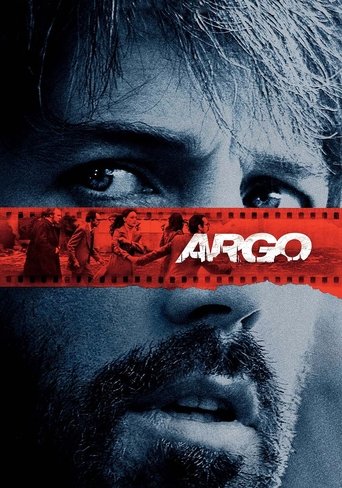
Argo
2012 · Film · 120 min
Directed by Ben Affleck
As the Iranian revolution reaches a boiling point, a CIA 'exfiltration' specialist concocts a risky plan to free six Americans who have found shelter at the home of the Canadian ambassador.
10 positive8 negative2 mixed17 neutralfrom 37 commenters
Where to watch
No streaming data for this title.
Videos commenters linked
From YouTube links in the comments below. Most are clips and trailers; “Full” means the uploader says so.




38 comments on Hacker News
I never created a movie. I can appreciate a good one over a bad one (Argo, Gigli).
Statistically speaking, the number of people who have created a movie rounds to zero. And yet, to suggest basically no one appreciates a movie or the difference between a good movie and a bad one is obviously very dumb.
Isn’t this policing of Iran needed because of the US supporting Israel?
No, do you remember the terrorists attacks in USA and in Europe? Have you watched the Argo movie? Do you know about terrorist attacks in Latin America where Iran is involved? Seems people don't check history beyond Israel (21k km^2)and Jews (16m).
We told the Iranians we were making a space opera movie called Argo, and needed to scout locations as a cover story to get out the embassy employees. Strange is what makes a cover story good!
I don't, but you can always watch the movie "Argo" for a dramatization of actual CIA activity
They are two different governments. If I wrote a negative review for the movie "Argo" would you reply "Imagine if this review was about Star Wars"
Examples off the top of my head:
https://en.wikipedia.org/wiki/Argo_(2012_film)#Historical_inaccuracies
https://en.wikipedia.org/wiki/12_Years_a_Slave_(film)#Historical_accuracy
https://en.wikipedia.org/wiki/Spotlight_(film)#Historical_accuracy
The consumption model has changed, and the tastes reflect that. If you're going to a movie theater a couple times a month, you always have to pick from what's available and what sounds good. If there always new, high quality stuff available at home, you'll pick what you're already invested in. That could be Marvel movies, or it could be a tv show you already know you like.
Affleck said (in a recent interview with Damon) that he wouldn't be able to make Argo today as a movie. It'd have to be a six hour mini-series.
Anyone who watches a Hollywood movie and assumes it accurate is a fool. Movies are made to make money not educate.
It’s like the chase scene at the end of Argo. That never happened. They just got on the plane and left but if the movie was accurate that would be a horribly boring ending so they made up a better on.
Propaganda operatives, whether commercial or military, seek what are called "placements". These are packaged kernels of message content to be repeated by media gatekeepers, who may be reporters, editorialists, authors, movie directors, computer game studios, or social-media "influencers".
Zero Dark Thirty and Argo were important movie placements by the spooks. Diamond, cigarette, car, beverage, and now phone product placements are a familiar movie phenomenon. It appears that there is significant budget available for funding movies and games that present CIA programs in a positive light, which also generate direct revenue.
These types of relationships in Hollywood is well documented in the recursive movie Argo:
https://en.wikipedia.org/wiki/Argo_(2012_film)
https://www.wired.com/2007/04/feat-cia/
https://www.amazon.com/dp/0688163025/ref=as_li_ss_til?imprToken=-yJXNV-zyuc.ya-u1QuDPA&slotNum=0&tag=slatmaga-20&camp=0&creative=0&linkCode=w61&creativeASIN=0688163025&adid=1KDQS75WP88HYMY6Z8PV&
Crude joke, but this so reminds me of the line from the movie Argo. Specifically the joke[1] which later became synonymous with "break a leg" during the movie.
Not that Cloudflare won't fix it, but while reading the post, I couldn't stop hearing it in my head.
[1]: https://www.youtube.com/watch?v=MTjJTsrglDA&feature=youtu.be&t=15s
Junior Mechanical Engineer (aka EIT) here. Interviews are pretty... standard I guess? Nothing like the interviews I read about on HN.
Most of the time is spent discussion my past projects, both technical and less technical aspects, like conflicts in team work and what not. Since I'm recently out of school, those projects are mainly a major design project I was a part of in undergrad (designing building a desert orienteering buggy from the ground up in 2 years), my master's research project, and coops (5) I did in undergrad.
Sometimes, especially if there is an HR person in the room, I'll be asked the really cliché interview questions, like name your 3 worst weaknesses. I hate that, it's a bullshit question, and (I hope) they very well know everyone will give them bullshit answers with the straightest face they can.
Exactly once I've been asked to solve relatively trivial mechanical (statics&dynamics) problems on a piece of paper. Honestly, I normally enjoy it when I get to write down FBDs and work out those kinds of problems. But it was the first I was asked to do it with an interviewer watching over my shoulder, and that was much harder than I thought. I totally choked up under pressure, and could only barely finish 70% of one of two problems. I feel for you devs now.
Funnily enough, in that same interview, there was a later part with an HR lady, that went well enough I think, until at the end she asked me asked the movie I thought was the funniest I ever saw. Sort of stressed and exhausted from the previous 3 hours of interviewing, not being a huge fan of comedies in general, and having recently re-watched Fargo, I went on about Coen Brothers movies, and how I think there is something hilarious about how trivial misunderstandings escalate into ridiculously life changing outcomes for every character.
Apparently she'd never heard of any of those films, and I'm not good at communicating my enjoyment of George Clooney's fuck machine in Burn After Reading. Didn't get that job, not sure if it was that or the paper problems that sank me.
(just kidding, I definitely did not bring up a fuck machine in a job interview, but I might have went on a bit much about Fargo, which she intially confused with Argo)
Those six were no ordinary citizens, they were diplomats.
Argo is a deeply troubling film. From the one-dimensionality of the Iranians to the complete lack of historical context ignoring prior US meddling and interfering in internal Iranian affairs[1]. The involvement of the CIA in the production[2]. The historical inaccuracies of the film[3]. The timing of the release of the film given Iranian-Western relations over its nuclear program.
For me Argo is basically unwatchable US patriotic screen-fodder bordering on propaganda.
[1] https://en.wikipedia.org/wiki/1953_Iranian_coup_d'état#United_States_role
[2] https://www.amazon.de/CIA-Hollywood-Agency-Shapes-Television/dp/0292754361
“Argo and Zero Dark Thirty are only the latest film productions the CIA has influenced in the 15 years since the Agency opened its official liaison office to Hollywood […]”
[3] https://en.wikipedia.org/wiki/Argo_(2012_film)#Historical_inaccuracies
A 'Captain Phillips' executive identified the tone of the film as a source of discomfort for censors, particularly “the big Military machine of the U.S. saving one U.S. citizen. China would never do the same and in no way would want to promote this idea.”
I was watching Argo on my Chinese IPTV streaming service in Shenzhen with my Chinese roommate and my roommate was blown away by the idea that the movie was based on a true story. He said that the Chinese government would never take such extreme steps to rescue its citizens from any such situation. I never really thought about his comment and his shock (it was a lot of shock) until reading this just now. Wow, interesting.
I'll take your word on that one. I've been more of a movie/docu person, and have seen a movie based on that story, Argo [1]. The movie was good. Non-fictional, based on the real story, slightly romanticized/more suspenseful.
While I'm trying to steer more towards reading books I made the rule to not watch a book of a movie I've seen. It just doesn't work very well for me (other way around seems fine).
So yeah, the movie spoiled it for me...
[1] https://en.wikipedia.org/wiki/Argo_(2012_film)
Wouldn't be the first time Hollywood glossed over contributions for a better story.
Regarding Argo: “In the movie, Canada and Ottawa didn’t exist,” said Kenneth D. Taylor, who was the Canadian ambassador to Iran at the time and helped six Americans who escaped from the American Embassy as it was overrun by militants to flee the country. “It’s a great film, it’s great. But at the same time it was a Canadian story that’s been, all of sudden, totally taken over by the Americans. Totally.”
> The 2012 film Argo, directed by Ben Affleck, played up the U.S. spy agency’s role in the escape at the Canadians’ expense, omitting Sheardown’s role in the caper and falsely implying that the Canadian government was willing to leave the six Americans behind after closing the embassy.
THAT. Argo really was a horrible belittlement of a predominantly Canadian operation. Artistic license is one thing, but re-writing history simply to appeal to certain demographics (ie American film audiences) is cowardly. Any number of films do this, but it is always wrong.
https://en.wikipedia.org/wiki/Canadian_Caper
50 Years ago, in 1964, My Fair Lady was #3 at the Box Office, and won the Oscar for Best Picture. In 1956, Around the World in 80 days won and was #2.
In 2014, 12 Years a Slave was #44 at the Box Office, and won the Oscar for Best Picture. In 2013, Argo won and was #22.
I think this represents that "what sells" is no longer the same "the best movies". The OP says good movies are finding it harder to get made. Good stories, good acting, good "art", are being pushed out in favor of "popular".
Not sure anything can or should be done about that. But it's definitely a trend.
One type of interesting modern hand crank device is degaussers.
Goverment regulations require that data is able to be destroyed even if the power goes out. So the top end degaussers can operate by hand crank. It reminds me somewhat of the movie Argo.
> I find the mistake they made somewhat understandable since they could easily have failed to foresee the consequences of their actions, but it was still a mistake.
Yeah, like arming Bin Laden when the Soviets invaded Afghanistan, who would have guessed? Iran-Contra fallout? To an outside observer, it would appear that the CIA may have a sound tactical approach in many cases, but fails miserably at strategy and long-term view.
EDIT: oh, yeah, and Iran and the Shah (for the youngin's, the movie _Argo_ gives an ever-so-brief bit of background at the beginning). How could I forget about that textbook example of blowback?
Holywood story-makers don't believe that reality is good for the crowds. So you get a sugar version, of what it could be.
Some times you go so far as making movies like 'Argo' where a total fiasco which led to the demise of a president, is pictured in totally different set-up and served as a success.
And here is the beauty of the Internet. We wouldn't know that, if information wasn't freely flowing online.
The Netflix bit is not completely true; the number of films/episodes available is lower but you get quite a few high-profile movies unavailable stateside eg. Argo, Batman + The Matrix trilogies, The Departed etc (http://www.moreflicks.com/home/movies?utf8=%E2%9C%93&provider%5B%5D=netflix-no&query=). Blame licensing arrangements.
Netflix is pretty VPN-friendly from my experience, so if you have a US or Canadian one you can still watch what you'd like.
There's a page or two on Wikipedia about it:
https://en.wikipedia.org/wiki/Argo_(2012_film)
The basic idea (making a sci-fi film as a cover for getting people out of Iran) is true, after that it's fairly heavily dramatised and pro-Americanised.
Worth saying that Affleck has always been relatively upfront about the dramatisation when asked about it in interviews, though I've not seen him asked about his depiction of the actions of the Canadian, British and New Zealand governments.
There's an associated danger with fiction: though it reflects how the author sees the world, it may not match how the world really is. Fiction can intentionally or unintentionally invite readers to draw universal lessons which are misleading.
I'd even suggest that some authors, particularly those with strong political views, may be motivated to write fiction in order to give support to their own ideas. It's a blank canvas onto which to project an idealized world, and to fulfill wishes. (If that's the case, it can serve as a mildly negative Bayesian signal about whether the ideas are really true. If there were so many real-world examples illustrating the beliefs, why would the author be moved to write fiction to promote them?)
Apart from politics, plots are more interesting when they're surprising, but almost by definition, surprising plots are less likely to be generalizable to the world.
(Of course, non-fiction can really be fiction in disguise, but at least non-fiction can be fact-checked. To cite a recent Hollywood example, wherever the movie Argo is suspenseful, it's simply made up. Minor spoiler: If you drew a lesson about how going directly against the instructions of both the President and your CIA boss can be a useful tool to cause your boss to suddenly rally around you and later commend your success, you would be gravely misled. Interesting plots thrive on such unrealistic conflict.)
Sure, still got hacked by Russian usb's though. What I'm seeing (the slides, Mr Alexander and so forth) is a huge list of incompetent dinosaurs in key positions. Sure there are skilled - very skilled - people all over the place, NSA, Iran, India, China, Australia, Cyprus (you name it). Sure the NSA employs more mathematicians than anybody else.
They have vision of hackers with AK Rifles on their back, wearing masks? Logos with a planet and a huge eye spying on it?
The flops these Agencies do, might surpass the successes by far. The thing is that you need dig in order to find out the real story. Hollywood even makes movies, advertising epic failures for wins (i.e. Argo, seriously???).
The thing is, if you're not doing some sort of incredibly bloated production, you don't need 10,000 people to make a movie. Most movies are NOT Lord of the Rings.
For instance, one of the best critically received movies of the last decade was probably No Country For Old Men. Budget? $25 million. Made back well over triple that at the US box office alone.
The King's Speech? $15 million, made over $135 million
Argo? $44 million, and that had lots of expensive location shoots in the middle east
The Hurt Locker? $15 million
Slumdog Millionaire? $15 million
Crash? $6.5 million
Million Dollar Baby? $30 million
All movies that did very well at the box office, and were made for $25 million or less (with one exception). They also all won the Best Picture oscar. So there is PLENTY of evidence that you can make a great movie without getting anywhere near a 9-figure price tag.
Of course, for "indie" films, you can go well under that. "Clerks" cost about as much a new car. The original Texas Chainsaw Massacre was barely over $100k....the first Saw movie was made for just over $1m and grossed 100 times that.
Yes. See Blackhawk down, or the angle on the New Zealand involvement in Iranian hostage crisis movie Argo. http://www.3news.co.nz/NZs-role-in-Iran-crisis-tainted-in-Afflecks-film-Argo/tabid/418/articleID/273069/Default.aspx
I remember a more innocent time almost three decades ago when my work involved frequent flying, such that I have been to most major airports in the United States repeatedly and have logged weeks above 30,000 feet of altitude. I have a photograph from those days showing me seated at the controls of a commercial airliner, which the crew of the airliner took after I boarded a flight early in the boarding process. In those days a business traveler could sit down to pose for a snapshot inside the aircraft cockpit, with the crew having no concerns about a person who was not an airline employee being there. That's the carefree ease of flying in the United States I remember from the beginning of my adulthood.
1329 days ago I wrote here on HN, in reponse to one of the recurring complaints about airport security procedures, "Hear. Hear. I was just on flights out of town over the weekend, and it occurred to me that the terrorists have won by making air travel so inconvenient and annoying for every American who ever flies domestically. 'Maybe Secure Flight is a good use of our money; maybe it isn't. But let's have debates like that in the open, as part of the budget process, where it belongs.' This is the general answer for review of current security procedures: we should check whether they are worthwhile for the amount of improved security they promise to provide."
334 days ago another participant, who came to the United States from another country, wrote,
It's also the only place that made me take my shoes off before the metal detector, which I found quite humiliating
This appears to have been one of the calculations of the terrorist group that put up the shoe bomber
http://en.wikipedia.org/wiki/2001_shoe_bomb_plot
to trying his failed attempt to blow up an airplane with a bomb hidden in his shoe. Some of the co-religionists of some of those terrorists consider it extremely degrading to be bare-footed in certain situations deemed to be "holy" situations (I know this from having been warned about how I oriented my feet in flip-flop sandals once when I was overseas in 1984), and thus they have probably been glad to humiliate Americans as Americans have reacted to the failed shoe bomb plot. My proposal is that United States airport security give up on requesting passengers to remove shoes. Yeah, maybe have chemical sensing devices with air intakes at floor level to screen for bombs on shoes, but let us all wear our shoes onto airplanes and throughout the insides of airports. The screening procedures at present appear to be an overreaction to the actual risk of a shoe bomb destroying a passenger airplane, especially in view of other countries not having the same screening procedure for airline passengers.
I've summed up my reaction to the past incidents of terrorism directed at Americans overseas or civilians in the United States in a more recent Hacker News comment: "It's important for all of us to remember the basic issue here. The basic issue is whether people in free countries, like most readers of Hacker News, are going to be able to enjoy the right of free speech throughout their country, on any subject, or whether any American or Dutch person or other person accustomed to free speech who happens to be within reach of attack by a crazy foreign person has to prepare for war just to continue to exercise free speech. On my part, I'm going to continue to comment on public policy based on verifiable facts and reason and logic, even if that seems offensive. I am not going to shrink from saying that people in backward, poorly governed countries that could never have invented the Internet have no right to kill and destroy just because someone in a free country laughs or scorns at their delusions. The people who are destroying diplomatic buildings and killing diplomats are declining to use thoughtful discussion to show that they are anything other than blights on humankind."
Allow me to reemphasize this point. The many participants on HN who criticize Transportation Security Agency "security theater" as a meaningless reduction in the freedom of people who travel to the United States are right on the basic point. If free citizens of free countries can't live in freedom because of fear of terrorists, the terrorists have already won. You and I should be able to speak our minds and express our opinions in the manner of all people in free countries--sometimes agreeing with one another, sometimes disagreeing, but always letting the other guy have his say. To engage in self-censorship because of fear of violent thugs is to be defeated by the thugs.
We should also be able to fly freely about the country with no more than strictly necessary security precautions. I want to be able to walk into an airport with my shoes on and walk calmly to an arrival gate to greet arriving passengers there. I used to do that. And I want to be able to carry a Swiss Army knife in an airline carry-on bag. Grandmothers and mothers and children should surely be able to board an airliner unmolested in a free country like the United States.
That said, I remember when conditions changed in the United States. I stood on top of the former World Trade Center in New York City twice while traveling with foreign visitors to the United States during my earlier frequent flyer days. Because I remember the peace and freedom I long enjoyed here to welcome visitors to the United States from around the world, I want the leaders and active participants in terrorist networks to identified through constant surveillance and intelligence, and I want terrorists to be attacked relentlessly where they live, so that they have to hide in caves while people all over the world who renounce their goals get to lead civilized, peaceful lives in the Twenty-First Century. Taliban delenda est. Al Qaeda delenda est.
AFTER EDIT: Thanks for the several interesting comments. I think it is important to acknowledge that, yes, the United States government as a matter of official policy has engaged in assassination of foreign government leaders, and plotted the assassination of others, as well as committed and plotted break-ins in foreign embassies (but not random bomb attacks on foreign embassies, to the best of my recollection). I think the United States has been chastened by some of the results of those earlier policies. The movie Argo has been watched by many Americans, and it frankly acknowledges the assassination of an elected prime minister in Iran by the CIA back before I was born. I think now the United States is much more interested in information openness as a means to make sure that countries all around the world trade peacefully rather than waging war one one another, and I think that is the only long-term way to defeat terrorist networks. The current armed warfare strategy of drone attacks on specific terrorist leaders rather than mass bombing attacks on cities (as in World War II) is a step forward in war-fighting effectiveness and an improvement in reducing civilian casualties.
Yes, the United States is still second only to France as a country destination for foreign tourists (and rather more of the tourists to France can drive cars or ride trains to France than can many visitors to the United States). So as obnoxious as current TSA security procedures are to me and to many, they are not so obnoxious that people have stopped visiting the United States for fun.
Oh, yes, and my "half-Asian" children look very Central Asian, as one might expect, and my oldest son with his full black beard looks like someone from the latest news story about Al Qaeda. I'm not sure what his experience has been traveling around the country for his study and work. He barely remembers the old days before the TSA. Certainly we should also make sure not to harass citizens or visitors who happen to have the wrong name or the wrong pattern of physical appearance, but identify threats on the basis of more relevant information. Another top-level comment in this thread says that Israel succeeds in doing that for the most part.
Django Unchained - Cloud Atlas - Looper - Argo - Easily the best movies I saw this year, they were all really, really awesome.
My favorite movies of the year:
1. Moonrise Kingdom
2. Beasts of the Southern Wild
3. Argo
4. Life of Pi
5. Amour (Only NY and LA for now)
6. Monsieur Lazhar
This year seems to be the year of really really brilliant cinematography.
Skyfall was breathtakingly beautiful in terms of cinematography. It had a solid story too, unlike Prometheus, which while beautiful, falls short on story.
The Dark Knight Rises concludes the series very well. It was well shot, and barring a few continuity issues, it was by all means a very good movie.
Argo was fine as a story, also very well made and I liked it.
One surprise this year which I absolutely loved was Pitch Perfect. My partner had dragged me into an early viewing of the movie, and I didn't know much about it. So yeah, good surprise.
As for the rest, meh. I mean Spiderman and Avengers were fun, but it is not as memorable as the ones I mentioned above. So was Looper
I suppose it says something that Argo and Moonrise Kingdom are the only movies that I can remember really liking in 2012. Flight was also memorable, if you're into character dramas. I've also heard really good things about Searching for Sugar Man, but I didn't get a chance to see it in theaters.
Avengers was solid entertainment, but I wouldn't make a special trip to see it. Most of the other big releases with nerd draw were disappointments: Lincoln was overhyped Oscar-bait, Brave was forgettable, and the last Dark Knight movie was just bad (below average for summer movies, which is a low bar).
The two you need to watch:
- Get the Gringo
- Grabbers
The rest:
- Cloud Atlas was...interesting.
- Pitch Perfect was the absolute worst, but hilarious. In a similar vein: For a Good Time, Call.
- Argo and Beast of the Southern Wild are overhyped in my opinion.
- Life of Pi was great (make sure to read the book at some point).
- End of Watch was better than advertised.
- Dark Knight Rises was a solid conclusion to the series.
- Ted was funny, but doesn't work so well on repeat views.
- Other movies you should watch: The new Total Recall. Safety Not Guaranteed. Lawless. The Amazing Spiderman (awesome series reboot)
These are some of the movies that I watched and liked in 2012:
The Grey
Prometheus
The Avengers
The Dark Knight Rises
Skyfall
The Hobbit
And these are some of the good ones I would like to watch:
Argo
Lincoln
Looper
Life of Pi
Zero Dark Thirty
Plenty of films do seem dated in a negative way to me, and I can get that someone expects carefully mastered soundtracks with impressive thumpy sound. But I think there are some films were well made that stand the test of time.
The LA Times ran an article[1] arguing lack of interest in old movies stems largely from new films having a social function that is similar to fashion. I'm inclined to agree. Therefore, while 48+fps might become the fashion, I doubt it's required to retain interest in new movies as referenced in the great-grandparent post.
I certainly wasn't around when The Seventh Seal was filmed, yet I find it astonishingly beautiful and impressive (which makes the parody film De Düva even better.) Of course, I can't talk about it the way one talks about the weather or of theater run films-- "Did you see Argo yet? I want to check it out, the trailer looked cool."
http://articles.latimes.com/2012/jul/14/entertainment/la-ca-film-novelty-20120715
I'm surprised it still "misses" on a lot of phrasings and sends the search to Google which is generally useless since Google loses the context. Especially phrasings that Siri advertises as working.
"how far is it to X" doesn't work in Google but works in Siri. "how did (sports team) do" doesn't work in Google but works in Siri. "what movies are playing" works but "where is Argo playing" doesn't. And this is just weird because "where is Looper playing" works.
This article was probably dug up because the movie Argo just came out.
I saw the movie Argo yesterday. It did a great job of not presenting the Iranians as the bad guys. Within the first 10 minutes you know why they took the embassy. In fact, I'd say I have a much more positive view of Iran now. It was an excellent movie.