 Hacker Cinema
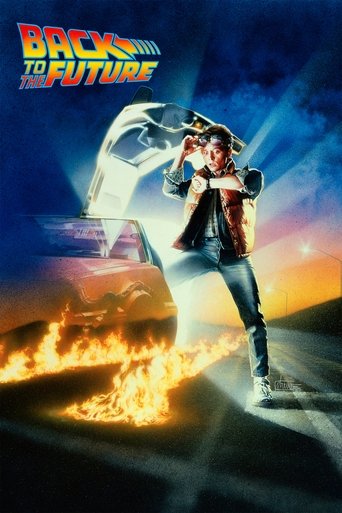
Back to the Future
1985 · Film · 116 min
Part of Back to the Future Collection
Directed by Robert Zemeckis
AdventureComedyScience Fiction
Eighties teenager Marty McFly is accidentally sent back in time to 1955, inadvertently disrupting his parents' first meeting and attracting his mother's romantic interest. Marty must repair the damage to history by rekindling his parents' romance and - with the help of his eccentric inventor friend Doc Brown - return to 1985.
41 positive7 negative1 mixed121 neutralfrom 170 commenters
Where to watch
No streaming data for this title.
179 comments on Hacker News
I worked with an LLM to build a ~3D animation of the Back to the Future delorean Time Machine as a way to spice up the hero on a docs page.
That took a fair amount of custom tuning and I had to create a tuning view to get some of the behaviors right.
But it was enough fun that I generalized it to take in ~any scene description from a film. It goes out and gets more detailed descriptions and film stills if available but also takes custom stills if you provide them.
My test scene was the Gauntlet scene from Apocalypto. It is low fidelity but does a pretty amazing sequence with somewhat believable physics of the javelins etc.
Here is the docs page with the vertical takeoff / 88 miles an hour time travel: https://contextify.sh/docs
I can share some of the Apocalypto bit if anyone is interested.
The typeface could not be more different between the two. One is a sans serif font with many of the factors the author called out. The other calls back to hand illustration and comics IMO.
What is the same is the color scheme and gradient. This likely is more about what was in style at the time for movie posters. You can also justify this is representive of the past part of back to the future.
This reminds me of the infamous Sid Sheinberg memo to Steven Speilberg and Bob Zemeckis on changing the title of “Back to the Future”.
https://imgur.com/gallery/producers-memo-to-speilberg-during-back-to-future-suggesting-title-change-rB6jZcB
“Behind the note”, it’s about emphasizing the goofy fun of the film, rather than the genre elements, and in that it’s right on.
Yep. I'd just about kill for a decade where we go back to 80s flicks. Some of the best quantity and quality we've ever had for mass-appeal movies, and they didn't cost anywhere near what the average cost is today.
And I'd have at least 2-3 movies a year I'd really WANT to go see, probably more.
Back to the Future, Lethal Weapon, Arnie's action flicks, Ghostbusters-- I could go on for quite awhile, maybe the last decade where we had that kind of movie output.
> I've seen many discussions stating patent hoarding has gone too far, and also that copyright for companies have gone way too far (even so much that Amazon can remove items from your purchase library if they lose their license to it).
The main arguments against the current patent system are these:
1) The patent office issues obvious or excessively broad patents when it shouldn't and then you can end up being sued for "copying" something you've never even heard of.
2) Patents are allowed on interfaces between systems and then used to leverage a dominant market position in one market into control over another market, which ought to be an antitrust violation but isn't enforced as one.
The main arguments against the current copyright system are these:
1) The copyright terms are too long. In the Back To The Future movies they went 30 years forward from 1985 to 2015 and Hollywood was still making sequels to Jaws. "The future" is now more than 10 years in the past and not only are none of the Back To The Future movies in the public domain yet, neither is the first Jaws from 1970, nor even the movies that predate Jaws by 30 years. It's ridiculous.
2) Many of the copyright enforcement mechanisms are draconian or susceptible to abuse. DMCA 1201 is used to constrain the market for playback devices and is used by the likes of Google and Apple to suppress competition for mobile app distribution and by John Deere to lock farmers out of their tractors. DMCA 512 makes it easy and essentially consequence-free to issue fraudulent takedowns and gives platforms the incentive to execute them with little or no validation, leading to widespread abuse. The statutory damages amounts in the Copyright Act are unreasonably high, especially for non-commercial use, and can result in absurd damages calculations vastly exceeding any plausible estimate of actual damages.
LLMs don't solve any of that. Making it easier to copy recent works that would still be under copyright even with reasonable copyright terms is not something we needed help with. If you wanted to copy something still under copyright, that was never that hard, and doing that when you don't know about it or want it is actively unhelpful.
The delorean is only remembered the way it is because of Back to the Future.
Without that movie, it would be a pub trivia question.
Is anyone going to make a generation defining movie that features the Cybertruck? God I hope not, I can't take such powerful satire right now.
My impression is that the pickup truck as status symbol began with a Back to the Future product placement. You may recall that the character Marty lusts after a 1985 Toyota SR5 Xtra Cab.
I saw the movie in the theater and, at the time, found it strange that anyone would have a work vehicle as a dream car.
Yes, I forgot to mention that by "old movies" I mean things like Back to the Future. After a lifetime of watching it dubbed, I watched it with the original audio around a year ago, and I was surprised how clear the dialogues are compared to modern movies.
It's a joke about the movie Back To The Future and 1.21 Jiggawatts.
I was horribly bullied in high school. It was really bad.
The worst part was being ostracized. The school had anti-bullying policies, but they don’t force anyone to be your friend.
Strangely, I was elected to lots of student government office, and held leadership in lots of clubs.
Maybe my memory is just off, but I don’t think so.
I think I was really good connecting with the grownups who ran the school, so they made sure I got leadership positions.
I was always much better at being the kid in class the teacher liked - same with principals, etc.
Probably one of the reasons the other kids didn’t like me - but that went over my head.
I think it’s really easy to overestimate how important the socialization in public schools is. We go to so many movies where the plot is based on the dynamics of public high school, we assume it’s normal.
We see so much of terrible stuff downplaid like it doesn’t matter. Just rewatched Back to the Future which laughingly brushes off every kind of violence as long as it’s done at the prom.
Back to the future 2 called a Chicago cubs World Series win in 2015. It actually happened in 2016.
My favorite fan theory as to why they went to a future of flying cars that’s so different from our own is that it was the events of the first movie (going back there and changing history) that ultimately led us to that different path.
It's from the movie "Back to the Future"
When Back to the Future was made, Libya was ruled by Gaddafi, who was the archetype of a crazy middle eastern dictator. So the movie’s portrayal wasn’t exactly a stretch.
Putting that aside, one of the luxuries of having your own movie industry is not having to care how other people depict you in their movies. I’ve been watching low budget Indian action/horror movies in Netflix lately, and the depictions of foreign countries are similarly one-dimensional. Because why should Indians care? They’re just trying to tell a story and they need props to fit into archetypes in the narrative.
That's the thing: I don't feel like the studios really own something once it is released. It almost becomes the property of the viewers. Things like changing Star Wars is horrifying to most. It's almost as if the public should have to vote on any changes (e.g. I'd probably be willing to vote to remove some flubs, like a mic dangling in frame).
When the Bobs sold Back to the Future they put a clause in the contract that the movies could not be remade or altered in any way without their approval. They nixed the 3D versions that Universal was planned when 3D TVs were in vogue.
I've got experience with getting films made, and IMO, the biggest problem is people who have control of the purse strings fucking with the creative.
So many good movies start out with a good premise, a good script, a good writing team, and by the time it gets through the meat grinder it's just fried dog shit.
"Such-and-such said you need to add this character. The studio wants you to add AI. Jimbo wants an exec producer credit and he needs his son to play that new character you added. Of course he hasn't acted before -- this is his debut!"
And of course, a lot of good movies never get made. Back to the Future got rejected 80 times before getting funded. Some of those rejections did help refine the script, but how many people with amazing ideas give up at the 79th rejection?
>It wasn't anything like the end of Back to the Future
Originally there was no sequel planned for Back to the Future. The ending was just a fun gag, having Doc show up, tell them its their kids now, and then flying right into the camera [1]. It was only after the film became a hit that they decided to do a sequel, and the “To Be Continued…” was added to the VHS release [2].
[1] https://www.denofgeek.com/movies/back-to-the-future-not-planned-trilogy-makes-it-great/
[2] https://www.huffpost.com/entry/did-back-to-the-future-or_b_8344288
I never took the ending as a sequel tease. Always thought it was just the bit where your imagination would take over. It's kinda perfect. He doesn't have to dodge bullets any more, what would you do if you could bend reality to your will? Fly obviously.
It wasn't anything like the end of Back to the Future or the Marvel films where it's not just shameless but de rigueur to include a bit of the next one.
I miss movies that are just joyous like Back to the Future.
You don't even need AI for the death of shared media culture. Just look at the end of broadcast and the rise of subscription services: movies like Star Wars or Back To The Future could only reach their status as cultural icons through the low and wide end of the licensing ramp. A successful cinema release might make a movie the talk of the month, but long lasting cultural relevance only came from broadcast repeats. Stuff that stays on a subscription will only ever reach permanents and hoppers.
Leaving outside the ethical part of it - which is huge, this kills innovation.
The problem I see is that when everything is iterative, and you kill sustainable incentives for new views, innovation disappears.
Is like the movies. We will get all budget towards remakes and reboots, and little new would show up.
Being an 80s guy, I remember many new movies coming out every year, and when they stretched beyond 2 or 3 films, people frowned.
Back to the future, Indy (the good years), Rambo (first 3), lethal weapon. Cool gems came up too (Last action hero?Terminator) even in loaded fields like simple action movies…. Star Wars, 3 films. Matrix. bond was the exception.
Now? mission impossible (8 films at over 2h), fast and mediocre franchise (20 movies), Marvel and DC movies (3 movies shot 30 different times), and everything else is a reboot. Almost impossible for new ideas to get through.
We are killing culture, innovation and human spark for some companies to make a billion more. We are feeding like factory pigs from generic slop, and as the factories grow they kill fertile ground for those who wanted to eat something cleaner.
The fact that is happening does not mean it’s right. It’s just we are accepting mediocrity as our guiding principle at 0.01 USD a pop…
> But here's a pivotal soviet comedy about a guy who goes to the future... okay, here's Bob Zemeckis's Back to the Future. Compare the quality of any aspect: story, acting, props, costumes, cinematography, special fx, attention to detail, MUSIC... 1:1 US cinema destroys on every level. There's a Russian saying "no point in comparing finger with a dick". "Ivan Vasilievich Changes His Profession" was made in 1973 on a budget that was modest even by Soviet standards. It looks like a cheap TV movie for a reason: they reused existing sets and decorations from other movies. The few Hollywood sci-fi comedies of the early 1970s are of similar quality: https://www.youtube.com/watch?v=9BOnUobhm6U
Non-modest Soviet productions of the era, such as the 1970 "Waterloo", are spectacular by any standard: https://www.youtube.com/watch?v=kyytd8HhuME
Every country has 5 or 10 good movies you can name, and they're always the same ones. Brat and Brat 2, Leviathan and Durak... the list doesn't go on much beyond that. And certainly not in the last 20 years.
For US movies, the list goes on. And you can debate which ones should make the top-100.
But here's a pivotal soviet comedy about a guy who goes to the future... okay, here's Bob Zemeckis's Back to the Future. Compare the quality of any aspect: story, acting, props, costumes, cinematography, special fx, attention to detail, MUSIC... 1:1 US cinema destroys on every level.
Bollywood action movies? They're parodies of themselves- Adam Sandler's You Don't Mess with the Zohan, except they take themselves seriously.
Despite the ongoing problem of LLMs passing as human (and before that, https://xkcd.com/1019/ etc.), it is entirely possible they're 100% sincere.
First, remember that a lot of people voted for Trump despite all thay he said in the election and all that he did last time around. What he says must resonate with a lot of people, or that would not have happened.
Second, anecdotally, there's someone I used to know back in the UK who was absolutely convinced that Brexit would be a success, to the extent that at one point me simply saying "no" to some claim he made resulted in him shouting "that proves we should do it!" (or similar, it's hard to quote exactly from memory, especially 9 years later). Cambridge graduate, did the maths olympiad in their youth, still acted that way.
And third, it's very easy to get anchored on something that was once true, and not update as the world moves on. When I was a kid, "made in China" or "made in Taiwan" was not a sign of quality, but "made in Japan" was; but one of the films of my youth was Back To The Future, and one if the few things you can allow even fiction to inform you of are cultural beliefs, like 1955 Doc Brown being written to expect "made in Japan" to justify component failure.
Before recently movies were shared experiences. A good crowd made a great movie on a great screen even greater. Now movies are kind of singular experience. The only movies that still maybe fit this bill are the horror movies that draw in the teenager crowds -- but then it's more about how gory is it rather than plot, character, acting, direction, etc. Or maybe how cheap they can make the movie while still being able to market seats.
To be fair, Hollywood has always had this kind of problem -- just watch a few Mystery Science Theater 3000s to see how bad things can get -- or 1994's "Ed Wood" from Tim Burton. Both of which still romanticize the industry in their own way.
There will never, ever, be anything like seeing the original Star Wars, Indiana Jones, Back to the Future, or Ghostbusters (peak Bill Murray, Dan Aykroyd, Ivan Reitman) in the crowded theater filled with anticipating viewers ever again. Laughing as part of a crowd feels better than laughing alone.
Maybe we're too fragmented as society to enjoy all the same movie that we used to. I don't think this is true, because we all still like Ghostbusters, more or less. I think Hollywood has targeted markets, rather than trying to sell a movie to the masses.
And in 2024 they best thing Hollywood could do is reboot a 1980's TV Show "The Fall Guy". Geesh.
Silvestri certainly had a style and some distinct instrumentation in the 80s (you'll also hear similarities in the Abyss and Predator). Sometimes I like to think of the alternate movie tracks as bonus tracks for Back to the Future. I should listen to them and Roger Rabbit again!
I had to try to find a source for Trump being inspiration for Biff as it just sounded "too good" to be true and apparently it has been stated by screenwriter Bob Gale who wrote it together with director Robert Zemeckis:
https://www.theguardian.com/film/2015/oct/23/back-to-the-future-writer-bad-guy-biff-was-based-on-donald-trump
I see a lot of shade thrown at Kathleen Kennedy these days. Sure, some of the Star Wars movies under Disney haven't been great, but look at this resume. It's incredible. I'll save you the click and put some things she's been the executive producer of here: Poltergeist, E.T., IJ & Temple of Doom, Goonies, Back to the Future(I,II,III), Young Sherlock Holmes, The Money Pit, Empire of the Sun, Who Framed Roger Rabbit (jumping ahead to more recent stuff), Rogue One, Andor, Mandalorian, Ashoka, Skeleton Crew....
So yes, not everything has been a winner, but to say that having her name attached to something means it won't be good means that either A)you might not be informed about her resume or B)you have another reason you don't like her involvement with a project.
https://www.imdb.com/name/nm0005086/?ref_=nv_sr_srsg_1_tt_0_nm_8_in_0_q_kathleen%2520kenedy
Compute power increases and algorithmic efficiency improvements have been rapid and regular. I'm not sure why you thought that Back to the Future was a documentary film.
Nobody can tell you whether progress will continue at current, faster or slower rates - humans have a pretty terrible track record at extrapolating current events into the future. It's like how movies in the 80's made predictions about where we'll be in 30 years time. Back to the Future promised me hoverboards in 2015 - I'm still waiting!
This already happens without AI, it's just that studios can only produce so many films given the budget, labor, and time constraints.
Tell me that any of the "Jurassic Park" films beyond the first were necessary. Or the "Lord of the Rings" films and shows beyond the original trilogy. These are products of the classical studio system. They keep trying to remake "Back to the Future" and as soon as Zemeckis dies, they'll have their way.
There will be amazing art made using AI, and AI will enable extremely talented creators that could have never made it in the classical studio system.
Don't be so pessimistic.
We're going to have "Obra Dinn" and "Undertale" equivalents in film soon. Small scale auteurs sharing their mind's eye with you.
> The fact that nobody would make a Doctor Zhivago or even a Back to the Future today is not something I can fix with all my searching.
What do you mean by that?
I'm not familiar with Doctor Zhivago so I had to look it up, the 1965 film is based on a 1957 novel, which seems to match just fine with the pattern of The Martian, The Three Body Problem, Game of Thrones, Fifty Shades of Grey, etc.
Back to the Future is a fun trilogy, but the first film was mostly set in 1955 (so if it had been done today the past would have been 1994, compare to Captain Marvel being mostly set in 1995), the second film was 1985's idea of 2015 (and we still get plenty of what-if fiction in the near-ish future, e.g. Blade Runner 2049, Cyberpunk 2077), the third was yet another wild-west Cowboys-and-Indians gunslinger (1885) — but if you mean to focus on the more playful and fun aspects of how it was put together, or the positive vibes of good people working to solve problems and where it's clear who the goodies and baddies are, BttF reminds me more of The Orville or Lower Decks. (And The Martian if you want to consider the environment/time travel itself, rather than Biff, to be the problem).
I've often wondered if the balkanization of streaming services would lead to a resurgence of physical media ownership, along with piracy of course
I had an argument some time ago with a friend who was a devout "streaming enthusiast" for lack of a better term. Netflix had Back to the Future on and I watched it
Understandably I wanted to watch the second movie in the trilogy. But...they didn't have it! Somehow they'd only acquired the rights to Back to the Future 1 and 3. But not 2
His genuine response was "just rent it on Google Play then"
This absolute stretching out of content to ensure every single penny on the table that could possibly be obtained is hoovered out of wallets is absolutely pathetic. At least when Netflix was a "dumping ground of old TV and movies" we could reliably go watch "re-runs" of Seinfeld forever. But not so much anymore
In Back to the Future, what was Doc Brown's dog's name in 1955? A seemingly simple movie trivia question exposes fundamental limitations in current RAG systems. Answering this proves surprisingly challenging for our current technology.
Well said. There's tons of blockbusters and other popular movies from the 80s/90s that were absolutely made for the "masses", but were genuinely great films, and far better than almost any blockbuster from the last 5-10 years, especially all the comic-book stuff. Alien(s), Back to the Future trilogy, Terminator 1/2, Ghostbusters, Beetlejuice, I could go on and on. And of course the LotR trilogy if you look at the early 2000s. Movies just aren't as innovative or risky these days; something as quirky as Ghostbusters wouldn't be made now (but Hollywood is happy to make remakes and sequels of that franchise now, 40 years later).
Meta: for those unfamiliar, 1.21 GW is a reference to the 1985 movie Back to the Future. Clip of the scene in question:
* https://www.youtube.com/watch?v=BDuZqYeNiOA
* https://en.wikipedia.org/wiki/Back_to_the_Future
If you haven't seen it, the entire trilogy is worth checking out: very fun and quite family friendly.
For convenience, I asked ChatGPT to create this table, which summarizes how many times each movie has been mentioned in this conversation so far. It got a few counts wrong (as usual), but it still gives a good sense of the frequency. I hope it can be useful to someone:
| Movie | Number of Mentions | |-------------------------------------------|---------------------| | The Matrix | 9 | | Lord of the Rings Trilogy | 8 | | Pulp Fiction | 8 | | Alien | 7 | | Fight Club | 7 | | Ghostbusters | 6 | | Die Hard | 5 | | Back to the Future | 5 | | Inception | 5 | | Star Wars Trilogy (original) | 5 | | Groundhog Day | 5 | | Terminator 1 & 2 | 5 | | Jurassic Park | 4 | | The Thing | 4 | | The Fifth Element | 4 | | Monty Python and the Holy Grail | 4 | | Ghost in the Shell | 4 | | Interstellar | 4 | | Casablanca | 3 | | Office Space | 3 | | Shawshank Redemption | 3 | | The Godfather Trilogy | 3 | | The Blues Brothers | 3 | | Blade Runner | 3 | | Mad Max: Fury Road | 3 | | Unforgiven | 3 | | Total Recall (1990) | 3 | | The Crow | 3 | | The Princess Bride | 3 | | Akira | 3 | | The Big Lebowski | 3 | | Guardians of the Galaxy | 3 | | American Psycho | 3 | | Indiana Jones Trilogy | 3 | | Kiki’s Delivery Service | 2 | | Ratatouille | 2 | | A Clockwork Orange | 2 | | Mission Impossible (various) | 2 | | Casino Royale | 2 | | Skyfall | 2 | | Ferris Bueller's Day Off | 2 | | Star Trek: The Wrath of Khan | 2 | | Apocalypse Now | 2 | | The Shining | 2 | | Groundhog Day | 2 | | Donnie Darko | 2 | | Dune (2021) | 2 | | Gladiator | 2 | | Predator | 2 | | Seven/Se7en | 2 | | The Dark Knight | 2 | | Snatch | 2 | | Prometheus | 2 | | Schindler’s List | 2 | | The Wolf of Wall Street | 2 | | Dr. Strangelove | 2 | | Silence of the Lambs | 2 | | Kill Bill | 2 | | Real Genius | 2 | | Top Secret! | 2 | | Tenet | 2 | | Tinker Tailor Soldier Spy | 2 | | The Adjustment Bureau | 2 | | The Expanse | 2 | | Pulp Fiction | 2 |
Sideways
Back To The Future
Cinema Paradiso
Spaceballs
Up In Smoke (Cheech & Chong)
The Incredibles
Indiana Jones 1-3
Indiana Jones: Kingdom Of The Crystal Skull (Rifftrax only)
Falling Down
Office Space
Man Bites Dog
Nothing To Lose
Idiocracy
Space Mutiny (MST3k)
Goodfellas
Star Trek IV: The Voyage Home
Groundhog Day
Barbie
Full Metal Jacket
Mallrats
Flight Of The Navigator
The Founder
One Hour Photo
---
I'm pretty certain I've rewatched Sideways more than any other film.
I rewatch many movies quite often. But the ones that really stand out, in no particular order...
Wargames Jurassic Park Evolution Unstoppable Lord of the Rings Die Hard 1, 2 and 3 Alien 1, 2 and 3 Back to the Future Ghost in the Shell (basically all of it, mostly seasons 1 and 2) The Martian Tron 1 and 2 Anything by Miyazaki, but Howl's Moving Castle even more so
"Groundhog day" of course
most of Schwarzenegger movies because he is cool
Back to the future trilogy
Fight club
Some of the best soviet ones (Kin-dza-dza, Garage, Mimino, Irony of fate etc.)
Rocky
Forrest gump
Movies I think I truly great I usually only watch once, sometimes twice. If a movie ends and I just sit there thinking to myself… “wow”… I will probably never watch it again.
Movies I watch over and over again are movies that I relate to in some way or find comforting. These are ones I’ve watched at least 5 times, and some I’d bet more than 30 times.
- Back to the Future
- Home Alone
- What About Bob?
- It Could Happen to You
- Matilda
- As Good as It Gets
- Office Space
- Cruel Intentions
- Boiler Room
- Finding Forrester
- Training Day
- Super Troopers
- 8 Mile
- The Transporter
- Elf
- Bad Santa
- Mean Girls
- Saved!
- Garden State
- V for Vendetta
- Thank You for Smoking
- Stick It
- Little Miss Sunshine
- Idiocracy
- Hot Rod
- Run Fatboy Run
- The Other Guys
- Wreck-It Ralph
To name a few.
I added custom instructions to ChatGPT. Even in the most boring programming code it adds random references to Back-to-the-Future movies. I'm sure I could get it to surprise me even more.
Ah that movie brings back good childhood memories for me. According to my mom I was addicted to watching Back to The Future when I was like 4-5.
My apologies for the covert edit making you rewrite your reply.
Why is sci-fi useful when we could just look at technology history? It's the range of imagination involved- exploring big possibilities and unintended consequences that are unlike anything we've experienced before. A lot of it is also noticing how historical patterns could play out in a new context, and sharing those ideas.
I am reluctant to list out prescience examples, because on one hand they seem so numerous I couldn't do them justice with just a few, and on the other hand people will disagree with the importance of them.
Overall- I feel like it is a simple fact that lots of tech people and inventors love sci-fi, grow up reading it, and then it influences what they think about and choose to work on. I suspect we wouldn't have had rockets or space travel when we did, if we didn't have so many victorian era books imagining space travel. The numerous billionaire pet project space companies we have now seem a lot like people trying to live out fantasies from reading Heinlein. Even little things like the devices we have- my Kindle looks and acts exactly like the e-book readers in The Next Generation, for example.
When my son sees old Star Trek episodes very little is remarkable to him except the big things like warp drive and transporters. The "advanced tech" they use day to day is all stuff that is a normal part of his life- 3D printers, tablets, ebook readers, video conferencing, mobile communicators/phones, etc. Same with the "Back to the Future" movies- they travel to a future filled with various electronic gadgets that are very similar to those we now have, but didn't exist at the time... and my son doesn't see how remarkable that seemed to me as a kid, when those didn't exist.
As a researcher in biotech, some of my current research is definitely inspired by sci-fi, especially biotech and nanotech from Neal Stephenson books.
Edit: found this interesting list on wikipedia https://en.wikipedia.org/wiki/List_of_existing_technologies_predicted_in_science_fiction
> The VCR’s recording function also served to lower media costs for those willing to borrow and copy a neighbor’s tape of Back to the Future.
Lol, only if you had a dual tape VCR, which almost no one did. VCR recording was mostly used to record TV shows or movies (and you'd try to remember to pause the recording during commercials). VCRs were also quite useful for camcorders, that would record on tape. The form factor of a laser disc was impractical for camcorders, although much later mini DVD-R discs did see some adoption for this.
Arguing with the physics of Dune is like taking issue with the way time travel works in Back to the Future.
Still suits honestly have the more glaring issue, and that's one that's apparent not just on film, but in the original text as well.
Anyway, it's not science fiction; it's space fantasy. Let it be.
Does art belong to the artist or the public? I only ask because of things like the alterations to Star Wars by Lucas. It felt like he was modifying something that no longer belonged to him.
At the other end of the spectrum you have the Bobs who refuse any manipulation or sequels to Back to the Future and turned down Universal's offer of a 3D conversion of the movies, which I actually thought might be OK.
Kudos for mentioning Back to the Future. When I was 8/10 yo, I could recite all the lines from the first movie up to 15 min or something. I really, really loved it.
The 80s and 90s produced a lot of movies that became pop culture classics (Back to the Future among them).
Millenials and Gen Z grew up in an era with much easier access to older media than previous generations. First was the video store - while Gen X had this too, it really took off in the 90s. I remember when I was a kid in the late 90s and early 2000s, it was $5 to rent a new release or 3 for $5 for old releases. This meant that we were basically encouraged by our parents to watch older stuff, and of course the fact that they lived through the 80s themselves meant they tended to recommend movies to us from that era.
Of course, after the video store came VOD services like Netflix. Old movies are a great way to pad out a VOD catalogue, so that increased the access to 80s/90s movies even more.
It also doesn't hurt that, as you've pointed out, many of these films still hold up pretty well today.
Edison's Patents Regarding Concrete Houses:
Process of constructing concrete buildings: https://patents.google.com/patent/US1219272A/en
Apparatus for the production of concrete structures: https://patents.google.com/patent/US1326854A/en
The first was cited by John Zachary Delorean in a patent titled "Building construction." [0] DeLorean managed the development of a number of vehicles throughout his career, including the Pontiac GTO muscle car, the Pontiac Firebird, Pontiac Grand Prix, Chevrolet Cosworth Vega, and the DMC DeLorean sports car, which was featured in the 1985 film Back to the Future. He was the youngest division chief in General Motors history, then left to start the DeLorean Motor Company (DMC) in 1973. [1]
0. https://patents.google.com/patent/US3778953A/en
1. https://en.wikipedia.org/wiki/John_DeLorean
If you live near an Alamo you're cinematically blessed :)
For the rest of us in (those in the US anyways) if you don't have a local Alamo equivalent look into Fathom Events: https://www.fathomevents.com/
They show classic or themed movies contracted out to local "standard" theaters.
On Oct 21 taking the fam to see Back To The Future. How many times do you get the opportunity to see that on the big screen (again if you dont have an ADH nearby)?
I can only go by Back to the Future, in 1955 marty's middle class ancestors are proud of their color TV, and scoff when marty says he's got 2 of em, "Nobody has two television sets."
1936 would have been the earliest TV broadcasts ever - the Berlin Olympics ! According to wiki the only viewers would have been in locations set up around the city just for the event.
So now I am quite keen to find out what context these videos were meant to be watched
EDIT: oh, it's in OPs link: "This short subject newsreel was shown in movie theaters the week before a town's or region's telephone exchange was to be converted to dial service. "
> Can I have my flying car now?
Let's not forget the flying skateboard of the film "Back to the future". I loved it in the film and it's a dream that I still have today - I'm now almost 50 years old so I would probably crash and get killed by using it, but I would still give it a try :)
Back to the Future, as exciting as it was when it came out, is essentially a movie of Nostalgia. I remember in the 80s how big the 50s and 60s nostalgia was. Now we are going through a similar thing by looking back on the 80s and 90s.
I do agree with the author that nostalgia is not just about remembering when times were 'good'. I sometimes get nostalgic about times I was sick. However, I do think its more than just 'the inertness of the past'. I imagine nostalgia serves many purposes, including ones that are orthogonal to each other.
Once upon a time, Marty McFly went back in time and people didn't know what a re-run was.
Fast forward back to the future and it's now 2023 and I ask my 15 year old niece if she knows what a re-run is and she doesn't have a clue.
It's wild to think that things that dominated every day life to the point that not knowing about them would be comical in a mainstream movie have now become unknown again. She also didn't know about yellow pages or AOL cds, but she knew of VCRs and has seen but never used a floppy disk.
These organisms dominated life and we didn't even know they existed. I wonder what AOL CDs existed in the 1800s or 1700s or 300s or -1700s. We see their tools and clay tablets and jewelry and crap, but what games or toys or other things are just gone after being ubiquitous?
Anyway, it's neat to learn about a whole world that once existed on this same planet.
And Back to the Future, arguably the greatest movie/trilogy of all time and a distinctly American epic, which also featured several Huey Lewis and the News songs.
Peter Parker for one. > Hey guys, you ever see that really old movie, The Empire Strikes Back
As a kid I watched many films from my parent's generation. Mary Poppins (1964) or Great Escape (1963) come to mind as being staples every christmas -- Great Escape on boxing day especially
A generation before that people watched "It's a Wonderful Life" (1946) for much the same reason.
I've subjected my kids to a few old films from well before they were born, but they were films from my youth -- Bill and Ted, Back to the Future, Men in Black, Muppet Christmas Carol etc. And yes they've seen Star Wars, which was from before I was born (just), but that's an ongoing franchise.
I don't see them watching films from the 1960s like I did though, and I doubt they'll make their kids sit through films from the 90s.
Painful website, marketing is pushing a little too hard and it ends up looking like a sketchy startup. For example:
> Rooted in counterculture we confidently embrace the unexpected.
wtf. The (old) DeLorean was based on a standard image of wealth (low profile, gull-wing doors) and became rooted in culture with the Back to the Future movies
First some that I don't see mentioned here yet:
Edge of Tomorrow (2014)
Limitless (2011)
Looper (2012)
Upgrade (2018)
Source Code (2011)
District 9 (2009)
Black Mirror S3E2: "Playtest", S4E1: "USS Callister"
The 7 minute YouTube video "Slaughterbots"[1]
The YouTube series The Backrooms[2]
If you are worried about your son hearing swear words and seeing blood, and not just whether or not he will be able to understand/appreciate the movie, then you probably want to wait with a couple of those.
And then I would also agree with those here that mention Inception, Interstellar, Back to the Future, The Martian, Men in Black, Minority Report, The Terminator, Terminator 2, and The Expanse. I also don't think he should have much of a problem following along with The Matrix.
[1]: https://youtu.be/O-2tpwW0kmU [2]: https://youtube.com/playlist?list=PLVAh-MgDVqvDUEq6qDXqORBioE4Yhol_z
I haven't seen these mentioned yet: Galaxy Quest, The Fifth Element, Valerian and the City of a Thousand Planets, Oblivion, Tron: Legacy, Mission to Mars, Pacific Rim, Bicentennial Man, Alita: Battle Angel (some of these may be PG-13)
Treasure Planet and Titan A.E. are also good animated movies, although Treasure Planet is more science-fantasy.
I'd also second Back to the Future, Contact, Interstellar, Gattaca, October Sky
Ghost in the Shell, Sunshine, Children of Men, 12 Monkeys, Edge of Tomorrow, Moon
The Expanse show/books are great
I’m waiting til 13 for Akira
Mine is 11 and matrix, terminator, back to the future, arrival were all too slow. He liked the Jurassic Park books but the movie was “too hokey.”
In its defense, I saw The Matrix at 12 or 13 and adored it because I felt like it was something more serious—-that I could appreciate it was a sign I was maturing, and I was grateful for that
Of course all kids are different. I always loved the Back to The Future movies from a young age. Moon is also harder fare while being less violent than The Matrix.
You might also enjoy watching the modern Doctor Who together? Or Star Trek?
As for more books, maybe introduce him to Hitchhikers Guide?
> I don't think he's replaceable.
Rick & Morty started out as a Back to the Future parody where the joke was that Morty had to repeatedly lick Doc's balls. It's so bizarre it's kind of funny, for about a minute anyway (not an entire episode). The other shorts aren't really all that funny, IMO. You can watch it here if you want, but you will proabbly regret the time you spend on it: https://www.youtube.com/watch?v=ngN7eJUQyXk
It seems to me that Roiland always needed other people to actually make his weird shit funny. Is he replaceable? Who knows; I'm not in the writer's room. Star Trek TNG got significantly better after Roddenberry left, and I think it's fair to say that a significant part of the brilliance of the original series mostly came from other people, and not Roddenberry himself.
Who knows what will happen. I don't think it's a foregone conclusion either way.
(No comment on whether it's fair that he's let go, as I don't really know all the details)
> After two episodes I was already bored of the shtick.
Highly suggest to reconsider. It explores many previously unexplored concepts later on. The beginning was ugly, especially if you liked Back To The Future.
"Back to the Future is a perfect movie!"
- Quentin Tarantino
I still catch Back to the Future every time its on TV.
That movie is so well-paced even by modern standards.
Here is a collection of some of the movies that I have liked the most
- The Matrix (1999) https://www.imdb.com/title/tt0133093/
- Gremlins (1984) https://www.imdb.com/title/tt0087363/
- Hackers (1995) https://www.imdb.com/title/tt0113243/
- Sneakers (1992) https://www.imdb.com/title/tt0105435/
- Tron (1982) https://www.imdb.com/title/tt0084827/
- Jurassic Park (1993) https://www.imdb.com/title/tt0107290/
- The Terminator (1984) https://www.imdb.com/title/tt0088247/
- Back to the Future (1985) https://www.imdb.com/title/tt0088763/
- Dark City (1998) https://www.imdb.com/title/tt0118929/
- WarGames (1983) https://www.imdb.com/title/tt0086567/
- Starship Troopers (1997) https://www.imdb.com/title/tt0120201/
And there are many more as well :D
It's a kind of safety line to keep your packets from wandering off and getting lost on their way to the cloud. Helps reduce the "401 not found" pages you sometimes encounter.
Is this for computers like they had in the really old movies like Back to the Future?
Yep, exactly that. We used the 1.21 Gigawatts standard, which was only half as groovy as today's 2.4 Ghz WiFi.
What are those for? My laptop has internet, but I don’t need to plug it anywhere for it to work. Is this for computers like they had in the really old movies like Back to the Future?
That was about the point at which I found something else to do with my I-don't-want-to-work time: Back to the Future (in which a DeLorean play a prominent role) was released in 1985. The car itself: 1981. Sooooo, what do those dates signify?
Then the site claims New Coke/Coke II came out in 1981. Umm, try 1985. Olestra? Nope, try again (I'll leave the lookup as an exercise). I know all of these things are wrong at a glance because...well, I'm old, and for example I know that New Coke didn't come out when I was in high school because I was married to my ex-wife at the time, and she hated it. And I saw Back to the Future at the cinema. I was there, man.
So I don't know what those dates are supposed to signify.
No, clearly the “Back to the Future” episodes were better than the “Flight of the Navigator” episode!
A little humility, yes.
The absolute worst thing about time-travel movies (e.g. Back to the Future) is the pandering to modern audiences: "These kids are so dumb! They don't know about Chuck Berry duck-walking!"
Right, that makes sense. I honestly wasn't aware of the Back to the Future inspiration, I watched it as a kid and it was never really my type of movie.
This makes me think of the "shark scene" from Back to the Future, and how reality has diverged from this extrapolation.
- It's still ubiquitous, like a hologram accosting you in the street.
- It's still surprising through targeted ads, the machine understands you.
- Unclear privacy concerns, your scream of fear makes it a discussion piece.
- It's short and sweet.
...but the form isn't terribly artful. It's like a surrogate video call mixed with lowest-common-denominator talent show. This may be part of the effect as well to produce the -- apparently -- rather-effective drive to engage.
This rut, and the congestion may cause things to quickly stagnate.
Plus, a horror movie with some 4-dimensional monster that views reality, places, and human connection as some sort of twisted bubblewrap ought to sort these Gen Z-ers out.
Ah, yeah, SG-1 is a good example. The 100 is another (post-apocalyptic earth). And Battlestar Galatica.
In retrospect I realized I grew up with a few major styles, including "shot in a back lot in LA" (Back to the Future), "shot on a ranch outside LA" (Little House on the Prairie), "movie set in city actually shot in city by director who loved the city" (the Conversation), and "shot at Elmstree" (Star Wars interiors).
Ultimately I want to watch a movie where I can't tell what forest it was shot it, especially if it's off-planet.
I like Blade Runner but I don't think it has aged particularly well, it was very much a product of its time even though ironically enough at the time it was very much unique.
What made this really clear to me was the sequel which I think was way too literal about the aesthetics. Flying cars and CEOs living in ziggurats and CCCP banners made the new movie almost seem like a caricature. It's retrofuturism, like Back to the Future almost rather than science fiction. And that has somehow impacted my experience of the original now too which seems more dated to me now.
What does stand the test of time though is Rutger Hauer's performance and the humanism that he has given his character, something that was absent in the sequel.
right, but the reason it was in the movie in the first place is because the car looked neat (and John DeLorean was also uh on trial for drug charges[0])
if Bob Zemeckis scrolled by this car writing the screenplay it would probably still call for a refrigerator
[0] https://www.narfa.com/how-the-delorean-became-the-iconic-back-to-the-future-car/
> "Initially, de Vries explained, the car will be sold in a limited run of 88 – referencing the speed needed to time-travel in the 1985 sci-fi film Back To The Future, in which the DMC famously starred.
Each will serve as an avatar for an associated NFT, meaning they won’t be road-registered and suitable only for track use."
Why?!
It definitely wasn't the case with Back to the Future as I know the parties involved with it and everyone (me included) was very surprised that the LoC was not proactive in obtaining and preserving a print of the movie. We assumed that was a mandatory part of the process. It was sad, because I thought of the LoC as the best place to preserve media like this, as I assume they probably attract some of the world's best archivists.
I don't think it's automatic. It certainly isn't for movies. When the LoC added Back to the Future to the registry they were like "Well, we put it on the list. If you have a copy of the movie lying around somewhere I'm sure we can find some space for it, otherwise our work here is done. On to next year, guys!"
>but some 90's movies like Back to the Future are even better dubbed in French.
what do you mean by this, that the French language is so much better that it renders the movie better by using it? Or is it that the writers translating the English to French are better and make the movies more interesting by their choices?
>There are even YouTube channels dedicated to dubbed movies where they invite dubbing actors, etc.
Or is it that the dubbing actors are better speakers than the original actors, for example most actors when they do voiceovers suck because they aren't trained for it I guess, and maybe a dubbed actor is trained for it or... I guess I am just confused by how a dubbing could improve a really good movie although I might suppose it would be possible to improve a really bad movie in this way.
So how does this work?
If it is a replicable aesthetic phenomenon you might expect people to aesthetically choose to make movies in this way, to make better movies.
In France the dubbing is very well done and some movies are even better when dubbed. I still watch movies in the original language with subtitles but some 90's movies like Back to the Future are even better dubbed in French. There are even YouTube channels dedicated to dubbed movies where they invite dubbing actors, etc.
This used to be a more common thing, including on the mainland. It's still depicted in TV and film, sometimes. There's a (probably intentionally goofily anachronistic) political ad van featured in Steven Universe, for instance. There's also one (in the "present day", that is, 1985) in Back to the Future.
I think the author makes some good points. I've been a customer of Netflix way back when it was DVDs-in-envelopes and that was awesome because you could get just about any new movie as soon as it was released. The current Netflix is irritating by comparison. I can hardly find anything to watch, especially the stuff I search for. Instead, I'm railroaded into things Netflix created instead, by the algorithm that suggests similar alternatives, all of which feel like cheap knock-offs. I want to watch Star Wars. I want to watch Back to the Future. I want to watch Donnie Darko. And not just when Netflix happens to have them on the catalog.
Back to the Future is only evidence of what that actor or the film's creator believed. It's not a well-researched documentary.
The original pronunciation is with a hard g, though there was a brief period after the US National Bureau of Standards claimed otherwise where some people in America thought otherwise. At least according to [0].
[0] https://www.quora.com/Was-the-prefix-giga-originally-pronounced-jiga-What-is-the-reason-the-pronunciation-shifted
Not knowing what makes a hit vs a flop seems... strange.
Familiar actors and stories might help, but also things that are clever and artistically memorable (e.g. Hamilton) have got to help.
I'd also be interested to know how many shows start off-Broadway or off-off-Broadway (100-500 seats and below 100 seats as per this article), and move up to the bigger theatres: test a show in a smaller venue, see if people/critics talk about it, let supply build and keep production costs capped.
Some might argue - especially for musicals - that you can't produce "good" shows without much less in the way of production costs, but I think that could be a fallacy. I've watched enough shows and plays to know when one has good "bones" that could be enhanced with bigger sets, better actors, etc. and which are going to die no matter what you do.
Hamilton would have been getting talked about and supply not meeting demand if it was Lin-Manuel Miranda in a backroom of a bar in a frock coat, a small band and some acting students making up the rest of the cast. The bones are so good on that show - it's clever, musically arresting, compelling story arc, memorable performance from himself - that anybody who would have seen it would have told their friends about it the next day.
Some shows need to be big at the start, but they already have "built-in" audiences: Lion King trades on childhood memories of the film, it's not hard to see why it would be a success.
Spider-Man which the article touches on was always a bit of a gamble: it has built-in audience, but how many people think of the Spider-Man films _fondly_?
Contrast with Back To the Future which I saw premiere in Manchester, UK (the toughest place to test a show in the World perhaps), before lockdown, and it's moved to the West End and I'd predict is going to be huge on Broadway. Great bones, great built-in audience who love revisiting the film and story repeatedly.
Perhaps I'm in the wrong industry, but this seems so, so much easier than software businesses...
The first Ghostbusters is hilarious, and one of many exemplar 80s movies - back to the future (as mentioned), crocodile Dundee, short circuit, die hard, ferris bueller (just off the top of my head) that embodied that decade and often saw stodgy corporate types as the enemy of fun. I've never even thought about it as a libertarian parable, and I believe doing so is a revisionist strawman coming from opponents and reading too much into it coming from supporters. The movie was good clean fun of the kind that existed fleetingly around that time.
The remake was based on only one premise- it will be women instead. It wasn't funny and had none of the cultural centering (especially the whole vibe of 80s New York) that the original had. It was a shitty movie. So it failed.
There is not some broader political message. A good movie that hit the mark for its era was successful, a lazy remake was not
40 years ago was when teak went out of fashion (possibly out of concern for the rainforest?) and pine went in. But I think it has changed a lot still from that, 80s living rooms still look alien to me even though I'm old enough to remember them.
The IKEA 80s living rooms have some things in common with those I've seen in old films and sitcoms (e.g. Back to the Future), but it's still not quite the same. IKEA 80s catalog images are as it was in Norway though, totally.
The movie Gran Torino came out when I was twenty, and in seeing it, I heard many racial slurs uttered in context for the first time. I was, of course, familiar with the "main" ones, but the one in particular that I remember was "spook". I remember it vividly because, upon hearing it, I had an immediate realization that I had heard it before when it was said near the end of Back To The Future (the scene where Marvin Berry and the Starlighters chase off Biff's gang).
In my youthful innocence I had assumed the characters in the movie were trading silly, made-up names (e.g. "Who are you calling "sparky", Popeye?"), not racial epithets.
The fact that this list needs to exist makes me sad, but I am glad technology can assist on some level with the issue.
Alien, The Matrix, 12 Monkeys, Terminator, Fight Club, The Fifth Element, The Sixth Sense, Back to the Future, eXistenZ, Gattaca, The Arrival, 2001 space Odissey, the Shining, Trainspotting, Ground Hog day, Dune, Dark city, Tron, Demolition man, Total Recall, Robocop, The city of lost children...
Nuanced, scify, full of smart details or mind bending films are not new.
In fact, it's really hard to innovate now, because so much as already being covered.
> I typed in movie titles and below is the art I got.
It's clearly impossible to end up with a white haired man and a Delorian from the words "Back to the Future", so it likely has way, way more information about the movie than the title. Possibly even movie posters. I think it's a bit misleading.
Back to the Future has what looks like a TARDIS as well. Although… so does The Matrix, for some reason. Phone booths did play a minor role in that movie, but I kind of doubt that’s the reason. It would be interesting to see the exact text given as the prompt for each movie.
This is neat! I was fairly surprised when a few that were instantly in my mind were actually correct - Back to the Future, and Wizard of Oz, Ghost Busters, Big Lebowski, to name a few.
And I don't think its simply because of the likelihood of guessing a popular movie, as many of the titles I've never heard of. Although some are a giveaway by their content and focusing on an obvious subject - Ghost Busters has clear ghosts; Hurt Locker has a bunch of bomb-disposal guys. Others like Edward Sissorhands, have no giveaways but just embody the style; I'd love to see the descriptions provided to the AI
It is not just the future that needs it. Time travel stories are part of our mainstream fiction and so we need to deal with time travel tenses when discussing the plots of those stories.
Here's what can happen with our current tenses if you try to discuss the popular movie "Back to the Future": https://www.youtube.com/watch?v=VLpUlmiVo2k
> I remember hearing how the Chinese couldn’t innovate; only copy.
Japan in the 1950s and 1960s was viewed as a copy-cat manufacturer of cheap stuff. A few decades later, and things changed.
There was a joke about this shift in the movie Back to the Future.
Eh, Barely. Saying Dune is about drugs is like saying Back to the Future was about plutonium. It’s more of a plot element that facilitates the novel’s themes. It’s a resource that shapes the world and gives the characters something to compete over and control.
The story revolves around spice but it’s not ABOUT spice.
In any case, it still doesn’t strike me as the kind of fictional drug that’s calling out for restrictions. It’s depiction can be mild enough to circumvent an unwanted movie rating and still not compromise the story.
Narcotics featured heavily in Batman Begins and that movie still had a PG-13. Again, I don’t see what about Dune’s story is crying out for an R rating in order to be true to the story.
One example where it shows that the actor doesn't just provide a face, but, well,the acting, is back to the Future. Originally they had wanted to cast Michael J Fox, but he wasn't available. So they picked a different actor. And that actor didn't get that the movie was supposed to be fun. They shot several weeks with this actor who was turning the movie into something very serious, being terrified by being transplanted into the past, and finding it tragic to come back to a present where everything is different.
Theres a good documentary about this [1], that talks about replacing that actor, and when Fox comes on set and delivers the first line filmed ("You put a time machine... In a DeLorean?!"), it's hilarious, night and day difference.
[1] season 2, episode 1 of movies that made us www.netflix.com/us/title/80990849
Actually using real products adds verisimilitude to media. I think of movies like "Back to the Future" where the branded products bring back memories.
Right now I am doing "corporate identity" for a shared kitchen and I'm using product logos (e.g. "Dawn", "Cuisinart") as much as I can because I think it will improve compliance with instructions. (Not getting paid by them though)
One of the cool things about having kids is that you get to go through all the movies again from the start.
I got to get all excited about Star Wars again. And Indiana Jones. And Back to the Future. One day soon they’ll be old enough for The Matrix. How cool will that be? I’m gonna get to watch Terminator with these guys for the first time one day.
You also get all the old TV. We’re 4 seasons into The A-Team, and have watched every episode of The original Battlestar Galactica and a bunch of other series from the time when television was suitable for children.
There’s tons of stuff out there. It’s cool too get a fresh start on it all.
Actual physicist here. Don't get me started on Interstellar. There is so much needlessly dumb crap in this movie that I don't even know where to start, and the fact that people think it's realistic is just a kick in the pants.
Just for one example...
The crew being sent to save the Earth blasts off in a big ol' chemical rocket with stages. Yeah, fine. I guess rocket tech hasn't advanced all that much in this future. Then they land a ship on a planet in a gravity well so intense that it causes big relative time differences (Note: the gravity alone should have killed them). Then they blast off with the same ship and no big clunky chemical rocket stages. Why didn't this ship just blast off of Earth as is? The energy to get off Earth is nothing compared to getting out of a gravity well that deep! I guess Nolan thought an oldschool staged rocket looked cool.
The SFX people did some actual science to figure out the black hole visuals but, other than that, this is a far worse movie than Gravity as far as science is concerned. The new age emotions resolution was just a big ol' F U to the crowd. Lazy, sloppy writing.
There are plenty of unrealistic movies on this list, and that's fine. Some are just damned fun movies (e.g. Back to the Future). Interstellar sticks out from the pack for it's pretensions and underlying ridiculousness.
I have no clue why Back to the Future is on this list. Don't get me wrong, it is truly an amazing movie, and I dread the day it gets rebooted - but it has nothing to do with physics.
> Tom Wilson, who had played the cretinous bully Biff Tannen in the three Back to the Future movies. (He replaced Hamill in the role of Maniac — a role not that far removed from his most famous one, come to think of it.) ...
And ... this.-
Speechless :)
Do the tapes still look okay? I remember when I was a child near the end of the VHS era, my parents tried to show us a copy of Back to the Future they'd bought when that movie had come out. The color had noticeably faded, to the point where I remember it almost looked black-and-white at first.
I love how they look, everything about them from the doors to the instrument panel to the steel body.
I honestly don’t like back to the future much, not more than any other movie, and it’s popularity from that has dissuaded me from buying one (not to mention the soaring prices due to the film.) Nor do I particularly care about the founder or his choices.
For some, the design simply has a great appeal. An EV refresh would be a dream and I would absolutely buy a somewhat overpriced Tesla produced Delorean.
> The DeLorean was memorably featured in the Back to the Future movie trilogy (1985, 1989, and 1990) as the model of car made into a time machine by eccentric scientist Doc Brown, although the company had closed down before the first movie was made.
Woah! Can you imagine what the cars today would look like if they hadn't and became a huge hit following the movie's status!?
Truly iconic.
As a fun replica car in a limited run it makes sense. You wouldn't want a DMC-12 (even as an EV, where the lack of acceleration and power could be addressed) for a daily driver. The ergonomics of the design are terrible. It's a cool-looking car, but supremely uncomfortable to drive or ride in.
I suppose that if you like attention it could be a "win". Driving one gets you a lot of attention, even 30+ years after "Back to the Future" came out. The appeal of those movies made that car immortal.
I watch a lot of both American-made movies and TV shows as well as a lot of Japanese anime.
One thing I find curious is how different the models for time travel usually are.
In American media, it seems more often than not, time travel is modelled as if the past and the future are simultaneously existing parallel worlds, where the future is affected by the past in "real-time", e.g. Back to the Future's Marty gradually fading as the chances of his birth diminish, or Timeless's people in the future "watching" people arrive in the past and making sure their own team leaves "in time" to catch them.
These models don't really offer a solution to the grandfather paradox.
In anime however, time travel is near universally modelled with timelines, where time travel essentially creates a new parallel world each time. If you travel back in time and kill your grandfather, you simply create a timeline in which you were not born, but can continue to exist, because you are from a timeline where you were born.
I'm by no means suggesting that either model is unique to America/Japan (Rick and Morty for example uses the branching timeline model), I just find it interesting how they differ.
Just give it to me in popular movies: Back to the future style time travel can’t happen but Terminator style time travel can.
It doesn’t say what constitutes a “major” change and what is a minor one though. The only guidance we are given is that the original motivation for going back must be preserved but otherwise very large changes can happen (planet of the apes marky wahlberg version)
Fun fact : in the French version of Back to the Future, Pierre Cardin is the alias Marty takes instead of Calvin Klein.
(and I only learned that yesterday, despite being French I have always watched this movie in English)
You're right. And you got me thinking about just why MJF might not have just straight up admitted to cocaine or amphetamine use during those times (especially now as he presents a more tempered tone as he faces his own mortality). Back to the Future was his first movie and he has said that the grueling process was "worth it"(it basically launched the career that he moved to hollywood seeking). If he ever publicly stated that drugs helped him succeed, it would come off as an endorsement. This was the first article where I've seen him say he "smoked a lot of pot" and had a drinking problem and it may just be that those admissions are more generally accepted now (and without the same 'drugs are bad' stigma.)
> It is believed that a combination of genetic and environmental factors, such as pesticides and pollution, may cause Parkinson’s; Fox later learned that at least four cast members of Leo & Me, a Canadian TV show he starred in as a teenager, also developed early-onset Parkinson’s. “But believe it or not, that’s not enough people to be defined as a cluster, so there hasn’t been much research into that. But it is interesting. I can think of a thousand possible scenarios: I used to go fishing in a river near paper mills and eat the salmon I caught; I’ve been to a lot of farms; I smoked a lot of pot in high school when the government was poisoning the crops. But you can drive yourself crazy trying to figure it out.”
Completely unfounded speculation, but I always wondered what the effect of the absolutely grueling schedule of simultaneously filming Family Ties and Back to the Future was. (Sleeping in cars, working til 7am, just a couple hours of sleep a night).
> Gale said that Fox's youth meant he could cope with less sleep than usual. (https://en.wikipedia.org/wiki/Back_to_the_Future#Filming_with_Fox)
They'd already filmed half the movie and brought Fox in as the replacement. With so much on the line, did he take more than just coffee to keep going? Drug-induced 'Parkinsonism' is a thing. Having it progress like typical Parkinson's is rare, but it happens. (https://www.parkinsons.org.uk/information-and-support/types-parkinsonism).
Lou: "Are you gonna order something, kid?"
Marty: "Gimme a Tab"
Lou: "A tab? I can't give you a tab unless you order something"
--Back to the Future (1 not 2)
That was a bit of an obscure joke at the time, watching from Europe.
Edit: Oh my, I had the movie part wrong!
I'm not a movie person, but films like Home Alone, Back To The Future, Ghostbusters etc come to mind. My impression is that they are super hits that span generations because they are so predictable, middle of the road, easy to digest and unable to offend.
See also Science Fiction Theater. Here's the episode that played the night of the "Enchantment Under the Sea" dance that George McFly would have seen in Back to the Future:
The Hastings Secret https://archive.org/details/ScienceFictionTheatre1956TheOtherSideOfTheMoonS01E39/Science+Fiction+Theatre+-+1955+-+The+Hastings+Secret+-+S01E29.mp4
Japan's worldwide reputation was "garbage, low-quality stuff" until the 1960s. That's not a "very long tradition".
"At first, Japan had a widely held reputation for shoddy exports, and their goods were shunned by international markets"
For a pop-culture example look at the Back To The Future movie where the 1955 version of Dr. Brown says "No wonder this circuit failed. It says 'Made in Japan'." The 1985 version of Marty says "What do you mean, Doc? All the best stuff is made in Japan."
Being stuck at home this summer has inspired my wife and I to show our kids the classic movies that we grew up with during the 80s and 90s (Goonies, Back to the Future, Indiana Jones, etc). After going through the obvious ones, we started having difficulty remembering them all, so I created a website for just this purpose: to help parents rediscover movies from their childhood. It shows every film rated PG-13 and lower that was released at least 15 years ago. You can filter the movies by maturity level, add movies to your watch list and see where you can stream the movies. It's a simple website, without ads, that aims to help parents get through the summer with some good kid-friendly movies.
Made with boring technology (PHP and a bit of JS) because it was fastest this way. An interesting technical challenge for me (still ongoing a bit) is cleaning the data. Some screen-scraping, a few APIs to integrate and still a bunch of manual labor for myself hunting for urls to relevant review sites and normalizing things. I ended up pushing most of this manual labor through another one of my projects (https://www.t4sk.dev) which is basically mechanical turk for your personal private microtasks.
Ive already used MovieNight.tips to discover several great 80s movies that I somehow missed while growing up. I hope it helps others as well.
I remember thinking in 1980s that year 2000 would be something unrecognizable. You can feel this optimism in movies like Back to the Future, Blade Runner, Terminator or Escape From New York. They would set entirely different worlds in relatively near future, largely due to expectations from then recent technological change rates.
In reality (aside from tremendous change of political landscape) the 80s and the 00s weren't particularly different to live in.
TV for dashboards or maybe showing an HD camera feed of a cool direction outside your office, since there aren't any windows
Fathead wall clings (Star Wars?).
Custom wall clings relating to your company and/or stack/tech.
Paint areas on a couple walls with white board paint.
A plant or two that can live with just office lights would be a plus.
If your company has sales closes big deals have some lights or even a ding when one comes in.
LED lights inside crown molding installed a couple inches below the ceiling.
A startup here has some cool movie props (back to the future, pixar), star wars helmets, lego sets/sculptures, could be a nice addition on some shelves maybe.
It's something like a long running joke, but I like to celebrate "Future Day" every October 21st. For at least a few "negative years" (-3rd to -1st, IIRC), I invited friends over to my place to celebrate it together, but it's a date that was intentionally picked to a boring, ordinary Wednesday on its Zeroth year in 2015, so celebrating it alone is just usually more convenient.
The celebration itself I will always describe as quite simple, and laid back: I order a pizza from Pizza Hut, some Pepsi (and only those particular brands for reasons of verisimilitude), watch all three parts of Back to the Future (as the one long movie it has always been to me since I was a kid), and contemplate Gibson's Law.
Gibson's Law reminds us that "The future is already here, it is just unevenly distributed."
It's very easy to look at the technologies that past visions dreamed of and be disappointed in some that didn't make it existence in the present. It's tougher and more rewarding to ponder what we do have, how much the technologies in our pockets, on our walls, in our homes, would have startled and astounded friends or ourselves from the past, but that we take for granted simply because they exist, that they are something we use every day, that they've blended into the background.
It's easy to get lost in the spectacle of hover boards and hover converted cars in BTTF Part 2, but there's a surprising amount of technology that did exist in our 2015 that wasn't far from that vision. If you wanted Biometric thumb locks on your doors in 2015, that was rare, but plausible. It's possible there were some kids in 2015 high on Kinect games, and never before introduced to a classic arcade cabinet, to have the way-too-strong opinion that games that need hands are kids toys. They'd be really dumb kids on the losing side of that battle (all their friends with Wiis probably laughed at them), but it was imaginably a briefly valid opinion. BTTF Part 2 faired a lot better in the brand game than Blade Runner or (especially) 2001, and the only heavily featured trilogy brand that didn't survive to 2015 was JVC merged to form today's Kenwood brand, but Kenwood will still sometimes sell JVC brand stuff for nostalgia's sake.
Anyway, long rambling above aside, it is weird that we've crossed into the "future" from when we were kids, but it's an interesting opportunity too, to contemplate where we are and where we are going. To quote one Dr. Emmett Brown, "It means that your future hasn't yet been written, so make it a good one."
I'll take a Joy, I guess. Oh, wait, that was 2049.
What really baked my brain is that I showed Back to the Future to my 9 year old son this week and realized that 2019 is already more than 30 years from 1985 and in the movie, Marty went back in time 30 years to 1955. Damn.
Or at least generate new movies from an existing one. So instead of a remake of Back to the Future, we'll re-generate one using AI actors based around what the computer knows about the originals.
Back to the Future used Sports Almanac to cater to the average no skills Joe off the street watching a fun movie. Here on HN most people have something much more valuable in their heads already, technical knowledge. 1979? I code rudimentary VisiCalc, or dBase, or WordStar, or even all in one competitor in couple of weeks and build a $10 million company in a year. There are hundreds of similar essential business ideas to be realized in the past.
Loads of young people wouldn't care about Star Wars, Marvel, ... if they didn't release high budget movies regularly. How many kids under 20 care about the biggest franchises from the 80s like Indiana Jones, Beverly Hills Cop, Back to the Future, Ghostbusters or ET ? How many adults would still rewatch them ?
I think old content is overrated. People subscribe for the new stuff. If they watch old stuff, it's mostly to fill the time before a new show comes out.
In the 1980s, electronics that said "Made in Japan" were well-regarded (still are today), but in the 1950s it was the opposite: they were seen as cheap. This was actually a joke in the movie Back to the Future.
See also Japanese cars from the 1970s versus the 1990s to today.
Sorry. It is a Back To The Future movie reference. The time travel machine uses exactly 1.21 Gigawatt.
There is another option available for that I've moved towards. You can obviously purchase content on a digital library. Amazon, Microsoft, and Google Play are my 3 favorite (in no particular order) since a lot of the content syncs with the new-ish Movies Anywhere digital locker. If Movies Anywhere includes your show or movie then it syncs across all your accounts and is available everywhere. So if Google decides to stop selling movies, you can easily just switch over to Amazon, or whatever, without losing your content that you purchased.
Basically, I buy good movies and shows that I actually enjoy rather than subscribing to crappy services that rotate through a dozen or so good movies and a mountain of complete crap. I also don't have to watch commercials, and I can watch my movies on my phone or through a chromecast/fire tv/roku whenever and wherever (as long as I have internet). Also, most of these platforms allow you to download to a mobile/tablet device for streaming on a flight or train or whatever.
This can get expensive, of course, doesn't work for live events and you're still relying on all these systems staying active, but I don't like the societal move away from ownership and towards renting. If I know I love Back to the Future, why do I need to pay Netflix/HBO/cable/etc subscription so that I can hope that they add it to their library on the days that I feel interested in watching it again.
Game of Thrones Season 8 is $27 on Google Play. And if it takes you more than a month to get around to watching it, or if you ever want to watch it again ever, it won't cost you more than that. I think that's pretty nice
This is the main point he's upset about. Because of his interest in the UFO phenomenon in the 70s and 80s he has been ostracized from the wider french community (mostly the state-run National Center of Scientific Research aka the CNRS). It's not a subject he wants to talk about anymore.
His main grief is not that his genius theory is not understood , but that he cannot discuss it with his colleagues for the reason above.
People have set up a petition [1] so that he present his ideas during a seminary (he's indeed quite popular with videos on youtube frequently reaching more than 100k views).
To give you a more concrete example, he stumbled upon a paper by physicist Sabine Hossenfelder [2] which presents a very similar approach to the Janus model but with a broader, more abstract framework Petit is not able to understand. He reached out to her and was accused of plagiarism ! He tried to play it cool, saying she would be remembered as the 21st century's Einstein (her paper predates his by a decade), telling her she should invest energy into this (she published that paper in 2008 and did not follow this track further) offering her to collaborate as friends on the subject. Result: she declined because of his background.
Now, what background are we talking about ? IIRC he published a paper in the 90s where he thanked M. Bazoof. What you have to know is that Petit has been personally involved in the UMMO affaire [3]. Along with several people, mostly from Spain, he received letters and phone calls by people that claimed to be from another planet. These letters were full of scientific content and he's written multiple books about it (the latest, from last year, is jokingly subtilted "How far can we think to far ?"). Back to M Bazoof: "What ? He is citing an alien ? Is he kidding us ?" => that's Petit that imitates his colleagues' reaction back in the days, and then he burst in laughter. Serious again: "But that's the truth, alien or trickster, I received UMMO messages without which I would not have thought of the Janus model. A stuff life this, this is is insane, you have no idea. It brings you into a life-long adventure. It's like my life is the script to a Spielberg movie. And I suppose I'm Doc from back to the future ! laughs".
"If it's not fun, it's not really serious" is one of the maxims he lives by.
[1] https://www.mesopinions.com/petition/sante/droit-debat-nouvelle-cosmologie/47327
[2] https://arxiv.org/pdf/0807.2838.pdf
[3] https://en.wikipedia.org/wiki/Planetary_objects_proposed_in_religion,_astrology,_ufology_and_pseudoscience#Ummo
> yet good science fiction writers routinely do just that.
I see two things going on here.
- Science fiction influencing engineers / scientists.
- Selection bias, how many sci-fo books/movies are completely wrong ? If you produce 100 000 scenarios surely some of them will be more or less comparable to reality.
Did back to the future predict self lacing shoes ? Or did Nike invent self lacing shoes because of back to the future ? &c.
I think they matter more than ever. Today, content is king and being able to ham-string up-starts by effectively eliminating several generations worth of content is great for established business interests.
If copyrights were only good for 30 years, then it would be cheap to start streaming services for music and movies. There's tons of great movies and music that you could to bootstrap your operation. Movies like Back to the Future could be freely viewed on YouTube.
Public domain works are incredibly valuable. Which is exactly why our founding fathers put the management of such powers in the hands of the federal government.
I still prefer my book's history of Git in which I compare Linus rejection of Monotone to the movie "Back to the Future":
https://github.com/xrd/BuildingToolsWithGithubBook/blob/ca7f2c0b24496019a56fb1a1e3d81c752d601082/old/chapter-bootstrapping-git.asciidoc#monotone
Agree - the entire movie made no sense. "The Oasis" would be one of many competing worlds, if it's worth trillions of dollars why wouldn't someone make a competitor? The challenges would have been solved in a day, the characters act like they see, feel and hear everything in VR but really the experience would never be the same as RL. Why would you wear a haptic suit if it can hurt you when you get punched?
None of it made any sense. But it had some references to back to the future and other "geek" stuff, so everyone loved it.
facebook used to let you do direct knowledge graph searches
"restaurants liked by people who like Joe's Pancakes and Green Dragon Mexican Pizza"
"movies liked by people who are friends with people who like Back to the Future and Arrested Development"
"people who live nearby and like Green Dragon Mexican Pizza and Arrested Development"
"friends of friends of friends who like Arrested Development and Joe's Pancakes"
"Friends of Megan Albert friends who are women named "Erin" Chipotle employ"
I think you can see why they removed it.
this URL might lead to something like "restaurants liked by people who like Snow White" https://www.facebook.com/search/130104022710/likers/pages-liked/273819889375819/places/intersect/
Does this remind anyone else of the back to the future movie where Biff is the free worlds leader and just a pompous asshat with the power to keep being a pompous asshat?
Having watched Microsoft over the years steal ideas from smaller companies (not purchase them then bastardize and part them out mind you), but actually steal their ideas and make them standard in their operating system.
Some examples are CDR/CDRW now standard after small companies in the late 90's developing the standard.
The bastardized implementation of Active Directory after Novell's Netware platform and the later implementations of OpenLDAP and the standards that were spurned.
What about the MIT Kerberos authentication mechanisms after Microsofts MsCHAPv2, MsCHAP & NTLM roll your own crypto schemes were found easily crackable and exploitable?
I can go on but actually have to do some work today...
I hope that's because you were too young to have seen the movie, because 20 years ago was 1998.
Back to the Future was 1985. (And 1989/1990)
Admittedly, if you asked me 20 years ago which one of "time crystal" or "flux capacitor" were actually from a movie called "Back to the Future," I am not confident I would answer correctly.
In the 1980s, at least, nine of the top ten films were original. Four of those were sequels, but all in recently created franchises. Only one of the top ten was adapted from other media.
Those original films were: ET, two Star Wars movies, three Indiana Jones movies, Ghostbusters, Beverly Hills Cop, and Back to the Future.
https://en.wikipedia.org/wiki/1980s_in_film
I would say the west has failed to make good video game movies, or proper adaptations of an anime.
e.g: street fighter? mario bros? dragonball evolution? death note? ghost in the shell?
You need to be extremely creative to ruin those.
The reverse has also been true: bad game adaptations from good movies. e.g: ET, back to the future, etc.
Source for the lazy: https://www.theguardian.com/film/2015/oct/23/back-to-the-future-writer-bad-guy-biff-was-based-on-donald-trump
The law/studio deals have to change. Netflix offers great movies and they lock it down to certain countries. For example I am big fan of Back To The Future. I can watch may favourite movie every month when I'm in UK but when I am in Poland then no luck. Same goes in other direction. While being in Poland I downloaded via Netflix National Lampoon Animal House to watch on plane. I watched half of it on plane then tried to watch rest in hotel and Netflix refused to play it because I was in UK. Funny thing is that when I switched to plane mode I could watch it. My question is what's the point? I as a person, am going in to agreement with Netflix that they will provide me movie. Nothing changes apart from my geographical location (I am paying the same amount of money, I am paying the same taxes, everything stays the same) and yet I can't watch the movie just because I am in different spot on the glob. I don't understand what is the profit for movie companies in narrowing down their own market.
I'd like to back this up and I am going to use a really bad example - the movie "Back to the Future". When they went from the present back to 1955, the world looked a little different. When the went back to 1885 in "Back to the Future 3", it was a different world. People were running around in dirt streets shooting each other.
Granted these dates are a little different. I would consider the 100 years more from 1900 to 1950 to 2000. In the earlier half century the got the widespread use to electricity, radio, TV, automobiles, airplanes, and in the healthcare we got antibiotics and vaccines. I'm sure someone else could make a much more impressive list than that. Someone from 1900 transported to 1950 would not recognize the world.
We didn't have nearly the same advances from 1950 to 2000. Cell phones and the internet are huge, but that didn't come until the very tail end. Those areas would look like science fiction. Other than that, when you place someone from 1950 in 2000, it just looks like everything got a little better.
Maybe starting with the computers and the internet we will start another big change, particularly with artificial intelligence and automation. But for a big part of those 50 years, a lot less happened than in the previous 50 years.
I saw one episode and had the same reaction. I thought Rick was going to be like the professor from back to the future. Instead he's the bright but shallow kid making all the annoying smart alec comments, with a facile outlook on life he gets away with due to not having to live in the real world.
So have I.
I have an "everything moves at c" hypothesis, wherein everything has an inertia/velocity vector with 3 spatial (squares to 1) components and 3 temporal (squares to -1) components. The magnitude of every vector is c.
We see three spatial dimensions, because the portion of our vector from the temporal components is almost c. Our inertia makes it very difficult to change our directional vector through the temporal dimensions, because we are almost at rest in the spatial dimensions. So we see time as a single dimension, because it is practically impossible for us to change the temporal-only components of our vector. Similarly, for an electron, when the spatial component of the vector is nearly c, it would perceive space as one dimensional, and would require less energy to change direction in the temporal dimensions. This results in spatial behavior that requires the use of probabilities.
We perceive up-down, left-right, front-back, and before-after. Someone moving at near-c through space might perceive to-fro, entropy-order, likely-unlikely, because-causes, or similarly incomprehensible-to-us dimensions.
This hypothesis is all thanks to the Back to the Future movies. Why does the DeLorean have to go 88 mph? Because the Doc could only generate 1.21 GW, and in order for that much energy to change your direction through time, you have to be moving at 88 mph. If you were going 120 mph, you would need less energy, but in 1985, 88 was about as much as you can expect from a commodity automobile. It also received significant contribution from quaternion-based mathematics, which is completely symmetric with respect to dimensional signatures of (3,1) and (1,3).
Actually, "Back to the Future" did a really good job. However, not sure how many of us took it seriously.
Since then, many of the things predicted have come, more or less, true. I wonder, which SF movie we should pay attention to.
Ex Machina or Blade Runner, or even Agents of SHIELD, show us what a rogue AI might do, means people do take this "menace" seriously or is just a ... film feature/ good plot?
It seems that someone is building a business based on this "fear" of AI. I find this interesting.
you're right. they probably were thinking of Back to the Future, which was, in some ways, a far better film than Unix.
Yes! Star Trek's time travel episodes have been notorious since the 1960s. Back to the Future is great, but very much belongs to a certain generation. Doctor Who is a British series, not very well known in the USA. Not everyone would recognize the name TARDIS and know it comes from that show.
He is quoting the movie "Back to the Future"
http://www.imdb.com/title/tt0088763/quotes?item=qt0416301
And of these 31 remaining almost half are missing in the Swedish Netflix:
5. Back to the Future 6. Gladiator 7. Sunset Boulevard 8. Cinema Paradiso 9. Django Unchained 12. Reservoir Dogs 13. Braveheart 17. Amadeus 21. Trainspotting 24. There Will Be Blood 25. Spotlight 26. The Princess Bride 27. Zootopia 29. Jaws 31. Pirates of the Caribbean: The Curse of the Black Pearl
And yet Netflix want the same monthly cost for less of a service. Why?
Joining you. Saw some potential concept here [1]
[1] Back to the future (1985) http://www.imdb.com/title/tt0088763/
That might be a cute joke, but a better indication would be VHS camera used in the first Back to the future movie - 1984 made in Japan JVC GR-C1. The cool innovative tech gizmo wasnt US made.
I'm very interested in this area, and for me it's a couple of different factors.
From the engineering side:
1. There is a model that is built of what is a valid screenplay, and that can grow and be enhanced over a time. What gets generated is an 'acceptable' output.
2. Lots of extraction of storytelling and adding all the features and constructs to the model (through algorithm or manually).
3. Representing that knowledge in a form that makes sense, in English.
4. You really get to play with the pieces of what makes language and the composition of language work rather than just consuming it, which is sort of the same as authoring under your own power.
5. The act of carrying a tune. Lots of AI's right now are building a model with a look at the next step which is great- but combining that with building a structure with a beginning middle and an end is much harder.
From the output/end result side:
1. Lack of culture preconceptions- an AI doesn't know what the last Marvel movie was, an AI never saw Back to the Future, an AI can't quote Star Trek or Gilmore Girls references off the top of their head (unless they were informed), an AI doesn't know about WWII, the Crusades, or other historical events, lots of things like that.
2. Lack of social norms- developing a morality system for the end output is very difficult so the AI author doesn't know what is appropriate or isn't.
3. The act of serendipity. Just like doing a materials science or engineering optimization through computers you can have a sequence of events that come together in an unexpected way. Instead of getting a interesting new material or alloy, you end up getting something that is a valid output of the model with all of the warts for and against.
4. It fits the form of a 'single room/closed room' movie such as 12 Angry Men. The entire universe as it is known by an AI is considered when it constructs a script.
This ends up forming for me at least the same kind of intrigue as watching sports or a well written mystery. It is a story told within in a certain framework and there is always a chance for something truly special to come from it.
family favorite franchises such as Back to The Future & Lethal Weapon.
When did a movie that depicts a PTSD-afflicted Vietnam vet being tortured by electric shock become a "family favorite," and what does that say about us as a culture?
My favorite movies, but for no particuliar reason:
Platoon
Wall street
Three days of the condor
Chinatown
Sunset Boulevard
The Stranger(actually all of Orson Wells movies)
Any Andy Griffith episode
Bicycle thieves 1948
Niagara
Double indemnity (actually most billy wilder films)
The Misfits (last film for Marilyn and Rhett Butler--forgot his name.)
Giant
Rebal without a cause
Leaving Las Vegas
Blow out (all three)
Saturday night fever
Yes, even Urban Cowboy
One flew over the cocos nest
Deliverance
Hanna and her sisters
East of Eden
Dr. Strange love
Back to the future
Jaws
In cold blood(with Robert Blake)
In cold blood (with Eric Roberts, and forget his name)
The asphalt jungle 1948?
All about eve
The hot rock
Little Haus Big Halsey (Redford said it was his worst movie. Yes, it's masagonistic. Yes, he plays a jerk. But the movie captures the 70's I recall as a kid. The filming is great. His side kick in the movie did a great job playing a sweet, innocent, country teen.)
A lot of foreign films I have yet to see.
I do. Mainstream movies became a caleidoscope of boring repeating scenes. They often lack any sort of plot.
Compare "Back to the Future" (any one) with whatever new movie in this genre you can remember.
> They are definitely iconic cars.
It's pretty amazing that such a bad car, built in such small numbers, became so beloved. By almost any objective measure, it just sucks.
I got to see one and talk with the owner a couple of months ago. He says one of them most common questions he gets is whether anything happens when you get it up to 88MPH. His answer is that it cannot achieve 88MPH!
I'm hardly immune, of course. I love them too!
I think it must be because of Back to the Future. It's like being able to buy the Millennium Falcon, in terms of owning the star of a beloved movie. Even if the real-world item sucked, we'd all love to own one.
The Dolorean used to shoot the movie is in the Miami Auto Museum.
They've put it on a the Boxes website here: https://box.es/item/original-back-to-the-future-delorean/sD5S4XIILR
Other similar experiments include Cinema 52, where a group of people agreed to watch the same movie, once a week for a year. Top Gun the first year, Back to the Future the second year and Avatar the third year: http://www.cinema52.com/the-experiment/
Also The Lawrence Julie & Julia project where one guy decided to watch the movie Julie and Julia every single day for an entire year: http://www.lawrenceandjulieandjulia.com/
I grew up in the 80's and saw the original Back to the Future in a theater. When I was a kid, I remember thinking 1955 was ancient history. It's pretty wild that young people today, like the high school students I teach, feel the same about 1985 as I felt about 1955.
I wonder if there's something different though? I knew little about the 50's when I was in high school. None of my peers were "into" the 50's, and nobody was listening to music from the 50's. But my current students still love 80's metal bands like Metallica and Slayer, and 80's hip hop like NWA and others. They like 80's movies, and will have quote battles about 80's movies.
Maybe 1985 doesn't feel as far away to them, or as irrelevant, as 1955 felt to me.
What's wrong with the American society? You can be the country of awesomeness and freedom and entrepreneurship, and at times you also have those weird customs like bullying at school.
So beware game creators: This topic will be "understood" by other European cultures but it will not match what they live at school. For example we keep watching movies like Back to the Future where Marty gets bullied, or others with baby showers and popular girls dressed in pink, but it doesn't match any experience we live here.
About bullying in France: I didn't have any. No physical violence, except once on the beach, so pretty much out of school. I'm pretty sure most French people have never seen a wedgie or a swirlie. I don't even know how to translate those into French. We probably don't have a word for "bully".
Ok, we do have the word "racket". But this is only about stealing. And even in this instance... we use the English word.
So I'd say: Don't lose hope. Society doesn't have to be tough on children. You can change it somehow.
If this is promoting new Back To The Future content, I think a video game makes much more sense than a movie, since the actors are getting old but their voices can still adapt.
For those unaware, this has been done once already via TellTale's Back To The Future: The Game (http://www.telltalegames.com/backtothefuture/) which offers interesting story and featured many of the original actors' voices and takes place a few months after the original movies. (If you don't want to buy it, you can also watch a playthrough on YouTube.)
I think this might be a viral advert for the next Back To The Future movie. A film studio would have access to special effects, the car, the actors and celebrities and the financial backing for such an elaborate fake.
Are you over 30?
Seriously, I went to sit in with a few University freshmen recently here in Germany and they all used it. (They didn't know the Back to the Future movies, though!)
I have a few "flashes" of very clear memories from < 3 ... I very vividly remember a single moment of being in my crib (I recall the high walls, the feeling of the felt base, etc.) I have an equally vivid memory of the first night I spent in my "big boy bed" (mostly I remember experiencing fear and anxiety, and that wooden side rail meant to keep me from falling out). And I remember toddling around my house, seeing this incredibly juicy and tempting big button that just needed to be pushed, and then a lot a lot of chaos (it was an old-school panic button that set off our house burglar alarm ;)
But the flood of real memories doesn't start until nursery school, which was right around 3-4.
On a related note, there's a different type of memory that started to form later and that I can pinpoint to a VERY specific age...I refer to it as "cultural awareness/memory". I.e. movies, songs on the radio, etc. I was born in '78 and my earliest memories of that sort of stuff is all '85 (i.e. 7 years old). And what a year! Ghostbusters, Back to the Future, "We Built This City", "Born in the USA", etc.
I can barely remember any movies/songs from before then...maybe some in 84, but 83 is a basically non-existent to me. So maybe this is the sort of thing they mean when they're referring to "adult memories" ?
Aaaaand now I feel old.
This is amazing.
I was reminded of the Back to the Future movies watching the video for this.
This looks to be the first steps towards that dream.
I last saw that film about twenty years ago, I think I should catch it again. Back to the Future had some great lines in it as well, but as yet I haven't caught Used Cars.
Most of them are perfectly valid hypothetical neologisms, and I'd say that Fingernageltafelquietschen is perfectly cromulent.
What really grates me about that list is that they write supposedly german words in broken letters without distinguishing final and terminal "s". It should be Fingernageltafelquietſchen and Tageslichtſpielſchock, not Fingernageltafelquietschen and Tageslichtspielschock. (I remember getting that one after watching all three Back to the Future movies back to back on a sunday morning, it was still like, early afternoon after that... totally confusing.)
Reminds me of Back to the Future episode when they used a lighting strike to charge time-traveling device :)
The 80s.. hmm how about Jeff Bridges character in the movie Tron? Or the star character in the movie Wargames? If you've seen either of those, the main character being male could have been an influence (the movies certainly were for me). It wasn't until '95 that Angelina Jolie was in Hackers. Besides such movies, the other role models in popular culture would be the archetypical Einstein (Christopher Lloyd in Back to the Future), etc. In the west, engineers aren't held in as high esteem as eg China (where the president is an engineer), at least not until recently (with Zuckerberg as the modern archetype).
There are historical female role models: Madame Curie, Grace Hopper, and Ada Lovelace probably the top three (and for a modern one, how about the founder of Adafruit? and so on and so forth). Showing their wiki pages to any young females, if the topic comes up, is a helpful contribution IMO.
Crazy! Back to The Future was released in mid-1985 and things have changed a lot. The models, the camera equipment... makes you appreciate the film even more knowing how it was put together.
Genuine scientific progress is usually collaborative even if the nature of fame, and fiction, is to single out individuals, writes Quentin Cooper.
It is sixty years since Elizabeth Alexandra Mary Windsor became Her Royal Highness Queen Elizabeth the Second. Sixty years in which the planet has changed beyond recognition. As part of the Diamond Jubilee festivities the BBC asked the public to help select the sixty “New Elizabethans” – living or dead, British or not – who have had the most impact on life during her (or possibly Her) reign. Which in effect means fifty-nine since HRH herself is pretty much a shoe-in. Given all the myriad ways science and technology have left their mark on the last 60 years, it’s a list which you might expect scientists and inventors to dominate. And I’ve no problem thinking of worthy contenders. Indisputable geniuses like Sidney Stratton, Ned and Philip Brainard, Robert Campbell and Alexander Hartdegen. Don’t know them? More familiar may be Emmett Brown, Caractacus Potts or Eldon Tyrell.
Each is responsible for one or more world-changing inventions and breakthroughs. Unfortunately, as you will have no doubt figured out, each is also fictional.
Stratton, played by Alec Guinness, devises an indestructible fabric in wonderful Ealing comedy The Man In the White Suit; Brainard with a change of first name invents gravity-defying flying rubber in both The Absent Minded Professor and the Robin Williams remake Flubber; Campbell is Medicine Man Sean Connery curing cancer; and although in HG Wells’ novel and the first film version he has no name, in the most recent remake it’s Alexander Hartdegen who builds The Time Machine.
The time travel – by flying DeLorean – is rather more stylish from Doc Emmett Brown in the Back To The Future trilogy; Caractacus Potts also gets a car to fly and creates whistling confectionery in Chitty Chitty Bang Bang; and Eldon Tyrell gives life, and death, to Bladerunner’s replicants.
‘Nutty professor’
This may seem a long and very male list of characters who have come up with things that, if real, would be ranked among the greatest advances of all time. That’s because it is. Well, apart from the “toot sweets” in Chitty Chitty Bang Bang. Now try to do the same for the individuals behind genuine inventions and breakthroughs. It’s almost impossible.
You might say Watson or Crick for the structure of DNA – but while both did key work they also needed Rosalind Franklin and a host of other supporting characters. There is also far more to DNA than its structure. Or what about Tim Berners Lee who “invented” the World Wide Web? Undoubtedly “TimBL” was vital to its development but what about his less well lauded partner – Robert Callieau - or the many thousands of others who have left their mark on what it has become? And Ian Wilmut – the man who brought Dolly the Sheep to the world’s attention? Sure enough,the paper that describes just how the world’s first cloned mammal was “created” shows the names of at least four other scientists involved in the research.
It is a problem that can only get worse. Think of the growing number of “big science” projects, from the Human Genome to the Large Hadron Collider (LHC). All involve thousands of people working in myriad disciplines. Naming an individual who is single-handedly responsible for the project – and its findings - is an impossible task. The Nobel Prizes – perhaps the organisation that has done the most to promote the idea of individual triumph – is already under pressure to change its ways. Last year’s prize for dark energy came under fire from the Astronomer Royal – the Queen’s own astronomer - for not accurately reflecting the true number of people who carried out the work. I don’t envy the Nobel Committee faced with plucking out three individuals if - and when - the Higgs Boson is discovered at the LHC.
That is because genuine scientific progress is usually collaborative and collective even if the nature of fame, and fiction, is to single out individuals and hand them all the credit. We like to make heroes, and a century ago stories about dashing, dynamic inventors saving the day, and the world, through their indefatigable ingenuity were so popular they even had their own name – Edisonades, inspired by the famously sweaty Thomas Edison. Such tales peaked in popularity long before EAM Windsor became QE2. Now even in fantasies in which a scientist makes some amazing advance, they are usually portrayed as nutty, absent-minded, eccentric or plain weird.
So it will be interesting to see which scientists, if any, end up being allotted a place among the New Elizabethans. For all their incalculable influence on life as we now live it, few have changed anything single-handedly, while many who have made a significant difference have achieved little or no public recognition. Unlike their fictional counterparts, the scientists who have transformed our world seldom get starring roles, just an uncredited cameo as part of the crowd.
It works great. In fact, it recommends such good movies that I'm almost guaranteed to have seen them many times already. Ferris, Outlaw Josie Wales, Back to the Future. All are perfect picks for me, but it might be neat to add a few lesser known selections. I find myself keeping a google doc of movie recommendations from reddit threads, then renting when I have the time. Found Primer this way.
Combine kickstarter with retro movie night. When enough people sign up to see some classic movie in the theater again, it comes online and gets scheduled. Then you show up and watch it with a bunch of people who want to see the same movie, too.
Back to the Future was in theaters for one weekend about two years ago. Imagine being able to do that same thing but with other movies on demand. Being able to see some things on the big screen that I missed the first time around would be nice.
In the movie saga "Back to the future" the DeLorean time machine needs to travel at 88 mph and the flux capacitor needs 1.21 gigawatts of power in order to activate the time circuits.
"but the Courier was leagues beyond anything you can do with an iPad in terms of content creation"
Really? I only saw infographic videos that were made by artists. We did not see the real thing in action.
You must be thinking that someone canceled the Hoverboards that the film series "Back to the future" displayed "working" in the same way MS displayed Courier "working".
To dream (and to fake is way easier than create).
>Release movies to audiences in episodes; start by releasing a half-hour pilot, and if it takes off, call the actors and director back to make another hour. This could cut the cost of filmmaking by more than a factor of 2, especially if the first part goes easy on the special effects, the music, that kind of thing
There are a lot of fixed costs in movie theaters that make this impractical - you've got to get people seated and then get them out of the theater, for instance, which takes 20-30 minutes. Given that you can't charge more than $3 for a thirty minute movie, that decrease in utilization-percentage hurts their bottom line. Plus who is going to buy popcorn or a soda when they'll be in the theater for too short of a time to eat/drink it? And who's going to drive to a theater to watch something that's shorter than the average TV show?
Not to mention, who wants to watch 30 minutes of a story and then wait a year to watch the next hour? And I'm skeptical about people being willing to go to a movie when there's a realistic chance it'll get cut off before they see the end.
And many movies are still warming up at the half-hour mark - in "Star Wars: A New Hope", you've only just met Obi-Wan at the 30 minute mark. You haven't seen light-sabers, X-Wings, the word "Jedi", Han Solo, the Death Star, or the Millennium Falcon yet. In "Back to the Future", you're only just going back in time at that point. In the remake of King Kong, you don't even see Kong until like an hour into the film. At 30 minutes into Gladiator, you're still a good 20-30 minutes from seeing the inside of an Arena. At 30 minutes into Fellowship of the Ring, you've still met like half of the Fellowship. You'd have to rework the whole scripting paradigm if you want an accurate representation of what the film's about in that 30-minute episode.
>Instead of a pilot episode or abridged movie, do the first installment of the movie as a comic book.
This will lead to a very biased output, as only a subset of the movie-going population reads comic books.
>Don't spend anything on marketing. Release films in a single theater or a single city. If it takes off, print more copies. If GQ is to be believed, this would cut the cost of filmmaking in half, which would mean you could make twice as many movies.
With this approach, you've really got to hope that word-of-mouth generators like film blogs like the movie or that everyone in the audience is an active Tweeter. And you've really got to hope that everyone in your target audience is an active Web 2.0 user or has a close friend who is.
Silly Hollywood movie physics gave us The Matrix, Back to the Future, etc. Necessary evil, IMO.
Back to the Future made realize I want to travel through time, and eventually ride a levitating skateboard.
However, reality never quite mirrors the movies.
It's great that your brother, after watching a movie that encapsulated about .000000001% of his total lifetime, realized he might want to pursue a different path in life. But, IMO, the best approach to this is not to think he is suddenly capable of taking over the technology operation of ANY startup. Maybe what wasn't clear in the movie is that most of the people involved in the early iteration of facebook had been performing their roles for some prior amount of time. Zuckerberg had been hacking for a while, the finance guy had been involved in finance for some time (he was the president of the investment club or something like that). You don't just watch a film and say "I'm CTO, bitch"
I don't feel this is true at all. I think people start to question reality when the plot is weak or when the object that in unrealistic is tied to the plot in a significant way.
I've never sat through Back to the Future and seen a nerd say "but what exactly does a flux capacitor do in order to enable time travel, this movie is so unrealistic!". I think that as long as a minimal effort is given to explain away these points it is satisfactory to most people as long as those points are not essential to the movie: the physics of time travel is not essential to the story of Back to the Future.
However, the more important to the movie, the more time must be spent. Cloning dinosaurs, and specifically how they clone dinosaurs, was pretty important to Jurassic Park. Hence, more effort was placed in explaining this to the audience (they're all girl dinosaurs, fossilized dna, need frog dna, etc etc). This is significantly more involved than "oh we have a flux capacitor for that" explanation. Both are perfectly fine though, since they match their necessity to the movie.
I personally felt that Avatar succeeded at this level of explanation. Aside from "unobtanium" somehow making it past the first edit of the script, the technological/biological stuff was fine: Unoriginal? Yes. Uncomfortably unrealistic? No.
However, I think absolutely everything else about that movie was pretty subpar. The plot was really uninspired. Its sad, so much gloss on top of such an empty story. On top of that, I really was not that impressed with the graphics. I'm sure plenty of people will tell me I don't know what I'm talking about, but when I'm 70 years old and someone asks me, visual effects-wise, what was the highlight of my movie going career, I'm going to say seeing the brachiosaur in Jurassic Park, and probably won't even remember Avatar.
Generally,almost all the last (last 5-10 years) movies made in USA is completely dumbed down garbage. I realize, that american culture as a whole is (and has always been) somewhat infantile, but, still let's say, Terminator and Back to the Future were excellent movies. The more country get deindustrialized, the more people move to "service economy and real estate" the more they become disconnected from reality, and less you need to entertain their minds.
My major concern with Avatar - why in the hell everybody are american in this movie? Does Cameron beleive that USA will still be the "power" in 100 years? Or without stripe/stars flags everywhere nobody would watch the movie?
Complicated paradoxes like these make me appreciate simple ones like: http://en.wikipedia.org/wiki/A_Sound_of_Thunder
After I saw Donnie Darko, I had to spend most of the night and early morning reading the theories which was fun. Great movie.
I recall Biff from Back to the Future saying in an interview he had no idea what was going on in the last film of the trilogy.
There are two movies I watched a second time immediately after finishing the first time through. Usual Suspects and Primer.
I'm torn whether the confusion in the end is am emblem of the loss of control, or bad editing.
I like how the movie helped me boil down all time travel sci-fi into a series of categories.
For example: can you stop yourself from going back in time?
Back to the Future: no. If you stop yourself, you won't exist in the past. Paradox.
Primer: yes. You will now enjoy a double.
Another idea I love about time travel: a paradox of ideas or substance. Give yourself a book to publish from the future. Who wrote it?
Star Trek 4: McCoy gives Kirk a pair of vintage reading glasses. Kirk leaves them in the past knowing McCoy will buy them in the future. Who made the glasses?