Would be be worse off as a society without Snow White, Pinocchio, Bambi, Jungle Book, Mary Poppins, the Herbie series, and any of the many more recent films?
If anything these films are a great example of why copyright terms should be long, because those films are still culturally relevant today, 60-80 years after they're made, and that people are still willing to pay for them over newer films shows that the creators and their families still deserve to continue to get royalties from them.
Sure, film companies often make a quick buck from sequels, but it's interesting that copyright on characters is distinct from copyright on works.
If anything it's surprising that you're arguing something other than the usual issue that's brought up around Disney, which is that their older works frequently took stories that were specifically out of copyright, and then they vigourously pursued copyright on the films they made from those stories.
> Disney did not create Snow White, Bambi, Robin Hood, or Peter Pan.
I believe I stated above that I support reducing copyright periods (to the lifetime of the original author would be appropriate IMO, if the copyright is held by an individual, and I would be open to a more aggressive schedule for corporate copyrights). AFAIK all of Disney's adaptations of these stories would be allowed under that rule; some of these original stories are centuries old. But no, I don't think Disney should be able to immediately adapt a book I've written and not give me a cent out of the billions they will make off the adaptation. I would sell more books that way, sure---except I actually wouldn't, because in that world I have also lost the ability to monetize my work. So it's more accurate to say that somebody else would sell more of my books, or that I would give away more of my books.
And yes, it's more appropriate to call these adaptations. Fan fiction is more in the vein of original stories using (somebody else's) established characters and settings.
> To a large degree individual artists do not hold copyright for their work, they often sign it away (especially musicians and authors) in exchange for signing, advances, and distribution.
"To a large degree" is obviously meaningless, but a good author's agent will retain your core copyright and other rights (e.g. film adaptation, publishing/distribution in other countries, etc.).
> I think they will still be financed. Take books, I don't think bookstores will want to vertically integrate from book discovery through printing and retail stores. Consumers will still need ways to identify reputable book publishers to limit what they purchase next.
You are conflating production and distribution. If there is no copyright, the second a single copy of a work becomes available it will be scraped and offered by every distribution platform in the business, who are all free to curate their "storefronts" however they please. The difference is that they don't have to pay a cent for production, royalties, or anything else.
As an example, say I publish a new short story on my Patreon, which I use to support my writing---the idea being that if people want to read my shorts they have to pay for access. In this new regime, that newly posted story is going to appear on Amazon and every other big platform within hours, for cheaper than my Patreon membership or even free. And if I am an established name, there is no reason Amazon can't put my book front and center in their KDP feeds, etc.
The same goes for any other publishing model. The author and publisher (if applicable) immediately lose all ability to get a return on their investment, except to the extent that they can organically attract people to the correct listing on the correct distribution platform, which will have to be price-competitive with other listings.
It's the same story for paper books, too. B&N can just print copies of my book and display it front and center in their stores, without even asking me, and certainly without paying me anything.
And the same goes for other types of media. Why wouldn't it? This is why I say the commodity slop is all that will be left---that kind of IP synergizes best with the massive marketing efforts and platform consolidation that will be required to recoup your investments in content. Not much might even change in that world.
> The 0.00001$ per stream for musicians? Or the 1$ residual checks for reruns?
There is always going to be a long tail, and there are always going to be great artists who go unrecognized and unrewarded. It's also true that monolithic modern platforms like Spotify are going to leverage their position as gatekeepers to squeeze artists as far as possible. But it's ignorant (or possibly disingenuous, and anyway categorically incorrect) to claim that the above means nobody is getting paid substantial amounts for their work via these mechanisms. I suggest you seek out the authors of some of your favorite recent novels (if you read) and ask them whether losing royalties would have a substantial impact on their finances and ability to keep writing.
> You can just go write your own fiction, right now. You can invent your own original characters and setting and plot and go write it. You will automatically own the copyright to your own work; there is no other party who must "bless" your efforts.
I keep going back to the old-school Disney example because it's easiest to see: Disney did not create Snow White, Bambi, Robin Hood, or Peter Pan. All of those movies are highly influential and core to Disney and the culture of people growing up with them. And they're all fan fiction, or would be considered as such, and be impossible to produce and monetize if Disney had to live with the same copyright restrictions they impose on the rest of us.
If I want to now go and recreate my own movie based on one of the original texts, I think it would be next to impossible since the threat of lawsuit (even if I use none of their IP and would eventually win) would make financing impossible.
Fan fiction has been turned into an edge case by the current copyright system. Putting your own spin on the stories you grew up with used to be the norm.
> my specific concern is for individual artists who hold the rights to their work
To a large degree individual artists do not hold copyright for their work, they often sign it away (especially musicians and authors) in exchange for signing, advances, and distribution.
> what effect do you think abolishment of copyright will have on the production of films that are actually good? Who will finance them when it's impossible to directly monetize them?
I think they will still be financed. Take books, I don't think bookstores will want to vertically integrate from book discovery through printing and retail stores. Consumers will still need ways to identify reputable book publishers to limit what they purchase next.
> I think commodity slop will be the only thing that gets funded anymore
One could argue that this is what has always dominated funding. Most revenue and shows have been for artistically devoid pieces of media (especially in movies).
> No artists are relying on royalties and similar payments for their work.
The 0.00001$ per stream for musicians? Or the 1$ residual checks for reruns?
I also have been guilty of not doing this, possibly a reason I got fired from Google in August 2025.
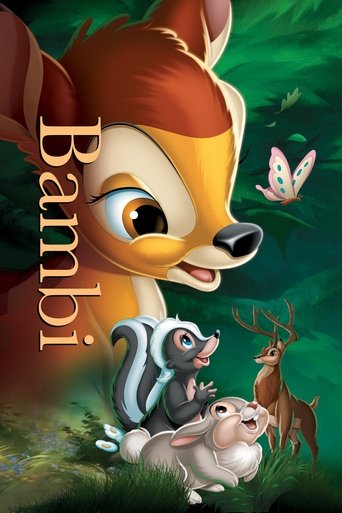
"If you can't say something nice, don't say nothing at all" is a famous quote from Disney's movie Bambi, spoken by the character Thumper to teach kindness, meaning it's better to stay silent than to speak unkind or hurtful words, a principle that encourages positive communication and consideration for others' feelings, often applied to social media and daily interactions.
Origin: The line comes from a scene where Thumper's mother corrects him for calling Bambi "kinda wobbly".
Meaning: It's a reminder to pause before speaking and ensure your words are kind, positive, and constructive, promoting empathy and reducing harm.
Application: The advice is widely used as a guide for polite behavior, especially online, suggesting silence is preferable to negativity.
Variations: Sometimes called the "Thumperian principle," "Thumper's rule," or "Thumper's law".
Even though I still firmly believe I was trying to push for positive change, and was not violating this spirit in my heart, I can see why my team could have felt that way.
I would like to apologize to my teammates for that reason. I wish I had been able to figure out a better way, because I truly believe that they were also acting with good intentions, but could not understand my perspective, because of my poor communication skills.
So I still wish then and Google and Google Cloud all the best.
Lastly, and selfishly, please learn and improve, so that the world benefits (including me) from your innovations. And also keep improving that stock price so that I don't have to find another job, but can focus deeply on my interests! Which I hope can also benefit society in some small way!
I hope @elonmusk, @realDonaldTrump, President Putin, and others can also utilize this principle to actually fulfill their genuine and noble goals for their own, their family's, their descendants, their country's, humanity, the world and the universe's benefit. God bless.
(Supposed) Einstein quote: You never fail until you stop trying.
This is not just a meme, but something I have actually lived. In early 2023, I had clinical depression and felt hopeless and worthless and in a bad moment, I attempted suicide.
I have since resolved to never ever give up on anything.
"Furiko (Pendulum), a Japanese short film about the passing of time."
Well that was fun.. :)
Didn't make me cry, but came close. I don't know if i feel stress relieved. It made me feel even more aware of my own mortality and mistakes i made/make in life. Don't feel particulary happy or relieved.
So i clicked again
"A scene from the movie Steel Magnolias (1989). A woman mourns the loss of her daughter. (6:44 min)"
Oh hell no..
Third and last attempt
"A scene from the movie Bambi (1942). Bambi mourns the loss of his mother. (02:47 min)"
It has little to do with authority and more to do with the effort/return ratio. Visual edits are expensive and dialogue changes are cheap, so it doesn't make sense to redraw frames just for an irrelevant onigiri.
4Kids was very well known to visually change the japanese shows they imported if they thought it was worth it, mostly in the context of censorship. For example, all guns and cigarettes where removed from One Piece, turned into toy guns and lollipops instead.
The most infamous example, however, has got to be Yu-Gi-Oh!. Yu-Gi-Oh started as a horror-ish manga about a trickster god forcing people to play assorted games and cursing their souls when they inevitably failed to defeat him. The game-of-the-week format eventually solidified into the characters playing one single game, Duel Monsters (the Yu-Gi-Oh! TCG itself in the real world), and the horror-ish aspects faded away, although they still remained part of the show's aesthetic, based around Egyptian human sacrifices and oddly-card-game-obsessed ancient cults.
When the manga was adapted to the screen, it started directly with a softer tone[1], especially because the show was to be a vehicle for selling cards in the real world, not dissimilarly to Pokemon and MANY other anime from the era.
Nothing that happens in the show is particularly crude or shocking, it had that kind of soft edginess that fit well with its intended target audience (early teens). I imagine watching Bambi had to be much more traumatizing than anything in the show.
But that was still not enough for 4Kids, which had a pretty aggressive policy of no violence or death. Kind of problematic when the show's main shtick was "Comically evil villain puts our heroes in a contraption that will kill them if they don't win." (You can imagine the frequency these traps actually triggered neared zero).
To solve this, 4Kids invented the Shadow Realm. The show, thanks to its occultist theming, already had examples of people being cursed, or their souls being banished or captured. 4Kids solidified these vague elements into the shadow realm as a censorship scape-goat. Any reference to death was replaced with the shadow realm. Now, one might wonder why the censors thought that "hell-like dimension where your soul wanders aimlessly and/or gets tortured for eternity" was in any way less traumatizing than "you'll die", but I imagine it's because there was always the implication that people could be 'saved' from the shadow realm[2] by undoing the curse.
The Shadow Realm was a massive part of the western Yu-Gi-Oh mythos and even today it's a fairly common meme to say that somebody got "sent to the shadow realm", which makes it all funnier that it is not part of the original show.
A couple funny examples off the top of my head: - Yugi must win a match while his legs are shackled. Two circular saws, one for him and one for the enemy, are present in the arena. They near the two competitors as they lose Life Points, with the loser destined to have their legs cut off.
In the 4Kids adaptation, the saws are visually edited to be glowing blue, and it's stated they're made out of dark energy that will send anybody that touches it to the shadow realm.
- A group of our heroes fight a group of villains atop of a skyscraper with a glass roof. In the original version, the villains state that the roof has been boobytrapped so that the losing side will explode, plunging the losers to their death by splattening.
In the 4Kids version, the boobytrap remained, but the visuals were edited to add a dark mist under the glass, with the villains stating that there's a portal under the roof that will send anybody that touches it to the shadow realm. This is made funnier when the villains lose and they're shown to have had parachutes with them all along, and they are NOT edited out.
[1] Technically speaking, there was a previous adaptation that followed the manga more closely and got only one season, generally referred to as Season 0.
[2] It does eventually happen in the anime that the heroes go in an alternate dimension to save somebody's cursed soul. Obviously, this dimension was directly identified as the Shadow Realm in the localization.
Walt Disney died in 1966. There were less but still many notable traditionally animated films (or films which blended some modern technology with hand drawn cels) since then.
The Jungle Book - 1967
Little Mermaid - 1989
Beauty and the Beast - 1991
Aladdin - 1992
Lion King - 1994
It's likely more a question of what you grew up with. When I was a kid I remember heavily disliking many of the earliest Disney animated movies like Pinocchio/Dumbo/Bambi but I absolutely adored the animated Robin Hood, Sword in the Stone, etc.
Sure, no problem, never bothered by disagreement over art/entertainment. I appreciate the perspective. And sure, I’d not put many of these near the tier of, say, a Godfather or a Passion of Joan of Arc. Only a few anywhere near an Alien, for that matter.
> That’s why the snap at the end of Avengers: Infinity War was spectacle but didn’t have the emotional impact of a single deer being shot at the beginning of Bambi.
God, truth, and all the more effective a comparison for me because I happened to re-watch Bambi within the last week.
Marvel movies rarely achieve even that lesser connection, maybe a half-dozen times in the thirty-whatever movies.
Personally when I notice the acting the movie has already failed at something else. The Lighthouse’s acting stands out to me because the movie’s attempts at suspense fail. I quickly found it hard to avoid engaging with nuances of the films creation as an intellectual exercise rather than the film itself.
At the other end of the spectrum there’s a ton of movies with child actors where the kids are just vastly less talented, so the film simply demands less of them. It’s just as true of Let the Right One In a low budget foreign film as it is high budget films such as Harry Potter or classics like The Shinning. Characters come to life not through great acting but because all the elements line up so you forget you’re looking at puppets at the puppet show.
IMO, Great movies are all about understanding the limitations of the medium, the audience, characters, budget, script, etc. That’s why the snap at the end of Avengers: Infinity War was spectacle but didn’t have the emotional impact of a single deer being shot at the beginning of Bambi.
/soapbox
Again not that you’re wrong, but I was thinking about your response for a while.
A not insignificant part of human history is retelling the same stories. Stories like the Odyssey and the Iliad were oral traditions refined, refined, and refined, until taken down by a master. Every time Dracula and derivatives get made, something new gets added, changed, improved.
The problem with Disney's remakes is that they are trying to be the original story, reshot, but LESS Disney. The Little Mermaid is a prime example of something that should have been brighter, more colorful, more energetic, more beautiful, and IMPROVED, but instead they chose a least common denominator impersonation.
The concept of going back and retelling a prequel can work. It worked for Rogue One (despite production challenges), it worked for Wicked. What isn't working for the Disney Live Action movies is letting the machine output reduced facsimiles, instead of giving the projects to experimental storytellers, or master storytellers to do their thing.
Id love to see a remake of Bambi that amplified the music/animation connection, using modern technology to sync the movement of elements in the frame to parts of the musical composition, much like a visualizer. Breathing, fluttering, raindrops falling on the beats, quivering with the strings. Imagine a modern Little April Showers by Atticus Ross that looks like Spiderm-Man into the Spiderverse or Puss in Boots 3 or Wild Robot or Teenage Mutant Ninja Turtles: Mutant Mayhem. Bambi should be a music video like Fantasia. Instead Disney will try and tell a story about a Deer, and forget the rest of what made Bambi so revolutionary.
And yet, Disney still does make things like Soul, which really was innovative in its animation style by how restrained it was. It's simple complexity of its dream world was its strength. Animation can be done well without the hyper speed over indulgences I cited above as good examples.
As much hate as the Xerography process gets, this really wasn't true. The character designs for 101 Dalmatians were incredibly expensive, and they blamed the spots on the dogs. Part of the reason Bluth left was that cost control controls were put into place because of how expensive Dalmatians was.
The real problem is that Disney movies boom or bust. The insane successes (Snow White, Dumbo) were offset by busts (Cinderella, Bambi). Ironically, even though we remember these are huge successes now, Bambi was released in the middle of WW2 when the international market was cut off, and Cinderella was a box office bomb.
Disney still has this problem, which is why the death spiral of a Disney CEO is always when they start greenlighting sequel after sequel.
"But you can't deny that for Pigs, Cows, Chickens, that up to 2005 and even up to recent years ~2020, it was commonly accepted that they were not conscious, and not intelligent and thus have no ability to experience pain."
I'm not sure if you mean the majority opinion was they are not conscious? If so I do deny this outside of survey data showing otherwise.
I was alive since 1982 and have noticed no cultural shift on this topic. I imagine for most people whether animals are conscious has little to do with whether it's okay to eat them, I recall someone in high school once saying "being a vegetarian is stupid because animals eat other animals."
The U.S. president first pardoned a turkey in 1963 and it's been an annual tradition since 1989. I recall an author possibly making an overly speculative argument linking this to the fact most people in modern times grew up with children's movies like Bambi depicting animals as sentient.
Wow, then in that case we should stop making any FPS games because we already have Doom, no more RPGs because Ultima exists, and no more movies because there's Bambi.
Very few of Disney's were "smaller and less astute."
Disney bought the rights to Peter Pan from Paramount Pictures in 1938. At the time, Disney was a small fraction of the size of Paramount Pictures.
The original author of Bambi sold the motion picture rights to his film in 1936 for $1000 USD to a film producer...Disney was not the purchaser. Disney bought those rights from the producer for an undisclosed amount.
Disney bought the rights to Dumbo for $1000 plus royalties on the book sales. (At the time Dumbo was a very simple, very short story intended as promotional content for a new type of book called a "roll-a-book". It sold very few copies, and would have been a historical footnote if not for the unexpected success of the film.)
Disney bought the rights to Winnie the Pooh and paid royalties to the Milne family for decades, before shelling out $350 million to buy the entire rights in 2001. (Disney originally paid $1000 for the merchandising rights to the merchandising rights holder, it's not clear how much they paid for the film rights but given that the Pooh books were a huge commercial success, estimates are somewhere between $100k and $1million in 195x dollars.)
Yes, that's the question. It may seem obvious that it would be the latter, but Raiders of the Lost Ark is nearly 42 years old at this point. Today do you think more people have seen Citizen Kane (1941) or Bambi (1942) as Raiders of the Lost Ark (1981)?
Granted, It's Always Sunny in Philadelphia isn't as popular, and not everyone who has seen one IASIP episode will have seen them all, but the target audience is similar.
> For example, under copyright, you can't take Mickey Mouse, throw sunglasses on him, then re-release all of the existing work
You mean, exactly what Disney did? Create movies based on existing works (Brothers Grimm etc.) while ignoring copyright (Bambi) or against the direct wishes of the original author (can't remember which one right now)
I think that Bambi is something of a war movie; look at the forest fire scene, there is fire everywhere, it must have been inspired by bombing raids during the battle of Britain. I wonder if some of the artists had first hand experience of these events.
https://www.youtube.com/watch?v=qQrqhdU99Ws
Also the father commands his son 'you must get up'; he acts like a commander.
I think as adults we downplay how difficult first experiences can be, and so I don't think we get that the stories of loss and struggle in kids movies are speaking to them about real problems they either already have or will soon.
Miyazaki has for some people become an alternative to Disney, but his work is full of Dumbo and Bambi moments. The difference is that in his work, the girl (and it is almost always a girl protagonist) is often substantially responsible for saving themselves, by reasonable means. They are not rescued by a boy or by deux ex machina.
Even in My Neighbor Totoro, which is almost but not quite an exception to this rule, the youngest (who is a main character, but not the main character) is saved by a magic bus. However, the main character initiates this rescue by digging deep and calling on resources she might not have thought to exploit. She asks for help from the most powerful person she knows and she gets it. She has to ask, and the terms of the rescue are very defined. Nobody white-knights her, nobody swoops in and reads her mind.
But the main struggle in that story is not a lost child. It is Death. And this resolves itself rather than being resolved by the characters, not through a miracle, but by discovering that the children don't know the situation and have invented a story that is much scarier than reality. In the end most of their fears are unfounded, and while life won't be everything they hoped, it's going to be much better than their internal catastrophizing.
1. This year, “Bambi: A Life in the Woods” has entered the public domain, and the Chambers version has been joined by a new one: “The Original Bambi: The Story of a Life in the Forest” (Princeton), translated by Jack Zipes, with wonderful black-and-white illustrations by Alenka Sottler
2. Stephen King called “Bambi” the first horror movie he ever saw, and Pauline Kael, the longtime film critic for this magazine, claimed that she had ever known children to be as frightened by supposedly scary grownup movies as they were by “Bambi.”
3. The film in question is, of course, the 1942 Walt Disney classic “Bambi.” Perhaps more than any other movie made for children, it is remembered chiefly for its moments of terror: not only the killing of the hero’s mother but the forest fire that threatens all the main characters with annihilation
4. With the old Prince’s prompting, Bambi concludes from this experience not that we humans are a danger even unto one another but, rather, that other animals are foolish for imagining that we are gods merely because we are powerful
5. It was adapted from “Bambi: A Life in the Woods,” a 1922 novel by the Austro-Hungarian writer and critic Felix Salten
6. What makes it such a startling source for a beloved children’s classic is ultimately not its violence or its sadness but its bleakness
7. The implicit moral is not so much that killing animals is wicked as that people are wicked and wild animals are innocent
8. Salten insisted that he wrote “Bambi” to educate naïve readers about nature as it really is: a place where life is always contingent on death, where starvation, competition, and predation are the norm
9. What purpose are scenes like that one serving in this book? Salten maintained that, despite his own affinity for hunting, he was trying to dissuade others from killing animals except when it was necessary for the health of a species or an ecosystem
10. What are we to make of this muddy, many-minded story? Zipes, in his introduction, blames some of the confusion on Chambers, contending that he mistranslated Salten, flattening both the political and the metaphysical dimensions of the work and paving the way for Disney to turn it into a children’s story
Other works of Felix Salten: https://www.locserendipity.com/TitleSearch.html?q=Salten
I recall something Stanley Kubrick said about Bambi being traumatizing:
I saw Mary Poppins three times, because of my children, and I like Julie Andrews so much that I enjoyed seeing it three times. I thought it was a charming film. I wouldn’t want to make it, but … Children’s films are an area that should not just be left to the Disney Studios, who I don’t think really make very good children’s films. I’m talking about his cartoon features, which always seemed to me to have shocking and brutal elements in them that really upset children. I could never understand why they were thought to be so suitable. When Bambi’s mother dies this has got to be one of the most traumatic experiences a five-year-old could encounter. I think that there should be censorship for children on films of violence. I mean, if I didn’t know what Psycho was, and my children went to see it when they were six or seven, thinking they were going to see a mystery story, I would have been very angry, and I think they’d have been terribly upset. I don’t see how this would interfere with freedom of artistic expression. If films are overly violent or shocking, children under twelve should not be allowed to see them. I think that would be a very useful form of censorship.
I have just realized that I may not have seen the Bambi movie I thought I saw as a child, because I could swear I remember seeing some of the scenes this article claims never made it into the film. I remember the oak leaf conversation from somewhere, as well as some of the harsher scenes they said were cut from the Disney version. I wonder if I read the book and forgot about it.
I know Disney pretends that "Song of the South" never existed, but Joel Chandler Harris' "The Tales of Uncle Remus" etc., includes a few stories where the animals meet their ends. Disney passed on those tales of course (leaving them as well out of the Disney book that followed the film and included additional Harris tales).
Like the suggestion that "Bambi" is a parable, it has been also suggested that Brer Rabbit represents the slave of the Antebellum South surviving against the toothed and clawed Brer Fox and Brer Bear only by his wits (though in fact Brer Wolf meets his own end at the hands of Brer Rabbit's "wit" ... or boiling water in his specific case).
It wasn't the first horror film my children saw (they watched Jaws, Alien, and Stranger Things) but the most terrifying and traumatic experience they've seen was the shipwreck scene in the Black Stallion. If you want to frighten children, murder what they love while they watch: their parents and animals.
Coincidence both Bambi and the Black Stallion were written during or in the immediate aftermath of world wars?
I feel like these points land harder when talking about animation rather than live action films.
Consider that when Disney made Bambi 2 in the 2000s, they came to the realization that their animators did not have the skill required to animate deer antlers and then basically had their hand forced into using CGI. In the 1930s this was not a problem: the film contains not just hand-animated antlers but beautifully painted backgrounds, an incredible score and some of the most expressive character animation ever produced.
It hardly seems to be a stretch to call animation done during Disney's golden age objectively better than what is being done today.
Back then, their feature films weren’t money makers, as they didn’t make them.
Their first feature film was very profitable, but it was from about 15 years later (https://en.wikipedia.org/wiki/Snow_White_and_the_Seven_Dwarfs_(1937_film)).
However, their next two movies (Pinocchio, Fantasia) cost them money because they were released during World War Two, when they couldn’t show them in large parts of the world.
They needed Dumbo to make up for that (https://en.wikipedia.org/wiki/Dumbo#Box_office), then Bambi wasn’t a huge success, either (https://en.wikipedia.org/wiki/Bambi#Box_office)
So, I guess it wasn’t till after World War Two that their feature films became profitable. They survived, so chances are the shorts brought in money.
I think the stupidity lives in your point of view here. "Old x was better because it was sophisticated, new x is not because blah blah blah" is a story as old as time. The observable fact that you are either unaware of recent history or unwilling to learn from it is revealing. https://pessimists.co/novel-archive/
> Bambi for example is a shockingly grownup film that sensitively deals with the passage of time and seasons, death and grief, coming of age, the hardness of life, and the cycle of generations, all within a runtime of under 70 minutes.
I'm not going to defend MCU as being a pinnacle of meaning or depth, because honestly I tend to see _all_ of art as being fundamentally bullshit. However, all of what you wrote can describe one MCU entry or another. Literally every single one. I get media criticism, but ffs you should probably actually watch a recent entry before you pass judgment. Ideally with an open mind - if you go in assuming a work is trash, you will find it is trash. Even bubble gum pop has artistic value; I'm sure if you look hard enough you can find intellectually interesting themes in MCU.
I recommend you take a moment to watch Captain America and the Winter Soldier. It has (for a child's movie at a nine-year-old level) sophisticated treatment of the security-vs-liberty tradeoff, the politics of mass surveillance, adapting to societal change, dealing with loss, and more. https://ew.com/article/2014/04/06/captain-america-the-winter-soldier-hydra-shield-paranoia/
Unrelated to above points, but I think you should reflect on your arguments and whether things like the production schedule are actually part of a coherent framework to evaluate film, or just another fact pulled out of a hat to prop up your prejudice.
If you're willing to call everyone else stupid, I hope you won't mind me saying I expect better from someone on HN.
How about this: MCU movies begin production with the VFX work for the major action scenes. This happens before they have a script or even a director. Have you ever noticed how MCU movies feel like a completely different movie once the CGI action sequences start? It’s because they are. These are not serious works of craft: they are marketing exercises meant to keep a money tree well watered.
I was never the target audience for this stuff but I was willing to be dragged along to Iron Man and Captain America because at that time “October Movies” still existed. That is mid budget Hollywood dramas and thrillers targeted towards adults, typically with an edgier tone, released in October after the summer tent pole season has run down but before Oscar candidate season has fully started. Basically everything David Fincher directed prior to being scooped up by Netflix fell into this category. Nightcrawler, All is Lost, and Captain Philips, are other “recent” examples, but of course they’re from the first half of the 2010s because Hollywood no longer green lights projects like these in the cinematic universe era. When MCU critics talk about crowding out better films, this is the sort of thing they’re referring to.
Look I apologize for not containing my scorn, but the fact is that the typical 9 year old can understand everything there is to understand in an MCU film modulo the punchline of a couple jokes. These are thematically simple films with no point of view and nothing to say for fear of shrinking the size of the big tent. The sad thing is that films targeted at children don’t have to be dumb; Bambi for example is a shockingly grownup film that sensitively deals with the passage of time and seasons, death and grief, coming of age, the hardness of life, and the cycle of generations, all within a runtime of under 70 minutes. There’s a lot going on there for the story of a fawn who does stuff in the woods. Yet that kind of depth does not exist in the children’s cinema of our times, ie the MCU, and the popular audience doesn’t even know to ask for it anymore.
We’re a stupid people and we get served correspondingly stupid culture. Sorry to rant and be rude, but in my view the MCU’s popularity is one of the leading indicators of our cultural decline, right up there with Trumpism and social media.
Its a lack which manifests through an entire generation. Probably because movies are at the intersection of big money and expressive art. So revision of classics becomes status quo. Theres a good word to describe it : DECLINE.
It's fundamentalism. Steven pressfield says it best. We cant find our way into the future so we retreat to the mystical 'golden age'...there are people pitching to remake Bambi - with a straight face. Why? Is there no new story to tell? No new classics to be written?
[tangent time]
It's also very interesting looking back at Bambi in general. It's a mature story of growth as Bambi grows up to take his place in the world.
But it's the subtly, especially for a children's movie, is what surprises me the most. There isn't a huge callback to the event with his mother later in the film, it happens mostly off-screen, and while it's a catalyst from his period of innocence to being taken under the wing of his father, they handle it with reverence. A more heavy-handed take would have involved Bambi facing a similar situation and showing catharsis from that moment (see Lion King).
But instead Bambi takes a more naturalistic approach. Highly suggest folks go re-watch it with adult eyes if they haven't.
Research scientists don't have much input to policy. Smokey the bear is cute and Bambi movies are each more powerful forces against doing controlled burns.
It is hard and risky to create quality animation movies. But it is pretty easy to milk a brand - just witness all the cheap sequels and spin-offs Disney have produced based on classics like Bambi or Cinderella. Disney (or someone similar) might very well buy Ardman to milk the IP.
> it would be in the purchaser's best interest to manage it as if it were a butterfly.
Maybe so, but there is no guarantee they will do that. Remember that Disney fired the whole hand-animation department, despite the whole company being build on hand-drawn animation.
Well... the Bambi film came out in 1942. You can buy the Signature Edition DVD+BR for $30, but you can also buy a 2 disc special edition for $7.49, the Anniversary Edition for $15.96, and a Blu-Ray for $14.27. We haven't reached the used market, where eBay can get you a copy for $5, most of which will go to shipping it to you.
The best Disney movies are in my opinion sublime artistic creations surpassing most "art movies" in quality and depth of the craft and art of visual storytelling. Just look at Bambi, Pinocchio or Fantasia. They also happen to be some of the most popular movies of all time. So I reject the premise that entertainment is in opposition to artistic or that popular means "lowest common denominator". And what is wrong with car chases and explosions? Some of the best films of all times have featured car chases and explosions. Just take the car bomb and explosion at the beginning of Touch of Evil - this is recognized as one of best scenes ever.
The problem with the Little Mermaid is that she is suffering all the way through and kills herself in the end, and then the story ends with the moral that every kid who misbehaves will prolong the suffering of this mermaids soul. I don't think even Lars von Trier could make that into a successful movie.
If you think about it this came about through laziness and to lower budgets, same deal with great programmers, programmers shouldn't want to do repetitive lazy work but innovate it away. Tedious work becomes a pain on time and budgets, so you innovate to do it faster/better.
Animators didn't want to draw all the backgrounds slightly moving and this allowed re-use and new innovations to make movies faster. This allowed animators to focus on the character cels and making characters look better, the main focus.
The multiplane camera with movable layers for parallaxing directly led to some of the best early Disney movies (Snow White and the Seven Dwarfs, Pinocchio, Fantasia, Bambi, The Adventures of Ichabod and Mr. Toad, Cinderella, Alice in Wonderland, Peter Pan, Sleeping Beauty and The Jungle Book) and helped their budget as well as made them look better. Plus at the time, it was actually an improvement that animators welcomed to speed up their tedious work.
That was the predecessor not the multiplane aspect of it with moving layers, definitely inspired it. Lotte mostly just used it to swap out colored backgrounds on her silhouette cel style to adjust placement and color.
A predecessor to the multiplane camera was used by Lotte Reiniger for her animated feature The Adventures of Prince Achmed (1926). Berthold Bartosch, who worked with Reiniger, used a similar setup in his film L'Idee (1932).
Ub Iwerks invented the multiplane camera with movable layers to create parallax and zooming [1] which created immersive depth. It also saved on budgets, tedious background animation and allowed animators to focus more on the character cels, the star of the show.
The first multiplane camera, using movable layers of flat artwork before a horizontal camera, was invented by former Walt Disney Studios animator/director Ub Iwerks in 1933, using parts from an old Chevrolet automobile. His multiplane camera was used in a number of the Iwerks Studio's Willie Whopper and Comicolor cartoons of the mid-1930s.
Fleischer Studios (Popeye/Betty Boop) also made one or copied in 1934 [1]
The technicians at Fleischer Studios created a distantly related device, called the Stereoptical Camera or Setback, in 1934. Their apparatus used three-dimensional miniature sets built to the scale of the animation artwork. The animation cels were placed within the setup so that various objects could pass in front of and behind them, and the entire scene was shot using a horizontal camera. The Tabletop process was used to create distinctive results in Fleischer's Betty Boop, Popeye the Sailor, and Color Classics cartoons.
William Garrity took Ub Iwerks invention further and that iteration was used in many large successful movies they made [1]
The most famous multiplane camera was invented by William Garity for the Walt Disney Studios to be used in the production of Snow White and the Seven Dwarfs. The camera was completed in early 1937 and tested in a Silly Symphony called The Old Mill, which won the 1937 Academy Award for Animated Short Film. Disney's multiplane camera, which used up to seven layers of artwork (painted in oils on glass) shot under a vertical and moveable camera, allowed for more sophisticated uses than the Iwerks or Fleischer versions, and was used prominently in Disney films such as Pinocchio, Fantasia, Bambi, The Adventures of Ichabod and Mr. Toad, Cinderella, Alice in Wonderland, Peter Pan, Sleeping Beauty and The Jungle Book
This is technology that has a clear benefit over the old. The effect that is shown from Bambi is a huge leap forward. Current 3D movie technology has not been as big a leap for me. Whenever I watch a 3D movie I always think that it would have been mostly the same in 2D and it would have been more comfortable to watch the movie without the glasses/headset. The effect of the multiplane camera however lifts the scene to a completely new level without the comfort disadvantages.
Also, this might be one of the best informational videos I have seen in a long time. The ease with which the issues and solutions are explained shows us that the producers of this video understand the domain very well.
> I don't know what you think a Disney story is, but all of Disney's major works are based on existing folk stories and other works already in the public domain.
False. Here's some of their animated features based on copyrighted works (as best as I can tell):
Dumbo
Bambi
Peter Pan
Lady and the Tramp
One Hundred and One Dalmatians
The Sword in the Stone
The Many Adventures of Winnie the Pooh
The Rescuers
The Fox and the Hound
The Black Cauldron
The Great Mouse Detective
Treasure Planet (partially based on the 1987 TV miniseries Treasure Island in Outer Space)
Meet the Robinsons
The Princess and the Frog
Big Hero 6
(I'm using the list in https://en.wikipedia.org/wiki/List_of_Walt_Disney_Animation_Studios_films, and picking out the “based on” or ”inspired by” credits that look recent enough.)
While the characters in Bambi always seemed to have the same "flat" quality to them that characters had in all the other animated movies Disney made back then, I always thought the settings and backgrounds in Bambi were amazing and beautiful. That's where Mr. Wong's talent really stood out for me.
Thank you for adding beauty to the world, Mr. Wong. May you rest in peace.
Well, his comment isn't that all the stories, or even or that Snow White specifically, were 40-50 years old. There are examples that better fit his argument, and they are not hard to find(I used wikipedia):
Pinocchio, released on 1940, was based on a novel from 1883, 57 years, then. Disney also tried to avoid Bambi copyright (book from 1923, movie released on 1942, 19 years difference), although the court did not uphold its public domain status.
He surely could have referenced better, but I do believe you should have tried to interpret better his comment instead of nitpicking and being unnecessarily aggressive.
There are some studies done in Denmark in the seventies, where small children were shown danish soft-porn movies, and a control group were shown 'Bambi'
If I remember correctly, the kids where not reacting in any special way to the porn, and thought it was nonsensical or plain boring, except the humorous segments (think Benny Hill but naked, typical of danish pornography of that era) which they laughed at.
However, a large percentage of the kids in the control group reported nightmares from Bambi, and many children reacted badly to the death of Bambi's mother and other dramatic events, and it occupied their mind for a long time after they watched the movie.
Edit: On the other hand, 95% of the internet porn of today is probably not good for anyone to watch, and especially young people seems to have a rather bent view of sexuality and especially women's sexuality. But seeing naked people, can't possibly be damaging for anyone.
It's too bad librians couldn't muster the mettle to pull a DMCA type of user-based accountability. I'm serious about this, as Fair Use does have significant implications when performed in an institutional setting, but by the use of individuals, it becomes much more easy to circumnavigate. One of the greatest misconceptions is the extent to which Fair Use applies - showing an entire video? That's not Fair Use except perhaps in a Film Studies class by a vetted Professor. Showing a snippet of a video as a point within a broader presentation or lesson? That's the goal of Fair Use.
Showing videos as a general rule is a Performance Right issue, not Fair Use. The DMVs in my part of the world routinely broke the law by showing Disney VHS tapes in the lobby. I'm talking for years, not just an isolated incident. That's not a Fair Use issue in the least, and lawyers, with respect to the law, could reasonably pursue compensation.
Are you familiar with "independent coffee shops" coming under fire from ASCAP for hosting open mic nights and/or playing AM/FM/XM/Internet Radio without paying official dues? The poor widdle coffee shop owners claimed it was extortion, or they tried to muddy the water with some kind of Fair Use claim, but they didn't have a case and I have to admit that ASCAP was abiding by their legal rights. Now, coffee shops are more diligent in telling people to play originals, not cover songs.
Overall, my point is that Fair Use is so utterly abused as an argument by people who don't understand Copyright, Performance, and other nuances of (wholly butchered / Disney-lobbied) legal channels that it genuinely hurts those who understand the concept. I routinely have to counter the argument that Weird Al is an example of Fair Use (as a general principle of using other people's music) because it's a very specific issue that he is legally allowed to do - Parody. Showing Bambi or non-Public Domain documentaries in the lobby of your library isn't Parody, nor should it be argued that way. Besides, if librarians can't find enough Public Domain content or educate students enough to assist them researching a project, then the job is effectively wasted space, and should be tossed out of conversation with respect to utility and necessity.
I agree. I only posted to comment on the idea that somehow kids these days have gotten worse compared to older generations. The original post mis-attributes the kids getting bored to shorter attention spans, rather than lower quality films.
Take for example
Snow White and the Seven Dwarves (1937): 84 minutes
Bambi (1942) runtime: 70 minutes
Toy Story 3 (2010): 103 minutes
The "kids these days" myth has existed since the dawn of language. People grow up and do not understand they have changed, not the children.
This is very cool and pretty insightful. The Matrix represents itself perfectly, looking very similar to the code itself. Pan's Labyrinth was also close, and Bambi for that matter. Its interesting to see how closely we associate a movie with the colours in it, even if we dont recognize that association.
>I know that Disney stops people from taking Walt's original concepts. But is that a bad thing? What concepts did Disney steal? None: he made his own. Other people can do that too.
This is completely wrong. Nearly every famous early work of Disney's was "stolen" from others. Among the more famous are Snow White (1937), Fantasia (1940), Pinocchio (1940), Dumbo (1941), Bambi (1942), /Song of the South (1946), Cinderella (1950), Alice in Wonderland (1951), /Robin Hood (1952), Peter Pan (1953), Lady and the Tramp (1955), Mulan (1998), Sleeping Beauty (1959), 101 Dalmatians (1961), The Sword in the Stone (1963), and The Jungle Book (1967).
The first iteration of Mickey Mouse, called "Steamboat Willie", was copied directly from Buster Keaton's "Steamboat Bill."
This is an excerpt from one of Lawrence Lessig's speeches about the topic:
"It was a parody, a take-off; it was built upon Steamboat Bill. Steamboat Bill was produced in 1928, no [waiting] 14 years--just take it, rip, mix, and burn, as he did [laughter] to produce the Disney empire. This was his character. Walt always parroted feature-length mainstream films to produce the Disney empire, and we see the product of this. This is the Disney Corporation: taking works in the public domain, and not even in the public domain, and turning them into vastly greater, new creativity. They took the works of this guy, these guys, the Brothers Grimm, who you think are probably great authors on their own. They produce these horrible stories, these fairy tales, which anybody should keep their children far from because they're utterly bloody and moralistic stories, and are not the sort of thing that children should see, but they were retold for us by the Disney Corporation. Now the Disney Corporation could do this because that culture lived in a commons, an intellectual commons, a cultural commons, where people could freely take and build. It was a lawyer-free zone."
To address your second point, "the idea of capitalism" does not necessarily require giving anyone permanent, state-enforced monopolies of anything, no matter how well written it is. Any justification for copyright has to stem from a benefit to society. Strong arguments can be made for giving creators temporary monopolies of a limited scope, but permanent monopolies are bad for both innovation and the public.
 Hacker Cinema
53 comments on Hacker News
Would be be worse off as a society without Snow White, Pinocchio, Bambi, Jungle Book, Mary Poppins, the Herbie series, and any of the many more recent films?
If anything these films are a great example of why copyright terms should be long, because those films are still culturally relevant today, 60-80 years after they're made, and that people are still willing to pay for them over newer films shows that the creators and their families still deserve to continue to get royalties from them.
Sure, film companies often make a quick buck from sequels, but it's interesting that copyright on characters is distinct from copyright on works.
If anything it's surprising that you're arguing something other than the usual issue that's brought up around Disney, which is that their older works frequently took stories that were specifically out of copyright, and then they vigourously pursued copyright on the films they made from those stories.
> Disney did not create Snow White, Bambi, Robin Hood, or Peter Pan.
I believe I stated above that I support reducing copyright periods (to the lifetime of the original author would be appropriate IMO, if the copyright is held by an individual, and I would be open to a more aggressive schedule for corporate copyrights). AFAIK all of Disney's adaptations of these stories would be allowed under that rule; some of these original stories are centuries old. But no, I don't think Disney should be able to immediately adapt a book I've written and not give me a cent out of the billions they will make off the adaptation. I would sell more books that way, sure---except I actually wouldn't, because in that world I have also lost the ability to monetize my work. So it's more accurate to say that somebody else would sell more of my books, or that I would give away more of my books.
And yes, it's more appropriate to call these adaptations. Fan fiction is more in the vein of original stories using (somebody else's) established characters and settings.
> To a large degree individual artists do not hold copyright for their work, they often sign it away (especially musicians and authors) in exchange for signing, advances, and distribution.
"To a large degree" is obviously meaningless, but a good author's agent will retain your core copyright and other rights (e.g. film adaptation, publishing/distribution in other countries, etc.).
> I think they will still be financed. Take books, I don't think bookstores will want to vertically integrate from book discovery through printing and retail stores. Consumers will still need ways to identify reputable book publishers to limit what they purchase next.
You are conflating production and distribution. If there is no copyright, the second a single copy of a work becomes available it will be scraped and offered by every distribution platform in the business, who are all free to curate their "storefronts" however they please. The difference is that they don't have to pay a cent for production, royalties, or anything else.
As an example, say I publish a new short story on my Patreon, which I use to support my writing---the idea being that if people want to read my shorts they have to pay for access. In this new regime, that newly posted story is going to appear on Amazon and every other big platform within hours, for cheaper than my Patreon membership or even free. And if I am an established name, there is no reason Amazon can't put my book front and center in their KDP feeds, etc.
The same goes for any other publishing model. The author and publisher (if applicable) immediately lose all ability to get a return on their investment, except to the extent that they can organically attract people to the correct listing on the correct distribution platform, which will have to be price-competitive with other listings.
It's the same story for paper books, too. B&N can just print copies of my book and display it front and center in their stores, without even asking me, and certainly without paying me anything.
And the same goes for other types of media. Why wouldn't it? This is why I say the commodity slop is all that will be left---that kind of IP synergizes best with the massive marketing efforts and platform consolidation that will be required to recoup your investments in content. Not much might even change in that world.
> The 0.00001$ per stream for musicians? Or the 1$ residual checks for reruns?
There is always going to be a long tail, and there are always going to be great artists who go unrecognized and unrewarded. It's also true that monolithic modern platforms like Spotify are going to leverage their position as gatekeepers to squeeze artists as far as possible. But it's ignorant (or possibly disingenuous, and anyway categorically incorrect) to claim that the above means nobody is getting paid substantial amounts for their work via these mechanisms. I suggest you seek out the authors of some of your favorite recent novels (if you read) and ask them whether losing royalties would have a substantial impact on their finances and ability to keep writing.
> You can just go write your own fiction, right now. You can invent your own original characters and setting and plot and go write it. You will automatically own the copyright to your own work; there is no other party who must "bless" your efforts.
I keep going back to the old-school Disney example because it's easiest to see: Disney did not create Snow White, Bambi, Robin Hood, or Peter Pan. All of those movies are highly influential and core to Disney and the culture of people growing up with them. And they're all fan fiction, or would be considered as such, and be impossible to produce and monetize if Disney had to live with the same copyright restrictions they impose on the rest of us.
If I want to now go and recreate my own movie based on one of the original texts, I think it would be next to impossible since the threat of lawsuit (even if I use none of their IP and would eventually win) would make financing impossible.
Fan fiction has been turned into an edge case by the current copyright system. Putting your own spin on the stories you grew up with used to be the norm.
> my specific concern is for individual artists who hold the rights to their work
To a large degree individual artists do not hold copyright for their work, they often sign it away (especially musicians and authors) in exchange for signing, advances, and distribution.
> what effect do you think abolishment of copyright will have on the production of films that are actually good? Who will finance them when it's impossible to directly monetize them?
I think they will still be financed. Take books, I don't think bookstores will want to vertically integrate from book discovery through printing and retail stores. Consumers will still need ways to identify reputable book publishers to limit what they purchase next.
> I think commodity slop will be the only thing that gets funded anymore
One could argue that this is what has always dominated funding. Most revenue and shows have been for artistically devoid pieces of media (especially in movies).
> No artists are relying on royalties and similar payments for their work.
The 0.00001$ per stream for musicians? Or the 1$ residual checks for reruns?
I also have been guilty of not doing this, possibly a reason I got fired from Google in August 2025.
"If you can't say something nice, don't say nothing at all" is a famous quote from Disney's movie Bambi, spoken by the character Thumper to teach kindness, meaning it's better to stay silent than to speak unkind or hurtful words, a principle that encourages positive communication and consideration for others' feelings, often applied to social media and daily interactions.
Origin: The line comes from a scene where Thumper's mother corrects him for calling Bambi "kinda wobbly". Meaning: It's a reminder to pause before speaking and ensure your words are kind, positive, and constructive, promoting empathy and reducing harm. Application: The advice is widely used as a guide for polite behavior, especially online, suggesting silence is preferable to negativity. Variations: Sometimes called the "Thumperian principle," "Thumper's rule," or "Thumper's law".
Even though I still firmly believe I was trying to push for positive change, and was not violating this spirit in my heart, I can see why my team could have felt that way.
I would like to apologize to my teammates for that reason. I wish I had been able to figure out a better way, because I truly believe that they were also acting with good intentions, but could not understand my perspective, because of my poor communication skills.
So I still wish then and Google and Google Cloud all the best.
Lastly, and selfishly, please learn and improve, so that the world benefits (including me) from your innovations. And also keep improving that stock price so that I don't have to find another job, but can focus deeply on my interests! Which I hope can also benefit society in some small way!
I hope @elonmusk, @realDonaldTrump, President Putin, and others can also utilize this principle to actually fulfill their genuine and noble goals for their own, their family's, their descendants, their country's, humanity, the world and the universe's benefit. God bless.
(Supposed) Einstein quote: You never fail until you stop trying.
This is not just a meme, but something I have actually lived. In early 2023, I had clinical depression and felt hopeless and worthless and in a bad moment, I attempted suicide.
I have since resolved to never ever give up on anything.
"Furiko (Pendulum), a Japanese short film about the passing of time."
Well that was fun.. :)
Didn't make me cry, but came close. I don't know if i feel stress relieved. It made me feel even more aware of my own mortality and mistakes i made/make in life. Don't feel particulary happy or relieved.
So i clicked again
"A scene from the movie Steel Magnolias (1989). A woman mourns the loss of her daughter. (6:44 min)"
Oh hell no..
Third and last attempt
"A scene from the movie Bambi (1942). Bambi mourns the loss of his mother. (02:47 min)"
You sure this is about stress relieving? :)
It has little to do with authority and more to do with the effort/return ratio. Visual edits are expensive and dialogue changes are cheap, so it doesn't make sense to redraw frames just for an irrelevant onigiri.
4Kids was very well known to visually change the japanese shows they imported if they thought it was worth it, mostly in the context of censorship. For example, all guns and cigarettes where removed from One Piece, turned into toy guns and lollipops instead.
The most infamous example, however, has got to be Yu-Gi-Oh!. Yu-Gi-Oh started as a horror-ish manga about a trickster god forcing people to play assorted games and cursing their souls when they inevitably failed to defeat him. The game-of-the-week format eventually solidified into the characters playing one single game, Duel Monsters (the Yu-Gi-Oh! TCG itself in the real world), and the horror-ish aspects faded away, although they still remained part of the show's aesthetic, based around Egyptian human sacrifices and oddly-card-game-obsessed ancient cults.
When the manga was adapted to the screen, it started directly with a softer tone[1], especially because the show was to be a vehicle for selling cards in the real world, not dissimilarly to Pokemon and MANY other anime from the era.
Nothing that happens in the show is particularly crude or shocking, it had that kind of soft edginess that fit well with its intended target audience (early teens). I imagine watching Bambi had to be much more traumatizing than anything in the show.
But that was still not enough for 4Kids, which had a pretty aggressive policy of no violence or death. Kind of problematic when the show's main shtick was "Comically evil villain puts our heroes in a contraption that will kill them if they don't win." (You can imagine the frequency these traps actually triggered neared zero).
To solve this, 4Kids invented the Shadow Realm. The show, thanks to its occultist theming, already had examples of people being cursed, or their souls being banished or captured. 4Kids solidified these vague elements into the shadow realm as a censorship scape-goat. Any reference to death was replaced with the shadow realm. Now, one might wonder why the censors thought that "hell-like dimension where your soul wanders aimlessly and/or gets tortured for eternity" was in any way less traumatizing than "you'll die", but I imagine it's because there was always the implication that people could be 'saved' from the shadow realm[2] by undoing the curse.
The Shadow Realm was a massive part of the western Yu-Gi-Oh mythos and even today it's a fairly common meme to say that somebody got "sent to the shadow realm", which makes it all funnier that it is not part of the original show.
A couple funny examples off the top of my head: - Yugi must win a match while his legs are shackled. Two circular saws, one for him and one for the enemy, are present in the arena. They near the two competitors as they lose Life Points, with the loser destined to have their legs cut off.
In the 4Kids adaptation, the saws are visually edited to be glowing blue, and it's stated they're made out of dark energy that will send anybody that touches it to the shadow realm.
- A group of our heroes fight a group of villains atop of a skyscraper with a glass roof. In the original version, the villains state that the roof has been boobytrapped so that the losing side will explode, plunging the losers to their death by splattening.
In the 4Kids version, the boobytrap remained, but the visuals were edited to add a dark mist under the glass, with the villains stating that there's a portal under the roof that will send anybody that touches it to the shadow realm. This is made funnier when the villains lose and they're shown to have had parachutes with them all along, and they are NOT edited out.
[1] Technically speaking, there was a previous adaptation that followed the manga more closely and got only one season, generally referred to as Season 0.
[2] It does eventually happen in the anime that the heroes go in an alternate dimension to save somebody's cursed soul. Obviously, this dimension was directly identified as the Shadow Realm in the localization.
Walt Disney died in 1966. There were less but still many notable traditionally animated films (or films which blended some modern technology with hand drawn cels) since then.
The Jungle Book - 1967
Little Mermaid - 1989
Beauty and the Beast - 1991
Aladdin - 1992
Lion King - 1994
It's likely more a question of what you grew up with. When I was a kid I remember heavily disliking many of the earliest Disney animated movies like Pinocchio/Dumbo/Bambi but I absolutely adored the animated Robin Hood, Sword in the Stone, etc.
Sure, no problem, never bothered by disagreement over art/entertainment. I appreciate the perspective. And sure, I’d not put many of these near the tier of, say, a Godfather or a Passion of Joan of Arc. Only a few anywhere near an Alien, for that matter.
> That’s why the snap at the end of Avengers: Infinity War was spectacle but didn’t have the emotional impact of a single deer being shot at the beginning of Bambi.
God, truth, and all the more effective a comparison for me because I happened to re-watch Bambi within the last week.
Marvel movies rarely achieve even that lesser connection, maybe a half-dozen times in the thirty-whatever movies.
Personally when I notice the acting the movie has already failed at something else. The Lighthouse’s acting stands out to me because the movie’s attempts at suspense fail. I quickly found it hard to avoid engaging with nuances of the films creation as an intellectual exercise rather than the film itself.
At the other end of the spectrum there’s a ton of movies with child actors where the kids are just vastly less talented, so the film simply demands less of them. It’s just as true of Let the Right One In a low budget foreign film as it is high budget films such as Harry Potter or classics like The Shinning. Characters come to life not through great acting but because all the elements line up so you forget you’re looking at puppets at the puppet show.
IMO, Great movies are all about understanding the limitations of the medium, the audience, characters, budget, script, etc. That’s why the snap at the end of Avengers: Infinity War was spectacle but didn’t have the emotional impact of a single deer being shot at the beginning of Bambi.
/soapbox
Again not that you’re wrong, but I was thinking about your response for a while.
A not insignificant part of human history is retelling the same stories. Stories like the Odyssey and the Iliad were oral traditions refined, refined, and refined, until taken down by a master. Every time Dracula and derivatives get made, something new gets added, changed, improved.
The problem with Disney's remakes is that they are trying to be the original story, reshot, but LESS Disney. The Little Mermaid is a prime example of something that should have been brighter, more colorful, more energetic, more beautiful, and IMPROVED, but instead they chose a least common denominator impersonation.
The concept of going back and retelling a prequel can work. It worked for Rogue One (despite production challenges), it worked for Wicked. What isn't working for the Disney Live Action movies is letting the machine output reduced facsimiles, instead of giving the projects to experimental storytellers, or master storytellers to do their thing.
Id love to see a remake of Bambi that amplified the music/animation connection, using modern technology to sync the movement of elements in the frame to parts of the musical composition, much like a visualizer. Breathing, fluttering, raindrops falling on the beats, quivering with the strings. Imagine a modern Little April Showers by Atticus Ross that looks like Spiderm-Man into the Spiderverse or Puss in Boots 3 or Wild Robot or Teenage Mutant Ninja Turtles: Mutant Mayhem. Bambi should be a music video like Fantasia. Instead Disney will try and tell a story about a Deer, and forget the rest of what made Bambi so revolutionary.
And yet, Disney still does make things like Soul, which really was innovative in its animation style by how restrained it was. It's simple complexity of its dream world was its strength. Animation can be done well without the hyper speed over indulgences I cited above as good examples.
Bambi starts off with him being born - his mother doesn't die til the middle of the movie.
As much hate as the Xerography process gets, this really wasn't true. The character designs for 101 Dalmatians were incredibly expensive, and they blamed the spots on the dogs. Part of the reason Bluth left was that cost control controls were put into place because of how expensive Dalmatians was.
The real problem is that Disney movies boom or bust. The insane successes (Snow White, Dumbo) were offset by busts (Cinderella, Bambi). Ironically, even though we remember these are huge successes now, Bambi was released in the middle of WW2 when the international market was cut off, and Cinderella was a box office bomb.
Disney still has this problem, which is why the death spiral of a Disney CEO is always when they start greenlighting sequel after sequel.
"But you can't deny that for Pigs, Cows, Chickens, that up to 2005 and even up to recent years ~2020, it was commonly accepted that they were not conscious, and not intelligent and thus have no ability to experience pain."
I'm not sure if you mean the majority opinion was they are not conscious? If so I do deny this outside of survey data showing otherwise.
I was alive since 1982 and have noticed no cultural shift on this topic. I imagine for most people whether animals are conscious has little to do with whether it's okay to eat them, I recall someone in high school once saying "being a vegetarian is stupid because animals eat other animals."
The U.S. president first pardoned a turkey in 1963 and it's been an annual tradition since 1989. I recall an author possibly making an overly speculative argument linking this to the fact most people in modern times grew up with children's movies like Bambi depicting animals as sentient.
Wow, then in that case we should stop making any FPS games because we already have Doom, no more RPGs because Ultima exists, and no more movies because there's Bambi.
Very few of Disney's were "smaller and less astute."
Disney bought the rights to Peter Pan from Paramount Pictures in 1938. At the time, Disney was a small fraction of the size of Paramount Pictures.
The original author of Bambi sold the motion picture rights to his film in 1936 for $1000 USD to a film producer...Disney was not the purchaser. Disney bought those rights from the producer for an undisclosed amount.
Disney bought the rights to Dumbo for $1000 plus royalties on the book sales. (At the time Dumbo was a very simple, very short story intended as promotional content for a new type of book called a "roll-a-book". It sold very few copies, and would have been a historical footnote if not for the unexpected success of the film.)
Disney bought the rights to Winnie the Pooh and paid royalties to the Milne family for decades, before shelling out $350 million to buy the entire rights in 2001. (Disney originally paid $1000 for the merchandising rights to the merchandising rights holder, it's not clear how much they paid for the film rights but given that the Pooh books were a huge commercial success, estimates are somewhere between $100k and $1million in 195x dollars.)
Yes, that's the question. It may seem obvious that it would be the latter, but Raiders of the Lost Ark is nearly 42 years old at this point. Today do you think more people have seen Citizen Kane (1941) or Bambi (1942) as Raiders of the Lost Ark (1981)?
Granted, It's Always Sunny in Philadelphia isn't as popular, and not everyone who has seen one IASIP episode will have seen them all, but the target audience is similar.
> For example, under copyright, you can't take Mickey Mouse, throw sunglasses on him, then re-release all of the existing work
You mean, exactly what Disney did? Create movies based on existing works (Brothers Grimm etc.) while ignoring copyright (Bambi) or against the direct wishes of the original author (can't remember which one right now)
Recently an article on Bambi and how different the Disney version is hit the front page.
And now this, makes me wonder who the audience of early Disney movies was.
Sure they’ve watered down both Bambi and Pinocchio, but they couldn’t have had young children in mind when they decided to adapt such stories.
I think that Bambi is something of a war movie; look at the forest fire scene, there is fire everywhere, it must have been inspired by bombing raids during the battle of Britain. I wonder if some of the artists had first hand experience of these events.
https://www.youtube.com/watch?v=qQrqhdU99Ws
Also the father commands his son 'you must get up'; he acts like a commander.
I think as adults we downplay how difficult first experiences can be, and so I don't think we get that the stories of loss and struggle in kids movies are speaking to them about real problems they either already have or will soon.
Miyazaki has for some people become an alternative to Disney, but his work is full of Dumbo and Bambi moments. The difference is that in his work, the girl (and it is almost always a girl protagonist) is often substantially responsible for saving themselves, by reasonable means. They are not rescued by a boy or by deux ex machina.
Even in My Neighbor Totoro, which is almost but not quite an exception to this rule, the youngest (who is a main character, but not the main character) is saved by a magic bus. However, the main character initiates this rescue by digging deep and calling on resources she might not have thought to exploit. She asks for help from the most powerful person she knows and she gets it. She has to ask, and the terms of the rescue are very defined. Nobody white-knights her, nobody swoops in and reads her mind.
But the main struggle in that story is not a lost child. It is Death. And this resolves itself rather than being resolved by the characters, not through a miracle, but by discovering that the children don't know the situation and have invented a story that is much scarier than reality. In the end most of their fears are unfounded, and while life won't be everything they hoped, it's going to be much better than their internal catastrophizing.
My key takeaways:
1. This year, “Bambi: A Life in the Woods” has entered the public domain, and the Chambers version has been joined by a new one: “The Original Bambi: The Story of a Life in the Forest” (Princeton), translated by Jack Zipes, with wonderful black-and-white illustrations by Alenka Sottler
2. Stephen King called “Bambi” the first horror movie he ever saw, and Pauline Kael, the longtime film critic for this magazine, claimed that she had ever known children to be as frightened by supposedly scary grownup movies as they were by “Bambi.”
3. The film in question is, of course, the 1942 Walt Disney classic “Bambi.” Perhaps more than any other movie made for children, it is remembered chiefly for its moments of terror: not only the killing of the hero’s mother but the forest fire that threatens all the main characters with annihilation
4. With the old Prince’s prompting, Bambi concludes from this experience not that we humans are a danger even unto one another but, rather, that other animals are foolish for imagining that we are gods merely because we are powerful
5. It was adapted from “Bambi: A Life in the Woods,” a 1922 novel by the Austro-Hungarian writer and critic Felix Salten
6. What makes it such a startling source for a beloved children’s classic is ultimately not its violence or its sadness but its bleakness
7. The implicit moral is not so much that killing animals is wicked as that people are wicked and wild animals are innocent
8. Salten insisted that he wrote “Bambi” to educate naïve readers about nature as it really is: a place where life is always contingent on death, where starvation, competition, and predation are the norm
9. What purpose are scenes like that one serving in this book? Salten maintained that, despite his own affinity for hunting, he was trying to dissuade others from killing animals except when it was necessary for the health of a species or an ecosystem
10. What are we to make of this muddy, many-minded story? Zipes, in his introduction, blames some of the confusion on Chambers, contending that he mistranslated Salten, flattening both the political and the metaphysical dimensions of the work and paving the way for Disney to turn it into a children’s story
Other works of Felix Salten: https://www.locserendipity.com/TitleSearch.html?q=Salten
I recall something Stanley Kubrick said about Bambi being traumatizing:
I saw Mary Poppins three times, because of my children, and I like Julie Andrews so much that I enjoyed seeing it three times. I thought it was a charming film. I wouldn’t want to make it, but … Children’s films are an area that should not just be left to the Disney Studios, who I don’t think really make very good children’s films. I’m talking about his cartoon features, which always seemed to me to have shocking and brutal elements in them that really upset children. I could never understand why they were thought to be so suitable. When Bambi’s mother dies this has got to be one of the most traumatic experiences a five-year-old could encounter. I think that there should be censorship for children on films of violence. I mean, if I didn’t know what Psycho was, and my children went to see it when they were six or seven, thinking they were going to see a mystery story, I would have been very angry, and I think they’d have been terribly upset. I don’t see how this would interfere with freedom of artistic expression. If films are overly violent or shocking, children under twelve should not be allowed to see them. I think that would be a very useful form of censorship.
Bambi was a movie for war kids who lost a parent (or both) in the war.
I have just realized that I may not have seen the Bambi movie I thought I saw as a child, because I could swear I remember seeing some of the scenes this article claims never made it into the film. I remember the oak leaf conversation from somewhere, as well as some of the harsher scenes they said were cut from the Disney version. I wonder if I read the book and forgot about it.
I know Disney pretends that "Song of the South" never existed, but Joel Chandler Harris' "The Tales of Uncle Remus" etc., includes a few stories where the animals meet their ends. Disney passed on those tales of course (leaving them as well out of the Disney book that followed the film and included additional Harris tales).
Like the suggestion that "Bambi" is a parable, it has been also suggested that Brer Rabbit represents the slave of the Antebellum South surviving against the toothed and clawed Brer Fox and Brer Bear only by his wits (though in fact Brer Wolf meets his own end at the hands of Brer Rabbit's "wit" ... or boiling water in his specific case).
It wasn't the first horror film my children saw (they watched Jaws, Alien, and Stranger Things) but the most terrifying and traumatic experience they've seen was the shipwreck scene in the Black Stallion. If you want to frighten children, murder what they love while they watch: their parents and animals.
Coincidence both Bambi and the Black Stallion were written during or in the immediate aftermath of world wars?
I feel like these points land harder when talking about animation rather than live action films.
Consider that when Disney made Bambi 2 in the 2000s, they came to the realization that their animators did not have the skill required to animate deer antlers and then basically had their hand forced into using CGI. In the 1930s this was not a problem: the film contains not just hand-animated antlers but beautifully painted backgrounds, an incredible score and some of the most expressive character animation ever produced.
It hardly seems to be a stretch to call animation done during Disney's golden age objectively better than what is being done today.
Back then, their feature films weren’t money makers, as they didn’t make them.
Their first feature film was very profitable, but it was from about 15 years later (https://en.wikipedia.org/wiki/Snow_White_and_the_Seven_Dwarfs_(1937_film)).
However, their next two movies (Pinocchio, Fantasia) cost them money because they were released during World War Two, when they couldn’t show them in large parts of the world.
They needed Dumbo to make up for that (https://en.wikipedia.org/wiki/Dumbo#Box_office), then Bambi wasn’t a huge success, either (https://en.wikipedia.org/wiki/Bambi#Box_office)
So, I guess it wasn’t till after World War Two that their feature films became profitable. They survived, so chances are the shorts brought in money.
I think the stupidity lives in your point of view here. "Old x was better because it was sophisticated, new x is not because blah blah blah" is a story as old as time. The observable fact that you are either unaware of recent history or unwilling to learn from it is revealing. https://pessimists.co/novel-archive/
> Bambi for example is a shockingly grownup film that sensitively deals with the passage of time and seasons, death and grief, coming of age, the hardness of life, and the cycle of generations, all within a runtime of under 70 minutes.
I'm not going to defend MCU as being a pinnacle of meaning or depth, because honestly I tend to see _all_ of art as being fundamentally bullshit. However, all of what you wrote can describe one MCU entry or another. Literally every single one. I get media criticism, but ffs you should probably actually watch a recent entry before you pass judgment. Ideally with an open mind - if you go in assuming a work is trash, you will find it is trash. Even bubble gum pop has artistic value; I'm sure if you look hard enough you can find intellectually interesting themes in MCU.
I recommend you take a moment to watch Captain America and the Winter Soldier. It has (for a child's movie at a nine-year-old level) sophisticated treatment of the security-vs-liberty tradeoff, the politics of mass surveillance, adapting to societal change, dealing with loss, and more. https://ew.com/article/2014/04/06/captain-america-the-winter-soldier-hydra-shield-paranoia/
Unrelated to above points, but I think you should reflect on your arguments and whether things like the production schedule are actually part of a coherent framework to evaluate film, or just another fact pulled out of a hat to prop up your prejudice.
If you're willing to call everyone else stupid, I hope you won't mind me saying I expect better from someone on HN.
How about this: MCU movies begin production with the VFX work for the major action scenes. This happens before they have a script or even a director. Have you ever noticed how MCU movies feel like a completely different movie once the CGI action sequences start? It’s because they are. These are not serious works of craft: they are marketing exercises meant to keep a money tree well watered.
I was never the target audience for this stuff but I was willing to be dragged along to Iron Man and Captain America because at that time “October Movies” still existed. That is mid budget Hollywood dramas and thrillers targeted towards adults, typically with an edgier tone, released in October after the summer tent pole season has run down but before Oscar candidate season has fully started. Basically everything David Fincher directed prior to being scooped up by Netflix fell into this category. Nightcrawler, All is Lost, and Captain Philips, are other “recent” examples, but of course they’re from the first half of the 2010s because Hollywood no longer green lights projects like these in the cinematic universe era. When MCU critics talk about crowding out better films, this is the sort of thing they’re referring to.
Look I apologize for not containing my scorn, but the fact is that the typical 9 year old can understand everything there is to understand in an MCU film modulo the punchline of a couple jokes. These are thematically simple films with no point of view and nothing to say for fear of shrinking the size of the big tent. The sad thing is that films targeted at children don’t have to be dumb; Bambi for example is a shockingly grownup film that sensitively deals with the passage of time and seasons, death and grief, coming of age, the hardness of life, and the cycle of generations, all within a runtime of under 70 minutes. There’s a lot going on there for the story of a fawn who does stuff in the woods. Yet that kind of depth does not exist in the children’s cinema of our times, ie the MCU, and the popular audience doesn’t even know to ask for it anymore.
We’re a stupid people and we get served correspondingly stupid culture. Sorry to rant and be rude, but in my view the MCU’s popularity is one of the leading indicators of our cultural decline, right up there with Trumpism and social media.
https://thomaspark.co/projects/no-scary-parts/
A Chrome extension that skips creepy scenes on Disney+. Supports the movies you'd expect like Lion King, The Little Mermaid, and Fantasia. Bambi next?
Its a lack which manifests through an entire generation. Probably because movies are at the intersection of big money and expressive art. So revision of classics becomes status quo. Theres a good word to describe it : DECLINE.
It's fundamentalism. Steven pressfield says it best. We cant find our way into the future so we retreat to the mystical 'golden age'...there are people pitching to remake Bambi - with a straight face. Why? Is there no new story to tell? No new classics to be written?
Man the old stuff gets pretty dark. So good.
[tangent time] It's also very interesting looking back at Bambi in general. It's a mature story of growth as Bambi grows up to take his place in the world.
But it's the subtly, especially for a children's movie, is what surprises me the most. There isn't a huge callback to the event with his mother later in the film, it happens mostly off-screen, and while it's a catalyst from his period of innocence to being taken under the wing of his father, they handle it with reverence. A more heavy-handed take would have involved Bambi facing a similar situation and showing catharsis from that moment (see Lion King).
But instead Bambi takes a more naturalistic approach. Highly suggest folks go re-watch it with adult eyes if they haven't.
Kinda depends upon the film, Bambi sure pulled in much empathy for deers, yet Jaws didn't exactly make sharks all cuddly for so many.
Yes but humans are basically decent, remember this is a snuff film, not bambi
Research scientists don't have much input to policy. Smokey the bear is cute and Bambi movies are each more powerful forces against doing controlled burns.
It is hard and risky to create quality animation movies. But it is pretty easy to milk a brand - just witness all the cheap sequels and spin-offs Disney have produced based on classics like Bambi or Cinderella. Disney (or someone similar) might very well buy Ardman to milk the IP.
> it would be in the purchaser's best interest to manage it as if it were a butterfly.
Maybe so, but there is no guarantee they will do that. Remember that Disney fired the whole hand-animation department, despite the whole company being build on hand-drawn animation.
Well... the Bambi film came out in 1942. You can buy the Signature Edition DVD+BR for $30, but you can also buy a 2 disc special edition for $7.49, the Anniversary Edition for $15.96, and a Blu-Ray for $14.27. We haven't reached the used market, where eBay can get you a copy for $5, most of which will go to shipping it to you.
The best Disney movies are in my opinion sublime artistic creations surpassing most "art movies" in quality and depth of the craft and art of visual storytelling. Just look at Bambi, Pinocchio or Fantasia. They also happen to be some of the most popular movies of all time. So I reject the premise that entertainment is in opposition to artistic or that popular means "lowest common denominator". And what is wrong with car chases and explosions? Some of the best films of all times have featured car chases and explosions. Just take the car bomb and explosion at the beginning of Touch of Evil - this is recognized as one of best scenes ever.
The problem with the Little Mermaid is that she is suffering all the way through and kills herself in the end, and then the story ends with the moral that every kid who misbehaves will prolong the suffering of this mermaids soul. I don't think even Lars von Trier could make that into a successful movie.
This may sound really lame but I'm excited for Bambi to be public domain (the book, not the film)
If you think about it this came about through laziness and to lower budgets, same deal with great programmers, programmers shouldn't want to do repetitive lazy work but innovate it away. Tedious work becomes a pain on time and budgets, so you innovate to do it faster/better.
Animators didn't want to draw all the backgrounds slightly moving and this allowed re-use and new innovations to make movies faster. This allowed animators to focus on the character cels and making characters look better, the main focus.
The multiplane camera with movable layers for parallaxing directly led to some of the best early Disney movies (Snow White and the Seven Dwarfs, Pinocchio, Fantasia, Bambi, The Adventures of Ichabod and Mr. Toad, Cinderella, Alice in Wonderland, Peter Pan, Sleeping Beauty and The Jungle Book) and helped their budget as well as made them look better. Plus at the time, it was actually an improvement that animators welcomed to speed up their tedious work.
That was the predecessor not the multiplane aspect of it with moving layers, definitely inspired it. Lotte mostly just used it to swap out colored backgrounds on her silhouette cel style to adjust placement and color.
A predecessor to the multiplane camera was used by Lotte Reiniger for her animated feature The Adventures of Prince Achmed (1926). Berthold Bartosch, who worked with Reiniger, used a similar setup in his film L'Idee (1932).
Ub Iwerks invented the multiplane camera with movable layers to create parallax and zooming [1] which created immersive depth. It also saved on budgets, tedious background animation and allowed animators to focus more on the character cels, the star of the show.
The first multiplane camera, using movable layers of flat artwork before a horizontal camera, was invented by former Walt Disney Studios animator/director Ub Iwerks in 1933, using parts from an old Chevrolet automobile. His multiplane camera was used in a number of the Iwerks Studio's Willie Whopper and Comicolor cartoons of the mid-1930s.
Fleischer Studios (Popeye/Betty Boop) also made one or copied in 1934 [1]
The technicians at Fleischer Studios created a distantly related device, called the Stereoptical Camera or Setback, in 1934. Their apparatus used three-dimensional miniature sets built to the scale of the animation artwork. The animation cels were placed within the setup so that various objects could pass in front of and behind them, and the entire scene was shot using a horizontal camera. The Tabletop process was used to create distinctive results in Fleischer's Betty Boop, Popeye the Sailor, and Color Classics cartoons.
William Garrity took Ub Iwerks invention further and that iteration was used in many large successful movies they made [1]
The most famous multiplane camera was invented by William Garity for the Walt Disney Studios to be used in the production of Snow White and the Seven Dwarfs. The camera was completed in early 1937 and tested in a Silly Symphony called The Old Mill, which won the 1937 Academy Award for Animated Short Film. Disney's multiplane camera, which used up to seven layers of artwork (painted in oils on glass) shot under a vertical and moveable camera, allowed for more sophisticated uses than the Iwerks or Fleischer versions, and was used prominently in Disney films such as Pinocchio, Fantasia, Bambi, The Adventures of Ichabod and Mr. Toad, Cinderella, Alice in Wonderland, Peter Pan, Sleeping Beauty and The Jungle Book
[1] https://en.wikipedia.org/wiki/Multiplane_camera
This is technology that has a clear benefit over the old. The effect that is shown from Bambi is a huge leap forward. Current 3D movie technology has not been as big a leap for me. Whenever I watch a 3D movie I always think that it would have been mostly the same in 2D and it would have been more comfortable to watch the movie without the glasses/headset. The effect of the multiplane camera however lifts the scene to a completely new level without the comfort disadvantages.
Also, this might be one of the best informational videos I have seen in a long time. The ease with which the issues and solutions are explained shows us that the producers of this video understand the domain very well.
> I don't know what you think a Disney story is, but all of Disney's major works are based on existing folk stories and other works already in the public domain.
False. Here's some of their animated features based on copyrighted works (as best as I can tell):
Dumbo
Bambi
Peter Pan
Lady and the Tramp
One Hundred and One Dalmatians
The Sword in the Stone
The Many Adventures of Winnie the Pooh
The Rescuers
The Fox and the Hound
The Black Cauldron
The Great Mouse Detective
Treasure Planet (partially based on the 1987 TV miniseries Treasure Island in Outer Space)
Meet the Robinsons
The Princess and the Frog
Big Hero 6
(I'm using the list in https://en.wikipedia.org/wiki/List_of_Walt_Disney_Animation_Studios_films, and picking out the “based on” or ”inspired by” credits that look recent enough.)
Bambi is still a good movie for the 5 year olds of today too.
While the characters in Bambi always seemed to have the same "flat" quality to them that characters had in all the other animated movies Disney made back then, I always thought the settings and backgrounds in Bambi were amazing and beautiful. That's where Mr. Wong's talent really stood out for me.
Thank you for adding beauty to the world, Mr. Wong. May you rest in peace.
Walt Disney would film deer walking around and then give that to his animators for Bambi.
Well, his comment isn't that all the stories, or even or that Snow White specifically, were 40-50 years old. There are examples that better fit his argument, and they are not hard to find(I used wikipedia):
Pinocchio, released on 1940, was based on a novel from 1883, 57 years, then. Disney also tried to avoid Bambi copyright (book from 1923, movie released on 1942, 19 years difference), although the court did not uphold its public domain status.
He surely could have referenced better, but I do believe you should have tried to interpret better his comment instead of nitpicking and being unnecessarily aggressive.
There are some studies done in Denmark in the seventies, where small children were shown danish soft-porn movies, and a control group were shown 'Bambi'
If I remember correctly, the kids where not reacting in any special way to the porn, and thought it was nonsensical or plain boring, except the humorous segments (think Benny Hill but naked, typical of danish pornography of that era) which they laughed at.
However, a large percentage of the kids in the control group reported nightmares from Bambi, and many children reacted badly to the death of Bambi's mother and other dramatic events, and it occupied their mind for a long time after they watched the movie.
Edit: On the other hand, 95% of the internet porn of today is probably not good for anyone to watch, and especially young people seems to have a rather bent view of sexuality and especially women's sexuality. But seeing naked people, can't possibly be damaging for anyone.
It's too bad librians couldn't muster the mettle to pull a DMCA type of user-based accountability. I'm serious about this, as Fair Use does have significant implications when performed in an institutional setting, but by the use of individuals, it becomes much more easy to circumnavigate. One of the greatest misconceptions is the extent to which Fair Use applies - showing an entire video? That's not Fair Use except perhaps in a Film Studies class by a vetted Professor. Showing a snippet of a video as a point within a broader presentation or lesson? That's the goal of Fair Use.
Showing videos as a general rule is a Performance Right issue, not Fair Use. The DMVs in my part of the world routinely broke the law by showing Disney VHS tapes in the lobby. I'm talking for years, not just an isolated incident. That's not a Fair Use issue in the least, and lawyers, with respect to the law, could reasonably pursue compensation.
Are you familiar with "independent coffee shops" coming under fire from ASCAP for hosting open mic nights and/or playing AM/FM/XM/Internet Radio without paying official dues? The poor widdle coffee shop owners claimed it was extortion, or they tried to muddy the water with some kind of Fair Use claim, but they didn't have a case and I have to admit that ASCAP was abiding by their legal rights. Now, coffee shops are more diligent in telling people to play originals, not cover songs.
Overall, my point is that Fair Use is so utterly abused as an argument by people who don't understand Copyright, Performance, and other nuances of (wholly butchered / Disney-lobbied) legal channels that it genuinely hurts those who understand the concept. I routinely have to counter the argument that Weird Al is an example of Fair Use (as a general principle of using other people's music) because it's a very specific issue that he is legally allowed to do - Parody. Showing Bambi or non-Public Domain documentaries in the lobby of your library isn't Parody, nor should it be argued that way. Besides, if librarians can't find enough Public Domain content or educate students enough to assist them researching a project, then the job is effectively wasted space, and should be tossed out of conversation with respect to utility and necessity.
I agree. I only posted to comment on the idea that somehow kids these days have gotten worse compared to older generations. The original post mis-attributes the kids getting bored to shorter attention spans, rather than lower quality films.
Take for example
Snow White and the Seven Dwarves (1937): 84 minutes Bambi (1942) runtime: 70 minutes Toy Story 3 (2010): 103 minutes
The "kids these days" myth has existed since the dawn of language. People grow up and do not understand they have changed, not the children.
http://en.wikipedia.org/wiki/List_of_Disney_theatrical_feature_films
http://www.disneymovieslist.com/disney-movies.asp
This is very cool and pretty insightful. The Matrix represents itself perfectly, looking very similar to the code itself. Pan's Labyrinth was also close, and Bambi for that matter. Its interesting to see how closely we associate a movie with the colours in it, even if we dont recognize that association.
>I know that Disney stops people from taking Walt's original concepts. But is that a bad thing? What concepts did Disney steal? None: he made his own. Other people can do that too.
This is completely wrong. Nearly every famous early work of Disney's was "stolen" from others. Among the more famous are Snow White (1937), Fantasia (1940), Pinocchio (1940), Dumbo (1941), Bambi (1942), /Song of the South (1946), Cinderella (1950), Alice in Wonderland (1951), /Robin Hood (1952), Peter Pan (1953), Lady and the Tramp (1955), Mulan (1998), Sleeping Beauty (1959), 101 Dalmatians (1961), The Sword in the Stone (1963), and The Jungle Book (1967).
The first iteration of Mickey Mouse, called "Steamboat Willie", was copied directly from Buster Keaton's "Steamboat Bill."
This is an excerpt from one of Lawrence Lessig's speeches about the topic: "It was a parody, a take-off; it was built upon Steamboat Bill. Steamboat Bill was produced in 1928, no [waiting] 14 years--just take it, rip, mix, and burn, as he did [laughter] to produce the Disney empire. This was his character. Walt always parroted feature-length mainstream films to produce the Disney empire, and we see the product of this. This is the Disney Corporation: taking works in the public domain, and not even in the public domain, and turning them into vastly greater, new creativity. They took the works of this guy, these guys, the Brothers Grimm, who you think are probably great authors on their own. They produce these horrible stories, these fairy tales, which anybody should keep their children far from because they're utterly bloody and moralistic stories, and are not the sort of thing that children should see, but they were retold for us by the Disney Corporation. Now the Disney Corporation could do this because that culture lived in a commons, an intellectual commons, a cultural commons, where people could freely take and build. It was a lawyer-free zone."
To address your second point, "the idea of capitalism" does not necessarily require giving anyone permanent, state-enforced monopolies of anything, no matter how well written it is. Any justification for copyright has to stem from a benefit to society. Strong arguments can be made for giving creators temporary monopolies of a limited scope, but permanent monopolies are bad for both innovation and the public.