 Hacker Cinema
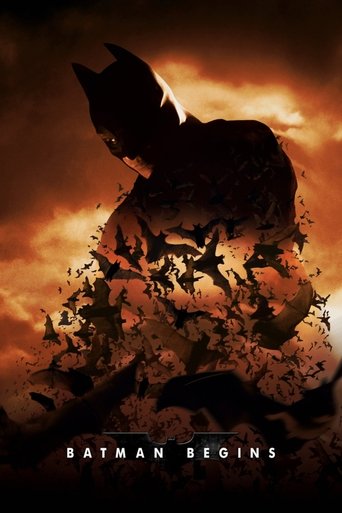
Batman Begins
2005 · Film · 140 min
Part of The Dark Knight Collection
Directed by Christopher Nolan
Driven by tragedy, billionaire Bruce Wayne dedicates his life to uncovering and defeating the corruption that plagues his home, Gotham City. Unable to work within the system, he instead creates a new identity, a symbol of fear for the criminal underworld - The Batman.
5 positive5 negative15 neutralfrom 25 commenters
Where to watch
No streaming data for this title.
27 comments on Hacker News
It feels like with the meteoric success of Christopher Nolan's "Batman Begins" in 2005, every studio felt like they had to follow suit and make their movies "dark and edgy".
Personally, I wasn't a huge fan of the Daniel Craig reboot either. We already had a thousand overly serious spy thriller series at that point (Bourne Identity, Mission Impossible, etc.). Give me the almost cartoonishly villainous enemies, the outlandish technological gadgetry, and the punchy one-liners of the original James Bond movies any day.
There are a few more things I didn't like about DVD, I don't like the blocky artifacts that you often see in the background (doors, bookcases, etc). Some of the earlier scenes in The Matrix are particularly bad. Fire/explosions are also very poor.
Beyond this, is when they bake a 16:9 movie into the 4:3 format losing significant fidelity. Batman Begins was nearly unwatchable.
This of course doesn't get into the sound quality/mixing issues you mention... I wish they had something closer to h.265 at that time, as I don't mind a blurry background nearly as much as blotchy/blocky artifacts for similar sizes or smaller. A 2gb h.265 movie from blueray looks dramatically better than a 4+gb DVD movie.
I think the sequels are easy to ignore and tolerable bycatch if it means you get strong films amongst them - Batman Begins, Dark Knight, Dark Knight Rises, Logan, Infinity War (even just for a great villain), and (last but definitely not least) Into the Spider-Verse, etc. That last one is a relevant example given how many Spider-Man films there are and how few of them I've bothered watching.
> back in 2005 when movies were still far from the rock bottom current era of spandex, sequels, and remakes!
Really? If anything, I’d say the frequency of remakes and sequels is going down from how I remember things back then.
The top movies in 2005 were Star Wars 3, a Harry Potter Sequel, a War of the Worlds remake, Charlie and the Chocolate factory remake. We also got spandex remakes of Batman Begins and Fantastic Four. Hardly some golden era of original storytelling
> For added context, the plot of the movie Charlie's Angels from the year 2000, was about stopping an evil guy from using some evil software he developed to ... track people using their cellphones.
This makes me think we should have a big revival for that movie.
On the other hand, essentially the same functionality in a more grandiose presentation was prominently featured in Batman Begins (2005) and the explicit message was "not even Batman should be able to do this".
I think you’ve actually understated the rather precipitous drop off of 007’s campiness. It wasn’t a mistake, the intention was to reboot the series in the same vein as Batman Begins, where he becomes an unbearably gloomy figure who exists as a morally ambiguous antihero brooding among the gritty backdrop of a fully corrupted world.
Don’t get me wrong, I am a fan of both franchises, and enjoy the gritty Bond on its own terms, without tying it to the frequently almost farcical source material. I can easily understand why the “gritty realism” action genre trend didn’t last long, and why some folks do not enjoy it, it quickly becomes somewhat oppressive to endure. I think that’s why Taika Waititi’s Thor movies were so well received, they offered a lot of the fun-for-its-own-sake set pieces that were more common in the late ‘80s-early ‘90s action films.
Patrick H Willems did a really good YouTube video where he talks about “vibe films” [1], where things like plot details and character development are prioritized behind an overall mood and sense of style. Examples cited include Miami Vice, Bond films, and more recently Tenet.
[1] https://youtu.be/ZStkUxC4iL4?si=GSecJKBdbzMcQDVF
Maybe you're just totally misguided on what a producer does, which may be the joke you're trying to make that nobody knows what a producer does. The producer would be closer to the president of the board while the director would be the CEO.
This is false. It seems you don't know what you're talking about. OTOH, I have worked with multiple studios including Fox (now 20th Century), Searchlight, Vendome, Canal+, and Lightstorm.
The executive producer is similar to the CEO or other executive; hence the "executive" in their title. They are in charge of the overall production, but not the creative aspects of the film or episode, and usually are not involved in the day-to-day operations. A regular "producer" can be anyone involved with the day-to-day operations of this production, and this title was once given out like candy. (Look at the credits for Top Gun: Maverick, for example: David Ellison is credited with a "producer" title despite having no actual involvement with the movie beyond being the CEO of one of the studios funding the production.)
The director is not involved with hiring crew, unless they also act as a producer (aka, the "auteur" school). These days, many directors also executive produce their own films (e.g., Nolan, Cameron, etc.), but many don't (e.g., almost all Disney movies). The director gets to provide input as to who gets hired, but quite frequently the main crew and cast will already be attached to the film. Notably, directors can and do leave films all the time (e.g., Rogue One, Justice League).
Who the creator/founder equivalent is really differs between projects. Sometimes, the producer has the idea and staffs around it. Sometimes, the director has the idea and also acts as a producer or just staffs the producer out to someone. Sometimes, it's the studio's idea and staffs everything out.
This is true for a few films, but the vast majority of films start with a screenplay that has come across the producer's desk. Auteur directors might produce their own ideas (e.g., Lucas, Shamalayan, Nolan, Cameron), but even they will usually start with an idea they acquired from someone else (Shamalayan: Old and Cabin at the End of the World, Gunn: Guardians of the Galaxy, Nolan: Insomnia, The Prestige, Batman Begins, Spielberg: almost all of his films, etc. Look at IMDB to see the production credits they have far exceed the films they actually direct).
In my memory it was Batman Begins (2005) that had if bad and started the trend, but you’re right about the first Bourne movie (2002) being somewhere near the start (as far as tent pole movies go).
At any rate it’s a super lazy crutch for bad choreography. Contrasted with something like the Indiana jones airplane fight scene with its wide shots of the action is like night and day.
> I hear a lot about comic book movies and those are getting extremely samey (or maybe they already were)
They weren't. Compare Spider-Man 2 (2004) and Batman Begins (2005). Compare X-Men (2000).
All of those had a story to tell. Recent superhero movies... not so much.
Yeah, but with the Nolan Batmans in particular, I rewatched them again at home with subtitles on and got a way different (better, IMO) experience than the unintelligible garble at the theater.
When I first saw Batman Begins, I didn't at all understand that there was some connection between Henri Ducard and Ra's al Ghul (both played by Liam Neeson)... was really confused why Batman's apparent friend/mentor suddenly became the villain, and then somehow a bunch of other villains showed up and wanted to do something to Gotham (but couldn't understand what). At first watch, all I got was that "Batman went through some hard shit before Gotham". It didn't at all prepare me for the plotlines of the subsequent movies and none of the characters made sense until I could rewatch it with subtitles on.
My understanding is that Nolan chose that unintelligibility for some artistic reason, but as a moviegoer, it just means I miss most of the entire plot of his movies. That's especially the case when you combine unintelligible dialogue with fast dark scenes... just a lot of blurry fists and wheels that's incredibly hard to keep track of.
Also Interstellar... first time I watched it, all I really got was "corn farmer goes to space and gets betrayed". None of the intricacies of the Bookshelf of Time™ got through because it was all unintelligible. Argh.
Eh, Barely. Saying Dune is about drugs is like saying Back to the Future was about plutonium. It’s more of a plot element that facilitates the novel’s themes. It’s a resource that shapes the world and gives the characters something to compete over and control.
The story revolves around spice but it’s not ABOUT spice.
In any case, it still doesn’t strike me as the kind of fictional drug that’s calling out for restrictions. It’s depiction can be mild enough to circumvent an unwanted movie rating and still not compromise the story.
Narcotics featured heavily in Batman Begins and that movie still had a PG-13. Again, I don’t see what about Dune’s story is crying out for an R rating in order to be true to the story.
Modern actors aren't as willing to sacrifice their health for muscle as their historical counterparts, especially because the lean look is preferred over the muscle-bound appearance of yesteryear. Thus, (with rare exceptions, like Christian Bale between The Machinist and Batman Begins), what you see on screen today is hard-earned through hours a day in the gym, a very regimented diet, and hydration timing.
Generally, to get to the level of single-digits body fat you see on screen, you're looking at 3-6 months of clean eating (or more, depending on the actor's physique when they land the role), meaning among other things, no alcohol, no sweets, and lots of eggs or chicken meals. Someone being paid a few million dollars can afford to pay a nutritionist to custom-design a diet to meet specific appearance goals, a and they have a huge incentive to stick with that diet. For example, Chris Pratt had to give up beer, pizza, and all dietary pleasures for six months to go from being the fat guy on Parks and Rec to the main hero of Guardians of the Galaxy.
On top of the diet, the actor is spending hours on near-daily exercise for several months. Chris Hemsworth eschews cardio for pure muscle-building, but Paul Rudd and Kumail Nujani each spent a year preparing for their Marvel roles, using a blend of cardio and full-body workouts (as, in contrast to Thor, Ant Man and Kingo have lean physiques but neither actor was particularly athletic when cast), while Pratt spent nearly 6 hours a day, 6 days a week, for over 6 months on cardio activities to cut weight for the first Guardians movie (as he already had the muscle for the character underneath his excess bulk and just needed to reveal them).
But the real trick to the "cut" look on screen is dehydration; actors don't drink for several hours before shirtless scenes, which makes them appear thinner and more defined. (In several interviews, Kumail Nujani talks about nearly passing out after several filming several shirtless scenes for The Eternals, which required him to limit water consumption for nearly 12 hours before shooting.) This is something you can actually try yourself at home: take a before pic, spend a few hours on a long cardio activity like running or biking, and then take an after pic before you rehydrate. You will appear thinner and your muscles (if they were visible beforehand) will appear more well-defined, even though they aren't any bigger.
It all depends on your definition of improvement...
C is a bit like a Formula One car. Regardless of the historic reasons that caused it to evolve the way it did, it ended up occupying a niche and being very well suited to it, while at the same time being ill suited for other, more general purpose, uses. Under that perspective, change is slow because the people most invested in it want to make improvement happen in a very narrow and precise direction. McLaren, after all, is not going to bat an eye if you complain about its latest model lacking a baby seat!!!
C++, on the other hand, started sort of like NASCAR racing. It wanted to make a racing car out of a mundane, everyday car, and it got very, very good at it. Unfortunatelly, because C++ is based in an everyday car, and because it is Designed-by-Committee (TM), it shows lots and lots of "improvements" that individually kind of make sense, but in the bulk lack any coherence. Nowadays, C++ may perform like the Batmobile (from "Batman Begins" movie) on a good day; but you never know when it is going to bite you in the ass and turn into the Homermobile from the 90's Simpson's TV show.
It is a mix of necessity and lack of insight that many of the people in my generation had to learn how to drive in fucking racing carts!!! But when it's all said and done it gives you a little perspective on how things work and helps you appreciate the differences.
I was just thinking that they recently got some good content added.
These were all added this month: Batman Begins, Clerks, Gran Torino, Million Dollar Baby, No Reservations, Stripes, The Aviator, and The Fellowship of the Ring. The entire Comedians in Cars series is a lot of fun. Heat, The Godfather, Gangs of New York, Casino, and Seven.
Maybe you're bored of all that, but it's not like the films on Netflix are universally terrible.
I'm just going to quote your metaphor again.
>"After watching Batman Begins every night for 4 months straight, I got a bit bored with it".
> Watch a new movie.
But my problem isn't with Batman Begins. My problem is I don't want to watch a movie every night. I don't want to. Do you get that part? I understand you really like movies, and you enjoy setting up this whole system so you can watch a movie every night and not have it take up your whole day, but I don't like movies as much as you do. Most movies I find pretty dumb. It's boring to sit through the same movie over and over again, and picking out a new movie takes time I'd rather spend doing something I enjoy. I like a good film on the weekend if it's something that really engages me, or if I've got friends over, but otherwise it just seems like a needless time sink.
Why do I need to watch a movie? Why is my only other option to watch static? Why do I need to watch anything?
To dereference, if it is not necessary for my survival[0], why do I need to cook? I know that I can if I want to. And I do, sometimes. Why on earth should I when I don't want to?
[0] Disclaimed because I'm bearish on Soylent-- I don't have that much faith in the USDA. But I think something like it should exist, and I'd jump on it in a heartbeat if it worked.
> After the umpteenth time, I'm not deriving pleasure from the cooking process.
Learn a new dish.
"After watching Batman Begins every night for 4 months straight, I got a bit bored with it".
Watch a new movie.
> blow half my weekend every week?
Yet another false dichotomy. As I said above, many dishes can be cooked without supervision. Cook one or two of those. On nights when you feel like cooking fresh, cook fresh. Otherwise pull the stew, curry, chilli, ragu etc etc etc out of the freezer and heat it up.
It's just not that hard. And cost:reward vs drinking sour white water seems pretty good to me.
Agree with all of it. Especially Dark Knight Rises.
It was so bad that it reflected badly on the previous two films. I realized at the end of Rises how poor the character development was throughout Dark Knight, and getting (re)confused about the authenticity of Bruce Wayne's motivations in Batman Begins.
>Is it a 'human right' to make money off of Game of Thrones or Batman Begins?
Is it a right to make money off of Game of Thrones? No. Is it their right to charge for content they've created? In my opinion, yes.
I am a huge advocate of open source software. I'm not an advocate of taking other peoples' software and forcing it to be free, against the creators' wishes.
Sharing a book, or facts from a library or notes from a university lecture is one thing. Downloading a copy of a movie, a video game, or software is another.
Let's say you made a startup that, rather than SaaS, actually wrote a thick client. They're cool, so let's make it easy and say it's DRM-free. Let's say it's a cool, new IDE.
You spent the last year of your life working on this IDE, and you see that it's up on The Pirate Bay. Sure, at first you'll probably be flattered. Then you realize, wait a minute, this is getting 1000x the downloads my actual product is getting. Maybe your sales increase as a result of the "free marketing," but that is the best case scenario.
If sales don't increase, you've worked hard and not been compensated. Do I think that most movies (especially in theatres) are overpriced and a rip off? Hell yeah I do, which is why I spend my money on Netflix which seems more sanely priced.
You don't have a right to all the software you want without paying the people who made it; you don't have a right to watch the latest movies and TV shows without paying the people who created them; you don't have a right to listen to that new CD in the store without paying the artists.
I think that big business/media generally rips off consumers. I don't think that pirates are evil; I think that they're desperate and that business needs to adjust to their needs. Have I ever pirated computer games? Sure. But when Valve's Steam became more convenient to use than a badly cracked torrent, that became my number one resource for games.
I used to pirate movies because renting or buying them was such a pain in the ass. With iTunes rentals and Netflix, that problem has been solved too.
If you want to make a stand, maybe against DRM with which you disagree, do so by purchasing from people who are making a stand too; for example, I hope you bought Louis C.K.'s $5 DRM-free show a couple of months ago.
>Copyright is a monopoly granted by congress' interpretation of the constitution's directive to promote progress of science and the useful arts. I think it's time to reinterpret.
How do you suggest we reinterpret? Should everyone get everything they want for free? Should all the tech startups that we read about on Hacker News and root for have no business model, because charging for software or media is so wrong? We live in a capitalist society, and in order to "reinterpret" science and arts as free-for-all, we'd need to completely reorganize our economic system.
I'm not saying that we've got it down perfectly (in fact, I'd say the opposite), so I'm open to your suggestions and ideas.
To each their own. I enjoy a large assortment of films. The Avengers and Batman Begins - or 12 Monkeys and The Usual Suspects - or The Triplettes of Bellville and The Lives of Others - or 12 Angry Men and The Seventh Seal. Hardly fair to say that someone who would 'enjoy' 'cinema' would 'rather pluck their eyes out' than 'watch' a 'film' like this 'anywhere'.
Interestingly, you used the term 'Film' to describe The Avengers, which some people would jump down YOUR throat for - since this was an almost All-Digital release.
>This is just sad, I get the impression from the comments and up votes that tech does not get Hollywood. Hollywood business only work because only Hollywood is willing to give Christopher Nolan 200+ million dollars to make Dark Knight, ditto with James Cameron's Avatar.
Your comment is somewhat ridiculous because these examples are not risks. Christopher Nolan was well known before Batman Begins in writing Memento. James Cameron wrote the script for the original Terminator and directed Aliens, T2 and the highest grossing film of all time in Titanic. Anyone would've bet on these two individuals.
I agree we should stamp out racial prejudice everywhere it appears, like that well-known racist Mel Brooks and his Canadian caricature, Dark Helmet. Neo-colonialist interpretation: inside every big black man is a whiny white man who can't breathe in this thing.
And let's not forget that closet bigot JK Rowling. Did you know the Dark Lord is really black? The movies got it all wrong.
Or the League of Shadows in Batman Begins... it was called League of Assassins in the comic books, so we can blame the interpolating hand of director Christopher Nolan...
Microsoft is ahead of Sony in the console race right now, but I think that Sony will end up leading the current generation. The Wii novelty will fade, and the PS3 will ultimately dominate thanks to a deeper line up of exclusive titles. I have always felt that exclusives were the Xbox's Achilles' heel - even going back to the original Xbox. Most of the best XBox games are not exclusives. For example Gamespot's best 360 game award went to Assassin's Creed 2 this year, and to GTA 4 in 2008. Both games were also released on the PS3. In contrast, the best PS3 games of 2008 and 2009 were MGS4 and Demon's Souls, respectively. I was really hoping that the Rare acquisition would pay off this generation but it doesn't look like it will anytime soon, if ever. I own a 360, but I am planning to buy a PS3 by the time God of War 3 ships, as I feel that it will be home to a lot of fantastic gaming experiences that will not be available anywhere else.
To make an analogy with movies, there will be no shortage of 'Spiderman' or 'Batman Begins' on the 360, but only the PS3 will have 'Return of the King'.
IMDB reports that 2322 movies were released in 1939 alone, is it really surprising that there were a handful of good movies among them?
1980 for comparision, IMDB lists 6007 movies (8000+ if you include TV movies), and contains modern (popular) classics such as Stir Crazy, Superman II, Empire Strikes Back, Airplane!, The Blue Lagoon, Ordinary People, Urban Cowboy. The Shining, Caddyshack, Raging Bull, Friday The 13th, The Fog, The Blues Brothers.
Hmm, looks like 1980 was a much more 'classic' era than the 40s for hollywood, but you wouldn't have heard that from film buffs in the 80s.
Hollywood has always been a great abuser of the 'sling lots of shit at the wall and see what sticks' approach to 'greatness', they're just slinging a lot more shit these days.
Even if we take a really contemporary year and do the same study, we see a pattern of greats no matter what year, take 2005 at random:
Batman Begins, Sin City, V for Vendetta, Revenge of the Sith, King Kong, Brokeback Mountain, Harry Potter/Goblet of Fire, Serenity, Charlie and the Chocolate Factory, Mr & Mrs Smith, Wedding Crashers, Munich, Saw 2, Hostel, Hitchhiker's Guide to the Galaxy, Madagascar, Pride & Prejudice, Land of the Dead.
Ah, but the movie buff will point out that they're not established classics like Gone with the Wind, or Wizard of Oz. Not yet, anyway.
Edit: Btw, for 2005, the number of movies was 28,000+. Is it any wonder that there is a lot of formulaic stuff in there as well?
still a few more (some are in the works)
* Stargate
* "startup.com" - about the formation of 'govworks.com' i wonder what these guys think about Obama.
* Takedown - 'Kevin Mitnick's story'
* Serenity
* Star Trek: the Voyage Home
* The Last Starfighter
* Johnny Mnemonic
* Short Circuit 1 & 2
* Crest of the Stars (anime)
* Fahrenheit 451
* Equilibrium
* Batman (begins, dark night, the tim burten one)
* Edward Scissor Hands
* Space Balls
* Avalon ( http://www.cyberpunkreview.com/movie/decade/2000-current/avalon/#comments)
* LAIN: The Serial Experiments (anime)
* Cherry 2000
* Dune
* Ender's Shadow (in the works)
* Ender's Game (in the works)
* Diamond Age (in the works for sci-fi, 'a young girls illustrated primer')
* The Arrival
* The Terminator 1,2,3
* The Sarah Conner Chronicles
* D.A.R.Y.L
* Flight of the Navigator
* Explorers
* AI
* Batteries Not Included
* Blade Runner
* IRobot
* Appleseed (anime)
* Bubble Gum Crisis (anime)
* Ergo Proxy (anime)
* Virtuosity
* Metropolis (all of them are good)
* The Last Exile (anime)
* Cherry 2000
* Robocop (this so hold up)
* Primmer
* Probe ( the TV series, it took me 3 months to find the copies of this Issac Asimov based TV series on ABC ) http://en.wikipedia.org/wiki/Probe_(TV_series)
* Infest Wisely
* Logan's Run
* Planet of the Apes
* Star Trek: First Contact
* CQ ( if you get it, you'll get why this is a hacker movie , 'la resistance')
* Amelie
* 2046
* Trigun (anime)
* Escaflone (anime)
* Tank Girl
* Twelve Monkeys
* THX 1138
* Bicentennial Man
* The Philadelphia Experiment http://en.wikipedia.org/wiki/The_Philadelphia_Experiment_(film)
* Seaquest ( some episodes )
* Strange Days ( new yeas hacker style )
* Freejack
One of my favorite authors, Glenn Morris, wrote, "You have to go through the door that is concealed to learn anything. That which conceals the door is something we don't want to look at."
Any of you remember the series of articles right after collapse back in early autumn of this year? There were numerous articles posted around here about fear -- whether to perservere with startups, or to cut your losses and wait until you're back on the upswing. Those were the times when all of these monsters come out of the woodwork. I had a lot of fun being able to see the manifestations of widespread panic ... even as my stomach was trying to eat its way out of my body.
If you can master this part of yourself, it is trivially easy to see what drives other people. It is more than social engineering. It is a hack relatively few people know about yet can give you great gifts. It is like a secret handshake when you recognize someone who has waded into the depths of his own psyche, and came back out for the better.
If you guys try these practices -- and it isn't limited to Buddhist meditation, either -- and get decent grip on yourself, I highly recommend going back and watching Batman Begins. Certain things takes on a different significance once you stop running away from your own fears.
The soundtracks to Batman Begins and the Battlestar Galactica mini-series are not dissimilar to that for There Will Be Blood (which I've just been to see).
Well, I suppose we can do what the batman movies, or Gundam series do. Batman, Batman Returns, Batman Forever, Batman Begins. Gundam Wing, Gundam Turn A, Gundam Seed.
Web. Web Social. Web Ubiqu. Web Singularity.
I guess most hackers don't like the term web/bubble 2.0/3.0 is because it's overloaded, and hence, imprecise. Thus, ripe for exploitation by marketers, which generally have a bad rep with hackers (sometimes with good reason).
I think the author just means "the next evolutionary step of the web" Just as when people are talking about 2.0, they just mean that the web now was far different than it was back in 1996.