 Hacker Cinema
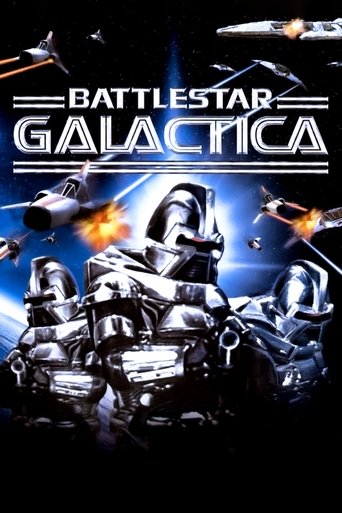
Battlestar Galactica
1978 · TV series · 1 season
Created by Glen A. Larson
When the 12 Colonies of Man are wiped out by a cybernetic race called the Cylons, Commander Adama and the crew of the battlestar Galactica lead a ragtag fleet of human survivors in search of a "mythical planet" called Earth.
3 positive9 neutralfrom 12 commenters
Where to watch
No streaming data for this title.


12 comments on Hacker News
Science fiction (novels, short stories, or by the 1950s films, and 1960s telvision) doesn't have a primary goal of predicting the future but rather of selling entertainment. To the extent it is speculative, it's almost always discussing contemporary circumstances sufficiently distant setting (in time and space) to be able to comment on it in a way which both minimises social censure and reaction and gives a potential for a fresh perspective (in the best cases). Of course, much of it is simply, or at least largely, escapist space opera / space westerns (Buck Rogers, Star Wars, Battlestar Galactica (original series). And yes, some of the escapist content does have real science or predictive value.
But in balance it's an exceedingly poor prospecting ground for hard-nosed, realistic, and/or accurate predictions. For much the same reason that most space ships are laid our horizontally, with gravity working on the frontal rather than coronal plane is that sets built on Earth are far more easily built and filmed that way, SF addresses its creations, narrative, and audience-appeal needs over any putative scientific or prophetic accuracy.
And sure, there are notable counterexamples.
E.M. Forster's The Machine Stops is frighteningly accurate in a world much like that of the 2010s / 2020s.
Arthur C. Clark in some works hits on some remarkably accurate depictions of at least parts of a future world. Imperial Earth envisions both handheld computers and a culture obsessed with recording every passing moment in a way that's nearly selfie-culture (though he seems to have missed influencers). 2001: A Space Odyssey predicts tablet computers and video telephony with reasonable accuracy (though all but completely ignores their social implications).
Orson Scott Card's Ender's Game presages blogging to some degree (though generally overstating its influence, as Randall Munroe spoofed: <https://www.xkcd.com/635/>).
And there's a whole slew of dystopian SF which has materialised in some form or another, from Ray Bradbury ("The Veldt"), Philip K. Dick (too many to mention), William Gibson, Neal Stephenson, etc., etc., etc. I and others suspect that's to some extent less prophetic than direct stimulus, with contemporary techbros aping their favourite adolescent sci-fi universes without asking "are we the baddies?" or whether they should.
But if you want hard predictions about the future, it's probably better to look to the literature which specifically and seriously attempts to do this, outside of a fictional context.
One such book is Alvin Toffler's Future Shock, now 54 years old.[1]
I'd read that, for the first time, on its 50th anniversary. I was struck by much, and found it on balance to have stood the test of time quite well, and much better than is typical for the genre. As to accuracy, there seem to be three general cases:
- Specific proponents of specific technologies virtually always overestimated the acceptance and impact of those technologies. The notable exception is, of course, information technology, though even for it the specific ways in which it has and hasn't advanced is worth close study.
- Virtually all of the social dynamic predictions seem laughably modest today --- developments in racial, gender, and sexual equality and acceptance, amongst others. Though on reflection this isn't so much that the predictions were bold, but that they've come to pass. We are on the far side of the singularity for these changes, for the most part. What was written in the context of a world in which these changes lay in the future reads much differently now that the inflection points are in the past. At the same time, it's also clear that such changes need not be permanent, and that perhaps such dynamics tend more towards cyclical patterns or pendulum swings, with greater and lesser liberalisation at different points in time.
- Much of the psychological and sociological concerns over advancing technology, faster paces of change, and an ever-growing onslaught of information seem to me to have been extraordinarily prescient, and largely born out. The disruptive effects, both on a personal psychological level and on a collective sociological one, appear to be profound, and we're still in the midst of discovering just how much so.
In thinking about how technological change manifests, I've come up with an ontology of the types of technological mechanisms which operate: fuels, materials, information (receipt, processing, storage, transmission), networks, systems, process knowledge, causal knowledge, power transmission and transformation, and hygiene (dealing with unintended consequences).[2]
Much of the Industrial Revolution (~1800 -- 1950 or so) was fundamentally grounded in new fuels (coal, petroleum, natural gas) and power transmission and transformation (particularly electricity and magnetism), with strong secondary effects through improved and expanded materials (Bessemer steel, aluminium, plastics), communications (telegraph, telephone, radio, television) and recording (rapid print advancements, photography, phonography, film). Since 1950, it's been information technology which seems to have been in the forefront, making some profound advances (overall processing and storage capacities) whilst remaining stubbornly stagnant in others (forecasting, meaningful automation and controls). Networks and systems have been primary secondary effects.
Hygiene is the ninth factor I'd come upon, and falls out of the recognition that all technologies have both intended and unintended effects. As technologies increase in complexity, I strongly suspect the latter dominate, exacting something of a drag on overall progress.
The element that's missing from my typology is the interaction between technology and society as a whole. I don't have much to say on that at the moment, though I feel it's quite significant. I'm noting that lapse for the moment.
________________________________
Notes:
1. <https://en.wikipedia.org/wiki/Future_Shock> <https://archive.org/details/isbn_0553132644>
2. I've written on this a few times at HN and elsewhere, searching Algolia for "tech ontology" or "technological ontology" should turn up some references. I'm increasingly feeling that the idea probably needs a book-length treatment discussing each mechanism, how it applies (some of the mappings I make may strike some as obscure, e.g., that knowledge is in some ways a network function, as expressed in the phrase "web of knowledge"), and what the capacities and limitations of each mechanism are.
Can you name some of the obscure 70s sci-fi? I would like to watch them. My downloads are TV series for Logan’s Run, Planet of the Apes, Battlestar Galactica, etc, but it’s limited and probably not too obscure and also… American besides the 70s Doctor Who saved Survivors (was that 80s?)
I'd love to play some of the Sid and Marty Krofft psychedelically themed pinball machine designs featured on this episode of the Donnie and Marie Show:
Donny & Marie Osmond - Pinball Machine Finale W/ Shabba-Doo, Robert Hegyes, Ruth Buzzi, Lorne Greene
https://www.youtube.com/watch?v=zGnfsiayuoE
Sid and Marty Krofft (of HR Pufnstuf fame) designed the spectacular sets and costumes. I love Donny and Marie's cover of George Clinton's "We Want The Funk", Shabba-Doo's funky hat and break dancing, Robert Hegyes (aka Juan Epstein from Welcome Back Kotter) and his smooth dance moves, Ruth Buzzi (of Laugh-In fame) shakin' her balls, and Lorne Green (of Bonanza nad Battlestar Galactica) gesticulating his giant creepy hands. TILT!!!
https://en.wikipedia.org/wiki/Sid_and_Marty_Krofft
> Here's the thing. Art is individual to its creator. Only Van Gogh can paint a Van Gogh. Only Shakespeare can write Shakespeare. Only Tolkien can write Tolkien.
> Rings of Power could never, ever be Tolkien. It could be, at best, competently made "I Can't Believe It's Not Tolkien." Yet, Partially-Hydrogenated Tolkien Substitute still could have been a good show.
Okay. Sure. But they can launch movements where people try to expand on what they've already created. In this case, the Rings of Power show is beautiful, jaw droppingly beautiful in scale and execution, showing a world larger than has ever been depicted on TV before.
https://winteriscoming.net/files/image-exchange/2022/08/ie_91003.jpeg
https://winteriscoming.net/files/image-exchange/2022/08/ie_91007.jpeg
A lot of attention to detail has been paid in the little things and I think it's amazing.
But that's besides the point. The point is that these are shows and properties meant for the young, people in their teens or those who are growing up. The Hobbit was meant for children. The Lord of the Rings for adolescents. These are stories meant to fire up a young person's imagination and get them to dream bigger than before.
By reducing these properties to an audience of adult fans, I feel, does them a disservice. As yes, absolutely media can be made to be enjoyable to all ages, but trying to please these fans is often an exercise in self immolation as whatever you create will never be as rosy as the memories from their childhood. But they are a powerful market. They are the ones buying the merch usually, instead of parents buying it for little kids. And so they have an outsized say on what happens within the product.
It's baffling to me to see older generations maintaining a stranglehold over the stories that they enjoyed when they were younger.
I think we should give these series and places room to grow and become into something more for each successive generation. And enjoy the process of that growth.
Because almost every single person who is disappointed by this series is a diehard, middle aged, Tolkein fan (often male). Who grew up with Tolkein in the 80s, a time when its very reading was an act of mild rebellion. From the article,
> Wayyyy back in the 70s and 80s, science fiction/fantasy/superhero content hadn't completely taken over the culture yet. New nerd content was rare and treasured.
> The Superman movie (1978) was mind-blowing. (I’m old enough to remember when Superman was a good guy.) A new Star Trek series was an impossible dream. Battlestar Galactica was cherished. We were so desperate for sci-fi stuff that we watched Doctor Who, for God's sake!
This is not true anymore. And in that change, the stories that have been told and whom they're being told to has changed as well. And that genuinely seems to bother these middle-aged fans. And I think that's okay. It's hard to let go, but let go they must so that future generations can cherish what they cherished, with fresh, unblemished eyes.
I don’t agree with that. Having my grown up in that era there is t any shortage of content in popular culture that have smart or sentient AI:
- Asimov novels (as you’ve referenced yourself)
- 2001 (Hal)
- Star Wars (R2D2 & C3PO for example)
- Buck Rogers in the 25th C (Twiki & Theopolis)
- Battlestar Galactica (Cylons)
- Alien (Ash)
- Star Trek TOS (I forget the episode names but there’s a few with smart AI)
- Star Trek: The Motion Picture (V’Ger)
…All from either the same era as 2XL or before.
The problem with “AI” as a term is that it can mean multiple things (like “HD”, “smart”, etc) so it will be used and abused by whoever feels it might sell a few copies of something.
An example of this is computer games. AI has never been used to refer sentience but rather the programmed logic of a computer opponent.
Then you have AI in the research sense; which are the technologies another poster described.
You have AI in stories, TV and movies which are often depicted as human-like intelligence, complex reasoning, or even outright sentient.
It was never a term that had one definitive technical definition.
Now you do see researchers retrofitting different classifications of “AI” in a hope to clear up the confusion around the use of the term “AI”. But that’s a more recent (in comparison) development and certainly isn’t something the general populous are aware of.
My father died 12 days before my 13th birthday, cancer. My 7th grade tech teacher (also sadly now dead from leukemia) sent me home with a camcorder to interview dad, to record memories, because his father died young too. What did I do? I sat in a chair and pointed it at the tv and recorded episodes of Battlestar Galactica (1978) reruns on tv...
Sigh. Although, dad was pretty sick then from both the cancer and treatment and I'm not sure I would have wanted to revisit those videos anyway so maybe it's a blessing in disguise. As it stands though, I only have one recording of his voice - an answering machine recording and I do think it would be nice to have more of his voice. I guess I'll have to wait for time machines.
> If the show is not called foundation, he will probably enjoy it.
It wasn't about Foundation, then why call it "Foundation"?
It's like that Will Smith movie called I, Robot: why did they bother calling it that?
You can create a new sci-fi show or movie without the 'false marketing' of referencing previous source material: that's what the original Battlestar Galactica and Star Wars did in the 1970s. Or you can try to faithfully use the source material as much as possible as The Expanse show has done, and what Villeneuve has generally done with his Dune.
There are plenty of both sci-fi and fantasy works available for adaptation into shows and movies. And if (general) audiences expect action-y stuff in their sci-fi/fantasy, then pick one in which the source material is more action-y.
Don't try adapting Waiting for Godot into the next Die Hard.
One of the cool things about having kids is that you get to go through all the movies again from the start.
I got to get all excited about Star Wars again. And Indiana Jones. And Back to the Future. One day soon they’ll be old enough for The Matrix. How cool will that be? I’m gonna get to watch Terminator with these guys for the first time one day.
You also get all the old TV. We’re 4 seasons into The A-Team, and have watched every episode of The original Battlestar Galactica and a bunch of other series from the time when television was suitable for children.
There’s tons of stuff out there. It’s cool too get a fresh start on it all.
For you youngsters just tuning in, welcome! Today we are going to learn how marketers misuse terms to sell you shit. For folks my age, it was words like “space age” and “turbo”. The very first episode of the original Battlestar Galactica had the character Starbuck using the “turbos” in his spacecraft. Those unaware might not know that turbines compress air, which outer space is sorely lacking. But it sounds cool, huh?
Today your generation has to deal with abuse of “pro”. Same shit, different generation. Difference is, back in my day we shrugged it off as salespeople doing what salespeople do, went on about our day. Now we can write indignant blog posts, but frankly I don’t know that it’s worth getting that worked up about it.
And along the same lines, Logan’s run which spawned a TV series.
And while we’re on 70’s TV sci-fi also; The Fantastic Journey, Battlestar Galactica.
I haven't paid much attention to Netflix originated content. Any more I absolutely dread switching over to Netflix because I know it'll be a 30+ minute exercise in frustration. My wife and older kid ignore it completely.
Unless things change I'm cancelling by the end of the year.
Amazon Prime seemed a bit better but lately it seems to be filled with the same kind of crud. Bad "B" and below movies.
Seriously, who watched this crap?
There are thousands of good movies out there. Maybe it's a revenue struggle with the studios, I don't know. The fact that you can't even find "The Marx Brother" or "The Three Stooges" or "Abbott and Costello" on these services might be a clue. In other words, you can't find popular black and white movies that by all accounts should fill these services. Or good 80's, 90's and earlier TV series. Not there. Maybe a few here and there, but not en-masse as they should be.
I was looking for Battlestar Galactica the other day. Not the goofy one, the other one with Edward James Olmos. It was there a few years back but no-longer available. My oldest kid wasn't old enough to watch it then but he could now (and it is a good series). Gone. Not sure why.
A same article could have been written about the USA. Actually it would have made a bit more sense, since it could include pop culture references to actual space travel (e.g Star Trek, Star Wars, Battlestar Galactica etc. etc) instead of things like "The Guest from the Future", a TV series about time travel that mentions that there is a space port in Moscow of the future and some obscure cartoons (other than "The Secret of the Third Planet" I have not seen ones the author mentioned and, unlike her, I grew up in the USSR).
Not that I believe the cult of space exists in the USA, but the same stupid argumentation is more applicable here.