 Hacker Cinema
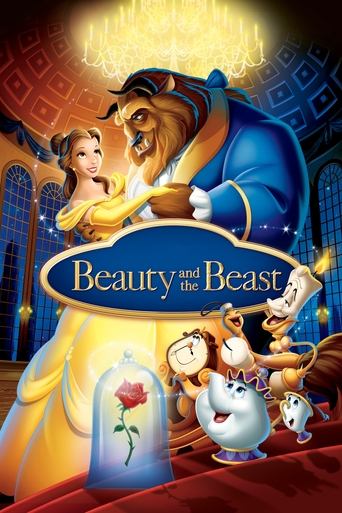
Beauty and the Beast
1991 · Film · 84 min
Directed by Gary Trousdale, Kirk Wise
Follow the adventures of Belle, a bright young woman who finds herself in the castle of a prince who's been turned into a mysterious beast. With the help of the castle's enchanted staff, Belle soon learns the most important lesson of all -- that true beauty comes from within.
4 positive3 negative13 neutralfrom 20 commenters
Where to watch
No streaming data for this title.
22 comments on Hacker News
>What work of Disney (company, not the man per se...) is more influential on the modern American Psyche (today, in 2026) than Ironman, X-Men or Spiderman?
All of them. None of those MCU movies really did anything to the "american psyche", forgettable entertainment.
And even if they had done, the question was "in terms of how Americans see themselves and how people around the world sees us". Nobody sees Americans in in 2026 the way Stan Lee or MCU saw them. Not even themselves. How they have been seen in general wasn't determined in 2026 or 2020 or 2000, but in the 20th century. And even how they're seen and see themselves in 2026 is not defined by the MCU either.
Concerning the general view on US, Disney movies (especially including Pixar) have had much more influence. But I mentioned other even more important things: Hollywood in general (pre-MCU, from early film to John Ford, and to Copolla and Scorsese), the western and the idea of the west/'frontier', rock n' roll...
>Sleeping Beauty? That's French. Beauty and the Beast? Also French. Great Mouse Detective? British. Alice in Wonderland? British. Pinocchio? Italian.
In their Disney treatment they're 100% American.
> The decline in quality is obvious and measurable, just look at the reception of old disney productions versus their remaklers for "modern audiences".
This argument (in summary, wokeness makes modern Disney less enjoyable/profitable) doesn’t stand up to scrutiny. Mainline Disney movies these days are, on average, more politically bland than the beloved “renaissance” classics. The latter tended to be extremely liberal, even by historical standards—some of them shocking to watch, now. Beauty and the Beast is a good example of this.
Andor is a notable counterexample, having a consistent and obvious politics, but it is also relatively loved. My evangelical Christian relations can’t get enough of it. They like it even more than The Mandalorian.
Walt Disney died in 1966. There were less but still many notable traditionally animated films (or films which blended some modern technology with hand drawn cels) since then.
The Jungle Book - 1967
Little Mermaid - 1989
Beauty and the Beast - 1991
Aladdin - 1992
Lion King - 1994
It's likely more a question of what you grew up with. When I was a kid I remember heavily disliking many of the earliest Disney animated movies like Pinocchio/Dumbo/Bambi but I absolutely adored the animated Robin Hood, Sword in the Stone, etc.
I would guess this is, to some degree, a generational shift. The Animated category has only existed for ~30 years and was born from the resentment many in the academy felt toward Beauty and the Beast being nominated alongside supposedly serious films for Best Picture. Each generation following that one has grown up with a more diverse slate of animated films available.
The Oscars are the slowest possible reflection of social change, and I’m sure the perspective you share is still held my many members, but this win holds out some hope for sure.
It was a major consideration for Initial D, which is pretty much the definitive car anime. Animating movement in tandem with dynamic camera movement is very difficult (also why shows like Love Live use 3DCGI for dance scenes, and why Disney was using 3D elements in films like Beauty and the Beast) and modeling accurate vehicle physics in hand drawn animation is also difficult. It simply wouldn't have been viable without 3D animation.
https://youtube.com/watch?v=YDqKsQu9el4
...I'm really having trouble understanding this comment. Maybe my sarcasm detector is broken?
Watching anything unsupervised is of course age-dependent, so I'm not sure I understand the mechanism at work in that part of the comment.
But on the deeper matter of Disney vs. anime:
Obviously anime is a huge basket, so it depends on what studio and creator(s) we're talking about.
There's plenty of amazing, reinforcing, validating, positive anime to be found. The Miyazaki films are, without exception, lovely and perfectly messaged for kids of all ages, including this 41-year-old. There are many other non-Miyazaki works from Studio Ghibli that are similarly friendly.
Disney, on the other hand, absolutely sexualizes and gaslights vulnerable populations. I loved Beauty and the Beast growing up, but in retrospect I realize that it taught a generation of little girls to endure abuse in the hopes of some magical transformation. Aladin is horrifyingly racist and two-dimensional. Pocahontes? Holy fuck.
Compare the Disney and Ghibli renditions of The Little Mermaid and tell me which one is made with greater concern over kids' worldview and mental health, let alone faithful passage of the ecological message of novel.
The Disney formula is very often predicated on a woman whose value is in her sexuality and virginity, with men who are divided into distinctly "good" and "evil" camps who fight over her. It's absolutely the kind of sexualization that is toxic for kids.
> All this misandry and trying to portray any masculinity as toxic is just lame. It's very similar to Disney's queer coding of villains. I remember in my teens, while being a sexually confused and closed queer how sensitive I was to that bullshit and how awful and ashamed it made me feel. It's ludicrous how it's being done again, just the aggressor and targeted demographics are different now. I can't tell if that's just Disney's Modus Operandi, or of this is some type of bitter revenge writing. It sucked then and it sucks now, and it will continue to suck. We need to do better.
I disagree with a lot that you say, but I think I can agree with this paragraph.
The story of "Wish" needlessly shat on King Magnifico and I felt pretty uncomfortable about that writing. So I can agree that there's definitely an element of coding the Disney villain in a certain way.
Scar is the effeminate uncle. Ursula is coded as a drag-queen. Moving to the more recent movies: I can also agree that King Magnifico was coded as toxic masculinity (handsome, successful king), but they did a poor job in the movie saying why he actually deserved the punishment he got (or the betrayal of his wife).
That being said, its also just... how Disney movies always seem to have been written? Both the good and bad ones. Not really an excuse mind you, but for a happy-go-lucky musical for children, a lot of Disney Villains get rather harshly punished, and not all of them seem like they deserve said punishment.
> The only challenge these modern Disney SFLs face is not believing in themselves (and as someone who struggles on and off with self esteem issues, I realise how difficult those can be, but also it's not "enough" to base a whole character around just that), usually with a sprinkle of "blame the patriarchy" in there too.
Well lets talk about Live Action Mulan for example.
There's no "blame the Emperor" scene. In fact, the emperor is a badass who takes to single-combat on the frontlines. Maybe you could argue that the Bori Khan (the new name of the main bad guy) and his relationship with Xianniang / Witch / Hawk is a bit of a blame the patriarchy (female witch subservient to a warlord). But on the other hand, villains are often seen needlessly abusing their underlings (Darth Vader needlessly kills his officers. Megatron abuses Starscream, etc. etc.). So I'm not entirely sure if this is beyond the norm in these kind of settings.
People blame Mulan for a lot of faults and say its clear of Disney's issues today. But... has anyone aside me actually watched it? Its a crappy Chinese Kung Fu movie yes that has issues deciding if Wuxia is cool or not... and that's the main problem with it.
But if there's some level of "Woke messaging" going on here, I'm not seeing it.
---------
Edit: after further thought, Toxicly Masculine male villains were at least a thing since The Sword in the Stone, and Gaston from Beauty and the Beast. I argue it's not really a recent trope either.
Before the never ending sequels on the Pixar side, they actually have settled into a complementary relationship.
Pixar does the more adventurous stuff, crazier ideas, totally different kinds of plots and stories/worlds/characters, with a focus on storytelling rather than songs etc.
Whereas Disney Animation (with recent titles like Tangled, and the Frozen movies) is the 3d version of what Disney's Animation Studios always did best, take classic stories, and turn them into quasi-musicals with a modern twist, but do it in a really talented way.
In my 20s, I used to get mad about the idea that Disney just stole story ideas and made it their own, but this was too reductionist. There is immense talent involved in actually taking an old story, modernizing it, adding all the original music, creating that original new world, building scenes, dialog, all that stuff. And I appreciate it and give Disney a lot more credit nowadays. Whether it's Beauty and the Beast or the Lion King, or modern hits like Frozen and Tangled, they really add a lot in their interpretations of these stories, and make it their own.
I'm a huge fan of the Disney movies that came out when I was growing up (Aladdin and Beauty and the Beast are my favorites). My kids like those movies a lot too.
But I think some wonderful movies have been made in the last ten years, most notably Encanto and Turning Red. They're both massive successes, and I think they are in many ways better than those movies I grew up with.
Not to mention Frozen, Moana, Inside Out, etc. These are all wonderful movies.
(Ratatouille is also great, btw, don't get me wrong!)
I frequently enjoy "weird" movies that audiences tend not to like. But there have been plenty of movies that audiences and critics both enjoy despite a lack of high-brow or polarizing content. I'm thinking of (e.g.) The Godfather, E.T. the Extra-Terrestrial, The Sound of Music, Contact, Disney's animated Beauty and the Beast, Jurassic Park, Terminator 2, Alien, the original Ghostbusters, most Pixar movies...
I feel like there is something pretty blah about most big-budget movies today, but I don't think that it can be explained by saying that filmmakers are progressively removing polarizing elements. Now that I consider it, most big-budget action movies in the past were blah too. The action movies that first come to mind are the ones that I have enjoyed enough to re-watch, but the 1990s had plenty of blah action movies. Maybe the problem is just too many big-budget action movies.
Licensing isn't the thing that prevents big budget productions from happening. If they wanted to make a bunch of big budget Marvel movies in 1992, nothing was stopping them. They'd have just paid for the rights back then, the same as they do now.
What copyright expiration would get you that you don't have now is tons and tons and tons of fan fiction and small budget productions. A few of which would have been good and most of which would have been both terrible and ignored. Like every school play being Shakespeare, but now it's Spider Man.
And heretical crossovers. Deadpool vs. the Joker and things like that.
But Tangled, Frozen, Little Mermaid, Alice in Wonderland, Beauty and the Beast, all the Peter Pan movies, they're based on public domain stories and they're still making major films out of them on a regular basis. The Snow Queen is one public domain fairy tale, Frozen is three movies.
Some of the films recommended in this thread..
- The Nice Guys
- I Don't Feel at Home in This World Anymore
- Scott Pilgrim vs. the World
- Don't Worry
- He Won't Get Far on Foot
- The Favourite (2018)
- Druk (2020)
- Amélie
- The Lobster
- Turist (2014)
- Parasite
- El Hoyo (The Platform)
- Quo Vadis
- Aida?
- 200 Meters
- Luzzu
- El robo del siglo (The Heist of the Century)
- Knives Out
- Us
- Get Out
- "Tokyo Story" (1953, Yasujirō Ozu)
- Aleksei German's Hard to be A God
- Edward Yang's A Better Summer's Day
- Maren Ade's Toni Erdman
- Luca Guadagnino's I Am Love
- Wings of Desire
- Do the Right Thing
- Drugstore Cowboy
- Gates of Heaven
- Beauty and the Beast
- Life Is Sweet
Roger Ebert wrote an essay [0] in 1992 reflecting on his career as a critic. He writes
>In the past 25 years I have probably seen 10,000 movies and reviewed 6,000 of them. I have forgotten most of those films, I hope, but I remember those worth remembering, and they are all on the same shelf in my mind.
Overall, he seems never to have lost the joy of watching movies. A relevant quote:
>When you go to the movies every day, it sometimes seems as if the movies are more mediocre than ever, more craven and cowardly, more skillfully manufactured to pander to the lowest tastes, instead of educating them. Then you see something absolutely miraculous. Something like "Wings of Desire," or "Do the Right Thing," or "Drugstore Cowboy," or "Gates of Heaven," or "Beauty and the Beast," or "Life Is Sweet," and on your way home through the White Hen Pantry you look distracted, as if you had just experienced some kind of a vision.
[0]: https://www.rogerebert.com/roger-ebert/reflections-after-25-years-at-the-movies
If you view most golden age and resurgence Disney it's glaringly clear. By and large the women are shoehorned into submissive, weak characters at the mercy of a white knight.
The thing is, this really wasn't just a Disney thing, it was largely a Hollywood thing in general. Strong(er), three-dimensional women in film narrative didn't hit major motion pictures with significance until the late 60s and into the early 80s.
The late 1980s was an unfortunate time for Disneys resurgence, because somehow there was also a revival of strong man/weak, beautiful woman tropes in Hollywood. So when movies like The Little Mermaid, The Princess and the Frog, Tarzan, Aladdin, Beauty and the Beast came out they very much followed this template.
The plots of these and previous movies hammer home that the young women are meant as prizes for men who come and save them. It's in the stories themselves.
Some fun facts about these tales:
"East of the Sun and West of the Moon" is the original source material for Disney's Beauty and the Beast, being the inspiration for La Belle et la Bête.
Collecting Norwegian folk tales was a result of the national romantic (you could say separatist) movement during the 19th century; Norway was a part of Sweden at the time.
Most Norwegians haven't read more than a few of these. They are perhaps best known as stop-motion/puppet films by the director Ivo Caprino: https://www.youtube.com/watch?v=1dMbxrspfoU&list=PL6B529FE04E509754
Here are the ones that I think are most entertaining/recognized to such a degree that they are worth reading:
- The Three Billy-Goats Gruff - The Ashlad Who Ate a Match with the Troll - The Ashlad and his Crew (the film above) - East of the Sun and West of the Moon - The Husband Who Was to Mind the House - The Boy Who Went to the North Wind - One's Own Children Are Always Prettiest - The Ashlad Who Made the Princess Say "That's a lie!" - Soria Moria Castle - The Giant without a Heart in his Body - The Three Princesses in the Blue Mountain
I don't read much. But movies and TV shows (and Anime) have tons of mysterious libraries.
* Terry Pratchet's Discworld -- `nuff said.
* The Pagemaster (90s film about kid getting trapped inside of adventure books)
* Beauty and the Beast -- The library was the only non-magical part of the enchanted castle, ironically.
* "National Treasure" movie has a few important library scenes
* A Certain Magical Index -- Anime / Light Novel: the female lead "Index" is literally a character who had a library implanted inside of her.
* The Mystic Archives of Dantalian -- Anime / Light Novel: Another one where the female lead is a library of sorts. She's more bookwormish than Index, and actually hangs out at a normal Library most of the time.
* Read or Die -- Another anime with library / paper themed superpowers
* Harry Potter -- So many shenanigans happen in the Hogwarts library, I don't even know where to start.
* Full Metal Alchemist -- The librarian was instrumental to the plot. Its mostly an action show, but there was a period where they had to research some stuff at the Alchemist's library.
* The Ancient Magus' Bride -- I wasn't too fond of the show in general, so I haven't seen it all yet. But there was a very memorable magical library episode. Effectively, the magic library was a trap which can only be escaped if the human receives something from inside. The lead character kept returning to the library (her personal life sucked, so she needed an escape), while the Librarian would continuously give her something so that she could escape each time. When the Librarian ran out of things to give her, he rips up the magical library card (hoping she never returns again). Unfortunately, the lead character is adept in magic and finds her way back even without the library card, to a disastrous consequence.
* The Hitchhiker's Guide to the Galaxy -- A classic, is it not? I guess its a single book that they're working with, but the singular book is magic-space tech that has all the information you could ever need. So its basically a library.
* Ender's Game -- Honorable Mention. Ender's video game with the giant that he plays by himself effectively functions as a library. Its where Ender has self-reflection, and where the malevolent forces push Ender towards one direction of his psyche. Its as much of a "Library" as the "Pagemaster" was IMO.
--------
EDIT: Apparently 'The Pagemaster' is a book in of itself, and is listed in the article. I didn't know that. Harry Potter was also on their list.
https://www.amazon.com/gp/richpub/listmania/fullview/2LUVU10EGZC0R/ref=cm_lm_srch_fvlm_col_3
Now, my sister actually makes moves at Disney so I am well aware they do make new content. But, their model is very much based on milking old content and then waiting for new content to be fond childhood movies.
Snow white is from 1937 so they put out Maleficent which was somewhat original. But they also just remade Beauty and the Beast from 1991.
I absolutely enjoy Pixar and Star Wars films, along with many Dr. Seuss books which have messages not only directed towards children but also their parents reading it to their children on subjects like nuclear nonproliferation, anti-Semitism, dictatorial leadership, environmentalism, and in the case of Horton Hatches and Egg, not being a dead beat parent. I considered Star Wars just entertainment until my early 20s when I read Joseph Campbell which made me very conscious of what George Lucas and Disney were doing including the message of self sacrifice for a person's community, family, and friends. This means that George Lucas and everything from Disney [1] thoroughly rejects the libertarian philosophy of Ayn Rand using a language of myth and symbolism which according to Campbell connects deeply with children. That is Han Solo's character arc; he didn't care about anyone but himself when we first met him, maybe a little for Chewbacca, until he met the princess. She was the first person he put above his own self interests and the investment paid off when she put herself in harms way to rescue him. It's for children, the toys which children use to foster their imaginations are for children, the dress up customs for Halloween are for children, and Campbell explains that the particular myth of Star Wars is the coming of age story of a boy who leaves the safety of his mother to join the men.[2] Most people are heavily influenced by these stories. It's pseudo science but we understand what is going on with children who have nightmares of the Beast from Beauty and the Beast or Darth Vader. As for adults who play pretend and dress up in customs for play, they really miss the point of coming of age in the stories.
[1] http://www.thewritersjourney.com/hero's_journey.htm#Memo
[2] http://billmoyers.com/content/ep-3-joseph-campbell-and-the-power-of-myth-the-first-storytellers-audio/
Even if you're a staunch ally of safe, conservative family entertainment for its own sake, Disney was pretty damn crappy for a while. Look at their animated stuff in particular for plenty of mediocre storylines and bland animation (e.g. The Aristocats, The Fox and the Hound, Robin Hood). Children deserved better!
Eventually some meaningful competition from the likes of Don Bluth started to push them in the right direction (Secret of NIMH, Land before Time, All Dogs Go to Heaven, etc.) and not too long afterward they were doing things like Little Mermaid, Beauty and the Beast, Aladdin. Quite an improvement, though I dare say the storylines have never quite caught up. (Of course, all of Bluth's stuff would later be undermined as it was sequel-ized to Hell and back, like The Land Before Time XXIV: Teach Your Kids Roman Numerals Edition...)
Right now, though, after seeing Pixar's homages to Ghibli, I'm anticipating the impact of recent works like Puella Magi Madoka Magica, which really pushed some boundaries in Japan. (If you're not familiar with it, I'll just say... imagine if Pan's Labyrinth had been actively marketed to little children as a happy family film and an homage to Alice in Wonderland... and then translate that willful deception and the profound darkness onto Sailor Moon.) If it does make a splash in the youth entertainment industry at large, that will be quite interesting indeed.
Sex sells, and that works both ways.
It's hard for me to come up with a better analogy, because I don't watch the traditional female equivalent of a Bond movie, whatever that may be. However, I sure know that Thor's bathing scene, with his perfectly tanned, flexing muscles glistening in the candlelight in the newest movie sure as hell wasn't for my benefit. And from the annoying hoots from the group of girls behind me, I can surmise they felt their price of admission justified.
Again, I know it's not a great analogy. Thor, while not being the most interesting character by far, is surely not just on screen as simply a flexing bicep. That said, the Beast from Beauty and the Beast didn't transform into a scrawny ugly man, either.
There's a bit of the whole Dreamworks vs Pixar thing.
Ok here we go...
Pixar consistently produces a form of the art that is simply higher than Dreamworks can even approach.
The thing about that is, that the two studios produce films for completely different markets. Dreamworks focusses directly on producing films for children (with a few outliers) and Pixar focusses on producing films for everyone (with a few outliers)
Pixar's process is more story focussed than other studios, A typical Pixar film usually has a 4 year production cycle in which the first two of those are spent primarily on writing and rewriting the story to get the "feel" right. Even then, they have no problem with changing the story at the 11th hour.
Case in point - WALL-E's ending was originally very different with WALL-E originally saving EVE from the trash compactors (essentially larger versions of WALL-E for irony). After the film was complete and was screened in Portland, Andrew Stanton changed the ending to what it is today. The story flows better.
Compare that to something Dreamworks. Dreamworks focusses on making films which are more technically proficient and aimed at children (Kung Fu Panda was astounding from a technical standpoint and dominated the "Annies" last year, which is the animation industries version of the Emmys).
Dreamworks are more focussed on the business side, rather than the entertainment side of the process.
That's also why Dreamworks films are typically heavily backed by merchandising and advertising blitzes, because of this focus.
So it's difficult to compare the two, it would be like saying a Michael Bay film is comparable to a Tarantino film. The fact is, they have different markets and so approach the filmmaking process in different ways.
Nobody in their right mind would try and compare the two film styles.
Lastly, before you try and judge Dreamworks' animation pedigree, Jeffrey Katzenberg co-founded the studio and he was responsible for the classic Disney franchsies between 88 and 94 like The Lion King, The Little Mermaid, Aladdin and Beauty and the Beast (which I might add is the ONLY animation film EVER to be nominated for best film at the Oscars).
It still amazes me that analysts fail to see Pixar films for what they really are: Aimed at everyone, not just children. This is why the franchise aspect of the films is a little harder.
Here is the basic recipe for a Pixar film. The main character has to "grow" throughout the film while facing what are essentially adult problems - using animation as the vehicle for story telling.
Compare that to Dreamworks - who's style is heavily influenced by Jeffrey Katzenberg who is responsible for Disney's great run of films in the late 80's and early 90's (Who Framed Roger Rabbit, The Little Mermaid, The Lion King, Beauty and the Beast & Aladdin) before leaving in 94 and founding Dreamworks with Spielberg.
Dreamworks animations are aimed directly at children because of this influence, the stories are often not as complex and the jokes are simpler. They're geared for pumping out 2 films a year instead of just the 1 and are heavily backed up by merchandising. Their marketing teams absolutely blitz the public and this is probably why Shrek 2 is still the highest grossing animated film of all time, even though several films from both studios are better.
Now if the NY Times really wants to make an article about Pixar's future success, they should perhaps write about how the next few films after UP won't be directed by Pixar's main stable of directors (Stanton, Lasseter, Bird and Docter) instead seeing a generational change with new directors handling old franchises.
As Brad Bird of Pixar said during their documentary The Pixar Story
"This is an anomaly, this place is really freakishly alone in this hit after hit aspect"
It's not really a case of if they will make a film that fails, it's when - I personally hope that it never happens, but I'm not that naive.