 Hacker Cinema
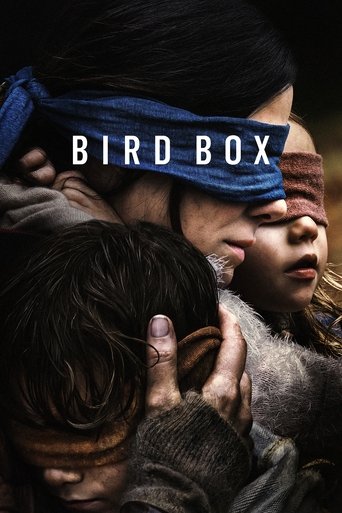
Bird Box
2018 · Film · 124 min
Directed by Susanne Bier
Five years after an ominous unseen presence drives most of society to suicide, a survivor and her two children make a desperate bid to reach safety.
5 positive10 negative4 mixed10 neutralfrom 29 commenters
Where to watch
No streaming data for this title.
33 comments on Hacker News
https://www.imdb.com/list/ls033928706/
Netflix: 13 Reasons Why: Following concerns from mental health professionals, Netflix edited the first-season finale in 2019 to remove a graphic scene depicting the main character’s suicide. Back to the Future Part II: In May 2020, it was discovered that a scene involving an adult magazine cover was censored in certain regions. Netflix stated they had received an edited foreign version from the studio and later restored the original scene. Bird Box: Following public outcry in 2018, Netflix agreed to remove footage from the 2013 Lac-Mégantic rail disaster used in the film's scenes, as it was deemed insensitive. The Devil Next Door: In 2019, Netflix added extra text to a map in this documentary series after complaints from the Polish Prime Minister regarding the portrayal of Nazi death camps. Patriot Act with Hasan Minhaj: An episode critical of the Saudi Arabian government was removed in Saudi Arabia in 2019 after a government takedown request.
I can admit to being condescending. But the point is I'm also generally right. You may not make your living from programming but you associate your self with "intelligence" and likely programming and you refuse to believe an AI can ever be superior to you.
>It's not valid because it is vacuous. Technology generally improves. But it is the specifics and details that matter, they are the only thing that matters. Saying "AI will improve" is saying nothing useful.
Exactly. When I repeat well known common sense facts, I've essentially stated nothing useful to people who HAVE common sense. Common sense is obvious. Everyone has common sense. You do too. The question is why are you constructing elaborate arguments to try to predict a future not inline with common sense? The answer is obvious, you can't face the truth. Pride and emotion make you turn away from common sense.
>I think global thermonuclear war is a more likely disruptor in the rest of my lifetime than some AI nerd rapture.
That's an intelligent statement. How many nuclear bombs were dropped on civilians in your lifetime versus how many AI break throughs happened in the last decade? Again. Common sense.
>I am sorry that whatever schooling or training you had did not manage to explain that this style of rhetoric does nothing more than portray you as a condescending asshole.
Remember that movie bird box where John Malkovich was a total ass hole? Well he not only was an ass hole, but he was pretty much right about everything while being an ass hole. If everyone listened to him they would've lived. That's what's going on here. I'm saying ass hole things, but those ass hole things are right.
>You're just being a condescending twatwaffle since you are arguing with individuals in a forum of which you know nothing about. You clearly have no respect for others' opinions and feel the need to write walls of text to rationalize it.
It's easy to prove me wrong. Put my condescending ass in it's place by proving me wrong. Every ass hole gets off at being completely and utterly right. You can pummel my ass into oblivion by taking me off my high horse. Or can you? You can't because I'm right and you're wrong.
Your own citations demonstrate that Netflix does not pay residuals on an ongoing sales or viewership basis, but rather all at once up-front...
"Netflix employs a cost-plus model, which means that it pays a show’s entire production costs, plus a 30% premium. Netflix shows are expensive because the company holds onto them. There's no money to be made in syndication, so it needs to make creators feel enticed to sell their ideas to them."
Bonuses and pay bumps are not residuals. For successful shows, those happen entirely separately from residuals.
In the case of Bird Box, Netflix was deemed to have not paid enough upfront. It did not owe residuals on an ongoing basis. (Note that Netflix does all of its licensing deals at the beginning, it doesn't continue to shop them later. This is in sharp contrast to...every other film library, which continuously shops its IP out to other organizations as the point of having a film library is the long-tail licensing income.)
Roma, Unforgivable, The Ballad of Buster Scruggs, Dont Look Up, Bird Box, The Irishman, lots of good movies, few of them are greatbut some are good.
Can you name a few? I can only think of three memorable ones; Annihilation (genuinely good film IMO), Bright (mediocre; decent worldbuilding but lacking) and Bird Box (mediocre, massive budget spent on promotion and hype).
I get big "direct-to-dvd" vibes with most other stuff they put on. And nobody talks about these films, which for me is a big indicator that it's not worth watching.
I'll admit Netflix spends a lot of money, but they spend it safely; they try to min/max their content, try to fit ever box / category.
> With big heavyweights like Disney that own a huge percentage of content having their own services, netflix is really going to struggle being anything more than niche media providers (anime) and their own inhouse media.
The thing is, they now pump out their own content quickly enough that they don't need anyone else's anymore, and as I understand it, that was always their goal. I imagine most of the TV-watching population (myself included) is okay with mediocre shows/movies, and Netflix has enough content that you're unlikely to completely run out of stuff to watch on their platform.
What Netflix is currently lacking is big blockbuster movies with well-known actors, but even that is changing. (See: Red Notice, Army of the Dead, Bird Box, etc.)
Yeah but how many of them are good? I can probably count the amount of Netflix original movies that I've heard discussed with one hand. And when it comes to stuff like Bird Box, the talk doesn't really even go with the quality.
I think framing child-rearing as an individual choice is a dangerous framing.
That's what I was getting at with the comparison to the movie Bird Box.
It's important to think of ourselves as biological systems first and thinkers-as-choosers second.
I suspect that an increase in the virtualization of our lives will lead to an equal increase in the will-full termination of our lives. Suicide. As our lives become less biological we will end them with greater intensity and frequency.
You may not be convinced, but ask yourself what would that road look like? Would you recognize the indicators? Could you and the people you care about hop off the ride in time? Why did so many Westerners join the ranks of ISIS?
>And I don't understand why people absolutely need to have biological children.
Consider these possibilities:
1. A best case scenario is that what you have expressed is a personal opinion that takes your genes out of the future in a Marty McFly fading away fashion as this opinion hardens.
Fine. Your choice. More pie for the rest of us.
2. A worst case scenario where this opinion accumulates in the market place of ideas and inevitably leads to human extinction.
Impossible right? Well, know that disgust with sex is climbing in rich nations (like Germany and Japan) and the number of births per woman is falling. Is this a function of wealth, or technology?
South Korea has fewer than 1.1 births per woman. That can only translate into a poorer, older, and smaller country for the future. [1]
https://www.macrotrends.net/countries/KOR/south-korea/fertility-rate
(I tell people that this was the thickly veiled premise of the movie Bird Box.)
If that is true, then can it be called a choice? Are people actually choosing to have fewer sexual partners than their parents generation? Are people really choosing to feel disgust at the thought of intimate contact?
Maybe repulsion-to-sex is a bigger threat to continued human existence as nuclear weapons.
Another fun article:
https://medium.com/migration-issues/how-long-until-were-all-amish-268e3d0de87
Netflix originals are hit or miss. They make (or take over) some good stuff, like Stranger Things season 1 or Bonus Family, but they also make some embarrassing, awfully bad things, like Bright or Bird Box. Even within the same show they are hit or miss, like when they took over The Killing or Black Mirror. I find there's no correlation between "made by Netflix" and quality.
It boils down to preferences. I personally feel the quality of HBO’s shows & series is dramatically higher than even the peak quality of Netflix or Prime original offerings. They are simply nowhere close. They’re not even playing the same sport.
Pretty much every Netflix darling I’ve spent time to watch (Stranger Things, House of Cards, Russian Doll, Maniac, Bird Box, Roma) has been a huge disappointment.
By comparison with HBO, I only feel that way about True Detective Season 2 and Crashing (the Pete Holmes show). Other shows have variation of course and some are more interesting or less to me, but none of them have been sincerely big disappointments, while nearly every single darling that Netflix puts out is pretty crap.
Sure, but I’ve still seen enough dystopian films/shows. Bird box and skyline are basically the same film, at the start/premise. Don’t look or you’ll die.
People keep saying this, but I don't think it's particularly true, at least for me. I thought A Quiet Place was one of the dumbest movies I've seen, and that the weakness of the monsters would have been obvious once it was determined how they hunted, if not found completely incidentally through normal attempts at fighting them. It wasn't possible for me to suspend my disbelief because the movie outright uses the very thing I was saying "Seems like X would be effective on them, since they hunt using sound" about 30 seconds into the movie. Even ignoring that, A Quiet Place is about the monsters having mastery over a sense that we share.
Conversely, Bird Box is about robbing us of one of our senses. In one movie, you have to be quiet - you are robbed of a form of expression. But you can still see, you can still hear, you are attempting to hide. In the other, there is no attempt to hide, at least from the monsters or force or whatever you want to call it. You just have to deny yourself one of your most important senses to be safe.
They're both set in a post-apocalyptic world, or at least partially so, but that's hardly unique to them or something A Quiet Place invented.
I thought A Quiet Place was a bad movie with a flawed premise that prevented suspension of disbelief due to just how ridiculous the premise was, and then totally failing to subvert the ridiculousness. I saw it long before I saw Bird Box. I didn't think Bird Box was a great movie, but I did think that it was significantly more enjoyable than A Quiet Place.
> The idea is that Netflix was able to coerce more than half of its subscribers to watch this film.
How is this different from any other Netflix show/film? They can pay for marketing and force it to be recommended for all users, but that's about it. The difference is that Bird Box had a lot of viral potential and turned into a meme because of its content, not external factors.
I actually really enjoyed Bird Box. It's the closest thing we've got to a Lovecraft horror film.
I think the implication is that it was a copy of ‘A Quiet Place’ which was a great movie. If you saw ‘A Quiet Place’ first ‘Bird Box’ was not great and left you wondering what all the hype was about.
Are you implying that bird box was not a good movie? Because it was great.
I'm going to be really, _really_ smug here, but you should probably branch out in your movie watching if Bird Box was the best horror movie you've ever seen.
> they can do it, regardless of the quality of the content itself.
Yes they can do it but, not without consequences. I thought Bird Box was pretty lame and given a dozen experiences like these, it'd completely destroy their reputation for putting out decent content for me, and I'd unsubscribe in a world where non-original content was an important factor. (and looking at the media landscape, with content companies creating their own platforms, or publishing on competing platforms, that world is becoming more and more a reality).
It's a bit like saying that Apple can create a big software hype by pushing an iOS 13, just by pushing it as a notification on 1.3 billion iOS devices. But if iOS 13 is complete rubbish, they can only perform that 'trick' a few times before they lose customers.
That plus, one can wonder if they can actually do it. Bird Box indeed took on meme status, me and my gf only watched it because it showed up as a joke on our feeds about 20 times and we had nothing better to do one night while eating food and decompressing from work. There's plenty of netflix content that pretty much bombed, despite showing up for weeks on end on the Netflix front page whenever I logged in. This felt more like the Flappy Bird of movies, a gimmick, a meme, not the next Harry Potter or Game of Thrones that turns people into long-lasting fans of your content.
Its not fair imho to underplay the movie itself. Maybe it wouldn't have done as well if it wasn't marketed as hard, but I didn't tell my friends about it because Netflix made me.
Bird Box was one of the best horror movies I've ever seen.
I find this to be off-base in a number of ways, starting with the premise that Netflix is a two-sided platform like Facebook, Google and Amazon.
Netflix used to be a distributor. It paid content owners to license its back catalog which no longer had any value in primary channels, namely cinemas. It then charged users for access. In contrast, two-sided Facebook's user do not pay anything, but the advertisers pay for access to them. The relationship is roughly the reverse.
Netflix also do not have suppliers that build up the attractiveness of the platform to end users. Netflix paid for back catalogs. Amazon doesn't pay its merchants. Today, Netflix is both a distributor and a producer. This doesn't make Netflix twice as strong but introduces a number of dilemmas into the organization. In the same way that Disney would look to external distribution channels to maximize the return on its investment in content, Netflix now has the same incentives. Netflix has no suppliers in the sense of Amazon - it pays for all the productions on its platform. It supplies itself.
In fact, they could theoretically make more by having staggered releases where premium channels like cinema receives new titles first. Why? First, because a single ticket to the cinema costs more than a month's subscription to Netflix. Second, because the direct income from Bird Box is $0.
Certainly Bird Box has a positive effect on subscriptions but it can only be inferred. This is an enormous problem. How can you justify spending say $100 on a production which could directly generate $700M at the box office, and then just release it to a limited audience? There are going to be numerous internal battles over this. I bet we'll see Netflix go for wide cinematic release of some titles.
Another issue is capital. Not only does Netflix has to produce content from which there is no direct return. They also have to market it. A $100M production may receive half or the same amount of spend on marketing. They have to build IP that is as relevant as Marvel. In summary, the challenges Netflix has is contradictory incentives between distribution and production, mastering the art of production and building of IP, and spending on marketing new productions.
I agree Netflix is trending towards failure, but I couldn’t disagree more about why and the path leading them there. Netflix is and has been the least attractive of these services for a long time, specifically because other platforms have far expanded inventory and integrate the ability to instantly rent or buy additional content not directly included.
Ultimately what everyone wants is a super easy interface to pay for precise a la carte content, never bundled, never subscription-based. If a given person wants to buy everything from HBO, they still could, and maybe could get a discount for subscribing, but nobody wants to be forced to subscribe to watch just a handful of content items.
It doesn’t matter if it’s Disney streaming, Netflix, Premier League soccer, or anything else. It’s clear rent-seeking to create walled gardens of content only unlockable by bundled subscriptions, and the clear consumer drive existentially threatening the TV industry is that all anybody wants is a dumb pipe with an easy interface to individually purchase each content item on its own merit, flat out.
Many streaming services, particularly Amazon’s, offer this to a way higher degree than Netflix, especially in terms of sports access and new release films.
Netflix is betting that it can create locked-in content that will compel people to stay subscribing, but I think this is a long-term failing idea. Bird Box is a great example: really poor production, sloppy writing with contrived villains, lowest common denominator stuff. Stranger Things? I couldn’t see one reason to care about it. Not exceptionally bad, just overproduced blandness. The gimmick of making things into viral phenomena is not a stable business plan in this area.
As prices rise, Netflix just becomes another HBO. A walled garden of content, except HBO actually makes good television and knows how to do it. Netflix is trashing its own brand with mindless crap. It’s network quality for premium add-on prices. Especially if economic hard times hit, this is exactly something people are going to realize they can live without.
(SPOILERS AHEAD)
> "...if Netflix wants to make any of their original content one of the most-watched media events of the year, they can do it, regardless of the quality of the content itself."
birdbox isn't the first promoted original content. it certainly drives success, but ultimately to get 45 million views, probably more than 2x all of who have ever seen game of thrones (16 million is their highest rating ever), is big.
I did think the movie was kinda derivative, a mix of the happening and vanishing on 7th street, but its still a must watch if you are into horror.
every game in town is 2nd guessing their models, because they are extremely outdated. Comcast's (NBC etc) entire model is based around market share - broadcast television. Hollywood is around big box office high spending action movies to make global sales. These is fine in some senses, but it means there are types of content we havent seen much, and while Netflix could satisfy niche customers, it was generally thought that it couldn't compete with large budget content producers. Now maybe it can, and that requires content providers to re-think.
>"The idea is that Netflix was able to coerce more than half of its subscribers to watch this film. That's crazy. The result, as we see in the article, is a tidal-wave of Bird Box achieving near-meme status. How does that feel to someone who does not have a Netflix subscription? What big joke/story are they missing out on? For only $14.99 a month, they can win social acceptance by being "in the know" of the current big thing."
for the longest time, ironically this has been hbo, especially with game of thrones. i feel like they must be paying reporters lots of money to go on about it so much, because its not really watched by that many people - compared to how much its talked about.
I don’t think I buy this analysis. In what sense is Bird Box a “box office smash?” Only Netflix can know the impact the film made on their bottom line, and even that internal analysis is difficult to do, especially in the short term.
In other words, I’m saying that yes, Netflix can fairly easily promote a film and get millions of people to watch it, but that doesn’t mean they have a magical sustainable model. If they were to consistently flex this muscle with content people don’t like, it’s pretty obvious things will turn out badly for them.
Here's the secret to Netflix:
A "masterpiece" is in the eye of the beholder.
A masterpiece to some is not to another.
Roma is one example: it clearly is masterfully done. Film critics love it. I loved it and it resonated with me. Have you seen it yet? Maybe you think it's "mediocre".
I liked Bird Box because it was apocalyptic and dealt with the downfall of society, a common theme in this genre. I don't care if anyone else liked it or didn't, the film was made for me. I see Netflix just released Kingdom. I have loved it so far.
I could list dozens of shows and movies that I have been extremely thrilled with. Will everyone else? I. Don't. Care.
As long as Netflix keeps pumping in the fantastic content, people will continue to subscribe.
I think you just need to look harder in Netflix. Try some British shows like Marcella or The Bodyguard.
What I also find interesting is the fact that Netflix doesn't necessarily even need the "flex" to succeed. Their push on bird box could have failed miserably, and they really wouldn't have suffered greatly, whereas Disney's push of A Wrinkle in Time probably hurt, since the movie ultimately flopped and their only chance to recoup costs was after the huge investment.
Netflix's goal is quite distinct from much of its competition. In simplistic terms, their goal is to release enough compelling content to keep existing subscribers subscribed and then hopefully entice new users to sign up more than old users quit. These "flexes" I would assume are primarily for the second category. If you make something enough of an event, with subscribers talking about it all the time, maybe non-subscribers will think they are missing out and take the plunge. If that fails, however, they only really lose out on the marketing costs, since it's very unlikely to affect the existing subscriber base at all.
If you look closely enough you can see a clear trend regarding Netflix's content strategy. They will continue to make movies like Bird Box, B-style movies and "cult classics" that they can draw big numbers to via their reach and marketing.
Oscar contenders like Roma and Beast of No Nation (a bit early for it's time if you ask me).
Partnerships with foreign content makers to act as an international distributor (BBC produced, Golden Globe Winner, The Bodyguard for example).
Top quality original TV: The Crown for example, fueled by contracts with big name show-runners and writers to produce them (Shonda Rhymes).
And finally, high value syndication targets (Friends, Mad Men, The Office).
Netflix's content allocation seems pretty clear, the next few years will be optimization at the margins.
My takeaway from Bird Box is that if Netflix wants to make any of their original content one of the most-watched media events of the year, they can do it, regardless of the quality of the content itself.
All it takes is for them to slip it in to people's "custom, curated" lists at a higher frequency, and maybe do a little subtle social-media engineering on Reddit/Facebook, and bam: instant box office smash of a derivative film with a 66% on Rotten Tomatoes.
That's a huge "flex". Big studios could pump hundreds of millions into a decent film and still have it flop. Netflix can take a B-movie and make it a sensation with relative ease. No wonder every game in town is trying to break into this model. Why invest millions on a potential flop when you can engineer one with 75% accuracy whenever you wish?
(though maybe I'm being just a bit too paranoid here. I have to admit some of the Bird Box magic stems from its intriguing concept. guerilla marketing doesn't work so well if what you're selling doesn't seem too interesting)
edit: people are debating the idea of "box office smash" here. I didn't use that phrase to emphasize direct earnings as a result of the film (which is "free" to watch if you pay for a subscription). The article addresses this:
> Secondly, and relatedly, Netflix is counting on subscription revenue. To that end, producing a piece of content that 58% of its subscriber base viewed in a single month is by definition a triumph (and yes, worth ~$700 million).
The idea is that Netflix was able to coerce more than half of its subscribers to watch this film. That's crazy. The result, as we see in the article, is a tidal-wave of Bird Box achieving near-meme status. How does that feel to someone who does not have a Netflix subscription? What big joke/story are they missing out on? For only $14.99 a month, they can win social acceptance by being "in the know" of the current big thing.
My takeaway from Birdbox is the old adage: "Any observed statistical regularity will tend to collapse once pressure is placed upon it for control purposes."
Sure it got tons of views because of all the advertisement and the tons of focus on viral media advertisement on every single platform. But the reaction from people watching it before me when asked if it was good was "Well I mean, I did watch it to the end, but i wouldn't call it good". Personally I didn't care for it. It was a huge and expensive stunt by Netflix to show that they could game viewer numbers for a one-shot thing. And I get that this is an important thing for them to do, but it's in no way sustainable or valuable either to them or their viewers.
If they did more stunts like bird-box throughout the year, most would quickly start to completely ignore them with an attitude of "Oh sure I head about X, and it's "blowing up on facebook" but that's always the case with Netflix focus pieces, they aren't worth watching though."
I find this to be off-base in a number of ways, starting with the premise that Netflix is a two-sided platform like Facebook, Google and Amazon.
Netflix used to be a distributor. It paid content owners to license its back catalog which no longer had any value in primary channels, namely cinemas. It then charged users for access. In contrast, two-sided Facebook's user do not pay anything, but the advertisers pay for access to them. The relationship is roughly the reverse.
Netflix also do not have suppliers that build up the attractiveness of the platform to end users. Netflix paid for back catalogs. Amazon doesn't pay its merchants.
Today, Netflix is both a distributor and a producer. This doesn't make Netflix twice as strong but introduces a number of dilemmas into the organization. In the same way that Disney would look to external distribution channels to maximize the return on its investment in content, Netflix now has the same incentives. Netflix has no suppliers in the sense of Amazon - it pays for all the productions on its platform. It supplies itself.
In fact, they could theoretically make more by having staggered releases where premium channels like cinema receives new titles first. Why? First, because a single ticket to the cinema costs more than a month's subscription to Netflix. Second, because the direct income from Bird Box is $0.
Certainly Bird Box has a positive effect on subscriptions but it can only be inferred. This is an enormous problem. How can you justify spending say $100 on a production which could directly generate $700M at the box office, and then just release it to a limited audience? There are going to be numerous internal battles over this. I bet we'll see Netflix go for wide cinematic release of some titles.
Another issue is capital. Not only does Netflix has to produce content from which there is no direct return. They also have to market it. A $100M production may receive half or the same amount of spend on marketing. They have to build IP that is as relevant as Marvel.
In summary, the challenges Netflix has is contradictory incentives between distribution and production, mastering the art of production and building of IP, and spending on marketing new productions.
I think they'll be OK this current price increase, but not the next one. I'm sure they have a good model on cancellations after price increases and they'll make up for the loss with the increased price. But I think a lot of people are going to start examining if they want to continue paying for Netflix every month without thinking. More people will likely cancel and re-subscribe periodically when they hear about a series or movie they want to watch. And the more competition from other streaming providers, the more people are going to be examining their total spend per month on streaming services, which if you have a lot of them, is beginning to approach a traditional cable television bill.
The price increase really wasn't the main driver for me; it was more that Netflix continues doing the exact same thing -- manipulating its users through user interface trickery, and continuing to spend money on content that is not very good. The more shows, including original series that I pass on, the more I realize that I'm paying an increased monthly cost to finance Netflix's overspending on B-rated content that I won't even be watching.
I also think Netflix took away the wrong thing from the Bird Box "success." Yes, a large percentage of Netflix subscribers watched at least 70% of the movie, but I think it was 1) to see Sandra Bullock, who is a great actor and 2) it came out over the holidays when you often want something in the background to watch because there isn't a ton of things to do that the entire family can do together. For me, I'm a fan of Sandra Bullock so that is why I watched it, but the rest of the movie and story was not that great or anything unique.
After I cancelled Netflix, I signed up for YouTube Premium instead, and I feel much better about it. You can turn off auto-play and video previews don't have sound. YouTube music isn't quite there yet, but it's getting better, and the iOS app is solid. And their recommendation engine is actually good. Plus I like that I can watch ten or twenty minute videos on an infinite variety of things instead of committing ten hours of my life to a Netflix show.
If Netflix had any faith in their own content, they would introduce some kind of impartial review system (either user-based, or Rotten Tomatoes, etc). Netflix's "% match" system is a complete joke; I frequently see 90% matches and start watching and go "why in the world was this recommended to me?"
Disney will also be launching their streaming service this year, and it will be rumored to undercut Netflix pricing. Plus Disney will now have all the Fox content, some of which is on Netflix and might be pulled down the line. I think Disney+ will also be more appealing to people with kids over Netflix, which tends to be more adult-themed.
The other issue they're going to run into is that they have almost reached peak saturation in developed markets. In order to continue getting new users in developing markets, where those people will be more price sensitive, they cannot keep raising the price. I wouldn't be surprised if they begin segmenting the pricing by region, or creating lower cost plans that only have limited content, or more restrictions.
> “They have the advantage of being able to use consumer viewing patterns to optimize their new show”
From a cultural or art critical point of view, this is a negative though. Movies end up being made to appeal to lowest common denominator tastes or themes for a broad audience.
The recent movie Bird Box is a great example. Total garbage, derivative movie, clumsy, contrived villains, manufactured tension with no actual plot driving any of it. Yet became somewhat of a viral hit.
If this is what Netflix’s data lets them optimize towards, count me out.
Counter-theory: a bot builder needs to test out his bot code, and used tweets about Bird Box movie as the test subject to shill for, hoping to drown amongst the other fans, rather than something that might get flagged.
Seems just as plausible, if not more..