 Hacker Cinema
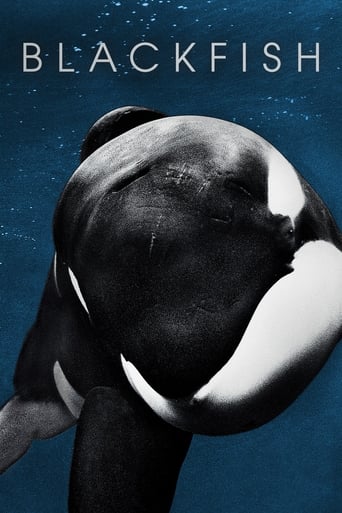
Blackfish
2013 · Film · documentary · 83 min
Directed by Gabriela Cowperthwaite
Notorious killer whale Tilikum is responsible for the deaths of three individuals, including a top killer whale trainer. Blackfish shows the sometimes devastating consequences of keeping such intelligent and sentient creatures in captivity.
17 positive5 negative3 neutralfrom 25 commenters
Where to watch
No streaming data for this title.
Videos commenters linked
From YouTube links in the comments below. Most are clips and trailers; “Full” means the uploader says so.





27 comments on Hacker News
No cetacean should live in captivity, period.
This transport "issue" just shows why we have no business transporting them in the first place.
For reference, the CNN documentary Blackfish is a good place to start.
The “blackfish” documentary on one of sea world’s orcas talks about how they captured baby orcas. It’s pretty heartbreaking.
https://youtu.be/-zXMxBtBPJo
The most amazing part is how clever the orcas were while trying to avoid capture. The young and their mothers dove down deep and then swam towards a river where they surfaced while the other adults swam along the surface to lead the boats away. It’s hard to imagine a group of humans coming up with a better plan, and it’s hard to imagine how to execute that plan without some kind of language.
Showing that orcas can naturally be aggressive and attack humans unprovoked throws a giant wrench on the media machinery that generated the documentary "Blackfish", which revolved on the supposed fact that orcas go crazy when they are held in SeaWorld parks.
The author and I experienced School of Rock very differently. Dewey Finn is a bit of a loser at the start, but he's still the coolest guy on screen. All his foils seem overly self-serious and/or very unhappy with their lives. We like Dewey, we don't like Ned (even though we relate to Ned).
The rant about Shamu and the ozone layer is just Meditations On Moloch[0] distilled into an emotional outburst. The thing is, he's right about those things. It is infuriating that we do bad things for money, and it's important to care enough to get mad about them and do stuff to effect change[1].
0. https://slatestarcodex.com/2014/07/30/meditations-on-moloch/
1. https://en.wikipedia.org/wiki/Blackfish_(film)
The Triumph of the Will comes to mind. Political propaganda films can be effective ways to change the world for the worse.
Many documentaries end up effecting permanent changes that may only be noticeable to people who live in a certain place or work in a certain industry. The Cove and Blackfish had a pretty direct effect on how SeaWorld treats its animals, but that doesn't quite rise to the level of "changing the world" as most would see it.
> I also have a suspicion that orca intelligence possibly matches that of humans.
I thought similar things after watching the documentary Blackfish (which is excellent.) Some of the orca behaviour documented in that film - in captivity and in the wild - is remarkably intelligent; some of the most obviously-intelligent behaviour I've seen from any non-human animal.
Some could say that the main theme of the movie is "how to exploit a sad and emotional event (involving an orca trainer young woman killed by a whale, and her naive co-workers), to make money, get fame and earn awards" [1]. Not more, not less.
Unfortunately, the cut made by blaxfishploitation was deep and still bleeds today.
To start, Killer wales aren't reproduced in Sea World anymore [2]. This is bad, not good. There are less orcas in the planet.
The damage caused by this film to cetacean research, understanding, and conservation is irreversible. To study wild lions is one thing, to study wild cetaceans is a totally different one. Is much more difficult and field studies at open sea are really expensive. At this moment, we don't even know how many species of Killer whales remain in the planet.
Campaigns to release all captive whales proliferated forcing to the release to some whales by "humanitary" reasons, with the logical result of its death. Good job. Leaving your pooch in a forest so it can run free and make frienship with their brothers wolves, would achieve the same result.
At least one species of dolphin got extinct in our lifetime, something that didn't happened before in all the history of humanity. Other cetaceans are about to vanish forever and do you know what? We can not even talk about breeding cetaceans in captivity without being harassed and called assassins of babies, and Gabriela Cowperthwaite has some responsibility for that, in my opinion.
[1] https://www.micechat.com/53915-blackfish-exposed/
[2] https://www.bbc.com/news/world-us-canada-35829477
But hold, on. The history still can be more sinister...
> I’d recommend the documentary Blackfish
If you see blackfish take in mind that must not be seen as an honest bona-fide documentary. Is entertaining if you understand what it really is. A fictionary monster's film.
I would define it as a "blaxfishploitation" film. A new genre aimed to attract animal activists, tell them what they want to hear, and sell a rewarding sense of outrage.
In order to get the desired emotional response, the film is trying to mislead the viewer all the time and takes a lot of creative licenses.
Like experts talking about an orca specimen or an event, even if they never worked with orcas or had been fired decades before the arrival of the whale (so didn't have direct experience with neither the whale, nor the event). Of course they will not mention this little details in the film.
Or mixing footage of people and orcas in different years and pools, to make it seem as if they are interacting in the same pool at the same time.
Or inserting a few frames of whales jumping (as a normal part of the show) in the middle of an interview, to suggest a unexpected attack
Or putting words in the mouth of Sea World staff to make them appear as evil, but were debunked later as false, with data.
Or telling that they lied and covered facts in a trial, even if the real declarations where videotaped and show the opposite.
The number of inaccuracies and false claimings does not end here. Here is a list with 69 points (that for a film of just 90 minutes is pretty astonishing):
http://da15bdaf715461308003-0c725c907c2d637068751776aeee5fbf.r7.cf1.rackcdn.com/adf36e5c35b842f5ae4e2322841e8933_4-4-14-updated-final-of-blacklist-list-of-inaccuracies-and-misleading-points.pdf
For those who haven’t seen it I’d recommend the documentary Blackfish. https://www.blackfishmovie.com/
The Sea World orca Tilikum killed three people, though not for eating.
Orcas working in teams to knock seals off an iceberg with waves: https://youtu.be/g1VEwsI4SlY
So what can we conclude? Super smart, organized and no love for other mammals. I am amazed they only seem to go after humans in the sea world type scenario (film: Blackfish, shows the madness it induces in such animals). I don’t know of any attacks on surfers. Which seems odd. They would be so scary to swim near.
'Blackfish' was an excellent documentary, and I came away from it fully believing that we shouldn't hold orcas in captivity. A chilling (and fascinating) point in the movie is that when one of the orcas nearly kills a trainer, the killer whale doesn't bite or buffet the trainer, but instead holds him underwater to drown him.
They were named 'killer' for some reason, but the only known attacks on humans are from Orcas in captivity. They're not innocuous and sweet, of course, but they got a bad rep for a couple decades and so weren't a 'charismatic' species to save, and their populations suffered greatly as a result. See "Blackfish" the documentary.
Fundamentally a documentary is trying to sell a narrative using documentary cinematic style.
Now sometimes this is mostly benign or even "good." Such as detailing an event in a in-depth matter-of-fact style. Works such as the early Planet Earth series are simply trying to capture and show the wonder of life around the planet! And maybe hopefully encourage you to try and protect them as a secondary upshot. As time has gone on, they've produced works are that much more blatant with their "save the environment" messaging.
However, most of the most popular ones have a significant editorial bias. Heck, one of the first landmark pieces, Nanook of the North, was almost completely fabricated! Often quite easy to spot as well. Some are very up front about their bias, such as Michael Moore's work. Some less so, such as the editorial narrative in features like Forks over Knives or Blackfish. And some it's quite subtle. The recent Making of a Murderer comes to mind where certain facts weren't presented and it's framed in a very sympathetic light towards the defendants. Sure they have a lot of true facts within them. And often you learn quite a bit! But they are often presented in a particular fashion or certain points are talked up while others are ignored or not presented.
It's an unfortunate thing, but even the most innocuous of documentaries have some small bias. And it's up to the user to try and understand how much is narrative editorializing and how much is "truth." It's all part of making the documentary feel more true and tap into our need for a strong narrative arc via romanticizing the story we see unfold.
This has been a growing issue ever since documentaries like Blackfish came out. Awareness of how these particular creatures are treated has led a lot of existing parks to either close down or pivot to other attractions and conservation efforts.
Even in the US, Seaworld has decided to phase out whales and try to push other attractions, due to shifts in public opinion. I have a feeling other US aquariums, like Chicago, will likely go the same route and not replace or breed their current dolphin/whales populations.
See also the Blackfish documentary (which seem to have left Netflix sadly). Almost all captive male orcas have a floppy dorsal fin, that is a definite sign of ill health and seldom happens in the wild.
The Venus Project: Future By Design - By Jacque Fresco. Introduced Jacque Fresco's philosophy, R.I.P., and also the empathy we must have in designing something that is good for the planet and for the future. I highly recommend.
Mike Maloney's "Hidden Secrets of Money" is a beautiful set of YouTube documentaries financed by Mike himself. It educated me and millions out there how money really worked in the real world, and how the Federal Reserve and banking manipulates currency. https://goldsilver.com/hidden-secrets/
The Corporation - When Corporations started to get the same rights and treatment as regular citizens, we have created a monster that have changed our world for the worst.
The Cove and Blackfish. Really sad and made me stay away from Sea World and circuses and places that held animals in captivity for entertainment.
The Fog of War: Eleven Lessons from the Life of Robert S. McNamara - The 11 lessons are worth learning: https://en.wikipedia.org/wiki/The_Fog_of_War
Enron: The Smartest Guys In The Room/Inside Job - When corporations are run by sociopaths.
An Inconvenient Truth - Global warming.
Diana Vreeland: The Eye Has to Travel/Bill Cunningham New York - Learned so much about creativity and just being true to your unique self regardless of what the world thinks.
Zeitgeist - Esoteric knowledge.
Bowling for Columbine, Blackfish, most MJ documentaries.
I'd highly recommend watching "Blackfish" for some insight into this sort of phenomenon with a more domestic spin (spoiler, it's about SeaWorld's acquisition of and treatment of their Orcas).
Blackfish was a very damaging documentary to the vancouver aquarium, because it casts all marine life centres as cruel cages for animals. in fact, in their theatre, they pre-screen a short video now that basically says 'wtf we're not monsters, here is what we do' because of the social media activists.
what marineland and seaworld do to their animals and what vancouver aquarium does as a rescue centre and research facility does is something totally different.
The vancouver aquarium is a noble facility with a noble goal. my visit there honestly instilled a deep respect for me in more than just sea life.
I implore you to stop deriding institutions that may very well be acting in wildlife's best interest.
> Of course, SeaWorld is notorious for terrible conditions for the animals.
I'm sure this is going to be a very unpopular comment here, but for the sake of a different perspective... Every time I see this sentiment, it tends to come from fans of Blackfish. I watched that "documentary", which was very cherry-picked to push a biased perspective. I've also lived near a SeaWorld and have noticed, first-hand, the conservation they do of the environment and cetacean life.
Yes, SeaWorld is for-profit, while many zoos are non-profit, but they do make some meaningful effort to help out.
In the documentary Blackfish, they note that an area of the brain which plays a big role in emotions is much larger in killer whales than it is in humans. They speculate that the social/emotional lives of whales in a pod could be far richer and more complex than what we experience.
Blackfish is definitely a provocative documentary on this topic of killer whale captivity.
I think a lot of anti-vax stuff might be fixed with a compelling documentary. Vaccines need their own "Blackfish" documentary. Simply producing that one vivid, compelling movie is now completely changing how whales and dolphins are kept at aquariums. The power of a well produced documentary is really unbelievable.
It makes sense. People are visual creatures, and natural story tellers (and listeners) so sometimes showing the horrors of these issues and weaving it into a story is the best way to convince large amounts of people and bring attention to an issue.
I'd highly recommend the Blackfish documentary about killer whales regarding mammal emotions (trailer: http://www.youtube.com/watch?v=8OEjYquyjcg).
Especially this part where a mother is separated from its baby, http://www.youtube.com/watch?v=eWFo6kf21Hw ; it gives pretty good insight about whether animals can experience emotions.
Somewhat off topic... but I encourage everyone to watch the Blackfish documentary. These are incredible, amazing, highly intelligent animals. Different nations have their own languages. They know who we are, they know what we're doing to them, they know when we're making them do tricks for them for food for other's amusement.
Rightly deserved. It's an incredible documentary and I suggest everyone watch it when it's released.
I hope Netflix continues in this direction. It seems to be a great platform for documentaries to reach mass consumption, like we saw with Blackfish.
I found the doco Blackfish to be pretty thought provoking, its about the keeping of animals in captivity. http://en.wikipedia.org/wiki/Blackfish_(film)