 Hacker Cinema
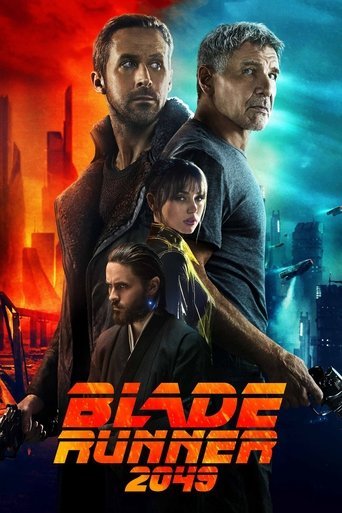
Blade Runner 2049
2017 · Film · 164 min
Part of Blade Runner Collection
Directed by Denis Villeneuve
Thirty years after the events of the first film, a new blade runner, LAPD Officer K, unearths a long-buried secret that has the potential to plunge what's left of society into chaos. K's discovery leads him on a quest to find Rick Deckard, a former LAPD blade runner who has been missing for 30 years.
35 positive10 negative5 mixed31 neutralfrom 81 commenters
Where to watch
No streaming data for this title.
93 comments on Hacker News
This is true. I read an interview with Hans Zimmer who has scored dozens of Hollywood films (including Blade Runner 2049) and when he first arrived in London in the 1980s he couldn’t read music. Not sure about now.
ETA: he did eventually learn how to read music:
“I learnt to read music after I bought the Roland MC8 Microcomposer, because it then became essential for me. … I learnt music by ear and have picked up most of my technical knowledge through the sessions and gigs.”
https://www.muzines.co.uk/articles/ronnys-electro-music-cabaret/4295
I feel like we may end up just taking Epicurus' advice or at least the second half of it: “We must consider both the ultimate end and all clear sensory evidence, to which we refer our opinions”
Like if something is AI written and it gets you those LinkedIn thought leader upvotes does it matter? The readers thought your LLM-authored hot take about the economy was interesting enough.
I think it depends on the context too. Dale Carnegie (in his famous Win Friends.. book) mentioned how it's annoying to receive letters that say Dictated But Not Read. So people don't want to read (for example) a twitter reply or email that's written on their behalf by an 'agent'
But I have been using Sonnet to write some Youtube narrations and I think I've discovered a kind of value that is not 'AI slop'. I already posted one of them -- about the giant pink hologram in Blade Runner 2049 -- and it's been getting thousands of views and a dozens of likes when clipped into shorts. [https://www.youtube.com/watch?v=sK-TsLQkIos]
The text is like: "The neon is pink. Her hair is blue. Her face is light. She smiles because she was made to smile, and somewhere beneath the awareness of that fact is the older, simpler, more animal truth: a face is smiling at you. Someone said your name. Someone said “you look lonely” and meant it as an invitation rather than a wound."
To me that is a kind of LLM writing that's "value above replacement". Like if I lost that Sonnet 4.6 script I wouldn't be able to get it again it was just a particular permutation of the neural network manifold that emerged from our discussion about the movie and the style I wanted etc.
So maybe full commodity writing (here's the summary of the POTUS' speech) or VAR can get resonance. What seems dissonant/annoying is stuff that's in the middle that's designed to be a person's voice like an Op-Ed etc
I think it depends on the context too. Dale Carnegie (in his famous Win Friends.. book) mentioned how it's annoying to receive letters that say Dictated But Not Read. So people don't want to read (for example) a twitter reply or email that's written on their behalf rather than their own thoughts
When it comes to something like a LinkedIn post however who cares. Everyone uses AI cause the content itself is mercenary anyway right. Thought leadership.
But I have been using Sonnet to write some Youtube narrations and I think I've discovered a kind of value that is not 'AI slop'. I already posted one of them -- about the giant pink hologram in Blade Runner 2049 -- and it's been getting thousands of views and a dozens of likes when clipped into shorts. [https://www.youtube.com/watch?v=sK-TsLQkIos]
The text is like: "The neon is pink. Her hair is blue. Her face is light. She smiles because she was made to smile, and somewhere beneath the awareness of that fact is the older, simpler, more animal truth: a face is smiling at you. Someone said your name. Someone said “you look lonely” and meant it as an invitation rather than a wound."
To me that is a kind of LLM writing that's "value above replacement". Like if I lost that Sonnet 4.6 script I wouldn't be able to get it again it was just a particular permutation of the neural network manifold that emerged from our discussion about the movie and the style I wanted etc.
Nolan made "The Odyssey". It was his vision.
Hitchcock made "Psycho".
Miyazaki made "Princess Mononoke".
While you can say Roger Deakins shot "Blade Runner 2049" or Hans Zimmer scored "Interstellar", even these masters of their craft paired with directors to make their films. The film is still typically the work of the auteur director, and the director (usually) exercises control over all of these pieces.
You can tell when that doesn't happen. You can tell when the producers exercise outsized control. Or when the studio controls the editing table. And it's not like that's ever kept a secret - people talk about this openly and loudly when it happens.
Musk built his empire, and even if he bought his way in, he still used his unique methodology to turn it into what it is today. "Founder Mode", if you will. Same thing with Steve Jobs.
All of this hand-wringing about who painted the shed in "The Evil Dead" doesn't matter. It's Sam Raimi's. Everyone else on set dances to the beat of his drum.
Software can (and will) be like that too.
Game design, company formation, product development, you name it.
> Rama may turn out unrecognizable after the Hollywood script jockeys have been through with it, as happened to Foundation.
Denis Villeneuve (Dune, Blade Runner 2049, Arrival, Prisoners, etc) is set to direct and is writing the script as well:
* https://en.wikipedia.org/wiki/Rendezvous_with_Rama#Film
Though it may be a little while since he first has to release adaptation of Dune Messiah, and a Bond film is probably next:
* https://en.wikipedia.org/wiki/Denis_Villeneuve#Upcoming_projects
>as happened to Foundation. (I actually like the Apple TV version, but it’s definitely its own thing.)
This is not necessarily a bad thing. Others have noted that a faithful adaptation would have been a snooze-fest and inconsistent at best. There's lots of cases where a movie/TV version departed greatly from the source material, and was better for it.
>Rama may turn out unrecognizable after the Hollywood script jockeys have been through with it
It's being helmed by Denis Villeneuve, the guy who did Blade Runner 2049, Arrival, and the new Dune movies. If anyone can do a good job with it, he can.
>For sci-fi takes on truly alien first contacts,
Don't forget Villeneuve's "Arrival".
Pale Fire book is shown in the movie Blade Runner 2049
https://www.youtube.com/watch?v=OtLvtMqWNz8
Solving Nabokov's Pale Fire - A Deep Dive
https://www.youtube.com/watch?v=-8wEEaHUnkA
Pale Fire is what we call as Ergodic literature
Ergodic literature refers to texts requiring non-trivial effort from the reader to traverse, moving beyond linear, top-to-bottom reading to actively navigate complex, often nonlinear structures. Coined by Espen J. Aarseth (1997), it combines "ergon" (work) and "hodos" (path), encompassing print and electronic works that demand physical engagement, such as solving puzzles or following, navigating, or choosing paths.
Ergodic Literature: The Weirdest Book Genre
https://www.youtube.com/watch?v=tKX90LbnYd4
"House of Leaves" is another book from the same genre.
House of Leaves - A Place of Absence
https://www.youtube.com/watch?v=YJl7HpkotCE
Diving into House of Leaves Secrets and Connections | Video Essay
https://www.youtube.com/watch?v=du2R47kMuDE
The Book That Lies to You - House of Leaves Explained
https://www.youtube.com/watch?v=tCQJUUXnRIQ
I went into this rabbit hole few years ago.
Blade Runner 2049 | "Cells Interlinked" and Pale Fire
https://youtu.be/OtLvtMqWNz8
The best video essay on the movie
I would agree with you un general, but Blade Runner 2049 is not a good example, il remember clearly the coat of Ryan gosling, the dresses, etc. This film is great for that, the lights, the sets design.
https://www.chapter1-take1.com/2017/10/blade-runner-2049-costume-designing.html?m=1
One of the reasons modern sci-fi films (e.g., Blade Runner 2049) seem so flat to me is because of the costumes. They're always too minimal and too forgettable. There's really nothing special about the fashion in that movie.
Compare that to the hyper-maximalist 80s movie outfits. The original Blade Runner has more creativity in one outfit than pretty much the entirety of the sequel.
I wonder why that is. My guess is that it's just a symptom of the same thing that causes everyone to stop buying colorful cars, and instead default to a grayscale one: fear that being too outlandish or creative will turn off potential customers/viewers.
I tend to agree with your take on these movies, but I find I can enjoy some of them to a greater extent by rejecting the notion of what's "cannon".
For instance, I like the bleakness of Alien 3 opening with Newt and Hicks both dead. That doesn't spoil my enjoyment of Aliens, which ends on a triumphant note. These are different stories, and they can be treated on completely different planes. If you want, you can imagine the movies as representing alternate branching universes, where one branch led to Newt and Hicks dying in hibernation, and in some other branch that's too uninteresting to be put to film, they live happily ever after.
I also liked Blade Runner 2049, but I don't need to retroactively reevaluate the original Blade Runner in light of any of the questions that are settled in the sequel. In Ridley Scott's original film, Deckard's humanity is still open to question, regardless of what's presented in Villeneuve's version.
Of course when the sequel is complete trash, it's easy to ignore entirely. Terminator 3 being the obvious example.
I dunno, 2015, I'm a little weak on this year: It Follows, Creed, Ex Machina, Max Max: Fury Road, Sicario, The Hateful 8. I'd watch those again with someone any time, and recommend all of them often. Several on my to-watch list most of which I expect to be good, like Queen of the Desert, While We're Young, Slow West, and The Overnight, just haven't made it to them yet. Not an exhaustive list, just gleaned from some titles I have at hand.
2016: Green Room, The Nice Guys, Hail Caesar!, The Neon Demon, Swiss Army Man, Hunt for the Wilder People, The VVitch, Train to Busan, Shin Godzilla, Moana (hey, I like this one), Arrival. Moonlight's on my to-watch and is supposed to be really good.
2017 (I've done OK on catching up with these!): The Lost City of Z, Dunkirk, Low Life, Good Time, Logan Lucky (absolutely slept on, kills it as a feel-good lightweight small-stakes heist movie), Blade Runner 2049, The Death of Stalin (I liked this less than a lot of folks, but given how widely-loved it was, I'm probably the idiot here), One Cut of the Dead, You Were Never Really Here. The Planet of the Apes movie from that year, plus Phantom Thread, and The Little Hours are to-watch for me and come highly recommended.
2018: Annihilation, Isle of Dogs, Upgrade, Sorry to Bother You, High Life, Eighth Grade, the Suspiria remake. To-watch that I expect to be good include Champion (Korean arm wrestling movie—there's another movie by the same name that year), First Reformed, BlacKkKLansman, The Favourite, The Wolf House, Climax, and some others.
2019: HUGE year for the particular (small) set I'm seeing on my list, including a ton to-watch but a bunch I've seen. Uncut Gems, The Lighthouse, Knives Out, Little Women, JoJo Rabbit, Ready or Not, Parasite, Midsommar, The Art of Self Defense, maybe Marriage Story (but if you've seen one Baumbach movie, you've kinda seen them all, and I'm not sure I'd put it above The Squid and the Whale). Midway's a well-above-average war movie and pairs great with Tora, Tora, Tora! as a crazy-long double feature in a really fun way. To-watch list is nuts and I really need to dedicate a month or so to filling out my watched-list for this year: First Cow, The Irishman, Portrait of a Lady on Fire, Bacurau, Once Upon a Time in Hollywood, The Farewell, The Souvenir, Blow the Man Down, The Vast of Night, Her Smell, Funan.
It basically just keeps going like that, year after year, and I've barely even tried to dredge up good movies for most of those years, the bulk of it's just stuff that's risen to my attention one way or another, and I'm terrible at keeping up with foreign film especially. I also left off some that a lot of folks would probably include, like at least one Mission Impossible (aside from MI2, I think these are all pretty good action movies, though quality varies a bit) and Avengers: Endgame which, opinion on the rest of Marvel aside (I think it's mostly kinda lazy crap? But was basically entertained for most of them regardless, so I guess I can't complain too much) was a hell of an event. Also Black Panther, which everyone loved but I was pretty meh on (I hate the entire end fight, and it's looooong)
> getting real 4K detail requires a level of precision in camera focus that frequently just isn't happening.
100% agree. Relevant examples: "The Batman" (2022) a gorgeous film which was shot with ARRI ALFA anamorphic lenses, intentionally modified and detuned to achieve a specific, "dirty" look and character. Blade Runner 2049 (2017) with Roger Deakins winning the Oscar for best cinematography even though he intentionally chose to shoot primarily on the Arri Alexa XT, a native 3.4K resolution camera. And the BR 2049 4K UHD is widely considered a reference grade disc and one of the best examples of what the 4K UHD format can achieve, despite technically being a 3.4K upscale.
And a personal example, this year's Superbowl broadcast, which was produced and distributed in 1080P HDR10, looked shockingly good on my 150-inch calibrated screen, which was enabled by a combination of best-in-class cameras, lenses and production talent with a high bit-rate throughout the distribution chain. It turns out when your primary cameras have $85,000 Canon glass on the front, it makes a difference (especially when Canon has a team of techs on-site all week to custom tune the lenses). Canon also loaned them a couple prototype super long lenses able to instantly switch to a shallow depth of field mode with zero change in aperture or shutter. One of those created a shot that made me literally rewind my DVR and pause just to appreciate (and then go look up how they did it later) It was a beautiful close-up on one player's face full-screen with perfect soft bokeh from a camera at least 150 feet away. Incredible.
> if you watch on a projector, 4K can be nice
It's interesting because I upgraded from a very high-quality native 1080P DLP projector (with pseudo-4K pixel shift) to high-end native 4K laser only about 18 months ago (fairly late). I never saw pixels on the 1080P projector except when displaying test signals during calibration (and even then, barely). I'm glad I waited a few years for 4K laser to more fully mature because, while there was an uplift in overall image quality going to native 4K, it was almost disappointingly minor. Even having waited so long, I feel like a meaningful portion of the 4K upgrade cost was wasted. Frankly, I'd still be perfectly happy with the (very good) perfectly calibrated 1080P DLP projector that's now nearly 7 years old.
If I was going to put more money into my AV system (and I'm not... because it wouldn't make anything look or sound any better), I'd invest in an even better projector lens. But that wouldn't matter unless Hollywood started releasing higher fidelity content. And even if they did, it wouldn't matter because there's no way to get a bunch of that higher fidelity content on my screen. Hollywood's not releasing anything beyond 4K HDR10+ UHD discs anytime soon (and maybe ever) and streamers don't want to distribute content at scale beyond 20-25 Mbps. OTA broadcast content could deliver slightly better fidelity (in theory) once (if) ATSC 3.0 ever rolls out widely but broadcasters have already made it clear they're going to divide any extra bandwidth the FCC gives them into more shopping channels at low bitrates. Frankly, I think we're pretty much at the end game for source quality in cinematic content for theater or couch-mode viewing. Now the only remaining battle is getting more people upgraded to gear, calibration, signal path and source content which can fully and correctly display what properly encoded high bit-rate 4K HDR10+ already provides (I include Dolbyvision in that because, in practice, it's pretty much the same quality as well-encoded HDR10+).
I also agree with you that it's hard to even see a noticeable difference between good 2K and 4K except with synthetic content like CGI animation. I think people who report observing a significant difference are either having some placebo effect or something was wrong with their 2K setup, signal chain or content, so 4K looked better not due to the resolution increase but because it fixed whatever was wrong with their 2K setup.
> Spending money on brightness and contrast is 100x more important.
Indeed. And also HDR, higher quality source content (ie less compressed), getting rid of digital keystoning or any other subtle degradation in the signal chain and, of course, ambient light control. I always tell new projector owners to first leave their projector turned off, darken the room to viewing mode and then sit there in the dark staring at their blank white screen. Then I point out, "that white is the blackest black you'll ever see". And that will (sometimes) finally convince them to get serious about light control. :-)
And then I walk by the row of 65 and 75 inch screens at Costco advertising "Amazing 8K Upgrade" to people who watch streaming movies from their couch 8-feet away from the screen and just shake my head. They're hawking grade-A homeopathic bullshit to nice people who don't know any better and should feel bad about themselves for lying to sell people something they don't need.
I found Blade Runner 2049 painful to watch. The story is ok, but the presentstion, with its reliance on memes from the earlier film, ruins it for me. Also, the principle malevolent force is vacant and tepid. The story would have been better without him. If they’d just set it in the same world, without trying to look and sound like thenold film-but-updated, I’d have liked it… but they brought back Harrison Ford just for nostalgia, and copied loads of the shots and music. Sorry, no, they didn’t copy those things, they ‘extended” them. Copied-but-bigger. The story might have stood by itself without pandering to the entitlements of fans of the ealier film and I wish they had been brave enough to make it more unique.
> There are so few examples of good follow-ups to nostalgic media. The only other example I can think of is Blade Runner (1982) and Blade Runner 2049 (2017).
I know this is controversial, but I disliked Blade Runner 2049. It feels made by someone who just didn't get Blade Runner and was both copying it mechanically in parts, and improvising unfaithfully in others. (Coincidentally, I liked Arrival but the changes Villeneuve introduced to make it more "sentimental" ruined the reigned-in emotions in Ted Chiang's piece -- again it felt like he just didn't "get it").
I obsess about Blade Runner -- to me almost every scene is artwork, and the music is amazing. The plot? I mean, yes, there are plot holes aplenty, but I don't think this movie is truly about the plot, beyond the philosophical themes.
Blade Runner 2049 in contrast seems so cynical and shallow to me. It just didn't work.
PS: also, the insufferable Jared Leto. And the non-entity that is Luv. While Blade Runner has the best anti-hero ever in Roy Batty... and the best dying speech (vs Luv's "I'm the best!". Ugh).
If you're a sci-fi and/or a fantasy fan I really recommend watching the original film and the prequel in that order and make your own mind up.
I was young when the original came out so I found it good but scary. I felt the prequel was excellent and it left me wanting more.
These days I feel a lot of my youthful nostalgia has been vandalised for a quick corporate buck. Probably the worst has been Willow on Disney+.
There are so few examples of good follow-ups to nostalgic media. The only other example I can think of is Blade Runner (1982) and Blade Runner 2049 (2017).
- Ghost in the Shell (1, then 2)
- Children of Men
- Stalker
- Solaris
- Blade Runner 2049
- Devs (a brief tv show, but just one shot the whole series)
- Contact
- Under the Skin
- Paprika
- Annihilation
- Arrival
- Ex Machina
- The 5th Element
- The Substance
- Primer
- Tenet
- Upstream Color
- 12 Monkeys
- Her
This seems to be part of a side plot in Blade Runner 2049.
The movie was about replicants of course, but in the background, the technology shown with the AI being a companion, it was a huge corporate hit, a big seller. In the background you see ad's for it, and they reference it as their most popular product. And, as you allude to, in the movie it was both for loneliness AND sexual. They interacted like a relationship with talking and hooking up.
I don't doubt that with current AI, something similar could be done. We're just missing the holograms.
And as you say, I'm sure the porn industry will catch on.
Kind of crazy how Porn isn't leading this tech wave like past ones. Maybe because people are scared of tracking?
> The fact that nobody would make a Doctor Zhivago or even a Back to the Future today is not something I can fix with all my searching.
What do you mean by that?
I'm not familiar with Doctor Zhivago so I had to look it up, the 1965 film is based on a 1957 novel, which seems to match just fine with the pattern of The Martian, The Three Body Problem, Game of Thrones, Fifty Shades of Grey, etc.
Back to the Future is a fun trilogy, but the first film was mostly set in 1955 (so if it had been done today the past would have been 1994, compare to Captain Marvel being mostly set in 1995), the second film was 1985's idea of 2015 (and we still get plenty of what-if fiction in the near-ish future, e.g. Blade Runner 2049, Cyberpunk 2077), the third was yet another wild-west Cowboys-and-Indians gunslinger (1885) — but if you mean to focus on the more playful and fun aspects of how it was put together, or the positive vibes of good people working to solve problems and where it's clear who the goodies and baddies are, BttF reminds me more of The Orville or Lower Decks. (And The Martian if you want to consider the environment/time travel itself, rather than Biff, to be the problem).
I read a post some time ago that explained how that test came to be - It was created by Ryan Gosling of all people - and it's an incredible story inside an incredible story.
Not sure if this [1] is the post I read back in the day, so I hope it does explain the story correctly (Haven't read this one in particular, just googled for it). Then I thought "May be I picked that from Hacker news" [2] and [3] (May be you should go at these in reverse order)
[1] https://cohost.org/mcc/post/178201-the-baseline-scene [2] https://news.ycombinator.com/item?id=35813595 [3] https://www.denofgeek.com/movies/blade-runner-2049-how-a-key-scene-differed-from-the-script/
This sounds like the basis for the "Baseline Test" in Blade-Runner 2049. Fascinating write up here: https://www.denofgeek.com/movies/blade-runner-2049-how-a-key-scene-differed-from-the-script/
> But enough about Blade Runner 2049
Kidding aside, while Blade Runner 2049 is a really great movie, I cannot accept it as canonical. The original has a sense of humor, sexiness, and even tenderness that 2049 does not. The original has characters doing truly reprehensible things, but no one is outright, cartoonishly evil with incomprehensible motives as in 2049.
For me the Vision Pro has been my “Mac replacement” in terms of how I use and love it. (Even though it needs a Mac.)
I completely customized the light shield and straps to be very conformable with a wider field of view. Third version was the charm. Apple could have done better.
Games they have are very meh. Pass. Got a Quest for that.
But 3D movies are finally what 3D should be. At least the well done ones. Blade Runner 2049, Dune Part 1, are fantastic. Felt like I hadn’t really seen them before.
Strange to me they only have a few “environments”. Gorgeous, just so few. I use them to focus when working and meditate.
I hope they keep up with it as a developer friendly Mac replacement. It does that well, and with just a few improvements could be significantly better. Devs using it will start building for it, even if just to scratch an itch.
You conveniently left out Arrival. Also, Blade Runner 2049 was not a remake, but a sequel with original content. Also, Dune was a book adaptation, not a remake. Also, that's just a weird reason to reject a director. Is it easier to direct a movie that's set in an existing universe? Should we reject all World War 2 movies as potential masterpieces since they're just remakes of a thing that happened?
You need to watch both of them: Jodorowsky's Dune and H.R Giger's documentary "Dark Star: HR Gigers Welt". Giger was a true artist to the bones, his house was like a macabre gothic castle from dracula, full of statues, books and art.
Jodorowsky hired Dan O'Bannon, HR Giger, Jean Giraud Moebius, Salvador Dali, Mick Jagger, Pink Floyd... not to mention his own son.
He and Moebius created L'Incal and Metabarons, one of the wildest rides in the realm of european comics. Moebius was one of the most talented artists in the history of the Franco Belgian comics scene of France.
Surreal that Jodorowsky's Dune never materialized. I think it would have been truly amazing and far better than Lynch's Dune. I won't even mention the modern adaptation. How can the guy who made Blade Runner 2049 fails to deliver something so important for Science Fiction? Villeneuve was saved by legitimate actors on blade runner.
I must confess the results don't seem too relevant for my first search: as I recently lost a family member to it, I searched "philosophy suicide", and got the following:
* Post-Human Capitalism and Revolution: Detroit and Blade Runner 2049
* The voice in your head: How a movement of people who hear voices is reshaping our understanding of mental illness – and consciousness itself.
* The Ghosts of Mark Fisher
* The radicalism of Randolph Bourne: Bourne’s affinity with outsiders drove his vision of making North America a united states of communities. A century on, his writings have become more relevant than ever
* Is the quest for immortality worse than death?
* The Dangers of Meritocracy
So far only the 4th result seems more than just tangentially relevant, and I know of much more relevant mainstream podcast episodes specifically dealing with the philosophy of suicide, but none of those seem to come up.
I feel like I live in a different reality to the other viewers of the new Dunes
"Best Sci-Fi of the decade"??
They're both some of the dullest sci-fi movies I've ever seen, especially compared to the Lynch one.
Disgracefully I imagine that few people saw the extended two-parts version of the Lynch movie, and were burned by the insanely shortened ending and the other cuts of the theatrical one. I recommend checking the extended version out, it will probably change a lot your idea of the movie. I was probably influenced by seeing it before the (criminal) theatrical version.
Lynch's Dune was visionary, at times disturbing and with Kyle McLachlan. Can you really beat a Kyle McLachlan movie? No, I don't think so. xD
In Villeneuve's version I was e.g. shocked by how watered down the Baron Harkonnens is; the movies are just bland and Hollywood-y.
The music is as banal and badly employed as any average Hollywood blockbuster; the actor chosen for Paul Atreides is as much insipid as Kyle McLachlan was eclectic; Zendaya is incomparable to Sean Young; a couple parts are plain stupid (Gurney's entrance...)
Despite not having the length problems that Lynch had, they managed to compress the ending again; they gave too much time to unimportant parts while compressing the ending and other important passages (the final battle lasts what, five minutes? Does he actually cross the desert??).
Some actor choices seem good (Florence Pugh, Rebecca Ferguson...), but yes not some of the most important.
And I did like a lot Blade Runner 2049, I think I liked Denis Villeneuve, but these movies made me change idea.
To be clear, it's not the worst movie I ever saw; it's simply bland, and I think it's bewildering that this version gets praise while Lynch's one is considered junk.
I should say that I never managed to read the books, though, that might play a role in these opinions.
Plenty of good sci-fi, but mostly on TV.
Still, you're also probably overlooking how common sci-fi films are. Like say, Ad Astra with Brad Pitt (2019). The Martian in 2015. Blade Runner 2049. And so on.
Arrival is an incredible film. (And sure enough, as is the story it's based on.) That's even with the discounting factor of the useless rogue bombers subplot.
Blade runner 2049 is an interesting film. Visually gorgeous. Ana de Armas doing one of the best stone-cold scenes I have ever seen. And the whole film having the guts to tell a small story in a big world. Commendable. But I also find myself cringing at how it took a well constructed universe and pretty much dismantled it. So I'm rather torn over what I should think of the film.
Of course, story telling wise the Dune mini-series was far above the first new film. But that didn't make the new film bad, it just made it ... different. And too packed. Dune's story is fundamentally big, sweeping and slow. Squeezing it into a film format will cripple it.
I think blade runner 2049 could be considered a superior film if you edited out most of Jared Leto’s character.
Yeah, I don't remember Jessica being nearly as overtly emotional in the book as she is in Part 1.
I enjoyed Part 1 while watching it, but somehow it's just not memorable to me. It's a much more faithful book adaptation than Lynch's Dune, but Lynch's Dune is full of moments that stick with me and has an iconic soundtrack. To be fair, I first saw Lynch's Dune when I was very young so that might explain part of why I find it so memorable. I dunno. To me Villenueve's Dune just kind of seems... flat, by-the-numbers, gray and dull. Weird thing is, I love Blade Runner: 2049 and I find it to be very memorable and vivid. But then, Villeneuve had a chance to make his own story with that one, which might explain the difference.
Lynch's Dune is, I think, a significantly better movie than Villeneuve's, but it is so different from the book that I'm not even sure I am willing to call it an adaptation - and that might have made Lynch's job easier. For example, Lynch's Dune fully just goes with the classical "hero's journey" approach to Paul, with no hint of the devastation that he will be responsible for. It also goes full on into mysticism, which I enjoy, but which is quite different from the book's skeptical and cynical approach to spirituality. Nonetheless, it is a better movie just as a movie. I have not seen Villenueve's Part 2 yet, but I hope that it makes up for some of the things that I find dull about Part 1.
This is why I freaking love the movie Blade Runner 2049. It resonated with me tremendously besides being a great movie. Give it a shot if you have not!
I didn't find it to be incoherent at all, but I had read the book over a decade ago and had seen the previous adaptations. In some sense, maybe I was the ideal audience, because I knew the outline of the story going in but either didn't notice or didn't care when things were left out. Given the success of the film both financially and critically though, I have to imagine that a lot of people who hadn't read the book still understood and enjoyed it.
The reaction to Dune is similar to the reaction to Oppenheimer. I'm a huge fan of Christopher Nolan. A common criticism I see of him, which echoes what you are saying here, is that his characters lack motivation and are one-dimensional. I actually don't disagree. For me, film isn't primarily about character or plot like literature is. It's about creating a mood using pictures and sound. The best parts of Oppenheimer weren't the details of characters' personal lives or the Manhattan project or the senate hearings, they were the sweeping montages of beautiful images, music, and snippets of dialogue that came together to create a feeling of fear and awe appropriate for the subject matter. I feel the same way about Villeneuve's Dune. It might not be faithful to the intricate story of the book, but I think it nails the dark, vast, mystical quality that inhabiting the Dune universe ought to feel like.
You mention Blade Runner 2049. For my money, Villeneuve's true masterpiece is Arrival. It's not only great science fiction but also has a surprising amount of emotional depth, which sci-fi usually lacks.
I'm not entirely sure what point you're trying to make, but it seems like the kind of exaggerated intentionally-missing-the-point outrage that conservatives parody leftists for (I say that as a leftist, just to be clear).
Blade Runner has always been about how replicants are people treated as slaves. Rachel having given birth in BR2049 is a big deal not because it means she's finally a person unlike all the other replicant women, but because it means replicants have the potential to control their own destiny, instead of being reliant on humans to make more of them.
The film was extremely explicit about that, to the point of beating you over the head with it. I'm not sure how you could have possibly interpreted it in the way you did, unless you view everything through the lens of "how can I be outraged about this."
EDIT: the comment I responded to originally said something like "Blade Runner 2049? The movie where personhood for women is defined as being capable of giving birth?"
I HATE Villeneuve's Dune.
Villeneuve leans so heavily into "show, don't tell" that the movie becomes a long trailer. It has lots of visual exposition, but no character experiences an arc or development. So much rich lore is passed by on the wayside, and no work is done to connect the dots between the plot points. Elements as essential as character motivations are nowhere to be found.
I understand wanting to keep exposition to a minimal, but there's a way to craft and weave it into the rhythm and pace of a story.
The reason Yueh's betrayal doesn't sting is because no effort is put into developing him or his relationships. The fall of House Atreides is rather dull, action fluff. The Spice, the Spacing Guild, the Mentats, and the Bene Gesserit are passed over for more CG and more action scenes. The flash-forward dream sequences of Paul are sloppy and don't do the forthcoming plot ramifications justice. The Harkonnens are turned into cartoons, and their one act of supreme cruelty is handled entirely off-camera.
I dearly love the books, but you shouldn't have to read the books to appreciate the film. It should stand on its own legs, and Villeneuve totally misses on that shot. He delivered incoherent action dreck. It's visually appealing, but it's practically a GPU advertisement.
I can't entirely hate on Villeneuve, though. Blade Runner 2049 is a masterpiece.
So many of the negative comments about Villeneuve's Dune in this thread are astonishing to me, but I will just pick this one: surely scale is something that Villeneuve does so brilliantly! From Arrival, though Blade Runner 2049, to his Dune, he has an amazing ability to make things seem vast (space ships, buildings, cities...) - it's almost a trademark of his work, to me, so colour me baffled that you would single this out for criticism.
(For context, I read and enjoyed the Dune books as a child, I've seen the Lynch film several times and find it broadly comical, I love Twin Peaks, and I think Villeneuve is arguably one of the best mainstream directors working right now.)
It’s a real shame, because he is technically brilliant. Blade Runner 2049 is one of the most beautifully shot/edited movies I’ve ever seen, but it just cannot reach me beyond the surface.
If you’re interested in seeing him put his skills to tell an actual impactful story, watch Incendies. By far his best movie.
The 2010s in sci-fi gaves us:
- Dredd
- Melancholia (may not qualify for some sci-fi fans, I suppose, and I can understand why—it's so very allegorical)
- High Life
- Under the Skin
- Annihilation
- Ex Machina
- Edge of Tomorrow
- Looper
- Blade Runner 2049
- Sorry to Bother You
- Arrival
- Mad Max: Fury Road
- The Last Jedi (I know lots of people hated it—I think it's the only more-or-less good Star Wars movie since the original trilogy, and was shocked at the broadly-negative reaction, having come out of the theater thinking "finally, we got a good one, even if it did play the ending way too safe; everyone's going to be so happy!". We're not gonna change each other's minds in HN comments. Agree to disagree.)
And that's just the ones I've seen and thought were somewhere between good and great. And that I could remember or quickly find a reminder of with a quick search. I hear very good things about the new Planet of the Apes series (like, "each entry is better than the last" good) but have only seen the first one. Lots of people liked Rogue One, Snowpiercer, Ad Astra, and Interstellar (I didn't, or at least didn't think they were notably good, but hey, lots of people did). Godzilla, Pacific Rim, and Kong were OK romps. Heard good things about Upgrade and Attack the Block, but haven't seen them. The Martian was OK (some loved it). Inception was alright (again, lots of others like it way more than I do).
How many really good sci-fi movies did the 70s produce? The 80s? I think we're doing fine.
> This article was a strange read for me. The author claims to "really" (no, really) like Blade Runner 2049, and then admits that he hasn't read the novel upon which the film's universe is based, didn't know that a key scene in the movie was quoting a novel until recently, and did not read the quoted novel either.
You can really like a piece of art without having or wanting to engage with its source material. Maybe you don't have the time, maybe you enjoy/understand a format more than another. Stating that you have to engage with the source material if you really enjoyed something is just elitism and gatekeeping.
This article was a strange read for me. The author claims to "really" (no, really) like Blade Runner 2049, and then admits that he hasn't read the novel upon which the film's universe is based, didn't know that a key scene in the movie was quoting a novel until recently, and did not read the quoted novel either.
I wouldn't claim to like the movie as much as the author did, let alone write an article about, but I do like the movie a lot: I saw it three times in theaters (and it's long!). I read a bit of "Do Androids Dream of Electric Sheep" before getting bored, and have not read "Pale Fire", but I did recognize during my first watch that the lines of the baseline test were obviously a quotation, and the "Pale Fire" references were mentioned in just about every single movie review and discussion (because they were a bit ham-fisted).
I guess I just don't understand how you could enjoy a piece of art so much, (and write articles about it!) without first checking out the art that it's based off of, the art that it explicitly references, or even reading a small amount of online discussion about it.
I think Pale Fire is one of the weirdest and coolest books I have ever read and I think about it quite often. Sometimes art pieces break the mold of the medium, broadening what it means to be a game or a movie and I think Pale Fire does this for books. I am not super well read, but I do read and this book does multiple things that I have never seen anywhere else.
I actually only read it after seeing it in Blade Runner 2049 and hearing about Ryan Gosling having selected it himself in a making of video or something. It's very cool the blog post provides some more background on the connection.
Great article. This movie was so good - I was so bummed when it did not perform well at the box office. But when I saw it, I knew it was a modern sci-fi classic. I also agree with the (controversial?) take that Blade Runner 2049 is better than the original movie.
I'd posted about that scene here about a month ago: https://news.ycombinator.com/item?id=35313963
And referred to an article on denofgeek.com that talks about the same scene:
"He [Gosling] came up with this process that actors use to learn Shakespeare, where you say a word, then they repeat the word, and then someone would ask a question about that word. It’s to induce specific memories linked with a word, so they remember the word forever. I transformed that process to make it intrusive, where instead of having someone repeating a long, long sentence, they will be more aggressive – they’re asking questions about specific words." - Denis Villeneuve, Director, talking about Gosling
https://www.denofgeek.com/movies/blade-runner-2049-how-a-key-scene-differed-from-the-script/
This caused me to search a bit about that scene. I wasn't aware it seems to be extrapolated from a technique actors use to memorize lines.
"He came up with this process that actors use to learn Shakespeare, where you say a word, then they repeat the word, and then someone would ask a question about that word. It’s to induce specific memories linked with a word, so they remember the word forever. I transformed that process to make it intrusive, where instead of having someone repeating a long, long sentence, they will be more aggressive – they’re asking questions about specific words."
Pretty interesting background on this here: https://www.denofgeek.com/movies/blade-runner-2049-how-a-key-scene-differed-from-the-script/
There is no possible way you're casting your net wide enough if you don't think there are tons of good films coming out in "The West" every year. Or maybe you only like a small set of genres?
Horror's doing wonderfully, there's a bounty of good stuff, US and Europe both (since you specified the West—Asia, broadly, also puts out a few good horror films per year). 10+ films I'm very glad I watched per year, probably, and I do not manage to watch all the good ones.
Mid-budget sci-fi usually has a couple solid ones per year, too (Moon, The High Life, Annihilation, et c.), plus the rare high-budget good sci-fi film (maybe one or so per year? Dune, Blade Runner 2049, that kind of thing).
Usually a couple good-to-great westerns per year, at least, though they may not be the ones with the largest marketing budgets.
The average is trash, sure, but there's plenty of good stuff and you can just ignore the trash and still have plenty to watch.
> So why is it there is so much bad quality tv/films produced in the west? Such great opportunities wasted? I had great hopes for the Mandalorian. I couldn't watch more than 2 episodes because the story was written for 10 year old. Etc.
I'm with you on this. I think the average quality in Star Wars land is just so bad that a show that could be considered a peer of Hercules: The Legendary Journeys seems amazing by comparison. (I did finish it—playing "spot the influence/rip-off" was entertaining and occasionally made me feel smart for being familiar with whatever better thing the writers had also watched, I suppose)
My top top pick is actually a youtube channel that does movie essays: https://www.youtube.com/@filmjoy
They are terrifically well researched with a bunch of easter eggs and production backstory and are put together in a high production value, thoughtful way.
They really made me love and appreciate film much more.
I think it's the same way as musicians appreciating music, right?
Non-musicians might say learning more about music theory, makes some music seem less magical in a 'knowing how it was done' sort of way.
But like a musician actively listening, watching film from a more critical viewpoint/lens is really fantastic. You start to think about things like 'who was the cinematographer?', 'Who did the music and score?' and enjoying finding things like how a certain director has a certain motif.
As for the film list:
- The lord of the rings trilogy, is I assume mandatory watching for all at this point.
- The Matrix trilogy, supplemented by the movie essay here: https://www.youtube.com/watch?v=M0VnYcMHuDc
- Whiplash (2014) A J.K simmons masterpiece
- Sicario (2015) Cinematographer Roger Deakins doing some amazing work alongside Denis Villeneuve.
- Blade Runner 2049 sort of an obvious choice but beautifully made, better than the original in all ways except maybe soundtrack. The original Vangelis Blade Runner music is sort of genre defining.
- Black Hawk Down (2001) Absolutely stellar cast some of whom in their first role or wouldn't have their breakout role until several movies later. Possibly one of the most well paced movies, it's extremely clear and coherent throughout. It's also tidy self and self contained, no one said lets make 10 sequels and a cinematic universe. Dealt with the morals and psychology of war that would be further touched on in Jarhead (2005) another great movie.
- The Hurt Locker (2008) If Jarhead is a claustrophobic look at how useless and powerless an average infantry soldier can feel during war, The Hurt Locker is a study of a soldier addicted to it. Through a lens of up close nihilism.
- The silence of the lambs (1991) Hannibal Lecter / Anthony Hopkins with a bunch of scenes that are so good they are studied in film schools. Genre best horror-thriller.
> What would happen if a Chinese company made a movie where Martin Luther King is an Albanian immigrant who came to Italy with the Vlora ship in 1991 to become a supporter of immigrants rights and got killed by a mobster in a fight over a pool game?
You're not very good at arguing your case. I see where you're trying to go with this, but that analogy sucks.
Look, Disney just ruins everything. I grew up with the A.A. Milne books for Winnie the Pooh. As a child, I had a picture in my mind for all of the characters, appearance, voice, manner. Disney's Winnie the Pooh is not it, and they have such cultural dominance that their vision can seem to overwrite the original.
I've had to just learn to not sweat it. Blade Runner 2049? Excellent movie, but I do not consider it canon. The original had a sense of humor and hopefulness that 2049 just absolutely lacked.
My Disney+ shows that I'll have access to Pinocchio on September 8th. Not sure if you have already seen it, but if not, give it a watch with an open mind. You might like it.
Tron: Legacy has its flaws.
Blade Runner: 2049 is critically acclaimed and one of the greatest movies I've ever seen. It's beautifully shot and wondrously cinematic, with incredible visual effects. Better than the original.
My favoritest movie of all time. Blade Runner 2049 was a really good movie, but I don't consider it canon, Scott's endorsement notwithstanding. They were both awesome science fiction. The original was transformative, brilliant, hopeful and had a sense of humor; by contrast the sequel was dour, gloomy, pessimistic and despairing. Still, I am glad it was made, and I think Villeneuve is a phenomenal director. Arrival was amazing. Dune has been brilliant.
Marvel films have cheap, lazy cinematography, for the most part, so they leave a lot on the table in the name of (I assume) saving money. Every Frame a Painting mentions this in a few videos, especially their poor use of music and failure to do anything with mood-of-setting and, relatedly, camera work and editing (match it to the mood of the scene, contrast it to mood of the scene—little of that kind of thing at all, it's just very flat).
> (I realise TG: Maverick isn't going to be everybody's taste but it's the best film I've seen at the cinema in a long time, and the first time I've walked out of a movie feeling absolutely wowed since, perhaps, The Matrix came out in 1999.)
- Everything Everywhere All at Once
- Mad Max: Fury Road
- Blade Runner 2049
- RRR if pure, audacious, crazy popcorn-munching spectacle and a movie that's constantly saying "yes, and..." does it for you.
- Dune (the new one). Watch it on the biggest screen and best sound system you can get access to. Actually, that kinda goes for all of these.
A big step down from those in quality and they're not going to give you that "wow" effect, but still action films that are better than nearly all Marvel movies:
- Any Mission Impossible movie except maybe 2.
- The John Wick movies.
- Dredd.
- The Raid 1 & 2 (which Dredd rips off pretty blatantly, but it's decent, too)
I've heard very good things about the later Planet of the Apes (remake series) movies but have only seen the first one, personally.
Painful to limit myself to action movies. There are so many good films.
> It’s exactly this. “Audiophiles” are a weird bunch. Much of what they claim to hear is scientifically proven as total nonsense. Audio Science Review is a great place where they scientifically analyse audio equipment. The quality of speaker wire for all meaningful measurements is utterly irrelevant for instance.
You are talking about the extreme kind of audiophiles that aren't really representative of the community, which covers a wide spectrum of people. It's like saying all developers are socially awkward loners. Merely a stereotype.
> I often make the point to people that a terrible movie will be terrible no matter how you watch it - HDR, 4K, Atmos won’t make a difference. A crappy movie, will always be a crappy movie.
Of course. Noone would argue against that. However a great movie really shines on good equipment. Imagine watching Blade Runner 2049 on a laptop display. No amount of convenience is making that experience worthwhile in my opinion.
I think Netflix's big problem is I'll occasionally discover something amazing, and then look at the release date and wonder "why did it take so long to find this?"
If the experience browsing their catalog wasn't so awful, I'd be more inclined to try and use the service. Instead, after I've finished something good, I don't tend to come back to Netflix for awhile - it's easier to just watch stuff on Youtube because I know how to navigate it, the search works well, and the recommendations are actually decent.
I remember a couple weeks ago, Blade Runner 2049 was the first thing that popped up when I logged into Netflix. I was so happy to see it there, but when I went back the next night to watch it, it wasn't there (which is fine, the homepage isn't static). So I went to search for it, and "Blade Runner" returned nothing relevant (nor did "Blade Runner 2049"). I had to search "2049" to find it, and after the movie ended, Netflix recommended the first Blade Runner (which also didn't show up in any of my searches).
The search isn't always this bad (both Blade Runner movies show up in search the way I would expect them to now), but still...even when I know something great is on Netflix, it can be an utter pain to get to. It's like they're trying to get me to go with the mediocre recommendations instead of watching the good stuff that I know is on there.
It's so annoying that if I was the one paying for it, I'd cancel my subscription. And I remember things used to be a lot better, which just makes it all the more frustrating when looking for something good.
A detail I liked in the Blade Runner 2049 movie was the office of the Wallace Corporation CEO -- every surface was covered in wood.
Right after seeing that movie I visited an old house where everything is wood. Huge wood cabinets, wood floors, wood ceiling, etc...
I suddenly realised that I can't afford wood furniture any more! The IKEA stuff I buy these days is made of "manufactured" materials that are "wood-like", but have essentially cardboard honeycomb between two sheets of plywood or something.
I used to have IKEA furniture that was solid pine, but good luck finding anything like that in their store these days...
I really liked Blade Runner 2049, but I love Blade Runner. I can always watch that movie, and have watched it all my life.
While Blade Runner 2049 is an excellent movie and has Ridley Scott's endorsement, I cannot bring myself to see it as canon. Its bleak and profoundly hopeless view was not foreshadowed in the original, which had a sense of humor and awe that was stripped from 2049.
Blade Runner 2049 I think has my all-time favorite "villain" of any movie I've ever seen. I put "villain" in quotes because he isn't actually a villain at all, and the movie falsely categorizes him as evil. To see why, here's Wikipedia's description of him:
> Niander Wallace (Jared Leto) is the sinister CEO and founder of Wallace Corporation, which dominates replicant production in 2049. A genius genetic engineer, his genetically modified crops and livestock solved a global food crisis – which then gave him enough wealth and political clout to lift the ban on replicant production. Wallace bought out the bankrupt Tyrell Corporation (which had collapsed after several revolts by Nexus-8 replicants). Wallace improved the genetic programming of his new “Nexus-9” replicants to the point that they cannot disobey the orders of humans, even if the order is to commit suicide. By 2049, Wallace Corporation has revitalized the replicant industry and is a major megacorporation with numerous other subsidiaries in other fields, such as Joi unit digital AI holograms.
> Wallace is blind, but uses cybernetic implants in his neck to interact with various computers and “see” through flying miniature camera units.
> The secret of making replicants that can reproduce died with Tyrell, and Wallace is obsessed with learning it. By 2049, Earth is suffering from resource depletion and heavy pollution, and it was Wallace’s genetically modified foods and new replicants that not only staved off extinction, but allowed humanity to spread to the off-world colonies. Nonetheless, Wallace is frustrated that humanity has only spread to nine other planets, when he wants to see it explode across thousands of planets in the galaxy. Lacking the capacity to build enough replicants for such an endeavor, Wallace is convinced that replicants capable of reproduction on their own are the answer.
OK Blade Runner 2049, so you’re telling me that the “evil villain” of your movie saved earth from a mass starvation, got rich off of that, then used his clout and money to smash the regulatory state so that he could give all of humanity personal robot slaves (so no one ever has to do hard manual labor ever again), then cured his own (and presumably others’) blindness, and now is devoting 100% of his resources to Star Trek off onto thousands of other planets across the galaxy? And /all/ by 2049 (which most of us here have a good chance of living to)? That’s your evil villain?! Because all of this seems just 100%, non-ironically good to me[1], and I wished I lived in a world where people could be this competent.
[1] Caveat: Ok, so I’m assuming the Blade Runner replicants are actually just robots without real consciousness/qualia. If they do have qualia, then I definitely wouldn't support enslaving them, and would categorize Wallace back in the “evil (albeit complex) villain” category.
The biggest problem I have with CGI is that the speed of motion does not match what is physically possible - especially in superhero movies. It's like the motion you get when watching "Family Guy" stunts.
One interesting comparison, I would like to read about, would be between "Blade Runner" and "Blade Runner 2049". The original used models and moved cameras around the models for effect, whereas the sequel, I'm sure, used CGI but to good effect. I'm a fan of both movies.
Cheers
Originally the Voight-Kampff test[0] was for this purpose, from the original novel by Philip K Dick "Do Androids Dream of Electric Sheep?"[1] from 1968. The test was designed to distinguish between replicants (androids/bots) and humans. Blade Runner (both the 1982 original[2] set in 2019, and the 2017 sequel[3] set in 2049) both feature the machine.
The baseline test seemed like an unnecessary deviance, and more like an active-duty psych exam measuring the psychological effects of the job.
It's also arguably the point of the novel/movies (I'll leave it at that to avoid spoilers).
[0]: https://nautil.us/blog/the-science-behind-blade-runners-voight_kampff-test [1]: https://en.wikipedia.org/wiki/Do_Androids_Dream_of_Electric_Sheep%3F [2]: https://en.wikipedia.org/wiki/Blade_Runner [3]: https://en.wikipedia.org/wiki/Blade_Runner_2049
Yep. And doesn't work as a standalone movie either.
Aesthetics were amazing. But after a certain point I just don't care how it looks and feels. No story worth digging into.
And it's not like the man can't tell a character driven story. I cared a lot about the characters in Arrival. It made my whole family cry.
I felt nothing from Blade Runner 2049. Nothing.
I also found Blade Runner 2049 terrible. It felt totally empty. The original movie had an interesting story and built an interesting world. I don’t even know what 2049 was really about.
I felt the same about the “Joker” movie. Good acting and production but ultimately not interesting .
This is how I felt about his Blade Runner 2049 -- aesthetically stunning, but weak hollow story, like an intensively expensive well done fan-fic.
As a big fan of the Dune series I'm a bit unsure if I really even want to see the movie.
Arrival was excellent, but my experience with Blade Runner 2049 makes me unsure about Villeneuve's work.
You mean like this: https://youtu.be/eqvSJp-6qT4
Your points are well taken. The movie could probably have used a bit more teen angst between Paul and Chani or somebody else to help with caring about characters for people new to the book. I loved it because I've read the book and seen the other movie and TV shows, but I can see how it would come across a bit like Blade Runner 2049 where it had amazing visuals but could leave certain audiences bored.
Yes, Arrival was terrible and bloodless. The central conceit was what I called the sundered triforce but this tropes page calls the Dismantled Macguffin [1]. It was Villeneuve's first real stepping out into becoming whatever Hollywood needed him to be and it shows every step of the way.
> This is the easy way out. Revering the old is easy. In 40 years people will be saying how new films don’t compare to Dune (2021) or Blade Runner 2049.
Startlingly rare within our generation means what I say. I would expect there to be a strong corpus this round given film history but it defied my own expectations. That doesn't mean I don't think good examples exist just that they're, well, startlingly rare.
Upstream Color was courageous I'll give you that. But I think it took real moxy from Carruth to make it happen: he did the music, shot the film, wrote it, directed it, and starred in it and for basically no money just like Primer. And I think directors like Ana Lily Amirpour who did A Girl Walks Home Alone At Night are the courage we need to see. The problem doesn't appear to be a lack of directing talent so much that the media machine takes that talent and corrupts it absolutely.
Look what happened to Ridley Scott or Taika Waititi. They became owned and operated by the industries behind them which must ensure a broad appeal for the highest ROI. It's market forces at their most efficient at a global scale we've never seen before.
[1] https://tvtropes.org/pmwiki/pmwiki.php/Main/DismantledMacGuffin
You only chose older films to contrast with Dune (2021). Blade Runner being the newest at nearly 40 years old. It’s a lot easier to bring up old media. Be it music or movies. People revere the old, the classics.
Apocalypse Now, which is amazing, in my opinion, didn’t get amazing reviews upon release.
Fall from grace means you didn’t like Arrival too much either? I loved Arrival as I loved Sicario and Enemy.
> Alien or Blade Runner?
I love the concept of time so personally I enjoyed Arrival more than either of these. Same with Ex Machina, Annihilation, Primer, and Upstream Color. I also think these films are better too. I admit I must have a bias against glorifying the classics because of it being done so much. Obviously everyone has biases.
> There is good cinema within our generation but it is startlingly rare. Most of what makes it to the theaters is bloodless, drained of anything to say about anything at all.
Yes. This is the easy way out. Revering the old is easy. In 40 years people will be saying how new films don’t compare to Dune (2021) or Blade Runner 2049.
You said what makes it to theaters. Not wide release films. That would include a lot of indie and other films. In that case, I completely disagree. I believe it has gotten better. I get to see movies with a wider range with the easier access and technology for smaller films that get to be made. Same with music.
Lynch and Jodorowsky had wildly imaginative visions for Dune. A precedent has been set that Villeneuve failed to live up to.
The new Dune relied on mostly the same key scenes, and lifted dozens of shots directly from Lynch's Dune. Villeneuve isn't enough of of an artist to imagine his own film, so we instead got a watered down version of Lynch's Dune.
Baron Harkonnen was properly villainous in Lynch's Dune. In Villenueve's Dune we got a fat guy in a mumu, and Gurney had to explain to us that the Harkonnen's are "brutal", because no actual brutality made it to screen.
The new Dune had way more expository talking heads than the old Dune, yet I still managed to lose the plot. The battle sequences looked like something you'd see on the history channel. They sent a full crew out to the Wadi Rum desert and somehow managed to make it look like the rear-projection set of The Mandalorian.
I loved Blade runner 2049, but I suppose with that film Villeneuve had an established style guide to work from, and understated performances fit with the tone of the film.
Dune is a different beast, and Villeneuve doesn't have the chops, unfortunately.
When you state it's one of the best movies ever made, do you mean it's up there with Apocalypse Now? Are there lines or performances from Dune you intend to stand next to Brando's? Is it in any way pointing at or making explicit an essential aspect of the human condition in a way that no other film has done before? (You don't have to agree with me this is important for one of the best movies ever made but it helps.) Should it stand shoulder to shoulder with Bergman or--for sci-fi--Alien or Blade Runner? If so, I'd really appreciate an explanation of why you think it's one of the best movies ever made.
It's my opinion that Dune is the seal to Villeneuve's fall from grace. His early career was studded with greats like Sicario, which explored the deep vulnerability of a powerless female lead outflanked by the violent potential of the professional men in her company; and Enemy, a psychotic allegory for fear of real intimacy. Villeneuve was a rising star, I couldn't have been more excited for where he was pushing film together with his often companion, Roger Deakins.
Dune is nothing more than beautiful scenery with airbrushed beauties vaulting through bedecked spaces. The dialogue could have left the lips of anyone in any scene with as much impact as the platitudes of a college freshman.
There is good cinema within our generation but it is startlingly rare. Most of what makes it to the theaters is bloodless, drained of anything to say about anything at all. Villeneuve's new Blade Runner 2049 was a visual feast as equally as bankrupt. The passage from Nabokov's Pale Fire that Gosling was allowed to develop into the film's baseline test appears as a kind of last, bare rebellion from the director against the powers of Hollywood like Sylvan Esso's pop track Radio, 2 seconds longer than the mandated 3.30 of a real radio hit.
I know of at least one theater complex nearby that has an Imax screen or two, but those are not the best sound in the house. They're very good, but the gold standard (at least around here) are the couple of normal (but quite good) screens + projectors that they've paired with some fancy Dolby thing. It's noticeably better, in movies that are mixed for it (and I think this one is).
However, I'd probably take Imax with very good sound over a normal theater with the best possible sound, for this one. Then again, I've not tried it in the best-sound theaters, so maybe I'm wrong about which is preferable.
I know that, trying to (re-)watch it at home, my normally-plenty-good pieced-together 5.1 system was not up to the task, which is the first time I've felt like that about this set-up of mine—and I watched both Arrival and Blade Runner 2049 on it, so it's been Villeneuve-tested before.
You didn't like The Martian and Blade Runner 2049? Not exactly mid-budget movies but one is a well-made popcorn-flick while the other is the highly improbably well-made sequel to a 40 year old cult classic. The amount of non-superhero Sci-Fi in the theaters at the moment is a bit of the low side for me but there has been significant, good movies since 2014 and Interstellar.
A great example is Blade Runner 2049.
In my opinion, it is essentially a perfect movie. Fantastic music. Gorgeous sets. Great fight scenes. Good story. Interesting characters. Proper science fiction.
Most importantly, it stayed true to the original, while still having a novel story, that nonetheless touched on the theme of the original without being overly repetitive like the latest Disney-made Star Wars movies.
I thought the movie was basically genious, and I will now watch anything Dennis Villeneuve directs.
But if you listen to reviews by typical moviegoers, they panned the movie. "Too slow", "Boring", etc...
Interstellar similarly polarised viewers.
This is why most movies are made the way they are: to avoid negative reviews by the mass market viewers and hence to maximise profits.
Or to put it another way: Their only metric is ticket sales, not the level of your enjoyment. They don't get a cent more if the movie touches your soul.
> What argument can one make when the burden of proof is to show cultural regression?
First, you will need to give examples of what kind of movies you find "creative" that were done in the past and there is no current equivalent for that level of creativity.
"Jojo Rabbit", "Parasite", "Blade Runner 2049", "Coco", "Lady Bird", "Arrival", "The Nice Guys", ... that is the past 5 years with one almost missing because the pandemic. Is any of that any good for you?
What do you think that it was so creative in the past and has no comparation today?
> You don't want your games to look realistic? Go play pacman or outrun.
That's a silly dichotomy. We don't even want films to look completely realistic, that's why CGI exists in the first place. Imagine that you ran this over something like an Avengers movie, or even better, Blade Runner 2049. The AI would remove all the stylized/unrealistic details, and someone here would claim that this is clearly an improvement, and any criticism must come from luddites!
I've finished my 2nd viewing of Blade Runner:2049; the replicant K buys an AI(-ish) holographic program that presents itself as a beautiful, loving wife, her name is Joi. Think about that, robots buying robot love (I know it's a movie, work with me.) Comes the turning point, they have to run. Joi has been a constant companion to K all this time, if the bad guys get access to her "memories", they have access to everything K ever did, saw, everywhere he went. You have to destroy the console, she said. But that means if anything happens to the remote, you'd be destroyed, gone forever, he said. Break the antenna too, she said.
On first watch, I thought, awww, semi-sentient AI fumbling toward love. On second watch, I thought, there's nothing here that replicant K doesn't want. He wants to destroy the console. He wants to destroy the antenna. That it came from her voice doesn't change that, especially not when the advert for Joi - a Wallace product - is "Everything you want to see, everything you want to hear." There's no AI in love, there's only K, has been all along. Joi is an extremely well-adapted product.
> Fourth Link: Played a game (not a movie) that included nudity. Twitch has pretty clear policy on that and while it wasn't intentional on the streamers part, not allowing nudity is a pretty standard thing.
From the link:
>> According to Twitch rules, nudity and sexual content are allowed if they are originally part of the game, but not if the game is modded to include sexually explicit material.
>> In this case, the original Blade Runner game has been modified to add some elements from Blade Runner 2049, including the famous hologram girl scene.
You could call that a "clear" policy, but it's also self-evidently insane. The problem isn't that there was nudity. The problem is that someone modified the game. Of course, that's also allowed.
Here's my Mr. Brightside view of it, there is a Black Mirror-esque side as well as some humans build towards utopias and some build toward dystopias. I look at the quality of life and good side of things where I can.
I agree with most of what you are saying but that is based on the current era. Created scarcity and exclusives are annoying but there are pros and cons. Putting value to something will create markets and digital markets you can take your stuff with you.
When we get to more augmented spaces it will change the world dramatically. There will have to be some sort of digital ownership that is transferrable preferably a standard outside walled platforms. For instance artists or entertainment events that are unique are collectible.
Uniqueness creates value, value creation makes markets, this would create massive amounts of jobs and quality of life/livelihood if done right. Already it is spawning some amazing art and assets. It is in a pump/bubble but new things always come out hot, rework, then in the end the best parts do live on and the initial bubble might have even been undervalued, like the internet, or mobile. The augmented space will have all sorts of network effects like that.
It is in the very early stages, like a sketch of a storyboard early on in pre-production, everything early on in a way sucks, but we do know that over time the world will be more augmented and in that space digital ownership and uniqueness will be a thing.
The market is there now for collectibles and stores of value and it will only grow.
Take for instance you participate in a launch AR game for a launch event that takes place in your own environment with others locally or virtually, where you are in maybe a Stranger Things Upside Down world and you have to kill Demogorgons. The winner gets to keep the Demogorgon from that event. That item has value, you can buy a regular copy of one, but the original may be worth value over time. Do that same thing with any Star Wars, Marvel or other property, you start to see people will want those.
Or let's say you go to a concert and an event gets a recording from a musician that you get to keep and show others who are sharing your augmented space but you own it. You own the unique view or access, but others can get copies of other parts.
Or you watch a piece of digital art be created and the piece is sold and traded.
Like right now if I got to buy some sort of collectible from the first Half-life that was unique and part of it was my house or a yard can be turned into a level like datacore or stalkyard and I could have friends play it with a unique character added in from the Half-life launch it would be pretty awesome. There can be copies, but to have the one specified by the creator has some value and some uniqueness that creates that value.
Collectors love this type of stuff. Think of it like comicbooks, baseball cards, movie poster one sheets and unique characters. The fact that a collectible has value makes it more fun in a way but also creates value that can employ people and make a digital market. Markets like this will help keep people happy and doing things. The more people in the digital market the more jobs and resources out there. There is value in creating a marketplace that people can participate in that doesn't require physical assets/resources or even location. It could be used to help inequality and create economic markets. Economics can solve lots of problems but also require resources, if the resource problem is solved then it can be very beneficial.
These were just game/entertainment examples but you get the idea.
The coming eras of augmented reality and shared spaces on that will probably refine this idea more and more.
The far end of this is like some of the tech in Blade Runner 2049, unique landscapes, augmented bots that are friends/assistants that learn, companions like virtual pets, and other valuables that gain unique knowledge that cannot be replicated because it learned from your experience/event, but that is way in the future.
I agree with you, Blade Runner 2049 explored more in depth the philosophical the older movie brought up. I was very hyped for the movie, and was really satisfied with the result. Same director is doing Dune, are you looking forward to that as well?
Blade Runner: 2049. Considering how highly regarded the original 1984 movie is it didn't seem possible for the sequel to nail it. Not only that but it managed to improve Blade Runner's (original) films story along the way.
I thought the Hologram technology in Blade Runner 2049 was pretty "flawless". The most interesting thing for that movie was that you see different levels of hologram technology.
The hologram that follows the main characters seems to be pretty high tech, and looks flawless. And they show the hologram stuff by having her move through objects.
But when the main characters walks around the city, you see hologram commercials that are the size of buildings. Those don't look lifelike. They're transparent and have limited colors.
Thank you for this, I did not know about Syd Mead, but just flipping through the images on that page it's clear how influential he was. Wikipedia lists pretty much exactly the associations I made:
> Mead worked with major studios on the feature films: Star Trek: The Motion Picture, Blade Runner, Tron, 2010, Short Circuit, Aliens, The Spirit of '76, Timecop, Johnny Mnemonic, Mission: Impossible III, Elysium, Tomorrowland and Blade Runner 2049. George Lucas created the AT-AT for his Star Wars saga based on art by Mead.
This is in no way to diminish his work, but the impression I got (and that I'm trying to confirm/debunk, given the wikipedia article doesn't really address this) is that his art really transposes the society of its time into the future. That is, he almost exclusively addresses the technological advancement, while keeping the societal structures largely intact. For example, that's why the retrofitted houses give the impression of still being inhabited largely by working class people, while the ski resort and leisure time imagery with the sports cars still seems to be a luxury only few can afford even in the future. I don't see signs of "fully automated luxury space communism" there.
This may be me projecting though, hence the question if this is correct. And again, this is not to take away from his work. They are stunning. :)
Maybe to challenge Deckard. Deckard refuses to play by Gaff's rules (street rules) then, but by the end of the film Gaff does speak English with him ("Too bad she won't live!").
In Blade Runner 2049, I don't recall cityspeak being used at all, and the scene with Gaff being interviewed by the new Blade Runner is entirely in English.
It would help if they at least stayed consistent with the few words we get. Fine, elaborate from there as much as you like. Go wild, but at least respect the starting point. So I don't really care what the Aba Robes the Bene Gesserit wear look like, as long as they are kind of recognisable as an Abaya, or based on it, or at least derived from it. Not the trussed up, constraining taffeta monstrosities David Lynch had them squeezed into. They were about as far from the word 'robe' as you can possibly get and still be clothing.
I did like the look of Blade Runner 2049 though, so I have hope for the upcoming movie.
i dont think it works
https://openloadmovies.bz/movies/blade-runner-2049-2017
The overall feeling is often called "frisson", and some people describe it as the feeling when you're on a swingset and it hits its peak and starts to come back down. I get literal goosebumps from some music, and some movies too, but that's probably just triggered by the soundtrack. Blade Runner 2049 and Annihilation always do it even though I've seen them almost a dozen times each.
> (I took my wife to see a 70mm showing of 2001 in September and she just yelled at me "What the hell was that?!")
Reminds me of taking a few of my friends to a screening of Blade Runner 2049. On the way there I was gushing about how the original Blade Runner is amazing and one of the pillars of cinametic sci-fi. After the movie was done I was going off on how this was an amazing homage to the original etc., one of my friends interjected with ‘I don’t understand what the hell did I just watch’ and the others were just staring at me with this ‘???’ look on their face. They even thought I pulled a fast one on them in saying that the original wasn’t required viewing as the links are only tangential.
Blade Runner 2049 was not supposed to be a documentary
I absolutely loved the film and thought it was an incredible piece of art and a piercingly realistic depiction of a certain VERY REAL type of masculinity. You're lucky that you find it unbelievable / overdramatic.
Anyway, when I was a kid I used to love seeing those burnt capsules in the Science Museum in London. So crazy to see the story rendered to beautifully, along with the politics, the oxygen fires, the bouncing off the atmosphere... I couldn't have asked for anything more.
I thought his portrayal was a realistic vision of the pitfalls of masculinity, and not melodramatic at all. My dad's like that, except he smiles instead of having the blank Gosling face. My dad didn't cry even at his own mother's funeral.
Seeing Gosling/Armstrong closing up the notebooks where he'd been trying to figure out how to cure his daughter's brain cancer, seeing him cover his face to cry silently, seeing him snap at his friend "Do you think I left there because I wanted to talk?", his fear of his emotions... It was just so true to life. I cried multiple times in that film. Of course films are always a bit romanticised - I have to say at no point was the illusion broken for me.
I think that film gets into my top 3 films along with Gattaca and The Matrix.
I love Drive but it was really Blade Runner 2049 that made me realise that his "silent" roles are actually a deceptively simple comment of the state of masculinity, kind of like American Psycho (film > book IMO - interestingly the screenwriter of the film was a woman and the directory of the film was a woman, and the film & book are a critique of that version of masculinity).
Also Ryan's performance in The Big Short made me realise that he is CHOOSING to do his "silent" stuff when he does. He's a very talented actor.
Minor correction: Syfy doesn't produce The Expanse.
The Expanse was entirely conceived, financed and produced by Alcon, an independent film production company. Outside the US, Netflix has the exclusive distribution rights, and in the US, the show is also carried by Amazon. Alcon also produced Blade Runner 2049 and Villeneuve's earlier film Prisoners.
No doubt Alcon needs someone else to pay for the distribution rights now, and I wouldn't be surprised if it ends up on Netflix or Amazon, both of which are pushing sci-fi pretty hard. Amazon would be a good fit: The Expanse was co-produced with the Sean Daniel Company, who are also working on the new adaptation of The Witcher, and whose new production startup Mythos recently signed with Amazon Studios.
The reality of the situation is that the big studios are not trying to make good movies, they are trying to make movies that make the most money. As a result, scripts are created by committee and according to what market researchers say will maximise the potential audience. In the end, you have have an endless stream of incredibly formulaic blockbusters. Take the Marvel MCU as an example: Most of these movies are pretty run-of-the-mill, but they are printing money. Same goes for the latest Star Wars movies. None of those were terribly inspired, but they were never meant to be. Disney played it safe, because they knew they would make a ton of money that way.
At the other end of the spectrum you have something like "Blade Runner 2049", which was a great movie with a large budget, but it basically bombed at the box office. It's easy to see why studios are hesitant to take risks with projects like that.
As a side note I was really disappointed in Blade Runner 2049. The script seems to lack completely that dark feeling of confusion and uncertainty of the original movie. Actually, a lot in it seems to be built around rigid dichotomies: humans and replicants, good and evil, physical and virtual. While in the original replicants were heralds of a new synthetic reality replacing the current one (and the final doubt about the nature of Deckard showed that it was already impossible to tell the one from the other), in the sequel all is reduced to a fight between opposing factions, as if the problem was "who is gonna win in the end?".
If Thor: Ragnarok and early reviews of The Last Jedi are any indication, though, they're not afraid to experiment and break the formula. Especially as the brand recognition increases, they've taken and are starting to take some big risks as it pertains to blockbusters.
The real out-of-the-ordinary films are always going to come from studios like A24. We'll never get a 150 million art film (Blade Runner 2049 notwithstanding), but it's a little much to expect that.
I think the director of Blade Runner 2049 is working on a Dune movie
I have always been curious if all the people saying they don't like 3D actually experience the discomfort they describe or just want to look fancy like old wine geeks. I myself have watched just 2 movies in 3D: Avatar and Resident Evil: Afterlife - both of them looked visually awesome and caused absolutely no discomfort to me. I would certainly love to watch Interstellar and Blade Runner 2049 in 3D, that's a huge pity that's not possible.
Some people like to know there's 'twist' ending and the thrill is figuring out who did it. I avoided spoilers for Blade Runner 2049; Harrison Ford was in it and if you've seen the first movie that's all you need know!
> They brought in the original actress and de-aged her face digitally
No, Sean Young (the original Rachael) was brought in to consult, but the CGI face was superimposed on a stand-in, Loren Peta [1].
I saw the movie on Monday and wasn't impressed with the quality there; worse than Rogue One Tarkin and on a par with Rogue One Leia. As many others have opined in this thread, the technology's fine for stills but really, really not there for animation.
YMMV, obviously. I have a friend who made it about a third of the way through Zemeckis' 2007 Beowulf before asking "hey, why did it all just go CGI?", and that movie wasn't remotely aiming for photorealism.
[1] https://en.wikipedia.org/wiki/Blade_Runner_2049#Cast
We're in an interesting cultural moment for narratives like this, between Her, Ex Machina, GITS, Alien: Covenant, the upcoming Blade Runner 2049, and the great TV show Westworld.
This is my favorite essay on these themes, tying together threads spanning from ancient myths to contemporary movies: "The Robots Are Winning!" http://www.nybooks.com/articles/2015/06/04/robots-are-winning/
One interesting thing I've understood when discussing GITS the anime vs the new movie is that in the anime, Motoko embraces her cybernetic body, so the question is: What does it mean to be human? But in the new movie, Major is the first cybernetic body, so the question is more: Who am I? This an interesting essay by Hideo Kojima about the differences: http://www.glixel.com/news/hideo-kojima-on-the-philosophy-behind-ghost-in-the-shell-w475805
By the way, people into GITS might like this post we made about shots in the movie recreated from the anime: https://medium.com/@gitsost/a-love-letter-to-ghost-in-the-shell-how-shots-from-the-2017-movie-allude-to-the-anime-972a7dfb74e8