 Hacker Cinema
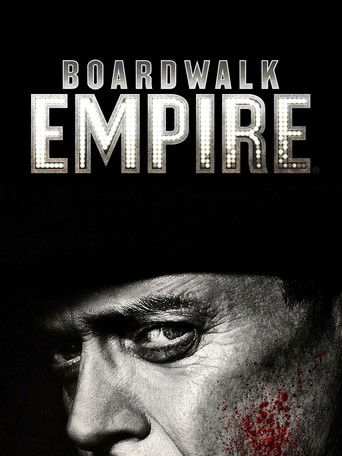
Boardwalk Empire
2010 · TV series · 5 seasons
Created by Terence Winter
Atlantic City at the dawn of Prohibition is a place where the rules don't apply. And the man who runs things -- legally and otherwise -- is the town's treasurer, Enoch "Nucky" Thompson, who is equal parts politician and gangster.
6 positive2 negative11 neutralfrom 19 commenters
Where to watch
No streaming data for this title.



19 comments on Hacker News
False start with car rental companies, only three, not four. Hertz has to be a unit then, making the first group hertz, second, mole, and volt.
Similarly, enterprise must be in the business sense. Enterprise, project, venture, endeavor.
Tiger, Ray, National, Twin are all singular versions of baseball teams?
Curb, silicon, boardwalk, and game are left. Boardwalk is the most valuable monopoly property, silicon is the modern equivalent? No clue, maybe I’m missing a cultural reference? What if curb is a verb? Curb your enthusiasm, first word of tv shows? Silicon Valley, game of thrones, maybe there is a show that starts with boardwalk? Seems tenuous.
Edit: yes, there is. Boardwalk Empire. Never watched any of them, but some googling tends me they’re all hbo shows - I knew that about Thrones. That seems slightly more realistic a connection than just first word of tv shows.
Seems like exactly the kind of thing AI would/could theoretically best humans in.
> “When faced with two choices, flip a coin. When it’s in the air, you’ll know which side you’re hoping for.” —Former gangster Arnold “The Brain” Rothstien
In the TV series Boardwalk Empire, he said that. I can't find any evidence he ever said it in real life.
However, the poet Piet Hein did:
Stejler man foran et vanskelig valg
og vil ha det afgjord prompte,
er det et såre fornuftigt princip
at platte og krone om det.
Ikke at valget skal ske pr. hazard,
i mens man selv sidder og måber
men: lige når mønten er kastet til vejrs
så ved man precis, hvad man håber.
(His own translation:
Whenever you’re called on to make up your mind,
and you’re hampered by not having any,
the best way to solve the dilemma, you’ll find,
is simply by spinning a penny.
No – not so that chance shall decide the affair
while you’re passively standing there moping;
but the moment the penny is up in the air,
you suddenly know what you’re hoping.)
Harry potter movie changed directors a few times right?
Amazon is getting a 160mil tax credit in NZ.
Regarding the team: "The team who will be creating the “LOTR” TV series includes: executive producers Lindsey Weber (“10 Cloverfield Lane”), Bruce Richmond (“Game of Thrones”), Gene Kelly (“Boardwalk Empire”) and Sharon Tal Yguado; writer/executive producer Gennifer Hutchison (“Breaking Bad”); writer/executive producer Jason Cahill (“The Sopranos”) writer/executive producer Justin Doble (“Stranger Things”); consulting producers Bryan Cogman (“Game of Thrones”) and Stephany Folsom (“Toy Story 4”); producer Ron Ames (“The Aviator”); writer/co-producer Helen Shang (“Hannibal”) and writing consultant Glenise Mullins."
So they have established people in the background and a well known franchise. As for not involving Peter Jackson maybe they just wanted to start fresh, no idea but George Lucas isn't involved of the Mandalorian
The first episode of The Wire didn't impress but I should look beyond, I guess. This same actor played Chalky White in Boardwalk Empire ... that was an awesome portrayal.
> GoT is a tentpole show with a rabid audience but it's not especially good (it's no The Wire). Deadwood and the Sopranos are from a different era of TV. Veep is great, but True Detective, True Blood, Boardwalk Empire, Enlightened, and The Newsroom would all be in the middle of the pack at Netflix.
As The Dude once said "Yeah, well, that's just, like, your opinion, man"
Objectively speaking, there isn't a single Netflix-original TV show rated over 9 on IMDB: https://www.justwatch.com/us/provider/netflix/tv-shows?rating_imdb=9
Compared to 7 titles on HBO: https://www.justwatch.com/us/provider/hbo-now/tv-shows?rating_imdb=9
But I think your point is that when we're talking about "The Wire" level production, others have caught up (AMC, FX, etc) and Netflix can simply license those titles. But, there's notable downsides to that (you have to wait, there's a significant cost to purchase, etc). Also, AMC, FX, etc have yet to establish a long-term credibility for consistently creating high quality content...until they do, HBO as the "premium offering" in light of others is still there.
At the end of the day we're talking about whether HBO's content can sustain the justification of paying $15/month. You just need rabid audiences for that to happen, not "one dude on the internet thinks The Wire is greatest thing ever created".
Although it's fictionalized, the TV show, Boardwalk Empire, does a pretty good depiction of what AC must of been like in the early 20th century. Of course, the place was completely mobbed up and one had to become enured to the occasional dead body dumped in a vacant lot or washing up on the beach, but, otherwise, the place was relatively free from street crime.
My wife and I were watching Boardwalk Empire, when in one scene one of the children contracted polio and became permanently paralyzed. My wife was in tears and turned to me to ask how we can make sure the kids don't get it. "Luckily, the kids are vaccinated against that. It's one of the very first shots they get."
Little things like that educate parents. Most of these traumas have disappeared from movies and TVs because we've most eliminated them.
I'm a bit surprised by that comment. I actually find Prime to have pretty good content and typically better movies than Netflix (who's movie library has been shrinking pretty drastically over the years).
If you haven't already watched it, I'd highly recommend Season 1 and 2 of "The Expanse" on Prime. There are a lot of pretty great shows on there as long as you don't rely on DC/Marvel shows for all your entertainment. Other shows that are reasonably acclaimed are:
- The Man in the High Castle
- Avatar: The Last Airbender
- The Nightmanager
- Mr. Robot
- Boardwalk Empire
- Downton Abbey
- Sneaky Pete
- Orphan Black
- Dr. Who
- Veep
- The Good Wife
- Transparent
- Hannibal
- Deadwood
- Curb your Enthusiasm
- The Wire
- Six Feet Under
- The Sopranos
I guess at 43 I'm not an adult yet because I go to the movies pretty often. I almost always go to the earliest matinee on Friday or Saturday and don't have to put up with a crowd.
I got tired of House of Cards after the 3rd season and you would have to pay me to watch Boardwalk Empire.
And while air conditioning played a part in people going to see movies it was more due to the fact that TV wasn't invented yet. air conditioning raised movie attendance during hot months but people went just as much during other months
>He said the high price of tickets, not competition from Netflix or Amazon.com Inc.’s Prime Video service, is a big part of what’s keeping people away. “People really do want to go more often,” Lowe said. “They just don’t like the transaction.”
Maybe he's right but I'm not convinced. I think kids/teens would love to go the theater more but my personal anecdote is that my friends and I lost interest after age 25. It's just not as exciting to go to a theater when you're not in high school or not part of the dating scene in college. Of course, if you're a parent with young kids, you go because you're the chaperone for the Disney movie.
It seems like declining visits by adults is just a general long term trend. Similar to the decline of drive-in theaters. Used to be fun to to drive the car into the lot but the novelty wore off. Adults also went to theaters in 1930s in high numbers (e.g. Gone With the Wind) because theaters were among the first to have air conditioning which was a big deal. Every house has air conditioning now.
Lastly, the economics of movie theaters have created a feedback loop that results in "big tent pole" films like Disney / Transformers / Star Wars dominating the screens. Adults want serious drama like "House of Cards" -- which is available at home.
One could argue that if ticket prices weren't so high, more adults would have gone to theaters which would then have subsequent effect of HoC, Boardwalk Empire, etc only being released in the theaters. I guess one could go down that rabbit hole of an alternate universe but I'm not convinced by it because I still think adults just eventually get bored of the "theater experience". (Babies crying in the back row, other patrons who don't shut off their cellphone ringers, sticky dirty floors, 15-minutes of ads before the movie starts, etc)
EDIT ADD: some replies seem to misunderstand my comments. I know some people do enjoy going the movies and the barrier to that is the price which MoviePass solves perfectly for them. I'm not arguing the existence of such moviegoers. Instead I interpreted “People really do want to go more often,” as a _macro_ trend and my comment is about reversing the macro trend of declining theater attendance. I'm not convinced MoviePass will actually solve that because fundamentally, the thrill of going to the theater wears off (age, Netflix/HBO at home, other entertainment distractions competing for time, etc). Again, that's a macro prediction. Yes, there are lots of enthusiastic moviegoers but they're outnumbered by the people with apathy for attending theaters.
Like a lot of people have said, modern shows are very much into the everyman male lead. Bryan Cranston's character in Malcolm in the Middle, Ed O'Neill's Al Bundy, Tim Taylor playing, once again, the affable rough-though-bumbling dad.
The thing is these are all prime-time sitcoms and comedies.
There's just as many popular shows where this isn't the case. Dramas rarely have this sort of soft, incorrigible-but-loveable archetype.
I'm not super-current on my media, but Game of Thrones, Boardwalk Empire, Walking Dead, Mad Men... most everything on HBO, Showtime, AMC, and FX run with strong, deep, emotionally complex male characters who grow and discover themselves, alongside the female characters.
And the male characters in these dramas are, on the whole, much more identifiable and aspirational.
Well that makes sense then, I suppose. Do you have any citations for only half their money being drugs?
As far as idolization, HBO runs a series called Boardwalk Empire where the Chicago Outfit and others are portrayed as heroes. Plus tons of Italian mob movies have very positive portrayals. Maybe I'm wrong here, but it seems a lot harder to do a positive portrayal of Mexicans that like cutting civilians' heads off.
No, I don't think I'm forgetting that. Netflix is talking about doing five original scripted series per year. HBO does... seven or eight, maybe? (Off the top of my head from the last year, Game of Thrones, Girls, True Blood, Boardwalk Empire, Newsroom, and Treme; that list isn't complete). That content is all not only original but, at least initially, exclusive. Showtime is at about the same level of volume, so this isn't unique.
You're right that in terms of a fraction of hours of content per month, most of what they show is not first-run original content, but I don't watch TV 24 hours a day, so I don't care. Like I said, if I got that amount of original content from four or five different providers (let alone 10), that would be more television than I have time to watch. The fact that they mostly show movie reruns is immaterial.
I know there will be a lot of people feeling extremely vindicated in their suspicions that if HBO offered Game of Thrones for legal download they would rake the money in. Let's take a second to work through the counter-argument though.
Instead of asking why they don't cash in on the clear demand, why not ask yourself how HBO & Co would operate if they did sell shows by the episode and direct to consumers. If you're looking for a proxy, the outcome probably wouldn't be a million miles from the networks, where audience levels translate into ad revenue, which means shows live or die very quickly. Look at Fox's 2010 series Lone Star. Despite having the best-rated pilot of any of that season's debuts, it was cancelled after two low-rated episodes.
Have you ever asked yourself why HBO, Showtime and AMC have the track record they do in producing great TV of movie-rivalling production value and movie-topping narrative chops? The simple answer is that they run a subscription model and that gives you a lot of freedom. In the first instance, a significant part of HBO's subscriber base is there for boxing first and foremost: money in the bank for the programming arm. In the second instance, once you're paying for something monthly, you're actually quite unlikely to cancel it even if you don't extract the full value from your subscription (see cinema all-you-can-eat memberships). Above all, it allows you to operate from a stable base of yearly income and that completely flips the consideration of which programs stay and which programs go. It's simply a consideration of opportunity cost; is there a better series that could fill this slot?
The subscription model is precisely the reason that HBO is able to swing for the fences on things like Boardwalk Empire and Game of Thrones, which are both enormously expensive undertakings. It's entirely because the shows are able to prove themselves over seasons, and not episodes, that subscription-driven channels are able to make them. And even then the judgment of whether to continue is usually based on creative satisfaction and not cold, hard audience figures - both the Wire and Treme kept their places on the roster despite comparatively lousy viewing figures.
The problem with a subscription model is that it has to be all or nothing. If you start giving people a way not to subscribe, they won't. They'll just pay to watch episodes as they become available. That's not even to get into the practicalities of carrier relations and all the added considerations that throws into the mix.
tl;dr: Game of Thrones might be a no-brainer for selling legal downloads, but things like Game of Thrones don't get made by companies that use that business model for very good reasons.
This line was in an episode of Boardwalk Empire Season 2 that just finished airing.
I agree that shows are generally overpriced but you've selected some bad examples - Boardwalk empire had 12 episodes so even at $3 an episode (premium content or HD) that's still less than the $40 you'd pay on Amazon.
But look at the price point. Originally $1.99 per episode to just rent it. Even $0.99 sounds a lot to me.
That's almost $50 for an entire series. What's the average amount of time someone would spend watching TV series per night? An episode of this, an episode of that, 3 or 4 times a week. Suddenly you're spending vastly more than cable.
That's more than a modern box set will cost you, e.g. Boardwalk Empire, just released is selling for $40 on Amazon.
Yet they spent $5million per episode, that's a lot of views to just break even, plus the server hosting costs and vendor marketplace cut to make.
The whole thing is overly complex, per item rental is too complicated, a fractured marketplace makes subscriptions poor, the time drip model that studios and channels used to use is dying, but they won't let it go.
I think it'll be 5 to 10 years before we finally see a decent resolution to this where actually paying is less hassle than piracy.
Firefly (as some-one mentioned underneath) are perfect examples of shows that would thrive under Netflix.
I have to disagree with this, Firefly is not the type of show Netflix should be focusing on. They need shows with low production costs with broad - lowest common denominator appeal. Expensive shows catering to a niche market (which they pretty much already have captured) is not what they're trying to do here.
There's a few ways they can go, sitcoms and short form comedies are going to be much more profitable for them at this point so Better off Ted is a much better fit.
Then there's the Showtime/HBO premium market (which folks are already paying for as a premium service). But even here I think they'd play it safe short term - more Sopranos and True Blood type mass appeal then Boardwalk Empire and The Wire (both are great, but much more focused market).
tl;dr: Marketers control Hollywood production and are risk-averse gatekeepers. A bubble in independent/boutique production disrupted that side-channel.
It's not a complete picture; why doesn't the independent/boutique side fire back up? I think a better explanation is technology/distribution, i.e. HDTV + cable/internet. TV's mentioned in the article, but only as kind of a silver-lining; really it seems more like a classic disruptive technology. Shows like Mad Men, Boardwalk Empire, Breaking Bad are highly visual and would until recently have been better as movies; now plenty of people have nice TVs, and they work fine there.
So the movie theater's niche is now reduced to material which needs to be huge in size, enormously loud, 3D, or seen primarily by people who refuse to or can't buy HDTVs. Everything else seems transitional.