 Hacker Cinema
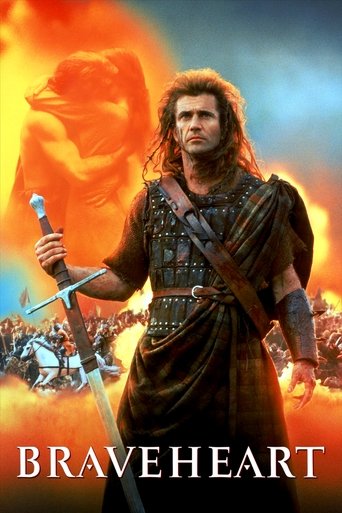
Braveheart
1995 · Film · 178 min
Directed by Mel Gibson
Enraged at the slaughter of Murron, his new bride and childhood love, Scottish warrior William Wallace slays a platoon of the local English lord's soldiers. This leads the village to revolt and, eventually, the entire country to rise up against English rule.
6 positive6 negative18 neutralfrom 30 commenters
Where to watch
No streaming data for this title.
31 comments on Hacker News
Ha!
I've encountered many Romanians where I live (in all walks of society). I used to always point out I'd seen the movie (Mihai Viteazul).[1]
It never built any kind of connection with them.
Years later, I found out that most Romanians outside of Romania either hate their country, or at least have enough bad memories they want to forget it. For good reason! Bringing up this movie was not a point of connection.
[1] I've not found any proof, but I will swear that Braveheart is just a copy of this movie, adapted to Scotland.
Hard disagree about declarative "X is Y". It's a failure of weakening attention span. There are plenty of excellent long movies:
- Once Upon a Time in America (1984) 3:49
- Lawrence of Arabia (1962) 3:47
- The Irishman (2019) 3:29
- Malcolm X (1992) 3:22
- The Godfather Part II (1974) 3:22
- The Lord of the Rings: The Return of the King (2003) 3:21
- Schindler's List (1992) 3:15
- Gandhi (1982) 3:11
- The Green Mile (1999) 3:09
- The Deer Hunter (1978) 3:03
- The Lord of the Rings: The Two Towers (2002) 2:59
- The Lord of the Rings: The Fellowship of the Ring (2001) 2:58
- Casino (1995) 2:58
- Braveheart (1995) 2:58
- The Godfather (1972) 2:55
- Django Unchained (2012) 2:45
What I most object to is lazy storytelling for lazy, second-screen audiences lacking in style and subtlety having a robotic, spoon-fed, infantile, unnatural, expository narration quality in every character like it's a commercial for an antacid.
Interesting. Have you seen the movie Braveheart? That's the leadup to the later humiliation of the king in battle, there's a movie / drama about this one too. Saw it recently, don't remember the name.
Basically the insurgents choose terrain they know well, because they live there. They choose a swamp / mire in an open field between two hills. They build fortifications. They obscure the true nature of the ground they're standing on, out in the open. They goad the king's army into finishing them then and there. They fight on foot against knights on horseback. It's a mess. They win.
Thanks for tonight's movie recommendation (Braveheart was sick, I'll give Mel another chance!).
>Merlin's holly wand
The More You Know™ [0]
[0] https://www.perplexity.ai/search/what-is-the-significance-of-a-Pq4Q97LPSWayjFI3pAslKg
How cool! At the end of the movie "Braveheart", the narrator describes his fellows as "warrior poets" - basically the ideal Scottish man. I think that "design-literate pilot" is a reasonable modern version of at least one ideal type of person to be. Congratulations!
This is just some guy's top 50 favorite movies. And if you'd gone just one year further, to 1995, you'd have gotten Heat, Braveheart, Casino, 12 Monkeys, The Usual Suspects, and Toy Story. The Basketball Diaries doesn't hold up, at all, but Apollo 13 was great.
(I will stick up for Heat, but my god, the shoulder pads).
I can't believe I'm not seeing any Guy Ritchie anywhere. Particularly Snatch, but Lock, Stock, and Two Smoking Barrels too.
And almost anything with Brad Pitt. Lots of votes for Fight Club, but what about Legends of the Fall, A River Runs Through It, 12 Monkeys, or Cool World?
And now that I'm thinking about it, Dances With Wolves. Lonesome Dove TV miniseries. Braveheart. The Departed. Lots more, I'm sure.
I like this blog, but "ridiculous" and "shallows" are not words I would use to describe escapist fantasy fiction.
It simply has goals that are different from history documentaries. It thrives in fantasy stereotypes whose intersection with history is flimsy on purpose; these are stories about dragons and magic, after all. This is not Braveheart being hilariously erroneous while at the same time purporting to be about real history, only "slightly" exaggerated: Game of Thrones completely disregards the real world, and because this is on purpose, I think criticisms from "realism" are unwarranted -- unless being done just for fun, like this author seems to do [1].
Besides, it's a sliding scale: Game of Thrones, by real world standards, is probably more realistic in its unreality than, say, Lord of the Rings. Neither is wrong to be unrealistic, being more parables or entertainment than actual history.
Of all the criticisms to be made of A Game of Thrones as literature, I think "being shallow" is not one of them.
---
[1] https://acoup.blog/2019/05/28/new-acquisitions-not-how-it-was-game-of-thrones-and-the-middle-ages-part-i/
> "Finally, before we dive in, two final caveats. First, this is not a criticism of George R.R. Martin’s world-building. There is, after all, no reason why his fantasy world needs to be true to the European Middle Ages (we’ll talk about known/possible historical inspirations as they come up). I do not think Martin set out to design a sneaky medieval culture lecture in fantasy novel form, so he cannot be faulted for failing to do what he never attempted."
There are a few reasons, I think they are trying to expand their catalog as fast as possible so they approved some very iffy content. They were quick to say yes as long as they think someone will view it.
I attended a preview of a NETFLIX movie similar to Braveheart. It was ok but it was no where near the quality of Braveheart. I think that speaks to the fact that they are just trying to build up content without attention to quality.
Also, the way they measure success is by the number of viewers. That indicates that you have to produce content that reverts to the mean. Rarely is that the best quality. And, the dropping of whole seasons at one time makes it hard for writers to develop characters. So you get some very shallow plots written since you can get that done really quickly.
It also makes it hard for viewers to get attached to the characters. I know I've watched a whole season in less than a week and have felt very unsatisfied. Similar to eating food just because it's available and you're hungry. I feel full and ready for another series. Yet, I barely remember what I saw and have no attachment to any of the characters. What could have been a great series is just a quick snack.
If there's anything HN threads that deal with history tells us it's - yes, yes it is. Nevertheless people will weigh in with their incredibly strong opinions they have based off of (I presume) hollywood movies. Maybe a lot of people just got finished watching that one where Leonardo di Caprio was Louis XIV, or maybe it was Braveheart.
I distinctly remember feeling like 1995 was absolutely amazing year for cinema.
Toy story, Braveheart, Apollo 13, Usual Suspects, Heat, Casino, Seven, Clueless, 12 Monkeys, Babe, Get Shorty, Leaving Las Vegas, etc.
A great time to be going to the Cinema.
I'm struggling to think of any movies that are really historically accurate - the point is to tell a good story to get people to watch it to make a profit.
Edit: I'm Scottish so Braveheart is the obvious example - entertaining movie but wildly inaccurate and even manages to get who/what the term "braveheart" refers to wrong.
Those articles do a poor job of discrediting the ideas of the actual quote.
They say that the origin is not what people think?
Many of the founding fathers had slaves. Doesn't make the constitution any less valid. Mel Gibson is a terrible person but Braveheart is an amazing movie.
The origin of something does not discredit its ideas.
I don't really disagree with you about the criticism towards Hollywood for being profit-seeking, clichéd, fad-chasing, derivative etc. This is often fair. I'm just pushing back against the idea this this is somehow a recent development. I believe this is ingrained in the nature of Hollywood since its inception, and due to the nature of creative endeavors: 95% of everything is crap, and movies are so expensive they need (at least on average) to catch the tastes of the audience in order to be made.
For example, regarding Chernobyl, this is a dramatized retelling of historical events. Characters have been invented, dialog made up, and event changed or rearranged in order to sharpen and intensify the drama. Every "based on a true story" movie ever have done that. This is not something which can be blamed on comic books or recent trends. And compared to typical Hollywood history like "Amadeus" or "Braveheart", Chernobyl is practically a documentary.
you clearly do not have kids..
My 5 year old boy will watch the same film again and again for days until he get bored and move to watching the next same movie for days, rinse and repeat.
my brother is 29 now but did the same thing when he was at that age, i still know most lines from lion king by hearth because of that.
i have a friend that watch braveheart at least once a year.
i myself, there are many movies that i would rewatch every once in a while, many from disney.
so it is not even a new or uncommon behavior that people watch the same movies again and again.
also, disney already announced several series just for this service from marvel (wanda and vision, winter soldier and falcon, loki) and star wars (mandalorian, a new clone war season), so yes they will have exclusive novel new content made just for it in there.
also, once it goes live all new movies from disney, marvel and star wars will only be available there.
so it is definitely not dead in the water.
The William Wallace depicted in Braveheart never really lived.
"there is no way of knowing who he really was. ...The most famous quote from the movie, “Every man dies, not every man really lives,” is ironic in that the William Wallace of myth and legend never really existed"
https://peterrock12.wordpress.com/2011/01/18/braveheart-%E2%80%9C%E2%80%A6not-every-man-really-lives-%E2%80%9D/
https://en.wikipedia.org/wiki/William_Wallace
I think the following quote from Braveheart is awesome. The whole movie seems designed to turn the audience into William Wallace worshipers, except for this line, which causes an attentive viewer to stop and think:
"Admire this man, this William Wallace. Uncompromising men are easy to admire. He has courage, so does a dog. But it is exactly the ability to compromise that makes a man noble."
Has the average person heard of 4-chan? If they had, would they understand it as anything different to Facebook, which they seem to trust, or the comments section under a news story, ditto?
People don’t know what accurate and trustworthy looks like. Even when things are labeled as fiction, they can have an effect - Scotish Independence became more popular when the film “Braveheart” was released, while Islamophobia went up after “American Sniper” was released. Or am I just repeating plausible but fictional urban legends that I’ve mistaken for reality?
I agree that it most likely is some sort of licensing issue which prevents the same content. But Netflix isn't paying for Cinema Paradiso, or Braveheart, or Zootopia, or … in Sweden. In fact the Swedish library is less than half the size of the US library[1]. Yet Swedish consumers pay just as much as US consumers. There is a large discrepancy in the value given for customers' money here which Netflix does not address.
[1] http://cordcutting.com/how-many-titles-are-available-on-netflix-in-your-country/
And of these 31 remaining almost half are missing in the Swedish Netflix:
5. Back to the Future 6. Gladiator 7. Sunset Boulevard 8. Cinema Paradiso 9. Django Unchained 12. Reservoir Dogs 13. Braveheart 17. Amadeus 21. Trainspotting 24. There Will Be Blood 25. Spotlight 26. The Princess Bride 27. Zootopia 29. Jaws 31. Pirates of the Caribbean: The Curse of the Black Pearl
And yet Netflix want the same monthly cost for less of a service. Why?
> You can show Braveheart or a video of a street mugging to a bunch of 8-10 year old kids at school but you can't show them a movie where (god forbid) a pair of tits appears on screen.
Braveheart has nudity and violence, and we don't allow 8-10 year olds to see it.
> You can show Braveheart or a video of a street mugging to a bunch of 8-10 year old kids at school but you can't show them a movie where (god forbid) a pair of tits appears on screen.
Braveheart is rated R.
We did get to see scenes from an R rated movie in grade 10, but it was the opening to saving private ryan while we were studying WW2. I'd argue that violence like that in context is more acceptable. 15 year olds are also much better prepared.
The thing that's really ridiculous is the swearing. The Walking Dead has gratuitous violence, but they can't say fuck because that would hurt advertising revenue. It's ridiculous.
The theatrical dimension doesn't change much. That's how strange the US is in this respect. The amount of censorship for "real" violence is virtually nonexistent, contrary to the amount of censorship applied to sex, real or otherwise.
Do Americans censor "real" violence more than theatrical violence? Possibly. Do they censor "real" violence less than any form of nudity? Yes.
You can show Braveheart or a video of a street mugging to a bunch of 8-10 year old kids at school but you can't show them a movie where (god forbid) a pair of tits appears on screen. At the very least, the uproar will be an order of magnitude larger for the boobs as compared to the violence.
And once again, this is not the norm around the world. The US is special.
This won't be first or last movie that wrongly depicts history :)
Braveheart is one example: the section "Historical inaccuracy" takes good 1/3 of the whole Wikipedia article. Amadeus by Miloš Forman is another example. The Social Network...
I chose these movies not necessarily because I felt they were superb (although I loved them all) but because they were critically acclaimed and all received lots of oscar nominations. Almost by definition, they are the best films of the year.
If you compare it to nominated movies ten years ago, Braveheart, Apollo 13, I think they are comparably great.
Additionally, box office returns seem to be at all time highs. Black Swan and True Grit are two films that typically would be destined for "niche" audiences, but have returned hundreds of millions for reasonably small budgets.
Also, I think that Inception will be almost as influential as The Matrix, except in a smaller genre of films (eg: Matrix built upon action movies, whereas Inception was more of a psych thriller) - in my opinion.
Sheesh, that much I know. I used the "Braveheart" label for aesthetic reasons; I choose the film because it's at once virile, chivalrous and patriotic, while also being synthetic, a cheesy Mel Gibson experience that reminds more of his drunken antics today than anything else (though the "Primae Noctis" scene stuck with me.)
Ditto with Woodstock, it's the largest gathering of insignificant nobodies in recent history (when judged by the values of their society and era.) But it turned into an epoch of its own, and everyone there became significant to history just by virtue of their presence. Just like Tahreer square today.
Hacker News, you're not keeping up.
Whoa, I will. I seriously wrote that movie off in the past just based on the title, thought it was some Scottish "Braveheart" type movie..
The important question is: how likely is this to change the results? In recent decades there's been a trend for the Best Picture Oscar to wind up going to films which may not be all that good but which are seen as "Oscar-worthy" due to weighty subject matter or otherwise "seeming smart". Historical dramas have made up something like twenty out of the last thirty years' winners, including such so-so films as Braveheart. No comedy has won since Shakespeare in Love (which was acceptably smart-seeming because it had Shakespeare in it) and before that it was Annie Hall (which, incidentally, beat Star Wars).
I wonder if preferential ranking will improve the quality of winners by better reflecting the true preferences of the voters rather than the preferences the voters seem to think they ought to have.
Maybe he doesn't mean a word of them. But history is full, absolutely jam-packed, with examples of people seeking violent, terminal retribution for the injustices they perceive to have ruined their lives. Heard of a movie called Braveheart? Heard of a little comic book called V for Vendetta? Both examples of an aggrieved party fighting willingly to the death in an act of, essentially, revenge.
This is a real human emotion and downvoting will not just make it go away. How about some rational counterarguments, such as the injustice of taking innocent people with you, or the long-term futility of such an approach.
Pretty disappointing to see this kind of morally outraged pile-on here.
Though my evidence is only anecdotal, it seems to me that video game violence doesn't desensitize the viewer to real violence, either. An amusing example: http://www.penny-arcade.com/2009/7/15/
I do wonder if there's a difference between violence in video games and movies. I know someone who plays Left 4 Dead for hours on end, but cannot stomach Braveheart or some journalistic photographs of violence and death. The gore is by far the highest in the first, but it is the realism of the second--and more strongly the reality of the third--that seems to sit so uneasily.
I don't think just anyone could have done the same, but supposing for the sake of argument that it's true, I think not many people would have done the same, which is what compels me to respect rms in the same way as I would respect William Wallace as portrayed in the movie Braveheart. Sacrificing your life for the freedom of others takes no great feat of intellect or even physical skill, but in some ways, I think being willing to do such a thing deserves more respect than, say, proving P=NP.