 Hacker Cinema
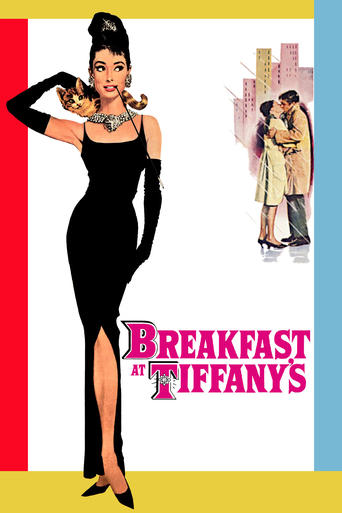
Breakfast at Tiffany's
1961 · Film · 115 min
Directed by Blake Edwards
Holly Golightly is an eccentric New York City playgirl determined to marry a Brazilian millionaire. But when young writer Paul Varjak moves into her apartment building, her past threatens to get in their way.
1 positive6 negative8 neutralfrom 15 commenters
Where to watch
No streaming data for this title.
17 comments on Hacker News
> This is exactly the sort of dumb reactionary politics that I don’t want in my life
Hey, that's what I thought when I read your comment!
What about the fact that the treatment of women and slaves is almost certainly significantly toned down from what we know to be the reality?
Also there was almost certainly way more gay sex going on among any number of historical personages. Commodus (Gladiator's main villain) in particular was said to have "defil[ed] every part of his body in dealings with persons of either sex." Where is your outrage at this lack of accurate representation?
The implication here is that it's really your own baggage that ruins the immersion for you. You suggest that you can't watch a movie now without cataloguing and mourning the places where a character was more likely in your opinion to be white, male and/or straight.
This is not something anyone can help you with.
White actors have dominated in Hollywood since the beginning, and I don't remember anybody complaining that Mickey Rooney's character in Breakfast at Tiffany's ruined the immersion. Or that literally all of the ethnic Asian characters in the Manchurian Candidate were played by white actors.
He means people will pay attention. You want that in a film, right? When brain-storming, you censor later.
BTW In Breakfast at Tiffany's, Holly married Doc at 13. There's worse in the novella.
Um... it's famously a film[1] staring Audrey Hepburn and George Peppard.
I thought it was okay. It was obviously toned down a lot from the book to meet then current sensibilities which would not offend an audience today. Ironically, there's a comedy bit with Mickey Rooney[2] that probably didn't offend American audiences at the time but that has not aged well. I also thought they added a bit too much slapstick.
1. https://en.wikipedia.org/wiki/Breakfast_at_Tiffany's_(film)
2. https://en.wikipedia.org/wiki/I._Y._Yunioshi
I'd say that Breakfast at Tiffany's would make an incredible film.
It's a pity they never even tried.
I recently watched Beat the Devil. I thought it was pretty dreadful. I had no idea it had a cult following and I can't imagine why. The film really runs out of steam about halfway through and most of the actors seemed to be going through the motions. It is certainly not among the Huston films that I would recommend. Watch The Maltese Falcon or The Misfits first.
That said, Ebert put it on his "Great Movies" list:
https://www.rogerebert.com/reviews/great-movie-beat-the-devil-1954
It's also possibly interesting for having had a 28-year old Truman Capote as screen writer. Except that I really think Capote wasn't a good fit for Hollywood. Breakfast at Tiffany's did not translate well to screen.
On the other hand, Roman Holiday is among my favorite films. It's the quintessential romcom.
For a terrific and unusual red-scare inspired film, let me recommend Johny Guitar. Now that's a film that deserves a cult following.
The example you provide doesn't match a more-reasonable scenario where people would want to alter a work. How about "Breakfast at Tiffany's" which may (or may not) be a good film -- would it be bad if there existed an altered copy of the movie you could watch that tastefully removed / altered (with AI perhaps) the extremely racist parts?
The idea I'm arguing for isn't to endorse irreversible erasure of the past, but addition of versions that are updated / edited.
I think the sometimes awkward stereotypes serve as an important reminder how our society has changed and that we should introspect our own biases constantly - what are the things we are doing now that in the next 50 years might seem as shocking the Asian tenant in Breakfast at Tiffany's?
You can of course stop displaying or selling the movie all together if you really feel that bad. But don't try to cut around it to posture moral superiority but in reality you're only doing it to keep the money coming in.
The movie actually incorporates a surprising amount of material from the book. I read, and then watched six months ago.
It embellishes by establishing a romantic relationship between Holly Golightly and the narrator, and then also makes the narrator himself into essentially a prostitute, as Holly was also. Moon River is also a major addition, as is Holly's decision to remain in New York at the conclusion.
They even kept the cat in the plot, for most of the same story.
https://en.m.wikipedia.org/wiki/Breakfast_at_Tiffany's_(film)#Production
By some strange coincidence, I had decided this week to read Capote's Breakfast at Tiffany's and then watch the film again.
I might also repeat a famous Wilde quote:
There are two ways to dislike poetry. One is to dislike it, and the other is to read Pope.
A possible and troubling outcome of this may be that "controversial" scenes are removed from classic films entirely, because advertisers don't want to be associated with them. We've already seen disclaimers added to movies that are "problematic" like Gone with the Wind or Breakfast at Tiffany's.
When push comes to shove, will Media Co. turn down millions from Coke just to keep a 30-second scene in a film? I'm not optimistic.
Well, if you're into 'politically incorrect' movies, virtually anything before 1980 will fit the bill. You could start with Birth of Nation which celebrates the KKK. Then move on to the Jazz Singer which prominently features black face. Breakfast at Tiffany's is famous for Mickey Rooney's 'ching chong' routine. There's really no shortage.
Agreed - it's quite remarkable. In conversations with non-white friends of mine, it's fairly eye-opening how recently they feel they've gotten a fair shake in films. Like, remember Mr. Yunioshi from Breakfast at Tiffany's? It's insane what they got away with.
I think the immediate reason why a lot of the older movies are not coming back is partly due to a rights management thing (films are usually negotiated for terms of n months/years, and renewing the contracts is a cost), but also they impact the size of CDN working set. The "long tail" where 90% of traffic is accessing only 10% of the files kept on origin makes for an inefficient proposition for an SVOD service. This is even more of a pressure when you are both the VOD service AND the CDN. I suspect Netflix spends a lot of man hours finding which titles perform in consistent viewership and prioritise those for the reasons above - besides, how many times can a person watch Breakfast at Tiffany's per month?
Yeah, I watched Breakfast At Tiffany's for the first time yesterday. Parts of that movie aged painfully hard.
I heard that reasoning forever:
* It's fine that Hugo Weaving used prosthetic eyelids to look asian, the movie is about reincarnation across different ethnicities
* Emma Stone can play a half-asian half-white character since the character is half-white anyways.
* Ang and the other 3/4 principals can be white in The Last Airbender, since...???
* Mickey Rooney was being funny in Breakfast at Tiffany's, don't take it so seriously
Imagine being an asian-american actor and losing a role for Motoko Kusanagi to a caucasian actor, when the industry already has a long history of preferentially casting caucasian actors in at least the past 20-30 years, and before that basically always hired caucasian actors to play other ethnicities, not always very respectfully.
The first picture is a still from the movie "Breakfast at Tiffany's", btw. The sleeping woman with the cat is Audrey Hepburn.
But this is fucked up:
>According to the Times, most of the A-Team can only endure about 12 months of the work because it’s so taxing. The low pay also means many of them take second jobs. Basically, they don’t sleep so that Huffington can
So she knows how important sleep is (even wrote a book about it), but she doesn't pay her employees enough so they can get a good night's sleep, too?
I felt this a couple of days ago when I couldn't intuitively see something that I thought I should. Luckily, after a while, I tried reducing my vague confusion into specific questions, and answering each, one by one... which revealed more to the thing than I thought there was. No wonder I couldn't see it - that concept didn't exist.
I also simplified the problem, discarding issues of implementation efficiency and convenience/ease of use of the user model, and any tricky wrinkles that complicated it, to reduce it to something I could see. Being able to see that has given me a base to understand the other issues. I've noticed that some specifications use this approach: they have a very detailed underlying conceptual model, then add a convenience model on top. e.g. XPath specification (crazy ancestor, descendant, sibling etc axis -> defaults to descendant so you can just use unix-like paths).
I used to be much better at seeing things... but thinking back, my key characteristic at that time was to embrace not knowing things, embrace mistakes and learn. I was also working on areas that were built directly on top of existing models and approaches... whereas now, I'm developing the theoretical foundation as well. There's a kind of exponential explosion, with so many different and interacting choices at every turn. In some ways, an intuitive/insight approach is necessary, as exhaustively trying each alternative is not feasible.
tangent: In Breakfast at Tiffany's (the movie, not the story), there's some discussion over whether Audrey Hepburn's character is a "phony", but I never understood what they meant in that context. She's beautiful - how can that be phony? Or maybe that she's pretending to be urbane when she's rural?