I'm not sure if it's because of growing up watching most things online with limited bitrates, but I realized I dislike film grain a lot. I know that to a certain degree, film grain helps humans resolve finer details. Similar to using noise shaped dithering to allow you to hear more than the theoretical dynamic range in audio or see a larger range of color tones in a picture. But I found that on certain 4K uhd blurays, if I am watching on a small screen the film grain looks very obnoxious. The problem doesn't exist when watching on a big TV, so I know it's not related to projecting on a screen. I really dislike when directors go out of their way to add artificial film grain. Will media players eventually allow users to adjust the film grain that is added back in?
This reminds me of Steve Yedlin's, cinematographer on everything from Brick to Star Wars: The Last Jedi to Knives Out and its 2022 sequel, Glass Onion: A Knives Out Mystery, who showed through research that film can be completely emulated using digital techniques and mixed digital and film shots during Star Wars.
For reference here are the production budgets for Rian Johnson's films:
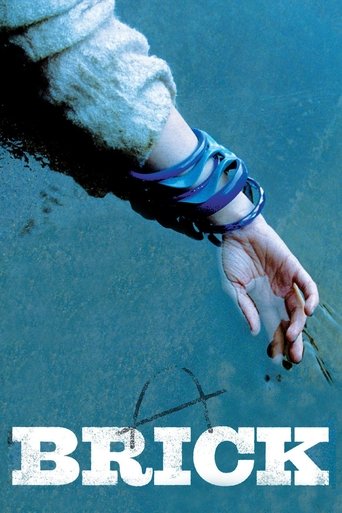
Brick: $500,000
The Brother's Bloom: $20,000,000
Looper: $60,000,000
The obvious thing that is seen here is that Special Effects and High Profile Actors significantly increase the cost of films. If you had little to no CG (like Brick), you might be able to pull off a ~1M film with new-er talent (like JGL was at the time).
rian johnson's "brick", which won an award at sundance, was made for $450,000 on 35mm. then it was sold to distribution companies which made all of the below costs you're talking about.
if they're shooting it on 16mm with a small crew (union or not) and their actors are working indie sag, $250,000 doesn't sound unreasonable at all for a film looking for a festival run + talking to potential distributors.
 Hacker Cinema




4 comments on Hacker News
I'm not sure if it's because of growing up watching most things online with limited bitrates, but I realized I dislike film grain a lot. I know that to a certain degree, film grain helps humans resolve finer details. Similar to using noise shaped dithering to allow you to hear more than the theoretical dynamic range in audio or see a larger range of color tones in a picture. But I found that on certain 4K uhd blurays, if I am watching on a small screen the film grain looks very obnoxious. The problem doesn't exist when watching on a big TV, so I know it's not related to projecting on a screen. I really dislike when directors go out of their way to add artificial film grain. Will media players eventually allow users to adjust the film grain that is added back in?
This reminds me of Steve Yedlin's, cinematographer on everything from Brick to Star Wars: The Last Jedi to Knives Out and its 2022 sequel, Glass Onion: A Knives Out Mystery, who showed through research that film can be completely emulated using digital techniques and mixed digital and film shots during Star Wars.
https://www.audiocheck.net/audiotests_dithering.php
https://www.polygon.com/2020/2/6/21125680/film-vs-digital-debate-movies-cinematography
https://www.yedlin.net/NerdyFilmTechStuff/MatchLensBlur.html
https://www.yedlin.net/OnColorScience/index.html
For reference here are the production budgets for Rian Johnson's films:
Brick: $500,000
The Brother's Bloom: $20,000,000
Looper: $60,000,000
The obvious thing that is seen here is that Special Effects and High Profile Actors significantly increase the cost of films. If you had little to no CG (like Brick), you might be able to pull off a ~1M film with new-er talent (like JGL was at the time).
Brick (2005): http://www.imdb.com/title/tt0393109/
rian johnson's "brick", which won an award at sundance, was made for $450,000 on 35mm. then it was sold to distribution companies which made all of the below costs you're talking about.
if they're shooting it on 16mm with a small crew (union or not) and their actors are working indie sag, $250,000 doesn't sound unreasonable at all for a film looking for a festival run + talking to potential distributors.