 Hacker Cinema
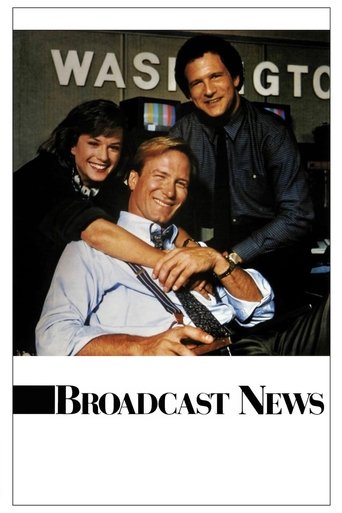
Broadcast News
1987 · Film · 133 min
Directed by James L. Brooks
A high-strung news producer finds herself in a love triangle between a talented but self-doubting reporter and a charming news anchor who embodies the growing trivialization of news that she is determined to fight against.
3 positive2 neutralfrom 5 commenters
Where to watch
No streaming data for this title.




5 comments on Hacker News
The fact of the matter is there will always be lay offs and just because you have your dream job doesn't make you immune and in a lot of case the same wave that brought you in is the same wave that will bring you out.
I've wanted for a while to create a laided off movie playlist. Of course at the time I wasn't laid off so I didn't have the time and now that I'm laid off I also don't have the time. Nowadays finding a new job is in itself a full-time job.
But off the top of my head I would say that the movies Broadcast News and In Good Company are descent picks.
Older now I look back at how many layoff cycles have been in my life. If you make it through without getting hit, you're a very lucky person, though after my last layoff I chose stability over risk and that was just as terrible as being laid off.
I don’t know what it is about the culture of broadcast journalism and ENG that is so appealing. Despite not working in the industry, I’ve loved films like Broadcast News where I’ve felt great affinity to the struggle of it all and books like Bob Dotson’s Make It Memorable where I’ve picked up lingo like “stand ups”. I think it’s maybe the duck-taped-together underdog feel and (approximate) egalitarianism of the culture but I can’t quite put my finger on it.
https://en.wikipedia.org/wiki/BBC_sexual_abuse_cases
The articles being sanitized are a subtle attempt to distance the BBC from the above scandal by removing the public's access to reporting that tied their employees and facilities to (now) known abusers.
There's a film from the 80s, Broadcast News, where a charismatic upstart anchor doctors an interview to make it appear he was crying after hearing a young woman's tale of sexual abuse, and when his producer and potential love interest discovers it, she abjures him professionally and romantically.
Journalism ethics would dictate that the BBC account honestly why they are changing the past. They can republish the articles (corrections are not a new concept) and link to the old ones with a "trigger warning" if they wish to, but to make it appear there was less involvement than there was, and to use the victims' feelings as an excuse, is nothing if not wrong.
How do you suggest a newscaster speak the news if not in a practised manner?
Granted that an "authentic-sounding voice of authority" can put credence behind inauthentic events, but can not the opposite also be true? By this token, I'm going to have a hard time believing something authentic when I hear it on a typical AM radio broadcast. Doesn't there need to be an amount of consideration of the listener in either situation despite or because of the type of voice being used? "Surely Ira Glass can't be telling me the moon is actually purple right now." "This babbling talking head is really telling me JFK just got shot? Is he serious?"
I appreciate the tip on "Broadcast News"; by coincidence, I'm going to be catching "Truth" at the theater later today, a film about the CBS//Rather fiasco based off the book.
Because it's not authentic, it's "acting authentic".
There's a 1987 movie called Broadcast News which touches on the issues of how reporters portray the news and what can happen, and why it might be considered unethical to add touches and flourishes that add authenticity to inauthentic events.
NPR Voice is attractive, I enjoy listening to it, but what else can they sell me while they use that voice?
If NPR Voice is not spontaneous but heavily practiced, rehearsed and edited, how is it different from propaganda?