I knew using ad blockers is good for your mental health but this is plain creepy and unfair. Especially when advertisers know more and more about you as more and more everyday items are spying on you and serve you ads without any additional core functionality. Appliances don't get better, they are getting creepier to increase the return of investment for the manufacturers. The schizophrenics are just more sensitive to this enshittification of everyday items because they are quick to assume deliberate agency in chaotic events where there is none. But this is changing, for everybody.
The problem is today you can't really tell anymore whether this "Carol" the ad was addressing is the advertiser knowing that it's your name or just a random "clever" reference to a character in the TV show, I mean even after getting the resolution that it's the latter, nobody can be sure if this excludes the former, like the algorithm decided to send Carol an ad about a show with a Carol in it. It's not good to have to make up your mind about it even when you are not suffering from schizophrenia.
It's annoying, it's intrusive, it wastes your time and ruins your day. And it makes you hate your new tech, makes you hate tech in general, because it's a big "fuck you we can do what we want with you now" towards the customers. No wonder Luddites are making a come back, that's just self-defense.
> I don't think she actually did any female protagonists at all.
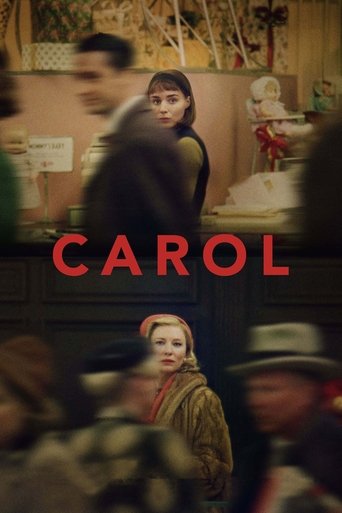
Of course there's Therese, the well-developed protagonist of The Price of Salt (aka Carol), a lesbian romance. This work and its movie adaptation are the reason she's a gay icon - both are popular and well-loved.
Highsmith published The Price of Salt under a pseudonym after her success with "Strangers on a Train", which is driven by the masculine characters you mention. From what I can tell, The Price of Salt is more directly based on her personal life, or rather her fantasies, and part of the reason she used a pseudonym is that her agent warned her that writing a lesbian novel would be career suicide. Wikipedia has more here: https://en.wikipedia.org/wiki/The_Price_of_Salt
"Highsmith described the character of Therese as having come "from my own bones"."
What a great idea! I wonder how big the 16mm film communities are in these days of pervasive digital, given the costs of developing film and the risks associated with processing.
Movies seem to really be hollowing out the middle more. You've got a lot of very low-budget fliers and indie prestige stuff and a lot of $100M+ mega-movies, drifting now into attempts at Marvel-esque cinematic universe perpetual money-printing machines for increasingly dubious IPs.
I'm not sure I agree. Those two types have certainly risen, but if you look at films from last year, there a are still a ton of "middle" films with decent budgets (10-30M) and high praise from the critics - Selma, Spotlight, Carol, The Big Short, etc. I don't see a hollow middle.
What is evident is that very often critics gather to champion objectively awful movies. Even for professional movie critics standards awful movies.
Looks for example at the surprising success of this years "Carol" and "The Assassin" in Cannes and their disappointing acceptance in the real world. Well, "Carol" is one of those special needs cases, which still has some champions left over.
And compare it to the exceptional Cannes movies this year: Dheepan, Umimachi Diary and Embrace of the Serpent. The critics didn't appreciate them and didn't see it coming. However the professional festival programmers and jury in the followup festivals saw it.
But the same happens almost every year. "ADIEU AU LANGAGE" (Godard) highest rated movie 2014, "HOLY MOTORS" (Leos Carax) 2012, "Le Havre" (Aki Kaurismaki) 2011, "FILM SOCIALISME" (Jean-Luc Godard) 2010.
The jury votes are usually much better than the critics votes.
Comparing quality to quantity (advertising budget, imdb ratings) makes no sense at all.
"My sister has been dating her boyfriend for two years. They live together and seem mostly happy. And I am happy for them, except for one thing: I am about 99 percent sure he is gay. Now, I have no problem with homosexuality, but you can understand my concern. Also, I am not the only one who thinks this. Several male friends have told me that he has tried to kiss other men or grab their crotches. I would like to bring this up with my sister. How should I do it?
Michelle, New York"
The response:
"Request denied! Before you say anything hurtful to your sister, let’s take a peek at some of the (homophobic-adjacent) assumptions that you’ve made on your (probably well-intentioned) road to judgment. Your 99 percent certainty rests on unknown evidence. (Spare me your gaydar.) But I am willing to bet that much of it involves silly stereotypes about masculinity. Is the boyfriend effeminate? Does he follow fashion or musical theater? News flash: He can still be straight."
"More problematic is the “gay panic” of your male friends, whose gossipy stories may rely on secondhand reports from still other men. Not so reliable. What’s more, I don’t buy it. Gay men and lesbians have long been, and often still are, a persecuted minority. (Have you seen the excellent film “Carol” yet?) The idea that a gay man could blithely and repeatedly “grab the crotches” of his straight cohorts is absurd. There would be consequences."
This story was linked on the front page of the NY Times this morning. I may be completely uncalibrated and out of touch with modern values and sensitivities. But I don't think I am. So I'm curious: Does anyone else see anything a little odd about this piece?
 Hacker Cinema



6 comments on Hacker News
I knew using ad blockers is good for your mental health but this is plain creepy and unfair. Especially when advertisers know more and more about you as more and more everyday items are spying on you and serve you ads without any additional core functionality. Appliances don't get better, they are getting creepier to increase the return of investment for the manufacturers. The schizophrenics are just more sensitive to this enshittification of everyday items because they are quick to assume deliberate agency in chaotic events where there is none. But this is changing, for everybody.
The problem is today you can't really tell anymore whether this "Carol" the ad was addressing is the advertiser knowing that it's your name or just a random "clever" reference to a character in the TV show, I mean even after getting the resolution that it's the latter, nobody can be sure if this excludes the former, like the algorithm decided to send Carol an ad about a show with a Carol in it. It's not good to have to make up your mind about it even when you are not suffering from schizophrenia.
It's annoying, it's intrusive, it wastes your time and ruins your day. And it makes you hate your new tech, makes you hate tech in general, because it's a big "fuck you we can do what we want with you now" towards the customers. No wonder Luddites are making a come back, that's just self-defense.
> I don't think she actually did any female protagonists at all.
Of course there's Therese, the well-developed protagonist of The Price of Salt (aka Carol), a lesbian romance. This work and its movie adaptation are the reason she's a gay icon - both are popular and well-loved.
Highsmith published The Price of Salt under a pseudonym after her success with "Strangers on a Train", which is driven by the masculine characters you mention. From what I can tell, The Price of Salt is more directly based on her personal life, or rather her fantasies, and part of the reason she used a pseudonym is that her agent warned her that writing a lesbian novel would be career suicide. Wikipedia has more here: https://en.wikipedia.org/wiki/The_Price_of_Salt "Highsmith described the character of Therese as having come "from my own bones"."
What a great idea! I wonder how big the 16mm film communities are in these days of pervasive digital, given the costs of developing film and the risks associated with processing.
What I also found interesting is this site:
https://www.indiewire.com/gallery/movies-shot-on-16mm-moonrise-kingdom-carol/
Everybody knows the famous story of how El Mariachi was made, but I was surprised by some of the other films in the list (eg. Black Swan).
Movies seem to really be hollowing out the middle more. You've got a lot of very low-budget fliers and indie prestige stuff and a lot of $100M+ mega-movies, drifting now into attempts at Marvel-esque cinematic universe perpetual money-printing machines for increasingly dubious IPs.
I'm not sure I agree. Those two types have certainly risen, but if you look at films from last year, there a are still a ton of "middle" films with decent budgets (10-30M) and high praise from the critics - Selma, Spotlight, Carol, The Big Short, etc. I don't see a hollow middle.
I also collect data, from the very high-brow critics in Cannes, and recently also Sundance for comparison.
https://cannes-rurban.rhcloud.com/
What is evident is that very often critics gather to champion objectively awful movies. Even for professional movie critics standards awful movies. Looks for example at the surprising success of this years "Carol" and "The Assassin" in Cannes and their disappointing acceptance in the real world. Well, "Carol" is one of those special needs cases, which still has some champions left over. And compare it to the exceptional Cannes movies this year: Dheepan, Umimachi Diary and Embrace of the Serpent. The critics didn't appreciate them and didn't see it coming. However the professional festival programmers and jury in the followup festivals saw it.
But the same happens almost every year. "ADIEU AU LANGAGE" (Godard) highest rated movie 2014, "HOLY MOTORS" (Leos Carax) 2012, "Le Havre" (Aki Kaurismaki) 2011, "FILM SOCIALISME" (Jean-Luc Godard) 2010. The jury votes are usually much better than the critics votes.
Comparing quality to quantity (advertising budget, imdb ratings) makes no sense at all.
So this feels relevant. I spotted this piece in this morning's NYTimes front page:
http://www.nytimes.com/2016/01/03/fashion/so-you-think-your-sisters-boyfriend-is-gay.html?_r=0
"My sister has been dating her boyfriend for two years. They live together and seem mostly happy. And I am happy for them, except for one thing: I am about 99 percent sure he is gay. Now, I have no problem with homosexuality, but you can understand my concern. Also, I am not the only one who thinks this. Several male friends have told me that he has tried to kiss other men or grab their crotches. I would like to bring this up with my sister. How should I do it?
Michelle, New York"
The response:
"Request denied! Before you say anything hurtful to your sister, let’s take a peek at some of the (homophobic-adjacent) assumptions that you’ve made on your (probably well-intentioned) road to judgment. Your 99 percent certainty rests on unknown evidence. (Spare me your gaydar.) But I am willing to bet that much of it involves silly stereotypes about masculinity. Is the boyfriend effeminate? Does he follow fashion or musical theater? News flash: He can still be straight."
"More problematic is the “gay panic” of your male friends, whose gossipy stories may rely on secondhand reports from still other men. Not so reliable. What’s more, I don’t buy it. Gay men and lesbians have long been, and often still are, a persecuted minority. (Have you seen the excellent film “Carol” yet?) The idea that a gay man could blithely and repeatedly “grab the crotches” of his straight cohorts is absurd. There would be consequences."
This story was linked on the front page of the NY Times this morning. I may be completely uncalibrated and out of touch with modern values and sensitivities. But I don't think I am. So I'm curious: Does anyone else see anything a little odd about this piece?