 Hacker Cinema
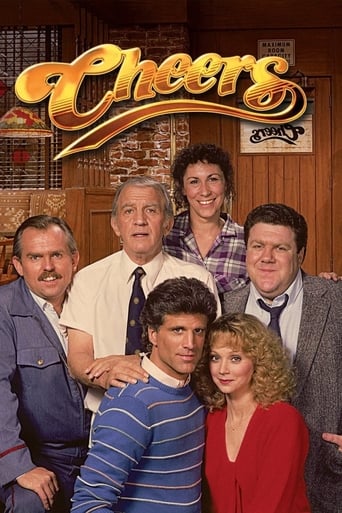
Cheers
1982 · TV series · 11 seasons
Created by Les Charles, James Burrows, Glen Charles
The story about a blue-collar Boston bar run by former sports star Sam Malone and the quirky and wonderful people who worked and drank there.
11 positive1 mixed44 neutralfrom 56 commenters
Where to watch
No streaming data for this title.
60 comments on Hacker News
- Exercise, exercise, exercise! I am quite willing to bet that a lot of people with sleep issues don't really exercise properly. Exhaust yourself here.
I do at least an hour of cardio a day just for that. I'm in great shape but still have terrible sleep lol
- Magnesium and melatonin while trying to get the sleep habit started.
I've been thinking about trying melatonin. I'm always afraid of becoming dependent on anything related to sleep. I should really give it a go, though.
- Audiobooks. Not podcasts. An actual story, like someone is reading you to sleep when you were young (if you sleep next to someone, you might need particular band headphones, or lower the volume and put a slim tablet under your pillow).
I do exactly the tablet-under-the-pillow trick but for sitcom reruns, e.g., Frasier, 30 Rock, Cheers, Parks and Rec, etc. I'll give audio books another try. I found they can be distracting instead of relaxing.
Parent comment was (I think), specifically talking about sitcoms from what I understood.
Sitcoms are - and I know this is a little condescending to point out - comedies contrived to exist in a particular situation: situation comedy → sitcom.
In the old day, the "situation" needed to be relatively relatable and static to allow drop-in viewers channel surfing, or the casual viewer the parent described.
Soap operas and other long-running drama series are built differently: they are meant to have long story arcs that keep people engaged in content over many weeks, months or years. There are throwbacks to old storylines, there are twists and turns to keep you watching, and if you miss an episode you get lost, so you don't ever miss an episode - or the soap adverts within them, their reason for being for which they are named - in case you are now behind with everything.
You'll find sports networks try to build the story arc around games too - create a sense of "missing out" if you don't watch the big game live.
I think the general point is that in the stream subscription era, everything has become like this "don't miss out" form, by doubling down on the need to see everything from the beginning and become a completist.
You can't easily have a comedy show like Cheers or Married... With Children, in 2026, because there's nothing to keep you in the "next episode" loop in the structure, so you end up with comedies with long-running arcs like Schitt's Creek.
The last set of sitcoms that were immune to this were probably of the Brooklyn 99, Cougartown and Modern Family era - there were in-jokes for the devotees, but you could pick up an episode easily mid-series and just dive in and not be totally lost.
Interesting exception: Tim Allen has managed to get recommissioned with an old style format a couple of times, but he's had to make sure he's skewing to an older audience (read: it's a story of Republican guys who love hunting), for any of it to make sense to TV execs.
How old are you? Because I promise you, that description was pretty much spot-on for most shows through most of the history of TV prior to the late 1990s. My memory is that the main exception was daytime soap operas, which did expect viewers to watch pretty much daily. (I recall a conversation explaining Babylon 5's ongoing plot arc to my parents, and one of them said, "You mean, sort of like a soap opera?") Those "Previously on ___" intro segments were quite rare (and usually a sign that you were in the middle of some Very Special 2-part story, as described in the previous comment).
Go back and watch any two episodes (maybe not the season finale) from the same season of Star Trek TOS or TNG, or Cheers, or MASH, or Friends, or any other prime time show at all prior to 1990. You won't be able to tell which came first, certainly not in any obvious way. (Networks didn't really even have the concept of specific episode orders in that era. Again looking back to Babylon 5 which was a pioneer in the "ongoing plot arc" space, the network deliberately shuffled around the order of a number of first-season episodes because they wanted to put stronger stories earlier to hook viewers, even though doing so left some character development a bit nonsensical. You can find websites today where fans debate whether it's best to watch the show in release order or production order or something else.)
By and large, we all just understood that "nothing ever happens" with long-term impact on a show, except maybe from season to season. (I think I even remember the standard "end of episode reset" being referenced in a comedy show as a breaking-the-fourth-wall joke.) Yes, you'd get character development in a particular episode, but it was more about the audience understanding the character better than about immediate, noticeable changes to their life and behavior. At best, the character beats from one season would add up to a meaningful change in the next season. At least that's my memory of how it tended to go. Maybe there were exceptions! But this really was the norm.
> That was the principle many years ago, you had to leave the world exactly in the state you found it in.
This is not true as a generality. e.g. soap operas had long-running stories long before DVRs. Many prime-time dramas and comedies had major event episodes that changed things dramatically (character deaths, weddings, break-ups, etc.), e.g. the whole "Who shot J.R." event on *Dallas*. Almost all shows that I watched as a kid in the 80s had gradual shifts in character relationships over time (e.g. the on-again/off-again relationship between Sam and Diane on Cheers). Child actors on long-running shows would grow up and the situations on the show changed to account for that as they move from grade school, to high school, to college or jobs.
Isn't this just Pluto TV? Like, https://pluto.tv/us/live-tv/633354b63df9700007f6a1b7 is the sitcom channel, https://pluto.tv/us/live-tv/66ba495ffe11e5000881f049/details is the channel of just Cheers and Frasier, etc. Just playing non-stop through one episode after another on a schedule as quasi-"live" TV.
I assume you mean it's not really worth watching if it's currently on broadcast TV?
Surely there's a huge list of old broadcast TV network shows that are worth watching, and that still suffer from the ad-break problem to various degrees.
Obviously I'm pulling from a wide time-period, and I'll probably get some of these wrong because I'm not in the the US and don't quite grok the network/cable divide, but off the top of my head, I think these are/were all worth watching: Seinfeld, Buffy the Vampire Slayer, Freaks and Geeks, Arrested Development, 30 Rock, Community, Schitt's Creek, The Office, The X-Files, various Star Trek series, Cheers
That list could be easily improved on, but I assume it's missing your point anyway if you were only talking about current broadcast network TV (if it exists :) )
It wasn't. 80s TV shows and movies were overwhelmingly recorded on film. Primarily because it was much easier to edit film than tape.
And we are streaming a ton of them now that they've gone back and scanned the original film in 4K.
It's awesome. Heck you can watch I Love Lucy from 1951 in glorious high definition, sharper than anyone ever viewed it originally. It's basically magic.
If you want 1980's, go watch St. Elsewhere or Cheers. They have cinema detail now instead of the fuzzy TV detail you would have seen in the 80's.
> I cant think of how slapping a union on top of an already unstable foundation is going to solve anything
You mean like the entire television and film industry? Any production over a certain (small) size is completely unionized. It's so massively successful the American cultural exports dominate in almost every corner of the world.
I'm not sure where the idea that unions can't work for the games industry comes from since it's almost identical to the film and TV industry. Unions exist so workers don't get exploited and to provide stability.
What about Nintendo? They famously have very limited layoffs. They see value in providing stability and maintaing culture and institutional memory.
If anything, it's short-term profit-seeking that destroys industries. You see this in the world of original content production for streamers. They cut the size of writers rooms. They tried to no longer have writers on set. There's a push for "mini writing rooms". Why? Because it cuts costs on a very short term basis.
In doing so, Netflix (etc) are intentionally throwing away the model that created billion dollar properties like Friends, Seinfeld, ER, MASH, Cheers, etc that, to this day, generate massive profits. Seinfeld was known for getting over a million viewers when it was running in syndication.
Long-term it creates problems. Future products and showrunners are writers who need to get experience on set. Shortsighted cost-reudction is literally killing the future of the industry.
As for the price of video games, there are several aspects to this:
1. AAA publishers like to complain that games still cost $60 after years. That's true but also the distribution is significantly higher than it was 20 years ago. You're selling way more games;
2. The marginal cost of producing a game via download is essentially zero; and
3. Games eventaully get much cheaper on Steam. That's a good thing. Early experiments with this showed that selling a game cheap on Steam could generate significantly more revenue than the original release. And because the marginal cost is zero, it's all profit.
Remember this from the TV show Cheers. Robin is Robin Colcord who is a billionaire who is a love intest of the character Rebecca....
Rebecca Howe: [about Robin] I told him the biggest secret of my life.
Carla LeBec: What?
Rebecca Howe: I told him about You've Lost That Lovin' Feeling by The Righteous Brothers and what that song does to me. Right? Do you know what he did?
Carla LeBec: What?
Rebecca Howe: He called this radio station he owns and he had them play it all night.
Woody Boyd: I heard that. I thought that was the long version
It started the conversation by asking if I'd ever heard of the television show Cheers. Every subsequent interaction lead to it telling me more about Cheers.
Just one note on Elton John's Cold Heart: its reappearance on the chart was due to a remix that featured the (very current) Dua Lipa [1].
I liken this kind of prolonged success as similary to winning the lottery twice. It happens. But it's a lot more common to only win once.
With music you never really know what's going to resonate with audience. It can be a complete accident. It could be a song being featured in a movie or TV show that completely blows up. It could be used in a Tiktok that goes viral.
There are many enduring artists from the 1960s through 1980s. I'm talking the Beatles, the Rolling Stones, Elvis Presley, Michael Jackson, Queen, Elton John, Billy Joel, Fleetwood Mac, Prince and so on. In their times they dominated the airwaves in a way that doesn't really exist anymore.
It's a bit like how TV used to be a shared cultural experience because it was broadcast at the same time before streaming. Non 21st century TV show has hit (or will probably ever hit) the kind of numbers you saw from Seinfeld, MASH, Cheers and the like..
Taylor Swift is obviously massive. But she's the outlier among outliers, almost the exception that proves the rule. And even though Taylor Swift has incredibly popular music, she doesn't produce enduring "hits" in the way the aforementioned artists did. Will current music have the same cultural power in 50 years that Bohemian Rhapsody or Billie Jean?
My thesis is that we don't have the same shared cultural experiences anymore because of the Internet and I suspect this will make the likely duration of a music artist even shorter.
[1]: https://www.youtube.com/watch?v=qod03PVTLqk
Sometimes like in Cheers, but plenty of references are using the modern version. Family guy season 2 used it in 1999 4 years before 4chan launched let alone became popular.
Now not everyone is going to use something just because it was on TV, but it definitely played a role.
And they're going from binge-watching ad-free episode of an entire series, to releasing one episode a week... with adverts.
Yeah, no thanks. I'll just VPN+torrent the ad-free version and watch that, thanks. On any device of my choosing as well.
And why should I pay £8.99 or whatever to one streaming service, for one programme, that was previously "free to air" for the other series? Paramount taking back Star Trek from Netflix for example.
I'm not sure how many multi-million dollar, unseen cancelled-after-one-season dramas with 50,000 viewers these studios need to create before they realise 'we need viewers to 'build a franchise' and make a profit'.
Just imagine if these series or dramas were only seen by a few thousand people at most: Star Trek, Battlestar Galactica, Band of Brothers, Shogun, Dallas, Cheers and so on. Even How I Met Your Mother and Big Bang Theory were pretty much pre-streaming when they started, but syndicated to world-wide terrestrial channels.
If you go to Amazon and search "tv antenna" you find lots between $20 and $70. They're very small, too. One of these days I'll go up on the roof and take down the old analog monstrosity and just leave the pole & new antenna.
Besides NFL, all the really big sporting events (MLB, NBA, Olympics) are still on broadcast, although usually not the quarterfinals & other minor games. As is PBS, the local news, and most of the classic TV shows. Not often but sometimes, Cheers, Taxi, and The Bob Newhart Show are more appealing than the streaming garbage.
I've been hearing about the death of broadcast TV for 20 years now. It's not happening, and neither is the death of print magazines.
https://theconversation.com/magazines-were-supposed-to-die-in-the-digital-age-why-havent-they-217371
My wife will run in from the other room to skip “Sleepytime” because she knows she’ll be bawling by the end of it if she even thinks about it. Does me the favor because I will be too.
My endorsement of the show is that it feels like one of the great sitcoms like Cheers or Frasier, Golden Girls or Roseanne. The stories are never pandering or simple. You never quite know where they’re going to go with a plot line so when it lands, you’re often delightfully surprised or floored. Most kids shows seem like a low effort afterthought full of contrived vapid nonsense. As far as I’m concerned my kids can watch as much Bluey as they like and I’ll buy the shit out of their merch if it signals to other networks to get off their asses.
Forgot to mention the animation in the show is absolutely some of the best I’ve ever seen in a cartoon. I really appreciate the way the show models real physics as things would be in the real world. One of my biggest pet peeves of kids shows is when they show something that is physically impossible (not for comedic purpose, just lazy storytelling). It’s basically just thumbing its nose at kids’ intelligence.
I find most streaming shows subpar, I don’t even bother any more and just watch old series I’ve never seen like Mad Men or Beeaking bad or cheers.
We multicam sitcom is kind of awful in this regard, but at least usually it’s funny.
I think for many Netflix streaming shows it’s something with the cinematography, framing, and use of extras. I know in older movies you would get a variety of shots (through a window outside, or across a crowded room as character approaches, swooping in from above, etc) I think a lot of Netflix shows become framing shot, then “headshot to headshot” without much diversity of perspective. The also use less extra I think. I’m not sure but I think that is a factor.
>Three men developed and created the Cheers television series: Glen and Les Charles ("Glen and Les") and James Burrows, who identified themselves as "two Mormons and a Jew."
I served my LDS mission in Nevada. One day, while tracting, we knocked on the door of the Charles brothers' parents. One of the sons' Emmys sat on the cable box on the TV.
From Wikipedia:
> Three men developed and created the Cheers television series: Glen and Les Charles ("Glen and Les") and James Burrows, who identified themselves as "two Mormons and a Jew."
> The original idea was a group of workers who interacted like a family, the goal being a concept similar to The Mary Tyler Moore Show. The creators considered making an American version of the British Fawlty Towers, set in a hotel or an inn. When the creators settled on a bar as their setting, the show began to resemble the radio program Duffy's Tavern, originally written and co-created by James Burrows' father Abe Burrows. They liked the idea of a tavern, as it provided a continuous stream of new people, for a variety of characters.
> Early discussions about the location of the show centered on Barstow, California, then Kansas City, Missouri. They eventually turned to the East Coast and finally Boston. The Bull & Finch Pub in Boston, which was the model for Cheers, was chosen from a phone book. When Glen Charles asked the bar's owner, Tom Kershaw, to shoot exterior and interior photos, he agreed, charging $1.
[1] https://en.wikipedia.org/wiki/Cheers#Production
Thanks for that read! Some key quotes:
> Cheers director James Burrows has long denied his show was lifted from Park St. Under, maintaining that it was inspired by Duffy’s Tavern, a radio program created in the 1940s by his father, Abe, a Tony Award–winning humorist and writer. The troika of Cheers creators... claimed to have modeled the Cheers bar on Boston’s Bull & Finch, which they visited while developing the sitcom.
> The similarities between the two make an argument for some kind of influence. The question of whether Cheers took something from Park St. Under, however, obscures something vital: As special as the little Boston sitcom was, and there’s reason to think it was truly loved, it was never going to be Cheers. It had its shot. ABC Entertainment president Tony Thomopoulos... told Bennett, “I like them, but I just want to tell you they’re really not deserving of being on the ABC network level.”
> One reason, perhaps, why the legend lived on so long is that Cheers affirmed that there really was something great about Park St. Under.
> To me, the things that are so lovable about Park St. Under—the local feel, the rough-around-the-edges inside jokes that make it seem familiar—aren’t the things that made Cheers such a hit.... With its production woes and shoestring budget, she didn’t even think season two of Park St. Under was likely to happen. The claim that Cheers made off with a ready-made hit misses what the local show really was—the good and the bad.
> Does this mean the legend is finally done? Doubtful... The claim that Cheers looted the show is just too juicy and has been part of local legend for too long to be forgotten entirely.
> If you didn’t, but saw the pilot of Park Street Under, you didn’t miss much. They were teeth-gnashingly similar.
This is the head writer of Park Street Under. He's writing an article about the extent to which Cheers copied his show.
He quotes zero lines between the two shows that are similar.
There's another article that goes into more detail:
https://www.bostonmagazine.com/arts-entertainment/2018/03/20/cheers-conspiracy-park-st-under/
From that one it seems clear that the similarity is the choice of character roles and the setting, and not at all in the lines of the scripts for the pilot or any of the other episodes.
It stinks that they lifted those things. But that's not what I had assumed when I read the word "plagiarized" in OP's comment.
(To the head writer's credit, he never used that word.)
Edit: clarification
https://vineyardgazette.com/news/2016/03/25/where-everybody-borrows-your-name
Fun fact (or conspiracy), Cheers and by extension the character of Frasier Crane were plagiarized from a late 70s local Boston sitcom called Park Street Under.
They actually seem pretty accurate depictions of friend groups to me.
Friends: the friend group was defined by college room-mate, family and room-mates i.e. people thrust together as a unit and then socialising together. They went to Central Perk as this unit, and did not become friends through it.
Seinfeld: the friend group was defined by college room-mate, a neighbour and an ex-girlfriend. They didn't meet in third-places, they went to the diner as that unit. That Kramer was an outgoing weirdo using his proximity to basically force himself into a pre-existing relationship is familiar. The presence of Elaine is unusual but she was basically grafted-on to fix a sitcom rather than drawn from real life.
Cheers: this is more of the "people you know at a third place" but the running joke was that despite drinking every day with each other, they weren't really friends and didn't even like each other. This type of "regular acquaintance" is perhaps a familiar experience for a lonely adult struggling to find new friends. You can shoot the breeze with someone you see regularly but it's a constrained relationship.
It's unfortunate that the strangers who want to talk at third-places are only the Kramers and Cliffs of the world. A combination of bores and nutters that you have to actively avoid. Anyone vaguely normal has ear-buds in and head down. It would be nice to try and reverse that. At a minimum, normalise saying "hello" to strangers as a polite necessity instead of a red flag. For some reason it's common when hiking but not in a city. I'm more likely to chat to a stranger in the wilderness than a dense neighbourhood.
TLDR: Discusses how popular TV shows of the '90s like "Friends," "Seinfeld," and "Cheers" portrayed characters spending most of their time hanging out at cafes, diners, and bars. These shows depicted work as an afterthought or a joke, with the characters prioritizing their social lives and relationships. In contrast, modern shows like "Succession," "Superstore," and "Industry" emphasize work as all-consuming, leaving little room for personal connections outside of work. The article suggests that the decline of places for people to socialize, such as bars and parks, has contributed to the loneliness epidemic. It argues that shows like "Friends" and "Seinfeld" provide a cure for loneliness by depicting characters who prioritize social interactions and spending time with friends.
Also covers a study conducted by the Canadian design firm Happy Cities in Seattle called "the lost-tourist experiment." The study involved an actor pretending to be lost on two different street corners, one with a blank wall and one with shops and cafés. The results showed that people were four times more likely to stop and offer help on the street with shops compared to the street with the wall. The article highlights the importance of having more things to do in a community to encourage interaction and engagement among people
> We can see this shift everywhere. The characters of the biggest shows of the '90s — "Friends," "Seinfeld," "Cheers" — spent the overwhelming majority of their time hanging out at the café, diner, and bar, and work was either an afterthought or a running joke.
These were television shows, not reality. Even in the 80s and 90s you couldn't spend all of your time in a Manhattan coffee shop or a bar (unless you were a drunk). I think our concept of what a "friend" is was heavily shaped by 20th century sitcoms and not realistic, setting up a couple of generations to be very lonely and very disappointed that life doesn't turn out like TV.
On the topic of the general appeal of a public watering hole, I’ll direct you to a passage from the intro music of the seminal sitcom Cheers (which itself touches on your very question):
Sometimes you wanna go
Where everybody knows your name
And they're always glad you came
You wanna be where you can see
Our troubles are all the same
You wanna be where everybody knows your name
Only for certain modes of that experience:
there is already far more content than I will ever be able to consume in 50 lifetimes.
My distaste for a lot of contemporary cultural products aside (I'm okay if they never make another episode of Cheers or MASH, but I can see how that would happen if the creators weren't being paid for that), it feels likely to me that if commercial media ceased production I still wouldn't run out of stuff to watch even if I lived longer than I expect.
I'll gladly pay for some trees that will remove my carbon over the next 25 years if you you let me fly today.
In 1932, this then became the famous "I'll gladly pay you Tuesday for a hamburger today". Rough House explains why Wimpy is able to get away with this tactic in one strip, stating that "He never comes around on Tuesday". Rough House once suffered a mental breakdown from Wimpy's shenanigans, and demanded that Wimpy be kept out of his hospital room. Wimpy disobeyed this command, resulting in a rare altercation with Popeye. The phrase was also slightly altered in the episode "Spree Lunch" to "I'll have a hamburger, for which I will gladly pay you Tuesday." This phrase is now commonly used to illustrate financial irresponsibility and still appears in modern comedies such as The Drew Carey Show and The Office. The initial part of the phrase was even the title of Episode 6 of the fourth season of Cheers "I'll Gladly Pay You Tuesday."
https://en.wikipedia.org/wiki/J._Wellington_Wimpy
Some American comedy (Parks and Rec, Brooklyn 99, Cheers, Community, etc) is amazing. Most of it is crap (2 1/2 Men, Big Bang, 90% of SNL, 100% of "middle aged dude with a family and a wife that's way too good looking" sitcoms).
Some British comedy (Fawlty Towers, Black Books, Fleabag) is amazing. Most of it is crap (Mr Bean, Keeping Up Appearances, One Foot in the grave).
There are some terrible British bands, and some great French cars.
Generalising about culture is pointless.
There are people who’s sense of self-confidence is so fragile that they cannot allow themselves the possibility of losing or feeling “lesser than” in any context.
Happened to a good friend of mine up in Seattle. Good fella, incredibly smart, graduated top marks, a bit ostentatious sometimes but you can tell he really wants to do right by others in spite of his sometimes high falutin tendencies.
Anyway.
Lost a game of chess to his blue collar dad, guy couldn’t handle it. Fell into a hole of depression that lasted for at least an entire episode of Cheers
I've been watching some of them recently. It's amazing how relevant All In The Family still is today. The Jeffersons is still good, Cheers is relaxing after a stressful day. That easy-watching episodic nature is nice for a change.
There are some good recent sitcoms, but you don't get the same sort of 12 seasons of 22 episodes run.
There has never been more competition for attention than now. What used to be good numbers will not be in the future but I think what matters more for a sport is the dollars spent by the fans that they have.
Consider: In 1980 the TV show Dallas had an estimated household viewership of nearly 28 million.[1]
By 1990 Cheers was getting 19.8 million in the number one spot, while the number of TVs in households jumped by 20 million people to an estimated 93.1 million.[2]
In 1998 ER was getting 17.8 million in the first position, with a further 6 million new TVs.[3]
Coincidentally, in 1999 they changed the metrics to go by estimated viewers (which then raised them back to approximately 30 million for some shows).
The trend has been pretty clear, more competition means no one thing is going to capture the attention of as high a percentage of people as before. Baseball isn't up against just stuff broadcast in its own regional markets anymore; it's competing against everything from cooking shows from Norway, a streamer from Japan, one of a dozen on-demand services, and an endless supply of social media.
Just because it's different though doesn't mean there's not money to be made and calls to nationalize a sport where the owners can make hundreds of millions even off bad franchises seems to make zero sense to me.
[1]: https://www.classictvhits.com/tvratings/1980.htm
[2]: https://www.classictvhits.com/tvratings/1990.htm
[3]: https://www.classictvhits.com/tvratings/1998.htm
It’s a quote from the beer drinking postal worker character of the 70’s American TV Show “Cheers”…
There was an episode of Cheers about this, where Carla buys a house extremely cheap and then believes it is haunted. After sleeping a night there, she finds out it’s because it is close to where planes land at Logan Airport, which calms her nerves.
The Simon & Marcy episode is one of the saddest episodes of television, I cannot be convinced otherwise, and it may have ruined the Cheers theme song forever for me. Arguably my favorite TV series ever.
I watched Cheers religiously when it was on and there was an episode where Coach was helping Sam study for a geography test. His trick was to remember facts with songs and because of that episode, I know Albania borders on the Adriatic, is mountainous, and chief export is chrome.
https://www.youtube.com/watch?v=-F_tT-q8EF0
Tossing a huge range of different properties in a blender is fine, ripping off a single property is just lazy. Which sounds more original pure Harry Potter fan fiction or ER the TV show + Harry Potter + Cheers the TV show.
Draw evenly from M*A*S*H + Dresden Files + Mass Effect + Dexter and your going to end up in some strange and interesting places. Play through Starcraft 1+2 on the other hand and the story is fine if a bit bland.
I knew those already from being flooded for 40+ years with Hollywood films (all of them) and sitcoms, I know Cosby, Malcolm in the Middle, Beverly Hills 90210, Miami Vice, the Fall Guy, Seinfeld, Friends, Lou Grant, Mary Tyler Moore Show, Diff'rent Strokes, Cheers, Golden Girls, MAS*H (the best), Married... with Children, Three’s Company, King of Queens, Family Matters and on and on and on.
Basically I know the US better - or the image it projects - than my own country.
Funnily it was a huge letdown when I visited for the first time decades ago, as it felt just like a sitcom and there was nothing new really.
Quite a lot of hit shows just need more time to incubate than others. Most Star Trek series didn't get decent until the third season. Looking even further back, something like Cheers would have been axed almost instantly.
Back when I used to give a damn about television series, I followed a lot of the inside baseball, including incidents that might lead to a series getting cancelled. Some networks were just more prone to cancellation than others. For a while, Fox was particularly eager to take a sackful of new kittens down to the creek; I recall one series didn't make four shown episodes before cancellation. The Sci-Fi Channel (later SyFy) had a particularly brutal streak for a while.
It's clear that whatever any network promises at the outset, they exist in a huge tension with the actual show creators and runners (and yet more tension with the actors). All negotations should be performed with that in mind. I wonder precisely how hard an "exit clause" would be to wrangle. You know, you cancel the show, we get four or six episodes, at such and such budget, and such and such filming time, to wrap things up.
Since about 2005, my television series selection is what I call the "vulture strategy:" I wait until a series is cancelled before I watched. Then I wait for the hype to die down (the carcass gets more juicy). If it is still appealing after all of that, I stick my beak in. I just cannot get invested in something that might have the lifespan of a carnival guppy that could be flushed down the toilet at the first sign of listlessness.
Netflix in particular has been very clumsy in the execution of its shows lately, even once I filter out the endless annoyance of its dark UI patterns. Very "message-y;" I got a bellyful of that with the Christian types. And that's without them going and retroactively editing their old shows. Netflix is turning into my last pick when I want to look for something random to watch.
This is why people say that streaming services are the end of TV as we know it. Netflix will produce a new series and keep it for a couple of seasons until it's no longer a draw on new sign-ups, then drop it for whatever is the latest.
I don't think we'll see long running series any longer like MAS*H, Seinfeld or Cheers, as examples.
Also series are going to be more like the UK with 6-8 episodes.
> If you heard about Game of Thrones or Westworld or Stranger Things, or most recently, Tiger King, you'd realize this is very much still a thing for a large population.
This isn't the same thing.
In the 1990s, everybody watched The Simpsons. Even the people who hated it still watched it so they could complain about it. It was on broadcast TV so everybody had access to it. And Friends, and Cheers, and so on.
Game of Thrones is on HBO. If you have Netflix and not HBO, it's not there. Stranger Things is on Netflix. If you have HBO and not Netflix, it's not there. A lot more people watched Friends than Game of Thrones, because Game of Thrones was less available and had much more competition.
You can find a website full of fandom about Game of Thrones, but you can find a website full of fandom about Battlestar Galactica. Passion and popularity are not the same.
Popularity is what matters to the zeitgeist. It's not a matter of being able to find a place where all the Game of Thrones fans hang out and whinge about the last season, it's about being able to go into a room full of normies and make a reference to last night's episode and expect nearly everybody to get it. Which isn't really a thing anymore.
Someone pointed out that Cheers started great but lost its heart when Colasanto (“Coach”) passed away. It obviously lasted a long time, but it transitioned into more of a traditional sitcom.
See I like Always Sunny but the joke in Always Sunny isn't about narcissistic psychopaths from afar. There's many layers of joke in that show. Sometimes the joke is that the apparent voice of reason has just as poor reasoning as the rest and they only got it right by coincidence. Sometimes the joke is that every time you think there's a genuine moment the rug gets pulled out and its revealed to be a scam or setup. Sometimes the joke is in the way they don't react to any tragedy going on around them. Almost always the joke is to subvert the tropes of the "20-somethings urbanite sitcom" genre (cheers/friends/HIMYM).
1080p is ok, though? Or is it the fact that you can access too much video? Like, if you could only access every 3rd episode of Cheers, then 4k is ok? I guess we'll have to wait for the scientists to weigh in on this one!
Interesting article. But even more interesting than the article, it makes me wonder at how our memories work.
The article mentions Albania, which is forever etched in my memory from a skit on the old tv show 'Cheers'. I probably hadn't seen the show for 25 years, but I can still remember every word of this short ditty about Albania:
https://www.youtube.com/watch?v=-F_tT-q8EF0
The power of music!
Kevin Spacey is a tremendous actor and we all had a lousy close for fans of "House of Cards".
One bad example makes my statement incorrect? Even one of the online magazines or newspapers had an article stating the same as I just a few days ago. So I'm wrong?
Here is a bad example but Ted Danson did black face at a party about 20 years ago. I presume he will now lose his TV job and be banned from Hollywood while all episodes of "Cheers" get pulled. I am shocked this hasn't happened already.
And Cheers was near the bottom of the ratings its first season. Today low ratings gets you canceled after 6 episodes or fewer.
Good things often take a while to take root. VCs aren't interested in that noise.
Maybe the Netflix crowd is more into TV shows. They have/had a decent selection of shows from the 80s and 90s: Cheers, Bob Ross, Friends, Full House, 3rd Rock. Which suggests that the person you're replying to is onto something.
Granted, but it was still a very good TV show. Actually liked it better than Cheers.
I think they mean the show and not the characters. Even in that case, the show really isn't about nothing anymore than other sitcoms like Friends and Cheers are about nothing. The show still has plot lines. My love of Seinfeld is mostly how well the plot lines within each episode are weaved together and how the show invented so many phrases that we now use (or at least I use and most people understand).
The show is so quotable and relatable even almost 20 years later. Friends also does a pretty good job of this, but my problem with Friends is that you're supposed to like the characters (except Ross maybe) and they're all pretty terrible people. Seinfeld doesn't try and hide how terrible its characters are.
It's an old joke from the television show Cheers.
"Well you see, Norm, it's like this... A herd of buffalo can only move as fast as the slowest buffalo and when the herd is hunted, it is the slowest and weakest ones at the back that are killed first. This natural selection is good for the herd as a whole, because the general speed and health of the whole group keeps improving by the regular killing of the weakest members. In much the same way, the human brain can only operate as fast as the slowest brain cells. Now, as we know, excessive drinking of alcohol kills brain cells. But naturally, it attacks the slowest and weakest brain cells first. In this way, regular consumption of beer eliminates the weaker brain cells, making the brain a faster and more efficient machine. And that, Norm, is why you always feel smarter after a few beers."
“Cheers,” which ran for 11 seasons on NBC, starting in 1982, was the first great hangout show: neutralizing the depiction of class and removing the pressures of work. Life is hard enough, “Cheers” said; let’s just make TV. Ever since, television started taking it easier on us. Bill Clinton was in the White House, and the economy had improved. On “Seinfeld,” “Living Single,” “Friends,” “Ellen,” “It’s Like, You Know,” “Sex and the City,” “Girlfriends” and, much later, “Happy Endings” and “New Girl,” the commingling, childless men and women might have had jobs, but almost none had consequential careers. How many jobs did Elaine and George have on “Seinfeld”? And in how many fields? And Kramer — how was he paying to live across the hall from Jerry? Hangout shows placed friendship above family, obviating the typical economic ecosystem. Belonging to a family of friends probably means you only have to support yourself.
TV became — and still is — a medium struggling to understand “average,” “ordinary,” “normal.”
Why would you go into any of these shows expecting anything resembling reality. They are all clearly entertainment in the form of light drama and inconsequential, whitewashed sexual tension. To expect anything else is to set yourself up for failure.
Deeper shows exist - The Wire, Breaking Bad, House of Cards - but headlining TV shows are not created to address issues anymore. The shows reflect the main demographics of TV watchers, because that's what keeps them watching, and that's what generates ad revenue. So I'm not too concerned with the state of TV - it's an echo chamber for older, more conservative folk.
I feel the same way about the sitcom Cheers. Both are great works, but now seem cliched!
"is class disdain because I'm too well off to consider it or class disdain because when I wasn't well off we had too much pride to ever stoop to anything like that."
Normally when you read stories about these outliers in life there is always a story behind it. I remember the case of the guy on the street corner who was discovered as having singing talent, made it to network news shows, was given some sort of leg up opportunity and then it turned out (iirc) that he was just some mentally ill guy and that's why he was living on street corners and homeless.
In a quote in the OP there is this as one related example:
"I didn’t waste time watching re-runs of Cheers for three hours on Netflix. I read a lot of books, I worked on my music more. When I lived in a house, I never really used my guitar because it was in another room. When I was in the RV, everything I owned was in the same room so I played my guitar a lot.”"
So we have someone who didn't play his guitar because it was in another room. And someone who spent 3 hours per day watching a sitcom on netflix. And you wonder why he is living in a van?
By the way, I located my personal laser printer in an outer office. That way each time I print something I have to getup to get the printout. I could easily put it next to my desk and only have to lift my hand. But I choose to do the extra work and get the nominal health benefits from getting off my ass as much as I can (which costs $0).
This story reminds me of an episode of the American TV show "Cheers", where the bar tender (Sam) was playing against an experienced player. However, since he wan't good at chess, he was cheating by having a computer play his moves, and having someone in another room give him directions over an earpiece. Inevitably, the computer crashed (or the earpiece failed, can't remember which), so he made a random move. This threw off his opponent, who over-analysed the situation, and ended up losing.
Now I'm wondering, which happened first -- that TV show episode, or the Kasparov game?
I know it seems crazy to some of you but some people like to watch cable TV. We can shout HBO GO until we're blue in the face, there's not that many shows on it, really. There are arguably great shows on HBO Go but it's not that many and most of the seasons for each show are like 8 episodes long, great! Netflix .. really? OK, I get that is fashionable and everything but I don't ever see any data to back up that cable TV is done.
Also, as an aside, why is it so fashionable anyway? There's just all this pride of like "I haven't had cable or satelite in 6 years" or the "last time I had a cable was when Cheers was on but I turned it off and watched an interpretive dance instead."
Yeah, as audiences' attention spans get ever shorter the pressure to GET ON WITH THE DAMN MOVIE gets ever higher, so filmmakers are always looking for ways to pare down the length of the opening credits or to present them in a way that also starts the story moving.
The same evolution has been underway for a couple of decades now with TV shows. Until the early 1990s it was commonplace for TV sitcoms to have a full opening credits reel, complete with a theme song just for that show. Think of the opening of Mary Tyler Moore [1] from back in the '70s, for instance, or Cheers [2] from the '80s; they both became iconic representations of those shows.
These intros helped set the tone of the show that followed them. But they generally took a full minute to run, and as the universe of options provided by cable expanded and remote controls became inexpensive, waiting that extra minute for the show to start began to turn off viewers. The push began to GET ON WITH THE DAMN SHOW, and so the traditional musical opening first shrank, then disappeared altogether. Today's openings run much shorter -- 25 seconds max -- and usually include just a couple of title cards and a musical snippet.
[1] http://www.youtube.com/watch?v=9m4-Te1m7fY
[2] http://www.youtube.com/watch?v=FD8ljNobUys
For the free options, the movie selection is decent, and the TV selection is pretty awful. Lots of back catalog stuff, like 270 episodes of Cheers, but only a few series from recent years.
But OTOH, I paid for Prime when it didn't have any streaming, and thought it was worth it, so I don't have high expectations.
Just out of speculation, "Doogie Howser" is a very unambiguous string (other TV shows often have more ambiguous titles, like "Cheers" or "Highlander") that's close to the edge of public recognition--most everyone knows about Doogie Howser, but it's not extremely popular.
Also, the Doogie Howser trendline is pretty flat, aside from various spikes.
I loved that show! And MASH. We're about the same generation.
No I actually agree with you that the suit doesn't convey anything substantive, and if a programmer wore that today to an interview I'd find it suspicious because, at the very least, it means he/she is out of touch and maybe desperate. But that said, if the person has the technical skills to do the job, and is not a jerk, and is available and interested, that should count 99.9999% and whether they wears a suit or not shouldn't counteract those other factors.
If I was holding an interview for the role of bankster, that would be different.
Tangent Note: I can "play" the SWAT theme song in my mind, note for note. And MASH, Love Boat, Cheers, etc. I remember when TV show theme songs went into a dark ages roughly around the the 90's where they stopped having cool theme music anymore, especially long instrumental ones. There were a few cool exceptions, but for the most part the art seemed to be lost. I don't watch TV anymore, so perhaps it came back.
ps. I'm in Colorado too. We should hold a HN meetup sometime, I know of at least a few others in the Front Range area.
Reminds me of a scene from the TV series "Cheers". Norm is at the bar.
"Jesus. Socrates. Plato. What did they have?"
The bartender shrugs.
"I'll tell you. Sandals, that's what. Most all your great thinkers had great footwear."
Beards and sandals? Could be the basis for the next programming evolution.