 Hacker Cinema
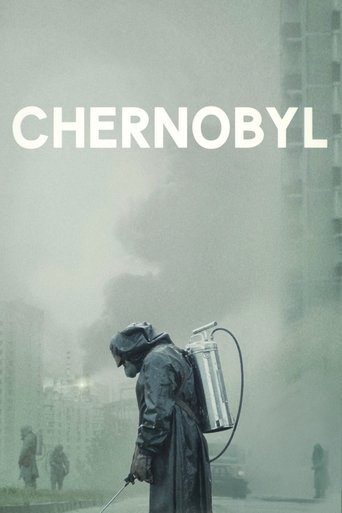
Chernobyl
2019 · TV series · 1 season
Created by Craig Mazin
The true story of one of the worst man-made catastrophes in history: the catastrophic nuclear accident at Chernobyl. A tale of the brave men and women who sacrificed to save Europe from unimaginable disaster.
77 positive32 negative11 mixed73 neutralfrom 193 commenters
Where to watch
No streaming data for this title.
215 comments on Hacker News
Much of the VFX and CGI industry is already in India.
Movies and shows like Inception, Interstellar, Ex Machina, Tenet, Dune 1&2, Odyssey, Chernobyl, Foundation, and The Last of Us were VFXed in large part by Indian companies like Prime Focus, Makuta, Phanton, and their subsidiaries.
A number of these overlap with HPC and Distributed Systems with a number of major players in the space coming out of the GPU design space like Raja Koduri (AMD, Apple, Intel). Nvidia, AMD, Intel, Apple, and others having dedicated GPU design teams in India since the early 2000s also helped.
The Chernobyl disaster also contributed to the fall of the Soviet Union. It unraveled a chain of secrecy in the Soviet bureaucracy - leaders who were willing to let their own citizens die in order not to reveal any weaknesses in their own technology.
Also, the failed Invasion of Afghanistan signaled to Soviet Satellite states that the Red Army weren't as invisible as previously believed.
The economy of the Soviet Union was also weaker than that of the West, which they rivaled.
The fall of the Soviet Union, much like the fall of the Roman empire, wasn't down to just one or two or three factors, but was a culmination of factors.
The Soviet Beast became too big and collapsed on itself.
I wrote about the book Midnight in Chernobyl by Adam Higginbotham [1] on my blog [2] as it's one of the best books I've read. I highly recommend it.
I'm just going to copy and paste from my blog -
The Chernobyl explosion wasn’t the result of a single mistake, but the inevitable outcome of a flawed reactor design combined with secrecy, bureaucracy, and human error. On April 26, 1986, at exactly 1:23:40 a.m., the reactor exploded with the force of 40–70 tons of TNT, launching its 1,000-ton lid through the roof like a champagne cork.
Firefighters arrived within minutes, confronting intense fires with bare hands and leather helmets, unaware that radiation levels were measured in thousands of roentgens per hour; many died within weeks. Despite knowing by noon that the reactor core was exposed and radioactive smoke was drifting across Europe, Soviet authorities kept Pripyat open for 36 more hours, letting children play in radioactive fallout.
Three men volunteered to wade through radioactive water beneath the melting reactor to open valves and prevent an even greater steam explosion. All three survived.
The cleanup required 600,000 “liquidators”, mostly conscripted soldiers and reservists, who shoveled radioactive debris with bare hands and were exposed to lifetime doses in minutes. The initial test that triggered the explosion had been delayed ten hours to keep Kyiv powered for the evening, leaving exhausted operators to run the reactor on a skeleton crew they barely understood.
Watch the HBO miniseries Chernobyl. It's one of the greatest things I've ever watched.
[1] https://en.wikipedia.org/wiki/Midnight_in_Chernobyl
[2] https://www.rxjourney.net/30-things-i-know
This is why a lot of my favorite shows/movie series are ones only a few episodes long, but which really give a good feel for the world they take place in.
Bladerunner and HBO's Chernobyl are two of my favorites that fit this.
I think the level of irritation is proportional to knowledge of the technical art of cinema, since what makes a good "shot" is often a discussion of minutiae. There are innumerable examples of better shots in television, particularly in the "second golden age" begun with series like "The Sopranos" and climaxing in television like "Better Call Saul" or "Chernobyl"[1]
[1] Which would certainly have some scenes competing for actual best shot. Calling it TV feels a bit misleading.
Typically, a Fat Man design as tested at White Sands and used on Nagasaki, or 21 kilotons, sometimes 15 kilotons when Hiroshima is used for comparison, as in the HBO Chernobyl miniseries.
The TV show pretends to be historically accurate, and many people believe that it is true. I would suspect that the majority of people have no other sources of information about Chernobyl other than this TV show.
its easy: - Udssr did something wrong its very useful to this day for the us. - Fukushima was done by an "western orientated" country. - The fact that people say that chernobyl was worse then Fukushima is them not thinking. Fukushima was build in a area were this kind of accidents happen all the time. - If Fukushima happened in China you would have more netflix tv shows about it how bad it was handled. - Remember western media is going through an American lens. Just watch any main stream holy wood movie about war and think of it as US propaganda and you will see it everywhere
It was a drama TV show, not a documentary. Whey compare it with TV shows, like Simpsons or movies like The China Syndrome, it was accurate.
"according to INSAG-1, the main cause of the accident was the operators' actions, but according to INSAG-7, the main cause was the reactor's design."
https://en.wikipedia.org/wiki/Investigations_into_the_Chernobyl_disaster
What surprises me is the constant attention to Chernobyl (TV series, books, articles, games) and the almost complete silence about Fukushima.
Yet these are quite comparable accidents.
I wonder what the reason is?
For a TV series the TV show Chernobyl was pretty accurate. For those who watched the the TV show, I recommend to also see an interview with an actual Ukrainian medical responder and radiation expert who was working in Chernobyl.
https://www.youtube.com/watch?v=m1GEPsSVpZY
Probably the best non-technical book on the Chernobyl disaster is the book "Chernobyl: The History of a Nuclear Catastrophe" by Serhii Plokhy. It describes not only the accident, but also the whole soviet system and political, economical decisions which led to the resulting catastrophe.
The most comprehensive technical report is INSAG-7 The Chernobyl Accident - IAEA. https://www-pub.iaea.org/MTCD/publications/PDF/Pub913e_web.pdf
I also recommend Voices from Chernobyl by Svetlana Alexievich, some of people the characters from the book are even present in the TV series.
Related, if you haven't seen the TV show Chernobyl, I could not recommend it highly enough!
Lol, no.
It is true that writing to the board will get you noticed, and that you might not like the consequences. If you value having the job then don’t write to the board. Even if you are right, being noticed like that isn’t going to endear you to your boss.
But if you care more about doing the right thing then writing to the board is the right thing to do. And after a few years of working at Microsoft you might not value your job very much either and you too might decide to go out in style.
Go watch the last episode of Chernobyl again.
I have no idea or practical experience with anything this low-level, so idk how much following matters, it's just someone from the crowd offering unvarnished impressions:
It's easy to believe you're replying to something that has an element of hyperbole.
It's hard to believe "just do 2x as many instructions" and "ehhh who cares [i.e. your typical C program doesn't check for overflow]", coupled to a seemingly self-conscious repetition of a quip from the television series Chernobyl that is meant to reference sticking your head in the sand, retire the issue from discussion.
There have to be GovCloud only LLMs just for this case.
I swear this government is headed by appointed nephews of appointed nephews.
I keep thinking back about that Chernobyl miniseries; head of the science department used to run a shoe factory. No one needs to be competent at their job anymore
Meant the first and people should do the second, Chernobyl on HBO is great.
It’s also technically not a documentary but historical drama.
The Chernobyl tv show had a nice podcast that went with it as well. I think these kinds of extra features are especially nice when it is for a show based on real life. They get to point out things that may not have been 100% historically accurate due to budget/time, and also get to bring in experts to speak about things related to developing the show.
It is funny that these things often just get released on podcast platforms and aren't really integrated into the streaming service.
Especially since this show, and the shows mentioned in these parent comments are all produced by the platforms they got released on. So they also have a whole lot more control to actually integrate this extra content.
These streaming platforms often state they are competing to keep you on their platform consuming things, and it seems odd to me that they wouldn't want to try and capture people for longer with these kinds of extras. Especially since as the other user indicated, these would be much lower cost to produce and license compared to the original content. And for someone who really enjoyed what they watched it would be a pretty appealing extra to have.
An extremely interesting view on how the Western TV series Chernobyl sometimes misunderstood the Soviet era system.
Posted several times, several years ago with little traction:
https://www.newyorker.com/news/our-columnists/what-hbos-chernobyl-got-right-and-what-it-got-terribly-wrong
Hopefully I'll finally get to see Chernobyl and Game of Thrones. It's virtually impossible outside of US or Europe to legally stream so many movies and series.
A couple of months ago I started listening to the Scriptnotes podcast, by Craig Mazin (showrunner for Chernobyl and Last of Us, also wrote for Scary Movie and Hangover sequels) and John August (Go, Charlie's Angels, Big Fish, etc.). They discussed receiving notes like that from executives on their scripts- that there needed to be a line of dialog here to explain, rather than just using the visual to explain, so that someone on their phone could follow along.
There are, of course, ways that writers and directors get to ignore executive feedback, have a bunch of recent hits already is one, do your movie outside the studio system is another, have it in your contract because you gave up some money or whatever is a third. This is why some movies are still made in older ways, but from what they said that feedback is pretty universal now.
You think that's an important one? To me, that's just a creative liberty; the need for visuals in the seconds before the explosion led to a choice to visualise it like the top of a boiling kettle.
To me, there are more substantive issues, e.g.
* Claiming that nobody survived watching from the Bridge of Death, when it hasn't even been confirmed there was a gathering of people on the bridge, let alone any of that group dying from it. But Voices of Chernobyl contained accounts from survivors who claim they were there and happened, and it makes excellent drama, so into the show it goes.
* Raising the idea that Vasily Ignatenko was giving off dangerous radiation to his wife, but her baby "absorbed" it, killing it and protecting her. This is a complete myth, and it comes directly from Lyudmilla Ignatenko herself. It's gripping testimony, but it's simply not true, and one doctor who was there, reflected on how the myth of people being "contaminated" led to a lot of evacuated children not being accepted by families in Moscow because of this fear. (https://www.vanityfair.com/video/watch/radiation-expert-reviews-chernobyl-series-1)
But overall, I agree with your point, the irony is not lost. This series was utterly compelling to me, and had such amazing drama. It's almost certainly not the case that Valery Legasov gave an eloquent speech berating his own government in the middle of the Chernobyl trial, but it felt so good when he did that in the TV show. It's a lie that comforts the viewer, telling them that there is a just world, and the liars and self-serving bureaucrats and dysfunctional governments of this world will be held to account, by good people, truthtellers.
There was no mass funeral with victims buried in concrete. But the spectacle of the TV show moved me to tears. Again, dramatic license. There were victims buried in lead coffins, in regular graves: wouldn't that imagery have been enough? No, because once the show has brought you to your knees with a row of lead coffins and mourning families, the cement mixer arriving over the hill then pushes you right over the edge. The concrete flowing around the coffins is such a visually powerful scene. Even though it's false, I wouldn't ever take it out of the show.
Sure, but in any case you're going to cherry-pick inaccuracies, wouldn't it be fair to balance them with the "remarkably accurate recreations," according to historians[0]? Especially since it's couched as a historical drama, not a documentary.
Should we debate the accuracy of Marvel movies?
[0] https://web.archive.org/web/20190610100414/https://www.cbsnews.com/news/chernobyl-disaster-how-accurate-is-the-hbo-series/
Mazin has talked about "Voices From Chernobyl" more than any other source.
I used as many sources as I could find. I was looking at research articles in scientific journals; I was looking at governmental reports; I was looking at books written by former Soviet scientists who were at Chernobyl; I was reading books by Western historians who had looked at Chernobyl. I watched documentaries; I read first-person documents.
And then there was Voices From Chernobyl, which is unique. What Svetlana Alexievich did there, I think, was capture an aspect of history we rarely see, which is the story of the people who you wouldn’t otherwise even know existed. We look at history from the point of view of the big movers, the big players, and she looks at history through the eyes of human beings. They’re all equal to her: Whether they are generals or party leaders or peasants, it doesn’t matter. And I thought that was just beautiful. It really inspired me.
So again this idea that anything not in the Legasov tapes was invented --- no. The show is a fictionalized retelling, but no, that criticism doesn't stand.
>It was about Anatoly Grishchenko, a Soviet helicopter pilot who had served in Chernobyl and, like many others, had developed cancer as a result.
If there's one thing that pissed me off about the TV series, it was its poor to non-existent storytelling surrounding the helicopter crews who ran sortie after sortie right over the burning reactor—around the clock—knowing full well the grave risks posed by the radiation.
Instead, we were shown one disjointed helicopter crash scene amidst a still-burning reactor that made them look like bumbling fools attempting something futile.
In real life, the Chernobyl incident happened on 26 April, 1986. The Mi-8 crash where it struck the crane didn't happen until October 2nd, 1986.
Aviation was instrumental in containing the disaster during its early phases. Those crews helped save an untold number of lives. Their portrayal or lack thereof in the show was massively disrespectful to their contributions.
---
Between 27 April and 1 May, about 1800 helicopter flights deposit over 5,000 metric tons of sand, lead, clay, and neutron absorbing boron onto the burning reactor. It is now known that virtually none of the neutron absorbers reached the core. [0]
[0] https://www.chernobylgallery.com/chernobyl-disaster/timeline/
I've mentioned her article. I think she barely touched the topic of Chernobyl itself. Her points was about what the Soviet life was back then, and some depictions of this was incorrect.
For example (for her article)
> In Episode 2, for example, the Central Committee member Boris Shcherbina (Stellan Skarsgård) threatens to have Legasov shot if he doesn’t tell him how a nuclear reactor works. There are a lot of people throughout the series who appear to act out of fear of being shot. This is inaccurate: summary executions, or even delayed executions on orders of a single apparatchik, were not a feature of Soviet life after the nineteen-thirties. By and large, Soviet people did what they were told without being threatened with guns or any punishment.
Her point was: this is not the Soviet way back then. My point is: these two people barely interacted directly, and one of them at least (Legasov) had a lot of respect for the other from the very beginning
Dyatlov's interview from the 90s, which is still available on youtube [1], seems to fit better with the account given in the hit book "Midnight in Chernobyl" (which was the basis for the series,) than the story written for TV. To me the series just seemed like a rehash of the same movie tropes we've seen time and time again in dramatizations of the accident, compared to a true adaptation of book, which included a lot of updated analysis beyond the IAEA original report.
[1]: https://www.youtube.com/watch?v=N8__v9EswN4
The bit about "The water tanks in the reactor were full, and the uranium fuel rods were at risk of melting through the water tanks, potentially releasing a force equivalent to a multi-megaton nuclear device and devastating much of Europe with radiation." is sort of complex to judge.
It is absolutely true that that scenario was impossible and couldn't actually happen. But as far as we can tell (documented in Voices of Chernobyl) someone at a similar meeting to the one portrayed in the TV show did really say that that could happen as portrayed in the TV show. But of course the audience is going to assume that things scientists say in shows like this are accurate.
There is a podcast [1] featuring the showrunner Craig Mazin who is also a very conscientious and prolific podcaster [2] who cares deeply about balancing fact with a compelling narrative.
This is the basic difference between "based on" and documentary. Having worked as a screenwriter myself I can assure you that even if the script had been 100% factual, things would have been changed beyond the creators' control anyway.
1 https://podcasts.apple.com/us/podcast/the-chernobyl-podcast/id1459712981
2 https://scriptnotes.net/
To be honest, I find most of these inconsistencies to be inconsequential for enjoying the film. The ones that really get to me though are the dramatic overestimates on the devastation caused by Chernobyl, and the effects of the radiation itself. Most of the effect of the film comes from this belief that the radiation really is that dangerous. When you know it isn't, it takes quite a bit away from the premise.
Sadly, most people aren’t readers. I saw an article the other day stating the percentage of people who read for pleasure has declined into the low teens
The true story of Chernobyl isn’t going to land with folk today. We’ve lost the attention span for anything longer than a slick miniseries with A list actors. Even then, most people I know haven’t seen the show, which is amazing.
https://pmc.ncbi.nlm.nih.gov/articles/PMC12496190/
I'm not literate at all on nuclear physics, but I remember in the "Chernobyl" TV show (which seemed trustworthy) some divers died after going in the cooling water to close the pumps. How was that water different ?
Chernobyl irks me a lot. They did very well with visuals: almost got a PTSD reaction when I recognized the corridors in the first episode, the same architecture, and even the paint. Later discovered that they filmed at Ignalina PP, a similar type of reactor, but larger (RBMK-1500 vs RBMK-1000).
But they completely missed people and their interactions, mentality, and attitude. And they were dressed too well ;) The last episode was cringy - they just repeated the lies that the Soviets told the world, blaming the operators, with a lot of bullshit in the sequence of events that led to the catastrophe.
It is actually a very common trope.
The "grassroots"-Jesus, Michael Shellenberger, who dominates the arguments being spread by this movement, doesn't get tired to repeat it. He even had to comment on the TV Show Chernobyl:
https://www.forbes.com/sites/michaelshellenberger/2019/03/11/it-sounds-crazy-but-fukushima-chernobyl-and-three-mile-island-show-why-nuclear-is-inherently-safe/
https://www.forbes.com/sites/michaelshellenberger/2019/06/06/why-hbos-chernobyl-gets-nuclear-so-wrong/
There are many more. Just google Shellenbeger and Chernobyl.
I didn't mean to imply communist dictatorships always get this right, of course even with central planning and, supposed, long term thinking it has gone horribly wrong before, as you point out.
It does make me think about the failure to react to changes or ideas that we ill-advised from the very start. I think, at least partially, this stems less from the long time horizon when planning and more from the lack of dissent in a dictatorship. The Chernobyl TV series's "The cost of lies" concept feels very poignant.
In the Chernobyl TV series, they think they see a high but (short term) tolerable amount of radiation. It was actually just the upper limit of the measurement hardware and the real value was much higher.
A few months ago I watched HBO’s Chernobyl miniseries. Afterwards, I had a strong impulse to buy a Geiger Counter from Amazon. I went as far as reading reviews of the various brands and picking out which one to get - if I were to get one. I was able to outlast the impulse. I don’t live close to this area, but now I’m thinking a Geiger Counter might be a good thing to own, maybe not so impulsive after all…
West Wing, Chernobyl, Westworld Season 1, Breaking Bad
Just please don't take it as a documentary. It's a disservice to the people that actually worked at the plant that day and portrays them as arrogant fools, which none of them actually were.
That Chernobyl Guy on YouTube did great breakdowns.
Your comment reminded me, an excellent showcase of institutional shenanigans is the Chernobyl miniseries on Netflix. Denial, blame, coverups, accountability. It's a very well made series in a grim Soviet setting.
The Chernobyl mini-series is highly recommended. It is a classic example of how arrogance and stupidity are closely related. (Where stupidity is defines as knowing the correct thing to do, but ignoring the facts or available infomation.)
I think it is a reference to the Chernobyl mini-series, where the Dyatlov character responds to the news of the level of radioactive contamination as "Not great, not terrible", unaware that their measuring equipment is actually maxed out, hiding the true scale of the problem.
When regulators can't shut a plant down for a violation like this, it's not actually regulated.
People watch historic documentaries (like HBO's Chernobyl /s) and ooh and aah about how stupid the Soviet safety and bureaucratic culture was, without a shred of self-reflection about how our systems also make ruinous outcomes inevitable.
It's an interesting question. If you want "historical accuracy", you would have the actors speak in Latin or Greek, but these days I'm not sure it'd find an audience. The only place you're likely to find spoken Latin is ecclesiasticly.
So your show's in English but not set in England, what accent should you have? For quite a while, I'd have said "what native speakers from that area sound like when trying to speak English"...
But when I watched the HBO Chernobyl mini-series, they had a different approach. All the various Russian, Ukrainian, etc. accents were instead regional English accents. And that was pretty good, because, honestly, as someone who doesn't speak any Slavic languages, I can't easily tell the differences between them, and I'd miss the implicit cultural and social judgements the speakers make of each other. But I know exactly how an RP speaker looks down on an Estuary English speaker who in turn looks down on a Yorkshireman or Scotsman. By using my own country's accents, the narcissism of small differences comes through loud and clear.
The accompanying podcast said they did it to make the actors "act their roles and not their accents". But it is a balancing act - do you want the versimilitude of having people sound like they're from the place on-screen (while still speaking English)? Or do you want the nuances of language translated properly for you?
In purely fantasy worlds, there's no reason why elves speak RP, dwarves speak Scots and orcs speak Cockney... if anything, the dwarves should speak Old Norse!
On a final note, watch the British take the piss out of those self-serving Hollywood movies where they have Americans play the heroes despite their country not existing until several centuries later (and of course giving the baddies British accents): Jerry Brickhammer presents "The Crusades", the movie in honour of all the Americans who died in the early middle ages: https://www.youtube.com/watch?v=IbzlUQwaC4Q
the Chernobyl miniseries handled accents perfectly. Ostensibly in Russia it had everyone speaking English accents. The educated spoke in RP, but the miners spoke with working class regional British accents. It added a lot of texture to the show.
> It wasn't a documentary.
I guess by that standard HBO's Chernobyl (which condensed an entire group of scientist into a single character) or Apollo 13 were "far from the truth" as well because they definitely weren't documentaries.
> So yes, it was far from the truth.
Kind of weird stance to take since nobody knows what the real story is at this point.
Try this: look up the most highly rated episodes on IMDB and watch only those. Missing the crummy episodes usually does not interfere with understanding the story arc. Often, I set a minimum IMDB score that I will watch, like 8.5 or 9.0 to capture only the best. This works well with series that:
- take a year or two to find their footing or
- have a large cast (some mediocre) that get their own story lines of no consequence occasionally or
- introduce cast members that don't make it or
- implode towards the final season.
I have done this for many series that are somewhat uneven:
- The Americans
- How I Met Your Mother
- Fringe
- Orphan Black
- Halt and Catch Fire
- House of Cards (watching the ratings allows you to miss all of season 6)
- Arrested Development
- Bojack Horseman
- Veep
- 30 Rock
- Jane the Virgin
- Black Mirror
- The Marvelous Mrs. Maisel
- Suits
- Six Feet Under
- La Femme Nikita
- The Blacklist
- Peaky Blinders
- The Romanoffs
- Ozark
- Westworld (sometimes dropping episodes does not matter)
- Succession
- Borgen
And all of these series have lots of strong episodes.
Series I would not do this with:
- The Bear
- Breaking Bad
- Money Heist
- The Serpent
- Fleabag
- Chernobyl
- The White Lotus
That scene in Chernobyl breaking down the explosion is one of my favorite scenes of all time. It's a subject matter that is very specific, they covered in enough detail to be legit, but glossed over enough to not loose the audience. Something that a producer would want in a TV show and an attorney presenting a case. Of course all of the underlying "In Soviet Russia..." type references of the State does no wrong while having it shoved in their face were priceless to me as well.
Craig Mazin who developed Chernobyl is also the showrunner for The Last of Us - season 2 is out next year. He'd be perfect for an East Germany based spy series with a tone similar to Chernobyl combined with The Lives of Others
Interestingly, the Chernobyl liquidators forced to clean the roof were referred to as robots. I think the TV series expanded that to "bio robots", but books about the incident from tbe nineties simply used robot.
Every morning we will get a fresh menu of new episodes of HBO-level historical re-creations.
And today I'm feeling like... Chernobyl Day Three !
Outside of Russia? Come on. Most young people know of Chernobyl because of the TV show. The tourism there spiked after HBO rolled it.
The former USSR is a totally different matter. It's a very well-known and painful, very close part of history. Not knowing about it is a shocking level of ignorance and miseducation, and yet - this is what we have.
You're both way off.
I asked four of the youngest people I know (ages 19-22) what Chernobyl was and only one knew. And only because of the TV show.
You have no idea how little the average youngster cares about stuff they didn't personally experience. Almost nobody is reading history articles on Wikipedia for fun. It's just Tik Tok, Insta, and Youtube.
For the majority of them, certain subjects will just be mentioned in passing 5 minutes in a history lesson, and it exits the student's brain within days, if not as soon as the bell rings.
I won't underestimate the ignorance of young people about anything happened before they started to realize that the world is larger than their home. This is about all generations.
And specifically:
> Everyone knows about Chernobyl.
And everyone knows about Tienanmen, the difference in what they know is made by the country where they live.
Compare this poll from 2019 with the expected values from Western Europe where probably 100% learned it from the news, for many many days.
https://www.statista.com/statistics/1040923/how-russians-learned-about-the-chernobyl-catastrophe/#:~:text=About%2060%20percent%20of%20the,about%20the%20catastophe%20from%20documentaries.
The poll is a bit strange though because despite asking how did they learn of the disaster "at its moment of occurrence" they list internet, social media, books and movies.
BTW, the Chernobyl TV series was not available on general TV in Russia AFAIK.
Sure, you can always cherry-pick someone from a remote village so this can't be literally "everybody", but it's absurd to claim that the majority of the population doesn't know about Chernobyl. It was a very hot topic in Russia for a long time, and in the 90s the government lost control over the information space of the country so the information about Chernobyl was spreading freely. The younger generations can learn about the topic from either their parents, or from pop culture things like S.T.A.L.K.E.R. and even HBO's miniseries (freely available on Russian torrent trackers that are quite popular).
The drama|documentary TV series Chernobyl?
Or the soviet era Andrei Tarkovsky movie Stalker based on the novel Roadside Picnic by the brothers Arkady and Boris Strugatsky (who also wrote the screenplay)?
The later is unrelated to the Chernobyl accident (in any direct sense) as it concerns unfathomable alien technology left as waste on earth after a visitation (or alien picnic along a galactic roadside) with human 'stalkers' raiding the unknown like ants after sugar.
https://en.wikipedia.org/wiki/Stalker_(1979_film)
https://en.wikipedia.org/wiki/Roadside_Picnic
Because it is a non-argument. The implication is that engineers are incompetent and will never gain competence. There's much more detailed arguments to be made, but I'll give you two things to consider that will give you context and help you track down those arguments if you are interested
1) RBMK reactors (like Chernobyl) have a positive void coefficient, which leads to an increase in radiation as steam pressure increases. At the time of the of the disaster, this was generally considered "not a good idea" due to the ability for these reactors to explode and release high amounts of radiation. This was even known by Soviet Scientists and was even a plotline in the HBO miniseries (people seemed to miss this, but maybe a priori knowledge made it more significant to me).
2) Concerning Fukushima, the region was hit with the largest tsunami ever seen in recorded history for the area and one of the largest ever recorded anywhere. Meaning the largest to hit Japan in at least 1000 year. With the reactor being built in a time where scientific knowledge did not know that this magnitude of an earthquake was possible in such a fault. The comment implies that such lack of knowledge, and thus potential for danger, will always exist. But the knowledge even advanced before the quake happened, but was still relatively new at the time (btw, this also applies to the Cascadia subduction zone off of Washington and Oregon).
These were due to two completely different causes, with 25 years of experience between them, and with the latter being caused by an extremely rare natural disaster. It is improper to characterize risk by black swan events (or gray swan events, which may be more accurate concerning Fukushima). Additionally, the results and causes are not even remotely similar. The connections are simply that both involve nuclear power. It is literally comparing apples to oranges, which both happen to be round fruit that grow on trees. The argument is setting an impossible standard and using a false narrative. It is posting with high confidence but low expertise. In the end, it only confuses and makes it more difficult for anyone reading to acquire accurate knowledge about the events and actual risks of nuclear energy.
I just watched the HBO Chernobyl miniseries (excellent, btw) and the parallels to the initial lack of action to a huge public health threat is chilling. If there is a carcinogen in the air, get people out of there!
Almost everything I know about Chernobyl came from a TV series I watched. How much of that series is a faithful representation of reality? I've not done any research myself. Could I trust what is on Wikipedia when half of the references are in books I'll never read? I could go to Ukraine but the reactor is sealed off, and I don't speak Russian.
My point is, ChatGPT is just another step in a process which has been going on for decades. The simulation of reality it creates is just another step removed from what we're used to, but what we've become accustomed to wasn't reality anyway, even if it seems like a faithful copy of it.
"The map is not the territory."
if you haven't seen https://en.wikipedia.org/wiki/Chernobyl_(miniseries) yet binge watch it. Nothing makes you understand what happened better than this story told as a drama.
Craig Mazin, the screenwriter of HBO's Chernobyl and the Last of Us series, once gave an awesome 45 minute lecture on his ScriptNotes podcast titled “How to write a movie,” in which he walks through how he thinks of storytelling and story structure. If you have any interest in storytelling or screenwriting, it’s a fabulous read. (You could argue that anything that smacks of formulaic storytelling should be avoided at all costs, but I think it’s still critically important to understand the basic tenets of strong storytelling structure. And as someone who enjoys both of Craig's HBO series, I would say he’s proven he knows how to tell a good story.)
Here’s a YouTube link: https://youtube.com/watch?v=vSX-DROZuzY&feature=shares
You can also find it by searching for episode 403 of scriptnotes in whatever podcast app you use.
If you enjoy this, I highly recommend the podcast Craig Mazin (writer of Chernobyl and The Last of Us) made about structuring movies: https://www.youtube.com/watch?v=vSX-DROZuzY
That's nowhere near Soviet Union or modern-day Russia. For starters, there's virtually no reliable economic stats for the Soviet Union, because every level fudged numbers and no-one knew then and even knows today what the actual ground truth was. The TV series Chernobyl illustrates that very well when a high-tech German robot breaks down because Soviet authorities had told Germans "propaganda numbers" instead of true radiation values at the damaged reactor. There was so much lying at every level that eventually no-one knew the truth anymore.
Such level of dysfunction is simply incomprehensible to an average western citizen. The latest documentary series TraumaZone by Adam Curtis gives perhaps the best impression that is possible without personally experiencing it: https://www.youtube.com/watch?v=EDA3hIsf7LA&list=PLSjQL8MYniTTLA3wnZ25U-s6RgR4uJNvL&index=1
The current Russian military fiasco is also a symptom of the same deep dysfunction. Before the invasion began, military units positioned near Ukraine sold their fuel to local population and then ran out of what they had left on the way to Kyiv. Many units were understaffed because they had "dead souls": commanders listed non-existing soldiers and embezzled their pay, thus no-one knows how many actually attacked Ukraine. Latest military radios turned out to be cheap Aliexpress junk that relied on civilian 3G/4G cellular network. Many missiles failed before reaching target because they were unmaintained: a small amount was kept in order for military drills, money for maintaining the rest was embezzled. Body armor is filled with cardboard, helmets can be cracked with bare hands.
Imagine this in every facet of your life. Everything is shit, but if you go around saying it, then you'll eventually get locked up in a psychiatric hospital, because "it's been scientifically proven that Soviet communism is the best system in the world and anyone who doubts it must be mentally ill".
Chernobyl is terrible. Anti-nuclear and anti-soviet propaganda disguised as a "true story". I can't stand movies and TV shows who claim to be historically accurate while being almost completely made up.
Rick and Morty is also bad. After two episodes I was already bored of the shtick.
Fargo is by far the best series on that list. Seasons 1 and 2 are incredible.
Clerks - $27,575 [0]
A Girl Walks Home Alone at Night - $56,000 [1]
Butt Boy - $100,000 [2]
The Blue - <$100k [3]
Call Me Brother - <$100k [3]
Frances Ferguson - <$100k [3]
Greenlight - <$100k [3]
Love in Dangerous Times - <$100k [3]
Man in Camo - <$100k [3]
I'm going to stop now but I hope I've made my point. I've watched many of the above. I've heard about most of the above.
Your tone is pretty snarky so I'm not sure if it's worth responding but here is a list of TV shows, all within the last decade, that I believe are exceptional and not limited to "just the Sopranos":
* Chernobyl
* Rick and Morty
* True Detective
* Fargo
* Severance
* 1883
* Mindhunter
* Westworld
* The Knick
* The Peripheral
* Succession
* Years and Years
* Orange is the New Black
* Halt and Catch Fire
* Insecure
* Watchmen
* Atlanta
This is only from 10 minutes of searching. You'll note that many of them are produced, directed, written and star high profile artists. The subject matter that they deal with can be done at a pace and care that's impossible to do with a 2-3 hour movie. The quality of the above series or mini-series was virtually non existent, maybe with some very few exceptions, before 2000 and only began to pick up pace in 2000 to 2010.
[0] https://en.wikipedia.org/wiki/Clerks_(film)
[1] https://byrdtheatre.org/news/2019/10/a-girl-walks-home-alone-at-night-brings-beauty-to-vampires/
[2] https://www.cautionspoilers.com/film-reviews/butt-boy/
[3] https://musiccitydrivein.com/2021/02/19/film-threat-award-this-announces-2021-indie-film-nominees-for-drive-in-event-virtual-ceremony/
I agree that HBO's brand has been broken, but that happened independent of the decision to remove canceled titles from the streaming back catalog. It happened first with the initial purchase by AT&T when the strategy 180'd from high-quality boutique productions released in small numbers one at a time to an attempt to emulate the Netflix "throw shit at the wall and see what sticks" strategy, then again with the panic reaction to the pandemic releasing all Warners films on HBO Max rather than giving any exclusive theatrical run, pissing off directors and actors, then yet again when AT&T promptly bowed out and Warners merged with Discovery and they seemed to now reverse a bunch of the original decisions, canceling both shows and planned movies left and right and resetting the entire DCEU in the process.
Not even sure where to throw in the weird tendency to release all of these "limited" series they change their minds on and throw out adhoc future seasons that come out of nowhere and make no sense because the initial run generates some buzz. I'm just glad they started doing that after Chernobyl and at least didn't ruin that one.
Also putting aside the confusing launch of HBO Max itself, while also keeping HBO Go and HBO as a channel available for subscription from other streaming services, and all of the bugs the app had within the first few years of release.
They've been a complete shitshow for years now, obviously having no real plan that any set group of leaders consistently believes in. I'm reasonably sure having old titles becoming unavailable unless you bought a physical copy isn't a new thing anyway. What's new here is doing it to titles that were barely canceled just now, not to mention the whole Batgirl thing producing an entire movie and not even releasing it at all anywhere.
Honestly I couldn't believe that they were able to pull this series off as they did when I saw it. Seeing the Marvel-ised new Star Wars movies, the new series that were mostly just going for the looks (even if they were not bad) like Mandalorian or Obi-Wan - and then we get a depiction of a world of almost documentaristic reality, with figures and costumes that could be of a gritty enactment of the Russian October revolution... Besides some names, uniforms, the idea of an empire, a few easter eggs here and there, this venture had nothing to do with Star Wars, but was still among the best adult entertainment in recent years.
How the showmakers of Chernobyl could pull this idea off from start to finish with Disney's management is beyond me. I understand that they saw the budget, and knew they could never tell such stories outside of such an established franchise nowadays, but Disney had much to lose with making an entry without any lightsaber fights or any semblance of humour, even if they wanted to target a different audience. It gives a pinch of hope for the declining western mass enternainment industry.
I think the huge masterpieces of cinema were told in only ~180 minutes (give or take). If you’re creating a more than 8 episode production you’re either:
a) not good enough to condense and keep only the best, the most important pieces.
b) your story is VERY unique and it does require 8 episodes.
It’s highly unlikely that b) happens. For example, the Lord of the Rings only took 3 really good movies.
So that leaves me with a). A bunch of the modern productions are just filling the show with low-relevance stuff just to keep people plugged at their TV.
There are exceptions to this, of course. Friends was very good in 10 seasons, but it’s just a sitcom. A documentary can be longer. Again, the bulk of productions, IMHO, should be less than 5 episodes (Chernobyl for example).
I think the video miniseries is based on a book, Voices of Chernobyl (https://en.wikipedia.org/wiki/Voices_from_Chernobyl). I'd be curious if anyone on HN has read it and if they have comments on how the miniseries and book compare and contrast.
If you haven't watched Chernobyl on HBO/Sky/NowTV, you should. It's an excellent mini-series. I've rewatched it 2 or 3 times already.
Jared Harris does an excellent job playing Legasov.
https://en.wikipedia.org/wiki/Chernobyl_(miniseries)
I just hate being “employed”. All of the politics and incompetence in other people’s businesses reminds me too much of the Russian communist party. Every large capitalist company ends up like a low-stakes episode of the Netflix series Chernobyl. Perhaps I’m just grumpy but that’s who I am. I’d much rather just code some stuff and get out before I start having to “assassinate” my managers. If I could find a place that allowed workers to vote out managers then maybe I’d be happy, but until then I’ll just come and go. Like politicians, managers are only as good as your ability to fire them. You’ll love my code, your customers will be happy. Let me go before I make you cry.
No, in fact nothing in particular relates it to any other SW content.
It’s just a sci fi show set in that universe, that’s the way I see it. Takes the universe seriously, sets down rules for how it could work and it operates within that space.
But it’s better written, acted and art directed than most TV I’ve ever seen.
Id rank it as high or higher than Chernobyl. I’d say it’s must see TV.
I pay for all the streaming services but purchase Blu-rays when it’s something I really love. (True detective season 1, Chernobyl). I especially like exploring certain eras of film - I just watched “Get Carter”, “Point Blank” (w/Lee Marvin), and “The Outfit” (all of these are late 60’s/early 70’s genre movies). I bought the last two on blu-ray. These kind of movies don’t usually stick around on streaming. “The Outfit” was absolutely terrific and I’m so glad I own it now.
We have a movie room with a 140 inch projected screen that really brings these films to life. And when I travel for work (I’m a photographer/producer) I have an RV with a wonderful blu-ray setup for when I’m off grid (which is frequent).
In my work I’m producing in 4K or 5k and edit in these resolutions. But for my home, I’ve never expanded beyond standard 1080p which looks terrific at 140 inches.
I do love physical media and have vinyl, cassette, reel to reel, minidisc players. The audio quality is not as good as CD (which I also collect) or streaming - but I find it remarkable and stimulating when interacting with these archaic machines.
I don't have time for a long discussion so I will just address a few glaring points and then leave it at that:
> Chernobyl
Withholding information is not the same with lying. Many Americans still don't know about Three Mile Island, leave aside having any idea that the regulatory agency keeps reducing the safety standards for US reactors to keep 40+ year old reactors operating.
> Korean Air Lines Flight 007
Where's the lie in that. Multiple times the USSR warned about violations of their airspace, and shot them down when they have not complied.
> The Katyn massacre
Reported by Nazis, whose memoirs worry about someone investigating the bullets found on the location and getting the event linked to the Germans. Even if you trust the Nazis, Soviets did not lie about the incident, they did not release any information.
> * Soviet government always claimed that people’s living conditions in the Western countries were worse than in the Soviet Union
Kennedy administration's internal memos say the same. Soviets were raising their life standards too fast. Which was 'worrying' because other countries could copy them and try 'independent development' (socialism), leaving US axis. Leading to what is today called 'the domino theory', and to Vietnam war and all the atrocities that followed it. Along with the arms and space race that the Kennedy administration started to starve them of GDP as economic warfare.
There was no lie in it. They were correct.
The reality is to the opposite and its so much worse - USSR told Soviets that there was much poverty in the US and there were a lot of homeless even in places like NY. Soviets did not believe them. ~40 years later, there are still Russians who believe that there are no homeless in the US.
> Soviet-Finnish production that came out in 1986.
By 1986, the Soviet administration was co-opted with many Yeltsinites doing whatever the US asked of them. There is no 'Soviet' at that point. They even went to the extent of doing EVERY single thing that the 'chicago boys' wanted. They did things that were not even imaginable as policies during Reagan era in the US.
And sorry, but if a movie is your basis for opinion, your opinion stands on shaky grounds.
Here is what the former citizens of the Eastern Bloc think.
https://www.spiegel.de/international/germany/homesick-for-a-dictatorship-majority-of-eastern-germans-feel-life-better-under-communism-a-634122.html
I recommend you do your own independent reading. Starting from the cold war relic Angloamerican and satellite press and publications, you won't get anywhere near the truth.
I was expecting one of those music YouTubes where they take some sample and process it so much that it doesn’t really matter what the sample even was. But I’m pleasantly shocked (ha!)
They really evoke the feeling of electricity. It reminded me of the soundtrack to the Chernobyl miniseries. It’s… powerful and eerie and calmly, effortlessly, sluggishly intimidating.
That is from the TV show and was never a real danger to irradiate half of Europe.
> It was feared that if this mixture melted through the floor into the pool of water, the resulting steam production would further contaminate the area or even cause a steam explosion, ejecting more radioactive material from the reactor. It became necessary to drain the pool.[71] These fears ultimately proved unfounded, since corium began dripping harmlessly into the flooded bubbler pools before the water could be removed. The molten fuel hit the water and cooled into a light-brown ceramic pumice, whose low density allowed the substance to float on the water's surface.
https://en.wikipedia.org/wiki/Chernobyl_disaster#Bubbler_pools
Movies that portray radiation as something you can catch like a virus don't help. Like the Chernobyl movie from HBO that may be historically accurate but exaggerated for Hollywood.
>By the way, funny thing: in a podcast by Russian cinema critics on Western films about Russia, someone remarked that no matter how much effort the crew puts into researching details, something always gives away the fictional and foreign nature of the work. In ‘Chernobyl’, one such moment is when a woman goes against a committee of bureaucrats and tells them how wrong they are.
It all comes down to expecting that another society will obey one's own sensibilities.
George R. R. Martin has talked about how so many fantasy works based on medieval Europe have a scene in which the brave boy and spunky girl sassily talk back to the powerful lord. As Martin puts it, what really would have happened is that the boy would have been killed, and the girl would have been raped then killed.
‘Assa’ is about the end of the Soviet era and the coming of Perestroika youth. I haven't seen ‘Chernobyl’ yet, but I doubt I'm gonna see many Perestroika youth among the people at the plant.
There were a lot of movies in the late 80s and the early-mid 90s about the life of lower-class people in the crumbling USSR/Russia of that time: from simple depressing realistic depictions to surrealistic transgressions, simply because all these kinds of expression became permissible. ‘Assa’ is essentially a fantasy about the zeitgeist. USSR functionaries weren't forgotten of course, but their portrayals flipped upside down—there isn't a single point of view on the Soviet time, and ‘Chernobyl’ likely just has a different perspective.
I'm gonna bet, though, that execs in ‘Chernobyl’ are close-ish to Krymov of ‘Assa’, at least as I will see them.
By the way, funny thing: in a podcast by Russian cinema critics on Western films about Russia, someone remarked that no matter how much effort the crew puts into researching details, something always gives away the fictional and foreign nature of the work. In ‘Chernobyl’, one such moment is when a woman goes against a committee of bureaucrats and tells them how wrong they are. (Again, IDK what actually happens in the scene.)
Yes, many Mosfilm classics seems to be on YouTube. I recommend Assa https://youtu.be/VOeDP6eUgD0
Such crisp, captivating film making from beginning to end. I do think the Soviet era is sort of mis-characterized in Western portrayals. Compare the Assa and the recent Chernobyl, both depicting about the same era.
Also "Assa" seems like a Soviet mirror image of how Blood Simple depcits the USA.
It borrows heavily from a number of sources. The main theme is a thinly modified reworking of Korngold's Kings Row.
It's why movie music is a relatively mediocre artform. It's mostly reheated 19th/early 20th century cliches and borrowings with none of the fluency or genius of the originals.
People forget that being able to write for an orchestra isn't proof of genius. The bar is higher than that.
Ravel, Wagner, Debussy, Stravinsky, and Rachmaninov - and others - absolutely kill all of the Hollywood guys.
More interesting are recent TV scores that have been all-electronic and abstract. Chernobyl seems to have broken the trend into the mainstream, but I'm hearing examples on shows like The Mandalorian and Dr Who. They sound a lot fresher than the orchestral blobbery that's more usual, because they're more about evocative sound design than trad synth/sampler sounds.
The Chernobyl miniseries greatly distorted the impact of the meltdown. They cited the "bridge of death" where everyone supposedly died. In reality there are zero known deaths among people who watched the meltdown from that overpass, and there's even interviews with people who were there. They cited a death estimate of 60,000 when reputable sources estimate 200-1,700 deaths.
> your technology is disastrous without perfect handling, your technology is disastrous
Did we watch the same miniseries? Chernobyl went beyond gross negligence. To say nothing of perfection. In the reactor design, in its operation and in post-crisis management.
> HBO with their Chernobyl miniseries single-handedly undid years of progress
Wait, seriously? That miniseries was not perfect, but I thought it did a pretty good job of pointing out the issues with Chernobyl were largely political and not technical. (Sure the RBMK reactors were flawed, that is a technical issue. But the only reason that escalated into a disaster was due to gross mismanagement and flagrant disregard of safety systems...)
The reasons are political… just like in the United States.
HBO with their Chernobyl miniseries single-handedly undid years of progress in the perception of nuclear energy.
Exactly - this is one of those things that the former Soviet Union and its successor has worked hard to deny happened, an effort that extends to writing down vague or incorrect causes of death for liquidators.
If you read the book Voice of Chernobyl (on which the TV series was based), by about half way through it becomes fairly obvious that a lot of the liquidators must have died of radiation related diseases after their service, just from references to "he was the last one of his group to die" etc. However there is a scientific literature, mostly derived from a single Russian Scientist, V. K. Ivanov and his team, that actively works on denying this. The biggest single indicator that something terrible happened is simply the life expectancy chart for Russia which shows a profound dip for about 5 years after Chernobyl. (This gets blamed on soaring alcoholism post collapse, which isn't particularly credible.) Generally I would treat claims that there was little contamination, and that contamination didn't spread, with scepticism. There was a lot of looting of the closed off areas.
Meanwhile the liquidators themselves are starting to get organised and their estimate is about 200,000 early deaths out of 600,000. Which does line up with the life expectancy chart.
https://www.abc.net.au/news/2019-06-22/chernobyl-what-it-was-really-like-on-top-of-reactor/11223876
The most recent documentary on Chernobyl using Russian archive footage has a few minutes hinting at significant mutations in children at at the time, but it's hard to know what the details are behind that.
There is nothing reasonable about the public expectation of safety when it comes to nuclear energy.
Coal plants cause orders of magnitude more premature deaths, but since they happen in hospitals and cancer treatment centers rather than homes, nobody cares. You can't make a 'Chernobyl' miniseries about cancer and emphysema patients scattered over an entire country (or planet.)
Chernobyl is historical drama based on real events, not a documentary. Some characters are entirely invented, sometimes multiple different people are merged into one and so on. The authors even made podcast where they explain what is made up and why
It realistic and quite close to what went on, but not documentary at all.
HBO's Chernobyl is not a documentary...
> How I Met Your Mother 9 seasons
Luckily the last season only has 22 episodes!
A lot of series jump the shark of they get dragged out for long. Even worse, if it's a slow decline, it kills rewatchability. Some manage, but it goes wrong more often than not. And especially if your concept does not lend itself to a lot of seasons (like Chernobyl, for example), you should stop while it's still good.
I've seen a making of commentary of Chernobyl, and the reasoning behind having non-accent actors was that a) it was Western production with Western casting and b) they wanted to avoid the old habit of portraying Russians as speaking bad English. I get both points, and it helped the immersion, because I speak English without a Russian accent.
And yes, Chernobyl is among the best shows ever produced. Only exception is the last episode, they could have focused more on the international reaction to it, and the fact that everybody wanted the total cost and impact of the disaster to be low. It was a choice, so, to focus on the Soviet perspective. Taking the Soviet trial for the last episode made perfect sense.
Old people vote more. Old hippies vote harder. Hippies are impressionable and watched a lot of Hollywood movies like:
https://en.wikipedia.org/wiki/The_China_Syndrome
And more recently:
https://en.wikipedia.org/wiki/Chernobyl_(miniseries)
Jane Fonda is a sexy grandma who still got it, she stopped the war in Vietnam and got us in shape. With our powers combined, we are Captain Planet? We were elected to lead not to read!
Here is an additional thought: if you dedicate an entire party completely and totally to solving one problem, what happens to them if the problem actually gets solved?
Seems like a single issue politician is exclusively incentivized to shift blame in order to get re-elected rather than, you know, do anything constructive.
France is something like 70%+ nuclear powered, they got it all sorted for the rest of the century. Not much for the greenie weenies to do.
Which type of reactor are you talking about here? I’m not a nuclear expert, but the wonderful Chernobyl TV series doesn’t align with this. That reactor put out 3mw usually, peaked at 33kmw, and was idled down to 700kw using control rod insertion rather than more aggressive cooling.
I can't wait to see a disappearance of the irrational fear of everything nuclear in the modern discourse. Popular culture by the likes of the Chernobyl tv series and fallout further instilled that fear.
>But don't let the word Chernobyl freak you out too much
After the TV show with its absolutely cartoonish depiction of the risks of nuclear energy I have no hope that's happening any time soon. It was genuinely baffling to me how a show, that was about as accurate on the threats of nuclear energy as Jaws was for sharks, got so much praise heaped on it.
That was great. Season 2 lost me a bit, but Season 1 was top notch. And not just because I decided I love Jared Harris in everything after seeing him in The Expanse as a leader of an OPA faction, and then seeing him in Chernobyl.
> But the whole situation reminds me of the HBO rendition of Chernobyl. It’s all based on lies.
Interestingly enough, HBO's Chernobyl was thrilling TV but not particularly good as a documentary of what actually happened, yet people are starting to believe what HBO (and the memories it's based on) tell us is "the truth".
I guess it's all based on lies indeed...
I have to say you lost me at:
> The cost of a Chernobyl-scale incident is that it renders a region uninhabitable and kills several hundred people.
There are quite a few interesting numbers regarding Chernobyl:
31 deaths, for example, is an official figure. But the credits for the TV series also state that estimates of deaths would vary between 4,000 and 93,000 victims.
A bit more about the numbers and some additional estimations:
The environmental organization Greenpeace estimates the total number of dead as a result of the Chernobyl accident at 93,000.
Kate Brown, a professor at MIT, considers up to 150,000 deaths realistic for Ukraine alone.
The International Physicians for the Prevention of Nuclear War (IPPNW) says Chernobyl caused 50,000 to 100,000 deaths and up to 900,000 disabled.
34,499 rescue workers died, according to the Ukrainian Commission for Radiation Protection. However this figure is considered to be wrong because there is usually no such precise information on this scale. So the number just seems to be doctored to look more precise than is possible at estimations like these.
So now we can pick and choose to support our ideology. I don't pick and chose, but state that there are quite a few nuclear reactors that sit in areas way more densely populated with massively more inhabitants in the zone of imminent danger.
So any extrapolation from Chernobyl numbers (whichever one selects) would need to factor this into their argument imho.
Edit: One question ==>
> Waste storage is obviously a challenge. The US has apparently produced enough nuclear waste "to cover a football field about seven yards deep." (64,000 metric tons)
Does this number include the parts of the reactor buildings being contaminated?
>
> So tell me, how does a rbmk reactor explode?
Edit: This is a joke based on TV series Chernobyl. A Chernobyl reactor did infact explode and the logic was that it exploding was impossible there for it did not explode.
Agree 100% with another comment posted in the thread - just do it. I have looked at different resources. Video series or a book both take many hours to complete. Hours which I could have spent drawing rather than just passively consuming content.
For me it works to draw what is constantly on my mind. It could be some thoughts about latest DC movie, a tv series or something going on in the news. Then I try to envision a background for example in case of Ukrain invasion, I am currently thinking of dark grey buildings in the background with smoke and ash falling from sky (scene could be inspired from something else like Chernobyl tv series). Then I introduce some story element since the point of sketch is to tell a story. I'll have a character in the foreground. That character can be sitting alone with a dog or with his/her partner to evoke feeling of tragedy and yet some hope.
In this way the thing which I sketch will be unique. It's hard to draw everything from scratch. So I think of the line from inception movie - never copy entire areas. Copy only small details like a lamp-post or a building or lighting. So I use any reference image to draw that particular detail. Even professional artists do that. Also, I post my work on instagram, this gives a finishing line otherwise I am never happy with what I have drawn.
Fun fact: three brave men from the Chernobyl mini-series that swimmed in radioactive water, drank vodka and died IRL lived happily ever after and one of them became chief nuclear scientist in Ukraine.
IIRC, two are still alive.
While Chernobyl is absolutely a masterpiece, Jared Harris’ performance in The Terror season 1 remains his finest by an incredible margin. Every muscle he exercised in Chernobyl is on display in TERROR S1, and about a thousand more. Highly highly recommend for anyone who appreciates mature, emotionally complex drama. It’s a crime how few people seem to be aware of it!
There's an entire episode of the HBO Chernobyl TV series dedicated to the decision to kill the animals in the area, rather than trying to rescue them. Yes, many of the animals would have been radiation hazards, or already doomed to death, simply because of their proximity to the reactor explosion and absorption/consumption of radionuclides over time, but the same can be said for the people living and working in area. The decision to destroy all of them rather than trying to work out which ones could be safely rescued saved the resources it would have taken to make the determination and do the rescues. Those resources were probably better used to mitigate the enormous hazards associated with the destroyed reactor.
In this case, there may be an argument that the resources directed towards rescuing the dogs could be better put towards mitigating the hazards of volcanic eruptions in general, but I wouldn't and won't be the one to make that call.
If I were to spend $100M on producing HBO's Chernobyl, except focused on Tiananmen (assume top talent, compelling story, and good marketing), what sort of blowback could I expect?
Would my life be in danger? Would other businesses cut me off?
Will this become increasingly difficult to pull off in the US/West?
We know Disney and other entertainment companies don't want to touch it. Will that attitude stay the same now that China is beginning to cut off Western movie stars, movies, market access, etc.?
It's at the top of my list.
Incidentally I went look for the best limited series shows, but aggregators like Rotten Tomatoes do a poor job separating them from other TV shows. Right now I see "Watchmen: Season 1" and "Unbelievable: Season 1" which as far as I know were only meant to be one season. Yet Chernobyl and Mare of Easttown are labeled as Miniseries and Limited Series, respectively. What's the difference between the two labels? Why hasn't someone went back and updated the database? Why can't I filter by ongoing versus limited?
> I can only stand short productions which have a definite end, like Chernobyl.
Same. TV writing seems to forgive (perhaps even encourage) a lot of writing laziness. I can't stand shows that end up rushing plot points to end a series, like GOT Season 8, or even worse, ones that never deliver an ending at all. (Worst are series that end on cliffhangers as a gimmick to get renewed, but get cancelled.)
I've read that a lot of Korean dramas are like what we might call a "miniseries" and actually have a beginning, middle, and end so that viewers know the story will wrap up.
> I don't think they've really switched. The advent of streaming has let many TV programs tell longer narratives across multiple episodes, which some filmmakers may prefer to the time limits of a film, but that extra expanse of time can be both a strength and a weakness.
As a viewer, the drawn out nature of TV shows is an insufferable time waste these days. I can only stand short productions which have a definite end, like Chernobyl.
Otherwise, I have to assume random time wasting tangents or filler scenes and cliff hangers due to trying to sell as much play time as possible.
The German public (and especially the Green party) has been against nuclear power not since the Chernobyl TV series (which I think didn't tell anything new to most Germans), but since the original Chernobyl incident in 1986. Chernobyl was most likely the catalyst of why the Greens became so popular in Germany in the first place. And now that they are becoming the most powerful political force, don't expect the German stance towards nuclear power to change in the next few decades.
(to be clear, I fully support the decommission of European nuclear plants, Europe is just too small and too densely populated to risk nuclear accidents, or for long term storage of nuclear waste)
I would also add Chernobyl (2019 mini-series) https://m.imdb.com/title/tt7366338/
Great article of an area that continues to intrigue.
So much so, that I think it worth to mention at least the HBO Chernobyl tv series. https://www.imdb.com/title/tt7366338/
Also noteworthy are the games centered around Chernobyl. https://screenrant.com/chernobly-hbo-games-to-play/
There is also a DLC for the Spintires game where you get to drive around Chernobyl. https://www.iskmogul.com/spintires-newest-expansion-heads-to-chernobyl/amp/
As an American on the Internet since 1990, I didn't realize that Russians are like that.
You mean you don't believe me? When you watch Hollywood movies if there's Russian in the movie, would it be a good person? Or most Russians in the movies are blood thirsty villains that love to kill people as a hobby?..
Or have you watched the famous HBO series Chernobyl? Do you think that we really drink warm vodka from the bottle any time of the day? Or that all engineers, managers and government officials in Russia/USSR are clueless psycopaths like they're in Chernobyl and other movies and series about Russia/USSR?
Is this propaganda written in English or Russian?
In Russian. This propaganda is for creating dissent in Russian population, no sense to publish it in English. Besides, you can hire lots of people in poor former USSR republics to publish comments in Russian literally for the price of a bowl of rice. Such expenses are negligible for the US budget, why waste the opportunity.
Conversely, where Russia will take that much money and that many English-speaking people to create the same amount of propaganda? It's impossible. We're losing the war of comments and fake news and we never could win it. I'm really doubtful that we even tried to fight back.
You won't find many people capable of writing texts in English in Russia. And usually those people already have a good job and they're usually on the side of the West, it's very unlikely they would agree to work against the West.
Ugh, for me it just takes me back to the horrifyingly frightening miniseries Chernobyl.
There are a few foreign-language shows interesting enough for me to watch but it doesn't stop it from being a major downside. Subbed is an inconvenience but dubbing makes me feel like there's something wrong with my eyes or like I'm watching a desynced video file from 2005. I can't do it.
A couple things like Kingdom eventually get watched but I can't imagine getting really excited for a new episode like I was with Game of Thrones or Chernobyl. It's simply not immersive enough for me.
One also wonders which is happening faster, streaming services making Europeans more like each other or making Europeans more like Americans.
Yes, it's a Hollywood movie, about a very technical subject. I would not expect someone to come away with a strong working knowledge of how credit default swaps work, any more than I would expect someone to come away from watching the miniseries "Chernobyl" and understand what caused the reactor explosion.
The Jenga tower should really be inverted. The BBB tranche gets knocked off the tower to protect the AAA tranche at the base.
The ratings agency scenes are fictional in the sense that no conversation actually happened, to our knowledge, but it's 100% true that the ratings agencies played right along with the industry, and were incentivized to give higher ratings, just like the FAA was incentivized not to ground Boeing after the first 737 Max crash.
> The fact that people think of it is a documentary despite that is also concerning.
That's why I don't like entertainment that stylizes itself as factual. For general audience, there are only two modes of understanding: either something is obviously fiction, or obviously reporting. There's no middle line.
From the shows that try to blend the two, you get things like people believing fictionalizations in HBO's Chernobyl and then becoming opinionated on nuclear energy; people learning history from docudramas; people thinking Top Gear is factual and not staged; people thinking all those performers on talent shows are actually doing these things for real...
And I was confused by that word choice, thinking I was/am unaware of HBO's Chernobyl documentary, which they must have produced to accompany the excellent film/miniseries.
Serhii Plokhy’s Chernobyl: History of Tragedy seems a great text on the subject, and while the tv series is undoubtedly dramatised and many characters are morphed into one, the tv series seems to broadly follow the history of events as described in the book. Serhii seems to have a favourable view of the tv series.
Is there something glaring I am missing?
https://en.hromadske.ua/posts/chernobyl-expert-serhii-plokhii-on-the-accuracy-of-the-hbo-series
HBO’s Chernobyl is more of a dramatization than a documentary. It certainly doesn’t contain interviews of people who were actually involved. There are quite a few good bits highlighting the dangers of nuclear energy, particularly in the context of the Soviet bureaucracy, but there also a few liberties taken with the science and reality of the event. The fact that people think of it is a documentary despite that is also concerning.
It's interesting to contrast this with the Chernobyl HBO documentary. Both are engineering disasters, both have very complicated cultural and political underpinnings to why they were allowed to happen. It's not to say the Challenger disaster is comparable to the scale of the Chernobyl disaster, but more crucially: what if the same poor incentives and decisions in place that cause Challenger caused other engineering disasters in the US.
There's a good argument that these are still system failures. If a single individual can intentionally blow up a nuclear reactor, that's a massive point of failure. Humans are often irrational and prone to anger, depression, malice, and greed. Any of those impulses could be motivation for destructive action. Nuclear submarines avoid this by requiring multiple personnel to simultaneously coordinate in activating a launch.
On Chernobyl, my take away from the excellent Netflix mini-series was that there was a massive cultural failure, where everyone abdicated responsibility, and there no ability for employees to counter poor decisions from superiors. Culture and organizational design are also important components of complex systems
Great work and I am glad this show is building a cult following. I consider the later 3 seasons of the show as the third best TV series I have seen in the past decade (behind only True Detective S1 and Chernobyl). If you have been struggling with the first season, consider sticking with it!
Political pressure is a thing. Just because you can't have a direct effect individually doesn't mean you can't talk about it.
We still talk and try to address climate change even though we can't do much to force China to change.
Also, the facts matter. If they did accidentally release it it they at least should be reprimanded by the world for it.
Movies should be written about it, don't let them forget.
Btw seen Chernobyl on Netflix? It's good.
I'm generally a fan of miniseries, but I wonder what pressure the producers are putting on creators to lengthen them. I loved the Chernobyl miniseries for example, but I also think it was maybe 1-2 episodes longer than it needed to be. The first and last couple were amazing, but it kind of lagged in the middle.
I'm reading Dune now (no spoilers please!) and I'm really surprised they're making a movie rather than a miniseries.
Flaws? The meltdown was caused by a deliberate action on behalf of people with control of the plant.
I haven't watched Chernobyl because I prefer to not get my history from television shows with a narrative axe to grind.
> Accident caused by Communists who did not care about what happened to Ukrainians
There were many such RBMK reactors spread all over the Soviet world that had the same flaws . There are many problems with your summary so can I just recommend that you watch the HBO mini series "Chernobyl" instead? It's a great watch.
Didn't Chernobyl almost make a huge swath of Europe uninhabitable? Wasn't that the takeaway from the miniseries? That a lot of people gave their lives to prevent an unfathomable disaster?
>This case was also made by the Netflix "Chernobyl" series.
You're talking about a TV show meant to entertain and generate buzz and word of mouth. It's not meant to be taken as an actual explanation. The theories of a TV show, no matter how grounded in reality, shouldn't be trotted out as examples when we have the actual reality and facts the TV show is based on.
In a time when facts are freely available to everyone, people are pointing to entertainment as data points into how we should make policy. It's embarrassing to see.
And thanks to the inaccurate and sensationalized depiction of radiation poisoning/exposure by TV shows like HBOs Chernobyl people will be in additional panic causing more harm.
How accurate was the Chernobyl mini-series wrt damage caused by radiation, specifically to the firefighters? If it was accurate at all I think I might pick Hiroshima, at least it would be over quick.
"False beliefs need more protection to be maintained than true beliefs, so the belief both calcifies, making it unresponsive to new information, and lays a bunch of emotional landmines around itself to punish you for getting too close to it."
That sounds like the quote at the beginning of Chernobyl (HBO miniseries). "The real danger is that if we hear enough lies, then we no longer recognize the truth at all."
This sounds like pedantry of the type where some people complain that in some war movie there were 43 Tiger tanks instead of 41.
Adapting history always requires results in modifications and the target is authenticity instead of complete pedantic accuracy.
As someone from Eastern block I feel like Chernobyl captures live in those times with authenticity - it somehow manages to capture attitude of population and their leaders to the point that's eerie for anyone who lived though it.
Perhaps step back and try seeing what the story is trying to show/warn about instead of being lost in checklist pedantry.
> the miniseries drew heavily from Svetlana Alexievich’s master work ‘Voices of Chernobyl’,
Some criticize this, saying that it's not a reliable source. Personally, I agree with you that it's a master work really worth reading.
And I was frankly disappointed too by how the miniseries used Alexievich's work.
For instance, they turned the deeply poignant love story between a condemn fireman and her devoted wife into some empty crap in which both individuals are just oblivious to the drama in their life.
I don't even understand the logic! A Nobel price author gives you the most beautiful scene in which a bedridden dying hero remembers to offer flowers to his wife on Victory day...
... and you turn it into this?! Depressing !!
The other thing I will add is that the miniseries drew heavily from Svetlana Alexievich’s master work ‘Voices of Chernobyl’, which I cannot recommend enough.
I think the book's title is "Chernobyl Prayer" and may be "Voices of Chernobyl" is the subtile. The edition (from Penguin) I am reading currently just has the title "Chernobyl Prayer". I haven't watched the series, but can't recommend the book enough, especially in these testing times where it is hard to get a good grasp of the situation unfolding. Sadly (as the book narrates) most of the people on the ground who were first deputed (forced) to carry out cleanup activities in the aftermath of Chernobyl were ill equipped, and many got exposed to high levels of radiation resulting in devastating consequences. This is not very different from the risks that many frontline workers fighting the current pandemic have to bear with.
The irony here is that the miniseries was itself propaganda denouncing lies. The underlying point rings true, but I kept seeing people watch it and feel somehow superior to those backwards soviets whilst seeing such a stacked narrative. As someone who used to work with radiation this really annoyed me.
The other thing I will add is that the miniseries drew heavily from Svetlana Alexievich’s master work ‘Voices of Chernobyl’, which I cannot recommend enough. Perhaps what really annoyed me is that the miniseries did a second rate job retelling people’s stories, while the book was so rich.
I love looking at that "Radiation Dose Chart", which has been posted quite frequently ever since "Chernobyl" the tv series aired. Shows just how much radiation humans are dealing with on an everyday basis.
Regarding the essay, I wouldn't mind seeing what the risk is like for the nearby regions. I've seen reports that the rains might smooth some of the danger but it's still a chilling prospect. Wouldn't contamination of land in the Kiev region and parts of Belarus mean a disruption of some supply chains? I've read that Ukraine delivers vast amounts of salt to the EU, that would likely be hit. (Not to mention the impact on people but that's a different matter altogether.)
I think there's an interesting conversation to be had about the psychological nature of this pandemic. The author of the article is 39 years old, I'm quite surprised by the severity of the experience that he reports.
There was a similar article in the NYT recently by a woman whose husband contracted COVID, had a relatively 'normal' pneumonia, but the article read like a war report out of an Ebola zone, allusions to Chernobyl the TV series, and COVID as a silent killer, and so on.
Now I don't want to diminish the personal experience of anyone, but I'm still surprised how many people in their 40s, 50s, 60s who ought to have had personal experience with tragedy and illness seem to have serious psychological trouble coping with the simple fact that we're for a while living in a pandemic and that life has become somewhat more dangerous.
It's not that I'm personally not worried at all, but there has to be some perspective. Life is more dangerous, but it's always somewhat dangerous. I wonder if it's, in particular, a phenomenon of affluent societies that haven't had to deal with serious stressors in a long time.
If you've ever been to Israel and lived there for a while and you go to a wedding and five minutes later there's a bomb alarm and there's pretty much rockets flying your way all the time, and you observe how resilient people are in coping with danger in their life, observing a lot of cultural response here worries me a lot.
You might want to check out the TV miniseries Chernobyl.
I don't think you fully understood the GPs analogy to Chernobyl, it's not because of the affect it had on the rest of the world...
It's how soviet pride and 'manliness' got in the way of public health and safety post disaster. Chernobyl happened, but the way it was handled and spun by those in charge as not so bad and "barely a concern, no need to evacuate" cost many lives.
States like Russia and China are so concerned with optics and how events like these make them week they opt for extreme secrecy above all rational measures. Until the mindset shifts to acceptance and disaster mitigation you can never trust numbers coming out of these countries. If you disagree with what I'm saying here I strongly suggest you watch the recent Chernobyl mini-series on HBO.
Midway through HBO’s Chernobyl it struck me: this was the start of the fall of the USSR. I guess that’s obvious, but the dominant narrative growing up was that the US outspent them militarily and it bankrupted them.
But it was so eloquently shown in the miniseries that it was really about the facade coming down — the illusion of the all-knowing regime crumbling into that vast, hellish pit at the center of the reactor.
It’s like that walkthrough of the Chernobyl meltdown from the miniseries.
Except it could work.
If we insert the control rods now and scram the reactor then we could avoid societal breakdown when hospitals overflow and make the difference between a 3-4% death rate (Italy/Wuhan) and 0.7-0.9 (south Korea/Beijing)
I’m on the frontlines of this one. I’m going to be deciding who gets care and who doesn’t shortly. I hope we can act sensibly and quickly to limit the damage and somehow avoid the worst case scenarios
I watched the HBO Chernobyl mini-series which tells a similar story about the clamping down of information. The "party" was most concerned about protecting itself and saving face rather than letting on to the seriousness of the issue and taking actions to protect the people. They only started admitting a problem after other countries picked up elevated radiation levels and were able to determine the isotopes involved would most likely come from a meltdown.
In matters of life and death, being careful is important. Taleb and others have a lot to say about tail risk, and coronavirus looks like a large tail risk to me. If I were a resident or planned an urgent visit in a Seattle nursing home I'd spend a good bit of money on PPE.
The lottery ticket analogy does not work well. I'm reminded instead of the scenes in the Chernobyl mini-series where individuals are sent into unknown dangers- dangers that are impossible to see, difficult to understand, and require conscious thought and effort to avoid. Resources are scarce and authority figures do not have sufficient information to keep everyone as safe as they should. Whether you survive or not comes down to both luck (whether your place and duties precluded you from any other option) and ignorance (whether you picked up a chunk of radioactive graphite with your bare hand). Using PPE is an effort to counteract your ignorance.
I've just finished watching the Chernobyl mini-series.
This strikes me as equal part fascinating, equal part terrifying.
I'll go out on a limb here and defend TV: I think this is a somewhat-outdated view of television.
Modern television isn't just The Big Bang Theory anymore. The line between cinema and television is quickly blurring, with television shows like Chernobyl that are essentially very long films. Even "regular television" can be incredibly enlightening, with shows like Planet Earth exposing us to parts of our own world we might never see otherwise and our imagination might not even do justice!
And much like cinema, sure the experience itself is somewhat isolating in that you're trying to pay attention to it and not converse with those around you. But what's beneficial about some television shows are the emotions they inspire, the conversation they generate after, the fantastical thoughts that come later while you process what you saw.
Sure, garbage exists on television in the same way that pulp fiction (i.e. low-quality literature) never really died out. But I don't think it's fair to dismiss the medium any more than it's fair to dismiss film or literature.
In no particular order:
- Inside Job - https://www.imdb.com/title/tt1645089/
- Planet Earth - https://www.imdb.com/title/tt0795176/
- Restrepo - https://www.imdb.com/title/tt1559549/
- The Tillman Story - https://www.imdb.com/title/tt1568334/
- Chernobyl (??) - https://www.imdb.com/title/tt7366338/
- Hoaxed - https://www.imdb.com/title/tt8991264/
I'm down that rabbit hole right now. The HBO series Chernobyl made me start up S.T.A.L.K.E.R. that's been sitting in my steam library for years. That game made me check out the film Stalker just last week and that made me pick up Roadside Picnic just the other day.
6 million pages! A quick look at their distribution:
3.6M of these pages got less than 10 views during December. 4.3M pages got less than 100 views each. 2.3M got less than 1000 views. That's the long tail. On the other side 680K pages got more than 1,000 views, 111K pages got more than 10k views, only 6k pages got more than 100k views, and 90 pages were able to gather more than 1M views (Star Wars, The Mandalorian, The Witcher...).
In summary: The top 7.2% of Wikipedia pages earn 87% of all the monthly views.
Yesterday I posted a deeper analysis on how these pages get their daily views:
- https://towardsdatascience.com/interactive-the-top-2019-wikipedia-pages-d3b96335b6ae
Apparently the most popular pages are all related to movies (Avengers, Joker, ...), series (Ted Bundy, Chernobyl, Game of Thrones), and deaths.
What an incredible yet horrifying article. My first thought is someone should make a Chernobyl-style show based on these events so that it gets national attention.
Edit: apparently there was a movie recently released about it, that I had never heard of until I reached this thread. I still think a TV series is the best way to approach this sort of topic as you have more hours to sink into the details.
In an unsurprising twist, the Chernobyl TV series had enough distortions and "artistic licenses" for the sake of creating a compelling drama for audiences, that indeed it seemed "the truth offended them".
From Chernobyl (TV series):
"When the truth offends, we lie and lie until we can no longer remember it is even there, but it is still there. Every lie we tell incurs a debt to the truth. Sooner or later, that debt is paid."
There's a pretty succinct (2 minute) non-engineering description of how a nuclear reactor works in the Chernobyl miniseries you might want to check out: https://www.youtube.com/watch?v=BpwU4mtWXAE
> Oh come on. Are you really claiming that if you can talk with your friends about Stranger Things, but not Game of Thrones because you don't have HBO, then you face some kind of serious impediment to participating in society? That strikes me as completely ridiculous.
Perhaps not serious, but an impediment, yes. Stranger Things is not for everyone, but Game of Thrones actually was the #1 topic in the office at previous workplace for almost the entire time I've been there. But I have an even better example: Chernobyl. My wife and I were to Chernobyl, so we didn't feel in a particular hurry to watch the TV portrayal. But once everyone on our Facebook feeds - and I mean everyone, including people who can't spell "nuclear" half the time - started talking about the show, and started bringing it up in meatspace meetings, we kind of felt left out, so we sat down and just watched it.
That's how the popular culture rolls. You can't be in sync with it all the time, but you have to stay in sync with hit some of the time, if you want to participate in group conversations.
> Customers don't like a big monolithic bundle because the single bill is too expensive.
> Customers also don't like a la carte content (...) because each individual bill is too expensive.
You've just identified the problem with these two options :). Remember that video is one of few cases when people are just being nice by offering to subscribe to these streaming services. They always have the option of getting that content for free, or at a fraction of the price.
> So what's your proposal? It's not like the market isn't trying to cater to customers here.
I believe it isn't. The market is trying to gouge customers, and currently is in the state of balkanizing.
> Do you propose we pass laws that restrict companies from creating exclusive content?
That would be a start. But the emphasis is on "exclusive", not "creating" - an equivalent way of putting is would be a law restricting companies from exclusively licensing the content. So for starters, streaming services should get unbundled from the shows they carry and compete on the actual value they provide - UI and curation (i.e. categorization, sorting order; though honestly, that should be a separate, orthogonal service).
(You'll note I'm only talking about exclusivity here, not IP ownership. The money for streaming, say, GoT would still go to HBO regardless of where they were streamed, but HBO shouldn't be able to refuse to license other platforms to steal it.)
> Or should we pass laws that restrict content from costing more than a specific amount?
Nah, competition - actual competition - between streaming platforms would do the rest. Movies and TV shows are non-substitutable goods, so exclusive deals prevent competition from happening.
> Why? Just because customers insatiably want and want and want?
So the industry spends billions on brainwashing[0] people into wanting more and more, plays off the FOMO, and you're surprised "customers insatiably want and want and want"? Maybe they should stop hooking them on hard drugs. With companies telling people to consume more and more, giving them more and more stuff to consume, and with politicians and economists saying this is good, because our economy needs to grow exponentially - I find it funny... no, disingenuous, to see customers being blamed.
--
[0] - I'm past calling marketing and advertising anything less than that.
Hasn't driven me to piracy. It has, however, driven me to subscribe/unsubscribe as needed. Paid for a month of HBO, for example, mostly for the Chernobyl series, watched that and a few movies, unsubscribed.
I think that pattern might hurt these services more than piracy.
Context: The RBMK reactor had a serious flaw which resulted in Chernobyl. Source: the recent TV show of the same name.
HBO's Chernobyl wasn't a documentary. That being said, if HBO/Sky want to do a drama on SV40 - I'd probably watch it and enjoy it.
> As a thought experiment - by delaying the adoption of nuclear power, the creators of recent HBO series are probably going to be implicitly responsible for more deaths and habitat destruction than CHNPP explosion was.
That's not a thought experiment, that's just an unsupported claim.
Further, it's not like there was a rush to adopt nuclear power that was abandoned as a result of public response to the Chernobyl miniseries.
Even further, it is not even the case that the miniseries implicated nuclear power in the accident, which it went out of its way to lay at the foot of corner-cutting by the Soviet bureaucracy causing an accident for which all the knowledge needed to prevent it absolutely existed within the system, it was just (in the narrative of the miniseries) not acted on and actively walled off from the people actually involved.
I grew up near Chernobyl and my parents still work there. A lot of what people see in the media about nuclear is fear mongering lies. The recent “documentaries” on this topic further delays any progress on fighting global warming.
>Now add the Chernobyl TV series on top, it will be replayed and memefied everywhere a plant is proposed.
btw are there other people who thought the show was really awful? I know this is a contrarian take but the constant <dialog about soviet doublethink> every three minutes was about as subtle as a sledgehammer.
About half an hour into the first episodes I was like, yeah I get it these people lie a lot to save their own skin. And while I'm not exactly crazy about physics correctness, the way it radiation was dramatized was just unnecessary, a pregnant woman isn't suddenly going to die or get birth defects from standing next to someone was exposed to radiation. The show gave the whole incident the flair of a zombie apocalypse.
Fukushima destroyed nuclear energy.
If the Japanese, with their image of professionalism, smartness, ultra advanced technology, and total dedication to their job failed so spectacularly to manage a plant, nobody will believe any safety promise anymore, at least in places where people are asked about it (ie: not China)
Now add the Chernobyl TV series on top, it will be replayed and memefied everywhere a plant is proposed.
Of course, this being HN, I welcome the incomming ban.
Nuclear has never had that risk. I'm guessing you saw the miniseries Chernobyl? The producers took severe liberties with the source material in some of the more dramatic scenes. It is physically impossible for a reactor meltdown to cause "continent-wide" risks.
And they said there'd be no Season 2 of Chernobyl.
Even being gung ho about the possibilities of nuclear, Fukushima and then recently watching the Chernobyl miniseries made me think twice about it and turned me against it.
The problem is not that we don’t have the technology to do it safely - we probably do. The soviets probably could have built safe reactors too. In fact after Chernobyl there was no more incidents with the RBMK design.
The problem is the companies and governments behind the building of nuclear have political and social considerations that have led to two major nuclear accidents that have led to two major exclusion zones within a generation of each other. Yes we’ve done ok so far, but it frightens me that even in a country like Japan political considerations by TEPCO led to another disaster. It’s not that we don’t have the technology - it’s that we might not have the right people to implement it the right way all the time, and that might be enough.
I suspect they will also get hit by people subscribing for a month to see something specific, then unsubscribing until something new worth watching appears. Now that good content is so fragmented across services, it will likely be common to cancel often. I paid for a month of HBO mostly to watch Chernobyl, then cancelled.
I don't really disagree with you about the criticism towards Hollywood for being profit-seeking, clichéd, fad-chasing, derivative etc. This is often fair. I'm just pushing back against the idea this this is somehow a recent development. I believe this is ingrained in the nature of Hollywood since its inception, and due to the nature of creative endeavors: 95% of everything is crap, and movies are so expensive they need (at least on average) to catch the tastes of the audience in order to be made.
For example, regarding Chernobyl, this is a dramatized retelling of historical events. Characters have been invented, dialog made up, and event changed or rearranged in order to sharpen and intensify the drama. Every "based on a true story" movie ever have done that. This is not something which can be blamed on comic books or recent trends. And compared to typical Hollywood history like "Amadeus" or "Braveheart", Chernobyl is practically a documentary.
The Hollywood ending defines them and probably always has, so far from recent. It's been a standard for everyone to take the piss out of as long as I've known of movies!
It's one reason I miss a healthy British film industry - sure those mostly ended happily, but rarely so cheesy, except some from the 1940s. Yet there was a decent proportion of surprise unhappy, cynical, tired and non-endings too. A twist would sometimes be something you actually didn't see coming, rather than a "surprise" set up from the start and regularly telegraphed like a five year old keeping a secret. :)
It's not that I dislike superheroes. Well, didn't used to. The whole Marvel universe thing started off well enough. I enjoyed Wolverine, Iron Man, Deadpool 1 plenty, and some others. I really like roast lamb and mint, but getting it for 2 in 3 meals would cure me by boredom within weeks. Maybe it's just too large a proportion of the canon. Except it infects all genres... Wolf of Wall Street? Great Gatsby? Chernobyl? Superhero movies - in style, in script, in camera work, and in tropes used. Now that's putting lamb and mint in with my choc cake and just spoiling every meal.
Chernobyl was the surprise disappointment. It didn't need to deviate so far from reality - the affected were dangerously radioactive too? Not in our universe's physics. Nor be quite so McCarthy child's comic book (and wildly inaccurate) in representing the Soviets. That kind-of suited Stranger Things, though even there it was rather overblown, or Bruce Willis' Red, but not here. Legasov was the superhero - except he didn't actually tear down the whole Soviet system in court, nor get arrested by the KGB after the show trial. The plant manager (I forget the name) was the absurdist villain, missing only a white cat. Do as I say or I will throw you into the reactor Mr Stark. Oh wait, that was Serbina in the helicopter.
Chernobyl was clearly set in a comic book universe. It would still have been bloody good, and well made without any of that bullshit. The attention to scenic correctness and actors resembling the real people was remarkable. Spoiling the plot for a ha'p'orth of reality then.
Suffice to say, I don't think we're going to agree, but it's been a fun back and forth. :)
> But Hollywood have always done this - recycling old ideas in new wrapping. And Hollywood have always been criticized for being vapid entertainment, empty spectacle etc.
Not to this degree. The last good year for movies was 1999. This is the list of major releases that year:
The Matrix
Fight Club
The Sixth Sense
Toy Story 2
The Green Mile
American Beauty
Being John Malkovic
Office Space
The Iron Giant
Magnolia
Austin Powers
American Pie
The Talented Mr. Ripley
Eyes Wide Shut
Dogma
Galaxy Quest
The Insider
Notting Hill
Man on the Moon
Analyze This
Detroit Rock City
Mystery Men
Bicentennial Man
This is not even the entire list, just the ones I enjoyed and I'm bothering to type.
You can't look at that list and honestly say nothing has changed, because it's just not true. The energy and creativity has clearly moved somewhere else, to TV and streaming services.
This year alone there's two FANTASTIC shows, Chernobyl and Stranger Things S3 that definitely deserve praise.
> Is there truth to this claim?
No, there isn't. They invented quite some nonsense to add drama and the reactors blowing up like thermonuclear bombs is among that.
https://theconversation.com/ten-times-the-chernobyl-television-series-lets-artistic-licence-get-in-the-way-of-facts-119110 point 5
It's entertainment, not a documentary.
I haven't seen the HBO show (although I've watched the BBC documentary some have said it's based on), but while radiation is creepy I actually find it a strangely encouraging story. It took a lot of screwups and broken safety culture for things to get that bad, and the serious consequences were quite localized. If Chernobyl is the bar we have to clear for safe nuclear power - well, that doesn't seem too hard!
I guess that's probably an unusual perspective though, and most people will just be reminded that radiation is scary.
Exactly this. I pay for Netflix, YouTube Premium, Amazon Prime, and BT TV. Recently all of my friends were talking about Chernobyl. It's not on any of these services (Sky TV exclusive in the UK). I take pride in paying for my entertainment and software but I'm not signing up to yet another streaming service just to watch a 5 episode miniseries.
So I torrented it. Same goes for the movies that I can't legally watch any other way.
We use iTunes TV purchases as a la carte dining for specific seasons of stuff we actually want to watch (or the odd episode of something to try it out). Chernobyl just showed up on it, for example, so we'll grab that at some point. We pay massively less for an indescribably better viewing experience under this system than we did under cable.
Hopefully that possibility won't go away.
>“3.6 roentgens per hour. Not great, not terrible.”
Is that a “Chernobyl” (HBO miniseries) reference? (Protip: watch it)
Accidents like this don’t happen in the West/civilized world, this type of events only happens to people who are less scrupulous and (dare I say) not as intelligent as our scientists are.
On a more serious note, the “Chernobyl” tv series needs to be commended for showing that institutional lying and hiding things under the rug is indeed a global phenomenon, its viewers’ reaction shows that.
> Presumably, for lower budget movies, direct to streaming becomes more common although it's hard to say what that means in terms of what works economically.
Lower-budget productions, in general, are increasingly being produced as cable or streaming TV shows instead of movies nowadays.
Vox even did an article on the phenomenon the other day, pointing out that it's resulted in a number of shows being poorly-paced because they were originally written to be movies before they were padded out to be TV shows: https://www.vox.com/culture/2019/6/19/18660602/tv-streaming-long-chernobyl-superstore
>> I know that many death estimates for Chernobyl are highly exaggerated, but sticking to the official Soviet death toll of 31 seems ludicrous.
That's the immediate death toll from radiation poisoning, not the total years lost as a result of radiation exposure. The article is correct to point out however that the total death toll must be much less than many other disasters and certainly not comparable to what people commonly believe about the death toll at chernobyl.
>>- Lyudmilla Ignatenko existed in real life and there are interviews with her telling how they didn't let her hug her husband at the hospital due to radioactivity, and she had to hid her pregnancy to be let in. Of course she could be lying, but those would be strange lies to tell.
>> If victims could not be radioactive, why were they buried in metal caskets covered in concrete? This is well documented and there are photos.
Those were firefighters who ingested radioactive products in the air. Normal human tissue cannot be induced to be become radioactive. I'm not surprised that they would quarantine a firefighter and bury his body in a metal casket but that doesn't apply to the majority of the victims of radiation poising by Chernobyl. The show at one point shows such a burial for liquidators who wouldn't have radioactive material in their body and is almost certainly ahistorical. The show never makes this clear.
>>- There are photos of radiation victims from various incidents and they look not unlike what is seen in the series. Here are some (trigger warning, very graphic images): https://imgur.com/gallery/3x7RcLk#QrTJTm5
He was literally standing over a tank of radioactive material when the accident occurred thus explaining the extent of his skin damage. The radiation exposure for the firefighters wouldn't have caused them to suffer skin damage to the same extent and not in the way portrayed in the film. The ingested fission products would have harmed internal tissue before reaching the surface of the body. The show's portrayal of the first responder firefighters is almost entirely completely wrong.
>>There may be things to criticize about the show but this person looks like he is telling a quite biased story.
I disagree and I'm quite concerned about how the show mistakenly portrays the effects of radiation. At the very least they could explained how radiation works and why the firefighters had to quarantined but they never do anything like that. Instead, we hear dramatic warnings of a thermonuclear blast unless our heroes take immediate action which is completely nonsensical.
> The author of this piece is the President of Environmental Progress, a pro-nuclear lobbying group. He's posted multiple articles to Forbes to try to discredit the Chernobyl show....
I’ve seen this pseudo ad-hom rolled out every time one of his articles comes up on HN. Is he really a nuclear lobbyist? Does that make anything he is saying not factual? Can we engage with the facts of the article rather than just attack the author?
In this case it’s an article about what a doctor who treated some of the Chernobyl patients is saying. Is that a lie? Is he not a doctor who treated the Chernobyl patients?
> which is a TV show meant to entertain people. Since when did people get their authoritative facts about science from a dramatized TV show?
That’s probably how a majority of people learn things especially about topics they otherwise would never engage in or dig deeper on such as the true details of a nuclear accident.
Agreed. The point of the HBO series was to depict what people experienced during the catastrophe, not to debunk the misconceptions, misinformation, and bad science that was present at the time.
To get upset that they didn't make a 'debunking Chernobyl' documentary is to miss the entire point of the series.
The author of this piece is the President of Environmental Progress, a pro-nuclear lobbying group. He's posted multiple articles to Forbes to try to discredit the Chernobyl show....
... which is a TV show meant to entertain people. Since when did people get their authoritative facts about science from a dramatized TV show?
Anyhow, the people and their horrifying decision making processes are the real enemies presented in Chernobyl, in my opinion.
Not sure if this is worth much, but I saw this earlier today and thought I'd leave it here. It's just an observation from a reddit user: "Cinematographer Jakob Ihre deliberately over-exposed all outdoor scenes to mimic the way the radiation during the Chernobyl disaster bleached out and destroyed the film taken at the time." [0]
[0]: https://www.reddit.com/r/TVDetails/comments/bz28hw/cinematographer_jakob_ihre_deliberately/?st=jwraeek2&sh=d5362855
How fitting in this case is the airing of the HBO Miniseries Chernobyl?
The timing sometimes is just so perfect
Do you imply that I should be also mad at the depiction of heroic Soviet firefighters in Chernobyl? I think, to the contrary, they are like the most brave and heroic Soviet characters I've ever seen in a western movie.
My point is that the West was able to make a more humane and relatable movie about USSR than what all modern Russian propaganda tried and failed to do. This series is shattering the "us vs them" mentality the Russian media tries to instill.
There is a long series of photos and text after the final episode that explains most of the fictionalized parts of the series and the real life outcome for most of the major players. IMHO the New Yorker piece has the perspective of a Soviet history expert who is extremely unhappy that their version of what is important to be shown was not shown or not accurately portrayed, watch Chernobyl for entertainment and a little enlightenment, but not for 100% fidelity to history. I can give a small example of what people complained about (spoiler like New Yorker piece). A helicopter crash in the TV series for which one can also view the historical footage - the historical footage is inexplicable - there's no obvious reason for it to happen but the TV show changes it so it has visible, plausible reasons to the viewer.
I thought the show was brilliant. Nightmarish, and hard to stop thinking about. One of my first jobs was working on presentation materials for a book on Chernobyl. This was quite some time ago, but the photos and the story have always stuck with me. What I didn’t really grasp until watching the show was how strong a case could be made that (despite the common narratives) Chernobyl was the real catalyst for the fall of the USSR. Epic, expensive, embarrassing, disaster only a short time before the fall.
I was fine with the creative liberties the show takes. You have to. Otherwise you should just have people read five books on the subject. But books don’t reach as many people and television is a strong medium in its own right. A lot of the criticism feels like “the book was better than the movie” arguments. For the most well rounded impression of actual events, do both! Read the books, and watch the drama.
But keep in mind that humans are driven by stories and narrative. The “official” events are a narrative, as is the reporting, the opinion columns, and yes, the show too.
How ironic. The main theme of the Chernobyl mini-series is that lies do not only not make things better, they exacerbate them. Now, in order to fix PR "fallout" there's another "lie" emanating from almost the same source - Kremlin and surroundings. As the lessons of history teach us - this does not work. This "blockbuster" will obviously not be seen at a level comparable to HBO's mini-series. But even those who might see, will most likely see it for what it is - attempt to cover-up and put up a good facade in front of a disaster. It is almost unbelievable that Craig Mazin captured this essence - "the nation that is scared of humiliation will humiliate itself".
I know that it's most likely a PR stunt, and there's probably not going to be any movie made, and the money grant from the government will be gone and not accounted for, and yet. And yet. How ironic that in attempt to whitewash the national disaster portrayed in this mini-series, Russia is doing what has been presented in this show as a main cause of the Chernobyl incident.
I think, according to the official Russian government position, USA is the enemy, and is responsible for anything bad that happens. Russian propaganda is very unambiguous about its message: Russia is doing the right thing for the world, our Soviet history was great, and, by the way, look, we have new uber-weapons against possible American interventions.
The fact that HBO was able to create such a believable depiction of the Soviet reality, shatters the simplistic propaganda message of "We are good, they are bad". It shows that UK and US people can tell a story that hits so close to home for every Russian person, and no official historical Russian movie of recent time was able to do anything remotely close. People who are tired of the propaganda message, seek the truth, and the contrast between Chernobyl and propaganda movies is striking.
It is hard to demonize the West, if the West tells you such a realistic story of your own past.
I've watched it all now, and I think it's a great dramatic work, well worth seeing. I would also urge anyone who watches it to read some nonfiction around the event; there are a number of recent articles about the series that provide some factual context and corrections. Here is a good one: https://www.newyorker.com/news/our-columnists/what-hbos-chernobyl-got-right-and-what-it-got-terribly-wrong
Slightly off topic - there is a dramatisation of the Chernobyl disaster that looks riveting: https://www.imdb.com/title/tt7366338/
> As promised, I have made the scripts for #ChernobylHBO available for download...
On June 4, 2019 Craig Mazin announced[0] that scripts of all episodes of «Chernobyl» miniseries now available for free downloading (as PDFs) from John August's Library site.[1]
P.S.: All links archived[2] ;-)
[0] https://twitter.com/clmazin/status/1136051861952258048
[1] https://johnaugust.com/library
[2] https://web.archive.org/web/20190605055939/https://johnaugust.com/library
Having seen episode 4-5 now, I think the last episode was pretty good, and the technical breakdown was actually great.
However, episode 4 also wasted an unacceptable amount of time; the intro with the old lady and the pet hunters' parts were heavy-handed fillers, and the time should have been much better spent on expanding more on the different operations (mentioned in a pitiful few sentences in the beginning of ep 4!) and also the biorobots.
One part of my general feelings is summarized well by this article: https://www.newyorker.com/news/our-columnists/what-hbos-chernobyl-got-right-and-what-it-got-terribly-wrong. This is basically about grafting a western-style disaster movie narrative onto the story. The other part of my feelings is that they simply did not make good use of the runtime; they wasted most runtime on lackluster invented dialogues.
By "spectacular" I did not primarily mean visual effects, and I think the production value of effects in the series is perfectly okay, I instead meant effective dramatization. I've only seen up to episode 3 now, but I can elaborate a bit on perhaps my biggest specific complaint so far: basically, too much fallback on disaster movie tropes, too much screen time on languid dialogues instead of trying to show much more of the vast amount of documented fascinating stories and details. It should be less about pondering the gravity of the situation with pained expressions, or grave and silent meetings with Gorbachev reminiscent of Hollywood disaster movies; instead the reality of the first few days must have been an absolute frenzy of activity, with massive organizational and logistical challenges, redirecting kilotons of material and equipment and thousands of personnel from all across the USSR. Such challenges are merely mentioned in the episodes, but we get no subjective sense of it, there is no administrative frenzy around Legasov and Scherbina. I am reminded of the Shin Godzilla movie, which is admittedly not realistic overall, but the beginning of it had a spectacular rendition of governmental and military bureaucracy kicked into panicked activity. In comparison, the Chernobyl version is rather dull and stilted. A painful issue with mainstream TV is that there is a core assumption that the audience cares mostly about personal stories but not about technical, procedural and sociological topics, and I get the impression that an HBO show cannot fundamentally break out of this box. Hence, we don't get any information about how radiation actually works and the fundamental mechanisms of its dangers and mitigation, we instead get spooky bullshit about "trillions of bullets".
So, the biggest issue was pacing, script and focus. I could also talk about photography and cinematography, which I think has been fine so far; but I would have been happier with something more creative and adventurous. I've been drawn to the topic of Chernobyl because it evokes a singular feeling of dread and awe. I'm not sure how to best evoke dread and awe; the Chernobyl TV version seemed to have succeeded to some extent, but I think that it only utilized a tiny and conventional sliver of the visual and directorial possibilities.
These are self-selected audience scores. No more dubious than a single critic review, just different.
Endgame is the final piece in a 22-film story arc. The people paying to watch it in the cinema, reviewing it are already fans before they've seen it. It won't be until home release where more moderate voices step in.
I'm not sure you can really level the same claims against Chernobyl though. These are people who had an HBO subscription, and that really only suggests they like Game of Thrones.
You can also argue these sorts of willing-audience reviews are actually a good thing, if you align with the reviewing audience. IMDb does make basic demographics available on their reviews.
Yeah, the winds blew in our direction. Shortly after, my family moved to Minsk,
Later on, I had military training in radiation protection in post-Chernobyl Belarus, read the transcripts of Legasov's tapes and IAEA reports on Chernobyl.
Chernobyl shadowed my life, but things turned out to be mostly OK.
Back to the mini-series, even the faithful repoduction of the epoch is sometimes dumb. Notice the crystal clock on Gorbatchev's table. I had one like that at home, but I am pretty sure that clock would not sit on Gorbatchev's table. It's something people had at home, not in institutions.
The sequence of events is roughly similar to what actually happened, but content is unnecessarily worse than the reality. For instance, the three divers that went through radiactive waters survied, one died many years later of a heart attack, one is retired and the third one is a director at the Energy and Coal Mining Ministry of Ukraine.
> "I was left thinking that dozens of workers and firefighters were immediately killed"
That's the main problem with this argument: they were "left with an impression" that just isn't supported by the actual episode. The episode actually undersells it: even though there were 2 (official) deaths, none are actually shown.
> [..] appears to leave him for dead in a hall. Later we see the man slumped over and smoking what appears to be his last cigarette.
So they notice they wrongly considered someone to be "left for dead", then immediately make the same mistake again?
> we see a fireman who is carrying a body on a stretcher collapse and drop the body.
Injured people just happen to be often carried on stretchers without being dead. Dropping off a stretcher is less common, but also not fatal.
Everything that was shown quite plausibly happened. Here's a list that's more current than the 1988 UN report: https://en.wikipedia.org/wiki/Deaths_due_to_the_Chernobyl_disaster#Official_list_of_direct_deaths
Dozens of people suffered severe radiation burns, which would appear exactly as gruesome as despicted: "from 115 patients treated in Moscow, 30% had burns covering 10–50% of body surface, 11% were affected on 50–100% of skin"[https://en.wikipedia.org/wiki/Radiation_burn#Nuclear_accidents]
I think the ratings are clearly manipulated. All new releases somehow start with stellar ratings before sinking in after a few months.
That being said I was about to complain that Chernobyl didn't deal with the most interesting part, how the explosion happened in the first place, but the last episode did exactly that. I agree that it is an excellent mini-series.
Though the explantion in the tv show pretty much mirror the wikipedia article.
As a mid-level Chernobyl geek, I found this show generally underwhelming. I admit it may hold much more interest for those who are not yet familiar with the story. But I must say, there are so many things which could have been done spectacularly, and instead we got a very pedestrian TV affair, with ample use of disaster movie and horror movie cliches and tropes, and basic bitch cinematography. Chernobyl should deserve a more flavorful adaptation if anything does. I also hate the gray-blue color grading, it would have been far more interesting to portray Pripyat as the rather vivid and young city which it was, with warmer color tones and more humane elements, instead of defaulting to dumb USSR cliches.
https://www.forbes.com/sites/michaelshellenberger/2019/05/09/the-reason-they-fictionalize-nuclear-disasters-like-chernobyl-is-because-they-kill-so-few-people/#35766be741fc
"In the first episode of “Chernobyl” the nuclear reactor explodes, blows the top off the building, and catches on fire. The plant workers vomit, their faces turn red, and several appear to die.
We see a plant worker in his twenties hold open a door to the reactor hall and various parts of his body start to bleed. He rescues a comrade with a red, blistered, and bloody face, and appears to leave him for dead in a hall. Later we see the man slumped over and smoking what appears to be his last cigarette.
Later, the plant manager who was in denial about the accident becomes violently ill after he learns the true scale of the disaster. As he leaves for the hospital, we see a fireman who is carrying a body on a stretcher collapse and drop the body.
I was left thinking that dozens of workers and firefighters were immediately killed, but according to the official United Nations report (p. 66) on the accident, just two workers, not dozens, or hundreds, were killed within a few hours of the explosion."
Agreed. I really liked Chernobyl but I honestly thought Breaking Bad and the first four seasons of Game of Thrones were superior, in no small part because of the high excellence that’s extremely difficult to maintain beyond a few episodes. It’s also much harder to make character development feel earned in only a few episodes.
I found this interview with the showrunner to be thought-provoking in that regard: https://slate.com/culture/2019/06/chernobyl-finale-hbo-miniseries-craig-mazin-interview.html
> For a million reasons, this was not an anti-nuclear polemic. It’s anti–Soviet government, and it is anti-lie, and it is pro–human being. But anyone who thinks the point of this is that nuclear power is bad, is just, they’ve just missed it.
Off the top of my head: Succession, VEEP, Barry, Big Little Lies, Sharp Objects, True Detective (seasons 1 & 3), Chernobyl.
Big Little Lies was probably the worst of that bunch, and is still lightyears ahead of any recent Netflix drama.
On Prime, The Man in the High Castle is a guilty pleasure despite its flaws. The bizarre spy drama Patriot is absolutely excellent.
I like that with Prime, I can subscribe to HBO within the app, and also buy seasons of some cable shows, like FX’s Legion, Fargo, What We Do in the Shadows.
I prefer that experience much more than Netflix. With Netflix, the original content has to be so good that it offsets the lack of being able to purchase non-Netflix content, and frankly Netflix originals have just not been good enough to cut it for a while.
But Chernobyl was not a worst case scenario. It was bad but the Soviet government did respond to it seriously. It could've been much worse had they not.
In fact, that's what this article gets entirely wrong about the film. The most disturbing thing the film highlights is not the gruesome deaths of a handful of individuals. It's how the disaster could've been much worse.
> I see this argument made again and again.
Yeah, because it's a campaign by the same people who are responsible for money, greed, pride and stupidity. They see their tech disappearing into history and now they start screaming.
You see the same straw man arguments painting the people who don't want to go back to nuclear as stupid, paranoid or fans of coal.
This has been going on for months now and seems to reach a new high with the Chernobyl TV show showing clearly how those few accidents look like to a generation that has not been around or lived far away.
It's disgusting and ignorant but luckily it leads nowhere as nobody is turning around to invest into nuclear because of it.
Not to underplay the seriousness of the event or heroism of all those involved in the aftermath, but the show does make it look scarier than it deserves. For me part of this is simply down to the Russian equipment - it just looks scarier seeing those guys in those green rubbery looking suits like something out of an alien movie, vs when you see guys at Fukushima in plain white protective gear.
It's worth pointing out that the RBMK reactor design used at Chernobyl has no comparison in the west. Not to mention they had no (none!) containment building on those things. The design of the RBMK was in part because it's simpler to build. It's a kind of evolution of the very early reactor "piles" used during the lead up to and through the Manhattan project. The pressure vessels used in western reactors are difficult to produce. (We apparently no longer have any iron works left in the US that could produce them, the last one closed down some time ago.) On top of being simpler to build the RBMK style reactor also has (IIRC) the benefit (for Russia) that it can be used to produce the right kind of plutonium for nuclear weapons. Something that in the west was done in dedicated military reactors because civilian designed light water reactors suck for that task.
My wife and I started watching HBO's new mini-series "Chernobyl", and she's now terrified of nuclear power plants despite my reassurances. I'll have to show this to her, but based on this anecdote, I suspect more voters who see this TV show will also be biased against nuclear power.
Anyone else hear friends/family talking about this show as "terrifying" or "concerning"?
> anyone can assume the worst could happen, and when it did happen in Chernobyl
The miniseries makes it clear that the absolute worst outcomes at Chernobyl were prevented through huge effort: water was drained from the tanks under the meltdown, so there was no steam explosion that would have smashed the other reactor cores as well. The meltdown then did not burn through the concrete and into the groundwater table.
> It's just good when making specific claims for those claims to be substantiated.
After watching the Chernobyl miniseries last week, I dug deep into Wikipedia articles related to the accident. One thing I found interesting was the following: to empty the bubbler pools, three men dived below to reactor to open valves: Alexei Ananenko, Valeri Bezpalov and Boris Baranov. In western media, it was reported that as soon as they emerged from the water, they were told it was a suicide mission and they died a few days later, implying of course that the Soviet Union knowingly send them to death.
However, according to Wikipedia:
> Research by Andrew Leatherbarrow, author of Chernobyl 01:23:40, determined that the frequently recounted story is a gross exaggeration. Alexei Ananenko continues to work in the nuclear energy industry [...]. While Valeri Bezpalov was found to still be alive, the 65-year-old Baranov had lived until 2005 and had died of heart failure. [0]
This is a great reminder that propaganda always happens on both sides.
[0] https://en.wikipedia.org/wiki/Chernobyl_disaster#Steam_explosion_risk
Agreed, it's brilliant and imho the best series in years. The last TV episode that left me as speechless and uneasy as the first episode of Chernobyl (the shift worker looking down into the open reactor from the roof!) was the now legendary Ozymandias episode of Breaking Bad.
Yes.
I think it's important the keep the hyperbole to a minimum, if we're truly interested in safe energy and in understanding this accident and its impact. Speaking of millions of deaths, as if it were proven fact, or getting our knowledge from sensationalized miniseries, is doing a disservice to both the Chernobyl disaster and the topic of nuclear energy.
> > equivalent of a 5 megaton explosion
To be clear, this didn't happen. No one said it did. There was a chance something like this could have happened (the Chernobyl miniseries does a great job of showing this). The issue was that there were large water tanks under the reactor, and that the reactor material would eventually melt into those tanks, superheat the water and cause an enormous steam explosion, further scattering radioactive materials into the atmosphere, and destroying the three other reactors at Chernobyl, scattering their material too.
That said, the idea that a 5MT explosion at Chernobyl would have levelled the city of Kiev is not particularly realistic [0]. (note that the fallout effects from Chernobyl would be much worse than from a nuclear explosion, so given winds, fallout could have made Kiev, or even Moscow, uninhabitable). And in fact, as explained elsewhere, the explosion wouldn't have been 5MT, but much smaller, although that wouldn't have mattered much for the issue of spreading radioactive material.
[0]: https://nuclearsecrecy.com/nukemap/?&kt=5000&lat=51.3906031&lng=30.1039024&airburst=0&hob_ft=0&casualties=1&fallout=1&ff=50&psi=20,5,1&rem=100,500&therm=_3rd-100,_3rd-50,_2nd-50,_1st-50,_noharm-100&fatalities=0&injuries=0&psi_1=0&zm=6
I believe you are referring to the HBO miniseries, Chernobyl.
The showrunners explained in a podcast that in auditions, characters used Slavic accents but ended up becoming distracting and could have ended up comical.
https://open.spotify.com/episode/2T6ldM41ZbVzuEaL644sef?si=1o7EarcDRxGMNtpdyjvOdg
Highly recommend the HBO's new miniseries Chernobyl. One episode left. It's already at the top of IMDB TV show rankings.
[1] https://www.imdb.com/chart/toptv/
Obviously it's slightly fictionalized but the Chernobyl mini-series on HBO illustrates how people just doing their job to the best of their ability manage to come close to killing millions of people - SPOILER for something that happened a long time ago - the first approach to put out the fire was ignorant of the danger of a nuclear lava flow into full water tanks - and the writer claims to be pro nuclear power in his interviews and postings on reddit.
Thanks for this. For those interested in radioactive wastelands, the current TV series ‘Chernobyl’ seems very good, and so is the book ‘Chernobyl: The History of a Nuclear Catastrophe’ by Serhii Plokhy
https://en.m.wikipedia.org/wiki/Chernobyl_(miniseries)
https://www.goodreads.com/book/show/36204894
> Old? Unlocking the energy of the nucleus is certainly our most recent energy resource, by any measure.
Old as in "outdated".
> hydro dam failures have killed 100k in one incident
Yeah flooding are surely more dramatic than a slow death through cancer, I give you that...and it's such a good selling point isn't it? You just can't see it or put a finger on it. Some numbers are far less dramatic then a flood. Too bad Netflix comes with that documentary on Chernobyl now. Need to pay for some more op-eds to cover that up.
> Do you really think Steven Pinker is in the nuclear lobby?
Do you have to be part of the lobby if you take the money? And I doubt it came from Goldstein or his publishers just to promote his book. The timing of the whole nuclear hype is just too coincidental.
It is absolutely famous, but its fame is somewhat cloistered. The Elephant's Foot is a gateway to the Chernobyl rabbit hole for so many people. A geological, cataclysm celebrity; a fucking rock with a documented kill count and it sits still. Fascinating.
This picture led me to reading all about Chernobyl, Pripyat, glasnost, and the collapse of the SSR in the context of logistics and energy infrastructure. The whole chibang was the result of good intentions, poor planning, and an intellectual environment experiencing a death spiral. During this process, I watched a documentary on the Chernobyl clean up effort. Chernobyl was the largest military deployment by Russia since their "Great Patriotic War."
I digress. This picture could be accurately portrayed as a perfect metaphor for the scientific endeavors of the 20th century; unique brilliance, unfettered intention, bureaucratically fettered investment, unintentional disaster, Herculean effort at recovery, and all of it flushed down the memory hole.
I saw a documentary about the Chernobyl exclusion zone a couple of years back. One of the more interesting facts was that while the radioation levels on the ground and soil surface have slowly gone down, the radiation levels from the trees are higher.
Explanation for this oddity was also provided, and like most things, makes perfect sense in retrospect. The radioactive particles have been slowly washed downwards in the soil, which explains the soil surface figures. But as the particles get to the depth where trees and saplings have their roots, these suck the particles in and eventually they get distributed in the leaves.
Funky, but oh so natural.
I highly recommend the Battle of Chernobyl documentary. It's available in parts on YouTube.
http://www.youtube.com/watch?v=Wv3a4LXi_qc
I was watching a documentary about Chernobyl a while ago and some of the birth defects are extremely severe.