 Hacker Cinema
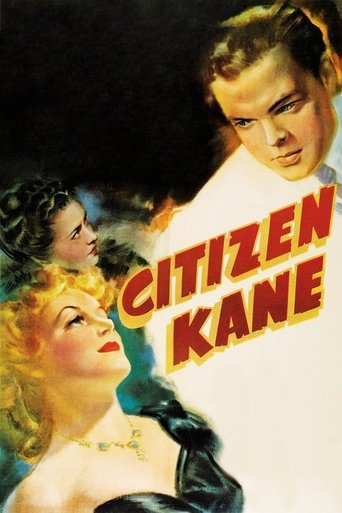
Citizen Kane
1941 · Film · 119 min
Directed by Orson Welles
Newspaper magnate Charles Foster Kane is taken from his mother as a boy and made the ward of a rich industrialist. As a result, every well-meaning, tyrannical or self-destructive move he makes for the rest of his life appears in some way to be a reaction to that deeply wounding event.
65 positive15 negative9 mixed90 neutralfrom 179 commenters
Where to watch
No streaming data for this title.
200 comments on Hacker News
What's the difference between "trash" and "tropes" in your mind?
For example the good old Harlequin books were pretty much trash: https://en.wikipedia.org/wiki/Harlequin_Enterprises
But when the expectation is trash, they deliver. They're the Hallmark Movies of books. It's not Citizen Kane, but sometimes you just want a predictable plot of a big city girl coming back to her home town and falling in love with the rugged local man.
I think it makes sense that historically American film focused on narrative based dramas and slow burn horror. Think of classic Hollywood hits such as Citizen Kane and Psycho. This is even apparent in the recent success of Obsession, which really follows strongly in the trend of Hitchcock, magical realism, human drama, psychological horror.
Compare this with historically successful Honk Kong films: Kung Fu Hustle, Police Story, Ip Man. I mean there are examples of Hong Kong films that are slow burn human dramas, like Chungking Express and Eat Drink Man Woman, and successful American action films like Diehard, but I think its clear that Hollywood film didn't start out with action movies, and Hong Kong film didn't start out with slow burn dramas, but adopted these genres afterwards; you could even claim that successful Hong Kong films like the Bruce Lee films of the 70s fueled the American appetite for action in the 80s, which was the most prominent era for that genre in the US.
As a corollary to this, it becomes clear that the Korean and Japanese film making industries are not as culturally distinct from Hollywood as Honk Kong film making is. For Korean film, the reason is obvious: Koreatown in Los Angeles is right next to Hollywood, in some respects is a part of Hollywood, and there are deep ties now between the Korean and American film making industries for that reason, and Korean-Americans have an overly high degree of representation in American media, and Korean productions often come to America to shoot (think of the end of Squid Games: it's almost certainly the case that they shot in LA because a producer has a cousin or something that works in Hollywood).
Solid Xanadu reference. I wonder what percentage of the current generation of young people would have any idea what this is from. I'm not a film buff, but took a film course in college, and learned all about Orson Welles and Citizen Kane.
Film (and television) seems studiously underrepresented given the presence of authors, playwrights, poets, and musicians. Musicals are also absent.
I'd also suggest that cultural impact plays a strong part in Homer's prominence. The American Homer would probably be older rather than more recent (at least by present reckoning).
Francis Ford Coppola / Mario Puzo, The Godfather; Michael Curtiz, Casablanca; Steven Speilberg; Orson Welles, Citizen Kane; Richard Rodgers and Oscar Hammerstein, Oklahoma!, South Pacific, The Sound of Music, etc., might make my list.
Top Gun: Maverick, Obsession, Project Hail Mary
Those movies might be good, but cinema are they not.
Cinema traditionally has meant movies like, À bout de souffle and Citizen Kane.
Can't find the source but the quote I heard attributed to Orson Welles to Turner wanting to colorize the purposefully black-and-white Citizen Kane was "Tell Ted Turner to keep his goddamn crayolas off my movies"
There's a lot of room for nuance here and I'll bet we disagree less than it sounds. I would agree with you that blockbuster movies do cinematography badly. But take your random crappy low-budget horror movie, and compare the cinematography to an equivalent film from the 1970s. The difference is stark. Techniques such as Hitchcock's dolly zoom, or the "power" shots from Citizen Kane are well known and widely used. They're easy to reproduce, but take brilliance to initially envision. Combine this with some of the modern technology; drones, camera stabilizers, etc. and things get taken further Try looking at a car chase from your average 70s film: you'll get a very shaky shot because it's filmed from inside the car, and in most cases the footage will be sped up because it wasn't save enough to film the real event. You end up with something which is totally implausible. The same for flyover shots -- previously these would be done in a helicopter and you'd get an incredibly shaky distant shot, but now anyone with any budget can put an amazing drone shot in a film for no money whatsoever.
> If there is no objectivity....then you would have no basis to explain why a film is better or worse than another
This is indeed the case. You can consult many film experts and get very different top ten lists. Some critics may hate The Godfather. Some won't get Citizen Kane. Some love a good popcorn fluff movie and find this year's Oscar contenders pretentious.
It becomes a matter of general consensus. And that consensus appears to be that it's a pretty satisfying movie; https://www.rottentomatoes.com/m/project_hail_mary. (High art? No. But that wasn't its goal.)
> You and Kurt Vonnegut seem to disagree here. He made liberal use of em dashes and hated semicolons.
Got some samples you would care to share? I'm skeptical we disagree, honestly. One can have preferences for different writing styles, and write in a way that works with preferred punctuation rather than against it.
> The problem with your definition of "good writing" is that it's entirely subjective.
I disagree. Subjectivity is only true to a point. Someone might like Independence Day 2 more than Citizen Kane, but the latter is objectively a better film.
Just to add to this, people say the same about eg citizen Kane being such a classic but without the context of it having genre defining firsts, the film doesn’t stand out as much to a modern viewer.
Thanks! Here's the full list: 2001: A Space Odyssey, 8½, Aguirre the Wrath of God, Ali: Fear Eats the Soul, All That Heaven Allows, Apocalypse Now, Ashes and Diamonds, A Woman Under the Influence, Barry Lyndon, Bicycle Thieves, Breathless, Casablanca, Céline and Julie Go Boating, Chinatown, Chinese Roulette, Citizen Kane, City Lights, City of Pirates, Contempt, Daisies, Damnation, Dishonored, Earth, Electra My Love, El Topo, Eraserhead, Eyes Wide Shut, Film Socialisme, Fitzcarraldo, Fuego en Castilla, Hiroshima Mon Amour, Holy Motors, Inauguration of the Pleasure Dome, In a Year with 13 Moons, India Song, Inland Empire, Irma Vep, Koyaanisqatsi, La Dolce Vita, La Jetée, Late Spring, L'Eau de la Seine, Le Voyage dans la Lune, Lolita, Los Olvidados, Lost Highway, Lucifer Rising, Man with a Movie Camera, Metropolis, Mirror, Mulholland Drive, Night Music, Ordet, Orpheus, Persona, Pickpocket, Playtime, Psycho, Rebecca, Rosemary's Baby, Rumble Fish, Scarface, Seven Samurai, Sherlock Jr., Singin' in the Rain, Stalker, Sunset Boulevard, Taste of Cherry, Taxi Driver, Testament of Orpheus, The 400 Blows, The Blood of a Poet, The Cabinet of Dr. Caligari, The Color of Pomegranates, The Green Ray, The Holy Mountain, The Isle, The Lady from Shanghai, The Night of the Hunter, The Passion of Joan of Arc, The Seventh Seal, The Spirit of the Beehive, The Tales of Hoffmann, The Tree of Life, The Turin Horse, Time of the Gypsies, Tokyo Story, Touch of Evil, Trans-Europ-Express, Ugetsu, Un Chien Andalou, Uncle Boonmee Who Can Recall His Past Lives, Vampyr, Videodrome, Wavelength, Werckmeister Harmonies, Wild Strawberries, Moonlight Sonata, Stellar, The Haunted House Biased toward European art cinema, experimental work, and directors who broke conventional narrative rules.
> it frequently produces mediocre or worse content
I agree, and I go one step beyond:
Any "series" is BY DEFINITION, bad. If to tell a good story you need +4 episodes, you're doing a poor job. Or, what's real, you're just bloating it ON PURPOSE to keep people attached to their screens.
If Citizen Kane, Tokyo Story, 2001 Space Odyssey or any other good film managed to tell their story in <3hs, I'm sure any other of these "originals" should be able to do the same.
The real quality resides in making something SHORTER and condensed. This is when you start playing with REAL cinematic mechanisms. For example, Seven Samurai is well known for its use of motion and dynamism. Kurosawa communicates a lot without using dialogue, just by the use of movement of the characters or the background. Today's productions are just: explicit dialog > cut scene nature > explicit dialog > cut scene nature > etc.
Some stories might need longer runtimes, like Lord of the Rings or whatever "bigger universe" it is. But these are EXCEPTIONS, not the rule.
For the record, I do enjoy some Series: Friends, The Office, etc. But these are just comedies, and one could argue they're explicitly made to be "bloated" (in terms of length span).
> Perfection is achieved, not when there is nothing more to add, but when there is nothing left to take away
PS: I know I'm going to get downvoted to oblivion but I don't care.
I realize this is about money, and it's 2025 right now, and I'm probably just old, but what will happen to quality? I actually laughed, twice, because they did this, twice:
> Beloved franchises, shows and movies such as [list of some of the greatest classics of all time] will join Netflix’s extensive portfolio including [list of laughable junk], creating an extraordinary entertainment offering for audiences worldwide.
And then just a few lines later (and I won't snarkily shorten this one):
> By combining Warner Bros.’ incredible library of shows and movies—from timeless classics like Casablanca and Citizen Kane to modern favorites like Harry Potter and Friends—with our culture-defining titles like Stranger Things, KPop Demon Hunters and Squid Game, we'll be able to do that even better.
Like did I really just see Citizen Kane in the same sentence as KPop Demon Hunters? Might as well add Ow, My Balls to the list, that's how jarring the contrast was for me.
I don't get why they bother changing the aspect ratio in the first place. What audience is saying, "I want a weird one-off version of the show in HD, please"?
Most of these shows were shot for 4:3. Directors framed for 4:3, lit for 4:3, blocked scenes for 4:3, and even built their special effects around 4:3. Stretching that work into widescreen feels a bit like deciding to colorize Citizen Kane, Dr. Strangelove, or The Man Who Shot Liberty Valance. It solves a problem no one actually has.
Viewers are already used to black bars, and we watch lower-resolution content constantly. Vertical phone clips shot by amateurs on TikTok, grainy GIFs, and IMAX footage down-scaled to fit our phone (and connection). Content that wasn't designed to fill the entire screen isn't the issue.
From what I've seen, most of these old shows end up on free or bargain streaming services packed with ads. I watched an episode of Highway to Heaven with my dad where they sped up the dialogue and trimmed pauses, squeezed the credits into a tiny picture-in-picture box, and still lopped off another minute so the episode ended mid-sentence. All of that was just to make room for extra commercial slots the original show was never designed to accommodate. Disgusting, really... though I suppose you get what you pay for.
Sticking with the original 4:3 and simply adding pillarbox bars is cleaner, simpler, and far more respectful -- and ultimately more enjoyable for the audience.
Relevant :
* "That Was A Mistake": Steven Spielberg Admits He Regrets Removing Guns From E.T. // https://screenrant.com/et-guns-removed-steven-spielberg-regret-response/
* 5 Worst Changes Star Wars Made From The Original Cuts // https://screenrant.com/worst-changes-star-wars-special-editions/
* 'Casablanca' gets colorized, but don't play it again, Ted | Interviews | Roger Ebert // https://www.rogerebert.com/interviews/casablanca-gets-colorized-but-dont-play-it-again-ted
Ask Russian-speakers to recommend a fun iconic movie to watch, and Ivan Vasilievich comes up all the time. I don’t see why, but it does.
Diamond Hand too.
It would be ridiculous if the same were true about Hollywood.
A Russian asks an American what movies to watch, and 8 out of 10 people go back to 1969 to recommend the same one? Impossible.
You’d get everything from Citizen Kane to Hitchcock to Rocky, etc. But you’d also get about 150 great picks from the 80s and 90s, and another dozen from after 2000.
And forget the greats. You’d get Zoolander, Demolition Man, Total Recall, Gremlins, Scream, John Wick, Legally Blonde even… there’s such a wide pool of fun iconic popcorn movies for any person.
Not to mention your Star Wars/Trek/Gate.
These movies aren’t “good” in the sense of being art. They’re good in the sense of people wanting to watch them.
Every n years I rewatch Commando, Con-Air, The Last Starfighter, etc just for kicks. It’s not pure nostalgia- they’re fun movies.
With int’l movies from any given country the list of recommendations is extremely shallow. It’s always one or two iconic revelations from a given decade. Or a couple auteur directors who won all the awards for their think-pieces about the human condition.
Another form of this observation is what initiated the flood of private equity into music back catalogs - people will go back and listen to music many many more times than they will a lot of other content. And the longevity of it is much longer, especially when you consider remixes, covers, and samples.
Every so often I’ll throw on some old jazz standards I’ve never heard of. Some classical music. Some early soul and R&B.
Old movies though? Only the iconic ones through a sense of obligation (eg, school/study) or someone convincing me I absolutely have to. Metropolis, Citizen Kane, interesting movies for their time and contribution. I just don’t feel the need to go back to this stuff the same way I actually enjoy going back to old music or other art.
> It's amazing how right-wing billionaire figures have captured social media platforms and news media outlets, such as Elon Musk's takeover of Twitter/X, Jeff Bezos's takeover of The Washington Post, Patrick Soon-Shiong's takeover of LA Times, and Rupert Murdoch’s continued control of Fox News/Sky News/WSJ/NYPost,
Tight media control and media empires are nothing new. I would recommend you to read about William Randolph Hearst [0] and his media empire in the late eighteen hundreds and watch the movie Citizen Kane.
[0] https://en.wikipedia.org/wiki/William_Randolph_Hearst
I'm not sure I agree, but I appreciate your response. I think the question is whether "left" always means progressive, and whether "right" always means conservative. For instance, I would not claim that the American right is very conservative these days, but they also don't feel "leftist" whatsoever. I don't want to really delve into political topics, however I feel strongly that what is currently going on with executive orders and gutting the executive branch workforce is not conservative whatsoever. It's more closely matches an unfamiliar kind of progressivism than it does conservatism in my mind. I could definitely understand how and why someone wouldn't agree with this, of course. I also think it could potentially be argued that leftist programs, such as entitlements, social programs, etc, are not necessarily "progressive." There could be ways these programs were strictly regressive. (and by that I mean "past-looking" rather than "bad.")
Now, I would also agree that terms like left, right, conservative, and progressive are not really strictly defined a lot of the time. With such loose definitions it might be hard to claim that I've got the definitions correct. In other words, they may just be no strict definition, and I think you could also argue that _I'm_ the one taking a minority definition.
Progressivism itself is an interesting topic in general. I think there is a lot of progressive thought which is strictly apolitical, but is definitionally progressive. An easy example would be video games. Is Doom 2 better than Doom 1 because it added more gameplay elements? Is Doom 2016 even better because it added so many more systems, and has more advanced graphics? In my opinion "apolitically progressive" gamers would almost always claim yes; things _advanced_ and having advanced the older media is inherently inferior. They would claim that the older Doom games are "janky" which is shorthand for "the older games have not adopted or anticipated modern conventions." Other folks take a different tact; they tend to dislike any newer advances in gaming, and get "stuck" preferring older games. Others take a more balanced approach; they appreciate both new and old games, but don't necessarily prefer something merely because it's newer.
I think movies are another interesting example. I think it could be argued that there are potentially objective improvements when it comes to movie making; cinematography would be one example. The movie Citizen Kane and the Director Alfred Hitchcock created totally novel approaches to cinematography which been widely and thoroughly adopted by filmmakers of all skill levels. (in other words, nearly everyone agrees that these are objective advancements) Even some of the worst movies nowadays may have more competent cinematography than some of the best movies from the 50s and 60s. On the other hand, there are clearly a lot of stylistic aspects to film-making which cannot really be said have to improved, but merely changed with the fashions of the times. I would argue that strongly-progressive-minded folks would not be able to see this; they'd see any older movie as inherently inferior, and see movies through a lens of progress. In other words, movies were always going to "advance" to where they are now, and anything older is inherently inferior. (and this is true even if they can still appreciate the movie.) Now, this is what I might call "hard apolitical progressivism," and is not necessarily the most common view out there. It's a useful example because of its explanatory nature.
It's easy to see how this mentality _could_ map to politics, but I guess my point is that it doesn't necessarily do so. And, even when it does map to politics it doesn't necessarily follow that people on the left are always progressive and people on the right are always conservative. (although I'll obviously admit that this trend is _usually_ true; the left tends to be more progressive on average, and the right tends to be more conservative on average.)
I think in the context of Citizen Kane and Orson Welles holding a snowglobe, it's referring to Marion Davies's clitoris (via the name of the sled, of course), which totally pissed off William Randolph Hearst.
>In the opening scene of the 1941 mystery Citizen Kane, the eponymous protagonist, played by Orson Welles, clenches a snow globe in his hand as he utters his last word: “rosebud.” The glass-encased spherical diorama of a snowy scene was a mere novelty at the time, but the film, in part, gave rise to its popularity.
Here's a snarky response from Gore Vidal to a letter from a ambulance chasing lawyer to the editor of the New York Review, questioning his veracity as the source of the rumor:
https://www.nybooks.com/articles/1989/08/17/rosebud/
[From Gore Vidal's perspective, the claim that "Rosebud" was William Randolph Hearst's private term for Marion Davies's clitoris is plausible but unverifiable. Vidal acknowledges that he did not receive this information directly from Hearst or Davies but suggests that such details could easily have emerged within the intimate, alcohol-fueled circles of Hearst's entourage, including figures like Herman Mankiewicz, who co-wrote Citizen Kane. Vidal argues that Hearst's intense fury at the film might be partly explained by the personal significance of "Rosebud," even if Orson Welles himself was unaware of its connotations. While he admits the story is speculative, Vidal finds it intriguing and consistent with the gossipy, complex dynamics of Hearst's world.]
Here's Orson Welles mentioning "rosebud" on the set of a Paul Masson Commercial: ;)
https://www.youtube.com/watch?v=A6P1ifGjvEE
What you REALLY don't want to know is what Orson Welles meant by "frozen peas", "in July", "and I'll go down on you", "fish fingers", "crumb crisp coating", and "beef burgers":
https://www.youtube.com/watch?v=tyko_oQ0da8
https://www.youtube.com/watch?v=IH1PJTY9AVA
https://www.youtube.com/watch?v=J6N8ADDDs0k
https://www.youtube.com/watch?v=Oh3BTbb9hCQ
https://en.wikipedia.org/wiki/Frozen_Peas
I can't wait to hear what private pet nicknames for body parts emerge from the intimate, ketamine-fueled circles of Musk's entourage.
I'm looking forward to classic movies with AI-generated thumbnails that take the main actor or actress and make them do the "Youtube Thumbnail Surprised Face". Imagine The Maltese Falcon or Citizen Kane but with thumbnails that look like [1].
1: https://hard-drive.net/wp-content/uploads/2021/05/youtubers-1024x538.jpg
Those are two of my favorite films. But Citizen Kane was largely unique as opposed to a precursor of a type. And Casablanca just put everything together in a package that really wasn’t that distinct from plenty of other love stories set against a WWII backdrop on the surface.
I had a film professor who told us that he thought Casablanca should be #1 on AFIs list of the best films. Citizen Kane is a masterpiece of cinematography, but otherwise I think it’s kind of weird. Casablanca is beautiful, complex, and approachable.
If you’ve never seen this film, give it a shot.
There are movies that intentionally break the montage and show narratives entirely stripped of its illusory power.
A famous example is “Jeanne Dielman, 23 quai du Commerce, 1080 Bruxelles” by Chantal Akerman:
https://en.wikipedia.org/wiki/Jeanne_Dielman,_23_quai_du_Commerce,_1080_Bruxelles
It was recently chosen as the greatest film of all time by the legendary Sight and Sound magazine, who conduct this poll among critics and other professionals since 1952. (“Citizen Kane” is still hanging on to third place after all these years.)
But cinematic fiction without its familiar causal trappings is a hard watch for most people, especially as attention spans get shorter and shorter in the age of TikTok. I don’t suppose “Jeanne Dielman” will suddenly be discovered by regular viewers.
The MCU was the height of films because it managed to wrangle more than half-a-century of comic book lore (much of it previously deemed unfilmable) into a coherent and compelling multi-film epic that was both entertaining and (lightly) philosphical and political. Through Endgame, it was an unprecedented undertaking involving the hard work of tens (hundreds?) of thousands of talented artists and technicians across the globe, marshalling untold resources over the span of a decade. And they actually pulled it off, producing a series of critical and commercial blockbusters that form (more or less) a single, sprawling narrative. It's unlikely we'll ever see anything like it again in our lifetimes.
The day when the project would lose its luster was always coming - as anyone who knows the history of Hollywood westerns and action flicks and blaxploitation could tell you - and you may gloat now that it's arrived. However, for a shining moment, literally billions of people had something special to share, and no amount of elitist posturing can take away from it.
(Citizen Kane's cool, too, of course. Gave us that clap meme and a baller Simpson's episode.)
I was responding to your tl;dr not the GPs point. I think people who love Citizen Kane should encourage other people to try it, and people who love Parasite should encourage other people to try it, and we shouldn't make broad pre-judgements like "because you are younger than X years you won't like this movie that's more than Y years old." Obviously if we know someone else's particular taste we might be able to guess that they will strongly like or dislike a particular movie (e.g. my mom dislikes any violence, she would hate Parasite).
Sure. But the reason it doesn’t apply “equally” is not because citizen Kane is a classic, but because ant man 3 is mainstream blockbuster trash. People who frame marvel as the height of films today are just so… intellectually lazy.
I’ve shown quite a few people citizen Kane and, aside from a musing discomfort at the parallels of post modern trump like media manipulation (FRAUD), it really doesn’t resonate with people nearly as much as, say, Parasite, despite them probably being culturally closer to Kane.
Tl;dr if you’re going to show someone a “life changing film” pick something new that is similarly ambitious. Classics require too much effort to enjoy. It often doesn’t work.
You honestly believe that the prequels are worse than the sequels?? There’s an argument to be made for Rise, but those other two films are Citizen Kane compared to the trash that are the prequels.
I've not seen the episode but I expect that is in turn a reference to Citizen Kane. In showbiz there is only one "Rosebud".
I'd further argue that while Citizen Kane might have been an important movie for moving the genre forward, it certainly does not fit the criteria of "a movie everyone should watch".
Sure, but for every Citizen Kane you also have hundreds of movies like Shark Exorcist, Plan 9, Catwoman, etc
I might frame it slightly differently: while we have built a federated medium for sending and viewing messages, we have not yet figured out the right conventions for how to run it so it becomes a thriving community. Those conventions are things like governance structure and user expectations. Once those are in place, a durable community can form that adapts to those over time.
Every medium has conventions of use that ultimately determine what it becomes. A medium without conventions is an experimental toy, which is what mastodon has been for a long time (and to an extent what film was before groundbreaking works like Citizen Kane). Now that it is going more mainstream, the conventions need to find their way into broad use. Specifically the tooling on mastodon really needs work. It needs cross-instance community notes, it needs higher level content mod tools, it needs financial structures to support operation, etc.
Basically, there's way more to social networks and community than some tech that delivers messages, and thats where the rub is.
I think that's too cynical. This is why I like interviews with Orson Welles talking about what it takes to make a movie. When he made citizen Kane he had never made a movie so he didn't know the camera was noisy so put it in a box, or that actors were used to acting in a stage play like environment (watch Philadelphia story and citizen Kane back to back, both amazing, but for entirely different reasons). And he didn't have some kind of belief that he had some magic, just the advice of his director of photography that you need about half a day's training to learn how to make a movie and the rest of it is making a movie.
And that's the truth. Go to your local art house cinema and watch whatever they are playing. There are people trying to create something that's their vision. But none of them work in Hollywood.
My son and I just watched our way through the Bond movies, and I remember this exactly. Was it “On Her Majesty’s Secret Service,” or one of the later Roger Moore gigs? I remember that one in particular was lit and shot exceptionally poorly.
This isn’t a matter of time period, it’s skill and attention. At the time of the Bond films it was well-known how to do good lighting, and people had been doing it for decades. Contrast the crappy Bond films with any beautiful old movie, like “The Third Man” or “Citizen Kane,” still legendary for great cinematography.
That is a great Citizen Kane joke since its greatness is that each shot was carefully planned and storyboarded. The films brilliance is the visuals.
I was going to expand on this point. “Moving images” abstracts away a lot of large improvements in both the technology for producing and for consuming movies. Same with “interactive electronic entertainment” for video games. And the more limited technology in 1941 placed constraints on storytelling such that, if Citizen Kane was made today instead of 1941, just with better resolution and color (but the same shots, same dialogue, same story), it probably wouldn’t even be in consideration for GOAT by most movie critics.
In contrast if LOTR (the book series) was released today instead of 1954-1955, it would have a serious chance at being a mega best seller. It’s such a good read independent of its influence on subsequent fantasy novels.
I can respect this. There is no problem in saying that Citizen Kane is a boring movie as a matter of personal opinion based on personal preferences in style and technical requirements. Ocarina of Time, which you mention and is often considered the best game of all time, isn't a game I particularly enjoy despite recognizing its many qualities. I simply don't like that type of game very much.
Who decides what "filmic value" is? I've seen some of the older films, and I feel they hold up pretty well; The Passion of Joan of Arc (1927, #21 on this list) and The Cabinet of Dr. Caligari (1920, not listed here) are some of my favourite films, and personally I'd say they really do stand up well today.
Some people might also find these finds incredibly boring, and that's fine. In the end this is nothing more than "films the 1,639 people who voted liked the best". I bet everyone can name some films they feel should be on that list, or has seen films on the list that they disliked; for example I felt Citizen Kane was profoundly boring. That's okay as not everyone's movie taste is the same, just as people's tastes in music or food differ.
Years ago I watched The Childhood of a Leader in the theatre with my then-girlfriend. I thought it was pretty good. I could see her shifting in her seat and sighing heavily, and her dislike of it was palpable even in the dark without any words spoken. She hated it and would have walked out if it wasn't for me. My rating would be 8/10 or so; hers 1/10. Average rating: 4.5, which is not too far off the 54% on Rotten Tomatoes.
Anyhow, my point is: I wouldn't be so quick to dismiss people's tastes.
Agreed. Citizen Kane was insanely boring even though it’s supposed to be the best movie ever. I need to pull a Wittgenstein and ask: what does the word “best” mean here?
I care mostly about movies that are incredible to me now in 2023. That informs my definition of “best movies”. I am not interested in Citizen Kane’s innovative use of the deep focus technique. I can appreciate an incredible older movie, but not for obscure film buff reasons. If anyone knows of a good best movie list that is free of this sort of pretentious navel gazing, please link it below.
Also, this is a hot take, but at a certain point older movies become worse precisely because of their datedness rather than “more interesting due to what they achieved within their technological boundaries at the time”. If they’re still good, that’s because they have an absolutely stellar story.
I think this is mostly just a misunderstanding of what the RT score means. The scoring falls apart at the edges because its a measure of recommendability*, not a precision measure of quality.
Exceptionally good movies (which Paddington 2 is btw) will trend heavily toward 100% and any drop from 100% are from outlier reviewers. Citizen Kane has 1/131 negative reviews and Paddington 2 has 2/253 negative reviews.
If you want a rating of quality you can always just click on the score and see that paddington 2 has an 8.7 aggregate compared to Citizen Kane's 9.9.
* what percent of viewers will not regret watching the movie. That makes this a combination metric of quality and variance. A low variance 7/10 will beat a high variance 8/10 in RT score
For me, it was after they invited a new batch of reviewers who ended up bumping Citizen Kane from RT's "best movie all time" down a bunch of slots to such an extent that it was outranked by Paddington 2
I still use the ratings (because they're built into Plex) but mostly as a novelty, and sometimes as a puzzlement. Increasingly, you see scores like 5% tomato, 95% audience (or vice versa!) that I'm sure mean _something_ but rarely anything to me.
RT ratings are weird because they don't reflect how much critics liked a movie, only whether they rated it "positive" or "negative". The movie with the highest rating ever is Paddington 2 - not because any reviewers thought it was the best movie ever, but because nobody hated it. It ranks higher than Citizen Kane, despite many reviewers literally calling that the best movie ever - but at least one reviewer didn't like it. So RT ratings favors inoffensive and uncontroversial movies appealing to the largest possible demographics.
And shows are often reviewed after only a few episodes. Typically two to four episodes are released to reviewers before the premiere, and this is what the review is based on.
So a high rating means most reviewers reacted positively to the first few episodes.
Inventors are a different animal. One doesn't start with a reasonable theory but one works from the other end, one quite unreasonably starts with what would be wonderful to have. One doesn't test a theory but one ponders how the seemingly impossible might be accomplished which is a problem that can be broken down into more reasonable things until it's impossible component is defined properly so that one may make an often futile attempt to ask the question differently. With few exceptions there are no results. Those not skilled in the art consider that part cheating. This is logical because their line of reasoning seeks to further validate that what they already know, it thus involves an effort to prove something can't be done, or at least not by someone like that, or at least not by that person, or at least not by that method etc etc
The cheating in this context would be to study the thing the file represents rather than the representation.
A dumb example would be to make a 10 hour movie from a single image that doesn't move. There is no reason for the file to be larger than the original jpg.
> I can not only get Orson Welles' Citizen Kane. I can get Citizen Kane in colour!
https://www.youtube.com/watch?v=JI5qy9Zoh_0
To argue that this was not the method Sloot used is missing the point. The question is: How to do it, not how to imitate someone else.
In his demo Sloot was playing 16 full movies simultaneously on a 1995 laptop at any speed. A high end computer had 32 MB memory, 133 MHz cpu, PCI video cards had 4 MB ram, 66 MHz, 560 MB HDD
If it was not what he said it was why didn't he just sell what he had? Without the extraordinary claims the demo already requires cartoon physics. He drives the truck into the match box, making an U turn inside doesn't at all seem necessary???
The 3 top grossing films of 1941 the year of Citizen Kane:
* Sergeant York, a superhero war propaganda film
* Honky Tonk, a racy Clark Gable / Lana Turner western
* Louisiana Purchase, a zany Bob Hope musical
For the record, Citizen Kane was a flop, and there were many excellent movies made this year.
This is a bad argument.
Yep probably, still room for some light and visually pleasing reading I guess! Just like I might enjoy watching some John Wick movie knowing full well it won’t go down in history like Citizen Kane.
>I now believe the future will be far more irresponsible and stupid than I once did.
>I am increasingly worried that human success and failure are ruled by taste — the demand side, in economic terms.
>If there are fewer beautiful and charming residential post-World War II neighborhoods, it is because most people do not want to live in them. If there are fewer movies today with the dramatic impact and compositional rigor of “Citizen Kane,” it is because people do not very much want to see them. It is not that it is too difficult or expensive to make another “Citizen Kane.”
https://www.bloomberg.com/opinion/articles/2022-07-03/are-things-really-that-bad-actually-no
> Alien still holds up in almost every way.
I very reluctantly disagree. I'm in my mid-30s (born 1988), and I watched Alien for the first time about a year ago. I have to say on the whole, I didn't like it. I think it's a victim of being just on the cusp of being "too old" for modern tastes. Like much other media of its era & older, it's paced too slowly. Too many long panning cuts, too much staring at a wall, too much space between dialog, too little action. I ended up staring at my phone for the 2nd half of the movie, wishing it would be over already.
There are some other films of a similar timeframe that do hold up. I thought Jaws, released 4 years before Alien, was paced absolutely excellently, and I'd call it one of my favorite films. But Alien feels more like older media in its pacing, and it suffers for it today. I absolutely do not deny it is an excellent film "for its time." Obviously the special effects, acting, set design, and music are all wonderful and hold up on their own, and it's undeniably a very important film historically & culturally. But much like Citizen Kane or original Trek, I think it's just a bit too slow for a general audience in the 2020s. The sequels feel better today.
Surprised the author did not mention Louis Auchincloss, who is the obvious template for the excellent Diaz book. Auchincloss was fascinated by what money did to the wealthy class of his time. The Great World and Timothy Colt, The House of Five Talents (fiction but about the Vanderbilts) and many others focus on what happens to the person who makes the money and what they ultimately leave behind.
It was common for Auchincloss to use diaries, news stories, and personal narration from people around the subject to provide perspective. The Rector of Justin has six narrators. This seems to be most useful at piercing the many layers that form around wealth, and how the individuals often lose themselves. Citizen Kane would be the film example of this.
Auchincloss was also a great short story writer. Tales of Manhattan is a great way to get into his subtle, but deeply perceptive writing about New York's old world of finance, law and art worlds.
I have a relatively controversial (at least to some) view that Citizen Kane was the first modern movie. When you watch it, it feels starkly modern compared to other production of its era.
William Randolph Hearst anyone? Maybe people have heard of a little movie called Citizen Kane?
"Flood the zone with bullshit" - Steve Bannon
I treat a single word, Xanadu, as a “meme” and follow it from a 17th century book, to a 19th century poem (Coleridge's "Kubla Khan"), into the 20th century where it was picked up by a classic movie ("Citizen Kane"), an ongoing software development project (Ted Nelson's Project Xanadu), and another movie and hit song, Olivia Newton-John’s Xanadu. The aggregate result can be seen when you google the word, you get 6 million hits. What is interesting about those hits is that, while some of them are directly related to Coleridge's poem, more seem to be related to Nelson's software project, Olivia Newton-John’s film and song, and (indirectly) to Welles' movie. Thus one cluster of Xanadu sites is high tech while another is about luxury and excess (and then there's the Manchester Swingers Club Xanadu).
Yes, that's the question. It may seem obvious that it would be the latter, but Raiders of the Lost Ark is nearly 42 years old at this point. Today do you think more people have seen Citizen Kane (1941) or Bambi (1942) as Raiders of the Lost Ark (1981)?
Granted, It's Always Sunny in Philadelphia isn't as popular, and not everyone who has seen one IASIP episode will have seen them all, but the target audience is similar.
Funnily enough I share same sentiment about Beatles as about Citizen Kane, I forced myself to watch it together with Casablanca and few other "classics" and it's horrible movie by nowadays standards and I'd say you don't need to see it even once unless you are really movie nerd.
Back in the day it was revolutionary and important I guess, but by nowadays standards it's utterly mediocre movie despite people praising it as something amazing, but to be fair I don't think I'd find movie from CK era which I'd like while I have no problem to find better artists from Beatles era whose music I enjoy much more and like them even nowadays compared to present day music.
And one more unpopular opinion from someone who experienced jail like environment I think even recent highly rated Shawshank redemption while very good and enjoyable movie is romantic unrealistic fairy tale (for women) and I'd rather recommend everyone to watch Das Experiment to see more realistic display of prison I can sign, yet I've of them is rated asking best movies in history and the other is pretty much unknown.
To me they are like Citizen Kane: it’s a great movie because what it did had never been done before but I have no interest in watching it ever again.
>Sometimes ignorance is bliss. Just think about George "Good Will Hunting" Dantzig [1] with the (in)famous "I assumed these were homework assignments, not unsolved math problems" [1] or Eliud Kipchoge running a marathon in under 2 hours.
A pretty infamous example is Citizen Kane. Welles knew very little of traditional cinematography techniques by the time he got to the production of the movie, so his planned shots more or less fit his artistic vision rather than industry standards. Gregg Toland, his director of cinematography, was at that point a 12 year veteran of the industry and hated the bland factory-line output of movie composition of the period.
Welles more or less told Toland what he wanted to shoot and how, and Toland did his best to fit that artistic image. Welles was completely clueless that Toland was using innovate and never before seen techniques to film his shots, and Toland kept quiet because he was allowed to go wild with his vision :)
Exactly.
Going further back in history there's also this thing called Film Noir that further disproves the argument that digital cameras (or, more narrowly, Netflix) is the origin of the high-contrast look.
I mean, even the most celebrated film of all time, Citizen Kane, is celebrated among other things for its stark contrast and that was shot in 1941 or thereabouts.
Did something similar when I was in college. I watched the IMDB Top 250 and AFI's Top 100 (lots of overlap at the time). I started aggressively, thinking I could watch one movie a day, and struggled to appreciate any of the movies I watched. I was watching movies to check them off my list. Watching "good" movies back to back made it hard for me to appreciate them; it made my baseline of "what a movie is" too high to enjoy. This made me slow down and add movies between the films on my list. I started watching poorly reviewed movies and found some of my favorite movies along the way.
I like your idea of "... and to understand more about what life was like by watching what they watched ..." That's something I didn't like about strictly sticking to an AFI list. To me, some movies contributed a ton to cinema and are a slog to get through. "Birth of a Nation", "Citizen Kane", and "Gone with the Wind" were more fun to read about than to watch. You can't avoid this with your list having some on there that I dread, but the goal of your list makes more sense to me.
Thanks for the trip down memory lane and getting to think about Netflix DVD subscriptions and my spreadsheets again. I'd like an update when you are done.
Something else I read reminded me Citizen Kane was submarined for years by the industry on Hearst's say-so.
But this is different: people are drifting away as eyeballs from arty films? Maaaybe, but also maybe not: I love scandi quirky sheep farmer love stories, maybe the foreign Oscar segment is alive and well?
Art films cost a frightening amount of money but far less than waterworld or heavens gate. It's all relative, when it comes to residuals and like citizen Kane, it can take time to get there.
Citizen Kane is on iPlayer at the moment for those with access:
https://www.bbc.co.uk/iplayer/episode/b0074n82/citizen-kane
Moonlight is too.
Citizen Kane and Akira Kurosawa movies get put high up on the list of the best movies of all time. If someone is on a 10 hour bus ride, they aren't going to watch these, they're going to watch the latest marvel movie or star wars series.
Lisp may be the most influential programming language of all time, but that doesn't mean it's the best tool. It has a fragmented old eco system, it isn't as simple as scripting languages, it isn't as fast as native languages and its main advantages have been built in to other languages a long time ago.
OTOH, I can't imagine enjoying Casablanca in color. Or Citizen Kane, Thin Man, or African Queen. B&W is part of a film's atmosphere, it's different.
I'd never want to see Forbidden Planet in B&W ... and The Day the Earth Stood Still in color? criminal!
If you go to any contemporary art institute it's full of still images which are just solid colors or like underwear stapled onto a canvas. Even if you like that, most digital art is just anime girls with large breasts.
The digital music you're complaining is just one portion of what is being made and it has mass appeal; you can also complain that sitcoms are so much worse Citizen Kane or McDonald's is so much worse than fine dining used to be. There's still nuanced music and film and food being made, and the complaint that popular stuff is "crude" is basically just a normal refrain in all areas of art, and I don't think digitalization is the primary culprit.
Right, E.T isn't a stand out classic, it's a bit rushed, the game isn't a great fit to the movie (but it's far from the worst in that era), but what stands out in people's memories is mostly that it wasn't what they expected. Which somewhat tells us about that era of video games more than about ET.
In an era with Goose Game, Paper's Please and Unpacking, people understand that just because this is a video game doesn't mean it needs to fit into a handful of pre-existing niches - games can do whatever they want, but ET pre-dates that era.
I expect if you had shot a found footage mockumentary movie in 1940 (before even Citizen Kane was shown) audiences wouldn't even have understood what you were trying to do. It wouldn't matter whether you did a good job or not, reviews are going to say it's a bad movie because the reviewer does not have a framework in which to assess it.
> Casablanca is widely remembered as one of the greatest films of all time, coming in at #2 on the AFI’s top 100 list and similarly regarded by many other critics. You can quibble with its exact rank, but it’s at least undeniable how iconic Casablanca remains. Even now, more than 70 years after its 1942 release, few movies have ever produced as many enduring quotes.
The link to the AFI top 100 appears to have moved here:
https://www.afi.com/afis-100-years-100-movies/
The top movie is Citizen Kane, released one year prior to Casablanca (1941). The most recent movie on the list, released in 1994, was Fargo.
> But to people who watch thousands upon thousands of movies this gets astoundingly boring.
I would say that there's so many different ways to appreciate films, so many different types of audiences, and such wildly different intentions behind the films and the critics who write about them. It seems reductive and a bit misguided, to me, for someone to write an article about the divergence between metascore and imdb ratings. It's comparing two gigantic blobs of scores and drawing straight lines through them. Does it actually say anything interesting? No in my opinion.
I mean, sure, the films with super-high metacritic scores are worth watching. They're a part of "the canon"-- although for the life of me I could never get through Citizen Kane. But a metacritic score is worth about as much as an imdb score. It's a blunt measurement.
The value of a well written review has little to do with "the score". Many include "a score" because they're forced to, but it's so much better to just pay attention to what the critic is actually saying in the review. It might speak to you if you're in the right headspace, and provide some insight into the film that you hadn't considered. They're typically more valuable to read AFTER you've seen the film. But if you find a writer you grok, you'll get some threads to pull on that will open up all kinds of film experiences you would have never had.
The value of an audience score is garbage, by itself, without any recommendation algorithm to match up your viewing habits and limit the pool of films presented to you. Even then, the high-scores mean almost nothing though the bottom-of-the-barrel low ones usually can be trusted to actually be bad.
Critics seem to rate movies on a global scale. How can I give this movie 9/10 when Citizen Kane is a 9/10? On that scale, this movie is at most a 6. Unsurprisingly, popular genres get trashed on that scale.
Normal folks rate movies subjectively. Was it really awesome and did I love it? Then it’s a 10.
A roman à clef is protected legally. It's why a movie like Citizen Kane was protected, despite the fact everyone knew it was about Hearst.
I’ll play:
The Thin Man (1934), It Happened One Night (1934), Dodworth (1936), Fury (1936), The Awful Truth (1937), Grand Illusion (1937), You Only Live Once (1937), Wizard of Oz (1939), Only Angels Have Wings (1939), The Great Dictator (1940), His Girl Friday (1940), Philadelphia Story (1940), Rebecca (1940), The Maltese Falcon (1940), Citizen Kane (1941), A Woman’s Face (1941), The Magnificent Ambersons (1942), The Ox-Bow Incident (1943), Casablanca (1943), Double Indemnity (1944), Mildred Pierce (1945), It’s a Wonderful Life (1946), The Best Years of Our Lives (1946), Great Expectations (1946), The Big Sleep (1946), The Red Shoes (1948), A Letter to Three Wives (1949), Sunset Boulevard (1950), All About Eve (1950), A Place In The Sun (1951), High Noon (1952), Roman Holiday (1953), The Wages of Fear (1953). (I slipped two French films in.)
Almost anything by Hawks during those years. Or Hitchcock. Almost anything with Bogart. Or Grant. Or by Wilder.
Tons of noir films skirted the rules.
Look, I’m not a fan of the Hays code but some of those movies were to me better because of what they had to imply.
This is after the Hays code but as an example I recently watched the original 3:10 to Yuma and the remake. I hated the remake. What appeals to me about Elmore Leonard stories is that despite being about bad guys, they have a degree of charm to them (Out of Sight, Justified, Jackie Brown, Get Shorty,etc). The remake took all of the charm out of the original and replaced it with graphic violence and cruelty.
Say what you will about the Hays Code, but I would hardly consider Gone With the Wind, The Great Dictator, Casablanca, It's a Wonderful Life, Sunset Boulevard, The Ten Commandments, The Bridge on the River Kwai, Ben-Hur, Spartacus, Psycho, West Side Story, Lawrence of Arabia, To Kill a Mockingbird, Paths of Glory, It's a Mad, Mad, Mad, Mad World, Mary Poppins, The Sound of Music, or, you know, Citizen Kane to be especially "crappy" movies.
> Why not try harder?
Haim Saban didn't become a billionaire by trying harder in that way. He built an empire off of cross-national media translocation, not chasing Citizen Kane.
The movie that tried harder was the 2017 Power Rangers film, with a worldwide gross of $142.3 million, against a production budget of $100 million. Contrast with this movie, doing $66.4 million on a $15 million budget. Mich better ROI on just giving the target demo what they wanted.
There's several lifetimes worth of content out there that's older than I am. Some of it I may never watch/read/listen to, but some of it I will, especially the works that are regarded as "classics".
I wouldn't be surprised if millions of people first experienced the plot of Dune this year, even though the book is over 50 years old. When I talk with friends who are still reading the books (or waiting for part 2 of the movie) I try to avoid spoiling things as a courtesy.
At this point some endings like Citizen Kane have become so memetic that it's impossible to avoid spoilers, but some people still prefer to go in as blind as possible.
Because his argument is not good. The structure is “If there is no X, then there is no Y. Because Y, X.” This is circular reasoning which is more obvious if we use the same structure as
“If carbon exists, then carbon-based alien life forms exist. Because carbon-based aliens exist, carbon exists.”
Logically, not wrong, but you missed the most interesting part of the proof: aliens exist?! PG missed proving the most interesting part of his post: that good taste exists. I don’t think reductio ad absurdum really works here because there are millions of possible explanations for the “effects” of good taste. In his example, the fact that people have non-random responses to art.
The problem here is just the fact that people have consistent responses to art does not suppose that there exists some inherent reasoning called “taste.” In fact, many popular things are abhorred as poor taste. I think we can agree that liking Citizen Kane more than Twilight would be called “good taste.” The problem here of course is that “taste” is a sociological construct - not a logical or philosophical one - designed by humans to distinguish class upon non-obvious signifiers. Perhaps you could dress a lower class person in fancy dress and perfume, but any upper class person could snuff them out in a moment by any hundreds of small little signifiers.
PG seems to want to talk about taste without having to say any of the unfashionable things about it, not naming any specific art works or signifiers of taste. He wants to “prove” taste exists without ever even defining it. Without a single example in this framework that lends credence to his ideas. By his logic, Marvel movies and Twilight should be more tasteful than Vertigo because more people more consistently like it. In reality, taste works the opposite way, but it’s not that simple either. Most people would hate Tommy Wiseau’s The Room, but that does not mean that liking it means you have good taste. Rather the opposite in fact. The truth here, of course, is that “taste” is a cultural, social, and economic property and lens, not a logical one. You have to get into real world to argue about taste, which PG seems entirely uninterested in doing.
If I may be a bit tongue in cheek, I would advise Paul that if you want to start talking about taste, you must first talk about scarcity and then irony.
How many movies does your avg movie goer know or can name movies from the 40s? Maybe, maybe half a dozen (it's a wonderful life, casablanca, citizen kane, Disney Fantasia and Pinocchio, and his girl Friday. I'm pretty sure your average person can name an order of magnitude more video games from pong to mario to sonic to modern day AAA games. And over time, some will have staying power, like I hope Breath of the Wild will.
This is exactly how I felt watching "Citizen Kane". It just felt like an ordinary movie? Still, a good movie, but what was all the hype about? Turns out the gravity of that movie was all about the influence it had on all future generations of film.
Super Mario 64 and The Ocarina of Time elevated open-world 3D game play. So much of gaming to this point, even 3D gaming, was dungeon crawling, or traversing linear paths and story lines, or killing opponents in a closed arena. SM64 and Ocarina really transported the player into a whole new world.
The camera work was almost perfect, and the subtleties of the system were revolutionary. The Wikipedia article[1], and this picture in particular[2] provide a good description.
25 years later I think of SM64 as the Citizen Kane of video games. Citizen Kane provided a glimpse of what the medium was capable of; it changed peoples perception of what a movie could be. Virtually every movie since has either been directly inspired by CK or has internalized its zeitgeist. Super Mario 64 played the same role for video games.
Or - it could that since I grew up playing SM64 I've anchored to it and feel it's influence more deeply than history warrants :D
[1] https://en.wikipedia.org/wiki/Super_Mario_64#Influence
[2] https://en.wikipedia.org/wiki/Super_Mario_64#/media/File:Super-mario-64-camera-system-ai.jpg
As a film major, you give 90s live audience sitcom cinematography too much credit. From a cinematography standpoint directing something like Seinfeld is quite standard. They don't even move the cameras and lights between episodes. The operators are instructed to keep whoever is speaking in the frame. I love Seinfeld to death, but this is no Citizen Kane. We're here for the performances, not for the camera work. Settle down a bit.
> The author of this article compares Full Throttle to Day of the Tentacle to show why it's a bad game, but Day of the Tentacle is one of the very greatest adventure games ever written. It's like comparing a movie made today to Citizen Kane.
Which isn't at all unfair. When discussing something that doesn't work it is often helpful to compare it to something that did that thing right.
I'll go further than this, and say that this is practically the only use case I would have for a movie theater.
As-is, movies air in theaters for only a couple months, and then they're gone. Like, what the hell. Every time in recent memory that I've ever suggested to someone that we go see a movie, I've had to find out that the movie was no longer in theaters, or was even already available for streaming. That's basically a non-starter for people with jobs. Not that I haven't also gone to a theater with no particular movie in mind and just watched whatever was playing, but if anything that seems way more niche to me.
The last times I went to the movies were March 2019 and October 2017, and both of those were special cases (the latest installments in a series I was heavily invested in, Fate/stay night, each with a limited one-day release and a long expected wait before it would be available for illegal download via Blu-Ray rip). I haven't been to the movies with any kind of regularity since I was a teenager.
Anyway, point being, I think movie theaters would actually be more compelling for more people if they included a revolving door of well regarded classics, rather than only whatever films happen to be the latest releases. I'm unlikely to wander into a theater with no idea what's playing or whether any of it is worth watching*, but if I could rely on them also having one or two that were known great and/or on my bucket list (Citizen Kane, Fight Club, Matrix trilogy, Dark Knight trilogy, Star Wars, Pulp Fiction, Schindler's List, Shawshank Redemption, etc.) then I might just take the gamble that something playing will be worth the time.
*: I suspect that this is also a generational gap in play. Older folks who primarily watch traditional TV with ads probably have a much better idea of current and upcoming movies.
> This is incorrect. The amount of material used is the third factor in a fair use test. There are other ways it comes up as well (e.g. damage calculations).
The 3rd factor of the fair use test deals with how substantial the copied material is in relation to the entire work. You can make a copy of 100% of the original work and have it still be fair use while in another situation copying 0.002% of an original work would not be fair use. The measurable amount (bytes, seconds, square inches) you are copying does not matter here. Instead the "importance" of what you are copying to your criticism is being defined in this prong.
For instance:
I am a movie buff and:
1. Make a copy of the entire movie of Citizen Kane 2. Remove the audio and replace it with a commentary track going over every framing/camera trick through the movie 3. Upload this to an educational youtube channel that teaches viewers how to shoot a movie
I would likely be allowed to use fair use as a defense to a copyright claim. Here, if an expert could say all 100% of Citizen Kane's film, contained relevant film techniques that I was actively commenting on, I would have copied the correct amount for my usage.
If I instead owned a movie review channel and I said "Citizen Kane is my favorite movie" and I displayed the entire movie after that I would likely not be using an appropriate amount of the film.
It's also important to note that fair use is a very narrow defense that covers a very limited subset of uses. It is not a generally applicable, or even a guideline, for how to skirt around copyrights.
Contrary to some posts here, I think this approach shows promise though it would clearly benefit from further refinement.
The criticisms here seem to break down into three groups:
1. "I don't mind reading subtitles and that will always be better."
2. "Any real film purist will prefer watching the original."
3. "The implementation is kind of uncanny at some points."
My thoughts:
#1: Sure, I actually agree but I also know that there are a lot of people out there that, for whatever reason, find reading subtitles breaks their immersion. Even though that's not me, dismissing that audience's experience isn't very inclusive.
#2: Yep, As a film maker I totally get that but us purists and aficionados aren't that big of a market. So yeah, Criterion should never use any tech like this for definitive remaster releases as it doesn't preserve artistic fidelity. But just because they should keep this away from Citizen Kane doesn't mean there aren't suitable classes of content. In the era of high-fidelity streaming media, additional versions don't necessarily take distribution availability from the original (which should always be available).
#3: Though I'm not an AI engineer I've done some work with AI engineers on artistic content and my guess is the current gaps we see might be sufficiently surmountable with refinement. It may never be fully automatic but redubbing is human intensive anyway so an interactive UI that allows an ADR-experienced editor to tune problematic output may help a lot.
I think the team should keep going. Once it's good enough, there is a lot of content that might reach new audiences through this tech.
Somewhere between Muybridge's horse gaits and Citizen Kane, film went from technical novelty to unquestionably art. Somewhere between Pong and Journey, games made a similar transition.
The OP doesn't mention a date, but the linked MoMA post says the collection was established in 2012: https://www.moma.org/explore/inside_out/2012/11/29/video-games-14-in-the-collection-for-starters/
Offtopic, an early-ish film that impressed me is ‘The Rules of the Game’ (‘La Règle du Jeu’) by Jean Renoir, from 1939. I somehow stumbled across it long ago, and recently had to wade through Wikipedia looking for its name, because I realized how alive it was for its time—it's basically ‘French new wave’ before even the WW2, and does quite much remind of Fellini. Maybe I'm watching too few pre-war films, but e.g. ‘Citizen Kane’ looks rather stilted compared to ‘The Rules of the Game’.
Apparently the picture was originally poorly received and quickly recut to a shorter time, but reconstructed in the 50s back to 110 minutes—so it's best to make sure to see this version.
One other, even earlier film that has the same lifelike quality for me is ‘Man with a Movie Camera’ by Dziga Vertov, which is not even a fiction film per se but sort of a documentary. Originally a silent film, but now best enjoyed with the soundtrack by Cinematic Orchestra: https://www.youtube.com/watch?v=cGYZ5847FiI
P.S. Wim Wenders said in his quasi-documentary ‘Tokyo-Ga’ about director Yasujiro Ozu, that previously films were about life as it is, as opposed to now that both life and films feel more and more like dreams. That's the impression that I get most from European films from around the 50s and the 60s: French new wave, Fellini, Bergman—even though Fellini constantly swerved into the territory of fantasies. ‘The Rules of the Game’ is also in this company for me.
No comment on the rant other than to say that when I read this I thought to myself that given the author is referring to WRH then that’s definitely got to be Xanadu. And Wikipedia has just confirmed that it is!
My point being that should anyone ever want to see this argument made much more cogently (while also getting to appreciate one of the greatest films ever made) maybe give Citizen Kane a watch.
Rosebud!
As an art form, video games may have been a victim of their own success. It took film 50 years to develop its own language and style (first film recorded in 1888, first successful long form narrative in film 1915, citizen Kane, arguably the turning point for modern cinema in the mainstream in 1941, before that film copied stage plays in style and form), so maybe the unique properties of games will become more mainstream, instead of the brief bursts of genius we see from the indie segment are still on track. It also may be a generational thing - there’s no way I could ever convince my mom that games can be deep experiences that question agency and identity in a way passive media can’t, but someone my age may not agree but at least they buy that it’s a possibility, growing up with a medium and internalizing the language and symbols might be a prerequisite to having that kind of connection to art.
But it’s amazing to see that commitment to that future from those early days - as a yearly attendant to (non-COVID) GDC I’m amazed I haven’t heard of this talk, but it really resonates with me
If you are a fan of Citizen Kane and the whole mythos around this movie, you might enjoy Mank. If not, you will probably find it quite boring and pointless.
Fincher is certainly no art house director. He makes big-budget movies with stars like Brad Pitt or Ben Affleck. He is kind of like Steven Spielberg - a director so talented in the craft he elevates rater middlebrow material to be uniquely enjoyable. Fincher just gets a bit more respect because he is "dark". But dark does not mean deep. For example Seven is really quite silly and contrived, but his excellence at directing makes us forget that.
I've always said Citizen Kane is the best film but Casablanca is the best screenplay.
I had a film professor who always thought that Casablanca should be number 1 on AFIs Top 100. I tend to agree with him. I think Citizen Kane is a cinematic masterpiece, but Casablanca has a much better and more coherent story.
>A lot of people watch it with no background knowledge and subsequently don’t quite understand the “best film ever” label, but Citizen Kane is indeed a fantastic film. Just read about Orson Welles first.
Interesting. About 10 years ago I was tired of modern cinema and completely stopped watching new films. After some pause I decided to start watching classic cinema from 1930 onward in more or less chronological order (in the last year i've stopped at ~1800 movies, up to 1995).
In general, the quality of 1932-1942 american cinema (and, to a lesser degree, 1945-1950) far exceeded my expectations. And, while Citizen Kane is a very good film and deserves to be seen (it was actually one of the few "critically acclaimed" classic films that I've actually enjoyed), but when seen in context of what was filmed at the time, Citizen Kane doesn't really stand out among its contemporaries that much. A lot of technical details (but not all) that are praised by modern critics were more or less a common thing back at the time. I'd argue that Kane wasn't even the best film of the 1941 year (Sullivan's Travel was better and H.M. Pulham, Esq its equal) and definitely not the best film of the 1930-1950 "golden age" that ended at a very high point with Sunset Blvd. before plunging into the abyss in 1950s.
That's all of course only my opinion.
On a related note, if you enjoyed Citizen Kane, I'd highly recommend to see a soviet film from 1962 Nine Days in One Year. One of the most visually stunning b/w films in my experience. Thematically different, but stylistically very similar.
- A lot of people watch it with no background knowledge and subsequently don’t quite understand the “best film ever” label, but Citizen Kane is indeed a fantastic film. Just read about Orson Welles first.
- Most religious books that have stood the test of time have lived up to the hype. The Bible (especially certain books like Ecclesiastes or Proverbs), The Quran, The Upanishads, to name a few. Again, don’t just go in blind, or you’ll walk away thinking none of it makes any sense.
- Lifting weights is indeed worth the hype, and its benefits are more diffuse than just “being able to lift heavy things.”
- In terms of old books that are made into modern sci-fi films, I’ve found Philip K. Dick to be absolutely worth the hype. Don’t think I’ve read a bad story by him.
You probably switched off your TV the last four years (and you were right to do so). But the likes of CNN and MSNBC have been pushing their own fake news continuously for 4 years, pretending that the election had been stolen, that the Trump campaign colluded with Russia, etc.
I think all of this is bad, but I refuse to accept that this is a bad behavior that just came up and is the monopoly of a single side of the political aisle.
All this is, is Youtube picking a side in this fight.
By the way, on the back of the David Fincher's movie I re-watched Citizen Kane. I love the part where Kane's newspaper prepared two alternative front pages the night of the elections: "Kane elected governor" and "Massive fraud at the polls". 1942. Nothing new under the sun.
You are probably missing the context. To a non-programmer, C and Python look the same.
Take Citizen Kane. I'd call it a 7/10 film and kinda boring, but that's because I'm seeing it in a "post-Kane" world. At the time, however, it was so revolutionary that people still call it the best film ever made. Nowadays it's quite standard because everyone has been building on it ever since
While I'm not going to disagree with you regarding some art, there is a point to be made that what to us, un-cultured people, may seem like random scribbles could actually be something revolutionary. We simply don't notice it because we are missing the context.
I do believe, however, that you are right and that there's an element of luck too. But that's not exclusive to art - how many technologies are we using right now not because they are the best but because they got a lucky break at the right time? And then again, while many good painters may never get their big break, I doubt there are that many bad painters who get famous.
> I believe it's because politicians get star-struck
Maybe that's part of it, but I believe it's because they know these filmmakers have incredible power to influence.
Remember "Sideways"? A fictional character in a fictional movie said one negative line about merlot and wiped out the market for that varietal[1]. People who liked the wine suddenly didn't like it, because a character in a movie didn't like it.
Now consider all of the semi-fictional movies that are made, like Citizen Kane was about Hearst (which destroyed Marion Davies' reputation as collateral damage). Or all of the movies glamorizing war, soldiers, FBI/CIA/police or politicians. This is something our government has needed and continues to need people to embrace.
[1] - I asked some winemakers about this and they said merlot in Napa "was being ripped up like crazy" after the movie came out. And that merlot often ends up in red blends because selling it as a single varietal still doesn't fly. It's only coming back in the last few years.
Said and done. I made myself an old fashion and watched Citizen Kane tonight, and I have to agree with your review. It's a fine piece of art, certainly well produced for the time, but frankly I just didn't really get into the story. It doesn't feel like a cohesive whole.
The prologue was so long and on the nose that it was pretty clear from the get go that rosebud was (spoiler alert!) the sled, and then I felt the rest of the movie was just an overly pretentious attempt to convey that it doesn't matter how rich you are if you never get to have your childhood, or something.
I quite enjoyed Welles performance though, and in fact I quite enjoyed the performance of most of the characters, especially Bernstein and Leland. The scenes when they arrive at the inquirer we're brilliant.
Well, I'm glad to have finally seen this movie but – fully appreciating that I probably have no clue what I'm talking about – I wouldn't place it in my top 10 favorite movies. Probably not even top 100 to be honest.
Me neither. Coming up with a film like Mank in 2020 is nothing short of miraculous. (Yes, it's a film, it's not a documentary, it can tweak facts if it needs to).
While I was watching it in awe, gleeful at the I don't have the time nor I will spoonfeed here, if viewers don't know the references nor what we're talking about, that's their problem attitude, I couldn't help wondering what fraction of potential audiences today could possibly get it.
Just the sequence where Oldman and Seyfried as confidants, roam utterly extravagant San Simeon/Xanadu's gardens in an ethereal evening after this politics/business/class faux pas of the Brooklyn mistress... That's the old magic of the moving pictures, people. This one tells you why Citizen Kane happened (that's spelled out in that sequence BTW). It doesn't have to be accurate, only tell you the story, and this it does beautifully.
>In her 1971 essay, “Raising Kane,” Pauline Kael made the case for Kane not as a brazen, important directorial statement but the high-point of a rich 1930s tradition of tough-minded, satirical newspaper pictures, some of which Mankiewicz, himself a former newspaper man, had worked on. “Raising Kane” is a phenomenal work of criticism:
Except "Raising Kane" is a long-discredited hatchet job, having been thoroughly debunked by Peter Bogdanovich (or, if rumors are to be believed, Welles himself) in the 1972 Esquire article "The Kane Mutiny", film scholars such as Robert L. Carringer in "The Making of Citizen Kane" or Jonathan Rosenbaum in various books and articles, and even Kael's own biographer Brian Kellow. Not to mention the credible accusation that Kael stole credit for much of the research for the piece from fellow UCLA faculty member Howard Suber. It's unfortunate that Kael's fame and prominence means that her worthless falsehoods stay in print and are much better known to the public (or even casually interested film fans) than all the later work showing its errors.
Any article that only discusses "Raising Kane", and not the response and scholarship showing it to be bunk, is garbage.
I think it’s damn near impossible to pick a single favorite film, but if you put a gun to my head and force me I’ll say Casablanca every day of the week. I think it’s one of those films where I’d say it’s the exact opposite to your description of Citizen Kane; the individual components aren’t necessarily all that great if you start to examine them closely, but when it all comes together I think it’s pure cinematic gold.
I must’ve seen Casablanca a hundred times at this point, and I still laugh at the snappy exchange at the bar between Rick, Sasha and Yvonne[1], gleefully grin when Rick rigs the roulette game in favor of the young Bulgarian couple[2], get goosebumps and damn near cry when the whole place erupts in an impromptu rendition of the Marseillaise to drown out the nazi’s singing[3] etc. etc.
I’ve never actually seen Citizen Kane, but I think I’ll do so tonight prompted by your comment. I’d love to see if I agree with your assessment. Thanks!
[1]: https://m.youtube.com/watch?v=14ZnZ4-aGi0
[2]: https://m.youtube.com/watch?v=xD_bKVAZJBw
[3]: https://m.youtube.com/watch?v=ZgXw58ZP4Ss
There's really no accounting for taste.
I like Battle Royale, and Seven Samurai is good, for an action movie. I hated Citizen Kane and Tokyo Story, and consider both to be highly overrated.
For a medium that is dependent on technology I’d say it’s impressive for any old movie to stand the test of time. I love old movies and I’m always impressed with their resourcefulness and heart. My favourite film is Seven Samurai but I sincerely hope that we can continue to make movies which challenge the preeminence of all time classics like Citizen Kane, Tokyo Story, The Rules of the Game, 8 1/2 .. like really take your pick of the top films on that list and you or anyone would do well to watch them many times over.
Anyone who doubts citizen Kane really needs to check out what kind of films were being made before it. CK was bold and experimental, an astounding picture. It’s still fresh in many ways and moving, dated too for sure but a definite classic. Orson Welles is legitimately one of my artistic heroes and he got screwed by the powers that be at the time. I kind of hate to see his work presented this way when he himself loved many of the film makers with movies on the sight and sound list.
Honestly I’m very take it or leave it with Hitchcock’s Vertigo which is the current #1 and it will probably maintain the stop spot on the critic list during the next polls. I also don’t get Sunset which always places super high. It’s good and the running in the field scene is a thrill but that’s the thing about these lists anyways, they are just a statistical average of what everyone thinks but we all have our personal dark horse favourites. One day, Battle Royale will get the credit it deserves.
I’ve been drinking if this seems disjointed.
I have never particularly enjoyed Citizen Kane. To me, and this is just my opinion, it is a film where all of the component parts—acting, cinematography, sound, etc—are brilliant, but are somehow less than the sum of their parts. If you take any individual component and focus on it you are blown away by the craftsmanship, but as a cohesive film, I feel, it just doesn’t come together as well as many of the other films often mentioned as a candidate for best film, such as Casablanca.
Obviously many others, most of whom know more than me about film, feel differently.
The piece's latter stage thesis is that Citizen Kane is no longer considered the G(film)OAT, because in the more recent Sight & Sound polls it's been demoted from the its longstanding top spot position down to somewhere in the top five.
This seems to me an unimportant and un-insightful observation. To suggest it's indicative of an 'inevitable fall' in the film's standing and legacy is tenuous in the extreme, so much so that it's more likely the author's conclusion is tongue in cheek... I'd hope.
There is no “inevitable fall” of Citizen Kane, neither in the article itself nor in film theory circles. The closest the article gets is this, which is not exactly convincing:
But one thing seems sure. The idea of a consensus pick, and for that matter the need for any kind of consensus, is a thing of the past. Citizen Kane, the ultimate canon title, has itself become proof that canons are there to be exploded.
The recently released Mank is the reason for a renewed interest in Kane, and in an ironic twist of fate, it’s a disaster of a film, probably Fincher’s worst, and it makes Welles’ cutting hand and firm direction seem like the actual genius behind the picture.
In any case, if you ever have a few free hours, I recommend listening to some interviews with Welles. He had to be one of the most entertaining and erudite conversationalists we’ve ever had. With all the names and situations referenced in his (probably embellished) stories, it’s like listening to a recording from a lost world.
https://youtu.be/oQYazeJA-Oo
https://youtu.be/1LnuQZ6VD_Y
A horrible movie. The end of the golden era. The best era ever. Mank, David Fincher's new movie about that dispute will open on Dec 4. Mankiewicz was the original writer of Citizen Kane, about one if the most important fascists if those times, until Orson Wells butchered it.
The famous Kael piece about Mank is mandatory reading for every film lover.
I just watched Citizen Kane. An amazing movie
I think a better analogy here might be Citizen Kane.
From a foreigner's perspective, Citizen Kane is a (very) good movie but really nothing special. I enjoyed Rashomon a lot more. However, Rashomon was clearly inspired by it. To really understand the appeal and significance of CK, you have to compare it to movies before it. The reason CK doesn't amaze many people anymore is because everyone now uses these cinematographic techniques! In similar vein, the first Half Life game was groundbreaking and pioneered new ways of story telling. But if you don't remember earlier games, you may be scratching your head.
Every now and then a programming language comes out that is a gamechanger. Such a language won't get out of fashion unless new programming languages start building upon it. I can't say if Rust is one of them.
I don't have a long career in programming, and I know only a few languages, but I'd say Python is one of the languages that managed to set the bar for others. It's still going strong, but it's no longer turning heads with its usability and clear syntax.
> There's this Illusion in public that what the public sees is the directors initial vision. But largely it's the work of hundreds of people, morphing over time to try and find what will be right.
Critics can have this illusion, too: Auteur theory posits that films have an author, that author being the director, and you can see that director's style manifest in the films they make. Sometimes, sure, this is obvious: Hitchcock, Kubrick, Tarantino... they all made or make films with a distinctive stamp on them.
Where this theory runs aground is where your comment comes in, filmmaking as a collaborative process. Citizen Kane was, for example, definitely a collaboration among at least three people: Welles, Mankiewicz, and Toland, the director, screenwriter, and cinematographer, respectively. They each contributed to the film as a finished product, a thing of words and images.
And then there's the failure of the auteur: Ed Wood, Tommy Wiseau, people who had creative control through working outside the Hollywood system and, frankly, blew it. Plan 9 From Outer Space might be the Citizen Kane of laughably bad science fiction films, but it's not the Citizen Kane of films. To make a baseball analogy, Wood tried hard, had plenty of heart, got up there, swung for the fences... and spun around like a top a few times before landing flat on his face, never even whiffing the ball. There's a reason Burton made a sensitive film about him and his efforts.
Sight and Sound put out two excellent lists every ten years. 100 best films of all time as voted by filmmakers and another list voted on by published critics. I prefer the filmmaker list overall but it’s interesting to see how the darlings wax and wane over the years. Citizen Kane dominated for decades but now it’s Vertigo.
https://www2.bfi.org.uk/greatest-films-all-time
> Give them some true classics like Spartacus or Orson Welles and they are more intrigued.
I don't think your proof works as well as you expect. Counterpoint: pick a random person, tell them to watch Citizen Kane, and tell them that it's "the greatest film ever made". I think they will have... opinions about that title. On a quick search, "A new hope" has higher audience ratings that "Citizen Kane" in IMDB, Rotten Tomatoes, and Metacritic.
The original trilogy is not perfect, but it definitely is a true classic under any definition of the term.
The other commenters have already given you some good responses, so I will leave you to the classic response to the question "When will we see the Citizen Kane of games?" - "When will we see the Tetris of film?"
I definitely disagree with this, it sounds like you're only taking into account the big budget titles that the media talks (and complains) about.
My favourite story game, Life is Strange from DONTNOD, literally brought me to tears. Going through the Steam reviews, you'll find this is a common reaction. It was still in my mind weeks after I had completed it. Easily the most compelling piece of entertainment (and yes, Art) that I have ever experienced.
No movie I have ever watched has solicited that response.
Even something like the quest line in Warframe I've found more compelling than most movies (shout out to DE's writers on this one).
It's hard to say for Citizen Kane specifically, but I'd wager more people have seen Avengers: Endgame than any particular contemporary equivalent. Just as more people have played Fortnite than either of the games I've mentioned above.
You can definitely find truly powerful art in the video game medium, if you're willing to look.
> Games Are Not Art (Yet).
But pigment smeared on a piece of wood is?
> they will not be as culturally relevant as movies or books.
I'm sorry you missed the memo, but games are more culturally relevant than books now. It makes me sad too.
> A mind like Orson Welles will never be compelled to make the Citizen Kane of games.
This sentence is equivalent to "A mind like Langston Hughes will never be compelled to make the Mulatto of films." Except, well, there is Orson Welles and Citizen Kane, so it's obviously wrong. Your sentence probably is too.
Will Wright, Sid Meier, Markus Persson, Shigeru Miyamoto, etc. You may think, "These people are not the stature of Orson Welles", but you'll be hard pressed to come up with a definition of "stature" that isn't basically just equivalent to "I'm trying to evaluate games as if they were movies". Koyaanisqatsi would fare poorly if you evaluated it as if it were a play, but it is certainly art and a good film.
This analysis is completely missing out on the auteur angle of media production. Games Are Not Art (Yet). Even if they get immensely popular, they will not be as culturally relevant as movies or books. A mind like Orson Welles will never be compelled to make the Citizen Kane of games.
I think at some point cookie cutter cinema like Marvel will seamlessly blend into the cultural domain of video games. Movies like that are already video games in cinema form, in a sense. OTOH, there is no equivalent of a video game that is an actual piece of art.
(This is all very subjective, I know, but the subjective dimension has to be considered in a discussion about the relevance of a medium)
I doubt that was the case. Looking at HL2 now, with all those other FPS games that built up upon what HL2 introduced, of course it doesn't look that impressive. But at the time, it felt like it came from the future. The whole physics gameplay aspect was pretty much unprecedented at that time, especially with how seamless and integral it felt. It didn't feel forced or bolted-on at all.
A good analogy in other media would be Citizen Kane (movies), NWA (music), or Akira (japanese animation). Neither of those would garner mass praise if they were released today, but they were first of a kind and paved the way for moving their respective medium forward.
Right after finishing Electronics vocational school I spent the next year working as an intern at Unicamp (Campinas University in Brazil). The job was at the computer lab of the School of Electrical and Computer Engineering[1]. This was before ethernet (yeah, I' that old), so dumb terminals were linked to the CPUs through RS-232 cables - when I was not burning my fingertips soldering DB-25 connectors I was tinkering with every computer I could get my hands on.
I saw /etc/passwd and asked my boss how to decrypt the passwords. He told me it was a one-way encryption, so the login program would just encrypt the password you provided and compare to the encrypted value. He went on explaining the old crypt algorithm and even made a bet I could not guess his password. He said it was related to a movie.
So at 17 I was hooked and started studying the sources. In the end I just patched and recompiled the passwd binary to store clean text passwords in a hidden file. Later I learned this was called a trojan horse.
And even now, 30 years later, I remember his face when I told the movie was Citizen Kane and his password was "rosebud".
Thank you Miguel and Gorgonio for teaching me about C and Unix! This knowledge paid my rent for 3 decades and I still love the job.
[1] http://www.internationaloffice.unicamp.br/english/teaching/graduate/school-electrical-computer-engineering/
[2] https://en.wikipedia.org/wiki/RS-232
I think this points to a difference that I don't see highlighted enough - influential doesn't mean best.
If you are stuck on a plane are you going to watch citizen kane or something from the last couple of years. What about an Akira Kurosawa movie? They top film critics' lists of the 'best' movies, but really they are some of the most influential movies of all time.
Lisp and Haskell aren't the 'best' languages to use the vast majority of the time, but they heavily influential and have contributed a lot to computer science.
> Emulating games is not really preserving them in a sense, because it can't reproduce the hardware or experience as it actually was very well.
To a lesser extent, the same goes for cinema, but there's no question that we're preserving cinematic history by continuing to make Citizen Kane available.
> “theater of concurrence,” a genre whose practitioners take for granted that their liberal audiences already agree with them about everything
Bit of an ideological record scratch moment there, so I went to look for an "about commentary magazine" (there isn't one?) and an overview of their work: https://www.commentarymagazine.com/issues/ which is clearly coming from a very ideological place.
Nonetheless the central thesis of the piece is sound; what was shockingly progressive now looks mundane, because society has changed.
> Therein, however, lies the source of our latter-day discontent with Ibsen, which is that the people who go to see serious plays today are no longer horrified by anything in A Doll’s House or Ghosts. To the contrary, they sympathize with Nora and her fellow transgressors, and this sympathy cannot help but diminish the impact of Ibsen’s work.
For similar reasons nobody reads Stendhal any more, Tolkein looks cliched and oddly paced if you are exposed to any modern fantasy before reading him, and landmark films like Citizen Kane and 2001 are entertainment only to very specific audiences.
Above all else, RT needs their ranking to be perceived as legitimate. The general public knows there are a handful of old movies that should certainly be in any legitimate Top-100 list. Casablanca, Citizen Kane, The Wizard of Oz, etc. These are movies recognized by the general public as movies that are considered masterpieces. If those movies were not in the list, then the general public would not consider the list legitimate. I'm talking about people who've never seen any of those movies, but are aware of their reputations and will dismiss any Top-100 list that doesn't include those movies.
So the consequence of that is clear. If you are tasked with creating a Top-100 movie list, you better tune whatever algorithm you use to include those movies. You'll butcher your beautiful algorithm to ensure those handful of classic movies always rank high. You might go so far as to put those movies in a special list and inject them arbitrarily into your Top-100 list, circumventing the normal ranking algorithm, because having those particular movies in the Top-100 is a design requirement. It's more important that those movies be in the list than it is for your ranking algorithm be fair and unbiased.
Popularity and marketing is a factor to the extent that lesser known movies will not get enough reviews to count. Note that some movies gets ranked lower despite having a higher percentage. E.g Citizen Kane has 100% but is ranked several steps below Black Panther which has 97%. This is due to Panther having more reviews so the confidence is higher.
Everything that's old is new again. Citizen Kane is a movie about just this sort of thing, and it wasn't fanciful (it was in fact suppressed for being too close to Hearst's real life).
> "All them eager actors / gladly taking credit / For the lines created / by the people tucked away from sight"
These days, in the sway of the auteur theory, it's more the director taking credit for the whole show, at least in the minds of critics.
Apparently, movies need authors, and the director was chosen as being authorial. Movies with one author (The Room) are seen as being better than movies which were collaborations (Citizen Kane) as the former are more tractable to the modern critical theories.
Maybe. But I've heard a lot of movies are great (from classics like Citizen Kane to newer movies like Lady Bird), and normally it just makes me disappointed that I don't think they're as great as they've been built up to be. Casablanca really is a great movie, that stands even without context.
Not a psychological theory. And certainly not a "revolutionary" one. This article is a crude, philosophical "argument" for the non-existence of qualia. It follows from his conclusions that sunsets can't really be beautiful, citizen kane can't really be a good movie, and so on.
Hi HN, I've been working on this project for the past few months. It's a website that allows movies and TV shows to be explained frame-by-frame. To see some concrete examples check out:
Citizen Kane explained: https://www.spoiled.tv/orson-welles-citizen-kane-explained
Rick & Morty explained: https://www.spoiled.tv/rick-and-morty-pilot-explained
The hardest job has been adding more spoilers (which I'm very much still doing) because it's hard transcribing them from Wikia or IMDB and finding the correct timestamp. Please let me know what you think!
Yes, lists are lists. However, the DGA's list is not so different:
1. The Godfather 2. Citizen Kane 3. Lawrence of Arabia 4. 2001: A Space Odyssey 5. Casablanca
2001 falls apart with that impenetrable ending and I rather like 2001. However, I can't watch it nearly as often as any of the other movies on that list. Once a decade maybe.
> Casablanca is widely remembered as one of the greatest films of all time, coming in at #2 on the AFI’s top 100 list ...
1. CITIZEN KANE (1941) 2. CASABLANCA (1942) 3. THE GODFATHER (1972) 4. GONE WITH THE WIND (1939) 5. LAWRENCE OF ARABIA (1962)
I just don't enjoy CITIZEN KANE anymore. It's like a film school movie. I watched it maybe 10-15 times when I was younger and I just don't enjoy it anymore. Like so what? GONE WITH THE WIND is the pinnacle of Lost Cause propaganda. I enjoyed when I didn't understand it. (I'm sure glad I didn't watch Triumph of the Will when I didn't understand it.) I damn sure don't enjoy GONE WITH THE WIND now that I understand it.
But I can watch CASABLANCA, THE GODFATHER and LAWRENCE OF ARABIA over and over. And this was a good article telling me things I didn't appreciate and still I can go back and watch CASABLANCA again.
There are many types of videogames with many different audiences, similar to movies. You can argue that videogames aren't art by pointing to Call of Duty, just as I can argue that movies aren't art by pointing to Suicide Squad. If you argue that movies are art by pointing to Citizen Kane, I'll point to Spec Ops: The Line or the Stanley Parable.
I also think you're conflating "art" and "visual design".
As a film editor, and admittedly a Walter Murch fanboy, I still partially agree with your argument. I think, however, Murch is getting at something deeper here that he needs to elaborate on. I'm an Ebert fan as well, but you're comparing a critic to an engineer.
Real quick, this Citizen Kane bit is misleading. Welles's use of rack focus was noteworthy, but it was his use of deep focus that was the true wonder. It is much more noteworthy and famous, and possibly what you are meaning to refer to. It was a feat of engineering and lighting at the time, and not at all a paradigm shift as much as notch on the linear progression of film engineering.
Murch really did write the book on film editing. In The Blink Of An Eye is a short and to-the-point text book on film editing, an offers a simple theory as to why it works, which can be figured by the title. The theory seemed too simple to me the way he explained it, but I've come to understand he essentially means that film cuts are not jolting because we are used to blinking. Whether he is correct or not, the nuance of this understanding would basically argue there is a threshold for which the jolt could be overridden by an evolved necessity for being able to blink (and possibly other similar less-than-linear occurances in optical living).
Murch goes on, in the book, to apply this theory and he argues that elements such as narrative, beauty, concept and other cognitive intrigue can widen the threshold. All in all, he makes the what is probably the best argument so far for how and why the engineering of filmmaking magic works.
His book is the seminal textbook on film editing and worshiped by filmmakers generation after generation for it's timeless truths, because these truths offer a simple way for filmmakers to make decisions in their craft. They don't encroach on any style or technical achievement. Despite the practical delivery, they are essentially theoretical psychology.
He also pioneered digital editing.
I don't believe Murch is immune to Clarke's first law, but he is no Ebert. Murch is no critic. He is an engineer, and while this post doesn't get into the specifics, his claims here are supported in his battle-tested texts.
> First, the first film to make use of shifting depth of field was famously Citizen Kane in 1941 - before this, the ability to rack focus just wasn't a thing. Yet films 'worked' before Citizen Kane. To posit that films need this ability to 'work' is to discredit the first 40 odd years of film.
I think you're conflating the focus of the movie camera on the original scene with the focus of the cinema viewer's eyes on the projection screen.
What Murch is referring to is the focus "setting" of the human viewer being set to the distance to the projection screen. The focus of the movie camera and depth of field at that end has little to do with it.
His point is that the [2D] cinema viewer can sense the flat focus setting of the fixed distance to the projection screen, but at least other depth cues (such as parallax) are also fixed and therefore consistent. 3D viewing involves dynamic parallax but the focus distance to the projection screen remains fixed, and it is the difference that causes problems for the viewer.
The bokeh of the movie camera has nothing to do with this aspect.
I'm reminded of Clarke's first law: "When a distinguished but elderly [engineer] states that something is possible, they are almost certainly right. When they state that something is impossible, they are very probably wrong."
I am sad to Ebert go, his reviews defined the industry, but towards the end of his career he became increasingly hostile toward anything that wasn't "classic" cinema as defined by films which he reviewed during the peak of his career.
By his definition, films were art. New narrative vehicles such as 3D, VR, and even video games were not films and therefor not art.
In this guest post by Walter Murch, he complains that 3D films force the brain to converge focus at objects at unnatural depth of fields - this inability to switch depth of field quickly prevents 3D films from working. It's an uncrossable technological chasm.
I would counter that this argument is flawed on two critical elements.
First, the first film to make use of shifting depth of field was famously Citizen Kane in 1941 - before this, the ability to rack focus just wasn't a thing. Yet films 'worked' before Citizen Kane. To posit that films need this ability to 'work' is to discredit the first 40 odd years of film.
The second is the argument rests on our inability to solve this technological problem - a dangerous and often repeated statement in the history of film. Just as other old men were critical of the viability of sound or color given the enormous challenges the first versions of these technologies had, Ebert/Murch here were critical of 3D at the time when companies like Magic Leap and Lytro were just showing the first signs of promise in crossing this chasm.
"3D doesn't work and never will" is an interesting predication along the lines of "locomotives traveling twice as fast as stagecoaches are palpably absurd".
"the medium is the message. The medium a piece of art chooses is significant. TV and movies will rot your brain regardless of whether it's The Big Bang Theory or Citizen Kane. Reading will improve your brain, regardless of whether you're reading Danielle Steel or Chaucer."
I have not heard that before.
The medium a piece of art chooses is significant, yes, (and in a lot of cases the creator chooses the wrong medium, eg. there are plenty of computer games out there that really want to be films, they dont make use of the strengths of the medium and even fight against it.)
The rest, I dont agree with.
Imo big bang, citizen kane, danielle Steel and chaucer are all somewhat equatable, because they are all fiction/entertainment. Personally I'd rate something educational or non-fiction over fiction in any medium
Arts aren't just entertainment. They're a reflection of the soul of a culture and exist long after that culture is dead. If you look at every culture ever recorded in human history, you'll note there is a direct correlation between a culture's progression in art and a culture's progression in science and technology.
That said, I agree with you that most written literature has very little to offer most people. Most pieces of literature bear that designation because they are "teachable" in one form or another. Some are chosen because they perfect one very specific aspect of the craft of writing. Others, like Finnegan's Wake, are like P vs NP in that they provide an infinitely complex problem for intelligent minds to spend lifetimes chewing on without ever reaching a conclusion.
Something else to keep in mind: the medium is the message. The medium a piece of art chooses is significant. TV and movies will rot your brain regardless of whether it's The Big Bang Theory or Citizen Kane. Reading will improve your brain, regardless of whether you're reading Danielle Steel or Chaucer.
Citizen Kane practically invented modern dramatic film.
The techniques Welles developed for Kane were innovative at the time, but are now mundane or clichéd. In terms of writing, framing, lighting, directing, editing, scoring, it was unparalleled.
It's not the best movie in the conventional sense, and maybe not even a particularly good one - I found that the story itself failed to grip me - but it is technically brilliant, and one of the most significant movies in terms of its influence on the art of film-making.
I don't remember the source, but there's a quote to the effect of "I don't think much of Shakespeare's plays, they're just one cliché after another".
The site is down for me, possibly due to load (the request just times out).
Off-topic: Did anyone else sit down to watch Citizen Kane, purportedly the best movie ever, and come out of the experience ridiculously underwhelmed?
https://en.wikipedia.org/wiki/Xanadu_(Citizen_Kane)
Huge, foolish, excess. Once completed, unable to give it's creator happiness. Not a perfect metaphor, but it gets you thinking.
OT, but Kane is definitely worth watching. Probably enjoy it more if you don't go in to it expecting "the greatest film ever".
I do research in this area and have many reactions to a lot of topics being brought up. I read this piece when it first was written and didn't think to look at the posting on HN until now.
The problem with dichotomous ratings (binary, thumbs up-down) is that they lose a lot of meaningful information without eliminating the problems you're referencing.
That is, the same problems apply to dichotomous ratings, in that people still have tendencies to use the rating scale differently. Some tend to give thumbs up a lot, others down, and people interpret what's good or bad differently. People who are ambivalent split the difference differently.
On top of that, you lose the valid variance in moderate ranges, and actually amplify a lot of these differences in use of the response scale, by forcing dichotomous decisions, because now you've elevated these response style differences to the same level of the "meaningful part" of the response. E.g., maybe one person tends to rate things more negatively than another person, rating 4 and 5 respectively. But when you dichotomize, now that becomes 1 and 2.
The question is whether or not, on balance, the variance associated with irrelevant response scale use is greater than the meaningful variance, and generally speaking studies show the meaningful variance is bigger. In general, you see a small but significant improvement in rating quality going from 2 to 3, and from 3 to 4, and then you get diminishing returns after 4-6 options.
Also, people really don't like being forced to take ambivalence and choose up or down, so in the very least having a middle option is better (unless you want to lose ratings).
It's fairly straightforward to adjust for rating style differences if you have a bunch of ratings of an individual on a bunch of things whose rating properties are fairly well-known. Amazon could do this if they wanted to, and Rotten Tomatoes I think might do something like this already.
RT, in fact, is kind of a bad example, because their situation is so different from typical product ratings, in that you have a small sample of experts who are rating a lot of things. They also are aggregating things that themselves are not standardized-- their use of the tomatometer in part stems from them having to aggregate a wild variety of things, as if everyone on Amazon used a different rating scale, or no rating scale at all. Note too that there's then a "filtering" process involved by RT. Finally I also feel obliged to note they do have ratings and not just the tomatometer, which I've started paying attention to after realizing that things like Citizen Kane show up as having the same tomatometer score as Get Out--a fine movie but not the same.
The game theory angle is interesting to think about. It's something I don't deal with usually because in the situation I'm used to, the raters don't have access to other rater's ratings. That's one solution, but impractical. A sort of meta-rating is one solution--a lot like Amazon's "helpfulness" ratings. It's imperfect but probably does well in adjusting for game theory-type phenomena, like retaliatory rating, etc.
>But really, how do you quantify good? Taste is subjective.
That's why I don't use random individual tastes as a measure, but informed (from decades of studying movies and moviemaking) and argued critiques (by movie critics, other directors, and everyone with similar expertise).
The same way most will agree that Citizen Kane is a great movie, even if 16 year old John, from Buffalo, Indiana finds it "boring and gay".
That said, I also don't believe that just because something is fuzzy (like "what's a good work of art") and can't be defined with numerical precision, it's also impossible to reason about at all. So, in that sense, I'm satisfied with a general "expert consensus" on whether a movie's great and don't expect to have some absolute quantification of that.
So, to agree with my opinion, one should probably also be OK with fuzzy, not totally quantified inquiries (incidentally the inverse is something the climate deniers use for their advantage: they say that because the scientific community can explicitly give a specific number on the impact of human activity on the climate, it is bogus: http://blog.dilbert.com/post/157823678756/tucker-carlson-induces-cognitive-dissonance-in ).
It's an amusing little experiment but there are a number of possible factors the person running it didn't consider that, I think, are more likely than his actual conclusions.
First, there is the possibility that Casablanca is not actually a very good movie. The author of this article claims that Casablanca is "the most famous movie in the history of film." That may have been correct a generation or two ago, but in the decades since Star Wars, I think "the most famous movie" is Star Wars.
I would agree that Casablanca is a very famous movie, and a fun movie, but having seen it in the theater, I didn't think it was actually a great movie. It is a relatively small story, and lightweight, and trivializes its period and events. It's relatively low in drama, and it relies heavily on the (at the time) star power of its leads, and aside from some clever catch-phrases, it is talky and the dialogue does drag.
Just talking movies of the 1940s, I would argue that Citizen Kane (1940), The Great Dictator (1940), The Third Man (1949), The Big Sleep (1946), Rope (1948), and Miracle on 34th Street (1947) are all better movies, more artfully filmed and more memorable, although perhaps some are more kitschy and Corny than Casablanca.
Certainly, one could expect that people reading the screenplay "slush pile" for agencies ought to be familiar enough with the history of film to recognize the story of Casablanca or at least some of the catch-phrases. But I think the "gatekeepers" are actually often the most junior, least knowledgeable folks in the industry.
Wow, I must be really bored today to write all that... eating my lunch and I can't be bothered to do anything but read Hacker News : P
I've heard that part of what made Citizen Kane so amazing at the time was the use of special effects and camera angles. Prior to Citizen Kane movies were treated like a recording of live theater, rather than it's own medium. Orson Welles treated film as it's own medium.
I feel like that's happening with VR right now. There's a new medium available and some people are simply porting what works in other mediums over. The real breakout hits of VR are going to be experiences that are native to VR and simply wouldn't work in any other medium.
Interesting question, just ran a quick analysis for all movies rated 4.5+ star
Highest Consensus:
1. Whiplash
2. 12 Angry Men
3. Se7en
Most Controversial:
1. Birdman
2. Citizen Kane
3. 2001: A Space Odyssey
On the other hand, movies generally must take creative license to build up a satisfying plot within a 2-hour running time limit.
Casablanca is not a realistic portrayal of a Nazi regime and Citizen Kane doesn't tell the truth about Hearst.
I'd apply it to an old B&W film to show off. Imagine Ben Hur or Citizen Kane in color!
Rosebud....
On a total segue from the topic of this post; two of the earliest memories of movie scenes that are etched into my brain are: a) The snow globe falling down and breaking from Citizen Kane and b) Slim Pickens riding the bomb in Dr. Strangelove
I have no idea at what age I watched them but those two scenes seem to have captivated me and are forever with me.
Exactly. This is why Citizen Kane should be there. It is not the most enjoyable movie to watch but it was brilliant and a huge paradigm shift.
A few observations: * No citizen kane, some other "classics" have also been omitted * No French cinema * No silent cinema * The omission of what is generally heralded as Kubrick's strongest work surprises me * No Tarantino
I'm not sure I'm able to visualize this correctly. Let's say we have an array of strings containing the top 20 movies from Rotten Tomatoes:
The Wizard of Oz The Third Man Citizen Kane All About Eve Das Cabinet des Dr. Caligari. (The Cabinet of Dr. Caligari) Modern Times A Hard Day's Night The Godfather E.T. The Extra-Terrestrial Metropolis It Happened One Night Singin' in the Rain Laura The Adventures of Robin Hood Inside Out Repulsion Boyhood North by Northwest King Kong Snow White and the Seven Dwarfs
What would this data structure look like?
> his first and only masterpiece, Citizen Kane
Only masterpiece? What about The Magnificent Ambersons? Touch of Evil? Chimes at Midnight? Calling his first film his only masterpiece gives the article a better story arc, but it's not true.
It starts with a comparison between William Randolph Hearst and the film Citizen Hearst, saying "But he didn't call the movie Citizen Hearst. He called it Citizen Kane, and it's now regarded by many as the best film ever made." Whereas with the new Jobs film, "his entertaining work of fiction isn't labeled for what it is."
Wouldn't a better comparison be to Oliver Stone's JFK?
What makes this more odd is how the essay goes on to say:
> It would be as if you made a movie called JFK almost entirely focused on Kennedy's womanizing and political rivalries, and said nothing about civil rights and the Cuban Missile Crisis.
Or, you know, a film with exactly that title but entirely focused on his assassination.
for me personally, IMDB works damn well for almost all movies (except family/sport stuff which ain't my cup of tea). probably the attitude "I am above all the stupid masses" tells a bit about you...
hollywood "classics" that have rating around 6.2 are mostly piece of cr*p IMHO, unwatchable/boring these days except if you have some strong bias towards it due to special childhood memories or something. the true classics, be it from 40s, 50s or 60s (that are in top 250 for example) are damn fine movies that stood the test of time with flying flags. only last week I found my way& time to watch Citizen Kane. what a movie and performance! Too bad Wells didn't get well deserved regognition in US for his work, that's US public voting with their cash at their worst...
As I noticed many years ago, it's easy to notice that journalism commonly, correction, nearly always, is a long way short of the commonly taught high school term paper writing standards of using primary sources, identifying sources, quoting accurately, etc.
So, we can ask, why is that? Journalism has too few college graduates who majored in the humanities and wrote stacks of term papers? Nope.
So, why? Sure: "Follow the money". The media is ad supported. They are in the ad business. For that they want smelly bait for the ad hook.
Okay, how to get lots of smelly bait, easily? Sure: Have one newspaper write a smelly story, and then do two things:
First, have other newspapers write much the same story with much the same smelly content and, for credibility, maybe quoting the first newspaper.
Second, with such a good thing, so much smelly bait all on just one or two days, of course, sure, keep it going! So, write more such stories. Then with so many stories, maybe the readers will conclude that with so much smoke there has to be at least a little fire in there somewhere. So, all the media just does a gang up, pile on, get on the band wagon, have a case of some implicit collusion, get on the big wave and ride it, and, better to fit in with the gang and, thus, get the security from being one of the gang, don't tell the truth, contradict, or rock the boat and, instead, just to along with the gang -- mob.
So, create lots of smelly bait across lots of newspapers for lots of days.
Now that ad revenue is really adding up. All from a seed of nothing, zip, zilch, zero, nichts, nil, nada. Easy money!
There is a lot in common between the OP and the movie Absence of Malice (1981) written by knowledgeable newspaper guy Kurt Luedtke. To paraphrase from the movie, "If we only published stuff we really knew, then we'd publish monthly" and nearly all of that would less important than Mrs. Murphy's cat Fluffy crying high in an oak tree.
There really is a lot of important information the newspapers could publish, but they won't consider doing that, apparently because it is just not part of their traditions. Or, really, in the grand new standards of intellectual safety, efficacy, and relevance of the ascent of man from mathematics and science, the newspapers are still back in the days of superstition, phlogiston, Chaucer, and the techniques of formula fiction.
E.g., what is the definition of GDP? Okay, now, to be more relevant, how is it actually measured? Are there some critiques of that measurement technique? If we are going to pay any attention at all to GDP, then we at least should discuss how the heck it gets measured.
Yesterday Hillary claimed that some of the best paid 25 hedge fund guys pay a lower tax rate than kindergarten teachers. Okay, address that issue: Give us some solid answers. True or false? If true, then how do they do that? I.e., what parts of the tax law are they using?
I can toss off such questions faster than I can type, and so can nearly anyone interested in government, but such will nearly never be addressed in the mainstream media.
One of the points in common in the OP and the movie is the defense by the newspaper that "We have no evidence that the story is false". Of course, neither did they have any "evidence" the story was true!
It's old stuff, e.g., back at least to the movie Citizen Kane.
That's just what the newsies -- newspapers, news magazines, TV news, news Web sites, etc. -- do. It's a very old story.
Greenwald's point is solid: Can't believe what you read in the newspapers. Indeed, that remark is so common and so readily believed by the public that it is in an old Andy Hardy movie from the 1930s. Did I mention "old"?
Some years ago, I really, really wanted to be a well informed citizen and subscribed to more and more news publications trying to know more. One day I added up I was receiving 22 publications a month. Earlier, I spent a summer with my parents in DC and each day read The Washington Post fairly carefully. Net, I finally concluded I wasn't learning much. Now I subscribe to nothing on paper and very little on the Internet.
I still want to be informed, but the media is junk. Maybe I'd take The New York Times, but I (A) have no dead fish trimmings to wrap, (B) need no packing materials (besides, all that ink creates a mess), (C) have no need for kitty litter, (D) for my fireplace already have plenty of fire starter paper from all the phone books that are left, etc.
So, media? Sure, light entertainment following the rules of formula fiction with good guys, a problem, bad guys, etc. Any connection with actual reality is thin and incidental.
The media would be less harmful if people would just ignore it, and I'm getting good at that.
As a child, watching the Tonight show I really liked the episodes when Orson Welles was on!
In a Film Appreciation course in college--the only movie I really liked was Citizen Kane. The camera work was brilliant.
I actually liked all his movies, and they didn't become dated with age. I would like to see The Stranger Remastered, but that's another topic.
As to embellishment--he knew Hollwood, why not play with them? Hollywood is magic, and escapism; why not quild the lilly? It's not like he didn't know the real problems of his generation--people dying in wars, the depression, being accused by Mccarthy.
(I have an off topic question about remastering old film/video. This is really off topic, but here goes. As a child I really liked a The Boy in the Plastic Bubble. It was a made for t.v movie and shot on video tape(I believe). For years the only copies of the film were severely degraded. So degraded, I was told it was beyond remastering. I noticed Starz had it in their line up. I watched the movie and someone did a great job remastering the old video tape. Does anyone know who did the work? I couldn't find anything.)
It is true that the common wisdom says Hearst destroyed Welles' career as revenge for Citizen Kane, but I'm not sure it's that cut and dried. For example, Robert Wise (who worked with him in his early career and eventually went on to surpass him in terms of success and output) disagreed with the idea that Welles was held back:
"Not true there was a cabal preventing Orson from making more films. He simply never fulfilled himself after that magnificent start; his own fault - lack of self-discipline."[1]
See also this comment[2] right here in this HN story which goes into some more detail about Welles' chronic string of failed projects.
While Hearst may have done some damage, I think ultimately it was possible to Welles to recover, but he unfortunately spiraled down the drain instead.
[1] http://imdb.com/name/nm0936404/bio [2] https://news.ycombinator.com/item?id=9503266
I think he also may have gotten caught in the trap of early success.
If you view projects as something where you need to surpass your previous work, surpassing something like Citizen Kane, which consistently is named one of the best movies of all time, seems daunting. I can see why that could lead to the same sort of paralysis or the same problem of "only working on Big problems/projects" that Hamming mentions in the repeatedly linked here "You and your Research". (http://www.cs.virginia.edu/~robins/YouAndYourResearch.html)
I really like 'Citizen Kane', but to be honest, when it comes to films involving Orson Welles, by far my favourite is 'The Third Man'.
Though many of Orson's scenes he isn't actually in as he refused to leave the hotel until they tempted him out with a magician, so he is often represented by shadow.
Synchronistically, I just read a brief discussion of the same pair of quotes in Simon Leys's anthology _The Hall of Uselessness_:
'Talking of Orson Welles, I wonder if many people still remember how, soon after the Second World War, his artistic reputation in Europe was nearly wrecked for a while by a blistering attack which Sartre launched against _Citizen Kane_. The profound silliness of this diatribe is startling half a century later:
... [same quote as in op]
The impact of this condemnation was devastating. _The Magnificent Ambersons_ was shown soon afterwards in Paris but failed miserably. The cultivated public always follows the directives of a few propaganda commissars: there is much more conformity among intellectuals than among plumbers or car mechanics. A few years earlier, Jorge Luis Borges (who wrote superb film reviews) had also expressed a critical opinion of _Citizen Kane_, but whereas Sartre’s censure now appears odious and ridiculous in its self-importance and dogmatism (it was actually dictated by a “politically correct” anti-American prejudice), Borges made a point that should retain its validity—even for the admirers of _Citizen Kane_:
"We all know that a feast, a palace, a huge enterprise, a lunch of writers or of journalists, a cordial atmosphere of frank and spontaneous comradeship are all particularly hideous. Citizen Kane is the first film that made conscious use of this reality ... It is not an intelligent film, but it is the work of a genius—in the most nocturnal and Germanic sense of this ugly word."
Sartre had an unquestionable genius (and we just learned what this means)—which may not be enough to reach posterity; in this respect, Borges was perhaps better equipped: he had a sense of humour—which is also the other side of a genuine humility.'
Anecdotal evidence to the contrary: I am 25 and this has been one of my favorite movies since first seeing it around ten years ago.
Few under-30 year olds have even given The Beatles or Pink Floyd a proper listen either or know of Ferris Bueller's Day Off - I'm serious, mass cultural memory is not very long.
But I think you'll find that all of the above will be mentioned in discussions of 20th century movies and music long into the future. Citizen Kane definitely stands the test of time.
Borges was not wrong about the endurance, and the reasons. I'd guess that few under-30 year olds, even here, know of the movie, and even fewer have seen it.
But then, Borges' reasoning would apply to most anything not made recently. There's a very small cadre of writers/creators aware of anything not produced in their lifetime.
(Furthermore, Borges could not guess at the time that Citizen Kane would be anointed as one of the show pieces of "the seventh art" for a few decades - a fate that could probably have been bestowed upon a few other contemporary movies, but was not.)
Comparing to Citizen Kane seems unfair as it's not an action movie. So here are some other action movies. (NB: There are multiple entries for some of these but I'm not listing them all).
Die Hard 4.5 Die Hard 2 3.1 Die Hard 3 1.8 Armageddon 2.2 -- at least he's ben consistently on the quick side Total Recall 3.7 -- original, 1990 Robocop 3.7 -- original Haywire 6 And I keep trying to search for movies they don't have in the database. So certainly for action movies (1980+), at least for some popular ones, the ASL isn't out of the ordinary.
But then I searched for Alfred Hitchcock and got some interesting results. This database has many duplicate entries and some wildly different values. The Skin Game had 3 entries at about the same time (17.1, 17.3, 17.4). However, Rear Window has an entry at 3.7 and another at 8.8, and several at 10.5. I suppose I need to read about their methodology to understand why there's so much variance.
> you say the report is lying
I never did any such thing. I just said that (1) their graph data was good but (2) their concern about extreme values was bad. Both (1) and (2) are plainly obvious and need no "counter-evidence".
I don't trust the NYT, but I didn't say that they were "lying".
> making empty claims
I made no claims except the obvious one that the NYT was emphasizing extreme values which, clearly for such data analysis, is wrong.
The argument about global warming is totally clear, "settled": No one knows what the climate will be in 10, 50, or 100 years for any scenarios having to do with humans.
Proof: Look at the results of the climate computer models; they are in fairly good agreement and predicted that today the temperatures would be much higher. They were wildly wrong. QED
Why were the models so wrong? For the technical part, assuming that the work was done honestly (and I don't really believe that), Freeman Dyson has a remark, I don't recall precisely, that maybe the problem was the models didn't do well modeling the effects of the biological responses or some such. So, maybe they did well enough with the Navier-Stokes equations, Planck black body radiation, sun spots, etc. but blew it on green leafy vegetables. But, at least from Freeman Dyson, we don't know.
Why would the NYT emphasize extreme values? That's not a scientific or technical question and, instead, is about their motivations. My guess about their motivations, YMMV and no technical references needed, is that they want to pass out drama to get attention for their ads. Believe it or not. But a long time ago people saw that truth and the newspapers were not good bedfellows:
Evidence: An Andy Hardy movie from the 1930s where, clearly, the audience accepted that newspapers passed out nonsense. More? Sure, Citizen Kane, which a lot of people can find believable.
For the sources of the NYT, I didn't see any mentioned. Sorry to say, at this point, given Obama's political positions, I can no longer take data from NASA or NOAA very seriously, but that is not a biggie in this case. I didn't claim that the extreme values were wrong, just that, when we do have average data, for the data analysis in question here, extreme values add nothing but confusion. Here I am on very solid ground: Clearly the temperature is a stochastic process; commonly we get new extreme values right along even if nothing is really changing. There are some quite precise results in the cases of coin flipping, Brownian motion, and martingales. What would be surprising would be that we didn't get new extreme values -- if we never got more extreme values, then we would have some bounds for the process that we would have a tough time believing.
"Anomaly" is still the wrong word. Actually, with a good meaning of anomaly, we should just f'get about them; that is, they are anomalies, and in that case the whole NYT article is moot.
Yes, I mentioned that it is common in this global warming mud wrestling to say anomaly -- it's still the wrong word. Critical reading comprehension 101 would have us conclude, correctly in my view, that here anomaly is intended to mean not really from nature but from humans and their evil CO2, and that is value-heavy. Or, the suggestion is that there is a reason for the anomaly, and their claim of the reason is human CO2. Send your money now to your favorite green political pressure group.
I agree with you about preferring immersive single-player to multiplayer a lot of the time. But "would Citizen Kane be better in 3D?" is such a weird question -- it's hard to recognize it as such now, as much of what it does is now commonplace, but it's such a pioneering film in how it uses technology, and there's a lot of special effects in it. Who's to say Orson Welles WOULDN'T have found a use for 3D if it had been available to him?
You need to understand that software developers aren't like factory workers. The difference between a factory worker putting in 1500 hours of work in a year and 3000 hours of work in a year is maybe that 2x more widgets get made or something. It's easy to just get another shift of workers to come in and get the same total widgets made, no big deal. But software development isn't manufacturing, it's a creative, even artistic venture. Making software is like making a movie. The difference between working 1500 hours in a year and 3000 might be the difference between making "Sharknado" and "Citizen Kane", meaning, the difference between making an incredibly compelling product that has a huge social and economic impact or just some throwaway crap that will fade in relevance quickly over time.
Making great software tends to require extremely talented developers who are extremely engaged in their work. And that tends often to result in devs working long hours as a natural consequence, though that's often not strictly necessary to produce good results (despite what I said above, though it is often strongly correlated). Regardless of how many hours are put in, when there's a collision between the passion and engagement in the work from the individual on the one hand and the rewards, recognition, and guidance coming from management and the rest of the company the result can easily be burnout. Burnout can happen even if you're only working 20 hours a week, it's not about some trivial reaction due to overwork. It's about traumatic interpersonal experiences. It's about being engaged strongly and passionately and either being overused or misused.
Alternately, think about it in relationship terms. A passionate dev has fallen head over heels in love with the project their working on. So much so that they dedicate a lot of their life to it. If they don't see that love reciprocated, or if that love is used in service of an abusive or dysfunctional relationship then it will cause the individual significant emotional trauma and heartbreak which is manifested in the form of "burnout".
Again, burnout isn't necessarily overwork, it's the equivalent of heartache and emotional trauma in business relationships.
No mention of Orson Welles? Citizen Kane is the first thing you'll be asked to watch in any half-decent film course. Also you can't think of the evolution of cinema without mentioning Stanley Kubrick, Fritz Lang, Friedrich Murnau, Dziga Vertov ("Man with a Movie Camera")...
And it's quite debatable whether Kieslowski belongs to this list, something you're clearly aware of... or you wouldn't have put a note in to justify yourself ;)
If profit correlated to value even most of the time, that would imply that Miley Cyrus and Justin Beiber are better musicians than Bach and Mozart, and that "Scary Movie 4" is a better film than Citizen Kane or Rashoman.
Hey everyone, I just got out of the editing bay and was really happy to see such a well thought out discussion playing out amongst the community. I wanted to take a moment to clarify my argument and respond to some of your comments in the hopes of furthering the conversation.
The major criticism I noticed was that I somehow misunderstood Graham's argument or that it functioned in such a way that subsumed mine. As I understood Graham's call to arms to kill Hollywood, he was soliciting entrepreneurs to start thinking about how to disrupt Big Media's grasp on the entertainment market. While I am whole heartedly against the practices of a Hollywood we all can agree is in a current rut (e.g. SOPA, DMCA takedowns, etc.) I do not believe that Hollywood has peaked, nor that his prescriptions for hastening its demise are feasible. I took his call as soliciting two options for responding to Hollywood:
a.) By creating more entertaining offerings that would create a zero-sum trade off with Hollywood's offerings ultimately rendering their products irrelevant.
b.) Leveraging technology to create alternate production and distribution mechanisms including new media and interactive programming offerings.
My argument takes a historical approach to examining how Hollywood has previously addressed similar disruptions citing the emergence of television and the rise/collapse of the studio system to begin thinking how one might approach “eating Hollywood's lunch”. Against alternative forms of entertainment and distribution mechanisms, one thing has remained consistent and that is the power of cinema be it in episodic television content or feature length material to consistently survive industry transformations and reorganizations. I think this historical pattern is owed to the nature of the medium itself which satisfies a very human need which is the transmission of stories. I believe that film more than any other medium has refined this craft, and in many ways developed the visual language through which we understand contemporary storytelling. Other mediums will of course tell stories, but I think only filmmaking for the foreseeable future will have the ability to tell stories with the richness and complexity we've evolved as a species to receive and share.
I think it's misguided to place a technologist's view of industry disruption before an examination of the medium's history because I believe it discounts the power of narrative and how we've found ourselves in this particular position. Despite Hollywood's current rut the market for film exhibition has only grown with foreign markets and alternative distribution mechanisms expanding the potential reach of Hollywood's content. I think what is needed now is a leveraging of technology to push film to its inherent potential to tell meaningful stories, what Hollywood once understood, rather than view it as a tool to destroy an industry.
A few of the comments that I thought particularly interesting/pertinent to respond to.
@Nileshtrivedi
I am assuming that the basic format of narrative television and features will remain a constant, due to the historical evolution of the form into its current iteration. Initially conceived films were exhibited at nickelodeons which served up customers short form content though it failed to evolve beyond a mere novelty that soon went through its own bust. It was Adolph Zukor, founder of Paramount Pictures, who championed the format as we currently know it drawing on his understanding of how storytelling dating back to Plato, Aristotle, and the great play-writes of yesteryear stumbled on a nearly universal structure for telling effective stories.
@KaiserPro
I absolutely agree the current pipeline of monetizing Hollywood's offerings is fundamentally broken and has to be done away with. Theatrical distribution demands enormous costs guaranteeing that we will only see low-risk content that has proven to be Hollywood's undoing. The internet and Video on Demand offers a chance to remove these costs in many ways and generate riskier fare delivered straight to the consumer.
@Walshemj and Djloche
Coming up through film school witnessing the rise of crowdfunding and the widespread adoption of digital filmmaking and editing, the costs must and absolutely can come down. These film's budgets assume a pipeline that requires enormous spends on development, production, distribution, print/advertising, and studio overhead. I think Vice offers a great example of how low-cost content paired appropriately with relevant niche markets can provide compelling entertainment alternatives to Hollywood's current offerings.
@Paulsutter
I am not by any means ruling out the inevitable evolution of entertainment offerings we'll see over the next twenty years, but I think to assume film will go away is a hard position to defend. I think it's far more likely that a medium which has demonstrated serious lasting power will evolve and adapt rather than be dismembered by dying conglomerates or new media offerings which will be in their infancy. Far more likely I believe we'll see something similar to the era of New Hollywood in the sixties and early seventies repeat itself.
@Betterunix
The claim that the vast majority of Hollywood's movies are terrible is really a subjective view. For every Transformers there are independent alternatives and risky studio films that sneak through the development pipeline. However, I do agree that the current system of exhibition necessitates a system of tent-pole event films that will inevitably sink the industry if left as it exists now. Look no further than what George Lucas and Steven Spielberg had to say about the sustainability of the current Hollywood model.
http://www.rollingstone.com/movies/news/is-hollywood-model-doomed-steven-spielberg-and-george-lucas-think-so-20130815
@Guard-of-terra
Absolutely, the star system underwent a fundamental shift with the introduction of television though its ability to adapt to the new pipeline I believe displays its lasting power. A really great read on the transformation the star system underwent with the introduction of television is “Gods Like Us: On Movie Stardom and Modern Fame,” by Ty Burr. A short excerpt that might address your comment.
“The essence of the broadcast revolution is simple: it offered a literal home theatre. No longer did you have to go out to see the stars and be entertained. Now they came to you. This affected the kinds of stars who were created from the 1950s on, in the sense that the people you let into your house are different from the people you pay to see in a theatre. They're more like you and me, for one thing, which also means you and I are more like the stars. For decades – until, arguably, the arrival of nighttime soaps in the 1970s and '80s – the most celebrated figures on the small screen evoked not glamour but ordinariness. They acted out comic and dramatic versions of our own dilemmas, or they filled history with life-sized personalities rather than the bigger-than-life stars of film.”
@Hayesdaniel
While I absolutely feel for you and everyone I know in the Visual Effects industry who has been clearly mistreated in the current system of studio filmmaking, I don't believe that the resolution of that issue is the most fundamental problem facing contemporary filmmaking. I think it's a symptom of larger ills that will need to be resolved. Ultimately I believe if we can't disrupt the model in its current form collectively secured bargaining rights and organization similar to how other industry groups such as the Screenwriter’s Guild or the Directors Guild of America could go a long way towards negotiating fair pay for visual effects studios and subsequently their employees.
@MaysonL
I didn't by any means set out to ignore the success of the video game industry or Pixax, but for my argument I didn't believe them wholly relevant. I think that Pixar offers a really great example how well crafted storytelling above all can be film's savior. They go to incredible lengths to develop and protect their stories, and it shows. However, I don't think that they are the answer to saving the industry either. I have a real fondness for everything Pixar is doing, one of the best storytellers I had the chance to know at film school now works there, but I think the trend of Pixarification of films is actually a threat to the kinds of film that will ultimately usher in a new era of Hollywood. You might enjoy what Danny Boyle recently said on this point.
http://www.youtube.com/watch?v=rz6W0h3r30k
I know this will be a controversial statement, as I get into this argument with my friends who are game design majors on a regular basis, but I do not believe that video games will supplant film as the highest form of narrative storytelling. The industry is relatively young and as such most likely won't create its own Citizen Kane for quite some time. I think far more likely is that a reinvigorated hollywood will become far more intertwined. Looking to Microsoft and Spielberg's recent collaborations I think is telling of where these trends will head with narrative filmmaking supplementing and expanding upon franchises, and video games working more closely with Hollywood to infuse their games with the level of storytelling audiences have grown to expect from their entertainment.
Yes, that was the joke. (Kindle isn't anywhere near as obscure as Rosebud, so even though the word 'kindle' has the same syllable count and stress as 'rosebud', it doesn't seem like a good _Citizen Kane_ allusion - until you remember what happened to Rosebud at the end of the movie.)
It's important to remember that these are the films that have been influential on English-speaking Wikipedia editors. 75% of editors are under 30, 90% are male. 76% of edits are to the English Wikipedia. I couldn't find any numbers but I believe there's a similar bias towards white Americans, simply based on the demographics of the US, UK, Australia, NZ, and Canada.
Influential films for white male Americans under 30 that also choose to edit Wikipedia? Sure.
To be clear, I thought this was an interesting technique and visualization. I like that it's influence by year instead of the top 100 influential films of all time, with Citizen Kane at the top.
Which only makes it more remarkable that its popularity continues to grow. That fact suggests there is a special timelessness to the film, since as you say most classics are either prototypical, unconventional, or artistically innovative (like, as was mentioned, Citizen Kane).
The closest analogy I can think of while remaining in the realm of the arts is Vermeer, who was a fairly typical Dutch genre painter unrecognized in his time and ignored for two centuries. Nowadays he is popular and beloved, but unlike Rembrandt who is held as a great master or van Gogh who is held as a quixotic genius, Vermeer himself is taken as wholly mundane; his works simply have some "je ne sais quoi" that resonates with the average person.
It's also just a fantastic movie. It's kind of like "A Christmas Carol", but instead of Ebenezer Scrooge being saved, it's the guy who's standing up to him. It's warm, it's funny, and it asks a lot of big questions. And it doesn't appeal to a single viewer. And it's not too heavy, either - Citizen Kane might be better, but it's not really a film you can get a 6 year old to watch.
There's very few movies which are so critically acclaimed (top 100), which can appeal to adults and kids alike. It's subject is both completely commonplace, and the most important thing there is.
Also, how many good Christmas movies are there? It's got to be in the top 5 Christmas films, at least.
The same is true of another great movie, Citizen Kane. It invented many elements of the modern movie (cinematographer Gregg Toland's contributions especially -- http://magazine.creativecow.net/article/depth-of-field-gregg-toland-citizen-kane-and-beyond), but since those elements have all become standard parts of mainstream filmmaking they don't shock audiences they way they did when it came out in 1941.
Certainly audiences might come to reject some new techniques and accept others. But what current generations think of as "film look" will eventually be a historical curiousity, just as past generations' "film look" is a curiousity today. Future generations will have their own "film look" that will probably be more realistic and high-fidelity in at least some ways.
Though there are a few exceptions, generally people today don't spend a lot of time watching black-and-white 35mm silent films. When color film was first introduced it disrupted the look of film, but eventually filmmakers tamed color and found ways to make it as real or unreal as needed.
Maybe high-frame-rate video will be similar. Some scenes might demand different interpolation or blurring than others, and I think we've hardly begun exploring that space of possibilities.
EDIT: I can't resist this link: "Screen realism may be a little too real" -- newspaper review of Citizen Kane from February 1942. http://trove.nla.gov.au/ndp/del/article/8231805
>HFR is the future, it must be - and filmmakers WILL learn how to use it.
I fail to see why "it must be" -- or why you assume there is something there to be learned.
Art, including cinema, is not about capturing reality perfectly.
Nobody considers a photo-perfect painting better than an expressionist painting (except a bunch of naive people). And nobody thinks Citizen Kane is worse than Horror Movie 2, because the latter is in color.
(Not to mention that most people are mighty fine with their mp3 or listening to music through web streaming, when the CD standard of 3 decades ago had better technical quality).
Now, besides the absence of motion blut, HFR doesn't buy you much. E.g. http://www.youtube.com/watch?feature=player_embedded&v=utQEUKMojRY#at=73
And while the absence of motion blur can be good for action sequences, it feels bad for normal scenes.
Even 3D games, which run at 60fps (mainly for the extra responsiveness for user actions), have been putting virtual "motion blur" to make them look better.
That said, I did not entirely agree with them :)
I agree that Kickstarter is unlikely to raise 300 million dollars for the next Hobbit trilogy. I disagree that a huge blockbuster will never be crowdfunded. Transformers, Harry Potter, and Avatar all cost less than 300 million dollars. 30 million people pre-paying 10 dollars is not ridiculous, when you look at how many people use Google, and how many users Facebook claims to have.
Surprisingly, movie studios don't necessarily fund the projects that they profit from. Since you mentioned LotR universe:
"New Line made enough pre-sales in foreign markets, and there were enough subsidies to pretty much cover their costs. New Zealand was not the only subsidy. There was also the British Commonwealth subsidy and the German tax subsidy in those days. New Line didn't have to put up any cash to make that movie."
Also movie studios consistently claim to not make profits from their movies.
"However, New Line later produced accounts showing that instead of making a profit, the movies made "horrendous losses". According to Hubbard: "We found it surprising because it was one of the biggest box office success of all time.""
Other funding options: a company could start making short films and then transition into making larger, more expensive ones once it gains the trust of its audience. The films could be broken into "episodes" to reduce the amount of money that each chunk would cost. This all ignores patronage, another alternative funding mode.
Lastly, most movies aren't blockbusters. Even if everything I just said is a lie, the vast majority of movies will be just fine, because their budgets are laughably small. District 9 was shot for 30 million dollars. Primer was shot for 7000 dollars. When Harry Met Sally cost 16 million dollars. Citizen Kane cost 15 million. Pretty Woman cost 14 million. The government funded BBC has produced such things like The Office, Monty Python, and Billy Elliot on less than 5 million each.
http://www.nzherald.co.nz/business/news/article.cfm?c_id=3&objectid=10693123
http://en.wikipedia.org/wiki/Hollywood_accounting#Examples
I'm not one of those "Firefly is t3h greatest show evar" people but I would still say that, yes, Firefly is better than Citizen Kane. But we would have to define what we mean by "better".
Citizen Kane gets a lot of rightful attention for being historic and groundbreaking in a number of ways, especially by people who have never seen it. Unfortunately, despite often being conflated, "groundbreaking" and "good" are not really the same thing. Now, don't get me wrong, Citizen Kane is a fine film and still worth watching today. But divorce it from its historic role and consider modern audiences. Think about what it would be like if released today. At best it would be critically-acclaimed and lauded by a small audience without ever seeing mainstream appeal, much as Firefly has.
Now, granted, I haven't gone a single shred toward showing that Firefly is actually any better than Citizen Kane though I have gone some way to putting them on roughly the same level. And Firefly has more explosions and space zombies making it more watchable for many people today.
Is Firefly really better than Citizen Kane? It will never be widely thought so by critics but I can definitely see an argument where it is better for modern audiences and I really think that's what matters at the end of the day.
Citizen Kane is famous for a bunch of different reasons, including advancing the state of the art of cinema and being basically a flawless masterpiece. But probably the thing that stands out the most today is its psychological depth, in that to this day it's arguably still the best character study ever done.
Firefly doesn't have that sort of psychological depth, but it does have a lot of moral ambiguity, something that's virtually non-existant in CK. That's something that would have gone a lot deeper had the show gotten another two or three seasons, but they never got that chance. It also has some of the most clever writing of any TV show, up there with only Arrested Development really. Cleverness might not be as prized by critics as authentic character writing, but it's still at the top of its form nonetheless. The main downside of the show was that it was already starting to get a bit formulaic toward the end of season one when they canceled it. In any event, I don't think you could ever put Firefly above Citizen Kane, but certainly I think it pushed the boundaries of its genre in a way that is rare.
The Avengers, on the other hand, has virtually no redeeming value whatsoever except for Joss Whedon's clever writing during the second half and the amazing effects during the NYC fight scene.
I think you could at least make an argument that Firefly is comparable to Citizen Kane. It makes a lot more sense than saying that The Avengers is the third best movie of all time.
This really doesn't seem to solve the main problem that most current ranking systems have - it doesn't compensate for recency. Newer critically-acclaimed movies like The Dark Knight rank higher than much older but just as well-liked movies like Citizen Kane.
I don't think this is right. People watch movies like Blade Runner and Citizen Kane repeatedly.
You compare to some of the absolute masterpieces of animation, which might never be surpassed. But Pixars movies are still among the very best in the genre. Its like saying The Godfather is mediocre because it is not Citizen Kane.
And Citizen Kane seems like a rather ordinary movie now.
oh, and the most important:
d) it's a work of art, and subjective. Who said you only get to pay for the movies you like? If you don't like Citizen Kane you should get your money back?
I have two general ideas. Steal them. I don't have time to implement.
1) Find innovative ways to reduce production costs. Production is expensive. Unimaginably so. This can be things like: a) Redesign physical set equipment. Ex: Set lights are expensive; a single light can cost tens of thousands of dollars. Design a new light that takes advantage of modern LEDs or something, or that can be deconstructed to serve multiple lighting functions (beyond what exists today). b) Design automation to replace physical support crew on the set. Payroll is an enormous cost. Ex: Invent a tracking system that would make the boom mic not require a person to physically move it around to follow the actors. Yes, mechanization would eliminate jobs - such is the nature of creative destruction. c) Innovation in use of set design and photography to make things look much more expensive than they are. A shining example of this was how Orson Welles shot Citizen Kane. Another example is what Spielberg did with the nonfunctional shark in Jaws. For those two, you're probably going to have to check out a book to learn how they did it. And more recently the impressive-looking but cheap sets and photography in Underworld (2003). These directors did unbelievably good things with constraints. Find a way to systemize this. To study what could be made cheaper, look at films that cost way too much, and see how each shot could've been cut down to bare bones - the absolute minimum dollar amount required to make the exact same look and effect.
The most choking example of waste I've ever personally witnessed was on the set of Van Helsing (2004) in Prague. The entirety of Old Town Square was cleared, about a hundred security held people out around the perimeter, and giant cranes and lights lit a scene of Hugh Jackman leaping in the air. What was the end product that appeared in the movie, you ask? A two-second shot of Jackman leaping in the air above some cobblestone. The whole thing could've been accomplished on a 10' by 10' mockup of cobblestone in a studio, or a cobblestone street somewhere cheaper to rent the entirety of than the Old Town Square of Prague.
2) As mentioned elsewhere in this thread, marketing costs are gargantuan. You have to get eyeballs on your enjoyable entertainment. I watch independent film. The difficulty of going into a little-known film, even one that's received some good notice, is that I generally don't know a thing about it. People enjoy trailers. Create trailers. Once production is complete, making a trailer for it is essentially free - it requires the software you used to edit the film and your own time and effort. Run strings of trailers for unknown films on IFC. Run a 30-minute block of 30 to 45 second teasers with links to the film's site, where you have the 2 1/2 minute trailer and more information. Get eyeballs on productions. Right now getting eyeballs on productions is forbiddingly expensive. Revolutionize it. Cheapen it.
I don't think innovating other entertainment will kill Hollywood any faster. You have to innovate the film industry itself. Every human culture throughout history has enjoyed watching performers enact a story, of some kind or another. Moving pictures of performers enact a story isn't going anywhere in popularity. There's a reason it's such a profitable industry. Technology has advanced to the state it's in today where moving pictures of performers enacting stories are easily viewed the world over, but I don't think you should think about changing the type of entertainment so much as the mechanics of the medium.
It's a reference to what is considered to be the greatest film of all time, Citizen Kane.
<b>but the films that make the most money are rarely bad. The highest grossing films of the last three years have been Avatar, The Dark Knight, and Toy Story 3</b>
Which, even if praised by whoring critics, are all quite bad , formulaic, shit.
They aren't gonna be near (random selection of quality stuff): Citizen Kane, On the Waterfront, Arsenic and Old Lace, Apocalypse Now, 2001: A Space Odyssey, Vertigo et al in any cinephiles list...
Apart from those already mentioned by others, some challenging classics:
Zorba the Greek Ikiru (Living), by Akira Kurosawa Babette's Feast La Strada La double vie de Véronique Lawrence of Arabia It's a Wonderful Life Jakob the Liar Citizen Kane Deliverance Dogville
Worth noting that none of these are "feel-good" american movies. They're "kick you in the balls and get you busy living" movies. I much prefer those to simple feel-good movies. If you want feel-good, just go watch some reruns of Friends (I'm not saying that like it's a bad thing; I do it quite often; but those are not the best inspirational movies by a long shot).
Agreed; maybe the point is that Hollywood seems disproportionately interested in explaining the urge to create (especially when the ambitions are grand) as sublimated need for intimacy.
This may be in part because Citizen Kane casts a long shadow on Hollywood film, e.g. over The Social Network & There Will Be Blood.
I do appreciate the rarer films where ambition seems substantially driven by a person's interest in problems, tools, and intrinsic desire to create or innovate: e.g. The Fountainhead (better than the book), Ratatouille.
Plenty of films with that rating. Just a few off the top of my head:
http://www.rottentomatoes.com/m/citizen_kane/
http://www.rottentomatoes.com/m/godfather/
http://www.rottentomatoes.com/m/chinatown/
(Note: I haven't seen The Social Network and I don't mean to imply that it is comparable to the iconic movies I have listed above. That said, the more reviews I see trickling in, the more it seems like it.)
All creative endeavors must be judged inside a historical context. The movie "Citizen Kane" is terrible in terms of production value when compared to today, but in the historical context it was an amazing work of art that set the framework for many other movies to follow.
Think about movies. The earliest movies were terrible; just technology demonstrations, but they wowed audiences at the time. By the 1920s you were starting to get some films which are still worth watching today as films rather than as historical curiosities (Metropolis, The General). By the 1940s, truly great films were being produced (Citizen Kane, Casablanca) and many would argue it's been basically a plateau ever since then... a few truly great films and a large number of quite good ones produced every decade since.
I know this isn't traditional HN fair, but when I see a movie that's highly relevant to my profession compared to Citizen Kane and The Graduate, my ears perk up. Thought yours might, too.
Seems to me that as an outsider to gaming Ebert, whom I respect, misses out on many gaming opportunities. I'm not sure what lofty definition of art he is using but I've played games that run the entire emotional spectrum. Cinematic games like Uncharted 2, reflective games like Ico and Shadow of the Colossus, funny games like Monkey Island, 'art house' games like Braid, suspenseful games like Resident Evil. These games cover many systems over a long stretch of time, to expect a movie critic to keep up would be asking too much. But he should understand that this would be like me, a casual movie watcher, saying Citizen Kane is boring.
BTW, if the discussion of the use of different camera angles and focus interests you, grab a copy of Citizen Kane with the commentaries by Roger Ebert and Peter Bogdanovich. There's tons of stuff going on in that film that, once pointed out, are simply amazing, and Ebert does a great job of explaining things.
http://www.amazon.com/Citizen-Two-Disc-Special-Orson-Welles/dp/B00003CX9E/
These days, the commonly accepted wisdom is that movies were always as bad as they are now, and anyone who says otherwise is just idealizing the past. I offer the following evidence that the quality of movies is not constant over time:
1939: Mr. Smith Goes To Washington, Gone With The Wind, The Wizard Of Oz, Stagecoach, Ninotchka, Wuthering Heights
1940: Rebecca, Fantasia, His Girl Friday, The Grapes of Wrath, The Philadelphia Story, The Great Dictator
1941: Citizen Kane, The Maltese Falcon, The Lady Eve, Sullivan's Travels
Rather than relying on personal taste, I took these from various 'top 100' lists. I haven't seen all of them myself, but the ones I have seen are a mile apart from anything released this year, or any recent year.
Although the article mentions the topic, it has such a broad sweep that it obscures the real takeaway, which is the way that 3d is employed. All the stuff about the incredibly detailed CG, backstory etc. is valid and interesting, but epic levels of such are not really new - Star Wars has a very detailed alternative universe, and any Tolkien nerd above a certain age can remember the vast level of supplementary data on Middle Earth that existed before the movies (Tolkien was a philologist by profession so he had fully developed multiple languages etc. to invest his imaginary world with a sense of realism).
The real kicker (from studio and filmmaker's point of view) is how Cameron is employing 3d. On most films until now it's been a novelty, used to make a weapon or explosion seem to imperil the audience, or to abuse perspective for comic effect. Cameron's achievement is to integrate it tightly with the existing cinematic language of the lens.
Basically lenses can be 'wide' or (confusingly) 'long'. A wide-angle lens presents a wide field of view while exaggerating perspective, while a long lens isolates small detail and can reduce the sense depth. Obviously this is important for framing, but it can be used in other ways; if you wish to increase tension, shoot someone running towards the camera with a long lens. S/he will hardly seem to be moving forward at all, and as viewers we fear the character will be unable to reach their objective in time. Conversely, the same motion when shot with a wide lens will suggest rapid movement from background to foreground, giving us a sense of power an inevitability (or conversely, of weakness and impotence if a character is falling away from the camera). Obviously I'm just scratching the surface here, but the various distortions of perspective possible with different focal lengths are a big part of what gives cinema its dramatic power.
What Cameron has been doing with Avatar is to shoot in deep focus (no using the aperture and focus controls to blur out the background, a favorite technique for isolating the subject from the environment) but instead create depth by altering the angle between the two lenses dynamically, creating the illusion of a large space in which attention to depth is focused stereoscopically. Until now most 3d projects have kept the stereoscopic distance fixed, which yields the feeling of watching the story take place on a stage in front of one and occasionally having one of the props or actors protrude outwards toward the audience. By varying the angle between the lenses in the same fashion as our eyes, Cameron presents a far more immersive way of experiencing the third dimension.
Much of the skepticism towards Avatar trailers and so forth stems from the fact that the background is often fully in focus - a technique which has been used to great cinematic effect (eg in Citizen Kane) but which has fallen out of fashion over the years. In videogames, by contrast, such deep focus is common (since you don't know where the player will want to focus attention in advance, and also because simulating narrow depth of field dynamically is computationally expensive). This deep focus is necessary to provide a credible sense of depth with variable-angle stereoscopy (if we threw the background out of focus too much, the foreground characters would just seem to be floating in space), but when you see it projected in regular 2d it looks old-fashioned and videogame-y.
It's not the CG that looks weird; if you shot an ordinary scene with the same 3d technique it would look boring and flat in 2d (indeed, the difficulty of emphasizing depth by adjusting focus on a consumer video camera is a big part of what makes it 'look like video'). So the primary reason Avatar is a Big Deal for Hollywood is that Cameron seems to have succeeded in developing a 3d photographic technique that is much more compelling and realistic than the standard fixed-angle 3d which has been used until now, which actually emphasizes the separation of the audience from the action. And in order to fully appreciate this...yes, you'll need to go to the theater.
Cameron has also done other amazing things - being able to integrate the CG with the live action at production time (instead of imagining it and then integrating the two image sources over months or years of post-production work) is also a very big deal, but that's much more 'inside baseball' as the main beneficiaries are the filmmakers rather than the audience, although it will lead to better results insofar as it will make it easier for less skilled or funded production teams to produce convincing blends of real and artificial images. And there are a host of other technical innovations - there will be multiple books written for the professional market on how to improve a film by employing Cameron's techniques; indeed, I dearly wish Cameron himself would write a book (or several) on his approach to directing, since he is the master of staging and editing complex visual action - if you need proof of this, watch a long action sequence from Terminator 2 (or any of his other films actually) and then a similar action scene from Michael Bay or someone similar; he too has access to huge budgets and armies of technical professionals, but in films like Transformers audiences can literally lose track of what's going on, who's winning a battle etc.
But the bottom line is that Avatar will live (or die, but probably live) by virtue of the way Cameron leverages 3d to put the audience 'in' the visual story, which is a fundamentally different photographic technique from that employed up to now.
I think lists are simply more conversational.
If I write a thousand word essay on why CITIZEN KANE was an important, pivotal, but largely unwatchable film - very few people are going to read it to the end. And the style and the nature of my arguments will select out huge audiences. Those who remain to link or discuss what I've written will be of a pretty narrow group.
But if I just post "Top 10 Important Films I Can't Stand to Watch" and include CITIZEN KANE, it invites any number of conversations at various levels-of-depth. The potential audience is far, far larger and the territory open to discussion is vast.
probably not my 3 favorites but they quickly come to mind when i think favorite movies: evil dead 2, citizen kane, talladega nights
Please don't talk about what you know nothing about. I'm in college in part for film. It takes hundreds of people to make a good movie. I'm not just talking about technique: Citizen Kane wouldn't have been Citizen Kane if Welles hadn't had a dozen brilliant minds helping him and influencing his style. Similarly: The best web sites on the Internet are designed by multiple people.
It does sound Randian. Like Rand, you're ignoring the sheer enormity of what it takes to make a masterpiece.
Let me ask you: why do you make your text fixed-width? It's got to be a conscious effort because you do it repeatedly, and it makes the rest of us cranky.
I haven't seen the movie yet, and for the record? "Just like films" means nothing. Unless you're fascinated in the art of filmmaking - if you're a "buff" - it doesn't count. I have friends who "just like films" who watch The Notebook and American Beauty and cite those as "incredible films", and that just doesn't count. The people who really like films are the ones who get deep into them.
But I haven't seen Citizen Kane, so I'll withhold judgement.
Not merely "for its time" (as though films have improved dramatically over time, like computers and womens bathing suits), and I'm stunned that anyone who likes movies doesn't like Citizen Kane. Citizen Kane is a great film, and an enjoyable film...watching it is not like doing homework, and there are only a handful of movies that I've found more enjoyable or satisfying.
Citizen Kane is absolutely one of the most justifiably hyped movies of all time.
Man, now I absolutely have to see the original HGTTG. Was that the radio one or the TV bit?
I also haven't seen 12 Monkeys, unfortunately. My experience with movies is sadly lacking, and the sheer number makes picking a good starting point paralyzing. (I still haven't seen Citizen Kane, which has been on my computer forever.)
Are you kidding me? Hemingway is seen by a lot of people as the master of writing concise prose. Aesthetically, he's got something beautiful going: he eliminates unnecessary statements. His six-word short inspired me as a high-school sophomore: I took up writing haiku to learn how to capture that incredibly tense feeling that Hemingway inspired. On the Hemingway-versus-Faulkner debate (Faulkner once insulted Hemingway by saying he used "commonplace" words; Hemingway responded by saying that Faulkner was too pretentious to reach somebody emotionally), I side more with Hemingway, though I think that Joyce beats both of them hands-down.
[tl;dr]
Of course there are other forms of beauty. Do you not read the statements I've made? Reread what I said in response to you, regarding Harry Potter versus Narnia. I'm pretty sure I said specifically that I liked Harry Potter more, and considered it a more valuable story, despite its not being as well-written as Narnia. I think that some people were masters of aesthetic, but never learned how to tell a good story: for that reason, I dislike Steinbeck quite a lot. I think the opposite can be the case.
My statement, as I've already clarified, was made against the use of the phrase "literature" alone. I use the word "literature" to describe writing that has aesthetic merit. When I read It, I call it a damn good story. I would not call It literary because Steven King is not a literary writer. He is literate, but not literary. He is a good writer who excels in substance and falters in style. I'm over-describing this, I think, but that's because my more concise explanation seemingly had no effect.
Another example: I think Isaac Asimov wrote damn good stories. I think that he was a master of logic, and that he wrote some of the best intellectual fiction I've ever read. I don't call his writing literature. I call it fiction. If somebody said in front of me that Asimove was a cornerstone of literature, I'd tell them that I disagreed, and explained why. I think he's a valuable part of the history of fiction. I think he's a masterful storyteller. If I were to make a list of writers to recommend to others, or even to history, I'd ditch both Hemingway and Faulkner and put Asimov on instead, though I'd admit that's not a popular opinion. However, I would not call him literature.
Whether something touches you or not doesn't make something literature. It doesn't make art, either. There's an art to being capable of drawing emotions, and that is an art that makes some writers memorable. However, you can draw emotion without any finesse whatsoever: witness Nick Sparks and his movie adaptations. People openly weep at The Notebook. That doesn't make it a well-crafted movie. I wouldn't call it an important movie in terms of cinema, in the same way that I'd say the novel is not an important piece of literature. If somebody asked me how to write a tearjerker, though, I'd point them there before I'd point them to Citizen Kane or Ulysses, though I'd probably point them to something like To Kill A Mockingbird first. (It should be noted that To Kill A Mockingbird is expertly written, tells a compelling story, and manages to draw tears all at once. These three things require separate skills and Harper Lee had all of them. Do you understand what I'm trying to say yet?)
[/tl;dr]
You can't ignore the connotations and meanings of the words that you choose. (Well, you can, and clearly you are, but you shouldn't.) There is a difference between being able to tell a story and being able to craft a good sentence. There's a difference between both and being able to draw emotion. The three are not linked immutably, though many good writers absolutely could do all three.
I'm not ignoring beauty. I'm not stuck in a mindset. I'm just particular about the words I use. Call it the mark of a writer. I posted, I will say yet again, because I thought it was worth a side discussion on what constitutes literature. I will say yet again that I liked Steve Yegge's post. It was an article that was worth reading. That doesn't make it well-written. That doesn't make it literature. It makes it, plain and simple, a good article. I don't object to people who like it because of that; I object to people who use the very specific term "literature" to describe the more general idea of "good writing."
Okay, first, I just want to thank you for your excellent response.
I'll admit, I don't think art must necessarily illustrate the human condition. I think good art often does, but it can also just be something that evokes an emotion. Of course, lots of things evoke emotions, so that's obviously necessary but not sufficient. I agree that the expert exercise of craft can be quite enjoyable, but that too is not sufficient to be artistically interesting or else all skilled workers would be artists (and if you feel that way, we really aren't talking about the same thing when we use the word "art"). This is already a debatably overly-limited definition of art, but my point was to unpack the idea that art does have various motives, goals, and effects on the viewer, as well as many ways to achieve them, and that is a fine thing.
However, I wasn't trying to debate what is artistic and what I not. I was saying that for those of us interested in games as art, Bioshock is an exciting game, and it's exciting because it does something new and it does it well.
I don't understand how you can get out of what I said that I think Bioshock's story is what makes it art. To say "ahh yes, but it's not a movie!" is to miss the entire point, (which may very well be the fault of my writing). The point is that it controlled me and I enjoyed it. The point is that it told me I was a slave AND IT WAS RIGHT. Because of things I DID. And it did it in a way that only a game could, not a movie or a book or a song.
I said Bioshock was interesting and I stand by that because it did something that none of the games you've cited do: the rules of the simulation and the rules of narrative played together to make meaning that as key to the game that couldn't be made in strictly simulation or narrative forms alone.
You say the "gameplay doesn't distinguish itself much," and if you mean the combat and other kinetic elements don't particularly stand out, I don't entirely disagree, but that's missing the point. When you say that Bioshock's story isn't well told, however, that's something I disagree with strongly.
I wish I had time to discuss each of the games you listed, because we agree on some points and disagree on others, but I don't, so I'll try to address some of the themes I saw.
You defend some Nintendo games for being something other than literary, and you and I are in agreement that that's not required to be interesting. Too many people think that a game has artistic merit if and only if it has a good story. There are a whole lot of good games without a story, or with a terrible story that they tell well (e.g. Half-Life 1). This isn't the point.
However, story and how it's told is important stuff in a lot of these games. But how do games tell stories? Like literature and movies, games have character development and pacing, but there are also aspects unique to each medium. Literature has the craft of writing, movies have framing and mise en scene. Games have other means of telling stories, and we're still figuring some of them out. Bioshock tells its story and evokes something in the player in a way I haven't seen before. That's why I said initially that it's one of the most exciting games out there. It's exciting because it's trail-blazing. It's exciting because it uses this to be an indictment of its own genre conventions.
Finally, you write, "I think art means making fun games above everything," a statement that honestly makes me rather sad. There are plenty of great things to do in terms of making fun games and finding new ways to make fun games. However, you make the analogy of games to film: do you think Citizen Kane was a fun movie? Should Kubrick have worried more about making Paths of Glory more fun? I don't think fun is bad, but to limit our definition of a good game to what is fun is to put on blinders.
tl;dr - Good literature isn't about plot and neither is BioShock. Good literature and BioShock, however, both use their medium well, and BioShock is exciting because it shows us a new way of doing things.