 Hacker Cinema
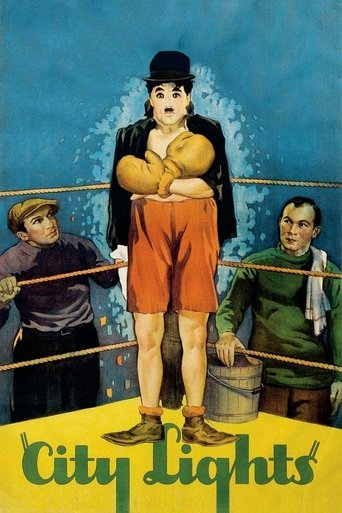
City Lights
1931 · Film · 87 min
Directed by Charlie Chaplin
A tramp falls in love with a beautiful blind flower girl. His on-and-off friendship with a wealthy man allows him to be the girl's benefactor and suitor.
6 positive5 neutralfrom 11 commenters
Where to watch
No streaming data for this title.
12 comments on Hacker News
Thanks! Here's the full list: 2001: A Space Odyssey, 8½, Aguirre the Wrath of God, Ali: Fear Eats the Soul, All That Heaven Allows, Apocalypse Now, Ashes and Diamonds, A Woman Under the Influence, Barry Lyndon, Bicycle Thieves, Breathless, Casablanca, Céline and Julie Go Boating, Chinatown, Chinese Roulette, Citizen Kane, City Lights, City of Pirates, Contempt, Daisies, Damnation, Dishonored, Earth, Electra My Love, El Topo, Eraserhead, Eyes Wide Shut, Film Socialisme, Fitzcarraldo, Fuego en Castilla, Hiroshima Mon Amour, Holy Motors, Inauguration of the Pleasure Dome, In a Year with 13 Moons, India Song, Inland Empire, Irma Vep, Koyaanisqatsi, La Dolce Vita, La Jetée, Late Spring, L'Eau de la Seine, Le Voyage dans la Lune, Lolita, Los Olvidados, Lost Highway, Lucifer Rising, Man with a Movie Camera, Metropolis, Mirror, Mulholland Drive, Night Music, Ordet, Orpheus, Persona, Pickpocket, Playtime, Psycho, Rebecca, Rosemary's Baby, Rumble Fish, Scarface, Seven Samurai, Sherlock Jr., Singin' in the Rain, Stalker, Sunset Boulevard, Taste of Cherry, Taxi Driver, Testament of Orpheus, The 400 Blows, The Blood of a Poet, The Cabinet of Dr. Caligari, The Color of Pomegranates, The Green Ray, The Holy Mountain, The Isle, The Lady from Shanghai, The Night of the Hunter, The Passion of Joan of Arc, The Seventh Seal, The Spirit of the Beehive, The Tales of Hoffmann, The Tree of Life, The Turin Horse, Time of the Gypsies, Tokyo Story, Touch of Evil, Trans-Europ-Express, Ugetsu, Un Chien Andalou, Uncle Boonmee Who Can Recall His Past Lives, Vampyr, Videodrome, Wavelength, Werckmeister Harmonies, Wild Strawberries, Moonlight Sonata, Stellar, The Haunted House Biased toward European art cinema, experimental work, and directors who broke conventional narrative rules.
+100 for "City Lights". I used to not really consider myself much of a silent film fan, except for a few Harold Lloyd comedies. "City Lights" converted me. Truly a masterpiece of filmmaking.
> But are you really going to say they stand up to films made in recent years with a fully mature vocabulary?
Sure! I've seen 19 of the 42 films you counted as being made between 1920-1945, and I'd say the overwhelming majority of those 19 definitely still hold up. Are you seriously telling me Double Indemnity (1944), City Lights (1931), Duck Soup (1933), and Casablanca (1942) are only fit for consumption by film students? If so, I'd say "lucky film students!"
Anyone looking to get into silent film, I'd strongly recommend comedies (including, and perhaps especially, Chaplin and Keaton) as a good starting point. I've gotten to the point that I can truly enjoy a lot of silent dramas, but IMO the comedies are far more approachable for a modern audience. Good gateway drug.
Just off the more famous films (The Great Dictator and Modern Times and maybe City Lights for Chaplin, or The General for Keaton, say) I'd recommend The Kid for Chaplin, and Sherlock, Jr. for Keaton. And of course both made numerous short films, in addition to their features. Though the very-famous ones are all great, too—I especially love City Lights, personally.
Been meaning to check out Harold Lloyd (responsible for one of the most enduring and imitated images in Hollowood, the guy hanging on the clock on the side of a building, featured in Safety Last) but haven't made it to him yet. I bet he "reads" pretty well to a modern viewer, too.
[EDIT] Some beginner drama recommendations, for those who feel ready:
Metropolis (duh... though it's a bit on the long side, maybe skip if you can't tolerate longer movies, and it's maybe a bit belabored for modern sensibilities)
The Passion of Joan of Arc (just... damn. This is a perfect movie.)
L'Âge D'or (The Golden Age—but, uh, maybe just if you appreciate things a bit more art house)
Le Voyage dans la Lune (A Trip to the Moon—it's short, and, if one plays with various accompanying soundtrack options, including some more modern ones, one may find it transcendently good)
M (yes Fritz Lang made this very short list twice, because fuck you this movie is amazing, this is maybe the most modern-feeling of this whole bunch)
45 years old here. I usually go to the theater for a proper appreciation of the movies (big screen, no solicitations). Last movie I saw was Charlie Chaplin's City lights. Downloaded it for my kids (the exact kind of public for this film). They stayed in front of the TV set for 15 minutes before wanting to play yet another game of Hearthstone. Shame...
You can do very much with very little when you force yourself to be constrained. Of course that doesn't mean everything works without dialogue, but many things are different in ways that may sometimes be better.
Watch City Lights, by Chaplin, for example. One of the last great silent movies. You can argue it could have been funnier with more dialogue (it has some in the form of intertitles). Maybe it would. But it wouldn't have been made that way with more dialogue. Many of the scenes are structured the way they are because dialogue isn't there as an easy out of situations, and forced Chaplin to think long and hard about how to show instead of having characters tell. I'm sure the same story can be done well with talking characters, but it's not a given at all it'd have been better, because the script would almost certainly have been very different.
The most famous example from City Lights is probably the scene where Chaplin gets mistaken for a rich man by a blind girl selling flowers, which is a major setup for the rest of the movie.
Chaplin struggled with it for ages, because he felt he needed to actually give a reason to explain why she'd think he was rich.
The solution is beautifully simple: Chaplin steps through a car to avoid a police officer, and slams the door, both signalling his presence to the girl and signalling initial wealth (the movie was filmed in 1928/9). We (and he) learns that she is blind by seeing her not realize he's picked up the flower (there's one line of text there), he pays her, and as he has just handed her effectively the last money he has, the owner of the car enters and the car drives off, leaving the girl to think Chaplin did not wait for his change, giving her further reason to assume his wealth (there's another intertitle with one line there).
It took weeks of filming over several periods to get it right; both because Chaplin struggled with finding the right mechanism, as well as because he insisted on showing her blindness realistically (and so he rejected a whole slew of actresses he didn't believe could realistically portray being blind). With dialogue it'd be so easy to cop out and use some dialogue to cause the confusion.
As it stands City Light is frequently considered one of the best movies of all time.
The scene in question is here: https://www.youtube.com/watch?v=hCPGFTp0vmo
There's a Criterion Collection blu ray of City Lights that I would imagine was done very well given their reputation and the reviews https://www.criterion.com/films/27558-city-lights
Pro-tip: You have to change the YouTube setting so that you are watching in 1080 HD, not the 360p that it can default you too.
You know, I think there is some real promise here!
With some HD remasters, you can start to really see the makeup, the little pores in everyone's skin, the smudges and uncleanliness of real film-making. Film-makers and directory choose the lighting and the focus with the end-product in mind. They know that the screen won't capture certain things and so they know where they can skimp and save [0]. When you re-master it, you're going against the 'vision' of the directors. Not in a big way at all, it's very subtle. But it's still there.
With ML techniques, you get the 'idea' that the director was going for, without seeing all the screw-ups that they knew they could get away with. It's crisper but the idea and vision are the same [0].
Peter Jackson's recent 'They Shall No Grow Old' is another great example of using ML too. In that case it was to preserve the old WW1 footage, bring it's frame-rates up to modern 24 fps, 3-D it, and colorize it. The results are literally breath-taking. Personally, I gasped when it finally hits; it's that good. Not to geek out too much here, but Jackson is literally changing history with that film. He changed the way we all view old footage, as something all herky-jerky and grainy, to something that is modern and real. Those 16 year old child-soldiers become real people again.
Though Jackson's work is a lot different than this effort, I think we all know that ML and the movies are here to stay. It's relatively cheap to update, takes little time, and be profitable (Remember the Disney Vault gimmick?). How long will it be before Chaplin's 'City Lights' is ML'd and remastered into 24 fps, 3-D, color, and with sound? Maybe 5 years?
Hell, I'd pay to see the best of old cinema brought back to modern standards like that.
[0] I know no film-makers, this is supposition.
Chaplin fought against sound in movies on a similar basis.
Not an absolute rejection, but a concern that it took focus away from other parts of the story-telling and wasn't necessary.
He supposedly sabotaged attempts to add speech to Gold Rush (1925) after the actors pushed for it.
City Lights (1931) was basically his ode to silent movies, famous for its endless retakes of the initial meeting with the blind flower girl [1], while he tried to figure out how she could mistake the Tramp for a rich man without words. In the end the solution was simple, and both funny and provided motivation for the Tramps desire to help her: The Tramp walks through the car of a rich man to avoid passing a police office, and so when he stands before her she has just heard him slam the car door. He accidentally knocks the flower he's purchased out of her hand and realises she can't see that he has picked it up. As he hands her his money, the owner of the car comes and drives off and the girl thought he had left without his change, and he didn't want to break the illusion and so walks off without money he badly needed for himself.
It's one of my favourite movies because it masterfully made his point that you can tell a complex story without it feeling like you're missing something because you can't hear dialogue.
He added speech in his next movie - Modern Times - but his character still didn't speak dialogue (but did sing).
It was first with The Dictator (1940) that Chaplin himself spoke on screen: Finally he had something where the speech added clear value by conveying more than he knew how to convey with just pictures.
In the same way I think we will see more and more movies eventually come out in 3D as the industry gets enough experience with it to see where it adds clear value and leave it low key other places, rather than add it to make a spectacle of it.
I think one of the first to do it well was Prometheus. A friend saw the 2D version and afterwards told me elated that it felt like it was made as a 2D movie - no weird camera work solely to make 3D effects stand out etc.. Meanwhile I'd seen it in 3D and been blown away at how good it looked in 3D. The effects were clear and beautiful but not in your face. Crucially they didn't alter the visual language noticeably.
[1] http://www.tcm.com/mediaroom/video/378808/City-Lights-Movie-Clip-Wait-For-Your-Change-.html
Charlie Chaplin's movies. Modern Times is very funny, but the end scene. I cry every time. City lights, ditto, the end scene is so strong. And Limelight. And the Gold rush...
Avatar and TDK historic points in film. AKA Dancing with Smurfs, and The Movie With More Plot Holes Than The Titanic. Hum, I beg to disagree.
Overall, I got a good laugh from the list. Seriously, this list should be called "things white US kids (of my age, granted) like". Rather than a history of cinema, it belongs more in the "comedy generated by computer" genre. Exhibit one: City Lights isn't there. Exhibit two: Modern Times isn't there. No Le Voyage dans la Lune, no Man With Camera, no Great Train Robbery, Rashomon isn't cool enough to make the list, Vertigo is too weird, and Battleship Potemkin is, like, too commie, you know. The final straws would be Independence Day and It's a Wonderful Life making the list.
I mean, On the Waterfront looks like it's very good (I haven't seen it), but, but, it was released in the same year than motherfucking Seven Samurai!
Einstein was asked to appear alongside the comic actor Charlie Chaplin during the Hollywood debut of the film City Lights. When they were mobbed by thousands, Chaplin remarked, "The people applaud me because everybody understands me, and they applaud you because no one understands you." Einstein asked Chaplin, "What does it all mean?" Chaplin replied, "Nothing.