 Hacker Cinema
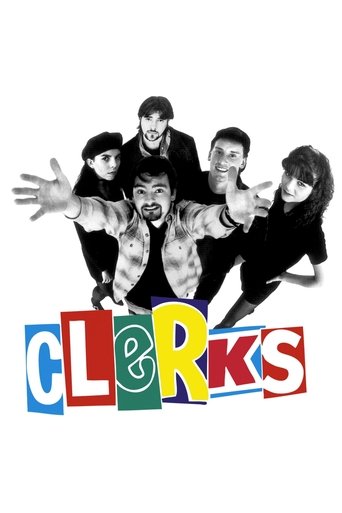
Clerks
1994 · Film · 92 min
Directed by Kevin Smith
Convenience and video store clerks Dante and Randal are sharp-witted, potty-mouthed and bored out of their minds. So in between needling customers, the counter jockeys play hockey on the roof, visit a funeral home and deal with their love lives.
16 positive1 mixed43 neutralfrom 60 commenters
Where to watch
No streaming data for this title.
60 comments on Hacker News
Perhaps the clerk was not sullen, and just preferred to stay out of other people's affairs. You're not allowed to rent here anymore!
https://www.youtube.com/watch?v=fEEj6d3GTOU
I don't think any movie could better capture the atmosphere and culture of a 1980s video store better than "Clerks." For example, the various types of annoying video store customers:
https://www.youtube.com/watch?v=D9khHJTztKk
Ordering obscene videos from the warehouse:
https://www.youtube.com/watch?v=KwFjw798mPI
And some period-era fanfic filmed in an IRL video rental store.
https://www.youtube.com/watch?v=iiPC2pIJNzc
same! in the last couple of years i've seen these movies in a cinema: The Big Lebowski, Fargo, La Heine, Apocalypse Now, HEAT. and i already bought tickets for Run Lola Run, Clerks and Fear And Loathing In Las Vegas.
it's especially cool as someone who's young and wasn't even born when some of these movies initially came to cinemas.
at the same time it's unbelievably sad that in recent years about 70% of the movies i saw at a cinema were multiple decades old.
Yeah, I tend to agree. It's disturbing how badly certain groups of people just destroy so much of what they touch.
Almost everyone on HN has witnessed something similar happen in our spheres. We've all seen the marketing dept, accounting dept, and VC chodes band together and push the engineers into the background. They forget the engineers are the people who made the magic happen for the product in the first place. And then, before we know it, the equivalent of a private equity enshitification is happening and its either stripped to nothing of substance or it just coasts along and does the absolute bare minimum to survive. All the heart of the product gone. I know it sounds dramatic, but they kill its soul. I think almost everyone here has seen this happen directly to our own things or to other products.
It looks like they're trying their best to do the same thing to movie studios. Investment firms are buying up studios across the board. Marketers, ad companies, and investors will do their best to suck all of the soul out of movies the same way they're doing it to our field. Pushing the movie makers into the background just like they do to engineers.
The difference from my perspective and the reason I'm not too concerned is this: the tech industry is relatively young and up until recently many of us (myself included) have found ourselves worshiping at the VC/investor's alters. We find ourselves buying into their hype.
Artists on the other hand see the VC/investor's slop alters and see that alter demanding they make a shitty product. In typical artist fasion, they take a long look at that alter, unzip their pants, laugh, and piss on that alter.
While artists have long since learned what happens when you worship at those alters, we in the tech field are just finding out. They've known this since before our industry was even born.
I think this is why we've seen so many phases where movies/music makers, if they have to, they'll just make cheap movies. A good cheaply made movie is still better than a high budget slop shit movie. People show up for good movies, even cheap ones. People forgive the low budget quality if its great.
At the end of the day this is why I'm not too concerned about the future of movies. I have no doubt great movies will still be made. Some of my favorite movies were made outside those people's alters, cheap af. I mean, who doesn't love Halloween or Evil Dead or Clerks!? All of them were made cheap af.
Always remember, Clerks was made by a dude while working as a convenience store clerk. A convenience clerk made it using his credit cards. He had basically no budget.
Ethan Suplee is a personal hero of mine. I've been watching him in movies since clerks, and felt bad as I saw him continue to get bigger. When he started his transformation some gym bros posted it to some forums we inhabit. He didn't want to be all public about it since he'd yoyo'd before, but we cheered him on online. When I saw he'd gone public I was so happy for him. His pic now hangs in my home gym with Arnold and Ronnie.
https://www.imdb.com/search/title/?title_type=feature&release_date=1994-01-01,1994-12-31
Pulp Fiction
Lion King
The Mask
Four Weddings and a Funeral
Dumb and Dumber
The Crow
Speed
True Lies
Interview with the Vampire
Natural Born Killers
Ace Ventura
Stargate
Clerks
The list goes on. Lot's of movies that turned out to be classics or cult classics, or the start of some great careers.
Here's what I term my "flypaper" movies. If I happen to glance at the satellite TV guide and notice one of these coming up, there's a good change I'll be watching it.
Lawrence of Arabia The Maltese Falcon Most Hitchcock films Blade Runner The Man From Snowy River The Martian Monty Python & the Holy Grail The Princess Bride Serenity The Thin Man series The Thing Tombstone Young Frankenstein Monty Python and the Holy Grail Clerks and most Kevin Smith movies Baby Drive and most Edgar Wright movies Fanboys Spinal Tap Kung Fu Hustle Apollo 13
- Hair (and listened soundtrack hundreds of times)
- Coffee and Cigarettes
- Before Sunrise (and to less extent - Before Sunset)
- Pulp Fiction
- Clerks, Chasing Amy
- Leon Professional
- Motorcycle Diaries
These are not as interesting since I assume they're on everyone's list, but I must admit I'm rewatching all movies in the series, even those which are considered weak:
- Lotr, Godfather, Indiana Jones, Star Wars, Matrix
This is a good point but there are counter-example(s).
What about Kevin Smith with Clerks? Yes he got the IP and ostensibly the $/career but he's also brought basically everyone involved in that film with him along for his ride and continues to give them work in sequels/podcasts/tv shows etc.
It can be done ethically but to your point it doesn't seem to often be the case.
37 always reminds me of the movie Clerks.
The 90s with its apolitical cinema like Saving private Ryan or Forrest gump that certainly are not pro american propaganda or other great movies like the Matrix that do not denounce late stage capitalism as soul crushing and has no themes that could be interpreted about taking red pills and feeling more like yourself.
The 90s had a different context sure, capitalism was peaking, we didn't have the crushing reality of the post 2008 world, or the crazy chest bumping Murica militarism of the post 9/11 era. But the 2000s scare, the internet fear, the office jobs being boring/grey and soulless. The slight fear of science and progress (see Jurassic park, gattaca, fifth element), the work culture being inhumane and dehumanising (matrix, office space, clerks, american beauty), the same happened in music with grunge being one of the main genres of the decades.
All of this art was made in the backdrop of probably the most optimistic period of time, Disney had a renaissance, america absolute cleared the floor in the first gulf war, the stock market had an impossible never ending rise, pop music was happier than ever and fashion was in the most sexy, thin, in your face hotness ever.
If you only want to enjoy the 90s happiness without seeing the fact tons of counter art was being made and that our current cyniscim isn't only a product of the post 2008 economic stagnation but also comes from the seeds that were planted at the height of the cultural hedonism of the 90s then you are just straight ignoring some of the biggest hits of that decade.
Clerks was / is one of my favorite movies of all time.
(Far as Trek goes, I liked the original series.)
> the most interesting films involve interhuman drama that speaks to my own emotional experience, and often just consist of a lot of people talking with occasional plot twists and unexpected bursts of action What was your opinion on Clerks? You pretty much described that movie to a tee.
And, for that matter, the first few seasons of TNG.
Anyone with a few hundred dollars can buy mics, steady cams, action cams and more off of amazon that would give them quality above the black and white or 16mm film that some directors started out on.
Anyone could go and make their own clerks or reservoir dogs and some people are going out and trying. Where are all the incredible movies?
Even forgetting the tools where are all the incredible scripts since everyone has access to books on script writing and a computer?
> There's going to be a lot of hype around a couple of drama and comedy films shot on a small budget. There is every year...
I'm talking about like $500k and under. Tangerine would be a great example of a drama film that made a splash at Sundance on a $100k budget. But, there are many films made on that kind of budget and few of them turn a profit. Tangerine's from 2015, Clerks is from 1994, Super Troopers was 2001 (also well above the budget level I'm talking about). The plucky microbudget hits are notable exceptions, not the norm.
I wasn't familiar with Jack Frost, I watched a couple of clips on Youtube and yeah, that probably is the sort of thing I mean tbh. It does look entertaining, but my point is if a movie in another genre had comparable production standards, it's much less likely it would've found an audience. The "so bad it's good" market is much more of a thing in horror than elsewhere, to the point people do it deliberately (eg. The Asylum).
This isn't meant to be a dismissal of horror or horror fans at all, lots of great film makers have arrived via low budget horror. It's great there's still a genre where self-funded films aren't entirely a money pit.
It's true though that there's a market for horror movies that are not good. In fact AIUI it's about the only genre where there's any market at all at the low budget end.
I disagree with this on both fronts.
First, budget has nothing to do with it. See the success of Clerks or Super Troopers. Sundance is around the corner. There's going to be a lot of hype around a couple of drama and comedy films shot on a small budget. There is every year...
I also disagree that people enjoy horror movies that are "not good". "Not good" is incredibly subjective, so I'm not exactly sure what you mean, but I think you're referring to people like me, who watch movies like Jack Frost (not the one with Michael Keaton), but that is because I am legitimately entertained by them, not because they are "not good" by some measure.
I stopped reading movie reviews after they completely ruined Jurassic Park for me. If I'm interested in an upcoming movie I try to avoid even trailers.
I had a few "oh that was really nice" moments through the years, but I think the best surprise was Clerks: went in expecting a slow, realistic indie movie, and left the cinema in tears of laughter.
>At what income level does one need to start treating the customer, that is enabling one to have a job, like a real human being?
At a sufficient enough and above. Below that the Clerks (as in the Kevin Smith movie) treatment is good enough.
In any case, "treating like a real human being" and putting on a show of smiles and friendliness US-style, is not even close to being the same thing.
In "real" human interaction, we understand the other as a person with their own feelings and mood, and we don't demand from anybody to exhibit a certain cheerful mood for us.
But of course this isn't about real human connection. It's more about "When I pay I demand those serving me to entertain me with smiles and pleasantries". The customer could not care less about the person serving them, or their condition, otherwise. "Real person" my ass.
Some of the best content I've encountered is exactly this. A good example is "High Maintenance", which started as a Vimeo web series and cost $1000 / episode to produce. [1] Another example is Christopher Nolan's first film, "Following", which cost $6,000 to produce. "El Mariachi" by Robert Rodriguez famously had a $7,000 budget.
They could also pool their money, crowdfund, or otherwise shoot for a bigger budget, in which case they could mimic the first Coen Brothers movie, "Blood Simple", which had a $1.5 million budget. There's also "The Blair Witch Project" ($200k), "Clerks" ($230k), "Paranormal Activity" ($15k), etc. [3]
I truly hope this latest labor dispute causes an industry shift in the direction of creatives taking more control over production and distribution of their content. Musician Anton Newcombe said this about the recording industry, and I think it applies equally well to film studios:
"...it’s a mafia. And until they can write the letter that I’m writing, they are the postman, and I am the letter writer. Period. End of discussion."
1. https://en.wikipedia.org/wiki/High_Maintenance
2. https://en.wikipedia.org/wiki/Following
3. https://collider.com/movies-with-smallest-budgets/
While I wouldn't go that far myself, as a fellow GenXer I remember it was us in the early 1990s who were viewed as the generation that was uninspired by work or the prospect of a career. Like Linklater's 1990 film "Slacker". Or Smith's 1994 film "Clerks". I think a lot of things that are assigned to "generations" are really just due to age. Younger people aren't that into work, often because the intro-level jobs they have aren't that exciting or lucrative. But that's fine because they don't have much in the way of expenses or dependents. As people get older they get more into work both because the work is more engaging and that they actually have expenses and responsibilities.
Clerks and Cube are other movies where this happens.
Clerks - $27,575 [0]
A Girl Walks Home Alone at Night - $56,000 [1]
Butt Boy - $100,000 [2]
The Blue - <$100k [3]
Call Me Brother - <$100k [3]
Frances Ferguson - <$100k [3]
Greenlight - <$100k [3]
Love in Dangerous Times - <$100k [3]
Man in Camo - <$100k [3]
I'm going to stop now but I hope I've made my point. I've watched many of the above. I've heard about most of the above.
Your tone is pretty snarky so I'm not sure if it's worth responding but here is a list of TV shows, all within the last decade, that I believe are exceptional and not limited to "just the Sopranos":
* Chernobyl
* Rick and Morty
* True Detective
* Fargo
* Severance
* 1883
* Mindhunter
* Westworld
* The Knick
* The Peripheral
* Succession
* Years and Years
* Orange is the New Black
* Halt and Catch Fire
* Insecure
* Watchmen
* Atlanta
This is only from 10 minutes of searching. You'll note that many of them are produced, directed, written and star high profile artists. The subject matter that they deal with can be done at a pace and care that's impossible to do with a 2-3 hour movie. The quality of the above series or mini-series was virtually non existent, maybe with some very few exceptions, before 2000 and only began to pick up pace in 2000 to 2010.
[0] https://en.wikipedia.org/wiki/Clerks_(film)
[1] https://byrdtheatre.org/news/2019/10/a-girl-walks-home-alone-at-night-brings-beauty-to-vampires/
[2] https://www.cautionspoilers.com/film-reviews/butt-boy/
[3] https://musiccitydrivein.com/2021/02/19/film-threat-award-this-announces-2021-indie-film-nominees-for-drive-in-event-virtual-ceremony/
> what English dialect it's from?
I assume American English.
Prior to the sexual slang made popular by the movie Clerks, snowballing in the context I used basically means to blindside or con someone.
One definition on Urban Dictionary:
"A situation where a criminal has found themselves in possession of an easy target and proceeds to rob them and leave them mortally wounded for fun, a synonym for getting iced."
There's also snowballing meaning a problem getting bigger and bigger when unaddressed. I'm probably using it in an older, not-exactly-mainstream way.
This type of discussion comes up every once in a while and there are always a couple points that circulate in the discussion:
1. "It's not the tools, it's the artist."
2. "But tools matter."
I would love it if we could skip rehashing the obvious stuff. Yes, obviously, tools matter. However, there are a lot of loud people online (and lout people you meet in person) who spend hours hashing out the pros and cons of different tools, why tool X is awful, why tool Y is underrated, why "pros" use tool Z, tool W is overpriced and outdated, and tool Q is missing features A and B which should really be considered "standard" nowadays.
These discussions are valuable because tools matter, but people will also lose sight of the fact that tools are only one part of the picture. Novices, especially, sometimes focus on getting better tools or working on their tools instead of working on their craft. It's nice to see examples of very successful projects made with simple tools on a low budget to remind us that we can work that way too, and remind us that our low-end tools aren't really holding us back--that much.
Some examples of films shot on small budgets:
- Blair Witch Project ($60k)
- Clerks ($28k) (B&W not because the film is cheaper, but so they don't have to get lighting equipment)
- Primer ($7k)
I'm just hoping we can skip the "tools don't matter" "yes they do" back-and-forth. Nobody really believes that tools don't matter at all, people just get caught up in arguing about how much tools matter, or what the right way to communicate that is.
Same thing also happens with photography. I recently saw a photography exhibit where all of the photos were shot on an iPhone. Same thing happens with music. Some famous artist recorded an album with a Telecaster and a Supro because they were cheap and sounded decent. Some of your favorite songs were recorded out of the back of a van.
It is a reference to the film Clerks, which features a video rental store employee who utters this quote.
As a fan of post-modern movies, I would love if this was the case. However I’m afraid that you are misremembering history a bit here. Postmodern movies heydays have long passed. I’m afraid the reached their peak in the 90s with e.g. the Danish dogma movies (pun intended), independent American movies like Clerks, etc. In fact Pulp fiction was a counter punch to the scene by taking elements of postmodern movies, telling a pulp story and dressing it in a Hollywood film. Ironically it is a long running joke among postmodernists to over-analyze Pulp Fiction with a postmodern reading.
Postmodern films got a tiny resurgence around 2007, but never with the same popularity as the pomo scene of the 90s.
So Lord of the Rings is made between those two modes. The movie industry is living in the wake of the unexpected Titanic success, and the studios are trying to create the next big hit. Movies like Gladiator, Pearl Harbor, Cast Away, Meet the Parents, The Mummy, Moulin Rouge! or Chicken Run etc. is what most people are seeing. The themes of the post modern movies is indeed far away.
There are many examples of making a film on a budget of almost nothing. Clerks, Evil Dead, the Sweding movement, most all of Tik Tok…
You can make a compelling story via flip book.
>> In the end, people want high quality entertainment
> I know this sounds clichéd but I'm really not that impressed by the big-budget Hollywood offerings of recent years. It feels very recycled and risk-averse most of the time
I wouldn’t read that as the quality of the movie itself, but the technical quality of the production. You can have movies that are technically great, but that lack a story. But I don’t think we’ll see many more movies that have a good story with low video quality. When you can get a good 4K video from an iPhone, something like “Clerks” isn’t going to work nearly as well as when we had to use physical film and you could only afford to use so much of it.
Thanks for that perspective! I think about this all the time, and though my tastes are different I think you're exactly right.
I think of narrative as a combination of several elements: character, plot, world-building, execution (word choice, visual choices and performance for film or games), concepts and ideas. I tend to be drawn to strong characters first, but not always. Some examples off the top of my head:
Clerks: strong characters, mediocre almost everything else
Reservoir Dogs: strong characters, strong execution, minimal plot and world-building
Portal: strong characters, plot, world building, concepts, and execution
Brazil (the Terry Gilliam movie): strong world-building and execution, weak characters and plot
Lolita (the book): strong execution and characters
Harry Potter: strong characters, world-building, and concepts, goofy plot and execution
Primer: mind-bending concepts, good execution, weak characters and plot
Don’t know why, but I could go on and on thinking about it.
Edit: this list would imply I have pretty narrow tastes but really I like a little bit of everything; these are just some notable examples that came to mind as being particularly strong or weak in certain areas.
None of Office Space, Clerks, or Magnolia were enjoyed by masses upon initial release. And some that got acclaim on your list have faded a lot since then (e.g. American Beauty).
You know what was enjoyed by masses from 1999 that you left out? Star Wars Episode 1.
Check back in twenty years to see what movies from the recent past hold up, and how many of them aren't from Marvel...
Nowadays you have: superhero movies, sequels, remakes, empowerment of certain groups that aren't me, movies with a political message, or some sad dour art house movie that makes you walk out feeling bummed out about life.
Compare 1994 or 1999 movie releases to 2021.
Fight club, the matrix, forrest gump, Magnolia, office space, sixth sense, american beauty, clerks, etc.
Nowadays: the father?, Mank?, black messiah, , chicago 7?
It's not about creating magical new worlds with thought provoking ideas anymore.
Maybe I'm explaining it poorly but film seems to have gone the way of the music industry.
Commodified instead of inspired.
I LOVE going to the movies.
I just wish there was something I wanted to see.
Reminds me of that clerks episode: https://youtu.be/iQdDRrcAOjA?t=79
Swingers for instance had to be shot on short ends. http://grantland.com/features/an-oral-history-swingers.
A lot of other movies as well (It was mentioned in Dolemite Is My Name). Clerks was black and white because of cost.
Gimbals, scouts, dangerous stunts and everything else can be done cheap. You can pirate editing software if you have to. I've seen nothing to say Snowbrawl had CGI or expensive post production applied.
Cheap film has been the holey grail for a long time.
Now we get to see did the artificial barrier of filming cost improve film quality, or did we miss out on great directors, actors and films.
I see no proof either way yet.
It's interesting that a "business card sized game" is still interesting in 2019. IE, there will be people who want to play it... a game that would have been at home in 1978.
I think there's a parallel here to film/tv. You can make a billion dollar "avatar." People like those, but there's always room for a "blair witch project" or a "clerks" that someone can decide and make.
Entertainment is a hit driven industry where the returns are highly nonlinear and the increase in return (whether measured in viewership, popularity, or dollars) goes up dramatically as you move up the success curve. Audiences have demonstrated without question that they prefer bigger movies (yes, I know, my big fat Greek wedding and Clerks, these are six sigma outliers that are fun to talk about precisely because they are outliers). The people who make films make them (gasp) to make money, because if their films don't make money they can't raise the money to make another one and they want to make more than one. They need to raise money because no one wants to see a film shot on a $6 budget, and no one wants to invest all that time and creative energy in a film no one will want to watch.
"Gloria Jean’s was the best job I ever had, because it was the only time I felt like there was community to be found in an unnatural environment built solely for the purpose of buying things. I care more about the women who worked there than I do, no offense, about anyone I met in school or from Twitter"
Makes me think of the movie Clerks, and other depictions of this spirit of community in a unnatural commercial environment. Somehow the environment greatly strengthens these human connection. I do have nostalgia for these days. Corporations, instead of perfecting this kind of warmth and making the working environment tolerable, perfected exploitation. Always short sighted short term profit.
>Discriminating against someone because of their employer sounds like a very dangerous precedent to set.
Kevin Smith's film 'Clerks' explored the morality of that position pretty well. The contractors on the second Death Star all understood the risks.
I was just thinking that they recently got some good content added.
These were all added this month: Batman Begins, Clerks, Gran Torino, Million Dollar Baby, No Reservations, Stripes, The Aviator, and The Fellowship of the Ring. The entire Comedians in Cars series is a lot of fun. Heat, The Godfather, Gangs of New York, Casino, and Seven.
Maybe you're bored of all that, but it's not like the films on Netflix are universally terrible.
In case you aren't already aware of it, you should try to find a copy of his first film, "Following". It's extremely low-budget, but aside from that, showcases good direction, interesting camera work, and a fantastic, Nolan-esque plot.
Like Clerks, its creation story is super interesting, and a testament to how little it costs to actually make a film if you're super creative, and really determined to.
>That's a pretty good B-movie plot.
It can be good... in the right hands.
We're all debating various complex semantics when the only thing that ultimately really matters is talent... who ultimately is in control of these building blocks. Talent with the director, talent with the screenplay, talent with the acting, etc.
There has been plenty of dumb plots, stories, concepts, etc that have been turned into great movies by talented people. Reservoir Dogs, Clerks 1, Napoleon Dynamite, The Abyss, etc would all sound dumb, boring, or cliche on paper, but were made highly watchable by talented film makers working in their prime.
Just like startups, the only thing that matters is people, not how clever your original idea is. You could have the perfect movie idea, which many big budget have had (which translate well into trailers and per-release marketing), but turn out to be awful once it's turned into the 1.5hr+ long final product.
Sure, all the SNES RPGs, fighters and platformers were extremely original, every single one of them :) And Nintendo first party games of course. So many original games. Mario Party 7 was a blast and nothing like Mario Party 6!
My main point, though, was about the impact. GTA3 was a revelation for millions of people who have not even heard of GTA1 and GTA2. Saying it's "a sequel" is as meaningful as saying FF XI is a sequel. Millions of people first online shooter was Halo (2), not Quake. Millions of people first MMO was WoW, not UO. MGS2 was the game people could not believe it's real time, it was nothing like MGS1 on PSX.
In the 6th generation games became mainstream. I dare you to name a movie, where adults play games, made before 1999. I don't recall a single one. After 2000 it's a common scene where young and not so young adults play games. The main guy in House of Card plays games. This alone makes the 6th gen special even if you don't care about all the original games it produced.
PS. Actually, an adult plays game in Clerks, though the scene is to show how nerdy he is.
This argument has been used against many media now very readily accepted as art: that they're just amusements, they're not art. They frequently come from critics of other media that don't want to expand the club, and they are invariably demonstrated to be incorrect over even the short term.
As for your example, there are boring but beautifully shot films--2001: A Space Odyssey certainly fits that bill for me. There are engaging films with crude cinematography--the original Clerks comes to mind, for a certain time and audience. You are drawing a distinction without a difference.
Clerks actually has a lot of polar changes in that filler, though. As the topics of conversation change, your mind goes with it and your emotions shift. Similar to other "geek out" movies.
And then there's a movie like Clerks which has a lot of filler, but ends up being endearing. Most of the dialogue is just people saying funny random stuff.
Smith has hinted in the past that Kevin Mewes's ongoing battle with addiction has been a serious barrier to making more of those movies. IIRC, Kevin Smith mentioned that Clerks 2 would only happen if Mewes could stay clean for an extended period of time.
I enjoyed most of Smith's work (Clerks, Mallrats, Jay and Silent Bob Strike Back, Dogma or Chasin Amy), so I hope another one comes out eventually, the guy has a knack for non-pretentious, easy-watching yet somehow socially provocative without being preachy flicks.
They don't have rights to stream any decent movies
That seems hyperbolic. Just browsing around (I decided to cap this at 5 minutes):
The Interview
Forrest Gump
Major League
Pirates of Carribean
Hot Fuzz
Armageddon
Kingpin
A League of Their Own
Inglorious Basterds
Scarface
Django Unchained
Legally Blonde
E.T.
Days of Thunder
The Princess Bride
Crocodile Dundee
Clear and Present Danger
V for Vendetta
Galaxy Quest
Running Man
Big Trouble in Little China
Talladega Nights
Kill Bill (1 and 2)
Star Trek Movies (including The Wrath of Kahn)
Tommy Boy
Team America World Police
Lilo & Stitch
Jay & Silent Bob Strike Back
Wayne's World
Clerks
Bill & Teds Excellent Adventure
In the movie Clerks, there is a discussion about how the rebels took the lives of any independent contractors who happened to be working on the second Death Star at the time of its destruction.
However, George Lucas later addressed this issue by saying that these independent contractors were in fact merely "large termites" (Geonosians). (I am not making this up.)
The thing is, if you're not doing some sort of incredibly bloated production, you don't need 10,000 people to make a movie. Most movies are NOT Lord of the Rings.
For instance, one of the best critically received movies of the last decade was probably No Country For Old Men. Budget? $25 million. Made back well over triple that at the US box office alone.
The King's Speech? $15 million, made over $135 million
Argo? $44 million, and that had lots of expensive location shoots in the middle east
The Hurt Locker? $15 million
Slumdog Millionaire? $15 million
Crash? $6.5 million
Million Dollar Baby? $30 million
All movies that did very well at the box office, and were made for $25 million or less (with one exception). They also all won the Best Picture oscar. So there is PLENTY of evidence that you can make a great movie without getting anywhere near a 9-figure price tag.
Of course, for "indie" films, you can go well under that. "Clerks" cost about as much a new car. The original Texas Chainsaw Massacre was barely over $100k....the first Saw movie was made for just over $1m and grossed 100 times that.
I think the analogy is quite apt. Even more apt if you include visual fx.
A lot of the most popular movies rely heavily on lush cinematography and advanced computer generated visual effects. Just as many of the most popular games rely on advanced graphics. However, not all do. For every Minecraft or FTL there's a Clerks or Blair Witch or Primer.
depends on the movie - old favorites, can help set the mood (your brain already knows whats going on-screen).. documentaries where you don't have to look at them all the time seem to be good too.
Anything new and action oriented will probably will make you loose your attention track.
Sometimes my brain is musiced-out and I need something else in the background. Some that I know by heart: Star Treks, Real Genius, Tron, War Games, Hackers, True Stories, Koyaanisquatsi, Slackers, Clerks. Working at home the idle/predictable conversion in the background sometimes helps.
> We tolerate it today because we've grown accustomed to it and we accept low-bandwidth distribution channels such as today's "broadband" Internet connectivity.
Many people do not accept this unless "accept" means "have no power to do anything but use the lines provided to them by companies; while complaining and campaigning for more bandwidth to be delivered".
> Connectivity is considered by many as "good enough" because you can shove a lossy-compressed 1080 video down without worry over a connection measured in the paltry few megabits per second.
When I'm watching movies or TV I almost never care about the resolution. I wish the plots were not so obvious or the characters were not so cardboard-cutout or with silly motivations or that the film was a bit morally braver. I might wonder why a lighting decision was made, or I might wonder whether it'd be better without that music. But I hardly ever think "This movie would be a better movie if it looked better".
See, for example, Clerks. That's a lo-fi movie which is significantly enhanced by being lo-fi. All the slightly wonky acting is excused because the movie reminds us that it was shot on a personal credit-card budget.
See also the discussion about "The Hobbit" with some people saying the double framerate has made some things "too realistic", thus de-immersing them from the experience.
> Even the most avid technophiles (broadbandophiles?) among us chuckle to ourselves when we upgrade our connection from 25Mbps to 35Mbps. We know it's in large part for ego, so we can post screen caps of bandwidth meters.
Well, this is a good point. Consumers appear to buy big (or small) numbers. "Megapixels? MORE IS BETTER!!" even though it's not true. Thus, we've ended up with a "Bandwidth? Bigger number is better! Price? Lower is better!" even though that says nothing about contention or reliability or fair-use allowances. We end up with odd situations where a user buys an "unlimited" account, manages to get full speed for 8 minutes, and then has their connection throttled for the rest of the month because they've gone over their fair use allowance. That's a rant worth having.
I'd be interested to see if there are any competitions for "compression of video" - these could go alongside the Hutter Prize.
This might be pedantic for this thread, I have to point out that Clerks wasn't really a "self financed" movie. At least in the sense that the final product you saw on theaters and on DVD was not paid for by Kevin Smith.
Smith did spend around $30k of his own money on production costs. The bulk of that was for film stock. (Similarly, Rodriguez spent $8k of his own money on Mariachi.)
Now, here's the kicker: Neither one of them spent a dime on film prints. They signed deals and let the studios take care of that. This is significant because if people talked about Clerks' or El Mariachi's budget in those terms, the numbers would be in the rane of hundreds of thousands of dollars.
To put it in perspective: Would you say you "self financed" your startup if a big multinational paid for all the servers and bandwidth from the get go? It's sorta like that.
Saying it in interviews makes for a better story ("College dropout makes major movie for $8,000!") but it's not really accurate.
A little more context for the quote:
We all knew one of the commonsense edicts of Hollywood is “never invest in your own movie." But I did it anyway.
-- Garry Marshall, My Happy Days in Hollywood [1]
A few of the many well-known movies that are self-financed: Blair Witch Project, Clerks, most Robert Rodriguez movies[2], the upcoming Cloud Atlas by the Wachowskis. Self-financing might still lead to low odds of success (probably difficult to properly study this), but it seems to me there are enough success stories to question the "never" advice.
[1] http://books.google.com/books?id=X3eXiLG9WnIC&pg=PA196&lpg=PA196#v=onepage&q&f=false
[2] http://blogs.indiewire.com/theplaylist/robert-rodriguez-talks-spy-kids-4-the-joys-of-self-financing-and-his-5-000-upcoming-projects#
"Park City, UT (January 23, 2012) -- Berry Meyerowitz, President & CEO of Phase 4 Films, announced today that the company has entered into an exclusive distribution deal with SModcast Pictures, the production company founded and run by filmmaker Kevin Smith (Clerks, Chasing Amy, Red State). Through the deal, Phase 4 obtains exclusive rights in the U.S. and Canada to exhibit and distribute up to twelve films per year under the newly created 'Kevin Smith and SModcast Pictures Presents' label. Phase 4 will release four of these films theatrically each year, which will include a live tour with Kevin Smith, similar to that of Red State, with the remainder of films being released via all other traditional and digital platforms."
The technology race in video games is as utterly retarded as it is in the movie industry. There's as much room for Clerks and the Blair Witch Project as there is for Toy Story and Avatar.
Kevin Smith used a similar technique to fund his first movie (Clerks). Personally, I think funding a movie with this technique is WAY crazier than a startup.
Because Smith was working at Quick Stop during the day and shooting the film at night, he slept no more than an hour a day. By the end of the 21 day shoot, Smith was unable to stay awake while some of the most climactic scenes of the film were shot.
from: http://en.wikipedia.org/wiki/Clerks
sleeping an hour a day... :)
Fun Fact: Kevin Smith was toiling away for years at the very convenience store in which he filmed Clerks. He used the stuck shutters at the beginning of the film as a plot device as well as to hide the fact that they had to shoot almost entirely at night while the actual store was closed.
You can do both. You SHOULD do both. Something is obviously holding you back, and there's no way we can pretend what that is. I've found wives and SOs are really flexible if you lay it out that it's something you NEED to do.
Sure.
1. I haz bizness idea
2. LOL credit cardz
3. ????
4. OH NOES
I'm not being facetious here, really. Lot of businesses get off the ground using bank credit. Kevin Smith famously made Clerks on his credit cards (a film = a startup), won a prize, and sold the IP for a lot of money and further success. But lots of other people have followed the same recipe and failed.
Moral: do not assume 'less burdensome regulations' = 'level playing field', especially if you are the needy party.
This technology has existed for ages. Kevin Smith made Clerks for less than ten grand, and that was back in the 90s. Cameras and special effects may be getting cheaper, but talent remains expensive, since there seems to be a pretty limited number of people in the world who are actually good at writing, directing and acting in movies. Making a good movie is really hard.
That depends on the movie, harry potter pulled in 139.7M over its Wednesday-to-Sunday debut period. I don't see free with advertising adding enough people to make close to that much money.
However, a movie like clerks could be vary profitable online.