 Hacker Cinema
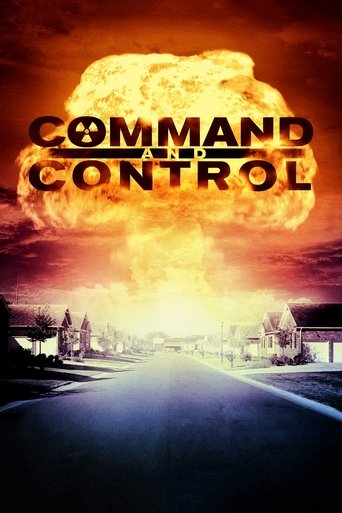
Command and Control
2016 · Film · documentary · 92 min
Directed by Robert Kenner
September 18, 1980, 6:25 p.m., Titan II base in Damascus, Arkansas. On this fateful night an explosion kills an Air Force member and transforms the lives of everyone on the base. Honing in on a single case of so-called "human error", Command and Control juxtaposes precision on a minute scale against the gargantuan risks inherent in the United States' aggressive nuclear proliferation policy during the Cold War.
16 positive2 neutralfrom 18 commenters
Where to watch
No streaming data for this title.
20 comments on Hacker News
There was also a 2016 movie made of it, but it mostly focused on one event from the book -- the 1980 Titan II missile explosion in Arkansas.
https://en.wikipedia.org/wiki/Command_and_Control_(film)
The documentary “Command and Control” [1] about the 1980 Damascus, AR, incident is more terrifying than any horror movie you will ever see. [1] https://youtu.be/ZCPlm-mQ9Kk
A highly-enriched uranium fission bomb is conceptually and practically simple to construct. The hard part is getting enough HEU. That part isn't even hard to achieve (North Korea managed it after all), just moderately expensive and hard to conceal. This process and the bomb design is explained in detail in the nuclear non-proliferation documentary, "Countdown to Zero" (2010): https://www.imdb.com/title/tt1572769
The amount of HEU needed for a device of this type with a yield comparable to Little Boy could fit in a shoebox. Seal it in some lead pipe, stick it in a shipping container and no one would know. The above documentary illustrates this powerfully with animations and expert testimony. Strongly recommended, especially as a companion to "Command and Control" (2016): https://www.imdb.com/title/tt5598206/
It was turned into a fantastic documentary by PBS too. Very much a must watch: https://www.pbs.org/wgbh/americanexperience/films/command-and-control/
It turns into a modest dirty bomb of weapons grade plutonium. This isn't actually as nasty as it sounds--in the 80s Iraq and Saddam Hussein apparently did a lot of research and testing of actual dirty bombs and found they really were not effective at all (they weren't even found to be likely to kill anyone, it would just make a small area slightly hot radioactively but was easily cleaned up like any other small nuclear fuel mishap/incident). Initiating the full nuclear chain reaction takes a very specific and controlled process which would not occur without the bomb intending it to happen.
In the 80s a Titan 2 ICBM in the south actually exploded in its silo from a fuel mishap. The missile had a full hydrogen bomb on board and it was blown out of the silo and into a nearby field, still intact and unexploded. So in practice we've seen there's low risk for an unintended chain reaction. This is a great documentary on the incident: https://www.pbs.org/wgbh/americanexperience/films/command-and-control/
For those interested in further reading on this and many, many other nuclear weapon safety incidents, I recommend the excellent book "Command and Control" (also a documentary but the book is significantly more comprehensive).
https://www.goodreads.com/book/show/6452798-command-and-control
Command and Control
Details the events of the 1980 deadly and nearly disastrous accident at the Titan II nuclear missile complex in Damascus, Arkansas.
https://www.pbs.org/wgbh/americanexperience/films/command-and-control/
Maybe a little older than 4 years, but posting because it's really well done.
Nuclear weapons is humanities biggest existential threat, and few people talk about it in popular culture. At any given point in time, we're 30 minutes away from the complete destruction of civilizations we know it today. I highly recommend diving into the movies & books below to begin understanding the issue and simply be in awe that humanity is capable of creating such horrific and destructive weapons.
First, watch "Trinity And Beyond: The Atomic Bomb Movie" [https://www.imdb.com/title/tt0114728/]. It gives a great overview of the nuclear weapons program history and his incredible video footage of tests.
Next watch "Threads" [https://archive.org/details/threads_202007]. Be warned, it's depressing, but it does a great job dramatizing what a nuclear attack might look like, including its generational impacts.
Finally, read "Command and Control" [https://en.wikipedia.org/wiki/Command_and_Control_(book)]. The book discusses how nuclear weapons are actually secured and designed to prevent accidental use. A movie was created if you prefer to watch that [https://www.imdb.com/title/tt5598206/].
When you get through these three pieces of material, you'll have a much better understanding of the history behind this weapons, how destructive they are, and hopefully think critically about whether or not they're worth the risk.
The thing I worry the most about is unintentional or accidental use of a nuclear weapon quickly snowballing into something that ends humanity within 30 minutes. That's what's at stake.
The documentary Command and Control [0] included a small part about the recovery and transport of a warhead after an accident in which they missile it was mounted on exploded.
[0] https://en.m.wikipedia.org/wiki/Command_and_Control_(film)
Command and Control by Eric Schlosser[0] was a fascinating (and chilling) read about many of the incidents people have mentioned in the comments here. It focuses closely on the 374-7 Damascus Incident, but covers many many other “Broken Arrow”[1] incidents that have occurred.
It’s not a short read, but it’s eye-opening from the engineering perspective that nuclear arsenals are wildly complicated beasts with on-going maintenance, like any machine.
EDIT: It’s also available as a documentary on Netflix[2] Not as in-depth, but it covers the Damascus incident pretty well.
[0] https://www.amazon.com/dp/0143125788
[1] https://en.wikipedia.org/wiki/United_States_military_nuclear_incident_terminology#Broken_Arrow
[2] https://www.netflix.com/title/80107656
There is a documentary on Prime (Command and Control) that covers three incidents in the US where nuclear bombs almost went off.
I don't know what the right solution is but I recently watched this documentary about a serious accident at a missile silo in Arkansas
https://www.pbs.org/video/american-experience-command-and-control-first-chapter/
Agreed, this was a really good book.
"American Experince" also turned the book into a film, which was pretty true to the book and worth a watch.
https://en.wikipedia.org/wiki/Command_and_Control_(film)
U.S. military at one time had plans for nuclear rifles, grenades, nuclear powered airplanes - nukes everywhere. As it was they had live assembled nukes on airplanes flying all over the U.S. and the rest of the world, and there were quite a few accidents. Bombs melting into radioactive slag into the runway when planes caught fire or crashed, (Morocco, UK, various others unreported at the time); bombs crashing into the ground during in flight breakup of the aircraft; bombs unlocked, safety disabled, and literally everything except one thing prevented a nuclear detonation in one of the Carolinas. There are dozens of stories like this in Command and Control: Nuclear Weapons, the Damascus Accident, and the Illusion of Safety the 2013 book, I'm reading now. The 2016 film based on it, I haven't watched.
It's the sort of thing that just keeps getting one upped by the next story. It's surprising, even just mid-way through, that we haven't had one go off by accident by now considering how incredibly proflific they were, and poorly handled.
And the ignoramus in the White House wants more of them.
There's a great book all about the old decisions on these topics by Eric Schlosser called Command and Control (https://www.amazon.com/dp/B00C5R7F8G/) which is also available as a PBS documentary http://www.pbs.org/wgbh/americanexperience/films/command-and-control/
There's some pretty interesting rational behind the creation of those kinds of munition (including the "nuclear rifle") but their argument seems to boil down to 2 things: 1, at the time where the USSR and the Western European states were still living with a divided germany US assessments found that the number of troops we could collectively muster were vastly less than the current standing european force of the USSR. People were very worried there wouldn't be much we could do if a land invasion overran the troops other than immediately retaliate with a full nuclear strike against soviet cities. These were though of as a weird middle ground
2. The Army was getting worried it would be cut out of money and relevance as more and more focus was moved to the Air Force because most weapons at the time were delivered by planes under the control of the strategic air command. They became ever more worried later as submarine launched missiles gave more nuclear firepower to the navy. Afraid they'd be totally left out the Army started requesting hundreds of thousands of "tactical" weapons like nuclear landmines, nuclear man launched missiles, nuclear artillery shells etc.
There is a lot of Nuclear waste left from the cold war. https://www.princeton.edu/~ota/disk1/1995/9504/950406.PDF
The US version of what can happen is documented in the movie Command and control. When a service engineer accidentally drops a wrench that rips up a fuel rift in a missile. http://www.commandandcontrolfilm.com/
We should cooperate in trade and peace as that is a better strategy for all according to game theory.
The film is based on the book "Command and Control: Nuclear Weapons, the Damascus Accident, and the Illusion of Safety" by Eric Schlosser. This should be required reading for every engineer. Also a ripping good yarn, just aching for the Hollywood treatment.
A nice companion read is "A Review of Criticality Accidents" a report put out by Los Alamos National Laboratory [1]. Fairly technical and a fun read. And by "fun" I mean both scientifically fascinating and seriously disturbing in equal measures. Who knew that the wrong shape container could kill you just by standing near it...
1. https://www.orau.org/ptp/Library/accidents/la-13638.pdf
I encourage everyone concerned about nuclear weapon safety to watch the Jan 10 premiere of the documentary version of Eric Schlosser's book "Command and Control"
http://www.commandandcontrolfilm.com/
I recently watched "Command And Control" (http://www.commandandcontrolfilm.com) on a whim. I hadn't read up about the film before seeing it, so I understood "nuclear missile accident" to mean, presumably, almost accidentally firing a warhead -- a more-or-less standard nuclear nightmare.
This, of course, is not what happened. The Damascus Titan accident did not involve a nuclear weapon being mistakenly, but intentionally, armed. The very real fear was, instead, that the explosion of a damaged missile could accidentally detonate the warhead as well -- or, in a case only slightly better, blast it into radioactive dust.
I'd never considered the risk entailed by the simple existence -- intentional use entirely aside -- of nuclear weapons. Reading the list of (public!) broken arrow incidents is harrowing.
I've visited the mentioned Titan Missile Museum outside Tucson -- well recommended. It was recently used to film the reenactment sections of "Command and Control", a documentary based on the book of the same name about the Damascus (Arkansas) incident in 1980 where a Titan missile under maintenance exploded (fortunately not breaching the warhead).