 Hacker Cinema
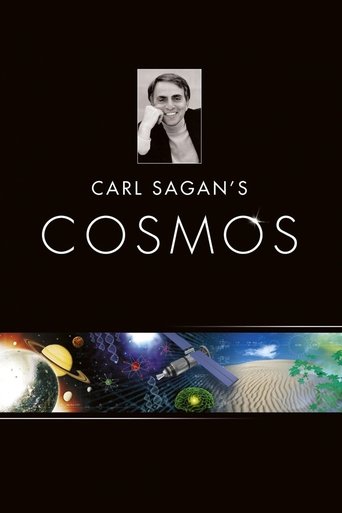
Cosmos: A Personal Voyage
1980 · TV series · documentary · 60 min episodes · 1 season
Created by Carl Sagan
Carl Sagan covers a wide range of scientific subjects, including the origin of life and a perspective of our place in the universe.
30 positive2 negative1 mixed16 neutralfrom 49 commenters
Where to watch
No streaming data for this title.
51 comments on Hacker News
> Without a computer, there is no video.
Maybe you meant "streaming video"?
I realize you're probably under 30 and don't remember "ye olden times" but nearly 90% of U.S. homes and every school had a VCR long before they had a computer. Widespread consumer video formats included VHS, DVD, Blu-Ray, Laserdisc, etc. VCRs. I still buy some movies I care about on UHD discs and watch them in a dedicated Blu-ray/UHD player. Even the 'smart' TVs and streaming sticks most people watch streaming channels like Netflix on aren't functionally computers (no meaningful user accessible local storage, input like keyboard/mouse, CLI or windowing GUI).
In elementary school we learned from 16mm films almost weekly and watched Carl Sagan's Cosmos series and space launches on live on television (it was rebroadcast in the mornings specifically for schools). My junior high school had a television in every classroom and we watched live TV on PBS, NASA channel and C-SPAN. In the late 80s there was thousands of hours of educational video programming sent via direct broadcast satellite to 18-inch dishes at schools. In the 90s every grade and subject had hundreds of interactive video DVDs in large notebooks (four discs to a page in plastic sleeves) and multiple DVD players per classroom.
The peak installed base of VCRs in the U.S. was in 1999. Streaming video wasn't common in consumer households until well into the 2000s, YouTube didn't even exist until 2005 and most people had never heard of it until 2007. In 2010 Netflix mailed DVDs in envelopes to 25M homes every week. They didn't even offer a streaming plan until 2011.
There's nothing about video that uniquely requires computers. But as someone who's spent most of my life thinking about video technology, with patents ranging from analog days to the streaming tech you use today, computers have been extremely disappointing in terms of enabling any unique "learning from video" features that are computer-specific. In the 90s we realized that computers could make digitized video random access letting us sequence it non-linearly to make it interactive in response to user input. Yet the vast majority video content available online today is still linear in form. Even video that's specifically educational is no more interactive or user responsive than a 90s DVD disc. Only two things have really changed about consumer video in the last 30 years: quantity and distribution. There's much more of it and it's remotely accessible on-demand instead of being limited by broadcast channels and storage media. But that's far more about communication technologies like broadband than computation.
The sieges and fires you are referring to were hundreds of years before the supposed destruction at the hands of Christian mobs (e.g. as depicted in the movie Agora or in Sagan’s Cosmos). The latter is unsupported.
Or a Carl Sagan fan:
> If you wish to make an apple pie from scratch, you must first invent the universe.
From episode 9 of his Cosmos TV series.
https://kottke.org/23/11/if-you-wish-to-make-an-apple-pie-from-scratch-you-must-first-invent-the-universe
https://en.wikipedia.org/wiki/Cosmos:_A_Personal_Voyage
There were a number of "history of technology & invention" TV series, all inspired by Connections.
https://en.wikipedia.org/wiki/Connections_(British_TV_series)#
for every episode of the A-Team, for Saturday morning cartoons, for I Love Lucy, and for Miami Vice, I give thanks.
Edit: And Star Trek, and Cosmos
Ok, the errors in Cosmos are covered here: https://sciencemeetsfiction.com/2014/06/15/cosmos-follow-up-hypatia-and-the-library-of-alexandria/
Quote:
Cosmos does not make Hypatia’s death so much a religious issue as an anti-intellectual on, but the truth is that it was actually a political one. A second problem comes when Dr. Sagan links her death to the destruction of the Great Library. In fact, in the final episode of the original Cosmos, “Who Speaks for Earth”, Carl Sagan says, “The last remains of the library were destroyed within a year of Hypatia’s death.”
The problem with this is that the last remnant of the Library of Alexandria were almost certainly destroyed in 391, 24 years before Hypatia’s death, and most of the library was likely destroyed, by accident, centuries earlier.
It sounds strange, but we actually don’t have a very good idea of when the Library of Alexandria was destroyed. As best we can tell, much of it was burned unintentionally when a fire spread through the city during Julius Caesar’s invasion in 48 BC. While the majority of the library may have survived that war, it was almost certainly destroyed in the war between Emperor Aurelian and Queen Zenobia of Palmyra in the 270s AD. This also appears to have been unintentional, as a large part of the city was burned.
What little was left of the library was deliberately destroyed in 391, when Emperor Theodosius I banned Paganism. The remaining repository of books in Alexandria was destroyed along with the Pagan temple it was stored in. [Even this has no evidence as pointed out by Tim O'Neill in the blog comments]
I admire most of Dr. Sagan’s and Dr. Tyson work, but when they characterize Hypatia’s death and the burning of the Great Library as the deliberate (and linked) actions of an anti-intellectual mob, they are simply misrepresenting the history.
I haven't fully watched that film.
It is definitely influenced by the book Cosmos by Carl Sagan. I feel I read it a hundred times.
Cosmos by Carl Sagan covers this history. Either the book or the still-excellent TV series.
That brings back some very fond memories. Connections was a seminal TV show that was interesting, funny, and intelligent. As a newly minted electrical engineer, I loved learning the obscure history of things I used daily. Until Carl Sagan created Cosmos, there had been nothing like it nor has anything been like it since.
What would have been a better test of choice would be between Penn and Teller and a science show (I'm not sure what was on TV back then, maybe Carl Sagan and an episode of Cosmos?)
I can't speak to the quantum party, but that stood out to me as well
> but it is sure that Carl Sagan, in his classic TV series Cosmos (1980), was crucial in popularising it
I would say it was popularized by teaching the gold foil experiment in middle school physics.
(That said, it seems like a minor point of the article.)
I loved Koyaanisqatsi, trailer here: https://www.youtube.com/watch?v=PirH8PADDgQ Not your typical documentary.
Anything by Werner Herzog is incredible as well, I find his approach extremely sympathetic and respectful to the subjects but without sacrificing detail (EG Grizzly Man)
Not strictly a documentary, but Threads by the BBC is a researched film depicting life in the UK if every city was hit by a nuke and it was incredibly disturbing and informative: https://en.wikipedia.org/wiki/Threads_(1984_film)
Carl Sagan's Cosmos has to be one of the most charming and moving documentaries I've ever watched - arguably a little out of date now but it reached a place the subsequent Cosmos series just couldn't reach.
MayDay! Air crash investigations are all amazing documentaries that manage to balance pretty intense technical information with real life suffering very skilfully and they are incredibly engaging.
I believe the "Cosmos" TV documentary series would have not been the same without Vangelis' soundtrack. I just need to hear the first notes of "Alpha" and I can also hear Carl Sagan's voice (well, his Spanish dubbing actor) pondering about the secrets of the Universe just like 4 decades ago.
RIP. He had some memorable soundtracks during the 80s: Blade Runner, Chariots of Fire. Also scores for the TV series Cosmos w/ Carl Sagan. I used to own the cassette tape for "China" which I remember enjoying many years ago.
I met him once. Right after Shoemaker-Levy 9 impacted Jupiter there was an event at the Mountain View Holiday Inn where he talked about it. I'd arrived a bit early (as an attendee), and while waiting for things to kick off I snuck out for a cigarette. Halfway through it, there was Carl (f*cking) Sagan walking across the parking lot towards me! I dropped/stubbed my cig and told him how much I was inspired by 'Cosmos' and especially by the Library of Alexandria episode/ He said yes, it was really good and that was mainly down to his wife's work. And then he signed my cheap paperback copy of 'Cosmos' and headed in to the seminar. I'm sure he could be a dick. But that certainly wasn't all he was.
Carl Sagan, in the opening to his book Billions and Billions:
> I never said it. Honest. Oh, I said there are maybe 100 billion galaxies and 10 billion trillion stars. It’s hard to talk about the Cosmos without using big numbers. I said “billion” many times on the Cosmos television series, which was seen by a great many people. But I never said “billions and billions.” For one thing, it’s too imprecise. How many billions are “billions and billions”? A few billion? Twenty billion? A hundred billion? “Billions and billions” is pretty vague. When we reconfigured and updated the series, I checked—and sure enough, I never said it.
> But Johnny Carson—on whose Tonight Show I’d appeared almost thirty times over the years—said it. He’d dress up in a corduroy jacket, a turtleneck sweater, and something like a mop for a wig. He had created a rough imitation of me, a kind of Doppelgänger, that went around saying “billions and billions” on late-night television. It used to bother me a little to have some simulacrum of my persona wandering off on its own, saying things that friends and colleagues would report to me the next morning. (Despite the disguise, Carson—a serious amateur astronomer—would often make my imitation talk real science.)
Since my divorce, I've found that I get a lot of help out of media like this for recharging my spirit to work on things. Sometimes kids' movies are the best, because they aren't at all about the 'how', but they are about the 'why'. Here's a list of a few that I find helpful:
Tomorrowland
Big Hero 6
Robots (2005)
The Martian
Sneakers
Real Genius
Wargames
Macguyver (80s show)
Cosmos
October Sky
Iron Man
The Astronaut Farmer
Flight of the Phoenix
Something Ventured
Now if I can only figure out how to get a team behind me like in those movies... :)
There's a great episode from the Cosmos series where Carl Sagan talks about how the range of whale communication was inhibited by the development of steam engine ships: https://youtu.be/UwzukFBWxu4?t=765
> The numbers are actually related to the mystery variables that the American astronomer and the planetary scientist Segan referred to in his Cosmos miniseries in which he discussed the Drake equation.
Typo: Segan :)
Connections was savvy in finding faires, working museaums, and access to the BBC's film vaults for providing much (though not all) such footage. Burke describes going to reenactment festivals to film many of the medieval life scenes.
And his journalist background and connections enabled him to have the access necessary to shoot single-take sequences such as this:
https://youtube.com/watch?v=2WoDQBhJCVQ
(Hardly the only impressive on-location scene in his work.)
Agreed with your comments on the primary importance of writing and research. I'd argue that Chris & Evan Hadfield's "Rare Earth" is getting close, Tom Scott is doing quite well, and Derrek Muller's "Veritasium" and Destin Sandlin's "Smarter Every Day" have promise.
Several YouTubers have been picked up by traditional broadcasters/production organisations, notably Hank Green ("Crash Course"), with PBS, and Emily Graslie ("Prehistoric Road Trip"), with the Chicago Field Museum. YouTube as a training and recruiting ground has merits.
One reason Connections is so hard to compare to is that it's pretty incomparable: forty years on we're still discussing it in glowing terms. It was produced by someone well-established and experienced at least within the BBC, and backed by the organisation. Notably, little from either national/public broadcasting or commercial production has even approached it. My short list includes Sagan's Cosmos, Burke's own The Day the Universe Changed, Ken Burns. Daniel Yergin's The Prize. And of course Kenneth Clarke's Civilisation and Jacob Bronowski's The Ascent of Man, which had paved the way for Burke himself. I might include Adam Curtis's works.
The role of the author or creative voice --- a Burke, Sagan, Burns, Bronowski, Clark, Curtis --- cannot be overstated. That talent seems rare, perhaps also the ability to simply get out of its way. Also realising when it's circled too hard back in on itself --- Burke had 2--3 good series in him, but he hasn't matched himself in at least three decades.
Related HN thread with additional recommendations: https://news.ycombinator.com/item?id=2698026
Part of that is a more crowded field: there's more produced, it's harder to get noticed. Part my own near-total avoidance of broadcast television. But I don't think that's all of it.
And yes my HN history shows I'm quite the fan of Burke: https://hn.algolia.com/?dateRange=all&page=0&prefix=true&query=by%3Adredmorbius%20connections%20burke%20&sort=byPopularity&type=comment
I hope everyone here has seen the complete "Connections" (the original ten episodes). Almost certainly the inspiration for Sagan's "Cosmos".
In addition to each episode being fascinating, he ties it all up with a bow in a fascinating final episode.
Some of the Cold War, super-power paranoia might seem a little dated, but the "Future Shock" stuff seems just as relevant today, 40+ years later.
Cosmos dedicated an episode to him
Flatland also contains some rather, well, Victorian attitudes. Mathematically, one can get 73.8193% of what the book covers from watching Carl Sagan's bit in the relevant Cosmos episode.
Yes, so much good stuff in this series. Sagan must have been inspired when he released his "Cosmos" a year or two later.
But this one has that central thesis that ties all the episodes up with a bow.
Not sure I cared as much for Burke's follow-on series but maybe I need to give them a second watch. They probably couldn't measure up to his original "Connections" masterpiece anyway though.
In that case I think it's you who is misunderstanding the word. Unfortunately I haven't the time to give you a course on Linear Algebra so unless you can explain in more detail why you believe that the word "dimension" is inappropriate for the case I described I'm not going to be able to help you.
I do suggest you watch this video from Carl Sagan's TV show Cosmos: https://www.youtube.com/watch?v=N0WjV6MmCyM
Wasn't this predicted from the times of Carl Sagan. I remember seeing an episode in Cosmos which predicted water vapors evaporating from ice cracks.
Carl Sagan rationalized the Fermi paradox in terms of nuclear annihilation in one of his Cosmos episodes, which was created during endgame of the cold war. The same episode introduced the Drake equation too.
This article framing the paradox in context of climate change is simply doing the same thing, framing it in context of our most pressing existential threats of the day. Also, like Sagan, implicitly overstating the impacts of those threats to us as a species.
Its a useless exercise and brings no new information to understanding the Fermi paradox and doesn't bring us anywhere closer to resolving it.
Edit and clarification, since I think some people take issue with what I wrote above:
========
Existential threats I mentioned, nuclear and climate change, are in their worst possible realizations will be planetary wide catastrophes which have the power to cause us, as a species, enormous harm.
But they do not measure up as the existential threats implied by Sagan or author of this article : so they are not answers to the Fermi paradox.
I am looking at these two things strictly from POV of the paradox, not as pressing policy issues.
Surprised not to have seen it elsewhere, but I remember telling my mom that we began studying astronomy in grade school (5th or 6th?) and she gave me Cosmos by Carl Sagan. I didn't know there was a TV series for it at the time, where reading it truly blew my mind that there were other galaxies and stellar objects beyond the Milky Way, and how happenstance humanity's origin story began. It also provided a great foundation for understanding what future missions would explore: finding habitibility zones outside of the earth, probes zooming to the edges of our galaxy, radio telescopes designed to listen for signals from far away, and space telescopes expanding our map of the cosmos just to name a few.
I would like to see Neil Degrasse Tyson do a season 2 of Cosmos with all these new discoveries. We're only going to keep discovering more.
Yeah, I really don't buy that premise at all. Just because some individual likes the idea of drones, doesn't make them implicitly virtuous.
The decision to use resources to pollute the wilderness with arbitrary technology is a leadership decision, relying on the personality characteristics of an entity or social chain of command.
This business about "drones" is an anachronistic paraphrasing of the original concept. People didn't speak in terms of the "drone" fad in the 20th century, like we do now. Drones were usually just target practice for the Air Force and Navy.
The original concept just specified range of influence, and a demonstration of presence. It did not impose a manner of activity, be it drone replication or direct colonization with regimented staff, and divisions of duty among personel. [0] The Fermi paradox remained agnostic, simply implying possible speed of travel given geological time scales.
Carl Sagan's Cosmos mentioned unmanned satellites (or unaliened? unoccupied...) as the most likely hypothetical form of first contact. Before we bump into any living thing, will probably notice a few remote control devices fanned out in front of their main corpus of civilization or colonization. That TV show also hypothesized about the possibility of dying civilizations leaving behind self-perpetuating remnants of technology, the likes of which might or might not be sentient. All of it was TV speculation though, not presented as surely factual.
If you read between the lines, the premise of a "dying" civilization hints at the lack of self control present in a runaway factory neglected and left to churn out garbage. That idea does not assume that a collective of entities would always wish to tamper with and contaminate their surrounding domain presumptiously.
[0] https://en.wikipedia.org/wiki/Fermi_paradox
I like documentaries where there isn't much narration/interviewing going on. They are also short.
Primitive Technology
https://www.youtube.com/channel/UCAL3JXZSzSm8AlZyD3nQdBA
I think this guy is most of HN's silent hero.
Two documentaries on working class skills approaching a true art form.
Ben's Mill
https://www.youtube.com/watch?v=l2KJbRHO76s
Sadly only part is available unless you pay a few thousand dollars. It is really good though. It's a guy using the raw power of water to create wooden objects for local farmers.
Glas
https://www.youtube.com/watch?v=KAYh0f1CPuc
A Dutch documentary on glass making in the '50s.
Three made for Television documentary series are:
James Burke's Connections. This is the first episode.
https://www.youtube.com/watch?v=e4tLYYXDg74
This series had an enormous influence on many of HN's older hackers. History, Technology, Philosophy, it's all there. One of the best television series I've seen, and I'm a millennial so it isn't just nostalgia. It is smart.
Carl Sagan's Cosmos. This is so famous I assume you've already watched it. Carl is scientist and poet. The recent adaption is a fair effort but the original is by far the best.
https://www.youtube.com/watch?v=6YgBXLUSsmg
Lord Kenneth Clarke's Civilization (1969!). This is the favorite documentary of many Western conservatives and reactionaries because it doesn't constantly caveat, qualify or diminish the history of The West. It is not shy about showing wickedness as well as greatness but nor is it politically correct.
Before I watched this it was quite hard to fully grasp the motivations of the right wing. After watching it I came to the view we have narrowed our view to a chronocentric interpretation of reality. This shows the grand sweep of history, which is admirable even if you don't agree with its worldview for political reasons.
https://www.youtube.com/watch?v=TDm4Sl6CdYU&list=PLFYDyLgHrFHC_YIf7cs9-HpCb6WIBHm1R
Old farts like me will remember Carl Sagan's seminal TV series "Cosmos", wherein he waxes lyrical about how disastrous to human progress was the loss of the Library of Alexandria and the scientific and academic culture that it represented. And indeed there's an animated sequence showing a spacecraft with a dodecahedron emblem and Greek text, the idea being that had that culture survived and flourished it would have reached space centuries ago.
One of the unfortunate parts of our being the only intelligent species we know of is that while we can mathematically guesstimate life's appearance throughout the cosmos, we have no data on when intelligent civilizations die out.
In the final episode of Cosmos, Carl Sagan describes a nightmare in which he is traveling the universe and decides to return to earth. As he gets closer, his spaceship intercepts broadcasts that have been traversing space since the invention of radio, from the earliest radio messages to television signals and then eventually...the signals stop.
The world is complex, but we haven't gotten to the stage yet where you should feel lost, even as a layman. It is absolutely possible to know enough classical physics, QM, and theory of relativity to have a decent understanding of our current models. You absolutely don't have to be able to recite a table of elementary particles in order to understand this.
> I often wish for some kind of "Physical Philosophy". That tries to make sense of the world independent from those theories.
If your sense-making framework can (or must?) be independent from the facts, there is an enormous multitude from all cultures available for you to choose from. But if facts are important to you, and you don't know where to start, watch some popular science documentaries. If you prefer a touch of philosophy, I can suggest the original Cosmos series by Carl Sagan. But on the whole, sense and meaning is not something that can be prescribed by scientific knowledge - it can, however, help inform your own decisions about sense and meaning.
> For example: what if the theories just keep growing indefinitely?
This does not describe the current state of physics research. In fact, we are almost struggling to discover new physics, and so far most particle physics experiments line up so well with theory it's almost frustrating. What we can see right now is not the bottomless fractal recursion into nothingness which you describe.
I have too many to list. Here are some of the highlights that come to mind.
2001: A Space Odyssey -- had a profound effect on me as a child. It both reinforced my interest in science and opened my mind to the sheer size and scale and mystery of the universe. The original Cosmos series did likewise, and I think it's far better than the remake with Tyson. Sagan just communicates the sense of awe and wonder a lot better.
Wargames -- definitely made an impression on my pre-teen self and helped get me into "hacking" (sense #2), which led here through a long and winding road.
Stand By Me -- a profound film about the end of childhood. (The Stephen King novella 'The Body' is good too, probably almost his best work.)
Primer -- the best sci-fi of the past decade. When you don't have a big budget to plaster FX all over the screen, it's got to be in the writing. Big budgets do sometimes ruin cinema.
Enter the Void -- this is a weird recent one that stuck with me. This is definitely a binary reaction film. I loved it, others hate it. It communicated the profound sense of loss that comes when you're forced to leave a thing unfinished and move on, followed by the sense of hope that comes with a new beginning. It was also just the visual aesthetic of that film. It haunts me. The artistic ethos of this film felt as if someone lifted dreams directly from my soul and rendered them on screen. Night flights over neon cities is probably what I'll dream about as I die.
I have a very worn copy of the book in Cosmos that I got in '83 - it's an excellent book and I love it, but I wonder if that's because I also loved the TV series.
The original Cosmos by Carl Sagan [1] has a fantastic episode called "The Persistence of Memory" in which he compares the collective intelligence and pathways of cities to the brain, DNA, etc. if you've never seen it, I highly recommend it.
1: http://en.m.wikipedia.org/wiki/Cosmos:_A_Personal_Voyage
Okay, I'll voice my desire...
My understanding of this comes from Carl Sagan's original Cosmos miniseries...
Kepler and Brahe were reluctant allies. Brahe had the observational data Kepler needed to try to understand the motions of the planets...
...but how the hell did Kepler do it?
I've gone through Differential Equations, I've done Linear Algebra quite a bit, I'm good at computer graphics... I had to derive the equivalent of Bresenham's Ellipse drawing algorithm for a test... And I have no idea how it's even remotely possible for Kepler to have taken astronomical observational data, and derived the motions of the planets from that data.
Has anyone ever done a "For Dummies!" write up of how this was possible?
Take a look at the older BBC "Connections" documentaries by James Burke.[1] They're really fascinating, however they have a strong editorial presence. In my view, like with Sagan's Cosmos, the presence of the series creator's point of view can make the content more interesting than a collection of data alone.
However, people do really enjoy TV tropes, so a huge effort to categorize everything could attract a huge audience, too. Such a site would be a good source of inspiration for new ideas incorporating older ones, too.
[1] http://www.youtube.com/watch?v=plgLCYha7pE&list=PLGi4Jd5YfR_lnV68fTIlPMZQzVAjeeg5g&feature=share&index=1
Reading the description of today's episodes, they are revisiting the Cosmic Calendar and discussing the immense age of the universe. However this was also the first episode of Sagan's Cosmos. Is this a shot for shot remake with better graphics? Or is this something new and only inspired by the previous show?
This this this. I was homeschooled up until high school, so my childhood was just a long swath of time to get really into obscure things. I could map out ages 3-15 as phases of things I was obsessed with (Batman, Pokemon, Magic Tricks, acting, Harry Potter, making things out of duct tape, film making, making websites, and coding), and every step of the way - no matter how obscure or ridiculous the future prospects were - my parents would feed the passion.
When I have kids, I'll definitely try to make science and engineering seem cool (by sneaking movies that glorify building things and scientific discovery, like the Iron Man series and Cosmos), but I'll focus on getting really into whatever my future progeny happen to stumble on themselves.
I picture Chomsky as Kepler, trying to build orbits out of Platonic solids.
Until Kepler had access to Brahe's data, he was not going to be able to come up with his theories of planetary motions.
Worse than that, the laws of planetary motion present a simplistic view of the universe: what happens when a bunch of small objects orbit a very massive object. I think they wouldn't help you out at all, in trying to understand planets moving in a binary star system.
There is no analytic solution to the N-body problem. We can only simulate the motions of a group of massive bodies by iteratively applying the laws of gravitation that we have deduced. Knowing the mathematical properties of how objects behave in a gravitational field, and actually understanding HOW GRAVITY WORKS are two enormously different things. Newton was frustrated with the theory of Gravity, because it was, as Norvig's models, just a model - with no explanation of why. But the model allows you to make falsifiable predictions, and understand how the universe will behave. Looking for the Higgs Boson is awesome - but there is potentially no equivalent in the linguistic world.
Chomsky asks us to ignore F = G * m1 * m2 / r^2, because there's no WHY attached to it.
PS - this understanding of the history of science is brought to you by Carl Sagan's Cosmos TV series. I have no deeper insight than that.
Wasn't cosmos a TV series?
These are some movies/tv series that I deeply enjoyed and (some I) wish I had known about earlier.
9.9 Hitchhiker's guide to the universe, BBC TV series
9.9 Contact (1997) based on a novel by Carl Sagan. Very few people seem to know about this movie.
9.3 War Games
9.0 most Akiro Kurosawa movies:
Seven Samurai
High & Low
The Bad Sleep Well
Ikiru
Red Beard
9.0 Terminator 1 (watch again)
8.8 Terminator 2 (watch again)
8.7 Pirates of Silicon Valley
8.7 Matrix 1 (watch again)
8.7 The Italian Job (featuring Napster's original inventor)
8.7 Live Free or Die Hard
8.5 Track Down or Takedown (about social hacker Kevin Mitnick)
8.5 Revolution OS (2001)
8.5 Dr. Strangelove
8.5 2010 A space odyssey
8.3 Antitrust (2001)
8.3 Sneakers
8.3 COSMOS
8.2 Minority Report
8.2 2001 A space odyssey
8.2 Paycheck (2003)
8.0 The Thirteenth Floor (1999)
8.0 The Net
I remember when Carl Sagan's "Cosmos" series was first shown on PBS; the episode when the Drake equation was covered was one of my favorite, although even as a teen I understood how small were the chances of finding other sentient life as we hadn't found a single extrasolar planet at the time, let alone in the Goldilocks zone of a star.
Planetary discoveries (like this one) in the past few years are so cool to me.
I have been looking for a good science show, but Nova scienceNOW wasn't it. Not so much the content as the absolutely juvenline format.
Can someone explain how I have misunderstood and the show really is meant for kids? Because it's designed like a kid's show, complete with silly music, wacky editing, colourful demonstrations/analogies to illustrate scientific principles, and narration that sounds as if written for a toddler. In this respect it's almost as unwatchable as Michio Kaku's (who's ordinarily a bright guy) weirdly infantile Science of the Impossible series. (It's also an incredibly American show, formatwise, extremely brash and loud and fluffy.) I started watching the show as I'm a fan of Tyson, but I ended up disappointed.
For now, the only regular series (as opposed to one-offs like Jim Al-Khalili's excellent shows on atoms and chemistry, or Sagan's Cosmos) I consider worth watching is BBC's Bang Goes the Theory (http://www.bbc.co.uk/programmes/b00lwxj1), which is fairly obviously targeted at teens, but has some good content. Two of the hosts are fairly annoying generic twentysomethings who do the show as though it's some kind of music video programme, but the third guy is an adorable geek with an obvious passion for science and engineering, and they have some assisting hosts who are quite quirky.
Y'know, I've never actually seen much of Cosmos, but I'd like to put in a plug for my favourite 80s documentary series, David Attenborough's Life On Earth.
Yes. Incredible. With Cosmos, Carl Sagan opened my mind up to the incredible wonders of space and what's out there a few years ago. It's up there with Planet Earth on the scale of seriously remarkable television series. Seeing this continue with none other than Ann Druyan and Steven Soter themselves gets a resounding hell yeah from me.
If you haven't watched Cosmos already, I highly, highly suggest it. Start with Episode 1: http://www.hulu.com/watch/63317/cosmos-the-shores-of-the-cosmic-ocean#s-p3-so-i0
King of Kong. Donkey Kong was a little before my time, but the characters are so amazing that it's almost hard to believe it's a documentary.
Cosmos. Because it's Carl Sagan.
The great Carl Sagan was at times mocked for his seemingly outrageous claims that "we live on this pale blue dot, amongst a billion other solar systems, amongst a billion other galaxies." If anybody remembers him standing on the beach in the opening episode of Cosmos -- or read the book, my childhood favorite, still have it in hardback! -- you'll know the scene I'm thinking of.
It appears even he had underestimated the vastness of the amazing universe around us.
According to the Wikipedia article on the library of Alexandria, Carl Sagan was basically full of shit. (I'm assuming you're talking about the last episode of Cosmos.)
I'm not sure where to begin.
Demon-Haunted World is about skepticism, and how to use science and rational inquiry to avoid scams, pseudoscience, hoaxes, and possibly religion. It is not a strictly atheist book, although you could read it as one if you tilt your head properly.
But how can you not know anything else about Carl Sagan?
He wrote many books popularizing science, including Contact, The Dragons of Eden, Broca's Brain, and Cosmos. He also co-wrote and hosted the series Cosmos on PBS, which is the most-watched PBS show in history, and well worth watching on DVD.
He was founder and first President of The Planetary Society (http://www.planetary.org/). He was an avid supporter of SETI. He assembled the gold plaque that went into space on Pioneer 10, and the golden records that went out on the Voyager probes.
As an astronomer, he made several important hypotheses about the structure of other planets, particularly Venus, and drew connections between Venus and Earth-based global warming and greenhouse emissions.
He was active in investigating UFO claims, including serving on the Ad Hoc Committee that reviewed the Air Force's Project Blue Book. He was convinced of the probability of extra-terrestrial intelligence, but equally convinced that we had not encountered it yet.
Most importantly, he brought us the phrase "billions and billions", even though he never said it himself until long after it was a joke.
Here's a collection of quotations: http://en.wikiquote.org/wiki/Carl_Sagan
And one for the road: "If you wish to make an apple pie from scratch, you must first invent the universe."