 Hacker Cinema
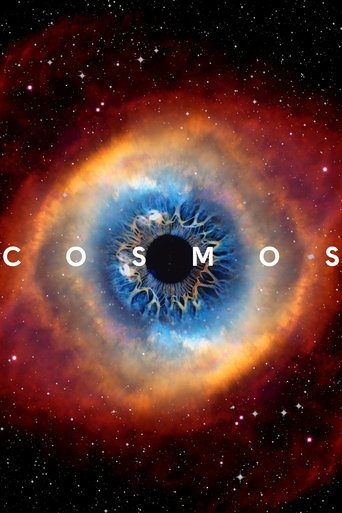
Cosmos
2014 · TV series · documentary · 2 seasons
Created by Ann Druyan, Steven Soter
Famed astrophysicist Neil deGrasse Tyson provides clarity for the vision of the cosmos as he voyages across the universe with never-before-told stories that delve into the scientific concepts of the laws of gravity and the origins of space and time.
38 positive2 negative14 neutralfrom 54 commenters
Where to watch
No streaming data for this title.
59 comments on Hacker News
Location: Berkeley, CA, USA
Remote: Yes; also open to Bay Area hybrid
Willing to relocate: No
Technologies: Python, SQL, PySpark, Dagster, AWS, Delta Lake, PyTorch, TensorFlow, TypeScript, React, PostgreSQL, Snowflake
Résumé/CV: https://newtrino.ink/resume.pdf
LinkedIn: https://www.linkedin.com/in/nishanth-jayram/
Email: [nishanthjayram@gmail.com](mailto:nishanthjayram@gmail.com)
Data / ML infrastructure engineer with experience building production-scale ingestion systems, ML pipelines, validation frameworks, and internal engineering tools.
Currently at Protege, working on healthcare data ingestion and normalization across large EHR and imaging datasets, with Dagster-based orchestration, schema validation, drift monitoring, and production pipeline reliability improvements.
I was previously at Mastercard, where I worked as a machine learning engineer on consumer engagement and merchant-offer forecasting systems: feature pipelines, propensity models, training/inference workflows, Delta Lake migrations, and React/TypeScript dashboards for model performance and production insights.
I’m looking for data engineering, ML platform / ML infrastructure, applied ML engineering, or full-stack roles where the work benefits from strong data/ML systems experience and product-minded engineering.
Outside of work, I like playing guitar, photographing birds, and watching old episodes of Carl Sagan’s Cosmos.
The late 1970's were the golden age of documentaries: Connections, Cosmos, Civilization, The Ascent of Man and Attenborough's Life on Earth.
Perhaps it's just me, but modern documentaries are rather dumbed down?
As a side note: Quite ironic that he ends up pointing to a rocket propelled mostly by solid fuels.
Thanks for the list!
I agree that the fundamental thing here is:
> "genius in one thing believes he's a genius in everything"
No disagreement here, and sadly I think this is an unfortunate part of human nature.
Other than that, I'd say the person who wrote that list has a bee in his bonnet, there's a mix between honest mistakes and debatable things, a lot of nitpicking (with a dose of cherry-picking), and ultimately this doesn't prove that "most of [Tyson's] takes" are mistaken. I agree that some things he says are dumb (like the cybersecurity tweet you mentioned) but I wouldn't dwell too much on them. "Cosmos", in all of its incarnations, is amazing. Of course, I'm not arguing the script is his, but his delivery and screen presence are solid.
I see Tyson commented on that blog, and some of what he says makes sense (e.g. picking on his colloquial use of "exponential" seems a bit mean spirited, though he could have been more precise; some people misunderstand the spirit of his comments on scifi movies; etc). In general, his replies in that blog to what at some points amounted to personal attacks left me the impression that Tyson knows how to gracefully and politely handle flamebait.
There was an episode of Cosmos[0], where Neil DeGrasse Tyson makes the case that there are two principal intelligences on Earth: Men and bees.
[0] https://www.youtube.com/watch?v=ubE9hjrsHmI
Yeah that’s amazing! Plants and moths just co-evolving some fascinating and beautiful traits.
That reminds me of this particularly beautiful section from one of the newer Cosmos episodes, on how insects perceive light reflected from flowers:
https://youtu.be/YJL63kv2_xg
It should be one of the things that Disney owns outright today (from having bought some but not all of Fox/News Corp), so Disney+ is the natural home, but that version of Cosmos was a very expensive show so between the "Disney Vault" and Disney again remembering they can get revenue from lending shows to other services it does seem to be off Disney+ for the moment.
JustWatch says it is streaming on ad-supported Free service Tubi in the US right now: https://www.justwatch.com/us/tv-show/cosmos-a-spacetime-odyssey
(JustWatch is a too useful service at this point in the Streaming Wars to figure out where shows and movies currently are. I am getting to point of buying more Blu-Rays again, though, because there are too many services and many of the ad-supported ones like Tubi and Pluto are sometimes really obnoxious, and some of the paid services I have strong reasons I don't want to pay for them. I certainly have friends that have gone back to piracy, and it does sound more tempting as the Streaming Wars get worse.)
> it's hard not to get all philisophical and wonder about the size of space & time on cosmic scale
Indeed!
Never a bad time to re-watch Cosmos and (in my opinion) the awesome sequel(s) by Neil de Grasse Tyson. Is it weird to admit I even choke up during some of the episodes?
(As an aside, why is it so hard to find the sequels to Cosmos in any streaming service. In my country it's not on Netflix, Disney+, Apple, HBO/Max, Star+, Prime Video. What the hell...? I just want to re-watch the damned thing and I don't own a Blu-ray player. Do I have to pirate the stuff?)
One of my favourite episodes of Cosmos centres around Eratosthenes’ calculation of the circumference of the Earth: https://youtu.be/G8cbIWMv0rI?si=CuX49ki1GIvBLpeL
There was an episode of Cosmos[0], where Neil deGrasse Tyson talks about bees, and shows how they are actually a hive intelligence that could be compared to us.
Ants have a similar hivemind.
It was pretty awesome.
[0] https://www.youtube.com/watch?v=ubE9hjrsHmI
I first learned of her in Episode 8 of Cosmos: A Spacetime Odyssey:
https://en.wikipedia.org/wiki/Sisters_of_the_Sun
As I move into my second decade as an educator (started as a teaching assistant around 2012, now a history professor) it's been really interesting seeing what "sticks" and what doesn't. A couple years back I made a Simpsons reference that I know would've landed with my students from circa 2015, but it was crickets. However I feel like certain movies and other cultural productions from as far back as the 70s are still on students' radar -- like Scorsese films, for instance.
I've got a two year old daughter and as she gets older, I'm tempted to show her old episodes of the PBS show Nova and the original Cosmos so we're on the same cultural wavelength, but I probably shouldn't try to force it. She was born with an illustrated box set of the Lord of the Rings already sitting in her room though ;)
I think 'Cosmos' the TV series (old and new ones) is the best 'popular' version of such a history.
The thing that I think you are overlooking though is that Tesla and Marconi and Popov were not required to invent radio and modern electronics. There is a reason why a lot of groundbreaking inventions get invented by different people in different places at around the same time. Look into 'multiple discovery theory'[0].
[0] https://en.wikipedia.org/wiki/Multiple_discovery
I'll counter with a different unpopular opinion. Specialized vocational training should be viewed separately from continued cultural education and continued cultural education should be much more accessible. After you get out of high school you should choose a vocationally oriented educational institution to learn about whatever specialized field you've chosen, whether that's decades of medicine training, a year or so of CS training or a few years of trades training - then, for the rest of your life, cultural education programs discussing higher abstract mathematics, philosophy, advanced literacy, political science and other liberal arts, should be available as ongoing pursuits that are ingested ala carte. This is drastically different from our current educational system and the cynics among us will happily point out that implementing something like that overnight would probably just defund education in the current system but I think that'd be a much nicer way to approach life and I think it's reflected in how much continuing education content exists both modern stuff like youtube and more traditional tv shows (including nature shows and things like Cosmos). Modern web based learning (everything from SkillShare which is more vocational to Khan Academy and Harvard's online lectures) are making continuing education more accessible, but we need more! Learning is an activity that should be actively engaged for your entire life!
People like to point at folks working at Mickey D's and opine on how their bachelor's degree is wasted, but if that bachelor's degree came with philosophy courses that taught you self-worth and empathy that helps you raise to a management position that creates a nice working environment for a half a dozen people then I think that is a fine use of education. Learning for learning sake is valuable enough and it doesn't need to be itemized about how much "value" (always framed in terms of vocational training) that it creates for society.
No particular order:
- Particle fever
- Sugar Coated
- The United States of Secrets (and anything Frontline)
- Citizen Four and related movie drama, name escapes me now.
- Cosmos (new and old)
- The Social Dillema
- WWII in HD, two docs on Netflix both good.
- Ken Burns *
"The Social Dilemma", what a great documentary showing how ad business, recommendations, attention grabbing works in social networks and how it impacts society, it basically shows "how sausage is made" and how it impacts the whole world and the risks associated with it https://www.imdb.com/title/tt11464826/?ref_=nv_sr_srsg_0
"Planet Earth II", breathtaking documentary about animal life on earth with extraordinary scenes https://www.imdb.com/title/tt5491994/?ref_=rt_li_tt
"Inside Job", documentary about 2008 crisis, masterpiece, narrated by Matt Damon. https://www.imdb.com/title/tt1645089/
"The Last Dance", I'm not a fan of basketball, it's a doc about Michael Jordan, one of the best docs I've seen, sounds boring but you can't wait to watch the next episode, recommended even if you don't watch sports like me, it's about extraordinary person/athlete and what it takes to be GOAT https://www.imdb.com/title/tt8420184/?ref_=rt_li_tt
"Zero Days", great doc about stuxnet exploit https://www.imdb.com/title/tt5446858/?ref_=rt_li_tt
"Human", what it is to be a human from different perspectives https://www.imdb.com/title/tt3327994/?ref_=rt_li_tt
"Over the Limit", documentary about olympic gymnastic and shows the price of winning at any cost. https://www.imdb.com/title/tt8184202/?ref_=rt_li_tt
"Life Story", beautiful doc about animals, great scenes https://www.imdb.com/title/tt4150884/?ref_=rt_li_tt
"Planet Earth", extraordinary scenes of animals lives https://www.imdb.com/title/tt0795176/?ref_=rt_li_tt
"Blue Planet II", like Planet Earth but in water https://www.imdb.com/title/tt6769208/?ref_=rt_li_tt
"Cosmos", doc about cosmos, nature of the world etc, very good https://www.imdb.com/title/tt2395695/?ref_=rt_li_tt
"The Tinder Swindler", "Posing as a wealthy, jet-setting diamond mogul, he wooed women online, then conned them out of millions of dollars." Surprisingly good https://www.imdb.com/title/tt14992922/?ref_=rt_li_tt
"The Farthest", about first human made object leaving our Solar system https://www.imdb.com/title/tt6223974/?ref_=rt_li_tt
"Our Planet", https://www.imdb.com/title/tt9253866/?ref_=rt_li_tt
"Cartel land" https://www.imdb.com/title/tt4126304/?ref_=rt_li_tt
The same story is covered in an episode of the newer run of Cosmos; S2E7.
I thought the coverage there was better. Brief overview here: https://www.youtube.com/watch?v=_yV__MkDqqo (it ends up being an ad for the show, but good summary, nevertheless).
When people look to solutions of the free market this is an interesting example.
We knew lead from petrol was poisoning everything -- deformed babies, ruined ecosystems etc. and yet the price incentive ensured it would never be dropped as a consumer product -- people kept buying leaded petrol as the cost would always be externalized somewhere else. The government had to step in and and ban the practice. Why didn't the free market solve this particular problem?
Neil DeGrasse Tyson looked at Clare Patterson's work (the whistleblower of leaded petrol being harmful) in an episode of Cosmos. Highly recommend it -- very interesting episode.
Gasoline is not big business? They had a "scientist" on staff, that proclaimed that leaded fuel was harmless. Who cares about paint, when there are millions of cars driving around blowing lead dust into the air? The (real) scientist who saw a connection needed years to prove it. By digging into the ice in the arctis he was able to prove, that the high lead levels where a recent phenomenon. The documentary Cosmos: A Spacetime Odyssey by Neil deGrasse Tyson [0] tells this story much better than i ever could and much more... Highly recommended!
[0] https://www.imdb.com/title/tt2395695/
> I remember an episode of Cosmos mentioned how we used to have gods for every little thing like rivers and trees, then as they were unserstood the remaining gods grew fewer and more abstract.
That's a very convenient, attractive model, but not really even remotely accurate as a description of the evolution of religious belief.
What actually happened in a lot of the world is that people who called the “gods of every little thing” something else (“guardian angels”, “patron saints”) imposed their religious language on other people by force (or just exterminated them outright).
I remember an episode of Cosmos mentioned how we used to have gods for every little thing like rivers and trees, then as they were unserstood the remaining gods grew fewer and more abstract.
We sleep in on the weekend. I can't tell you how happy I am that kiddo has developed the habit of getting up early and digging into a book and reading.
We had to pry the child away from reading all day yesterday to go outside.
The secret: No internet, no video games, no TV (except an occasional animal documentary or episode of Cosmos... but this is once a month or so).
I'm in tech, and I very much look forward to sharing what I know and what I love about computers and computer gaming. But not yet. Reading, writing, math, science, history, music, arts, crafts first, and no indoctrination... just learning to learn, and learning to think.
There is a very good episode about him in the last Cosmos season.
Not movies, but documentaries about space, universe, and our existence are what made me truly open my eyes.
I watched a bunch of those - Cosmos, The Universe, How the Universe Works, and a bunch of other PBS Nova and Discovery content.
Seriously, we don't know why we are here. Why we are so alone, and why we have so many problems in the world. Our lives are short, insignificant, and petty, yet we have so many problems from racism to hunger to wars and international affairs. To be frank, we're no special compared to the other animals around us. We just have the most powerful brain that gives us thinking capability, but it also comes with overflowing emotions all the time.
I keep pondering over these thoughts on why we exist, and that while we do, we need to make sure others around us are happy. Money is just a materialistic medium we introduced to make our lives way too complex.
Are you limiting yourself to books? I got interested in science with docuseries personally (Cosmos, old and new one, come to mind). And there's a lot of good YouTube channels out there, Veritasium for physics, numberphile for math, historia civilis for history, Wendover productions for general knowledge that always ties back to planes.
* full plant-based/vegan diet + salt/oil/sugar free
* Linux
* committed to exercise every single day (gym, cycling)
* revamp finances
* regular reading (Three Body Problem, Snow crash etc.)
* regular meditation practice
* climbing mountains
* finishing my computer science degree
- GatesNotes - NewYorker/NYTimes/NY Magazine - MarketWatch - Other blogs?
- Sign up for classes - Unpack - Finance/Invest/Budget Deep Dive/ call Fidelity - MarketWatch / Fool / Bogleheads - Tech refresh - Write/Read - Mindfulness - Mindfulness in Plain English / The Mind Illuminated - Yoga - Plan Spring trip - Journal/Sketchbook - Cards / Board Games - Build a project - Before/After - Check on CapOne - Dotsovesky - Sagan - Cosmos - Ken Burns prohibition - https://www.nytimes.com/2020/01/01/us/100-years-ago-the-booziest-january-suddenly-dried-up.html - Dance - Sapiens - Hackers movie / HEAD Monkees - Kerouac - Monitor stand - pretreat
- music video creation
Tesla Roadster space bowie
Ken Burns - Natl Parks Carl Sagan - Cosmos
Quartz New Yorker NYTimes New York Magazine Atlantic Economist
Mindfulness in Plain English The Mind Illuminated Walden Emerson Digital Minimalism Steven Pinker Sapiens Einstein - Isaacson Steve Jobs - Isaacson Hackers/painters Gita Bryson Huxley Kerouac Einstein DaVinci Birds
Egypt / Columbus / America/ Spain ancient history
"Cosmos" with Neil deGrasse Tyson did a whole episode on it
https://en.wikipedia.org/wiki/The_Clean_Room
TL;DR: We poisoned ourselves for about half a century.
> The episode describes how science, in particular the work of Clair Patterson (voiced in animated sequences by Richard Gere) in the middle of the 20th century, has been able to determine the age of the Earth.
> Patterson found that his results were contaminated by lead from the ambient environment...
> Tyson goes on to explain that Patterson's work in performing lead-free experiments directed him to investigate the sources for lead. Tyson notes how lead does not naturally occur at Earth's surface but has been readily mined by humans (including the Roman Empire), and that lead is poisonous to humans. Patterson examined the levels of lead in the common environment and in deeper parts of the oceans and Antarctic ice, showing that lead had only been brought to the surface in recent times. He would discover that the higher levels of lead were from the use of tetraethyllead in leaded gasoline, despite long-established claims by Robert A. Kehoe and others that this chemical was safe. Patterson would continue to campaign against the use of lead, ultimately resulting in government-mandated restrictions on the use of lead. Tyson ends by noting that similar work by scientists continues to be used to help alert mankind to other fateful issues that can be identified by the study of nature.
Emphasis added.
I could name far more!
Cosmos? Planet Earth? Or what about the myriad of documentaries you can find? Or shows about history?
I suppose this also depends on if you think fiction betters you as a person (I don't think the medium you receive it in matters all that much; so I don't think you need to read a thick russian novel). If you don't; I guess I just fundamentally disagree with you, and in a way, I almost feel sad on your behalf. Almost all of human morals and values, not to mention deep life lessons, have historically been taught through fiction. If you do, then obviously there's a lot of EXCELLENT fiction on TV, shows like Breaking Bad, or Mad Men. Or recent shows like Barry. Those shows rival even large novels in the amount of time it takes to consume them and what they can say, and they even have the advantage of being able to take advantage of music and filmography to set moods and make points that books cannot (books of course also have their own set of advantage, I'm not trashing them)
Neil DeGrasse Tyson's Cosmos had a very good episode dedicated to him fighting the establishment.
Zircons were the key afaik and comparing them to deep sea lead percentages. Zircons are little crystals that keep things locked up and make for a useful record thats useful for investigating envoirnmental anomalies like this.
The theory of how lead poisoing lead to the fall of Rome is also interesting.
There was an excellent COSMOS episode entitled "The Clean Room" that went into great detail on this topic.
https://en.wikipedia.org/wiki/The_Clean_Room
For some reason I was expecting Herbie Hancock, even though I knew the album came out later. Tangental, but that album lived up to the name. It was the 1st to feature record scratching, and an early mastery of digital sampling.
This is a classic that I think should be shown in schools. And as much as I abhor remakes, its time may be coming however. I just hope it can capture some of the magic. The Cosmos continuation with Tyson is great, but it just doesnt capture the joyous wonder for me that Sagan's did. I feel this film would lose much of the awesome but sinister undertone without Welles.
If you find this interesting, I'd highly recommend watching the Cosmos series on Netflix. Once you get past the first few minutes of cringeworthy effects, it gets deep very quickly and presents the evolution of our species, planet and universe in very accessible terms.
Jacob Bronowski appeared to believe that if Ludwig Boltzmann hadn't done his bit for atomic theory then Physics would be set back "decades, and perhaps a hundred years".
https://youtu.be/LPBjcMKiezg?t=36m50s
Either way this clip from The Ascent of Man is always worth watching, as is the whole series. It was the inspiration for Carl Sagan's Cosmos which I understand is fondly received in this community.
> Long term, we'll probably wind up with a couple of major marketplaces that provide a UI that ties together content bundles that you've purchased from different distributors (who will actually serve up their catalogs).
If you actually had something like that, it could know that you watched Cosmos on Netflix and then suggest physics lecture videos from Open Courseware. It could suggest YouTube videos alongside Hollywood movies.
Which is exactly what the studios don't want, because they want you watching only their content. That is the real reason they're so obsessed with DRM -- they want creating that to be prohibited by law, because it would allow a free market for content curation instead of allowing the major studios to control it.
It's the same reason they don't like Netflix. Netflix is producing their own content and is happy to accept content from small players. It's not a fully open market but it's still too much like real competition.
But fragmentation isn't going to save them. People aren't going to subscribe to a dozen separate streaming services each with their own incompatible interface.
Hopefully they'll realize that sooner rather than later and decide that it's better to have open interfaces and protocols than let someone else (i.e. Netflix) have market power.
https://www.youtube.com/watch?v=XH7ZRF6zNoc
I like the rendition of that quote at the end of the COSMOS documentary series.
This article perpetuates some false myths about the reasons why some people were prosecuted and executed.
Giordano Bruno was not burned at the stake for believing in other worlds; he got that idea from an esteemed cardinal who suffered no ill-effects for spreading these ideas, which were not considered heretical at the time. Instead, Bruno was burned for a whole slew of heresies much more central to Christianity, like denying the divinity of Jesus. More details here: https://www.quora.com/Is-the-representation-of-Giordano-Bruno-as-a-martyr-for-science-in-episode-one-of-Cosmos-A-Spacetime-Odyssey-TV-Series-2014-historically-accurate
And the Galileo story is a lot more complex too: https://www.quora.com/What-is-the-most-misunderstood-historical-event/answer/Tim-ONeill-1
A few movies left me with some feelings like this. I take it as a chance to try to capture some insight and write it down. Regardless of movies I think is healthy to periodically review life's important questions, but if a movie triggered that, then it would be very welcomed. On the personal side, due to the age at which Carl Sagan's Cosmos catch me, that was profoundly influential and inspiring.
This reminds me a lot of how wolfs eventually became domesticated into today's dogs. It was covered nicely on an episode of Cosmos. The path they took was not unlike what is described here for cats.
Using radiogenic isotope geology.
Carbon dating only works on very recent things (up to a few tens of thousands of years). For older things like the earth and these fossils, slower-ticking radiometric clocks (like Uranium-Lead clocks) must be used. There was a great COSMOS episode discussing the history of it [1] but the fascinating math and science behind it is better explained for the layperson in [2].
[1] http://channel.nationalgeographic.com/cosmos-a-spacetime-odyssey/episodes/the-clean-room/
[2] https://whatisnuclear.com/physics/age_of_earth.html
If you are referring to Cosmos I just double-checked and it is still on there. I only watched the first four episodes so I would have been really disappointed if they had already been removed.
I think a lot of people like the parent assume that there are large amounts of people like themselves that would pay for a dedicated of niche content. I really don't think that is true. As every indie filmmaker and SaaS entrepreneur knows: the number if people that say they would pay is a magnitude more that the people that actually do.
A lot of industry observers are speculating that a la carte cable would be the doom of a large portion of the smaller niche channels that are bundled by the content companies (like Discovery Networks) with their more popular channels when they sell them to the cable companies.
> The thing that disturbs me about this argument is that IMHO it's a slippery slope towards "back in my day, we didn't have this new-fangled stuff".
> I just think we all need to be mindful about where our concerns might be coming from.
Basically we're on the same page.
Here is proposition. I'll steelman the Conservative view and you tell me what you think. I promise not to claim vidya causes violence or D&D is a leading cause of Satanism.
My proposition is that television media has meaningfully worsened our society by making it dumber. This is an artifact of the medium itself, rather than an issue with any specific content on it. To explain what I mean by dumber I must elaborate.
The television is a unidirectional medium. It contains consensus on various intellectual issues of the day and gives a description of the world I'd call received opinion. There exists no meaningful difference between the advertising that tranches people into buying products and the non-advertising that tranches people into buying ideas. Most ideas that are bought are not presented as items to be sold, they are pictured as 'givens', obvious. Most lying is done by omission. Even were all information presented truthfully, we have a faux sense of sophistication about our awareness which is a problem. When you buy prepackaged meals at a store you are not in the makings of becoming a chef, and in that way you are not chewing over the ideas presented to you, you do no mental cognition. Your state is best described as, and feels like, a hypnotic trance.
One of the problems with this is that television creates a false sense of normalcy that has no objective basis. It asks the questions and provides the answers. All debate is rhetorical debate.
It's the cognitive equivalent of 'traffic shaping' that Quality of Service mechanisms do on routers. In a way that is a much bigger lie. This concept is very similar to Moldbug's Cathedral concept. The people who work for the Cathedral don't realize they represent a very narrow range of thought on the spectrum. Their opinions cannot plausibly be of their own manufacture because one arbitrary idea is held in common with another arbitrary idea and they all hold them.
The key to understanding this is very real and not at all abstract, is that millions of people have synchronized opinions on a range of issues without any other discernible cause other than the television (or radio). Why do populations of teenagers become anorexic after the introduction of television where they did not suffer before it? Synchronized opinion is always suspicious. It defies probability theory to think my grandmother and millions of others suddenly came to the conclusions for example, that gay marriage was a positive idea? Why do millions of conservatives think buying gold is a good idea? It is not that there is something wrong with gay marriage or buying gold. It's that there is no genuine thinking going on about about any of this. There many ways to hedge against inflation that don't involve buying gold. Why is gay marriage the morality tale of the age, and not, say, elder abuse in nursing care facilities.
Why do some things become 'issues' and not a myriad of others? How directed this is is up for debate, but what is not is that the selectivity and constraints of the medium have narrowed our perception of the world, and that has led to the thing that made us dumber: it stunted our native creativity and curiosity.
> Yet kids ALWAYS adapt. They don't view smartphones or tablets as anything particularly out of the ordinary. It's just their ordinary. I'm certain their brains will build on top of this foundation. That's the thing - brains are extremely adaptable. All of us adapted.
There does exist a series of schools in Silicon Valley. The software engineers at Google and Facebook and other firms send their children to them, and they strictly contain no computing related devices. Instead it's schooling of the old fashioned sort, from the early 20th century.
It is possible that this is juvenoia as you suggested. But at least take into account those parents may understand something else about electronic media and its affects on brains. After all many of them study seriously human attention for a living.
The other thing I want to ask you is have you ever visited in your country what we call council estates in Europe? These are places which contain the poorer class of people in our society. I've been to many of these gray lifeless places and they all have many characteristics in common. Television is a major part of their lives and their shelves are bare of books. It is ubiquitous. In the past the working classes were much more socially and intellectually mobile. They read. They did things. Little evidence remains of that today, but it was so.
It is possible that television is like a slow poison that affects some classes more than others. You can't just say people you know are unaffected and therefore it does not matter, because it is possible you may be part of an advantaged group for which reasons may exist why they could be more immunized than most e.g. having challenging or interesting work to do. It's worth considering that all the problems I mentioned still exist without television in society but you might say the 'dose' determines whether it's medicine or poison. There is certainly a sense among many people that television has progressively gotten worse and watching old news broadcasts and documentaries it is hard not to see what they mean. I appreciate this isn't objective measurement, but comparing like with like, say James Burke's Connections with Neil deGrasse Tyson's Cosmos, the difference is obvious and the Cosmos reboot would be considered very good relative to its current competition.
Evidence for my claims could be a reduction in the number of inventions (excluding paper patents) per capita, reduced library visitations with respect to population changes, increasing numbers of younger people unable to read, evidence of decreased adventurousness or increased passiveness in the population, some metric for diminished curiosity/creativity over time. If those were mainly found wanting then I'll concede my error.
I'd be much more concerned about curiosity/creativity, than reduction in IQ or school test scores because creativity is really the key to much of what is good about human endeavor.
I'd also like to point out that you might not be able to spot the 'brain damage' so easily, since it's hard to come up with objective measures without a good control group. If it happened to most people then it's a new normal but that doesn't mean it had no effect.
Blacks are about 20% of the US population, while Netflix has some demographic information I can't really imagine they are tracking race of the viewer (I could just imagine the shit storm that could erupt if they did), they do however classify films based on various categories.
Netflix didn't invent black cinema people did and way before Netflix was even an idea in some one's head here are for example Black Cinema film festivals:
American Black Film Festival Freaknik Hollywood Black Film Festival International Black Women's Film Festival The Kidflix Film Fest of Bed-Stuy North Carolina Black Film Festival Pan African Film Festival Roxbury Film Festival San Diego Black Film Festival Women of Color Film Festival
The US also has "black only" film awards including the African-American Film Critics Association Awards, Black Reel Awards, Black Movie Awards and so on.
So after watching multiple movies that most likely their only common denominator was "Black Female Directors" Netflix suggested you a category that contain additional movies that fit your recent viewing habits.
On a side note, I watched the new Crouching Tiger, Hidden Dragon and the Marco Polo special on Netflix recently and all of a sudden what would you know? Chinese / Asian martial arts films appeared and took over my suggestion feed.
However after binge watching Cosmos and The Inexplicable Universe I wasn't greeted with the suggestion of the category "Documentaries by Black Astro-Physicists" but rather with "Space and Nature Documentations".
This series (the first series at least) is one of my favorite documentary series of all time. I've always been vaguely interested in history but usually in terms of the occasional specific topic or passing interest. The way this series dives into history in terms of interconnections rather than chronology makes it immensely more engaging. I watched the entire thing over the course of a couple of weeks maybe 10 years ago and enjoyed every bit.
Chances are, this sort of presentation is a bit too close to "pop history" or layman's terms for serious history scholars but in the same way that Cosmos brought a lot of physics, astronomy, and cosmology to an audience that may not have much background knowledge, I found Connections to be a great way to learn about history in an engaging way.
I never did get around to watching later series but with this reminder, maybe I'll dig around for it (especially since I seem to have exhausted my supply of shows to binge-watch on Netflix and Amazon).
It entirely depends on the kid.
Nova did a series on the formation and geological history of North America, and the local station happened to air it following their Sunday morning children's programming. My six year old sat through each episode entirely enraptured with it, and he asked all sorts of questions after. My younger kid, not so much.
I know Cosmos is going to be above his ability to completely understand, but I think it'd probably keep his attention and prompt questions.
Unsourced gif appears to be from the series "Cosmos: A Spacetime Odyssey", episode 2, "Some of the Things That Molecules Do". Clip: https://www.youtube.com/watch?v=2I-PQxuPkjA
Nope! He actually had a major role in producing Cosmos <http://www.imdb.com/title/tt2395695/> with Neil deGrasse Tyson, and also has a major interest in space.
Netflix recommendations have essentially never worked for me. It occasionally identifies a category I might be interested in, but essentially drops the ball on actual content. I think the best film I've seen recommended in a genre was Charlie Victor Romeo.
There are still some excellent movies (Primer, Metropolis, Ronin, Barton Fink, The Man Who Wasn't There, etc...), particularly classics. And the documentaries are probably under appreciated (Genius on Hold, Cave of Forgotten Dreams, both Cosmos, etc...). So, someone is probably paying attention. I have to randomly search for specific things from time to time though. Sometimes sites like https://reddit.com/r/bestofnetflix help.
One of the bigger problems I've noticed is that some movies tend to be cut short though. It's almost never a director's cut.
1. Write down if there are more steps to do. 2. Watch a BBC documentary about the cosmos or something narrated by David Attenborough. Without advertisements.
If you're looking for science documentaries with a little more depth, look at the series done by Jim Al-Khalili (eg., "Atom", "Absolute Zero" or "Chemistry: A Volatile History") and Michael Moseley ("The Story of Science").
In "The Story of Science", Moseley covers much the same ground as James Burke's famous "Connections" (and also his highly-esteemed "The Day thee Universe Changed") -- albeit in a more literal and less literary angle -- or indeed Sagan's eminent "Cosmos".
Al-Khalili is a physicist, though, and I think his documentaries are more to the point than Cox's, even if they're also full of excellent photography. Definitely less bubbly.
You'd certainly find something to interest you in the Ascent Of Man documentary series, although it covers many other areas.
Cosmos was based on it. Potentially the greatest television programme ever IMO.
Episode 9 of the Cosmos season 1 talks about this. Good stuff.
Remote / Async / Anywhere for contract work (perm if we can get off the ground)
Untitled Advanced Science Show Lecture Series
We're Atlanta-based and in need of some biology, chemistry, and physics PhDs (or students; perhaps even really good grads).
We want to film 15 minute science lectures that are much more advanced than Cosmos or NOVA, but we need research and writing. Existing formats are drawn out; we can be informationally dense and fast-paced. We'll include a few relevant figures; we'll also add footnotes, equations, and primary literarure citations for those that want to pause and do their own further exploration.
A perfect description of our demographic is HN--educated adults who might not actually be pursuing the field we're covering but have a ton of interest in science. This market also includes advanced college and high school students that likewise share the same level of interest.
The lectures can be broad surveys or deep coverage of a particular area of research or discovery. We're going to fund filming about 3 videos, film them here in Atlanta, and then test the market for fit (ie. "Show HN"). If the market demands a less "smart" or info-dense video, we'll probably abandon the project. Our goal is to fill the perceived lack of advanced material, not clone the existing formats.
bt at brand dot io
this site isn't exclusive to theoretical physics. most of the material is broad. It's not until the later topics that it becomes more theoretical: general relativity, super gravity, string theory...
physics may also interest those who don't want to be come any type of physicist, hence the popularity of television shows like Cosmos, etc. for those that want to dive into something a little more technical, but very approachable, there are the feynman lectures, which are freely available online here: http://www.feynmanlectures.caltech.edu/
Even more than Cosmos I regard The Ascent of Man as the documentary series that had the biggest impact on me - I was probably only 8 when it was shown on the BBC, but I can still remember watching it, particularly this:
http://www.youtube.com/watch?v=K0PDGZKGAWs
NB The Leó Szilárd he mentions was the Hungarian physicist who had the original idea for an atomic bomb while crossing a road in London in 1933, as Richard Rhodes described it:
"The stoplight changed to green. Szilárd stepped off the curb. As he crossed the street time cracked open before him and he saw a way to the future, death into the world and all our woes, the shape of things to come."
http://en.wikipedia.org/wiki/Le%C3%B3_Szil%C3%A1rd
Mee too! It touches me to have my kids begging me to see the next episode of Cosmos as if it was Games of Thrones.
"You can see the entire problem set online, thanks to the U.S. Library of Congress, which recently digitized and posted course materials from this and one other class Sagan taught, at Cornell University. [...] Sagan may have been best known for his popular science books and TV show, Cosmos, but he also taught college classes for three decades."
Cosmos is wonderful. But I'd mostly rather read to learn, it's faster.
I'm a huge fan of documentaries that aren't mind-expanding and focus on quirky subcultures:
King of Kong - Never cared about professional video gamers, but this film made me care deeply for 90 minutes.
Spellbound - The incredible varied backstories behind the kids in the national spelling bee
Grizzly Man - Don't even know how to describe this one. See Alaska through the eyes of a crazy person.
Monster Camp - About people into live-action roleplaying. The culture clash with the couple on a leisurely stroll through the park that has no idea what's going on around them is one of the all-time great moments in documentaries.
American Movie - Couldn't tell if this was real or Christopher Guest at first. It's real. It's awesome.
This news reminded me of Carl Sagan's Cosmos episode about the Drake Equation (http://en.wikipedia.org/wiki/Drake_equation) that I watched as a kid. It is really an improved estimate for a couple of the terms.
That segment of Cosmos is online: http://www.youtube.com/watch?v=MlikCebQSlY
One of the first couple of episodes of Cosmos (maybe the first?) has a similar thing to convey the scale of time in our existence in the universe. Pretty cool.
Unless they get one big, honkin' corporate sponsor, any commercial-television follow-on to Cosmos will be broken up by commercials. Cosmos was done on PBS, which meant they could write for longer-duration episodes. 12-15 minute morsels will be more difficult to follow.
And if they assume that people's attention span are about that of house plants (which sums up Fox sports and the rapid-cut crap), it's going to be rather lightweight. If this is coupled with the "show rather than talk about" trend I've seen in Nova, it's going to fail as it'll take too much time to get the points across.