 Hacker Cinema
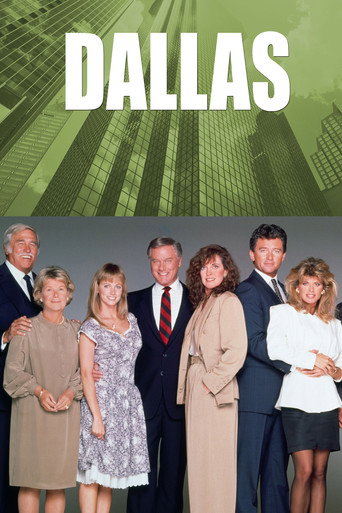
Dallas
1978 · TV series · 45 min episodes · 14 seasons
Created by David Jacobs
The world's first mega-soap, and one of the most popular ever produced, Dallas had it all. Beautiful women, expensive cars, and men playing Monopoly with real buildings. Famous for one of the best cliffhangers in TV history, as the world asked "Who shot J.R.?" A slow-burner to begin with, Dallas hit its stride in the 2nd season, with long storylines and expert character development. Dallas ruled the airwaves in the 1980's.
2 negative19 neutralfrom 21 commenters
Where to watch
No streaming data for this title.
23 comments on Hacker News
> Thinking WTR, Dallas, or TDoH are representative of American culture is... hilarious.
I’m not aware of a single person who thinks that, and neither was that the claim of your parent comment.
People understand TV shows are fiction.
I vividly recall an episode of Dallas where Bobby was rationalizing to his brother JR about investing in renewables.
For a brief window of time our consensus for decarbonization extended all the way to (the most) popular media.
> That was the principle many years ago, you had to leave the world exactly in the state you found it in.
This is not true as a generality. e.g. soap operas had long-running stories long before DVRs. Many prime-time dramas and comedies had major event episodes that changed things dramatically (character deaths, weddings, break-ups, etc.), e.g. the whole "Who shot J.R." event on *Dallas*. Almost all shows that I watched as a kid in the 80s had gradual shifts in character relationships over time (e.g. the on-again/off-again relationship between Sam and Diane on Cheers). Child actors on long-running shows would grow up and the situations on the show changed to account for that as they move from grade school, to high school, to college or jobs.
And they're going from binge-watching ad-free episode of an entire series, to releasing one episode a week... with adverts.
Yeah, no thanks. I'll just VPN+torrent the ad-free version and watch that, thanks. On any device of my choosing as well.
And why should I pay £8.99 or whatever to one streaming service, for one programme, that was previously "free to air" for the other series? Paramount taking back Star Trek from Netflix for example.
I'm not sure how many multi-million dollar, unseen cancelled-after-one-season dramas with 50,000 viewers these studios need to create before they realise 'we need viewers to 'build a franchise' and make a profit'.
Just imagine if these series or dramas were only seen by a few thousand people at most: Star Trek, Battlestar Galactica, Band of Brothers, Shogun, Dallas, Cheers and so on. Even How I Met Your Mother and Big Bang Theory were pretty much pre-streaming when they started, but syndicated to world-wide terrestrial channels.
> Keeping only a single copy seems insane to me, any number of things could go wrong and destroy all that's stored there[1]. Digital copies wouldn't so bad if there were redundant backups (tape, film[2], etc.).
I don't know about the UK, but according to an old episode of Dallas that I watched recently, in the US there are usually three official copies of a will kept: one in a government records office, one at the office of the lawyer who drafted it, and one with the individual.
It sounds like this proposal is for wills >25 years old, so the biggest impact would be on historical-research use cases.
Music has largely stopped being a shared experience, that’s hard to demonstrate but the same thing happened to TV. Who shot JR on Dallas was the kind of thing people talked about and the resolution episode got 53.3% ratings share in 1980, that was only topped by final Episode of M.A.S.H which hit 60.2%.
Only 2 shows in the last 25 years even approached it. Seinfeld Finale - "The Finale" hit 41.3% 24 years ago and Friends hit 35.6% 18 years ago.
In 2020 by comparison the Super Bowl was 4x as popular as the most watched single TV episode and streaming was dominated by people watching reruns not new shows. Average viewership of actual TV shows is unsurprisingly much lower.
PS: Best selling albums of 2020 included #12 Abbey Road by The Beatles, and #6 was the Frozen II soundtrack.
There has never been more competition for attention than now. What used to be good numbers will not be in the future but I think what matters more for a sport is the dollars spent by the fans that they have.
Consider: In 1980 the TV show Dallas had an estimated household viewership of nearly 28 million.[1]
By 1990 Cheers was getting 19.8 million in the number one spot, while the number of TVs in households jumped by 20 million people to an estimated 93.1 million.[2]
In 1998 ER was getting 17.8 million in the first position, with a further 6 million new TVs.[3]
Coincidentally, in 1999 they changed the metrics to go by estimated viewers (which then raised them back to approximately 30 million for some shows).
The trend has been pretty clear, more competition means no one thing is going to capture the attention of as high a percentage of people as before. Baseball isn't up against just stuff broadcast in its own regional markets anymore; it's competing against everything from cooking shows from Norway, a streamer from Japan, one of a dozen on-demand services, and an endless supply of social media.
Just because it's different though doesn't mean there's not money to be made and calls to nationalize a sport where the owners can make hundreds of millions even off bad franchises seems to make zero sense to me.
[1]: https://www.classictvhits.com/tvratings/1980.htm
[2]: https://www.classictvhits.com/tvratings/1990.htm
[3]: https://www.classictvhits.com/tvratings/1998.htm
I do not think we are particularly influenced by American culture, mostly breveté we belive that ours is truly extraordinary and should radiate on the whole world :)
We do watch US movies and series, but probably less the ones that decpit US everyday life and more the well known ones (say, Westworld - but not to start to live like them. Or Avengers).
One of the huge successes of the past was Dallas. Everyone was watching it but there was zero influence on normal life, it was a tale of aliens on another planet.
So no culture overload for us.
At the time there were two issues: - (I think) school teachers were better paid than now, relative to the average population - People in communism mostly knew the US through Hollywood films, which portray a way more glitzy version reality. Especially so in the 80s in popular sitcoms like Dallas.
> (even getting TV shows from the UK, a western country, was hard, because they were on PAL. people used to "camera copy", running a VCR from one system to a TV, and videorecording that with a camera running the other system)
Some time ago I watched some documentary about people watching western movies in, IIRC, Romania during the Cold War. There was a flourishing black market industry, some people smuggled VHS tapes in their cars over the border (either hiding the tapes in their car, or then by bribing the border guards), others who knew English (e.g. school teachers) spent their evenings dubbing movies to the local language in somebody's home studio. And then because few people had TV sets and VCR's, people had makeshift movie salons in somebody's apartment.
In Estonia, people built TV antennas to receive transmissions from Finland; Finnish and Estonian are fairly close to each other, and in Finland foreign programs are typically subtitled rather than dubbed making it easy to understand. So people in Estonia were fairly familiar with Western TV series like Dallas or Knight Rider.
Kid culture behind the Iron Curtain is particularly interesting, since for some reason censorship wasn't as strong there. So you have kids classics like Uspensky's Uncle Fyodor, which, if you read a little between the lines, contains some pretty harsh criticism of the system.
The counter-argument is that it's easier than ever for an individual to find critical analyses of that information. If you were suspect of the information on TV in 1983 there was no one to tell you any different, unless you put effort into finding it.
Let's put it in terms other than politics...
In the early 1980s a full third of all households in the US watched the TV show "Dallas" every weekend. Was "Dallas" the greatest performance ever made or just the best option out of 3 choices?
Some of us were paying attention.
--
My 4th grade teacher (1978) was brain washing us into being tree huggers. Conserve water while brushing our teeth was "magic". Turn down the heat. Recycle. Etc.
I recall hippie flavored propaganda in the school library asking if we wanted Earth to become a Red Planet (industrial) a Green Planet (farming) or Blue Planet (natural ecosystems), or some combination.
My (much older) cousin was a physicist studying submarine acoustics. He's always known, patiently explained the whatnots to us younger skeptics.
I worked at a civil engineering firm while still in high school (1980s). All the adults seemed to know what was happening, even if we didn't yet know all the causes. I vividly remember my boss (from Canada) telling me his childhood neighborhood lake was no longer safe to play hockey on.
I volunteered thru the 1990s at an org trying to save the PNW salmon. The staff scientists knew our local snow packs were shrinking. (Need the melt for salmon runs.) Now our mountains are bare most of the year, of course. Terrifying.
Maybe because I read a lot of sci-fi, I've always "known". Most memorable to me have been John Brunner's Shockwave Rider, The Sheep Look Up, and Ernest Callenbach's Ecotopia. But of course, post-apocalyptic is a popular storyline, so there have been zillions others.
--
PS, for the down voter(s), one of the minor plot lines from the TV show Dallas was Bobby Ewing's renewable energy efforts, in opposition to older brother JR Ewing's doubling down on carbon. In debating with Bobby in front of Daddy Ewing, JR's money quote was "We've been running out of oil since the first oil well." So, ya, climate change was part of the (most) popular culture too.
This is also the first Pixar film to be based on an existing, well-established theme.
I'm trying to imagine of an example of what that incongruity might feel like to someone of my Anglo background. The best I could come up with is a Christmas movie with a Romeo&Juliet love interest, where the two lead characters are dead by Christmas morning.
If I didn't know what Christmas was, other than "a large festival for family", then I might think it adds to the tragedy of the story. But, I argue, it's no longer a Christmas movie, but rather a movie which takes place on Christmas.
(Analogously, E.T. partially takes place on Halloween, but it is not a Halloween movie.)
Then to give a sense of "made by and for Anglos", think if this film were filmed in India, as a Bollywood-style musical, and where the two families were, say, stereotypical rich Texas oil families, rather like Bobby Ewing and Pamela Barnes from Dallas.
I don’t see race even mentioned in the part you quoted. What I do see is something along the lines of “if your impression of the U. S. is from television and popular media, West Virginia might not be what you expect”. Reminds me of a co-worker from decades ago whose family asked him if the U. S. is really just like the TV show Dallas. Umm, not in Indiana it’s not.
> * It's closest 70's show would probably be Dallas which had 350 million people worldwide watch an episode. That's a well done hook even if they could not show nudes etc.*
You can't compare numbers directly like that. Cable was not invented yet (or at least wasn't common) so there was a choice of about 4 channels.
Well, for that matter, VCRs weren't available. Also syndication was an important revenue stream. As a result, outside of miniseries "events," you mostly couldn't do shows that wouldn't work if someone weren't in front of their TV at a particular time slot every week. (There were somewhat exceptions like Dallas but they were rare.)
Game of Thrones for example is somewhat popular, but IMO that's mostly because of how bad the average TV show is not how great it is.
It's closest 70's show would probably be Dallas which had 350 million people worldwide watch an episode. That's a well done hook even if they could not show nudes etc.
As to offending people, MAS*H had men in drag show up regularly which really would offend people. Yet, apparently 60% of US households tuned in for the final episode. IMO, this suggests they actually had some freedom.
Remember, Shakespeare was also aiming for a wide audience. It promotes multi layered messaging, which is more complex than just having everyone backstabbing everyone else.
>For those that don't get the reference
Thanks for mentioning the TV show. I foolishly thought everyboby, even the youngest, would have at least heard about "Dallas". I'm suprised it didn't become an Internet meme.
Ah... well... :)
Firefly is great, albeit short.
I was forced to watch Buffy, but while the first season makes you cringe, it is pretty good. Not as stellar as people claim, but really good. I think Joss Whedans masterpiece wasn't Buffy, it was Toy Story. But do watch the musical episode "Once More, With Feeling"!
Babylon 5, of course, if you can tolerate the (even for the time) bad CGI.
I've just watched DS9 from beginning to end, something I had wanted to do for 15 years now. Hasn't aged well, and I hadn't seen it in English before. Avery Brooks' overpronunciation is painful, but it is the best Star Trek series by far.
Friends was something I've enjoyed as a teen, and later as an adult. It was a totally different experience as an adult. I think that's worth a lot, to have a depth that appeals differently to you in different stages of your life.
Modern Family was way better than expected.
ALF is a bit painful to watch nowadays, it also hasn't aged well.
Golden Girls are probably still great, The Cosby Show definitely is!
Boston Legal is fun, fun, fun! Hey, why shouldn't Nantucket be allowed to habe its own nuclear weapons? But do watch all the newer Star Trek series before BL, so you can appreciate the ST heavy cast.
Dallas! Oh my. Incredible how old Victoria Principal is today.
ER was great, but I haven't seen much of the last seasons. I also liked Chicago Hope, but it clearly lost.
The 2004 Battlestar Galactica. Probably the most modern TV series of its time, great themes and issues, pretty current, fantastic buildup to the big finale and then... disappointment.
Game of Thrones, if only for the shock value ;-)
And at last, the Tv series I've probably enjoyed most in the last few years: the first two seasons of Veronica Mars. But make sure you can stomach it, the season finales are sickeningly evil (especially season 2).
I have not had a TV/Cable for about 8 years. I've also managed to avoid having a Netflix subscription and/or having home Internet fast enough to stream Netflix/Hulu.
Giving up at the time, a most addictive show - Lost (Season Two) was incredibly hard. I had to go cold turkey. But after the Season Two ended - I realized that it would never end - there would be a Season Three, Four, other shows etc. Watching TV is one of the most socially acceptable forms of numbing oneself (or entertaining oneself) depending on what your perspective is (paraphrasing Karl Marx - 'TV is the opiate of the masses').
Leaving TV is just a choice. So much easier if you don't physically have a TV.Doing so does not magically free you up to pursue a life of passion and interests - it simply gives you more discretionary time (if you are single). Not having a TV doesn't mean you don't watch TV when at family/friends (for instance, I remember watching 5 episodes back to back of the incredibly captivating Wallander from BBC at my sisters - they binge watch because of kids). Not having a TV is not a magic solution to the 'I'm too busy to X' - it is just a choice that you choose to spend your free time in other manners. Yes, I've missed out on 'Orange is the new black', 'Sopranos', the one with the Meth lord, etc. Yes, you miss out on the water cooler conversations - but is that really a common bond? I know its gone back to Dallas and the 80s and maybe even June Cleaver - talking about TV is just a way to assert that you are in the same loose tribe.
So many people just consume all day, I think - when I meet people socially - I always dig down to find out what they create - like write poems or stories about the people they see on the street - because that is what makes life more interesting.
Facebook's appeal is largely casual entertainment. I say largely because there are some very practical features in the platform, like photo sharing and event planning/invitation. But it seems to me the bulk of its use is simply sharing links and anecdotes. Once the novelty of the medium wears off, people will look for the next entertaining fix.
I'm not sure how different it is from massively popular TV series of decades past, such as MASH or Dallas, where millions of people tuned in every week to see what would happen next. Eventually, all series die out. In the case of network TV, the medium itself, "what happened next" was cable TV, and then the internet.
I don't doubt it will be the same for Facebook (the product, not the company).
Advertising has a real social usefulness sure - when a new company or product needs to break into an existing market, good advertising and marketing are the only way it will succeed against the current, possibly inferior products.
That said, I think a lot of advertising is deception - you are trying to make the customer believe things that are useful to you, in spite of what they have seen.
For instance, before the MS Surface launched, they spent a lot of money on product placement. In the TV series Dallas, when ever any science or engineering is done, it is done on a Surface, pre-released to the film crew. It does not matter if the Surface is really a good platform for doing science. It matters that the customer thinks 'innovation, science, business, profit, Surface'. What is true does not matter.
The surface pro is actually a cool thing, and I hear students love them. Perhaps the above deception will help them succeed - deception is not necessarily evil, if it helps move people to a place where they can make a better decision.
Generally, if a user is looking for your service (Payday Loan), then they are already intending to buy that product, and adwords bids or SEO decide which competitors they will choose between. This is the opposite to a comparison site that genuinely helps a user find the best product for them (and insurance friends tell me comparison sites have decimated profit in that industry).
But more dangerously, SEO and adwords can make a user searching for 'moonlighting jobs' or 'how to get out of debt' see Payday Loans as an option, where the highest quality advice would actually be to negotiate with their bank, and maybe get a bigger overdraft.
Obviously, the evil in the above example is Payday Loans, and not advertising.
But the case I make, for the evil of google, is that the most money is made (advertising has the greatest effect) when it causes people to take bad decisions. Google make money most from helping make people make bad decisions.
This site pissed me off, because of the way I browse. I middle-clicked it to a new tab, waiting for me to get to it in a few minutes, part of a small list of tabs similarly spawned from HN.
When it finished loading (and it must have taken 20 seconds, whatever that says) I was confronted with some kind of "Dallas" TV show blast.
I was startled (but I'm older so you can probably just ignore this reply), and I was pissed that I had created this noise to disturb the people around me.
It's the exact same reaction I have when I queue up a site on another tab, and an advertisement does what this site did to me.
I'll live.