 Hacker Cinema
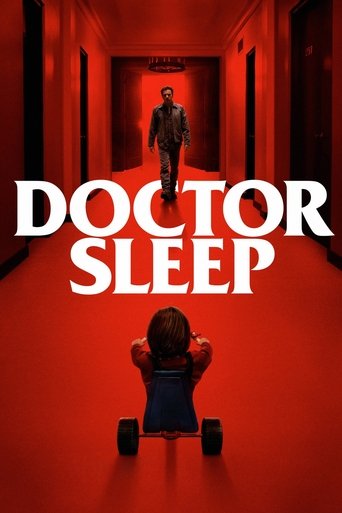
Doctor Sleep
2019 · Film · 152 min
Part of The Shining Collection
Directed by Mike Flanagan
Still scarred by the trauma he endured as a child at the Overlook Hotel, Dan Torrance faces the ghosts of the past when he meets Abra, a courageous teen who desperately needs his help -- and who possesses a powerful extrasensory ability called the "shine".
1 positive1 mixed4 neutralfrom 6 commenters
Where to watch
No streaming data for this title.
7 comments on Hacker News
Ah! It makes a reference to Rose, the Hat (character in the Doctor Sleep movie). "My head is a library [...] you're just a fucking child". Hence the drawings looking like children homework.
So, if it is an AI that wrote it, maybe it has movie script training. That would be a smart move. Movies themselves draw specific personas to the foreground of a human mind and could put them in specific moods.
Or is it a human who wrote it? Maybe it was an angel.
--
Ok, no movie business. Is there a difference between biblioteconomist and librarian? I think one is more akin to that notion of classifying without curating or censoring that so many here aluded to.
In practice, I wouldn't know! (fun oversharing fact: I actually considered biblioteconomy as a degree).
I think the post is good and kind for a general audience. It's a good message that I truly believe in.
But I believe it could be harmful for those diagnosed with conditions such as Havana Syndrome, Schizophrenia and similar disorders. That is due to the fun ambiguous tone of "dangerous", which could have unexpected effects in someone going through a psychotic episode (I had one once, not a pleasant experience). There must be a better, less snarkier way of promoting literacy without creating those potential side effects.
I care dis-proportionally about experiencing the story, so to me a second watch loses a lot of appeal.
And tbh, I feel like movies are very meta and you also get more from each movie if you watch more movies/read more books. Like Doctor Sleep for example, is an adaptation of a Doctor Sleep novel, but also a sequel to both the Shining novels and movies. You would get more of it if you read the two novels and watched the shining movie than if you just watched the movie or read one of the novel twice. I also enjoy watching different adaptations of something and pit them against each other, like Let the Right In (both the novel and the movie) and the American adaptation. I guess that's my version of what you get when you watch a movie twice.
> The DGA does not have a fit over stuff like this because a director is not entitled to "complete creative control" or to "final cut" unless they negotiate for it
They absolutely do. It doesn’t matter whether the director has “complete creative control” or not. If the DGA is convinced that creative control has been taken away from the director, then–and only then–will they permit the director to have his or her name removed from the film, and have the film credited to a pseudonym. The original name used was Alan Smithee, but nowadays a new alias is invented for each film where this happens.
> get themselves hired as editor on the film they direct (which would also involve them being a producer)
It’s strange how you think this is somehow a means for a director to exert complete creative control, when at least one of the examples (Doctor Sleep) you gave as a film where the director was not given creative control and thus necessitated a “director’s cut” was, in fact, edited by the director.
Look, I’m not claiming to be any sort of authority on this or anything, but my nearly two decades of experience working in features and television editorial, including working on and for some of the films and studios you’ve mentioned, tell me that you fundamentally don’t understand how the editing process works vis-à-vis directors.
No, the whole reason "Director's Cuts" exists is that those represent the cut the director wanted, not the theatrical cut released by the studio (which is driven by the studio's or producer's wants).
See, for example, Alien 3, Blade Runner, and Justice League for the most notorious/well-known examples. Lesser known examples include Aliens, The Abyss, Kingdom of Heaven, Doctor Sleep, Lethal Weapon, Dark City.
Only a handful of directors at the big studios get the right to control the final cut. You'll notice the director responsible for 3 of the 4 highest-grossing movies of all time has 2 movies in that list; this is because James Cameron didn't earn the right to control final cut until after his 3rd blockbuster success.
A few studios, like Netflix and A24, adhere to the "auteur's theory" of filmmaking, and let the director have full control over the creative process of the film, including the final cut, even without an established record of hits, but this is the exception, not the norm.
When I heard they were making a movie of Doctor Sleep, knowing that the final 20% of the book is absolutely untranslatable to coherent movie content, I could not understand how they could close it. In the end, they more or less worked around the finale, which is basically a series of psychic battles fought remotely. It's a tolerable movie.
One example of a truly unfilmable King/Bachman novel is Thinner, though maybe it could now be done, at great expense, with AI (there was a ridiculous TV version, though).
I interviewed him, when I was aged 16, in 1983, and asked him about The Shining. He was in a conciliatory mood on the topic that day, but re-emphasized how little he thought of Kubrick's shot choices for the scene where Danny discovers Wendy reading his manuscript.
To that criticism, Kubrick responded over the years that if we had just been jump-scared by Jack suddenly appearing over Wendy's shoulder as she read, we would have felt relief and even started laughing to blow it off, which would have undermined the tension Kubrick was looking to build past this point in the scene.
I find it to be almost the opposite for movies. Yes, it's rare to find something unique, but after starting watching at least a movie per week, I'm now getting references I would never have gotten otherwise and put the movies in a completely different light.
For example, you're not gonna fully appreciate the latest spider-man movie unless you already watched the whole 3 series.
Or the other day, I was watching Ted (the teddy bear movie) and they recreated the dancing scene from Airplane. If I had never seen Airplane, I would probably still have laughed, but I wouldn't truly have gotten the joke.
Or in the Doctor Sleep movie, there's a story being told, but the Director also tried to reconcile The Shining movie, The Shining novel with the Doctor Sleep novel. You don't truly experience the movie fully unless you've experienced all of them.
I don't know for other media, but I find movie makers tend to be very meta and you gain as much by having seen all the low fruits as you lose by doing so.
Talking about "The Shining": Doctor Sleep is one of the best "scary" movies I've seen in the last years.
The submersion was amazing.