 Hacker Cinema
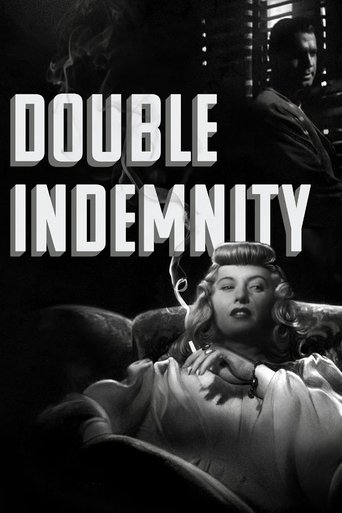
Double Indemnity
1944 · Film · 107 min
Directed by Billy Wilder
An insurance representative is seduced by a dissatisfied housewife into a scheme of insurance fraud and murder that arouses the suspicion of his colleague, a claims investigator.
11 positive2 neutralfrom 13 commenters
Where to watch
No streaming data for this title.
14 comments on Hacker News
> But are you really going to say they stand up to films made in recent years with a fully mature vocabulary?
Sure! I've seen 19 of the 42 films you counted as being made between 1920-1945, and I'd say the overwhelming majority of those 19 definitely still hold up. Are you seriously telling me Double Indemnity (1944), City Lights (1931), Duck Soup (1933), and Casablanca (1942) are only fit for consumption by film students? If so, I'd say "lucky film students!"
I have read the book, but I haven't seen the movie or read much else in the genre, just saw a recommendation of it from an author of something much newer I read, so I enjoyed the book but I don't know that I'd read it again if I knew what was going to happen.
Apparently Cain was a big fan of the movie, from a quick check of Wikipedia he said about the male lead: "The way you found tragedy in his shallow, commonplace, smart-cracking skull will remain with me for a long time and, indeed, reinforce an aesthetic viewpoint that many quarrel with; for if I have any gift, it is to take such people and show that they can suffer as profoundly as anybody else…" and the page in general suggests that they deepened the story a bit - https://en.wikipedia.org/wiki/Double_Indemnity_(novel)
If you haven't seen Double Indemnity, which he co-wrote with Billy Wilder, it's absolutely one of the best noir films out there.
I really like Breathless, Le Mépris, and Pierrot Le Fou, this last one less often mentioned, yet super interesting.
But I don't get the trashing of the cinema that existed before Godard, as this article, following so many others, seems to want to do.
Contemporary superhero franchises are trash, certainly (at least to my eyes). But what's wrong with Casablanca (1942) or Double Indemnity (1944) for example?
Why couldn't we have both?
Thinking about what was possible to make in 1982, it's pretty amazing. It's an absolute classic, up there with the best of the noirs (the actual film noirs), such as The Maltese Falcon, Double Indemnity and The Third Man; the logical answer to the Neo Noir Body Heat the year before. It's like a legacy moving onto such things as Ghost in the Shell and even The Matrix.
I’ll play:
The Thin Man (1934), It Happened One Night (1934), Dodworth (1936), Fury (1936), The Awful Truth (1937), Grand Illusion (1937), You Only Live Once (1937), Wizard of Oz (1939), Only Angels Have Wings (1939), The Great Dictator (1940), His Girl Friday (1940), Philadelphia Story (1940), Rebecca (1940), The Maltese Falcon (1940), Citizen Kane (1941), A Woman’s Face (1941), The Magnificent Ambersons (1942), The Ox-Bow Incident (1943), Casablanca (1943), Double Indemnity (1944), Mildred Pierce (1945), It’s a Wonderful Life (1946), The Best Years of Our Lives (1946), Great Expectations (1946), The Big Sleep (1946), The Red Shoes (1948), A Letter to Three Wives (1949), Sunset Boulevard (1950), All About Eve (1950), A Place In The Sun (1951), High Noon (1952), Roman Holiday (1953), The Wages of Fear (1953). (I slipped two French films in.)
Almost anything by Hawks during those years. Or Hitchcock. Almost anything with Bogart. Or Grant. Or by Wilder.
Tons of noir films skirted the rules.
Look, I’m not a fan of the Hays code but some of those movies were to me better because of what they had to imply.
This is after the Hays code but as an example I recently watched the original 3:10 to Yuma and the remake. I hated the remake. What appeals to me about Elmore Leonard stories is that despite being about bad guys, they have a degree of charm to them (Out of Sight, Justified, Jackie Brown, Get Shorty,etc). The remake took all of the charm out of the original and replaced it with graphic violence and cruelty.
Dashiell Hammett is mentioned just after the list of 10 rules:
> Dame Agatha and the Detection Club’s rules ushered in what’s known as the Golden Age of detective fiction. However, on the other side of the pond, a revolution in form was brewing in the livers of Dashiell Hammett and his successor Raymond Chandler. Hardboiled cop fiction took all Agatha Christie’s rules and blew them straight to hell.
Or was the article edited after your comment? [Edit: apparently the whole URL was changed...]
> Billy Wilder's Double Indemnity are also great explorations of the postwar noir genre
God how I love that movie. It's perfect in every sense of the word. "There's a speed limit in this state, Mr. Neff."
Surprised there is no mention of Dashiell Hammett, a contemporary of Christie's. He wrote The Maltese Falcon in 1930, introducing the world to Sam Spade, an interesting contrast to Hercule Poirot. The interwar period certainly was the golden age of detective and mystery novels, whether they were more in line with the Christie formula or followed a more hard-boiled, American style.
I wonder to what degree the novels of that period informed the more paranoid, Cold War-era novels and films after WWII. John le Carré and Ian Fleming obviously come to mind, but Orson Welles's The Third Man and Billy Wilder's Double Indemnity are also great explorations of the postwar noir genre.
I'm sure there are essays about how it's all connected, and how it can probably be traced back to early mysteries like Wilkie Collins's The Woman in White, but I haven't found anything yet that charts the history of the genre and explains the relative stability of its tropes and motifs over time.
Special effects are not bad per se. The problem is that these days, a lot of movies use FX as a substitute for storytelling.
Just consider Blade Runner: It is just stunning, visually, but it uses these visuals to tell a story, not to distract from a lack of story.
That being said, I agree: Given the choice between good storytelling and good visuals, I'll take a good story any day.
And while we're in this era, let's not forget about "The Third Man", "The Maltese Falcon", or "Double Indemnity".
This is the premise behind the classic 1944 film Double Indemnity. It holds up today and is worth a watch!
I am always surprised that people analogize moonshot as the ultimate national effort opposite WWII.
Despite noir movies like Double Indemnity, which don't seem to show any effects at all, reading about it, it always seems that WWII effected practically every part of life down to the steel penny.
Whereas despite the "let them eat moonshot" quip from Asimov I haven't heard of great initiatives which didn't take place because of the space race.
I agree with your last sentence but there usually is a reason a classic is a classic. Same applies to literature.
However if there is one thing I have learned is that everyone has different tastes. My wife cannot watch any film made before she was born while my golden age of film is about 1940 to 1970. I will take All About Eve, Double Indemnity, the Thin Man, and anything with Humphrey Bogart over anything released these days. That is not even getting into classic foreign films.
A key component of classic films is that they weren't able to distract special effects, or even colors for some, so plot was that much more important. I can't imagine that mumblecore will survive the test of time but I could be wrong.
My favorite movies, but for no particuliar reason:
Platoon
Wall street
Three days of the condor
Chinatown
Sunset Boulevard
The Stranger(actually all of Orson Wells movies)
Any Andy Griffith episode
Bicycle thieves 1948
Niagara
Double indemnity (actually most billy wilder films)
The Misfits (last film for Marilyn and Rhett Butler--forgot his name.)
Giant
Rebal without a cause
Leaving Las Vegas
Blow out (all three)
Saturday night fever
Yes, even Urban Cowboy
One flew over the cocos nest
Deliverance
Hanna and her sisters
East of Eden
Dr. Strange love
Back to the future
Jaws
In cold blood(with Robert Blake)
In cold blood (with Eric Roberts, and forget his name)
The asphalt jungle 1948?
All about eve
The hot rock
Little Haus Big Halsey (Redford said it was his worst movie. Yes, it's masagonistic. Yes, he plays a jerk. But the movie captures the 70's I recall as a kid. The filming is great. His side kick in the movie did a great job playing a sweet, innocent, country teen.)
A lot of foreign films I have yet to see.
In the film noir classic 'Double Indemnity', the writers Billy Wilder and Raymond Chandler needed to resolve a particular conceit in the plot where the femme fatale shows up at the doomed hero's apartment but needs to be hidden from an occupant inside. They decided to use an outward-opening door.
This small detail has caused much discussion ever since, a good example is here: http://jpgamboa.com/archives/1424