 Hacker Cinema
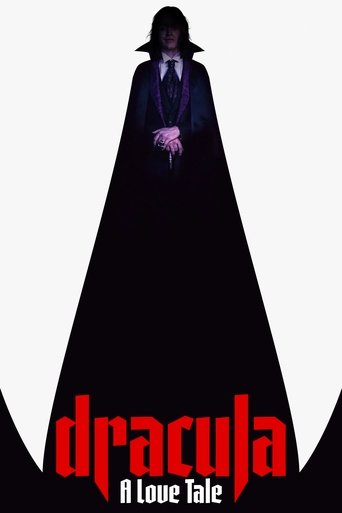
Dracula
2025 · Film · 130 min
Directed by Luc Besson
In late 15th-century Eastern Europe, Prince Vlad II’s bride is brutally murdered. As a result, he renounces God and damns Heaven itself. Cursed with eternal life, Vlad is reborn as Dracula, an immortal warlord who defies fate in a blood-soaked crusade to wrench his lost love back from death.
1 negative7 neutralfrom 8 commenters
Where to watch
No streaming data for this title.


8 comments on Hacker News
This article is infuriating. The most misunderstood? Of all novels? Are we sure? Why not call it a “very misunderstood” novel?
The entire article is a maze of ideas, explaining very little in the end. Okay, it’s misunderstood by young readers, people who think the latest movie adaptation looks cool, and so on.
That’s it? You don’t think The Catcher in the Rye and Dracula were even more misunderstood? I don’t get what the BBC columnist is getting at here. I’ve re-read the novel and it does ‘feel’ different when you’re older, but it never conveyed that the 20s were cool and parties were awesome back then. Ach!
Violence. Extreme right.
I searched for Dracula, got documentaries about nazis.
I used to be very gung-ho about short copyright periods but my thinking has gotten a bit confused for two reasons:
1. I think there's virtue in limiting the modification --as opposed to the reproduction-- of works for some time after the death of the author. There's something distasteful about thinking of (to the use OP's example) Winnie the Pooh merchandise at Target, or The Winnie Pooh Movie having nothing to do with the "real" Winnie The Pooh. There is some value to the "sanctity" of a work IMHO, for some time.
In other words, avoiding the "dracula-ization" or "frankenstein-ization" (read: "gross commercialization") of works for some time.
That being said, it makes sense for the original, unmodified work, to enter the public domain. I think this is a distinction worth exploring.
2. More controversially, there are some works where there's a credible argument that the author is a "corporation." An example here is the Marvel Cinematic Universe. Each movie has the imprimatur of the director, but in the aggregate they feel very much "MCU" in style. If anything, the authors seem to be Kevin Feige, Louis D'esposito, and Victoria Alonso.
The characters were originally created by Stan Lee et al, but if Marvel Studios were to create a new character (and make that character a flagship one, etc) that character would genuinely be a corporate creation.
Would love a discussion on these topics.
There are a few more steps to it. In the renaissance "Gothic" became synonymous with "medieval" because the tribe of the Goths was considered as having destroyed the Roman empire. Hence the name "Gothic architecture" for a medieval architectural style (even though it has nothing to do with the Gothic people). During the romantic movement, the medieval period became fashionable as a setting for romantic and supernatural stories, the "Gothic literature". Horror classics like Frankenstein and Dracula grew out of this genre. This in turn inspired the Hammer Horror movies, which in turn inspired the post-punk music esthetic.
So the subculture is not directly inspired by the architecture, but the architecture and the horror genre is the two places where the term Gothic still used, while the previous meaning of "medieval" have gone out of use in English.
Many instances of media are giving a spin on horrible historical events for the sake of entertainment. These are never meant to be "tasteful". Does Wolfenstein condone the holocaust? All the Dracula books and movies make Vlad III, Prince of Wallachia, a charismatic character, even though he murdered so many innocent people in such a cruel way just to secure his position.
They do put a tasteless twist on a horrible event - that makes this thought experiment so intriguing as a setting to explore. What if the Nazis won? What if Vlad The Impaler was an interesting and charismatic person, what if JackTheRipper was a hero under cover. It's all stupid, but interesting at the same time. That does not mean they disrespect history.
I don't mean "on the stage" so much as the way Shakespeare -- and other public domain works, like Sherlock Holmes, Frankenstein, or Dracula -- forms the nucleus of new works of art. Every few years a new director or actor will put their spin on Sherlock Holmes -- two movies starring Robert Downey Jr, one staring Ian McKellan, and two on-going TV series. Romeo and Juliet is the basis for like a hundred movies, sometimes with tragic endings and sometimes with happy ones.
Retelling well-known stories with slight variations or twists is something humans have been doing for millennia.
To be fair, it's probably more reasonable to judge it in the stream of epistolary / didactic literature than purely narrative. I remember Defoe's Crusoe and Stoker's Dracula not having particularly inspiring characters by modern standards either.
It is curious about the divergence between engineers and non-engineers. If he ever writes another novel in the same vein, it'd be interesting to collaborate with another author and have a richly-characterized political story on Earth contrasted by a more "engineerly-characterized" space story.
(Keep meaning to watch film, have not gotten to)
The idea that a creator has an absolute moral right to control of their characters is a fairly recent one, and it certainly isn't a widely respected one -- imagine how many movies, books, etc. would have never been written if people had considered Dracula, Don Quixote, Frankenstein's Monster, Othello, etc. to be inviolable property of their authors. I don't think it's a particularly strong argument for state protection of copyright.