 Hacker Cinema
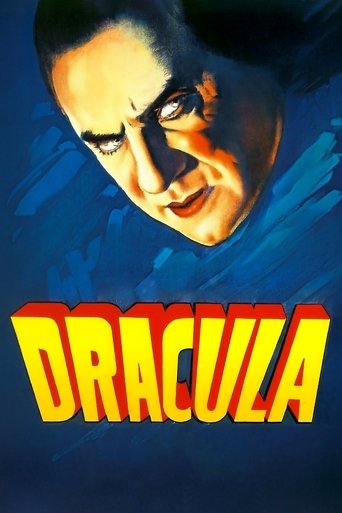
Dracula
1931 · Film · 74 min
Directed by Tod Browning
A British estate agent travels to Transylvania to meet with the mysterious Count Dracula, who is interested in leasing a London castle. After Dracula enslaves and drives the agent to insanity, the pair return to London together, where Dracula, a secret bloodsucker, begins preying on socialites.
5 neutralfrom 5 commenters
Where to watch
No streaming data for this title.

5 comments on Hacker News
> Distinguishing reality from fiction is useful, but it doesn’t shape our desires or define our values. As a culture, we’ve grown colder and more detached. Think of the first Dracula film—audiences were so shaken by a simple eerie face that some reportedly lost control in the theater. Compare that visceral reaction to the apathy we feel toward far more shocking imagery today.
Huh? The first half of this contradicts the second. We haven't "grown colder and more detached", we've adapted to the fact that images are no longer reliable indicators of reality. What we do and don't value in the real world hasn't changed.
> And we will soon be eating unimaginable mountains of artificial content cooked up by dream engines tuned to our every desire and whim.
Always has been. Multi-channel TV was already that, and attracted the same kind of doomerism.
Distinguishing reality from fiction is useful, but it doesn’t shape our desires or define our values. As a culture, we’ve grown colder and more detached. Think of the first Dracula film—audiences were so shaken by a simple eerie face that some reportedly lost control in the theater. Compare that visceral reaction to the apathy we feel toward far more shocking imagery today.
If media didn’t profoundly affect us, how could exposure therapy rewire fears? Why would billions be spent on advertising if it didn’t work? Why would propaganda or education exist if ideas couldn’t be planted and nurtured through storytelling?
Is there any meaningful difference between a sermon from the pulpit and a feature film in the theater? Both are designed to influence, persuade, and reshape our worldview.
As Alan Moore aptly put it: "Art is, like magic, the science of manipulating symbols, words, or images to achieve changes in consciousness."
In my opinion the old adage holds true, you are what you eat. And we will soon be eating unimaginable mountains of artificial content cooked up by dream engines tuned to our every desire and whim.
Does anyone know where the line "and STAY dead!" came from? I was told it was from the first Dracula movie from 1931, but I downloaded the movie and could not find it there.
This has been bugging me for a while so figured I'd try if someone here knows (tried other sources of info, even downloaded the original movie with no luck).
It's an extra on the Dracula Complete Legacy collection; I don't think it's rare or anything, usually it gets bundled with Universal's collections of Dracula films i think.
I call them "wikiwalks".
And I call an excessively tangential session a "wikiwalkabout", after the Australian walkabout tradition introduced to Americans by "Crocodile Dundee", or, more recently--the Locke character from "Lost". And boy, did that show have a letdown denoument. But I did like the colossus foot in the later episodes, because it reminded me of "Ozymandias", by P.B. Shelley. And did you know that he wrote that as his shot in a poetry duel with another poet--Horace Smith? (I guess he won, right?) Anyway, they picked that as a topic to honor a new museum exhibit of the Younger Memnon statue of Rameses II. Those British museum-goers were just mad for importing cultural artifacts from distant lands and never sending them back. Like the Elgin Marbles, from Greece. And when I think about Britain and Greece, I can't help thinking about their palace guards--Greece with their poofy-footed Evzones and Britain with their Beefeaters. And one of those Beefeaters is the Ravenmaster of the Tower of London--literally in charge of the welfare of the tower ravens. One of whom is apparently named Merlina, and is allowed additional latitude in how far she may fly, because she always comes back. And speaking of ravens and 19th-century poets, boy was Edgar Allen Poe a gothy li'l guy. He had a lot of inspirational company, though. Including Mary Shelley, wife of the aforementioned P.B., who won a 3-way ghost story duel between herself, her husband, and Lord Byron, who only managed to invent the vampire romance genre. So between the two of them and ol' Rameses II, we're almost all primed to scare the crap out of Laurel and Hardy with Universal Pictures monster movie staples: Frankenstein's monster, Dracula, and the Mummy. But we still need the Wolfman....
And hopefully you see how it works now. Before wikis existed, there was "Connections", by James Burke.