 Hacker Cinema
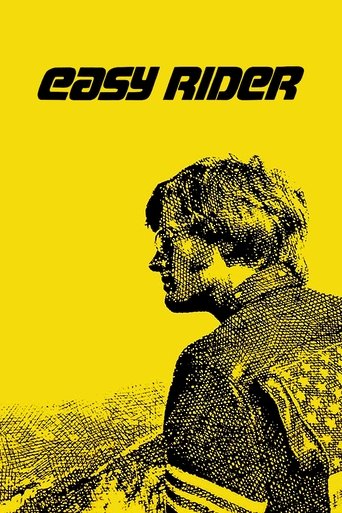
Easy Rider
1969 · Film · 96 min
Directed by Dennis Hopper
Wyatt and Billy, two Harley-riding hippies, complete a drug deal in Southern California and decide to travel cross-country in search of spiritual truth.
4 positive2 negative15 neutralfrom 21 commenters
Where to watch
No streaming data for this title.
23 comments on Hacker News
They just aren't very good motorcycles. You can get almost any other motorcycle and they will be better to ride, more reliable and probably cost a lot less.
Harley Davidson also didn't modernise its brand. Also a lot of the image of Harley Davidson is attached to the heyday of motorcycle gangs, old movies between the 50s-80s e.g. "Easy Rider", "Electra Glide in Blue" and Music from that era.
Like wine, and investing generally, it's the argumentum ad crumenam, problem.
The problem with movies is they're worse bets than startups and so big productions are the primary ones that get distribution and marketing. Kind of a self-reinforcing power law distribution that leads to a few getting most of the money.
The tiny ones need to find cleverer ways to get free marketing Richard Branson-style and try to include at least one celebrity.
Examples of shoestring budget success stories:
- Napoleon Dynamite 400k USD (2004) (680k USD today)
- Mad Max $200k AUD (1979) (760k USD today)
- Fruitvale Station 900k USD (2013) (1.24M USD today)
- Monty Python and the Holy Grail £ 175k (1975) (2.5M USD today)
- Easy Rider 400k USD (1969) (3.5M USD today)
- Mean Streets 500k USD (1973) (3.6M USD today)
That type of stuff generally happens because people allow it to happen.. not that I would recommend this cause you have to be ready to escalate, but, I was getting gas in SF and as I lift the nozzle a hobo gets between me and the car and aggressively asks for money. Me, in my non-fake Russian accent: "Fuck off, vermin." He just sags and walks away. Then he walks over to some other guy who is standing around waiting for his tank to be full, and proceeds to literally chase the guy around the car as the latter tries repeatedly to disengage politely. At some point it looked almost like full-on assault; if the guy took out a gun and put that hobo down I'd volunteer to stick around to be a friendly witness for him.
I don't understand why American society tolerates this kind of stuff. Watching movies like Easy Rider, you can see the opposite extreme of the society/the law treating any strangers and outsiders poorly, but I wonder if the current attitudes swung /too/ far in the opposite direction.
Regardless, given that's how most people are socialized, I am not surprised they don't like public services that are disproportionately used by the poor (I think most poor are totally fine, but they are more likely to be dysfunctional, and public transit in particular also selects for the dysfunctional).
For what it's worth, I think I did a reasonable job of this. I don't consume any web-based algorithmic feed content and participate in nothing interactive other than Hacker News and do not visit Hacker News every day, or even every other day most of the time. Almost never on weekends. It's really an "I'm bored at work" thing.
As others said, I had to replace these things with something else. I'm not meditative enough to just sit around with a perfectly still mind staring at the wall. For me, it was a few things. Books, first. Not hugely consistent with what they're about. First few years was mostly sci-fi and fantasy, then a year or so of non-fiction pop physics books. Right now, I'm mostly reading cooking books and learning to cook better. That's the second thing. I cook all of my own food, from scratch, and experiment a lot. That consumes quite a bit of time and it's active time. Third, music, but not algorithmic feed music. No YouTube music or Spotify recommendations. Nothing social. I'm listening to complete albums, curated either because I'm in my 40s and already know a lot of music I haven't listened to in a long time, or via human critics the same way I curated music in the 90s. Fourth, movies, but again, nothing algorithmically generated. Just like it's 1999 again. In fact, Alamo Drafthouse is doing a celebration of 1999 for its 25th anniversary. It happens to also be my and my wife's high school graduation year, so a lot of beloved movies to go see. At home, we're doing 70s. We've gotten through Easy Rider and Rosemary's Baby (yes, I know, they're 60s), Badlands, Days of Heaven, Dog Day Afternoon, and Harold and Maude. Quite a few more to go, queued up and ready, curated from prior knowledge. I've already seen most of these but my wife has not. Fourth, exercise. You can't just get off the couch and do it. I spent years building up the capacity after spending the latter half of my 30s mostly inactive due to degenerative spine problems. Started off with resistance bands and walking 6 years ago. Today, I lift for about an hour 6 days a week and then run, row, or both for cardio, anywhere from 60-90 minutes a day. Fifth, concerts. My wife and I saw Judas Priest and Dead Kennedys at the end of last year, Tool last week, and we've got Madonna, Social Distortion and Bad Religion, Ministry, Echo and the Bunnymen, and Slowdive scheduled over the next few months. We usually travel to a multi-day festival or two each year as well but haven't decided which yet for this year. This is also curated from prior knowledge. I guess I miss out on whatever is hot right now, but oh well, there was plenty of great music already out there in 1995 and plenty of these acts still tour.
All in all, this gives me goals, accomplishments, scheduled events, social interaction with a real, non-anonymous person I actually know who is physically present, had made me far healthier, more fit, and better looking, and the quality of my entertainment, though I suppose less "addicting," is much higher.
The downside is this is expensive, but it probably doesn't have to be if you actively bargain-hunt, stay local, work out at a gym instead of buying your own equipment, and eat worse than me. Probably many people on the Internet would say another downside is I'm not very tuned in. It's an election year and I have no clue what any candidates are doing, saying, winning races, and I probably won't vote. Oh well. I'm sure the world will do about the same as it would have done if I didn't exist, which is fine. I'm not that important and neither are you.
Edit: I guess it's worth adding none of this involved or required getting rid of my phone. The phone is, in fact, quite useful. I listen to my albums on it. I buy movie tickets and concert tickets through it and they're delivered to the phone. I buy airline tickets and keep them on the phone. I keep my recipes, log my food, log my workouts, and map my runs on the phone. The local train system sells and keeps passes on a mobile app. There is nothing wrong with phones per se. Just don't let these apps gamify shit for you. Don't opt into social features. Don't create an account if they don't force you to. Disable all notifications. Don't worry about what other people are reading, where they're running, what they're eating. Just worry about yourself. Don't have or use any pure social apps. No algorithmically-generated content feeds. Read full-length novels, watch full-length feature films, and listen to complete albums. Force yourself to exercise at least a medium-term attention span. You don't need a change of theme every 40 seconds.
I don't think that conclusion tells the whole story. If you take a great movie with a very famous twist in in it, they are not good because of the secret/twist, but the secret/twist definitely has greater power if you don't know it beforehand.
For example, there are some movies like The Prestige, The Crying game and The Usual Suspects there is a set up and when the twist happens, you look back and realise the movie was hinting at it at various points but you didn't expect it. If you knew, you would see the hints much more easily and the look back would not be as fun. This sort of has the same impact as a magic trick. It's fun to be fooled.
Some other movies like Se7en, Chinatown and "Easy Rider" I would call "bolt from the blue" where the impact is mostly like being punched in the guts. It's not fun but again if you are not emotionally prepared by knowing what will happen it is much more powerful.
I wouldn't say any of those had a flimsy story. In in all cases the enjoyment comes from the writing, direction, performances etc all being of a very high standard, not just from the twist. The twist really adds something though.
I'm going to guess about 80%. I haven't counted.
In fact plenty of the movies you and I have probably already seen ("Easy Rider", "2001: A Space Odyssey", "The Graduate" for example). So perhaps even before I began going through the list I may have seen 20% or so.
But there are also a lot of early films from the 1930's I had not seen, and plenty of foreign films. In fact, now that I'm working through the 1970's, "foreign films" is more or less the rule.
Sadly the foreign films are the ones hardest to find both on Netflix and at the local library.
Agree. Having seen now perhaps 75% of the "1001 Films to See Before You Die", you begin to see the breadth and depth that film can be. It makes most of the popular films of the last decade or two look like a single, narrow genre within film.
So many entertaining films I would not have been exposed to otherwise. I had first knocked out the "AFI Top 100" but the "1001" brings in all manner of foreign films, experimental films, more silent films, etc.
To be sure, the "1001" has exposed me to some real, um, turds. But, hey, Warhol did some great silkscreen prints.
And while French New Wave never resonated with me, I get it now, having seen everything that came before. And you can see how films like "Easy Rider" probably were not possible until New Wave kicked down the walls.
And that has been the joy of my own "film school" at home: seeing how the medium has grown and evolved over the years. It is, as I say, why I am so disappointed in Hollywood's recent offerings.
The "Highway Patrol" TV series of the 1950s was a precursor of the car chase genre, as were some notable film noirs that elevated car pursuits as story lines i.e. High Sierra, White Heat. Agreed that Bullitt is exemplary, but don't forget The French Connection, Duel, Easy Rider, Two Lane Blacktop, and Vanishing Point and you have some great car/bike films of Bullitt's era. The hoaxy C'etait un Rendez-vous is likewise great if you don't do the time/distance math.
I understand and agree, although some are somewhat preposterous and only ever made sense in context. I finally watched Easy Rider recently, and sure, the freedom, riding with no protection, sleeping wherever - but it's such a mediocre, badly-woven film. Same for quite a few Stones songs and a lot of other '60s/70s stuff - except Jimi Hendrix, that man was an alien.
I believe that more auteur movies that challenges and surprise you still being made, but one problem is that superhero/franchises movies are eating big part of the attention on many cultures, and many people, specially young people, get the idea that this are movies.
In 2000-2010 I think the attention was more distributed, and in the 60s-90s was all over the place, the New Hollywood of the 60s with things like Easy Rider; Coppola, De Palma, Scorsese and Spielberg in the 70-80s, and the edginess of Tarantino in the 90s.
And of course, much more weird and experimental movies where more mainstream, see David Cronenberg, Jim Jarmusch, David Lynch, Wim Wenders, Stanley Kubrick, Roman Polanski, John Waters, even europeans/asians directors like Michelangelo Antonioni, Jean-Luc Godard, Ingmar Bergman and Andrei Tarkovsky.
Scorsese talk about that:
>Another way of putting it would be that they are everything that the films of Paul Thomas Anderson or Claire Denis or Spike Lee or Ari Aster or Kathryn Bigelow or Wes Anderson are not. When I watch a movie by any of those filmmakers, I know I’m going to see something absolutely new and be taken to unexpected and maybe even unnameable areas of experience. My sense of what is possible in telling stories with moving images and sounds is going to be expanded.
>So, you might ask, what’s my problem? Why not just let superhero films and other franchise films be? The reason is simple. In many places around this country and around the world, franchise films are now your primary choice if you want to see something on the big screen. It’s a perilous time in film exhibition, and there are fewer independent theaters than ever. The equation has flipped and streaming has become the primary delivery system. Still, I don’t know a single filmmaker who doesn’t want to design films for the big screen, to be projected before audiences in theaters.
>That includes me, and I’m speaking as someone who just completed a picture for Netflix. It, and it alone, allowed us to make “The Irishman” the way we needed to, and for that I’ll always be thankful. We have a theatrical window, which is great. Would I like the picture to play on more big screens for longer periods of time? Of course I would. But no matter whom you make your movie with, the fact is that the screens in most multiplexes are crowded with franchise pictures.
https://www.nytimes.com/2019/11/04/opinion/martin-scorsese-marvel.html
The "tripping" scene from "Easy Rider" comes to mind — same era though (NSFW, isn't Tony Basil in this scene? https://youtu.be/W2x20CV0EbI).
Also, this clip (NSFW) from "Altered States" is just as trippy: https://youtu.be/E1ZGEvJPQ6A
The complete Roger Corman film "The Trip" (1967) referenced in the article is on YT in the U.S.: https://youtu.be/FmZCwcGu_2I
There's certainly a lot of boring, formulaic content out there. I recently watched Easy Rider and season 4 of Rick and Morty and in both cases my phone was left on a shelf and forgotten for hours. Yesterday I tried to watch the first episode of Witcher and it just wasn't my thing, I was fiddling with my phone after 10 minutes. (YMMV obviously)
I think it is a "deeper emotional experience". But I'm skeptical that this is anything new.
Today we (or at least me and Alan Moore) look back at the 60s and 70s and think "wow a movie like Easy Rider was a hit. How times have changed". Maybe. But maybe we just remember the hits from 40 years ago that were actually good. And maybe 40 years from now we'll remember a handful of good movies made today that did well in the box office but we'll forget all the junk.
Part of me does think that big movies today are essentially philistine. But it's also true that movies are cheaper to make than ever. And plenty of wonderful movies are being made, so I find myself unable to get too sad about our situation. There's more interesting movies coming out than I have time to watch, so if I was complaining, I'd be complaining that "other people don't have the same taste as me," which seems childish.
> Put it this way: if people generally need movies for meaningful emotional experiences, there are some profound problems in our society that goes far beyond cinema.
I think you're deeply wrong. People experience "meaningful emotional experiences" via narrative, fictional or not. This has always been the case and there's no reason to assume it will ever not be the case. Movies are just another narrative form.
The movie industry has eras, marked by certain production styles. In Hollywood at least, the 1970s was the era of the auteur director. A wave of directors (and actors) who had apprenticed under the famed B-movie master Roger Corman came to power on the strength of a series of absolute masterpieces. It started with Easy Rider, which was shot on a very low budget, and received massive box office success and critical acclaim. It ended with Heaven's Gate, an outrageously expensive disaster that has never even been properly released (I've seen one of the medium-length edits of it, and yes, it stinks).
The real end of the New Hollywood era, though, was the release of Star Wars in 1977. It paved the way for the sci-fi/fantasy blockbuster. It turned into a successful trilogy, and overlapped team-wise with Spielberg's fantastically successful Raiders of the Lost Ark. Hollywood, and movie fans, lost interest in the more intellectual fare of New Hollywood, in favor of kid-friendly, cross-marketing-friendly entertainment.
So it's not surprising that there was a dropoff in critical darlings after the 1970s. Movies got a lot worse - they really did. Even directors who carried on the New Hollywood traditions, like David Lynch and the Coen brothers, couldn't see the kind of success the 1970s directors had.
Of course, before the New Hollywood era, Hollywood kinda stunk, big expensive extravaganzas. Critical attention then turns to the French New Wave, and other post-WWII European film with small budgets and big emotional punches (who makes a movie like Wages of Fear these days?).
I wonder how our current era will fare? I'm thinking about the sort of epic-story serialization that the Marvel franchise and the reinvigorated Star Wars franchise is doing. How will that be viewed?
I held the same belief as you a few years ago - I only wanted to read something if it was going to increase my technical skills.
But there's certain works, literary classics, which started to fascinate me - because these books changed the world. Nowadays, it's technology that changes viewpoints - but there are parallels between good technology and good storytelling.
I also see certain classic films being just as important. Watch all of 'easy rider' and see how it affects you, moves you emotionally.
I still read mostly technical documents, but reading some of the classics can expand your viewpoints. I reread 1984 and brave new world last year for example - I'd read them in high school but clearly didn't appreciate them back then. Just being able to discuss those books with others who have read them have opened up some amazing conversations.
As a big fan of Jodorowsky (L'Incal is one my favourite graphic novels ever), I think we could also unequivocally say that whatever he had made would not have been very faithful to the book. It's quite possible that Dune fans would have been even less happy with Jodorowsky's film than Lynch's.
We also have to remember that this was before Star Wars and Alien. Most scifi at the time was, with some honourable exceptions (2001: A Space Odyssey, Silent Running, The Andromeda Strain, Solaris), pretty silly, childish, often campy stuff: The Black Hole, Buck Rogers, Moonraker. Pulp origins aside, Star Wars introduces a level of violence, maturity and realism to the genre that stood out at the time, and closer to that of contemporary adult 1970s productions like Apocalypse Now, Easy Rider and so on.
For all the considerable talent involved in the Dune adaptation, it's quite possible — and this eases the pain over the loss of the project a bit — that it would have been closer in tone to something like Zardoz or Flash Gordon, i.e. a big, colourful, but ultimately also a bit silly extravaganza. Even O'Bannon's Alien script was also pretty pulpy and silly until Ridley Scott, David Giler and Walter Hill hammered it into shape.
That was dependent on who you were and the location. A long haired hippy was not getting many second chances in the south. Watch the movie Easy Rider as an example.
I like this comment because it reminds me of a quote from the late 60s movie Easy Rider, where a pair of guys take their motorcycles across the country in pursuit of "freedom." I think it has the same general sentiment and some interesting historical/societal connotations. Here's the quote (note that George is played by Jack Nicholson, whose other famous quote from this movie involves Venutians interbreeding and living among us...):
George Hanson: You know, this used to be a helluva good country. I can't understand what's gone wrong with it. Billy: Man, everybody got chicken, that's what happened. Hey, we can't even get into like, a second-rate hotel, I mean, a second-rate motel, you dig? They think we're gonna cut their throat or somethin'. They're scared, man. George Hanson: They're not scared of you. They're scared of what you represent to 'em. Billy: Hey, man. All we represent to them, man, is somebody who needs a haircut. George Hanson: Oh, no. What you represent to them is freedom. Billy: What the hell is wrong with freedom? That's what it's all about. George Hanson: Oh, yeah, that's right. That's what's it's all about, all right. But talkin' about it and bein' it, that's two different things. I mean, it's real hard to be free when you are bought and sold in the marketplace. Of course, don't ever tell anybody that they're not free, 'cause then they're gonna get real busy killin' and maimin' to prove to you that they are. Oh, yeah, they're gonna talk to you, and talk to you, and talk to you about individual freedom. But they see a free individual, it's gonna scare 'em. Billy: Well, it don't make 'em runnin' scared. George Hanson: No, it makes 'em dangerous...
A quote from the article: "Mr. Draper received permission from the sheriff's office to attend a computer fair in 1979 in San Francisco, where the program, named after the cult film "Easy Rider," was a hit. It became Apple's first word-processing program. When IBM launched its first PC, it also chose EasyWriter, over competition from other programmers, including a young Bill Gates."
I have the real story, and the author should have talked to me. After my program Apple Writer (http://en.wikipedia.org/wiki/Apple_Writer) replaced Easy Writer and became Apple's default word processor, someone from IBM called me up and asked me to write a word processor for their PC.
I asked "What business terms?" The IBM guy, taken aback that a programmer would switch into business mode so quickly, said, "Okay, you get $100K in royalties, after which we own the program."
I thought for a minute, then said, "100K, okay, umm, that's 15 days of Apple Writer royalties right now. I think you'll need to do better than that." But IBM wouldn't budge, and that ended the negotiation.
Later I heard they offered Draper the same deal and he accepted. Rumor has it that the PC version of Easy Writer was really terrible and didn't last long. Later, Draper supposedly remarked, "They asked for a hundred thousand dollar word processor, and I gave them one."
Whenever I read the good, realist observations of the dark underbelly of hippy culture, I always think of the movie "Easy Rider" which explored some of that effectively.
The miner in this reminds me of the movie Easy Rider, make a big score, then take the money and do what ever you want, which in the end turns out to not be what they thought it was. I've never had the fortune of making it into the industry, so from an outsiders perspective. I wonder since it seems a lot of what internet start ups are based on, is having a following, as in, your app is useless unless its got users to go with it. If some of the mining is similar to creating a product and selling it to someone with the ability to manufacture it. Like if I thought of a cool toy, patented it, and then sold that to Mattel, because I don't have the resources to capitalize on it. In the start up internet world, to prove the worth of the design, you need users. So the mining concept is just the adjustment needed in the internet world, for inventors to sell their inventions. Seems kind of similar. For me at least, I would probably want out as soon as possible, the business side of it, isn't as interesting as the building side of it, I would loose money on a successful business for sure, but it would give me the lateral mobility to pursue my interests, which are not being a CEO of a company.
There seems to be a bit of a strawman argument going on here. When people share "their opinions on whether it was a good idea to create a Dilbert movie" there's a fair number of assumptions tied up in there. It sounds the same as the question "Can Hollywood make a successful movie out of the characters created by Scott Adams?" Could the Hollywood studio system of the 1950's have made Easy Rider? No, of course not. Adams makes some interesting and fairly uncontroversial points about execution, but seems to do so on the back of a misunderstanding. There aren't that many movies that Hollywood can make with Dilbert, and most of them aren't worth watching.
I am sick of happy endings.
From entertainment point of view, this is great news, as I believe this will let everyone to be a lot more creative. Unfortunately, studios have too much power and control, and not that many directors get the final cut on their movies. As a result, there are many unhappy artists, as their works are greatly influenced, and changed by those in power. Most studios have no respect for the art work and merely look at it as a business opportunity and will change the creative work to whatever that will potentially sell more and make them more money. Therefore, this transition could be the end of all those "Hollywood endings." (Blade Runner, Apocalypse Now, Once Upon a Time in America, American History X, are just a few examples).
I have to mention though that this problem will not be even completely solved with Mark's proposition either. Rebuilding Hollywood in Silicon Valley's image will have its disadvantaged too. I believe doing so will not build Hollywood as today's image of Silicon Valley but rather an image of the Valley in the mid 90's, and the dot-com era. (I am not suggesting there will be a bubble, but its possible, and I don't think it'll ever be as bad as the tech one, since the industry is already mature and the players are very experienced, so the chances of failure are a lot less.) But in terms of the structure of the companies and the process there will be similarities. As we have seen over and over, startups that end up doing whats to the best interest of the VCs (or at least what the VCs believe is to their best interest) instead of doing what the founders would like to do (there are thousands of these stories but my favorites are Jim Clark and Silicon Graphics, and to some extend Steve Jobs and Apple, which proves this could have happened to anyone at any level!). But as there will be a lot more producers compared to the few currently available studios there will be better chances to find investors that think like you, so there will still be improvements.
Hollywood 2.0 But this transition will be a lot faster. As the technology improves and all costs of production, marketing, distribution go down, eventually a lot less capital would be needed to put together a movie, which will lessen the power of the producers and set the creative minds free. (similar to what we are experiencing in Silicon Valley today!).
I can't wait to see three different versions of the same story and movie coming out during the same year. Or the redone of older movies with similar plots but different themes and endings. I can't wait to see the personal touch of many creative people that never had a chance to offer their talents before. And maybe one day in the future I'll be sharing movies with my friends that they have previously seen or know about, but can now see it with my touch on top of it, and from my point of view. Maybe one day critics instead of pointing out what they like or don't like, they can modify the movies themselves and offer their own versions to their viewers (I might be getting really ahead of myself but I get excited when I think like this.) And instead of movie guide you'll check digg.com to see what you should watch today.
But last time anything close to this happened (but not even close to the potentials here) some great talents came out of Hollywood. We saw movies like Easy Rider, and great directors like Scorsese, Coppola, Spielberg, Lucas changing the way we think about movies.
Side Notes: What I mention above does not apply to all categories of movies, as many of them (such as most of TV shows, and reality shows) can be produced today for very little capital. But for the feature length movies, and mostly those that are produced for theaters, you will still need a huge capital for production.