> Well, what makes Bagration unique in the same sense as Overlord? The scale alone does not cut it, and it's not the largest land operation anyway.
Scale alone is very important, and Soviet operations were larger scale (meaning harder to coordinate) than Western Allied ones. Also, I explained maskirovka. It's just that you don't find it interesting enough, and I cannot argue against your preferences except to disagree.
Barbarossa to my knowledge was/is the largest land operation of all time (and nobody will disagree it's both iconic and massively important), and Bagration comes second. Let's not mince words here. And also, Barbarossa was impressive at first but ultimately a failure, in particular a logistical failure -- precisely where Bagration succeeded.
> Partially yes, but that's not what makes Bagration forgettable.
> "Iconic" is about human stories. Photos from the landing craft moving onto the beach, soldiers getting mowed by the machine guns while running over completely exposed positions, German soldiers sitting in fortified, but ultimately outnumbered and hopeless positions. Those are very memorable.
> [...]
> You could make stories about Bagration, but it would not appear unique to the reader, you can't really transmit the scale of manouver warfare into the human story.
There's plenty of similar human stories and memorable situations that could be told for Bagration, plenty of furious advances, encirclements and desperate last stands (e.g. the German "fortress cities"), plenty of individual soldier stories to be told with Bagration as the backdrop. There's even smaller scale preparatory actions, such as the partisan operations "Rail War" and "Concert".
It's just that, like I've already said, Western media is not interested in telling these stories, partly because they would overshadow American contributions to the European theater of war, and partly because audiences must not empathize with the Red Army too much. You could make a "Saving Conscript Petrov" movie as powerful as Saving Private Ryan, but who wants to make it?
Overlord was large scale too yet Spielberg found the way to make it smaller and about individual soldiers. You can make this with Bagration as well. You don't need to make a documentary about large scale maneuvers, you can make it about individual soldiers. The Soviets suffered massive losses during Bagration, so you are not even sure your heroes will survive! Spielberg could do it, if he was interested. So could Clint Eastwood. Imagine: comrade Petrov is taking part of partisan actions, but he's captured by Germans; he's carrying some papers/knowledge that would betray the larger Bagration operation... now Stavka must send a platoon to Rescue Conscript Petrov before it's too late. Intersperse with scenes of his mother and girlfriend back behind the frontlines, anxious about his fate. (Ok, ok, I'm no Spielberg).
> You can make stories about close quarters combat for months in a completely destroyed Stalingrad, fighting for every building, pretty much living next to the enemy etc.
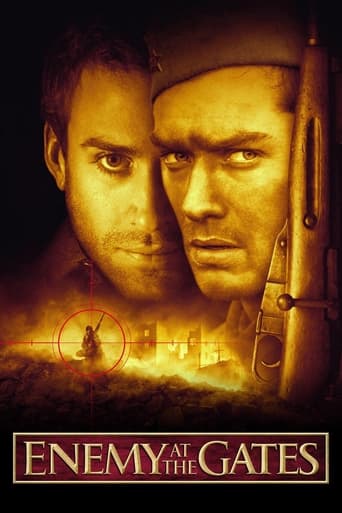
And yet... so few good movies have been made, right? The most well-known, "Enemy at the Gates", is a complete distortion of the truth, and pretty bad movie-making as well. Where are all the good Stalingrad movies? The best one is still the German-made one.
I believe the real problem -- affecting even you, now -- is that the Soviets (and later Russians) were not perceived as the good guys after the outbreak of the Cold War, and to this day Russians are not the good guys, and so their big moments in WWII tend to be downplayed in Western pop culture. Movies like "Enemy at the Gates" spent as much time making sure the audience didn't empathize too much with the Soviets, as with presenting the Germans as the enemy.
Complicating things even more, there's the thing that the Germans -- the ultimate bad guys of WWII -- have been somewhat rehabilitated in pop culture, making German "things" somewhat cool. (Unless one is watching a movie specifically about genocide or the Holocaust).
You don't need to convince me Overlord was very impressive, because I fully agree.
It seems we possibly agree Bagration was more impactful, but our disagreement is whether it was as impressive. I'll argue that it was: the scale was humongous, and in war, this means more chance of fuckups or logistical nightmares. Scale in troops & territory is a huge source of trouble (just ask Hitler...). Military deception was practiced by all sides, but the Soviets took maskirovka to an art form. Not only were there feinted strategic offensives (with the potential to become real as plan B), but huge troop formations moved one way during daytime and retraced their steps during the night. Radio discipline exercised atypically for the Red Army. The Germans later claimed not to be fully taken in, but really... that's what they would claim. Reality shows otherwise and their army was shattered.
As for whether it's as iconic... well, "iconic" is an ill-defined term anyway. "Most iconic" in the Western world is just because, like I argued, the Eastern Front is way less known and depicted in movies. It's almost the definition of "lesser known", of which there are many reasons (Cold War thinking being a big reason initially). Overlord is more iconic in the West because it has been brought to the forefront in multiple accounts, movies and games.
Imagine if there were American movies about Bagration like there are for Normandy, "Saving Conscript Petrov". There are a million interesting and amazing stories you could tell set during this massive operation, just like Private Ryan or Band of Brothers.
Stalingrad in contrast is indeed iconic -- possibly as iconic as Overlord, because everyone knows about Stalingrad too -- but regrettably not too many good movies have been made about it. I've mentioned "Enemy at the Gates" (sigh!) but there's also that terrible Russian movie called... "Stalingrad"? Yuck. About the only one that's decent is ironically the German "Stalingrad" movie, but that one mostly shows the German perspective.
> Overlord overshadows other operations because it was unique in its nature, scale and difficulties
Without diminishing Overlord (a landing of this magnitude was unparalleled), I think Bagration is just as impressive, devastatingly effective at annihilating the German army (most of Army Group Center gone, poof), and must have been a logistical and secrecy nightmare to employ maskirovka at such a large scale. It was larger scale than Overlord, too.
Not many in pop culture know about the Siege of Leningrad.
Stalingrad is better known in pop culture, but regrettably most of it at the level of terribly bad and misleading movies such as "Enemy at the Gates".
> Eastern Front also had its iconic moments [...]
That's a bit of an understatement... The Eastern Front is where most of the fighting in WWII happened. It's where the European theater of war was truly won or lost.
Everyone is aware AGoT has a lot of inspiration on the Wars of the Roses. Its fantasy depiction of fantasy nobility and feuds is more "realistic" than, say, The Lord of the Rings (the work of "medieval fantasy" that looms large over all others), so I'd say it does a good job at it. It also has dragons and magic, so let's not take this inspiration too far, shall we?
The author of the blog we are quoting understands this, fortunately. He's being nitpicky for fun's sake, as he readily admits in one of his initial articles about AGoT [1]:
> "But first, I want to answer a question: Why am I bothering? Isn’t this all a bunch of useless nitpicking? Well, first – what did you expect from a blog named A Collection of Unmitigated Pedantry? Useless nitpicking is our specialty."
He then goes on to say:
> "But – for once – I think this is useful nitpicking. For a great many people, Westeros will become the face of the European Middle Ages, further reinforcing distorting preconceptions about the period."
It's true that fiction, especially in movies and TV shows, reinforces what people think they know about the past. See how many people (and games) repeat terrible tropes from the wildly inaccurate movie "Enemy at the Gates", and think the Soviets basically constantly mowed down their own troops at the first sign of wavering, or that at Stalingrad there were not enough bullets or weapons for every soldier.
So I feel the author's pain. Then again, neither the AGoT novels nor TV show pretend to be about real medieval history, they just claim to be inspired by it. If the audience thinks this represents real history to any degree, maybe they should have paid more attention to all the dragons, magical weapons and undead zombies in the show?
PS: the blog author's point about how medieval armies were raised, their numbers, and the involved logistics is fascinating and extremely interesting. It obviously doesn't work like this in AGoT or Lord of the Rings!
Unfortunately, Order 227 -- "Not One Step Back" -- has more than a few issues as depicted in Enemy at the Gates.
First, it has nothing to do with the topic at hand (we were talking about shooting troops who refuse to walk into minefields; something absurd in the context of Stalingrad). This matters because this crazy conflation of "everything Soviet" in WW2 makes honest discussion impossible. It's like people have a hodgepodge of random ideas, mostly taken from movies and videogames, and when you object to one they fall back to another misconception that is only tangentially related.
Second, blocking detachments weren't used in this way at Stalingrad, and were mostly about preventing troops from routing, not shooting them. Of course if you have detachments in the combat zone (as depicted by Enemy at the Gates) they will be shooting at Germans (and being shot at by them!), not shooting at their own possibly retreating troops. A cursory reflection on what "facts" from Enemy at the Gates should tell you the movie is bonkers: it simply cannot be true that there weren't enough guns and bullets to provision soldiers, and also that NKVD had plenty of guns and bullets to shoot at their own troops!
Order 227 was mostly about officers. Officers were considered traitors if they ordered unauthorized retreats, which in this context -- a war of extermination -- makes a lot of sense. Blocking detachments mostly stopped troops from panicking (but did not shoot them in the back while retreating, that depiction is so ridiculous it boggles the mind someone would believe it literally!) and NKVD acted like military police. Most soldiers retreating without orders were sent back to the front, possibly (but not always) to penal battalions in difficult sectors. Some were shot, as expected in times of war.
> Enemy at the Gates was of course a dramatized version of the situation.
No, it simply crosses into ridicule and falsehood. It's a completely absurd movie depicting tactics that weren't used. Or stating outright falsehoods like "more soldiers than guns", which demonstrably didn't happen at Stalingrad.
> But basically the notion of shipping in fresh meat across the Volga to replenish troops lost in the city was very real.
Yes, but that's not what's under discussion, is it? Stalingrad was a meat grinder for both Soviets and Germans.
> And running the wrong way was lethal.
If by that you mean "getting shot by NKVD and blocking detachments", that's mostly fictional. As in "it didn't happen at Stalingrad". An actual Soviet soldier was likely as good as dead when he set foot on Stalingrad, but that's because he was going to get killed by Germans. Go read about the battle instead of relying on Enemy at the Gates!
> And in terms of casualties this probably was one of the largest battles ever with extreme losses on the Russian side.
It was one of the bloodiest battles of World War 2. The Soviets (not Russians!) suffered greatly, but the Germans and their Axis allies also suffered a huge blow in terms of personnel. See what I mean? I confront you on falsehoods, you retreat to a technically true but completely unrelated random fact.
Your understanding of the Red Army is incorrect. Please cite academic sources (so not Enemy at the Gates, awful movie) showing that at Stalingrad the Red Army had "more soldiers than guns".
It should be noted this was false at Stalingrad, and "Enemy at the Gates" has a terribly inaccurate depiction of that battle.
There are no reliable sources stating that the Red Army [1] had more soldiers than guns by that time. Just some pop culture from a terrible movie that has somehow permeated into "knowledge" about the Eastern Front.
[1] also wrong to call it "the Russian army", it was the army of the Soviet Union and had non-Russians.
> The Russian army also had some chilling tactics. Basically they had more soldiers than guns during the battle of Stalingrad. So they sent them in pairs where one person was supposed to pick up the gun in the (likely) case the other person got shot. To prevent people from refusing orders, they simply shot anyone running the wrong way. Ordering people to march towards (almost) certain death is probably as old as war is.
This was depicted in the film Enemy at the Gates (2001)—and probably other, earlier films, I'd expect—and then strikingly similarly (i.e. they likely deliberately modeled their version on the scene from the film) in the first Call of Duty game (2003), back when that series was all WWII shooters.
I am not the OP but I had my view on this kind of changed by watching YouTube essay "Lies of Heroism – Redefining the Anti-War Film" [1]. Whey you think about movies like for example Enemy at the Gates, they show the gruesome reality of the battlefield, but it is usually interpreted in a way that makes the suffering feel meaningful, heroic. Contrast that with Come and See, where there is no heroism, no ultimate meaning of the suffering, just meaningless hellish nightmare.
There were also NKVD combat units, most famously one which did a lot of heavy fighting in Stalingrad. (Actual desperate fighting against Germans, not the scene from the awful "Enemy at the Gates" where they fire on retreating Soviet troops -- that's mostly made up for the movie).
Your first anecdote was also captured in the opening scene of "Enemy at the Gates", a movie about the Battle of Stalingrad that became one of the turning points of the war.
There's a movie released in 2001, called Enemy at the Gates, but it's kind of cheesy. But since you asked, it qualifies as the ever-so-rare Hollywood movie about a WWII scenario, involving a Russian protagonist, as told from a Soviet perspective.
 Hacker Cinema


15 comments on Hacker News
> Well, what makes Bagration unique in the same sense as Overlord? The scale alone does not cut it, and it's not the largest land operation anyway.
Scale alone is very important, and Soviet operations were larger scale (meaning harder to coordinate) than Western Allied ones. Also, I explained maskirovka. It's just that you don't find it interesting enough, and I cannot argue against your preferences except to disagree.
Barbarossa to my knowledge was/is the largest land operation of all time (and nobody will disagree it's both iconic and massively important), and Bagration comes second. Let's not mince words here. And also, Barbarossa was impressive at first but ultimately a failure, in particular a logistical failure -- precisely where Bagration succeeded.
> Partially yes, but that's not what makes Bagration forgettable.
> "Iconic" is about human stories. Photos from the landing craft moving onto the beach, soldiers getting mowed by the machine guns while running over completely exposed positions, German soldiers sitting in fortified, but ultimately outnumbered and hopeless positions. Those are very memorable.
> [...]
> You could make stories about Bagration, but it would not appear unique to the reader, you can't really transmit the scale of manouver warfare into the human story.
There's plenty of similar human stories and memorable situations that could be told for Bagration, plenty of furious advances, encirclements and desperate last stands (e.g. the German "fortress cities"), plenty of individual soldier stories to be told with Bagration as the backdrop. There's even smaller scale preparatory actions, such as the partisan operations "Rail War" and "Concert".
It's just that, like I've already said, Western media is not interested in telling these stories, partly because they would overshadow American contributions to the European theater of war, and partly because audiences must not empathize with the Red Army too much. You could make a "Saving Conscript Petrov" movie as powerful as Saving Private Ryan, but who wants to make it?
Overlord was large scale too yet Spielberg found the way to make it smaller and about individual soldiers. You can make this with Bagration as well. You don't need to make a documentary about large scale maneuvers, you can make it about individual soldiers. The Soviets suffered massive losses during Bagration, so you are not even sure your heroes will survive! Spielberg could do it, if he was interested. So could Clint Eastwood. Imagine: comrade Petrov is taking part of partisan actions, but he's captured by Germans; he's carrying some papers/knowledge that would betray the larger Bagration operation... now Stavka must send a platoon to Rescue Conscript Petrov before it's too late. Intersperse with scenes of his mother and girlfriend back behind the frontlines, anxious about his fate. (Ok, ok, I'm no Spielberg).
> You can make stories about close quarters combat for months in a completely destroyed Stalingrad, fighting for every building, pretty much living next to the enemy etc.
And yet... so few good movies have been made, right? The most well-known, "Enemy at the Gates", is a complete distortion of the truth, and pretty bad movie-making as well. Where are all the good Stalingrad movies? The best one is still the German-made one.
I believe the real problem -- affecting even you, now -- is that the Soviets (and later Russians) were not perceived as the good guys after the outbreak of the Cold War, and to this day Russians are not the good guys, and so their big moments in WWII tend to be downplayed in Western pop culture. Movies like "Enemy at the Gates" spent as much time making sure the audience didn't empathize too much with the Soviets, as with presenting the Germans as the enemy.
Complicating things even more, there's the thing that the Germans -- the ultimate bad guys of WWII -- have been somewhat rehabilitated in pop culture, making German "things" somewhat cool. (Unless one is watching a movie specifically about genocide or the Holocaust).
You don't need to convince me Overlord was very impressive, because I fully agree.
It seems we possibly agree Bagration was more impactful, but our disagreement is whether it was as impressive. I'll argue that it was: the scale was humongous, and in war, this means more chance of fuckups or logistical nightmares. Scale in troops & territory is a huge source of trouble (just ask Hitler...). Military deception was practiced by all sides, but the Soviets took maskirovka to an art form. Not only were there feinted strategic offensives (with the potential to become real as plan B), but huge troop formations moved one way during daytime and retraced their steps during the night. Radio discipline exercised atypically for the Red Army. The Germans later claimed not to be fully taken in, but really... that's what they would claim. Reality shows otherwise and their army was shattered.
As for whether it's as iconic... well, "iconic" is an ill-defined term anyway. "Most iconic" in the Western world is just because, like I argued, the Eastern Front is way less known and depicted in movies. It's almost the definition of "lesser known", of which there are many reasons (Cold War thinking being a big reason initially). Overlord is more iconic in the West because it has been brought to the forefront in multiple accounts, movies and games.
Imagine if there were American movies about Bagration like there are for Normandy, "Saving Conscript Petrov". There are a million interesting and amazing stories you could tell set during this massive operation, just like Private Ryan or Band of Brothers.
Stalingrad in contrast is indeed iconic -- possibly as iconic as Overlord, because everyone knows about Stalingrad too -- but regrettably not too many good movies have been made about it. I've mentioned "Enemy at the Gates" (sigh!) but there's also that terrible Russian movie called... "Stalingrad"? Yuck. About the only one that's decent is ironically the German "Stalingrad" movie, but that one mostly shows the German perspective.
> Overlord overshadows other operations because it was unique in its nature, scale and difficulties
Without diminishing Overlord (a landing of this magnitude was unparalleled), I think Bagration is just as impressive, devastatingly effective at annihilating the German army (most of Army Group Center gone, poof), and must have been a logistical and secrecy nightmare to employ maskirovka at such a large scale. It was larger scale than Overlord, too.
Not many in pop culture know about the Siege of Leningrad.
Stalingrad is better known in pop culture, but regrettably most of it at the level of terribly bad and misleading movies such as "Enemy at the Gates".
> Eastern Front also had its iconic moments [...]
That's a bit of an understatement... The Eastern Front is where most of the fighting in WWII happened. It's where the European theater of war was truly won or lost.
Everyone is aware AGoT has a lot of inspiration on the Wars of the Roses. Its fantasy depiction of fantasy nobility and feuds is more "realistic" than, say, The Lord of the Rings (the work of "medieval fantasy" that looms large over all others), so I'd say it does a good job at it. It also has dragons and magic, so let's not take this inspiration too far, shall we?
The author of the blog we are quoting understands this, fortunately. He's being nitpicky for fun's sake, as he readily admits in one of his initial articles about AGoT [1]:
> "But first, I want to answer a question: Why am I bothering? Isn’t this all a bunch of useless nitpicking? Well, first – what did you expect from a blog named A Collection of Unmitigated Pedantry? Useless nitpicking is our specialty."
He then goes on to say:
> "But – for once – I think this is useful nitpicking. For a great many people, Westeros will become the face of the European Middle Ages, further reinforcing distorting preconceptions about the period."
It's true that fiction, especially in movies and TV shows, reinforces what people think they know about the past. See how many people (and games) repeat terrible tropes from the wildly inaccurate movie "Enemy at the Gates", and think the Soviets basically constantly mowed down their own troops at the first sign of wavering, or that at Stalingrad there were not enough bullets or weapons for every soldier.
So I feel the author's pain. Then again, neither the AGoT novels nor TV show pretend to be about real medieval history, they just claim to be inspired by it. If the audience thinks this represents real history to any degree, maybe they should have paid more attention to all the dragons, magical weapons and undead zombies in the show?
PS: the blog author's point about how medieval armies were raised, their numbers, and the involved logistics is fascinating and extremely interesting. It obviously doesn't work like this in AGoT or Lord of the Rings!
---
[1] https://acoup.blog/2019/05/28/new-acquisitions-not-how-it-was-game-of-thrones-and-the-middle-ages-part-i/
Unfortunately, Order 227 -- "Not One Step Back" -- has more than a few issues as depicted in Enemy at the Gates.
First, it has nothing to do with the topic at hand (we were talking about shooting troops who refuse to walk into minefields; something absurd in the context of Stalingrad). This matters because this crazy conflation of "everything Soviet" in WW2 makes honest discussion impossible. It's like people have a hodgepodge of random ideas, mostly taken from movies and videogames, and when you object to one they fall back to another misconception that is only tangentially related.
Second, blocking detachments weren't used in this way at Stalingrad, and were mostly about preventing troops from routing, not shooting them. Of course if you have detachments in the combat zone (as depicted by Enemy at the Gates) they will be shooting at Germans (and being shot at by them!), not shooting at their own possibly retreating troops. A cursory reflection on what "facts" from Enemy at the Gates should tell you the movie is bonkers: it simply cannot be true that there weren't enough guns and bullets to provision soldiers, and also that NKVD had plenty of guns and bullets to shoot at their own troops!
Order 227 was mostly about officers. Officers were considered traitors if they ordered unauthorized retreats, which in this context -- a war of extermination -- makes a lot of sense. Blocking detachments mostly stopped troops from panicking (but did not shoot them in the back while retreating, that depiction is so ridiculous it boggles the mind someone would believe it literally!) and NKVD acted like military police. Most soldiers retreating without orders were sent back to the front, possibly (but not always) to penal battalions in difficult sectors. Some were shot, as expected in times of war.
> Enemy at the Gates was of course a dramatized version of the situation.
No, it simply crosses into ridicule and falsehood. It's a completely absurd movie depicting tactics that weren't used. Or stating outright falsehoods like "more soldiers than guns", which demonstrably didn't happen at Stalingrad.
> But basically the notion of shipping in fresh meat across the Volga to replenish troops lost in the city was very real.
Yes, but that's not what's under discussion, is it? Stalingrad was a meat grinder for both Soviets and Germans.
> And running the wrong way was lethal.
If by that you mean "getting shot by NKVD and blocking detachments", that's mostly fictional. As in "it didn't happen at Stalingrad". An actual Soviet soldier was likely as good as dead when he set foot on Stalingrad, but that's because he was going to get killed by Germans. Go read about the battle instead of relying on Enemy at the Gates!
> And in terms of casualties this probably was one of the largest battles ever with extreme losses on the Russian side.
It was one of the bloodiest battles of World War 2. The Soviets (not Russians!) suffered greatly, but the Germans and their Axis allies also suffered a huge blow in terms of personnel. See what I mean? I confront you on falsehoods, you retreat to a technically true but completely unrelated random fact.
Your understanding of the Red Army is incorrect. Please cite academic sources (so not Enemy at the Gates, awful movie) showing that at Stalingrad the Red Army had "more soldiers than guns".
It should be noted this was false at Stalingrad, and "Enemy at the Gates" has a terribly inaccurate depiction of that battle.
There are no reliable sources stating that the Red Army [1] had more soldiers than guns by that time. Just some pop culture from a terrible movie that has somehow permeated into "knowledge" about the Eastern Front.
[1] also wrong to call it "the Russian army", it was the army of the Soviet Union and had non-Russians.
> The Russian army also had some chilling tactics. Basically they had more soldiers than guns during the battle of Stalingrad. So they sent them in pairs where one person was supposed to pick up the gun in the (likely) case the other person got shot. To prevent people from refusing orders, they simply shot anyone running the wrong way. Ordering people to march towards (almost) certain death is probably as old as war is.
This was depicted in the film Enemy at the Gates (2001)—and probably other, earlier films, I'd expect—and then strikingly similarly (i.e. they likely deliberately modeled their version on the scene from the film) in the first Call of Duty game (2003), back when that series was all WWII shooters.
I am not the OP but I had my view on this kind of changed by watching YouTube essay "Lies of Heroism – Redefining the Anti-War Film" [1]. Whey you think about movies like for example Enemy at the Gates, they show the gruesome reality of the battlefield, but it is usually interpreted in a way that makes the suffering feel meaningful, heroic. Contrast that with Come and See, where there is no heroism, no ultimate meaning of the suffering, just meaningless hellish nightmare.
[1] https://youtu.be/yf0G2MPBEYM
The GP asked for movies about winning the WWII, not winning in the WWII. Enemy at the Gates was just a sniper duel movie (a good one, though).
Odd. None of those details were included in the Enemy at the Gates movie, and it specifically focused on snipers.
There were also NKVD combat units, most famously one which did a lot of heavy fighting in Stalingrad. (Actual desperate fighting against Germans, not the scene from the awful "Enemy at the Gates" where they fire on retreating Soviet troops -- that's mostly made up for the movie).
Movies with great impact on me:
1. Untouchable - must see
2. Gattaca - are we going there?
3. 1984 - must see
4. Idiocracy - initially looks like joke/stupid movie, but it's more real then we may want to agree
5. Life of others (made in Ge)
6. Amelie Poulain (made in Fr)
7. Turtles can fly (made in Ir)
8. Stalker - the russian original (3 parts) (made in Ru)
9. Metropolis
Other good movies:
Lost Horizon
The Bucket List
The Truman Show
Solaris 1972
Enemy at the Gates
The Hitchhiker’s Guide to the Galaxy
Tips for good movies in general: take countries one by one and search best ever movies from that country.
Your first anecdote was also captured in the opening scene of "Enemy at the Gates", a movie about the Battle of Stalingrad that became one of the turning points of the war.
There's a movie released in 2001, called Enemy at the Gates, but it's kind of cheesy. But since you asked, it qualifies as the ever-so-rare Hollywood movie about a WWII scenario, involving a Russian protagonist, as told from a Soviet perspective.
http://www.imdb.com/title/tt0215750/
It's the only English-language movie I can think of that fits those criteria.