 Hacker Cinema
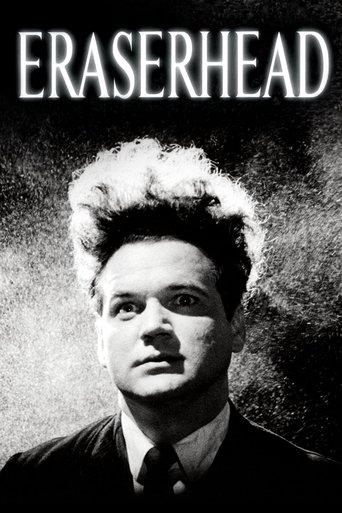
Eraserhead
1977 · Film · 89 min
Directed by David Lynch
First-time father Henry Spencer tries to survive his industrial environment, his angry girlfriend, and the unbearable screams of his newly born mutant child.
8 positive2 negative3 mixed17 neutralfrom 30 commenters
Where to watch
No streaming data for this title.
33 comments on Hacker News
If the novel parts are don't transcode, and clean up before adding to library, then you can just do that, right? Without having to create a frontend, which is the fiddly part (especially since losing the AppleTV client I can use with Jellyfin server would be a sacrifice). It's pretty easy to, for example, make a python script that grabs metadata from tmdb when given a URL (so the script has no need for disambiguation logic -- that's what humans are for), generate an ffmpeg command that adds that metadata, and does whatever re-encoding/re-muxing you want. Can embed subtitle files this way too.
e.g., of generated command: ffmpeg -y -hide_banner -i /mnt/storage/rips/bluray.mkv -i ./eng.sdr.srt -map 0:v -map 0:a -map 1 -c:v copy -c:a copy -c:s mov_text -metadata:s:a:0 language=eng -metadata:s:a:0 title=eng -metadata:s:s:0 language=eng -metadata:s:s:0 title="English (SDR)" -disposition:s:0 hearing_impaired -metadata title="Film Title" -metadata genre="Pretentious Comedy" -metadata artist="Alan Smithee" -metadata date=2026 -f mp4 -movflags +faststart "/mnt/storage/movies/Film Title (2026).mp4"
Do whatever encoding you want in advance too of course. Note, the above is generated from a script (not created manually) that is run like `./cleanvideo.py ./bluray.mkv ./eng.sdr.srt https://www.themoviedb.org/movie/985-eraserhead`
After doing this for over a decade, I find that Jellyfin, or even just a caddy directory listing, make a great media library browser. Jellyfin will almost never identify things incorrectly. Can always fall back to just listing things and playing your content with `mpv https://machine.tailnet-name.ts.net/movies/...` even remotely given the use of tailscale. Or VLC from my phone, etc.
> I'm not sure what you mean by separating review from criticism. Can you expand on that?
Let's start with applying both to "Eraserhead":
A critical approach might have a thesis on how it links with Lynch's interest in Buddhism and how those concepts surface in the film, how different events and characters in the film can be read through that lens and how the resolution of the film makes sense in a Buddhist context. Absolutely none of this tells you whether the person who watched the film was enraptured by it from the first scene or whether they got through it out of academic obligation and immediately bitched about it on social media afterwards. Criticism has a thesis about a work and defends it, which doesn't usually involve how enjoyable the work is.
A review of "Eraserhead" would tell you about the experience of watching it, whether the person writing the review thought it was a well-constructed and engaging film, and maybe some thoughts on how much sense they made of it, but the analysis wouldn't be the focus. Thumbs up, thumbs down, that's the meat.
It's entirely possible to mix the two realms, but there's a difference in focus and intent. The better YouTube channels (Folding Ideas) mix the two quite deftly, in fact, but I'd put Folding Ideas in the realm of criticism more than reviewing because he does tend to have a thesis and defends it in addition to saying how much he enjoyed (or, more often, didn't) the films he talks about.
For example, in his video about The Nostalgia Critic's review of Pink Floyd's movie The Wall (that is, his video about another person's review of a band's movie made from their rock opera album) his thesis is that the person behind The Nostalgia Critic character is creatively stalled and fundamentally lazy. He defends this thesis while lambasting the video he's talking about, but the thesis is centered. That's criticism.
Thanks! Here's the full list: 2001: A Space Odyssey, 8½, Aguirre the Wrath of God, Ali: Fear Eats the Soul, All That Heaven Allows, Apocalypse Now, Ashes and Diamonds, A Woman Under the Influence, Barry Lyndon, Bicycle Thieves, Breathless, Casablanca, Céline and Julie Go Boating, Chinatown, Chinese Roulette, Citizen Kane, City Lights, City of Pirates, Contempt, Daisies, Damnation, Dishonored, Earth, Electra My Love, El Topo, Eraserhead, Eyes Wide Shut, Film Socialisme, Fitzcarraldo, Fuego en Castilla, Hiroshima Mon Amour, Holy Motors, Inauguration of the Pleasure Dome, In a Year with 13 Moons, India Song, Inland Empire, Irma Vep, Koyaanisqatsi, La Dolce Vita, La Jetée, Late Spring, L'Eau de la Seine, Le Voyage dans la Lune, Lolita, Los Olvidados, Lost Highway, Lucifer Rising, Man with a Movie Camera, Metropolis, Mirror, Mulholland Drive, Night Music, Ordet, Orpheus, Persona, Pickpocket, Playtime, Psycho, Rebecca, Rosemary's Baby, Rumble Fish, Scarface, Seven Samurai, Sherlock Jr., Singin' in the Rain, Stalker, Sunset Boulevard, Taste of Cherry, Taxi Driver, Testament of Orpheus, The 400 Blows, The Blood of a Poet, The Cabinet of Dr. Caligari, The Color of Pomegranates, The Green Ray, The Holy Mountain, The Isle, The Lady from Shanghai, The Night of the Hunter, The Passion of Joan of Arc, The Seventh Seal, The Spirit of the Beehive, The Tales of Hoffmann, The Tree of Life, The Turin Horse, Time of the Gypsies, Tokyo Story, Touch of Evil, Trans-Europ-Express, Ugetsu, Un Chien Andalou, Uncle Boonmee Who Can Recall His Past Lives, Vampyr, Videodrome, Wavelength, Werckmeister Harmonies, Wild Strawberries, Moonlight Sonata, Stellar, The Haunted House Biased toward European art cinema, experimental work, and directors who broke conventional narrative rules.
No, not this much, and for one person. Lynch was a bit of a mystery. The table router, saws, woodshop tools, the cabinet making books. Lynch was sometimes hands on for productions. A lot of the furniture is cool too. Like 1950's period pieces, but custom made. He had four wives and one partner (Isabella Rossellini) and four children. We probably never saw the real David Lynch. A lot of the stuff could just be accumulations from a lot of shopping trips.
"Eraserhead was finally finished in 1976. Lynch said that not a single reviewer of the film understood it as he intended."
Lynch produced Eraserhead on a shoestring budget ($100k) along with Sissy Spacek and her husband, Jack Fisk.
I feel the same. If Blue Velvet was the first Lynch movie I saw, I surely wouldn't have bothered with the rest, and I would have missed out on what I now consider one of my absolute favorites (Mulholland Drive). Same goes for Eraserhead and Wild at Heart.
Lynch anecdote (you can find it on YouTube). Kubrick invited some movie people to see his favorite film (no qualifiers) 'Eraserhead'
I rented Eraserhead and watched with some friends in college. I loved it, and so did the other Lynch fan. The other two, well, the first words spoken over the credits were “What the actual fuck was that?” Let’s just say it’s a divisive film.
>Eraserhead is highly watchable
It is a film explicitly designed to be unpleasant. This may be artistically interesting, but it's certainly no going to appeal to most people.
Eraserhead is borderline unwatchable. I love David Lynch, sort of, but without telling people that they're about to sit down and watch an hour-and-a-half of what is effectively an unwatchable piece of avant-garde cinema, then they're not going to be able to appreciate it.
There is nothing worse than getting excited to see a famous director's debut film, thinking you're going to have a good time, and then getting Eraserhead.
I think there's a lot more to Eraserhead than that! I also don't really see the ending as pessimistic personally.
Lynch: "Believe it or not, Eraserhead is my most spiritual film."
Lean: "Elaborate on that?"
Lynch: "No, I wont. No one sees it."
https://www.youtube.com/watch?v=jjoMEw2RYlA
Dune or Twin Peaks are probably going to be more accessible than anything else.
For Eraserhead, I understand the metaphor of how parenting can be larger-than-life and terrifying and I see how Eraserhead was trying to embody that but I very much didn't appreciate the highly pessimistic ending. It's an early movie that would have benefited immensely from an alternate ending on its DVD.
I want to push back on the surreal end slightly. It's true that his movies are extremely resistant to analysis, and it's true that much of his imagery is de-facto surreal. But his movies still have narratives assembled from humans in concrete situations with concrete problems and easily understandable actions and reactions. In other words, you can enjoy his movies as an experience at relative face-value in a way many other forms of surreal art resist.
Some more than others, perhaps—the man produced Dune and Eraserhead pretty damn close together, and Eraserhead is not generally considered an easy movie to watch. But the man was never afraid or dismissive of giving us straightforwardly enjoyable cinema, even if we can't easily articulate why!
Start with "Eraserhead" and then go from there. Surreal is the word I associate with his movies and tv show (Twin Peaks) and I absolutely love watching such movies!
What's the frame rate of a zoetrope, a 1920's silent film, Charlie Chaplin's greatest works, Eraserhead?
Not all art is still.
So, why the snark?
my favourite interview snippet with him (https://www.youtube.com/watch?v=jjoMEw2RYlA):
> DL: Eraserhead is my most Spiritual Film
> I: Elaborate on that?
> DL: no
> Yet would be entirely baffled at the concept of a British panto.
Monty Python, and in particular Terry Gilliam's animation style, were both heavily panto influenced.
It was also a nerd rite-of-passage to watch Eraserhead which was directed by David Lynch, who then got to direct the Elephant Man.
The panto scene at the end of Elephant Man is one of the few scenes in a movie that wrecks me every time I watch it. Unfortunately it gets scrubbed every time someone posts it online.
> known for cult films like Mulholland Drive, Inland Empire and Wild at Heart
Really? No, really? Not Twin Peaks? Not Lost Highway? Not Eraserhead, not The Elephant Man? Not Dune?!
For the folks new to Lynch movies don't forget to watch his possibly the strangest of movies: Eraserhead. I have watched it more than 5 times and everytime I watch it I learn something new.
And btw this scene from his movie is just gold: https://www.youtube.com/watch?v=UozhOo0Dt4o
- "Believe it or not, Eraserhead is my most spiritual film."
- "Elaborate on that"
- "No."
The article didn't go into too many details about why it worked better, but these excerpts gesture at why:
"dialing up Gibson’s cyberpunk paranoia"
"the three computer graphic sections become quite coherent in black-and-white"
"it has this kind of a dreamy, 16mm feel to it. It reminds me of Tetsuo and Eraserhead, and all these great, kind of dreamy, black-and-white movies."
"the color graphics now look all pretty retro, but in black-and-white, it has its own quality to it for sure."
"I take inspiration from films like Alphaville, La Jetée, things like that"
My impression is that the color version sets an expectations that Longo never meant. It was always intended as a B&W art film, and not as a summer block-buster. The colors and expense were a distraction.
So, if you haven't yet, check out the movies mentioned. Ironman: Tetsuo, Eraserhead, Alphaville and La Jetée. They are definitely not Hollywood blockbusters.
...is unmatched by what's seen here in the U.S. Is it because the movie industry there is more permissive towards such genere?
Can you elaborate on this? On the face of your comment, I think you might just be unaware of a lot of films that have been made in the US. The article mentioned the American David Lynch's Eraserhead as an influence of these works. David Cronenberg is also undoubtedly a huge influence here as well (I know he's Canadian, but he largely works in the American movie industry).
It's not like Tetsuo: The Iron Man was a huge financial or mainstream success. Most of these movies were mostly relegated to the grindhouse, and American has more than its share of grindhouse film makers (ala John Waters). Also consider that The Fly was as big a financial success as Akira.
Basically, what I'm saying is that I don't think Japanese artists & audiences are very different from their American counterparts in this regard. It is not distinctly Japanese or American to dream up horrific stuff, but rather, it's human to hold up a mirror to an, at times, horrific existence.
Apt user name. TIL, thank you:
> Making The Shining, Stanley Kubrick announced Eraserhead was his favourite film and showed it to his cast and crew, “to put them in the mood”.
https://www.theguardian.com/film/2017/mar/22/david-lynch-eraserhead
So I was actually thinking of Lynch's later works (Lost Highway, Mulholland Drive, Twin Peaks) that definitely came after "The Shining" But yeah, they share things big and small, from tone to camera angles.
There's a scene in The Shining, about 3 /4 of the way through, where Jack is walking down a corridor in a rage, and it's _just weird_ (1), so reminiscent of The Man from Another Place in Twin peaks, and it's hard to say what's wrong, to unpick what's going on technically.
I only noticed this on the rewatch last week. I'd guess it's a combination of the acting and sound, camera angle and framing, lens choice, and the camera moving with him over the patterned carpet.
https://www.youtube.com/watch?v=MzZP-OXA-zY
Yes! In fact, one at least one occasion, Kubrick proclaimed that Eraserhead was his favorite movie of all time. It blows my mind that Lynch made Eraserhead while he was still in school - imagine having your student film receive that sort of acclaim from the arguably the most respected director in the world.
British Pantomime is a funny thing. When it's done in the right context it's high art.
I'm sure when it premiered on the West End in 1981 the audience was in on the joke.
Monty Python had a grand time with all their Panto references. This skit could be seen as a predictor of Furry culture (even if that wasn't the intent at the time).
https://www.dailymotion.com/video/x2uwxiz
Lastly, this is my favorite Panto reference. In the context of the movie it's heartbreaking. Mel Brooks gave the director of Eraserhead control over this movie, and we got this. David Lynch was American but he clearly "got" was Panto was all about.
https://www.youtube.com/watch?v=Pq_YuPa_6_8
If you like the weirdness, also see his (first film?) Eraserhead.
Also Rabbits is disturbing and unsettling. But not entertaining for long.
You neglect, of course, that David Lynch, himself, sought to distance himself from the movie, considering it something of an embarassment, and requesting an Alan Smithee [1] credit for at least one version of its release.
In some ways, we can look back on it with a sort of "so-bad-it's-good" a e s t h e t i c in mind, and when understanding David Lynch's sensibilities, you can still catch a glimpse of his creative influence shining through. But really, David Lynch is ultimately correct in his self-effacing critique. It's kitschy and campy in a lot of ways. Just watch the closing credits in isolation, if you don't agree, and try and challenge that opinion again.
To understand what I'm talking about, watch Dune, then watch Eraserhead, and then watch Dune again. Eraserhead informs us of David Lynch's purest intent realized as a feature presentation.
You can see some of Eraserhead in Kenneth McMillan's portrayal of Vladimir Harkonnen (and indeed, it's the scene that Jack Nance [3] appears in), but that's really about it. That Dune doesn't live up to the visualizations of Moebius' imaginary realms [4], and that much of the budgeting, politics and film making technology of the day stood in the way of the final theatrical release is probably what bummed David Lynch out about it.
[1] https://en.wikipedia.org/wiki/Alan_Smithee
[2] https://www.youtube.com/watch?v=YRzVFlZxBv4
[3] https://en.wikipedia.org/wiki/Jack_Nance
[4] https://en.wikipedia.org/wiki/Jean_Giraud
I haven't seen Inland Empire yet. I discovered David Lynch in the last 5 years and it's taking me a lot of time to get through his movies because it takes a whole lot of processing to really understand every one of them. It creeps into your psyche and sometimes your dreams. And for me it takes time to muster up the energy to put myself through another one of those experiences.
Eraserhead was a trip, I still haven't totally figured it out. But in terms of pure cinematic enjoyment Blue Velvet would be my favorite.
Now that I hear other Lynch fans talk about Inland Empire I'm really excited to watch it.
> The Napolean Dynamite Problem
1. It's "Napoleon". Copy, paste would have prevented this error.
2. For some reason, an obvious issue is left out of the article -- and that issue is how much of movie ratings constitutes entropy, meaningless noise from which no pattern can be extracted, and how much constitutes actual data that an algorithm might accurately model and predict.
Those who doubt the role of entropy should try compressing the output of a pseudorandom number generator. If the PNG is any good, the compressed output will be larger than its input, implying high entropy. In fact, compressing the predictions of Netflix customers would be a good starting point in an algorithm design -- see whether there are any patterns available to exploit.
3. Along with Napoleon Dynamite on the list of hard-to-predict movies, Repo Man and Eraserhead should be considered -- they're also very hard to categorize.
Swedes evidently think "too much of a good thing can be wonderful": they have had a Minister of Gender Equality since the 50's (http://en.wikipedia.org/wiki/Minister_for_Gender_Equality_(Sweden)) and there are efforts to introduce a gender-neutral pronoun (http://www.slate.com/articles/double_x/doublex/2012/04/hen_sweden_s_new_gender_neutral_pronoun_causes_controversy_.html, although this has been tried in English, too). In the Global Gender Gap Report 2012, Sweden is named as a world leader in gender equality (http://www.weforum.org/reports/global-gender-gap-report-2012), etc. etc. I mean, the country even has an official gender equality webpage in English (http://sweden.se/society/gender-equality-in-sweden/). It seems they can't go any further. And then this.
Even Jezebel (http://jezebel.com/sweden-introduces-new-movie-rating-system-based-on-the-1459696241) has to admit the "test" is not perfect:
"Sure, the Bechdel test is imperfect (Kathryn Bigelow's The Hurt Locker doesn't pass, for instance, but you could hardly argue that a female-helmed war movie doesn't empower at least one woman), but that doesn't make it useless as a starting line for sniffing out broad trends in gender bias. And that's what we're talking about here. Trends. Analysis. Examination. Critical thought. Information. I'm sure there are plenty of people who consider themselves scrupulously egalitarian who never even noticed that there are only like THREE WOMEN IN ALL OF MIDDLE EARTH."
I understand that this is just a thing introduced by a a few movie theaters, i.e. it's not the law or anything (yet). Yet, that's what riles me most: as librarians are the first to defend any censorship, movie professionals should push back on any arbitrary limitation on what can be shown. Some examples of movies that fail the test are given, e.g. LOTHR Trilogy, Pulp Fiction, Pacific Rim, etc. However, the test would also exclude many art films such as Tarkovski's Stalker and Solaris. How about movies with only a single female lead that don't quite fit the purpose of the test, e.g. Bergman's Through a Glass Darkly? How to handle movies with no dialog, or experimental movies such as Eraserhead? One can easily see that this sort of simplistic testing can have little artistic or practical merit.
Talk about timing. I just wrote up a list for a friend that includes a bunch of weird movies (most of them being head trips). My list includes two Cronenberg movies as well! Though, to be honest, I'm not really a fan of either. Heh, I know this is a little off topic but for those that dove this deep into the thread, maybe you would like to expand your weird movie viewing experience.
01. Eraserhead-- This feature film was the debut for Writer/Director David Lynch. The film is noted for its usage of sound as a theatrical device and "the baby" which is rumored to be created from an embalmed cow fetus. The films script is a scant 21 pages despite a running time of 85 minutes (script pages typically match runtimes).
http://www.imdb.com/title/tt0074486/ http://en.wikipedia.org/wiki/Eraserhead
02. Dead Leaves-- Produced in 2004, this Japanese animated film clocks in at 55 minutes long. The films (thin) plot is composed almost entirely of a chase/fight scene that begins on earth and ends on a space station. The movie's weirdness climaxes when when the mutant baby of the the film's protagonists is born and proceeds to kill a giant space catepillar which is attempting to eat the earth.
http://en.wikipedia.org/wiki/Dead_Leaves http://www.imdb.com/title/tt0439533/
03. House -- This 1977 Japanese film certainly ranks as one of the weirdest (if not the weirdest) movies of all time. It was unreleased in the U.S. until after a screening at the 2009 New York Asian Film Festival. In an iconic scene, a Japanese girl is consumed by piano monster as a green eyed catch watches.
http://en.wikipedia.org/wiki/House_(1977_film)
04. Jacob's Ladder- Fans of the game Silent Hill should well be aware of this movie from 1990 that inspired many of its elements. Tim Robbins stars as a vietnam war vet suffering from demonic images increasingly polluting his fragile reality. One paticularly gruesome scene includes Robbins being wheeled through a bloody hospital corrirodor filled with limbs and mutating torsos.
http://en.wikipedia.org/wiki/Jacobs_Ladder_(film) http://www.imdb.com/title/tt0099871/
05. Barton Fink- This Cohen Brothers film stars John Turturro as a novelist. The 1991 film closes with a set of iconic scenes including John Goodman exiting a burning hallway (like a badass).
http://en.wikipedia.org/wiki/Barton_Fink http://www.imdb.com/title/tt0101410/
06. Naked Lunch- The first of two Cronenberg films in this category. This 1991 film adaptation of a William S. Burroughs novel features a protagonist who uses bug spray as a chemical escape from reality. Talking insects and failed "William Tell Routines" are just some of the madness this movie contains.
http://www.imdb.com/title/tt0102511/ http://en.wikipedia.org/wiki/Naked_Lunch
07. Videodrome- David Cronenberg wrote and directed this movie staring James Woods. The movie centers around Wood's character, a sleazy TV exec, who inreasingly loses touch with reality after he comes across a station which airs extreme violence and torture. Key scenes include his merger with a TV set and a VHS tape being thrust into his stomach.
http://www.imdb.com/title/tt0086541/ http://en.wikipedia.org/wiki/Videodrome
08. Donnie Darko (Jake and Maggie Gyllenhall sp?)- Donnie Darko served as philosophical fodder for a whole generation of "Emos". Written and directed by Richard Kelly. The movie stars this brother-sister hollywood team. The movie covers a wealth of ideas including fatalism and time travel. Movie goers will inevitably remember the creepy bunny head that pervades entirety of the film.
http://www.imdb.com/title/tt0246578/ http://en.wikipedia.org/wiki/Donnie_Darko
09. Human Centipede- This 2010 dutch horror film quickly became a meme rivaling Two Girls One Cup for gross-out factor. The film features a mad doctor who connects three unfortunate souls in the most unfortunate way possible.
http://en.wikipedia.org/wiki/Human_centipede http://www.imdb.com/title/tt1467304/
10. Brazil- The second installment of Terry Gilliam's "Imagination Trilogy". This 1985 film represents the dreams of adults including navigating beurocracy and chasing true love. Robert DeNiro also provides a notable role as a rebel repairman in the film.
http://en.wikipedia.org/wiki/Brazil_(film) http://www.imdb.com/title/tt0088846/
11. Black Swan 12. Paprika 13. Being John Malkovich 05. Teeth
Calling this the "Netflix Model" seems naive. When Netflix initially launched, there were two major drawing points.
1) Access to a large library/inventory. Traditional rentals were limited to mainstream/popular film and newly released films required luck to rent. Netflix made cult films easily accessible (Eraserhead, Cannibal, etc.).
2) Price savings in comparison to traditional Brick-and-Mortar Rentals. Netflix Subscription fees were equitable to two movie rentals a month. Two movie rentals a month seems like a number not outside the norm.
The service they discuss would require seeing approximately 5 movies a month just to equal the subscription fee. That is a large number.
Secondly, they aren't giving access to any more product. Just the same movies that weren't worth watching before. With the exception of oscar season I think watching five newly released movies a month would be more of a punishment.
Their shameless promo integration (pre-selling DVDS, "early access to trailers", merchandise sales) only serves to further devalue the user experience making $50 seem far too high.
As a final note, I do believe the pricing structure/experience of theaters should be re-examined and this is a start. Personally, subscription concessions could be a cool place to start. I would really consider paying $30 a month for 5 large popcorns and drinks (and that would still leave a huge margin).
As Rod Serling would say, "Submitted for your approval":
Eraserhead Forbidden Zone Gaslight Invaders from Mars Invasion of the Body Snatchers Laura Minority Report Mirage Rebecca Suddenly, Last Summer The Cabinet of Dr. Caligari The Devil's Advocate The Wizard of Oz Total Recall Vanilla Sky
Some are better than others, of course. And some fit the mindf definition better than others. Oh, well. These are some films that popped into my head.
I can't judge on The Sixth Sense, because I saw it knowing the ending and so nothing seemed too surprising. The Matrix is incredibly straightforward: the plot is rehashed philosophy mixed with a pretty simplistic story that allows for lots of fighting. Not necessarily a bad thing, but you watch it and it all makes sense in a cool "What if?" way. That opposed to, say, Eraserhead, where you finish the movie feeling like you've had your mind scrubbed hard with steel wool. Again, not necessarily a bad thing.