 Hacker Cinema
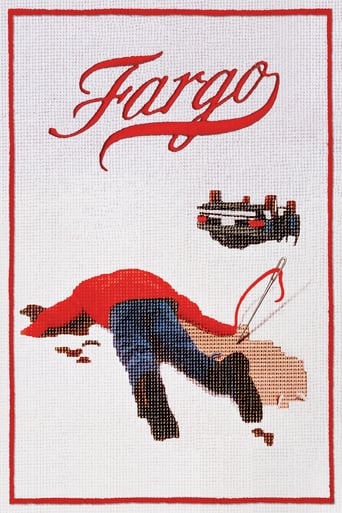
Fargo
1996 · Film · 98 min
Directed by Joel Coen
Jerry Lundegaard is a small-town Minnesota car salesman deeply in debt and willing to do almost anything to get out. Police chief Marge Gunderson discovers a string of violent crimes as Jerry's schemes spiral out of control.
14 positive5 negative37 neutralfrom 56 commenters
Where to watch
No streaming data for this title.
60 comments on Hacker News
same! in the last couple of years i've seen these movies in a cinema: The Big Lebowski, Fargo, La Heine, Apocalypse Now, HEAT. and i already bought tickets for Run Lola Run, Clerks and Fear And Loathing In Las Vegas.
it's especially cool as someone who's young and wasn't even born when some of these movies initially came to cinemas.
at the same time it's unbelievably sad that in recent years about 70% of the movies i saw at a cinema were multiple decades old.
When I was listening to some of the samples on the page you linked (pronunciation of “when”), it really seemed to me like the difference they were highlighting was how much the “h” was pronounced. Even knowing what I was listening for, it was very like my brain was just refusing to recognize the vowel sound distinction. So I think you must be right about it being a matter of basic brain chemistry.
In the example of the reverse pen/pin merger (HMS Pinafore) on that page, I couldn’t hear “penafore” to save my life. Fascinating stuff.
I used to think of the movie “Fargo” and think “haha comical upper midwestern accents.” And then at some point I realized that the characters in “No Country for Old Men” probably must sound similarly ridiculous to anyone whose grandparents and great grandparents didn’t all speak with a deep, rural West Texas accent - which mine did, so watching the movie it just seemed completely natural for the place and time at a deeply subconscious level.
Fargo (the movie) was 10 whole years before the interval analyzed here.
For comedy one needs to subvert expectations, and this is why making light of grave events (Black Comedy) is a big phenomenon.
There are many examples from WW2 comedy to 9/11 memes. Sometimes the examples are more indirect, like in film: American Psycho, American Beauty, Wolf of Wall Street, The Big Short, Fargo, Don't Look Up, Fight Club, Quentin Tarantino's stuff, etc. All of them deal with dark themes in a light way.
Given the prevalence of this in our culture, the author seems a bit surprised. Maybe they didn't connect it to dark comedy.
IMO if the lie is “inside the work”, then it’s fair.
Another example in the comment thread is Fargo. The lie about the true story happens inside of the film itself.
But if you lie in the meta data, then it’s unethical. In this case if Fargo was categorized as Documentary or non fiction.
This was a big deal when the book A Million Little Pieces has to be recategorized as fiction and a lot of ppl were deceived.
Another thing you really shouldn’t do is say “I don’t use steroids or makeup or surgery - I achieved this body through hard work alone” which makes ppl have unrealistic expectations. Super unethical
What you're describing is a cultural thing specific to the horror/thriller genre -- the audience is in on it. Even when you know it's not real acting like it's real helps people get into the right headspace to feel the fear.
Fargo is a fictional "movie adaptation of a real events."
second conclusion in the article gets into that-
the viewer of this video is expected to Never find out it was a lie. The video is much less charming once you know its digital. I feel cheated.
Audience expectation of a behind the scenes vid: 100% truthful if maybe edited to look more fun
Audience expectation of a movie: less so, tho tbh the Fargo one might be crossing a line
Fargo opens with "This is a true story. The events depicted in this film took place in Minnesota in 1987. At the request of the survivors, the names have been changed. Out of respect for the dead, the rest has been told exactly as it occurred."
The disclaimer that this is not, in fact, the case, is in small print in the closing credits.
What's the difference?
In the case of Fargo the cohen brothers chose to make a movie in the “real crime story” genre, and that title card sets the tone. Any overlap with actual crimes is almost beside the point. (As a viewer this really bugs me — there is such a thing as truth!)
In the "things you didn't know you know":
I'm from Michigan, and I watched the movie "Fargo" a few years ago. In the opening shots of the movie, it is clearly actually very cold: you can tell because the snow flows like sand in the wind, rather than clumping together and sticking to things.
But in a bunch of scenes later in the movie, the actors are all bundled up and saying things like, "Wow, it's cold"; but my brain was like, "Why are they all bundled up? It's not cold at all!" I'm sure if I watched those scenes again I could tell what little things were telling me that; the lack of fog breath, the way the snow looked, etc. But clearly the weather had warmed up after they started shooting, and the directors didn't want to reschedule. "Nobody will know if it's actually cold or not!" Well, nobody from SoCal, but everyone from Fargo's latitude will, I guarantee you.
I did always wonder why she sounded like she was from Minnesota.
" Sarah Palin talks like she’s from (northern) Minnesota! The original link, now dead, was sent in by Annie Wang (thanks!), but this search link shows the vast amount of discussion on this subject. On another web site it says she talks like she’s from Fargo, North Dakota (actually, like the people in the movie Fargo, actually filmed in Minnesota)! In fact, it turns out that the area of Alaska around Wasilla and Palmer is much more like the North Central dialect than it is like other Alaska dialects. [32]
On the web site above linguist James Crippen describes this dialect as Mat-Su Valley English, after the Matanuska-Susitna Valley where it is spoken. James Crippen has now kindly provided me with information that allows me to set its borders fairly accurately. He says that it probably extends no further west than Willow, no farther northeast than Sutton, and is probably dying out in much of the area anyway, because of a continued influx of people from other parts of Alaska.
So why do they talk like this? Because this area was almost entirely settled during the Great Depression by people from Minnesota, Wisconsin and Michigan as part of a federal project. Historical info can be found in this Wikipedia article, and on this page sent in by contributor Susan Alexander. Thanks!"
This reminded me of the strange story of Takako Konishi, a woman from Japan who came to North Dakota and was found dead, dressed very inappropriately for the cold winter weather.
The story that was shared by news outlets said she was searching for the briefcase full of cash that appeared in the movie Fargo by the Coen Brothers.
The reality was very different. [1] [2]
[1] https://birthmoviesdeath.com/2013/12/04/the-true-story-of-the-true-story-inspired-by-the-true-story-of-fargo/amp
[2] https://en.wikipedia.org/wiki/Suicide_of_Takako_Konishi
I think it likely started with a small mistake, not necessarily an innocent one but maybe one that was assumed to be low-risk. And like in the Fargo movie/show, Sam just kept digging the hole deeper trying to get out of it.
This explanation seems pretty plausible from a game theory angle. The selfish cost of losing 1 billion dollars and losing 10 billion dollars for fraud is the same. Either way he is ruined and probably goes to prison, so he keeps gambling even if the odds aren't in his favor, and problem grows exponentially.
Altruism is a lot easier when it's not your neck on the line.
Of course some films like Fargo (1996) went the opposite direction, claiming in the introductory text that it was "based on a true story which happened in 1987" which drove people crazy trying to figure out what real 1987 event it was based on before the Coen Brothers finally admitted that they were just messing with the audience.
Absolutely. It plays better with someone familiar with the rules and how the game builds and resolves. A group of novice role-players and without anyone familiar with Fiasco I can completely understand how it would be difficult to get into it.
At a high level, the game starts with everyone at the table defining their relationships to the people next to them at the table. These relationships vary depending on the scenario and can range anything from "siblings ever at war" to "blackmailer and victim" to "celebrity and spurned fan". Every scenario has dozens of combinations to ensure hijinks ensue.
After that, each player determines their characters "needs". This is their characters primary motivation for the session. These range from things like "to get out of your dead end life" to "to get free of the person they want you to be" to "to get even without getting taken down yourself".
After you know your relationships and your needs, you need to fill in the blanks between the two. If you "need to get even", and you have "a sibling rivalry", it makes sense to setup a backstory about the time your sibling showed you up or embarrassed you that you want to resolve. These blanks aren't revealed during character creation, but during the role-playing portion of the game.
There are also "objects" which are introduced during character creation. These are items which feature a prominent role during the game. For example, one item might be a "bag of drugs" or a "key to the vault" or a "pearl gripped revolver". The actual meaning of these objects is completely up in the air, but more often than not with the combination of character and relationship a story starts to form about the objects that are important.
The last thing to consider during character creation are relevant locations. Like everything else, these aren't meant to railroad you down a path so much as give you an idea of what areas are important during the game. Think of campy movies as inspiration here. Important stuff happens "inside a bathroom with a line forming outside" or "the outhouse at the camp" or "inside the illegal gambling den". How and when these locations come up is not defined, but up to the players.
At the end of character creation, everyone has a basic idea of their relationships to the people next to them as well as objects or locations which are relevant to them. It's time to start filling in the blanks by proposing a scene in which you lay out the setting (maybe one from character creation) along with the characters involved (based off of relationships or discovered connections) along with your goal for the scene. If you're brothers who have a long time sibling rivalry, maybe your goal for the scene is to finally confront you brother and expose all the times they chose the fame and spotlight over friends and family which are "what really matters". It's completely up in the air at this point with the relationships and motivations you uncovered earlier acting as guiding posts for directions the game can take.
The challenge here is you need a collaborative role playing group as you're looking to reach an ending which everyone is satisfied with. Sometimes that means leaning into the villain role and understanding what happens to the villain in the type of story you're putting together. Sometimes that means leaning into the tragedy which stories sometimes become. Sometimes it means you're the big damn hero that prevailed against all odds at the cost of everything dear to you. The point is, by the time story telling starts everyone plays an equal role in determining the outcome of the story and the main objective is to tell a good story not to be the "winner".
I find Fiasco works extremely well with settings like the Coen brothers movies. Think about Fargo. It has a ton of interesting characters, none of them wholly good, but all of them compelling and connected to each other in unexpected ways. As long as you're able to roll with the punches and make a compelling story out of things, Fiasco is one of the most rewarding systems out there. But you're setting your own pace and your own challenges, so someone expecting a structured adventure like you'd get from an experienced DM with a known setting is going to be disappointed. Telling the story is up to EVERYONE, not just one person laying out the rules.
We’re you aware at the time that you were acting out a scene from the movie Fargo ?
(The Canadian is an homonym! There are two in the industry. This is the Californian. Were it otherwise, Fallout would have been set in the cold and the inspiring movie would have been Fargo.)
> Casablanca is widely remembered as one of the greatest films of all time, coming in at #2 on the AFI’s top 100 list and similarly regarded by many other critics. You can quibble with its exact rank, but it’s at least undeniable how iconic Casablanca remains. Even now, more than 70 years after its 1942 release, few movies have ever produced as many enduring quotes.
The link to the AFI top 100 appears to have moved here:
https://www.afi.com/afis-100-years-100-movies/
The top movie is Citizen Kane, released one year prior to Casablanca (1941). The most recent movie on the list, released in 1994, was Fargo.
Maybe I was too young to know any better, but I loved the 90s movies - from T2 all the way to matrix including 5th element.
> but I believe that after Terminator 2 and Jurassic park there was garbage for a few years
But lion king, toy story, pulp fiction, shawshank redemption, fargo, forrest gump, etc were released soon after jurassic park. Garbage isn't the word I'd use to describe these movies.
Not a single Coen brothers movie? No Raising Arizona, Big Labowski, or Fargo? I don’t see how you can include the Wachowskis and not the Coens.
I don't see why this is flagged. Is there some kind of convention that in the context of movies "k" must only be used in terms of resolution - but only if it's a well-know resolution? So "5k" movies will be ok to refer to 5000 movies but not "4k" or "8k" movies?
In fact the list contains many interesting movies, for instance Tarkovsky movies such as Solaris, The Mirror and Stalker. Or a film by Peter Greenaway about Darwin.
I am skeptical about the licensing, though, because many movies are probably not free. Also some on Youtube are "not available" (to me?). For instance "Fargo" is most likely not free.
Another theory is that the scene was included to support the impression that this is a "true story":
https://www.indiewire.com/2016/06/fargo-ufo-meaning-explanation-noah-hawley-season-two-1201687564/
> the movie says, ‘This is a true story.’ They put it in there because it ‘happened.’
In the movie Fargo, there is a substory where Marge Gunderson, the female police officer, meets with a highschool class mate Mike Yanagita. They eat dinner and he makes a romantic advance, and she leaves. This substory never made sense to me within the general plot of the movie. Should Chekhov's gun have been used, or did this episode play a part that I have not realized?
>"Based on a true story" is not what makes a film plausible to us
It wasn't the only thing that made Fargo seem plausible.
But it permitted people to suspend disbelief, because it was enough like a weird news story.
Saying the same thing about Raising Arizona wouldn't make it realistic, granted.
And it isn't license to tell any story that is true, no matter how unbelievable.
>You've misunderstood what Nicola Morgan is talking about, in that quote.
That quote was from the TV tropes link. I don't think I misunderstood it. I acknowledge the "job" you state. My point, or a point, was, that Lynch appeared to be complaining about doing that fundamental job.
If you want to be pedantic, better to tell me something about Lynch, because I have only read about him.
I'm familiar with both quotes, but I think we're barking up the wrong tree by trying to intepret them literally.
"Based on a true story" is not what makes a film plausible to us... We instinctively engage in a willing suspension of disbelief when we're prompted by literature, even when we directly know that the story is false.
Fargo includes that text because the film is an homage to the hardboiled crime fiction genre, which frequently featured that style of blurb on book covers as a marketing tool. But people consume books & films, near universally where we have the means to do so, with or without claims that the stories within are factual.
You've misunderstood what Nicola Morgan is talking about, in that quote. In context, "believable" means that the author's job is to reduce obstacles that get in the way of our willing suspension of disbelief... Empathy, context, proportionality, etc.
See my other comments, re: the David Lynch quote. His meaning needs to be taken in context of some film theory.
The quote about "the difference between reality and fiction is that fiction has to make sense" has been around in some form for around two centuries in western culture.
References:
https://quoteinvestigator.com/2015/07/15/truth-stranger/
https://tvtropes.org/pmwiki/pmwiki.php/Quotes/RealityIsUnrealistic
The quote from Lynch makes it sound as though the obvious way to get people to accept an implausible story didn't occur to him.
Simply have some small print at the beginning that says "based on a true story". As I recall, that's what was done with the movie Fargo.
"Important point: just because it has happened in real life does not make it believable in a story. If a reader says she didn’t believe such a thing would happen, it is no defence for you to say, "Oh, but that did happen! In 1982 I was walking along..." — Nicola Morgan, Write To Be Published
https://xkcd.com/2115/
Yea, I totally get how you can make that comparison. I think the difference is that those that support Trump view him being a “self-made” businessman and offering them something. Does he have an ego? You bet, but the stereotypical New Yorker? Idk.
Cuomo is a silly caricature of what the rest of the country think of when they poke fun at New Yorkers: vain, aggressive, crooked, loudmouth bully.
Also, his appearance and mannerisms make him seem like a character from the Sopranos or a Scorsese movie. It is hilarious. He is just so obviously full of shit.
It would be like if the Governor of Minnesota acted and spoke like someone from the Movie “Fargo”.
This reminds me of the "Based on a true story" in the Coen brothers' Fargo. Looked at as an artistic effect, these (non-)facts elevate the Spielberg movie by adding a meta twist. Makes it even better in my opinion.
Reminds me of the protagonist in movie Fargo played by William H. Macy.
TLDR from the article:
“I’m not here to teach you how to write a Hollywood movie,” McKee said, the scorn in his voice sending a wave of reassurance through his well-educated audience. But then he drew a triangle on an overhead projector slide: at the top was “Classical Design” (stories with causality, closed endings, linear time, an external conflict, a single, active protagonist); in the other corners he wrote “Minimalism” (open endings, passive protagonists) and “Anti-Structure” (coincidence, nonlinear time). “This course is about the top, about classical design,” he said, pointing at the triangle. “Why? For your careers. As you move down the triangle, your audience shrinks.
The top of the pyramid describes his magnum opus “Story”. For anyone interested in the lower corners I can recommend “Me and You and Memento and Fargo” [1]. This gives an interesting counterpoint to McKee’s shrinking audience hypothesis.
[1] https://www.amazon.com/You-Memento-Fargo-J-J-Murphy/dp/0826428053
Reminds me of the opening text of Fargo.
> The events depicted in this film took place in Minnesota in 1987. At the request of the survivors, the names have been changed. Out of respect for the dead, the rest has been told exactly as it occurred.
So solemn, so respectful and complete bs :D
Think it's a reference to Fargo - a Coen brothers film and TV series
>In online discussions there are always people who claim that criminals are idiots, but I don't think that's accurate. I reckon that when it comes to crime, most criminals are in effect a lot more intelligent than I am with my elite university degree and so on.
Career criminals (mob, drug cartels, etc) yes.
But people who commit random premeditated crimes are more often than not (judging from trial) in "Fargo" movie territory, and most smaller criminals (e.g. gang members, methheads, etc) are dumber than cotton.
>I simply cannot understand people who think like this.
Such people are the subject of several Coen Brother movies, including Fargo, Burn After Reading, Ladykillers, and so on...
(Not that I don't feel for them though. It sucks to lose your savings, even if you did it by being greedy/stupid).
The Oscars are not awarded for historical accuracy. Best adapted screenplay does not mean most faithfully adapted, it just means the best screenplay which is adapted from some source (often fictional).
Hollywood is in the business of telling stories, not teaching history. If you get offended by lack of realism or accuracy, then don't watch Hollywood movies. I can't think of any Hollywood movie you couldn't criticize for twisting reality to further the narrative.
"Based on a true story" should always be taken with a large grain of salt and Hollywood itself have often satirized it - e.g. Fargo slapping a "Based on a true story" sign on a wholly fictional story, or American Hustle stating "Some of this actually happened!"
They could do something like Fargo. The TV show exists within the same fictional universe but isn't really related to the movie.
I don't know - I've never thought to myself "I've had enough Tolkien stories represented in film". I'd love to see another representation.
"A body is found in the frozen North Dakota woods. The cops say the dead Japanese woman was looking for the $1m she saw buried in the film Fargo. But the story didn't end there."
https://www.theguardian.com/culture/2003/jun/06/artsfeatures1
>archaeologists suspect the Middle Bronze Age tomb, perhaps on what was then a hill, was used in the 5th century as a handy place marker for the hoard.
This is like a mix of that scene in Fargo (movie version) and the season finale of Breaking Bad where the drug dealer is about to bribe Walter with the location of the remaining cash. Fascinating.
Many horror movies do the same thing nowadays, probably because it makes it more engaging for the audience?
It's especially funny when the story involves poltergeists or other paranormal elements. At least Fargo could plausibly have actually happened.
I suspect he's referring to the scene in the movie Fargo where a character buries some cash in the snow. I haven't seen the movie in a while, and couldn't find a clip of where the money came into the character's possession.
http://www.telegraph.co.uk/film/kumiko-the-treasure-hunter/true-story-death-takako-konishi-fargo/
Fargo the movie. Which in my opinion should not have said "this is a true story" in the movie or TV series. It's sort of "cheating" and uncool when credits in a movie state something as fact - which they know people will read as fact, but is actually made up.
Thanks, though I have no idea what the "Fargo treasure" is, so I'm not able to comment on it.
Do you have links to it, proof it's fake, the related death, etc.?
(Attempted to Google "Fargo treasure" but it appeared there were a number of different Fargo treasures.)
EDIT: Link http://www.telegraph.co.uk/film/kumiko-the-treasure-hunter/true-story-death-takako-konishi-fargo/
Yes, I would hope it's obvious that a fictional treasure is not real. Difference between your example and mine is the source is claiming it's real, aware people are dying, and spending money to help look for missing people.
Junior Mechanical Engineer (aka EIT) here. Interviews are pretty... standard I guess? Nothing like the interviews I read about on HN.
Most of the time is spent discussion my past projects, both technical and less technical aspects, like conflicts in team work and what not. Since I'm recently out of school, those projects are mainly a major design project I was a part of in undergrad (designing building a desert orienteering buggy from the ground up in 2 years), my master's research project, and coops (5) I did in undergrad.
Sometimes, especially if there is an HR person in the room, I'll be asked the really cliché interview questions, like name your 3 worst weaknesses. I hate that, it's a bullshit question, and (I hope) they very well know everyone will give them bullshit answers with the straightest face they can.
Exactly once I've been asked to solve relatively trivial mechanical (statics&dynamics) problems on a piece of paper. Honestly, I normally enjoy it when I get to write down FBDs and work out those kinds of problems. But it was the first I was asked to do it with an interviewer watching over my shoulder, and that was much harder than I thought. I totally choked up under pressure, and could only barely finish 70% of one of two problems. I feel for you devs now.
Funnily enough, in that same interview, there was a later part with an HR lady, that went well enough I think, until at the end she asked me asked the movie I thought was the funniest I ever saw. Sort of stressed and exhausted from the previous 3 hours of interviewing, not being a huge fan of comedies in general, and having recently re-watched Fargo, I went on about Coen Brothers movies, and how I think there is something hilarious about how trivial misunderstandings escalate into ridiculously life changing outcomes for every character.
Apparently she'd never heard of any of those films, and I'm not good at communicating my enjoyment of George Clooney's fuck machine in Burn After Reading. Didn't get that job, not sure if it was that or the paper problems that sank me.
(just kidding, I definitely did not bring up a fuck machine in a job interview, but I might have went on a bit much about Fargo, which she intially confused with Argo)
I particularly liked the use of the opposite statement in Fargo[0] despite it not being a true story.
This is a true story. The events depicted in this film took place in Minnesota in 1987. At the request of the survivors, the names have been changed. Out of respect for the dead, the rest has been told exactly as it occurred.
Which was later used in the Fargo TV series[1]
[0] https://en.wikipedia.org/wiki/Fargo_(film)#Factual_vs._fictional
[1] https://en.wikipedia.org/wiki/Fargo_%28TV_series%29#.22This_is_a_true_story.22
Take a look at a system called Fiasco. It's a gm-less system designed around chaotic stories (not what you've got, but go with me). The concept is that you have playsets (objects, locations, types of relationships). You play out a game in the style of a movie like Fargo, where everything goes wrong. Players work together to generate the story. Each taking turns to setup or resolve scenes. Very character interaction and relationship focused.
Now, I haven't done this yet, but I want to take Fiasco and create less hostile games. The format is good for this. In your case, you could give people the characters from your story, give them a location and known relationships. Give them a goal (escape the cannibals, reach the town within a week before running out of food, etc.). Then let them play with the scenario. Your players would then be bringing the characters to life. Perhaps not directly mimicking the story that you had intended, because it's more freeform and player driven, but you can maybe get an idea for how your characters actually are as people.
Fiasco = Improv RPG. That's my way of describing it, at least. The rules as written are around tragic, horrible things happening to flawed people (literally, at the end of the game you roll your dice to determine your fate: worse than death, dead, in prison or similar, etc.; then you create a story to explain that fate, maybe you died in the game, maybe you died after when someone else came after you for revenge).
But I have a strong feeling that this could be converted into something less tragedy focused, if you can get player buy-in.
I Ctrl-F'd "Fargo" upon reaching this page. Recommended viewing, for anyone who hasn't watched it.
> There is a certain neutrality to the western-canadian accent, much like that of Minnesota.
??!? I don't think any American who isn't from the middle Northern tier can watch Fargo without at least noticing the accent, or cracking a mild smile. The accent was practically a character in the movie.
However, TBH, I don't know if I know any Minnesotans, and I've never been there.
That's mostly because the Independence Day director was known for being very cost-effective and frugal. It was a blockbuster, but didn't start as a big spending production like the Titanic for example.
But even that is 10 times what Fargo cost already.
Sub 10 million have been small peanuts in Hollywood even in the eighties, by Fargo's time a movie was not even taken seriously by big studios if it had such a budget.
Heck -- an A-list actor would command 10-15 million just for himself.
The Coen Brothers' Burn After Reading and Fargo.
Also I'd argue MASH, which was massively successful, though that might be stretching dark comedy. Depends on the episode I guess.
OT: This is a throwaway comment in a caption near the end:
> Samus’ underwear are a reference to what Ellen Ripley wears at the end of Alien, but Alien had a reason for it.
A little OT, but I believe Alien and Aliens may be the only popular movies we'll ever get in which the heroine whose gender isn't treated as anything more than a matter of fact. In both movies, she has nearly zero amount of dialogue relating to romantic interest, and acts and is treated as just someone, not specifically a woman, on the crew...which makes sense given that the character was originally written for a man. Even her climactic victories arise organically from her character background, not in a cartoonish let's-see-women-kick-some-ass, as with the Bride in the Kill Bill series...Early on in Aliens, she is shown proficiently operating a Power Loader because of her past work experience, which foreshadows the final confrontation...in fact, it's funny that Ripley is sometimes referred to as a kickass gunslinger, when it is her inept use of flamethrowers and grenades that inadvertently lead to the final fight.
Anyway, this is just a long way of saying that Alien and Aliens are still not only two of the best action/sci-fi movies out there, but perhaps the only times in a major movie in which the woman is so asexual (the closest comparison I can think of is Marge Gunderson in Fargo)...So when that she does appear in her underwear at the end of both movies...it feels logical (she's getting into the cyrochamber), and not as a contrived way to capitalize off the sexiness of the actress. I guess it was "cool" that Samus was revealed to be a woman at the end, but the race to beat the game to see more of her underwear was an unnecessary bit of game design, IMO.
I was thinking the same thing to myself the other day as I was watching Kingpin probably for the 100th time. I looked up the Best Supporting Actor nominees for 1996, and the only two that I thought could have even a slim chance of competing with Bill Murray were William H. Macy in Fargo and Cuba Gooding Jr. in Jerry McGuire.
To me, Big Ern is one of the greatest characters ever, and quite possibly Bill's best performance (Steve Zissou is right up there and The Life Aquatic is one of my favorite movies). It's straight up wrong that this performance is so underrated and overlooked. The fact that he got shined by the Academy shows the hypocrisy of Hollywood.
OK, to go off on a tangent...here's the best example I can think of that illustrates the imbalance of gender neutral roles that men take for granted and that women basically have never had: the only time I can think of, in American entertainment history, that a woman achieved the authority and an unforgettable identity that had nothing to do with "...because she's a woman" is: Ripley in Alien and Aliens (never saw 3 and 4, and probably never will).
In fact, she was so good at being "just" Ripley that it wasn't until I saw Sigourney Weaver in other movies did I realize, "Huh, Sigourney Weaver is a woman and she is hot"...She is the only female character I can think of in which her gender has no real bearing to how she acts, what she says, or how she is presented on screen.
I challenge anyone to think of any other woman character who follows Ripley's mold:
1. Does not overtly seek a romantic relationship
2. Sexual tension is not a compelling foil or conflict for the character
3. Is not thrown into an action role purely for the spectacle of a woman kicking ass
4. Is not shouted down or treated differently specifically because she is a woman.
5. Is not shown in a gratuitously sexual light (she is in her underwear the same time everyone else is logically in their underwear).
6. Is unequivocally the hero of the movie. In fact, in both movies [spoiler alert for 20 year old movies], it's quite notable that she is literally the last human being standing, and she wins on her own terms.
No other contenders, that I can think of, meet this standard, especially in the action film role: Catwoman, Aeon Flux, Tomb Raider...nope. Clarice Starling...even if you want to argue that no sexual tension exists between her and Hannibal Lecter (even though he specifically refers to it), much of the non-gruesome psychological conflict her character faces is precisely because she is a woman in a (tall) man's world. Beatrice in Kill Bill...great role, but again, it only works because she is a woman and it is a spectacle, even if empowering (i.e. could you imagine Kill Bill being made with a man in the role?)
The only woman character who comes close to the unisex appeal of Ripley is Marge Gunderson in Fargo. Other than that, it's pretty slim pickings...whereas for males, there are too many to count.
Anyway, I sometimes wonder how much growing up with Alien/Aliens affected how I think about gender roles and imbalance. Those being among the first and the most interesting of the action movies I'd ever seen (then, and today), I kind of think that the idea of a woman action hero was completely normal to me. And yet, as far as I can see, no one like Ripley has since been written...
This actually supports my theory that the 90s were the greatest decade in popular culture history. It jibes so well with the (arguable) Golden Age of Rap/Hip-Hop music as well as the Seattle Grunge and Hard Rock renaissance.
Rap in the 90s had Biggie, Tupac, Wu-Tang, NWA, Nas, Outkast, De La Soul, Snoop Dogg, Jay-Z and a Tribe Called Quest.
Rock in the 90s had Nirvana, Pearl Jam, Soundgarden, Radiohead, the Smashing Pumpkins, Oasis, Weezer, Green Day, Nine Inch Nails, and Rage Against the Machine.
It also had some of the greatest movies of all time in the 90s as well: Goodfellas, Terminator 2, Trainspotting, Fight Club, the Matrix, Shawshank Redemption, Fargo, the Big Lebowski, Boogie Nights, Schindler's List, Rushmore, and Pulp Fiction.
Now, I may be looking through with rose-tinted glasses (and having my adolescence back then, how could I not?), but let's just make it official, and not only with just cartoons. It's almost empirical that the 90s were the greatest decade of American Popular Culture.
I've been confused by Netflix's business strategy for a while. I'm not much of a business guy, so maybe I'm just missing something.
I've made do for movies with the channels that came along for the ride when I subscribed to the minimal cable TV package that got me the nerd channels (Science, Discovery, Nat Geo, History, and so on). I've got quite a backlog of movies I'm waiting for.
Recently, I caught a movie (How to Train Your Dragon) on TV that I liked so much that I simply had to go buy a copy on Blu Ray. This also necessitated buying a Blu Ray player. I picked a Blu Ray player that also plays streaming content from the internet and supports pretty much everything other than iTunes.
I then started researching the streaming services (both subscription and rental), seeing how well they covered the movies I'd seen in the last couple of months on TV (HTTYD, Star Trek, Kung Fu Panda, District 9, Watchmen, Shrek Forever After, Happy Feet, Tangled, Bolt, Despicable Me, Monsters vs. Aliens, Fargo, Fantastic Mr. Fox), as well as how well they covered movies still on my backlog, plus assorted movies I'd like to rewatch.
Here's what I found. Neither Amazon nor Netflix subscription streaming provided good coverage of the movies I'd recently seen, the movies on my backlog, or the movies I want to rewatch.
The streaming rental services were a bit better, but still missing a lot.
Netflix's disc subscription service, on the other hand, covered pretty much everything.
So here is where I get confused. Netflix seems to think their future is in their streaming subscription service. This seems to me to be a pretty risky basket to put all their eggs into, because it seems to me that Amazon will have an easier time fixing their weaknesses compared to Netflix than Netflix will have fixing their weaknesses compared to Amazon.
Amazon's weakness compared to Netflix is that Netflix apparently has more content (that's what people tell me, although for the movies I'm interested in they seem about the same). To fix that, Amazon just needs to make some licensing deals. They don't have to build out a lot of new infrastructure or enter a new line of business or anything like that. It's a "write a check" problem for them.
Netflix's weakness compared to Amazon is that Amazon subscription streaming is part of Amazon Prime--and there are good reasons to have Prime besides the streaming. I got it for the shipping savings, and I'm also enjoying the Kindle lending library. (Brick and mortar retailers, like Barnes and Noble, and Best Buy, seem to be doing their best to drive people to Amazon, and so I see Amazon Prime becoming more and more common--but this is best left for another rant).
This makes the question for a lot of people "Netflix in addition to Prime?" rather than "Netflix or Prime?". That's a much harder case for Netflix to make. As I said, for the movies I've checked there are very few on Netflix that are not on Prime--it would cost me less to simply rent those movies. As Amazon closes the gap on content, "Prime plus rental" will become a better choice than "Prime plus Netflix" for more and more people.
It seems to me that Netflix's best weapon against Amazon is their disc subscription service. It provides the most content (both recent and older). It provides the highest quality content. It provides extras (commentary, deleted scenes, and all the other nifty things that come on disc besides just the movie).
Yet Netflix treats their disc service almost as if it is an embarassment. There's no link on their main page for it. It only seems to be mentioned in their FAQ, where they imply that it is an add-on service to the streaming service, and give no link to details.
Northern redneck accents are actually a lot different than southern redneck accents. I'm from rural Minnesota and "redneck" people there really do sound like the movie Fargo, and not like Honey Boo Boo.
If we're all recommending states, then how about ND. Yeah it gets cold and hot, but we have a budget surplus, wicked fast fiber, and low taxes. Fargo(1) is an ok town (Microsoft has a place there).
1) Fargo in no way resembles anything from the movie of the same name. That would be MN home of high taxes and no off-sale after 8pm.
- I Heart Huckabees - You, Me And Everyone We Know - Juno - The Straight Story - My Neighbour Totoro
Are all straight forward feel good movies.
- Caché - The Lives Of Others - The White Ribbon - The Fountain - Amores Perros - City Of God - Fargo - Dune - Castle In The Sky - Nausicaä of the Valley of the Wind - Eternal Sunshine of the Spotless Mind - Festen
Make you feel good simply by the presence of their across the board brilliance.
There is also the guy in the credits from the movie Fargo who uses a Prince symbol on it's side.
As far as the Artist Formerly Known As Prince symbol lying on its' side with a happy face in the middle, in the credits: "I'm the storyboard artist formerly known as J. Todd Anderson. That's all I can say about that." It's a private joke between J. Todd and the Coens. Prince and the Coen brothers are both from Minneapolis. (Dayton Daily News: 3/22/96)
http://www.imdb.com/name/nm0026824/bio
It's the North Dakota of Brazil, without Fargo, the movie.
An older movie by the same authors--"Fargo"--was based on facts and was even better than "No Country for Old Men."