 Hacker Cinema
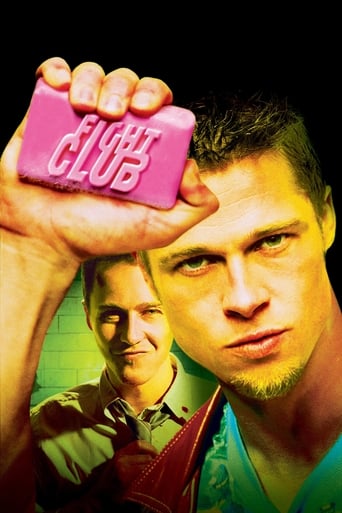
Fight Club
1999 · Film · 139 min
Directed by David Fincher
A ticking-time-bomb insomniac and a slippery soap salesman channel primal male aggression into a shocking new form of therapy. Their concept catches on, with underground "fight clubs" forming in every town, until an eccentric gets in the way and ignites an out-of-control spiral toward oblivion.
69 positive14 negative11 mixed186 neutralfrom 280 commenters
Where to watch
No streaming data for this title.
305 comments on Hacker News
This is not specific to Silicon Valley. It's human nature.
People take the "vibe" from a work and assume the vibe is the meaning. Look at how things like Fight Club, The Punisher, and Wall Street are viewed in the general culture.
The Great Gatsby is a famous cautionary tale of the danger and pointlessness of unchecked pursuit of wealth. It's studied widely in US high schools. When the movie came out, all over the US people held "Gatsby Parties" which were 1920s themed parties focuses on ostentatious displaces of wealth.
No matter how profound and important the message, most people won't look beyond the vibe.
A better way to view this is Robin Williams character is the LLM and Matt Damon’s character is every holier than thou software developer. If writing code defines you to the point that a tool (written by other devs mind you) is causing an existential crisis then a better movie to watch and think about is Fight Club. To quote Q from Star Trek “frankly, you’re just not that important”.
I remember when Fight Club came out and joke was along the lines of ”you mean the gayest movie like, ever?!” Palahniuk, the author of the book (the film changes very little) came out himself only years later. And it is so very very very queer coded, back in the early 00’s even straight people noticed it. And Matrix trilogy is of course made by two transwomen.
I don’t really understood why manosphere thinks these films as some tough guy films or something. Then again, I think I do.
> The movie Fight Club has been correctly compared to Calvin and Hobbes.
Bit of a tangent, but I recently watched Fight Club with my son. He was surprised he liked it because he'd gotten the impression it was a dog whistle for manosphere spazzes. I was like "exactly, Matrix is actually good too...".
> I show two versions of reality, and each makes complete sense to the participant who sees it. I think that’s how life works.
Not to spoil a beautiful joke by explaining it, but all of the strips are based on this. Two characters see things differently. Sometimes it’s because Calvin is in the grip of his (psychosis|childhood) and sometimes it’s a totally ex machina Watterson idea that they’re exploring, but there’s always two worlds colliding hilariously.
I have no idea if a truly competent director could catch lightning in a bottle. The movie Fight Club has been correctly compared to Calvin and Hobbes. There’s no way for stuffed toys to capture this at all. Good for Watterson for allowing his genius not to be trampled.
I have an alternative in this for Alamo Drafthouse. It sends me alerts as soon as new movies are listed, typically before promoted or announced online.
It’s meant I can jump on re-runs etc I really care about (just saw Fight Club last week) - and get the specific seat location I prefer.
(If you want alerts just contact me with your email and location - info in bio)
I generally agree.
But there are movies that can be spoiled because of the big plot twist.
Eg. The Sixth Sense, Fight Club, to name a few (and [anime] Your Name, even the recently released Cosmic Princess Kaguya)
And then there are some movies where the plot is so obvious that you could have a LLM one-shot predict the whole thing.
That said if the movie/game/whatever is released for a couple years, I think the spoiler warnings should be optional regardless.
Kind of bizarre how Fight Club was so influential a couple decades ago, but doesn’t seem to have much cultural impact today. This exact theme is one of the most memorable quotes from the movie.
Too counter-cultural and anti-money for today’s young people, I think. Everyone’s trying to make it, not drop out of society.
The late 90s were full of media that questioned reality and authority - like X-Files, The Matrix, Dark City, all sorts of websites about conspiracy theories and UFOs, etc. The zeitgeist was full of speculation about hidden truths. The cultural mood was defiant and sardonic. There was rap, rap-rock, Beavis and Butthead, Fight Club, Office Space... One of the most popular pro wrestlers in the world played a character who beat up his boss and gave him the middle finger. Then after 9/11 it kinda seemed like suddenly the TV shows were all about cops and soldiers. Admittedly, my memories might be somewhat deceiving me. But I do feel that the mood suddenly shifted, much more than the actual damage done to America by the attack should have justified.
And some extreemist are using fight clubs to gather followers, emulating the movie in the other direction. So-called "active clubs" are springing up using "fitness" to gather young angry males to the cause. Most join without realizing. Even gym owners are surprised to discover thier facilities have become clubhouses.
https://www.jfed.net/antisemitismtoolsandresources/neo-nazi-fight-club-groups-spreading-in-canada-investigation-finds
https://en.wikipedia.org/wiki/Active_Clubs
I knew plenty of people growing up who thought Fight Club was just a fun movie about guys who like to fight and make a club to do so and it gets a little crazy, then cut to credits. They then theorized making their own such club. This to say, yeah, I think sometimes the audience can be overestimated in their ability to understand deeper meaning in art.
Sure, but at the same time a whole lot of the movie is about rejecting the modern treadmill we find ourselves on -- and that appeals to many. If there were just a way to be strong and feel alive, and not worry about anything else.
Then the movie takes a turn and they hatch a scheme to blow stuff up and the viewer didn't realize what they were watching the whole time. In fact, calling it "Fight Club" is wrong if it's about the psychological drama going on in his head. It has nothing to do with the fight club, that's just one possible expression of it.
People latch on to the first 2 acts of discovering oneself when stepping out of the expectations of society. Critics of those people like to point out that there are bad things about the movie also. No shit. They don't seem to get that other people can differentiate between enjoying a fiction and blowing stuff up. Lots of people ran out to try an MMA gym, not very many started blowing up buildings. Most just watched a movie. But hey, it's really easy to feel superior saying those people are toxic idiots for liking it at all.
I feel the same about Fight Club (the movie, not necessarily the book). Many people focused almost entirely on the Tyler Durden character, either celebrating or criticizing the extreme masculinity. But the whole point of the movie was a rejection of that character.
Thanks for sharing this.
It made me wonder where a future goes when it keeps trying to define both barbarism and normalcy.
As a small tribute in return, three films came to mind:
Bicentennial Man,
Gattaca,
Fight Club.
I’ve always preferred Ivan the Fool — choosing to live, rather than living inside a definition.
>There is no employer loyalty, that died in the 90s.
As a millennial kid at the time, I remember the 90's movies and sitcoms (Office Space, Friends, the Matrix, Fight Club, etc) where the biggest problem GenX had at the time was, *checks notes*, the lack of purpose from being bored out of their minds by a safe and mundane 9-5 cubicle job that paid the bills to support a family and indulge in mindless consumerism to fill the void.
Oh boy, if only we knew that was as good as it would ever be from then on.
I remember the mass layoffs Yahoo had at the dot com bubble crash, when they had a 5-15 minute 1:1 with every worker they laid off. Now you just wake up one day to find your account locked and you put it together that you got laid off, then you read in the news about mass layoffs happening while they're now hiring the same positions in India and their stock is going up.
No wonder young people now would rather just see the whole system burn to the ground and roast marshmallows on the resulting bonfire, when you're being stack-ranked, min-maxed and farmed like cattle on the altar of shareholder returns.
"A new car built by my company leaves somewhere traveling at 60 mph. The rear differential locks up. The car crashes and burns with everyone trapped inside. Now, should we initiate a recall? Take the number of vehicles in the field, A, multiply by the probable rate of failure, B, multiply by the average out-of-court settlement, C. A times B times C equals X. If X is less than the cost of a recall, we don't do one."
-Chuck Palahniuk, Fight Club. 1999 for the movie, 1996 for the book.
That a corporation is acting in its own best interests at the cost of human lives neither shocks nor surprises me. NHTSA is investigating the issue, specifically about disengagements, but also the broader issues. They took down Cruise for lying to them Their CEO should have had to face criminal charges. Politics being what it is, it bothers me a great deal how fair any investigations will be, but let's not get distracted by that.
Tesla's far from the first car company to make a profit while human lives in the mix. It won't be the last.
You can totally find histrionic videos of constructed scenarios where the system fails and get all worked up about it. The algorithm thrives on engagement, and getting you all worked up makes them money. It's as if you were a fiddle, that gets content shown to you, and then they make money from it. Do you enjoy that? Mark Rober does have a good one though.
Over the many years of driving I've done, of the accidents I've gotten into, the accidents I've avoided, as a driver, as a passenger; of the accidents my friends and family have gotten into, what it comes down to for me is that human drivers drive when they shouldn't have been driving, every single day. I'm already forced to share the road with those assholes, what's one more?
Human drivers suck. They drive when they're tired, when they're drunk. From glancing at other drivers while I'm driving, texting's gotten quite popular for drivers. One accident I'm aware of, the driver passed out from doing fentanyl while driving. Not sure how that one happens.
Now, I'm sure you're an excellent driver. Better than FSD. But how are you at driving when you're passed out from a stroke or some other freak accident? Freak accidents happen to computers too, but in my mind, they're different. On top of that, a computer's not going to get hopping mad that it struck out at the bar at 1 am and drive home really mad and also drunk so hey let's drive by my ex's house while we're at it. Obviously, I'd rather that driver not do that in the first place, but since we can't prevent that, I'd rather live in a world where a computer drives their car than have them drive it around in that state. I'm a night owl. I frequently end up being outside at those hours. So no matter how good the good drivers are who would never do that are, statistically my chances of encountering bad drivers who do shit like that that are higher than average.
In life you have to contend with unknowns, and we, the general public don't actually know how many Tesla robotaxis are actually driving around right now. If you're in one of the supported locations you can try it out, and watch for yourself whether the human who's got one of the most boringest jobs ever is or is not actually driving the car. If it's so bad, shouldn't we be hearing about them crashing, non-stop? All I've heard of is the three in Austin at launch, but it doesn't seem like there have been any after that. I haven't heard about any crashes in San Francisco, but I also haven't gone looking super deep.
Do I wish both Tesla and Elon Musk behaved better than they do now? Absolutely. Not sure how much that counts or actually affects anything though.
I’ll chime in as a grey beard. Did we think the DVD was the same as being at the theater? It really depends on who your friends were. Some of us kids had techie parents that had things like VGA projectors for presentations. We would take these and play DVD’s off our full-tower Pentium 3’s at movie theater-like experiences. I fondly remember watching the Matrix bonus content with my friends over a giant 100ft wall.
Fight Club as well.
It was no IMAX but at 1024x1024 we didn’t care.
I think what this means is that the movies now care whether the least-common-denominator viewers get their "point."
Because of this, they have to have a single easily articulated point, and they have to beat the audience over the head with it.
Prior to this, I doubt whether directors, writers, or studios much cared if an unsophisticated viewer walked out of a movie with the "wrong" idea of what it "meant." The ability to attach multiple meanings, even multiple conflicting meanings, was seen as an inevitable aspect of art that should be embraced and engaged with. It was accepted that people would see a different movie depending on their background, their personal history, and their awareness of cinematic language. Supporting multiple readings was seen as a sign of depth and complexity, not necessarily a weakness.
Now the movies take a pragmatic, engineered approach to delivering a message. Ambiguity must be squashed. Viewer differences must be made irrelevant. The message takes precedence over art.
I think the interesting question is, why does the message now take precedence over everything else? What has changed? I see two possible answers.
First possibility, the audience demands a message. If the least-common-denominator viewer demands a message, and you are in the business of servicing that demand, you have to make sure you avoid any possible mishaps or misunderstandings in the delivery.
Second possibility, the makers of movies derive some personal satisfaction or social gain from broadcasting a message to the masses. They see the movies as propaganda rather than art. (Or perhaps a less active motivation: the makers of movies are afraid that there might be blowback from viewers attaching an unsavory meaning to a movie. They want to make sure that their movie doesn't become like Fight Club, a proudly embraced symbol of what it was meant to critique.)
Either of these would explain why movies are now engineered to deliver a single, unmistakable message at the expense of art and enjoyability. Or maybe there's another explanation. I'm just spitballing. I'd love to read more by somebody close enough to actually know what they're talking about.
Ya I'm shocked by it too, said as a Gen Xer born in the late 1970s, occasionally a Xennial.
I partied for 4 years of college which is something like 30 years in sober adult terms. Our ragers were reminiscent of Animal House and Revenge of the Nerds, all of those old party movies that didn't age well. Scenes from Hackers, Fight Club, The Matrix, Trainspotting, Go, Swingers, Made, 200 Cigarettes, SLC Punk, Dazed and Confused, PCU, even Undergrads (a cartoon) were so spot-on for campus life, living for the weekend. Can't Hardly Wait, American Pie, Varsity Blues, Waiting, Superbad, etc came later, and I almost consider those watered down versions of the feral partying that happened earlier just as the internet went mainstream, but still canon.
A Friday night at my city's bar scene today looks like what our Sunday or Monday was. People half tipsy on 2 drinks, even though they're Ubering home later. The faint scent of ganja now instead of basements filled with smoke and first timers trying laughing gas. Nobody puking or disappearing around a corner to relieve themselves. No sound of bottles shattering. I feel like a curator of a museum now, a derelict from a forgotten time.
In fairness, I went to college in the midwest, where there was nothing else to do. Now the West Coast has effectively legalized drugs, awakening much of the country to the full human experience, and people have done the trips and plant medicine and maybe realize at a young age that alcohol and tobacco are rough drugs that tear you up. Which is admirable, but they also prepare you for getting torn up as an adult. To miss out on learning how to make your way home on drunk logic before you black out seems like a crucial rite of passage has been lost.
And it shows. In our country's embrace of puritanical politics like we saw in the jingoist 2000s, regentrified for the antivax era. In the worship of unspoiled beauty, idolizing of influencers, pursuit of financial security over visceral experience. In the fanboyism, bootlicking and drinking the kool-aid for every new evolutionary tech that cements the status quo instead of freeing the human spirit in a revolutionary manner. I gotta be honest, most of what's happening today is laughable to my generation. Blah I sound like a Boomer. Ok cryable then. We're in mourning. We worry about the kids today. All work and no play and all that. It's killing our souls, and theirs.
I guess my final thought after writing this is that partying is one of the most powerful reality-shifting tools in our arsenal. All of this can't be it. This can't be how America ends. You know what to do.
Where did I refuse to watch anything? No amount of this attitude is going to make Casablanca or The Godfather or Pulp Fiction or Infinity War or Star Wars or Fight Club or 2001 or Top Gun be in any framerate other than 24fps.
If they start making films in higher frame rates today, that won’t change that fact. Do you think people are going to stop watching films from the 50s, 60s, 70s, 80s, 90s, and 2000s?
It would take a concerted effort, beginning now, at least an entire generation (30-50 years) to remove or reduce the cultural impact of the 24 frames per second widescreen tradition. No such effort is presently underway, because higher framerates don’t help movies’ visual storytelling, and they may hurt it.
The Hobbit was Peter Jackson’s attempt. It went nowhere.
https://gizmodo.com/the-hobbit-an-unexpected-masterclass-in-why-48-fps-fai-5969817
No condescension intended. I think I understand the appeal, in the same way I understand Jack London stories, Joseph Conrad novels, Survivor, Fight Club, and that bear movie guy. We’re too civilized, we’re hothouse flowers, and a little danger makes you feel alive. Especially if you are raised with traditional masculine values.
If you could have the same solitude, sweeping views, natural beauty, cameraderie, etc., but without real danger, would it have the same appeal?
Not necessarily. I think the interesting idea the article dances around is changing attitudes and sensibilities. In many ways, I think media of the 90s and even 2000s had a different balance of optimism and cynicism. Critical commentary was an edgy (or in this case humorous) counterpoint. 1999 saw dark edgy and dystopian films like the matrix, fight club that felt like a warning, criticism of a future to be avoided.
Similar subjects today are noticably darker without the buttress of social optimism. Films like The Joker seem less like a cautionary tale and more like a documentary. Is the joker now the protagonist?
Statistics gave him the superpower of predicting the future:
https://knowyourmeme.com/memes/fight-club-57-movie
I think mouth of madness maybe makes it. It's isn't always about reality being 'bent' in the fiction of the movie. It's also how the mood of the film contributes. For instance I would not put fight club on this list. I might consider seven. Zodiac has the mood but is missing something... I'm not sure I would put much fincher on the list personally, though I like many of his films.
Not Fincher, but a late edition. I would put PTAs 'Inherent Vice' on the list if I could edit it.
For comedy one needs to subvert expectations, and this is why making light of grave events (Black Comedy) is a big phenomenon.
There are many examples from WW2 comedy to 9/11 memes. Sometimes the examples are more indirect, like in film: American Psycho, American Beauty, Wolf of Wall Street, The Big Short, Fargo, Don't Look Up, Fight Club, Quentin Tarantino's stuff, etc. All of them deal with dark themes in a light way.
Given the prevalence of this in our culture, the author seems a bit surprised. Maybe they didn't connect it to dark comedy.
It reminds me of this quote.
“We've all been raised on television to believe that one day we'd all be millionaires, and movie gods, and rock stars. But we won't. And we're slowly learning that fact. And we're very, very pissed off.” ― Chuck Palahniuk, Fight Club
Some movies in various genres that I like:
* Everything Everywhere All At Once
* The Matrix
* Fight Club
* Weird: The Al Yankovic Story
* Pulp Fiction
* Shutter Island
* Inception
It's hard to pick one "best" movie.
I can't believe I'm not seeing any Guy Ritchie anywhere. Particularly Snatch, but Lock, Stock, and Two Smoking Barrels too.
And almost anything with Brad Pitt. Lots of votes for Fight Club, but what about Legends of the Fall, A River Runs Through It, 12 Monkeys, or Cool World?
And now that I'm thinking about it, Dances With Wolves. Lonesome Dove TV miniseries. Braveheart. The Departed. Lots more, I'm sure.
For convenience, I asked ChatGPT to create this table, which summarizes how many times each movie has been mentioned in this conversation so far. It got a few counts wrong (as usual), but it still gives a good sense of the frequency. I hope it can be useful to someone:
| Movie | Number of Mentions | |-------------------------------------------|---------------------| | The Matrix | 9 | | Lord of the Rings Trilogy | 8 | | Pulp Fiction | 8 | | Alien | 7 | | Fight Club | 7 | | Ghostbusters | 6 | | Die Hard | 5 | | Back to the Future | 5 | | Inception | 5 | | Star Wars Trilogy (original) | 5 | | Groundhog Day | 5 | | Terminator 1 & 2 | 5 | | Jurassic Park | 4 | | The Thing | 4 | | The Fifth Element | 4 | | Monty Python and the Holy Grail | 4 | | Ghost in the Shell | 4 | | Interstellar | 4 | | Casablanca | 3 | | Office Space | 3 | | Shawshank Redemption | 3 | | The Godfather Trilogy | 3 | | The Blues Brothers | 3 | | Blade Runner | 3 | | Mad Max: Fury Road | 3 | | Unforgiven | 3 | | Total Recall (1990) | 3 | | The Crow | 3 | | The Princess Bride | 3 | | Akira | 3 | | The Big Lebowski | 3 | | Guardians of the Galaxy | 3 | | American Psycho | 3 | | Indiana Jones Trilogy | 3 | | Kiki’s Delivery Service | 2 | | Ratatouille | 2 | | A Clockwork Orange | 2 | | Mission Impossible (various) | 2 | | Casino Royale | 2 | | Skyfall | 2 | | Ferris Bueller's Day Off | 2 | | Star Trek: The Wrath of Khan | 2 | | Apocalypse Now | 2 | | The Shining | 2 | | Groundhog Day | 2 | | Donnie Darko | 2 | | Dune (2021) | 2 | | Gladiator | 2 | | Predator | 2 | | Seven/Se7en | 2 | | The Dark Knight | 2 | | Snatch | 2 | | Prometheus | 2 | | Schindler’s List | 2 | | The Wolf of Wall Street | 2 | | Dr. Strangelove | 2 | | Silence of the Lambs | 2 | | Kill Bill | 2 | | Real Genius | 2 | | Top Secret! | 2 | | Tenet | 2 | | Tinker Tailor Soldier Spy | 2 | | The Adjustment Bureau | 2 | | The Expanse | 2 | | Pulp Fiction | 2 |
The Crow
The Machine (if you like Ex Machina, try it)
Alien
Prometheus
Fight Club
Secretary
Casablanca
Kill Bill
The Emperor's New Groove
Star Wars Episode IV - The original goodness, not the CGI horror-show.
Star Wars: Rogue One
American Beauty
Dredd.
Hellboy (directors).
Blade Runner (theatrical).
Chocolat.
Noise (Australian film, 2007. Love that one).
I try not to watch films too many times in quick succession. The repetition dulls the experience for me.
"Groundhog day" of course
most of Schwarzenegger movies because he is cool
Back to the future trilogy
Fight club
Some of the best soviet ones (Kin-dza-dza, Garage, Mimino, Irony of fate etc.)
Rocky
Forrest gump
Fight Club.
It came out at a time in my life when I was struggling to avoid the pull of consumerism and had a strong sense of isolation in the modern world. I used to watch this quite often.
When it came out I was also at a point in my life when I was interested in screenwriting and was watching sometimes as many as eight movies a week, in part to study screenplays and stories. I would sometimes watch this a couple times a month during that time.
Office Space, Demolition Man, Fight Club, City of Ghosts (2004), The Big Short, Ghost Dog, Slacker, most Tarantinos, various 60s italo-westerns, BTTF 1 & 2.
But there's a lot more movies coming to mind that deserve a 2nd watching imo, just haven't done so yet. Eg. most Coen Bros ones come to mind.
More accurately, this is a quote from the Fight Club movie
Office Space, The Matrix, Fight Club
Arguably all the same movie
https://www.quora.com/What-does-Im-Jacks-complete-lack-of-surprise-mean-in-the-movie-Fight-Club
I know two movies where the book is way better, Jurassic Park and Fight Club. I thought about putting spoilers in a comment to this one but i won't.
>> the risk of violence
See, you're doing it again. The "risk of violence"? "why would you even bother doing anything"?
Fight Club covers all this in detail. It really is one of the most inspirational movies ever (and book too I guess).
Violence is OK. It can kill you but so can bacon.
These are just my favorites, and in the order of which the popped into my mind.
- Office Space, 1999 (especially for people who work at offices) - The Matrix, 1999 - Fight Club, 1999 :)
Umm, what else? - Spirited Away, 2001 (and many others from Miyazaki) - Requiem for a Dream, 2000 (Very Heavy addiction-related film! I actually got watery eyes just by typing this, I've seen it too many times.) - Joker, 2019 - Full Metal Jacket, 1987 (and many others from Kubrick, such as Dr. Strangelove and The Shining) - Django Unchained, 2012 (and many others from Tarantino, at least Pulp Fiction) - Alien, 1979 - The Silence of the Lambs, 1991 - Saw, 2004
I made a bit longer list, so that I can share the link to my friends.
Actually there are many quirky ones which came to my mind, such as Borat, the South Park movie, Team America, Airplane! (alternatively titled Flying High!), Idiocracy and Hangover, but I wouldn't say these are in the must-see category. Actually I wouldn't even recommend these to most people, if I didn't know what kind of humor they like.
American History X was pretty jarring for me. Fight Club too. More subtly: Primer, Upstream Color, White Oleander, The Virgin Suicides - those 4 films gave me a lot to think about as a young man.
Fight Club qnd The Matrix have already been mentioned, and they continue to sink in.
Dakota 38 (documentary about a 330-mile memorial run/ride for the Lincoln-ordered execution of 38 (and later two more) Dakota people on December 26, 1862. The full movie is on YT, and here's an MPR article about it: https://www.mprnews.org/story/2022/12/23/descendants-of-executed-dakota-382-ride-to-mankato-to-honor-ancestors This impacted me because I grew up in MN, didn't learn this in school, and it reminded me that indigenous Americans are still around despite efforts by dominant American culture to squash them.
Good reminder. Fight Club had the same effect on me but it went through phases as I first watched it in my teens and appreciated it for certain reasons, especially the more anarchist future “back to nature” aspects.
But then as I grew older and read the book and gained more life experience in general, I appreciated it differently, the deeper meaning, anti-satire, realness and broader narrative as I then started to understand it, seeing things about society through the lens of the characters and with an understanding of why we have order and laws and a system. I thought I was maturing or being some higher intellectual.
But then as I got even older and gained even more wisdom and experience, I realized the teenager appreciated aspects were really the true and tangible message, and it was because of the truth that was revealed. I came full circle and realized the returning to nature was the real answer all along, and appreciated the anarchy again and even more fully but now for an entirely different reason.
Oh and READ THE BOOK! It is the only time in my life where I was not disappointed after reading the book that I had watched a movie before reading the book actually, just try hard not to catch any spoilers on differences between the book and the movie!
Recently, Midsommer. I think if you go into it with an open mind (and not get too weirded out by the gore) it asks some really fascinating anthropological and social questions.
By the end of the movie, I was almost entirely on the side of the culture and their behavior made complete sense to me. During the course of the movie I experienced a shift of position and perspective and continues to affect me 4 years later.
All the token others… Pi, Memento, Waking Life, Fight Club, Requiem for a Dream, etc. etc.
I felt like Midsommer was the best interesting film in decades.
My limited understanding is that Palahniuk's book was a kind of fuck you to the publishing establishment (and in that vein, I highly recommend American Fiction).
Fight Club is one of my favorite movies of all time (although I could do with less onscreen fighting). It was (to me) part of a cosmic trilogy of movies ending the millennium:
* Fight Club * American Beauty * The Matrix All three dealt with the concept of sleepwalking through life and the shock of waking up from it.
In general you're better off reading the book when the film is just an adaptation, as the book can give more context, inner dialogue etc than a film can, simply due to the medium.
There are of course exceptions. Famously, Palahniuk has said the Fight Club film captured his intent better than his novel did. I also think film of The English Patient, which covers only a tiny section of what I consider a forgettable novel, is quite good, but even if you disagree I think almost anyone would say the film is better. And of course plenty of films aren't novel adaptations.
Regardless, if you're looking for a "story that could change my life" you're likely to get much more from the text than the adaptation. The strengths and weaknesses of the two media are just too different.
So Fight Club was not a documentary?
No, this is not simply "long-form", this is "in medias res" where the story starts at a heightened moment of tension, then abruptly stops and rewinds to go back to fill in details of how they got to this exciting moment.
https://en.wikipedia.org/wiki/In_medias_res
Sometimes it's done to great effect, like in Fight Club (film starts with him at the climax with a gun in his mouth, then rewinds and tells the story).
However, it is often used as a clumsy device by novice writers. They use it to get the audience to stick around for their mostly boring story.
I see this a lot on Youtube. The Youtuber will start with a compelling question and story, like "There he was... tied to the wall as he watched the firing squad load their weapons with gun powder.... But before we continue our story, what is gun powder? Well, it's composed of potassium nitrate, blah, blah, blah...."
You can tell if "in medias res" is done well or poorly by how you react to it. If you are excited for the detour, then it's done well. If instead it feels like a long annoying interruption you want to skip, then it's done poorly.
For me, it's done poorly in this article. I read the first compelling section, then the writer slows everything down to a snail's pace to go into some very dry history of NASA without ever really giving a good payoff to the story he opened with.
> I'm an American in my 40s. I've never seen "glorification of scams" in any mainstream culture
Some very popular movies that come to mind (Some of these may not be intended to be glorifying scams, but to many unsophisticated viewers, they absolutely are):
- The Social Network
- The Wolf of Wall Street
- Uncut Gems
- The Godfather
- Scarface
- Ocean's Eleven (and Twelve and Thirteen)
- Emily the Criminal
- I Care a Lot
- Nine Queens
- Punch-Drunk Love
> I've also never seen any sort of "hyper-masculization" shown in a positive light in mainstream culture
More movies!
- The Godfather (again)
- Pulp Fiction
- Fight Club
- American History X
- Gangster Squad
- Django Unchained
- Expendables
- Every Fast and Furious movie
- (Nearly?) Every Arnold Schwarzenegger movie
> it's common to see masculinity referred to as as "toxic" and equated with negative traits or externalities
I think this is (usually?) a misunderstanding. People refer to toxic masculinity, a set of problematic behaviors some men exhibit as part of attempting to appear "manly" that includes traits such as: homophobia, glorifying unhealthy habits (e.g., drinking like a man, don't cry like a woman, mental health issues depicted as "weakness", etc.) They're not referring to masculinity, itself, as being toxic.
The Toyota EV also had tires falling off and recent Hyundai/Kia cars were catching on fire because the engine was overheating from the automatic stop/start when you stop. Jeep has transmission issues where theirs cars would go to neutral on their own, which ended up with Anton Yelchin dying at 27 years old crushed against a fence by his own car. I believe Honda has problems with manual transmissions going out of gear while you were driving and just refused to address the problem for a long ass time.
They're all bad. There's a whole scene in the Fight Club movie where they explain every car company will refuse to fix a deadly problem unless they calculate the lawsuits will cost them more than the fix, and I believe it.
That's now how human nature works. Airbrushing models in magazines has been at epidemic levels for decades. Has that stopped people aspiring to look like models?
The starkest example of this is in the '99 film Fight Club,in a scene where the characters mock a Calvin Klein bus ad featuring an impossibly chiseled model. The man doing the mocking is none other than Brad Pitt whose abs are even better than the model's. Something tells me the characters envisioned by the author didn't look anything like him.
Why does it seem that way to you? I have not quite noticed that.
I think when you are younger, there are movies that profoundly affect you. When you get older, and you have seen a lot of movies, its rarer to get the same kind of feelings. But that's just a part of growing up, it isn't a problem of censorship. I wonder even if, upon re-watching now, you'd think Fight Club is really the pinnacle of edginess and a profound art you attribute to it now, or if maybe you were just young when you watched it. And I also wonder if there are some great, profound works being made now that, for whatever reason, you have simply missed or felt the need not to see. Is "American History X" really leagues above "How To Blow up a Pipeline" in terms of "uncomfortable and ugly topics"? What about "Beau is Afraid"? Is that one censored by the modern zeitgeist? What about the films of Yorgos Lanthimos, Ruben Östlund, Harmony Korine, or Nicolas Winding Refn? Trying honestly, its hard for me to pinpoint what in particular you might think is censored these days. People are definitely still making good, uncomfortable movies.
Maybe I'm getting old, but what I would really prefer is that we could get some good movies, even if they touch on uncomfortable or ugly topics.
Movies like American History X, Fight Club, or What's Eating Gilbert Grape.
It seems these movies would no longer be "allowed" to be made, or perhaps the modern zeitgeist censors them away.
I just want to celebrate and encourage bona fide art and see more of it in the world.
And I would gladly pay for my family to access this higher quality art.
I thought so too coming from the same generation. But there was a moment, few years back, where I stopped worrying about it.
My kids made me watch Sex Education on Netflix. My initial reaction was just irritation. There is so much content that uses sex, shock and awe to capture attention. And once achieved, there is no further message delivered. My initial reaction was here we go again with this crap. It also took me straight back to my days as a kid, waiting eagerly with the neighborhood gang for episodes of the Wonder Years. It was innocent. It was beautiful. It was dealing with day to day stuff kids dealt with. At least that's what I thought kids needed to see. And was I annoyed at what they were getting instead.
But as Sex Education progressed, and it pulled me in quick, I was just blown away, by how the writers were handling so many complicated subjects. Not with the usual cynicism (think fight club or the wire) but with humor, imagination and loads of innocence and beauty. It was just so heartwarming. I was looking forward to the new seasons as much as my kids were :) And I cant imagine it being produced in the 90s.
And it showed me, as complicated as the world is getting, there is so much more possible today. And beauty isn't dead. It just looks different.
> This kind of stuff is the future of film making.
> Imagine adding "yourself" into a scene like this, moving around as you > were/are from a video you just created of yourself. As in: film yourself > walking around your bedroom with your phone. Then use an app like this to > add you and your movement (cropped from the video) to a different > background scene.
> Goodbye, Hollywood elites!
As someone working in this arena, statements like this make me chuckle.
Don't get me wrong-- I think this is really cool. I get that people are excited about new tech, and technical people always overestimate the value of technical advancements in creative workflows, but no: people being able to place a perfect hyper-realistic replica of themselves in a film wouldn't kill the film industry any more than RPG Maker + generative AI would kill the games industry. I'd wager it probably would not even leave a dent.
Firstly, there would need to be a film to begin with, and that requires a lot. A whole hell of a lot.
Secondly, characters matter. A lot. Especially main characters. Do you replace the name of the main character with your name in stories you tell? How about doing a global search-and-replace in the ebooks you read? It's not like we don't have the technical capability. I could see this being a novelty feature in some action movies, especially superhero movies, and more likely in games and porn, but one of the biggest draws a movie has is who stars in it-- and if you look at the rest of the human population, you'll notice that we're not choosing representative samples. The fact that it's someone else with a personality and back story and motives and strengths and flaws-- a character-- is a pretty important part of stories. Their appearance matters, too. Most people don't even like staring at themselves for a few minutes, let alone for an entire feature length film. In most situations, I think it would be distracting as hell. Sure, people might find it amusing to see themselves in Top Gun Maverick, but would they want to see themselves getting bullied by an IRS agent in Everything Everywhere All at Once? Getting a box cutter held to their throat in Emily the Criminal? Would replacing Jon Hamm's appearance with their own really make watching Madmen better? Do most people want to see themselves beat to a pulp in Fight Club? I'd wager that few would.
Thirdly, most people aren't particularly interested in putting in the thought and effort to customize their phones: I'm pretty sure they're less interested in putting thought and effort into customizing their passive entertainment. They just want to hit play and have a nice little escape.
So, no. As long as people will continue to seek entertainment for the reasons they've always sought it, this is not going to fundamentally change the art of storytelling anytime soon.
It's actually hard to find people who will reliably break unions, and generally do whatever it takes to de-prioritize line workers and eliminate "cost centers" - while also showing pure allegiance to the board without defecting.
That's the entire process of creating the professional corporate managerial class - you have reliably shown that you care more about the financial success of the company, and yourself, than you care for your employees and coworkers.
I mean how many movies and characters have we made that are precisely calling out this exact behavior:
Gordon Gekko
Bill Lumburgh
Mr "Coffee is for closers" Blake
Richard Chesler (Fight Club boss)
etc...
Like...we've been roasting this precise kind of corporate myopic psychopathic forever as what precisely not to be yet it's like an entire generation used them as pathfinders
I don't necessarily disagree with this as a rule of thumb, but I thought it would be fun to come up with a few counter-examples. Most of these I would consider "artsy-fartsy" or "artsy-fartsy lite" movies that are popular with audiences but less so with critics.
Lost Highway (1997) - 68% Tomatometer - 87% Audience Score
Fight Club (1999) - 79% Tomatometer - 96% Audience Score
American Psycho (2000) - 68% Tomatometer - 85% Audience Score
Requiem for a Dream (2000) - 78% Tomatometer - 93% Audience Score
Dancer in the Dark (2000) - 69% Tomatometer - 91% Audience Score
Oldboy (2003) - 82% Tomatometer - 94% Audience Score
The Prestige (2006) - 77% Tomatometer - 92% Audience Score
Joker (2019) - 69% Tomatometer - 88% Audience Score
People really didn't understand the message and themes of Fight Club, did they? The irony that a movie about the failures of modernity and toxic masculinity has become a beacon for people who missed that fact... it's such a strange and twisted world.
But also, interestingly:
> The Narrator finds redemption at the end of the film by rejecting Tyler Durden's dialectic, a path that diverged from the novel's ending in which the Narrator is placed in a mental institution.
> An online release in China from Tencent censored the bomb blasts at the end and replaced the ending with a message that Project Mayhem was thwarted, with Tyler Durden being arrested by law enforcement and placed in an insane asylum until 2012, adapting the ending of the original Fight Club novel. [...] The novel's author Chuck Palahniuk believed the censored version partially restored the books ending.
https://en.wikipedia.org/wiki/Fight_Club
> Are China really going to ban the Chinese version just because the other one exists?
They sometimes edit themselves: https://en.wikipedia.org/wiki/Film_censorship_in_China#List_of_edited_films
My favorite are the ones where they make sure there's a "happy ending" where the authorities win, often with a title card like the Simpsons's "Note: Poochie died on the way back to his home planet" joke.
> In 2022, Fight Club was released in China with an altered ending: a text screen explaining that the authorities triumphed after figuring out Project Mayhem's plan, and that Tyler Durden was committed to a psychiactric institution. This prompted backlash and the film's original ending was subsequently restored.
> The Chinese release of Lord of War cuts the final 30 minutes from the film and replaces it with a text screen summary stating that Yuri Orlov confessed to all crimes and was sentenced to life in prison.
Why permit two versions when you can flex your muscles and force everyone to see the version you want, though?
Often there is a choice between not showing a thing happen on screen because it wouldn't be practical/economical, or using VFX. Now suppose for instance you're making a disaster movie about a tsunami hitting NYC; your options are doing it with scale models (which will look fake or limit you to very quick shots of the disaster), doing it with computers, or not making the movie at all. That sort of effect for that sort of movie isn't really negotiable.
But when the effect isn't critical to the movie and not having the effect was a perfectly valid choice? Like for instance, a character throws a cigar and the director thinks it would be cool to have the camera follow and spin around the cigar as it's flying through the air. Maybe you could do that for real with a sophisticated robot arm holding the camera, but that's expensive. In a previous era, the director would forget about that idea, it wouldn't get into the movie and nobody would care that it wasn't in the movie. But now that computer imagery is cheap and abundant, a director can have that gratuitous effect. And if it doesn't look like crap when the movie is released, it will almost certainly look like crap a few years later. The movie would have been better off without the effect in the first place. But because VFX is so cheap, it is now used for nonsense like this all the time and it makes movies worse on the whole.
One of the first movies I noticed this in was Fight Club. At the start of the movie when the MC is in the office, there's a long scene of the camera flying in between garbage in a garbage can. It's all CGI; there would have been no way to get a real camera flying around in between empty cans and donuts wrappers. It's an impossible shot to do for real, but they could do it with CGI. It also looks like crap, completely fake. I saw this movie in theaters and it looked fake then, and even worse now. In an era before CGI, the director could have settled on having a macro camera pan across a pile of trash without flying and twisting around inside of the trash. A real camera filming real trash. It would not have been as dynamic, but it would look real and continue to look real forever.
Basically, the cheapness of VFX seems to blind many directors to cases in which less-is-more. Now we have more-is-more movies packed to the brim with every gratuitous effect anybody can think of and it all ages like milk.
The movie fight club is a direct editorialized adaption of the Manifesto
Endorsement always happens at the aesthetic level, there's never anything explicitly political about genuinely fascist work.
Take Fight Club which you're 'supposed to' take as criticism of explosive violence but it still basks in it. Or superficially anti-war movies like Black Hawk Down which are basically war porn aesthetically. The Young Pope is another good recent example. Superficially it's satire but on every other level obviously sympathetic to what it portrays.
"Fight Club" is a grand example of pirating. The author got the book printed and movie made only because early version was so popular in Usenet.
-- Wikipedia does not tell the truth, but it never does.
> Cigarette advertising has been banned on American television since at least the 1980's, and it's generally been taboo to depict unnecessary cigarette usage in TV shows and movies for at least as long
Fight Club was recorded in 1999, and it explicitly shows a scene of Tyler Durden smoking a cigarette, so I doubt your claim has any substance to it.
> But if you want to see some actual __intolerance__, you might look at what's happening in Florida.
If you want to actually enlighten anyone, you might want to provide more information than "what's happening in Florida". There's a lot of things happening in Florida in any given moment, so I have no way of knowing what you're referring to.
> I actually think Tyler's being a bit appealing, at first, is an important part of the movie.
Absolutely agreed. On a surface level, especially in the beginning, Tyler is this good looking guy who does what he wants in the face of the world, and is pretty appealing and charismatic. To make people understand the point, you need to make them relate to the situation in a good way. Having a cool and a charismatic guy who is pissed at the world in similar ways to you is a really great hook.
The concerns of people who fell for project mayhem were indeed valid in the real world at the time (and imo still are), such as heavily increasing consumerism, apathy due to a lack of direction, etc., which made it very relatable. I don't know how common it is among people empirically, but I definitely had a brief moment in life when I felt the whole "everything is a copy of a copy of a copy". And I would not be surprised to find out that this is actually very common.
Those things are something that resonates with a ton of people in real life, but majority of people have much healthier ways of acting on those feelings, compared to how people in the fight club acted on them. However, many definitely fantasized about acting out in "edgy" ways in response, and the movie just used those fantasies to illustrate where the satirized logical conclusion leads.
You appear to have understood the movie.
> One of the easiest ways to tell if I'm not going to get along with someone is if they unironically quote Fight Club.
Yep, lots of people... don't understand the movie.
You'd think when it came to creating a strict cult and cutting people's balls off and shit, people'd start to go "wait a minute... wasn't this about escaping the media- and corporation-driven rat-race for freedom, and, uh, masculinity or something? WTF?" and start to get a clue that they maybe shouldn't trust everything this Tyler guy says because a lot of it might just be nice-sounding bullshit, let alone where it goes from there—but, shockingly, no.
On the one hand, if so many people get it wrong, maybe that's the movie's fault; but on the other, it's not like the movie's subtle.
The entire movie is a teenaged cringeworthy fever dream.
Either immediately before or after that scene he goes on to tell his neighbor that the only reason oxygen masks are on airplanes is to keep people calm when they are about to die.
>-Tyler Durden: Oxygen gets you high. In a catastrophic emergency, you're taking giant panicked breaths. Suddenly you become euphoric, docile. You accept your fate. It's all right here. Emergency water landing, 600 miles an hour. Blank faces, calm as Hindu cows.”
Airline companies don't care if people are "calm" if they are going to die. They are not worried about the upset ghosts of dead passengers coming to haunt them. And oxygen doesn't turn you into a docile cow. I'm a volunteer EMT and if oxygen turned people docile that would make my job a hell of a lot easier.
The oxygen is there to keep you alive at altitude if there is a decompression event. At sea level it does nothing. edit: the partial pressure of oxygen at sea level is ~160mmHg and airplane passenger masks supply ~122mmHg-- they only exist to keep you alive until the pilot can descend.
One of the easiest ways to tell if I'm not going to get along with someone is if they unironically quote Fight Club.
I kept thinking of this scene from the movie Fight Club:
Narrator: A new car built by my company leaves somewhere traveling at 60 mph. The rear differential locks up. The car crashes and burns with everyone trapped inside. Now, should we initiate a recall? Take the number of vehicles in the field, A, multiply by the probable rate of failure, B, multiply by the average out-of-court settlement, C. A times B times C equals X. If X is less than the cost of a recall, we don't do one.
Business woman on plane: Are there a lot of these kinds of accidents?
Narrator: You wouldn't believe.
Business woman on plane: Which car company do you work for?
Narrator: A major one.
I have kids and have experienced the exact same thing. Root cause for me I think is I don't like working in tech but make to much money to leave. I'm trading brain cycles and life hours for money doing something I really don't enjoy. Anything I build is meaningless.
I'm taken to a line from fight club: "We’re the middle children of history, man. No purpose or place. We have no Great War. No Great Depression. Our Great War’s a spiritual war… our Great Depression is our lives. We’ve all been raised on television to believe that one day we’d all be millionaires, and movie gods, and rock stars. But we won’t. And we’re slowly learning that fact. And we’re very, very pissed off"
A certain subset of viewers envy Leonardo's character -- hot wife, sycophant employees, yacht, Lambo, etc -- but the film never presents him as admirable or even talented (except at ripping people off). Similar to the book Liar's Poker back in the 80s -- Michael Lewis (sort of) intended it as an expose of the toxicity, absurdity, and excess of Wall Street. But the book was so entertaining, it actually made it sound like the greatest place anyone would ever want to work. Having enough money to bet $10 million on one hand, talking shit about Equities in Dallas, and of course, becoming known as a Big Swinging Dick.
Fight Club is a bit more subtle, it doesn't really renounce (or endorse) anything, but its main character is (spoiler) obviously seriously mentally ill with two entirely distinct personas.
Yeah, people tend to misunderstand the points of those movies, even if the message is painted so thick, it feels impossible to miss, like in Fight Club.
The movie satirizes the entire premise, the narrator, Tyler, and their club at every possible step. The whole thing about how they are all "unique and different from the sheep", all while they end up shaving their heads, wearing the exact same clothing, and getting rid of their names to just serve Tyler as faceless "soldiers" felt like such a blatant mockery.
And yet, despite that, it fell on deaf years for many people.
The milestones (from the source code):
//<10 seconds 'A single frame of a film': 100ms, 'It would take light to go around the Earth': 133ms, 'A blink of an eye': 400ms, 'The time it takes light to reach Earth from the moon': 1255ms, 'The fastest Formula 1 pit stop': 1820ms, 'The fastest 1/4 mile drag race time': 3580ms, 'The fastest Rubik\'s cube solve': 4221ms, 'The fastest 40-yard time at the NFL Combine': 4240ms, 'The fastest 1 liter beer chug': 4370ms, 'A skippable Youtube ad': 5000ms, 'A full bull ride': 8000ms, 'The fastest 100m sprint': 9580ms, //10 Seconds 'The Wright Brothers first flight': 12000ms, 'The fastest 200m sprint': 19190ms, 'The fastest 50m freestyle swim lap': 21300ms, 'The Westminster Kennel Club dog agility record': 28440ms, 'A typical television ad': 30000ms, 'The fastest NASCAR lap at Daytona': 40364ms, 'The fastest 400m sprint': 43030ms, 'The fastest NASCAR lap at Talladega': 44270ms, 'The fastest 100m freestyle swim lap': 47050ms, //1 Minute '"Just a minute"': 60000ms, 'The fastest Formula 1 lap at Monaco': 74260ms, 'The fastest Formula 1 lap at Monza': 81046ms, 'The fastest 800m sprint': 100910ms, 'The fastest 200m freestyle swim lap': 102960ms, 'The fastest Kentucky Derby time': 119400ms, 'An NHL penalty box time for slashing, tripping, or holding': 120000ms, 'How long it takes to drive across the Golden Gate Bridge (without traffic)': 135000ms, 'The duration of the "Millenium Force" roller coaster': 140000ms, 'The longest Super Bowl national anthem': 156000ms, 'One round of a boxing match': 180000ms, 'The average song length on Spotify': 183000ms, 'The fastest 1,500m run': 206000ms, 'The song "Never Gonna Give You Up" by Rick Astley': 215000ms, 'The fastest 400m freestyle swim lap': 220140ms, 'The fastest 1 mile run': 223130ms, 'The duration of the "Steel Dragon" roller coaster': 240000ms, 'The duration of "The Beast" roller coaster': 250000ms, 'The song "4:33" by John Cage': 273000ms, 'The longest sky diving freefall': 276000ms, 'The Any% speedrun of Super Mario Bros for NES': 294948ms, //5 Minutes 'An NHL penalty box time for fighting': 300000ms, 'The average duration of a typical sky dive': 330000ms, 'The average time for a drive-thru order': 356800ms, 'The time it takes Jeff Bezos to make $1 million': 402000ms, 'The fastest race car lap around the Nurburgring': 403300ms, 'The time it takes light to reach Earth from the sun': 500000ms, 'The time it takes a rocket ship to reach outer space': 510000ms, 'A typical marching band show': 515000ms, //10 Minutes 'The length of the first space walk': 600000ms, 'The longest a human has held their breath (non-oxygen assisted)': 695000ms, 'The average duration of popular Youtube videos': 702000ms, 'The time it takes an average human to walk 1km': 710000ms, 'The fastest 5K run': 757350ms, 'The average time to bake a pizza': 810000ms, '1% of the entire day': 864000ms, //15 Minutes 'A typical commute in the United States': 960000ms, 'The fastest superbike lap of the Isle of Man TT': 1002778ms, "MLK's \"I Have A Dream\" Speech": 1020000ms, 'An average baseball inning': 1200000ms, 'The song "2112" by Rush': 1233000ms, 'The first angels to appear in the movie "Angels in the Outfield" (1994)': 1275000ms, 'An episode of The Office, Seinfeld, or Rick & Morty': 1320000ms, 'The time it takes to drive the entire Chesapeake Bay Bridge Tunnel': 1380000ms, 'The song "Octavarium" by Dream Theater': 1440000ms, 'A typical Super Bowl halftime show': 1500000ms, 'The fastest 10K run': 1584000ms, 'It takes for Bobby Boucher to get his first game snap in the movie "The Waterboy" (1998)': 1719000ms, //30 Minutes 'The average time to bake a cake': 1950000ms, 'The time it takes until the launch in the movie Apollo 13 (1995)': 2081000ms, 'It takes WALL-E to arrive at the Axiom in the movie "WALL-E" (2008)': 2164000ms, 'The shortest war in history (Anglo-Zanzibar War)': 2280000ms, 'It takes Harry Potter to arrive at Hogwarts in "Harry Potter and the Sorcerer\'s Stone" (2001)': 2381000ms, 'The album "Thriller" by Michael Jackson': 2539000ms, 'The album "Dark Side of the Moon" by Pink Floyd': 2589000ms, 'An episode of Breaking Bad, House, or Firefly': 2640000ms, 'The boot camp sequence in the movie "Full Metal Jacket" (1987)': 2730000ms, 'The album "Abbey Road" by The Beatles': 2823000ms, 'It takes Simba to become an adult in the movie "The Lion King" (1994)': 2849000ms, '10% of a typical work day in the United States': 2880000ms, 'The album "Kid A" by Radiohead': 2996000ms, 'The time limit for the essay portion of the SATs': 3000000ms, 'The time it takes a standard ice cube to melt at room temperature': 3150000ms, '0.01% of an entire year': 3155692ms, 'The album "Fearless" by Taylor Swift': 3221000ms, 'The time it takes for the basketball game to start in the movie "Space Jam"': 3222000ms, 'An episode of Game of Thrones, True Detective, or The Sopranos': 3300000ms, 'It takes Harry and Lloyd arrive in Aspen in the movie "Dumb and Dumber" (1994)': 3394000ms, 'The album "Jagged Little Pill" by Alanis Morissette': 3443000ms, 'The fastest half-marathon': 3451000ms, //1 Hour 'An episode of Top Gear': 3600000ms, 'The inception of Robert Fischer begins in the movie "Inception" (2010)': 3847000ms, 'Riding the longest subway line in NYC from Queens to Inwood': 3900000ms, 'The time it takes Jeff Bezos to make $10 million': 4017600ms, 'It takes before Sean Connery says "Welcome to the Rock" in the movie "The Rock" (1996)': 4022000ms, 'A flight from Syracuse to New York City': 4140000ms, '5% of the entire day': 4320000ms, 'The album "Goodbye Yellow Brick Road" by Elton John': 4580000ms, 'The album "Scenes From A Memory" by Dream Theater': 4626000ms, 'The movie "Primer" (2004)': 4740000ms, 'It takes to fully charge a Tesla (at 440V)': 4788000ms, 'The ferry duration from Long Island, NY to New London, CT': 4800000ms, 'The movie "Toy Story" (1995)': 4860000ms, 'A drive from Syracuse, NY to Rochester, NY (87.5 miles)': 4920000ms, 'The movie "The Lion King" (1994)': 5280000ms, 'The longest State of the Union address': 5280000, //Duplicate time... //1.5 Hours 'The movie "Mony Python and the Holy Grail" (1975)': 5460000ms, 'The movie "Monsters, Inc." (2001)': 5520000ms, 'An average duration of a soccer game': 5700000ms, 'The movie "Reservoir Dogs" (1992)': 5940000ms, 'The longest Innaugural address': 6300000ms, 'A drive from Orlando, FL to Tampa, FL (84.6 miles)': 6660000ms, 'An SR-71 flight from New York City to London': 6896400ms, 'The movie "Alien" (1979)': 7020000ms, //2 Hours //'25% of a typical work day in the United States': 7200000ms, 'The average duration of an NCAA basketball game': 7200000ms, 'The movie "Star Wars: A New Hope" (1977)': 7260000ms, 'The fastest marathon time ever ran': 7299000ms, 'The time it takes to listen to every studio album by Nirvana': 7667000ms, 'The movie "Dogma" (1999)': 7680000ms, 'The average duration of an NBA basketball game': 7860000ms, 'The movie "The Matrix" (1999)': 8160000ms, 'The movie "Fight Club" (1999)': 8340000ms, 'The movie "The Shawshank Redemption" (1994)': 8520000ms, 'The movie "Forrest Gump" (1994)': 8520000ms, 'A drive from New York City to Philadelphia (94.6 miles)': 8520000ms, '10% of the entire day': 8640000ms, 'The movie "Inception" (2010)': 8880000ms, 'The movie "Avengers: Infinity War" (2018)': 8940000ms, 'The movie "Pulp Fiction" (1994)': 9240000ms, 'It takes Voyager 1 to travel 100,000 miles': 9360000ms, 'The movie "Avatar" (2009)': 9720000ms, 'The average duration of an NHL hockey game': 9750000ms, 'The movie "Saving Private Ryan" (1998)': 10140000ms, 'The movie "The Godfather" (1972)': 10500000ms, 'The movie "Lord of the Rings: The Fellowship of the Ring" (2001)': 10680000ms, //3 Hours 'The average duration of an NFL football game': 10800000ms, 'The total time limit of the SATs': 10800000ms, 'The movie "Avengers: Endgame" (2019)': 10860000ms, 'The average duration of an MLB baseball game': 11280000ms, 'The time it takes for a standard ice cube to freeze in a freezer': 11700000ms, 'The movie "Titanic" (1997)': 12600000ms, 'A drive from Boston to New York City (215.9 miles)': 13560000ms, 'Alex Honnold\'s free solo climb of El Capitan': 14160000ms, //4 Hours 'Half of a typical work day in the United States': 14400000ms, 'The flight time from New York City to Los Angeles': 19800000ms, 'The time limit of one session of the Bar exam': 21600000ms, 'It takes Voyager 1 to travel 250,000 miles': 23400000ms, 'The fastest swimmer to cross the English Channel': 24900000ms, //>8 Hours 'A full typical work day in the United States': 28800000ms, '0.1% of an entire year': 31536000ms, 'The time it takes Jeff Bezos to make $100 million': 40173000ms, 'The time it takes to assemble a car': 57600000ms, '1% of an entire year': 315360000ms, 'It takes for the Lōʻihi volcano to rise above the surface of the ocean becoming a new Hawaiian island': Number.MAX_SAFE_INTEGER //285,616 years
Came here to say the same thing, I graduated in '99 with an ECE degree when movies like Fight Club and The Matrix came out and the future was so bright we had to wear shades, right into the Dot Bomb of 2000/2001. People might have forgotten or be to young today to remember that most tech innovation stopped from then until around 2007 when the iPhone came out. Facebook was around 2004-5 ish but the PHP ecosystem it was built on was anemic until Lumen/Laravel took off after 2011. It's hard to get a job as an engineer when all companies were thinking about was outsourcing.
Those years created such trauma for me and set me back so far financially that I didn't recover or pay off my student loans (meaning I had no disposable income whatsoever) until I was 40. I can say with confidence that those experiences all but ruined my career, and many others in Gen X. We didn't get promoted, or trusted to manage others, or even have children. It's like we never existed, especially the tail end, the "Elder" Millennials like me. All we hear about now is the success of billionaires - the Tony Starks of the world, but I'm with the losers - I'm Ivan Vanko.
Thankfully the situation today is nothing like the Dot Bomb or the Housing Bubble collapsing in 2008. Nobody can find employees right now. And with the arrival of AI, even the most prescient geeks have absolutely no idea what's going to happen in the next decade. The years effectively go 1999,2000...2023 with 2 lost decades in between. The only innovation has been in GPUs, Moore's law effectively halted in 2007 when R&D started going to reducing cost and power consumption. That may change with RISC-V and the open sourcing/democratization of hardware. So for the first time in a _very_ long time, I'm actually cautiously optimistic about the future.
To get to the point: I'd recommend rejecting most job hunting advice. Stop thinking about what you need to do, or what others expect you to do. Remember that being alive and kicking is what matters. You can survive on next to nothing. The world doesn't come to an end just because you lose your job or run out of money.
Instead, picture a business owner's goals. They just want you to solve their problem, and hopefully be able to pay you. So start with the fundamentals: shows like Mad Men. Learn how to listen and communicate. Don't assume that the person you're talking with has any more of a clue than you do. They may be interviewing 100 people because none of them emphasize how much they are there for their employer. If you're solid, and dedicated, and show up, that can do more for your career than credentials. Just be on the level, is what I'm saying.
One pitfall to watch for is settling. I made the mistake of moving furniture for the first 3 years out of school to support my struggling shareware business. I came out of that job a different person than when I went in. It built my intestinal fortitude but destroyed my psyche. But I've fallen back on it when I needed money. Donating plasma works too. And stuff like Bacon is the Uber of handyman work. It's important to know you can do that stuff to subsist, so that you aren't desperate when you go to an interview. It's all dating, basically.
maybe true. but for me personally, i just realized that the constant comparison of what i have vs what other people have is just dumb. as long as what i have makes me happy and the pursuit of those things isn't causing me to make bad decisions about other things, then i'm okay with it. it might be why i'm so sickened by all the ad tech as ultimately it's keying in on people's FOMO.
it might sound embarrassing to admit, but it was actually watching Fight Club and the scene animating the Ikea catalog and the accompanying monologue (and overall theme of the movie/book) really got me thinking about it. i was mid-20s when that came out, and it definitely planted a seed. people do remind me of that when i mention making soap!
I think it helps if you just talk about a more brainy movie with others - online or in real life. For a lot of people nowadays, films like Fight Club or (more superficially) The Matrix were films that made them go "whoa" and question their own existence for a bit, to the point where some based their whole personality off of films like that for a while.
Other things you could try (and I'm no expert, just armchair etc) is to watch multiple films from the same director in a row, try to see patterns and commonalities. Might be better to avoid the more prolific ones, since their repertoire will be very large. But e.g. Darren Arnokofsky's films would be good for that, there's... less than ten, lol. But the films are more low-key than e.g. Spielberg or Nolan, more about people and filmmaking and the like than big action shots or whatnot.
For example, I really liked The Fountain, but that's a controversial film because there's a nearly 50/50 split between people who love it vs those who hate it.
You're not alone, but I wouldn't worry about it too much. Like the writer of the article, it never clicked with me on first viewing. Unlike the writer, the second viewing didn't help either. I don't think themes in Hughes' movies are necessarily universal.
Other commenters here have connected the film with Fight Club, and I think it's because they both explore some of the anxieties around masculinity young men might experience in postwar America. There's a dynamic between these two caricatures of a confident, desirable, strong man and gloomy, ineffective, downtrodden one. I think the films attract a lot of attention because men can often feel the weight of these concepts press against them in their day-to-day lives.
I don't necessarily agree about what the fundamental message of either film is.
That said, Ferris is using middle class objects (and using tricks to hijack upper-class objects) to have a good time.
Fight Club Tyler is rejecting middle and upper-class objects as fundamentally opposed to some poorly specified and wholly imagined idyllic life.
If Bob had joined Ferris for a Cubs game and brought a souvenir ball back to the house, he would have been kicked out of the cult.
The movies don't really have much in common in almost every aspect (obviously).
But it is funny to remind yourself to see The Narrator as a darker, adult, worn down, insomniac Cameron throughout Fight Club. And that Ferris was his teen split personality, but his adult one is much darker.
It helps that Edward Norton kinda looks like a believable older Alan Ruck and in that universe, he would probably be the right age.
I also find it works best to view FBDO thinking Cameron will become The Narrator than the other way around (perhaps because FC is such an intense movie). Just picture him saying "You are not your father's 1961 red California Spyder Ferrari"...
In any case, any excuse will do to a double feature FBDO/FC.
Tron: Legacy soundtrack was done by Daft Punk. Not exactly your run of the mill movie studio hack job...
Other interesting soundtracks done by musicians not known for soundtrack work you might find interesting: Fight Club (Dust Brothers) Event Horizon (Orbital with London Symphony Orchestra) Chaos Theory: Splinter Cell 3 (game) (Amon Tobin)
I found this video, "Edgelord Movies and the Men who Love Them " [1] by sociologist F.D Signifier, to be a particularly interesting exploration of this specific disappointment. His thesis is that young white men are more attracted to edgelord movies like Joker, Falling Down, American Psycho, or Fight Club that portray a sudden violent break from social norms because they start with an elevated expectation of how society will cater to them that gets shattered one day. The idea of a protagonist that lashes out and punishes "the system" through stochastic violence is very attractive.
Young non-white men are less likely to be under the impression that society is looking out for them in the first place, so their choice of anti-social entertainment looks very different. It's more about detachment and the use of violence for personal enrichment because the social system doesn't matter.
[1] https://www.youtube.com/watch?v=_--JOjsTHjo
Dunno about the parent, but for me, post-scarcity means that struggle exists for synthetic reasons that aren't due to resource constraints.
For example, billionaires running 3 companies (poorly) is an indicator that they could stand to pay higher taxes so the rest of us don't have to pay their share. Oil companies with a combined worth of trillions of dollars would do just fine without their subsidies when we already have cars like Aptera and Lightyear 0 getting over 40 miles of range per day on solar alone. Factory farming has not prevented us paying $5+ for a dozen eggs. And so on.
By these kinds of metrics, I would say that we passed into post-scarcity sometime between the late 60s and the rise of Reaganomics in the early 80s. Certainly by 1990 with the fall of the USSR. Everything since, and especially pivotal events like the Dot Bomb, 9/11 and the Housing Bubble popping, were due to the post-truth reality that filled the void left by scarcity. This was all fairly obvious by the time The Matrix and Fight Club came out in 1999. Similar movies like In Time are practically documentaries now IMHO.
That's pretty horrible list if it's missing Heat, Fight Club and Falling Down from 90s, also no Jagten from newer movies.
Both Atlas Shrugged and Fountainhead, can be great creativity catalysts if read in your younger years. Though the rage fades as you age and come to grips with the reality and unfairness of life. They are still great books to read.
Fight Club is another great movie as well.
I used to think Atlas Shrugged was a great book, same way I used to think Fight Club was the greatest movie ever made.
Both are still fun though.
> There seems to be a current trend in AI circles of mashing up film genres or visualising existent films either within different time periods or with different directors.
Out of boredom, I fed the prompt "Fight Club" into Stable Diffusion, and it generated some interesting images of a human that looked like a mixture of Brad Pitt and Edward Norton.
I've seen similar mixed up results when I type a prompt that includes two obscure animals, such as "an emu playing chess with a lemur". The AI spits out an animal that looks like a cross between an emu and a lemur, instead of the two separate animals playing chess.
I want to know more about how these algorithms work, but that level of detail is hard for me to comprehend. I remember struggling in my college algorithms class to write code to do something relatively simple: I think the assignment was to: given a XY plane with a set of points, I had to find a set of lines that would create an intersection of polygons that contained only one point each.
> Look at GTA. They can pretend it's taking place in Los Santos, Las Venturas and San Fierro, but we know what real life locations they are meant to represent. We know what that VINEWOOD letters on the hills are meant to represent, we know what "Area 69" military base is meant to represent.
True, but none of those names are owned by a corporation as trademarks. If there was a store that with white/minimalist decor that sold similarly designed cell phones, laptops, and tablets and had a name and logo referencing a fruit, what you have to ask yourself is if Apple would care.
Honestly, I am not sure. If Fight Club can literally have an actual Starbucks cup in every scene and the production company not get sued, I don't even know what that's about. Everybody knows that movie isn't about Brad Pitt beating the crap out of a bunch of other guys for funsies, right? I don't know for sure, but if I had to guess, I'd bet they didn't license the cup or the logo from Starbucks, either.
I was not very impressed, entered Fight Club, Heat and Still Walking (Japanese family drama/comedy) and all movies I got recommend were Japanese, completely unrelated to first two movies, most of them I knew, the free I didn't were not interesting or straight up anime.
Upgrade is pretty mediocre forgettable movie, bit difficult to regimens l recommended good scifi movie, those are rare. From less known Mr Nobody, Her are decent.
For Gen X, Fight Club explained it clearly:
“We've all been raised on television to believe that one day we'd all be millionaires, and movie gods, and rock stars. But we won't. And we're slowly learning that fact.“
In the TV/movie days, the dream of being a star was also there for many, but it was also so obviously out of reach that only the most daring and talented even attempted it.
The difference with your generation is that everyone grew up with a movie studio in their pocket, and watching YouTube makes everyone think that being a star is a real possibility. For some it will work out, and talent may be discovered that otherwise wouldn’t have been, but that vast majority will have to come to terms with the cold really that work is actually work, same as everyone else.
It is possible to find something you like that also pays well (most tech people here probably got here that way), but it does mean that you need to do the “hard things” early in life. Figuring out how Linux or Rust works is far less fun at the beginning, and you need to make a real effort to pull away from social media and video games to focus on things like that. I suspect it’s much harder today than it was 15 years ago.
(For folks who didn't catch the reference, this quote is from the movie Fight Club - https://www.youtube.com/watch?v=IA2EBWFCULg )
Fight Club is the same plot in movie form right? Unreliable narrator, secret society (starting with "F") of anarcho-capitalists bent on bringing down Big Credit, cheesy hacking lingo etc?
> Part of that process was to etch cue marks into the film at the end of reel 1 so that projectionists would know when to fire up and then switch to projector 2.
The rest of us learned that from Fight Club, in a brilliant piece of breaking the fourth wall.
> (1) distorting Chinese and other countries’ culture and society;
Then no sarcasm is allowed which is an important measure to critize a state and its behaviour.
> (2) defaming Chinese military forces, policemen, and judiciary;
Same as for (1), making these groups "untouchable" and "uncritizeable" (if that's a word)
> (3) showcasing obscenity content, either visual or verbal;
Who defines "obscene"? The Ministry of Truth? The president? The government? Your mother?
> (4) showcasing “excessive” images of murder, violence, horror, interrogation, drug-taking, and even gambling;
Is there any movie where such display is not used as a negative example in the end or to explore the boundaries of human downfall? Tony Montana is not really the hero in the end, same goes for Pulp Fiction, Kill Bill or Fight Club.
> (5) advertise negative and decadent values or deliberately exaggerate the negative part of society;
Yeah, please don't put your finger where it hurts, we don't like that so much, someone could have a bad opinion of a broken state.
> (6) advocate religious extremism;
"Being Christian" is enough to be considered extremist in China, I think. Or let's ask the Uigurs how well these rules work for them.
> (7) advocate environmental destruction and animal torture;
Especially China is very good at the practical side of this, really no need to make movies about that. Besides that: Are there any movies where animals are tortured?
> (8) excessively showcase alcohol addiction, smoking, or other bad habits;
Same as with (4).
> (9) demonstrate other illegal content.
Bingo. Wildcard.
> How would simply not putting this kind of negative stuff in our media not benefit us?
You can't simply close your eyes and hope everything will get better by itself.
> Bruce Willis may exist in the Ocean’s universe, but the 1995 film Twelve Monkeys, which co-starred Brad Pitt, does not. Movies like Fight Club, Seven, Batman & Robin, The Perfect Storm, Saving Private Ryan, and The Untouchables can’t exist.
This is horrible logic. Just because the actors may not exist doesn't mean other actors weren't cast for the parts. There is no reason to believe the movies don't exist, just in a different form.
> Many modern political problems stem from people needing something to struggle for and other people fighting against it.
Reminds me of the lines in Fight Club: "We have no Great War. No Great Depression. Our Great War's a spiritual war. Our Great Depression is our lives."
I'm not sure if that precise quote is in the book, but it's certainly in the movie and it echoes your sentiment and those above.
Obligatory Fight Club reference.
Fight club: people fed up with the system decide to blow it up, release date movie 1999, book 1996.
Millenials: people born 1981-1996, thus a critical mass hits adolescence when Fight Club is released.
I have experienced episodes of depression throughout my teenage years and now my mid-20's, but never allowed myself to believe that I was having depression because I thought I wasn't "one of them" I thought I was stronger, somehow better than everyone else. YouTube started recommending red pill videos such as edits of American Psycho, Fight Club, The Joker, basically movies of men expressing their feelings via violence.
I recently sought out a psychiatrist as well as a therapist, and have been taking medication. My psychic pain has been alleviated thanks to the medication, which has given me breathing room to work on a lot of toxic mentalities that I carried. Like that the most important thing about my life was my job or how much money I made, caring about status and prestige above all things, thinking of myself as a machine solely to milk for money, among other things like toxic masculinity.
While I never had easy access to weapons, nor do I think I would have ever committed a mass shooting, I can easily see how someone with a weaker support system than I had would be driven to retaliate against society because violence is oftentimes seen as a valid means of emotional expression for young men.
Anyways, thanks for asking :)
That famous quote from Fight Club seems especially relevant here…
Reproduced below, for those who haven’t seen the film:
Narrator : [20:35] A new car built by my company leaves somewhere traveling at 60 mph. The rear differential locks up. The car crashes and burns with everyone trapped inside. Now, should we initiate a recall? Take the number of vehicles in the field, A, multiply by the probable rate of failure, B, multiply by the average out-of-court settlement, C. A times B times C equals X. If X is less than the cost of a recall, we don't do one.
Woman on Plane : Are there a lot of these kinds of accidents?
Narrator : You wouldn't believe.
Woman on Plane : Which car company do you work for?
Narrator : A major one.
> I'm a Watchmaker whenever someone asks me what I do. (I hate that last sociatial question. When did it become copacetic to ask for job status, and finances. I guess it came with the Selfie.
It significantly predates the selfie. Tyler Durden mocked the question in Fight Club before smart phones existed, and it was already very old then. I'd bet money you could find films and books in the '50s that document that question (I think I know of a novel that does, but I'd have to double-check to be sure). I bet the only reason it'd be harder to find in 18th and 19th century literature is that so much of that was by and for aristocrats. Pre-industrial-revolution, perhaps it was an uncommon question.
It makes sense in a world where most people spend the best 40+ hours of their week working a job for wages, lose another 5-10 good hours to commuting to that job, and the rest of their waking time is spent desperately catching up on neglected housework and recovering from that 40 hours. It's only outliers who are bugged by the question, or see it as presumptuous. These outliers usually have settled for a lot less than most people are willing to (materially, and maybe family-wise—this'd be your Tyler Durdens, your actually-poor-and-not-just-slumming-it bohemian sorts or members of Fussell's "Class X"), or else have found themselves in a situation where they're much richer than most people but don't have to work all that hard for it (some of the Fussellian upper-middle, especially later in their careers, plus your usual trust-fund kids).
I think it's simpler than that. The ideology of the post-90s/post-Reagan neoliberal era inculcated a set of hyper-capitalist values that posited humanity as "homo economicus" and operated as if we are little more than producing, consuming animals who exist to mechanically produce generic "economic output" and consume "utility."
This is a deeply unsatisfying and spiritually empty existence. This leads to all the behaviors you mentioned as a form of rebellion and/or attempt at escaping the bonds of that kind of life. This sentiment has been catalogued in a variety of movies, including "Fight Club," the ur-text of Gen X anomie.
>It’s both, right? The competitors may very well be just as safe in those conditions, but we wouldn’t know based on their liability stance; the Fight Club equation simply doesn’t apply.
I was referencing Fight Club as an example of an auto manufacturer making a life and death decision based off their financial incentives and not the best interest of the customer. The decision to take on liability is about money, not confidence in safety.
>With Mercedes, the Fight Club equation gives something like a mathematical guarantee of their estimated confidence of the safety of the system. There are no mathematical guarantees from the competitors.
You also have to factor in the marketing aspects. I'll reference another movie here in Tommy Boy[1]. Mercedes knows a move like this is attractive to consumers. People will look at it and think it means the system is safer. This decision will sell cars. But a guarantee doesn't tell you anything about the quality of the product. As Chris Farley's character says, you can "take a dump in a box and mark it guaranteed".
Maybe the system is truly dangerous and taking on this liability would be a losing proposition alone, yet adding in these additional sales from the marketing of this liability coverage yields a net positive for the decision. Or maybe the system truly is incredibly safe. There is no way for us to know. I am simply pointing out that this decision about liability is largely meaningless when judging safety because safety is only one of numerous criteria used to make the decision.
[1] - https://www.youtube.com/watch?v=mEB7WbTTlu4&t=49s
This is a pretty standard film criticism- you can't make a movie about something bad without glorifying it. Scorcese comes in for that a lot, Fight Club, people reading or watching Liar's Poker and feeling inspired, the list goes on.
Your first paragraph is something that I, a middle-Millenial, could have written when I was 20. Fight Club, a film about young men broken by the dehumanizing nihilism of “working a job you hate to buy stuff you don’t need” (among other things) came out in 1999, and was something of a cultural bell-weather.
(I think the main difference between now and 1999 is that simply working a job you hate no longer guarantees you the ability to buy the stuff you don’t need.)
One lense that I don’t see put for often is: it’s not that GenZ is particularly poorly situated, it’s that the American Boomers, specifically, we’re the luckiest demographic cohort in world history, luckier than those who came before or after. Folks born in the 1850s might have technically been able to buy “a house” but it would not be a house that a modern person would find acceptable — plumbing, electricity, climate control, insulation, weatherproofing, fire safety, appliances and amenities, would all be abysmal by our standards. (The foundations of such houses were usually just a few big rocks.) In theory, a modern young person could build a house conforming to 1900 “average house” standards for cheap, but nobody wants such a house, and nobody builds them, and it is likely that such a house would be in violation of code. The richest person in 1900 couldn’t buy a house as good as the median US house.
So we’re in a place that our ancestors would view as a hypertech Jetsons future, except we got out over our skis for weird demographic and economic reasons and it’s currently very expensive to buy the latest hypertech magic house, and impossible to buy (what that ancestor or would call) a “normal” house.
This perspective — comparing more to any generation other than the Boomers provides a more realistic perspective.
I have mild ADD and can't read books very well. I read a book like I read Twitter, extracting little soundbites and quotes out of it to mull over later. With movies, I get the basic gist of a story and I'm happy with that. A movie is a watered down book that I don't have to wade through. Some key movies that I always loved: Limitless, The Matrix, Fight Club, all of the LOTR movies.
Those movies moved me in ways a book simply couldn't. And I've tried reading Tolkien, and just couldn't pay attention. A little hack I do (since I will never read all the books in the world), is read the last line of a book I randomly picked up in the library or a book shop, and commit that line to memory. I've memorized ~100 'last sentences' of books now!
Deceiving the actor with no film in camera sounds extreme, but I suppose every production is different. Sometimes actors come up with new or better lines. Off top of my head, Brad Pitt apparently came up with the line "what's that smell" when he died at the end of Fight Club. The Big Bang Theory cast described the set as a "sandbox" where they tried different things, but I suppose a TV series has different production methods.
this should be top comment
though honestly I was more influenced by movies than books, I guess strongest influence on hour I vote the world around me had Fight Club, Falling Down and American Beauty plus the car speech in Se7en and Collateral as well, Taxi Driver as well
TLDW crap movies teach us crap lessons
I skimmed through the video which it seems to use as example 4-5 crap movies
I'd like to see this video using Falling down, American beauty, Fight club, Se7en as examples, the first three among the movies which formed me the most and taught me valuable lessons.
Movies (non-documentary) can moot and champion whole ideologies, psychologies, and philosophies, for example Fight Club (nihilism), Logan's Run (progressivism, anti-establishmentism), Lost in Translation (existentialism, contemporary anomie), Magnolia (existentialism, fugue) etc. I suggest you broaden your viewing.
> The idea of rejecting a cashless society is eerily similar to Project Mayhem from the movie Fight Club, with all the chaotic anarchy that supposedly comes with it.
Fight Club is satire.
> The simple answer is to reject the cashless society.
I don't think you realize how cashless society really is. For a long time, we've been running on fiat money, debt, and other forms of monetary constructs that are, for all intents and purposes, just numbers in some database without the backing of physical bills. Imagine coordinating all of the stakeholders for a condominium building project with only paper currency; it'd be a madness only marginally better than bartering.
The idea of rejecting a cashless society is eerily similar to Project Mayhem from the movie Fight Club, with all the chaotic anarchy that supposedly comes with it.
You've laid out a number of things:
> I feel like I haven't achieved much, both personally and professionally
> I am single and haven't had a serious relationship for many years now.
> As time went on, I started feeling less excited about everything, personal or work related
> I feel like my time for everything is running out.
Nobody is going to be able to untangle all these in a comment, so it wouldn't be fair to try. I'll give one suggestion. Find someone who is qualified and willing to help you untangle all this.
Would that be a friend? A relative? No, or it would've happened by now. So who? A good therapist :)
If you can get past the judgement a lot of people who've never seen a therapist have, I think you'll find it very helpful. You have the money and if a therapist is not helpful after you've tried a few different ones, then at least you can cross it off your potential solutions list.
This isn't an uncommon or unique set of thoughts to have by the way. That cult movie Fight Club is all about it. Its solution was to drop down to being violent apes. A solution I lean towards is moving up to being a conscious human being :)
Good luck on your journey.
LinkedIn is the social platform on which people express themselves in the least authentic manner, because they are the most fearful of the consequences of honesty, and the inverse - are most aware of the benefits of duplicity. Even those of us who feel positive about the trajectory of human development, know that human society is a horrifying shit-show. However as a precondition of employment, we are expected to demonstrate that we can pretend that the companies we staff are not rapacious monstrosities. Even the more fervent capitalist will acknowledge in private opinions that are unacceptable in public e.g. capitalism works better than other systems only because we have repeatedly failed to organise our society around any principles other than fear any greed. But we don't say anything like that, because most of us on linkedin have found ourselves in a better than random spot within a violently unfair society.
If any one of us posted our true inner thoughts on linkedIn we would dramatically reduce our employment options in any industry other than the approved shamanic avenues - filmmaker, writer, comedian, and might find ourselves and our children descending to a less favourable spot in our grossly unfair societies
What we post on LinkedIn is a bloodless, pureed and filtered version of ourselves, a formal terrified curtsy before the mighty power of the employment market.
Fight club made 100 million at the box office, and you wouldn't know it from the positive motivational tripe we post, but I'd bet $20 'fight club is my favourite movie' is a damn good proxy for 'who pays for linked in premium?'
In a world where governments are even changing the ending to popular movies [0], how do you know that tampering with books and other sources of information aren't taking place?
Perhaps you're speaking specifically about American libraries, probably because most Americans don't head over to a book shelf for their information these days, but more generally speaking it's not that farfetched of an idea at all.
[0]https://nypost.com/2022/01/25/fight-club-ending-changed-in-china-as-government-censorship/
Ironically, the ending of the Chinese version of Fight Club is closer to the book's ending than the original movie:
https://www.tmz.com/2022/01/26/chuck-palahniuk-not-mad-china-censoring-fight-club-film-ending/
> More interesting is to observe the simultaneity of the CCP allowing Fight Club to be released at all in China
The answer is that private companies in China operate autonomously of the censors, but have to get things past them in the end. So in this case, some company (Tencent Video) found value in releasing Fight Club on its platform, and made the cuts necessary to do that. The CCP would have never chosen Fight Club specifically for release, and if the censors/CCP were aware of the actual ending before they reviewed it, they might not have allowed it to be released at all. But in this case, they were surely unaware, and merely saw a film with a harmonious ending.
Coincidentally, I always hear the "where is my mind" song in my head when in Beijing during Chinese New Years (when...lots of fire crackers make it sound like all the buildings around are being exploded).
The real lesson here is not that the CCP is awful. We know that.
It's that, a movie like Fight Club could never be made today in the US.
Bollywood and Nigeria as well. Those 2 countries have very thriving movie industries. They are lacking Korean slickness at the moment, but story-wise and cultural contents are quite refreshing. With Netflix seeding many aspiring directors with good plots, I think it will be great to see how competitive Chinese moviemakers are. I say the more the merrier even if some of those are heavy influenced by government propaganda (ahem....Fight Club China Director's cut)
The outrage over China's edit is unwarranted, or at least inconsistent, given how Fincher's adaptation took generous license with Palahniuk’s ending.
If there's some greater lesson to be drawn from Fight Club, then consider me an all-dancing, all-singing snowflake. I was enthralled by the film for its slick noir aesthetics, asceticism (an early twenty-something cannot help but rage against the machine), and the performances, especially Norton's.
Now if China removed the closing-credits jump-cut, *that* would be a crime against nature.
You really have to watch Fight Club. This is a reference to the character he played in the movie and how his death is treated there.
He was also in the Spice Girls movie, Spice World, which Wikipedia reports made only a million dollars less than Fight Club ($100M versus $101M).
Textbook frequency illusion.
I just rewatched "Fight Club" a few days ago and was thinking "I just saw a movie with him recently!"
He had a hell of a voice, and, I am told, his concerts were out of this world (never saw him, myself).
He was in a few movies. Nothing to really write home about, but I did enjoy him in Formula 51[0] (sorry about the Facebook link, but this was the only variant of this particular scene that I found).
[0] https://m.facebook.com/watch/?v=155347254532277&_rdr
[Edited To Add] I didn’t mean that the movies weren’t special. I just feel that he was a fairly “middlin’” actor. In Formula 51 and Fight Club, he was with some rather heavyweight actors, and Tim Curry was a fairly hard act to follow.
No comment on Spice World.
That probably shows just how dark and muddy things have become! The Matrix is very dark, mostly taking place at night or in dark, artificially lit rooms. A lot of it is almost monochromatic. This seems to mostly for stylish effect. As you say, the monochrome is used to distinguish Matrix from real world.
Two other very dark films at around the same time: Dark City and Fight Club. Dark City is dark because it's night time, but it doesn't appear to be desaturated. Fight Club is intentionally underexposed for the whole film for stylistic effect.
1. They credit/blame “The Matrix”, but let’s also note David Fincher’s work, especially “Fight Club”. (https://www.studiobinder.com/blog/movie-color-palette-david-fincher/)
2. We still aren’t there yet on CGI. CGI humans are still in that uncanny valley. And what helps cover that up? Well, muddy up the color palette, and decrease brightness and contrast. I’ve certainly done that in my still photography work, where I was on a deadline for a volunteer project, and I thought to myself “you know, dialing up that vignette slider is really going to cover that up.”
This reminds me of my 20yo self watching Fight Club for the first time. If you dont get the movie, you wont get this post, so dont bother arguing in the comments. Even still, the post kinda goes to far on some points, and uses a bit hard language for non native speakers (myself included).
Perhaps "the most DVD movie" [1], second only to "Fight Club" in people's opinions.
[1] https://twitter.com/freemaneric/status/1473337573326180364
I remember only really vague trailers before the movie came out. All centered around the "No one can be told what the matrix is.." line. There was kind of a glut of movies around that time (esp. Sixth Sense and Fight Club) that were trying to disguise a reality-bending secret and The Matrix was definitely one of them in my memory.
Once the movie was out though there were more detailed trailers.
Alien, The Matrix, 12 Monkeys, Terminator, Fight Club, The Fifth Element, The Sixth Sense, Back to the Future, eXistenZ, Gattaca, The Arrival, 2001 space Odissey, the Shining, Trainspotting, Ground Hog day, Dune, Dark city, Tron, Demolition man, Total Recall, Robocop, The city of lost children...
Nuanced, scify, full of smart details or mind bending films are not new.
In fact, it's really hard to innovate now, because so much as already being covered.
I've never had a bullshit job, but I have had a lot of rather pointless meetings through my career... If you do take a bs job, isn't that exactly to pass the time while you make money? Or are there also bs demands put on you that you cannot get away from? So you're forced to do pointless stuff through-out the day, that makes little or no impact on the business as a whole? I think I'd become really, really cynical if I had to work like that. Chances are also that I'd become "creative" in such a job, but not in a good way. Or perhaps there are ways to macro such jobs? I'm really curious about these things... :p The only way I can relate to jobs like these are really through movies such as Office Space or Fight Club.
I understand they are going to make perceptual hashes of images, but what are they going to do to videos?
Did they not see Fight Club where frames were added on videos? Are they going to hash each frame from videos as well? All 60 fps 4k videos? I’m sure that a lot of people saw that movie, and some of them might be pedophiles. It really looks like an half assed solution
There are different kinds of multilingual. English-German, French-Spanish, Italian-Spanish, basically there is no problem when your languages are co-located. However, try leading a proper multilingual life if you are German-Russian. You couldn't buy a DVD or BluRay with both languages. With streaming, it gets a bit beter, Netflix is actually one of the better players in the market -- more often than not, they do have a Russian translation and subtitles both for their own productions as well as licensed stuff. Disney+ in Germany doesn't seem to have Russian at all, even though they obviously own Russian translations (NB: no streaming service has managed to offer multiple video tracks, i.e. with localized signs in animated films). Maybe this will change when they enter the Russian market (should be this autumn), but again: why does this have to matter to me, living in Germany? The list goes on and on: there is no Russian in Amazon, i.e. Alexa won't understand Russian and also won't understand the titles of any music tracks in Russian (or Japanese for that matter). There is an Alexa equivalent from Yandex called Alice, but you'll be right to guess that I can't just import it to Germany, since it requires geo-blocked russian services to function. It's infuriating, but I guess that's the price we pay for letting US drive the innovation.
Just give me a service where I can pay a €5 per video track, €1 per audio track and €0.50 for a subtitle track with a full catalog of movies and languages from the whole world. Then I can assemble my own Fight Club with English, German and Japanese dubs and Russian, Swedish and Swahili subs without having to resort to piracy.
I was definitely spoiled by movies when I was growing up. Because of industry circumstances, 1999 was a very good year for movies. I can't think of recent movies that would be considered this generation's "Fight Club," "The Matrix," or "Office Space." On the plus side, there's currently a plethora of adequately entertaining movies for long-haul flights.
Some reading on 1999: https://www.esquire.com/entertainment/movies/a23803/1999-movies/
I hate Columbo because in the Double Exposure episode they explain the cue marks that appeared during movies to indicate to the projectionist they need to switch reels, and after that I couldn't not notice those cue marks (Fight Club did the same reveal, much later).
But really, I love Columbo. RIP Peter Falk. 10 years already.
I'll go further than this, and say that this is practically the only use case I would have for a movie theater.
As-is, movies air in theaters for only a couple months, and then they're gone. Like, what the hell. Every time in recent memory that I've ever suggested to someone that we go see a movie, I've had to find out that the movie was no longer in theaters, or was even already available for streaming. That's basically a non-starter for people with jobs. Not that I haven't also gone to a theater with no particular movie in mind and just watched whatever was playing, but if anything that seems way more niche to me.
The last times I went to the movies were March 2019 and October 2017, and both of those were special cases (the latest installments in a series I was heavily invested in, Fate/stay night, each with a limited one-day release and a long expected wait before it would be available for illegal download via Blu-Ray rip). I haven't been to the movies with any kind of regularity since I was a teenager.
Anyway, point being, I think movie theaters would actually be more compelling for more people if they included a revolving door of well regarded classics, rather than only whatever films happen to be the latest releases. I'm unlikely to wander into a theater with no idea what's playing or whether any of it is worth watching*, but if I could rely on them also having one or two that were known great and/or on my bucket list (Citizen Kane, Fight Club, Matrix trilogy, Dark Knight trilogy, Star Wars, Pulp Fiction, Schindler's List, Shawshank Redemption, etc.) then I might just take the gamble that something playing will be worth the time.
*: I suspect that this is also a generational gap in play. Older folks who primarily watch traditional TV with ads probably have a much better idea of current and upcoming movies.
That Amazon or any company has such a plan is actually laudable. I was under the impression that folks who are not performing just get given a 2-week notice. But it's likely more profitable to rehabilitate or retrain an underperforming employee than to go through the process of hiring and onboarding a new employee. None of this is out of altruism -- it's a cost benefit analysis (see also the scene in the Fight Club movie where the un-named narrator explains the math behind his company issuing a recall or not...)
“I see in the fight club the strongest and smartest men who've ever lived. I see all this potential and I see squandering. God damn it, an entire generation pumping gas, waiting tables, slaves with white collars, advertising has us chasing cars and clothes, working jobs we hate so we can buy shit we don't need. We're the middle children of the history man, no purpose or place, we have no Great war, no Great depression, our great war is a spiritual war, our great depression is our lives, we've been all raised by television to believe that one day we'd all be millionaires and movie gods and rock stars, but we won't and we're slowly learning that fact. and we're very very pissed off.”
You're focusing on a very specific niche. Sci-fi and adventure were rarely the interest of good film makers, so few sci-fi or adventure films were made.
But that does not reflect on the larger film industry of the 80s and 90s, which was producing many more incredible movies which stood the test of time. 1999 alone gave us Fight Club, The Talented Mr Ripley, Being John Malkovich, American Beauty, The Iron Giant, Eyes Wide Shut, The Matrix, The Sixth Sense, The Green Mile.
There has always been a lot of schlock cinema being produced, but right now it is dominating much more than in the last few decades.
Movies in the 90s and early 2000's were much better than the garbage we get today.
From T2, to Jurassic Park, to the Matrix, Lord of the Rings, Pulp Fiction, Eyes Wide Shut, Fight Club, Cruel Intentions, Mean Girls, 5th Element, Independence Day, etc.. etc..
Something happened after 2007-2008, perhaps it was the shift to digital, where filmmakers started relying more and more on special effects, and less on good acting and storytelling.
The first Iron Man and Avengers were great, but then the formula got very repetitive. None of the DC movies were good, Fast and the Furious are the same story on repeat, both comedies and romantic movies became dumber/more simplistic etc.. etc..
Movies became more like a circus show of forgettable digital effects and less about a good story that teaches something or leaves an impression.
I think streaming might be part of the problem (just lots of churn of a large quantity of low quality movies), but also the box industry started revolving too much around few large franchises, and everything else became a low budget niche.
I think there were still few good movies (Interstellar, Gone Girl, Midsommar, and Parasite), but still much fewer than the previous generation (91-2007), which I think it was a golden time for the movies.
I don't mean to be cynical - I ultimately want to contribute to the conversation in a meaningful way. The original article and the surrounding comments remind me of the Tyler Durden quote from Fight club:
"I see all this potential, and I see it squandered. God damn it, an entire generation pumping gas, waiting tables - slaves with white collars. Advertising has us chasing cars and clothes, working jobs we hate so we can buy shit we don't need. We're the middle children of history, man. No purpose or place. We have no Great War. No Great Depression. Our great war is a spiritual war... Our great depression is our lives. We've all been raised on television to believe that one day we'd all be millionaires, and movie gods, and rock stars, but we won't. We're slowly learning that fact. And we're very, very pissed off."
What proportion of 'this' sentiment is echoed by that quote? "Tyler" seems to indicate that this is a marketing problem - expectations not aligning with reality. It's a mixture of hard work, consumption and advertising. The question I propose, what proportion of this sentiment can be attributed to falsely attributing financial success (aka 'things') to a better life? That's not to say money isn't important, it's just stripping out the consumption element. Never in our life has it been so apparent how little we have compared to others (thanks Instagram) - is it possible the crux here is that our 'internal expectations' have risen exponentially while reality moves linearly?
I think it's pretty obvious why they were banned:
> The article, posted under the pseudonym "Tyler Durden" (the fictional character played by Brad Pitt in the movie "Fight Club"), was titled "Is This Man Behind The Global Coronavirus Pandemic?" It included a photograph of a scientist at Wuhan's Institute of Virology and suggested that anyone curious about the epidemic might want to pay him "a visit."
Forrest Gump and Fight Club were deeply political. The former is deeply rooted in humanist left-wing ideology, and the latter in exploring the alienation of masculine identity in modern society.
Also, you're listing empowerment of groups other than yourself as a negative?
I must be misinterpreting that because the implication seems to be that you actually don't want to watch movies where anyone but your own demographic (I assume white male) are portrayed in a positive or empowering light. Or maybe you simply don't care for or can't empathize with such portrayals. If so fair enough, but that's your personal taste, not a failure of the movie industry as a whole.
Nowadays you have: superhero movies, sequels, remakes, empowerment of certain groups that aren't me, movies with a political message, or some sad dour art house movie that makes you walk out feeling bummed out about life.
Compare 1994 or 1999 movie releases to 2021.
Fight club, the matrix, forrest gump, Magnolia, office space, sixth sense, american beauty, clerks, etc.
Nowadays: the father?, Mank?, black messiah, , chicago 7?
It's not about creating magical new worlds with thought provoking ideas anymore.
Maybe I'm explaining it poorly but film seems to have gone the way of the music industry.
Commodified instead of inspired.
I LOVE going to the movies.
I just wish there was something I wanted to see.
There are still fewer than 2-million Teslas in existence.
And the Ford Pinto (yes, the Pinto. The "exploding car" that was the subject of "Fight Club" the movie) had 27 fire-related deaths around the 2.2-million car sold.
The number of Tesla-fires is quickly approaching Ford Pinto levels. (Mostly because the Ford Pinto fires were overblown: as a subject matter in a popular movie and pop culture, they really weren't much more explosive than other cars)
--------
Furthermore: the explosions of Tesla vehicles are requiring far more care. There needed to be over 20,000+ gallons of water over four hours to douse the flames in this very crash.
Only electric vehicles have that kind of sustained, multi-hour fire problem. Fire departments know full well how to put out a regular gasoline fire. But Li-Ion is kind of dangerous tech.
I'm of two minds when it comes to this issue. I quite liked Fight Club precisely because in my younger years it was 'macho porn', but it left me with some thoughts that later on bloomed into understanding that the film is really criticising all of that.
I've had similar experiences with other works. Starship Troopers isn't quite the fascist power-fantasy that it appears to be on first sight. American Psycho can sorta be seen as a power fantasy, initially, but it's really about a pathetic guy struggling in his environment. And so on.
I don't feel it would do the world a service to criticize these (initially) ambiguous works because they're not spelling out the message they contain. And so while I often liked Ebert's reviews, I felt he was judging Fight Club in precisely the superficial way that doesn't do it justice. I imagine he might review 'Lolita' as a work glorifying adults loving prepubescent girls, when clearly the book isn't really doing anything quite like that.
Err, I suppose the counterpoint in my 'two minds' perspective is that I do get that there are cases where it does feel like the 'criticism' is a flimsy excuse to revel in its opposite. I don't think that applies to Fight Club, but it's an edge case. Better examples would be shows like Breaking Bad. I enjoyed that show a ton, but I could not find a proper excuse to watch it other than 'crime porn'. Any 'message' it tried to convey was clear from the first season. We all kept watching because we loved to see how bad Walter White could get.
Thing that also immediately come to mind for me is films and games. Roger Ebert gave a scathing review of Fight Club[1] and I think he's spot on that it is essentially macho porn. Many films do the superficial thing where they attempt to renounce that any of the stuff is cool, but aesthetically they basically dwell in it.
One thing that has always impressed me was the Balance of Power losing screen that shows nothing but the message:
"You have ignited a(n accidental) nuclear war. And no, there is no animated display of a mushroom cloud with parts of bodies flying through the air. We do not reward failure."[2]
[1]https://www.rogerebert.com/reviews/fight-club-1999
[2]https://imgur.com/XfePBsQ
I think IKEA represents plastic consumerism to people. A lot of people feel alienated from the modern world and IKEA registers as fake and therefore alienating. Mass produced, cheap culture with a copy in every house. The best criticisms of these kinds of "problems" are in pop art, as opposed to rational discourse.
Fight Club is the canonical example. The film picks IKEA to symbolize the enemy and justification for subversive nihilism ... it resonated well. "Friends" features IKEA the alienation theme as well. Phoebe thinks she has an antique apothecary table. You can smell the history of opium and medicinal brews. Turns out it's IKEA. She has a similar storyline with Nestle. Her grandmother's mythical cookie recipe turns out to be Nestle's.
I think the fact that IKEA does, in fact, have decent style/taste makes it a standout symbol of plastic consumerism. Does the cookie taste worse because it's Nestle. Does a handcrafted antique table actually have value? Is our culture worth anything or can it be replaced with mass produced, cheap alternatives?
I personally quite admire IKEA for doing what they do well. The corporate structure under a a charitable, tax-free organization is totally bogus and crass... but tax evasion is so prevalent that it's hard to single them out. That said, the cultural aspect is the relevant one and rationalisations aren't necessarily relevant to that.
As a side not, it's disheartening that what IKEA pretends to be doesn't actually exist. Imagine if an organisation with the size/competence of IKEA actually did exist for charitable reasons. 11,00 acres of wilderness might be an average afternoon.
Fight Club effect?
https://www.reddit.com/r/movies/comments/4dl14d/what_does_fight_club_have_against_ikea/
https://youtu.be/C0xBX4xF3rs
I know what an unreliable narrator is. There are hints/clues within the story to show why the narrator may be unreliable. You can't say a narrator is unreliable because the fictional world does not align with the real world. That's my point.
It would be like saying bilbo baggins is an unreliable narrator in lord of the rings because magical rings don't exist in the real world. Absurd. But you could say the narrator in fight club may be unreliable since its revealed he has mental issues and the stories don't line up within the movie/book.
Same for fight club, that movie had a dumb title, kept being advertised on TV as a Cassette you could buy. Who advertise for a movie when you can’t watch it in theaters anymore? Then I watched the movie and... oh.
Reminds me of this: https://www.newyorker.com/culture/cultural-comment/the-men-who-still-love-fight-club
I think a lot of kids grew up being told they're special, then grew up to realize they're not beautiful and unique snowflakes. "Flight Club" the book might have been a response to the self esteem movement, but the movie landed at the right time for kids who grew up being told they're special, but now feel ennui, to find it.
> It's also interesting to watch old American movies like Rocky or Top Gun where the Soviets are portrayed as the more technologically advanced nation but Americans prevail thanks to their spirit and courage.
I don't recall the USSR being portrayed as a more technologically advanced nation in Top Gun, and they absolutely weren't in Rocky (in Rocky IV they were portrayed as more committed to using the power of the state without ethical boundaries in sport)
> When you come to the end of the 90's and the beginning of the 2000's you have movies like Fight Club and Matrix denounce technology as the destroyer of the society or humanity.
Maybe the Matrix; Fight Club focussed on consumerism and blind capitalism, not technology (and even then, the attack on it was literally a manifestation of mental illness.)
> When you come to the end of the 90's and the beginning of the 2000's you have movies like Fight Club and Matrix denounce technology as the destroyer of the society or humanity.
Really depends who's in power. By the 2000s, film people were obsessed with litigating 9/11, the Iraq war, etc. Avatar comes to mind. Looking at ultra big name top budget stuff, it's going to be a product of its time because that's what's marketable.
M.I.A. has some cuckoo beliefs, but her performance aesthetics and her harping on giant Internet and media companies was wildly ahead of its time. Was that anti-technology?
YouTube is the populist agenda, it is the #1 Internet time sink, did people want technology or did they want free music and TV? How are you supposed to advance an anti-audience agenda?
>When you come to the end of the 90's and the beginning of the 2000's you have movies like Fight Club and Matrix denounce technology as the destroyer of the society or humanity.
No, the late 70s-80s gave us Terminator, Alien, The Day After, War Games, RoboCop, Cyberpunk, and on and on. There was definitely a palpable distrust and fear of technology even back then. Under the shadow of the bomb, you had people coming to terms with more and more of their world being run by big mainframes in far-away office buildings, whose arcane workings you could maybe get a glimpse of through text on a abyssal screen. I actually wrote a short essay exploring this and the notion that people haven't actually become any more comfortable with technology as it really is, only the increasingly friendly interfaces we interact with. I'd post it, but a few months after I wrote it, I realized that the file had become corrupt and that the first weekly back up of it had come a couple days after when that corruption was likely to have happened.
That's probably because of Sputnik.
I'm not old enough to remember but from what I've read, when the Soviets launched Sputnik, the American public was shocked having SSSR machine passing over them and they can't do anything about it and don't have anything to match the soviets. They believed that the USA was the frontrunner in technology but the Sputnik demonstrated that this may not be the case.
So from my understanding, the technology become a populist agenda as a result of that.
It's also interesting to watch old American movies like Rocky or Top Gun where the Soviets are portrayed as the more technologically advanced nation but Americans prevail thanks to their spirit and courage.
Maybe after the collapse of the Soviet Union, science and technology got a pushback in popular culture? When you come to the end of the 90's and the beginning of the 2000's you have movies like Fight Club and Matrix denounce technology as the destroyer of the society or humanity. You even have Lord of the Rings trilogy that tells an epic story about an industrialist who dares to start a mass production and tech research, meritocracy instead of race but "the good guys" are those who are deeply involved keeping the world as-is for thousands of years and value separation between races, masters and servants.
And what we have now? Red pills, blue pills, black pills from the Matrix, quest to restore the manliness from Fight Club, race separation, leader worship and and looking down to technology and multiculturalism from Lord of the Rings. Half Joke, half serious of course :)
What we get today is the anti-hero. The inheritors of the tragedy are movies like Fight Club, The Godfather, etc. Shakespeare used the anti-hero very well: Richard III, Othello, and Macbeth all resonate very strongly with modern audiences.
I'm not entirely sure I'd put Hamlet in that category, and really points up what you're saying. Hamlet is tragic in the Greek sense, a concept we rarely get today. Hamlet's more heroic than anti-heroic: he's got a body count but he's not vicious about it. He at least wants to be a good person -- not just by his own lights but by what he thinks others expect of him. (Unlike the more vicious anti-heroes, who don't see themselves as evil but aren't averse to having other people see them that way.)
Fight Club, Interstellar and Whiplash would be my vote.
I made a letterboxd list with some of the movies mentioned here. https://letterboxd.com/whygodwhy/list/hn-films-that-made-you-see-the-world-differently/
>> the movie is really about the negatives of extreme, prolonged toxic masculinity
> Chuck Palahniuk, the author of the book the movie is based on would disagree with you.
Palahniuk: “Throughout childhood, people tell you to be less sensitive. Adulthood begins the moment someone tells you that you need to be more sensitive.”
> For one, he has said he doesn't believe in the term toxic masculinity.
He criticized the term, for being poorly defined, not the concept:
https://melmagazine.com/en-us/story/a-conversation-with-chuck-palahniuk-the-author-of-fight-club-and-the-man-behind-tyler-durden-2
https://www.huffpost.com/entry/fight-club-2-chuck-palahniuk_n_5845c35ae4b028b32338a632
> the movie is really about the negatives of extreme, prolonged toxic masculinity
Chuck Palahniuk, the author of the book the movie is based on would disagree with you. For one, he has said he doesn't believe in the term toxic masculinity. He has said that Fight Club is "about empowering the individual and allowing the individual to make what they see as the best choice" and "about the terror that you were going to live or die without understanding anything important about yourself".
He has also remarked about how few cultural narratives there are for young men today, "I feel a little frustrated that our culture hasn’t given these men a wider selection of narratives to choose from. Really, the only narratives they go to are The Matrix and Fight Club".
As for the snowflake term being co-opted, he says, "once that material passes on to an audience, the audience adopts it. It will become the child of the audience and will serve whatever purpose the audience has for it. It would be insane to think that the author could control every iteration or every interpretation of their work."
For me, Fight Club was a very nihilistic (Chuck Palahniuk admits to being somewhat of a nihilist) and also very hopeful book (and movie), which is a tough combination to pull off.
it depends on your age, I don't think you can really change your world view based on movie if you are in 30s or older, but you can be definitely influenced if you are teenager and into 20s
taking this into consideration I would recommend these parts of the movies, you can find them all on YouTube without watching whole movie:
Se7en - final John Doe monologue about innocence of his victims in back seat
Collateral - Vincent monologue on back seat about not doing anything with your life
Fight club - pretty much all movie, very influential, should be mandatory for teenagers
American beauty - less extreme version of fight club for older men that you can rebuild your life even in higher age
the big Lebowski - if you care about your clothing maybe it can help you to watch Lebowski
the beach - encouraged me to travel more, although wanted already before
Fight Club is a great film!
But I can't believe how many people watch Fight Club and miss the real message: that Tyler Durden's philosophy is not one to live by, because it doesn't bring you any joy or fulfillment. Too many people watch the movie and see a tour de force of machismo and stick-it-to-the-man ideology, but the movie is really about the negatives of extreme, prolonged toxic masculinity. The Narrator conjures Tyler Durden out of a misplaced idea of what he's "missing" in life, and he suffers greatly for it. Durden is a false prophet, and shouldn't be idolized in the slightest. But tons of people watch the movie and come away wanting to start their own fight clubs, or otherwise emulate the masculine charisma of Durden without ever understanding what it was really all about.
Also ironic that the modern use of "snowflake" (at least in America) originated with Fight Club but has become completely divorced from its intended semantics.
“Fight Club” had such a huge impact on my life that I won’t even mention other films.
QUOTES:
"This is your life and it's ending one minute at a time."
“Generations have been working in jobs they hate, just so they can buy what they don't really need."
"You are not special. You are not a beautiful or unique snowflake. You're the same decaying organic matter as everything else."
"Getting fired is the best thing that could happen to any of us. That way, we’d quit treading water and do something with our lives."
We started with Breakfast at Tiffany’s, and it was all downhill from there!
One film blurred into the next; time stood still; I believe the final movie was Fight Club although our choices were cut back when the VHS Player overheated about 55 hours in.
The line from Fight Club really hit me hard and sunk in deep when I saw the movie as a teen:
"We work jobs we hate to buy shit we don't need"
Want to feel less stress as work? Consume less. Want to have a smaller impact? Consume less. Want to have freedom to splurge on things that you do actually care about? Consume less.
The irony is compounded by the number of times "Brad Pitt in Fight Club" has been mentioned in this thread. The whole film was a screed against this kind of arms-race thinking of "I need this, this and this, and then finally, I'll have ______".
Brad Pitt in fight club is like the canonical example of non-bodybuilders talking about a good physique, but there are a lot of reasons it's not realistic.
He has a good face, and is famous, so that makes him look a lot better at a given size. The lighting is done to accentuate how big he is + he has some sort of film over his skin to make himself shinier. And he's also very lean which is not pleasant to maintain for long periods of time for most men. It's comparable to what a smaller person would look like if they were competing at a bodybuilding competition.
Read the article where he describes the meaning? It's a reference from the book/movie, Fight Club.
https://en.wikipedia.org/wiki/Snowflake_(slang)#Unique_or_special_snowflake
> if they've bought into it being wholesome and "valuable"
I don't know if that's a representative opinion. Ads are ads. Having the host read copy doesn't tell me anything about whether the product works for me.
There's a scene in Fight Club where Brad Pitt gestures at a bus stop men's underwear ad with a chiseled model on it and says dismissively "Is that what real men look like?"
Moments later, he is shirtless, with a perfectly chiseled body (that fitness trainers will tell you is impossible to keep year-round) fighting waiters and parking lot attendants.
The movie itself is an ad. It would never have sold well if two schlubby middle-aged actors had been cast to play it.
"We're the middle children of history, man. No purpose or place. We have no Great War. No Great Depression. Our Great War’s a spiritual war… our Great Depression is our lives. We’ve all been raised on television to believe that one day we’d all be millionaires, and movie gods, and rock stars. But we won’t. And we’re slowly learning that fact. And we’re very, very pissed off."
-- Chuck Palahniuk, Fight Club
Or, take it for what it is, a quote from a movie.
But don't dismiss the merits of the idea. It's essential Risk Management[0], which is most certainly a relevant part of Information Security. Specifically, this is a form of Cost-Benefit Analysis (specifically, Qunatativie Risk Analysis[1]), a critical component in proper Risk Management; the reality is you cannot "fix" every issue.
Take a look at methods like Single Loss Expectancy[2] and Annualized Loss Expectancy[3]; you'll find that the Fight Club quote is very close to the real-world methodology. I cannot speak for the Automobile Insurance industry, but given Insurance is founded in Risk Management, it seems likely to be closer to reality than not.
[0] https://en.wikipedia.org/wiki/Risk_management
[1] https://csrc.nist.gov/csrc/media/publications/conference-paper/1999/10/21/proceedings-of-the-22nd-nissc-1999/documents/papers/p28.pdf
[2] https://en.wikipedia.org/wiki/Single-loss_expectancy
[3] https://en.wikipedia.org/wiki/Annualized_loss_expectancy
For those who didn't get the reference:
The OP is quoting Tyler Durden, a fictional character of the movie 'fight club'. So take it with a grain of salt.
I'm not sure why you're getting voted down when that's a perfectly valid point.
I watch GalaxyQuest, Terminator, Jurassic Park, Robocop, Fight Club, and other films almost every year. They're predictable to me but I still find them to be fantastic films with a lot to say and they help remind me to look outside of myself.
> the nihilistic will to power of the terrorist
I hate a poorly thought out reference to Nietzsche.
I used to be a big fan of Fight Club when I first saw it in high school. Then at some point I started to realize what the author did, that the fanbase was toxic, and it started to impact my appreciation of the movie.
I've noticed the same thing with other pieces of media, most recently Rick and Morty. I like the show a lot, but I've found, particularly online, the fanbase is pretty toxic.
"the movie quote" = Fight Club, since yes, there's people who have not seen that movie, but we don't talk about that.
For me the second half (or so) was what made Fight Club more than just a motivational story and a proper classic, precisely because it went off the rails.
The way I see it, the first half asked questions and explored various problems in society that many of us see and experience. It was cathartic and motivational.
But the second half was more of a warning. If we can't replace the things we reject with something 'greater', the result is ugly.
I credit Fight Club for helping me turn to various life philosophies (stoicism among them, and in particular Buddhism) rather than hedonistic abandon or angry nihilism, or something like utopian socialism, because I sure as hell didn't want things in my life to become some variation of the second half of the movie.
Compulsory quote
"Advertising has us chasing cars and clothes, working jobs we hate so we can buy shit we don't need. We're the middle children of history, man. No purpose or place. We have no Great War. No Great Depression. Our great war is a spiritual war. Our great depression is our lives. We've all been raised on television to believe that one day we'd all be millionaires, and movie gods, and rock stars, but we won't."
https://en.wikiquote.org/wiki/Fight_Club_(film)
Movies are a visual medium. The problem with the movie versions of Fight Club and Into the Wild is that they show dumb people doing bad things, but those dumb people are played by beautiful actors who are photographed very flatteringly. So people watch them and come away not thinking “man, that guy was dumb and bad,” but “man, that guy looked cool, I want to be like him!”
The only movie besides Fight Club I know almost every word before they say it.
Easily my #1 movie of all time with one of the greatest closing speeches by Rutger (which he allegedly improvised). And I’ve seen nearly every movie on iMDBs top 250 list, although that isn’t as meaningful a list today as it was 10yrs ago as superhero movies keep climbing it.
"It makes sense for insurance to incentivize preventative care (e.g. by paying for it or requiring it), since it reduces future large claims."
This is a popular thing to say, but the trouble with the logic is that the cost of preventative care, albeit small, is multiplied by everybody, while the cost of the large claims is multiplied by a small fraction of everybody.
So whether it is actually profitable to prevent problems is very sensitive to the cost of the prevention, and the likelihood of the consequences without prevention.
I think a lot of people are familiar with the scene in the movie Fight Club where the guy is talking about the cost-benefit equation for initiating an automotive recall. If prevention was automatically profitable, then that scene couldn't exist or make sense.
> But Hollywood have always done this - recycling old ideas in new wrapping. And Hollywood have always been criticized for being vapid entertainment, empty spectacle etc.
Not to this degree. The last good year for movies was 1999. This is the list of major releases that year:
The Matrix
Fight Club
The Sixth Sense
Toy Story 2
The Green Mile
American Beauty
Being John Malkovic
Office Space
The Iron Giant
Magnolia
Austin Powers
American Pie
The Talented Mr. Ripley
Eyes Wide Shut
Dogma
Galaxy Quest
The Insider
Notting Hill
Man on the Moon
Analyze This
Detroit Rock City
Mystery Men
Bicentennial Man
This is not even the entire list, just the ones I enjoyed and I'm bothering to type.
You can't look at that list and honestly say nothing has changed, because it's just not true. The energy and creativity has clearly moved somewhere else, to TV and streaming services.
This year alone there's two FANTASTIC shows, Chernobyl and Stranger Things S3 that definitely deserve praise.
What can I say
"Advertising has us chasing cars and clothes, working jobs we hate so we can buy shit we don't need. We're the middle children of history, man. No purpose or place. We have no Great War. No Great Depression. Our great war is a spiritual war. Our great depression is our lives. We've all been raised on television to believe that one day we'd all be millionaires, and movie gods, and rock stars, but we won't."
https://en.wikiquote.org/wiki/Fight_Club_(film)
You bring up an interesting thing I noticed in the film (released in 1999 btw). There's a scene where Brad Pitt is on a bus and pointing to an ad of a ripped Calvin Klein model and commenting to Edward Norton "As if that's what real men look like".
And yet, what do people remember most about the film? Brad Pitt's shirtless physique during fight scenes. Look up "Tyler Durden Fight Club fitness" on Youtube. Tons of hits. People may conceptually understand that Fight Club is satire, but their actions indicate otherwise. They want to have that kind of body, even though they know it's not going to make them a movie star or a rock god.
I think the movie / book "Fight Club" does a good job of pointing out how ridiculous American culture can be. Up until they go off the rails and start bombing stuff, it's a really nice critique on society.
For example: "We've all been raised on television to believe that one day we'd all be millionaires, and movie gods, and rock stars, but we won't. And we're slowly learning that fact. And we're very, very pissed off."
"Advertising has us chasing cars and clothes, working jobs we hate so we can buy shit we don't need. "
"We're consumers. We are the byproducts of a lifestyle obsession. Murder, crime, poverty, these things don't concern me. What concerns me are celebrity magazines, television with 500 channels, some guy's name on my underwear. Rogaine, Viagra, Olestra."
America has a problem with raising people to have realistic expectations. Whatever your parents' station in life, that's probably right about where you'll end up. You can't be "anything" you want. People grind themselves into the ground trying to be things they aren't.
It is like one of those movies that did not age well. Sort of like Mighty Ducks and Fight Club.
I think I saw that movie. "Fight Club"? Or was this the less well known sequel, "FLIGHT Club"?
They're quoting the movie "Fight Club."
Shawshank Redemption joins Office Space, Fight Club, and It's A Wonderful Life in the ranks of films saved by being shown on TV (whether via cable, DVD, or obsessive rebroadcasts over the holiday season before It's A Wonderful Life got snatched out of the public domain) after having bombed in theaters. They eventually found an audience even if the vagaries of the theater world kept them from making much in box office sensu stricto.
Fight Club is one of my big touchpoints for disillusionment with media analysis.
I'm sure this would get an "A" in a film class, it has exactly the kind of insights people who comment on media are taught to find.
There's plenty of value in that, of course. But art has the ability to capture ideas the creator doesn't articulate directly. The difference between good analysis and an expanded plot explanation is the ability to extract that idea and put it into digestible words.
I see and feel glimpses of something else in this movie. I don't have the time, lingo or toolset to really dig into it, so I keep making the mistake of watching/reading commentary on it hoping someone else finds it and can explain it. They all seem blind to it.
That's the same problem of airplane overbooking.
Everything has a cost, the false positives (empty desks where no one's coming) and the false negatives (people without desks). You have, as in the movie "Fight club", to figure out whether p * c0 < (1-p) * c1 or the other way around.
I thought they only made soap like that in the movie Fight Club...
Chauvinistic farts...
The common link between Rick and jbp is that they speak to young men in a way that nobody else does. Rick is careless, extremely independent and a risk taker. Peterson, maybe over stepping his boundaries, gives concrete individualistic direction and life "rules" that young men happily buy into and find success with.
I was thinking the other day about how similar Wolf of Wall Street and Fight Club are. One is sadistic and anarchists, the other is hedonistic and capitalist. Yet I think they inspire men in the same way. They describe figures who defy social norms, who are impulsive and independent. It's interesting that both of these movies are considered the pinnacle of toxic masculinity, but in some way speak to men in a way that inspires. If the concept of toxic masculinity seeks to eliminate these character types and these themes, it makes me wonder what would replace it and if the inspiration that a young man finds for these lawless models will persist or if out culture can instill new ideals that make men more docile and better socialized.
> "serious misreading"
This is profoundly disrespectful to me. Please do not speak to me as though you're the keeper of The One Correct Interpretation of Fight Club. It's absurd to me that you'd try to speak authoritatively on something as subjective as how I interpreted a story. Your interpretation to me, likewise, seems far away from (what I think are) the main themes of the story, but I'd never label your view as a "misreading."
It's not like I'm coming out of left-field with my interpretation, either. The main character says "the things you own end up owning you." A good chunk of the movie depicts a man who seems to be genuinely happier, freer, and more alive because of his radical rejection of material possessions. E.g. not caring about his condo enables him to stop working a job he hates, and so on. Yes, he ends up being an ethically-ambiguous extremist, but to me that doesn't invalidate the freedom and happiness that he seemed to achieve along the way by renouncing material possessions. Renouncing material possessions does not inevitably lead to becoming a terrorist, either. There's a lot of precedent in Buddhist thought [1] that material possessions keep a person suffering in this world, and only through freeing oneself from attachment to material possessions can that person achieve enlightenment.
P.S. I'm talking about the movie, not the book. I've read the book, but this is one of the rare instances in my opinion where the movie was better than the book.
[1]: https://digitalcommons.unomaha.edu/cgi/viewcontent.cgi?article=1578&context=jrf
Fight Club, the book/movie, put the final nail in the coffin of my waning materialism.
> If the author and book had any valid insight, then of course young men would identify with the "bad" lifestyle in the movie
Nicely put. I don't really understand how the negative ending of Fight Club is supposed to stop people from identifying with it; it's not as though it shows another happier path people with the same sentiments ought to endorse.
"If you feel this way and commit to it completely, things will go wrong for you" is totally compatible with "many people feel this way", and if the movie wasn't relatable it's not clear to me how it would have anything useful to say.
Fight Club had a lot of messages. I could name a couple more:
* A generation of men raised with absent father figures is leading to listless depression.
* Every person has an idealized version of themselves in their head where they are powerful and purposeful.
* Modern middle class culture has no real danger in it, and we have lost our connection to the world of physical violence and dominance.
* Living for the acquisition of more IKEA furniture is a poor life decision.
And so on and so forth. Like most decently thoughtful and provocative film and writing it throws a lot of things at you and makes you think and reconsider your values a little. It has a lot of messages, some contradictory, some confusing or banal, and some intriguing.
I think the problem with Fight Club could be that the movie changed the ending just enough that the message was lost. In the book is was more obvious what the message was.
Fight Club gets a lot of retroactive flak now that people know how they were "supposed" to read it. The book was a dramatization of the way young men feel about life. If the author and book had any valid insight, then of course young men would identify with the "bad" lifestyle in the movie, and not suddenly turn into old men while watching the movie. The movie is entirely showing the fantasy from the "vapid" perspective. It does nothing in itself to destroy the fantasy except at the very end where it shows "maybe it's possible to take this too far?"
One thing I've been struck by with movies and films like the Wolf of Wall Street, the film Wall Street, Fight Club, or even the Great Gatsby is how many people end up coming away with the exact opposite message of the movie. They end up idolizing the vapid, shallow lifestyle that the movie is critiquing, because even though the film is critiquing that it can't help but also make it glamorous. Michael Douglas has said that he has had people come up to him and tell him that Gordon Gekko inspired them to get into finance, so it's not surprising that Belfort is now inspiring a new generation.
Cinema projectionist is the classic one (from the film Fight Club!)
@sdrothrock
I am not in Japan, but the East Coast of USA. I am 22, have no debts, own my car, make 65k and have close to 50k invested in the stock market. I save close to 60% of my income and actively invest it.
On paper, I should be great but I am struggling with this nihilistic attitude to life. I am in good shape, sleep well, drink only water, work on programming projects or other side businesses, play video games, read non-fiction and hang out with friends.
How do I snap out of it and find more meaning in life? I've felt this "content" depressed limbo state for the past 3 years.
My go to quote for how I feel in general is from Fight Club.
“We’re the middle children of history, man. No purpose or place. We have no Great War. No Great Depression. Our Great War’s a spiritual war… our Great Depression is our lives. We’ve all been raised on television to believe that one day we’d all be millionaires, and movie gods, and rock stars. But we won’t. And we’re slowly learning that fact. And we’re very, very pissed off.”
― Chuck Palahniuk, Fight Club
> In fact for a lot of people that's the definition of a mid-life crisis: Suddenly waking up, realizing that you've been wasting your life slaving at a job you don't like, to make money that pays for things you don't own which you only have to offset how shitty your job makes you feel
Another obligatory Fight Club reference.
> “ Advertising has us chasing cars and clothes, working jobs we hate so we can buy shit we don't need. We're the middle children of history, man. No purpose or place. We have no Great War. No Great Depression. Our Great War's a spiritual war... our Great Depression is our lives. We've all been raised on television to believe that one day we'd all be millionaires, and movie gods, and rock stars. But we won't. And we're slowly learning that fact. And we're very, very pissed off. ”
Books & movies can help you connect with your location or situation, they don't have to be a diversion.
When living in China I liked to watch dystopian sci-fi & anime based in large cities - Akira, Ghost in the shell, Oblivion, Dredd, The fifth element, total recall
Then grab some headphones and go for a wander around your megacity :)
PS this also works for other scenarios. Eg "Black cat white cat", or "Brother" if strapped for cash. "Fight club" if your job is getting you stressed.
I think lot of art is created by artists as a "cure" for their current worries. And their problems tend to be just like ours.
Honestly I think part of it might be that Musk, in a way, represents an (almost) naive hope ("let's go to mars!"), and as far as I can tell the alt-right mostly runs on cynicism and criticism.
I find it hard to properly argue this, because it's based on mostly a feeling I get from following /r/the_donald and various other alt-right(-ish) sources.
But the best way I can explain it is how I feel when I watch Fight Club, in particular the scene where Jared Leto gets beaten to a bloody pulp, and the main character says that he just 'wanted to destroy something beautiful'. I remember that the first time I watched the movie as an angsty teenager, this scene gave me a (thankfully) fleeting feeling of power, anger, mixed with disgust and self-loathing.
Interestingly enough, a game like Bioshock had a similar effect. The message is clearly that the 'Randian' approach leads to all sorts of horror, but for some reason there's also something appealing about the situation, at least to the person that I am (and I can easily see a version of myself in a parallel universe being part of the alt-right).
Anyways, my point is that anything that has a whiff of naiveté, grand hopes, and the kind of 'moonshot' idea that could possibly lead to utter failure, all of that is antithetical to the general alt-right perspective.
At the risk of shoe-horning an author I like into this, I nonetheless feel that David Foster Wallace somehow is able to capture some of this.
> “So far it seems as if people think it really is sort of a book about drug addiction and recovery and, you know, intentional fallacies notwithstanding, what was really going on in my head was something more general like what you were talking about before, that there is a kind — that some of the sadness that it seems to me kind of infuses the culture right now has to do with this loss of purpose or organizing principles, something you’re willing to give yourself away to, basically. And that the addictive impulse, which is very much kind of in the cultural air right now, is interesting and powerful only because it’s a kind of obvious distortion of kind of a religious impulse or an impulse to be part of something bigger. And, you know, the stuff at the academy is kind of weird because, yeah, it’s very high-tech and it’s very “become technically better so you can achieve x, y, and z,” but also the guy who essentially runs the academy now is a fascist, and, whether it comes out or not, he’s really the only one there who to me is saying anything that’s even remotely non-horrifying, except it is horrifying because he’s a fascist. And part of the whole — part of the stuff that was rattling around in my head when I was doing this is that it seems to me that one of the scary things about sort of the nihilism of contemporary culture is that we’re really setting ourselves up for fascism. Because as we empty more and more kind of values, motivating principles, spiritual principles, almost, out of the culture, we’re creating a hunger that eventually is going to drive us to the sort of state where we may accept fascism just because — you know, the nice thing about fascists is they’ll tell you what to think, they’ll tell you what to do–they’ll tell you what’s important.”
My apologies if this doesn't really add up to anything. The topic just hits a nerve and I'm trying to find a way to properly put it into words.
EDIT: found the full quote
An episode is a self-contained narrative unit and it chose permanent incarceration as it's point of closure. I don't think a child audience, left with that impression until next weeks episode, puts two and two together in such a way as to dissipate the previously established creepy atmosphere.
I'm reminded of Roger Ebert's brilliant review of Fight Club, where he pointed out that, given the visual medium, the images and themes you choose to put in front of a viewer (again, a child audience!) speak for themselves, and whatever the writer "thinks the message is, that's not what most audience members will get."
> It would be an awful lot like the end of Fight Club
The film ended that way. The novel had a different, more Palahniuk-ish ending. Spoil it for yourself if you must at https://en.wikipedia.org/wiki/Fight_Club_(novel)
This reminds me. Fight Club was a great movie.
That kind of disconnect and isolation is really well explored in the movie Fight Club:
"Everywhere I travel, tiny life. Single-serving sugar, single-serving cream, single pat of butter. The microwave Cordon Bleu hobby kit. Shampoo-conditioner combos, sample-packaged mouthwash, tiny bars of soap. The people I meet on each flight? They're single-serving friends."
> Chuck Palahniuk wrote much of "Fight Club" while sitting in useless meetings.
I doubt that's actually true. The only reference to it is in the trivia section on imdb.com.
I have exactly the same symptoms. My favorite sport teams always lose or some of them are out of history, are bankrupted or relegated. Some of my very good friends died or are very sick. I never found God. I'm afraid of nuclear war, earthquakes, terrorists , russian invasion, alien abductions. I have a constant fear of dark. More, I'm very fat. I live just out of curiosity, to see what can happen and how it will end. One solution is in movie Fight Club, at beginning ..try to find people under you, with cancer or other deathly ills.
If you're adding (the excellent) Equilibrium, I'd say V for Vendetta too due to its influence on "Anonymous". And Fight Club because of what their end goal is.
That said, I can still remember seeing eXistenZ in the cinema:
>Death to the demoness, Allegra Geller.
A good friend of mine _wink_ has been a pirate since the golden age of IRC. I, uh He, always said he'd pay for digital content when they made distribution digital. And when they did, I was happy to start paying for it. I was happy to have every King of the Hill on someone else's hard drive finally.
Then the price for playing by the rules kept going up and up. Meanwhile there was less and less, and less, I cared to see. I can't even think of the last movie I actually itched to see. Maybe I've gotten old and don't have time to search for diamonds in the rough, but I don't see any more movies like Oh Brother Where Art Thou or Fight Club or Snatch that I can't get tired of.
They can't cry poverty when every time Adam Sandler squeezes one out it makes $75 million. I know creative accounting makes it seem like they break even, but I call BS on that. If companies besides Pixar would actually pay for writing that moves people, their wallets would come with them.
In a word: nihilism. In another: narcissism. Project Mayhem is indeed a trick, but it's one "Jack" plays on himself.
Consider that blowing up the headquarters buildings of credit card companies does not suffice to achieve, or even approach, the goal of wiping out debt. Offsite backups are a thing. It doesn't even impair the operation of the business all that much, because disaster-recovery plans and hot failover sites are also a thing. All told, Project Mayhem might have produced a period of as long as a whole weekend during which bank cards wouldn't work, and maybe not even that. But even if we're exceedingly charitable and assume they brought all the settlement systems down for a whole week, that doesn't materially affect debt held by credit customers, especially in light of the brief spending boom that'd almost certainly occur once people's cards started working again. So blowing up the HQ buildings is big, flashy, maybe a bit expensive for a variety of real estate insurance companies, and ultimately pointless.
And the way I read the character, Tyler Durden knows this is the case all along. The only person he really cares about selling on his line of bullshit is his own alter ego "Jack". Durden exists because "Jack" created him, and "Jack" created him because "Jack" wants convincing that he's not as meaningless, not as worthless, not as pointless, as he feels himself to be. Because he feels himself that way, he can't muster the emotional resources to do this work for himself, so he creates Tyler Durden to do it for him, and Durden does it very well. Creating a fringe political movement that blows things up is incidental, and occurs not because Durden thinks that's a thing worth doing in its own right - it's an open question whether Durden can even be considered to have agency or consciousness independent of "Jack" - but because it serves the purpose of convincing "Jack" that he has a purpose.
This is a problem someone else might solve by volunteering at a retirement home or joining a church or starting a family - or all of the above, perhaps - but "Jack"'s too much of a nihilist to really believe in anything outside himself, and too much of a narcissist to really buy into anything that doesn't center on himself. We see the former in his internal monologue, which the film helpfully externalizes for us, and the latter in his behavior at the various support groups he parasitizes in the first act. So "Jack" eventually invents Tyler Durden, and Tyler Durden invents Project Mayhem, and this pays off for "Jack" twice over: first when he finds himself to have become the barycenter of a movement that has people ready to kill and die to advance its goals, and then second when he decides it can't be borne and sets about to destroy it, thus becoming able to conceive of himself as a virtuous man struggling against all the odds - and, in "killing" Durden at the climax, eventually succeeding in that struggle. The property damage, like the existence of Project Mayhem in the first place, is incidental; the only meaning it has in the context of "Jack"'s evolving self-experience, and thus in the context of the film, is an indication of the extent to which it's necessary for "Jack" to go in order to bridge the gap between how he perceives himself and how he needs to perceive himself in order to tolerate his own existence.
Of course, one's experience of oneself is rarely static, and Palahniuk and Fincher are too skilled in their respective crafts for it to be mere coincidence that Fight Club ends when it does. It would perhaps be interesting to watch "Jack"'s tenuous grasp on life disintegrate completely, along with his circumstances, over the next several days following the climax of the film. But I doubt it would add all that much of appeal to the experience, or have a fingernail's chance of getting past the first test audience on which it was tried.
That's an interesting argument!
What do you think Tyler's goal was in that movie? His fight club -> project mayhem plan seemed to go off the way he wanted it to. If you think he wanted to promote that free-your-mind, reset-the-score, you-are-not-your-possessions ideology, that desire seems to fit with the fact that he's the alter-ego of Norton's unfulfilled white collar weakling character. But you lay out pretty convincingly that Project Mayhem is more of a trick, trading one kind of prison for another. What would compel Norton's alter-ego to play such a trick?
Thank you!! So many of my friends have watched that movie and their interpretation is "yeah wouldn't it be awesome to start a fight club". When really it's showing how a charismatic cult leader can gain massive influence.
Cool read.
“We put a sign on over the front door of the iPhone building that said FIGHT CLUB,” Forstall testified. “Because the first rule of fight club is that you don’t talk about fight club.”
I found this bit wonderfully ironic given the anti-consumerist nature of the movie. Shades of Reagan playing 'Born in the USA' on the campaign trail.
I actually didn't know this film bombed, I heard about it in my capoeira class - the only other film I ever heard of there was Kill Bill and Fight Club so I figured it was a big hit.
Also I saw it 5 times.
> When they drop the bombshell of that reality in the second series, that the narrator is unreliable, was a great moment that had me giggling with glee.
(spoilers) The Fight Club parallels were there from the very first time he saw Mr. Robot in the episode one. So I kind of expected what was coming.
Reminds of me of a scene [0] in the movie "Fight Club", where they talk about the meaning of owning things.
[0]https://www.youtube.com/watch?v=VVxM0gryue4
For me Season 1 was perfection, Season 2 was close to perfection but a little rushed towards the end, and then I wished that they have developed a Season 3 (with a red/blue schema)
Don't you wish you found out what happened with W.W?
The characters were terrific, especially J.H.
The storyline was the very best. There was so much world left to explore and and I wish we'd seen a Utopia derivative/side story from David Fincher's version of it. I think it would have been a perfect fit for the director of Fight Club and still a tall ask for him to live up to.
Like the author of that imdb review I felt it was very real for some reason despite the decor.
I had the first twist in the pilot. As soon as Elliot entered the ... club rooms, I figured it out. I'm very good with patterns, and one thing that annoys me is knowing how TV shows are going to end before they do. I had BSG early on, Sixth Sense ("I'll bet he dies and we see a ghost. No, that's just too obvious."), watched three episodes of the Mentalist and had the culprit in the first five minutes of each episode - even within the first minute of the first episode I saw. I'm almost at the point where I can quote some more ordinary movies while I'm watching them. (That's not as odd as it sounds, it's the patterns that are used to build each scene and the overall film that are the giveaway, but it's more subconscious than deliberate.)
So where is Mr. Robot going?
Damned if I know. That's what I like about it. As you say, some of the scenes were so odd that it was clear something was up - why is he watching the game from the bench? Why were they so angry with Elliot, and why was the friend such an influence on them? I didn't pick that one, although perhaps I should have re-watched season 1 before starting 2. I don't think that was the big twist, though, that came later - Juvgrebfr'f fhecevfr gung Ryyvbg qbrfa'g xabj jung Cunfr 2 vf tvira gung vg'f uvf cebwrpg, naq nyy gur cbgragvny snyybhg sebz gung. Vf Juvgrebfr hfvat Ryyvbg sbe uvf bja raqf? I think the other shoe has yet to drop on that one.
I think that people who write it off as "just Fight Club" are hugely missing the point - the narrator in that is just too reliable after we learn the twist, and after all, Fight Club was just a backlash against the overall commercial exploitation of the world at the time. Mr. Robot is about n qryhfvbany cnenabvq fpuvmbcueravp jvgu n fbpvny nakvrgl qvfbeqre, jub unf n zhygv-ynlrerq cyna. Jr'ir bayl frra gur Svtug Pyho cneg bs vg pbzcyrgrq, jung ryfr vf pbzvat?
Really hanging out for the finale tonight.
I've watched both in their entirety (so far). I definitely agree that POI is more watchable with a non-tech person. POI had a few stinker eps, especially ones involving "baddy of the week" type standalones or the "very special episode" where we explore the hidden pain of main character X.
The upside is the ensemble is very strong and likable, the writers worked hard to preserve continuity and development of the characters, even a few side characters that only show up one or two times per season, and it rewards careful watching.
My issues with Mr. Robot are they have been overusing some of the tricks you saw in Fight Club for example, and the characters are much more Breaking Bad in that you can like them but not admire them. The portrayal of tech is amazing though, and the direction and editing stays mostly in the "clever homage" of Hollywood genre films rather than straight ripoff of them. The cast is also very good.
And let's not forget the other big genre series, Orphan Black, which I highly recommend.
I read and loved Fight Club, loved the movie, and love Mr Robot. Sam Esmail (Mr Robot creator) even says in interviews that Fight Club is his favorite movie, and certain threads, characters, etc are an homage to that. I mean, he even plays the same song ("Where is my Mind") during part of the "reveal" in Mr Robot. However, as other viewers have mentioned it wasn't really MEANT to be that big of a reveal. In fact, the /r/MrRobot subreddit had that theory nailed very early on in Season 1, and I would argue that knowing that reveal was coming didn't detract from any enjoyment.
Anyway, I totally get why you feel that way about the Fight Club similarities, and at first I felt that way too. But if that is the main reason you stopped watching, I urge you to give it another shot! I think there is so much more to the show than that story thread.
Edit: Also, just curious, how far did you make it before you decided to stop watching?
I completely agree. I admit that I'm following season 2 because it's still an enjoyable show, but every single one of those points is valid. At times it feels like Esmail is insulting your intelligence or pandering to extreme cliches (points 8 and 9), all the while entirely ripping Fight Club off. And no, he didn't seek Fight Club for "inspiration". He utterly and completely replicated the plot, but executed it poorly. The laziness of his storytelling is clear when we can pretty much assume all of Elliot's confusion is the result of Mr. Robot intervening on his behalf. Except that mysterious intervention doesn't even appear to be attributable to a well-defined and somewhat believable circumstance (Norton's insomnia in Fight Club). Instead, Elliot has some odd lapse in memory, and what do you know, some unthinkable event has occurred.
It's an entertaining show, but only in the same sense as corny superhero movies. Esmail has been trying to wrangle a sensible plot with an interesting premise, but unfortunately he's not as skilled as his execution implies.
You need to watch the condescendence here, Fight Club is a well known movie and I've watched it, so have a lot of people who, like me, appreciate Mr Robot and a lot of them, like me, appreciate Fight Club.
Of course I can see the parallels. But, like I said, watching the two shows is a completely different experience. I work in the games industry, I'm quite familiar with what a "rip-off" looks like. Mr Robot is not a rip-off. Inspiration is not a rip-off.
Good god man. You asked that question? Movies rip-off books, books rip off real life, tv rips off movies. Format doesn't stop one from appropriating material.
Just google Fight Club and Mr. Robot. There are plenty of interviews with the creator of Mr. Robot where he explicitly discusses the Fight Club connection. Straight from the horses mouth.
I don't have a problem with referencing other works, but it's got to the point of a simple rewrite.
Fight Club: A prototypical, disillusioned male worker with daddy problems has a psychotic break causing him to make an imaginary friend, and this immaginary person pushes him to destroy all debt records to set everyone free to have a fresh start. In order to do this they start an undetground club that collects members who band together to accomplish this task, who are not totally in the know regarding the immaginary friend. In the process one of the main members of thr club is shot in the head and dies. There is a woman who has a very close relationship to the main character, who is central to plot development, who is portrayed as being very antisocial and rowdy.
I could go on. Sound familiar?
Its a decent and sometimes good show but certainly not one of the greats, and has more than a few major flaws. I'll try to minimize spoilers.
1. The plotline is pretty much Fight Club with computers and telegraphs this early on. This is clearly not on purpose as we see hints dropped all the time and the reveal is given with such a flourish. Lets stop defending Esmail here. The reveal is really hamfisted and the show borrows VERY generously from Fight Club, for better or worse.
2. The twists are largely unpredictable. Sure you can argue that some clues were dropped beforehand, but they're so ambiguous as to be meaningless. Anything can happen on that show and to me, that's lazy writing. The universe that show lives in should have a rational set of rules that govern it. Its basic world-building. If the finale involves aliens or time travel, it woudn't surprise anyone, in fact /r/mrrobot is full of people expecting this. Anything should not be possible, especially when you're 30+ hours in.
3. The pacing isn't very good and gets especially bad in season 2. I don't think we needed several episodes dedicated to Elliot being in [spoilers] or other events that look stretched out to fill episodes. This is a common issue in TV, and I'll let it slide, but the first few episodes of S2 are like pulling teeth and turns off viewers. I know people that quit watching during this period. Its a hard sell to say "Look there's about 10 hours of nothing, but it kinda picks up after an experimental episode where the characters are bizarrely on a 90s sitcom for artsy fartsy cred."
4. The content is lacking. My understanding is that Esmail and his team originally wrote a movie and pretty much retrofitted that into one season of television. Once the [big event] happens in season one, the show lost its footing. I would have loved to spend more time at Allsafe instead of jumping straight into [big event].
5. The politics and hacktivism are pretty naive, if not just stupid. Its a lot of alt-left/far-left politics and having the characters act dumbfounded and guilty when regular people lost their homes and jobs seems ridiculous. What exactly did they think would happen after [big event]? We never really get to see anyone's moviation for this, other than some throwaway comments about "evil bankers" and "evil ceos." We know Elliot has a secret motivation and master plan (of course we have no details of it), but what about Trent and Mobley and Darlene? Why are they doing this? None of them remotely seem to have the zeal of a revolutionary and very soon regret all their actions. Its like some middle class hipster kids decided to overthrow society on a whim.
6. The show has a lot geek fan service where it can alienate non-geeks. I think its possible to show hacking without getting into the weeds of it and have it be semi-authentic. I can go either way here, but it would be nice if the show was more accessible to people like my wife and her friends.
7. The exploration of mental illness seems hackneyed and, well, boring. Season 2's long strange cinematography focusing on Elliot's tortured face just doesn't make for good TV. I think this stuff works best in small doses and has been done better by almost everyone else, including season 1 of this very show! Thankfully, Esmail has moved away from this kind of thing about mid-way through S2.
8. Whiterose as an unstoppable mastermind is a cliche and she's tiresome to watch on the show. Writers please stop using the mastermind cliche and start making your characters have flaws and screw-ups. For a show that's suppose to be complex, most of the characters aren't terribly deep or anti-cliche. Its almost distasteful to play up "the Chinese are inscrutable" cliche and have almost all the Chinese characters be unstoppable, unpredictable, and near perfect robots, constantly toying with the dumb and emotional westerners. We see the Dark Army, Chinese state hackers, the CCP, etc win pretty much every engagement but the FBI is clueless and there's no NSA or CIA at work at all here.
9. Less so than Whiterose, but Price is written to be stereotypically evil. He's only missing a mustache to twirl. I wish he was a more complex character, not just a sociopathic CEO who cares about nothing but himself. This doesn't necessarily upset me considering the general low complexity of secondary characters on this show, but the actor playing Price is so good, it seems like a waste of talent for him to play a two dimensional character. Price has a lot of potential that has so far been ignored and perhaps anything humanizing him would upset the far-left politics of the show, which I find disappointing.
10. The show has slowly degenerated into Lost, where meaningless clues lead to a surprise. Fans argue on /r/mrrobot but no one is ever right because its all so damn ambigious. Or someone is right, but only by dumb luck or perhaps marketing plants. I wish the show had less of a mysterious air about it. I also don't like the marketing led approach of "Check out the finale to get the real answers you've been waiting for all season!"
I feel this show is a bit like Halt and Catch Fire. Its decent, but not very good and is constantly trying to find its footing. Like Halt, I suspect it will never really find its proper footing and will be passable geek popcorn fare with moments of brilliance. It doesn't seem to be reaching out past modest ratings. I've heard comparisons to Breaking Bad, but BB had a general appeal that Mr Robot doesn't.
That said, this is destined to live in geek fandom, which frankly has a low barrier to entry. I just wish it was a better and more accessible show. I do look forward to the shows that will be made after being inspired by this. Mr Robot 2.0 will be good. 1.0 is just too uneven and unfocused. Compare how tight Walter White's world was or the world of The Wire compared to the manic world of Mr Robot or how complex and flawed the secondary characters were on that show compared to Mr Robots'. Those are mature and very good shows. Mr Robot? Not so much.
How does a TV series rip off Fight Club?
> Our devices should be making a statement about who we are and what we do
No, fuck no.
You take as an example a movie based philosophically on the works of Jean Baudrillard and almost three thousand years of eastern thought and what you take away from it is that we should aspire to the opinion held by Jack in the opening scenes of Fight Club.
You have learned nothing.
The show is heavily inspired by Fight Club and season 2 essentially picks up where Fight Club (and season 1) ends. As someone who is both a "hacker" and a huge fan of Fight Club this makes season 2 even more interesting to me.
I remember reading the foreword to Fight Club where the author stress that the "Fight" in Fight Club is not what the book is about. He even considered other types of clubs/themes to convey the ideas in the book.
So perhaps that's a way to look at it: Mr Robot is Hacker Club and hacking play the same role as fighting does in Fight Club.
Around the turn of the century cough I became aware of the concept of "affluenza" (a portmanteau of affluence and influenza), watched a PBS show on the topic, and read the book "Your Money or Your Life," which changed my life. Before that time I was a materialistic kid, gathering as much stuff as I could.
The TL;DR to these is that once you get enough anything more produces rapidly diminishing returns in the happiness department:
- https://en.wikipedia.org/wiki/Affluenza
- http://www.pbs.org/kcts/affluenza/show/joe.html
- https://en.wikipedia.org/wiki/Maslow%27s_hierarchy_of_needs
The movie Fight Club also came out around this time with a similar message and was the "knockout punch" to my consumerism, haha. Not long after this I'd sold most of what I owned, quit my job, and took a trip around the world. Have been much happier ever since, with new expectations and goals.
Another thing I learned on that trip, I did not miss TV one minute while I was gone, and found a lot of the garbage (consumerism, superstition, Britney news, and petty politics) in my mind had cleared. The main purpose of TV news and advertising is to drive fear and desire, which I now liken to a cancer, but one that can be beat.
Yes, we have netflix and itunes because there are some great shows, right? But commercials and mainstream news sources---fuck no---life is much better without them.
My interpretation is that it's very intentionally heavily based off of Fight Club in season 1, but that's just the setup. Now it's what happens after Fight Club. If it were a rip off, you wouldn't have so many Fight Club references and easter eggs. I think it's "sampling" and not "biting." Of course there's disputed gray area, but I think the self-awareness makes it clear that there's a respect for the material it's building off of. There's a lot of American Psycho, Taxi Driver, etc. in there too. It's basically an amalgam of all the mind-bending/character study plot techniques.
I would agree that the technical aspects of the show aren't very interesting, but the way that they are dealt with is remarkable and refreshing for a TV show. Usually these plot lines are jarring to me, but in Mr. Robot they aren't, because they're well researched to be in line with the verisimilitude the rest of the show seems to strive for. It's an aspect of the show (along with it's characters and more on-the-nose satire) that I enjoy.
Usual disclaimer that this is my opinion, not trying to come off as snobbish though it might sound that way, but personally, like in Fight Club, I find the show's 'grandiose' attempts to be more than little simplistic. It doesn't effectively/subtly explore anxiety, isolation, schizophrenia, depression etc as well as I think it thinks it does. Honestly most of that narrative feels cheap and repetitive to me.
Taken as a satire ('Evil Corp', FSociety/Anonymous etc), the show works for me, but when it spends time plumbing Eliot's mental illness, it becomes dull to me. Some of it I appreciate, and in smaller doses it might work, but for me it's overblown and only elevated by the show's sense of style, not because it's telling the viewer anything of particular interest, or actually advancing any of the plotlines/character developments. I think the show is worse for it.
Having said all that I enjoy the show a lot. I'm just not willing to heap praise upon it since I have these reservations.
This is mostly covered in the article, but anyway:
I see a few overlapping effects here:
1) Aggregators like Tomatometer rank based on broad appeal. That's why Toy Story is one of the highest scored of all time (if you don't like Toy Story, you're dead inside), and Fight Club can be beloved to many but still not A grade.
2) Audiences are slowly getting tired of cynical reboots. Sure, I understand the harsh reality that means Hollywood has to play as risk averse as possible, and that recycling beloved IP has slightly-better-than break even results on average, but you can't expect movie watchers to gush over story retreads.
3) Yes, the loudest and most obnoxious voices on the internet are also the ones who will go to the most trouble to tank your reviews. This is not specific to movies. The fact that men are doing this for Ghostbusters does not reveal an inherent misogyny overall, just that said mysoginistic neckbeards are more likely to invest their time in trolling the internet (the 4chan effect).
I have no trouble with an all female lead cast. I just wish they didn't waste all that potential on such a crappy regurgitation.
Maybe it was some resentful ex-employees then? Or a bunch of vandals that just watched the Fight Club movie and thought it was really cool?
That's the problem when putting so many eggs in the same basket. At the end of the day, it does not matter why it fell, or who dropped it.
Your sampling methodology leaves much to be desired.
Sarcastically calling people, especially young naive people, "snowflake" as a rejection of their projection of uniqueness or specialness has been around for decades. It's applied without sexual or gender connotations.
Example of alternate declarative form from Fight Club, "Listen up, maggots. You are not special. You are not a beautiful or unique snowflake. You're the same decaying organic matter as everything else."
http://www.imdb.com/title/tt0137523/quotes?item=qt0479117
I like this, it's well done. Incidentally, it's very similar to how ASOS started (As Seen On Screen). I remember being able to pick outfits similar to those in films (Fight Club, for instance).
Essentially this. To quote the movie Fight Club:
A new car built by my company leaves somewhere traveling at 60 mph. The rear differential locks up. The car crashes and burns with everyone trapped inside. Now, should we initiate a recall? Take the number of vehicles in the field, A, multiply by the probable rate of failure, B, multiply by the average out-of-court settlement, C. A times B times C equals X. If X is less than the cost of a recall, we don't do one.
Punitive Damages are intended to prevent X from becoming too small.
> those liabilities are an existing part of the cost of doing business in the auto industry, not something new with automated vehicles.
You've written this in several posts and I think it's wrong. Consumer class actions are typically done on contingency, or with 3rd party financing, which means that cases must be somewhat likely to win before they even get filed.
Thus while it's true in theory that anyone can sue an auto manufacturer in any given accident, most accidents do not result in such suits. Consider that the GM ignition switch problem caused a number of deaths over the course of years before a suit was even filed on it. Auto manufacturers self-insure based on the expected rate of such lawsuits, and they obviously have very good data about that, as the movie Fight Club so memorably illustrated.
In a fully autonomous car a driver is not making any decisions at all, so how can they be liable? The balance would certainly shift toward more suits against manufacturers.
A Dialogue from fight club movie: ==================================
Tyler Durden: Man, I see in fight club the strongest and smartest men who've ever lived. I see all this potential, and I see squandering. God damn it, an entire generation pumping gas, waiting tables; slaves with white collars. Advertising has us chasing cars and clothes, working jobs we hate so we can buy shit we don't need. We're the middle children of history, man. No purpose or place. We have no Great War. No Great Depression. Our Great War's a spiritual war... our Great Depression is our lives. We've all been raised on television to believe that one day we'd all be millionaires, and movie gods, and rock stars. But we won't. And we're slowly learning that fact. And we're very, very pissed off.
100% 1984 on steroids!
It's nuts - and this is what people should revolt against.
Fight club was a documentary :-)
The movie "Fight Club" has an interesting line just after the narrator moves away from his "normal life" and into the derelict house:
By the end of the first month, I didn't miss TV.
I suspect most people don't understand how subtly addictive TV can be, as it takes at lest that month to break the habit. While I'm not sure if it's part of the same effect, there seems to be something similar for advertising: you don't realize the huge cognitive load it puts on you until you've been away from it for a significant amount of time. Running a firewall isn't free, yet the costs associated with recognizing that something is an ad which should be ignored are often assumed to be trivial.
One set you might find interesting, with likely expired patents, are the once-revolutionary SGI systems. Their O2 workstations and InfiniteReality systems specifically. Systems like O2 and Octane were used for movies such as Fight Club plus visualization applications (and Quake). The InfiniteReality technology was used in the Final Fantasy movie albeit with a lot of it. These might be copied in an open effort.
Note: To be clear, these aren't GPGPU systems but straight GPU's. I think MIMD architectures for general-purpose have proven better than GPU's. Just less investment and good one's mostly get acquired. FPGA's can be better, too, with good HLS tools and S-ASIC/ASIC conversion for better performance later.
http://webstaff.itn.liu.se/~matco/TNM053/Papers/p45-kilgard.pdf
https://en.wikipedia.org/wiki/InfiniteReality
Far as internal architecture of regular GPU's, just search for it in Google with terms like that to find it. There should be descriptions of their architectures and plenty that came before them.
Reference to the movie Fight Club, which you should now go watch.
A few:
Fight Club: I really didn't understand the concept of anomie before seeing this movie. Normlessness and lack of connection to society's way of things are fundamental issues which are largely ignored in common conversations or articles. This is the same movie that introduced me to post-modernism, nihilism, and existentialism.
Brazil: This film really taught me a lot about how to produce creativity as well as government. One of the main characters is an outlaw "combat" HVAC/plumber who has been forced out of his legitimacy by a sprawling Kafkaesque bureaucracy riddled with incompetence-- the absurdity of the character is illustrative of the bizarre extremes government policy can unintentionally create.
Waking Life: This film is a great representation of what it is like to be dreaming. The film is comprised of a series of barely-related conversations between different dream characters. Waking Life taught me not to be too analytical of art, and to restrain criticism of a new experience. Most importantly, Waking Life taught me that life is a trip, so you may as well choose to enjoy the ride.
My friends in the industry seem to like it a lot, but I couldn't make it through the first episode. It's like the sterile hybrid of BBC Sherlock and Fight Club, with the computer plotline of the movie Hackers and DDOS substituted for Gibsons.
If you're watching Mr. Robot now and haven't watched at least the first two seasons of BBC Sherlock, stop what you're doing and switch shows.
Halt and Catch Fire was, I thought, a lot better than some of the reviews I'd read.
Interesting. My thoughts were this was the weak half-rationalisations of a teacher taking out his anger at himself for his own career having plateaued on his students. I think that's a shame that just because the film doesn't explicitly criticise this viewpoint (apart from through the whole narrative of course -- he ends up dropping out of school when he could've been happy being a good gigging musician with a girlfriend -- and someone commits suicide) people internalize it. See Fight Club I guess.
He identifies with the character, but the movie is an exaggeration or taking the mindset to an extreme.
Many people identify with the main character from Fight Club, and quote it often, but none of us are developing split personality disorders or fighting with ourselves in a bar parking lot or starting an underground fighting club.
What should frighten you is that being an Uber driver is the best employment option for a war veteran with PTSD. This guy has his writing, and I'd hire him on the spot just reading that article, but not all vets have that even.
Very cool storyline but the excessive voice-over can be a little grating. Fight club meets Hackers meets Men in Black
Here is the full episode (without the hoops) https://www.youtube.com/watch?v=JpxvvnWvffM
I really enjoyed this article. imho The quest/test for manhood theme is one of the most dominant in our media, yet it is also kind of a taboo topic. Breaking Bad and Fight Club come to mind, where "castrated" protagonists fight back for their manhood... The Big Lebowski is, among many themes, about how different people prove their masculinity in different ways too. The whole damsel in distress genre... Also, movie/tv male comic relief is often portrayed as asexual or incredibly dorky.
I really enjoyed this article. imho The quest/test for manhood theme is one of the most dominant in our media, yet it is also kind of a spoken taboo. Breaking Bad and Fight Club come to mind, where "castrated" protagonists fight back for their manhood... The Big Lebowski is, among many themes, about how different people prove their masculinity in different ways too. The whole damsel in distress genre... I've been writing an article about this topic, hopefully it will come out soon. Also, movie/tv male comic relief is often portrayed as asexual or incredibly dorky.
This is also incredibly timely, as I've spent the last weeks thinking about how joining the military would be like.
OTOH, if you're TOTALLY into a four-hour MacGyver movie, you may be interested in this book by Raymond Malewitz where he breaks down a recurring theme of "object misuse" in contemporary literature that he calls "Rugged Consumerism." The book looks at things like Apollo 13, MacGuyver, Fight Club, the Whole Earth Catalog, Sam Shepard, etc.
http://www.sup.org/books/title/?id=22814
Here's an article just about No Country for Old Men:
http://muse.jhu.edu/journals/cli/summary/v050/50.4.malewitz.html
6 years before Fight Club the World Trade Center had a car bomb set off in it[1], so it's not like they got the idea from that movie.
[1] https://en.wikipedia.org/wiki/1993_World_Trade_Center_bombing
Fight Club is one of those rare cases where the author himself preferred the movie's ending to his own written ending.
http://tvtropes.org/pmwiki/pmwiki.php/Film/FightClub
> Back when I was young and impressionable, I bought a leather jacket much like one of the ones Brad Pitt wore in "Fight Club".
That's extra funny because his character in that movie more or less directly argues against such behaviour!
Yeah, I liked it too. It was a good movie. But notice I was complaining that my friends liked it way too much. To me it was a good movie, and the twist was good too, but, for example, two people I know got fight club tattoos on them.
> There was a wave of terrorism by labor radicals and anarchists.
A small observation,a little off-topic: The author need to study a little bit more about what anarchism really are, to not get confused with terrorism; or equalizing it with the destruction of the current rule order.. this is chaos, not anarchism
Anarchism has to do with individual freedom.. the natural one we all born with, and no force can take that freedom from you.. its the ultimate freedom..
The anarchism is the most advanced form of politics(by not imposing any particular policy by the use of force), but it need a very sophisticated type of human being.. (we can find nowadays but are very few proportionally speaking).. So its not feasible in the current social reality.. (so i dont think is a good idea to try to put it to work right now :))
To get a real taste of anarchism, its imperative the know the works of Bakunin, Proudhon, Thoureau, Nietzsche, Freud and Foucault (I can even dare to say Jesus Christ was one too)
Anyone that says that anarchism is the same as blow up things and mess with "the established order" (as sampled in the Fight Club movie), dont know what they are talking about
Edit: Also the people that do awful things, and call themselves as anarchists (i guess unabomber had this image of himself) are also wrong.. and are making a diservice to the real concept, the same way people misuse the concept of "hacker"..
I just fell the need to also make justice to the concept of anarchism, the same way i would do with the concept of hacker
Ever since watching a few episodes of Hoarders, I've become acutely aware of all the clutter and crap I own, and the line from Fight Club ("The stuff you own begins to own you") resonates with me quite well.
I'm also given a regular reminder by my parents who have a nice plot of land in the suburbs, a pool, hot tub, and whatnot, and all the time that's spent keeping up their impeccable lawn, keeping their pool and hot tub clean, frankly, I'd rather just pay my $14/mo for a gym membership to have that pool and hot tub when I want without having to dick around with maintenance.
That said, I still have a stack of old decommissioned servers that I just can't bring myself to throw away despite the fact that a cluster of a few Raspberry Pis will be just as powerful for significantly less power. I need to just bite the bullet and scrap them.
like in the Fight Club movie? :)
"Fight Club" movie already expressed these "ideas" with much more taste and style.)
Life Stinks
The Producers (new one, I haven't watched original)
Pan's Labyrinth - talks about serious issues but adds a fairy tale to shield audience
You Don't Mess with the Zohan - Adam Sandler movie, more silly than usual, but also takes on Middle East conflict with a positive (perhaps American) spin.
Fight Club ... deals with boredom of your average no-direction man, and how he finds a way to occupy himself.
(M) The Vanishing - from 80's not the American version (didn't see American version) http://www.imdb.com/title/tt0096163/combined
Overall I like silly movies, I'd list 5 Adam Sandler movies, and add 'The Animal' to them, and watch them any day of the week.
Parent is not talking about the quality of the recommendations, but the taste of the people who like those movies.
If I recommend you Fight Club, the recommendation would be of poor quality because everybody has seen/likes this particular movie already, but does that have to mean the movie itself is bad too, just because it is "common" ?
Opinions on some of the movies from the list I've seen:
Idiocracy – Basically an ordinary comedy, with an above average plot, but overall nothing that special or interesting. Overrated.
Fight Club – One of my favourite movies, perhaps in my top 10. Really loved it.
The Game – Another great movie from David Fincher, I love the mysterious atmosphere of his movies.
The Man From Earth. – Huge disappointment, I never understood why people like this movie. It's basically one guy telling a predictable and boring story. One of the most overrated movies ever. (I mean overrated in subjective sense obviously.)
Traffic – One of the best movies about drugs and organized crime.
Inception – Above average but overrated, logically inconsistent, nothing really special about this movie. The Cell is another movie where people enter someone else's dreams and even though it has only 6.2 on IMDB, I think I enjoyed it more. The depictions of the dreams were definitely more creative and looked more dreamy.
Of the top of my head I would recommend these:
* Something from David Lynch – Lost Highway, Blue Velvet or Mullholland Drive.
* Requiem for Dream
* Evil (2003)
* Sin City
* Crank – not very known, but wow, this is the best action movie ever.
* Elite squad – another great action movie, very realistic, borderline documentary.
Fight Club - The most relevant movie of this generation. Addresses issues such as consumerism, the over feminisation of young men.
He was an incredible writer. Any critic who reviews as many movies as he did will get the occasional one wrong (see his rating for Fight Club for another example). As an aside, I recommend his review of The Wizard of Oz. I never really understood why the movie was considered great until I read that.
This actually supports my theory that the 90s were the greatest decade in popular culture history. It jibes so well with the (arguable) Golden Age of Rap/Hip-Hop music as well as the Seattle Grunge and Hard Rock renaissance.
Rap in the 90s had Biggie, Tupac, Wu-Tang, NWA, Nas, Outkast, De La Soul, Snoop Dogg, Jay-Z and a Tribe Called Quest.
Rock in the 90s had Nirvana, Pearl Jam, Soundgarden, Radiohead, the Smashing Pumpkins, Oasis, Weezer, Green Day, Nine Inch Nails, and Rage Against the Machine.
It also had some of the greatest movies of all time in the 90s as well: Goodfellas, Terminator 2, Trainspotting, Fight Club, the Matrix, Shawshank Redemption, Fargo, the Big Lebowski, Boogie Nights, Schindler's List, Rushmore, and Pulp Fiction.
Now, I may be looking through with rose-tinted glasses (and having my adolescence back then, how could I not?), but let's just make it official, and not only with just cartoons. It's almost empirical that the 90s were the greatest decade of American Popular Culture.
Something similar happened to me, but with weed. I was experienced with LSD, mushrooms, and marijuana, but one night, after watching Fight Club while high, I couldn't get the thought out of my head that my buddy (also high, who had suggested we watch the film) was merely a projection of my alternate personality. At first I found this odd thought funny and I brushed it aside; but it kept recurring and it turned into a multi-hour panic attack. Like you said, I used to think there was a "before" me, and an "after" me. It truly changed my life. I struggled with severe anxiety and panic attacks for many years afterward. To some degree, I still do.
I used to think of that night as the cause, but I later noticed that I had been building up to some kind of "breakdown" for months. I had always been a bit more tense, a bit more worried, and more sensitive than most. I had a deep belief that, if I tried hard enough, I could prevent bad things from happening. This sense of control is at the root of anxiety disorders. Most people don't think bad things will happen to them, so they lose no sleep about it. Those of us with anxiety issues are just the opposite: we're constantly trying to prevent and prepare for the worst, even though the majority of those feared events will never materialize.
Anyway, if you haven't already done so, I suggest that you not think about the mushrooms as being the cause but rather the trigger. Once anxiety attacks begin, they are very difficult to control. It wasn't the mushrooms specifically; rather, it was the anxiety that caused the downward spiral, as the conditioned fear response gains strength through repetition. (There's a load of good publications about this.) In short, there aren't two versions of you ("pre-mushroom you" and "post-mushroom you"); you just had a serious transformative experience.
It's interesting how close his comments are to Fight Club. :-)
From http://www.imdb.com/title/tt0137523/quotes
"Man, I see in fight club the strongest and smartest men who've ever lived. I see all this potential, and I see squandering. God damn it, an entire generation pumping gas, waiting tables; slaves with white collars. Advertising has us chasing cars and clothes, working jobs we hate so we can buy shit we don't need. We're the middle children of history, man. No purpose or place. We have no Great War. No Great Depression. Our Great War's a spiritual war... our Great Depression is our lives. We've all been raised on television to believe that one day we'd all be millionaires, and movie gods, and rock stars. But we won't. And we're slowly learning that fact. And we're very, very pissed off. "
Does this mean that the first rule of Hacker News is nobody talks about Hacker News?
But seriously, the movie (and Paul's article) hits a nerve because we are indeed consumed by our stuff. There is a carrying cost for everything - every idea in our head, every physical item, every piece of clothes.
Similar to what others have said, going abroad helped me realize how little I really need. I remember shipping all these boxes with me, only to not open most of them after I arrived. If I didn't think of something back home in storage over 6 months, would I ever need it? But it's still hard to avoid the weight of possessions.
* Primer (fantastic puzzle movie, filmed on a $7,000 budget)
* Abre Los Ojos (Vanilla Sky is the shitty American remake of this film)
* Revolution #9 (best fictional depiction of schizophrenia I've ever seen)
* Memento (filmed backwards, about a man with a 5 minute memory)
* Fight Club
* The Game
* Naked Lunch (the last good Cronenberg movie)
* Videodrome
* Dead Ringers
* Zoo: A Zed and Two Noughts
* Last Year at Marienbad
* Requiem for a Dream
I often feel the same way, and at times even feel wrong thinking it given my $$, job, and status. I almost feel ungrateful feeling that way, but that's beside the point.
In my case, I tend to feel like a loser when I'm exhausted from doing things I don't particularly enjoy, and neglect the things I do. For example, spending countless hours doing a job that doesn't particularly excite me (but still do it well), and neglect my favorite activities such as playing soccer, dancing, or going out with friends. Then begins the spiral loop of wondering "what you have achieved", and looking at what others your age or younger have done. If that's how you feel, you're not alone and thankfully there are ways to break that mentality :)
When that happens to me, my best approach over time has been to pause for a moment, take a step back, and reflect on my situation. Realize that at 25, having $$, job, and status is actually "quite an achievement" that many others wish they could have accomplished as well. Realize many of the things you take for granted, like eating every day, having access to water, are a dream for some in other parts of the globe. Being able to afford what you desire for the most part (except maybe that Lamborghini), is a dream for many for many within the country. All in all, on an absolute scale, you're definitely in a pretty good spot and by no mean a "loser".
At that point, I usually feel better about myself. But that's only a temporary fix, because the underlying issues are still there. Rethink your priorities in life in terms of what provides YOU happiness. Forget about what society and movies make you believe priorities should be, and think personal. A quote I really like on the topic, from fight club, is:
"God damn it, an entire generation pumping gas, waiting tables; slaves with white collars. Advertising has us chasing cars and clothes, working jobs we hate so we can buy shit we don't need. We're the middle children of history, man. No purpose or place. We have no Great War. No Great Depression. Our Great War's a spiritual war... our Great Depression is our lives. We've all been raised on television to believe that one day we'd all be millionaires, and movie gods, and rock stars. But we won't. And we're slowly learning that fact. And we're very, very pissed off."
Now don't get me wrong, it is possible you genuinely have a personal goal to become a movie star, which would make you the happiest person on earth (but again, that's beyond the point). So think hard about yourself and what really motivates and makes you happy, and reset your priorities. Maybe it's worth not staying as long at work, fix that bug tomorrow, and go play that soccer game you've been craving for. Or maybe instead of spending an afternoon going to some event you don't really want to go to is better spent hacking away this fun idea you've been wanting to do for a while. Whatever makes you excites you, make it and priority and find time for it. The rest really is secondary. In my case, after a while I decided to make the bold move of quitting my job for another that pays less, where I work longer hours, but that is oh soooooo much more fun. I'm loving it and am super happy learning great stuff on a daily basis, and being payed doing what I like. We're all different, so it's up to you to find what your thing is :) Good luck, and I hope if you got this far my answer helps.
From personal experience this is not isolated to gaming. As a gamer and coder whenever I spend 2+ hours just before sleep on gaming, heavy coding, research I tend to get a bad sleep. I guess during coding / research it's because my mind stuck with certain problems (hence eureka moments in the morning). Also I look forward to the next morning so I can try out all these new ideas (which always causes me to wake earlier).
Right after gaming or a mind stimulating movie (i.e. Fight Club) again my mind is too busy with the stuff so sleep quality is worse than general.
For the last 4-5 years I consciously try to put a buffer between all these active engagements and my sleep by watching a sitcom or just doing light reading in between.
Advertising has us chasing cars and clothes, working jobs we hate so we can buy shit we don't need. -- From the movie "Fight Club", based on the novel by Chuck Palahniuk
Advertising is a valuable economic factor because it is the cheapest way of selling goods, particularly if the goods are worthless. -- Sinclair Lewis
Advertising is the rattling of a stick in a swill bucket. -- George Orwell
Advertising may be described as the science of arresting the human intelligence long enough to get money from it.
Let advertisers spend the same amount of money improving their product that they do on advertising and they wouldn't have to advertise it. -- Will Rogers
There is one thing you absolutely must know about modern advertising. No matter how true any single advertisement is, modern advertising itself, taken as a whole, tells a lie - that you need the thing being advertised. It is a lie because consumer goods of real value do not need to be advertised - such goods are part of a natural market that flows "beneath" the [consumerist] marketplace, although as time passes these basic necessities represent a shrinking percentage of the total flow of goods. -- "Consumer Angst", http://www.arachnoid.com/lutusp/consumerangst.html*
Virtually all consumer products, above a rudimentary level of complexity, have accessories and "enhancements." One can easily imagine a graph of products with the simplest (fewest accessories) on the left and the most complex (most accessories) at the right. At the very left of our imaginary graph is a screwdriver. Not a Phillips screwdriver, just a plain old-fashioned straight-slot screwdriver. If you buy one of these carefully, you will have it decades from now. Your children will inherit it from you. From the standpoint of marketing, this is a nightmare - any number of advertising executives start up from their pillows in terror, having just imagined that screwdriver in reliable service over years and years, its original brand name slowly wearing off. -- "Consumer Angst", http://www.arachnoid.com/lutusp/consumerangst.html*
By the way if anyone here is in advertising or marketing . . . kill yourself. No, no, no it's just a little thought. I'm just trying to plant seeds. Maybe one day, they'll take root - I don't know. You try, you do what you can. Kill yourself. Seriously though, if you are, do. Aaah, no really, there's no rationalisation for what you do and you are satan's little helpers, Okay - kill yourself - seriously. You are the ruiner of all things good, seriously. No this is not a joke, you're going, "there's going to be a joke coming," there's no fucking joke coming. You are satan's spawn filling the world with bile and garbage. You are fucked and you are fucking us. Kill yourself. It's the only way to save your fucking soul, kill yourself. Planting seeds. I know all the marketing people are going, "he's doing a joke . . . " there's no joke here whatsoever. Suck a tail-pipe, fucking hang yourself, borrow a gun from a friend - I don't care how you do it. Rid the world of your evil fucking machinations. I know what all the marketing people are thinking right now too, "Oh, you know what Bill's doing, he's going for that anti-marketing dollar. That's a good market, he's very smart." Oh man, I am not doing that. You fucking evil scumbags! "Ooh, you know what Bill's doing now, he's going for the righteous indignation dollar. That's a big dollar. A lot of people are feeling that indignation. We've done research - huge market. He's doing a good thing." Godammit, I'm not doing that, you scum-bags! Quit putting a godamm dollar sign on every fucking thing on this planet! "Ooh, the anger dollar. Huge. Huge in times of recession. Giant market, Bill's very bright to do that." God, I'm just caught in a fucking web! "Ooh the trapped dollar, big dollar, huge dollar. Good market - look at our research. We see that many people feel trapped. If we play to that and then separate them into the trapped dollar . . . " How do you live like that? And I bet you sleep like fucking babies at night, don't you? -- Bill Hicks
This resonates with me. Frankly I'm tired of owning "stuff". All I really need is a place to sleep, a laptop, a tablet, a phone and clothes. I'll get limited furniture but it'll be cheap Ikea stuff that I'll simply dispose of when I move.
I don't own a TV. In fact I doubt I'll ever own a TV again. Nor do I own a big sound system. I do own a table and chairs, a sofa and a desk. All but the desk I regret.
One thing that frustrates me no end is the one-dimensional nature of the housing and construction markets.
It seems that inner cities are (generally) expensive. Places are smaller, typically older and definitely more expensive per square meter. The further you go out, the places don't tend to get much cheaper (until you're really far out). They generally just get bigger.
Take Manhattan. I live downtown in a walkup. I could live across the Hudson in Jersey City. I'd pay slightly less but I'd have a much bigger and nicer place. But what if I just want a small place? Doesn't seem to exist.
Whenever this issue comes up I'm always reminded of the line from Fight Club:
The things you own end up owning you. [1]
It's totally true. I see a lot of posts (on mailing lists) from people moving to NYC. It typically starts out "I/we need a 2 bedroom apartment". Reasons vary. Sometimes it's for their "stuff". Sometimes they "need" an office. Sometimes they've simply never had smaller.
You can have that in the city but you'll be paying a fortune or living further out. The tradeoff is more apparent here than most places and it really forces people to make choices. Some cling to their stuff. Some don't.
[1]: http://www.imdb.com/title/tt0137523/quotes
"Man, I see in fight club the strongest and smartest men who've ever lived. I see all this potential, and I see squandering. God damn it, an entire generation pumping gas, waiting tables; slaves with white collars. Advertising has us chasing cars and clothes, working jobs we hate so we can buy shit we don't need. We're the middle children of history, man. No purpose or place. We have no Great War. No Great Depression. Our Great War's a spiritual war... our Great Depression is our lives. We've all been raised on television to believe that one day we'd all be millionaires, and movie gods, and rock stars. But we won't. And we're slowly learning that fact. And we're very, very pissed off. " - Tyler Durden
>I remember reading a story about a guy who posted a quote from fight club on his Facebook status and a few hours later in the middle of the night the NYPD was busting in his door and he spent 3 years in legal limbo over it.
Act 1 here: http://www.thisamericanlife.org/radio-archives/episode/414/right-to-remain-silent
In all of the movie bios I've seen he was between 155-165lbs. In fight club, for example, his BMI was about 22.5
Well, I want to see movies not made for everyone. Like "Primer" for example.
It doesn't even have to be some art-house thing (although those can be very good too). Even a movie like "Fight Club" is NOT made for everyone.
Do you only want to watch generic shit targeted to the average moviegoer?
This seems to be pretty regular with violent movies. The scene in fight club where the main character beats up the guy with the blond hair had to be edited, and IMO is much more disturbing in the edited version.
Ooooh... 1999. Fight Club. Go. American Beauty. The Matrix. Boys don't cry. Austin Powers. The Sixth Sense. The Talented Mr. Ripley. The Cider House Rules. Magnolia. Mansfield Park. The Red Violin. Trick. American Pie. ;)
That is despite the fact that installment movies of James Bond, Star Wars, Toy Story, etc., that year.
Everything seemed great that year. Or perhaps if was also a good year for me, and therefore everything seemed good because of that...
Select an actor for main role in the movie. ie: Samuel L. Jackson in the Fight Club movie instead of Bard Pitt.
Sure, there was something behind the idea. But it was a combination of thinking:
a) "Waah, life sucks, I can't get everything I want", and
b) "This is somehow a problem unique to my generation"
both of which are universal thoughts held by the more introspective and less thoughtful members of each generation.
I've never actually seen Reality Bites -- too early for me. But I've seen "Fight Club". Wow, has that movie aged badly.
"We have no great war, no great depression. Our great war is a spiritual war. Our great depression is our lives." Awww freaking diddums, Mr Durden. We have four wars and a depression, wanna swap?
I think a problem with "rewatchability" is that it can vary drastically with the amount of viewings. I'm going to substitute Aliens for Transformers, because "watchable" is not a word I would use to describe Transformers.
Aliens is very rewatchable. It has tense but predictable action (the aliens kill everyone, "get away from her", etc.). Sure, it's best the first time, but Aliens only ceases to be rewatchable when you get tired of watching Aliens.
Films like Primer, Fight Club, and The Usual Suspects, are very rewatchable once, with a sharp decline afterwards. The Soze/Durden effect is incredible once. The next time, you want to watch very closely to catch all of the obvious hints that you missed. You might still miss some, but not many. By the fourth time, it's almost pointless.
'Less is more' is a thousand years old general maxim. And of course, there is nothing from Buddhism or stoicism in cutting some costs and undoing some bad habits. One also should watch the Fight Club movie. ^_^
No seriously. Excellent stunt for getting out of a crazy credit card bill from Bed, Bath and Beyond. Didn't we see this movie before? What was it.. Fight Club?
Fight Club is my go-to example of a film that was better than the original novel.
You think that you are being so extreme that it is ridiculous.
Well, lawyers already went there: http://www.plotpatents.com/
"A Plot or Storyline Patent application seeks to patent the underlying novel and nonobvious storyline of a fictional story. Such protection is to be contrasted from the copyright protection of one of millions of possible expressions of an underlying storyline. The field of possible applications is broad, and may tentatively be split into an entertainment-advertisement dichotomy. The epitome of an entertainment application is an original, thought-provoking, often shockingly unique movie plot. Several potentially patentable features may have been found in the plots of, Memento, The Thirteenth Floor, Being John Malkovich, Butterfly Effect, The Game, Fight Club, The Matrix, Total Recall, The Truman Show, Minority Report, The Village, Groundhog Day, and Eternal Sunshine of the Spotless Mind, to name a few. The epitome of an advertisement application is one of the many thoughtfully hilarious Super Bowl commercials."
My best interpretation:
The fan profile shows that Fight Club is particularly appealing to the 18-30 crowd (makes sense). It's also a smart film. Most people who like it are either a poor college/postgraduate student or a professional making decent money.
We see this same income dichotomy with a number of "smart" likes and preferences.
"The things you own end up owning you" - Fight Club
The book/movie takes anti-consumerism to a grand finish, but I think there is a definitely a continuum and that most people are too far towards the consumerism side. The real problem is that people equate having stuff with happiness. My issue is I look at people who have a lot of stuff and they seem to spend all their time and money on maintaining said stuff. Owning a boat is probably the prototypical example.
Years ago I owned nearly nothing. My apartment living room consisted of a couple of deck chairs and a small TV. My bedroom had a bed and the office had a small desk with my computer on it. There is great freedom in knowing that I could leave and the only thing I would need to grab would have been my computer. My life hasn't changed very much today, except I would add my camera to the list of things I would also grab.
Another thing to note is that it's not just owning things, but also the attitude you take towards what you own. Owning some nice things is fine, but you can't let them control your life. You have to remember that they are just things.
Actually what would happen is taxpayers would have to pay more to recover the data and go through the physical copies. So in reality we would be in more debt. Life isn't Fight club. (Movie not book)
"The things you own end up owning you." ~ Fight Club movie, screenplay by Jim Uhls
This is one of my most favorite movie scenes of all time.
It's about seeing society and the world for what it really is, hence "there is no spoon". It's about letting go because doing so lets you have no fear.
Similar message in the movie "Fight Club" and in Zen/Buddhist philosophy.
"Then you'll see that it's not the spoon that bends, it is only yourself."
Link to Tim Jackson's TED talk (~20 min): http://www.ted.com/talks/tim_jackson_s_economic_reality_check.html
----------
Anti-Consumerism was a main theme in the movie Fight Club. This scene, where Norman describes his "perfect" apartment, will always be memorable to me (partially edited):
Like so many others, I had become a slave to the Ikea nesting instinct. Like a coffee table in the shape of a yin-yang, I had to have it. The Klipsk personal office unit. The Hovetrekke home exerbike. Or the Ohamshab sofa with the Strinne green stripe pattern. Even the Ryslampa wire lamps of environmentally-friendly unbleached paper.
I'd flip through catalogues and wonder "What kind of dining set defines me as a person?"
I had it all. Even the glass dishes with tiny bubbles and imperfections, proof that they were crafted by the honest, hard-working, indigenous peoples of...
...wherever.
Excited to see it. I just hope the real life facts dont get in the way of my enjoyment. At this point, if they try to make Eduardo out to be the good guy, I'm probably going to walk out of it. In every report I've read about the early stages of that company, that guy sounds like a real douche-bag.
Ben Mezrich's Bringing Down the House was a good read, but it sounded very embellished / made up. I didn't trust it as a read of non-fiction. And the movie 21 was just a complete piece of crap.
However this movie is directed by the guy who did Fight Club, so I'm sure it'll be turn out (and be reviewed) pretty well
Sounds like a Fight Club reference.
You are not a beautiful and unique snowflake. You are the same decaying organic matter as everyone else, and we are all part of the same compost pile. ~Chuck Palahniuk, Fight Club, Chapter 17
Pretty bleak.
Related:
You're not your job. You're not how much money you have in the bank. You're not the car you drive. You're not the contents of your wallet. You're not your fucking khakis. You're the all-singing, all-dancing crap of the world. ~Fight Club movie, screenplay by Jim Uhls, directed by David Fincher, novel by Chuck Palahniuk
Different works of art engage the intellect at different levels, certainly. But the best work at multiple levels simultaneously. Sympathetic characters draw watchers deeper into the movie, at an emotional level, in a way that pure ideas cannot.
Similarly, as a visual medium, showing things happening rather than explaining them has much more impact. Using dialogue (or worse, monologues) to explain something is weak storytelling; it's not making full use of the medium, and won't have the same impact as it could otherwise have. Other exposition techniques, like flashbacks, are often cheap - they can appear to make things momentous not because they're part of a story, but because they have some convenient echo in something jammed in precisely to deliver the echo.
There's much more to good movie-making: lighting, cinematography, and especially the soundscape, as technical elements that both paint beautiful pictures, and draw the viewer into the "realism" of the scene portrayed, usually by subtly overemphasizing reality.
They're definitely not half-baked ideas.
Take Fight Club as a simple example. It's both about adrenaline-pumping aggression and destruction, and a critique of masculinity. If it was only the first, it would be mindless; if it was only the second, it would be dry and boring. By combining the two, you get both juicy entertainment, and food for thought for the masses. Making something properly entertaining - more entertaining for the average viewer than e.g. a philosophy textbook - needs more than just ideas.
I found the movie didn't make a whole lot of sense at times. It felt like the writer cut a lot of corners when it came to the whole logical coherency of the plot. Maybe if we blow something up they won't notice!
The plot was entertaining and a good idea, but it left a lot to be desired. It's not destined to become a classic like: Fight Club, 12 Monkeys, Requiem for a Dream, Primer. If you enjoyed Inception, do yourself a favor and check those out if you haven't seen them.
I enjoyed Benjamin Button, but even if you didn't, most would agree that Se7en and Fight Club more than make up for it: http://www.imdb.com/name/nm0000399/
It is a fantastic book! And the setting of the film is different, but the story is surely the same: an emotionally immature protagonist gets swept up in an ever-expanding and quasi-supernatural game. The emotional crimes he plays out on others are played back on himself through this game, causing him to eventually achieve self-realization through a sort of emotional catharsis and resurrection (metaphorically in the book, quite visually in the film with the white suit and the graveyard and all).
Replace Greece with San Francisco and the sexual crimes in the novel with the film's emphasis on corporate greed. Still not convinced? The icing on the cake for me is the fact that both film and book end identically, hanging on a moment of choice in a situation which leaves it ambiguous if "the Game" is still ongoing.
I don't think Fincher really nailed the movie the way he did with Seven and Fight Club, but the connection to the Magus seems obvious for another reason as well: the weak points of the film start making sense if you think about it as an adaptation. The major point of the Fowles novel is in its Eliot quote that, "the end of all our exploring will be to arrive where we started, and know the place for the first time." I don't think the film is as convincing as the book in part because the romantic relationship it uses to do this is incidental to its preoccupation with corporate greed and is not very believable. But the intended structure helps explain some of its weaker dramatic moments, the biggest of which for me was seeing Michael Douglas running around a corporate cafeteria with a gun shouting about the need to protect his employees and their pensions.
What amazes me about the coverage of this film is that David Fincher is getting totally overshadowed by his subject. Case in point, Techcrunch doesn't even mention that Fincher is the director, even crediting the film to Aaron Sorkin who just worked on the script.
Why is this an oversight? Fincher is one of the smartest directors in contemporary American film. Seven was a brilliant critique of how visual media feeds social violence. Fight Club turned a stylish but shallow nihilist novella into a meta-recursive critique of nihilism itself. Zodiac was a narrative masterpiece created out of nothing. The Game was an ambitious attempt to turn The Magus into a film that succeeded so well no-one seemed to notice. And even his lesser works, Panic Room and Benjamin Button, were still films that tried for something and are worth watching.
Yet not a single mention. Amazing.
Fight Club : A bit over the top, but works for me.
Cidade de Deus (City of God) : Overcoming adversity, based on real life story.
Le fabuleux destin d'Amelie Poulain (Amelie) : Beautiful movie about seeing the world in a different way. Love is worth fighting for. Don't be afraid to be eccentric.
Das Leben der Anderen (The Lives Of Others) : Even the harshest repressive regimes cannot re-educate and brainwash all the humanity out of people.
Das Boot : How I feel when I need to finish a project while the management throws "depth charges" (feature requests ;-) ) at me.
Hotel Rwanda : People are capable of both extreme violence and extreme kindness.
Zerkalo (The Mirror) by Tarkovksy : Nostalgia. Reminds me to keep connected to my parents and family. Eventually they'll be gone, with only dreams and memory fragments of them left.
"Boreout is a management theory that posits that lack of work, boredom, and consequent lack of satisfaction are a common malaise affecting individuals working in modern organizations, especially in office-based white collar jobs. This theory was first expounded in 2008..." (emphasis mine)
2008? We've had a generation of movies, books, etc. in which this idea is one of the main themes at the very least. Office Space, anyone? Fight Club, even?
This reminds me of fight club (or at least one of the core themes), in fact one of the lines in the essay reads like it was plucked out of the movie.
Anyway, Fight Club definitely struck a cord with me and since then I have been living with incredibly little stuff. I have a computer, my iphone, my car, a desk and a bed and just enough clothes to get by for 2 weeks (do laundry once a week) and of course minor other things that you need, but basically bare essentials.
While I cant say for sure how much of an impact its had on my life, I can say without a doubt that coming home always feels very relaxing and definitely helps me prepare for a new day.
Well, the story is a combination of typical archetypes retold with pretty pictures. That much I cannot argue about. And I think that what you are really saying by "the plot sucked" is "it's too archetype driven". I'm basing this on:
>I personally found the warmed over "Stupid White Man penetrates exotic closed society and rises to be leader of it, seducing the native woman" plot tiresome, repetitive and tedious
Sure the characters ranged from a bit 2-d (the Col.) to well fleshed out (Neytiri (watch it again if you don't believe me)) and the acting ranged from "will probably win an award it was so good" Saldana to "thanks for showing up and picking up your paycheck" Weaver. But that's nothing different than you'll find in almost every movie -- the principles are fleshed out and the supporting cast is flat.
Why can't we have more 'smart' movies like Erin Brockovich/Schindler's List/Fight Club/District 9/Oldboy/etc. (archetypes of David vs. Goliath, Greed and Bullies) or The Incredibly True Story of Two Teenagers In Love/Léon/American Beauty/Mississippi Masala/South Pacific/Moulin Rouge/West Side Story etc. (Forbidden Love) or Lawrence of Arabia/Dune/Hunt for Red October/etc. (Lovable Turncoat)... you ask? And I'd counter that all of those are as archetype driven as any other well known flick (archetype stories provided in parens).
You see where I'm going with this. Even if you don't agree with all my movie choices as being "good" or "smart" you'll at least have to agree that most movies that are at least reasonably well known are pretty much based on a dissection or aggregation of common archetypes. How many times has Romeo and Juliet been retold almost verbatim? And by and large the audience enjoys these things and says "oh the plot was so good" when really, they are just a rehash of old story ideas. We even group movies into archetype driven categories "love story", "ghost story", "suspense", etc.
So yes, I was being "cute" with my notional art-house flick. But if you want to find something not driven by archetypes, where the artists consciously try to avoid those things, you have to go there, or to France or Italy perhaps. Here, http://www.imdb.com/chart/top this is the top 250 movies on IMDB not by dollars but by rating. How many of these are "smart" movies meaning "not a rehash of archetypes"? Very few if any.
It's pretty simple really, if you don't want your intelligence to be insulted (meaning you don't want an archetype driven story), you end up with a movie about a vapid cowgirl/model with giant thumbs or a movie director that can't focus on making movies because he's too busy with all his mistresses (which is actually just a retelling of the "guy with too many girlfriends archetype"). And given that non-archetype driven movies are typically poorly rated and attended by the open public, either you are particularly "smart" or those movies tend to suck.
One more thing to add: NEVER underestimate the importance of body language. Think Brad Pitt in Fight Club. Think George Clooney in the Oceans movies... be a force when you walk into a room.
Fight Club helps keep us grounded in a sense. As for Léon, it is an amazing film to be sure. Transformers I first saw on DVD after it had been released. Maybe it was due in part to my circumstances at the time, but it was somehow a profoundly surreal experience.
Yeah sorry about the lack of paragraphs. I always get this nagging feeling that I need to add empty rows for.. clarity :)
You watch Fight Club several times per week?! I can't understand the motivation, but hey, people are different!
I've seen Fight Club exactly once, in a theatre, but there are movies I've seen many times, and will watch again. One such movie is Leon ("The Professional"). In case you haven't seen it, do yourself a favour.. It has to be the director's cut though.
> Finally, I think at this stage piracy (well, quality piracy at least) is still something that Joe Public isn't savvy enough to pick up.
Maybe, but many Joe Publics are already downloading movies much like you and I, and at least see some of the good stuff in there while looking for Saw XVII.
They might download quality entertainment by accident. Of course, they might just as well stop watching it too, when quality fails to keep their attention.
Anyways, Transformers was legendary for me too, and the movie was enjoyable, with some of the coolest 3D ever. I feared Michael Bay would just totally ruin it.
You bring up some good points (although a couple actual paragraphs would have been easier to read ;), but I have to personally disagree on the replay value of good movies. I own many movies that I have watched countless times; I recently had to buy Fight Club again because we watch it a few times a week and the DVD was just worn out. There are numerous other amazing films that I can't get enough of as well. I have no idea how many times I've watched The Shawshank Redemption, as another example. I own movies like Transformers not because they're perfect filmmaking, but because I like to relive my younger years sometimes.
In general I agree that music has far greater replay value. I think that's partially because it's something that can be enjoyed basically any time, anywhere. I can't think of the last time I worked in silence for more than a few minutes at a time. That being said, I do my best to "pay tribute" to quality media by purchasing it. I'm sure I own quite a few movies I haven't seen in years, but I bought them because they struck me as worth paying for.
Finally, I think at this stage piracy (well, quality piracy at least) is still something that Joe Public isn't savvy enough to pick up. By the time the people who pay to consume all the horrible media out there (like, 90% of the total), I would hope a sane and intelligent response to the piracy issue will have found its way to "Big Entertainment."
>I can bet that woman must be good at something she has never been tested on and probably does not know about.
Hah. That women may very well be average at a lot of things, and bad at the rest.
This idea that "everyone has a special gift!" is just pixie-dust dreaming. Most people simply aren't special, in any sense of the word.
Fight Club: "We've all been raised on television to believe that one day we'd all be millionaires, and movie gods, and rock stars. But we won't. And we're slowly learning that fact."
The sooner people learn that, the sooner they can get on with their lives of mediocrity.