 Hacker Cinema
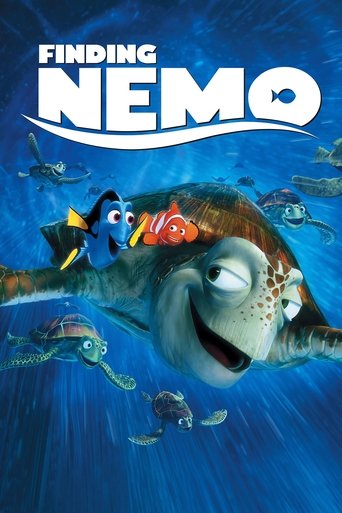
Finding Nemo
2003 · Film · 100 min
Part of Finding Nemo Collection
Directed by Andrew Stanton
Nemo, an adventurous young clownfish, is unexpectedly taken from his Great Barrier Reef home to a dentist's office aquarium. It's up to his worrisome father Marlin and a friendly but forgetful fish Dory to bring Nemo home -- meeting vegetarian sharks, surfer dude turtles, hypnotic jellyfish, hungry seagulls, and more along the way.
10 positive4 negative29 neutralfrom 43 commenters
Where to watch
No streaming data for this title.
44 comments on Hacker News
Just saying "Pixar movies" was probably not a great example. They can be deliberately location ambiguous (Monsters Inc., Toy Story - though it's clearly _somewhere_ in America, The Incredibles - a generic "metropolis"/50's futuristic city, lightyear, Elemental) or very specifically somewhere (cars - mashup of Route 66 towns, Finding Nemo - Sydney when on land, Ratatouille - Paris, etc...)
It makes sense to "translate" locale cultural indicators in say Wall·E which was very location agnostic but not so much for say Turning red which is very culturally specific.
I wholeheartedly disagree. Pixar does not have a monopoly on attention to detail. They're flush with cash and their leadership has decent taste.
There are so many creators putting in intense work, and doing it on low budgets. You can't claim these folks don't have attention to detail. Check out A24, low and mid and low budget films, or independent films and you'll see a wide assortment of highly meticulous storytellers.
Pixar, on the other hand, isn't low or mid budget:
Toy Story - $30 Million A Bug’s Life - $120 Million Toy Story 2 - $90 Million Monsters, Inc. - $115 Million Finding Nemo - $94 Million The Incredibles - $92 Million Cars - $120 Million Ratatouille - $150 Million WALL-E - $180 Million Up - $175 Million Toy Story 3 - $200 Million Cars 2 - $200 Million Brave - $185 Million Monsters University - $200 Million Inside Out - $175 Million The Good Dinosaur - $200 Million Finding Dory - $200 Million Cars 3 - $175 Million Coco - $175 Million Incredibles 2 - $200 Million Toy Story 4 - $200 Million Onward - $175 Million Soul - $150 Million Luca - Unknown but probably around $150 Million Turning Red - $175 Million Lightyear - $200 Million For that amount of money, they had better pay attention to detail.
Miyazaki is doing way more with much less.
Voices of a Distant Star was one person -- Shinkai. That's the kind of thing we'll see more and more of. Small creators reaching audiences and building studios. Gooseworx, psychicpebbles, Vivienne Medrano. That's the algorithm of tomorrow.
AI, as a tool, makes this more possible. One of the first people to do it successfully was Joel Haver, and he's just the first of many to come.
Right, I meant to suggest there might be some "culture" bleed. Another commenter suggested it had more to do with key Pixar figures leaving for Disney, at which point Disney's own offerings improved and Pixar's suffered.
I'm not very good at articulating "feelings" so bear with me: Early Pixar movies (to me) are timeless, positive, almost fairy-tale like. They're centrist, middle-of-the-road films that don't offend or validate anyone, just faithfully follow the Hero's Journey as they try to resolve some issue in the ideal world where we're all in this together. Toy Story is the best example-- literally every single toy could not be more different, but the entire point of the movie is about all of them finding ways to leverage their differences to advance the journey for all of them, not exploiting their shortcomings to hold everyone else back. Finding Nemo, Monsters Inc, The Incredibles, all are the same pattern. Pixar's money printer used to be endless asset-swaps of "Diversity: The Movie" (the secret to Sesame Street as well), and it was a beautiful thing before the concept was perverted by the same children who grew up watching these movies.
I don't have kids' show equivalents to name from AppleTV, but I do get the same feeling ("Diversity: The Show") from their regular shows. Ted Lasso is the obvious frontrunner. For All Mankind, Invasion, Foundation (caveat: I was really high when I watched this one). All of these beautifully weave together the themes of diversity and unity into a shared journey.
Movies like Wall-E, Finding Nemo have strong ESG themes and were acclaimed successes.
You seem more obsessed with finding any excuse to be anti-ESG rather than having a specific issue with recent Pixar films which have issues unrelated to specific themes.
including two of the executives behind “Lightyear”: director Angus MacLane and producer Galyn Susman. MacLane had been at Pixar for more than two decades, serving as an animator on classics like “Toy Story 2,” “The Incredibles” and “Finding Nemo.” He co-directed the 2016 sequel “Finding Dory” before his first solo directorial feature film “Lightyear.” The spinoff of the “Toy Story” franchise, which featured Chris Evans as the voice of Buzz Lightyear, was a commercial dud; Deadline estimated the film lost the studio more than $100 million.
Susman, likewise, was a longtime Pixar employee. She is also the hero of one of the company’s most legendary stories. During the making of “Toy Story 2,” a Pixar employee accidentally wiped the servers of nearly the whole movie. Thankfully for the animators, Susman was working from home while taking care of her newborn child — her backup copy saved the film.
Having done great work in the past is not enough to incentivize others to keep you around.
> You can look at all the Disney movies for kids: all men are stupid, liars, stealer, and when you hit them it’s funny. On the opposite the feminine is often perfect, manage it all on the first try.
A few counterexamples: Tangled, Wreck-It Ralph, Zootopia, Raya and the Last Dragon, Toy Story, Monsters Inc, Finding Nemo, The Incredibles, Ratatoullie, Up, The Good Dinosaur, Onward, Soul, and Luca.
Almost all of their best movies have had heavy involvement in the writing / directing role by a couple of key players and most of those individuals have either graduated to a producer role or have moved on from Pixar.
Toy Story, Monsters Inc., Up, Inside Out, and Soul were all written and/or Directed by Pete Doctor.
Finding Nemo, Finding Dory, and Wall-E were written and directed by Andrew Stanton.
There are multiple writing and directing credits on all of their films, but these two have writing and directing credits on almost all of the great original ones.
One thing I have noticed is some of the more recent Pixar movies don't feel like Pixar movies at all. They feel like Disney movies: Lot's of musical numbers, a lot more slap stick and silly, more cheap laughs. Have to wonder if Disney has been asserting too much influence on the company.
OK, I repeated the same experiment, though with Google instead of GPT. I just translate the emoji to text (each emoji has associated keywords): movie girl fish clownfish pufferfish
And the first result? Finding Nemo!
Thus the association is obvious there and well known. People are just too willing to read more into it. I don’t know what is the bias called, but I believe it’s not totally unrelated to superstition.
87% of the children*
I wouldn't call Finding Nemo or it's current equivalent mass market even though I have no doubt 87% of children have seen <<insert cultural movie I probably am missing by a generation or two>>.
> They're still making good ones: Frozen, Moana, Encanto. Just watch those and pretend the rest doesn't exist.
Probably the most objective way to view this is to actually look at the list of films from any given decade and see how many flops they had [1]. There's a bias at play here: the only movies we remember Disney making a decade+ ago are the hits. We don't often remember the misses.
Apparently Disney's "Renaissance" ended with Tarzan in 1999; but here are a list of movies that have come out since the end of this golden era:
- Monsters, Inc.
- Lilo and Stitch
- Treasure Planet (a personal favorite)
- Finding Nemo
- Pirates of the Caribbean
- The Incredibles
- Ratatouille
- WALL-E
- Up
- Tangled
- Brave
- Wreck-It Ralph
- Frozen
- Inside Out
- Encanto
I'm sure there's many great ones that you might love that I'm missing. But I'd say this lineup is potentially better than the list of movies spanning The Little Mermaid to Tarzan. To the author's credit, I will say there's part of me that's nostalgic for the traditional style of 2d character animation.
[1] https://en.wikipedia.org/wiki/List_of_Walt_Disney_Pictures_films
So? Those stories are interesting.
Disney is like any other BigCo. They have a million stakeholders pulling things a million different ways and they need to chart a course.
Finding Nemo could have been a hilarious comedy or it could have been a drama that criticizes modern society (depending on which way you want to spin it). Replace the clownfish with disabled vets. Replace the turtles with some hippies in a bus. Replace Dory with a stripper. Replace the sharks with a biker gang. Replace the whale with a rent-seeking small town police department. Replace the dentist's boat with a greyhound bus across the country. Etc, etc.
But they didn't, they chose to stick a kid's movie with what is a fairly heavy adult plot line at its core (and they distanced it even further by using animals). Why? That decision making process is its own story.
Finding Nemo was so far ahead of its time in terms of beauty of the animated undersea world and just the incredibly vivid colors that pervade that whole movie. Its extremely surprising that it was filmed in 2003(almost 20 years ago) and comparing it to finding dory it still looks better than its sequel.
Finding Nemo as as a live-action film with people would be amongst the scariest concepts imaginable.
A young couple is expecting twins and moves into a respectable neighbourhood.
In a home invasion the wife is killed, one of the twins are lost, and the surviving child is born physically impaired.
Flash forward, the child is now ~10. He's a happy, normal child (minus the physical impediment). The father is wracked with anxiety at all times and emotionally suffocates the child.
The child wants to be independent (like any 10 year old) so in an act of rebellion with his friends he goes someplace a little bit shady.
He's kidnapped! All of the father's worst fears are realized.
Nobody can help him except a mentally handicapped outsider
That way of boiling down Finding Nemo seems to miss why the story is designed that way. It doesn’t describe anything about what happens to Marlin as a character, just a few basic plot points, and then in the end he somehow learns that “love depends on trust”. Uh, ok.
If you actually want to understand why Finding Nemo “consistently tugs at heartstrings worldwide”, Craig Mazin used it as his primary example in “How to write a movie”, episode 403 of Scriptnotes[1]. (TL;DR: the purpose of everything that happens in a movie is to expose the hero to as much agony as possible, so that the change they’re forced to go through feels real. I don’t know what that means for your startup pitch, though.)
1: https://johnaugust.com/2019/scriptnotes-ep-403-how-to-write-a-movie-transcript
People forget that Pixar is a 3D rendering technology company first and only secondly a film studio. When most people out there hear Pixar, they think Toy Story and Finding Nemo, not even knowing about the technology they developed that makes those movies possible.
> "I feel that Pixar’s mastery of storytelling is overrated."
me too. the incredibles was pixar's high point of storytelling imho. of the first six films, i liked the toy stories the least. a bug's life, monsters, inc., finding nemo to the incredibles was like a crescendo of animation, reaching a satisfying zenith of art. cars, which came next, was ok (but unoriginal for storytelling, the characters were mostly great!), but then ratatouille through inside out were all groping for relevance while nakedly harvesting their reputation. of the last 8 movies, only coco has been worth watching so far (i haven't seen the good dinosaur or soul yet). so perhaps a quarter of their 23 films have been good enough to watch again for me; contrast that with the studio ghibli collection, nearly all of which are imminently re-watchable (spirited away is an absolute masterpiece).
Most of the Disney movies where they use animals have decently mature parallel plots. Finding Nemo and Finding Dory are basically about coping with disability. Lion King is basically Hamlet. Etc.
I've never tried the PAO system, due to the startup costs of pre-memorizing 100 person-action-objects.
But a simpler alternative which requires less work up front is the Major System (sometimes called the Phonetic system) [0].
The way it works it by assigning each digit a sound-value (or family of sounds). To remember a number, you then convert the digits to the letter-sounds, and fill in vowels that don't have a digit value to create words.
E.g. to remember Boltzmann's constant, I do this:
1.38 x 10^-23
1 has the letter value "t" or "d". So I use the word "tea" ("e" and "a" have no digit value), to remember the digit 1.
The 38 is converted to "m" and "v", which becomes "movie".
23 becomes "n" and "m", or "nemo", the fish from Finding Nemo.
Putting it all together it becomes: Ludvig [1] walking on bolts (= Ludwig Boltzmann), and in his right hand he's holding a old VHS movie on top of which balances a cup of hot tea. In his left hand he holds a frozen (to indicate the negative sign in the exponent) Nemo.
To make it memorable you can make this scene as vivid as possible: Ludvig is a cautious character who sniffles a lot; walking on bolts would hurt and make it difficult to balance the cup of tea on top of the movie; the frozen fish would be cold and slippery in the hand; the tea would smell nice; etc.
[0] https://en.wikipedia.org/wiki/Mnemonic_major_system [1] https://pbs.twimg.com/profile_images/525793520662380544/w9GJj317.jpeg A character in an iconic Norwegian film.
> Addictions can be hard to overcome for many.
I don't think this is "addiction". Its clearly operant conditioning. You aren't going to suffer physical ailments like an Alcoholic or Heroin-abuser (or heck: even a coffee-drinker) would if you "stop pushing the button"
I'm pretty sure that our concepts of "addiction" (including "willpower") are mostly pseudo-science. While psychologists are carefully studying the issues, the mass media needs to keep making movies and stories, and those stories do NOT reflect upon reality very well. Even well-researched stories, like Inside Out, or Finding Nemo (Dory's character is a very well researched example of memory loss) may end up obsolete as research moves forward. (IIRC: Inside Out was initially based on some psychology research. But the research already dramatically changed by the time Inside Out was out of production, and it was too late to change the story at that point).
The sad truth is: most of the psychology the layman knows is wrong. Its "story" psychology, created for drama and storytelling. Not "real" psychology, which actually predicts human behavior.
-----------
In any case, I believe that lootboxes are a clear, and simple, example of operant conditioning. We know how to "deprogram" operant conditioning. You either:
1. Remove the reward entirely -- Without a reward, and people will stop. It may take 10,000 cycles, but eventually all subjects stop when the reward is fully taken out of the picture. Its surprising how long subjects will continue their behavior in the absence of a reward, but it will eventually stop.
2. Introduce punishments -- Shock the user, or cause other forms of pain. If the punishment is greater than the reward, the subject will eventually stop.
As far as I know, those are the two ways to stop a conditioned behavior. Social pressure may probably serve as #2, but in my experience, it puts a lot of strain on the social relationships (ex: subject may just start lying instead of telling the truth about their behavior). In effect, using social pressure to stop #2 may only cause the subject to become more trained in the act of lying.
a Film is a collection of shots, scenes and sequences. Shots are fairly easy to detect. Most editing software comes with built in shot detection.
This approach promises to detect scenes. I’m not enough of a coder to know if it is valid, but I can certainly imagine that it is a solvable problem. Most scenes are defined by location, and movies makers like each locatation to be distinct from the preceding one.
To my mind, sequences are where the action is at. Sequences are defined by narrative development... These can usually be defined by a trained human, but are probably tough to computationly define.
There is also a huge difference between film genres. The scenes and sequences of Finding Nemo are pretty easy to define. But you try the same approach on an art house film like The Scent of Green Papaya, and see how far you get.
https://www.helpingwritersbecomeauthors.com/movie-storystructure/finding-nemo/
I owned a Domino's and put up a LCD in the customer waiting area. I bought a BluRay player and a copy of Finding Nemo.
It took two shifts for me to fill a disc with <cough> backups <cough> of dozens of Disney/Pixar/etc movies. Once I broke 50 hours of video, I stopped being able to recite it at will.
Pixar really wants to stay out of the uncanny valley with their characters, so they intentionally design them to look "cartoony"--closer to the classic hand-drawn animation of the past. They want their movies to look like animated movies.
"Live action" movies try to make it to the other side of the uncanny valley. Usually the most successful efforts cheat a bit by avoiding human characters. Think Avatar, Gollum, Snoke, Thanoes, etc. They look so real! (If aliens or ring-wracked wretches were real...)
Where movies looks weird is when there are elements on both sides of the uncanny valley--in the case of The Good Dinosaur, the backgrounds look real and the characters look like cartoons.
This was surprising because Pixar is usually careful to avoid this. The sea in Finding Nemo looked amazing, but it didn't really look 100% real--it looked like a beautiful stylized version of a sea. Same with the environments in The Incredibles, as the top blog here details.
The edit window has passed so I'll reply to my own comment with a nifty tidbit. The early days of animated films were particularly fun to watch as someone with a background in computer science, as it was a one upmanship competition between the major animation studios (Pixar and Dreamworks) on technology. Monster's Inc had hair. Shrek had a scene with physically-realistic caustic effects of poured milk (really, go watch it--there's an entirely gratuitous scene where a glass of milk is poured to show that they can. milk as a semi-translucent non-homogenous liquid is VERY hard to render as it turns out.) Finding Nemo had lots of water effects, etc.
The challenge of all of this was doing it using rasterization techniques, or integrating more realistic techniques using path tracing into a standard rasterization pipeline in a way that didn't kill performance. But now render farms a big enough and technology has advanced far enough that they can just path-trace everything.
The aspect that comes to mind is the archiving of assets that go beyond simple frame output, a bit further up the workflow—project files, renderers, effects processing plug-ins, etc.
For example, the article mentions the issues that Pixar ran into reconstructing Finding Nemo. I can imagine a studio saving a movie's project file, and then discovering that no software can use it in 20 years. Even if ecosystem standards like OMFI prove to have staying power, details like color timing might not be able to be perfectly reproduced even if the project file is openable.
Only very slightly related:
When I was a teenager I made music under the name shark^^bait
The ^^ is what made it stand out from others.
The issue is there is no efficient way to search for that phrase with the special characters.
I have no idea if I can still find the absolutely god awful music I made back then.
Using the phrase match in google just searches for sharkbait which doesn't help at all.
It doesn't help that years later a little movie called Finding Nemo came out.
> I strongly dislike dubbing and simply cannot enjoy a dubbed drama or film.
The problem is that often the original screenplay contains cultural references that are not known in the audience that the dubbing is made for. So you have to replace the cultural references by ones that are understood by them. The same holds for puns, word plays, songs etc. These have to be rewritten.
In this sense a dubbing (at least in Germany) is much more than a rough translation of the original spoken text, but often a reinterpretation. Thus I wrote that there are even people who say that the German dubbing of some American movies is yet better than the English original, since the translators are even more creative in the wordings than the original screenplay writers.
To give one example: In Finding Nemo, the German names of the two sharks (besides Bruce) are Hammer (hammer) and Hart (hard) (in the English original they are "Anchor" and "Chum"). Now you have to know that in German "Ich bin voll der Hammer" ("I am full the hammer") is a very plebby way of saying "I'm the greatest". If you now keep in mind that Hammer and Art were dubbed by some German comedians which have a very turkish-plebby image you will understand why the German dubbing of these scenes is much more funny in German than in the English original.
Well that's just it, me either! Nor could I expeditiously find a copy of the letter in question. So I wouldn't presume to know his full meaning. But when you see the quote alone like this, the takeaway is straightforward enough, regardless of the author's original intent, and it's the appropriated implication which I do not agree with.
But frankly I would not be surprised if he did mean it literally and exactly. After all, it does seem to be in line with Kafka's work, doesn't it? Avoid happiness, court misery and grief? That could be a tagline to a Kafka biopic.
But it's just his opinion. Some people like happy endings. And to imply that a feel-good story isn't worth reading is the true narrow opinion. As though Pixar's films were not sufficiently profound for lack of tragedy. Good god, imagine if Kafka was the creative director at Pixar! "Finding Nemo" would be an endless and fruitless search probably resulting in the father descending to madness and wondering if he ever had a son at all.
You really do get incredible insight into how they work up and tear down ideas in a setting that is both art and technology. Also fun to hear about lessons learned from iconic films such as toy story, finding nemo, and inside out.
Content is intrinsically non-fungible. People don't want a movie about fish; they want Finding Nemo. That's what gives content companies so much power even in this day and age when making and distributing content is so easy. But copyright law doesn't give them that power--its intrinsic to the nature of their product.
Seriously? ANY pixar film puts those to shame in terms of depth. The entire back story of UP was about a widower; Finding Nemo, same story - talk about darkness and light. How about The Incredibles, Wall-E, Monsters Inc, all fantastic story telling and incredible depth. It even goes further back than 80s, to movies like The Sound of Music with the Nazis.
Again, your biases are only fuzzy nostalgia and it seemed bigger to you then cause your brain couldn't contextualize it as well.
>I'm not sure that Inside Out was meant to be an accurate depiction of our emotions any more than Finding Nemo is meant as an accurate portrayal of marine ecosystems, or Ratatouille of French cuisine.
And yet the first thing to come to many children's minds when shown a clown fish or French cuisine is Nemo and Ratatouille.
> I don't think that children watching the movie will really grow up believing they have all these little people in their heads.
I've met people who think the movie helped them "understand themselves better" whether or not that is actually true.
>But if we couldn't reduce that complexity into modular, independent pieces then how would we ever communicate?
Not everyone wants to speak the same language, (or even be forced to hear you).
I'm not sure that Inside Out was meant to be an accurate depiction of our emotions any more than Finding Nemo is meant as an accurate portrayal of marine ecosystems, or Ratatouille of French cuisine. While our emotions certainly are complex and misunderstood, I don't think that children watching the movie will really grow up believing they have all these little people in their heads. It's a fun concept that takes some existing cultural trope and runs with it to tell a story. Everything is more complex that the limited linguistic labels that we slice the world into. But if we couldn't reduce that complexity into modular, independent pieces then how would we ever communicate?
The Phantom Menace is objectively a bad film. You want a good film that teaches this to seven year olds? Try Finding Nemo.
The Phantom Menace features offensive racial stereotypes, terrible dialog, A poorly-executed subplot about a trade dispute, and characters that I personally could not and cannot identify with.
Is it fair to speculate that you were born in 1992, making you the 7 year old you refer to above? Search your feelings, zappo2938, you know this is a bad movie!
> Genuine question: is it about time that we start thinking about banning (most) swimming pools?
You should really watch "Finding Nemo[1]". Unfortunately there's so much you can do, to protect a kid. Passed a certain point, if nothing happens life is not interesting anymore.
[1] http://dvd.netflix.com/Movie/Finding-Nemo/60027705?trkid=222336
Anterograde amnesia is definitely a greater challenge for a storyteller than retrograde amnesia because the amnesic character is essentially static in the story, and that's one of the reasons that Memento is such an extraordinary film.
For another example, while it's not central to the story, Finding Nemo features a supporting character who has anterograde amnesia (Dory the fish).
Playings devil's advocate: There are many ways to incentivise even complex, large scale investment absent copyright. From project finance to Kickstarter, it is well beyond self-evident. On the flip-side, the cost of supressing academic and sciendific knowledge through academic publishers dwarfs whatever entertainment value might come from their library (~12 films)[1]. I think your comments on this are too simplistic.
________
[1] Toy Story, Toy Story 2, Toy Story 3; Monsters, Inc.; Finding Nemo; The Incredibles; Ratatouille; WALL-E; Brave; A Bug's Life; Cars, Cars 2
> Pixar didn't enjoy iPhone-like profitability.
Personally, I'd say Pixar seems to be the Apple of the movie industry. A few products, done right, and hugely profitable:
> As of February 2012, its films have made over $7 billion worldwide, with its $602 million average gross by far the highest of any studio in the industry. In addition all the films produced by Pixar are among the fifty highest grossing animated films of all time, with Finding Nemo (#26), Up (#43) and Toy Story 3 (#7) all in the top 50 list of highest-grossing films of all time. - http://en.wikipedia.org/wiki/Pixar
> My point is that (1) no, they really can't product another iPhone-like hit (that's a once-a-generation thing)
They've already put out three in a generation - iPod, iPhone, and iPad. Lumping those three distinct systems into one is intellectually dishonest.
Wow, this won't slow things down at the border.
On another note. How long before tools come out that "fidget" with media files on your computer so you can defeat CRC match scans of media on your computer? "Well the file is Finding Nemo.avi, but it doesn't match any of the known pirated copies of that movie."
Finally, how is this not a gross violation of the right to privacy? This has about as much chance of standing up in SCOTUS as a new law reinstating slavery IMHO.
> Do people think companies really behave this way?
An interesting anecdote from the Steve Jobs biography:
Finding Nemo had just been released to critical acclaim and Pixar were in renegotiation talks about their deal with Disney.
(Disney's) Michael Eisner had one powerful trump card. Even if Pixar didn't renew, Disney had the right to make sequels of Toy Story and the other movies Pixar had made, and it owned all the characters from Woody to Nemo. Eisner was already planning -- or threatening -- to have Disney's own animation studio do a Toy Story 3, which Pixar had declined to do.
The threat had teeth not because Pixar would lose control of some of their characters, but because Disney's animation studio had been releasing flop after flop. After ten years of The Lion King, Beauty and the Beast, and Aladdin, there were ten years of rubbish. As a company, Disney had been creatively brain-dead for a decade.
(Pixar's) John Lasseter was aghast at the prospect of breaking up with Disney. "I was worried about my children, what they would do with the characters we'd created," he recalled. "It's like you have these dear children and you have to give them up to be adopted by convicted child molesters."
Effectively, Disney's negotiation tactic was "re-sign with us, or else we'll spin up a shitty division to make shitty sequels of your movies!"
http://en.wikipedia.org/wiki/Circle_7_Animation
http://en.wikipedia.org/wiki/Toy_Story_3#Production
Cars is my least favorite Pixar movie. Far too much of the payload was nostalgia for the era of Route 66. An era that my parents could have caught the tail end of. I suppose also my personal philosophy is that the past is important but that trying to lock the past in is not a way to commemorate or honor it, but a way of being imprisoned by it, and the central story just falls flat for me. YMWV, of course.
(My next least favorite is Finding Nemo, because Nemo's dad is my mother-in-law, on film. Only she hasn't had the epiphany about needing to let go of worry at some point. Again, YMWV.)
I'm in pretty much the same boat as the author for most of the points he makes. Reminds me of Finding Nemo (my kids love that movie) "Just keep swimming, just keep swimming..."
The film breaks out of the mold of 3D animated film art direction with stylized characters and it prefers graphic shapes over the hyper-realism so common in the genre
They did this with WALL-E first, with the juxtaposition between the two main characters.
WALL-E was a square, while Eve was essentially a circle (Andrew Stanton's words, not mine).
Same thing is happening in UP, Carl Fredrickson (the old guy) represents the square, while Russel (boy scout) represents the circle and it is really more prevalent, even with Carl's finger's having a rough rectangular shape.
Pixar used to be lauded for its originality and commitment to high quality.
A little anecdote on just how committed they are.
During the production of Finding Nemo, a couple of Pixar artists climbed inside the mouth of a dead beached whale in California just to get a good idea of the textures inside of it for the scene between Dory and Marlin when they were inside the mouth of a whale.
That's commitment to quality.
Ratatouille: Peter O'Toole, Brad Garrett, Janeane Garofalo, Ian Holm, Brian Dennehey
Cars: Owen Wilson, Paul Newman, Bonnie Hunt, Cheech, George Carlin
Incredibles: Craig T. Nelson, Holly Hunter, Samuel L. Jackson
Finding Nemo: Ellen DeGeneres, Willem Dafoe, Allison Janney,
Monsters, Inc.: John Goodman, Billy Crystal, Steve Buscemi
I don't know why you think animation means you don't need actors.
And your 'argument' on WALL-E is HUGELY flawed: Ben Burtt (who 'voiced' WALL-E) is literally the go-to guy when you need incredible sound effects. Not only would that movie have failed without him, he got the job because he's THE best sound fx guy in the business. For something like WALL-E, you need even more exacting quality, not less. And the few voices they did have went to John Ratzenberger (of "Cheers" fame: he has 95 acing credits on IMDB), Kathy Najimy, and Sigourney Weaver.
Making good content requires good content producers. I'm not trying to discourage you: there are good people out there. But you seem to be saying that since its animation, you can have lower standards. No: you need higher ones.
I know I'm biased towards 3D animation, but I can give you examples where thats simply not the case.
Take Pixar, It's the highest profile of the 3D animation studios and can you name any of the voice talent for WALL-E? There was no "top talent" there in any notable role, in fact, apart from one of Pixar's 4 main directors (Andrew Stanton of Finding Nemo fame) I'm pretty sure anyone would be hard pressed to name anyone of note in a major role.
Now lets look at Dreamworks Animation, Arguably number 2 (even though they are more profitable than Pixar and also have the highest grossing animation film of all time in Shrek 2...)
Apart from voice talent in their films, can you name any of the talent in the films? Its a difficult task. The talent is shared among the many people that work there.
The reality is that voice talent is the "draw card" for 3D animation and is one of the minor expenditures for any 3D film.
So let's go back to Pixar, when Pixar was first producing their films, their distribution deals with Disney had them giving up 50% of the profits for the film.... They do all the hard work and only get back 50% of the money.
On that same business model, If you figure out a way to only monetise your film 50% of the the time and not care about it being pirated (even welcoming the filesharers as pseudo distribution/marketing) - you're off to a good start.
If you start reducing the workload on your animators/modellers (using limited cast/sets, animating more with mocap, scripting "extras"... essentially adopting a sitcom format) you can get away with doing episodic content with a significantly smaller team. Keep voice acting internal (even Pixar directors do voices on their films occasionally)... you're reducing costs further.
This I think is one of the ways out to cheaper productions and since online video has been notoriously hard to monetise - its a start.
I've also got a couple other ideas on ways to continue monetising off the model I'm proposing, but yeah, there is potential there.