 Hacker Cinema
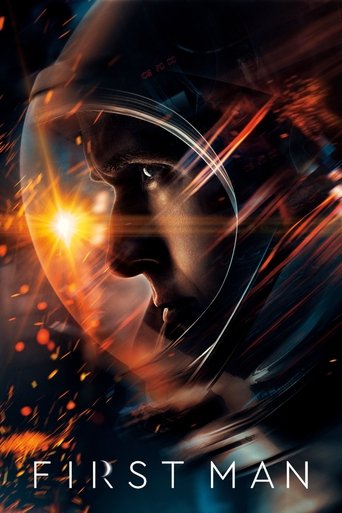
First Man
2018 · Film · 141 min
Directed by Damien Chazelle
A look at the life of the astronaut, Neil Armstrong, and the legendary space mission that led him to become the first man to walk on the Moon on July 20, 1969.
9 positive6 negative2 mixed9 neutralfrom 26 commenters
Where to watch
No streaming data for this title.
30 comments on Hacker News
I don't think it's actually a useful perspective at all. The poem is racial resentment repackaged as a means to guilt trip people into feeling bad about adventure, science, and exploration. Unless they were pretty well read at a young age, most millennials probably first experienced this poem in the film First Man, where it is read as a backdrop to Apollo 11 traveling to the moon. It's a great scene because the juxtaposition is stark. We can either hold ourselves back an an endless and futile journey on solving the human condition of poverty and inequality, or we can explore the stars. It's an easy choice.
> at something that we already know we can do
Something that we know we could do. I think of it as the third act of a movie when the main character is pulling himself out of the gutter.
That being said, I agree with you. America has bigger, nearer problems to solve with that sort of money. It reminds me of Gil Scott-Heron's poem about how it feels to struggle while "whitey's on the moon". It was brilliantly used in First Man.
https://www.youtube.com/watch?v=EVQuqQndsFA
Thank you. From a more historical perspective, I would also recommend the 2018 movie "First Man".
"First Man" (2018)
https://youtu.be/PSoRx87OO6k?si=OPCRv2nLyhdvh9Lo
https://youtu.be/w4GtJB5WAlQ?si=ASRrv1K0akxJwj-I
Armstrong's coolness under pressure as the Eagle lander's fuel dwindled to within 30 seconds of "Empty" is depicted with gripping intensity in this film.
I was always skeptical of Apple's ability and willingness to create original content. Any sufficiently large company has competing objectives. Apple in particular does not want to offend governments, offend consumers and alienate suppliers.
This influence over content isn't new. Richard Gere was allegedly ostracized in Hollywood for being critical of China over Tibet. Ellen DeGeneres lost her sitcom after coming out (which extended to co-stars in the episode like Laura Dern). The American flag was noticeably missing from the Moon landing in First Man. So dedicated studios have this problem. Apple has all these problems and more.
The likes of Apple will never push the envelope in the way, say, that HBO did with the Sopranos. And now it's so rare that any of these series actually run to conclusion before being cancelled due to not hitting some nebulous set of metrics.
It's also worth noting that the political climate has changed since Jon Stewart was on The Daily Show. I mean that was before Trump got elected. I think for a lot of people, Jon Stewart is now seen as too much of a centrist liberal.
This problem is way larger than tech companies and isn't new. Some examples:
- Richard Gere got canceled for speaking out against China's human rights abuses to the Tibetans at the Academy Awards in 1993 [1];
- The Neil Armonstrong biopic "First Man" didn't have a scene of planting the American flag [2];
- These are examples of a long history of Hollywood bowing to Chinese pressure and interests [3]. Modifying a movie for the Chinese market is one thing. Modifying the global release of a movie to keep China happy is something else.
Now look at the mainstream media just this year. Some examples of stories that got zero or significantly delayed coverage include:
- The train derailment and environmental disaster at East Palestine, Ohio. For a good week you wouldn't even know this was happening if you weren't on Tiktok. Consider the irony of that situation;
- The massive French strikes and protests got almost no play in US media;
Now consider the bias in media coverage:
- Western media in general is unforgivably biased when it comes to Israel [4]. A common technique is deliberate use of active vs passive voice [5]. Example: Shireen Abu-Akleh was "killed" [6]. A more accurate headline would've been "Middle Eastern and American citizen journalist assassinated by Israeli sniper while wearing a blue press helmet and vest".
- Media coverage is unbelievably biased towards the police in cases of brutality and death at the hands of police. Guests on TV will often be former or current police. What about civil rights lawyers or victims rights advocates?
Remember this when the media writes stories about the bias in tech companies. While there might be truth to that, never forget that the media too is incredibly biased.
[1]: https://tfiglobalnews.com/2022/04/11/how-hollywood-destroyed-richard-geres-career-because-he-chose-to-speak-for-the-tibetans/
[2]: https://www.theguardian.com/film/2018/sep/06/if-anyone-can-maga-it-is-nasa-how-first-man-put-a-rocket-up-the-politics-of-space
[3]: https://www.npr.org/2022/02/21/1081435029/china-hollywood-movies-censorship-erich-schwartzel
[4]: https://www.washingtonpost.com/opinions/2022/04/28/jerusalem-al-aqsa-media-coverage-israeli-violence-palestinians/
[5]: https://www.newarab.com/opinion/how-media-bias-serves-israels-occupation
[6]: https://www.bbc.com/news/world-middle-east-61403320
These are all generally highly reviewed can lead to interesting discussions:
Gattaca - interesting take on genetics/DNA discrimination
Europa - hard science fiction, maybe a bit slow for a 12 year old
The Net - older movie but the concept of digital exile resonates today
City of Ember - post apocalyptic civilization that lives deep underground
First Man - dramatization of Neil Armstrong and the first moon landing (not realy "fiction")
Arrival - first contact situation, tastefully done
Contact - another first contact situation that explores how politics, skepticism, and fanaticism react
The Martian - easily as fun as the book
The Prestige - competing magicians in an industrial age setting
The Hunger Games - extreme class divide in a future setting
Jurassic Park - the original not the sequels
Stargate - wormhole travel to another planet (be careful with the TV shows though, SG1 on streaming has full frontal nudity and "not ok" scenes which were obviously not on the broadcast version and a total shock when we watched it as a family)
District 9 - has some graphic gore and language, so it might be 14+, but is an interesting look at aliens as refugees
Contagion - a look at how a pandemic could play out. Premiered before COVID.
The Maze Runner - interesting setting and look at group dynamics
Honey, I Shrunk the Kids - fun setting
The Village - scary movie with a sci fi twist
Galaxy Quest - comedy
Short Circuit - old movie that deals with AI sentience
Innerspace - another old one, but has some fun concepts
Maximum City, a nonfiction book about Mumbai. A good companion to a first time visitor. I believe that an update is coming out soon.
Project Hail Mary, a book about space for engineering nerds.
The Body and At Home. They're books by Bill Bryson. He geeks out about stuff and showers is with fascinating trivia. It's hard to put his books down.
The Right Stuff, a book about how they picked the first astronauts without knowing what the job would even entail. A fascinating look at the psychology of test pilots. Pairs well with the movie First Man.
So there are four major draws to China for Western companies:
1. It's a market of >1B people, hundreds of millions of whom are rapidly developing disposable income. That in itself is probably enough;
2. Cheap labour;
3. Supplier proximity; and
4. Political stability
I can't stress how important (3) is.
The net effect of all this is there's a network effect of suppliers in China. Those phones that are made in, say, Shenzhen require parts that are made by a factory down the road. This could be everything from chips to tiny screws.
Anywhere else and you'd need to ship various parts from China and have the supply chains and inventory management that that entails.
If you look past the fact that worker conditions are Dystopian, it's quite a wonder of the modern world, really.
But when I (and I'm sure others) talk about the perils of kowtowing to China, it's because they want the market not the manufacturing capacity.
Think of a movie studio that wants to distribute content in China. To get permission to do so that content has to be acceptable to the CCP.
Many suspect this is why the movie "First Man" had no scene of planting the American flag in lunar soil (an iconic historical moment). Some pseudo-artistic defenses have been unenthusiastically lobbed on this issue. Personally I find these unconvincing at best.
Western companies willingly engaging in self-censorship (or even the credible allegation of such) to pander to a foreign totalitarian government is not something I, personally, approve of.
> It's widely suspect that not having the American flag on the moon landing in the movie "First Man" was to cater to the Chinese market.
I didn't watch that movie, I guess it surprised you as an (allegedly ?) American the same way it surprised many Europeans watching the numerous WW2 movies about the US saving the old-world. It's all about catering the most profitable market in the end. ( I'm not here to throw oil on fire by the way, I guess that the same... process ? )
We nom-Americans are well aware of the "flag tax".
We know Hollywood gets tax cuts for bigger, more numerous and slower-mo shots of American flags in their films.
Clearly "First Man" was making a statement about this special treatment.
Is there any evidence regarding that “First Man” anecdote? I remember this being a big thing in the conservative culture sphere in at the time but it seems like a manufactured controversy. Are there not American flags in all manner of big blockbusters that do huge numbers in China? The character “Captain America” doesn’t seem to have stopped the MCU movies from succeeding there. The whole thing feels like people just looking to get angry about something.
I'd love to know the story of this "human error" (that led to tank man being censored on Bing). Like... what were they trying to do? Why do they this capability at all? Was it unauthorized removal from Bing search results? If so, by whom? Why?
Try and get the auto-caption on Tiktok to recognize "Tiananmen Square".
It sets a really bad precedent to allow or accept Western companies (yes I know Tiktok is Chinese) kowtowing to China in the hopes that those companies will gain access to the Chinese market. It's widely suspect that not having the American flag on the moon landing in the movie "First Man" was to cater to the Chinese market.
Let me clue in all the investors and the Western big-tech CEOs on a little secret about China: you, as a Western company, will never "win" in the Chinese market. The CCP will make sure that happens. You are literally wasting your time and debasing yourself for something that will never happen.
Take any Western company like Google, Uber or Amazon and the dominant player in China will be some homegrown clone of that. This is not an accident and it will never change.
It's time the developed world woke up to this as it is openly mocking WTO rules about equal access to markets.
quick question on unity vs unreal engine. the more i see the future the less i see one for unity vs unreal especially with movies using unreal engine in the last 2 years (really from the movie first man to now most of the new movies) i feel the money and R&D that will span from that in the unreal engine will allow them to totally crush unity. already today most of the modern games made with unity are 2d or average 3d games.
What is your take on that?
Came at a Yuuuuge price. The Appllo program claimed several lives even before the first probe launch. Recommend watching “The First Man” for accurate portrayal. Also the difference in budget between the NASA program and ISRO program is Apples one quarter earnings. Just saying
This song was featured in the movie "First Man".
I was really entertained by the banter between the crew as they're orbiting the moon, given the gravity of the moment. They're almost jovial, which is a pretty stark contrast to the way it's depicted in hollywood. Especially First Man; that movie was so brooding it was hard to take seriously.
I saw a trailer for Apollo 11 last night when I was at a rerun of First Man at a local cinema - the release date in the UK is 28th June so perhaps where you are also has a similar release date.
An example regarding movies: there seemed to be an outrage around 'First Man' that it wasn't patriotic enough - but the movie was about one of the most awesome things any country has done and about a man who was a hero to people across the world (including me).
I'm not from the US and the movie seemed to be about one of the best things the US has ever done and still people complained about it!
There is a nice example now in popular culture of the problems of a X-15 in the beginning of the movie "First Man" with Neil Armstrong bouncing off the atmosphere in this rocketship.
The other popular case, the only lost ship was also similar to the bad MCAS system in the Boeing 737max, the pilot forgot to turn off the problematic flight control system, and he didn't see the 90 yaw angle because he turned it off, so he raced straight down, and the control SW kept it that way.
I was watching First Man recently, the movie about the first moon landing.
I'm wondering how much the popularity of computers changed how SpaceX was able to develop its software and properly analyze the data. I guess it made things easier, but to be honest I have no idea how hard NASA worked its computers and systems to use data in the 60.
Wow! It is either an intentional sarcasm or Mr.Buzz is a 'know-it-all' like it was portrayed in the First Man movie.
There have been countless movies, TV specials, books and whatnot about men going into space and landing on the moon. It's interesting to finally hear the backstories of who these men really were. "First Man" hadn't really showed up on my radar until today but after reading some of the comments here it's shot straight to the top of my "to watch" list!
This has turned into a discussion about First Man rather than the article, so I may as well contribute:
I think Damien Chazelle intended to frame the movie as a war movie, even toeing towards a parallel between the Apollo missions and the Vietnam War. The idea that we actively gambled with these men's lives, somehow collectively desensitized ourselves to human loss, that we are all boys pretending to have protocol- obvious parallels to war, in that a bureaucratic borg overlooks human lives in a competition the borg itself created.
But the thing is- its pretty hard to not lean into the inherent heroism of landing on the moon, especially since the studio clearly gave Chazelle a blank check to recreate the moon landing as immaculately as possible.
So its a little hard to parse the final message. The movie is the inverse of Apollo 13, pessimistic where 13 is optimistic, even though First Man is about the successful one. To some extent, Mission Control are the villains in this movie.
It isn't not going be a loved movie, like his last two (Whiplash and La La Land.) The characters are constantly aware of their mortal peril, which in turn makes them coarse and hard to like. But its such an interesting take on the Moon missions.
Armstrong's son says[0] it's a good film. You can search for interviews to see what the people closest to Armstrong himself say.
[0] https://variety.com/2018/scene/news/first-man-astronauts-wives-heroic-as-their-husbands-neil-armstrongs-son-1202968668/
I agree, but First Man is not a story about landing on the moon. It is a story about Neil Armstrong. The movie focuses on a piece of the story that is inherently less interesting than the stuff going on in the periphery.
I see where you're coming from, but personally I really appreciated the depiction of an introverted main character. Also both of his sons were consultants on the film and apparently supplied part of the dialogue and tone for the scene where he talks to them before leaving for Apollo 11 [1], so that part of his relationship to his family, at least, seems pretty accurate to me.
One thing I remain curious about is how serving in the Korean War shaped the psychology of that first crop of astronauts. And I would LOVE to watch a movie with the budget and talent of First Man, but about Yuri Gagarin or Valentina Tereshkova.
[1] https://www.nytimes.com/2018/.../first-man-ryan-gosling-claire-foy-damien-chazelle.html
Polygon had a really interesting article about the use of different film formats (IMAX, Super 16mm, 35mm) in order to convey different emotions in the viewer. https://www.polygon.com/2018/10/14/17971246/first-man-imax-damien-chazelle-moon-landing
> Why is Forbes writing about it now?
My totally random guess is the reason why theyre writing about it now is that it might be part of PR for the First Man movie about Neil Armstrong being the first man on the moon.
Upcoming film "First Man" [on the moon] will not have Armstrong planting the flag on the moon, and many online have floated "because overt displays of American nationalism w.r.t. Apollo etc. would make the film do worse in China" as an alternative theory to "because the director and/or studio have specific distaste for American nationalism even though it was unarguably historically relevant to the Apollo story"