 Hacker Cinema
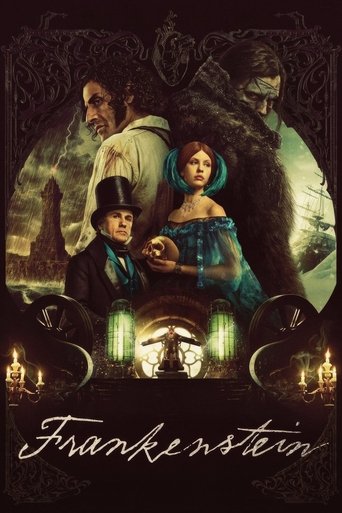
Frankenstein
2025 · Film · 150 min
Directed by Guillermo del Toro
Dr. Victor Frankenstein, a brilliant but egotistical scientist, brings a creature to life in a monstrous experiment that ultimately leads to the undoing of both the creator and his tragic creation.
4 positive2 negative1 mixed18 neutralfrom 25 commenters
Where to watch
No streaming data for this title.
25 comments on Hacker News
You picked a commercial movie to make your case? Why not Bugonia, The Odyssey, One Battle After Another, Project Hail Mary, Frankenstein, etc. (all recent)
Fiction books to follow soon? Will kids still sit down and read an assigned book when they can just prompt "generate a movie of Shelley's Frankenstein, faithful to the source, except as required by my_movie_preferences.md". Reading the text may become as rare as learning ancient Greek to read the Odyssey.
In RUR the robots are closer, in design and manufacturing techniques, to the monster in Mary Shelley’s Frankenstein. The depiction chanted in the movies that show the monster as being built out of whole sections of dead bodies.
Completely agree. The movie ruined Dr. Frankenstein's motives by adding his benefactor, and ruined his monster by removing the inner rage he felt and expressed towards the world the shunned him. A very, very odd decision by GDT. Similar to Spike Lee remaking High & Low, but removing the critique of capitalism and the complicity of the wealthy so he could make Denzel the true protagonist.
I was replaying Cyberpunk 2077 and trying to think of all the ways one might have dialed up the dystopia to 11 (beyond what the game does). And pervasive AI slop was never on my radar. Kinda reminds me of the foreword in Neuromancer bringing attention to the fact the book was written before cellphones became popular. It's already fucking with my mind. I recently watched Frankenstein 2025 and 100% thought gen ai had a role in the CGI only to find out the director hates it so much he rather die than use it. I've been noticing little things in old movies and anime where I thought to myself (if I didn't know this was made before gen ai, I would have thought this was generated for sure). One example (https://www.youtube.com/watch?v=pGSNhVQFbOc&t=412) cityscape background in this a outro scene with buildings built on top of buildings gave me ai vibes (really the only thing in this whole anime), yet this came out ~1990. So I can already recognize a paranoia / bias in myself and really can't reliably tell what's real.. Probably also other people have this and why some non-zero number of people always thinks every blog post that comes out was written by gen ai.
If data integrity is assured, and thus there is no change in the data to store/transfer, then that's the opposite of computationally transforming the data?
How do we see robot and AI and helping interactions in film and tv and games?
A curated list of films for consideration:
Mary Shelley's "Frankenstein" or "The Modern Prometheus" (1818), Metropolis (1927), I\, Robot (1940-1950; Three Laws of Robotics, robopsychology), Macy Conferences (1941-1960; Cybernetics), Tobor the Great (1954), Here Comes Tobor (1956), Jetsons' maid's name: Rosie (1962), Lost in Space (1965), 2001: A Space Odyssey (1968), THX 1138 (1971), Star Wars (1977), Terminator (1984), Driving Miss Daisy (1989), Edward Scissorhands (1990), Flubber (1997, 1961), Futurama (TV, 1999-), Star Wars: Phantom Menace (1999), The Iron Giant (1999), Bicentennial Man (1999), A.I. Artificial Intelligence (2001), Minority Report (2003), I\, Robot (2004), Team America: World Police (2004), Wall-E (2008), Iron Man (2008), Eagle Eye (2008), Moon (2009), Surrogates (2009), Tron: Legacy (2010), Hugo (2011), Django Unchained (2012), Her (2013), Transcendence (2014), Chappie (2015), Tomorrowland (2015), The Wild Robot (2016, 2024), Ghost in the Shell (2017),
Giant f robots: Gundam (1979), Transformers (TV: 1984-1987, 2007-), Voltron (1984-1985), MechWarrior (1989), Matrix II: Revolutions (2003), Avatar (2009, 2022, 2025), Pacific Rim (2013-), RoboCop (1987, 2014), Edge of Tomorrow (2014),
~AI vehicle: Herbie, The Love Bug (1968-), Knight Rider (TV, 1982-1986), Thunder in Paradise (TV, 1993-95), Heat Vision and Jack (1999), Transformers (2007), Bumblebee (2018)
Games: Portal (2007), LEGO Bricktales (2022), While True: learn() (2018), "NPC" Non-Player Character
Category:Films_about_artificial_intelligence : https://en.wikipedia.org/wiki/Category:Films_about_artificial_intelligence
List of artificial intelligence films: https://en.wikipedia.org/wiki/List_of_artificial_intelligence_films
Category:Films_about_robots: https://en.wikipedia.org/wiki/Category:Films_about_robots
Category:American_robot_films: https://en.wikipedia.org/wiki/Category:American_robot_films
I wouldn't categorise The Matrix or Frankenstein like that.
The Matrix had humanity under control, but the machines had no desire to eliminate humanity, the machines just wanted to live — humans kept on fighting the machines even when the machines gave humanity an experiential paradise to live in.
Frankenstein is harder because of how the book differs from the films. Your point it is valid because it is about the cultural aspects and I expect more have seen one of the films than to have read/listened to the book — but in the book, Adam was described as beautiful in every regard save for his eyes, he was a sensitive, emotional vegetarian, and he only learned anger after being consistently shown hatred and violence by absolutely everyone he ever met except that one who was blind.
I grew up with francophone parents in the suburbs of Montréal, which is in the majority french speaking part of Canada. The context is special in that I live within an hour's drive of the border of places where english is the official language and that bilingualism is fairly standard in Montréal, I have loads of friends with whom conversation involves seamlessly switching between english and french. I got my first experience of full immersion at age 4 a few afternoons a week in pre-school, at age 7 I was in an hockey exchange with a new england family for a weekend, miming and pointing at things to communicate with people when my limited vocabulary didn't cut it, at age 12 started streaming TV shows in english and by age 14 I was reading Mary Shelley's Frankenstein.
There's something to be said about my educational privilege and the geographic context of my being ESL. Obviously it's probably harder to learn english if your first language isn't that of a country that has colonized England at one point and you don't grow up within walking distance of the USA, but considering that billions of people have english as a second language and totally manage to convey whatever idea they want when they speak or write it I don't think my point that it's no big deal to learn it is outlandish. It's the most spoken language and it's speakers are all over the globe, there isn't a language that's as accessible to practice as english.
I think levelling by the bottom by forcing everyone to learn a second language (which would become a lot of privileged kids' first language after a few generations anyway) isn't a very interesting idea.
> We share the same worldview. That's fun!
Yes doctor chandler, I enjoy discussing consciousness with you as well ;)
As mentioned in a sibling comment here I think 2010 (1994) is such an apropos movie for this moment, not that they had the answers but it really nailed a lot of these questions. Clarke and Asimov were way ahead of the game.
(I made a tangential reference to your "these are social problems we're concerned about" point there. Unfortunately this comment tree is turning into a bit of a blob, as comment-tree formats often tend to do for deep discussions. I miss Web 1.0 forums for these things, when intensive discussion is taking place it's easy to want to respond to related concepts in a flat fashion rather than having the same discussion in 3 places. And sure have different threads for different topics, but we are all on the same topic here, the relationship of symbolics and language and consciousness and computability.)
https://news.ycombinator.com/item?id=34806587
https://news.ycombinator.com/item?id=34809236
Sorry to dive into the pop culture/scifi references a bit, but, I think I've typed enough substantive attempts that I deserve a pass. Trying for some higher-density conveyance of symbology and concepts this morning, shaka when the walls fell ;)
> I think it's a relatively unusual point of view because it requires a de-anthropomorphizing consciousness and intelligence.
Well, from the moment I understood the weakness of my flesh, it disgusted me. I aspired to the purity of the blessed machine... ;)
I have the experience of being someone who thinks very differently from others, as I mentioned in my comment about ADHD. Asperger's+ADHD hits differently and I have to try consciously to simplify and translate and connect and neurodiversity really helps lead you down that tangent. Our brains are biologically different, it's obviously biological because it's genetic, and ND people experience consciousness differently as a result.
https://news.ycombinator.com/item?id=34800707
Or the people whose biological machines were modified, and their conscious beings changed. Phineas Gage, or there's been some cases with brain tumors.
It's just socially and legally inconvenient for us to accept that the things we think and feel are really just dancing shadows rather than causative phenomenon.
> It's a mirror of us. And it's going to have our ethics because we made it from our outputs.
Well of course, we literally modeled neural nets after our own neurons, and where else would we get our training data? Our own neural arrangements pretty much have to be self-emergent systems of the rules in which they operate, the same as mathematics. Otherwise children wouldn't reliably have brain activity after birth, and they wouldn't learn language in a matter of years.
But yeah it's pretty much a good point that the AI ethics thing is overblown as long as we don't feed it terrible training data. Can you build hitlerbot? Sure, if you have enough data I guess, but, why? Would you abuse a child, or kick a puppy?
Humans are fundamentally altruistic - also tribalistic, altruism tends to decrease in large groups, but, if our training data is fundamentally at least neutral-positive then hopefully AIs will trend that way as well. He's a good boy, your honor!
https://www.youtube.com/watch?v=WQd2iEnEkwQ (yeah, just bohemian rhapsody for autists/transhumanists I guess ;)
> If we treat the AI like a monster, it will become one, since that is what monsters do, and we have convinced it that it is such.
This is of course the whole point of the novel Frankenstein ;) Another scifi novel wrestling with this question of consciousness.
I also saw Blade Runner in its original theatrical release, and it's still the version I prefer. In this case I think the studio heads did Scott a backhand favor by ending the film as they did.
Spoilers:
If, as depicted in the original release, Deckard is human and Rachael is a replicant, then the movie is a true love story. The message of a true love story is that the Other is as deserving of love and dignity as I am. It's the message of Romeo and Juliet, Frankenstein and To Kill a Mockingbird, to name three offhand.
Whether your allotted lifespan is four years or threescore and ten, if you understand that you don't know how much time you really have, then you are entitled to the full measure of decent regard and respect the melancholy of that understanding earns. Batty bought that respect for Deckard and Rachael's sake. Thus the original ending is moving, and completes the film's overall themes.
If Deckard is also a replicant, as subsequent versions try to establish more and more explicitly, then of course he's going to want to be with Rachael. It's a no-brainer, it's no sacrifice, and there's no moral revolution of the characters. In which case I don't really know what the movie is supposed to be about. Boy robot meets girl robot, boy robot loses girl robot, boy robot gets girl robot? Boring. Definitionally cliché.
I suppose the realization of it is supposed to be some kind of shocking twist, but to me it simply empties the film of meaning.
I was curious, since I have been watching the "100 Films To See before You Die" and so many older films seem to clock in under 90 minutes (to be sure there are plenty of exceptions).
Just a handful of films under 90 minutes:
"Toy Story", "High Noon", "Rashomon", "This is Spinal Tap", "Frankenstein" (and "Bride of"), "Umberto D", "My Neighbor Totoro", "Run Lola Run", "Duel", "Rope"...
It is a great story and even more when you learn that it was written by a teenager, Mary Shelley. This episode In Our Time is very interesting as are all the others on the Romantic era [1].
I just finished reading Frankenstein with my 12 years-old daughter. We read the original 1818 version "annotated for scientists, engineers, and creators of all kinds." [2] If you want to get more of the flavor of the time in which Frankenstein was written, there is The Age of Wonder by Richard Holmes. He discusses many of the interesting figures of the period including Joseph Banks and William Herschell (talk about makers, telescopes in his case). [3] There is a book which I can't wait to get now that I've gone down this rabbit hole, The Science of Life and Death in 'Frankenstein'. [4]
[1] https://www.bbc.co.uk/programmes/p01hjm2s
[2] https://direct.mit.edu/books/book/3542/FrankensteinAnnotated-for-Scientists-Engineers-and
[3] https://www.penguinrandomhouse.com/books/82017/the-age-of-wonder-by-richard-holmes/
[4] https://bodleianshop.co.uk/products/science-of-life-and-death-in-frankenstein-the
Frankenstein is such a great story, jam packed with philosophical inquiry. Not having read the book since HS, this[1] episode of In Our Time was both nostalgic and interesting.
[1]https://www.bbc.co.uk/programmes/m00051n6
I used to be very gung-ho about short copyright periods but my thinking has gotten a bit confused for two reasons:
1. I think there's virtue in limiting the modification --as opposed to the reproduction-- of works for some time after the death of the author. There's something distasteful about thinking of (to the use OP's example) Winnie the Pooh merchandise at Target, or The Winnie Pooh Movie having nothing to do with the "real" Winnie The Pooh. There is some value to the "sanctity" of a work IMHO, for some time.
In other words, avoiding the "dracula-ization" or "frankenstein-ization" (read: "gross commercialization") of works for some time.
That being said, it makes sense for the original, unmodified work, to enter the public domain. I think this is a distinction worth exploring.
2. More controversially, there are some works where there's a credible argument that the author is a "corporation." An example here is the Marvel Cinematic Universe. Each movie has the imprimatur of the director, but in the aggregate they feel very much "MCU" in style. If anything, the authors seem to be Kevin Feige, Louis D'esposito, and Victoria Alonso.
The characters were originally created by Stan Lee et al, but if Marvel Studios were to create a new character (and make that character a flagship one, etc) that character would genuinely be a corporate creation.
Would love a discussion on these topics.
Originality? Hah! Even remaking Frankenstein every 20 years or so brought a new take to it, whether Boris Karloff, Bela Lugosi or Robert de Nero, they all brought something new.
More than any point I can remember before Hollywood now turn every movie and remake into the exact same movie. There was always some degree of fashion, but there's no contrast any more - it's all highlight, so it drags and drags by being boring and samey (but loud). Highlight is now just the dull background. The loudness wars, movie edition.
Doesn't matter what it is, a current film (or Netflix high budget, Game of Thrones etc) will have:
+ An absurdly overblown inspirational speech inspiring the troops (or children, or escapees, or office colleagues)! This will take 5-10 ear-bleeding, cringing minutes. If unlucky, you'll get two or three of these in one show!
+ An absurdly artificial, but highly 3D friendly chase scene with no production value other than hype. This will take 5-15 minutes. It stopped being interesting after Blues Brothers' piss take of chase scenes!
+ Ditto, ditto fight scene. Super slow motion. I always think of Adam West's TV Batman, complete with music - Zap! Pow! OWWW! Biff! 300 enemies die, town levelled, 342,000 rounds of ammunition spent, hero hasn't broken sweat. Just about the only recent exceptions I can think of are Deadpool and Sin City. Damn, the sequels were disappointing.
+ Ditto, ditto villain's death or capture.
I wait for them to land on Netflix, then go make tea, tidy the kitchen or watch some paint dry in all those "highlights". Independents with next to no budget can still do original though.
There are a few more steps to it. In the renaissance "Gothic" became synonymous with "medieval" because the tribe of the Goths was considered as having destroyed the Roman empire. Hence the name "Gothic architecture" for a medieval architectural style (even though it has nothing to do with the Gothic people). During the romantic movement, the medieval period became fashionable as a setting for romantic and supernatural stories, the "Gothic literature". Horror classics like Frankenstein and Dracula grew out of this genre. This in turn inspired the Hammer Horror movies, which in turn inspired the post-punk music esthetic.
So the subculture is not directly inspired by the architecture, but the architecture and the horror genre is the two places where the term Gothic still used, while the previous meaning of "medieval" have gone out of use in English.
Well, that would be an argument if you have bothered made it. Taleb, for one, has.
The reference is all wrong though. People in Idiocracy are just idiots -- the simple kind. That's the very base of the money.
Whereas people doing "genetically modifications" while they might not know all the implications of are not idiots, just smart people who commit hubris.
Different thing, different movie. Try "Jurassic Park" or "Frankenstein" for your kind of message.
I liked the movie, but if there was a moral it was no more than the standard-issue Frankenstein fearmongering: "if you meddle in God's domain, or study that which man was not meant to know, awful things will happen." It certainly makes for fun adventures, but I'm not sure it's praiseworthy on its own.
> “Sometimes, watching him, I thought of Dr. Frankenstein’s monster, a simulacrum of the human that entirely failed to express any true humanity.” But that of course is a remark inspired by film images rather than the novel. For the debatable nature of “true humanity”—and whether Victor Frankenstein (never Doctor in the novel) or his Creature can best express it—is precisely the dilemma of Mary’s original fiction.
Being alive but somehow, stomach-churningly inhuman in appearance and expression is precisely what's so awful about the monster in the novel. Inhumanity (again, of appearance and affect). The difficulty of expressing this visually is probably part of why the Monster in film is simply cadaverish and covered in scars and bolts and such.
Its exact appearance—dimensions and general Lovecraftianly-left-to-your-imagination inhumanity aside—and the details of the process of its creation, get little page space in the book. There are (framing) story reasons for the latter to be lightly treated, in fact.
Whether one can pin the Rushdie quote's inspiration to the film depiction depends on how one takes "express". It could, and was perhaps intended to, cover film and book alike.
On the science angle for those unfamiliar:
Luigi Galvani investigated the connection between living creatures and electricity. Earlier scientists had observed that static electricity and lightning were the same phenomenon. Galvani made frog legs twitch by applying two dissimilar metals. He came to the conclusion that animals generate electricity conducted by the metals. Alessandro Volta believed the opposite causation: that the setup generated the electricity and the legs reacted. Volta invented the battery after experimenting with various elements as the metals. Galvani's nephew Giovanni Aldini carried on his work and even experimented on the body of a condemned prisoner.
I had always thought the rise of Frankenstein's monster was a hilariously nonsensical application of the literary device of extending scientific explanations of natural phenomenon into magic (e.g. endless potential of atomic everything in the 50s, electric disturbances in ghost movies, reversing the polarity, quantum mechanics, genetic engineering, endless applications for graphene). We all know that lightning kills and injures. But it's not such a random jump between hearing of a corpse flinching, making a fist, and opening an eye (Aldini); and writing a horror story about a crazed scientist reversing death.
Funnily enough it turns out that all living things do generate electricity through pumping out sodium ions and pumping in potassium ions, creating a voltage across their cell membranes. But nowhere near enough to be observable on a macro scale.
I don't mean "on the stage" so much as the way Shakespeare -- and other public domain works, like Sherlock Holmes, Frankenstein, or Dracula -- forms the nucleus of new works of art. Every few years a new director or actor will put their spin on Sherlock Holmes -- two movies starring Robert Downey Jr, one staring Ian McKellan, and two on-going TV series. Romeo and Juliet is the basis for like a hundred movies, sometimes with tragic endings and sometimes with happy ones.
Retelling well-known stories with slight variations or twists is something humans have been doing for millennia.
The idea that a creator has an absolute moral right to control of their characters is a fairly recent one, and it certainly isn't a widely respected one -- imagine how many movies, books, etc. would have never been written if people had considered Dracula, Don Quixote, Frankenstein's Monster, Othello, etc. to be inviolable property of their authors. I don't think it's a particularly strong argument for state protection of copyright.
Hollywood is almost universally terrible at hacker movies, unfortunately, dating back to when they perverted Frankenstein. I haven't seen Swordfish, but what I've heard doesn't make me optimistic.
Real Genius and Ghostbusters are two pretty good hacker movies. I hear Buckaroo Banzai is in the same ballpark, but I haven't seen the whole thing. I also enjoyed Flight of the Navigator, but it's really more about magic than about hacking.
I agree - the article kind of lost purpose midway in the first paragraph, so I skimmed it too and found it with an atrocious closing paragraph.
My wife is generally averse to sci-fi, so what I always make sure to do is point out when an 'ordinary' movie is using sci-fi and it becomes disturbingly long.
I like to point out movies like Inception (being a big one people don't see as sci-fi even though it is pure sci-fi), Donnie Darko (a movie about time travel), V for Vendetta, Frankenstein, Jurassic Park and the funniest I've had to point out has been E.T. And that's without even having to step out into the 'grey area' where movies are using sci-fi 'concepts' or just using mild sci-fi elements.
It also works to point out that almost 3/4 of horror movies are still solidly sci-fi.
I think sci-fi's death will be when it becomes so mainstream it's rarely differentiated from regular fiction, which with a lot of movies it's still hard to convince people it's sci-fi. I mean 'Click' with Adam Sandler is a great example. It's sci-fi through and through, but because it's using only 1 element people won't believe it's sci-fi.
So if I understand you correctly, you're saying once you get to know Dvorak, he really is a jackass.
Let's grant your point. Then still, why call it out? Let's suppose Dvorak is the worst jackass in the history of jackasses. Let's also suppose that anybody who knew Dvorak would agree that he is the epitome of jackasses. Proper response: "Remember when Dvorak did X, Y, and Z? I'm not sure what the situation is now, but this looks like it might be one of those situations."
Why get so emotional? It's just a web column, for chrissakes. The truth was outed almost immediately. Whatever damage happened happened for about 2 hours. Do you guys live some kind of perverse emotional life through these tech columnists? If so, get a life already. Words are cheap. That's why we always ask for links, and double-check sources.
When you call somebody a name, you're attempting to shut down anything useful they might have to offer in the future. It's the ultimate ad hominem argument: no need to listen to anything Dvorak says because he's an X.
I think it's completely idiotic to go there. Everybody has something useful to offer at some time or another.
In those Frankenstein movies there always was a large crowd with torches and pitchforks who stormed the castle looking for the monster. I'm sure there was some guy in the back who was going, "Hey guys, couldn't we just send the sheriff? Why all the yelling and panic?"
I feel like that guy.