 Hacker Cinema
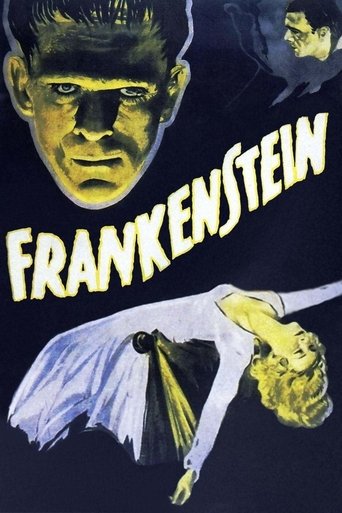
Frankenstein
1931 · Film · 70 min
Part of Frankenstein (Universal) Collection
Directed by James Whale
Obsessed scientist Dr. Henry Frankenstein attempts to create life by assembling a creature from deceased body parts. Aided by his loyal misshapen assistant, Fritz, Frankenstein succeeds in animating his monster, but it flees into the countryside and begins to wreak havoc.
1 positive9 neutralfrom 10 commenters
Where to watch
No streaming data for this title.
10 comments on Hacker News
The author is really romanticizing here. In 1982, video rental stores were either seedy, dedicated to porn rentals. Or, they were tucked into the back of a record store. Video cassettes were brand new in 1982; no one knew what to make of it. Heck, the industry couldn't even decide on a format (we had Betamax in my house because Mom was convinced it was the future). In fact, in those early days, I recall people were focused more on recording ("I can record my shows and watch them when it's convenient for me!" was a revolutionary concept at the time.) than renting. Once the rental market became a thing, a few local chains popped up. Then the rental market exploded and Blockbuster basically took over the world. They destroyed the local chains. They also sucked the life out of video rental - long lines, poor selection, annoying fees, unknowledgable staff, etc. I really think people are using "rose colored glasses" when they recall the Blockbuster days; it was definitely not all good.
The only experience I can recall that matches the article is after Blockbuster took over the video rental world, there were a few local rental places that focused on the love of movies, with a diverse selection and knowledgable staff. These places probably paid the rent with porn rentals, usually in an adjoining room, but the love of movies was always palpable. It was a lot like the article describes. I remember going to one in the early-2000s and renting the original Frankenstein movie (the one with Boris Karloff), something Blockbuster would never stock, much less have staff that even knew there was an original movie. And, yeah, I remember talking to the clerk about it; he ran down the list of all the Frankenstein spin-off movies.
How Boston City Hall was born: https://www.britannica.com/topic/Frankenstein-film-by-Whale
1939? I suppose you have to pick a year and call that the cutoff.
But you're cutoff leaves to the "Dark Ages" the films Frankenstein (1931), Love Me Tonight (1931), 42nd Street (1933), Gold Diggers of 1933 (1933), King Kong (1933), It Happened One Night (1934), The Thin Man (1934), My Man Godfrey (1936), Stella Dallas (1937), Snow White and the Seven Dwarfs (1937) and The Adventures of Robin Hood (1938) to name a few.
I asked ChatGPT. It gave me bunch. I got some I've never heard of. I think I'll look into them.
<ChatGPT>
list 50 interesting movies that explore AI.
The Matrix
Ex Machina
Blade Runner
The Terminator
I, Robot
The War of the Worlds
A.I. Artificial Intelligence
Transcendence
The Fifth Element
2001: A Space Odyssey
WarGames
Westworld
The Machine
Her
The Iron Giant
Automata
The Truman Show
The Prestige
The Martian
The Fly
The Bicentennial Man
Surrogates
The Day the Earth Stood Still
Limitless
Robocop
Electric Dreams
The Island
The Time Machine
The Circle
The Arrival
The Host
The Stepford Wives
The Brain that Wouldn't Die
Frankenstein
The Invisible Man
Metropolis
The Thing
Jurassic Park
Independence Day
Gravity
Artificial Intelligence: AI
Avatar
The Hitchhiker's Guide to the Galaxy
The Matrix Reloaded
The Matrix Revolutions
Inception
Interstellar
The Time Traveler's Wife
The Butterfly Effect
The Future.
</ChatGPT>
Chekhov's Gun is a determining trope on "Frankenstein's Monster's Monster, Frankenstein". Quite literally, actually. There's a real gun at the beginning of the movie.
Most zombie fiction is premised on a contagious pathogen or a botched scientific response to such a pathogen (28 Days Later, The Last of Us, I am Legend, Shaun of the Dead etc.) Some use accidental exposure to radiation or extraterrestrial contamination, with unclear mechanisms (Night of the Living Dead)
Zombie movies outside of the contagious pathogen paradigm are more uncommon. Some zombie movies, particularly the older ones predating Night of the Living Dead, are premised on religious supernatural voodoo stuff (White Zombie [1932!]). In others, the condition is not strictly contagious, but exposure to a chemical substance causes a reversal of death (Re-Animator, and Return of the Living Dead (my personal favorite and the origin of zombies who desire 'Braaaaiiiiiins')) In only a few, the creature[s] are created by a mad scientist deliberately trying to reverse death using something other than a contagious pathogen (Frankenstein (should that count?), and Re-Animator.)
Mad scientist in an academic setting attempting to reverse death and accidentally creating an outbreak of non-contagious zombies is a pretty narrow list of zombie movies. Re-Animator is the only one that comes to mind. Anyway, a zombie outbreak obviously isn't going to happen, but if the public becomes generally aware of this research, now might be a good time for Hollywood to reboot Re-Animator. Gods know they hate making original movies these days. I'm aware that a zombie movie fan complaining about a lack of originality may seem ironic.
I call them "wikiwalks".
And I call an excessively tangential session a "wikiwalkabout", after the Australian walkabout tradition introduced to Americans by "Crocodile Dundee", or, more recently--the Locke character from "Lost". And boy, did that show have a letdown denoument. But I did like the colossus foot in the later episodes, because it reminded me of "Ozymandias", by P.B. Shelley. And did you know that he wrote that as his shot in a poetry duel with another poet--Horace Smith? (I guess he won, right?) Anyway, they picked that as a topic to honor a new museum exhibit of the Younger Memnon statue of Rameses II. Those British museum-goers were just mad for importing cultural artifacts from distant lands and never sending them back. Like the Elgin Marbles, from Greece. And when I think about Britain and Greece, I can't help thinking about their palace guards--Greece with their poofy-footed Evzones and Britain with their Beefeaters. And one of those Beefeaters is the Ravenmaster of the Tower of London--literally in charge of the welfare of the tower ravens. One of whom is apparently named Merlina, and is allowed additional latitude in how far she may fly, because she always comes back. And speaking of ravens and 19th-century poets, boy was Edgar Allen Poe a gothy li'l guy. He had a lot of inspirational company, though. Including Mary Shelley, wife of the aforementioned P.B., who won a 3-way ghost story duel between herself, her husband, and Lord Byron, who only managed to invent the vampire romance genre. So between the two of them and ol' Rameses II, we're almost all primed to scare the crap out of Laurel and Hardy with Universal Pictures monster movie staples: Frankenstein's monster, Dracula, and the Mummy. But we still need the Wolfman....
And hopefully you see how it works now. Before wikis existed, there was "Connections", by James Burke.
_The Great War and Modern Memory_ by Paul Fussel is a great book about the changes wrought on society at every level by WWI. Both a work of scholarship and a scream from the heart (Fussel lost his best friend in combat during WWII).
The movie _Gods and Monsters_ makes this connection wrt James Whale, director of _Frankenstein_.
> the meme of "Frankenstein" being about the perils of science or technology -- is totally at odds with the book itself.
But not with many of the movies based (loosely) on the book, which is probably where the popular perception of “Frankenstein” and the usage at issue come from.
OTOH, I think a good argument can be made that, whether or not it was Shelley's intent (though I think it very clearly is part of that intent), the book itself is a powerful message about the perils of science and technology, specifically, the perils when science and technology, no matter how moral the application would be in the ideal context, outpace the what society is prepared to deal with. It is exactly, that is, about the dangers of technological action from an ivory tower that doesn't consider the real context in which the action takes place.
> It warns against the fear of the unknown
It does, but it warns just as much about disregarding the existence of such fear and, by extension, other aspects of the existing society which would turn your neat technical innovation into a catalyst of horrors.
Oh. Even monster movies like 1931's Frankenstein don't count? (Which grossed $185 million in 2015 terms.)
Well, OK. I guess you can argue the "infantilisation" of society from the narrowest possible definition so that it represents just one particular modern fad. I guess that means you get to believe society is newly infantile up until the novelty of realistic superhero movies wears off?
My mistake, anyway. I thought there was a debate over "this fad means society is more infantile than it used to be", not, "superhero movies specifically mean that society is now infantile". The first argument is common but wrong and easily rebutted, the second one wouldn't've been worth the time.