 Hacker Cinema
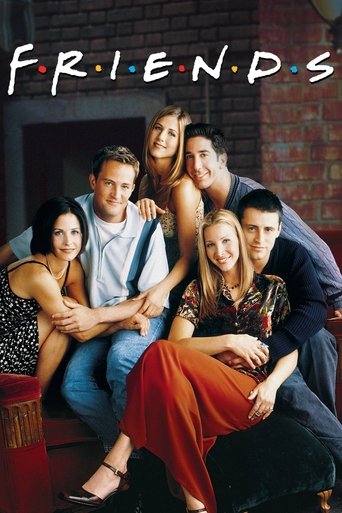
Friends
1994 · TV series · 10 seasons
Created by Marta Kauffman, David Crane
Six young people from New York City, on their own and struggling to survive in the real world, find the companionship, comfort and support they get from each other to be the perfect antidote to the pressures of life.
48 positive40 negative2 mixed262 neutralfrom 352 commenters
Where to watch
No streaming data for this title.
386 comments on Hacker News
I started learning english around 1984, when I began to learn programming. Back then most books were, by very far, in english. I also spent some time in the US (about one year altogether).
Copying lyrics from my favorite songs of the 80s was helpful. And then later on TV series and movies in english.
I've watched Friends, HIMYM and Californication* more than once (it's probably the reason I swear so much) and those really helped.
Now I raised my kid in english: from the beginning she was only ever allowed to watch TV shows in english. And she's always been to international schools, in english too.
The other day she taught me a simply word which, surprisingly enough, I didn't know: a "coaster" (a drink coaster).
My absolute favorite is when she uses english grammar and applies it to french: the rules about where adjectives do go vary between french and english and she regularly messes it up in french (supposedly her "native" language but at this point I wonder whether english ain't a first language, and french second).
And one thing she has that I'll never have is a beautiful, proper, english accent. Mine shall forever be a strong french one.
I agree on physically exploring.
It is always nice to take younger folks to the used DVD/CD store and let them explore. It is not expensive.
There's also a strange paradox, where the better stuff is cheaper. (technically it is probably popular stuff is cheaper). The dvds of season 1 of Friends is usually $1.
and sometimes you can get 4k UHD disks for cheap.
I got to 12 on the puzzle yesterday I think and I figured " okay, I might as well finish one" and started going back day by day in the archive..it took me almost a full month's worth to get an 18/18, and I think with only one exception, every single one I lost on felt like I had tried every reasonable combination in the 30 seconds only for me to see the reveal that it was an extremely common word that I was shocked I couldn't come up with.
My theory is that if there's a small but non-trivial chance for our brains to for some reason fail to recognize a word, stringing together enough of them in a row will end up causing most people to suddenly have that moment out of nowhere. It kind of reminded me of that episode of Friends with the bit about writing down all 50 states in a certain amount of time; perfect consistency even for things we know well can sometimes be surprisingly hard!
Broad appeal? You can’t do anything good aiming for broad appeal. People like too different things, they all don’t mash together well. If you add to many tings that appeal to different people you end up with incoherent mess. Instead of appealing to everyone you end up pissing off everyone in many different ways.
Look at the Ring of Power. Did it have broad appeal? Maybe, first 2 episodes brought in 25 million viewers. The whole first season was watched by 150 millions, despite season completion being ~40%. For reference, X-Files pulled in more only in 1 of its 11 seasons with most under 20 mil, and Friends lowered in 20-25 mil with only one season being about 30 mil. So the numbers are impressive but do you know anyone who loves the Rings of Power? Anywhere near to how people love SG-1?
The one I hate so much is fake ai-made movie trailers. I just got fooled by a fake AI-generated for a new Tropic Thunder. There's another one where they have ai-made Harrison Ford playing the old man from Up, and one of the girls from FRIENDs playing the Golden Girls. It's not art it's deceptive. It's so aggravating.
Lots of people will have a show on or something while they're cooking or cleaning or doing other things. Is it worse for it to be interesting technical content with fun other stuff thrown in than if was an episode of Friends or Fraiser or Iron Chef or 9-1-1: Lone Star or The Price is Right?
I guess I'm only allowed to have The Masked Singer on while I make dinner.
> but it is often the case where you will get into the office at 9:00 AM - and everyone is talking about the biggest release/development that morning - and by lunch it's kind of old news and people have moved on to new thing
That's literally just gossip. The same dynamic existed with episodes of Friends and Game of Thrones.
Everyone gathers around the water-cooler and discusses the newest happenings, but that's not science and it's not engineering. You're not passing around serious white papers and looking over peer reviewed publications and datasets, it's just... gossip. It has the same value as gossip and is completely optional.
I make a point of downloading sitcoms in SD, creating my own DVD rips if needed. There's something wrong about watching Seinfeld or Friends in 1080p.
> I assumed the author had to be comparing inflation-adjusted dollars
As did I.
90s weddings remind me of the Friends episode where Monica was scoping out her wedding. Chandler revealed how much money he had by writing it on a price of paper (that is, the audience never saw the dollar value), and Monica said something like "oh, we can go with best one, plan A" and Chandler said he didn't want to spend that much money "on one party". I've always wondered what amount of money that was.
> most HNers grew up in middle and upper-middle class households in the 1980s-90s that in most cases weren't representative of the lives the median American would have lived then, and a lot of the rose tinted glasses appear to betray that upbringing
Guilty as charged! I also do think that there’s an additional sense within those communities of the “normalcy” of homeownership both within the spaces, and reflected back via mass culture. True, nobody in New York has an apartment like they did on Friends, but the shows made to appeal to middle class America, even the ones like Married with Children still held “well there’s a house” even though the main character is a deadbeat - this isn’t played for laughs or out of irony, it’s just the default.
Even in the 50s, 60s, and 70s sitcoms and shows you rarely see people renting - homeownership rates are pretty steady around 62% back to the 60s. Among white Americans it’s like 75% or something. So I don’t think it’s entirely rose tinted glasses, even if there is a point to be made about the biases of the HN crowd.
Excellent story!
There's an episode of Friends a little bit like that: https://www.youtube.com/watch?v=9WYGdstEVJQ
Homes became more affordable from 1989-1996. So I don't think they were retroactively saying "this isn't affordable anymore."
To be clear, I agree that houses are way less affordable now, which was the point of this thread. I just don't think fictional TV is a good reference point for that. They famously exaggerate the spaces people live in so they can film better angles or block different scenes. See "Friends"
> I find American humour so hard to relate to but I guess it's just a culture thing
These kind of comments always puzzle me. Hollywood makes stuff for the entire world, not just for a domestic audience.
Shows like Friends, Seinfeld, The Simpsons, pretty much any big sitcom you can name is in syndication in most countries around the world, because of how relatable it is.
It's often not sophisticated, and can be quite shallow (See Two and a half men or Big Bang theory), but it being hard to relate to is unlikely to be an issue.
How old are you? Because I promise you, that description was pretty much spot-on for most shows through most of the history of TV prior to the late 1990s. My memory is that the main exception was daytime soap operas, which did expect viewers to watch pretty much daily. (I recall a conversation explaining Babylon 5's ongoing plot arc to my parents, and one of them said, "You mean, sort of like a soap opera?") Those "Previously on ___" intro segments were quite rare (and usually a sign that you were in the middle of some Very Special 2-part story, as described in the previous comment).
Go back and watch any two episodes (maybe not the season finale) from the same season of Star Trek TOS or TNG, or Cheers, or MASH, or Friends, or any other prime time show at all prior to 1990. You won't be able to tell which came first, certainly not in any obvious way. (Networks didn't really even have the concept of specific episode orders in that era. Again looking back to Babylon 5 which was a pioneer in the "ongoing plot arc" space, the network deliberately shuffled around the order of a number of first-season episodes because they wanted to put stronger stories earlier to hook viewers, even though doing so left some character development a bit nonsensical. You can find websites today where fans debate whether it's best to watch the show in release order or production order or something else.)
By and large, we all just understood that "nothing ever happens" with long-term impact on a show, except maybe from season to season. (I think I even remember the standard "end of episode reset" being referenced in a comedy show as a breaking-the-fourth-wall joke.) Yes, you'd get character development in a particular episode, but it was more about the audience understanding the character better than about immediate, noticeable changes to their life and behavior. At best, the character beats from one season would add up to a meaningful change in the next season. At least that's my memory of how it tended to go. Maybe there were exceptions! But this really was the norm.
> (probably the most difficult one to do on an app) speaking / conversation practice.
Conversation practice with humans [0] is key: As a child I had complete, native-level fluency in French, because my first few years of school were in the local schools of a farm village in the interior of France (my US Air Force dad was stationed at a nearby air base). All through high school and college back in the U.S., I took French for the easy A. But now mumble years later, when my wife and I watch French TV shows on Netflix, I have to rely on the subtitles because I just can't keep up.
I've read comments by people from non-English-speaking countries who say they learned English by watching Friends on TV. I can't imagine how they did it.
[0] Maybe someday an AI could substitute for a human native speaker in conversation practice?
> it frequently produces mediocre or worse content
I agree, and I go one step beyond:
Any "series" is BY DEFINITION, bad. If to tell a good story you need +4 episodes, you're doing a poor job. Or, what's real, you're just bloating it ON PURPOSE to keep people attached to their screens.
If Citizen Kane, Tokyo Story, 2001 Space Odyssey or any other good film managed to tell their story in <3hs, I'm sure any other of these "originals" should be able to do the same.
The real quality resides in making something SHORTER and condensed. This is when you start playing with REAL cinematic mechanisms. For example, Seven Samurai is well known for its use of motion and dynamism. Kurosawa communicates a lot without using dialogue, just by the use of movement of the characters or the background. Today's productions are just: explicit dialog > cut scene nature > explicit dialog > cut scene nature > etc.
Some stories might need longer runtimes, like Lord of the Rings or whatever "bigger universe" it is. But these are EXCEPTIONS, not the rule.
For the record, I do enjoy some Series: Friends, The Office, etc. But these are just comedies, and one could argue they're explicitly made to be "bloated" (in terms of length span).
> Perfection is achieved, not when there is nothing more to add, but when there is nothing left to take away
PS: I know I'm going to get downvoted to oblivion but I don't care.
I think Netflix's incentives, especially now that they have an ad tier, have changed.
With a subscription service 10 years ago, you just need to have enough must-see content:
- Original scripted TV series that become mainstream known and/or seen as prestige TV, like "The Crown," "Mindhunter," "Bridgerton," "Stranger Things" etc.
- "Crown Jewel" reruns with huge fanbases such as The Office, Friends, Seinfeld, Modern Family, Breaking Bad, Better Call Saul, Arrested Development, etc.
- Unscripted TV series that become buzzy - like Love Is Blind, Tiger King, etc.
Having those categories all well-stocked ensures that only a fool would cancel their Netflix subscription as they'll be out of the loop when the new season of a 'zeitgeisty' show drops. You don't really need all your viewers to watch more hours to get more money every year, you can grow revenue with a combo of new viewers and price increases as long as users just watch regularly.
I think present-day Netflix sees incentives:
- to get as many people on the ad tier as possible so they can scale revenue with watch time
- to increase watch time which is a solved problem via psychological manipulation if you have good ML like they do
- more watch time without spending more money points pretty obviously to lowering cost per show as much as you can, which manifests as worse quality, more reality, more imported dubbed shows, etc. and drastically curtailing giving huge checks to the Matthew Weiners, David Benioffs, and Vince Gilligans of the world to bet on a massive superhit.
So they will want to focus heavily on the unscripted category plus whatever they can slap together cheaply, then autoplay and optimize their way to growth.
>There is no employer loyalty, that died in the 90s.
As a millennial kid at the time, I remember the 90's movies and sitcoms (Office Space, Friends, the Matrix, Fight Club, etc) where the biggest problem GenX had at the time was, *checks notes*, the lack of purpose from being bored out of their minds by a safe and mundane 9-5 cubicle job that paid the bills to support a family and indulge in mindless consumerism to fill the void.
Oh boy, if only we knew that was as good as it would ever be from then on.
I remember the mass layoffs Yahoo had at the dot com bubble crash, when they had a 5-15 minute 1:1 with every worker they laid off. Now you just wake up one day to find your account locked and you put it together that you got laid off, then you read in the news about mass layoffs happening while they're now hiring the same positions in India and their stock is going up.
No wonder young people now would rather just see the whole system burn to the ground and roast marshmallows on the resulting bonfire, when you're being stack-ranked, min-maxed and farmed like cattle on the altar of shareholder returns.
Friends on Netflix one day years ago had the extended versions of the episodes. They fixed it quickly, but it's kind of a shame since it'd be nice if we had the choice to select which version we wanted to see.
I don’t see how this can be true. Reduced copyright terms mean price for old stuff goes down (to however much hosting and bandwidth costs). This means more funds are available for new content.
Currently, people give a ton of money to Comcast/Disney for stuff made decades ago, which in turn gives Comcast/Disney more power, since people are far likelier to stay within those silos.
If friends/seinfeld/whatever could be accessible via multiple sources, then other groups of content creators could emerge, offering $15 to $25 per month of new stuff, rather than compete for a smaller portion of the budget since the old content takes up so much.
The creators of new work don’t earn much from 130 year copyrights anyway, to fund any decent production, they will need outside investors such as Disney or Apple or whoever to make the gamble. In exchange, Disney and Apple are going to want the ability to sell it for 130 years, but few if any new content creators is able to negotiate gross royalties, those days are long gone.
>Also, shorter terms would presumably lead to more consolidation between media companies (as there would be less differentiation via exclusive content)
This is the opposite of what would happen. If everyone can sell the popular reruns and holiday movies, then they stop being exclusive to Disney and Comcast and Warner Bros and so the only thing they can compete with is new stuff, forcing then to invest in new stuff.
There was that Friends episode where Joey got halfway through Little Women thinking "Jo" was a guy and he had to start over. Blood Meridian was kinda like that where I realized I had lost track of what was happening in a chapter, who was killing who for what reason, and had to backtrack. So yeah the book makes you feel like Joey on Friends.
It depends. TFA's Good Will Hunting example is good storytelling, because the whole point is that Will was not ready to hear that direct conversation. In fact, Ben Affleck's character basically says that to him at the end of the movie, when he has finally grown up enough to hear it.
Bad examples include almost every episode of Friends, where all the drama is based on a stupid, unnecessary lie.
The other large factor is copyright. If we had 21 year copyright terms for shows and movies, I'd imagine someone would have set up a streaming service with every show and movie under the sun that they could fit into that, and people would eat it up, since they often just want to half-watch Seinfield, Friends, Star Trek, et cetera, since its their comfort show. A service that can provide that without being hostile is quite a lot of what many people look for in a streaming service.
Are we seriously praising Spotify's business model and affect on the creator market?
Not to mention they're up to $12/month. Creating movies and shows is significantly more expensive than music, so it makes sense the price to a catalogue would be scaled by an order of magnitude. Not to mention the increased costs for digital providers for storage, bandwidth, and compute requirements.
I'm, of course, more than happy to hear about how the reruns of Friends could stay on Netflix since it's just a dispute about perceived value. But the rest? Come on, I know you aren't totally ignorant on the economics of these markets.
Sitcoms are a tried and true language promotion tactic. I remember when I was young there was a French teenage-sitcom, "Helene", which my mother would watch because her students watched it religiously (she was a language teacher). It was outrageously soapy, but even I noticed the relatively accessible language. My mother told me the show was a subsidized export of France's language evangelization program. Apparently teaching French was a lot easier when that show was popular.
Friends wasn't that, but close enough. I think I recall Simone Giertz saying that she learned English from it, and I can't be the only one who has noticed that there's something uncannily Lisa Kudrow-like about her stage persona.
Comprehensible input does seem to be the most effective way. i.e. get a lot of input that is only slightly beyond your current level (i+1).
I'm learning Ukrainian and there is a podcast "Ukrainian Lessons Podcast". Seasons 4-6 are not so much lessons but more just discussions about life, history, culture in 100% slow comprehensible Ukrainian. In one of the episodes Anna talks about how she spent most of her life getting English lessons at school and university, but still couldn't use the language freely. Finally, she watched Friends and by the time she'd finished every season, she felt she at last had a good command of English.
Sitcoms are good because they depict a lot of everyday situations, are rich in dialogue (i.e. real language people use daily), and there is a lot of slang and cultural references. Of course, you first need to develop enough of a base in the language to understand what's going on.
> “It’s just so upsetting,” says Judith, whose cookie recipe was passed down by her mother. These “perfect little cookies” once made the rounds at bake sales, Christmas cookie exchanges, and birthdays.
> a box of Betty Crocker chocolate cake mix, two eggs, and 1/3 cup neutral oil
I realize it's not the point of the story, but this is like that Friends episode[0] where Phoebe finds out her grandmother's secret cookie recipe was just Nestle Tollhouse.
[0]: https://www.imdb.com/title/tt0583536/
It already is- to some extent. I see a ton of TikToks on friends feeds that are scenes from the TV show Friends but they’ve generated video of baby versions of each character to say the lines. I haven’t seen them replace the audio but you could imagine that being a next step whenever they hit copyright trouble. The worst part is that I’ve asked why they like them, they say the babies are cute and they know/love the scenes so it’s all good.
It does feel like it must be the engagement version of junk food, though.
“The algorithm” knows perfectly well what you want to watch. So it seems inevitable to me that eventually “the algorithm” just generates an endless stream of content fine tuned to you.
> When I was learning English as a second language, I could understand most of what was said in an action movie or a simple sitcom like Friends after I could read simple novels like Sheldon's If Tomorrow Comes.
Friends does some interesting linguistic things. One of my favorite examples:
You told me to go out and be a caterer, so I went! I be'd!
Monica isn't making a mistake there. But I would be very surprised if someone who was just learning the language understood that joke.
> To this day, I still find Spanish a bit more challenging than my native language or even English
I feel the same, albeit on a much lower level. Somehow Spanish just feels strange to me. For instance, a subject in Spanish often gets placed after the verb in a sentence, so I constantly have to figure out where the subject is: is it before the verb? after the verb? Or there's no subject and the conjugation of the verb implies the subject? I guess it's just a matter of time to get familiar with the verbs and it takes time. Also, listening comprehension is a huge problem for me. Even discerning words from conversations is very challenging. When I was learning English as a second language, I could understand most of what was said in an action movie or a simple sitcom like Friends after I could read simple novels like Sheldon's If Tomorrow Comes. However, I can read simple novels like El Alquimista now, yet I could only understand what was said in Extra at best with a super focus. In contrast, listening to Japanese is much easier for some reason, even though my level of Japanese is way below N5 (equivalent to Spanish's A1).
Are you also surprised by popularity of sitcoms like Friends or HIMYM, or reality shows? They're even more repetitive rehashes of the same mundane thing, both episode to episode and within the genre.
Who are the millions of people who watch, for the 20th time in their life, how Character A does something unrealistically stupid, ends up in an awkward situation, and then spend the rest of the episode being continuously teased over it by other characters, because they're all written to be slightly stupid and low-key assholes.
This is not to criticize sitcoms and reality shows (and people watching them) here, but rather to point out that the same phenomenon you described also manifests with vastly more popular forms of entertainment, so there must be something to enjoying the experience beyond sheer originality.
I think you hit the nail on the head there, you and the author are simply from different cultural zeitgeists. I also remember Star Trek and Dr Who being a big deal, but I was entirely too young to care. And I continue not to care, since I don't watch live action shows much. Never seen an episode of Friends or Game of Thrones either for example. Just a starkly different generation and subculture.
> "Lurking, Lifting, Licking"
Ok, I went from being pleasantly surprised to breakout laughter at that point.
But I also think this points out a big problem: high-quality stuff is flying under the radar simply because of how much stuff is out there. I've noticed that when faced with a lot of choice, rather than exploring it, people fall back into popular stuff that they're familiar with in a really sad way. Like a lot of door dash orders will be for McDonalds, or people will go back to watching popular series like Friends, or how Disney keeps remaking movies that people still go to see.
In my four years of US high school Spanish in South Florida, I don't recall a single time we read complete stories or newspaper articles. It was entirely grammar and vocabulary in isolation. When there was speaking exercises the teachers did not make an effort to have the native speakers speak with the non-native speakers.
The only thing close to what I'd now call "Compelling Comprehensive Input" that I recall is a single week where we watched a Friends-style miniseries about an English speaker moving to Spain.
You would not be surprised ik spreek geen spaans.
Oh there are certainly some excellent American comedy shows..
Seinfeld, Curb, Arrested Development, Modern Family, The Office (US), South Park, Parks and Rec, 30 Rock, Frasier, Fresh Prince, Friends, How I Met Your Month, Futurama, Simpsons (OG) and then there's not a lot more on the bench unless you include the lesser remakes of British shows.
A lot of them aren't funny or aren't satire.. just look at the Shameless remake - they turned that into a character drama when it was a sitcom.
America has more of a stand-up culture I feel.
I wonder if it's because the news in America is pretty much fiction that they basically don't have political satire as a genre outside of the topical news shows (Daily Show / John Oliver) which are honestly more like real news shows than comedy at this point.
"So in a way Netflix had to learn how to push slop. Because they can't make their own Star Wars or MCU or Friends or whatever. It's just not easy to build a catalog of reliably-profitable franchises. Especially when many of those franchises were born decades before Netflix even existed."
They could try. The budget for the first seasons of Friends was the same as any other sitcom of that era.
Sitcoms would be perfect for streaming companies but non of them seem to get that for some reason.
> Even if someone today builds a better version of what Netflix used to be, it wouldn't matter. They won’t have the rights and licenses to the shows and movies. That’s what keeps people from switching.
What, apart from Stranger Things and Squid Game, has been enough of a cultural touchstone that it keeps people on Netflix? Those aren't things you keep coming back to again and again.
Netflix doesn't own Friends, Seinfeld, The Office, Community, Parks and Rec, etc.
I'd argue Max (nee HBO) has better legacy titles and franchises. They have both enduring IP as well as the reputation of being "destination television".
The thing that keeps people from cancelling Netflix is that they have a better content slate of licensed classics paired with new originals. And they do it in the greatest volume of all the streamers, so there will be "something" on, even if it isn't particularly good.
No one in Asia wants to visit nyc because of friends, sienfeld or sex and the city. These shows to them are mostly raw garbage. The reason is because these shows are culturally focused. Its catered exclusively to the type of American humor and values that most people in Asia do not give two shits about.
They want to visit Hollywood because they want to see the technology that built these blockbusters because internationally everyone understands heroism, sacrifice and special effects. Additionally these movies aren’t watered down. The writing and the effects have gone through years of development to get to that point. It just doesn’t cater to your sensibilities. The term is snobbish.
The writing for Seinfeld and friends and sex and the city took years to get where they are. These aren’t inborn cultural talents. You can easily compare stories from past American movies to see how cheesy and stupid they are. It takes development for stories to come to where they are today and it’s a back and forth between the audience and writers. As writers write more stories audience members learn and become more sophisticated and twists and humor that worked in the past become cliche. Why do you think you’re too snobbish to appreciate something like avengers? You think someone in the 50s wouldn’t appreciate it? Fuck honestly if the whole mcu up till end game came out in the 50s that whole thing would win a Nobel peace prize.
China is 100% going through this learning process right now. The audiences sophistication and the writers as a result are growing at a breakneck pace. I think movies from China that might appeal to who you are is crouching tiger hidden dragon or Hero as these movies share the more universally appreciated parts of Chinese culture and since that is what you’re interested in, I recommend them to you.
This immediately reminded me the episode from Friends about Mockolate - is just me?
I can't argue that I really enjoy music as my working background noise. Something else unique is I enjoy listening to TV shows, or more, "noise". I usually put on a simple TV show I've seen before that doesn't need a lot of attention (Friends, the Office, New Girl, Big Bang Theory), that creates that background noise. It's like white noise to me :)
> I cant think of how slapping a union on top of an already unstable foundation is going to solve anything
You mean like the entire television and film industry? Any production over a certain (small) size is completely unionized. It's so massively successful the American cultural exports dominate in almost every corner of the world.
I'm not sure where the idea that unions can't work for the games industry comes from since it's almost identical to the film and TV industry. Unions exist so workers don't get exploited and to provide stability.
What about Nintendo? They famously have very limited layoffs. They see value in providing stability and maintaing culture and institutional memory.
If anything, it's short-term profit-seeking that destroys industries. You see this in the world of original content production for streamers. They cut the size of writers rooms. They tried to no longer have writers on set. There's a push for "mini writing rooms". Why? Because it cuts costs on a very short term basis.
In doing so, Netflix (etc) are intentionally throwing away the model that created billion dollar properties like Friends, Seinfeld, ER, MASH, Cheers, etc that, to this day, generate massive profits. Seinfeld was known for getting over a million viewers when it was running in syndication.
Long-term it creates problems. Future products and showrunners are writers who need to get experience on set. Shortsighted cost-reudction is literally killing the future of the industry.
As for the price of video games, there are several aspects to this:
1. AAA publishers like to complain that games still cost $60 after years. That's true but also the distribution is significantly higher than it was 20 years ago. You're selling way more games;
2. The marginal cost of producing a game via download is essentially zero; and
3. Games eventaully get much cheaper on Steam. That's a good thing. Early experiments with this showed that selling a game cheap on Steam could generate significantly more revenue than the original release. And because the marginal cost is zero, it's all profit.
There is a social aspect. I think there was a Friends episode where one of the characters got left out of business advancement because she didn't smoke cigarettes and wasn't in the smoking area socializing with the boss and another employee was.
With AI, this entire vast content library is about to be worthless anyway.
We'll be making more long-form, quality content per month than entire Hollywood production years.
And if you include short form content and slop, it'll be more content per second than entire years.
When faced with infinite content, people will reach for content currently popular in the zeitgeist or content that addresses niche interests. Hollywood never made Steampunk Vampire Hunters of Ganymede, but in the future there will be creators filling every void. There won't be much reason to revisit old catalogues that don't cater to modern audiences unless it's to satisfy curiosity or watch one of the shining diamonds in the rough.
There will be a few legacy titles that endure (Friends, Star Wars), but most of it will be washed away in a sea of infinite attention sinks.
We're about to hit post-scarcity, infinite attention satisfiability. We've already looked over the inflection point, so it doesn't take much imagination to reason what's next.
---
Edit: copying my buried comments from below to expand on this.
---
I have direct experience with this field.
I've written, directed, and acted in independent films. I've worked on everything from three person crews all the way up to 200 person shots. Even mocap and virtual production.
We're now developing film and VFX tools for individual artists, and the world is full of artists. It's been starved for films, however. The studio production system only had so much annual capacity per year, and most creators never get the opportunity to helm a project of their own.
You're not crying over the accessibility of digital art, digital music, indie games, or writing.
Film production and distribution has been bottlenecked at the studio level for far too long due to capital, logistics, and (previously) distribution barriers. That's all changing now.
Films are going to look more like fanfiction.net, Bandcamp, ArtStation, and Steam. That's a good thing.
I have friends in IATSE (film crew union) and AI is going to hurt their work. The nature of work changes, and new opportunities arise. But what's hurting them right now is that film productions are being offshored to Europe and Asia to break up their unions and bank on cheaper local labor. Production in Atlanta is one sixth of what it was just a few years ago.
I also have friends who write and direct that are looking at this as their big chance to build their own audience.
Isn‘t this the classic gym subscription example? How many people have a subscription and actually don‘t use it. There is an episode of Friends about that.
About the fair pricing: Would love to have this also for my car lease ;) But more on a weekly bases.
> Why spend hours sorting through Netflix' low quality catalog when you can watch a movie you love whenever you want?
Because I would rather watch something I've never seen before?
I've heard a story on Reddit of a guy watching Big Trouble in Little China everyday for years, but usually people wanna watch new stuff. I guess people also rewatch shows like Friends and The Office, but do they really "watch" it or do they just play it as background noise?
I like music and poetry. While stealing from another composer/author/poet you "steal", using AI is not stealing. But to the point that dwnw is trying to make is that the product will not be from the heart. If/when your audience will learn that you never actually experienced "this or that" e.g. I don't like Taylor Swift's music - at all - but it is rumored that she writes about her own life experience and that makes her output relatable.
Will it fill up 60mins for one album? Yes. Will you sell out the MSG when your audience finds out that it was all ChatGPT (or some other LLM)? No. Never.
Another metaphor/analogy is like the Friends episode "The One With Phoebe's Cookies" where the magic disappears because the 'grandma's cookies' end up being Nestle cookies. And the magic is gone, and your audience will be gone.
But it's also highly visual. I forget where I saw it, but someone showed people an episode of Friends without any audio, and they could still understand the plot based on the overly dramatized physical communication.
The first amendment at its core is - if someone wants to say something and someone wants to listen to the first one saying it - the government has no right to prevent or interfere with the process. Banning the app trough which information flows is interference.
And the government doesn't offer any kind of remedy - you can't pick up your whole social cluster and move to another platform.
tiktok didn't had its 1A rights infringed, but every american that wants to listen to clips of old episodes of friends does.
Vivek Ramaswamy recently said that we need "more movies like Whiplash, fewer reruns of Friends."
He (and presumably Musk) think that a society of Terence Fletcher overlords and Andrew Neiman whipping boys is an ideal to strive for, not a cautionary tale.
This is what happens when you don't get any exposure to the liberal arts.
Could Netflix create Friends or The Office? Has there even be a single Netflix show with more than 100 episodes? I did a quick search but found none. I admit that I too was once enamored with Netflix and streamers in general, but now I think that distribution should be separated from creation.
I would recommend the Assimil language courses, very good if you consistently do it every day, they're also not too expensive. Like 75 bucks last i checked, and that'll keep you busy for 90+ days.
Assimil says it can get you to a b1/b2-ish level, which i think is about where it takes you. I did their German course a long time ago, and was able to read paragraphs and understand them just fine by the end of it(didn't keep up with German, so that skill has atrophied.
After finishing Assimil, i would watch a tv show you've already watched but now in french. Ie: go to Netflix or Prime(which in my experience have the most language options) and watch Friends, 24, The Blacklist, Seinfeld etc etc whatever you can think of, in French, it'll help a lot, and make acquiring vocab easier. Native language content can sometimes be a bit harder to grasp because of cultural events/history you may not be familiar with yet.
But French language content I have enjoyed in the past are the podcasts "Podcast Marketing Digital"(also a youtube channel), deux mille ans d'histoire(history podcast)
Maybe Gen Z, but I'd say Millenials definitely had their generational Pop icons. Those icons simply did not live a good life once they left the spotlight. Like, most people I know don't really want to talk about Brittney Spears nor Micheal Jackson, even if they loved their music.
But I agree with your core point. There is no "Spongebob" of animation for Gen Z (except for... Spongebob. Maybe). There's no Friends, nor Breaking Bad of the 2010's/2020's. There's barely any individual movies that break the cultural zeitgeist period.
>The intense political push from the Left to make any form of social cohesion and loyalty undesirable also hasn't helped. The dismantling and removal of tradition, religion, and nationalism/patriotism from society means there can't be a "song of the people" from outside of entertainment either.
we can have social cohesion without resorting to nationalism nor religion. It's just that when you give people infinite choice, we diverge at best to the pareto principle. But 20% of society not being in the know is still a lot of society you fail to connect with.
I think the most obvious sources of legal media are bargain bin DVDs/BRs which you are allowed to rip for personal usage and backup. This would justify all the discussions about episode numbering and so on. I have a small mountain of discs in boxes in the basement, which I bought almost for free (looking at you 17 EUR DVD box set of Friends) and will never see the light of day because they're all comfortably copied on a NAS too.
Same for games, I have titles like RDR which I bought from a bargain bin while it was still very much in vogue for ~2 EUR. I can't use it as a copy but the supermarket bargain bin can be an eternal Black Friday for your media consumption.
> I'd assume residuals are lower / non-existent on the much-bemoaned formulaic Netflix fodder movies? Hence why they keep getting stuffed in services.
As I understand it, the residuals are for things beyond the original contract. So if you have a broadcast show, that gets paid out. Then it goes to syndication - residuals get paid. Then it goes to streaming - residuals get paid.
However, with an in house production by a streaming service... from the Fortune link ( and http://web.archive.org/web/20231001022043/https://fortune.com/2023/09/30/why-hollywood-actors-still-on-strike-2-percent-residuals-streaming/ if you have trouble with the link)
> So shows originally produced for broadcast television aren’t an issue. When “Friends,” which was originally an NBC sitcom, generates $1 billion dollars on streaming platforms, the five leads each earn 2%, or $20 million apiece. But a show like “Stranger Things” – produced and owned by Netflix – never goes to a secondary market as long as it is aired only on Netflix, so the stars earn only their original pay.
> The problem, then, comes from the fact that the existing residual model, per the expiring SAG-AFTRA contract, doesn’t take streaming into account.
> In the streaming era, all new shows produced by streaming platforms are concurrently reruns and original runs. Actors want 2% of streaming revenue generated by the show or film to replace this line of income.
> These films will soon exit the service because the rights acquired by Netflix as part of its licensing deal will end at the end of the month. This standard content licensing practice is also the reason why “Friends” is no longer available in the U.S. or Mr. Robot” is no longer available in Arabic countries.
So, a complete non story.
> Rhetoric is always about respecting the melting pot
That is the uniform culture. You see it in tv shows everywhere, people looking the same in every show etc. (the 1 black, 1 white woman 1 white man 1 Hispanic 1 Asian group you see everywhere in American stuff)
There used to be shows like Friends and Fresh Prince which means diversity, now everything is just the gruel of the melting pot.
>The point being that new stuff isn’t just competing with new stuff but also old stuff.
I think that this will become a bigger and bigger problem for the games industry.
While movies, TV shows, literature, and music are always expressions of a particular time/culture/generation, games are usually much more universal.
E.g. young people today find Friends more problematic than funny, but have no problem enjoying Mario Kart.
I’m done watching new series. Tons of downsides, waiting for the new season is only one of them.
Shows that I loved and I was invested in got cancelled after two seasons, the ending was rushed because the producers got better gigs, later seasons got dumbed down and lost what made them special, constant pushing of political ideologies, lazy writing, cookie cutter dramas, same actors in every Spanish shows…
Yeah, when I seldom have the chance to watch something, I’m good with an episode of Monk, Friends or other classics I haven’t seen in two decades…
> Making friends with the wrong people can really mess up your life.
> And yet, I keep reading about this epidemic of loneliness...
Both things can be true at the same time, this is not a dichotomy.
At the same time, there's a old saying in my company that goes like "better alone than in bad company". Timeless wisdom, I guess.
On this matter, I was recently brought to pondering about the extinction of the so called "third place". The reasoning goes like this: people often used to have three places they attend the most: they home, their workplace, and the "third place".
The "third place" can be pretty much everything, and it's the place where socialising happen: for example, in many sitcoms it used to be some kind of bar/pub/restaurant: the McLaren's in HIMYM, "Arnold's" in Happy Days and another similar one whose name i can't remember in Friends. When I was a kid, it was a public park where we played soccer, and most kids just spent time there.
It seems this is going out of style or something?
Two things I noticed are:
- nowadays spending time in bars/pubs etc can get costly. Might be the general economic downturn, but it seems to be that going at the bar and having a beer or two used to be more accessible in the past (older folks are welcome to chime in and offer their perspective).
- pubs with larger university people tend to be more affordable, but the age band is quite restricted... Not formally, but somewhat implicitly.
> The importance of an SRS system like Anki cannot be overstated.
I'm not sure if I agree with that, as no native speakers need to have an SRS to learn their native languages. No doubt that SRS will allow us to remember words, yet few can really acquire those words intuitively. When starting to learn English in school, we used some kind of SRS system to memorize words and phrases and sentences, and man, the result was abysmal. We spent 10 years learning English (3 years of middle school, 3 years of high school, and 4 years of college), trying to memorize new words every day, passing TOEFL and later GRE through intense SRS, yet few students could understand TV shows, read fictions, or communicate with English speakers. And the learning was arduous, to say the least.
In contrast, I was lucky enough that my mom gave me a set of graded readers compiled by National Geographic, and simply asked me to read them through. And then Sidney Sheldon's books, Friends, etc and etc. So basically I immersed myself into the language, never having to do SRS, and I could easily pass TOEFL and the GRE Verbal years before graduating college. As a bonus, I started to enjoy TV shows and movies early on, and was able to socialize with my classmates and professors without even trying. I also used the method to learn Spanish and Japanese, and the results are similar. No SRS needed but consistent exposure to the languages. In less than two years, I can read books like The Alchemist, If Tomorrow Comes, and Project Hail Mary. Another interesting contrast is that I couldn't understand much conversation in those languages, precisely because I spent most of my spare time in reading.
>The internet exists.
Yeah, that's the problem if we're talking about cultural relavance. We all have accedd to 24/7 on demand media, and that inevitably means we will form our on cultural bubbles based on taste, community, etc. There really isn't any single TV show these days that everybody watched compared to Breaking back in the '10's, or The Wire in the 00's, or Friends in the 90's.
We're a culture more specialzied than ever and lonlier than ever. Especially if you don't like Sports (pretty much the last remaining "cultural media"). That also makes it much harder to get the 1000 true fans you linked to (interesting read, thanks!).
Kind of tangential, and I know this is taking the number too seriously but: it doesn't help that 1000 true fans can no longer sustain an artist either. I want to work on my own game, and even if I could somehow get away with 1000 copies sold at $30 (basically pricing myself at the top of indies)... I wouldn't even make minimum wage in California. With no benefits!. and of course that's before the platform cuts and potentially paying for any tools I use. And assuming I work alone on all this. Making more monetization in games these days is still a controversial topic evolving in real time.
1000 true fans more became 10000 true fans these days. Thanks, inflation.
One thing that makes FLUX so special is the prompt understanding. I now gave FLUX 1.1 a prompt "Closeup of a doll house built to resemble a famous room in the TV show Friends" and it gave me one with the sign "Central Perk". I never prompted for the text "Central Perk". A Redditor also discovered that it has an associative understanding of emotions. For example "Rose of passion" and it may draw a flower that is burning, because passion is fiery.
This is miles ahead of most other image generation models available today.
> By college I was surrounded by virtual psychopaths and mentally ill behavior. It was unavoidable. There was fantasy role-playing, AD&D, furries, sitcoms, crazy websites and forums, Slashdot, Usenet, just infested with psychopaths and bizarre malicious ideas.
By your own admittance you've heard voices in your head throughout your life, but you think people playing D&D or watching Friends are somehow mentally ill psychopaths with "bizarre malicious ideas"?
> For example here's how weird Friends is in German: https://www.youtube.com/watch?v=nCoNSZV--z0 . Or Italian: https://www.youtube.com/watch?v=wO5qTzvyQ1s
Can't talk for the German dubbing, but the Italian version sounds natural to us Italians while the original, English version, is hard to relate to and create a bond with. The dubbing makes it "close" to home if that makes sense. You might feel it's weird because you've grown accustomed to watching the original version while also immersed in everything that sitcom portrays.
Huh, if it's good enough, movies/TV shows dubbed with AI-clone of the original voice would be great (if we can ignore the ethics of using the actor's voice and the loss of work for the dubbing companies and actors).
For example here's how weird Friends is in German: https://www.youtube.com/watch?v=nCoNSZV--z0 . Or Italian: https://www.youtube.com/watch?v=wO5qTzvyQ1s
Can AI detect the emotional tone of sentences yet, and recreate it in the target language?
Fully agree.
Just watched a episode of Friends yesterday. The cafe there could be the definition of a third place. ;-)
Based on wikipedia original viewership numbers, the office UK saw about 63 million views during its original run, and the US show saw about 1,463 million, so it definitely was the more popular show by orders of magnitude.
It also seems to be on-again-off-again the most streamed TV show in a given year, competing with the likes of Friends, Suits, and Grey's anatomy. I can't find UK stream numbers to compare, but it doesn't seem like it's ever made one of the top 10/25/etc lists that netflix or neilson publishes.
> See 'Friends'...living in a million dollar loft in NYC while working as a barista.
I see this comment everywhere and it irks me. Here's my point-by-point, obsessed-fan's rebuttal:
1. It isn't a loft. It's an unusually large apartment.
2. It's explained on the show that it's a rent-controlled sublet illegally inherited from a grandmother of one of the characters. The illegality of the situation is a key plot point in one of the episodes.
3. It's obviously easier to shoot on a larger set than a smaller one. It isn't hard to suspend your disbelief on a fairly minor point. Would it have been a better show if they had shot it on a smaller set purely to satisfy people who want realism?
4. The size of the set is irrelevant to the storylines and characters. The characters don't otherwise live lavishly or appear to spend out of proportion to their income.
5. All but one of the main characters lives with a roommate or romantic partner throughout the entire show's run.
Improvement ideas: let the user set their country. If I live in Germany, and I don't want to bother with VPN, knowing that a TV show is available in Argentina and 30 other countries is not important.
Also, I don't think this takes care of the case where some seasons of a show is available but not the others. Maybe that's also the reason for false negatives in some cases (others mentioned this).
Another thing: be able to search by subtitles and audio. In our household, we speak three languages, and I can't watch shows in 2 out of 3 with the standard location. It's also great for people learning languages (common VPN pitch).
Overall, great stuff! The mobile view's information density is very low, I can see 1.7 tiles, so I always need to scroll.
Tapping on the tiles doesn't do anything apart from changing the background.
Some more preset selections would be nice like "Sitcom".
Recommendations based on the selected movie would be also great, for example when I'm watching HIMYM, I'd not mind seeing where Friends is available (it's basically the same jokes but a decade apart with different actors).
Yes, no argument there. Many shows were shot on film and it made a big difference even back in the SDTV days, because electronic cameras just weren't any good. It wasn't only about resolution. There were electronic cameras with great horizontal resolution, but the look was still very "cheap" with blown highlights, muddy colors etc.
Another famous example is Friends, also shot on 35mm film. It has the advantage over Star The Next Generation is that the props in Friends are actual, real life things, so if we now see the fine details of something, we just sea a teapot a little better. While the prop in Star Trek has a higher risk of looking like that duct taped PVC pipe it is rather than the SciFi ray gun it portrays.
This is the genius of the episode naming for 'Friends'. They're each called the thing you would actually say to describe them, like 'The One with All the Cheesecakes'.
But they only had two films to base it on; they would have had to make that decision a few months after the RotJ scene filming ended but before it released. And presumably since the forest was privately-owned, somebody would have had to pay $$$ to acquire it then make it a park (and that somebody would have to be the state of CA, not Del Norte + Humboldt Counties).
In those counties the state already had RNSP (Redwood National and State Parks), a complex of one national park and three California state parks (139,000 acres; 560 km2). [0]
This makes me curious about the economics of when are the rare occasions it makes economic sense to use public money to buy and preserve popular movie locations on private property/land (as opposed to paying a premium for sentimental or tourist value). For example the famous 'Friends' apartment exterior in NYC is still private property. 'Shawshank Redemption' on its initial release bombed at the box office. Scranton, PA has a self-guided tourist trail [1] for the US version of 'The Office'. Only rare places like Punxsutawney, PA [2][3] (the town 'Groundhog Day' is set in, although the film was entirely shot in Woodstock IL [4]) make $. For the hardcore tourists there's Tataouine, Tunisia.
[0]: https://en.wikipedia.org/wiki/Redwood_National_and_State_Parks
[1]: https://www.visitnepa.org/things-to-do/self-guided-tours/the-office/
[2]: "Groundhog Day: Punxsutawney’s Million Dollar Holiday" https://nation.time.com/2014/02/01/groundhog-day-punxsutawney/
[3]: Punxsutawney Phil’s town misses Groundhog Day boost (2021) https://apnews.com/general-news-d4a183fdd599322fb9b23a5cb2147f33
[4]: "Groundhog Days in Woodstock, IL" https://woodstockgroundhog.org/
Looking at this I'm thinking we need a new hit sitcom like friends. Friends is hopelessly outdated.
I like the show so far. I did read the books several times because they are incredible.
I think its better for people to think of this (or any film based on other media) as someone's adaptation. I wonder if the expectations for such endeavors are high because of how good Jackson was with LoTR - surely an epic story and films, but this is just a TV series. Some of these imdb comments are funny, like the one that likens this show to the Friends TV series - only set in Oxford. Probably because the portrayal of the group of scientists is more social than science, but that is just a reflection of the time we live in.
So not without thorns, but if you are a fan of the books this is a fun watch.
The internet isn't one size fits all, all the time. Most people don't want to be challenged all the time and everywhere. Sometimes you want to watch a challenging documentary about socioeconomics in 17th century Poland and other times you want to watch Friends. I see a good use case here for BlueSky allowing users to vary moderation & use curated lists to separate interests & moods.
There are two modes of watching TV in my opinion: intentional and casual
Intentional: look for a certain show/movie, e.g. the weekly episode of House MD, Lost, Friends, HBO, ... -> This is the streaming war between Netflix, HBO, Disney, ...
Casual: You turn on the tv with the aim to just browse around and relax, and get something accidentally interesting/amusing -> Youtube is king and more or less the only option here (and a bit of Nebula)
The two together is the traditional TV
Network television is enormously expensive and entirely paid by ads without knowledge of the viewers. Instead they make assumptions based on surveys of demographics and manage to be very profitable.
I wonder if you could make a comparison of ratings of a TV show to active users of a website. For example: is Twitter the equivalent of daytime TV, or multiple series-finale-of-Friends per day.
*edit: it looks like they are the equivalent of 0.8 Friends finale / day. 41m daily active users vs 51m viewers of the Friends finale.
I find it entirely baffling that the top shows on Netflix are lighthearted shows (usually comedies) that go on for many seasons. Friends, Seinfeld, suits, office, Gilmore girls, supernatural
But… Netflix doesn’t make these kinds of shows. They give small orders of episodes to niche shows and cancel them quickly before they have time to gain an audience.
Obviously they know which shows people watch, but why doesn’t that translate into them making those shows at presumably less cost?
> Overall, a lot of what I can say about Twilio is super obvious now. But it's kinda like how people watch Friends for the first time in 2023 and say "meh it's a pretty generic sitcom". It's because they created the whole genre and shifted how everything thinks.
I feel this way about most classic media. Famous movies and books almost always feel underwhelming to me because the notable ideas have been reused and referenced so many times that the original ends up feeling like a retread decades later. Interesting connection to tie this phenomenon to tech marketing and dev relations.
Is Mickey content good enough that we'll see continued interest? My encounters with Mickey (35 year old American) have been only through the movie Fantasia and I know he is a prominent mascot of Disney World. But the pull to Disney world is probably what, Star Wars or Pixar these days? I was recently thinking Star Wars and the Friends TV series could reach that permanent status. Mickey seems unlikely to me.
Well, thank you very much, because I'm really enjoying it. So far I've only tried Netflix and PhrasePump, but both are very helpful.
I'm honestly surprised by how well the Netflix integration works. I have a good friend from China who has more or less perfect English now, and I once asked him how he first become proficient and he said that he really got going by watching every episode of "Friends". I feel like LanguageReactor's Netflix tools are the same idea but on steroids!
Friends and Seinfeld are still two of the most popular syndicated programs in America, and generally you can find at least one episode of either or both on at any given time of day on modern basic cable in 2023 USA.
Certain groups absolutely have valid reasons not to return to 90’s cultural norms but a pretty large majority would have no objection, at least initially.
The 90's were such an amazing decade, maybe one of the most perfect in the past 100 years(at least for the US).
You had a outstanding job market for all professions with tech jobs still around if you chose. No wars(besides smaller conflicts in desert storm(91) and Bosnia(98)). Politicians/politics during that time were very moderate, George HW Bush and Clinton both governed from the right and left center respectively. Housing was extremely affordable and if you worked a half decent job you could expect to buy a house in most markets, My Wife's family bought a house in Redwood city and her Dad was in the trades, and Mom worked in printing. A house in the mid-90's in Palo Alto CA would run about $350-400k.
Music was outstanding in grunge(Nirvana, STP, Peal Jam) and hiphop was in its golden age(Wutang, Biggie, Tupac). For TV such classics like Seinfeld, Friends, and Star trek TNG were around. Movies like great sci fi and action movies - Matrix, T2, Jurassic Park and many many others were coming out all the time.
Having been a teenager during that decade I feel really lucky compared to the following decades and how bad they have turned out. The only downside to the 90's was crime was relatively high compared to today, but almost every aspect of life was superior unless you miss social media and glued to a phone(I don't).
I was thinking about YouTube video essays lately. That you can probably throw a dart and you would probably find some video (30m+ long) about how, actually, Friends (sitcom) is a show about Dark Triad personality trait people who are terrorizing Central Perk and Manhatten.[1]
That said though I’ll give it a fair listen.
EDIT: He presents a good argument.
[1] Or maybe I once watched a video on that topic and I’m disremembering it as a hypothetical, hah.
That's just how it goes, though. I'm sure if we had music numbers, we'd see well known classics up the charts too. That doesn't mean that viewers don't want new content to watch- likely you would see classics go up when there isn't new content to watch [just throw on an episode of Friends!].
I'm actually excited to see non-Netflix shows on these charts, because this is a signal to Netflix to maintain access to non-Netflix show libraries.
Until recently one of the big problems of streaming licensing was that the rights were almost always sold exclusively, meaning if Netflix had show A but then Hulu won the bidding war for show A in the next round, Netflix had to get rid of it. As evil as Zaslov and his ilk are, this newer round of changes in the industry seems to be opening up the option for non-exclusive licensing. That's really the only way you're going to avoid having a subscription to every major network app (Peacock, Paramount+, Max, Netflix, etc) in order to have a good catalog of stuff to watch.
And frankly I'm tired of dealing with the uneven experiences of these apps, and having to keep a mental map of what show is owned by who in order to jump in to watch these shows without a JustWatch Google search every time. It would be nice if there was a decent shot of just trying an app and having a show I want to watch on it.
I noticed that the watchtime of `You` was split half-and-half between the new season 4 and the prior seasons 1-3. I was curious about the total results by show, including all seasons. Here's the top 25:
TITLE TOTAL HRS WATCHED ----- ----------------- Ginny & Georgia 967,200,000 The Night Agent 812,100,000 You 766,300,000 Outer Banks 740,400,000 The Walking Dead 738,600,000 The Glory 622,800,000 La Reina del Sur 616,800,000 CoComelon 601,200,000 Suits (2011) 599,100,000 The Blacklist 596,900,000 Manifest 581,900,000 Grey's Anatomy 560,300,000 Wednesday 507,700,000 Gilmore Girls 505,800,000 Breaking Bad 505,000,000 Queen Charlotte 503,000,000 Friends (1994) 448,500,000 Love Is Blind 439,300,000 Lucifer 434,300,000 The Big Bang Theory 420,400,000 Shameless (U.S.) 392,600,000 PAW Patrol 392,300,000 New Amsterdam (2018) 375,500,000 Brooklyn Nine-Nine 358,900,000 Firefly Lane 342,700,000
FWIW Friends had an episode semi-explaining that, IIRC the girls' apartment was rent controlled and was in Monica's aunt's name.
Which actually isn't too far off from the situation as it exists today, where tons of people owe their living situations to the fact that their parents or other relatives owned property when it was affordable to buy it. Heck, there are tons of people who say "I'm so lucky I bought my house when I did, I could never afford this place now." We've basically ended up back at a society of landed gentry, and then everyone else is kinda screwed.
I don’t think so, to be honest. The landscape for media consumption is so much different than 10-15 years ago. Without any supporting data, I have a hunch that, shows are mostly watched within a year of its original air date. New shows aren’t on a rerun (I recall Scrubs, House being on from time to time), they are not turning into a comfort background tv show (like The Office, Friends) or have a religious fanbase that’ll just follow along because there are 20 seasons of it (NCIS, Greys Anatomy and so on.).
On top of everything, media is extremely fragmented. So much choice that there isn’t any specific shows that people watch because everyone else is watching and will talk about it on Monday during lunch (a la Game of Thrones). So all these companies are left with churning new shows trying to find a holy grail of the Stranger Things size to bring them new subscribers. Until then, anything that doesn’t stick on the wall, will get cut off.
We have a huge movie industry scene in my city, so you hear from people who jump from working show A to show B. None of the shows I’ve ever heard of and never will. But producers are still hoping for a genre defining hit somehow.
I have tutored 3 students in Math for a term or more in the UK, here's my thoughts:
- Student motivation is crucial. Your first duty is not to be a cardboard tutor, to be interesting, different, to stir something. Without this nothing later really matters (to me it is equivalent to pursuing a relationship where there is attraction, but not laughter, fun and relaxation - it's a base ingredient)
- Tutors who uncover and help students see misconceptions and knowledge gaps do demand more mental focus, but are much more helpful; these (e.g. visiting last weeks homework mistakes) are incredibly useful mid session too to break up sessions and to illustrate progress.
- You really face a choice depending on the students motivation. I have tutored 3 maths students, 2 of which were on path to fail at their age 16 qualifications, who I did my utmost to stir interest in with relation to video gaming, science and literature respectively, and, by way of being more relatable than their teachers, helped them pass; and one who (long before ChatGPT) I recognised immediately that they were incredibly talented academically and talented at listening, but it did not show in grades because of a lack of confidence and their social beliefs about themself. After a few sessions, I introduced them to machine learning libraries (at the time sci-kit learn/nltk) far beyond anything on their syllabus and showed them beautiful ways to use maths later on to do incredibly interesting things like nearest neighbour search for conversation sentences in Friends episodes. I barely mentioned the maths until after the fact in these stirring few sessions... but once I did they knew they learned eagerly...
They latched on with such energy that their work was compared to that of someone 4 years their senior, and they (from a below average UK London school) got a place in Oxbridge (I cannot express how proud I was of them).
I think it goes to show self-belief and social-beliefs are so important to focus on. As a tutor you -can- make a difference, you -are- the fresh and more relatable start compared to a teacher. And a last important fact is be ready to use metaphors.
To really excel as a tutor I think you should attach math with wonder to something they like. For a fan on the new Matrix movie, it could be the mysterious RSA and P - NP problem. You are a revealer, a magician. Where possible hold some information in apprehension, for the next session. Make it a journey. The teacher must address every student, your work is for them. You are showing them a door to a new way of learning the world, and that door is made of a new material, that they will naturally want to learn about so they can walk through it!
Intellectual rigor regarding Ross from the Friends TV show?
That seems to be taking things a bit too seriously.
I was literally just searching for an episode of The Fifth Estate from 1988 a week ago. A current events/documentary show is never going to get remade.
There's plenty of reasons that people watch old shows. Even on streaming services, the biggest shows seem to be older stuff like The Office, Seinfeld, Friends, etc. Seinfeld will never get remade, and Friends and the Office might, but will not in any way reflect the original.
Going to youtube its pretty clear that there is plenty of demand for old shows: Secrets of War, an obscure 90s era cable documentary show has millions of views across the episodes they uploaded.
https://parade.com/1212498/jessicasager/friends-cast-salaries/
This site states each cast member earned between $20,000 and $40,000 per episode for season 2, which ran 1995-96. That's less than a million for the whole season.
Before "Friends," when Matthew Perry was just 18, he starred in a forgotten sitcom called "Second Chance."
https://www.youtube.com/watch?v=W1X8UK3L8z4
It's kind of bittersweet to watch his snappy delivery, when he was young and starting his career with his whole future still ahead of him...
Relative to your particular bubble - I'm Australian, I've travelled to about two thirds of the 190+ countries on the planet thanks to a career in global scale geophysics and mapping and I've yet to see a single episode of Friends .. I doubt I'd recognise Mathew Perry from a photo array.
I'm not especially unique in the circles I know either, I swap a lot of TV episodes with others who have home entertainment NAS systems and it's not a series that gets much discussion - it has its fans, sure .. but its not the kind of thing that broadly hits the "must watch" lists.
That's sad, I remember watching the Friends reunion episode and Matthew Perry saying things like "nobody calls me any more". You could tell he was sad about people not keeping in touch with him, but I guess addiction is hard for both you and those around you.
Perry would look very, very different on Friends between the last episode of a season and the first episode of the next, because he would go through rehab. Especially noticeable when watching reruns when the episodes are connected with a cliffhanger.
I re-watched Frasier recently. As with most 90s and adjacent sitcoms, the stuff that holds up least is around changing gender norms. Frasier often comes across as a sex crazed narcissist, who we are supposed to be rooting for. That was the joke at the time too, but sometimes it doesn't age well.
Still worth rewatching, however.
Another interesting example of 90s sitcoms and evolving gender roles would be Ross from Friends. A modern expectation of how a man should act in a long-term relationship would probably consider him to be emotionally abusive. But I didn't find his conduct all that bad in the 90s. I think a few years ago it was a fad for gen-z to watch Friends, so I think I'm not the only person to note this.
I'd make the case that if training an A.I. on text is a copyright infringement than training a human how to use language or be an expert in a field by watching TV, listening to the radio, and reading books is copyright infringement.
For instance warblogger Denys Davydov boasts that uses a VPN to circumvent restrictions so he can watch the TV show Friends to improve his English. On top of any other copyright violation that is going on, his ability to speak English belongs to Warner Media.
They actually seem pretty accurate depictions of friend groups to me.
Friends: the friend group was defined by college room-mate, family and room-mates i.e. people thrust together as a unit and then socialising together. They went to Central Perk as this unit, and did not become friends through it.
Seinfeld: the friend group was defined by college room-mate, a neighbour and an ex-girlfriend. They didn't meet in third-places, they went to the diner as that unit. That Kramer was an outgoing weirdo using his proximity to basically force himself into a pre-existing relationship is familiar. The presence of Elaine is unusual but she was basically grafted-on to fix a sitcom rather than drawn from real life.
Cheers: this is more of the "people you know at a third place" but the running joke was that despite drinking every day with each other, they weren't really friends and didn't even like each other. This type of "regular acquaintance" is perhaps a familiar experience for a lonely adult struggling to find new friends. You can shoot the breeze with someone you see regularly but it's a constrained relationship.
It's unfortunate that the strangers who want to talk at third-places are only the Kramers and Cliffs of the world. A combination of bores and nutters that you have to actively avoid. Anyone vaguely normal has ear-buds in and head down. It would be nice to try and reverse that. At a minimum, normalise saying "hello" to strangers as a polite necessity instead of a red flag. For some reason it's common when hiking but not in a city. I'm more likely to chat to a stranger in the wilderness than a dense neighbourhood.
I think it's good if you have a home where people can meet and gather, but many times, that is not ideal, especially for anyone who is in a lower socio-economic class, or has significant family members or roommates there. Having people come over is a whole thing of "playing host" or "entertaining guests" which means that you might need to clean up some, you're going to offer food and beverages, you may need to determine a program of entertainment, whether it's movies or cards or conversation. That's a burden, and it can drain the host's resources.
Someone's home is also non-neutral territory. It's guests coming into someone's owned living space. That creates a unique dynamic.
The reason third spaces are popular is because none of those burdens apply. The restaurant, or coffeehouse plays host to us, so the cleanup is on them, the menu is theirs, and we know the bounds of activities that can be done. Third spaces are neutral spaces; none of us live there, and we are all essentially "guests" on the same footing, so it's comfortable, especially if a man and woman are alone together, the third space is a public meeting place where things are much less likely to get weird.
For decades, especially while I was homeless and living on the streets, I enjoyed third spaces with my friends. We were safe and climate-controlled in the coffeehouse, and we had hours of diversion while we played card games. Street urchins and our church friends would come and go as they pleased. We could tank up on beverages or a little pastry. There was a convenient bathroom, and oh, the people-watching potential! We were downtown in a college town, and the nightlife never stopped!
My circle of friends was down to a tight-knit three people, and I was the youngest among them, and we played card and board games right up until the pandemic hit. At that point, our third spaces were all decimated. Our favorite teahouse closed forever. We scattered to the four winds. One of us is just too old to keep going out, and the other lady seems rather paranoid of COVID-19 that she won't do social outings. We really don't have a third space to go, either. Well, there's a little place across the street, with an extraordinarily surly owner and two weird dogs.
Recurring, reliable activities are great. You would always know when to meet us downtown for cards. We would go to evening Mass and then proceed to the coffeehouse, like clockwork. That's important. We could count on getting mostly the same baristas on shift and seeing the same people each time. I thought about advertising on meetup.com or something, you know, just to get some visibility beyond our local circle. But COVID-19 has changed the landscape.
TLDR: Discusses how popular TV shows of the '90s like "Friends," "Seinfeld," and "Cheers" portrayed characters spending most of their time hanging out at cafes, diners, and bars. These shows depicted work as an afterthought or a joke, with the characters prioritizing their social lives and relationships. In contrast, modern shows like "Succession," "Superstore," and "Industry" emphasize work as all-consuming, leaving little room for personal connections outside of work. The article suggests that the decline of places for people to socialize, such as bars and parks, has contributed to the loneliness epidemic. It argues that shows like "Friends" and "Seinfeld" provide a cure for loneliness by depicting characters who prioritize social interactions and spending time with friends.
Also covers a study conducted by the Canadian design firm Happy Cities in Seattle called "the lost-tourist experiment." The study involved an actor pretending to be lost on two different street corners, one with a blank wall and one with shops and cafés. The results showed that people were four times more likely to stop and offer help on the street with shops compared to the street with the wall. The article highlights the importance of having more things to do in a community to encourage interaction and engagement among people
> We can see this shift everywhere. The characters of the biggest shows of the '90s — "Friends," "Seinfeld," "Cheers" — spent the overwhelming majority of their time hanging out at the café, diner, and bar, and work was either an afterthought or a running joke.
These were television shows, not reality. Even in the 80s and 90s you couldn't spend all of your time in a Manhattan coffee shop or a bar (unless you were a drunk). I think our concept of what a "friend" is was heavily shaped by 20th century sitcoms and not realistic, setting up a couple of generations to be very lonely and very disappointed that life doesn't turn out like TV.
Maybe opposite is true as well. NYC is horrible smelly place with old buildings, failing infrastructure and rats!
Before YouTube, most people know New York only from highly unrealistic sitcoms like Friends. Now you can have virtual tour through several apartments and streets, and see it for yourself.
> Now that I think of it, I think video recordings existed in the 70s too?
The cliff note's version is that the BBC perfected filming live TV. It worked because their analog version of deinterlacing 50 fields per second to 25 frames per second matched European film.
But, in the US, where TV ran at 60 fields per second, filming it at 30fps was just too short of an exposure time. So video was favored in the US.
A lot of pre-digital stuff was shot on film for various reasons. One reason is that 24/25fps film adapts very well to 50 fields per second or 60 frames per second; the consequence is a very minor speedup / slowdown. In contrast, it's a lot harder to adapt video between the two framerates with analog technologies.
Edit: I also suspect cost may have had something to do with it. I suspect that film was cheaper than video in the 1970s, but someone who was around at the time might understand the cost difference between video versus film.
I don't know if anyone "anticipated" HDTV in the 1970s, but back then artists did like putting their videos up on a big projected screen. At least in the 1990s, a lot of content, like Seinfeld and Friends, was done on film; both for the look, and so that it could be remastered for HDTV.
Some background - Galileo was announced as Acorn's successor to RISC OS, although I don't think it was ever demonstrated. A press release from 1997 can be read here: http://www.poppyfields.net/acorn/news/acopress/97-02-10b.shtml
Acorn ceased producing workstations in 1998, and the Phoebe 2100 (RiscPC 2) was never released.
'Turbo Nutter' seems to be a somewhat radical vison for what the Phoebe 2100 could have been. Notably, the Acorn engineers responsible for this document are using the name 'Galileo' to refer to something other than the OS, as Taos is mooted here as the choice of OS for the RiscPC 2.
'Phoebe' was named after the character in the 1990s US sitcom 'Friends', which was popular at the time.
>The chances of that happening are indistinguishable from zero
Yeah, no. John Krasinski was waiting tables and struggling to make ends meet before getting his part as Jim in The Office that made him a household name today.
The casts of Friends and The Big Bang Theory were mostly nobodys before getting their parts which made them multi-millionaries that everyone recognizes today.
It's survivorship bias, but some of those "nobodys" actually do end up becoming very big "somebodys" later on, and the movie studios want to own their digital likeness for cheap early on, just in case, so that if they do become somebodys, they can pump out and monetize valuable ML generated content based on their likeness without having to pay them.
Netflix tried something like that once… I used to have “watch something random” button.
I think it always played me Friends episodes for some reason.
Hollywood’s CEOs are suffering. Not primarily from labor disputes or industry disruption or public-relations issues, but from vincible ignorance, which seems to be endemic in C-suites of all industries. Under pressure to deliver to Wall Street, too many CEOs have lost the plot of their own movie. They are not running companies to profitably deliver a good product, such as a book or a cup of coffee or, in this case, a movie or TV show. They are running companies to deliver good profit. The quality of their product has ceased to matter.
I blame the general stagnation of our current age and its associated rent seeking on the MBA. MBAs have spent decades teaching and preaching that what the business does doesn't matter. All that matters is financial alchemy.
"Forget building a better mouse trap! Take on venture debt, buy out all the mouse trap makers in your area, make their products worse (or keep them the same and sell them under a different brand name - whatever doesn't matter anyway) and jack up the prices. What are they gonna do? Go to someone else?"
"Content business? What content business? Those old Hollywood studio executives were hacks! They still cared just a tiny bit (a vanishingly small bit) about making a 'great movie.' What phooey! Buy up licenses, sell them for as cheap as possible for a while and then flood the zone with generic content. They won't know the difference! It's all the same!"
The reality? People do care. They might like slop, but they like well produced slop. Not just any generic, store-brand slop.
No matter what the artistic merit of Friends and The Office is; hundreds of thousands to millions of people subscribed to Netflix to watch them over and over again. When those properties were gone, they slowly began to ebb away from the platform. Starting in 2019, when Netflix first lost the IP,
"Netflix suffers first major loss of US subscribers, blames price hikes," https://www.theverge.com/2019/7/17/20694711/netflix-friends-the-office-earnings-q2-2019-subscribers-disney-hbo-apple-amazon-stock-drop
and continuing (with some ups) into 2023,
"Netflix loses almost a million subscribers," https://www.bbc.com/news/business-62226912
Their response to their decline wasn't to create better series or a better experience, but to crack down on sharing passwords. It made their subscriber numbers net positive for one or two quarters (so far), but you don't have to Fermi to predict how this will end. https://www.theverge.com/2023/6/9/23755156/netflix-subscriber-increase-paid-password-sharing-crackdown
I feel you both may be in a bubble; as far as I can tell, the two evergreen sitcoms general audience keeps rewatching are Friends and How I Met Your Mother. Those two shows just refuse to die.
> There is a reason people would complain that "every week is the same story!".
There are many people who like series that are similar each week. Look at the popularity of shows like Friends or The Office.
Maybe a question is, why doesn’t Netflix produce those series that have many episodes but little change each episode?
> Long tail/"short tail" paradigm was about the distribution of purchases/views/streams etc. A statistical property, not about mere quantity.
The author doesn't provide any evidence that the decades-long trend of "more options = broader distributed viewership" has broken, and the person you're replying to has shown that the "more options" trend is largely continuing. The author is cherry-picking also-not-relative-distribution numbers from a relatively small time frame and extrapolating wildly.
Let's look at the longer timeframe.
From Wikipedia for I Love Lucy:
"The episode "Lucy Goes to the Hospital", which first aired on Monday, January 19, 1953, garnered a then-record rating of 71.7, meaning that 71.7% of all households with television sets were tuned to the program, the equivalent of some 44 million viewers.[71] That record is surpassed only by Elvis Presley's first of three appearances on The Ed Sullivan Show, which aired on September 9, 1956 (82.6% share, 60.710 million viewers and a 57.1 rating ).[71] The overall rating of 67.3 for the entire 1952 season of I Love Lucy continues to be the highest average rating for any single season of a TV show.[72]"
MASH: "The series premiered in the US on September 17, 1972, and ended on February 28, 1983, with the finale, showcased as a television film, titled "Goodbye, Farewell and Amen", becoming the most-watched and highest-rated single television episode in US television history at the time, with a record-breaking 125 million viewers (60.2 rating and 77 share)"
By the time we get to something like Friends we're down to 52M live viewers for its finale, and it's only shrunk since then. Netflix doesn't give equivalent counts or US-only ones, as far as I can find, just "at least two minutes within N weeks" type stuff and similar; I believe if they had that level of cultural ubiquity, they'd be shouting it to the rooftops more explicitly.
And if they did, the linked article would be citing it. But instead, they're just speculating that all the numbers and trends we do have better measured are wrong.
If you look at ticket sales counts instead of box office for movies you'll see a similar large representation of older stuff, and that's a quantity comparison even with a smaller population to boot .
Is this the cynical hacker news version of that Friends episode where Joey tells Phoebe that her selfless good deeds aren't actually selfless because they make her feel good too?
Don't overthink it too much, yo.
Kids are cruel and if they have a mind to it will make fun of literally anything. I was a social outcast in school, where favorite jokes of the other kids were that I was overweight, that I was inept at sports, that I wore glasses, that my shirts had collars, that my only shoes were cleats, that my socks were black instead of white, that I wore briefs instead of boxers.
Funnily enough, though I grew up in the ’90s–’00s with parents who disliked TV and popular movies and heavily restricted media consumption in the household, nobody at school ever made fun of the fact that I’d never seen Friends or The Matrix. Later when I was in college I often saw people who’d grown up with access to popular media saying they’d feel socially deprived if they didn’t watch the latest new show. Personally I didn’t feel deprived, either at the time or in retrospect, even though today I greatly enjoy catching up on movies I never watched. I think there’s something to the idea that some restriction, particularly in childhood, can be healthy.
The streaming rights for Friends, South Park or Big Bang Theory seem to still be a big deal, and their first episodes are 29, 26 and 16 years old respectively. Breaking Bad is 15 years old, one year older than Avatar (the James Cameroon one, Last Airbender is 18 years old). And then of course there are classics like Star Trek (TOS is 58 years old, TNG is 36 years old) or Star Wars (Episode IV is 46 years old).
99% of media is forgotten about after 20 years, but the rest makes up for that in profit. Of course for some of them you could argue that having the old stuff freely available would boost the popularity of the newer adaptations, spinoffs, reboots, etc. But I think that's rocking the boat too much to be viable, and some content does genuinely take years or decades to start to be appreciated.
For sure. I've never been able to watch an entire episode of Friends.
The Seinfeld ensemble were all brilliantly drawn characters, while the actors in Friends were just boring and narcissistic twits.
Is this not a problem that is easily solved in principle. For each 1 million views of a Stranger Things episode (after some date threshold), the writer gets n dollars. The contract would state that this clause transfers to any new ownership (just in case Paramount+ or whatever it's called now buys them and their catalog out).
Sure, they won't want to negotiate to allow this... but what's the difficult here besides unwillingness? It's basically the same thing as now, except that as rights to Friends and Seinfeld are bandied about, the value proposition for those is a little more clear (some network paid $1.1 billion to be able to air reruns for the next 14 years or whatever).
You'd think if there was some neutral arbitrator, they might settle what the format/pattern of that residuals clause would be, so that the two parties could just sit down and haggle out the actual numbers.
So I am normally super nerdy and often love my alone time. But these things have worked for me BIG TIME post covid:
1. Go to decent group events that are re-occuring and just KEEP GOING. It can be helpful to make a rule like "talk to one person new" at each one if that helps you. But the key is to be consistent - you will start to recognize other people that go and they will start to recognize you. And that makes it much, much less awkward to approach people. Go to events you are already into. Go to events you know nothing about. People love talking to someone who is an expert at something when they are not because you can explain the ropes to them. People also love someone who knows absolutely NOTHING about something (and freely admits it openly) because it shows humility and allows them to also do the same and relax.
2. People suck at keeping up with friendships. Do not be too pushy but just regularly followup with people. Text or call at least one person every single day. I guarantee they will appreciate it and if you suggest doing something easy (movie, dinner, coffee, a walk or hike or run) they will very likely say yes. Everyone is lonely right now - you just have to be that person who takes the iniative. Do this enough and very quickly you will be labeled a "social butterly" when literally all you need to is a very minimum of effort. (Side note - also make sure to recognize that those people who are super social butterflies are not doing it easily - it takes effort - recognize that!)
3. Introduce people. Even if you do not know people very well people LOVE the person that seems to be the conduit for social interaction. Going to a group running event and you separately meet two people who both say they are artists? Immediately offer to introduce them and lead them together. Now you do not even need to do any of the social interaction yourself - you can just stand there and smile as they hit it off and both people like you more. Your convo with each of them might have trailed off individually but by creating this dynamic you are in a way automating your friendships - so automate that shit!
4. After doing all of these things do your best to try to form that core social friend group that so many of us had in the past. I used to chock it up to being in college or highschool. Now that I am not: that is why I do not have one right? WRONG. Talk to young people. Talk to your younger cousins and nephews. Young people are increasingly in the same situation and it is really quite sad. If you can do all of the above eventually you will either find an existing group or create your own and once you do that everything just falls into place. I used to think the show "Friends" was dumb as hell and now it increasingly looks like some idyllic fairy tale for so many. (Side note - help people network whenever you can professionally - even if it is not your personal industry - there may be no benefit to you but people will remember).
4b. Increasingly I see too many people seeking this kind of friendship connection out of a S.O. which puts strain on the relationship (and pigeon holes the relationship or makes them more hermitted than needed) and I do not think it is the healthiest way to have a romantic partner (note I did not say unhealthy - there is no blame here). Should your partner be one of your best friends, maybe your bestest of best friends? Of course! But you each need your separate outlets too. And speaking from personal experience I have also had some amazing interactions with the best friends of past partners since you both can be completely honest and joke around about the person you are dating. In my opinion the most reliable way to know if you really like someone (partner or friend) or if people really like you is if you or they know your flaws (maybe even your worst) and instead find them fucking endearing. Find the flaws of people you love and help build them up when you can and when you cannot just laugh instead (maybe not always to their face).
Luckily as a mid 30s adult I recently have achieved all of the above and I can tell you that I am happier than I ever was in my 20s or 30s pre-covid. I do not even have a significant other - and some will say to not date within your friend group - but if the group is big enough (especially if there are several sub groups that are all sort of interacting and sharding amongst each other) I still think it is the best way to meet a partner. And as my friend always says: What you really want to achive is "The Referral" (meaning someone who is a good friend introduces you to someone they also like that they believe you might get along with as a partner). Trust me on this - it is better than any online dating app. Do you really want some algo designed by a legit engineer here that has a bunch of greedy executives breathing down their necks to shape and design how it works to maximize $$$ instead of just being the best god damn algo at introducing you to the person you might spend the rest of your life with or even just a fun weekend fling with? I do not. Hell no. I think we all knows what possibly goes into those things better than anyone and their primary purpose is not going to be in your best interest. Get The Referral. Be a "Referee"! It feels great to introduce people who then go on to really genuinely like each other.
TLDR: Go to new events and do so consistently Regularly followup with people Introduce people when you can and automate your friendships Get back that elusive friend group that used to be normal Screw being told by a computer who to love
I bought and ripped the stuff we tend to rewatch a lot (The Office, Friends, Star Trek, Stargate, etc.) and am serving them from a local Plex instance.
I occasionally pirate episodes of TV shows that would require another subscription (already paying for Netflix, Hulu, Disney+, HBO and Prime). Honestly, I'd much rather cancel all that and just pay à la carte for content as long as it's something reasonable (like $0.50 - $1 / episode or ~ $10 / season and $2 - $15 / movie - that adds up to about the same cost based on my family's viewing patterns, plus I get flexibility).
It was nice when Netflix was the only game in town and it was worthwhile to pay it for the library, now it's too much to pay all these services for just a pile of 99% excrement.
Ah I didn't even consider the Friends sitcom. I'm talking about the girls who live in Heartlake City.
Point was that both Ninjago and Lego Friends are produced by Lego themselves, mimicking IP like Harry Potter and Marvel that they also make Lego of.
I asked GPT4 for many Friends and Seinfeld episodes. It did both of them pretty well, but the Senifeld episodes were better written and funnier. In friends it tried too hard to mimic something from the show's episodes. Both shows it wrote well and was creative enough. It certainly writes much better than default ChatGPT. However the Friends episodes it wrote were not funny. The Seinfeld ones were good enough to make me wonder whether we will see a flood of TV shows even more than what we see now.
Out of curiosity, I asked GPT3 to write a Friends episode one time. On the one hand, I was kind of surprised how well it knew the show - it knew the characters and how they were related, it knew about the coffee shop and Rachel & Monica's apartment. It wasn't very _creative_ though, it just kind of seemed to talk in circles, and nothing ever actually happened (it also gave Chandler & Joey iphones). This actually seems to be making up new stuff - that's surprising.
> the culture that made those days happen
Literally one movie, that was an unexpected hit is your contender for better culture?
In 2001 the highest grossing movie was Harry potter, and right below lord of the rings was monsters inc and jurasic park.
In 2002 Lord of the rings, Harry potter, Spiderman
in 2003 lord of the rings, matrix,nemo and pirates of the caribean.
Like how is that any different to now when you have pirates, spiderman, some children disney movie and fantastic beats which is just more harry potter?
> the old skills are no longer there.
Dune had more practical effects than lord of the rings. In 2001 the TV golden age had not started. Shows like the sopranos and the wire where struggling to find an audience. Friends and CSI reigned. Nowadays House of the Dragon and Last of US two high quality shows, with good use of practical effects are doing better than comparable mediocre daytime tv.
Even blockbusters are in many ways better. Andor is a million times better than anything from the 2000s prequels.
Of course! But they're not technically illegal. So you can charge hundreds of thousands of dollars plus expenses for a one hour talk.
They make more per performance than most of the biggest music stars. Consider that the "Friends" stars, at their height, only made $1 million/episode which took far more than ten hours to make and was broadcast and loved by hundreds of millions (if not billions?) around the world.
Obviously it's a graft. But! How do you make this illegal within our constitutional framework? A cure must but be worse than the disease.
- Old games (Maybe not as retro and far back as C64 though).
- Coding. Notepad++ plus a browser for webdev.
- Media Player. Hook a 4TB HDD up to it that's loaded with episodes of Friends, etc
- Home server. Use it as a home networking device?
No, I meant American sitcoms like Friends, Seinfeld, Home Improvement, Modern Family, etc. None of these shows show anything dramatic or larger than life - it's just a couple of friends or a family going through relatable yet sanitized everyday situations.
Many of these shows were the pillar of people's evening ritual - the whole family would gather around the TV to watch a fictional family experience life.
"I Love Lucy" (first few seasons), "Frasier", "Seinfeld", "Friends", "How I Met Your Mother" are some of many TV shows taking place in middle-income apartments.
"The Jeffersons" live in a "Deluxe Apartment in the Sky".
Diff'rent Strokes took place in the apartment home of a multi-millionaire.
In "Green Acres" they leave a "penthouse view" apartment to live in a run-down house.
> I remember binge watching _House MD_ in college, really liked the beginning, and felt disappointed as the characters grew increasingly comical and less nuanced in later seasons
This was Friends for me. The character Joey was the "less smart" one of the group, but often wrong in clever ways, such as confusing "moot point" with "moo point". It's like a cow's opinion, it doesn't matter. He was right and wrong at the same time. In later seasons, he turned into what could possibly be described as the dumbest person alive.
The other characters had similar transformations. The nuances becamse their defining characteristics. They became caricatures of themselves.
> Isn't Friends the most popular tv show worldwide?
No. There are many lists of "top TV shows" or "most watched TV shows", some of which focus on the now, some try to be of all time. Regardless, Friends doesn't really crack the top 5 on any list that I can find (and isn't on most top 20 lists either).
While Friends is a favorite rewatch show, the overwhelming majority of people want to see the latest, they want to be part of the zeitgeist.
Some lists:
- https://bgr.com/entertainment/netflix-top-10/
- https://flixpatrol.com
> I find interesting that HBO, a US TV network, has become a worldwide brand name in a way that CBS,[1] NBC, and ABC didn't;
That's because CBS, NBC and ABC are national broadcast networks while HBO is a cable network, like CNN. CNN is broadcast internationlly.
> only BBC has also transcended its home country this way,
That's only because of the british empire. Who but their former slave colonies watches BBC?
> None except Netflix has yet gained worldwide recognition for their shows and brands, yet, though (not even Disney and The Mandalorian).
Isn't Friends the most popular tv show worldwide? People may watch it on Netflix but it was originally broadcast on NBC as part of the "Must see tv" thursdays.
English is a bit of a special case, being the modern lingua franca (LOL), having two top-tier media producing countries behind it (plus several smaller but not-insignificant ones), and representing an incredible proportion of the world's wealth and economic power. It's telling that a lot of successful creators of foreign-language film, in particular, end up switching to English—it's where the money is, which brings a lot of other benefits to speakers of the language (native or otherwise).
I remember at one point, when I was a still trying to keep up my French, I spent a fair amount of time trying to track down some equivalent to what Friends has been (so I gather, anyway) for English-language learners—every option seemed much worse (far shorter, lower quality—which, Friends isn't even that high a bar) and even those were nearly impossible to get ahold of, because the rights holders just didn't care about foreign markets (since no-one who can speak English well is going to care much about a mediocre French sitcom, unless they're like me and trying to learn the language). Music's a little easier, but hell, even there half the time they sing in English. Maybe it's improved since about a decade ago, but at the time, there was just nothing.
Meanwhile there are dozens of shows with many, many episodes that could help provide daily exposure to colloquial, conversational English, that are relatively easy to come by (just don't pick The Wire—even Americans have trouble with that, between the authentic Baltimore accents and slang and the pervasive cop-talk).
I actually think another language that's got a huge advantage here, for foreign learners, is Japanese. It was hard not to be envious of the Japanese resources and media readily available, even back in the '00s (let alone now), compared with even a language as important and heavily-studied as French. Which is really surprising and impressive when you consider that Japanese is probably the most insular of the major world languages—one might expect French, German, and Spanish, at least, to do at least as well on that front, given that they're read and spoken widely on multiple continents by far more people than live in Japan, but no. I think it's in part because they've been able to resist the shift to preferring English media that other countries have experienced—you look at French TV schedules and there's a lot of translated English media on there, for instance, while I don't think the same is so broadly true in Japan, with the result that they have a stronger domestic media market than many other states.
I have never seen it. Probably the first sitcom I watched was... Friends.
Different generations watch different things.
As a point of reference, Ross tips $20 on $200 in a nice restaurant, after Rachel’s dad tips “like 4%” in a season 3 episode of Friends:
https://youtu.be/gOxG6HSicwk
So we can say that 15% was more than generous in 1996 according to the NY/LA TV writer set.
A few thoughts:
1) On the talk of saturation Netflix had somewhere around 230 mil subscribers last year. In theory the addressable market should be adults ~20 and up so somewhere around 5 bil. So not even close to saturation. Discounting say half of that imagine how much better the service could be with 10x the current subscriber base. They talk about increasing subscription price... At 10x you could half the subscription price and still increase content spending 5x which would be pretty incredible.
2) The article talks about old content not holding value as expected. I think a lot of this has to do with the near complete failure to invest in rewatchable content. They were clearly aware the value of shows like The Office and Friends in terms of rewatchability. Off the top of my head I can't even think of an attempt at original content in that lane from Netflix (Licensing and extra seasons of Arrested Development is the only thing that comes to mind). To be fair though utterly bizarrely nearly every service has failed at this kind of content for the past 5 years or so.
3) The lack of global hits is very strange. I was trying to lookup high budget tv productions in foreign countries and not sure if it is just a lack of data or they don't exist. I would think even if there is a cultural bias around kinds of shows people watch just in terms of production quality western shows would still be globally dominant. Are there any examples of international shows with 20 mil per episode budgets?
This one is definitely strange to me looking back on what I would have estimated for the world of streaming a decade ago. I would have expected a much more expected shared culture in terms of what is watched worldwide. Instead it seems if anything we have become increasingly isolated. It's crazy to think Netflix isn't even active in a country the size of China for example. I would have thought by now technology would lead to shows with viewerships counted in the billions not millions. Squid Game is apparently Netflix's most popular show ever but even that from brief research has under 200 mil views which in the context of total population still makes it incredibly unpopular. I.e. if you take 100 random humans and put them in a room almost none of them have seen it. I wonder if we will ever reach a point where anything is actually globally popular.
> The movement of a lifeless prop goes from "oh wow that was creepy" to "oh that is a piece of plastic with some paint on it". Our ability to discern what things are is pretty strong.
You can really start to see this when watching older movies (say, 30 or 50 years old) in HD. These movies were never intended to be viewed on a 16:9 1080p or 4k screen. A good example is Wizard of Oz (1939) or White Christmas (1954). -- the whole movie just feels like a set. You can clearly see the makeup they are wearing.
Even older shows like Seinfield or Friends can have this kind of feel. These were always intended to be shown in 4:3 480 on some crappy CRT. Not 16:9 at 1080p...
What I find funny is looking at older TV shows that were clearly meant to be shown on old analog 4:3 CRT's but shot in film anyway. Now these shows show up in syndication and all that film got scanned as 16:8 HD. Some examples include Seinfeld, Friends, even Wizard of Oz. Many times it feels like you are watching a play instead of an immersive show. All the props look like props instead of something "real"
A related, but different phenomena: Streaming episodes have been edited to inject product placement.
I read an article a while back about how old Friends episodes have movie posters in the background of films which were released after 2010.
The fragmentation of media exposure due to technological change is a really interesting phenomenon. I had small taste of what it must’ve been like in the US in the 1950s and 1960s because in Bangladesh we only had one television channel and aside from domestic news and soap operas the main draw was American network shows like Star Trek: TNG. Everyone watched the same thing because there was literally nothing else to watch. Even as a kid in the US in the 1990s, prime time was dominated by the four networks. Even kids knew what “Friends” was about because their parents all watched it. Today I couldn’t even tell you the prime time lineup of any network. The decline in attendance at movie theaters has had a similar effect. You can’t take for granted that everyone has seen the latest Bond movie.
It depends on the movie. Friends might drop from Netflix, but there’s a lot of content being made that’s wholly owned by the streaming service itself that will stick around forever. Especially with Disney.
I think the huge masterpieces of cinema were told in only ~180 minutes (give or take). If you’re creating a more than 8 episode production you’re either:
a) not good enough to condense and keep only the best, the most important pieces.
b) your story is VERY unique and it does require 8 episodes.
It’s highly unlikely that b) happens. For example, the Lord of the Rings only took 3 really good movies.
So that leaves me with a). A bunch of the modern productions are just filling the show with low-relevance stuff just to keep people plugged at their TV.
There are exceptions to this, of course. Friends was very good in 10 seasons, but it’s just a sitcom. A documentary can be longer. Again, the bulk of productions, IMHO, should be less than 5 episodes (Chernobyl for example).
That was actually the basis for a "Friends" sitcom episode. The pages of a recipe book got stuck together resulting in Rachel combining a bunch of random ingredients.
https://www.today.com/food/friends-meat-trifle-episode-how-it-came-be-t162071
Diversify. Not everyone is a fan of Marvel. But I would happily watch a new episode of Silicon Valley or Friends level show every day.
I wish Mike Judge made a show about FTX and crypto. :) that would be hilarious.
I don't know if you are making a joke but Monica and Chandler are characters from the TV show Friends.
> When you haven't connected to a friend in months, you're a shitty friend.
Needlessly harsh overgeneralization, I think.
I hate phone calls for the sake of catching up, and I have plenty of friends who are the same. We'll go months without talking until there's some reason to - maybe I'm going to be visiting their city, or I want to let them know that my wife is pregnant, or I just watched a new TV show that I think they'll love. When those things happen, I text, and we chat and maybe see each other, and our friendship isn't ever diminished just because we haven't spoken in months.
I'm very happy with these friendships, and my friends are very happy with these friendships, and yet you're telling me that we're all shitty friends. Maybe you need to be contacted regularly by someone in order to consider them a friend, but not everyone shares that need. Other people aren't shitty friends just because they don't meet your needs.
No. It's a codename in reference to Monica and the Friends tv show. Chandler being the one who dates Monica (no spoiler). Right now we have two repos on Github, but we have to find a way to merge Chandler to Monica in the future so we don't lose those precious stars :-)
The Monica /Chandler thing is a reference to the 90s television show “Friends”.
As a non-native English speaker, I know only one synonym of "very" - "so", as was popularized from Friends sitcom. For example:
This building is very tall - this building is so tall.
Tried a few word. Mostly "not yet added". The rest reminded me that episode of friends where Joey wrote letter with thesaurus to look smart...
There's a very big difference between gaming for 4 hours a day and spending the same amount of time in a single game. Watching ALL episodes of Friends takes 88 hours, you'd certainly call a person crazy if they watched Friends +60 times in a 4 year period.
And let's not pretend like WoW is normal or particularly well accepted.
We need to group-build a mapping of (language -> most appropriate mainstream TV show) because every english as a second-language person I've met and discussed learning English with has told me this about Friends. But what should I watch to further my learning of German|French|Latin|Ancient Greek|...?
As someone who taught English as a foreign language for many years, I'd say it really depends on where your specific difficulties lie.
If you're looking to improve your verbal fluency, I would absolutely recommend lots and lots of television. Find a show you love, watch it lots, and try to copy what the characters say -- in rhythm and intonation. Even better if you can find a show where there's a character you identify with, an actor who is similar to you in "type". Get closed-captioning transcripts of episodes and try to say each line before and then compare with how it's actually said. I would say this is absolutely #1.
I see other recommendations here for Toastmasters and for improv comedy. Toastmasters is specifically about public speaking -- if that's your goal then absolutely, but if you're looking to improve personal conversation I'm not sure it will help much. And while improv comedy is a blast (I've done lots myself), I don't think it's going to help much with linguistic fluency. There's a ton of focus on physicality and teamwork, but it will go much better if you're already very comfortable with your speaking.
All of the best students I ever had in English classes would basically watch the TV show "Friends" for like 2-3 hours a day, I'm not even joking. It's surprising how well the TV route works. And after that it's really about practice -- figure out whatever situations you can have a lot of conversation with native speakers in, if there's some kind of local club/activity you can join.
Yes! This was especially obvious to me as a kid watching all the popular 90s sitcoms with my mom every evening.
ABC shows (oddly with the exception of Roseanne, now that you mention, that set really balanced it out) always had a bright, almost washed out look, eg Ellen, Boy Meets World, Drew Carey Show. NBC shows always looked more cozy and lived-in regardless of story location, eg Just Shoot Me, Friends, Seinfeld.
I wanted to watch the currently in-progress season of a certain anime via the usual legit sites like Crunchyroll, Funimation, etc. All of this anime's seasons are now "not available in my region due to licensing issues".
The DVD/Blu-Ray season sets cost 85-90€ each(!!!) for 13 (~20-22 minutes) episodes per season. That price to me is simply unacceptable, since that's more for one season than the entirety of series like "Friends" or "House, M.D.", either of which provide vastly more content and are WAY more popular than any anime.
As it stands now, I'll probably just wait until the last six episodes of this season become available then use the free "test period" for the "aniverse" channel on Prime Video, on which I arbitrarily can't watch 1080p HD because I have the absolute audacity of not using Windows (a problem which downloads from certain ... 3rd-party sites do not share).
I agree with your rhetorical questions, but yes I think you are missing something: Collusion and coercion.
I never watched a single full episode of Friends. It was obviously a stupid show. I chose to ignore it.
I did NOT rally all my own friends and urge them to boycott Friends. I did not accuse Friends of creating a toxic environment that was literally or even figuratively killing me. I didn’t coin a term “micro-aggression” then use it as a synonym for aggression then accuse Friends of committing that act against me or my kind.
Of course you are free not to associate with someone you don’t like. But when you make that decision solely due to fear of being ostracized by your social peers, that is the mechanism of cancel culture.
I don’t click “like” of some things on LinkedIn that I actually like, because I don’t want to lose customers over my political opinions. I got bills to pay.
> This is “Friends” summed up... the canned laughter
Are you not aware that the show was filmed before a live audience? Watch how the actors pause between lines - they're actually waiting for the crowd to finish laughing. And that's the case for most sitcoms from the previous century.
It might not be your kind of humor. But real audiences found the show funny enough to laugh so long and hard, when they were under no obligation to do so, that the actors had to have unnaturally long pauses between their lines.
Many modern internet commenters have a misguided tendency to automatically dismiss any show with a laugh track as inferior. FWIW I think Friends was a great show for most of its run, with top-notch comic writing, within the constraints of the medium at the time. Sitcoms were nearly always single-camera format, and shot in a studio with a live audience. The storylines had to be accessible to casual watchers. The shows lived and died by weekly ratings, and needed to have ad breaks at specific times, which also influenced the writing, casting, and pacing.
Just to show you that I'm not swayed by mere laugh tracks and longevity, let me also announce that anything made by Chuck Lorre is absolute drivel.
Friends was found to be rendering into reruns adverts for movies which hadn't yet been released when the reruns were airing (2012 IIRC).
The precedent has long been set.
That is a an excellent point. My wife's English got much better from us watching Friends with subtitles too. I gave them a DVD player and a few movies, thanks.
I'm not browsing netflix regularly but we have a few tv shows which are worth keeping netflix anyway like the current Stranger Things, The Umbrella Academy, Russion Doll, Better Call Saul, ...
Next to that we watch normally one old TV Show which is the easy way to go to. Right now its Friends. Bevor that it was Star Trek Voyager.
Thats enough for me already to not feel bad for paying $10 per month for it.
But than there is also something we don't have in germany: super weird tv shows like 'The floor is lava' or 'is it cake?'. I scroll through them and watch a whole season in lets say 1-2 hours by watching the start and forwarding to the end or so. And there are so many of them and surprisingly interesting like the glass stuff or the chocolate show with Amaury Guichon, which is crazy :D
Other than the death threats, most of them that I've read have been hilarious.
> now adds cryptic rants centered around the number 7 to pages related to the Bible and ancient Egypt.
> Usually editing anonymously from IPs around London, the editor will regularly remove the phrase "best known for" or other superlatives
> Vandalism on articles related to the television show Friends. Persistently introduces factual errors regarding the relationship statuses of the characters.
> In addition, the user changes date formats without a valid reason.
> will begin to insert fake contents en masse on Singaporean television drama pages [...] although it is normally restricted to reverting the page back to its vandalized version
> On 30 June 2015, this person began using IP addresses in Greece. A discussion was raised at ANI. They returned to the UK after two weeks.
> The hoax is that a person named Geraldine Edwards was the last girlfriend of singer Robert Palmer, despite the fact that all the newspapers reported Palmer's last girlfriend to be Mary Ambrose, a living person. Part of the hoax is to insult or diminish Ambrose as much as possible.
> a vandal who uses IPs that geolocate to Indiana to persistently disrupt articles related to the Muppets
> The hit Warner Bros. sitcom from the 90s, Friends, is still a big moneymaker for the studio with average earnings that are estimated to be roughly a billion dollars per year. Keep in mind that this is a show that ended nearly 15 years ago. Beyond all imagination, this is still one of the most-watched sitcoms in 2017. I know, hard to believe.
https://reelrundown.com/tv/How-Much-Money-Does-US-Sitcom-Friends-Make
>As an example, Mad Men, especially because it's set in the 1960s will probably still be watched in the 2060s.
Why ? The only old TV shows I see being popular long term is era defining shows you watch for nostalgia (eg. Seinfeld, Friends). Maybe some real classics like Sopranos that everyone was watching at the time.
Shows like Mad Men ? I really don't see it. And more importantly this LOTR show - how many people are even watching Game of Thrones now and how much interest will it generate in the future ? Unless this LOTR show is somehow groundbreaking with visuals (and it's a lot harder to do now then back when they did the films because the bar was so low back then) - I doubt it's a valuable long term play.
Interesting point. I would love to see my personal perfect TV show.
But I would also love to see the perfect show for a combination of people, like my loved ones, so we can watch together.
And lastly, I would love to see the perfect show for a large majority of the population, because there is something special about a shared experience like Game of Thrones or Friends. To this day I can shout “pivooooot” and most everyone gets it.
What does the author mean by counterculture? They don't define what a counterculture is, or why it is either good or bad to have one, before listing their suspected symptoms of it.
Rather than one monolithic counterculture, there are lots of small signs of divergent movements I would call true counterculture. LGBT, veganism, youth culture like tiktok. There's also harmful ones like the alt-right, antivax, and conspiracy theory movements.
These two lines here:
"Creative work is increasingly embedded in genres that feel rigid, not flexible"
"Even avant-garde work often feels like a rehash of 50-60 years ago"
Convinced me the author is having a depressive episode after rewatching Friends on Netflix for the 4th time this year.
Music has largely stopped being a shared experience, that’s hard to demonstrate but the same thing happened to TV. Who shot JR on Dallas was the kind of thing people talked about and the resolution episode got 53.3% ratings share in 1980, that was only topped by final Episode of M.A.S.H which hit 60.2%.
Only 2 shows in the last 25 years even approached it. Seinfeld Finale - "The Finale" hit 41.3% 24 years ago and Friends hit 35.6% 18 years ago.
In 2020 by comparison the Super Bowl was 4x as popular as the most watched single TV episode and streaming was dominated by people watching reruns not new shows. Average viewership of actual TV shows is unsurprisingly much lower.
PS: Best selling albums of 2020 included #12 Abbey Road by The Beatles, and #6 was the Frozen II soundtrack.
i think i fair ammount of it is that it's difficult to do things spontaniously anymore. when i was little, my parents friends just used to show up and see what was going on, hang out, have a drink, whatever. and i think this kinda builds that friendship, as it's the random shit ppl do together that builds the bond (best example is the Friends tv show) or when you're a teen and there's nothing to do so you just hang out with your friends. (that 70's show)
it seems really difficult to do that anymore because you can stay friends with someon on socials but then they live 2hr drive away. also it seems less accepted to just show up at someones house, also lives are really busy, so everything has to be scheduled now, otherwise you'll be interrupting things.
(sorry for the poorly structured brain dump.)
People often say they will keep old TV shows like Friends, How I Met Your Mother or The Office on in the background. I think it simulates the feeling of having familiar social connections in ones life.
In Fahrenheit 451, the protagonist's wife Mildred "finds herself more involved in the "parlor wall" entertainment in the living room – large televisions filling the walls" [1]. She frequently calls the entertainers that appear on the screen her family. So this satirical observation is at least as old as that fiction.
I frequently wonder how AR/VR will play in this particular space. Cynically, I believe there is a killer app to be had there.
1. https://en.wikipedia.org/wiki/Fahrenheit_451
They considered the kiss in your face too at the time.
As was Ellen’s episode when she came out.
Even more recently there was an uproar about “wokeness” when they decided to cast a Black woman to play an orange alien from Tamaran on Titans.
Strangely enough, there was not such an uproar about lily White shows like Friends and Seinfeild.
There's only so many times you can rewatch The Office and Friends. It can't be a major ongoing revenue source.
> brainwash
This has been going on forever. Check out "The Brady Bunch". Every episode revolves around a heavy-handed moral lesson. Go back even further and you've got the Hayes Code. Hollywood has always seen itself as morally superior to the rest of us, and hence entitled to preach to us.
Though with all the scandals emanating from Hollywood, one wonders how they hold on to that moral superiority.
Dude, if you think that is different than any other generation ever well, hopefully when you get older you'll learn about perspective. The 'Greatest Generation's version of the boomers sent them to WW2 to die by the millions, but poor you, right? Never has a generation been handed such a shit sandwich by the generations before them as the boomers have handed you. Get over yourselves. You aren't so special in the list of generations. When the boomers had nothing in their youth they created the hippie culture where it didn't matter. Today's hyper consumerist tiktok generation think they have a right to live like the made up people on TikTok do. They aren't boomers, but you know the characters on the TV show Friends could never have lived like that in New York, right? That it was a fake show that portrayed an unrealistic quality life that young people working those jobs didn't actually live, right?
Finally, I'll just leave this here: https://www.humanprogress.org/u-s-housing-became-much-more-affordable-over-the-last-40-years/ Interest rates rising will change the calculus, but it will also push housing prices down.
> -Libraries outside the US are a fraction of the size of the US library, some legitimately have less than 10% of its content, while asking for the same amount of money.
I already suspected this but I just checked and you're absolutely right. US Netflix is between 6000-7000 titles, while Israel Netflix is around 1000. And yet subscriptions cost even slightly more -- $19.99 for 4K vs ₪69.90 ($21.17).
It's almost entirely Netflix originals here, with some other network shows here and there, and a few cult favorite shows & movies. There's a few outliers in "stuff available here but not in US Netflix" like Friends but that's probably because there's no HBO Max here, I suspect they'll take Friends back once they launch.
They'll definitely capitalize it when they're talking about White Supremacy. And by that I don't men 'Men In Pointy Hats', I mean 'Friends', the TV show, as an example of White Supremacy, and I'm not even kidding.
> I feel there are plenty of good shows on Netflix.
Not sure who else feels this but for me:
There's a lack of "regular tv shows". I knew it was over when they got rid of The Office, that was pretty much the only reason I kept Netflix.
HBO Max, Disney Plus, Prime Video, AMC (temporary) all have the shows we regularly go to. Sopranos/Frasier, Simpsons/Star Wars/National Geography, The Office/Friends, Breaking Bad/Better call Saul (just need to see how it all ends).
Heck even Prime managed to bag many of the shows that used to be on Netflix. Aliens, Tora Tora Tora and even Independence Day is on Disney Plus. Lot of movies outside Netflix.
Netflix just has these one off good shows that frankly doesn't attract across the demographic. Sure there's something for everyone but its lacking those "must have and easy to access binge reruns".
Everyone disagrees with you ... thereby demonstrating homogeneity ... proving you right?
Jokes aside, have you heard about this hypothesis that because TV and Video are transmitting the same (usually American) shows all over the world, they are also transmitting the "sensibility" and this leads to a "monoculture"?
Not saying I agree or disagree, but if you are interested, you should look it up.
Edit: found an updated look at the concerns in the age of streaming: https://www.vox.com/the-goods/2019/12/17/21024439/monoculture-algorithm-netflix-spotify
And this is their definition:
"What Was the Monoculture? The monoculture seems to refer to some ill-defined age of universality made up of everything from Johnny Carson hosting the Tonight Show to Friends, Seinfeld, and The Office — the 20th-century aegis of white, middlebrow American entertainment, usually starring white Americans. This was also the ascendant era of broadcast media in radio, film, and linear television (the term for cable and network TV that isn’t on-demand). Industry gatekeepers made top-down decisions about what content would be made and when it would be shown, resulting in a lack of diversity that is only now beginning to change.
Monoculture is a Pleasantville image of a lost togetherness that was maybe just an illusion in the first place, or a byproduct of socioeconomic hegemony. It wasn’t that everyone wanted to watch primetime Seinfeld, but that’s what was on, and it became universal by default."
I don't think this argument holds for TV. Unlike movies which have a large sunk cost, require a coordinated rollout and expensive marketing, television can make a short proof of concept pilot season and doesn't require a marketing blitz. Television also doesn't have the expectation of budget breaking CGI/effects. As a result, TV can take chances and do things the suits would never approve for movies. If a show fails, it fails small, but if it succeeds it can do just as well as any movie (e.g. friends).
An easy low-tech hack for this would be to take the same approach that the Friends showrunners used for naming episodes. Unless otherwise specified, the notesystem operator should be encouraged to use lazy placeholder titles like "my note about using ML to name notes"
> How would you explain the fact that people paid for cable and premium cable channels (e.g. HBO) in the past when free network TV has always been an option?
The issue you're failing to separate out is that you're talking about entertainment with television. Websites are largely not comparable in entertainment value, and most are not entertaining at all. People will pay a lot for entertainment. That's why blogs are worth $... today and Netflix is worth $226 billion. If people would pay so much for eg blogs (or, again, any other comparable content), there'd be a $100 billion company extracting that monthly payment for producing volumes of written content on websites. Some blog network would have actually succeeded and become a global content juggernaut.
Most of the content online is not of high quality and people will not pay for it, or they'll pay so little for it as to be a sad joke.
Which website compares to the joy and value people extracted from Friends, Seinfeld, MASH, Fresh Prince, I Love Lucy, and dozens of other prominent TV shows from the past ~50 years. Much less the even higher production shows like Sopranos or Game of Thrones. There may be a select few and they're billion dollar services like Reddit with huge volumes of low value content. Do millions of people still talk lovingly about some websites from 2006 like they do decades later about I Love Lucy? Hell no they don't, only a tiny niche group of people does that.
People go back and watch movies over and over again for decades. They listen to the same songs/bands/albums regularly for decades.
Does the average person go back and dig up long dead websites and go through them start to finish on Archive.org, like they do old TV shows they enjoyed (Quantum Leap, ALF, Golden Girls, whatever). Hell no they don't, again, only a very very tiny group of people would do such a thing.
Most online text content is not very entertaining, even in the best case scenarios, that's the difference between the concepts.
Is there lots of funny, amusing, entertaining text content on eg Reddit? You bet. And people will pay pennies for it - if at all - because it's of low value compared to high quality, higher production value entertainment. They'll pay what it's worth, a pittance.
They have "Grace and Frankie", which is their longest running show at 7 seasons.
Netflix IMO tries to make shows that are very zeitgeist-y, instead of evergreen, like Friends and The Office. I think that will come back to bite them in the future because I don't see anybody wanting to license one-offs like Tiger King or Squid Game for syndication down the line.
Meanwhile, decades-old shows like Law and Order, Frasier and Two and a Half Men are still making bank because they have tons of episodes and are generalist enough to be popular across pretty much any cable network globally.
I often wonder why Netflix is willing to pay so much for the Office and Friends but isn't trying to make a new show like that. Every new show is an 8 episode season of "prestige" TV.
When I first signed up for Netflix it was (briefly) $8/month. At that stage it had a great catalog of old TV shows, which was (and is) way more interesting to me than movies. I actually figured that anything less than $10/month and I'd subscribe to it forever without thinking about it.
But the prices keep ballooning while the catalog keeps shrinking to the point that Netflix HD is now more expensive than HBO Max. Like WTF? For the record, the UI/UX of HBO Max is decidedly worse than HBO Now was (IMHO).
I support Netflix's strategy of having to make original content as the popularity of streaming caused every content owner to launch their own shitty "me too" streaming platform. Most of these won't survive (eg CBS All Access -> Paramount+).
But Netflix has proven once again you can't solve a problem by simply throwing tons of money at it. HBO is good at producing original content because it has a long history of doing so and has built up a culture to do just that. But Netflix acts like they're just throwing money around (eg [1]). Some of their content is good (eg Ozark). A lot of it is mediocre and samey. Even some of the good stuff gets killed prematurely.
So once Netflix was an "always have". Now it's something I'll sign up for 1-2 months a year to catch up on old content. I'm not paying for 6 different streaming services continually. The only service in my "always have" bucket now is Prime Video simply because Amazon Prime is too useful not to have it.
What I think Netflix should've done is concentrated in building regional content and then dubbing that to other languages and regions. They've had some success with that (eg Money Heist, 3%) but nowhere as much as they could have (IMHO). This should help avoid creating samey content.
But here's how you know this isn't a high-priority strategy: for some reason all the voice acting on dubbed content is beyond terrible. This goes beyond Netflix. Like Netflix has some other dubbed Spanish TV series (I forget the name) and there are common voice actors with Money Heist. And they're bad. Years ago I saw German-dubbed Friends and I couldn't get past how bad the dubbing was.
Why is this? Is this a small industry rife with nepotism? Or is it just something no one cares about?
Anyway, I'm not surprised Netflix is struggling to retain subscribers in the US and Canada. It's simply too expensive and there is now fierce competition.
[1]: https://www.cheatsheet.com/entertainment/gilmore-girls-paid-20000-use-john-lennon-song-memorable-rory-dean-moment.html/
I'm German. My English lessons started in 1992, I think.
Our English teachers back then were highly influenced by England and the United Kingdom.
They strived for "correct" British pronunciation. They had most of their vacations (sorry, holidays) in England. Maybe Scotland.
Our school book began with "X lives in Hatfield. Hatfield is near London." One of the first words we learned was "biro". We were "pupils", not "students".
Today's English teachers have grown up with American TV series and music. I'd be surprised if that British bias still showed.
I've mostly felt that influence, as well, and I think my English is more American than British, thanks to Star Trek, Friends and the like.
Although I have once put the word "connexion" in document at work, and I'd love to use "gaol" some day before I retire. ;-)
> You really don't need more vocabulary than that.
What do you want to do with the language? Do you want to be able to book a hotel? Because if that's your goal, then you're probably correct. Then again, you can probably do that in English anywhere in the world.
However, if your goal is to communicate, you won't be able to get by with 200 words. Just try to watch an episode of Friends with a non-native speaker.
> "Just a pinch!"
A: "What is a pinch"?
B: "A little"
A: "Ah! They should say little!"
(Though the conversation above is highly contrived since you wouldn't be able to understand the vast majority of Friends with at the very least 2000 - 3000 words)
There is something magical about being a father. I remember a scene in the sitcom Friends, where Chandler mumbles cute words after seeing emma.
I feel exactly the same whenever I see my son. And he is 5 years old now. So grown up and all.
HN successfully attenuated the magic, by floating out these articles which reduce the magic to chemical factors.
PS - On a lighter note.
I lament this fact often. We no longer have a shared cultural experience around media. Very occasionally something pops up that everyone seems to know about, like Squid Game or The Mandalorian. But it isn't like the old days, when anyone would talked to saw the latest episode of I Love Lucy or Friends or Seinfeld.
There are so many choices and it's so fractured that there are no "big winners" anymore. But that's also a good thing, because the big winners weren't winners because they were good, they were winners because a network executive decided they would be winners.
this is not an ellaboration, but a mere pointer based on one example: the sitcom Friends is sublty anti-intellectual and it came out around that time.
Haven't seen either, I assume the Crown covered the emotional effect on the Queen, no idea what Watchmen is - it's the film with the glowing man with a dong isn't it?
To me, Tulsa is either 24 hours away, or the place Chandler went to for Christmas in Friends.
That reminds me of a quip by Rachael in an episode of Friends when her and Ross [Ph.D] are at the hospital - "Now remember Ross, there are real doctors here"
Sounds like an episode of Friends from the 90's
There was a whole Friends episode about this where Rachel starts smoking so she can be privy to the conversations out on the smoke deck at work.
There is a surprising amount of homophobia in Friends - possibly one of the most famous TV shows of all time.
Like the extensive racism in Fresh Prince, the homophobia in Friends is brushed aside because "it was the 90s"
It's like in that episode of Friends where Joey discovered Thesaurus and turned his sentence "They're warm, nice people with big hearts" into "They're humid, prepossessing Homo sapiens with full-sized aortic pumps."
I think this is demonstrably false. The value of Seinfeld, The Simpsons, Friends and The Office is probably higher than they have ever been, given the proliferation of streaming networks. The Beatles catalog only went up in value, which is why Paul McCartney and Michael Jackson had a little tiff. David Bowie sold bonds based on future royalties. And have you noticed what's playing at the movies? It's all superheroes invented 50+ years ago.
Man I envy you, to have time and emotional energy to invest in a tv show. It’s too much a commitment for me. This must be why folks just want to watch reruns of friends no investment
> They need to buy better old movies.
I believe it's much more in their interest to buy old TV shows. A good movie will keep you occupied for what, two hours? Seinfeld: almost 19 days of watch time. Friends: over 5 days. Community was barely ever popular before Netflix bought it, now there's plenty of people that enjoyed it for 2 days and 7 hours of watch time (its subreddit went from 266k on April 2020 to 482k right now).
I believe it's also in their interest to spread out stories that are realistically one-movie-long into 5-6 slightly drawn out 40-50 min episodes.
I just wish they fucking stick to them instead of cancelling them after like two seasons. Orange Is The New Black is the only original of theirs I know of that goes above two days of airtime.
> Con Air and The Rock were not written by a writer as good as the ones you mentioned but they did have the right actors to make those movies really enjoyable for a lot of people. I would submit the actors salvaged those movies.
I mean we can expand the scope of the conversation and lower the bar, but the article writer's scope seemed to be one of being "on a quest for the one-in-a-hundred experience" to which I was responding to the dearth of such.
Are Jerry Bruckehimer movies really one-in-a-hundred experiences?
I mean I get where you're coming from: I loved and still love Starship Troopers but I'm not gonna assert its high-value cinema or on the level the article writer is seeking.
Friends is some of the most mindless television I've ever seen but its basically the most popular and successful TV show ever, so what do we want to measure?
Is it a good thing for US? In 90ties we only knew American culture from sitcoms like Baywatch and Friends. Now your political culture turned into Southpark and US is a joke.
Think a lot about the Friends episode where Rachel starts smoking, to join in on smoke-break chat.
I picked up a lot of conversational english because the TV Show Friends was on pretty much during the entire afternoon when I was a teenager and I would spend most of my time after school watching it.
Since I spent a lot of time in english-speaking professional environments for the last few years I managed to deviate a little bit from "Friends style" speak but I still end up saying "like" often if I start rambling.
A lot of people I know also have a bit of a vice with the word "like" and picked it up from Friends as well, it's an interesting thing to notice.
Except that jobs don't go where young people are... Young people go where jobs are, and they tend to want to live in cities as well. For example, see the TV show Friends. As bachelors and bachelorettes, they lived in the city for dating, social life, etc, but by the finale they moved out of the city to settle down.
I thought of this one from the Friends sitcom. Feels a bit more real than asking actual people, even though it's been written by comedy writers. https://youtu.be/1aX12xGM7GQ
Yeah, I would argue "long term relationship" is a sign of commitment.
I'm more talking about shows and movies that make it seem like non-committal hookups and switching sexual partners rapidly for any reason is cool and totally normal:
- How I Met Your Mother (Barney)
- The Office (everyone has slept with everyone by the end)
- Game of Thrones
You could argue the "good" characters like Tyrion typically showed more commitment in their sexual activities than "bad" characters like Theon who just knocked up random women for fun. But even then you have instances where the "heroes" like Arya have one night stands with no consequences (because HBO wanted to be edgy).
- Friends
> Generally the humor is built around concept of surprising with punchline, but many sitcoms are just repeating same joke in predictable way. Instead of actual humor they are just broadcasting "this bit right here is supposed to be funny" every couple of seconds. The laugh track creates conditioning that triggers good emotions in people. Just find a sitcom video with laughing track removed and see how eerie they become
I've heard this idea a few times, and seen YouTube videos of, for example, segments from Friends with the laughter removed. And it does feel weird without the laughter. But I'm not sure it's correctly diagnosed. Friends (which I'm picking on because that's the example I've seen) was filmed in front of a live audience, and the actors respond to the audience. I think mostly it feels weird without the laughter because you get lots of unnaturally long pauses in the flow of the lines - those pauses are where the actors were leaving space for the audience's laughter. This is completely normal when acting in front of a live audience and doesn't mean that the jokes aren't funny. (Yes, some of the jokes aren't funny - when you have a lot of episodes you'll get some duds)
Create the intergalactic equivalent of a superpopular sitcom, like Friends.
Make random reference to Earth (and its location) in conversation between Ross and Phoebe.
Earth suddenly has massive value to fans of the show. Rabid alien fans swarm in and steal Earth away in flyingsaucer-portable chunks.
For a long enough voyage that significant language drift may happen, then I think some accommodations for the arts will be necessary, including creating movies or other entertainment. The old Netflix library will become less and less relevant to the voyagers -- how will someone who was born on a ship just like their parents and grandparents find any entertainment in an episode of Seinfeld or Friends when they can't relate to anything in the show?
But by the time such a voyage is possible, content creation will likely be entirely virtual, so wouldn't need much room on the ship.
I think IKEA represents plastic consumerism to people. A lot of people feel alienated from the modern world and IKEA registers as fake and therefore alienating. Mass produced, cheap culture with a copy in every house. The best criticisms of these kinds of "problems" are in pop art, as opposed to rational discourse.
Fight Club is the canonical example. The film picks IKEA to symbolize the enemy and justification for subversive nihilism ... it resonated well. "Friends" features IKEA the alienation theme as well. Phoebe thinks she has an antique apothecary table. You can smell the history of opium and medicinal brews. Turns out it's IKEA. She has a similar storyline with Nestle. Her grandmother's mythical cookie recipe turns out to be Nestle's.
I think the fact that IKEA does, in fact, have decent style/taste makes it a standout symbol of plastic consumerism. Does the cookie taste worse because it's Nestle. Does a handcrafted antique table actually have value? Is our culture worth anything or can it be replaced with mass produced, cheap alternatives?
I personally quite admire IKEA for doing what they do well. The corporate structure under a a charitable, tax-free organization is totally bogus and crass... but tax evasion is so prevalent that it's hard to single them out. That said, the cultural aspect is the relevant one and rationalisations aren't necessarily relevant to that.
As a side not, it's disheartening that what IKEA pretends to be doesn't actually exist. Imagine if an organisation with the size/competence of IKEA actually did exist for charitable reasons. 11,00 acres of wilderness might be an average afternoon.
I once met a new colleague in China. We went to dinner and halfway through I complimented him on his accent-free colloquial American English and inquired if perhaps he’d gone to school in the US. He said no. I asked how he’d learned to speak such polished American. He said friends. I stupidly said... you have American friends in Beijing?? He said, ‘No, Friends... The TV show.’
As long as those definitions never change, which of course they constantly do. By today's standards, the wildly popular TV show 'Friends' is full of hate speech. Who knows what will be considered hate speech tomorrow.
> The behaviour of Ross and Joey was pretty gross and would be looked on pretty badly these days.
Every main character on Friends was a caricature centered around a character flaw (or a stereotypical combination of flaws), so, yeah, any one of their actions would be looked on pretty badly now or at the time they were written, and Ross and Joey were pretty much the worst at the time.
Sitcom characters are very often far from role models for their time.
Friends was also shot on film, and cropped to 4:3 for broadcast. Like Firefly, Friends also had unintentional things (crew, microphones, un-dressed sets, etc) appear in the edges in 16:9. While most were probably edited out before the uncropped 1080 re-release; some unintended things remain, which I personally really like seeing.
Additionally, like Firefly's pure VFX, some footage in Friends also appears in SD in the HD release (seemingly either because the original film stock was lost, or it wasn't originally shot on film), with the zoomed 4:3 SD vs 16:9 HD sometimes changing mid-scene, and …that too I find a humbling reminder of the quality of yesteryear.
Vox did a video on this several years ago: https://www.youtube.com/watch?v=9D420SOmL6U
I recently did a rewatch of older Simpsons episodes lately and aside from the 90s references a lot of the economic conditions seems incredibly outdated. Much like watching Friends or even more "recent" shows like How I Met Your Mother (HIMYM) where the characters undergo their lives in a big expensive city but not work constantly.
It's hard to suspend belief on those shows given the shenanigans they do. How on earth did they live in that apartment (Friends/HIMYM), or live in such a large single family home on one income? The shows end up having to address their own disbelief with rent control (Friends) or the Frank Grimes episode (The Simpsons).
Well, I think that the sense of humor comes from the urge of enjoying every moment as it goes by. If you are fine by being the present version of yourself, then I think it is perfectly fine, noone is asking you to always be chirpy I guess.
But yes, if you do want to be a little more full of life then I guess you just have to push yourself a bit a day.
Moreover, I would like to share something from my personal experience. How you talk and watch and your reflexes, and generally the way you deal with life, it also depends on what you watch.
I would recomend watching shows which are really humorous like Friends, obviously! All the rom-coms and sitcoms which are funny, a bit childish would also work, but they must include a lot of sarcastic comments and laughter!
I hope it helps. :)
Also, you can read about it. I am deep into web comedy shows and sitcoms in general. I am a psychology student and I also like to study humor.
There are a lot of humor types and you can choose what kind of humor could possibly bring out the best of your spirit. https://humornama.com/featured/education/types-of-humor/
I would like for myself to have some positive sense of humor but I don't know how I master Self-depreciating humor. Lol.
I knew those already from being flooded for 40+ years with Hollywood films (all of them) and sitcoms, I know Cosby, Malcolm in the Middle, Beverly Hills 90210, Miami Vice, the Fall Guy, Seinfeld, Friends, Lou Grant, Mary Tyler Moore Show, Diff'rent Strokes, Cheers, Golden Girls, MAS*H (the best), Married... with Children, Three’s Company, King of Queens, Family Matters and on and on and on.
Basically I know the US better - or the image it projects - than my own country.
Funnily it was a huge letdown when I visited for the first time decades ago, as it felt just like a sitcom and there was nothing new really.
>Instead, this sounds more like what my girlfriend uses "The Office" as: TV that you're so comfortable with you like to have it on when you're doing other things and not actually watching TV.
Friends is the same way. Much of the hubbub over its becoming big again when Netflix won the rights a few years ago was from young women discovering the show, but I suspect that just as many of the viewers were slightly older women who've seen every episode multiple times and put it on in the background while going about their day.
This article says more about the author than about the series. They can't keep attention on what they're watching and think that silly tv series are a new thing.
Alternative take: Emily in Paris is a tv series where you shouldn't expect a lot of thinking, you'll find a new character introduced once in a while when you need new content, everything is obvious and striped to the core of the conveyed idea, and there are love stories and nice shots of France. That's it - you may enjoy it or not. If you get distracted with Instagram in the meantime, maybe you're just not that interested. The core is really not that different from Friends, for example. Or any of the 10+ season series. (I wouldn't go as far as the classic soaps - those had their own specific fake-dramatic style)
I get that the author may just not like the format. They'd be bored by Jiro, they'd sleep during Helvetica, and they'd probably die watching Herzog movies. But they should acknowledge their biases rather than pretend they stumbled upon some shift in tv.
(Ftr, I enjoyed Emily in Paris as silly entertainment, but I also find slow burn movies really fun. Jim Jarmusch makes me more engaged than most action movies)
Added: for the entertainment value, I'd pay to read their review of Twin Peaks...
In the UK, Doctor Who is clearly an outlier. The other really long-running shows are soap operas like Eastenders or comedy panel shows.
But in the US, there seem to be an awful lot of outliers, and it's on the strength of those series that Netflix initially established their following: Friends, The Office, Park and Rec, Seinfeld, Community, The Walking Dead, The Blacklist, Gilmore Girls, Grey's Anatomy, West Wing, That 70's Show, Supernatural, Criminal Minds, and I could keep going, honestly, for quite a while.
So yes, there's an extent to which 5 or 8 seasons is less common, but the goal for US shows has been 100 episodes for decades now, which is usually 5 seasons of 20+ episodes each.
If Netflix is adopting a more UK-like approach, that might result in better TV eventually, but it would be nice for creators to know they have to tell their story in 16 episodes rather than 100.
Netflix's problem isn't cancelling shows too soon, it's an inability to make anything that endures. They've had loads of shows that won raves upon initially airing but haven't really stuck around much at all.
They haven't managed to make sticky shows like Friends, the Big Bang Theory or even something more recent like Brooklyn Nine Nine that people can mindlessly rewatch over and over and they haven't managed to make top tier prestige stuff (talking Sopranos/Wire level here, they've made plenty a couple of notches below). The whole platform depends on a certain kind of novelty of the algorithm being able to churn up totally new stuff that's okay.
As far as cancelling stuff goes, I get the impression Netflix moreso just doesn't renew? HBO seem to have a formula where a cancelled show will get a special to wrap things up (e.g. Looking, Hello Ladies), always thought that was pretty savvy as it probably costs quite a bit less, makes that one episode into a bit of an event for fans and leaves the overall series a lot more enticing to people in the future.
> 2. No one wants to tune into a noir PI show and watch struggles to pay the bills and roommate drama. And don't be ridiculous, there are tons of shows that show people living in shitty conditions.
The articles premise is that TV drama, shows people struggling to pay rent while living in palatial apartments. They do so, not because all TV producers and writers are crazy classists, but because it's much easier to fit a film crew and studio lighting into a large apartment than your average real-sized Manhattan studio.
Writers understand this and lampshade it by giving various excuses, for example in Friends the large apartment was an inheritance from one rich-girls' grandparents, or in Jessica Jones, the building is falling apart and in a bad neighborhood so she gets a deal on rent because her presence keeps away undesirables. However, the article rightly claims this is classist. That's true in a 'fridge logic'[1] sense, but you have to suspend your disbelief if you actually want to watch the show.
[1] https://tvtropes.org/pmwiki/pmwiki.php/Main/FridgeLogic
Competition is good for the customer when the goods are commodities. Media - books, songs, videogames - are mostly non-substitutable goods: if you want to watch Star Wars, you won't settle for an episode of Friends instead. As soon as exclusive releases are allowed, customer benefits from competition evaporate.
I'll add to my reply:
Depending on where you live, copyright is a part of civil law, not criminal law. Which makes all the difference.
It means that the act of copying itself isn't outlawed. You won't be prosecuted by public authorities for owning a device that makes copies, or having made copies of a work of art to which you don't own the intellectual rights.
Think about it, if you decide to record an episode of Friends on your PVR, didn't you just make a copy? And does that mean that law enforcement could search your house because there's a suspicion you committed a criminal offence?
The Berne convention is literally what it says: the author owns the exclusive right to authorize reproduction. Copyright is about discerning who holds the authority to sanction reproduction. It's not about prohibiting the act of reproduction.
It means that you're free to make a copy of a copyrighted work, and ask permission after the fact. Public authorities don't come into this, unless the rights holder feels that their exclusive rights were violated, and decides to sue you in civil court.
If it's anything like the UK it changed in the eighties. People stopped comparing themselves with their neighours and started looking at the lifestyles of people they see on TV. All of a sudden you need a Rolex or Gucci clothing or a Porsche or holidays in Italy. And because that stuff is in your face everyday it appears normal. Look at the housing of any sitcom character, do you think a bunch of flaky dropouts could afford the New York apartments you see in Friends?
If you can't afford that lifestyle then just borrow more, even students with no income can get credit. Can't get a loan? Then you must be some kind of degenerate who deserves their poverty.
It takes quite a bit of fortitude to ignore all that and be satisfied with the ordinary. You can see by the state of most peoples finances that the majority haven't got that.
Google Assistant really wow'ed me when, to settle a dinner table debate, I asked "Ok Google, on the TV show 'Friends', what was the name of the game show Joey hosted?" Before that, I'd never engaged with this device, which we got for free as part of a promo, and which sat on our bookshelf doing nothing.
It truly amazes me that GA is able to give a relevant response here. First, Joey never hosts it, he just auditions for it. Second, GA reads a paragraph or so from IMDB's summary of the one episode where this happens.
Very impressive, IMO
(It was called 'Bamboozled')
Trolling? The first part specifically stated it was a movie; I'm not sure what gave the idea it might have been a documentary. The joke is to explain why the other students were prompting Fima — a behaviour that was strongly discouraged in my western schools.
Of course I'd recommend watching the whole thing (or even the Alisa cartoon), for good examples of non-western juvenile SF, but in this case I was deliberately trying to show an example of non-western classroom behaviour management.
It may not have been entirely realistic, but judging from the nostalgic comments I've seen, it was not so unrealistic that students at the time it was aired found it ludicrous.
(counterargument: Friends — has many fans, but just how did NY baristas afford apartments like those?)
> "They try to break the tension with self deprecation and poking fun at the newfound responsibility. That 'haha I’m the bureaucrat now what a joke this is' attitude"
this bit is more insightful than the title. there was even a friends (and many others) episode about this.
the power imbalance is a real concern, and makes the concerns and empathies complicated, but as with all relational issues, it goes both ways. be understanding both ways. be resilient both ways. it doesn't mean cut off and throw away a piece of your soul to fit the ideal of corporate sterility.
Actually reading a book that's discussed in the book club isn't being "hardcore hobbyist", it's table stakes. Or at least it should be, and I see GP's point.
(BTW. it's an old issue; there was even an old episode of Friends making fun of the conflict between joining a book club to learn vs. joining just to socialize.)
My experience from running a Hackerspace is that you need both. Time to talk about everything and nothing, and then time of focus for the people to actually practice their shared hobby. Otherwise everyone may just as well go to a bar for a beer.
And will use that infinite potential to binge watch Friends for the 11th time.
I have to agree. It brings to mind the Friends episode with Rachel being excluded for not-smoking; same dynamic will come to play with the in-office vs. remote.
I thought exactly at that Friends episode the moment I read the parent comment, great.
And Friends, Simpsons, Seinfeld etc were things whole families watched together (depending on the kids’ ages of course). Families are not watching GoT and Westworld together en masse. TV shows filled with violence and boobs just aren’t going to be ‘everyone’s seen it’ shows like tamer ones, even if it feels to 20-year-olds like ‘everyone’ has seen them.
> If you heard about Game of Thrones or Westworld or Stranger Things, or most recently, Tiger King, you'd realize this is very much still a thing for a large population.
This isn't the same thing.
In the 1990s, everybody watched The Simpsons. Even the people who hated it still watched it so they could complain about it. It was on broadcast TV so everybody had access to it. And Friends, and Cheers, and so on.
Game of Thrones is on HBO. If you have Netflix and not HBO, it's not there. Stranger Things is on Netflix. If you have HBO and not Netflix, it's not there. A lot more people watched Friends than Game of Thrones, because Game of Thrones was less available and had much more competition.
You can find a website full of fandom about Game of Thrones, but you can find a website full of fandom about Battlestar Galactica. Passion and popularity are not the same.
Popularity is what matters to the zeitgeist. It's not a matter of being able to find a place where all the Game of Thrones fans hang out and whinge about the last season, it's about being able to go into a room full of normies and make a reference to last night's episode and expect nearly everybody to get it. Which isn't really a thing anymore.
Right, the existence of Friends doesn't make films like Schindler's List any less serious or meaningful.
But you'd be a bit frustrated about being taken seriously as a film critic if the only movies people in the mainstream had heard about were Adam Sandler comedies from 20 years ago, and you had to write about them.
Or at least, that's how I get to understanding how someone who writes about games doesn't "get" why people find Animal Crossing fun, finds it boring, and writes something like "it's actually political".
> However, all that said, there's absolutely nothing that suggests to me that Fortnite is—or ever could become—the (a?) metaverse. My view for now is that it is, frankly, very much a fad.
Fortnite, the battle royal game - most certainly not. But a certain "always on" Fortnite mode, where I can meet with with friends, talk, jump, dance, shoot, or maybe watch an episode of Friends while sitting in a car in Risky Reels sounds like, hmmm, fun (disclaimer - due to covid I've been staying mostly at home for over a month now).
The joke was that all the names GP listed were references to characters from the television show "Friends".
That might very well be the case, but I can certainly see the difference between how a plasma TV displays colors (more movie-like) and the way LED screens do (less movie-like, a lot more difficult to suspend disbelief while watching it).
One of my close friends has one of these 4K TVs and watching "Friends" (the TV show) at his home was quite eerie, it felt like all the characters were part of our room, and not in a good way. Color- and resolution- imperfections make a movie, well, more movie-like, at least for us people who got to see movies displayed on screens not very much unlike what you could see in "Cinema Paradiso" [1]
[1] https://www.imdb.com/title/tt0095765/
My own now-adult daughter and her BFF were such Friends fanatics that they could tell you what episode it is just from hearing a line of dialog quoted.
> You want a wide palette of cultural idioms and metaphors in order to find better ways of connecting with your students.
Some of my (law) students barely know what the TV show Seinfeld was — and one semester a couple of them, native-born Americans no less, weren't familiar with Friends.
My wild speculation is that the longer time people spend in the menu the more likely they are to close the app, and the more likely they are to cancel a subscription next month. The streaming services are all about reducing churn.
So for daily content. Show ends, you go back to the menu. Do you pick the next thing to watch? I don't know - but they've tried a number of "daily" or "weekly" shows before, and they haven't appeared to be successful. I suspect it's because they didn't improve metrics. Versus say releasing a show all at once - people binge for 3-4 hours and come back the next night to do the same thing.
I think going with amateur youtubers who produce lots of cheap, short content would be smart for like, Snap or Instagram but very bad for Netflix. Netflix's original content hit it off in terms of quality, long form narratives with dramas like House of Cards, while syndicating shows after air gave them second life (Breaking Bad, the Office, Friends) and absolutely crushing it with "must see" films (recently, the Irishman, Marriage Story, but also in the past stuff like Beasts of No Nation).
Conversely, their cheap shows from nobodies tend to die in the womb, and I don't think Netflix does that without good data to make such a decision.
See I like Always Sunny but the joke in Always Sunny isn't about narcissistic psychopaths from afar. There's many layers of joke in that show. Sometimes the joke is that the apparent voice of reason has just as poor reasoning as the rest and they only got it right by coincidence. Sometimes the joke is that every time you think there's a genuine moment the rug gets pulled out and its revealed to be a scam or setup. Sometimes the joke is in the way they don't react to any tragedy going on around them. Almost always the joke is to subvert the tropes of the "20-somethings urbanite sitcom" genre (cheers/friends/HIMYM).
>Onward: A bunch of shows that I finished watching and that are either canceled, finished or have no new episodes. Why would I want this information?
Because original content is expensive. There's not that much of it, and people do actually tend to repeat watch stuff. Most people are happier watching another episode of Friends than turning on something they've got no emotional bond with, haven't seen before and won't really pay attention to.
AI is going to be huge no doubt. However, in my opinion there would likely be some costly mistakes made before humans can reap its full benefits. We have been seeing a lot of AI developments but in reality it hasn't really brought us many meaningful changes as we had expected. In general our daily lives still remain pretty much the same as before. Our civilization has never experienced significant AI impacts at a large scale so mistakes may be hard to avoid, and it will serve as lessons for later generations not to repeat those same errors.
I have noticed human emotions and intelligence seem to be at odds with each other. Sometimes they are even a trade-off. The increase of one may lead to the decrease of the other. If we look around, humans today have the most advanced technologies in history, but are our lives really better compared to people's in the past? Materialistic wise, certainly yes because they are products directly produced by technologies, but mentally and emotionally it could arguably be worse.
AI and techs keep getting better and better everyday, but then human have to work more with longer hours and higher stress. We all thought the machines are supposed to help us human but it's actually the other way around. We work tirelessly days and nights in order to keep making those machines better and more advanced, but in return our lives have not seen many meaningful improvements, and even arguably worse than before in some areas. Individually our personal ability has limits and naturally it evolves very slowly, but the power of AI machines is potentially unlimited and growing at an even faster rate than Moore's law. We seem to be collectively working to make machine much better than us while we are remaining relatively the same individually. Are technlogies actually enslaving us?
We keep buying things that don't really serve us much. We have a lot of stuff now but they don't mean much. If something broke, meh we will just get another one. It's just another item and it will get shipped here tomorrow. We didn't have as much in the past but every little thing carried much greater value. Even the most simplest thing could fascinate and brought us joy.
We humans today already operate based on rules and algorithms dictated by the machines. We still don't know how our brains function organically (memory, consciousness, etc...), but in the quest of trying to make AI becoming human-like, we have created AI neural networks to simulate our brain. The danger is that even though we still don't know how our real brain functions, but we have now turned around and claimed that the human brain works in a similar way under the same principles of an AI neural network. We are enforcing AI rules onto ourselves.
This is a dangerous assumption to make simply because AI does not have emotions. Once we begin to operate strictly under these rules and principles that are dictated by AI, we would soon lose the attributes and characteristics of what made us human. Our emotional spectrum may get increasingly shorten.
TV shows and movies are an example as they are a form of story telling that have biggest influences on us at the emotional level. It's no coincidence that "Seinfeld" and "Friends" are still the two best tv shows today. Many movies that are considered as best were also made from a while ago. Despite the most advanced technologies, why is it that today we can't seem to tell stories that bring out the same level of emotional reponse and intensity as before? They all seem to lack the genuity and inspiration that the previous generation once had.
Is it because AI do not understand human emotions so its algorithms cannot accurately factor that into consideration? One can say that today humans are the ones who write those algorithms so maybe we can add in compenents to account for that? But just like the example above, if we don't even understand how our brain works, how can we simulate the machine to accurately reflect us? In the future, machines are supposed to learn and write all the codes by itself without human intervention, what would likely happen then? Would we still retain the ability to even understand those codes? Would it possible that human may slowly evolve into machines? In trying to make those machines becoming like us, we may instead become like machines.
Yeah from there and Hong Kong there's a lot of more western friendly content (see: translated). But I'm interested in mainland Chinese content that day-to-day people watch there. Like I want to know what their very of "Friends" or even serious stuff like "The Wire" would look like, even if the industry hasn't yet fully matured creatively.
Most of the most popular Chinese sitcoms I've read about seem to be a strange bunch as an outsider. Very much about boy-meeting girl following standard Chinese traditional get a job -> married + boy supporting girl and families. Which I find interesting from a cultural perspective of a maturing middle class economy. That plus a hundred awful period pieces about ancient China, which seems like 50% of their output, especially movie-wise - an easy way to ignore the tough realities of modern China.
But I don't know Chinese and only have a superficial grasp of what they are really like. So I've been interested in learning mandarin.
> "hey" as a greeting
I blame the US TV series "Friends" for that.
Curiously the OED doesn't (yet) have this greeting sense.
> but how many streamed Friends who completely missed it's original run?
23 year old here. I had never seen Friends, thus I never had any nostalgic interest in visiting it.
One weekend last year I had an onsite interview in Denver just before a blizzard hit, snowing me into a Motel 6 for 2 days. No wifi, so I did nothing but watch Friends and Seinfeld reruns on the TV. Probably the first time I'd used a television in my adult life.
I also caught Forrest Gump for the first time late that night. Not a bad film.
I think physical comedy just has a broader audience, which worked well in silent movies and thereafter. The broadness is also why it’s considered cheap and used sparingly. It’s like shouting. As Friends went on and the writing got lazier every character was shouting all the time.
But a recent example of a well done pratfall I saw in a show mostly about dialog and editing was Modern Family (season 2) where Cameron turns to give his husband a kiss who pulls back (due to discomfort with public displays of affection, the theme of the episode) and Cameron overleans and falls head over heels over the back of the sofa quite roughly; he’s a big guy too. I laughed a lot partly in surprise because I basically never see a pratfall in comedy shows I like.
arent Friends and The Office some of the most streamed shows?
I have to think Disneys back catalog of shows and movies will be a bigger draw short term than their new content. Are people buying it to watch The Mandalorian and the new Lady and the Tramp, or are they buying it so their kids can watch every disney movie ever made? Dont get me wrong, having a bunch of Marvel mini-series as their launch content is a brilliant move to make it not "just the old stuff."
Because given the prominence of identity as a central cultural debate, this essay comes across as tone deaf. I said it still might be because there's a tendency to judge past works by todays moral standards. For for instance, look at the twitter kerfuffle that ensued when Netflix decided to carry the old television show Friends.
I've been watching Friends on Netflix. I'm now on season 9, having never watched it before. I've watched the other odd show here and there but none near as long as Friends.
This all to say that your experiences may not extend to others, and they have ample data to make their business decisions.
Seinfeld and Friends were actually remastered off the original 35mm film for HD conversion back in the day. Seems like going 4K isn't going to be much different, especially at the price they're paying.
I find it strange the competition around Seinfeld was this intense actually. Certainly in its day it was the 900 pound gorilla of sitcoms, but modernly? The sitcoms that seem to be doing well are either feel good stuff like Parks and Rec or Friends, or stuff that took Seinfeld as a jumping off point into the cesspool like Always Sunny. In 2019 Seinfeld seems like it's not hard enough to run with the modern cynic comedies, while still too dark to be classified as a positive show.
Also most of the episodes seem very much of their era, and it's been 20+ years. Will episodes that relied on their extreme relatability still work when the target audience has never actually experienced that situation? In Chinese Restaurant when George is desperate to get access to a pay phone - how does that play with Gen Z?
My technique was to pick a TV show that I basically knew all the lines to (Friends, in this case), and then watch it in Spanish with Spanish language subtitles.
This way I already know what the English meaning is, and I can also map the sounds to the written script.
Coffee shops being third spaces more than half a thousand years old, starting from coffee shops alongside the Bosphorus in Istanbul in 1400s, before it jumps to Italy via the merchants of Genoa and Venice.
Coffee shop + armchairs you mention is also a time-honoured tradition: the TV show ‘Friends’ is effectively just a camera pinned to that armchair. It’s probably the most famous TV series in the whole western world. People don’t change all that much!
Given how "Hollywood accounting" became a popular thing, I'm not even sure if the published cost of new movies is close to reality. And how much was the movie production vs paying the popular actors.
There are just too may weird data points for popular film costs. For example each of Friends got ~$1M per episode in the last season, so that's $108M ($146M with inflation adjustment) just for main cast in season 10, vs $220M for "the Avengers". So the mission cost less than main characters in later seasons is Friends.
The article viewpoints are probably right, Netflix and Amazon need a few more hits that people trust.
The Office was a big fallback show and Netflix needs a few of those of their own. Stranger Things probably fits that.
The Witcher might change things for quality on Netflix.
Netflix shows have high production quality in terms of cinematography, lighting, sound, color, sets, on location etc. Writing and big draw actors aren't there just yet, though they have a bunch of that going and started that way with House of Cards. Stranger Things was new actors except a couple like Winona Ryder, the writing was better and it was successful. Maniac and Sabrina are also pretty good in this area. Bojack Horseman has a cult following. Dark is amazing. Black Mirror was a great acquisition. I Am Mother was pretty good and premiering Annihilation was a steal. Russian Doll was excellent. Animation like Death, Love & Robots, Voltron, Castlevania and more are solid. Those are all the model to go for. What is missing in most shows is writing and casting/actors draw to make a staple series that becomes a fallback like the article mentions.
> Consumers turn to a trusted source when they don’t know what to watch on their streaming service
> Subscriptions like Netflix and Amazon Prime offer plenty of critically-acclaimed, award-winning content. But the thing is, viewers have to pick which movies and series they’ll watch, and observers say many are getting burned out from all that decision-making.
Now with The Witcher the writing is based on a really solid book series, they have a big name actor Henry Cavill that has read the series and it looks great. It could be their Game of Thrones.
Amazon is also trying this with Lord of the Rings and Wheel of Time.
These shows if they are done right, will get rewatched for a long time and draws in the mega fans that are influencers.
Netflix is doing pretty good with stand up comedy, maybe even the leader now. They paid Dave Chappelle and will forever be thanked for that by comedy content consumers.
Netflix and Amazon need some big hits like the coming epics, and they need some good staple shows like the Office, Parks and Recreation, Brooklyn 99 (Netflix should have bought this), Always Sunny in Philadelphia, Friends, Seinfeld, Curb Your Enthusiasm and more. When they have that they equal the content competition that has that trusted good quality. They need a few more of these always watchable fallbacks.
They are both still chasing HBO, HBO is still the top in consistently good content and shows.
Personally I love the competition, some real funding and creator freedom is being unleashed, some are big hits, some are average and some not so good, but I like the amount of content and like the vibe of where Netflix is headed. Their new intro splash where the N goes into color bands is even great, matches their really colorful catalog.
There's too much content making it feel nothing special.
Disney+ will have original shows from legacy IP (star war shows, marvel shows, pixar, etc) and HBO Max if WarnerMedia is smart will create live DC character TV shows or fold the DC Universe into HBO Max, along with Friends and all their 100 or more year old legacy content they can pull from. Though so far HBO Max the shows announced looks Warner isn't following Disney+ playbook which seems dumb.
Personally Netflix can nor will ever compare or have that type of strong legacy content needed to compete against Disney+. I only use friends or family accounts and again when i do there is so much content Ive never heard of with popular actors that i just sign out/do not even use it for free. Clips on Youtube suffice(mac mini connected to TV) and it's forever playing things I like works for me.
> "Much of our domestic, and eventually global, Disney catalogue, as well as Friends, The Office, and some other licensed content will wind down over the coming years, freeing up budget for more original content," the company said in its statement.
That's got to win the award for "spin of the year."
I think they're in a world of hurt once Disney+ gets rolling. It's great to have a lot of original content but they just can't seem to come up with original content that has the kind of cultural cachet (established over years or in many cases decades) that these sitcoms, Disney movies, etc. have.
I think the biggest issue with netflix is precisely the lack of things like Friends, Seinfeld, The Office - shows you can watch casually and not have to binge. My wife hates Netflix precisely because she hates binging. She wants to watch sitcoms and shows where you don't have to invest heavily. And you know, so do I. Life is hard enough without having to following tons of different plots lines and having tons of characters always die.
Anyway, we have Hulu now which has gotten quite good. I can imagine cancelling Netflix pretty soon honestly.
“Much of our domestic, and eventually global, Disney catalog, as well as Friends, The Office, and some other licensed content will wind down over the coming years, freeing up budget for more original content. [...] From what we’ve seen in the past when we drop strong catalog content (Starz and Epix with Sony, Disney, and Paramount films, or 2nd run series from Fox, for example) our members shift over to enjoying our other great content.”
Netflix is a heavily data-oriented company; if a large chunk of Netflix subscribers just watch decades old reruns then they know it. What Netflix needs to do is build content specifically for these people and I don't believe they're doing that.
My anecdote on this: My collage age daughter watches Friends on Netflix basically continuously -- she's probably watched every season a dozen times now -- when she gets to last episode it just cycles around again. This is because she keeps on it in the background when she's studying or doing school work.
> Paid membership grew by 2.7m, less than the 5.5m in Q2 a year ago and our 5.0m forecast.
> Much of our domestic, and eventually global, Disney catalog, as well as Friends , The Office , and some other licensed content will wind down over the coming years, freeing up budget for more original content. [...] From what we’ve seen in the past when we drop strong catalog content (Starz and Epix with Sony, Disney, and Paramount films, or 2nd run series from Fox, for example) our members shift over to enjoying our other great content.
Interesting read, but I tend to disagree with the author on many levels.
I do believe we are still in a golden age for content producers and audiences. The amount of money going into content production, the number of shows being produced and the number of streaming services being launched offer a variety of options for people to finance, distribute and consume video content.
Content creators are looking essentially for 3 things: telling great stories, reaching large audiences and making money. They make an informed decision based on those 3 factors when choosing to work with Netflix, Amazon or other studios/streaming services. If it becomes obvious that Netflix will cancel their show after 2 seasons or will not expose their content to large audiences, content creators will stop pitching their shows to Netflix and turn to other distribution providers such as Amazon, Warner Media, Disney, NBC, Facebook, CBS, YouTube etc. And if audiences like their content, they will follow it and subscribe/spend time on other platforms.
I’m also unsure about Netflix’s “lock-in” power. Netflix is not Spotify where I spend time creating and organizing playlists. I see it only working if Netflix’s recommendation engine is so well trained with my data that moving to another streaming service will force me to spend much more time looking for relevant content to watch. Otherwise, I watch Friends on Netflix. I can easily switch next year to watch it on HBO Max.
It is true that the old days of “Friends” and “Seinfeld”, where a hit show would generate billions of dollars for its creators, are gone. Netflix and other streaming platforms are now acquiring global content rights for shows and production companies are becoming more like “work for hire” studios – where ownership is transferred to the streaming platform and no future residual revenues can be expected from re-runs (syndication deals).
That being said, the median wage of writers dropping seems to be more the result of talent agencies’ “packaging practices” than Netflix.
And by the way, “Where are the great comedies?” the author asks. Blockbuster movies – because of their high production costs – look for global appeal. Car crashes (aka “action movies”) are understood across the world. It’s not necessarily the case for jokes (aka “comedies”) that might not cross oceans as easily.
Anecdata. I personally know a person mid-30s that truly thinks life is exactly what you can see in the series Friends [0]. With almost all the unrealistic expectations promoted by scenes in that series. And that person sees any deviation from that as a failure in life.
And to be clear, we're talking about an educated person with a relatively successful life. But the expectation that real life follows "Hollywood" is still there. I started to doubt that everybody is able to draw a clear line between reality and fiction as long as they bask in that fiction for too long or at key moments in life.
[0] https://www.imdb.com/title/tt0108778/
Because the numbers are kind of crap lately. People don't realize just how the average episode of Friends beat 20 million for every one of 10 seasons [1]. The audience is fragmented like never before.
A small correction though, All in the Family was on average over 20 million households, and before every house had seven tvs that was significantly more viewers.
http://newmusicandmore.tripod.com/friendsratings.html
Why is CEO pay the business of anyone except the Board of Directors?
Why don’t we critique successful actors or athletes for their high pay? The cast of Friends made a million dollars per episode. And they didn’t even make decisions, they literally read lines and made facial expressions at appropriate moments. Certainly the editor and camera operators worked “harder.”
Friends is my most watched show on Netflix, but that's because there are 10 seasons with 24 episodes each (i.e. a lot of content) and it's just something that plays in the background while I do other stuff. I wouldn't care too much if it was removed, but I would if they took away Stranger Things, Ozark, Our Earth, The Crown, Altered Carbon, Narcos, Santa Clarita Diet, BoJack Horseman, Queer Eye, all the comedy specials and lots more.
Just watch how fast warez people will start to use IPFS to host all seasons and all episodes of Friends.
"Humor" is extremely dependent on culture, which is heavily influenced by TV. Why does every laugh-track sitcom try to model itself on Friends? Because it has the sort of characters and humor that's relatable and funny to Americans.
Because Friends is also a global hit, and popular among a generation of teens and 20s, people who weren't born when the show first aired, you can actually learn a lot about the small things about social interactions and conversational arcs watching sitcoms, than you would sitting in a social etiquette class.
I've noticed this effect is especially strong among non-native English speakers who watched English sitcoms. Their vocabulary, cadence of speech etc are much more natural sounding compared to others who weren't familiar with any TV shows here beyond news programs.
Wasn't this a Friends episode? Rachel pretends to be a smoker to get 1:1 time with some cool executive?
I suspect smoking, like any hobby, has a social component and making it a PITA will push people to chat at the espresso machine or gluten free granola bar dispenser instead.
For me it's the same with characters from Friends. I can't see them in another role (except Jennifer, it's kind of odd to see her in other things but not as much as the others).
That being said, George is an absolutely great character and one of my favourites in sitcoms :) Just reading these comments makes me want to rewatch Seinfeld.
I think this goes to show how much of an impact HBO had on television.
There isn't an argument quite like this outside of maybe NBC's 90s sitcoms, arguing about Seinfeld/Friends/Frasier or AMC's late-aughts Mad Men/Breaking Bad/Walking Dead.
Father of two here also, and I hear you!
I think the point of this is to say that the negative effects on the body of lack of sleep on the body can't be reversed by the weekend catch up.
That doesn't mean you don't feel better after that weekend lie in or catch-up nap!
I have about 4 years of my life I can barely remember because it was work, on call, broken nights with babies, sleep, work, take turns to nap at weekends. Our second child was called Rachel because the only leisure time we had was taken to watch an episode of Friends every night before turning in and it worked on our subconscious. We had the energy to do nothing more (well, we obviously did one thing more... but I digress).
You bring up an interesting point.
What makes a movie a movie? Does it matter where a movie is watched? Most movies are watched on monitors/tv. If I watch Infinity War on netflix, is it not a movie? If my local theater runs a weeklong viewing of Seinfeld or Friends, does it make Seinfeld or Friends a movie?
To me it is clear that Roma, Annihilation, Birdbox, etc are movies whether they run in the theaters or not.
This seems like Spielberg is using his influence to help the old hollywood studio system maintain it's monopoly on movies and especially the major advertising day known as the Oscars.
If you look closely enough you can see a clear trend regarding Netflix's content strategy. They will continue to make movies like Bird Box, B-style movies and "cult classics" that they can draw big numbers to via their reach and marketing.
Oscar contenders like Roma and Beast of No Nation (a bit early for it's time if you ask me).
Partnerships with foreign content makers to act as an international distributor (BBC produced, Golden Globe Winner, The Bodyguard for example).
Top quality original TV: The Crown for example, fueled by contracts with big name show-runners and writers to produce them (Shonda Rhymes).
And finally, high value syndication targets (Friends, Mad Men, The Office).
Netflix's content allocation seems pretty clear, the next few years will be optimization at the margins.
>That’s especially true in the Middle East, Europe, and Africa, where BitTorrent now accounts for 32% of all upstream network traffic. One major reason for BitTorrent’s rising popularity? Annoying exclusivity streaming deals.
In my country you can't even watch Netflix exclusives on Netflix because they already sold the rights to local TVs. So you sign up for Netflix and it's a wasteland of 2nd tier movies and old series. Yeah Friends is cool but who cares about it in 2019.
Segmentation is the biggest problem. But that's true for every digital store not just Netflix. I wish these stores were one unfied thing not US Netlix, German Netflix, UK Netflix etc.
I know it comes down to copyright laws and such but the difference between the countries is soooo big. Feels like you are signing up for a 3rd tier service for the same amount of money
Don't forget a Doom Button that randomly selects from the worst X% of Star Trek, Friends, and Simpsons episodes.
Honestly, if it means more quality content, I'm for paying even $15+.
Netflix has a ton of content, but I feel like at least 70% (and I'm being generous here) is very much 'meh'. There are some people who are happy to watch 'meh', and that's awesome, but I find myself re-watching old (but good) TV series, because the good TV show I watched has ended and I haven't found anything good yet.
So, Friends it is, I guess...
I would argue that Big Bang Theory continues the negative trend of "nerds" being a laughing stock for the "normal people". Sure it is a success, but that tells us nothing except that it is successful in appealing to audience. I watched only a few episodes and although it introduces people to some aspects of the "nerd culture", overall I still found its mocking tone personally unappealing. I've even experienced and witnessed people using the tropes from the show to mock "nerds". Yes, it might be funny due to the over exaggeration of the stereotypes and honestly I don't mind, but when it comes to the issues that were describe in the article it isn't helping.
I don't know much about friends (never could watch it as I find pretty much all of the characters insufferable), but in regards to the article it is pointing out just one thing of a much larger story. I think other things played much larger role in the anti-intellectual/anti-reason movement that the article is lamenting.
>I am baffled by how many people have no problems adding always listening and recording Google and Facebook devices to their living rooms.
I am baffled by people that think anyone cares about their conversation about Jeff at work or what Monica and Ross just did on the 75th viewing of an episode of friends, or that they talk to their stuffed rabbit named Bun that they've had since about a week after they were born about how miserable their life is and how they should just pack up and run away together... I mean...
"oh no, big bad google knows I shouted 'oi shut the fuck up' four times instead of three at the neighbors today" and "oh no, Amazon knows I asked what we want for dinner"
I guess I must be weird and other people are having extremely sensitive, if not classified, conversations in their residence but I just don't see what the big deal is.
Most of the people I personally know that find it bizarre people would have such a device have rewards cards, smart phones, take every damn quiz that myspace and facebook have ever had, checked in religiously with foursquare, tag their friends in every photo they upload seven times a day from every place they've been that day, check in everywhere they go on facebook and have 2+ streaming services monitoring every single thing they watch. Like, hellloooooo you're worried about a microphone that can't even get "hey alexa" "hey google" right half the time and actually trigger?
Well on the TV side, Friends, for example. Netflix is coughing up $100M to keep it for another year because people are flipping their lids about losing it. Also, you're taking the definition of "classic" far too literally. There's any number of movies from the 80s, 90s, 00s, etc. that Netflix just doesn't have or shuffle in and out of the service within a matter of months that are of far greater appeal than something Netflix cooked up in the span of six months. That's the difference between "lots of content" and "lots of content that people want to see."
> I think more people want to watch "Thor: Ragnarok"
Again, say bye-bye to that one in the near future when Disney's streaming service starts, and in its place we'll get some Netflix junk that no one's ever heard of. See the problem here?
Are they rare in the UK? Common enough in my city for the last couple of decades. I think I first saw them on Friends (USA tv show), or a similar show.
At our regular Chinese takeaway the kids only get them if they come in with us; other places just include a handful.
To me the biscuit is really vile.
TBBT is not a "parody". It is your standard-issue broadcast network sitcom about 3 males, 3 females and their friendships as they date and break up with each other, marry each other and have kids. This is a successful premise that has stood for decades in American TV. Friends and How I Met Your Mother followed the same principles almost to a tee. That's how you get a show that runs for 10 seasons in this day and age.
Pointing out that TBBT's parody is poor is like saying Will & Grace did not portray a representative picture of gay urbanites.
> let's say you're on some expensive cable plan, $120/mo and DVDs cost $15. that works out to 8 movies a month, which might cut it if you only watch a couple of hours of TV on the weekends, but is nowhere enough if you watch daily.
DVDs are cheaper per hour if you get less-current movies or, even better, less-current TV collections (e.g., the Friends complete series is currently $70 on Amazon, for 80+ hours.)
So, if you are concerned merely with quantity of video content, it may be true that DVDs are cheaper than cable.
If you have concerns about the specific content, then the claim becomes harder to defend.
I remember reading about baby name fads that were caused by names of TV characters. The one I remember is "Emma" catching on after the baby on the TV show Friends.
Maybe the Netflix crowd is more into TV shows. They have/had a decent selection of shows from the 80s and 90s: Cheers, Bob Ross, Friends, Full House, 3rd Rock. Which suggests that the person you're replying to is onto something.
> Meanwhile I wonder how people have time to finish entire seasons of TV shows on netflix, given the modern trend of story-driven shows that assume you've actually seen all the previous episodes instead of pre-internet-era sitcoms that you could jump in and watch any 30-minute episode with little context. Twitch is more of a return to old-school TV in that regard.
Is this really true?
I know I watched random episodes (Malcolm/Seinfeld/Friends/etc..) and enjoyed it. But re-watching them in the proper order is magnitudes better and clearly the way it was supposed to be watched.
I wonder if the same is true for modern TV shows, e.g. the big bang theory - it can be watched and enjoyed by picking a random TV show. Even longer form, say Firefly/Dark Angel/Twin Peaks require you to watch it in order - yet they could be enjoyed on their own as well (you had basically no choice anyway..).
For me it's dubbed anime, it probably takes me 1-2 weeks to make it through an entire episode.
While I work I need some noise, something, nearly anything. The complete lack of silence bothers me. I usually listen to OCRemix at work (via rainwave.cc) or 90's/00's music from when I was younger (nostalgia).
At home I will put on something like Friends (Netflix), Giant Bomb videos (giantbomb.com), or classic game play throughs (NES, SNES, Genesis) on YouTube (or Giant Bomb). For example, LaserTime did Aladdin SNES vs Aladdin Genesis side by side video and they played through NES Teenage Mutant Ninja Turtles and The Simpson's games on NES/SNES. Giant Bomb has a series called Vinnyvania where Vinny (one of the Giant Bomb employees) plays through all the Castlevania games and another where they play through all the fighting games and rank them. I'm not into the new games.
I guess there was some truth to that Friends episode.
I'm not furious about anything, did you notice that I'm not the guy upthread? Though I do find your assumption that I like Friends and Breaking Bad to be strange. Why do you assume that?
> "Netflix is providing content for a broader ideological range."
Furthermore, this is not actually the opposite of what I said. ("I think it should suffice to say that the range of netflix content is far narrower than the ideological range of the general population.") You use the word "broader", which is a relative term, but don't specify precisely what you are relating Netflix to. I assume you are relating it to traditional television programming (I assume this since the two shows you mentioned by name were traditional television programming.) But if you'll read my statement again, you'll see that's not what I was relating Netflix to.
I related the range of Neflix content to the ideological range of the general population. Not to traditional television, to the general population. Do I really need to explain that traditional television too only covers a small slice of the ideological range of the general population? I'll do so:
There are ideas and worldviews out there in which you'll never find mentioned or catered to in any mainstream television show or any Netflix show. The reasons for this are as varied as the ideas and worldviews themselves. Some don't get on TV or Netflix because they are difficult to monetize or run contrary to corporate interests. Some are too niche to bother recognizing, and others are offensive to other larger portions of society (I assume you assume it all falls under this later category, because you're eager to act morally righteous. I assume that about you because you assumed I was furious.) Some ideas and worldviews go unrecognized by television and netflix simply because they've gone unnoticed by television and netflix executives and filmmakers.
The sum of human ideology, ideas and worldviews is MUCH larger than the sum of what traditional television and netflix has on display. It's healthy to recognize this because failure to do so necessarily means your understanding of the world is contracted to the intersection of what mass media executives think publishable (that is, what they can agree amongst themselves to publish.)
This is a strange article with a regular message but a clickbait title just to grab attention. I feel like either the author doesn't really understand mainstream humor of a primetime TV show like 'Friends' and/or is trying too hard.
I own several TV's but I end up watching a lot of TV and Movies on my iPad anyways.
It's nice to pick it up and take with me to the bedroom, my desk, my dining room table, the bathroom, etc. Wherever I want to go, it follows.
Also, movies in particular have terrible audio mixing for in home usage. The dialogue is way too quiet and the effects are way too loud. I end up adjusting the volume on the TV the whole time I'm watching it. This is less of a problem on the iPad because I'm a lot closer to it.
16:9 TV's are also bad for watching movies. If I want the movie to be a reasonable size on my TV, I need a much larger TV than I actually want to have. Again the iPad fixes this issue by being close to my face.
edit: Also, watching 90's TV on Netflix is fantastic on the iPad because it lets you zoom in to the center of the 16:9, remastered show for a full screen, 4:3 viewing experience. It's great for Friends, the West Wing, Buffy the Vampire Slayer (which is not on netflix anymore), etc.
What I like about Casablanca is nobody knew they were making a classic. It was just another movie they churned out like an episode of Friends.
> every single mistake has an alternative action that was a non-mistake
This is only true for a very narrow view of what a "mistake" is. Classical tragedy is more inclined to the view that in some situations, there will be at least one mistake somewhere no matter what choices people make.
In a more contemporary source, there's an episode of Friends in which the backstory is that, years ago, Phoebe married a gay ice dancer so that he could get a green card, and also because she was secretly in love with him. He comes back to ask for a divorce because he's learned that he isn't gay after all and he's fallen in love with another girl.
This is painful for Phoebe, and she asks "Do you think, if you'd realized you weren't gay earlier, that we could have..." "Never mind, I don't think there's any answer you could give that would make me feel better."
TV shows (mostly Friends) and movies, first with subtitles and then without. Also, singing in English.
Between these three, I acquired the day to day vocabulary, pronunciation and rhythm of the language.
Works for other languages too.
computer games for vocabulary, TV shows and movies for phrases, Simpsons and Friends are particularly good
in the end it doesn't really matter if you speak perfect English, most of the English users are not native English speakers and everyone makes mistakes, it's better to communicate with mistakes than being afraid to use language at all
i worked in China with tons of different nationalities with varying levels of English and we could always understand each other, only people who care about grammar are grammar nazis online who are most likely not speaking any foreign language and not own even passport
> The contrast is too high, everything is too focused. I don't need to see skin pores from across the room.
I re-watched a couple of episodes of "Friends" recently (apparently the series is now available on Netflix) at a couple of friends' house, on a huge tv set, and I had a totally different experience compared to what I remembered from last watching the episodes ~15 years ago because I could only focus on looking at the actresses' faces, asking myself: "Did Monica's face really looked like that? Did Phoebe's?". I'll stick with 1080 or even with 780 from now on.
> Putting someone's face next to suggestions of serious problems like drug abuse or STIs on a public site without their knowledge or explicit consent at least raises ethical questions
This was the plot of a Friends episode like 20 years ago. Joey's face is used in a herpes ad in the subway.
I think he got paid but the issue is the same. Give someone carte blanche to use your likeness and there might be some negative consequences.
I'm pretty sure I saw Friends episode with almost exactly the same premise.
You met shitty poor people. Being poor doesn't make you screw people over, but if you're rich, you may not have notice or appreciated how your wealth was interacting with these people.
Great example was in the show Friends. There was this episode when Febie? and Joey were broke as f--k and they got all bent out a joint having to be in situations with the others where they were spending more money than they could afford just to keep up appearances. And then they got even more hurt because of then the others pivoted to pity and charity.
Anyway, you're still thriving to it's all a wash in the end.
I wonder how much the current concept of a "friend" is the by product of 20th century media. Much like adolescence was not what we know it as before mid-20th century, I can't help but feel that the role of friend (especially adult friend) was largely shaped by sitcoms. I think the expectation that you would have adult friends ala Friends (the show) is largely manufactured and giving people false expectations.
I get that, but I also get a vibe of "adapt or die" we said about Blockbuster when they thought they were cultivating an atmosphere of the joy of picking out a movie with your family.
I'm sure everyone wants to be a real life Central Perk from Friends, but that's not coming back in the age of smartphones, laptops, and remote workers without some serious trade-offs like the alienation of a potentially majority subset of your customers in the first place.
Business owners of course are free to do as they please and I think it's interesting for them to experiment with cultivating a modern social experience in a cafe. Hopefully they are upfront about their rules, though. I would feel some resentment if I was blindsided by some of the behavior in the article.
> Importantly, Lewis isn't the only person who claims this happened to him. One Facebook user says he accidentally told "friends and family to go [to] hell" when he "replied to the spam."
Wow. I deleted my FB acct. 8 or 9 years ago because it kept getting worse and worse. It's just sad to read about it now.
From my POV, Facebook is like a TV series that had an incredible first few episodes but quickly grew progressively and irreversibly worse, with a large percentage of its users only hanging on now with grim determination.
You are either young or have lived your life in a dystopian movie. :)
Friends and Frazier are accurate portrayals of how cafe culture used to be. People used to go to coffee shops for hours, drink coffee and other stuff and just shoot the breeze. It was pretty great, and in a lot of ways better than a bar. The one by me growing up had a big leather couch in front of a fireplace that we liked to sit at, and it was pretty great in the Ohio winters.
In the DC area we have a big Ethiopian community. Ethiopians are big into coffee and coffee shops. If you go to a Ethiopian coffee shop, it's still like that. Some of the higher-end coffee shops that have sprung up in the area are also like that. We live by one that we often go to as a family every Saturday morning and get coffee and breakfast and just chat.
I have found the chain coffee shops have been taken over more and more by people camping out on laptops. It probably also depends on how much your area has actually coworking spaces.
I have also found that if a place offers more of a true cafe menu, you'll find more people talking. If a place can be something where you would realistically get lunch and coffee, it's much more likely to be lively. And for me, I'd rather be in a lively place regardless if I were there for lunch or if I wanted to work on my laptop a bit.
Movies no but I often watch comedy series like a "re run". Just turn it on when I am doing stuff in the kitchen to have Friends running in the background so I don't have to pay full attention to it.
This is also not the full story. Recently I was watching one TV series on Netflix and when I was in the middle of the season Netlfilx informed me that by the end of January they will remove it because of copyright deal (they could stream it only for certain period of time in Poland). Of course that series is still available in UK.
> As I pointed out in a sibling comment, I think Netflix actually has the same problem. There is a significant presence of long-running shows that people love to watch on Netflix: Friends, Breaking Bad, Modern Family, How I Met Your Mother, etc..
Is that really true though? As video content gets older it usually gets watched less, becomes cheaper and gets re-aired everywhere it can. Once you watch it many don't re-watch. I'd love to know if there were statistics on this either way!
Music, on the other hand, doesn't show its age nearly as much and old music is constantly replayed even in the latest TV shows and movies. Seems to be music is almost timeless whereas video is not. But, again, I'd love to see some data around these topics to valid (or invalid) what I think to be true.
No, I have no strong opinion about this Canadian policy. All I said is that there is a legitimate rationale for the Canadian policy, and that Canada has a strategic interest to be more than just an American vassal with quaint accents.
Trump and the situation in the United States is different. We are a sort of economic empire — we industrialize culture and push it out everywhere. Kids in Africa know about the NBA and hip hop. People in China are super fans of the 90s TV show “Friends”.
> Really? See Friends.
> The setup of the educated character being one-upped or taken down a peg by the more socially aware character is a standard sitcom trope.
That trope is common on Friends. But out of the cast of six, there are four college graduates and two non-graduates, and the non-graduates are depicted as raging idiots.
>> Hardly any tv shows that show young non college grads as positive.
Really? See Friends. And looking at a list of top current Sitcoms, RickAndMorty, Bobs Burgers, OrangeIsTheNewBlack, TheGoldbergs, KevinCanWait, even TheBigBangTheory has a leading character without any college education. The setup of the educated character being one-upped or taken down a peg by the more socially aware character is a standard sitcom trope.
I think they mean the show and not the characters. Even in that case, the show really isn't about nothing anymore than other sitcoms like Friends and Cheers are about nothing. The show still has plot lines. My love of Seinfeld is mostly how well the plot lines within each episode are weaved together and how the show invented so many phrases that we now use (or at least I use and most people understand).
The show is so quotable and relatable even almost 20 years later. Friends also does a pretty good job of this, but my problem with Friends is that you're supposed to like the characters (except Ross maybe) and they're all pretty terrible people. Seinfeld doesn't try and hide how terrible its characters are.
> Do you have any evidence to support this ridiculous claim? Two of the largest movies of the year (Get Out and Girls Trip) are predominantly black produced.
It's a bit silly to say that Get Out was successful because it was "black produced"; it was clearly well written and produced, it stands on its own merits.
> Had they had any diversity on the show, maybe it would stand the test of time better. Now it just looks dated and white as fuck—way whiter than you'll ever find in NYC.
Who cares? I live in Toronto, and my Panjabi, Mumbaikar, and southeast Chinese flatmates are thoroughly entertained when they put on Friends.
They're of clear mind, so they're not thinking "what's with all these white people?", they're thinking "LoL, that definitely wouldn't cure a hangover, so it's funny that they depict it as doing so; LoL, Joey is factually oblivious but really has his finger to the pulse when it comes to people, how charming!".
When I watch a Japanese or Korean drama with a friend, or a Hindi movie with my flatmates, I'm not thinking "what's with all these coloureds on my TV?".
> No it's not, few people care about what skin colour the characters in a work of entertainment have, unless it is fundamental to the plot or an aspect of the source material. At very least, they do not care enough to self-segregate and bear separately the cost of producing an entirely different set of works of entertainment which are of competitive quality.
Do you have any evidence to support this ridiculous claim? Two of the largest movies of the year (Get Out and Girls Trip) are predominantly black produced. The issue is getting Hollywood to fund such ventures, not demand for them.
> No untainted mind watches Game of Thrones and thinks "You know, it's weird that this fiction styled after old Europe is full of white people.".
Actually, people do say this. It's a completely fictional universe, and even if it wasn't written into the source material, the show creators could have made an effort to ensure that it wasn't so eurocentric, at least by casting. No such luck. The main representations of people of color that I remember—the sand vipers—were hands down the worst part of the entire show so far. You think people don't notice this shit? What kind of bubble do you live in? People care that they see people who look and talk like them on TV. Everyone else in game of thrones speaks with out of place ethnic accents; way to screw over everyone but the danes and the brits.
Finally, I'd just like to point out that diversity increases the strength of TV shows. If you watch Friends, it's like they were living in this tiny bubble that only existed in NYC coffee shops. Their world is nearly unrecognizable to me despite having lived in the same city about the same age. Had they had any diversity on the show, maybe it would stand the test of time better. Now it just looks dated and white as fuck—way whiter than you'll ever find in NYC.
Exactly - and the idea this somehow stops that small favour stuff is rubbish. You can use an app like this and still buy your friend a drink - it's just it's a choice you are actively making, not one being imposed on you to save time or effort.
It also means that I can order something expensive without feeling bad that I'm imposing on everyone else when we split the bill evenly. This is particularly relevant when you have friends with different incomes or lifestyles.
I'm pretty sure there is a Friends episode about this. Edit: https://www.youtube.com/watch?v=I53n7ldcSGo
So that one Friends episode with Rachel and her smoker boss (played by Joanna Gleason) was on point?
I guess there is a fine line between collective bargaining and holding a company hostage.
Remember when the cast of Friends all negotiated for $1M/episode, and they pitched it as "you pay us all, or you don't have a product"? I don't recall any public outcry that they were holding NBC hostage.
As we move toward a completely digital society, it only makes sense that the digital gatekeepers will have more leverage. Employers hate that.
Reminds me of the Friends' episode where Ross goes on and on with the (bored and weirded out) pizza delivery girl about the smelly chemical added to natural gas in order to make it olfactible & safer to use.
Found it... https://youtu.be/kH5JhYsfNMA?t=1m10s
I thought it was monica from Friends TV show, she used to remind people to do things all the time !
人民的名义: A new and very popular show about corruption.
爱情公寓: I think it's like Friends in Chinese. But I haven't watched Friends.
欢乐颂: Follows the lives of several young women sharing an apartment in Shanghai.
For the list of the most popular shows check here: https://movie.douban.com/tag/国产电视剧
The Friends episode naming scheme is going to look extra prescient in the future, since they all (with rare exception(s)) are called "The One With [2-6 word summary of the episode's A plot]": https://en.wikipedia.org/wiki/List_of_Friends_episodes
For me, 9 times out of 10, I'm genuinely interested in the other person, and I like to ask questions and actually listen to what they're saying. I find people, even those that some would classify as boring, to be fascinating. Actually, I find that the 'boring' ones can be extra interesting because they usually have some very unusual interests.
For example, I recently met a person who was obsessed with the TV show 'Friends' and spent many hours re-watching episodes. To me, in a world that seems to be becoming increasingly homogenous, it was fascinating. And, even though I'd only seen a few episodes of the show, it was enough for me to latch on and indulge in the pleasure that this person felt about it.
Unfortunately, as time has gone on, I've also sort of lost my interest in many people. Although I can relate to many of their interests and ideas, I have met so many hikers / bikers / runners, cooks / bakers / beer-brewers, foodies, musicians, travelers, photographers, aspiring entrepreneurs lately that I have had a hard time motivating myself to dig any deeper.
Anyway, to your point, I think feigning interest in someone is awful and insincere. And, I refuse to do it. But, if I open myself to actually empathize with them and to indulge in what they're saying, it is very satisfying. Hopefully, I come across as sincere to those people to whom I inquire, because it's genuine curiosity. But, as 'hacking' seems to have gone mainstream, I certainly have seen my share of social pickup artists, and it is irritating.
Quick question: Is the New York of sitcoms supposed to present "good housing"? The two most famous New York sitcoms that come to mind (namely Seinfeld and Friends) present rather small and basic apartments, people using in-building shared washers and driers, doesn't look any better than the ridiculously small apartments we have in Paris.
> I don't know were people have the time to watch that many series
Netflix exists solely because people want to binge watch their favourite series.
They're betting that once people have finished binge watching all of Friends in a weekend and are wondering what to watch next, they'll pick a Netflix Original™ from the list of suggested shows.
I don't have Netflix and rarely watch series (except those like Silicon Valley) but I know a lot of friends who do have Netflix and will happily spend an entire weekend watching a series from start to finish.
That's pretty much what I came here to say. I do like their original content, BUT...
I want that "last year's movies" that I used to be able to get from them, and now seems to be going to crap.
The quality of their original stuff is very good. And they've got good coverage of non-original TV, too (e.g., reruns of "Friends"). But when you get to movies-from-theatres, they're just not there at all anymore.
I think this is intentional on their part, but they need to be careful, because Amazon also seems to be doing well with a similar strategy (e.g., "Man in the High Castle"). Netflix's original mission of movies could be what sets them apart but it seems to be all but abandoned.
That's interesting, and true. In the early 80s, the middle class abandonment of cities running at full throttle. New York and San Francisco had enough of an urban core to retain some of their middle class, but yeah, a lot of people left. This was the era of dirty harry movies, where people felt it was all kind of coming apart, that cities were sinking ships, and that you might want to get out while you can.
It started turning around in the 90s, culturally (I remember commentaries on shows like "Friends", that an urban ideal was emerging, at least among young adults). This wasn't a brand new thing by any means, but preferring an urban environment started to make its way back into the mainstream again. And now, interestingly, it's full throttle once again, but this time, it's people trying to cram into cities rather than fleeing them. Rather than talking about "getting out" of SF, people talk about being "priced out" of San Francisco and NY and regrettably feeling forced to move to the suburbs. I'm not sure how much of this is really sincere - I live south of 280 in SF, and a lot of people who say they were priced out would turn their nose up at my neighborhood. But still, I don't think this kind of talk was as common in the early 80s.
On another note - I felt New York was worse than SF, in terms of blight, in the early 90s when I lived there. Growing up in SF had certainly prepared me for the homelessness and aggressive panhandling, but it was heavier in NY. This may of course just reflect the neighborhoods I was in, but in NY, people asking for chance would follow me for blocks, negotiating (do you have subway tokens? I take subway tokens!) I was frequently approached for spare change in bars and restaurants (once, I dropped some money while paying for my coffee, a homeless man in NY jumped up to collect it for me, then held onto it as he entered negotiations for how much he would keep - possession being 9/10ths of the law, I guess).
I went back to NY recently, after 20 years away, and my perception is that you're experience far less of this sort of thing in NY than SF now. Certainly, there were still homeless people in NY, but the aggression I'd experienced earlier really wasn't nearly as notable. In SF, I'd say it's gotten steadily heavier, more aggressive. Not sure why.
I was paying sky in the UK around £70 a month.
I tried to watch Friends on comedy central, which is 20 minutes per episode... each episode had 3 ad slots... 3!!! ad!!! slots... and I was paying £70 a month for that thing, they were trying to milk me out... I've quit sky and I don't miss it at all, and am very glad I quit it.
IMHO, what hurt western civilization the most is reality shows like Big Brothers,Survivor, Jackass, Celebrity show X or Z. Somehow these shows reward narcissism, individualism, greed, anti-social behavior, sexual, moral harassment and exploitation.
When MTV started to broadcast Jackass I knew a paradigm shift had happened.
People like to blame anything sort of things for our decline, but for me broadcasting that crap and accepting it as moral absolutely shaped the modern west.
Friends was just a funny sitcom that actually talked about friendship which is something positive, no matter how bad it handled that theme.
Against the odds, that was a good read.
As a 10-14 year old, when I watched it, I liked Friends. I don't know that I've seen an episode in the past 20 years. I cringe at the thought of it now.
I certainly never noticed the motif of Ross as the intellectual victim of a Greek tragedy. But in retrospect, it sounds about right.
I think the chances are much better that this TV sitcom triggered the downfall of the western evening TV lineup than all of civilization, though. :-)
Lots of people have learned English by watching Friends, the Simpsons, etc. You could watch movies in their original language, with English subtitles to help out. My guess is that comics are easier for your first 300 words or so.
I'm native Romanian, fluent English and medium German. I've learned both on my own. School was terrible for learning anything.
Read, read a lot. But not hard-copy books. Read short articles. Read something you're interested in and already have some knowledge of. Technical stuff is easier than literature. No metaphors, no hidden meaning. You might not understand much in the beginning, but that's ok. If you at least get the gist of the article, you're good to go. It keeps you interested. Install the "Wiktionary and Google Translate" addon (if on Firefox, or similar for other browsers). Double-click a word to pop up it's definition. Or select whole sentences to instant-translate them. Every word definition is a click away. The more you see, the better you become.
Watch your favourite tv show with subtitles. If the tv show is in English and you already know English, that's all you need. Put on the subtitles in the language you want to learn and see the magic happen. You'll pick up words and expressions in no time. Dramas/thrillers work better than comedy. Comedy is usually fast-paced and has complicated expressions. Recommended: Dexter, Breaking Bad, SOA, etc. Not recommended: Friends, Big Bang Theory, etc. You get the idea.
It takes time, but it's better than learning all the grammar before you even have the chance to use the language. It's like learning the geometry of the hammer without ever using it. A little grammar right at the beginning might help, of course. But don't stay too long in that corner.
This study assumes that Simpsons characters are manufactured purely for the use of the show. It ignores the possibility that the characters are created for the cast, not the audience.
Every TV show is a creation of a team. That team has certain members. You have to use these people. Absent special circumstances, such as one actor wanting to play at being a director or do a solo piece (Alan Alda, MASH) the work has to be balanced across the cast. Sometimes this is even dictated by contract. Recent seasons of TheBigBangTheory seem to follow contract math regarding screen time. Many episodes seem to alternate between male and female groupings. Friends did this, but TBBT seems more mathematical. One could probably reverse-engineer everyone's contracts from screen time alone.
So perhaps TheSimpsons' gender bias is based on the writers creating characters for the voice actors they have available, a cast setup long ago. Maybe they even are writing characters specifically for voices created by that cast. That would also create a gender bias.
Language learning is a lifelong effort. My advice is accepting that point and giving yourself time.
More practical advice, pick a TV series you enjoy and watch it ten timea. My pick: friends
That level of concern is a bit ridiculous for a 10 year old. I was riding my bike all over by myself at that point. Crossing the street with indirect supervision is something I'd trust a 6 year old with.
Now maybe I had a charmed childhood, but I'm in my mid twenties, so it's not like I'm talking about growing up in the 50's here. My parents are older though, they did grow up in the 50s, and I I know they view independence as an important individual trait. I'm sure overprotective parents are not a recent phenomenon. One of my (younger) brother's friends was accompanied to and from school by his mother well in to High School. Walk, drive, riding a bike, you name it, she was there.
My mom asked her about this once, and she was like "Oh, [Declanomous's Mother], you have [Declanomous] and [Son #2]. I just have [her son]. I don't know what I'd do if anything happened to him." My mom thought this point was kind of ridiculous, because it's not as if one child is a backup for another child. She just let my brother and I run around because she wanted us to learn to do things on our own.
Personally I think the current environment vis-a-vis child rearing reflects a larger trend towards fear in overall society. Part of this is a result of a larger focus on danger in childhood development, but I feel like a whole culture around existential fear really developed after 9/11. It seems like we started viewing the entire world as dangerous, rather than being ripe for exploration. I feel like this is really noticeable when watching media from different eras. Popular TV shows before 9/11 were Seinfeld, Friends, and Fraiser. After 9/11 shows like CSI, 24, etc. became very popular.
I could be completely wrong. I know shows like Law and Order and ER were very popular before 9/11. I recall them being less existentially terrifying though. This could just be because I was very young at the time though.
>> When the experimenter had their hands free and tapped the box with their forehead, the babies imitated the head action over 60% of the time.
There's an episode in Friends where Phoebe discovers she can change channels on the TV by blinking (if I recall correctly). Every time she blinks, the TV switches channel. Joey is there and he confirms it: whenever Phoebe blinks the TV changes channel. Every single time. Amazing. Then she loses it.
So, I'm not saying you have to be Phoebe to get in that situation, in fact you certainly don't. It's very hard to untangle the mess of causality when you're experimenting, especially if we're talking humans, even infants, who are incredibly, impossibly complex.
In any case all this is completely besides the point: it's impossible to know another person's mind state with accuracy unless you ask them and even then it's really hard to know for sure. So any experiment that purports to prove something about a person's mind state is most probably making a mistake, somewhere- same as papers purporting to show energy from the void and so on.
That's impossible. Almost everyone in TV shows is far richer than the overwhelming majority of Americans can ever become. Like, Friends is so famously about a group of people who live in large, expensive, well-furnished apartments without ever having to do commensurate work that TVTropes coined "Friends Rent-Control" to describe it. The Simpsons is about a man who can always support a family of five people and two pets on a blue-collar worker's income even though he quits his job to pursue a non-remunerative life-dream in one third of all the episode plots. And then he always gets the same job back!
TV labor-economics is a special category composed exclusively of hand-waving that lets the writers portray cool stuff without having to actually use nothing but the idle rich as characters.
I think she blogged about this because it's a very small incident, but it had a very powerful effect on her.
I worked at a womens' clothing store for a while and I often felt like my opinion wasn't valued. The staff was mostly made up of women and I was treated inappropriately in the form of sexual harassment and unprofessional workplace conversations. I tried my best to keep out of it but I must admit I made mistakes.
Anyway, in the morning we often had a 'ritual' that we'd all get coffee in the backroom and talk about anything the store needed that day. I really liked what seemed like a time for open communication in the beginning. Everyone would have their coffee mugs lined up next to the machine - but for some reason another gal always moved my mug to the other side - she'd often separate property by gender? It was strange, to say the least... I always just put my mug with the others, but I started noticing that she would separate them. Over time this began to really bother me simply because of how small and benign it should have been. I'd come in, glance over, see that my mug was off to the side by itself... and it was easy to feel like I wasn't part of the team.
It just felt like... after all the serious problems there had to be dumb small ones too. Like not being able to enjoy Friends after long day of working on Microsoft Flight Sim. Everything had to be a problem, no matter how small the thing was. A coffee mug. A favorite TV show.
I don't think it helps to say we can share much worse experiences. Sexism or whatever this is doesn't go away because by comparison she had it easier than others. It's clear she felt undervalued in her team and that's a problem - especially in terms of how her productivity (may) have suffered. Microsoft should be working to reduce dumb stuff like this so everyone can work at their peak productivity - with the side-benefit of feeling camaraderie among their colleagues.
Personally I'd just go buy my own damn TV and watch alone in my office? :p
Maybe I don't have social skills either. :-)
Yeah, but now people from all over the world watch American tv shows. For instance in France, americantv shows are huge. Everyone watches them. And I'm sure it's the same elsewhere. So maybe the market has actually grown for American tv show producers. And people watch them long past their airing period. I've seen a friends episode not too long ago on French tv actually.
The problem scale of Roseanne is within a believable distance from my own. I have had to dismantle washing machines and clothes dryers to repair them. A show like Seinfeld would make the appliance repairman a character and the repair would be the secondary theme of the episode. A show like Friends would either not acknowledge the existence of laundry machines, or pretend they do not ever break. The only show currently on broadcast television in which I would believe a broken washing machine as a plot element is The Middle.
Here's a potential middle-class The Middle plot line for you: the Glaussners wash the mud off of their off-road 4-wheelers in the street using the Heck household's hose. They do not turn the water off. It runs all week, straight into the gutter, before someone notices and turns it off. The Hecks get an unexpected $300 water bill, which passes unnoticed in their huge monthly stack of bills, as they pay the usual, average monthly amount. Then one day, their water is shut off, and they can't get it turned back on until after Mike's next paycheck.
That's a believable middle class problem. Can you guess why it's believable? Because it's based on a true story.
“Cheers,” which ran for 11 seasons on NBC, starting in 1982, was the first great hangout show: neutralizing the depiction of class and removing the pressures of work. Life is hard enough, “Cheers” said; let’s just make TV. Ever since, television started taking it easier on us. Bill Clinton was in the White House, and the economy had improved. On “Seinfeld,” “Living Single,” “Friends,” “Ellen,” “It’s Like, You Know,” “Sex and the City,” “Girlfriends” and, much later, “Happy Endings” and “New Girl,” the commingling, childless men and women might have had jobs, but almost none had consequential careers. How many jobs did Elaine and George have on “Seinfeld”? And in how many fields? And Kramer — how was he paying to live across the hall from Jerry? Hangout shows placed friendship above family, obviating the typical economic ecosystem. Belonging to a family of friends probably means you only have to support yourself.
TV became — and still is — a medium struggling to understand “average,” “ordinary,” “normal.”
Why would you go into any of these shows expecting anything resembling reality. They are all clearly entertainment in the form of light drama and inconsequential, whitewashed sexual tension. To expect anything else is to set yourself up for failure.
Deeper shows exist - The Wire, Breaking Bad, House of Cards - but headlining TV shows are not created to address issues anymore. The shows reflect the main demographics of TV watchers, because that's what keeps them watching, and that's what generates ad revenue. So I'm not too concerned with the state of TV - it's an echo chamber for older, more conservative folk.
Now I can't wait for that episode where a greyed Ross Gellar has a guest appearance on The Big Bang Theory. Sure, there is a lot of making fun of nerds in that show, but it's so nuanced compared to the old Ross-mocking that one might actually enjoy living in the 21st century. Not mentioning TBBT in a 2016 text about nerd bullying in Friends? Might be tolerable in a tweet, but not in a text that long.
(entirely unrelated tangent: R.E.M. ITEOTWAWKI(aiff) as a preliminary Friends theme song? Now that puts the whole show in an entirely new perspective)
Funny that "Read a book" and "Learn something" are the lead suggestions from a person binge watching friends. (Even the third, "buy less shit", from a person with apparently a TV and netflix subscription).
If I binge watched Friends I'd be a bit angry too.
As a Dutch guy brought up with BBC and other British humor (and dystopia but that is another story) I saw the movie when I was 10 or around that and found it very not funny. Humor has a lot to do with taste and I guess I am not a big fan of US humor (exceptions aside) and I think it is because of my British humor upbringing: I wonder if that is the other way around? For instance my Dutch friends who grew up like me with Fawlty towers, Monty Python and Blakes' 7 (not a comedy but brilliant) hate Friends but love Seinfeld and the ones who only got Dutch and German and after that American humor love Friends and hate Seinfeld. No idea if this is just my sample group or if it is far more random than this.
Edit: remembered a few popular ones from my childhood: space balls and porky (forgot the complete name) which my friends in the above 2nd category liked and which made me scratch my brain out of boredom.
I'm pretty sure I've seen an episode of Friends with the exact same story about splitting the lunch. But after that story, I expected the author to bring analogy back to the realm of social and economic matters, and show how, on global scale, wealthy are trying to "divide by the number of people" when they've been ordering more than others, but he never delivered. Just as the book that he criticized, it's just a sympathetic story.
Excellent. The theory is that, for most people in the US (perhaps elsewhere?), one's reading / movie watching / tv watching tend to be clustered into specific time periods.
When Friends or Firefly were on, for example, I was watching a lot of TV (like you) because at that stage of my life I was settling into a long-term relationship (early twenties) and we found those to be mutually enjoyable things to watch. Movie watching tends to fall off around the time people start having kids. So far, on my friends-and-family (kids and grandparents alike) polls, it's pretty accurate.
Thanks again for answering :) I may just post my quick and dirty hack when I'm through playing with it.
> Piracy is almost always a service problem and not a pricing problem
agreed;
I have Netflix and HBO, and still regularly download videos and tv shows. It saddens me to see how little content is available legally. Some TV shows become available 1 or 2 years after being released in the US, for example at the moment i can't see Once Upon a Time season 5 (the previous seasons are on Netflix). So what are our options, wait 2 years even though you know it's already out there right now?
Not even the TV show Friends is available on Netflix where i live (in Europe). Sucks ass.
cream, mayonnaise, ketchup, soda and PAPER, SNOW, A GHOST.
- Joey Tribbiani, Friends episode 10.11
Thanks, makes sense now, although those subtitles all sound like unaired episodes of Friends (which I'd definitely watch).
Shows are expensive to make period it just depends what is your "catch", drama's can be also very expensive to make especially historical ones Broadwalk empire has nearly the same budget as GOT, Rome (the HBO & BBC one) was the most expensive show ever made besides friends which had a budget of over 10M$ per episode because much of the cast was being paid over 1M per episode.
It's not always the budget it's also the production Firefly managed to make very good use of VFX with relatively "small" budget, BSG didn't had an explosive budget either, Star Gate had also a relatively small budget with the VFX heavy episodes having less than 400,000$ effects budget they just used it rather well.
On the other hand you can have very high budget shows looking like B-movie quality, Terra Nova, Falling Skies and Fox's attempts at scifi Almost Human (which was a freaking amazing show and Fox exec's need to pay in blood) and their current Minority Report shows are very expensive but have very low quality looking effects.
And if you want the best example of how budget can easily be misused well then Agents of Shield had a 14M budget for the pilot and even the per episode budget was considerably lower it was still pretty damn high and they still managed to completely cock it up both in the visuals and the story/plot departments.
IF they'll build a solid production team hopefully there are some folks at Paramount Television that worked on previous shows and are still either alive and or working in TV production and give them budget and creative freedom to work then we might get a good product, if this is going to be brand managed like AOS then it's going to be completely bonkers.
AOS is tethered to the cinematic Marvel's universe and it's it's biggest flaw, it's plot is completely dictated by the movies and it spoiled Cap 2 for me and just became a running joke.
Agent Carter was considerably better because it was set back enough in the past that they can do anything without having to tie it in with the movies.
And this is my biggest must have for this show, either put it in the original canon, reboot it again, or throw it so far away from the movies that it couldn't touch them with a 10 foot pole or don't make it at all.
>In my experience, people choose to live with friends. If they can't do that, they ask their friends for recommendations. And if they can't do that, they try very hard to live alone, in a closet if necessary, until they can make some friends.
Not sure were you're getting that. People live with unknown (before) roomates etc all the time.
I know it for a fact all over Europe, especially for younger people and Europe, but from the media, interviews, biographies and such I know it happens in the US too, to share the rent, etc.
Heck, weren't even a couple episodes of Friends were they were trying to find a new roomate?
"I'm guessing that in 10 years netflix will have tiers and packages. You'll be able to buy an AMC package and a comedy central package, etc."
Possibly. I don't think it is the way they should go though. IMO, people don't want to pay for specific kinds of shows especially not based on the content provider.
I decide on a day to day basis based on my mood which type of show I want to watch and I want it all provided through the same interface.
I think instead they should have a couple of tiers based upon show release dates and content format.
Want all the new tv content produced in the last year? Pay an extra $10/month. Want everything in 4k? Pay an extra $3/month. Etc.
That way plenty of people will just be happy with the base package of $10/month. But people who want to talk about the latest episode etc of a show can pay $20/month. Those with 4k tvs and who want to watch the latest shows can pay $23/month.
Honestly, I tend to watch good but older tv shows. Like this year I have watched Friends and Scrubs. $10/month to be able to watch these older shows is a good deal. $20/month isn't really worth it.
I don't think the problem is piracy. I think the "problem" stems from the huge amount of good quality cheap content we have available.
I have around 1 hour of free time each weekday to spend on entertainment.
I have so many cheap sources of content, costing well under $1/hr, vying for my time. All available on demand.
Content decays very slowly. A good show from the 90's is still worth watching today. Good music from the 80's and 90's is still worth listening to today.
I just spent the last 3 months of my small amount of free time re-watching Friends. For the 2 months before that it was playing dota and watching starcraft2 videos on youtube.
Firefly is great, albeit short.
I was forced to watch Buffy, but while the first season makes you cringe, it is pretty good. Not as stellar as people claim, but really good. I think Joss Whedans masterpiece wasn't Buffy, it was Toy Story. But do watch the musical episode "Once More, With Feeling"!
Babylon 5, of course, if you can tolerate the (even for the time) bad CGI.
I've just watched DS9 from beginning to end, something I had wanted to do for 15 years now. Hasn't aged well, and I hadn't seen it in English before. Avery Brooks' overpronunciation is painful, but it is the best Star Trek series by far.
Friends was something I've enjoyed as a teen, and later as an adult. It was a totally different experience as an adult. I think that's worth a lot, to have a depth that appeals differently to you in different stages of your life.
Modern Family was way better than expected.
ALF is a bit painful to watch nowadays, it also hasn't aged well.
Golden Girls are probably still great, The Cosby Show definitely is!
Boston Legal is fun, fun, fun! Hey, why shouldn't Nantucket be allowed to habe its own nuclear weapons? But do watch all the newer Star Trek series before BL, so you can appreciate the ST heavy cast.
Dallas! Oh my. Incredible how old Victoria Principal is today.
ER was great, but I haven't seen much of the last seasons. I also liked Chicago Hope, but it clearly lost.
The 2004 Battlestar Galactica. Probably the most modern TV series of its time, great themes and issues, pretty current, fantastic buildup to the big finale and then... disappointment.
Game of Thrones, if only for the shock value ;-)
And at last, the Tv series I've probably enjoyed most in the last few years: the first two seasons of Veronica Mars. But make sure you can stomach it, the season finales are sickeningly evil (especially season 2).
They have painted themselves into a corner, because they have sold exclusive rights to so much of their content - e.g friends can only ever be on netflix - so they can't make what people want: spotify for movies (which is what netflix isn't).
Winning moments of truth
We strive to win more of our members’ “moments of truth”.
Those decision points are, say, at 7:15 pm when a member wants to relax, enjoy a shared experience with friends and family, or is bored.
They could play a video game, surf the web, read a magazine, channel surf their MVPD/DVR system, buy a pay-per-view movie, put on a DVD, use a piracy service, turn on Hulu, or launch Netflix.
We want our members to choose Netflix in these moments of truth.
---------------------------------------------------
This nails it. When I get home (especially if I had a long day at work), I first go to Netflix and see what's on my list. This is because Netflix app is beautiful, it always works and they have my list of things to watch. As someone who loves to watch documentaries, I am happy with the selection that Netflix offers.
If I don't like anything on the list, I just watch an old Friends or Breaking Bad episode.
I think Netflix has absolutely nailed the user experience and depending on your taste/location, their selection is great as well.
There are only two people living my house. I know what my wife watches well enough to know that she hasn't watched every season of American Horror Story and all of season 1 of Friends. Netflix also shows you what devices streamed video, and I see devices in Germany and around the US which are not mine.
> there is simply no legal way to get a movie/tv show on the Internet.
Yes, how dare someone not sell their widget everywhere! If Ford won't sell me a car in Argentina, I'll just go steal it!
It's a freedom issue! I must be able to legally watch Friends!
Some very interesting analysis, and in some ways, it raises even more interesting questions about the sampling at IMDB. Who is filling out IMDB reviews and ratings? How many segments are there among the raters, and to what extent are they truly representative of the general, TV-watching population?
Looking at the list, for instance, you see that Dragon Ball Z shows up as one of the highest-rated shows of its decade. Now, perhaps a truly randomized, representative sample of the population really would rank Dragon Ball Z as one of the greatest TV series ever made. But my gut tells me that's unlikely. More likely is that a big cluster of fans of the show have self-selected into rating it highly. What you're actually seeing, in this case, is the power of a very vocal, very rabid niche. [1]
This same effect, in reverse, can artificially deflate the ratings of shows and movies that a vocal minority of the population rallies against. This appears to be the case with Gunday, one of the lowest-rated movies on the site, which David Goldenberg of FiveThirtyEight discusses in a very interesting post: http://fivethirtyeight.com/features/the-story-behind-the-worst-movie-on-imdb/
Finally, we need to filter the data set for size. Ice TV, a show from 1996 with all of 6 ratings on its IMDB page, probably wouldn't pass our gut check for "Best of the 90s," alongside shows like The Sopranos and Friends, which probably got ratings more or less representative of public opinion.
This is a fascinating subject and a really compelling start. But the next step in this sort of analysis is developing a reasonable methodology for parsing and reconciling quality, quantity, and clusters. To give the author due credit, he expresses the appropriate amount of skepticism or reservation when showing results. And his observations about genre and overall trends are fascinating to see.
[1] Of course, this raises some intriguing questions about what, exactly, a "quality" show is. A show that has a large, thriving fanbase is a great show to that fanbase. And to the extent it's attracted a sizable, rabid following, it can probably be said to be a great show in general -- even if it's not everyone's cup of tea. And that's probably fine. Obviously not every show is going to appeal to everyone in the population. Nevertheless, strong-niche shows confound our idea of "generally" great shows and make normative comparisons very hard to do, unless we start factoring for things like strength of sentiment.
> Those characters do not exist in real life.
Unlike other popular TV shows like Friends, which are a very realistic depiction of what it's like for young people to live in the big city?
Big hit TV shows are extraordinarily rare. Most fail; most fail quickly.
You can just about list on one hand every decade, the number of shows that last more than five years and bring in big ratings (audience / users). Shows like Friends, Seinfeld, The Simpsons, Roseanne, Mash, etc.
Hit TV shows are extraordinarily difficult to 'manufacture.' Out of thousands proposed and scripted by writers, one or two per year are hits if you're lucky. Out of those, a few survive five or seven years.
And that's all true even with the huge built-in audiences that companies such as NBC, ABC, CBS have that show up every night waiting to watch content. There aren't 100,000 other apps to compete with, just a few major deliverers of TV shows / networks; and the failure rate is still that high.
Nate Silver wouldn't have a job without advertisement. Neither would Glenn Greenwald, Walter Cronchite, Dan Rather, Brian Williams, Tom Brokaw, or Peter Jennings.
TV shows like Seinfeld, Friends, The Wire, Breaking Bad, The Walking Dead, and M.A.S.H. would not exist without ads.
Babe Ruth, Jackie Robinson, Peyton Manning, Michael Phelps, Michael Jordan, Michael Tyson, Tiger Woods, and Larry Byrd would not have done the things they did without ads - no one would have paid them to.
Ads pay for people who are good at what they do to do what they're good at what they do as a means to pay for the other things they have to do. You couldn't possibly be more wrong about advertisements - without ads, there would be no US as you know it today.
>Right. You're the center of the universe
No; but you are at the center of a strawman.
Didn't the fact that I already wrote that "Twilight is targeted at teenage girls" stop you from writing all those dreadful "counter-examples" (as if I believed that the fictual setting of a show automatically and necesarrily determines the target audience?)
If I followed the strawman logic you accuse me of having, I'd have said "Twilight is targeted at vampires and girls having affairs with them". I did not.
As for your rude question, no, I'm just at the center of a big enough and profitable demographic -- geeks, semi-geeks, etc that have come out of the woodwork ever since the mid-nineties/early oughts, and for which tons of media content is produced, from J. Abraham's and Josh Whedon's stuff, to the nth comic book movie and down to Kevin Smith's Comic Book Men TV series.
The "counter-examples" that you provide, are workplaces and professions, that have served as generic backdrops for drama for ages. They are not about a specific demographic, and their content and references are not targeted at them. On a medical drama, for example, the content is all about relationships, tension, love affairs, etc, not the practice of medicine. They characters might as well be lawyers and the show would still work, whereas in BBT the content is all about the geek references, and nothing is generic and universal.
You even seem unaware of the fact that shows can be targeted a specific demographic, like, say, Friends created for 20-somethings, or Sex and The City created for 30+ women.
Except "House of Cards" was a political soaper (west wing) with a charismatic anti-hero (the shield, etc.)
"The IT crowd" as a goofy farce had no American counterpart and was pretty much doomed to failure. Better translation examples would be the American "The Office" (based on other office-based comedies) and the American "Coupling" (a "Friends" clone.) "Coupling" failed because the first American episode was nearly a shot-for-shot remake. You might have been able to get away with that in the 90s, but not in the Netflix/Bittorrent era.
Do the main target audience for action films want to watch and listen to a female character who sports a typical "female personality" as written by a woman, though? I don't know if I want Monica from FRIENDS shooting nazis in WW2, I should think that'd kind of ruin the movie for me.
I work in the foreign language education business, and so am naturally curious when I meet someone who speaks English without accent, but should have an accent. I have met 7 people that speak with no accent, but should have one, e.g. moved to the US from Taiwan at age 21, but is now 31 and speaks with no accent. They all told a similar story. They listened to the same piece of audio content thousands of times. For one it was an episode of Friends, for another guy it was a Bill Clinton speech.
If you want to make progress, I suggest finding a piece of content 15-30 minutes long, and listening and repeating everyday for a year. Once you have memorized the content word-for-word, then you will be able to stop hearing meaning, and actually hear the sounds.
You could also spend time with a book which explains differences like the 'th' difference in 'thin' and 'then'. I assure you that book will not help you. Many native english speakers don't distinguish between 'pin' and 'pen' but no one confuses 'thin' and 'then'. Trying to learn a bunch of rules will not work. You have to learn to hear the difference, and the only way to learn to hear the difference is to listen to the same thing over and over.
Great idea, I just have one question, how will you make money? You have a great idea which I could use, and I'd hate to see it go away...
As an English teacher (9 years experience) from an IT background (25 odd years, but not all of it active), here are a couple of ideas I thought you might like to look at:
1: Hook it up to a lesson planning system. I use videos a lot in my classes, and also try to set them for homework. Currently I use TED.com, as their older videos have full text transcripts available (the feature where you can click on a word and it takes you directly to the point in the video they say it is priceless), as well as subtitles in various languages. Think of a way a teacher could set up a simple worksheet (PDF or online) for students to use with the video. This worksheet could include pre-watching questions, including pre-teaching of difficult language that may come up in the video, and then some language activities to do after watching to reinforce anything they learn. Bonus points if you could hook this into an online learning platform such as moodle so that it would integrate with a language course. Set up social sharing in two areas, one for teachers to share lesson ideas based on vids, and one for students watching the vids and you basically could make your own video learning platform. English teachers have no money and are pretty badly paid, (I make my extra cash consulting, but I just love teaching) so you can't target teachers directly, but, make it free for individuals, build evangelists among them, then target schools and universities with extra features such as participation reporting, gradebooks, enhanced cryptographic security (the EU has pretty tough Data protection laws), institution branding and so on.
2: Integrate it with Hulu or Netflix, and make it a value add for both sides. Hulu or Netflix can add an extra "learn with us" feature, and people could choose to add it to certain shows either on an episode by episode basis or for whole seasons. Again add options for social integration, and, if you do point 1 from above, have 'featured' teachers who make lessons based on your platform and also get a cut of the pie. Conversely you could speak to rights holders and negotiate with them directly (e.g. I see a lot of people on this thread talking about "Friends", so more popular shows could garner higher rates for learning from them)
3: Building on points 1 and 2 above: segment your market - shows with legal or business vocabulary could charge more. Military shows (band of brothers etc) could be marketed to NATO etc, etc. Along with social you could integrate gamification, which I think would work well in this kind of situation, with the added benefit that you could work with language examining bodies to match your 'badges' with real world targets of language learning. Although good luck working with those arrogant assholes from Cambridge :)
4: No clear money with this idea, this is just for cool factor- do something similar to hiphop genius and crowd source language interpretations and meanings. They figured out how to get funding, so can you. (This actually would be really cool, as I can see linguists arguing with people who actually use the language :)
So I am an 'idea guy' and this doesn't fly on HN. But this time I feel that I finally have enough domain expertise to comment, and I am actually trying to implement some of these ideas at the moment, I just don't have the tech chops (or hardware to be honest) to deal with working with video on this scale. But I am working on language points (I have an idea about your 'secret sauce', but don't worry, your secret is safe with me Batman ;) as I am in the midst of running an online language course for an EU project at the moment and creating all the materials from scratch, by hand, and it is a pain!
I would love to chat with you guys if you are serious about making money from this, my email is in my profile (it's basically my HN username @ gmail). Meanwhile, I have over a hundred students who I need to email with a link to your site and I need to figure out how I can integrate your work with my axe (I mean my teaching :)
I work in language learning, and I whenever I meet someone that has successfully deaccented, they always tell the same story of how they did it. Listening to the same thing over and over. Watching a bunch of Friends won't work. You have to watch the same episode over and over. Find a piece of content and keep watching it until you have memorized what they say, and only then you will start hearing the sounds rather than the words and meaning.
I am not saying you should do this, but if you want to de-accent, then my sample size of about 7 suggests there is one way to do it.
That is precisely how I have learned English when I moved from Poland to the UK. Friends and other TV shows together with English subtitles is the best way to learn.
I would love to see this provide the ability to learn other languages, for which subtitles might be hard to find.
I'm originally from Germany and moved to San Francisco three years ago, when I was 21. People are often surprised that I don't have a strong German accent and I jokingly say that it's because I watched all 10 seasons of Friends a few times in a row. It's a joke, but I'm convinced it has a lot to do with it.
There's an interview with Max Levchin somewhere in which he says that he watched some TV show over and over and repeated everything that was said in order to rebrand himself as a midwesterner after he moved to the US. His English is really good, too.
Great idea - It seems a lot of people already use TV Shows/Movies to learn English, as did I.
This reminded me when I was re-watching a few of my favorite TV Shows, were the Dub/Sub transitions as following from early to later seasons:
1) German Dub – No Subtitles
2) English Dub – German Subtitles
3) English Dub – English Subtitles
4) English Dub – No Subtitles
Interestingly I moved away from German and to English for most of the media I consume and watching German TV at a friend’s house actually sounds really foreign to me now.
I think it also means that gossip spreads really far and you never know where all those feathers end up. Even if you could take back what you say, it's hard to find where the gossip has spread to.
I'm reminded of the Friends episode where Ross sleeps with the copy girl.
I think I disagree.. The rise of the "brogrammer" is proof that nerd culture is not only on the rise, but actually revered as the new "cool".
Look at television for example.. Asthon Kutcher is the highest paid actor on TV, and he basically stars as himself on Two and a Half men. Ashton is a product evangelist + angel investor. He makes nerds look awesome
Another example from (popular culture/TV) is Big Bang Theory. "Toward the end of its run, Friends was topping out around 20 million viewers, meaning Big Bang is now standing shoulder-to-shoulder with one of network TV's biggest and longest comedy successes."[1]
Movies like The Social Network + jOBS will further push the perceived nerdiness for Google into a good thing, not a negative thing. Our culture is shifting.
[1]- http://www.theatlanticwire.com/entertainment/2013/01/big-bang-theory-ratings/60625/
I wish more people understood this. All mainstream sitcoms are just window dressing for the same tired joke machine of setup + punchline. Even Community follows this formula more often than not and let's face it, Community for all its excellence is very hit or miss. Shows like Friends or TBBT more or less follow this formula at the cost of character development and plot, but the people watching them don't care about those things.
If you want realistic drama then try watching a realistic drama. I like TBBT. Its easy chuckles and its fun to see the exaggerated high school version of me getting roasted. There's a lot of comedy to mine in the overly serious and socially clueless nerd stereotypes. The show really is about the hilarity of manboys trying to make their way in the modern world and less about geekdom or 'smart people.' It would be trivial to retool the script to be about obsessed sports fans instead of obsessed nerds.
I've been assuming it meant something along the lines of "we made him hand over some of his gear as an early punishment". Seems to be a common thing to do in nearly all cases of (alleged) "cyber" crimes. It's nothing to do with "returning data" of course.
An old episode of Friends really nailed the concept: "it's like trying to take the urine out of a pool".
Well said sir. This is also why these countries have firewalls and rules against watching foreign movies/music. My Iranian friend told me that music is illegal in Iran. As well as movies. He told me he watched Friends in Iran and it made him want to come study in Canada. Of course after that he was disappointed to see that things are not exactly like Friends over here.
"It's obvious that an insanely motivated, untrained person would lose in a fight with George St-Pierre, the current Welterweight Champion of UFC. They would get destroyed."
Strangely enough, that was the plot to a Friends episode with Jon Favreau: https://www.youtube.com/watch?v=NMD-TWtY9lQ
This initially seemed like a really good argument.
Then I realized that you could make an even better sounding argument like this: "Imagine if copyright was only 10 years. Look at all the works that would now be public domain: Seinfeld, Friends, The Batman Movies, etc. etc.". This argument will probably be even more persuasive for the people who liked the original argument, since works from 10 years ago are even more recognizable.
In other words, this argument isn't actually saying anything interesting - it's simply an emotional appeal. Why should or shouldn't copyright be 10, 20, or 70 years? Why is the 1978 law wrong? Why was it created in the first place? I don't know from this article.
tl;dr: US Forestry Service: We have too many trees ! How can we sell more of them in a declining building market?
The US Forestry service (certainly by Bill Bryson) is regarded as in thrall with loggers (builds roads for access to heavy equipment, sells trees at a loss acting as a subsidy provider etc.)
So the idea that the great new industry, that involves chopping down trees, should be owned by US forestry service, does not inspire confidence.
The $1.7 million factory, which is owned by the US Forest Service,
Who remembers the Friends episode where Courtney-Cox was asked to come up with some tasty way to make cakes with fish-chocolate?
I mean more like "People who pirate your show also pirate Breaking Bad and Sons of Anarchy, but of the people who pirate Breaking Bad and Sons of Anarchy, there's more pirating of Futurama than your show." or "Though you think your show appeals to Friends fans, the people who pirate your show tend to pirate 2 Broke Girls more significantly than they pirate Friends."
Even more interesting to me are the surprising highly trafficked music and movies that are long out of print. Might be a good indicator of when to bring them back, and what fora to announce that in.
Also, as an aside, why is it so fashionable anyway?
I think it's multifaceted and varies from person to person. I gave up cable for the same reason that a lot of people give up drinking... I couldn't handle it responsibly. I hit bottom, thinking "I've only seen this episode of 'Friends' a few times already, I'll watch this". So in order to keep from feeling like the TV is the default center of my life, I had to remove it.
having watched both dvds of shows and the same shows on television (same with hulu v. television) I prefer to watch the episode in its entirety minus commercial breaks, except for certain sitcoms. I think that Seinfeld and Friends may play better with the breaks.
"Hey I hear there's this things "hackers" can do to make your internet work. But I'm afraid they'll steal my credit card information. Is this article right for me? Also, Friends is still a TV show" -- this article
It's a commit message written in the style of a Nigerian 419 scam.
Unleashing my inner autist it's funny because although it's extremely stylistically loyal to the format of the Nigerian scams it's simultaneously true to the facts of the checkin.
The juxtaposition of conflicting style and content was always a recurring technique for the humour in Friends. Less extreme but a great example of this is the episode where Chandler recounts peeing on Monica's leg to relieve the jellyfish sting: http://www.youtube.com/watch?v=i2-vYNCCBjo
i agree that Foresquare may be on the wane.
i am starting to see that some of these social websites might just have a normal lifespan like the run of a TV show. Signing up to something like Foresquare might be like starting to watch "Seinfeld" or "Friends", it's exciting at first, you get to know the characters and you get engaged, and then after a normal involvement arc you move on to new things.
nothing wrong with it,,,, unless of course you staff up 100 engineers thinking that this will be a new permanent part of the landscape ;)
sell to FB when it's public and grab your loot!
It's difficult to come up with examples off the cuff, because, you know, it's implied.
hrm
a classic example of implied (but not really) is cockney rhyming slang
... but really it's about reading between the lines. I can recall the point when I realised that the 'old way' of implied speech was dead in public discourse with this article
http://blogs.smh.com.au/thedailytruth/archives/2006/11/dirty_pool.html
It's not going to make a lot of sense out of context. In context, it was an article that came out when a superstar athlete in swimming, a national hero, announced his retirement, and the media pundits were basically of the opinion that he was somehow being a traitor to Australia.
This article is lampooning the slavering media, not the athlete. To someone brought up with classic Australian English (similar in nuance to British), it's blisteringly obvious what this article is getting at by halfway through the second sentence. As in, 'it's not worth pointing out' obvious. I thought the article was tedious and waaaaay too long, but the premise was funny.
What was scary was that only about 10% of the people commenting understood what the article was about - the rest completely missed the point, thinking that this was another article calling the athlete a traitor, and rushing to his defense. The article was actually saying "leave the athlete alone, damn the media are reactionary idiots".
Like I said, you'll read it now and it'll probably seem more obvious out of context.
Examples are kind of hard to come up with off the cuff, so what other examples... When we first started watching 30 Rock, we were fairly puzzled and joked that "surely this doesn't have American writers" due to the high amount of innuendo and unpsoken communication in it; jokes that are woven into discourse without having to be focused on and made obvious.
Compare to the more frequent style of US TV, my classic example of a Friends episode where the joke is "Books are so expensive, if only there was a place you could borrow them, and give them back when you're finished!", which gets a dirty look from character B. Joke made, move on. Nope, character B has to say "There is, it's called a library". That kind of punchline being eviscerated from a joke and laid out on a plate is anaethema to British comedy.
I also find it more difficult to speak in metaphor with an American audience, who usually take a much more literal interpretation of what's being said (of course, it varies considerably among Americans - New Englanders seem to understand this kind of speech much more easily).
I do agree that British English speakers are more reticent, but in something of a different way. I spent three months going coast to coast in the US and one thing I loved about it was that Americans just talk to strangers in a way you don't get in other English-speaking countries. Random people walking in the same direction or on the same public bus would just start talking and you'd end up with a good conversation out of it. That rarely happens here.
I've probably waffled on enough at this point (I'm a little drunk), so perhaps best leave it there :)
NOTE: I hate the way HN expires internal links. What, am I going to maliciously link to this reply page? Just because the above took a while to write in this little box shouldn't mean I should run the risk of having to lose a comment I spent some time on. Luckily this time I had it in pageback, but I've lost other comments on other browsers. The point of proscribing pondered (perhaps ponderous?) positations is perfectly puzzling, I put forth. Pshaw!
Arts & Entertainment - TV & Video - Online Video Arts & Entertainment - TV & Video - TV Shows & Programs Arts & Entertainment - TV & Video - TV Shows & Programs - TV Comedies Computers & Electronics Computers & Electronics - Programming Computers & Electronics - Programming - C & C++ Computers & Electronics - Programming - Java Computers & Electronics - Software - Internet Software Internet & Telecom - Email & Messaging Reference - General Reference - Time & Calendars
Also, there was something about articles related to social stuff / basic rights, but I can't see it anymore (weird).
So yeah, maybe it is because I used to watch Friends, Desperate Housewives and Sex and the City :D
I know, I know, especially that last one; I got in the habit because of my wife and for some weird reason, I began liking that show.
Yea, and I also learned how to become a doctor by watching House and ER, fish for Alaskan crab by watching Deadliest Catch, and learned all about how to have relationships by closely studying Friends and Entourage!
So no, that episode of Top Gear does not bring up any "good points" to draw legitimate conclusions about the American South. All it shows is that if you insult the average person enough, they'll get pissed off enough to deliver a few minutes of good footage. Meanwhile, back here in reality (not in TV land) -- if you visited down South you'd find that, given a broad sampling, Southerners are far kinder and warmer than us from New England. (p.s. I'm not from the South).
It gives me great concern that we as Americans assume so much truth from our 30 minute highlight reels.
Apart from those already mentioned by others, some challenging classics:
Zorba the Greek Ikiru (Living), by Akira Kurosawa Babette's Feast La Strada La double vie de Véronique Lawrence of Arabia It's a Wonderful Life Jakob the Liar Citizen Kane Deliverance Dogville
Worth noting that none of these are "feel-good" american movies. They're "kick you in the balls and get you busy living" movies. I much prefer those to simple feel-good movies. If you want feel-good, just go watch some reruns of Friends (I'm not saying that like it's a bad thing; I do it quite often; but those are not the best inspirational movies by a long shot).
One of the few episodes of Friends that I watched was where Chandler and Monica were planning their wedding. Chandler told Monica how much money (cash) he had and she said something like "Now we can go with my Plan A wedding" and Chandler said "We're not spending all my money on one party", to which Monica responded "Don't call my wedding a party!"
It'd be nice to think that this was intended and took as a spoof of the conspicuous consumption that big weddings are, but I suspect that, considering the target audience, there was a lot of nodding all around.
Yeah it's a subset of what he is talking about.
scvngr.com is just the sort of platform that could enable a real life achievement app.
I don't think that real life achievements necessarily imply location. For instance, an achievement where you "Watched every episode of Friends" is interesting and something people may enjoy finding out about you... but it didn't happen in a single location. Or necessarily a single time.
But that is my take on it. I may be wrong. scvngr.com definitely do it right and it's more interesting to me than foursquare. scvngr.com is ideal for city councils, the smithsonian and universities to create great user experiences in certain locations but focuses too much on location. In my opinion there is room for an even broader application.
And if it happens on television it clearly is indicative of real life?
"Friends" also happened on TV, in New York, and i'd say it's got a decidedly different view of the world and relationships (and it was certainly at least as popular as Sex and the City, if not more so).
And the problem is not whether it's intrinsic or learned behavior. You are ascribing things that are questionably true in the extreme to people who you do not know, and can not know the disposition of.
Pop culture certainly has some influence on the real world, but i'm afraid you are either very shallow, or very naive if you're buying your world view from a television show (or in opposition to it).
==============================
Your concession that men could be equally unfit is rather hollow in the context of what you've said, particularly given the things you cite. Sex and the City in particular is a show with an entirely female main cast, and the show is about their lives. :p So i'm not all that mollified to be frank.
It seems that broadcast TV and the newspapers have the same problem: their business models were based on the once natural coupling of the generation, aggregation, and syndication of content. While the economies of scale of printing and delivery naturally coupled these roles, the 'net allowed for their disbanding.
When I have a spare hour, I want to take a couple of copies of my "local" paper, the Cleveland Plain Dealer and cut out each individual non-advertising piece of content. Then, I want to separate them into piles: (1) locally-generated content with a local perspective, (2) non-local content with local interest, and (3) non-local content.
#1 = Story on some local crime that doesn't affect people who aren't Clevelanders
#2 = Stories about KeyBank. Although they might be written by the AP, they are of special interest to Clevelanders. This probably doesn't include the local movie reviewer unless the film was shot in Cleveland or something like that.
#3 = The AP article about what Obama ate for breakfast today.
I'm pretty sure that the portion of the paper that falls into pile #1 and #2 is pretty small. I skip over #3 because I've already read a better article in The Times. The PD, like almost all local papers, relies on the artificial coupling of generation, aggregation, and syndication to justify its business model. Interestingly, the PD has a terrible internet presence (cleveland.com), but it at least seems to filter out the unique, local content.
How are the broadcast networks different? Youtube has proven that consumers prefer to consume the good content from the broadcast networks at their leisure even if the video quality is sub-standard. So, the big networks' broadcast/syndication capabilities are no longer the value they once were. The NetFlix Roku has proven that the internet is good enough to publish high-quality content cheaply, and it costs only slightly more than a digital TV converter box!
The network's role as aggregator of content has never been seen as a significant benefit -- Who chooses which shows to watch based on the network showing them?
So, what value is left for the networks? They are better than just about anyone else at identifying and producing top-tier content. No one has done an internet-based ER or Friends (yet). Is it the network's ability to use its large audience to market new shows that provides its remaining value? By knowing that they can get people interested in the next ER, they can afford to throw $5M at a pilot. Can alternative methods of producing and marketing high-quality content compete? In the short-term, perhaps. But, when mainstream, entertainment-related content providers (sites about TV, magazines about entertainment and celebrities, etc.) start to talk about the last episode of the new internet-only show right along with a summary of last night's Grey's Anatomy, the networks' last remaining source of power may decompose.
I was surprised that the NYTimes article didn't make a better comparison of the networks' fate with that of the newspapers as their plights are not so different.
Questions I have:
1. How can a business be made of local news production? I'd be willing to pay for it, but I'm not sure that enough people would be.
2. It seems that iTunes, etc. provide a good means of charging consumers for video content. How can the funding/publicity model be changed to allow an internet-only ER to happen? Am I wrong to presume that consumers want top production quality?
I almost pitched this post because I wasn't sure that I'd said anything that hasn't been said over the past few years, but I decided to keep in hopes of sparking some discussion.
There are no overnight successes; they are preceded by innumerable days and nights of mediocre progress and failures. These videos on Storytelling have (of course) been posted here before but I love Ira Glass talking about failing on the way to success:
"For the first couple years that you are making stuff. It's trying to be good, it has a mission to be good. But your taste, the thing that got you into that game is still killer, and your taste is good enough that you can tell that what you are making is still sort of a disappointment to you, that it's crappy. A lot of people never get past that phase, a lot of people at that point they quit. The thing I would just like to say with you with all my heart is that most everyone I know who does interesting creative work went through a phase of years"
http://www.youtube.com/watch?v=-hidvElQ0xE http://www.youtube.com/watch?v=3qmtwa1yZRM
> The TV show Friends had a similar path. The first few episodes were awful in terms of writing and acting.
I remember watching the first episode (pilot) of Friends alone in my dorm room on a Friday, and it was basically a bunch of twenty-somethings loitering in a coffee shop called Central Perk. They never left the coffee shop. No plot, pretty bad, what do these people do for a living? you would never have guessed that they'd become one of the all-time most popular shows and exert a cultural impact.