 Hacker Cinema
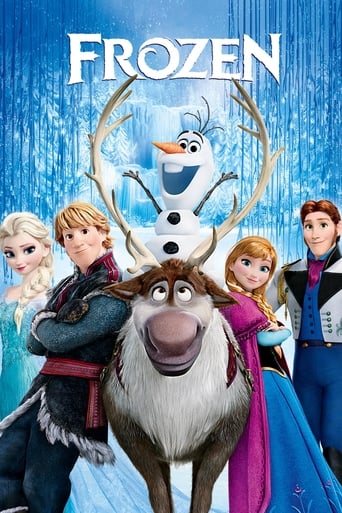
Frozen
2013 · Film · 102 min
Part of Frozen Collection
Directed by Chris Buck, Jennifer Lee
AnimationFamilyAdventureFantasy
Young princess Anna of Arendelle dreams about finding true love at her sister Elsa’s coronation. Fate takes her on a dangerous journey in an attempt to end the eternal winter that has fallen over the kingdom. She's accompanied by ice delivery man Kristoff, his reindeer Sven, and snowman Olaf. On an adventure where she will find out what friendship, courage, family, and true love really means.
33 positive17 negative2 mixed102 neutralfrom 154 commenters
Where to watch
No streaming data for this title.
169 comments on Hacker News
> Frozen and Moana are 10 years and older now. That doesn't seem new?
That's 10% of the life of the company. And they are just the most striking success of the last decades. Many other movies were made in the meantime. Obviously we cannot expect every attempt to become a generational franchise.
> From what I read about blizzard it seemed like Activision wanted them to treat wow like cod
Activision merged with Blizzard in 2008. At that point the last original game from Blizzard was already 10 years old. Blizzard has been milking its three franchises for the entire 21th century.
By zero screen time do you just mean no phones / tablets / interactive screen use? Or are you including TV / movies etc.
If it's the latter I think you might be over attributing your child's behavioral development to the lack of screen time that it actually is. I have a 3 year old daughter who is much more social and chatty, has a great attention span and self-play / imagination etc. than many of her peers who have zero screen time.
I wouldn't say we give her a lot of screen time, maybe a 2-3 hrs a week (mostly over the weekend) + sickness + the occasional family movie night (Frozen, Moana etc.). But it's enough where she has certain segments of Ms. Rachel episodes memorized.
Anecdotally, the parents who enforce the no screen time rules seem to be the ones who over-parent their kids and have kids who cling to their legs at the park for the first half hour, melt down without snacks, etc.
Also the screen time carries over into other hands free, fun activities like listening to the songs on the speaker and acting out what she had watched or dancing especially during those hectic weeknights when she wants to interact with us but we need to cook dinner and can't sit down to play toys with her.
It feels like children's development is more highly correlated with parents' involvement than with screen time per se. Obviously, a large amount of screen time would cause a lack of involvement, but zero screen time seems more like an act of virtue than one for effect.
> And people are free to, even under the duress of copyright. What's the problem there?
I assume a free society should operate with the least duress, because duress is "compulsion by threat or violence; coercion" which actively restricts activity as opposed to merely ignoring or not participating in it.
If someone would be free to create the thing without copyright duress, it is better even if delayed, because it was done with the least restriction of freedom.
The last movie I saw was Disney's Frozen which is based on a Hans Christen Andersen story currently in the public domain. It was good, but not "life of the author + 75 years" good.
Only thing is that Google already publicly announced this exact same fact nearly 15 years ago, and it already filled the news cycle back then[1]. To have it show up again now is like today's news reporting on the movie Frozen being released.
But, whatever attracts the most clicks goes, I suppose.
[1] For example,
- https://www.businessinsider.com/google-hiring-non-graduates-2013-6
- https://qz.com/180247/why-google-doesnt-care-about-hiring-top-college-graduates
This article is full of so many interesting details. E.g. I found this passage on the technological progress in rendering snow from Frozen (2013) to Zootopia 2 fascinating:
"To give an example of the amazing amount of detail in Zootopia 2: at one point during production, our rendering team noticed some shots that had incredibly detailed snow with tons of tiny glints, so out of curiosity we opened up the shots to see how the artists had shaded the snow, and we found that they had constructed the snow out of zillions upon zillions of individual ice crystals. We were completely blown away; constructing snow this way was an idea that Disney Research had explored shortly after the first Frozen movie was made in 2013, but at the time it was purely a theoretical research idea, and a decade later our artists were just going ahead and actually doing it. The result in the final film looks absolutely amazing, and on top of that, instead of needing a specialized technology solution to make this approach feasible, in the past decade both our renderer and computers in general have gotten so much faster and our artists have improved their workflows so much that a brute-force solution was good enough to achieve this effect without much trouble at all."
Let's not assume things about age. I'm old enough to remember holding the stupid rabbit ears. Never liked the Andy Griffith show though. I've also spent plenty of nights sitting a fire with a bunch of nomads in the middle of nowhere.
It's not fundamentally different from media today. Audiobooks, Twilight Zone, Black Mirror, Disney movies, true crime media, etc. People don't choose these for lack of alternatives. They're activities people like (excepting the parents forced to watch Frozen for the thousandth time).
Strong oral storytelling cultures also have many, many stories available to them. It's not as tedious as syndicated TV was. Two examples of collections that survive to the modern day are the Jewish bible (old testament) and the Christian New Testament, each of which has dozens of stories you're likely familiar with no matter your religious background. They're not communicated solely through everyone sitting down around a campfire, and not every recitation is in the formal verbiage of the source material. Often recitation is associated with a calendar (e.g. the sermon schedules ministers follow in modern churches, or performed only at particular seasonal festivals). Different recitations are often performed in new ways to adjust things to the audience (e.g. referencing recent events) or with slight changes to keep things fresh. So on and so forth. It's a much richer world than you may be aware of.
Yeah, there's always a twinkle of conspiracism that lights up inside me when I see something like that, and I do try to think rationally about it, but I end up coming to the conclusion... that it may not actually be that unlikely!
Naming things is easy: Why not hold a talk about the Antichrist when people have been calling you one? Why not name a single song (or even write one from scratch) to cover up some controversy. Or, of course, why not name a movie "Frozen" when there are rumors about what happened to your founders body.
I feel like the PR benefit, even if maybe intangible or purely hypothetical, is so easy to justify given the low amount of effort involved in it.
Though I do think it's rather gauche to hold a public talk about the Antichrist in Thiels situation, I think that doesn't really dispell the rumors, it just brings him and the topic closer together? No? Maybe he's just trying to tell us something. :)
I don't get what you are trying to say here? Yes, memes are arts however foreign it might be to older folks. To your second point, you know about Frozen because everyone else also watches that. We are about to lose that if there are 1 million variations of "Frozen"-esque movie that people can watch.
I don't think have an AI partner that is trained from zero from childhood to adulthood with goals such as "make me laugh" is too far fetched. The problem is you will never be able to connect with this child because the AI is feeding it insanely obscure, highly specific videos that matches the neurons of the kid perfectly.
There is another film structure that is super common but is often overlooked. It is perhaps not coincidental that the protagonist is more often a woman. I found a blog post describing it once, but can't find it now.
In the typical three-act structure, the protagonist must make an internal change to themselves before they are able to resolve the conflict.
In this alternate plot structure, it is the community itself that must change. The protagonist is "right all along" and serves to the be the catalyst for that change. Almost as if society is the protagonist. It looks something like:
1. Inciting incident where problem appears.
2. Protagonist attempts to tackle problem using their "true self".
3. Family/village/community smacks them down and says they can't do that.
4. Protagonist tries to conform and solve the problem the way they are told to but fails.
5. Climax: Running out of options, the protagonist unleashes their true inner self and solves the problem.
6. The community witnesses this and realizes that they should accept the protagonist for who they are.
This is very common in Disney movies (Mulan and Frozen being stellar examples) and in family movies where the protagonist is a young person that "no one understands".
It is sometimes mixed with the typical three-act structure where the protagonist also makes an internal "change", but the change is most often simply accepting who they already were at the beginning of the film before trying to deny that throughout the second act.
Doubtful, yet they'd probably rebuild your vacuum if you brought it to them.
There are a glut of hyper-specialized businesses around here. Russians run all of the appliance repair shops. Israelis ran all cell phone repair places until COVID (now we have few at all). These all took digital payments.
Iranians/Turks around here run a bunch of rug shops that never get any customers yet linger for decades. I don't know a single person that owns a rug.
The Chinese run donut shops that are cash only, never see any foot traffic, sell terrible stale donuts, and don't even have seating. Vietnamese run all the nail salons and both change owners and personnel every few years.
Disney race-swaps protagonists of old movies that predictably flop instead of creating the next Frozen, and Concord burned $400m on a game that only 25k people wanted ($1m revenue). How is this sustainable?
It could be money laundering, but some of these businesses look like they're intended to fail. I'd sooner suspect some other financial engineering going on. H1-B fraud or SBA loans-for-foreigners schemes.
I haven't seen Mufasa - is Kiros actually a "villain"? Disney has moved away from classic villains in a lot of their animated stories; I seem to remember reading that this was intentional and that they started moving this direction in their storywriting with Frozen, progressed it with Moana (whose "major antagonist" is a mute force of nature and minor antagonist is a silly hurdle to be jumped), and fully realized it with Encanto, which has no singular antagonist at all.
The jerks in these movies end up getting songs that make them out to be silly jerks - minor obstacles on the hero's journey. They don't get villain songs because they're not deserving of them, and the story isn't about defeating a villain, it's about fixing past mistakes/restoring the balance of nature/realizing one's potential/etc.
Someone isn't Comms Aware.
Biggest event of 2013: Snowden.
Biggest film of 2013: Frozen (Let I.T. Go)
Biggest game of 2013: Last of U.S.
The NSA was effectively blinded for a period of time. Do you think bad actors didn't take full advantage of this? Where did Snowden work prior to NSA? Why doesn't Julian Assange have a Hollywood film?
Moana
Frozen
Lego movie
Mulan
101 Dalmatians
Super Mario Bros
——
Having kids does that to you.
I moved almost all of my physical media videodiscs (DVD/Blu Ray) to the "cat room" in my other house
https://mastodon.social/@UP8/112780806461056458
(at this point the videos are stacked on the shelf underneath the camera) and what I came to realize is that I'm never going to watch most of these movies ever again. Right now I am planning to move Bob B to a spray-resistant room in my main house which means moving my photography studio into the current "Cat Room" and I am not sure if I am moving most of my videos to the other house or if I'll just sell or donate most of them.
(Note I started out with books in the cat room but after the first spraying incident I took them out and moved in the rest of the videos but (1) I don't care if an old copy of Frozen gets sprayed on, and (2) I can clean the case or shuck it in a worst case scenario)
I guess I don't know what we mean by "hit" then. I tried to address it from cultural impact, box office earnings, and movie quality. On any one of those criteria I don't think it's been that long since Disney has had a hit. If a film needs to push "Frozen" numbers to be a hit, then I'll concede they haven't had one in years.
Live action remakes are the new “safe sequel”.
I think they should be compared to how well a literal rerelease of the original would do.
I think part of the evidence is just how absolutely long lived Frozen 1 has been. Nothing has been able to even come close to unseating that, not even its sequel (they were very smart to keep everything similar enough so that Frozen 2 merchandise can substitute for Frozen 1 in a kid’s eye).
It’s very indicative that people jump to movies that have been out for a decade or more, and probably can’t even name most of the more recent releases.
Frozen came out ten years ago and frozen 2 came out five years ago. I think that qualifies as a few years. Granted life has been tough on the movies since some odd event in 2020
Well this is just straight up false. Moana was a massive success. Frozen is a monstrous success for them. Star Wars not being a success is objectively false. The Force Awakens is the second best selling Star Wars movie of all time.
Tangled (Repunzel), Moana (uses and remixes actual Polynesian myths), Frozen (based on the snow queen), Peter Pan, Little Mermaid - a stack of recent Disney movies have been based on existing IP. You just don't notice because they culturally steamroll the originals.
The most recent movie Wish - is just callbacks to other Disney movies, so does it count as original IP?
And this excludes their reboots - but also excludes Pixar which has done some original albeit lacklustre stuff recently.
> You try to get the rights for a TV show based on Frozen
I think it is ridiculous to think it might happen. It is like asking Apple to sell you M3 chips. They will use it on their own devices in the same way that Disney could make that TV show end-to-end for years, if not a lifetime. Think in the Star Wars brand.
Simultaneously they partner with Lego and other companies for franchising.
> Disney didn’t mind paying for the rights to adapt copyrighted material, like they did for Bambi, Dumbo, Peter Pan etc.
Because the copyright holders at the time were much smaller and less astute.
You try to get the rights for a TV show based on Frozen. Disney will probably not sell those rights to you at any price.
I have two small children, and can't name a Disney movie made after Frozen. Their new stuff is just a bit bland and run of the mill in my opinion. Nothing to do with any perceived political values.
Alot of executives must believe it's due to piracy.
A lot of people think it's because they're woke. It's not even that - they're just bad movies. I watched Moana a few times and realized they're making fundamental story mistakes. Characters never resolve their conflicts, jokes are prioritized over theme, and important character traits are shown too quickly to the point where you can miss it if you blink.
We really need Disney to slow down and understand that the story comes first with these movies and that good stories take a long time to develop. Frozen took like fifty years to finally make. BatB took four plus numerous failed iterations over decades.
I highly recommend that everyone read the Katzenberg memo[0] from the 90s that was sent out right before Disney went from middling studio to international powerhouse.
[0]https://sriramk.com/memos/katzenberg.pdf
I just assumed Disney paid their employees, though maybe they’re volunteers or something. I read Ed Catmull’s Creativity, Inc. a while back and my takeaway (in addition to seeing a glimpse into how the management worked) was that all workers at Pixar were compensated for their work. Not totally orthogonal because Disney did end up acquiring Pixar. But I have a hard time believing a movie like Frozen was created without paying for it to be created.
So 7 basic plots. But an actual plot for an original story isn’t just a basic plot is it? It’s an original work.
Movies are sued all the time for copyright infringement due to substantially copying plot and character elements. [0]
Because these cases tend to each be unique, the line between infringement and non-infringement gets settled very much on a case by case basis.
As a result of this inherent unpredictability, most cases involve the accused settling with the aggrieved party to get the lawsuit dismissed.
This is common in many areas of civil law.
A few examples:
1. *"The Island" (2005)* - Accusation: Similarities to the 1979 film "Parts: The Clonus Horror." - Outcome: Settled out of court. [1]
2. *"Frozen" (2013)* - Accusation: Claimed similarities to a short film named "The Snowman." - Outcome: Disney settled the case. [2]
3. *"Coming to America" (1988)* - Accusation: Art Buchwald claimed the movie was based on his script. - Outcome: Paramount settled for an undisclosed amount. [3]
4. *"The Terminator" (1984)* - Accusation: Harlan Ellison claimed it was similar to an episode of "The Outer Limits." - Outcome: Settled out of court, and an acknowledgment was added to later copies. [4]
5. *"Disturbia" (2007)* - Accusation: Accused of being similar to Alfred Hitchcock's "Rear Window." - Outcome: Initially dismissed, but a settlement was reached. [5]
[0] https://movieweb.com/movies-accused-of-copyright-infringement/
[1] https://en.m.wikipedia.org/wiki/Parts:_The_Clonus_Horror
[2] https://ew.com/article/2015/06/25/disney-frozen-lawsuit-the-snowman-settlement/
[3] https://en.m.wikipedia.org/wiki/Buchwald_v._Paramount
[4] https://www.cbr.com/terminator-harlan-ellison-credit/
[5] https://www.flixist.com/new-disturbia-and-rear-window-lawsuit-over-settlement-breach/
Any study that doesn’t directly address this is pointless to me.
My daughter has a fair bit of screen time. Very little of it is entirely passive.
The closest she gets to passive is watching Frozen and Frozen II, her latest favorites. She’s constantly explaining the movie to us, singing, dancing, and otherwise more using it as a launching pad for activities than just passively consuming it.
When she watches other things it usually involves myself or my wife discussing the show with her as it’s going. Asking questions, making observations, etc. She’s practicing and developing understanding and communication skills.
When she’s playing on a tablet, it’s usually stuff like Duo ABC where she’s learning and then demonstrating understanding of letters and words or games where she’s playing with the sort of equivalent of a virtual interactive dollhouse and is exercising her imagination making up stories and social interactions and then relaying the stories to us.
We don’t really pay attention to how _much_ screen time she gets as much as what she’s getting out of it. I definitely think she’s had more than her share of “4+ hours” days. But any study that doesn’t differentiate what we’re doing from a kid being left unattended and ignored with some YouTube recommendations all day seems to be… incomplete if I’m being polite.
> At some point, this seems to be less about screen time and more about lack of engagement and active involvement with your kids.
When we were told, as many parents are, “no screen time / limited screen time for kids” I didn’t accept it at face value but instead went digging for what the justification for this advice was.
From what I found you hit the nail on the head. The damage comes from the lack of interaction. Small children are absolute sponges and need to be around and observing and interacting with older children or adults to have the opportunity to sponge up how to be a human and then practice those skills. Plopping them in front of a TV doesn’t accomplish that. Especially when they’re quite young they’re not even able to comprehend the TV as much more than colors and sounds and get nothing.
For Australian fans it's probably easy to import the DVDs and Blurays from some other country - since all have the English sound track.
Personally I'm going to miss to be able to collect current Disney and Pixar animations on Bluray and they are going to miss my money in the long run.
Disney already stopped releasing the films in 3D format. First in the US (no Frozen 3D there) then in Europe as well. I had to import the last one from Japan for a price of 1 year of Disney +
Compared to collecting Blurays and DVDs, Disney+ is currently cheap and good value. But that's unlikely to stay that way. They will at some point raise prices a lot and/or introduce ads.
Also even now: There's the problem with the picture quality (and internet connectivity) compared to Bluray. You also don't get to import out-of-area versions. Want to watch Pixar's Coco in the Mexican Spanish Dub? Not possible here.
Want to watch a film without "Skip Intro", Age & flicker warning or the complete end credits? Want to easily pause a film to analyse a scene, without some overlay covering the picture?
With Disney's track record on annoying logos and other distractions, I don't trust them to keep their user interface clean or not suddenly force ads and trailers on their paying audience.
Watching the making of one of the Frozen films, and the making of a Pixar film early in their history, Frozen's process struck me as similar to Pixar's approach to collaboration, but on acid. I immediately felt Disney and Pixar were at the end of their run—there was no one in the process saying "this process is broken".
Staggered how? They have averaged a movie a year for the last 40 years. The Disney live action movies have almost nothing to do with the release schedule of Disney Animation movies, nor have they impacted how many get made. They are completely different studios.
https://en.wikipedia.org/wiki/List_of_Walt_Disney_Animation_Studios_films
Their 3D movies in order are Chicken Little, Meet the Robinsons, Bolt, Tangled, (Pooh), Wreck it Ralph, Frozen, Big Hero 6, Zootopia, Moana, Ralph Breaks the Internet, Frozen II, Raya, Encanto, Strange Worlds. That’s 15 movies in 17 years, and Princess and the Frog makes 16.
Bolt, Tangled, Ralph, Frozen, Big Hero 6, Zootopia, Moana was an excellent run. (Disney acquired Pixar during production of Meet the Robinsons, and about 60% of the movie was remade, every movie since was produced by Pixar descendants.)
And Tangled is better than Frozen, even if it didn’t have the zeitgeist. (Tangled is the highest rated of any movie I listed on Letterboxd, followed by Big Hero 6, Moana, and Zootopia, so I’m not unique in that opinion. Not sure what the Letterboxd community has against Bolt.) Outside of Chicken Little, there’s really not a bad movie on that list (I haven’t seen Strange World yet.)
If anything, acquiring Pixar doubled their animation output.
> Is there an overproduction of artist hopefuls compared to the movies being made?
Yes.
Hollywood in the general sense is also an industry packed to the brim with ego and wishful thinking. Nobody wants to rock the boat because, heaven forbid, an artist may never be allowed to live their dream working on the next Avatar or the next Toy Story for crossing the wrong person.
For better or worse, most young artists I've known are wishful thinkers. They each had a dream of working on the next Jurassic Park or the next equivalent to 2001 A Space Odyssey, or the next Frozen or whatever. Although the software industry is filled with aspirations of working at The Google or Meta, unlike programmers, artists in entertainment are willing to work for peanuts because they can't have their grand vision shattered.
The fantasy of being important is what fuels the entertainment industry. It's numerically infeasible for every artist to work on The Next Big Hit, but everyone is required to believe they can in order for there to be enough fresh artists to be chewed up and spat out.
I'm so glad I left animation and became a programmer. The worst coworkers in software pale in comparison to the giant throbbing dicks that exist everywhere in the entertainment industry. I can refuse to work weekends or, even more drastic, quit my job when the deal gets bad, and it's unlikely to permanently damage my career if it even does at all. My career isn't founded on a combination of free work and brown-nosing.
> this is one of the places I feel generative AI can do a lot of good.
I seriously think that studios aren't far from having their lunch totally eaten by small groups of individuals using various forms of AI. No doubt that GPT has been used in Hollywood already, but VFX and animation are stuck in the past in many ways. These studios are afraid to experiment, which is why they resort to using old school methods that are outclassed by individuals with deepfake tech.
The release cycle is still a lot more staggered since Disney just interspices it with a lot more filler content (those Live Action Remakes) that the Pixar releases are somewhat meant to fall back on.
For every Frozen, there's a Tangled that doesn't make the cut in quality and that stands out when they don't have the same consistent release cycle of movies for the animated canon since it's broken up by the mostly mediocre Live Action ones.
Before the never ending sequels on the Pixar side, they actually have settled into a complementary relationship.
Pixar does the more adventurous stuff, crazier ideas, totally different kinds of plots and stories/worlds/characters, with a focus on storytelling rather than songs etc.
Whereas Disney Animation (with recent titles like Tangled, and the Frozen movies) is the 3d version of what Disney's Animation Studios always did best, take classic stories, and turn them into quasi-musicals with a modern twist, but do it in a really talented way.
In my 20s, I used to get mad about the idea that Disney just stole story ideas and made it their own, but this was too reductionist. There is immense talent involved in actually taking an old story, modernizing it, adding all the original music, creating that original new world, building scenes, dialog, all that stuff. And I appreciate it and give Disney a lot more credit nowadays. Whether it's Beauty and the Beast or the Lion King, or modern hits like Frozen and Tangled, they really add a lot in their interpretations of these stories, and make it their own.
Huh?
Disney Animation Studios (not Pixar) has made three movies in the last ten years that are among the highest grossing movies of all time (Frozen, Zootopia, and Frozen II).
In terms of quality, anecdotally two of my personal favorite Disney movies ever were done by them within that timespan as well (Moana and Encanto).
My impression has been that the gap between Disney Animation Studios and Pixar has drastically narrowed.
Not to mention a little movie named Frozen.
We avoid using devices around ours, don't let her watch videos during meal time, esp. the low quality ones, eg toy unboxings, hypnotic nursery rhymes, etc. We will give her other activities when we need to distract her, be it coloring, stickers, kinetic sand or something else. We even went on 7-8 hour long trips in car without a screen, just some papers and stickers. On the other hand we've witnessed the effects of "screenism" with our friends kids. Sometimes they will throw a tantrum or won't eat until they get their dose of screen entertainment. The only exception from an early age for us was video calls with grandparents, so our kid associates phones with video calls but not watching cartoons. We also prefer to let her watch full length animated films on TV, eg disney (frozen, tangled, etc). We usually won't let her watch short term brain numbing yt content, except for a music video, funny cat compilation sometimes (more as a shared activity), but this only became a thing at 2yr old or thereabout.
Painting has always been a beloved form of self-expression and a source of relaxation. Combining this artistic endeavor with the world of popular culture, paint by numbers kits featuring iconic characters and themes have gained significant popularity. In this post, we’ll look at the enthralling world of Harry Potter, the epic saga of Star Wars, iconic Disney characters, and the enthralling world of anime through the lens of painting by numbers.
Step into the wizarding world with Paint by Numbers Harry Potter. There are various Harry Potter-themed kits available, ranging from the iconic Hogwarts Castle to renowned characters like Harry, Hermione, and Ron. Use your imagination to bring your favorite scenes to life, whether it’s the Quidditch pitch or the stately Great Hall. Fans may demonstrate their passion for the enchanting series while participating in a creative and relaxing pastime with these kits.
For Star Wars fans, Star Wars paint by number provides an incredible opportunity to celebrate the beloved space saga. Bring the galaxy far, far away to your canvas as you recreate epic battles, iconic characters like Darth Vader and Luke Skywalker, and breathtaking starships like the Millennium Falcon. Whether you like the original trilogy, the prequels, or the latest installments, there’s a kit that captures the essence of Star Wars and lets you indulge in your passion for the saga.
For decades, Disney has charmed audiences of all ages with its timeless characters and captivating narratives. With Disney paint by number kits, you may rediscover your childhood memories or simply indulge in the enchantment of animation. Recreate the enchantment of classics such as Cinderella, The Lion King, and Beauty and the Beast, or immerse yourself in the realms of current favorites like Frozen or Moana. These kits allow you to showcase your Disney fandom while also letting your inner artist shine.
The world of anime is filled with bright visuals, distinct characters, and exciting stories. Paint by numbers anime collections allow fans to create beautiful artwork inspired by their favorite episodes and movies. Bring the excitement of Naruto, Dragon Ball Z, Sailor Moon, or Studio Ghibli classics like Spirited Away and My Neighbor Totoro to life. This popular category combines your enthusiasm for this specific art form with the calming and gratifying experience of painting.
This method is a versatile and enjoyable hobby that allows lovers of Harry Potter, Star Wars, Disney, and Anime to express their creativity while honoring their favorite themes. Whether you’re a fan of Harry Potter’s magical world, Star Wars’ interplanetary adventures, Disney’s timeless charm, or the bright aesthetics of anime, there’s a kit that will take you to the realms of your imagination. So grab your brushes, follow the numbers, and rediscover the joy of painting while reveling in the enchantment of these wonderful universes.
"Frozen" drew a fair amount of complaints in right-which Christian circles for being pro-gay. They see the "Let It Go" song as about coming out. Also the sauna at the trading post. There was a man and 4 kids in the sauna, and the only other person we saw who wasn't just someone stopping in to trade was the owner, also a man. So apparently that clearly makes the two men a gay couple with some adopted children.
An interesting place for movie reviews, regardless of your political or religious leanings, is the entertainment section at christiananswers.net. I'm an atheist but find it quite helpful.
In the reviews themselves they rate the movies both on moviemaking quality and moral quality, and cover both aspects in the review. They are quite willing to rate a movie 5 out of 5 on moviemaking quality and praise its story, acting, cinematography and so on, while at the same time rating it as extremely offensive and telling you in detail why seeing it might put your soul at risk.
There are comments there too which are almost never useful, but are often quite amusing. For example on one of the Harry Potter film reviews one of the commentators went on about how the film is actually promoting real witchcraft, and explained that before she became Christian she was a witch, performed real spells that worked, and the Harry Potter books and movies are an accurate portrayal of that real witchcraft and the spells that she use to use.
I'm a huge fan of the Disney movies that came out when I was growing up (Aladdin and Beauty and the Beast are my favorites). My kids like those movies a lot too.
But I think some wonderful movies have been made in the last ten years, most notably Encanto and Turning Red. They're both massive successes, and I think they are in many ways better than those movies I grew up with.
Not to mention Frozen, Moana, Inside Out, etc. These are all wonderful movies.
(Ratatouille is also great, btw, don't get me wrong!)
I'm sure Disney was disappointed in Lightyear's performance given its marketing push and brand appeal, but I don't think you're listing the movies that are central to Disney's strategy anymore. Ever since COVID, Disney has pretty much banished Pixar to Disney+, not as "premium" releases that cost extra, but just included day one on the service. If they had theater runs, they were limited or international-only. That includes such films as Soul, Luca and Turning Red, whereas Encanto from their other animation company (Walt Disney Animation Studios) got a wide and successful theatrical run. Turning Red's box office returns are irrelevant because of this. However, due in part to people going back to theaters and (largely) to the film's brand recognition, Lightyear became the first Pixar film since 2019 to be given a real theatrical release. And the main reason it bombed was, I believe, because everyone and most importantly families had gotten used to being able to watch those movies on Disney+ for a lot cheaper. Even if that one waited two months to come to the service.
As for Strange World, it was widely observed that Disney didn't give it any marketing push and a majority of people weren't even aware of its existence. To me, the main reason is that Disney doesn't bother to hype up movies that they don't really believe in. Strange World was one such film, a WDAS movie that isn't a fairytale or a musical (and isn't safe from the kind of conservative hate campaigns that Disney tends to avoid). Disney has a long history of letting their studios make films outside of the cookie cutter but release them with little fanfare. They can now easily be written off as Disney+ fodder.
Disney absolutely still relies on their animation studios for blockbusters, but they've noticed which formula works best for each. Pixar is never as successful as when it does sequels. WDAS routinely hits the 1 billion mark when it makes new additions to their fairytale canon, or bombastic musicals (see Encanto's massive success). It's no surprise then that they're now pushing WDAS, a notoriously sequel-adverse studio, into making a third Frozen and a second Zootopia, and that a _fifth_ Toy Story is suddenly in the works at Pixar alongside... Inside Out 2. Any other project is bound to get buried in the release schedule or dumped on Disney+.
So what kind of movies are core to Disney's strategy? Star Wars is on a kind of hiatus and lives on Disney+. We have Marvel of course, which isn't in the healthiest state but still produces frequent hits. Avatar is now a big one. Any animated movie that fits their preferred formula. And of course, the depressing string of live-action remakes which, if they're all quickly forgotten, often hit the 1 billion mark, and I've no doubt that their lifeless Little Mermaid clone will do the same. I think Disney is now suffering from the same "we grew too big, too quick" realization as every other tech and entertainment giant, and they're definitely reeling from a few recent failures, but I wouldn't use Strange World or Turning Red as the poster children of their troubles; they never bet much on those anyway.
Unfortunately, when Disney makes the most bland and forgettable nostalgia bait, they still make the "movies people want to see".
Going back even further, mine loved Jungle Book more than anything recent. Now that's staying power!
Anymore, we'll just wait for them to hit streaming. As GP mentioned, the latest movies just haven't seemed very good. Not up to par with the likes of Moana and Frozen, at least.
Lol, so I used to work in the live events business. We would have to order and ship many PA speakers to various trailers when the equipment would break, generally to a hotel where one of the event staff was staying. We would tend to order from Amazon since the event staff wouldn't be in the same spot for long.
One of the times, we ordered a 500-watt Behringer PA speaker; these are around 2 feet tall. While sitting and eating dinner, my phone kept ringing repeatedly. I eventually picked it up only to have the event manager say "Hey, so I got the speaker...but upon opening the box it's full of dolls from the movie Frozen".
The box had all of the Behringer branding on the outside, was sealed, and had the styrofoam to protect the "speaker", but inside...all Elsa.
The strangest part was the Amazon rep didn't ask for the dolls back or even for proof; they simply reshipped the speaker the same day.
I think it’s the latter.
Because, as you point out with low poly models, there’s so much that goes into the fidelity of a game beyond just output resolution - there’s polygon count on the models, resolution of the textures applied to those models, shadow and light effect resolution - each operating independently.
When a game like Apex is played at high settings but output at a low resolution, at that point upscaling it isn’t much different than upscaling a standard def DVD of a movie like Frozen or Avatar. You’re not creating detail in things like individual set pieces that didn’t previously exist, you’re filling in the blanks of the entire image blown up at once per frame.
once again, I agree with your sentiment - this culture of simulation and replication is extremely tiresome - but as a case in point, Disney doesn’t fit the bill
to illustrate, the realistic choice would be to choose between Snow White and Frozen and Moana.
to be clear, this isn’t me blindly supporting Disney: I don’t watch their films, I don’t work for them, I don’t own their stock. moreover, I in fact have swathes of scepticism for colossal nation-shaped megacorps; nevertheless it’s a bad example weakening a good hypothesis, and this I have a problem with
Is the idea here that if you search for [Boris Johnson bus] you'll find results about his supposed hobby instead of the "let's fund the NHS" bus?
Reminds me of the headcanon that Disney released "Frozen" so when you search for [Disney frozen] you find the movie instead of the stories about Walt Disney and cryopreservation.
i think new ideas come from being naive and possessing the "no-mind" or a childlike sense of wonder. the older i get, the less plastic my brain is and the more depression and other issues start to seep in, get in the way, overcomplicate shit.
to be completely free, uninhibited, released from guilt and predjudice. to just think, play, laugh, fart, and yawn. boring days spent looking out the window wondering how crows fart, or what makes zebras sassy.
the only limit is our own adult psychosis. we are prisoners of our own minds, locked and shackled by constructs of our own design. too focused on the failures of the past and anxieties of the present to take a moment and b-r-e-a-t-h-e. like who fucking cares about businesses and startups and shit. saas my ass. when you actually stop trying, give up, and stop caring, and truly let go (like in the movie frozen) you can actually go in and through and back out the other side.
just learn to get out the way of yourself. that's what im working on, but it's really hard. you think you're supposed to be there and generate brilliance 24/7 but it's not possible.
go outside and find a patch of earth where things are growing. get really close to the ground and start looking at it real hard. there's honestly so much stuff there, it's wild. like who knew? wow thats nuts. acorns, rocks and shit. touch the dirt and rub it on your face. mushrooms are literally everywhere. the water in my body was once in a bowl of rice that your great grandma ate at becky's 27th birthday party.
just give up just give up stop caring be free
If there's anything I know about 1998, it's that Steven Tyler was dreaming of me, and didn't want to miss a thing. I can't think of the last time a movie moved the cultural dial the way they used to in the 90s. I guess Frozen? It seems to be a lot rarer nowadays.
For me at least, a movie just isn't a spectacle the way it used to be. Going out to see Top Gun: Maverick, and seeing The Batman at a drive-in cinema is probably the closest I've been to that feeling since the original Avatar. Maybe I'm not giving enough credit to the Avengers movies.
You don't need to name content exactly. Saying "Alexa, play the sandwich song from Frozen" for example will correctly play Love is an Open Door. Ideally this kind of thing would work for TV and movies too, web searches as well.
Humans evolved language to communicate ideas, wants and desires to others for thousands of years. Obviously voice UI is not there now but maybe someday the experience won't be much different than asking the movie rental store clerk for their recommendations for a romantic comedy.
I dunno. My wife and I used to insta buy/ take our kids to see Disney movies, but now we double check what sorts messages the movie has in it.
For example, Turning Red. It seems to have a message of… never listen to your parents? Rebel against authority? I’m not sure exactly. It’s a weird movie.
Which is interesting because Moana is, as an adult, possibly one of my favorite movies of all time. The messaging of the heroes journey, venerating your ancestors, but being able to look toward the future and find a new way that sometimes faces resistance is a perfect tale. Then there’s also the subtext of Maui and Tefiti being the archetypal divorced couple, with Maui stealing her heart which causes severe emotional trauma until she is healed by Moana, the archetypal child mending the family.
Frozen is a weird one, I could write a book about it.
Princess and the Frog is great.
It’s so weird! I never know if a mainline Disney movie is going to be good or terrible. I don’t really know what’s going on over at Disney right now.
> They're still making good ones: Frozen, Moana, Encanto. Just watch those and pretend the rest doesn't exist.
Probably the most objective way to view this is to actually look at the list of films from any given decade and see how many flops they had [1]. There's a bias at play here: the only movies we remember Disney making a decade+ ago are the hits. We don't often remember the misses.
Apparently Disney's "Renaissance" ended with Tarzan in 1999; but here are a list of movies that have come out since the end of this golden era:
- Monsters, Inc.
- Lilo and Stitch
- Treasure Planet (a personal favorite)
- Finding Nemo
- Pirates of the Caribbean
- The Incredibles
- Ratatouille
- WALL-E
- Up
- Tangled
- Brave
- Wreck-It Ralph
- Frozen
- Inside Out
- Encanto
I'm sure there's many great ones that you might love that I'm missing. But I'd say this lineup is potentially better than the list of movies spanning The Little Mermaid to Tarzan. To the author's credit, I will say there's part of me that's nostalgic for the traditional style of 2d character animation.
[1] https://en.wikipedia.org/wiki/List_of_Walt_Disney_Pictures_films
As a millennial who grew up watching the great Disney movies of the 90s, I just pretend the remakes don't exist.
Disney (classic Disney-Princess-Disney, excluding Pixar, Marvel, and all the "properties" they've acquired over the years) has made a great movie once every 3-8 years for the past few decades. In between, they've always made utter garbage to squeeze every dollar out of the great ones. Almost every Disney sequel has been a turd. Doesn't anyone remember how disappointing it was? This is just more of the same.
They're still making good ones: Frozen, Moana, Encanto. Just watch those and pretend the rest doesn't exist.
OR, you could play videogames and have great bonding moments.
The hand-eye coordination my daughter has is incredible too, her creativity is incredible. A lot of in-the-park games are a consequence of what we play: one time she grabbed a short stick (a wand) and a huge stick (I assume a two handed sword) and invited me to go around and defeat monsters and bosses. Never played a game like that in the park with her, she came up with it. We actually had a great time.
Use videogames like any other toy: with a critical eye at all time, with moderation at all time.
EDIT: Sorry I'm very bitter on this. People keep treating videogames like a special case, but it's like any other toy. TV included. Just keep careful eye on your child and constantly re-evaluate how toys are impacting them. It's easy to see how more than 1 hour TV makes your child grumpy and bored, however it's also easy to see how some movies stimulate her will to dance and sing (Moana, Frozen), which in turn promotes playing with her little brother.
My toddler is unaware that there is a whole world of video content made just for him - as far as he knows, the only videos that exist are nature documentary clips, cooking shows, church services and tech conference talks.
I know that as soon as some of his daycare classmates can really start talking, the veil will be pierced and he'll be begging to see (judging by said classmates' t-shirts and backpacks) Paw Patrol, Peppa Pig and Frozen.
And I'm not sure how we're going to deal with that.
> audience typically only goes to see movies that they are likely to enjoy
That doesn't really explain the opposite phenomenon: movies that have higher critic rating than audience rating (e.g. movies like Mulan and Turning Red come to mind). IMHO, if you were to apply that rubric across all movies, the conclusion you should get is that critics and general audiences are simply different demographics and that it is normal for discrepancies to arise from sampling different demographics, not that general audiences are more biased towards what they like to watch. For example, parents wouldn't necessarily pick kids movies as their first choice of entertainment if age appropriate-ness wasn't a consideration (I think a lot of parents can relate to being sick of replaying Frozen, for example)
I'm Brazilian, living in Brazil, and I wouldn't mind heavy economic sanctions imposed on my country to force us to take preservation seriously. Our government will say "the first world countries destroyed all its forests to become developed. Why can't we?" and I wouldn't mind those countries replying "Sure you can, go ahead, but so can we economically sanction you as heavy as we think is necessary to make you chance." This president is a joke regarding the environment. A joke. Outside of environmental concerns, here are some pearls: his Minister for Women, Family and Human Rights said on a lecture how Disney's Frozen movie shouldn't be watched by girls, because the princess who lives alone in a castle an isn't married is obviously lesbian, and Disney is out to brainwash girls. This is not out of the ordinary for her to say. The president of the state foundation for the preservation and promotion of african-brazilian culture has said that slavery was good for africans. The Environment Minister was caught hearing during a crisis that, since the focus wasn't on the environment, they should seize the moment to 'steamroll' over environmental legislation because few would notice. How do you expect the Amazon situation to not get worse with this guy in power?
> Frozen has a villain -- Hans.
Elsa is treated more like the primary antagonist (Anna is the protagonist.) Elsa is redeemed rather than defeated, but that's more a matter of ending than overall structural role.
> Really only Encanto doesn't.
Sure it does (at least, it has an antagonist responsible for the crisis that the story addresses and resolves.) Their identity is even announced at the climax of the film, just in case the viewer hasn't recognized it. (Like Frozen, and Moana—whether, in the latter case, you consider Te Kā or Maui the ultimate antagonist—the antagonist is redeemed and reconciled with the protagonist and the broader community rather than defeated.)
They're called "family" movies and not "children's" movies for a reason. Kids are usually watching these with their parents, and when they're done well, every age group gets something out of them.
Frozen, Up, and many others accomplish it well. I personally found Encanto completely boring.
Well, in every Disney movie there's a musical waiting to come out, and if the movie is successful enough, it will (see https://en.wikipedia.org/wiki/Frozen_(musical), https://en.wikipedia.org/wiki/The_Lion_King_(musical), ...)
i read an article about a month ago about how disney animation has steadily migrated away from a villain, to the self (or some other internal conflict) as the primary antagonist.
frozen moana frozen 2 encanto
during that time there were also traditional "villain" types: big hero 6 zootopia ralph breaks the internet raya and the last drago
agree or disagree, it's an interesting read: https://screenrant.com/encanto-movie-villain-disney-pixar-copy-good/
> forgettable songs, forgettable characters, forgettable story
Strong disagree on all three. IMO this group of songs are some of the most memorable Disney animation tunes since Frozen, and maybe even since the mid-90s— don't ask me, look at how they're exploding all over Tiktok right now. For characters, I felt the movie does a pretty decent job of giving depth and personality to most members of a really large ensemble cast, particularly those closest to Mirabel. And even those with a lighter presence (Dolores, Camilo) still get their little moments that endeared them to me.
And as to the story, it's unique within the Disney canon in a number of ways; chief among them is that it doesn't have a conventional villain. Yes there is a character who is the "main" problem, but the real antagonist is the family dynamics and the grandmother's trauma. These are issues that are super relatable for a lot of people/families, much moreso than the over-the-topness of a clearly antagonistic and unredeemable character like Mother Gothel (Tangled) or Prince Hans (Frozen). The comparison is even more stark if you go back further to classic villains like Scar, Gaston, or Ursula.
Catching up with a couple of friends recently, it came up that our daughters, all of similar ages, are crazy about watching Encanto and even more keen on the songs. It's perfectly reasonable to have normal movie-criticism opinions about the film, but for the target audience, it's a smash. Another 'Frozen'.
There is also a (conspiracy?) theory about the movie Frozen and the rumor that Walt Disney froze his head to be reanimated at a later point in time,
Clicking through the reviews on Rotten tomatoes and it got quite a lot of hate though ending up with a high score. It was novel which attracts praise, but again people genuinely seem to like the look of CGI.
Anyway as long as we are talking animation. I asked one of the Frozen animators why the faces looked so freaky and they basically said meh, needs to be distinct to sell toys. Serious props to their skills and the massive R&D involved but that right there was the core issue. Moana’s water does a lot of cool animations but looks vastly less “real” than the objectively worse CGI water tentacle in Abyss. Again same deal it’s aiming for a style.
Ok fine you say what about CGI in blockbuster movies, except the article again points out how fake they look for various reasons.
Your examples of public domain movies take a rather flexible view of the source material.
Frozen is a long way from The Snow Queen. A queen had powers over ice there where trolls and someone was saved by a kiss, but in the Snow Queen it was a guy saved by the kiss and the trolls where evil etc. I wouldn’t be surprised if someone at Disney read it, but I wouldn’t count on it.
Peter Pan, Little Mermaid, etc adaptations at least share some basic elements of the story though their at most fanfics and really that’s all I am advocating.
Nobody is going to pay for the rights to the Hitman video game franchise and create The Professional. Because if you mutate the story that much you’re legally in the clear.
Licensing isn't the thing that prevents big budget productions from happening. If they wanted to make a bunch of big budget Marvel movies in 1992, nothing was stopping them. They'd have just paid for the rights back then, the same as they do now.
What copyright expiration would get you that you don't have now is tons and tons and tons of fan fiction and small budget productions. A few of which would have been good and most of which would have been both terrible and ignored. Like every school play being Shakespeare, but now it's Spider Man.
And heretical crossovers. Deadpool vs. the Joker and things like that.
But Tangled, Frozen, Little Mermaid, Alice in Wonderland, Beauty and the Beast, all the Peter Pan movies, they're based on public domain stories and they're still making major films out of them on a regular basis. The Snow Queen is one public domain fairy tale, Frozen is three movies.
I don't get Disney+ at all, exactely because of this: if you want to watch Frozen 50 times, a DVD is a much better deal. You can get the entire Disney/Pixar catalog of kids movies for the price of a year's subscription.
As a father my guess is Disney is winning. They'd get 2X my money if they had fine print that said "You have to pay again for Frozen". Basically they just have to hook your kid on one thing and then they're getting your subscription. The number of rewatches of the same content has got to be through the roof for them.
All the other streaming services are fighting over your remaining 1-3 slots in your household. Of them it would seem Amazon looks good because they make you think you're getting a deal with Prime, but it doesn't seem to have the same pull as a 5 year old who needs to watch Disney.
The others also have the disadvantage that adults are going to know how to share an account. With kids you don't want to be coordinating it.
As for UX, I don't quite understand why anything is ever taken off the streaming service. Isn't it one of the things that makes it better than a Blockbuster? Every movie you've ever had on can be left there. There's gotta be a way to shove the long tail content on some slower/less replicated infrastructure, but maybe it isn't a technical consideration.
Do you know the animator or animators of, say, Frozen? Would you even notice if they switched that to another animator?
Compare this to an actor. People often decide to view or not view a movie based on the actors on it.
If I remember the film correctly, his friends were a bunch of jackasses (in a comedic fashion), while the 40-year-old virgin was actually the nicest guy... Who best deserves the girl at the end. The female lead was also a virgin, and actually valued that in the main character.
I mean, I guess it still falls on the trope of "the hero gets the girl" at the end, if that's what your problem is? A lot of what his friends do get in the way of him actually having a successful romantic experience with the female lead.
-----------
I dunno, reading those reviews kinda reminds me of one review I read for Frozen: where they were critical about "Love is an Open Door" and failing to understand the satire. Sometimes there are messages behind the message...
Frozen 2 felt like it was written for three different audiences - the usual suspects of parents and young children, but in this case (and somewhat novel) for kids that were young children for the first movie six years earlier and it was a really important movie in their lives. If you say that those kids were approximately 6 years old in 2013, they are 12 and entering adolescence by the time Frozen 2 comes out. You look at the child psychology of early adolescence (physiological changes, anxiety, insecurity, and so on) the thematic changes make lots of sense.
Olaf was added because they got Josh Gad and needed a funny man role.
Gad would have just finished up with BoM when they started doing voice recordings for frozen. Knowing nothing about the background, I'd bet gad was a pretty late addition to the cast.
Knowing Disney, they are trying to make Gad the new Robin Williams. If you look for the advertising around Frozen there is a TON of focus on Olaf even though his role is really minor in the first movie.
Same thing happened with Aladdin and the Genie.
Well, it’s very loosely based on the Hans Christian Anderson story about an evil Ice Queen, so it makes sense that the early iterations had a fairly sinister Elsa.
According to Wikipedia:
> The 2013 Walt Disney Animation Studios film Frozen was inspired by "The Snow Queen", and closely followed the original Andersen story early in the film's development.
https://en.m.wikipedia.org/wiki/The_Snow_Queen
Frozen makes a lot more sense if you consider the hero AND the villain to both be Elsa.
The apparent “villains” in the movie are just plot advancement tools and don’t bear looking too deep at.
I've seen this movie 500 times at least (young daughters/nieces).
The first mistake made here is, Disney plots are their own genre, and have been for many years. This plot does break some Disney tropes, but if you look closely, all the beats are there still. As a father and uncle, I appreciate this movie that is less male-centric.
There is a lot of subtly in certain places-- the song between Anna and Hans, "Love is an Open Door" -- while the trap set is abhorrent-- if you understand the lyrics, these characters are not talking about "love", they are talking about second order effects of running from their (psychological) problems. In the song, nobody says the only thing that someone should say, "I love you because you are you." Rather, the song is purposefully shallow, "This is how you make me feel, about me."
Moving on...
The Trolls are equivalent to the "prophecy" trope we see in so much bad entertainment nowadays. They essentially lay out the entire movie for you. This is frighteningly common but one could argue in a movie for children it might be good to let them know whats going on. The Trolls just tell us the prophecy in an amusing manner, instead of being some boring scroll that was found or exposition that was told to us. They get a silly musical number, and honestly why are you watching a Disney movie if you didn't want a silly musical number by cute anthropomorphic, marketable things?
The Trolls advice is indeed baffling... but the motivation to hide Elsa's powers are very well established-- magic is feared and punishable by death, and its even playful use directly harmed Anna. You could probably overlay real world problem here as a metaphor... The fact that the article misses this obvious point makes me wonder about the authenticity of the authors intent at all.
The Trolls are a plot device in a movie that, was overall pretty-ok. They're not evil, they're just an escalator that moves the plot along.
I like that the movie deviated slightly from Disney-standard plots. I don't want my kiddo to think a man needs to save her... we have a rule around here, "She can have as many Barbies as chemistry sets."
Overall, it was a decent film. Fantastic movie, fantastic animation, and an "ok" plot. :-)
Frozen 2 was more... wonderful and silly. I liked the film, the set piece at the denouement was wonderful, but we have to explore that Anna is obviously the spirit of fire, which wasn't broached.
Yes, it's an interesting take, but I'm afraid that plot is beyond redemption :D
Frozen is a great movie for its characters, its world animation, and of course its songs. But the betrayal at the end just makes zero sense (and might arguably rank as the greatest Disney plot fail of all times?).
I actually thought Frozen 2 was a much better movie - one of the rare cases of a sequel being better. Same characters, same animation, same quality songs; but an unusual plotline with well-executed twists and a much greater "depth" to it than normal Disney movies.
A shame it’s down, because the article mostly points out how strange and off Frozen is as a movie compared to Disney’s more archetypical offerings of fairie tells and princesses that they’re known for. It has a tone where it’s trying to make sense of what’s actually a pretty confusing and bad plot line.
> "suddenly we don't talk, suddenly I'm strong, suddenly we're good, suddenly sister powah"
From what I can see as a father: that's basically sisterhood :D
TBH I hardly remember Coco's story although I watched it entirely. I do not remember it was bad though, rather unremarkable story wise. Frozen may look as a kindergarten movie but there is clearly an attempted murder in it (Hans over Anna) which is only prevented by a magical intervention (Olaf). I would say, although I may use too big words here, Disney is closer to naturalism, whereas recent Pixar movies are more transparent and explanatory. You would have guessed I prefer naturalism (in literature at least, I don't know if it actually extends to cinematography ;)
> You don't read Frozen.
“read” as in “to understand and give a particular meaning to written information, a statement, a situation, etc.”
> You watch it in first grade through maybe through eighth grade, but probably at that point, you're too embarrassed to go to a little children's movie.
Well, I mean I was a lot older when I watched it, but when my then-four year old watched it his commentary indicated that he saw the problems stemming from the behavior problem it highlighted pretty well. Not sure my almost-three-year-old got it, but she hasn't shown any sign of inverting the message as badly as you have.
You don't read Frozen. You watch Frozen.
You watch it in first grade through maybe through eighth grade, but probably at that point, you're too embarrassed to go to a little children's movie.
As much as I understand the more nuanced messages which could be taken out by a more sophisticated audience, much more so, I see the impact the movie has on actual real-world little kids.
I both read and watched Starship Troopers as an adult.
> Frozen teaches kids all the wrong lessons. Shirk your responsibilities. Ignore your community. Focus on yourself.
Reading Frozen as teaching that is like reading Veerhoeven’s Starship Troopers (which, sure, is abysmal on all sorts of other grounds) as an endorsement of Fascism.
Yea, those things occur in the movie, but the movie is quite specifically about it producing bad outcomes that must be dealt with by people doing exactly the opposite.
> Truly it has quite a bit of depth and is not predictable from the start.
It... really isn't. There's not much depth or unpredictability. It's the regular Disney hero journey: oh, I'm a misunderstood loner, oh, I've found my own path, oh, I've prevailed. Oh, and comic reliefs.
There are "unexpected" twists as in "wow, these sisters don't need a strong man to save them", and that's as much depth as it gets.
Unlike, say, Coco. Which actually:
- "has harshness". There's an actual murder involved. There's the uncomfortable truth of people losing their memory. People facing death etc. What harshness is there in Frozen that we haven't seen 15000 times before? Most Disney musicals from before 2000 have significantly more harshness than anything Frozen has.
- "complex character relationships". The relationship between Miguel and his relatives, especially grandmother. The ever evolving relationship between Miguel and Hector. In Frozen there's next to zero character development except "suddenly we don't talk, suddenly I'm strong, suddenly we're good, suddenly sister powah".
- "appeals both to adults and children". Coco definitely caters to a more grown up children who understand the concept of getting old, and death. Frozen is for the kindergarteners who will hug an Olaf plushie and sing Letitgo on repeat. The scene where Miguel sings to Mama Coco is such a gut punch to anyone who has relatives with memory loss, Frozen couldn't even approach the depth of it in the wildest dreams.
The same goes for all other movies in my list. Frozen is a flashy loud entertainment for kindergarteners. It's definitely not "the only American animated movie that's worth saving in the last 10 years".
> whereas the best kid movies just tell a great myth.
And Frozen fails to tell that myth. It's flashy, loud, with memorable songs. And the first quality animated musical in a long while. That's why it is memorable. But "the only animated movie in the past 10 years that deserves to be preserved"? Hahaha, no.
Frozen? Elsa makes absolutely no proactive decisions for the entire movie. She is completely reactive.
Limiting my complain to recent Pixar movies: I think Coco, Soul and Inside Out are fairly obvious and not multi-layer. Definitely they talk of "difficult" subjects to kids: death, depression, regrets about ones life. They are not much fun either and the story is rather weak: often predictable, déjà-vu moments (Soul and Inside Out are strangely very similarly built with a meta-world in both), repetitive loop of slow and fast action scenes.
Japanese anime also talks about difficult subjects and IMO does it much better. Thinking of "Okko's Inn": much less predictable, some funny and tense scenes, and yet not shocking for children and quite emotional for parents (OK maybe our smallest daughter woke up and came in her parents bed the following night but she has not been traumatized for life :)
Since I am engaged in a reckless defense of Frozen in other posts: I think this movie is multi-layered. It talks of women and power, femicide, love vs friendship, sisterhood, although it is packaged in a story suitable for the smallest children as its success showed. The story is definitely not predictable from the start and has the power of myths. Of course Disney is well known for its ability to adapt old myths and tales.
As for older Pixar: The Incredibles was fun and multi-layered, Ratatouille was fun, Wall-E was great ...
Frozen teaches kids all the wrong lessons. Shirk your responsibilities. Ignore your community. Focus on yourself.
"Let it Go" is like an ode to everything I dislike about American culture. It's so very American.
Best animated movie I've seen in the past decade was probably Moana, but I can't say I've seen many.
OK edited :) To summarize my mind, I think the only american animated movie that's worth saving in the last 10 years is Disney's Frozen. It has some harshness, complex character relationships and appeals both to adults and children.
> Anime is not the dominant form of media in Japan, and is largely targeted at a relatively narrow age band. Outside of the main target demographic, you're not going to get a lot of familiarity with anything but the very largest show.
The top two highest grossing films in Japan are both anime; Spirited Away and Demon Slayer. Titanic follows at a distant third. Forth is Frozen, which you could argue is basically anime.
I live in Japan, and most anime is not really my thing, but its huge and definitely mainstream here.
We make the biggest blockbuster movies. Have you even seen End Game? What about Frozen? (Not the sequel) The snowman Olaf transcends national borders. We'll be fine.
I don't see how pointing out particular cultural examples is relevant. Most software from the 80s is commercially useless right now; should it still be protected by copyright? Books from the 1700s are still culturally relevant; is it OK that they aren't? What would society lose if I could create an adaptation of The Wizard of Oz that includes red shoes? Literally everyone involved in the original creation is dead, but WB owns it until 2035[1]. Is that ethical?
There's a balance somewhere between the rights of the creator and the rights of society to adapt and disseminate our own culture, and the argument we're making is that the scales are currently tipped way too far on the side of the creator. I don't care how easy it is to watch Frozen in 2020, I care about what the children who grew up with that film can do with the culture they grew up in when they are adults.
[1] https://en.wikipedia.org/wiki/Copyright_status_of_The_Wizard_of_Oz_and_related_works_in_the_United_States#1939_film
It’s sad to think VPN logs might be accepted as a source of truth. They probably are in most countries, but they really shouldn’t be.
If your crime is downloading Frozen, and the authorities can’t find any trace of the movie on the device the logs claim was used, then it would be shameful if the logs alone were enough to convict the person.
This could be considered a "feature" if used for comedic effect. Anyone who has young children that are into Disney movies should check out this video https://www.youtube.com/watch?v=2bVAoVlFYf0. This woman runs "Let It Go" from the movie Frozen through Google Translate a bunch of times and then sings the result.
That's great! I'll be sharing that site with my homestay family, who have kids aged 6 and 9. On Monday this week I asked the older one to read a Wikipedia list of Disney films and Dreamworks Animation movies and here's the list she made, which you can compare with the ones on your site:
Alice in Wonderland; Toy Story 3; Incredibles; Pinocchio; Lion King; The Tale of Despereaux; Winnie the Pooh; Maleficent; Cinderella; Frozen; Frozen II; Moana; The Santa Clause; Coco; Pirates of the Caribbean; The Princess and the Frog; Brave 2012; Beauty and the Beast; Born in China; The Boss Baby; Abominable; Trolls World Tour; Gift of the Night Fury; Shrek (all); The Grinch; Book of Dragons; Kung Fu Panda; Puss in Boots; Dawn of the Dragon Racers; Marooned ; Prince of Egypt; Peter Rabbit; Aladdin 1992; Aladdin 2019; Shark Tale; Wallace and Gromit; Chicken Run; Bee Movie; Turbo 2013; Home 2015; Captain Underpants; Tangled 2010; Harry Potter; Despicable Me; Despicable Me 2; Minions; The Secret Life of Pets; The Little Ghost; Waking Sleeping Beauty; Cleopatra in Space; My Neighbour Totoro
One thing I haven't heard is how DisneyLife fits into this. I use it at the moment for my kids and it has all the stuff you expect from Disney, basically the animated movies like a Frozen and Moana.
The service is terrible, often breaks, and has an undocumented but necessary auth code step, with the added gotcha that the ui covers over the code sometimes. The ui is also terrible, who would make it so the next episode of a series doesn't come on by itself? Children are the target audience.
Anyway why wouldn't they either fix up what they've got, or use the lessons so that they don't get a meltdown on the first day?
Also does anyone know whether this was outsourced to say Accenture? It really feels like it.
A lot of it has evolved into including a single strong woman who demonstrates her skills, often in fighting, early on but doesn’t actually add much to the plot.
I’ve been pretty pleased with the last several years of children’s content though. A lot of it feels respectable of kids intellect and aware of where we’re trying to get culturally. Inside Out and Zootopia come to mind.
Frozen is an interesting one in that I felt it was mostly in line with previous Disney film tropes but it had a lot of plot points that allowed them to say, technically, it wasn’t.
Frozen was written by Jennifer Lee and directed by Jennifer Lee & Chris Buck, and produced by Peter Del Vecho. All three were from Disney Animation, none of them ever worked for Pixar.
> bought Pixar, but are also making movies internally that are comparable in quality like Frozen,
Frozen was done after the Pixar acquisition and helmed internally by the same director from Pixar that Disney had sought to have do it when they wanted to do it with Pixar before the acquisition, so, while it wasn't organizationally within Pixar but at Disney Animation Studios, I'm not sure you can really describe it as not independent of the Pixar acquisition.
I don't think it's the same thing for Disney to create fantastic to CG animation, and Disney to buy Pixar.
They are doing both (creating and buying). They bought Pixar, but are also making movies internally that are comparable in quality like Frozen, Big Hero 6, Moana, and Wreck it Ralph.
Reminds me of the conspiracy theory that Disney named the movie Frozen so that it would drown out searches about Walt freezing his head.
Calling these blockbusters "trash" is just elitist bullshit. They are good movies. While I myself prefer Tarantino to Frozen, I would not want a 10 year old kid to see Once upon a time in Hollywood, and you are stolid if you do.
This is completely nonsensical.
Toy Story? Cars? Inside Out? Up? Coco?
None of these follow that template. Sure, some like a Bugs Life and Rattatouille follow this, but in quirky ways. All conventional narrative structure involves an external incident. That sets up the central conflict of the narrative.
Disney movies like Big Hero 6, Moana or Frozen are more likely to follow it, though again, there’s a lot more craft in the story and surrounding context than the base structure suggests.
let input = { relative = "daughter" , movies = [ "Boss Baby", "Frozen", "Moana" ] }
We don't frequent the same kind of "non-technical users" I guess.
I feel exactly the opposite about signing up for Disney. I will not. The reason is stated in Fast Food Nation, paraphrased as: "Disney was the first company to direct market to children." They are still the company I most fear.
As an example, I hate going to the super market with my kids. We don't watch a ton of Disney movies, but even so, they are bombarded with Frozen shit six years after that movie came out. There are all kinds of things to buy marketed with Frozen that my kids would have begged for, IF we had been watching Frozen incessantly, if we had Disney+.
I will NOT be signing up for this. I would much rather watch the shows on Netflix that I know will never have plastic junky replicas occupying on shelf space in the supermarket. Frozen was an amazing story, and Disney has fantastic writers, directors, and animators, but I don't want them hypnotizing my kids and then trying to sell them shit for years.
I'm probably in the minority in that I have never seen one of the Avengers movies, and could care less about those blockbusters the author listed. But, I really do think we are entering a new phase in media consumption where I as a parent can choose my own streaming needs (HBO, for example, with little that my kids watch) AND I can find the right combination for my kids (Netflix and YouTube) that fits my need to avoid marketing to my children. I'm sure someone in those channels will find a way to sell crap to my kids, but it'll take some time.
I think there will still be people who want to watch the Avengers sixteen times on their five different screen sizes, and will sign up for Disney+. But, it might not be as many parents as they would hope for, and I have alternatives and won't be one of them.
Reminds me of the fan theory that Disney made a movie called Frozen to dominate the search results for "Walt Disney Frozen" and crowd out the results about his body being frozen.
We just stick to the classics. Play School, Peppa Pig, The Wiggles, Lah Lah, and movies like Frozen, Happy Feet, etc. Stuff you hear about from other parents, or come across in daily life as a parent.
As mentioned in another comment, kids don't need the latest/greatest, they're perfectly happy with what they know, and you just slowly introduce stuff you want them to watch over time by adding it yourself.
I try (and struggle) to be calmer/kinder. There are a lot of good suggestions here, and I have tried most of them. They work but I have found it hard to stick with them.
One idea you may want to consider is to do something pro-active to create calm, rather than using a retro-active approach. One place I have found that useful is when driving. I live in Boston. Drivers are a little aggressive. It is easy to get into a cycle of aggression and frustration. But I found that by trying to be more generous and accommodating (allowing space in front for people to merge, always slowing down when someone indicates they want to merge), it was easier to shrug off the actions of others when they were inconsiderate.
I would also hold the image of a duck in my mind. Odd, yes. It comes from the expression, 'like water off a ducks back.' It describes someone who does not let some issue become a burden that weighs on them. Rather, they 'let it go'... which is a phrase that I would say to myself to reset and imagine the weight sliding off my back like water on a duck. And then the movie 'frozen' came out and now when I say 'let it go...' I mentally start singing the song of the same name. Singing is not a bad solution either :)
Apart from the fun plot-line, the cultural awareness, and the entertainment value -- the animation work is great (skeletons don't walk like live humans, for instance).
[spoilers]
I would not say it's our favorite Pixar movie. My two-year old was fascinated (her first movie theater experience). My eight-year old was shaken by Frozen and by Inside Out, no this movie. It felt a bit derivative from Spirited Away in theme and format, but less transporting. I think Miguel should have been a bit older so he could have a love interest and feel conflicted about returning to the land of the living; maybe Pixar is already too Disney-fied.
"I'm from The Netherlands, and I can't say for certain, but I can't remember a product being sold at a grocery store that had characters from a children's TV show/movie on the label to try and sell it"
What? You mustn't have any children. There is cereal of Frozen and Moana here, Paw Patrol sprinkles, k3 stuff (forgot which), there's various franchise stuff in the dairy section, ... That's not even counting the non-food section in supermarkets. Next time you're at albert heijn, take a good look around.
Interestingly (and now very off topic), she hasn't even seen Frozen. She does not yet know it is a film AFAIK, and I'm in no hurry to tell her.
I believe that the concept of Frozen has been explained to her by her peer group, through the medium of hair plaits.
Three year old kids are a weird and amazing bunch.
The issue of that is that for the first month, between 40 and 90% of the ticket price goes directly to the studio (not to the cinema). Plus you pay (cheapest value for Frozen, English, 2D, 6 months after release) usually at least 8'000€ per week to rent the movie.
So the cinema has to somehow make money – and that is with ads and food.
> do people really think "I'd like to see a Disney movie tonight" or do they just want to see a particular movie or genre?
I don't think it's so much "Let's go see what's on the Disney tonight", and more a question of requirements.
I have a son, who is going to turn 3. There's a decent chance that, within a few years, we're going to need on-demand access to Disney content, even if that means paying like $10/mo that we weren't paying before. If he gets hooked on e.g. Frozen and insists on watching it 10 times a day when we're stuck inside due to weather, then that ten bucks is going to pay for itself pretty quickly.
On the other hand, the other example I think of is the new Ducktales. Before this news, I was wondering: will it be on iTunes? Netflix? Streaming online through some other service? Will I have to torrent it if I want to see it in Canada without paying for a $80/mo cable package and a DVR (fuck you HBO)?
Now, if Disney is launching their own streaming service, there's a good chance that this simplifies the answers. If this streaming service launches in Canada in the first place, then there's a decent chance I can see new episodes there, and if so, there's a decent chance that I can see them day-of, or possibly real-time.
The idea of a streaming service where my kid can sit down when it's time for his favourite cartoon to be on and actually watch it, rather than having to wait for daddy to torrent it for him, is fantastic, and I'll pay $10/mo for that.
Any analysis is incomplete if all it look at is the protagonist without looking at the mirror image that is the antagonist. Each film is only as good as its villain, so what does a typical Disney villain look like and what gender/attributes do they have?
In Pocahontas the antagonist is the exploiter, the disrupter of natural order, and the destroyer, and male. In Hercules he is the manipulator and manifestation of evil. In Mulan he is represented as the mindless horde of destroyers. In frozen he is the liar, the cheater, the bully. In Aladdin it is the mustache-twirling, eye-rolling, leering, and old man.
There is a small minority of Disney movies that have a female antagonist, but they are all version of the same evil witch stereotype. Old, infertile, predator of children.
So what does this teach children about social behavior and crime? What about who deserve sympathy and who is redeemable? About conflict resolution and handling of blame?
Disney movies aren't the best places if we want to avoid stereotypes, and that include the newer movies like Frozen.
Yeah, there's no real story here, is there? Pixar is now a Disney brand, charged with keeping its existing properties chugging along happily. Meanwhile, the original Pixar team has spread out and created stuff like Tomorrowland (far from perfect, but way more interesting than the average movie) and Frozen (which it's fashionable to hate on but is actually as good as its receipts). Wreck It Ralph and Zootopia _are_ Pixar movies, they just don't have the brand.
Just because it's their favorite, doesn't mean they do it well. Some of your examples are perfect for a surface look at identity. They focus on how our concept of identity affects our day to day life and how we can manipulate that to help or hurt. Others, like Frozen, really have little to nothing to do with identity and instead are that tired plot of "figuring out who I am" which, yeah that's kind of what identity is but it's not really looking at the concept of identity.
But that's not what GitS is about.
I'm referring to a more philosophical approach, even an abstract one. GitS specifically is looks at identity as a malleable thing. To a "western audience", in the original film, The Major is no longer The Major at the end. Or at least, they'd be reassured by her familiar voice and reassure themselves that it really is still her and they haven't lost their protagonist. "Well, she sounds the same and seems to act the same, must be the same person."
This is again a very surface look at identity. I'm not saying this is bad subject material or even wrong, but it gets very old when every movie throws in you face how deep and interesting they are because they're about "identity" when really they're just about "stuff people do in situations" or applying a rigid concept of identity to some character's struggles.
Are you the developer of Frozen Elsa Anna Lego Movie Pregnant Tooth Extraction and Foot Doctor 7 by any chance?
> It's ridiculous movies don't tell women stories, nor show women characters; just "love interest", "plot device", etc. Even in fantasy a female lead is surrounded by a male ensemble or is a proto-male.
Looking at the Disney films made in the past decade, it appears female protagonist leads are more prevalent (e.g. Moana, Brave, Frozen, Spirited Away, etc.)
The first time I ever heard about the ice trade [0] and the iceman occupation was from the movie "Frozen". One of the main characters in the movie is an ice harvester by trade.
[0] https://en.wikipedia.org/wiki/Ice_trade
That's true, but only for fungible goods.
If you don't want to pay $5 to rent a digital copy of Frozen for your kids, then you can go to archive.org and pick a movie to watch for free. Your kids might be disappointed though.
Who cares about Hollywood? In the last few years I've seen a handful of movies in the theaters: Frozen (I have a 4-year old), that documentary about Anthony Wiener (not Hollywood), and Fantastic Beasts. Almost all my consumption has been Netflix, Amazon, and HBO original content. These companies are hitting it out of the park when it comes to good storytelling.
(Which, incidentally, is a good illustration of the good side of copyright. Not being able to just be a cheap distribution outlet for existing Hollywood content forced Netflix and Amazon to start making their own content. And the movie/TV industry is far better for that.)
Wreck it Ralph puts the love interest relationship between Felix and Calhoun (and subverts it all over the place).
Those are all quite recent, while the historical Disney films all fall into the traditional template of male and female lead falling for each other. To the extent that Enchanted can assume the audience knows the formula that they're parodying.
There is indeed a recognition and a policy change that stories don't have to be made to fit that formula any more. And it seems that the films are exploring other affectionate relationships, such as the sisters in Frozen. Wreck it Ralph clearly has affection between Ralph and Vanellope, but it's more a parental/big-brother-little-sister thing than a romance. Brave focuses on mother/daughter. And so on.
Disney Animation | Interns | Burbank, CA | INTERNS
The Walt Disney Animation Studios Technology Department develops software for our animated films like Moana, Zootopia, and Frozen. Software Engineers work closely with production users to create tools for modeling, rigging, animation, dynamics, shading, effects, look, and/or rendering while leveraging experience in graphics technology, mathematics, and research.
We're looking for interns for a bunch of interesting Summer 2017 projects. Overview of the program is here: https://www.disneyanimation.com/careers/interns-apprentices
If you're interested, you can search open positions and apply here: https://www.disneyanimation.com/careers/open-positions
Disney is pretty much only a huge force from using public domain to make money, yet they routinely do things to avoid their IP from entering the public domain.
Some examples [1]:
- Frozen (2013) from Hans Christian Anderson’s Ice Queen (1845) - Revenue = $810.3 million
- Alice in Wonderland (2010) based on Lewis Carroll’s book (1865) - Revenue = $1.02 billion
- Snow White (1937) from the Brothers Grimm folk tale (1857) - Revenue = $416 million (10th highest grossing film as adjusted for inflation)
- Aladdin (1992) from a folk tale in One Thousand and One Nights (1706) - Revenue = $504 million
Then you have their lobbying:
"In 1998, Copyright was up for it’s last copyright term extension, from life +50 years to life +70 years. Disney’s Mickey Mouse copyright had accounted for up to $8 billion in revenue in 1998 when they were lobbying for copyright extension.
Disney’s Chairman, Michael Eisener personally met with then-Senate Majority Leader Trent Lott. The day Lott signed on as co-sponsor of the bill, Disney’s PAC donated to Lott’s campaign. Within a month Disney also gave $20,000 in soft money to the National Republican Senatorial Committee. Of the 13 initial sponsors of the House bill, 10 received contributions from Disney’s PAC. On the Senate side, 8 of the 12 sponsors received contributions" [2]
Protect $8B with some cheap lobbying. What a deal!
[1][2] http://www.forbes.com/sites/derekkhanna/2014/02/03/50-disney-movies-based-on-the-public-domain/#394c4cf41645
As said, no individual movie should be criticized based on it.
It is however very relevant when half of all movies have no real female characters in it, while something like 95% do have strong male characters in them. It's really sad when disneys "Frozen" becomes the positive outlier.
> Most other 3D movies weren't actually shot in 3D, they were just faked in post production.
In general, animated movies work very well, having watched the 3D versions of Frozen, Inside Out, and sundry others.
Wow, you've made a lot of assumptions about me and not very charitable ones. Let me address a few of them:
1. I'm not a TV watcher. The last movie I saw was "Frozen", and before that I can't remember. I'm certainly not motivated to live-out some TV action-hero fantasy. Moreover, your comment has a strong expectation that egocentrism undergirds one's actions. My obligation as a father is think of my family before myself. If you're a parent, I hope share this ethos; if not, I hope you develop it before having children.
2. Even if I were motivated by TV, I'm not sure which action film you're referring to. I missed the one where the dad is leaving the store with the wife and kids, pushing a shopping cart full of groceries, is accosted by "violent criminals out for blood", shoots and possibly kills the criminals in front of the children, then makes their epic retreat to safety in the minivan, with the wife on talking to the 911 operator in between sobs and episodes of panic-induced vomiting. No doubt this happy tale ends with permanent hearing damage for all involved, years of court appearances, legal fees, and a possible prison sentence, and the kids in therapy after witnessing human bloodshed by the time their 4th birthday rolls around. Doesn't sound like a movie I'd like to see.
3. I'm not sure why you've assumed that violent criminals don't exist, or exist to such a limited degree that their presence should be referenced mockingly. In the United States in 2014, "[t]here were an estimated 1,165,383 violent crimes (murder and non-negligent homicides, rapes, robberies, and aggravated assaults) reported by law enforcement." [1] Surely this ought to at least make one pause to consider how to protect one's family.
4. I also don't understand why you think the presence of witnesses or general availability of law enforcement is indefeasible deterrent to violent crime, especially in light of the recent events in Orlando. [2] Finally, the Supreme Court has even ruled that police, et al., are not obligated to protect you. [3] Even if the police appeared on the scene the very moment a crime were committed, they would still be reacting to violent crime that has already occurred, and have no legal duty to intervene.
Source:
1. https://www.fbi.gov/news/stories/2015/september/latest-crime-stats-released/latest-crime-stats-released
2. http://www.cnn.com/2016/06/12/us/orlando-nightclub-shooting/
3. http://www.nytimes.com/2005/06/28/politics/justices-rule-police-do-not-have-a-constitutional-duty-to-protect.html
I enjoyed listening to the book "Smarter Faster Better" in which this article is one of the chapters.
http://www.audible.com/pd/Business/Smarter-Faster-Better-Audiobook/B017WRZO9U
It also deals with how the script of movie "Frozen" evolved and I found that very interesting as well. It showcases how your idea gets better & better for execution because of the team.
> I see Cars as a film that appeals to children primarily, while the others are "family" movies in the best sense.
They're not family movies, they're movies that parents want their kids to be interested in but the reality is kids prefer Cars, Frozen, Shrek and Minions.
> do you think them advertising exclusiveness is something people care about?
I absolutely do. Lucasfilm, Disney, Pixar, and Marvel are probably top of the list for studios with actual (and powerful) brand recognition. (By contrast, most movie goers probably couldn't tell you which specific movies Miramax or Universal or whatever make).
People see this and it translates as "if I want to stream The Avengers or Frozen or Star Wars or Iron Man or [etc], I better get Netflix". It's hard to think of a set of movies with better brand recognition.
10% seems high. From google: "Women Comprise 7% of Directors"
.93^87 = 0.0018
However, what's the ratio among films not just directors? (can't find)
How about women among top grossing films of all time? http://www.boxofficemojo.com/alltime/domestic.htm vs. http://www.thewrap.com/15-highest-grossing-movies-directed-by-women/13/ So: Frozen, Shrek, Twilight, Kung Fu Panda 2
.96^ 87 = 2.9%
Looking at the top grossing list for women you see a lot of chick flicks and kids films. Arguably that's bias, but not vs. the director.
This unremarkable essay is another one of hundreds repeating the theme about "money destroying true hackers". One can rewrite the same article using other synonyms such as "Silicon Valley Has Lost Its Way" or "How Greed Is Ruling Silicon Valley."
This theme can be further generalized into "money is ruining <insert_whatever>".
"Money is ruining music. Bing Crosby was a true artist; Today's performers like Lady Gaga is a commercial pandering."
"Money is ruining movies. The 1970s had auteur directors but now all we get at theaters is superheroes in spandex and Disney princesses because they need ROI from international blockbusters."
Writers, thinking they have something new to say, like to write on those themes. Readers, with a predisposition to seeing what's wrong with the world, like to read them. I suppose it's some sort of 1st-World ritual of commiseration. Personally, I find those essays devoid of any insight. I can acknowledge that there are undeniable trends there but I try to avoid categorizing them into value judgments of "good vs evil". I understand the economics of why Disney's "Frozen" is the type of film that theaters prefer to show rather than Michael Cimino's "Heaven's Gate".
An example of force-fitting his observations into categories of Hackers-vs-Yuppies (aka good-vs-evil) is his claim:
"I’m going to stake a claim on the word though, and state that the true hacker spirit does not reside at Google, guided by profit targets."
That broad-stroked brush is amateur writing. Google is a big place with ~57,000 employees. Sure, there are probably engineers doing soul-crushing work of parsing logs for server reliability or optimizing ad click conversions. But I'm sure there are other pockets of engineering where "hackers" are innovating and trying to change the world: driverless cars, balloon wifi, etc. It's the same contradictory pockets of bored employees coexisting with passionate hackers in different areas of large companies like Lockheed, AT&T Labs, Apple, etc.
As far as "yuppies" ruining the hackers, I'm not sure who's supposed to be an exemplar of the "hacker" that he wants to run SV. Steve Wozniak & Steve Jobs both came from middle class families. They weren't hobos living out of their cars and overturning the world with their hacker ethos. Apple took money from VC investors within 1 year of its founding. Even Richard Stallman's family background can also be considered "yuppie".
"princess" movies are substantially less sexist than the trailer for inside out IMHO. I guess it's just a sign of the times.
Frozen was a good movie with powerful female roles which pushed against the stereotypical princess movie. I like it. But the trailer for Inside out is just screaming "Men are dumb idiots who can't be good fathers".
I can see I'm fighting a torrent of koolaid though, so I'll leave it.
What about Toy Story, Incredibles, Cars, Up... Oh wait they completely invalidate your point, I get why you left them out.
Or are you saying the sexism bias came in after the acquisition? So it's a Disney thing? Ignoring the fact that they are a company based around a massive Princess franchise, you are wondering why they like to manufacture princesses?
Did you forget the two male leads in Frozen? (Kristof and Olaf).
Do you point out the sexism in almost every facet of life to your kids? Or does this dilemma just hit you at disney movies? If your children are daughters, do you explain to them they should expect less from the world, because historic statistics show they are going to get less? Or if they are sons, do you explain how they will get more simply by being male?
The science behind the movie was very clever. What has disappointed me is that Disney/Pixar keep on pushing the sexism gambit in their movies. This movie wasn't as bad as some of their others, but they are Consistently failing to address gender in a balanced way. Does anyone male in this movie do/say anything good? What about Frozen? The stupid (Wessleton) and nasty (Hans) are only male. Brave? Same thread. The kings/Princes are all obnoxious and/or stupid. Wreck-it-Ralph : Kowalski strikes Ralph across the face as a show of might and it's meant to be funny (ie. The modern assertive woman who bashes men as "humour") Several of the tinkerbell movies where ratchet & clank are the typical stupid males (and in most of them, they are almost the only males). To be fair. They do portray the southern belle as a dimwitted hick too, which is the stupid southerner prejudice emanating from the U.S. civil war. However, they did a great job with Tangled and Princess and the frog - there's a much better gender balance in those movies. It's a shame. You take your kids to see a supposedly family friendly movie and you cringe at the sexism that is pushed by the writers and directors. Do you just shrug it off, wondering if this prejudice won't rub off on your kids - or do you highlight the sexism to your kids and ask how a large studio could be so consistent in their bias, despite their deep attention to the science. I can't help feel there is more sexism and more conscious sexism than there has ever been. It really makes me sad.
This reddit comment by Hyroero:
>It's kids. They literally all have ipads or some other tablet (most of the children I look after even at the age of 1 or 2 have their own tablet...).
>Cars 2 was craaaaazy popular with children, it's the same as how frozen is crazy popular right now.
>That explains a few other entries in the list like Pocoyo which is a popular kids show too.
>These children basically watch the same video over and over and over (not sure if that gives additional views or not) then select what ever looks cool in related videos, rinse and repeat.
>Edit: Just felt like adding another example, one of the children I care for is obsessed with the Lego movie and is often watching random game play from the Lego movie video game as if it were a show. He doesn't understand it's a game, in fact his parents don't play games either so he's had no contact with games.
https://www.reddit.com/r/Games/comments/38xjhp/i_created_a_list_of_the_top_mostviewed_gaming/cryoei0
I haven't seen the movie, but what the article says resonated with the vibes I got from the trailers, so...
> The wonder of childhood is the opposite of the cozy vision of “Inside Out”
That may be a key quote. Kids movies, and Pixar movies (which often are, or used to be, for adults as much as for kids) don't need to contain simplistic world views; they need simple and layered presentation, but the world may be rich, and the characters and situations be driven by nuanced and sophisticated themes under the colourful hood. Toy Story 2, The Incredibles and Frozen, in my opinion, are shining examples.
Couldn't have said it better myself. Exact same thing for me.
I have three small kids. I have no time for myself. All my money is going towards the kids. I haven't been to the movies in years (other than Frozen and other Disney Industrial Complex productions...those don't count). Vacations...I better just leave it unsaid.
I wouldn't change anything, but yes, it is a sacrifice.
These arguments are so stupid to me. Joe Consumer has X amount of dollars to spend on entertainment.
Joe Consumer can find various ways of maximizing his dollars. $15 of that goes to Spotify so that he and his wife can listen to whatever music they please whenever, wherever they want (except Taylor Swift because she has a mansion in Rhode Island to pay for).
Joe Consumer would rather not pay $70 to buy Frozen on three devices, one on Blu-Ray to watch on his television, the Apple Store to watch it on an iPad on the way to Disneyland and Google Play on the Nexus Tablet after taking the kids to the theatre to watch said movie for $50 all the while hosting a Frozen themed birthday party... He would rather tell the studios to go fuck themselves and download it.
so yea, I don't want to pay for it because I feel a bit cheated that I must pay three times for the same thing.and apparently I'm an asshole because Disney isn't getting every god damn cent of entertainment dollar they are entitled to according to piracy police like you. The Rent is too damn high.
As for the musicians not getting paid, please... anybody can pick up a guitar and become a musician and post it on the internet. That does not entitle anyone to be paid for it. Nobody is shedding tears for Taylor Swift's inability to make money.
How much is the Frozen franchise worth in terms of merchandise? Much more than the tickets, no doubt.
For the normal movies, perhaps move to a prepay model.
> Overall, that experience made me a toy snob. +1 to Lego/Duplo, Lil' Tikes, and misc reading books. Most other toys suck.
As a parent of a 2 1/2 year old I couldn't agree more. We went to Toys 'r' Us to do some Christmas shopping last year and I was absolutely appalled to see the place. Aisles weren't organized by age, or the general "types" of toys, instead they had entire aisles dedicated to specific brands or media franchises.
An entire two aisles of Frozen toys, another for Cars, then all the Hot Wheels (okay, I might give this one a pass), so on and so forth. And really, all of these things were junk, just generic dolls or little specialized playsets.
Somedays I look into my daughters room and wonder if maybe it's a little sparse, I've got a big bucket of Lego Duplo, some alphabet blocks, a play kitchen with a bunch of Melissa and Doug items in it, some dress up clothes and a couple other age appropriate toys. But every time I realize that she has plenty of things to play with, and she's always doing neat and new things with everything she has.
She had me help her make a train car out of her Lego over the weekend, it was just a basic "box" that was 6x4x4 with an open top, and she started cramming her stuffed animals and Little People into it and going around the room shouting "choo choo".
Meanwhile, every other kid I see that has these toys from big media franchises just plays out or extends the universe they already know from the movies or shows. I think we really need a return to the basics with toys for our children, watching my daughter explore and create is much more enjoyable than watching the other kids act out their favorite scenes from Frozen again.
I'm not familiar with Tangled, but by the time Disney got to Frozen, there was a trailer with Olaf & Sven that is basically a stand-alone scene not in the movie at all (intentionally). It's impressionistic more than trying to represent the film literally.
"I, Robot" was a great movie, but not based on the book.
"Starship Troopers" was, as I like to repeat a quip, "based on the back cover of a novel by Robert Heinlein".
"Frozen", while not involving a contract to the long-deceased author, is allegedly based on "The Snow Queen" though I fail to see the connection.
There are numerous other examples of a movie being almost entirely unlike the book for which rights were purchased at significant cost. Producers seem to often go to great lengths to ensure an even tangentially involved author is at least satisfactorily paid. Sure, there are famous examples where the reverse is true ("Forrest Gump", IIRC), but it seems in everyone's interests to err on the side of generosity where due, lest a case like this one codify outright screwing of the sources of ideas - and their eventual defense in substantially less profitable ways.
Anime and manga and Japanese video games are now completely mainstreamed into American culture, to the point where often releases are done almost simultaneously in both countries. And the popularity of Frozen is not a surprise, Disney movies were popular in the 80's and 90's too. Korea is having success worldwide, but haven't really dented Japan's media presence in the USA specifically. Gangnam Style is funny because Korea has dumped tons of money and effort into penetrating the USA and mostly failed, and then a funny video by a guy with no presumed capacity for international success literally became a household name.
Intereseting read. As someone who grew up pestering my parents for Star Wars, GI Joe, Transformers, etc. it's hard for me to even envision an era where the predominant toys on the shelves everywhere were not movie/tv related.
A friend of mine said just yesterday, "Christmas was good; I now own one or two of every Frozen related product in existence" (he has three girls under the age of 10).
So I guess the trend continues...
I'm from the UK and loved my occasional childhood holidays in France or Portugal for a chance to buy Lucky Luke and Pink Panther comics. For some reason Asterix and Tintin were popular in the UK but other Franco-Belgian comics didn't take off. There were a few 70s prints of Lucky Luke and I have one translated 1970s Iznogoud but they went out of print quickly until Cinebook [0] started selling new translations about a decade ago, and the characters are much less well-known here than on the continent.
I think Gaston is still unavailable in English - I'm not such a fan of Spirou and Fantasio but I recently bought Cinebook's "The Marsupliami Thieves" as it was the only Franquin book available in English, sadly.
By the way, a recent HN thread on internationalization mentioned how few really well localized film translations there are and gave Shrek and Frozen as examples of good ones. The English translations of Asterix were brilliant and full of English-specific puns, presumably replacing original French puns (I have read some of them in French but my French is not really good enough for wordplay).
(edit: Although obviously the UK has its own tradition of kids-including-girls-friendly comics: Beano, Dandy, and many others. And for a modern equivalent I like the Phoenix comic [1]. But comic book shops here are mostly also very full of superhero comics and adult manga and not young-girl-friendly.)
[0] http://www.cinebook.co.uk [1] http://www.thephoenixcomic.co.uk/
I agree. Frozen, and other Pixar/Disney/Dreamworks children movies (like Shrek) tend to be of awesome quality in all languages. But I attribute this to the fact that those movies are not translated - they're being localized, which by definition requires much more work and paying much closer attention.
You know what multi-million movie has a translation that isn't total crap? Frozen. They really put resources into that. You can look up random Disney songs on Youtube in different languages, and then look up the Frozen songs, and you can sort of tell that they've done a better job even if you don't speak the language.
Even relatively obscure languages like Dutch where they usually just watch English-language movies: https://www.youtube.com/watch?v=yOueN0sV2SY
Reading the part about Disney Animation's lack of success prompted me to check the date of the article. Sure enough this is from 2010, so pre-dates Frozen, the biggest grossing animation, and fifth biggest overall grossing film of all time.
It is also an excellent film that stands up to rewatching.
Which is fortunate as my kids want to watch it over and over and over...
We have the same tradition in Denmark. We exchange presents on December 24th in the evening and during that morning and day the tv is filled with the same cartoons every year. We also have "Disneys Store Juleshow" (Disneys grand Christmas show) with lots of old short cartoons (Donald and his nephews in the snowball fight) and some new clips from Disneys movies. (Cinderellas dress creation, lady and the tramp spaghetti scene, snow white and the party in the hut, and this year; let it go from frozen). That's usually the thing that gets me in the Christmas mood on the 24th :)
Watch the non-main characters in any recent animated Disney film for the same effect.
They're almost stationary, occasionally blink, have blank looks on their faces, and, if they're the focus of your attention, look _completely unnatural_.
(Source: Parent of small children who started to look at anything else in a scene of Frozen after the 10th time.)
This has been a running gag in my family since I was seven, when I said "Why does Disney think that two parents is too complicated?"
I loved Frozen, but as soon as they introduced the parents I whispered to my wife "Bet you dinner they're dead within five minutes." "In a Disney movie?" "Three minutes, then."
I think that, narrative-wise, this is partly because Disney basically always has a coming of age element to their films (it is a theme almost as common as true love) and the existence of live parents means that parents would be able to resolve the conflict in most cases. You thus have to explain the inability of parents to help ASAP. Killing them is the quickest way to do this.
Presumably this is covered in Hero With a Thousand Faces, too.
> Patents, unlike copyrights, are additive. If you write a book based on the Harry Potter characters, JK Rowling owns the copyright to your derivative work.
No, they're both the same. One of the exclusive rights under the Copyright Act is the right to make derivative works, so you can't make a book based on Harry Potter characters without JK Rowling's permission. If you do anyway, JK Rowling can sue to stop you but she can't start selling your version herself and taking all the money without your permission. Nobody can sell the derivative work without permission from both authors, which is as it is with patents.
> This is why there is a "race to patent every single miniscule discovery" in the first place -- Lab A getting Patent 1 doesn't remove the incentive to discover refinements.
Of course it does. It requires the discoverer of the refinement to obtain the permission of Lab A before they can make any money, and the refined version competes with Lab A's version. So Lab A is better off to exclude the refined version from the market unless they can claim nearly the entire margin from it as they can with the original version, and the patent allows them to do that. Which leaves little or no incentive for anyone other than Lab A to make refinements.
The same thing happens with copyright. Disney makes movies based on ancient fairy tales because they're in the public domain. ABC's Once Upon A Time uses characters from Disney's Frozen because they're the same company. Universal Studios pretty much never makes movies with Disney characters, even though they theoretically could with Disney's permission, because Universal would be doing all the new work even though Disney could claim as much of the revenue as they like.
> It is not obvious that the search for refinements would happen faster without this incentive.
That's the fundamental trade off with patents. You grant a monopoly to one entity on the theory that the incentive of the monopoly will get that entity to invest in the research. The benefit of that incentive then has to be weighed against the cost of excluding all other potential innovators from the market for the term of the patent.
This is why patents work best in markets where innovation is slow. If patentable innovations happen only infrequently and/or there are only a small number of major players then the cost of the monopoly is smaller because fewer incremental innovations are being excluded by the patent.
This is one of the big reasons that software patents are so abominable -- the more innovation that would be happening without patents, the higher the cost of issuing patents grows.
Nothing about TPB is a breach of security on the parts of rights holders. The transactions taking place on torrent sites never even involve them. In reality, the only relation the law has to what TBP is doing is simply that depending on jurisdiction either:
The original uploader is violating the copyright of the copy he originally procured, but in some countries once he distributes that (and the recipient isn't liable, because it is a very Orwellian thing to claim that a user downloading some arbitrary file from anywhere is liable for the copyright violations involved, albeit if they are on TPB they have less of a defense there - but it is very thought police-y to try to assert that everyone is liable for all the data they download - because everyone is infringing copyright every day with every screenshot of Frozen or the cover art to music albums being pushed from websites to your music player.
All parties seeding are liable, albeit for the same reason I described earlier this seems like a gross dystopian model to use because it means you blame people for non-violent behavior they cannot know is wrong, just because the original provider of the data never disclosed its copyright status. It cannot be the fault of a recipient of information if they were never told it was being shared without a license to share on the part of the sharer, or that they do not then have rights to share.
Either way, that is nothing like hacking Sony's servers and copying movie data off of it. That is a violent intrusion on their digital property, literally, by entering their servers without their permission and with obvious intent to intrude and possibly duplicate or even destroy data.
Until the conversation about information sharing can be had outside of relating it to violence, which it is almost never, and I would never condone, then you can't have a legitimate conversation on this topic. First and foremost must be an acknowledgment that the copyright infringement most sites like TPB are advocating is the voluntary exchange of information one party has to one party that wants it, in violation of a state framework granting a third party to that transaction exclusive rights to control its distribution. That is just objective fact, before any subjective opinions or morality come into the discussion, but without that everyone is operating on false assumptions.
I'm not talking about "documentation". I'm talking about the actual culture: the books, the movies, the songs, and so on from that period. Look at Disney's Frozen, a huge movie based on the out of copyright story, The Snow Queen. Here's some culture from 1800's reproduced in 2014. The same cannot be done for most culture in the early to mid 1900's. Some things you literally cannot read, watch, or hear from that era. You certainly cannot adapt it in a new way. Not unless you want to break the law. That is the situation we are in.
I, however, agree that copyright serves the public and largely achieves that goal. But I think it did so better in it's original incarnation. Big money interests have shifted copyright in absurd directions. And I honestly don't care if Disney retains the rights to Mickey Mouse forever but in lobbying for that right they've dragged along everything else. So now it's impossible to reproduce other completely unrelated works.
A big one personally for me is old video games. I grew up in arcades and I love going through MAME and playing obscure titles that I often don't even remember until I start it up. Sure, if you want to play Pac-Man there are lots of legal options but outside of that a huge part of 80's culture is illegal to own.
Hans Christian Andersen published "The Snow Queen" in 1844, which is roughly 169 years prior to Disney's release of Frozen. Frozen is a loose adaptation of "The Snow Queen," and for all intents and purposes, it is mostly new material. Andersen's heirs have had plenty of time to capitalize on the characters and scenarios involved in "The Snow Queen" between 1844 and whenever Disney first started work on Frozen. Andersen receives an "inspired by" credit on the film, though as far as I am aware, his family does not receive any royalties or other financial consideration.
Now, many people would argue that that's perfectly fair. But they'd also argue that it's hypocritical for Disney to profit from adapting public-domain properties, while lobbying the government to preserve its own IP well beyond the IP's putative lifespan of exclusivity. It'll be a hot day in Arendelle before a Disney princess enters the public domain.
Let's look at a fascinating example: the story of Mickey Mouse, who first appeared in 1928. Mickey isn't entering the public domain anytime soon, because Disney's lawyers are brilliant. They've found ways to extend Walt Disney's original copyright -- and furthermore, to move beyond copyrights and into trademarks, which have different lifespans. Mental Floss sums it up better than I can: http://mentalfloss.com/article/30946/why-isnt-mickey-mouse-public-domain
The shopkeeper ahs a few lines and is on screen for a few minutes. The family is onscreen for perhaps one or two seconds. Certainly less than 5 seconds. There is absolutely no mention of the nature of the family in the film.
This is the example being used to show Disney is "progressive"? An ambiguous possibly gay family that gets less than 5 seconds screen time?
Saying that this miniscule gesture is hetter than nothing is missing the big point. It's the twenty first century - Disney should have had gay characters and even gay leads by mow.
And for all its progressiveness Frozen still has a scene where mental illness is linked to danger using stigmatising language.
>> The last two Disney movies I watched (Frozen and Maleficent) both were resolved not by romantic love of a man and woman, but with the the love between two women.
Have not see Maleficent, but I have heard nuts claiming Frozen was some kind of pro-gay film. It is resolved by (non-romantic) love between family members. I saw the movie twice in theater with my kid and couldn't find ANY indication of gay-ness. Anna ends up going after a man. The main plot is about self acceptance and embracing who you really are. While that metaphor can easily be applied to being gay (in todays world), I suspect the only people who instinctively made the connection are either gay or terribly anti-gay.
Gotta love Elsa, her and Merida are the best.
I don't really watch Disney movies, but I do know that the Frozen soundtrack is the only Disney music I've ever heard playing in a London gay bar.
> Had a Swedish guy (shop owner) living with another guy and they both had a bunch of kids. Described the other guy and kids as his "family."
This is quite a stretch. As the father of a young child I have seen Frozen more times than I am proud to admit, and while it could be that the large man in the sauna is the shopkeeper's husband, he could just as easily be the shopkeeper's son, while the smaller woman in the scene is the shopkeeper's wife.
Even if you assume this to canonically be a gay relationship in a Disney movie (and it would, I suppose, be the first), it's a tiny throwaway moment in the life of a minor character which is easy to miss completely. This is hardly "taking a stand" as the grandparent post suggested.
Frozen.
Had a Swedish guy (shop owner) living with another guy and they both had a bunch of kids. Described the other guy and kids as his "family."
See point #5 in this article's list: http://mic.com/articles/79455/7-moments-that-made-frozen-the-most-progressive-disney-movie-ever
The last two Disney movies I watched (Frozen and Maleficent) both were resolved not by romantic love of a man and woman, but with the the love between two women. I am NOT saying Ana and Elsa were lesbians, but that Disney seems to be moving away from the prince/princess formula - that the ultimate feat of existence is getting married to someone of the opposite gender. If this is a "homosexual agenda" or not, I say good riddance. That crap is life poison to impressionable young girls.
IMO it's going a bit far with the interpretation, but Elsa in the movie Frozen has been fairly widely speculated as being an allegory on coming out.
@Touche: Okey doke. We just have had different experiences. Remotes get misplaced, but my phone is in my pocket. I've never had a conversation like that with friends when we're deciding what to watch. We're both looking at our phones, searching and exploring content our own way. No one says "third row down, second movie," they say, "How about Frozen?"
I'm not sure what he's talking about, but there were a lot of complaints about the movie Frozen (set in Denmark).
They seemed to be based on:
- people thinking the movie starred the Sámi people, an indigenous people who live in Norway, which is not Denmark.
- people thinking the Sámi people have dark skin, because they're called "indigenous people" on Wikipedia, and the Inuit are also called "indigenous people" on Wikipedia.
- a popular tumblr blog called medievalpoc which regularly claims that people from European history (Goethe, Martin Luther, etc.) were actually "black people" and their representation in art is a cover-up.
Although personally I don't think animation needs to be historically accurate! Or starring people instead of, say, talking dogs.
How about a trailer?
https://www.techdirt.com/articles/20140331/11334226752/animator-sues-disney-allegedly-ripping-off-her-short-film-its-frozen-trailer.shtml
You see this right now in the internet community around the Disney Movie Frozen.
Most people there own a BluRay of the movie, but we're still using the torrents or video streams for all kind of remixing or for watching them together because we don't have to care about the DRM this way.
Most people only buy the BluRay to give Disney further reason to produce a second movie – so more like you'd donate to an OpenSource project.
A very good point. Pixar is notably a huge fan of Ghibli studios, which has ventured into less child-friendly fare in the past. But they have always been a big proponent of universal stories, stories which do not demean children nor sacrifice their integrity to subtextually cater to adults. I would bet that they would be making the same movies that they are now, but Disney would not have released Frozen (as a childless 20-something duder, I was absolutely ecstatic watching that old-style Disney musical.)
Same here. I don't see the value in physical media that get scratched up or lost. And I had a 500gb MyBook back in the day that failed and lost all of my data with it. It was a huge PITA. Lots of people will talk about how cloud provided media can disappear at the whim of rights holders. And that's true. But physical media can disappear at the whim of a thief or of nature or of my poor memory and carelessness. So all of our television and film watching happens through iTunes and Netflix (refuse to pay for HBO Go as an add on but would love to be able to, and refuse to pay for Hulu+ with commercials). As a result, we do miss out on a lot of stuff on release day, and we only just saw Frozen on Saturday (it's great if you like musicals or amazing animation) but it's a price worth paying for the convenience and the ability to time-shift our viewing.
None of us are completely okay. But the pressure to conform to being perfectly functional and happy is a burden that we should neither want nor bear.
We are playing Elsa in Frozen. Be the good girl you always have to be. Conceal, don't feel, don't fear, conceal.
College is certainly very different. Well, also, depending on the people you rely on in school.
I want to say that we should recognize depression and mental illness is just part of life and don't be afraid when bad things come to us.
When I was in HS I had a severe depression. Starting in the junior year I had multiple anger issues and I had to drop some AP classes due to stress. In senior year I had several serious incidents within and outside of school. The stress was killing me. I couldn't resist to see my grade going down, losing grasp of the new shiny robotics club I just started and couldn't get the girl I really like at the time.
I was sent to hospital twice for evaluation. The second time, I was called by my counselor. She told me someone wanted to see me and I asked who. Two NYPD officers showed up and they escorted me to the hospital. I was really scared. I cried and I thought I was under arrested. I was only 17 at the time. I have never been arrested. I thought my counselor betrayed me. I thought everyone sold me out. My counselor said someone else from the school would come with me. A school aid came with us. Both evaluations are dull and tiring. My whole family had to stay with me until 2, 3AM in the morning. Some times later my mother said they all cried when they heard how sick I was. When the MD confirmed I was sick, it was like someone just sentenced me to death. I could finally tell people "yes, I am sick", but at the same time I was sick and people would look at me slightly different.
We all have some experience with depression and anxiety. The experience is never pleasant. For me, it involves sleeping late and feel unmotivated. My day and night reversed. I could sleep for 12-14 hours a day. Nothing felt real when I was depressed. Just watch Frozen.
I could go on and on with a novel writing here (well I suck at writing..). But I can see I am a lucky person. I knew a lot of the people in HS. I used to work in the principal office, I was the go-to IT guy so I knew many people. When I was sick they would tell me "go on John." The school didn't ban me from entering the school. They hired psychiatrist to come to school on a weekly basis (apparently I wasn't the only one having issue in my high school). The social worker and the psychiatrist were both Chinese so my parents could actually talk to them. My teachers didn't penalize me much for the tardiness and would encourage me to come to school. PE became my favorite class. I could run 10-20 laps around the track and the sweat made me happier. Yes. Sun light is important. Locking a patient in a concrete building forever is not going to help much. Socializing with other patients won't help much either... If my senior year last 10 months, I lost probably 7 months fighting depression with 3 months somewhat happy, crazy moments with classmates, friends and teachers.
College is different to me. People come and go. I go to a commute type of school. I get to come home. I get to sleep in and stay inside my room for a whole week if I want to. My parents can worry or feel angry but they are my parents. Unlike people who dorm they have to put up with other "strangers". College is like going for a boring interview for a boring job. That's just me. That's just my experience.
We shouldn't treat people with mental illness as third class citizen. We need to make rehabilitation more human. Drugs can damage brain and can change people. If you have watch Fringe you would know how much the drug and the environment affect Dr. Walter. And if you watch Orange is the New Black, prisoners are afraid of going to the psycho solitary.
I am proud to tell people my story because this is part of my life. I feel like a real person. I am not a Disney character. I have desire and my desire pushed me beyond my limit and so I become depressed, stressed and hopeless.
Don't be afraid to tell people when you are not okay. It's fine. Knowing you are not okay is the first step to rescue yourself. It's okay to feel depress and get depress for a while. Just remember, one day, when you wake up, you will feel better and you will force yourself to go out there. When that happens, don't let the freedom run away from you...
For the first time in forever, there will be music there will be light. For the first time in forever, I will be dancing through the night.
But of course, luck does play in a role. Some people are just not so lucky. They don't get the nice people on their side and they die because of that...
As a side note, I was depressed recently again. I feel better now. I set my foot out of the house. I went to realworldcrypto conference and did volunteering for local FLL (FIRST Lego League). I chilled with friends and people I used to work with and then I saw two great movies. I built a snowman and now I feel better.
Even with a handful of merely good movies, we still have four outstanding Pixar films post-Disney.
Also, I'm really enjoying the increase in quality of Disney movies post-Pixar. Just saw Frozen last week and loved it.
Yea, powdery snow isn't all that hard to simulate (relatively) I believe. The snowflakes are just particles that are acted upon by an outside force( wind usually). I live and grew up in New England, and the snow in Frozen looks completely realistic.
It's amazing the amount of work put into these movies. Most moviegoers won't realize what it took to simulate snow realistically, but the would have noticed if it was wrong.
Have you seen "Frozen?" It really was a beautiful-looking film with lots of opportunities to show off the simulated snow they modeled.
Yeah, the paper talks about how to vary the parameters to simulate powder, wet snow, slush, etc. These techniques were developed for the movie Frozen, and to my eye (I grew up with snow too) they did a great job of simulating all manner of snow and ice.