 Hacker Cinema
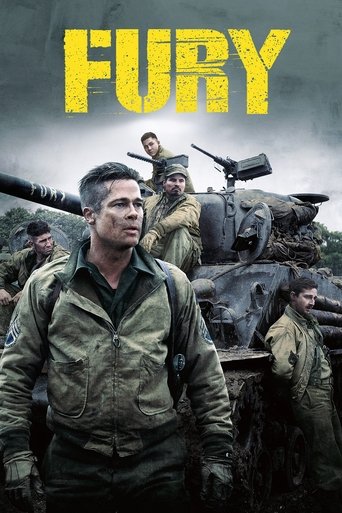
Fury
2014 · Film · 135 min
Directed by David Ayer
April, 1945. As the Allies make their final push in the European Theater, a battle-hardened army sergeant commands a Sherman tank with a five-man crew on a deadly mission behind enemy lines.
1 positive3 negative2 mixed6 neutralfrom 12 commenters
Where to watch
No streaming data for this title.





13 comments on Hacker News
Interesting - I got something completely different out of The Thin Red Line. To me it was fascinating to see how different people processed the war and their different struggles, whether philosophical (Private Witt), with relationships back home (Cpt Staros), or PTSD. It was a little scattered as it bounced between so many soldiers but the central theme seemed to centre around Pvt Witt and Sgt Welsh - the actual battle was almost secondary. IMO there’s no snobbery - though Malick is maybe a little self indulgent - and I enjoyed movies like Saving Private Ryan or even Fury just as much.
I was told by the armchair generals on the internet that the infamous tank battle scene in the movie 'Fury' was totally unrealistic specifically because the opposing tanks fight at such close range.
Yet here we have a video from an actual war showing something very similar.
"Fury" was based on (but not necessarily accurate) the Sherman tank "In the Mood"'s crew:
https://warfarehistorynetwork.com/article/american-tank-ace-lafayette-pool/
>> Pool considered Richards one of the best tank drivers in Europe and always called him “Baby” when issuing driving instructions over the tank’s intercom. Richards was only five feet, four inches tall, but Pool bragged that Baby could “parallel park that big Sherman in downtown New York in rush hour traffic.” Bert was called “Schoolboy,” since he was just 17 years old, “still with peach fuzz on his gentle face.” Del was known as “Jailbird” since he was given the choice of the Army or prison after a manslaughter charge. Oller was known as “Groundhog” because of the stains on his face from constantly wearing tanker’s goggles. Pool stated Oller could “shoot the eyebrows off a gnat at 1500 yards.” According to his own account, Pool was called “War Daddy,” a name later used for Brad Pitt’s character in the feature film Fury.
if you liked Fury, you should check out the Russian movie T34. some really great CGI
https://www.youtube.com/watch?v=a5BlybdjhVg
Visiting the Tank Museum is something I do when I go to England. I wish I could be there on Tiger Day and see it driving around. It's an amazing machine to see in person. Having four actual WW2 Shermans plus the Tiger in Fury made the movie so much more amazing; it's not a great movie, but the actual vehicles made it special.
Councidence. I watched this yesterday. I thought the Fury film was meh, but the tank museum is awesome. I'm really pleased to see their tanks in films and I'm really pleased to hear how it happened
Ah, Fury. One of the most historically correct American war movies made. /s
(The Tiger ambush scenwas their 2nd most laughable one, as they were told to not turn 131 in oder to protect its drive train, and so got shot in the ass. Besides that, Panzerfuehrer were trained to go for first and last tank in a column to block movement, and especially if one is a Firefly!)
The Australian Armoury & Artillery Museum in Cairns Oz has a prop from the film - https://www.facebook.com/LostCairns/posts/german-tiger-1-tank-replica-from-the-movie-fury-starring-brad-pitt-it-was-not-a-/1603840366328784/
Not as cool as the real thing of course, the cool shit in the Australian tank museum would be the real tanks. Seeing a tank that can fire a nuke is pretty amazing especially when you realize it is both nothing special and amazing what humans can do as average.
Like the video says visit a tank museum if you get a chance.
The solution to this is known by everyone, including those who will fain ignorance. Implement universal healthcare (including mental health), regulate guns (insurance, registration, training, buybacks, red flag laws) including banning weapons of war, build public transportation and transition away from car-mandatory living in all but the most rural areas, and push for democratically-controlled unions and worker co-ops. The second tier would be around children, namely we should reinstate the child tax credit, make university free, and provide childcare. We need to have a conversation around maternal mortality as well, because that is too darn high in the US (one theory is that we are too doctor-controlled and they will be more likely to induce or perform a c-section).
This may seem like a grabbag of policies, but it's because (as it is mentioned in the Twitter thread), there are a grabbag of failures: lack of healthcare, forced dependency on cars, and deaths of despair, which are very closely tied to our crushing work culture (especially for blue collar folks). The neoliberal capitalism alienates people from their labor and their fellow worker, and makes widely available drugs, alcohol, and ultra-processed foods to numb the pain after a long shift. We've created a machine that's very good at crushing people up to turn them into money for people who will never be able to spend what they have already (cf. the Sacklers and the opioid epidemic or Bezos and workers urinating in bottles).
America has so much potential. I still have great hope we can come together. Right now, it's like the Onion wrote: "'No Way to Prevent This', Says Only Nation Where This Regularly Happens". We have to stop pretending we don't know the solution. The jig is up. I feel like we're in the movie Fury. Everyone knows Germany is doomed, but more people have to die because of Hitler's ego and the cowardice of everyone around him. We've let the psychopaths run things for too long. We have to take our power back.
I think Fussel had a point in 1989, but after that there's been plenty of depictions of war that have been less sanitized. "The Pacific" comes to mind in TV, and "Fury" in movies, even if it's very formulaic.
Memoirs can be raw too:
- https://gerikson.com/blog/books/read/Helmet-For-My-Pillow.html
- https://gerikson.com/blog/books/read/With-the-Old-Breed.html
And even before 1989 novels like Waugh's "Sword of Honour" trilogy problematized WW2.
Despite being a programmer, I love reading military history books and visiting museums. Time to plan a visit to New Orleans. Riding in a real PT boat would be a blast. Much more likely than my dream of driving Tiger 131 (the one in Bovington used in movie Fury).
Being a Chinese growing up in America, what you said is true and often I feel the Western civilization didn't appreciate the war in Asia until the Japanese had attacked Pearl Harbor, and even then I feel people see America as the sole savior in the pop culture. America's first battle in Africa was a huge casualty (echoes the stuff in the movie Fury). Of course no one is born out to succeed, but the truth is thousands died on the path to victory.
Korean and Chinese had been fighting the Japanese long before Germany declaring war in Europe, way before 1937. For more than a decade, the Chinese had been fighting alone (well with very unpleasant support from the Western civilization like getting weapons at a very expensive rate and siding with the Japanese). Everyone else was still supplying industrial material to Japan, aiding and helping killing millions in Southern-Asia, because the rest of the world wanted to stay neutral. If the Chinese didn't hold back the Japanese, the entire Southern Asia would have fall in the hand of Japan in a few months (what the Japanese generals had promised their emperor). The British and the French armies did not stand a chance in their colonines against the Japanese.
Soon May-in, First Lady of Republic China came to the U.S. and begged the U.S. Congress to help China [1]. I quote: "When Japan thrust total war on China in 1937 military experts of every nation did not give China even a ghost of a chance. But when Japan failed to bring China cringing to her knees as she vaunted, the world took solace in this phenomenon by declaring that they had overestimated Japan’s military might."
It wasn't until late in the war did the Chinese receive air support (and many kind volunteers from the U.S. Army such as the Flying Tigers group) to help stabilize the war against Japan in China. But millions, were poured into the battlefield, untrained, uneducated, with little armor, fought against a modernized elite army from Japan.
Oh not to mention the shitty Commander Stilwell who caused a huge causality of the allies in the Southern-Pacific/Burma...don't get me started there. The British hated him. The Chinese hated him (he seized control of an elite Chinese army division and lost 60% of them - that division stayed and fought the Japanese so hard the Japanese had to surrender).
We had lost so many lives in WWII, including tens of thousands of American (some were recruited from U.S. territories that still don't have voting right in the Congress!). We can definitely improve history class by not just always focusing on American's effort. Even the local rebels in Europe helped the Allies to finish missions. Intelligence that the Chinese had provided to the Allies regarding the Japanese had helped Allies in attacking Japanese later in the war.
[1]: http://china.usc.edu/soong-mei-ling-%E2%80%9Caddresses-house-respresentatives-and-senate%E2%80%9D-february-18-1943
-- edit --
For those who can comprehend Mandarin, you can watch https://www.youtube.com/watch?v=30QQtJoJ9Zg (and other episodes).
Reminds me of some of the scenes from the movie Fury.
I see the same thing for ISIS-members. Read some of the refugee stories from Christian, Shia and Yezidis. The Yezidis got to suffer the brunt of it.
Sweden decided to give immunity and apartments/jobs for returning ISIS member. The Sunni-lobby has done a tremendous job for themselves in Sweden under the shrouds of "feminism" and "anti-racism".
Last meeting with the Swedish government, had NOT A SINGLE Shia-muslim representation.
In my eyes, any single person who was even partially part of ISIS deserves lead surgically placed between their eyes.