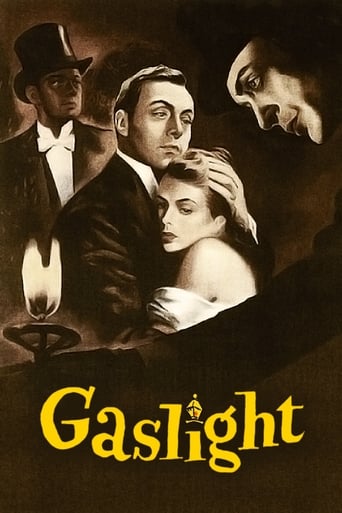
Yes; I watched the movie "Gaslight" recently, and the meaning that everyone uses has drifted pretty far from the movie's meaning. But it's probably hopeless to resist a meaning when it becomes trendy.
Calling "gaslighting" a "psychology term" seems a bit disingenuous to me, considering that the term originated as a colloquialism derived from the name of a play[1] and couple of subsequent movie adaptations[2][3].
In 1965, twenty-eight years after the stageplay was written, writers began denominalising the film's title and using it as a verb, "gaslighting". Gaslighting, in this context, is a colloquialism that loosely means to manipulate a person or a group of people in a way similar to the way the protagonist in the play (Bella) was manipulated.
Given that, there are two, and only two possibilities:
Either
-my perception of reality is inherently opposed to objective reality
or
-the world, for some reason, is gaslighting me into thinking I ate a sandwich and the objective reality is that I ate a grapefruit.
See, my problem with this "philosophy" that objective reality does not exist is that it enables abusers. Have you ever seen the movie Gaslight? Its a classic. This poor woman lives with an abuser...someone who is committed to making her think that she is crazy. He contradicts everything she does and says, sets up evidence to objectively prove that she only imagined herself doing it, and keeps her under his thumb through those means. In the end of the movie, its revealed that none of the evidence is real and that she is sane. To combat against these types of people, its important to be sure of your own reality and only change if evidence is overwhelmingly pointed in the opposite direction. Even then, question these changes in belief heavily. Otherwise, you will believe just about anything anyone says.
The term "gaslighting" derives from the 1944 film Gaslight, in which a husband uses trickery to convince his wife that she is mentally unwell so he can steal from her.
Gaslighting was largely an obscure or esoteric term until the mid-2010s, when it broadly seeped into English lexicon.
The origin of “gaslight” is a movie where a husband surreptitiously removes objects from the room, dims and brightens the lights, etc. and pretends the changes were just the wife’s imagination. https://en.wikipedia.org/wiki/Gaslight_(1944_film)#Plot
Removing bookmarks from someone’s list without notification seems at least broadly comparable (in both cases, the victim is confused and might question their own memory, because the state of the world changed in an incongruous way), though it is the action of an emotionless machine with a programming bug rather than a malicious human.
I first learned the definition of "gaslight" like 10 years ago from a Project Manager friend who said I was "gaslighting" her because I secretly fixed a bug she complained about and pretended it was never a bug to begin with.
I didn't know the meaning of the word so I looked it up. It's related to the plot of a movie I believe.
It's a great word to describe the situation we were in.
Nowadays people use "gaslight" to mean something different and it annoys me. But what do I know, I am not a linguist.
Thank you. The first two links are to different versions of the films I had in my queue (c'mon, no one needs a remake of "Walking Tall"). The last three indeed go to the titles that are in my "Saved" queue (which means they are not available to rent but are in their database nonetheless).
I went ahead and added the different version of Gaslight to my queue though. Thanks, stranger.
I am very confused trying to check on these movies. They show up in search results. I click on them. They redirect me to dvd.netflix.com and suggest that I get a subscription. I don't want to sign up. I want to know if your service offers them or not. Nonetheless, maybe they'll help you?
This is a fairly common bullying tactic where the bully both bullies, usually secretively, and tries to make the victim look like a nut case.
The story, with others pointing the finger at Heather Ames, raises the question whether more people were involved than the single researcher who was caught on video. While self-sabotage was certainly a possibility, sabotage by a colleague or co-worker was clearly a substantial possibility and reportedly proved to be the case.
As Rod Serling would say, "Submitted for your approval":
Eraserhead
Forbidden Zone
Gaslight
Invaders from Mars
Invasion of the Body Snatchers
Laura
Minority Report
Mirage
Rebecca
Suddenly, Last Summer
The Cabinet of Dr. Caligari
The Devil's Advocate
The Wizard of Oz
Total Recall
Vanilla Sky
Some are better than others, of course. And some fit the mindf definition better than others. Oh, well. These are some films that popped into my head.
 Hacker Cinema


13 comments on Hacker News
Yes; I watched the movie "Gaslight" recently, and the meaning that everyone uses has drifted pretty far from the movie's meaning. But it's probably hopeless to resist a meaning when it becomes trendy.
Calling "gaslighting" a "psychology term" seems a bit disingenuous to me, considering that the term originated as a colloquialism derived from the name of a play[1] and couple of subsequent movie adaptations[2][3].
In 1965, twenty-eight years after the stageplay was written, writers began denominalising the film's title and using it as a verb, "gaslighting". Gaslighting, in this context, is a colloquialism that loosely means to manipulate a person or a group of people in a way similar to the way the protagonist in the play (Bella) was manipulated.
[1]: https://en.wikipedia.org/wiki/Gas_Light
[2]: https://en.wikipedia.org/wiki/Gaslight_(1940_film)
[3]: https://en.wikipedia.org/wiki/Gaslight_(1944_film)
Given that, there are two, and only two possibilities:
Either
-my perception of reality is inherently opposed to objective reality
or
-the world, for some reason, is gaslighting me into thinking I ate a sandwich and the objective reality is that I ate a grapefruit.
See, my problem with this "philosophy" that objective reality does not exist is that it enables abusers. Have you ever seen the movie Gaslight? Its a classic. This poor woman lives with an abuser...someone who is committed to making her think that she is crazy. He contradicts everything she does and says, sets up evidence to objectively prove that she only imagined herself doing it, and keeps her under his thumb through those means. In the end of the movie, its revealed that none of the evidence is real and that she is sane. To combat against these types of people, its important to be sure of your own reality and only change if evidence is overwhelmingly pointed in the opposite direction. Even then, question these changes in belief heavily. Otherwise, you will believe just about anything anyone says.
The term "gaslighting" derives from the 1944 film Gaslight, in which a husband uses trickery to convince his wife that she is mentally unwell so he can steal from her.
Gaslighting was largely an obscure or esoteric term until the mid-2010s, when it broadly seeped into English lexicon.
https://en.wikipedia.org/wiki/Gaslighting
This is The Atlantic gaslighting you.
You might speak English but you just think you understand the word.
The Atlantic knows best. You could never know yourself what gaslight means. If you're using it wrong you're alt-right so listen to The Atlantic.
Watch the movie, it's good. It's on all the pirates sites and pay for view on Amazon I think.
Have fun while learning to be better than the mediocre Atlantic writers.
The origin of “gaslight” is a movie where a husband surreptitiously removes objects from the room, dims and brightens the lights, etc. and pretends the changes were just the wife’s imagination. https://en.wikipedia.org/wiki/Gaslight_(1944_film)#Plot
Removing bookmarks from someone’s list without notification seems at least broadly comparable (in both cases, the victim is confused and might question their own memory, because the state of the world changed in an incongruous way), though it is the action of an emotionless machine with a programming bug rather than a malicious human.
I first learned the definition of "gaslight" like 10 years ago from a Project Manager friend who said I was "gaslighting" her because I secretly fixed a bug she complained about and pretended it was never a bug to begin with.
I didn't know the meaning of the word so I looked it up. It's related to the plot of a movie I believe.
It's a great word to describe the situation we were in.
Nowadays people use "gaslight" to mean something different and it annoys me. But what do I know, I am not a linguist.
The film 'Gaslight' had Ingrid Bergman starring, so not exactly an obscure film. The plot was about what you'd expect. It came out in 1944.
But, hey, if you want to exclude arguments because of one "modern" trigger word, I doubt anyone will stand in your way.
Thank you. The first two links are to different versions of the films I had in my queue (c'mon, no one needs a remake of "Walking Tall"). The last three indeed go to the titles that are in my "Saved" queue (which means they are not available to rent but are in their database nonetheless).
I went ahead and added the different version of Gaslight to my queue though. Thanks, stranger.
I am very confused trying to check on these movies. They show up in search results. I click on them. They redirect me to dvd.netflix.com and suggest that I get a subscription. I don't want to sign up. I want to know if your service offers them or not. Nonetheless, maybe they'll help you?
https://dvd.netflix.com/Movie/Walking-Tall/60034554
https://dvd.netflix.com/Movie/Gaslight/70074384
https://dvd.netflix.com/Movie/Beach-Blanket-Bingo-How-to-Stuff-a-Wild-Bikini/70103186
https://dvd.netflix.com/Movie/Return-of-the-Dragon/60020726
https://dvd.netflix.com/Movie/Ran/60027429
Gaslight movie 1944 :(
The finger pointing at the graduate student Heather Ames reminds me of the concept of gas lighting, derived from the 1944 movie Gaslight:
gas·light
ˈɡaslīt/
verb
gerund or present participle: gaslighting manipulate (someone) by psychological means into questioning their own sanity.
https://en.wikipedia.org/wiki/Gaslighting
This is a fairly common bullying tactic where the bully both bullies, usually secretively, and tries to make the victim look like a nut case.
The story, with others pointing the finger at Heather Ames, raises the question whether more people were involved than the single researcher who was caught on video. While self-sabotage was certainly a possibility, sabotage by a colleague or co-worker was clearly a substantial possibility and reportedly proved to be the case.
As Rod Serling would say, "Submitted for your approval":
Eraserhead Forbidden Zone Gaslight Invaders from Mars Invasion of the Body Snatchers Laura Minority Report Mirage Rebecca Suddenly, Last Summer The Cabinet of Dr. Caligari The Devil's Advocate The Wizard of Oz Total Recall Vanilla Sky
Some are better than others, of course. And some fit the mindf definition better than others. Oh, well. These are some films that popped into my head.